Normal view

There are new articles available, click to refresh the page.
Today — 26 January 2026Main stream

Japan Plans to List First Set of Spot Crypto ETFs as Early as 2028 – Nikkei

26 January 2026 at 01:44

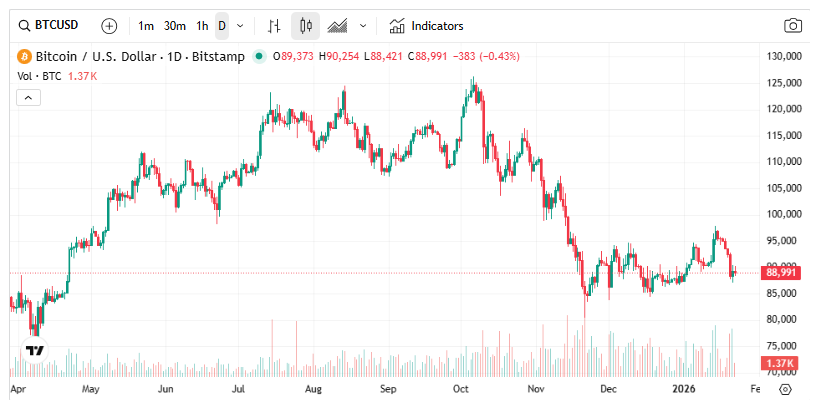
Japan’s Financial Services Agency is considering adding cryptocurrencies to the list of assets eligible for spot exchange-traded fund (ETF) products. Nikkei reported Monday that Japan would likely approve its first set of spot crypto ETFs as early as 2028. If approved, this would end the agency’s ban on spot crypto ETFs.

This further extends the expected timeframe for a potential crypto ETF launch in Japan. A KPMG Japan executive claimed in August 2025 that a Bitcoin ETF launch would likely be delayed until 2027.

Besides, Hajime Ikeda, the Executive Officer of Nomura Holdings, pointed to a survey at the time, noting that over 60% of Japanese investors express a desire to invest in cryptoassets “in some form or other.”

That said, the recent move by the Japanese regulator to launch spot crypto ETFs would address growing investor demand for access to crypto.

Nomura, SBI Holdings Poised to Create Japan’s First Crypto ETFs

Per the Nikkei report, Japan’s largest asset manager Nomura Holdings and financial services giant SBI Holdings have been developing related ETF products that await approval for listing on the Tokyo Stock Exchange.

If approved, the crypto ETFs would allow investors to trade digital assets similar to stocks or gold ETFs.

Last year, SBI Holdings confirmed plans to launch its XRP ETFs upon regulatory greenlight. In a presentation published in August, SBI revealed plans to launch two ETFs. The first product is a Gold and Crypto Assets ETF that will invest 49% of its assets in Bitcoin (BTC), while the second will be a Bitcoin and XRP ETF that will offer exposure to these two tokens.

The U.S. and Hong Kong already approved their first spot crypto ETFs in 2024.

Japan Finance Minister Supports Crypto Trading With Stock Exchanges

Japan’s Finance Minister Satsuki Katayama recently touted that 2026 would be the “digital year,” expressing support to crypto trading at stock exchanges.

Per Japanese crypto news site Coinpost, Katayama pointed to how crypto investment products have gained traction in the West.

“In the U.S., through ETF structures, they have spread as a means of hedging against inflation, and similar efforts are expected in Japan,” she said.

The post Japan Plans to List First Set of Spot Crypto ETFs as Early as 2028 – Nikkei appeared first on Cryptonews.

Yesterday — 25 January 2026Main stream

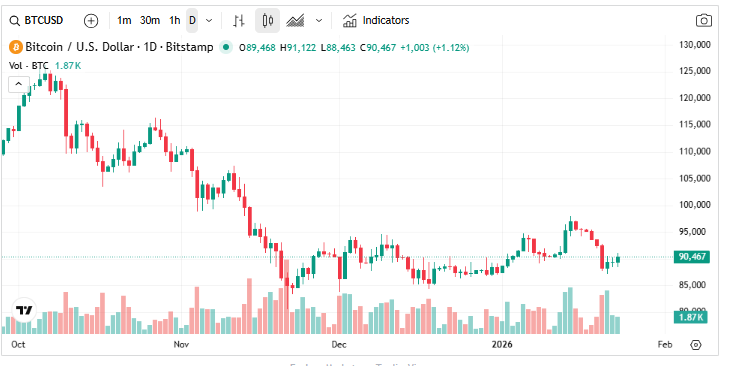
US Spot Bitcoin ETFs See Worst Week in One Year After $1.33B Outflows

By: Amin Ayan
25 January 2026 at 02:30

US spot Bitcoin exchange-traded funds recorded their weakest performance in nearly a year, shedding $1.33 billion in net outflows during a shortened four-day trading week, according to data from SoSoValue.

Key Takeaways:

  • US spot Bitcoin ETFs logged their weakest week in nearly a year, with $1.33 billion in outflows.
  • Selling peaked midweek, led by heavy redemptions from BlackRock’s IBIT.
  • Ether ETFs also turned negative, shedding $611 million over the same period.

The pullback marks the worst weekly showing since February 2025 and reflects a sharp reversal in investor sentiment after strong inflows the previous week.

The outflows follow a period of optimism, when spot Bitcoin ETFs pulled in $1.42 billion in net inflows.

Midweek Bitcoin ETF Outflows Surge as $709M Exits in Single Day

Selling pressure peaked midweek. Wednesday alone saw $709 million exit Bitcoin ETFs, making it the heaviest outflow day of the week.

Tuesday followed closely behind with $483 million in redemptions. Outflows eased toward the end of the week, with $32 million leaving on Thursday and $104 million on Friday.

The magnitude of the withdrawals echoes the turbulence seen in late February 2025, when Bitcoin ETFs lost $2.61 billion in a single week during a sharp market downturn.

That episode, often referred to by analysts as the “February Freeze,” coincided with Bitcoin’s drop from above $109,000 to below $80,000 and included a record $1.14 billion single-day outflow on Feb. 25.

BlackRock’s iShares Bitcoin Trust (IBIT), the largest spot Bitcoin ETF by assets under management, posted outflows on all four trading days last week.

Data from SoSoValue shows the fund experienced its heaviest redemptions on Tuesday and Wednesday, accounting for a significant share of the overall decline.

1/ US Spot Crypto ETF Weekly Flows (Jan 12-16, ET)

• BTC ETFs: +$1.42B
• ETH ETFs: +$479M
• SOL ETFs: +$46.88M
• XRP ETFs: +$56.83M

Source: SoSoValue#CryptoETF #SoSoValue pic.twitter.com/Wi35m9jMLu

— SoSoValue (@SoSoValueCrypto) January 19, 2026

IBIT currently holds about $69.75 billion in net assets, representing roughly 3.9% of Bitcoin’s total circulating supply.

Despite the recent pullback, the broader picture for spot Bitcoin ETFs remains positive.

Since their launch in January 2024, cumulative net inflows stand at $56.5 billion, with total net assets across all US spot Bitcoin ETFs reaching approximately $115.9 billion.

Ethereum ETFs were not spared from the broader risk-off move. Spot Ether ETFs posted $611 million in net outflows for the week, reversing the prior week’s $479 million inflow streak.

Wednesday was again the worst day, with $298 million redeemed, followed by $230 million on Tuesday.

Total net assets for Ether ETFs now sit around $17.7 billion, with cumulative inflows of $12.3 billion since their July 2024 debut.

Solana ETFs Defy Broader Sell-Off as Bitcoin, XRP Funds See Outflows

Not all crypto-linked funds followed the same pattern. Spot Solana ETFs continued to attract capital, recording $9.6 million in net inflows over the week, extending a multi-week positive trend.

Bitwise’s BSOL remained the category leader by assets. Spot XRP ETFs, meanwhile, saw mixed flows, ending the week with $40.6 million in net outflows after a sharp $53 million exit on Tuesday.

The ETF drawdowns come amid signs of shifting market dynamics on-chain. According to a CryptoQuant report, Bitcoin holders have begun realizing net losses for the first time since October 2023.

The firm noted the market has moved from a profit-taking phase into a loss-realization phase, with roughly 69,000 BTC in realized losses since Dec. 23, a pattern reminiscent of past transitions from bull to bear markets.

The post US Spot Bitcoin ETFs See Worst Week in One Year After $1.33B Outflows appeared first on Cryptonews.

Before yesterdayMain stream

$7 Trillion Player Is Moving Into Bitcoin, Can This Trigger A Surge To $200,000?

24 January 2026 at 19:30

Swiss banking giant UBS, with assets under management (AuM) of up to $7 trillion, is set to launch Bitcoin trading for some of its clients. This comes amid predictions that regulatory clarity and broader adoption could send the BTC price to as high as $200,000. 

UBS To Offer Bitcoin Trading To Some Wealth Clients

Bloomberg reported that UBS is planning to launch crypto trading for some of its wealth clients, starting with its private bank clients in Switzerland. The bank will reportedly begin by offering these clients the opportunity to invest in Bitcoin and Ethereum. At the same time, the crypto offering could further expand to clients in the Pacific-Asia region and the U.S.

The banking giant is currently in discussions with potential partners, and there is no clear timeline for when it could launch Bitcoin and Ethereum trading for clients. This move is said to be partly due to increased demand from wealth clients for crypto exposure. UBS also faces increased competition as other Wall Street giants are working to offer crypto trading. 

Morgan Stanley, in partnership with Zerohash, announced plans to launch crypto trading in the first half of this year, starting with Bitcoin, Ethereum, and Solana. The banking giant may soon also be able to offer its crypto products, as it has filed with the SEC to launch spot BTC, ETH, and SOL ETFs. 

Furthermore, JPMorgan, another of UBS’ competitors, is considering offering crypto trading to institutional clients, although this plan is still in the early stages. The bank already accepts Bitcoin and Ethereum as collateral from its clients. Last year, it also filed to offer BTC structured notes that will track the performance of the BlackRock Bitcoin ETF.

Can Bank’s Entry Trigger A BTC Rally To $200,000  

Kevin O’Leary predicted that Bitcoin could rally to between $150,000 and $200,000 this year, driven by the passage of the CLARITY Act. His prediction came just as White House Crypto Czar David Sacks said banks would fully enter crypto once the bill passes. As such, there is a possibility that BTC could reach this $200,000 psychological level in anticipation of the amount of new capital that could flow into BTC from these banks once the bill passes. 

BitMine’s Chairman, Tom Lee, also predicted during a CNBC interview that Bitcoin could reach between $200,000 and $250,000 this year, partly due to growing institutional adoption by Wall Street giants. Meanwhile, Binance founder Changpeng “CZ” Zhao said that a BTC rally to $200,000 is the “most obvious thing in the world” to him.

At the time of writing, the Bitcoin price is trading at around $89,600, up in the last 24 hours, according to data from CoinMarketCap.

Bitcoin

Bitcoin ETFs Bleed $1.62B in Four Days — Are Hedge Funds Dumping BTC?

23 January 2026 at 14:53

Bitcoin spot exchange-traded funds have experienced steep outflows over four trading days, losing a combined total of $1.62 billion.

The exit has raised a question on whether hedge funds are withdrawing their Bitcoin exposure as the market conditions change.

The withdrawals occur as Bitcoin fails to regain momentum around critical price points, while a once-popular institutional arbitrage strategy steadily loses its appeal.

BlackRock’s IBIT Leads Bitcoin ETF Outflows as BTC Slips Below $90K

As of January 22, 2026, US-listed spot Bitcoin ETFs recorded net daily outflows of $32.11 million, extending a streak of redemptions that peaked at $708.71 million on January 21, following $483.38 million on January 20, Sosovalue data shows.

In the last one week, net outflows amounted to 1.22 billion.

Trading activity stayed strong on January 22, with Bitcoin spot ETFs recording $3.30 billion in volume, even as assets under management dipped to $115.99 billion, about 6.49% of Bitcoin’s market cap.

BlackRock’s iShares Bitcoin Trust led daily outflows, with $22.35 million redeemed, equivalent to roughly 249.5 BTC.

Despite the withdrawal, IBIT remains the dominant product, holding $69.84 billion in assets and nearly 4% of the Bitcoin supply represented in ETFs.

Bitcoin ETFs data Source: Sosovalue

Fidelity’s FBTC followed with $9.76 million in outflows, while Grayscale’s GBTC reported flat daily flows but remains deeply negative overall, with $25.58 billion in cumulative net outflows as investors continue rotating away from its higher 1.5% fee.

Other issuers, including Bitwise, Ark and 21Shares, VanEck, Invesco, Valkyrie, Franklin, and WisdomTree, recorded largely unchanged flows, showing a pause rather than broad panic selling.

The ETF pullback has unfolded alongside weakness in Bitcoin’s price.

BTC was trading around $89,982 on January 22, down 1.3% on the day and nearly 5% over the past week, after briefly dipping to $88,600.

Source: Cryptonews

Trading volume has also cooled, falling nearly 28% to $37.77 billion, a sign that market participation is thinning as prices consolidate below $90,000.

Compressed Yields Trigger Hedge Fund Exit From Bitcoin ETFs

Market observers point to hedge fund positioning as a key driver behind the ETF outflows.

Amberdata shows that yields on the Bitcoin basis trade, a strategy that buys spot Bitcoin via ETFs while selling futures to capture price spreads, have dropped below 5%, down from around 17% a year ago.

As returns compress and approach the yield available on short-dated US Treasuries, fast-moving capital has less incentive to stay deployed.

Analyst noted that while hedge funds likely represent only 10% to 20% of ETF holders, their activity can overwhelm flows in the short term when the trade stops working.

Bloomberg data shows that the unwind is visible in derivatives markets as well.

Bitcoin futures open interest on Chicago Mercantile Exchange (CME) has fallen below Binance’s for the first time since 2023, showing reduced participation in cash-and-carry trades by US institutions after ETFs launched there.

One-month annualized basis yields now hover near 4.7%, barely clearing funding and execution costs, as spreads tighten and arbitrage opportunities fade.

CryptoQuant indicators show apparent demand turning negative, whale and dolphin wallets shifting from accumulation to distribution.

Also, the Coinbase premium remained deeply negative, suggesting weaker appetite from US institutions.

At the same time, leverage in Bitcoin futures has climbed to its highest level since November, increasing the market’s sensitivity to sharp moves in either direction.

Flows in other crypto ETFs underline that the sell-off is not uniform.

Ethereum spot ETFs also recorded heavy outflows this week, including $41.98 million on January 22, while XRP and Solana-linked products saw modest inflows, pointing to selective institutional repositioning rather than a wholesale exit from digital assets.

The post Bitcoin ETFs Bleed $1.62B in Four Days — Are Hedge Funds Dumping BTC? appeared first on Cryptonews.

Grayscale Files S-1 to Launch BNB-Tracking ETF in the U.S.

23 January 2026 at 10:37

Grayscale Investments has filed an S-1 registration with the U.S. Securities and Exchange Commission (SEC) to launch an exchange-traded fund tracking BNB.

According to a Form S-1 filed on Friday, the proposed product is titled the Grayscale BNB ETF. The filing seeks approval to offer a publicly traded ETF designed to track the price of BNB, the native token of the BNB Smart Chain ecosystem.

The fund is sponsored by Grayscale Investments and incorporated in Delaware. The registration statement notes that the offering would commence only after the SEC declares the filing effective, which is a standard requirement before shares can be sold to the public.

The preliminary prospectus outlines that the trust will issue shares representing fractional beneficial interests, with the value of those shares intended to reflect the performance of BNB.

As with other crypto ETFs proposed in the U.S., the product would not actively trade or use derivatives but would seek to provide passive exposure to the underlying digital asset.

Expanding the Scope of Crypto ETFs

The BNB ETF filing comes as asset managers continue to test the boundaries of U.S. crypto ETF approvals following the authorization of spot Bitcoin ETFs and, later, spot Ethereum products.

Market participants have increasingly viewed these approvals as a potential gateway for additional single-asset crypto ETFs tied to major blockchain networks.

BNB is among the largest digital assets by market capitalization and plays a central role in transaction fees, staking, and decentralized applications within the BNB Chain ecosystem.

Regulatory Context and Timeline

The SEC will review the registration statement for compliance with disclosure, custody, and market-integrity standards. The process can involve multiple rounds of comments and amendments, potentially extending over several months.

The prospectus shows that the ETF is “subject to completion” and may be revised before becoming effective. It also reflects standard risk disclosures, including price volatility, regulatory uncertainty surrounding digital assets, as well as operational risks tied to blockchain networks.

ETF Flows Pick Up

Digital asset investment products saw a sharp rebound in demand last week, recording $2.17 billion in net inflows, the strongest weekly total since October 2025, according to CoinShares data.

📊 Digital asset investment products saw $2.17bn in weekly inflows, the strongest since Oct 2025, according to CoinShares.#ETFs #Crypto https://t.co/Q41wIu0zLs

— Cryptonews.com (@cryptonews) January 19, 2026

The bulk of those inflows arrived early in the week before sentiment deteriorated, driven by rising geopolitical tensions, renewed tariff threats, and fresh uncertainty around U.S. monetary policy leadership.

By Friday, flows had reversed, with crypto investment products posting $378 million in outflows following diplomatic escalation linked to Greenland and renewed concerns over global trade policy.

The post Grayscale Files S-1 to Launch BNB-Tracking ETF in the U.S. appeared first on Cryptonews.

Nasdaq Moves to Remove Position Limits on Bitcoin ETF Options

23 January 2026 at 09:38

Bitcoin Magazine

Nasdaq Moves to Remove Position Limits on Bitcoin ETF Options

Nasdaq has filed a rule change with the U.S. Securities and Exchange Commission seeking to remove position and exercise limits on options tied to spot Bitcoin exchange-traded funds, a move that would further integrate crypto-linked products into traditional derivatives markets.

The proposal, originally filed on Jan. 7 and made effective this week on the 21st, eliminates the current 25,000-contract cap on options linked to Bitcoin and Ethereum ETFs listed on Nasdaq. 

Affected products include funds from BlackRock, Fidelity, Grayscale, Bitwise, ARK/21Shares and VanEck, according to the filing.

The SEC waived its standard 30-day waiting period, allowing the rule change to take effect immediately, while retaining the authority to suspend it within 60 days if further review is deemed necessary. 

A public comment period is now open, with a final SEC determination expected by late February unless the rule is paused.

Nasdaq argued that lifting the limits would allow crypto ETF options to be treated “in the same manner as all other options that qualify for listing,” eliminating what it described as unequal treatment without undermining investor protections. 

The exchange said the change would support market efficiency while maintaining safeguards against manipulation and excessive risk.

Options are derivative contracts that give traders the right, but not the obligation, to buy or sell an asset at a predetermined price before a set expiration date. Position and exercise limits are typically imposed to prevent concentrated positions that could amplify volatility or destabilize markets.

The filing builds on Nasdaq’s approval in late 2025 to list options on single-asset crypto ETFs as commodity-based trusts. While that decision allowed Bitcoin and Ethereum ETF options to trade on the exchange, existing position limits remained in place.

Nasdaq has steadily expanded its involvement in crypto markets in recent years. 

Nasdaq’s bitcoin and digital asset push

In November, the exchange filed a separate proposal to raise position limits on options tied to BlackRock’s iShares Bitcoin Trust (IBIT) to as much as one million contracts, citing growing institutional demand and increased use of options for hedging strategies.

The exchange has also pushed into crypto indexing and tokenization. In January, Nasdaq and CME Group announced plans to unify their crypto benchmarks under the Nasdaq-CME Crypto Index, which tracks major digital assets including Bitcoin, Ether, XRP, Solana, Cardano and Avalanche.

If approved permanently, the latest rule change would mark another step toward normalizing Bitcoin derivatives within U.S. regulated markets, further blurring the line between traditional financial instruments and crypto-native assets.

This post Nasdaq Moves to Remove Position Limits on Bitcoin ETF Options first appeared on Bitcoin Magazine and is written by Micah Zimmerman.

Dogecoin Foundation-Backed ETF Launches On Nasdaq As Analysts Call For Massive DOGE Rally

23 January 2026 at 05:00

21Shares has announced the launch of the first spot DOGE Exchange-Traded Fund (ETF) backed by the Dogecoin Foundation, aiming to offer investors regulated, physically backed access to the largest memecoin by market capitalization.

Dogecoin Goes From Memecoin To Wall Street

On Wednesday, financial services company 21Shares announced the launch of its 21Shares Dogecoin ETF (TDOG) on Nasdaq to provide “a new way to gain physically-backed DOGE exposure in traditional portfolios.”

According to the announcement, the firm’s DOGE ETF is the only investment product of its category to be officially endorsed by the Dogecoin Foundation, the nonprofit organization dedicated to supporting the ecosystem’s development.

Notably, two other spot DOGE ETFs are live: Grayscale’s GDOG and Bitwise’s BWOW. As reported by NewsBTC, the funds debuted in late November, becoming the first DOGE ETFs in the US market.

TDOG’s launch builds on 21Shares’ collaboration with the House of Doge, the corporate arm of the foundation supporting the ecosystem, to create new opportunities across the Dogecoin ecosystem.

The newly launched product will offer investors direct exposure to DOGE through a fully backed, transparent, and exchange-traded vehicle, holding the asset on a 1:1 basis in institutional-grade custody.

Regarding its decision to launch a DOGE ETF, 21Shares affirmed that the memecoin “captures the spirit of internet culture and continues to evolve in our digital economy.” Moreover, the firm argued that it has “helped onboard many new users to crypto, and for many people, this may serve as their first step into crypto.”

Federico Brokate, 21Shares’s Global Head of Business Development, stated that “Dogecoin is a unique asset with a global community and expanding real-world use cases,” adding that “TDOG offers investors regulated, physically backed exposure to DOGE through an ETF structure they already understand and trust.”

DOGE Prepares For New Rally

Analyst Bitcoinsensus suggested that the leading memecoin “could be on for a massive rally to the upside” based on its performance throughout this cycle. The market watcher explained that the cryptocurrency has been experiencing “mini cycles” since 2023, which have led to “bigger and bigger rallies.”

According to the chart, after its late 2022 pump, Dogecoin consolidated within a tight range before a 190% breakout in early 2024. Similarly, the memecoin repeated the same pattern throughout 2024, accumulating for months before a 480% breakout at the end of that year.

Now, DOGE has been consolidating within the $0.125-$0.280 price range for nearly a year, leading the analyst to believe that a breakout towards a higher target near the $0.750 level is possible.

Meanwhile, Trader Tardigrade also suggested that Dogecoin may be preparing for a massive breakout as it appears to be following its performance between late 2022 and 2024.

At the time, the cryptocurrency had apparently bottomed out but ultimately recorded another local low before reversing. Based on this, the analyst affirmed that the memecoin “might see a slightly lower low” in the coming weeks, before the next massive surge occurs.

As of this writing, Dogecoin is trading at $0.1249, a 1.75% decline in the daily timeframe.

dogecoin, doge, dogeusdt

Crypto ETFs Are Coming To Thailand: SEC To Launch New Rules This Year

23 January 2026 at 02:00

Thailand’s Securities and Exchange Commission (SEC) is preparing to launch new rules related to crypto, including exchange-traded funds (ETFs).

Thailand To Regulate Crypto ETFs And Futures This Year

As reported by Bangkok Post, the Thailand SEC is preparing regulatory changes related to crypto to support the growth of investment in the sector. Jomkwan Kongsakul, deputy secretary-general of the SEC, said the regulator is planning to issue guidelines supporting the launch of digital asset ETFs, while also working to enable crypto futures trading on the Thailand Futures Exchange (TFEX).

ETFs are investment vehicles that allow investors to gain exposure to an underlying asset without having to directly own it. In the context of digital assets, ETFs enable traders to invest into coins like Bitcoin without interacting with any on-chain element like wallets or exchanges.

In the United States, spot ETFs gained approval by the nation’s SEC in January 2024 for Bitcoin and July 2024 for Ethereum. Since then, these funds have attracted notable attention, capturing demand from traditional investors who were reluctant to deal with blockchain infrastructure.

Kongsakul noted:

A key advantage of crypto ETFs is ease of access; they eliminate concerns over hacking and wallet security, which has been a major barrier for many investors.

Within Asia, Hong Kong approved spot ETFs for both Bitcoin and Ethereum in April 2024, while South Korea is planning to roll out similar investment vehicles this year.

According to Kongsakul, Thailand’s SEC board has already approved crypto ETFs in principle, with detailed investment and operational rules currently being finalized. Although an exact timeline is unknown, the SEC is expected to introduce the regulations “early this year.”

Alongside ETFs, the SEC is also moving to formally recognize crypto within Thailand’s derivatives framework, allowing digital asset futures products to trade on the TFEX. Kongsakul said crypto futures would provide traders with hedging tools and more sophisticated risk management options.

In related news, the US spot Bitcoin ETFs have faced weak demand recently, with the netflow for the current week sitting at a notable negative value, according to data from SoSoValue.

Bitcoin Spot ETF Netflows

As displayed in the above graph, the US Bitcoin spot ETFs have witnessed net outflows of $1.19 billion this week so far. These negative netflows have come as the asset’s price has gone through a bearish shift, retracing the recovery it had made earlier this year.

Last week, the funds actually saw net inflows of $1.42 billion, breaking the trend of weak inflows or outright outflows that had persisted since mid-October. But this week’s netflow suggests the bullish market mood couldn’t last.

BTC Price

At the time of writing, Bitcoin is trading around $89,100, down more than 8% over the last week.

Bitcoin Price Chart

Bitcoin & Ethereum ETFs Shed Over $1B – But Solana and XRP See Inflows

22 January 2026 at 13:22

U.S.-listed spot Bitcoin and Ethereum exchange-traded funds saw over $1 billion in outflow in a single trading day on January 21, as investors moved out of the two largest cryptocurrencies during a broader market downturn.

Meanwhile, smaller altcoin-linked products linked to Solana and XRP experienced net inflows, which points to an apparent institutional positioning difference during the most recent volatility.

According to SoSoValue, on January 21(ET), Bitcoin spot ETFs saw a total net outflow of $709 million yesterday, marking three consecutive days of net outflows, while Ethereum spot ETFs recorded a total net outflow of $298 million. Meanwhile, Solana spot ETFs saw a total net… pic.twitter.com/rQZrHfM8LK

— Wu Blockchain (@WuBlockchain) January 22, 2026

Bitcoin and Ethereum ETFs recorded more than $1 billion in withdrawals, despite both asset classes recording positive cumulative inflows since inception.

Bitcoin ETFs Post November-High Redemptions During Global Market Rally

Bloomberg reported that outflows from Bitcoin ETFs were the biggest one-day redemption since November, and came at a time when the conventional risk assets reversed against calmer geopolitical tensions.

The remarks by U.S. President Donald Trump at Davos, where he dismissed military action over Greenland and indicated a halt to tariffs imposed on Europe, contributed to the boost in equities in the U.S., Europe, and Asia.

The iShares Bitcoin Trust at BlackRock recorded the highest outflow of $356.64 million, with Fidelity’s FBTC in second place at $287.67 million. Grayscale’s GBTC still experienced smaller yet steady redemptions and has had a total cumulative net outflow of over $25 billion since conversion.

Bitcoin ETF data source: SoSoValue

The HODL was the only big Bitcoin ETF that recorded a net inflow, which was $6.35 million.

Bitcoin ETFs have already registered weekly net outflows of $1.19 billion, while January remains slightly positive overall, with net inflows of $17.56 million.

Source: Cryptonews

At the time of writing, Bitcoin was trading at approximately $89,100, a loss of almost 7% over the past week, and the trading volume was decreasing, indicating a low level of activity in the short term.

Selling Pressure Hits Ethereum ETFs, Led by BlackRock’s ETHA

Ethereum ETFs mirrored the pressure seen in Bitcoin. On January 21, spot Ether ETFs posted net outflows of $297.51 million, following another heavy outflow the previous day.

BlackRock’s ETHA accounted for the bulk of the redemptions, shedding more than $250 million, while Fidelity’s FETH and Grayscale’s ETHE also saw net withdrawals. Grayscale’s lower-fee ETH mini trust was a notable exception, recording a modest inflow.

Despite the outflows, Ethereum ETFs still managed close to $18.3 billion in assets, roughly 5% of Ethereum’s market capitalization.

Ethereum itself briefly reclaimed the $3,000 level before slipping back, trading near $2,900, and was down nearly 13% over the past week.

Capital Shifts to Solana and XRP ETFs Amid Broader ETF Selloff

In contrast to the sell-off in Bitcoin and Ethereum products, Solana and XRP spot ETFs attracted fresh capital. Solana ETFs recorded net inflows of $2.92 million on January 21, lifting cumulative inflows to nearly $870 million.

Assets under management rose to about $1.10 billion, supported by steady interest in products from Fidelity, VanEck, and Grayscale, even as SOL’s price fell more than 11% on the week.

XRP ETFs also rebounded, posting $7.16 million in net inflows after starting the week with outflows. Cumulative inflows since launch now stand at $1.23 billion, with total assets around $1.39 billion.

Funds from Bitwise, Franklin Templeton, and Canary Capital led the day’s inflows, despite XRP trading lower alongside the broader market.

Market watchers said the divergence reflected positioning, not fundamentals, with Bitcoin and Ethereum ETFs reacting to macro-driven rebalancing, while smaller Solana and XRP funds drew selective inflows after earlier declines.

The post Bitcoin & Ethereum ETFs Shed Over $1B – But Solana and XRP See Inflows appeared first on Cryptonews.

Thailand moves toward crypto ETFs, futures and tokenised investment products

22 January 2026 at 04:07
  • SEC deputy secretary-general Jomkwan Kongsakul said crypto ETF rules could be issued early this year.
  • Thailand’s SEC will treat crypto as another asset class and allow up to 5% portfolio allocation to digital assets.
  • KuCoin Thailand is seeking to resolve an SEC suspension linked to capital requirements and a shareholder dispute.

Thailand’s Securities and Exchange Commission is preparing a new set of regulations designed to bring crypto investment products further into the country’s formal financial system.

The regulator is working on rules to support crypto exchange-traded funds (ETFs), crypto futures trading, and tokenised investment products, according to SEC deputy secretary-general Jomkwan Kongsakul.

The Bangkok Post reported on Thursday that the SEC aims to issue formal guidelines for crypto ETFs in Thailand “early this year.”

The move signals Thailand’s effort to position itself as a regional crypto hub for institutional investors, even as retail trading remains active despite a ban on crypto payments.

Crypto ETFs move closer to formal approval

Kongsakul said the SEC’s board has approved crypto ETFs in principle and the agency is now finalising investment and operational rules. He said the regulator sees crypto ETFs as a product that could reduce barriers for investors who may be hesitant about directly holding digital assets.

“A key advantage of crypto ETFs is ease of access; they eliminate concerns over hacking and wallet security, which has been a major barrier for many investors,” Kongsakul said.

Under the proposed framework, the SEC will treat crypto as “another asset class,” and investors will be able to allocate up to 5% of a diverse portfolio to digital assets.

Futures trading planned for TFEX

Alongside ETF guidelines, the SEC is also moving to regulate and enable crypto futures trading on the Thailand Futures Exchange (TFEX).

This would allow investors to gain exposure to crypto price movements through regulated derivatives markets.

Kongsakul said other initiatives under consideration include establishing market makers to support trading liquidity and recognising digital assets as an official asset class under the Derivatives Act.

Thailand has been working to attract more institutional interest in crypto markets, particularly through regulated products that sit within existing legal frameworks.

Tokenisation and sandbox collaboration with central bank

The SEC is also expanding its approach beyond ETFs and futures through tokenisation initiatives.

Kongsakul said the agency is working with the Bank of Thailand on a tokenisation sandbox, which could provide a controlled setting for testing tokenised instruments.

The SEC “will encourage issuers of bond tokens to enter the regulatory sandbox,” Kongsakul added.

By pushing tokenised bond products into a supervised environment, Thailand could develop regulated pathways for blockchain-based issuance without opening the door to unmonitored retail distribution.

Tighter oversight for financial influencers

While expanding products and market access, the SEC is also tightening standards around promotion and investment-related content online.

Kongsakul said the regulator is stepping up oversight of “financial influencers,” signalling that marketing and informal advice will face more restrictions.

He said, “Any recommendation related to securities or investment returns will require proper authorisation as either an investment advisor or introducing broker.”

The rules aim to curb unregulated investment promotion, particularly at a time when digital assets continue to be widely discussed across social media.

KuCoin Thailand works to resolve SEC suspension

The regulatory shift comes as the Thai SEC continues enforcement actions in the local exchange market.

Earlier in January, the SEC suspended KuCoin Thailand’s operations after the company’s capital fell below the minimum requirements for five consecutive days, according to local news outlet The Nation on Wednesday.

KuCoin Thailand said the breach was linked to a shareholder dispute between Singapore’s CI group and KuCoin Global, which prevented approval of a planned capital increase.

The company said the issue was not due to actual financial liquidity problems.

KuCoin entered the Thai market in June 2025 and is planning for its local entity to apply for a digital-asset broker license.

The company said this would allow it to offer a wider range of financial products.

Thailand’s crypto market remains active, with Bitkub, the country’s largest exchange, seeing daily trading volumes of around $60 million.

Even with crypto payments banned, regulators appear to be prioritising controlled investment access through structured products such as ETFs, futures, and tokenised instruments.

The post Thailand moves toward crypto ETFs, futures and tokenised investment products appeared first on CoinJournal.

Thailand Targets Early 2026 for Crypto ETF Regulations

22 January 2026 at 03:13

Thailand’s Securities and Exchange Commission is finalizing regulations to introduce crypto exchange-traded funds early this year, alongside rules for crypto futures trading and expanded tokenized investment products, as the regulator moves to align the country’s capital market framework with accelerating global trends in digital asset adoption.

According to the Bangkok Post, Deputy Secretary-General Jomkwan Kongsakul confirmed that the SEC plans to issue formal guidelines supporting the establishment of crypto ETFs early this year, while working to enable crypto futures trading on the Thailand Futures Exchange.

The regulatory push builds on the SEC board’s approval of crypto ETFs in principle, with detailed investment and operational rules now undergoing final development requiring close cooperation between asset management companies and licensed digital asset exchanges.

THAILAND MOVES TO SUPPORT CRYPTO INVESTMENTS

Thailand’s 'SEC' says new rules are coming for crypto ETFs, crypto futures, and tokenized investments, formally recognizing digital assets as an official asset class under the law. pic.twitter.com/o5qMMBbZG4

— Coin Bureau (@coinbureau) January 22, 2026

Crypto ETFs Designed to Lower Barriers and Security Risks

Kongsakul emphasized that crypto ETFs offer significant advantages for Thai investors who already have access to similar products in overseas markets.

A key advantage of crypto ETFs is ease of access; they eliminate concerns over hacking and wallet security, which has been a major barrier for many investors,” she stated.

The products allow exposure to digital assets without opening digital wallets or managing private keys, substantially reducing operational and cybersecurity risks that have deterred mainstream participation.

The SEC is considering introducing market makers for crypto ETFs to ensure adequate liquidity, potentially including digital asset exchanges, financial institutions, corporations, and entities holding cryptocurrencies on their balance sheets.

Once finalized, jointly developed products between asset managers and licensed exchanges could be listed and traded on the Stock Exchange of Thailand.

The regulator is also pursuing formal recognition of digital assets as an underlying asset class under the Derivatives Act, paving the way for crypto futures trading on TFEX under the Futures Trading Act.

Crypto futures would be traded on TFEX under the Futures Trading Act,” Kongsakul explained, adding the move would provide investors with hedging tools and sophisticated risk management options.

Regulators Position Digital Assets as Portfolio Diversification Tool

The SEC emphasized that crypto should be treated as “another asset class” rather than a speculative instrument, recommending that investors with a higher risk tolerance allocate 4-5% of their portfolios to digital assets while maintaining diversification.

Thailand approved its first spot Bitcoin ETF in 2024 through One Asset Management, structured as a “fund of funds” that provides institutional clients with regulated access through global investment vehicles, following similar moves in the United States and Hong Kong.

The upcoming expansion into altcoin ETFs represents the next policy development stage, with Bloomberg reporting in October 2025 that the SEC was drafting rules in coordination with other agencies to widen crypto ETF offerings beyond Bitcoin to include a basket of digital tokens.

Thailand plans to expand its crypto ETF market beyond Bitcoin to include multiple tokens, with new rules expected early next year.#Thailand #CryptoETFs https://t.co/ob28LM5N0g

— Cryptonews.com (@cryptonews) October 2, 2025

Beyond new investment products, the SEC intends to strengthen oversight of online financial personalities by establishing clearer boundaries between general market commentary and services that require professional licensing.

Providing factual information may not require a licence, but any recommendation related to securities or investment returns will require proper authorisation as either an investment advisor or introducing broker,” Kongsakul stated.

Thailand Joins Global Push Toward Regulated Crypto Products

The regulator is collaborating with the Bank of Thailand to establish a sandbox to promote tokenization and distributed ledger technology, believing that tokenization could significantly lower barriers for retail investors and help digital assets become a meaningful driver of Thailand’s economic growth.

The SEC also wants to expand the use of digital tokens for investment beyond existing investment tokens to include bond tokens and tokenized fund units, with Thailand’s first green token expected to launch, supporting sustainable finance and ESG-linked investment.

🇹🇭 Thailand chooses KuCoin as lead partner for historic $153M tokenized government securities with $3 minimum investment.#Thailand #Cryptohttps://t.co/do6x6GRhEE

— Cryptonews.com (@cryptonews) August 27, 2025

Thailand’s preparations for a crypto ETF align with broader momentum across Asia and Western markets, as South Korea announced plans to introduce spot Bitcoin ETFs in 2026 as part of its Economic Growth Strategy, despite ongoing legislative disputes over stablecoin governance.

Vietnam has also introduced a crypto pilot licensing regime this week, requiring a minimum capital of $380 million, attracting interest from around 10 securities firms and banks.

Outside Asia, Vanguard has also reversed years of resistance by opening its $11 trillion brokerage platform to third-party crypto ETFs and mutual funds in December 2025, with its head of brokerage, Andrew Kadjeski, stating that “cryptocurrency ETFs and mutual funds have been tested through periods of market volatility, performing as designed while maintaining liquidity.

The post Thailand Targets Early 2026 for Crypto ETF Regulations appeared first on Cryptonews.

Holding At Least 10,000 XRP? Pundit Reveals What This Means For You

19 January 2026 at 16:00

Market analysts have often discussed the wealth-building potential of XRP, and a recent statement by a crypto pundit has renewed this conversation. According to Austin, owning 10,000 of the altcoin could position investors well ahead of the profit curve, underscoring his confidence in the cryptocurrency’s long-term growth potential. 

What Holding 10,000 XRP Means For Investors

Crypto expert and maxi, Austin (@Austin_XRPL), recently caused a stir on X by stating that owning 10,000 XRP essentially makes an investor “pre-rich.” His statement highlights the token’s significant growth over the past few years and its potential for further gains in the long term. 

Related Reading: Expert Predicts This Massive Move For XRP Within The Next 2 Years

Notably, the altcoin’s price has seen remarkable gains in recent years, particularly after its explosive surge in 2024. At the time, the token skyrocketed from $0.5 to more than $2, breaking out of its nearly seven-year downtrend. In 2025, its price approached its all-time high, peaking near $3.6. During that rally, market analysts attributed the surge to several factors, including the token’s regulatory clarity after Ripple’s win against the US Securities and Exchange Commission (SEC) and the hype around XRP ETFs

Due to these developments, many analysts, including Austin, remain confident in XRP’s long-term outlook. As a long-time XRP advocate, Austin frequently emphasizes that holding the altcoin could become a life-changing decision for investors. In one of his posts on X, he even compared owning the coin to having a “golden ticket to generational wealth,” highlighting his optimism about the token’s future potential. 

In other posts, Austin has pointed out that XRP is being positioned at the center of the new global financial system. He stated that rather than worrying about whether its price can reach $5, investors should focus on its rails, which he believes could drive its value much higher over time.  

Additionally, Austin has expressed strong bullish support for Ripple’s recent banking license. He said this achievement “changes everything” and could transform the crypto company into a regulated financial institution. He also stated that when this happens, the token would stop being a mere “speculation” and transform into an “infrastructure.”

Analyst Says It Will Make More Millionaires Than Bitcoin Did

In a separate X post, Austin boldly declared that the altcoin has the potential to make more millionaires than Bitcoin ever did. Bitcoin, which began at just a few cents after its inception, eventually surged past $60,000 in 2021, creating hundreds of millionaires along the way. 

Related Reading: XRP Wave C Push On The Way: What Could Send Price Below $2?

XRP started under $0.01 and also grew dramatically, reaching an ATH of $3.84 in 2018. Although its price faced challenges during the legal battle with the SEC, the token still held strong over the years. If its momentum continues and even reaches the ambitious forecasts some analysts predict, such as a $10,000 surge, it could create significant wealth for long-time investors. However, whether it will surpass Bitcoin in making millionaires is yet to be seen.

XRP

Institutional Buying Spreads Across Bitcoin, Ethereum, Solana, and XRP – Is The Bull Market Returning?

19 January 2026 at 08:30

Buying activity among investors and traders has improved in the cryptocurrency market, with Bitcoin (BTC), Ethereum (ETH), Solana (SOL), and XRP leading the charge. Investors’ growing adoption and interest in these leading coins underscores their potential to produce significant gains in the long term.

Discreet Buying of Bitcoin, Ethereum, Solana, and XRP

With the market regaining bullish traction, several major cryptocurrency assets are starting to showcase upward movements. Following this rebound, institutional investors are stealthily reentering the cryptocurrency market and establishing holdings in Bitcoin, Ethereum, Solana, and XRP, without the customary fanfare.

According to the On-Chain Mind, a Bitcoin and crypto data analyst, this renewed demand among institutional investors is observed in the Exchange-Traded Funds (ETFs) field. Specifically, the behavior, which is significant for the market, is outlined on the Total ETF Flow metric.

Bitcoin

This suggests that large funds and professional desks seem to be accumulating during times of muted volatility and mixed moods, taking advantage of liquidity supplied by cautious retail traders rather than pursuing short-term price movements. A widespread purchasing pressure across several significant networks suggests a shift from selective exposure to a more diversified institutional strategy.

After observing the key metric, On-Chain Mind revealed that the daily total crypto ETF flows for Bitcoin, Ethereum, Solana, and XRP are showing their highest net inflows since October 2025. The expert stated that institutional capital stepping back in quietly, absorbing supply while sentiment is still unstable, is exactly what investors have been anticipating. With capital from smart money flowing underneath the surface, these key investors may be preparing the market for its next sustained phase. 

XRP Spot ETFs Are Still Maintaining Strong Inflows

Lately, the XRP Spot ETFs are seeing one of the most significant demands and interest from institutional investors. Arthur, a market expert and BingX partner, shared on X that smart money traders are heavily positioning themselves into the XRP spot ETFs.

While retail investors step back, institutional flows are showing a completely different narrative and action. Such a divergence frequently signals a change in market structure, when conviction-driven capital absorbs supply from weaker hands without immediately causing price excitement.

In the past week alone, more than 22.63 million XRP were recorded flowing into the newly launched funds, as seen in the chart posted by the expert. After weeks of additional positions from every major issuer, over 803.78 million XRP is currently being locked within the spot ETFs.

When millions of tokens are being moved into ETFs per day, it often means that a major repricing is only a matter of time before it occurs. Meanwhile, XRP’s current structure reflects a more careful and calm positioning process, which historically tends to develop in price right after the accumulation phase is essentially finished.

Bitcoin

Crypto Investment Products See $2.17B Inflows Despite Late-Week Reversal: CoinShares

19 January 2026 at 05:48

Digital asset investment products recorded $2.17bn in inflows last week marking their strongest weekly inflows since October 2025, according to the latest data from CoinShares.

The surge came despite a sharp deterioration in sentiment toward the end of the week driven by geopolitical tensions, renewed tariff threats and uncertainty surrounding US monetary policy leadership.

Inflows were front-loaded earlier in the week before reversing on Friday when digital asset products saw $378M in outflows following diplomatic escalation related to Greenland and renewed concerns over global trade policy.

Markets were also unsettled by indications that Kevin Hassett — widely viewed as a policy dove and a leading contender for the next US Federal Reserve Chair — is likely to remain in his current role.

Bitcoin Dominates While Ethereum and Solana Show Resilience

At the asset level Bitcoin continued to dominate attracting $1.55 billion in inflows reinforcing its role as the primary institutional gateway into digital assets during periods of uncertainty. CoinShares notes that Bitcoin inflows remained robust despite macro-driven volatility and regulatory noise.

Ethereum and Solana also demonstrated resilience. Ethereum products recorded $496M in inflows, while Solana attracted $45.5M even as lawmakers in the US Senate Banking Committee floated proposals under the CLARITY Act that could restrict yield-bearing stablecoins.

The continued inflows suggest investors remain confident in the long-term utility of smart contract platforms despite evolving regulatory risks.

Broad-Based Altcoin Demand Persists

Beyond the major assets, a wide range of altcoins posted positive flows, highlighting improving risk appetite earlier in the week. XRP led altcoin inflows with $69.5M, followed by Sui ($5.7M), Lido ($3.7M) and Hedera ($2.6M).

CoinShares data indicates that while altcoin allocations remain modest compared to Bitcoin and Ethereum, investors are selectively re-engaging with the broader market, favouring assets with established liquidity, infrastructure, or clear network narratives.

Regional Strength and Blockchain Equities Stand Out

Regionally, flows were overwhelmingly positive. The US led with $2.05 billion in inflows, while Germany ($63.9M), Switzerland ($41.6M), Canada ($12.3M) and the Netherlands ($6.0M) also saw notable demand.

Blockchain equities also delivered a strong performance, attracting $72.6M in inflows during the week. According to CoinShares the strength in equity-linked products underscores sustained investor interest across the wider digital asset ecosystem, extending beyond tokens into publicly listed companies tied to blockchain infrastructure and services.

While late-week sentiment weakened CoinShares’ data suggests institutional demand for digital asset exposure remains resilient, with investors continuing to allocate capital despite macroeconomic and geopolitical uncertainty.

The post Crypto Investment Products See $2.17B Inflows Despite Late-Week Reversal: CoinShares appeared first on Cryptonews.

US Bitcoin ETFs Post Strongest Weekly Inflows Since Last October — Details

18 January 2026 at 17:00

Spot Bitcoin ETFs (exchange-traded funds) in the United States have had a relatively positive start to the new year after a wobbly ending to 2025. In this spirit of market positivity, the crypto-linked investment products have just recorded their best weekly performance since early October.

This latest weekly inflow of capital signals the return of demand among the US institutional investors, with the price of Bitcoin also reacting positively in the same period. Over the past week, the premier cryptocurrency saw the return of bullish momentum, surging to as high as $97,500.

Bitcoin ETFs Record $1.42B In Weekly Inflows

According to the latest market data, the US spot Bitcoin ETFs registered a total net inflow of $1.42 billion in the past week. As earlier mentioned, this round of capital influx marked the strongest weekly performance by the crypto-linked investment products in nearly three months.

This $1.42 billion weekly performance also stands in stark contrast to the Bitcoin ETFs’ previous week record of over $681 million in withdrawals. Before this renewed investor attention, the BTC exchange-traded funds had pulled in approximately $1.26 billion in capital since the week ending 17th October, 2025.

Bitcoin ETFs

On Friday, January 16, though, the US-based Bitcoin ETFs saw a total of $394.64 million in net outflow, ending a mini 4-day streak of capital influx. Leading the outflows was Fidelity Wise Origin Bitcoin Fund (FBTC), with $205.22 million of value withdrawn  on the day.

This was followed by Bitwise Bitcoin ETF (BITB), which posted a total net outflow of $90.38 million on Friday. Ark 21Shares Bitcoin ETF (ARKB) and Grayscale Bitcoin Trust (GBTC) were the only other exchange-traded funds that recorded a negative daily net outflow ($69.42 million and $44.76 million, respectively) to close the week.

It is worth mentioning that BlackRock’s iShares Bitcoin Trust (IBIT) tried absorbing some of the shock from the withdrawals with its lone $15.09 million inflow on Friday. This daily performance added to the leading ETF’s weekly $1-billion positive inflow performance.

Similar to the Bitcoin ETFs, Ether exchange-traded funds also saw positive activity over the past week, including its largest single-day performance since launch. According to data from SoSoValue, the ETH ETFs recorded nearly $480 million in positive capital inflows over the past week.

Bitcoin Price At A Glance

As inferred earlier, the BTC price and Bitcoin ETFs moved in tandem over the past week, as demand seemingly returned to the market. While the flagship cryptocurrency had crossed the $97,000 mark earlier in the previous week, it is now trading slightly above the $95,000 level following a minor dip in recent days.

Bitcoin ETFs

Investment Manager Predicts XRP Will Dominate This Trillion-Dollar Sector

17 January 2026 at 08:00

Canary Capital’s CEO, Steven McClurg, has predicted that XRP will be the leading token in real-world assets (RWAs), which is projected to be a trillion-dollar sector. This came as he highlighted recent developments that put the altcoin on course to dominate the industry.

Canary Capital CEO Predicts XRP Will Dominate RWAs

During an interview, the investment manager opined that XRP will be the leading token for real-world assets, based on Ripple’s moves over the last two years. He noted that the crypto firm has done a great job of integrating the XRP Ledger (XRPL) into many transactions and into Wall Street, which has led to institutional adoption.

The Canary Capital CEO further noted that the XRP Ledger is moving assets such as stablecoins, including Ripple’s RLUSD stablecoin, and other tokenized real-world assets. Notably, Ondo Finance has also tokenized its U.S. treasury fund (OUSG) on the XRPL, while Ripple has partnered with Securitize to add RLUSD access for BlackRock’s BUIDL fund. 

Furthermore, Ripple partnered with Archax and UK-based asset manager abrdn to introduce the first tokenized money market fund on the XRP Ledger. There are also plans for the network to get a tokenized gold upgrade, even as demand for precious metals rises. It is also worth noting that Ripple has previously predicted that the XRP Ledger could dominate the real-world assets industry, putting XRP at the heart of the industry, as McClurg has also predicted. 

Interestingly, McClurg’s prediction comes as the XRP ETFs draw institutional investors into the altcoin’s ecosystem. These ETFs have been a success since their launch, recording only one net outflow since November. Coincidentally, McClurg’s Canary Capital is currently the largest XRP ETF issuer, with $374 million in total net assets, according to SoSoValue data

New Features To Onboard TradFi Onto The XRPL

Ripple and XRP Ledger developers continue to work on introducing new features on the network to attract traditional finance (TradFi) institutions. XRPL validator Vet recently revealed that compliance features for TradFi are coming to the network. This includes on-chain compliance tools such as KYC, AML, and other credentials, which will be used by lending protocols, as well as the XRPL DEX and the Permissioned DEX.

Meanwhile, Ripple developers also described Permissioned Domains, which are part of the amendments, as a game-changer for the XRP Ledger because they will bring institutional-grade controls to a public network, without sacrificing the trade-offs of a private chain. The developers further noted that this will set the stage for financial institutions to engage in permissioned flows on a fast, scalable, and resilient blockchain network such as the XRPL. 

At the time of writing, the XRP price is trading at around $2.06, down in the last 24 hours, according to data from CoinMarketCap.

XRP

💾

Is Bitcoin headed back into the $60Ks — and does that mean the four-year cycle is broken? 🤔Stephen McClurg, CEO of Canary Capital, explains why Bitcoin coul...

South Korea Advances Tokenized Securities Framework Amid Crypto Regulation Push

17 January 2026 at 03:00

As South Korea intensifies its push for crypto regulation, lawmakers have advanced a bill to establish a legal framework for issuing and trading security token offerings (STOs) using distributed ledger technology (DLT).

Lawmakers Amend Framework For Tokenized Securities

On Thursday, South Korea’s National Assembly passed key amendments to the Capital Markets Act and the Electronic Securities Act, creating a legal framework for the issuance and distribution of tokenized securities.

According to an official government release, the revised rules define tokenized securities as a broad category that extends to both debt and equity products, and recognize them as legitimate financial instruments.

The amendments to the Electronic Securities Act will allow qualified issuers to launch tokenized securities using distributed ledger technology. Meanwhile, the Capital Markets Act changes will enable the products to be traded as investment contract securities on brokerages and other licensed intermediaries.

Notably, the existing Capital Markets Act prohibited the distribution through securities firms, deeming investment contract securities “unsuitable for distribution due to their non-standard characteristics.”

The changes are “expected to enhance accessibility to investments and improve the provision of investment information for these securities,” the official government release stated.

After legislative approval, the bill will be submitted to the State Council, followed by official presidential promulgation. Therefore, the legislation is expected to be enacted one year after being signed into law, tentatively in January 2027.

Moreover, the Financial Services Commission (FSC) is set to lead the implementation, forming a joint “Token Securities Council” with relevant agencies to ensure seamless preparatory work, including the development of supporting infrastructure and enhanced safeguards.

The consultation body will comprise the FSC, the Financial Supervisory Service, the Korea Securities Depository, the Financial Investment Association, industry participants, and experts.

South Korea’s Crypto Regulatory Push Continues

This major step follows South Korea’s efforts to develop and establish clear, comprehensive rules to regulate the local crypto industry. Last week, the government shared its 2026 Economic Growth Strategy, which included a plan to open its market to Bitcoin (BTC) Exchange-Traded Funds (ETFs) this year.

Crypto-based ETFs have been banned in South Korea since 2017. In 2024, the country’s regulator reaffirmed its stance after the US Securities and Exchange Commission (SEC) approved the investment products. However, it has now cited the success of the US and Hong Kong’s crypto funds as a key factor for their shift.

The FSC will also accelerate the next phase of its digital asset legislation this quarter to establish a clear regulatory framework for stablecoins. As reported by Bitcoinist, South Korea’s Second Phase of the Virtual Asset User Protection Act was delayed until the start of 2026 due to an ongoing disagreement between the FSC and the Bank of Korea (BOK).

The financial authorities have been clashing for months over rules related to the issuance and distribution of stablecoins, disagreeing on the extent of banks’ role in the issuance of won-pegged tokens.

Nonetheless, the main policies of the crypto framework have been decided, set to include investor protection measures, such as no-fault liability for crypto asset operators and isolation of bankruptcy risks for stablecoin issuers.

Moreover, the country is lifting its long-standing ban on institutional crypto trading, which is anticipated to begin later this year. According to local reports, the FSC is considering a rule to limit corporate cryptocurrency investments at 5% of a company’s equity capital.

Under the latest proposal, eligible firms would be able to allocate up to 5% of equity capital per year to digital assets, limited to the top 20 cryptocurrencies by market capitalization. The final draft version could be released as early as January or February.

crypto, TOTAL

Binance Founder Shares Thoughts On Bitcoin Price Reaching $200,000

16 January 2026 at 20:00

Binance founder Changpeng Zhao (CZ) believes that the Bitcoin price could still reach $200,000. This bullish prediction comes after the cryptocurrency has seen years of strong performance, climbing past $126,000 and setting a new all-time high in 2025. With ETFs driving demand, whales accumulating, and global adoption steadily rising, a surge to $200,000 seems inevitable for the crypto founder. 

Binance Founder Predicts Bitcoin Price Could Hit $200,000

Bitcoin spent the past few years in a major uptrend, reaching multiple ATHs after the launch of Spot Bitcoin ETFs in January 2024. Following this, adoption and demand for the cryptocurrency skyrocketed, and for months, its price continued to appreciate with minimal pullbacks. 

In 2025, Bitcoin hit a peak above $126,000. While many anticipated this achievement, some raised doubts, especially critics like Peter Schiff. Against this backdrop, the recent statement by CZ foresees another significant milestone for BTC that some analysts still believe won’t happen, at least not for another couple of years. 

Although Bitcoin has since shed a significant portion of its gains since its peak, the Binance founder has boldly stated that BTC reaching $200,000 is “the most obvious thing in the world.” He emphasized that it was only a matter of time before the Bitcoin price rises to this level, representing almost double its current ATH. While CZ acknowledged that the exact timing of the projected rally remains uncertain, his confidence in Bitcoin’s long-term outlook remains unwavering.

Notably, CZ’s bullish prediction for Bitcoin comes as the US regulatory landscape continues to evolve, aiming to create a safer, potentially bullish environment for digital assets. With bills like the CLARITY Act under consideration, the crypto market could benefit from clearer guidelines, increased institutional adoption, and greater investor confidence. Although the bill was initially scheduled for a vote by the US Senate Banking Committee on January 15, the decision was ultimately delayed, leaving the timeline for regulatory clarity uncertain.

Related Reading: Why The $2.9 Billion Bitcoin Whale Buy Could Spell Doom For The Market

In addition to his bullish Bitcoin forecast, CZ has also predicted that a crypto “Super Cycle” could be approaching. The Binance founder pointed to recent developments involving the US Securities and Exchange Commission (SEC) as a key factor behind his optimism. He highlighted a report on X, revealing that the SEC had officially removed crypto from its 2026 priority risk list, a move that could provide the industry with greater regulatory relief and create more room for future bullish growth. 

Analyst Forecasts $200,000 BTC In 2026

Sharing a similar outlook to CZ, a popular crypto analyst, Rekt Fencer, who has over 336,000 followers on X, has also predicted that Bitcoin could surge to $200,000. Despite the broader crypto market still recovering from a prolonged bear market, the analyst remains confident in BTC’s near-term prospects, noting that the cryptocurrency could replicate its explosive growth seen during the 2020 bull cycle

Bitcoin

Unlike CZ, who has not provided a specific timeline for his $200,000 forecast, Rekt Fencer believes that BTC could hit this level before the end of 2026. His price chart even points to a potential target of $240,000, which he suggests Bitcoin could reach without major dumps. 

Bitcoin

Bitcoin Price Will Still Rally Above $99,000 Despite Bearish Sentiment, Here’s Why

16 January 2026 at 15:00

Crypto analyst TARA has predicted that the Bitcoin price will still rally despite bearish signals that have surfaced. She highlighted why the flagship crypto could reach this level and what could happen once it touches the price target. 

Analyst Predicts Bitcoin Price Surge To $99,000

In an X post, TARA opined that the Bitcoin price will reach $99,300, even though the flagship crypto is printing a bearish candlestick. She stated that BTC wants to touch this price target before it retraces deeper so that the correction does not break the critical support at $90,000. The analyst added that retracement levels for BTC will continue to be adjusted, with the new 2026 high above $97,000, while revealing subwaves on the way to the full target at $103,000. 

Notably, crypto traders are currently betting on the Bitcoin price rallying past the $99,000 level and reaching the psychological $100,000 level. Polymarket data shows a 48% chance that BTC will rally to $100,000 this month. This follows the flagship crypto’s recent rally from around $92,000 to above $97,000 following the release of the soft CPI inflation data earlier this week. 

Bitcoin

The spot Bitcoin ETFs have also contributed to the Bitcoin price surge to start the year. In an X post, Bloomberg analyst Eric Balchunas highlighted that ETFs recorded net inflows of $843 million on January 14 and now boast 1-week net inflows of $1 billion and $1.5 billion year-to-date (YTD). With BTC rallying to $97,000 after trading sideways towards the end of last year, Balchunas opined that the buyers may have exhausted the sellers. 

Arthur Hayes Predicts Bitcoin Rally On Rising Liquidity

In his latest blog post, BitMEX co-founder Arthur Hayes predicted that the Bitcoin price could sustain this rally as dollar liquidity rapidly increases. Hayes expects dollar liquidity to increase as U.S. President Donald Trump finds more ways to inject liquidity into the economy. The BitMEX co-founder highlighted how Trump plans to lower mortgage rates, which could cause Americans to borrow more.  

Hayes also mentioned that the liquidity in 2025 didn’t support crypto portfolios, which is why the Bitcoin price underperformed. He urged market participants not to draw wrong conclusions from the 2025 underperformance, as it was always a liquidity story rather than a cyclical bear market, as some analysts suggested. 

More liquidity could also flow into the market as Trump nominates a rate-cut advocate to replace Fed Chair Jerome Powell. This could lead to larger rate cuts, which would be bullish for the Bitcoin price and the broader crypto market. 

At the time of writing, the Bitcoin price is trading at around $95,300, down in the last 24 hours, according to data from CoinMarketCap.

Bitcoin

Bitcoin And Crypto ETFs Set To Attract $130 Billion-Plus Inflows This Year, JPMorgan Predicts

16 January 2026 at 01:00

According to analysts at JPMorgan, crypto-focused exchange-traded funds (ETFs), particularly for Bitcoin (BTC), are expected to see inflows in 2026 that will far exceed those from 2025. 

Led by Nikolaos Panigirtzoglou, the analysis highlights a significant trend where capital flowing into the crypto market through ETFs reached a record high of $130 billion last year, driven by a growing interest in digital asset treasuries (DATs).

DAT Companies Lead Crypto Inflows In 2025

Panigirtzoglou explained that the inflows observed in 2025 were largely attributed to Bitcoin and Ethereum (ETH) ETFs, which the analyst suggests were primarily fueled by retail investors, as well as Bitcoin acquisitions by DAT companies. 

In contrast, participation from institutional investors and hedge funds, as indicated by the buying activity in Bitcoin and Ethereum Chicago Mercantile Exchange (CME) futures, appeared to have declined compared to 2024. 

The analysts noted that over half of the total digital asset inflows in 2025, approximately $68 billion, came from DAT companies. Another $23 billion was attributed to formal strategies, marking a slight increase from $22 billion in Bitcoin buying from the previous year. 

Notably, other DATs acquired about $45 billion in digital assets, a significant rise from just $8 billion in 2024. However, most of these purchases occurred earlier in the year, and by October, the momentum in crypto buying from DATs had markedly decreased.

Crypto venture capital funding also contributed to the overall capital flows, though this area remained substantially lower than the peaks experienced in 2021 and 2022. 

While total crypto venture capital funding saw a modest increase in 2025 compared to 2024, the number of deals declined sharply, and investment activity became increasingly concentrated in later-stage funding rounds. 

JPMorgan further suggested that this muted growth in venture funding was, in part, due to the increasing allocation of capital toward DATs. Funds that might have otherwise been directed to early-stage startups were increasingly diverted toward treasury strategies that provide immediate liquidity.

Regulatory Changes Anticipated To Boost Institutional Interest 

Looking forward, the analysts expect a rebound in institutional crypto flows in 2026, which could be spurred by the anticipated passage of additional regulatory measures, such as the Crypto Market Structure Bill (CLARITY Act) in the US. 

This anticipated legislation is expected to further entrench institutional adoption of digital assets, along with renewed institutional engagement in areas like venture capital funding, mergers and acquisitions, and initial public offerings (IPOs). 

However, the expected markup of this bill has been delayed late on Wednesday, as crypto industry leaders, including the cryptocurrency exchange Coinbase (COIN), have withdrawn their support for the legislation. 

This is attributed to issues related to key provisions, which the firm’s CEO, Brian Armstrong, has described as making this version “materially worse than the current status quo”.

Crypto

At the time of writing, the market’s leading cryptocurrency, Bitcoin, was trading at $96,050, having recorded gains of 10% over the previous fourteen days, as broader inflows have already returned to the market since the beginning of the year. 

Featured image from DALL-E, chart from TradingView.com 

❌
❌