Normal view

There are new articles available, click to refresh the page.
Today — 6 December 2025Main stream

Bitcoin Bull Run Set To Last Until 2027, Analysts Highlight Influential Factors

5 December 2025 at 23:00

Many in the crypto space have echoed a familiar sentiment over recent months: “The four-year crypto market cycle is dead.” Experts from the Bull Theory assert that while the four-year cycle may have come to an end, the Bitcoin bull run itself is merely delayed and could stretch until 2027.

Why The Four-Year Cycle May Be Ending

In a recent post on social media platform X, formerly known as Twitter, the Bull Theory analysts noted that the concept of Bitcoin adhering to a neat four-year cycle is weakening. 

They highlighted that significant price movements over the last decade weren’t solely driven by Halving events; rather, they were influenced by shifts in global liquidity. 

The analysts pointed to the current landscape of stablecoin liquidity, which remains high despite recent downturns, indicating that larger investors are still engaged in the market, poised to invest when appropriate macroeconomic conditions arise.

In the US, Treasury policies are emerging as pivotal catalysts. The recent buybacks are notable, but the analysts emphasize that the larger narrative lies in the Treasury General Account (TGA) balance, which is currently around $940 billion—almost $90 billion above its normal range. 

This surplus cash is likely to flow back into the financial system, enhancing financing conditions and adding liquidity that typically gravitates toward risk assets.

Globally, the trends appear even more promising. China has been injecting liquidity for several months, while Japan recently announced a stimulus package worth approximately $135 billion, alongside efforts to simplify cryptocurrency regulations. 

Canada is also moving toward easing its monetary policy, and the US Federal Reserve (Fed) has officially halted its quantitative tightening (QT) measures—a historical precursor to some form of liquidity expansion.

Political And Monetary Factors Align To Create Bullish Condition

The analysts explained that when major economies adopt expansive monetary policies simultaneously, risk assets like Bitcoin tend to respond more rapidly than traditional stocks or broader markets. 

Additionally, potential policy tools, such as the Supplementary Leverage Ratio (SLR) exemption—implemented in 2020 to allow banks more flexibility in expanding their balance sheets—could return, resulting in increased credit creation and overall market liquidity.

There is also a political dimension to consider. President Trump has discussed potential tax reforms, including abolishing income tax and distributing $2,000 tariff dividends. 

Furthermore, the likelihood of a new Federal Reserve chair who supports liquidity assistance and is constructive toward cryptocurrency could bolster conditions for economic growth.

Extended Bitcoin Uptrend

Historically, whenever the Institute for Supply Management’s Purchasing Managers’ Index (ISM PMI) surpasses 55, it has been followed by periods of altcoin season. The probability of this occurring in 2026 appears high, according to the Bull Theory.

The convergence of rising stablecoin liquidity, the Treasury’s injection of cash back into markets, global quantitative easing, the cessation of QT in the US, potential bank-lending relief, pro-market policy shifts in 2026, and major players entering the crypto sector suggests a very different scenario than the old four-year halving model. 

The analysts concluded that if liquidity expands concurrently across the US, Japan, China, Canada, and other significant economies, Bitcoin is unlikely to move counter to that trend.

Therefore, rather than experiencing a sharp rally followed by a prolonged bear market, the current environment indicates a more extended and broader uptrend that could span through 2026 and into 2027.

Bitcoin

Featured image from DALL-E, chart from TradingView.com

US Seeks 12-Year Sentence For Terraform Labs Co-Founder Do Kwon

6 December 2025 at 00:00

Do Kwon, the troubled co-founder of Terraform Labs based in Singapore, is facing a possible 12-year prison sentence in the United States due to his role in the collapse of the TerraUSD stablecoin, which resulted in significant losses within the cryptocurrency market.

Do Kwon Seeks Reduced Sentence Of Five Years

Bloomberg reported that in a court filing late Thursday, US prosecutors described the Terraform Labs co-founder’s fraudulent actions as “colossal in scope.” 

They emphasized that his “misleading statements to customers” triggered a domino effect of crises across the crypto landscape, culminating in the downfall of notable entities such as Sam Bankman-Fried’s FTX.

This comes amid a regulatory environment that has grown increasingly lenient under the Trump administration. In late October, President Trump pardoned Binance founder Changpeng Zhao (CZ), who had been convicted for failing to uphold proper anti-money laundering measures.

In a recent court filing, Terraform Labs co-founder expressed a desire for a reduced sentence of five years. His legal team asserted that he has already “suffered substantially” for his actions, noting that he has spent nearly three years in detention conditions described as “brutal” in Montenegro. 

Kwon’s lawyers argued that a five-year prison term would be sufficient and that the prosecutors’ recommendation of 12 years is “far greater than necessary” for justice to be served.

Potential For Sentence Transfer For Terraform Labs Co-Founder

Initially, Kwon pleaded not guilty in January to a nine-count indictment that charged him with securities fraud, wire fraud, commodities fraud, and conspiracy to commit money laundering. However, he changed his plea in August to guilty for conspiracy to defraud and wire fraud. 

During this change, Terraform Labs’ leader acknowledged that his actions included making “false and misleading statements” regarding the restoration of TerraUSD’s peg in 2021, admitting, “What I did was wrong.”

As part of his plea agreement, Kwon has consented to forfeit $19.3 million and some properties. Prosecutors have chosen not to demand restitution for the millions of investors who collectively lost $40 billion, citing that calculating individual losses would be too complicated.

Kwon faces charges in both the US and his native South Korea, where prosecutors are also pursuing a lengthy prison sentence potentially reaching up to 40 years. 

He was arrested in Montenegro in 2023 while using a fake passport, and following a protracted legal battle, he was extradited to the United States in January after spending nearly two years in a Balkan jail.

US prosecutors have indicated they would support Kwon’s opportunity to serve the second half of his sentence in South Korea, provided he adheres to the terms of his plea deal and qualifies for a transfer program. Kwon is scheduled for sentencing by US District Judge Paul Engelmayer on December 11.

Terraform Labs

When writing, Terraform Labs’ native token Luna Classic (LUNC) saw a 75% increase in response to Do Kwon’s probable sentence, trading at $0.000050 and placing it at the helm of the market’s top performers on Friday. 

Featured image from DALL-E, chart from TradingView.com 

Gold Buys Hit New Highs — Is Bitcoin About To Join The Party?

5 December 2025 at 23:00

Reports have disclosed that central banks around the globe have stepped up purchases of gold this year, with one month standing out. In October 2025, officials bought 53 tons of gold, a level that analysts say is the highest monthly demand seen this year. These moves reflect growing concern about inflation, weaker currencies and rising geopolitical risk.

Central Bank Buying Surges

According to data cited by financial outlets, 2025 is on track to be the fourth-highest year this century for institutional gold accumulation when measured net year-to-date through October. Analysts at Deutsche Bank put gold’s share of central-bank reserves at about 24%, a level not seen since the 1990s. Those figures help explain why governments that once moved away from bullion are returning to it now.

Bitcoin Enters The Conversation

Some banks and market researchers are now asking whether Bitcoin could play a similar role for national treasuries. Based on reports from major financial firms, Deutsche Bank projects that Bitcoin could appear on central-bank balance sheets by 2030 as a complementary reserve asset.

Central banks are ramping up gold purchases:

Global central banks purchased +53 tonnes of gold in October, the most since November 2024.

This marks a +194% jump compared to July, and the 3rd-straight monthly acceleration.

In the first 10 months of the year, central banks have… pic.twitter.com/7pZWyEjjvf

— The Kobeissi Letter (@KobeissiLetter) December 4, 2025

Bitcoin’s market profile has changed: liquidity has risen, and price swings have been less extreme during recent months even though volatility remains higher than older reserve assets. Bitcoin also reached a record above $123,500 in recent trading, a price point that has captured wide attention.

A Few Banks Are Testing The Idea

A small number of central banks are now at least studying the idea more seriously. The Czech National Bank, for example, has discussed the possibility of a “test allocation” to learn how crypto might behave inside a reserve mix. Those conversations tend to focus on custody, accounting rules and how to report gains or losses, rather than immediate buying.

On Gold & Bitcoin: Why Officials Are Cautious

Risk is the main reason most central banks have not moved faster. Bitcoin still shows larger price swings than standard reserve assets, and global rules for how to hold and audit crypto are not uniform. Based on expert commentary, regulators and auditors would need clear guidance before many central banks felt comfortable adding crypto to official reserves.

What This Could Mean For Markets

If even a handful of national banks were to allocate a small share of reserves to Bitcoin, demand could rise sharply and change how markets view the asset. A modest sovereign allocation would not replace gold or the US dollar, but it could give Bitcoin a stronger role as a hedge for countries facing currency weakness or rising inflation. At the same time, such a move would push more work into custody and compliance services, which would have to scale up quickly.

Gold buying by central banks is already significant — 53 tons in one month and about 24% of reserves in gold for some — and that Bitcoin is being discussed as a possible next step for some policymakers. The path from discussion to adoption is uncertain, and many technical and legal questions remain. Still, the debate has moved from theory to test runs and official reports, making this one of the more closely watched trends in global finance this year.

Featured image from Unsplash, chart from TradingView

Yesterday — 5 December 2025Main stream

Bitcoin Price Slides Below $90,000 – Is A Retest Of The November Lows Near?

5 December 2025 at 22:00

Bitcoin (BTC) is retesting a crucial support area after its price slid 5% from the recent highs and fell below the $90,000 barrier. Some analysts have suggested that the cryptocurrency’s structure remains intact, but warned that it must bounce quickly or risk retesting the November lows.

Bitcoin Retests $88,000 After Rejection

On Friday, Bitcoin lost the recently reclaimed $90,000 level, falling to a key support area before stabilizing. The flagship crypto has been attempting to recover from the November market correction, which sent its price to a seven-month low of $80,600.

Since reaching its local lows two weeks ago, the cryptocurrency has traded within a macro re-accumulation range, between $82,000 and $93,500, attempting to break out of this zone on Wednesday, when it reached a multi-week high of $94,150.

However, as the first week of December approaches its end, BTC has lost the upper area of its local range again, falling below its monthly open and tapping the $88,000 support.

Amid the drop, Analyst Ted Pillows noted that BTC has been struggling to reclaim the $94,000 resistance, adding that price “wants to go lower here before another breakout attempt.”  Therefore, he suggested that a bounce back from the $88,000-$89,000 support zone is likely.

Altcoin Sherpa affirmed that the ongoing retest would confirm whether the recent bounce was “just lower highs and price is going lower or if we actually have any juice to bounce to like 100k or something.”

The analyst outlined two potential outcomes. In the first scenario, the flagship crypto would retrace to the $87,000-$89,000 area and bounce above the $93,000-$94,000 resistance levels.

In the second scenario, Bitcoin would continue to move sideways below the local resistance before eventually sliding to the November lows and potentially lower levels. Per the analysis, the leading cryptocurrency must bottom quickly, or it will risk the second outcome.

BTC Shows Shallowing Pullback Tendency

Analyst Rekt Capital also pointed out that Bitcoin continues to face rejection from the range high resistance. However, he considers that investors should not worry as long as the pullback isn’t as big as the previous ones.

If “the rejection is shallower than the previous two, then this resistance will continue to weaken until eventually breached,” he explained, adding that “as long as this weakening continues, BTC should be able to finally breach this resistance over time & try to challenge the multi-week Downtrend above.”

Earlier this week, the analyst affirmed that BTC’s consolidation structure will remain intact as long as Bitcoin closes the week above the range lows. He also noted that its Macro Downtrend, which “has been dictating resistance throughout this phase of the cycle,” remains the dominant structural barrier and the level to break.

As the price stabilized between the $88,500-$89,350 area, the analyst added that today’s retracement “continues to be a shallower pullback than the previous two,” which keeps the range “‘retrace shallowing’ tendency” intact.

He noted that Bitcoin could technically drop into the ascending two-week support trendline, or tap the $86,000 level and still perform a shallower correction than the recent 10% drop.

As of this writing, Bitcoin is trading at $89,400, a 2.9% decline in the daily timeframe.

Bitcoin, btc, btcusdt

Key Updates On The US Crypto Market Structure Bill: What You Need To Know

5 December 2025 at 22:00

The anticipated crypto market structure bill, or namely the CLARITY Act, designed to provide essential regulatory clarity for digital assets in the United States, is approaching critical dates in the Senate. However, it faces significant complexities related to stablecoin yield, conflicts of interest, and decentralized finance (DeFi).

Senate Divided On Crypto Market Structure Bill

Legal expert and Chief Legal Officer of Variant Jake Chervinsky, reports that the Senate is divided into two committees: Banking, which is handling the securities law aspect, and Agriculture, responsible for the commodities law portion. 

Both committees have published drafts of their work this fall, with the next step being markup, a process where hearings will be held to vote on amendments before sending the bill to the Senate floor for a full vote.

However, both committees are cautious and are unlikely to proceed with markup until they resolve ongoing disputes. Among these, three significant issues stand out.

The first major concern involves stablecoin yield. In the GENIUS Act, banks lobbied for a prohibition on interest payments, meaning stablecoin issuers cannot offer holders any form of interest or yield. 

While the current prohibition prevents direct yield payments to holders, it does not address non-yield rewards or yield provided by third parties. Banks consider this gap a “loophole” and are advocating for broader restrictions to be included in the market structure bill. 

Conflicts Of Interest And DeFi Regulations Stall Progress

The second issue revolves around conflicts of interest. Some Democratic senators have indicated they would not support the market structure legislation unless it includes provisions that restrict the President’s family from conducting business in the crypto space. 

The third and perhaps most crucial issue pertains to DeFi. It is important to note that market structure legislation primarily addresses centralized platforms that exercise custody over user funds and transactions. 

Chervinsky believes the bill should primarily focus on protecting DeFi, but traditional finance (TradFi) stakeholders have been pushing Congress to categorize virtually all entities in the crypto sector—developers, validators, and others—as intermediaries. 

The expert emphasized that the success of any market structure bill hinges on ensuring robust protections for developers since the viability of the crypto industry relies on their contributions. 

Given the intricate nature of these issues and the swiftly approaching holiday break, Chervinsky noted that it is possible that discussions about market structure could extend into January. 

Senate Markup Set For December 17-18

Market analyst MartyParty provided another update on December 4, indicating that the bipartisan Digital Asset Market Structure Bill is gaining significant momentum in Congress, with a markup session in the Senate Banking Committee tentatively scheduled for December 17-18, just before the holiday recess

If successfully passed, he states that the bill could establish clearer pathways for tokenized real-world assets (RWAs) and mitigate “debanking” risks, paving the way for compliant exchanges and potentially stimulating market volumes following the Commodity Futures Trading Commission (CFTC) approvals for spot crypto trading. 

This “regulatory convergence” is seen as a catalyst that could drive liquidity and energize the next bull market, reinforcing President Trump’s vision for the US to emerge as the “crypto capital of the world.”

Crypto

Featured image from DALL-E, chart from TradingView.com 

Bitcoin Price Faces Potential 60% Decline As Expert Warns Of ‘Major Bull Trap’

5 December 2025 at 21:00

Despite the Bitcoin price recovery above the crucial $90,000 threshold—a level that has historically served as a supportive floor for the cryptocurrency—the market is exhibiting signs that a further correction may be imminent. 

Bitcoin Price Recovery At Risk?

Market expert Rekt Fencer recently shared insights on social media platform X, formerly known as Twitter, suggesting that the Bitcoin price might be forming what he calls a “massive bull trap.” 

This term refers to a deceptive bullish signal in which the price briefly surpasses a resistance level, in this case, the $90,000 mark, only to reverse into a decline. Such movements can entrap investors who bought in during the peak, leading to significant losses.

Fencer pointed out a troubling pattern reminiscent of early 2022 when Bitcoin reclaimed its 50-week moving average (MA)—currently positioned above $102,300—before experiencing a severe decline of roughly 60%, plummeting below $20,000 by June of that year. 

Bitcoin price

He indicated that the recent price recovery following major drops to $84,000 should not be interpreted as a signal of near-term success, especially since the Bitcoin price is currently trading under the 50-week MA.

If historical trends repeat, this could mean that Bitcoin might see a significant drop, potentially reaching around $36,200, which could potentially represent the low point of the bearish cycle for the cryptocurrency. On the other hand, there are analysts who retain a bullish outlook. 

BTC Bottom In Sight? 

Market researcher and analyst Miles Deutscher expressed a confident sentiment, stating he believes there is a 91.5% likelihood that the Bitcoin price has hit its bottom, based on his analysis of key developments. 

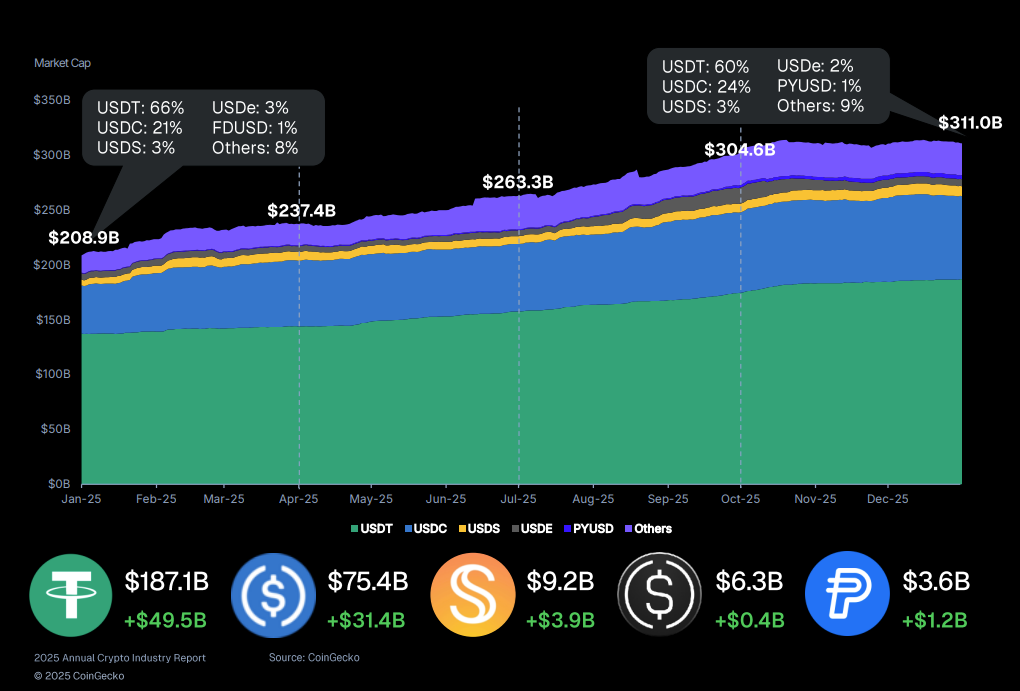
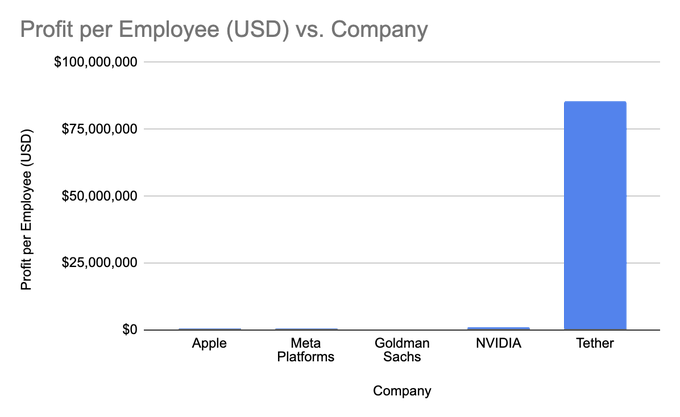
He noted that recent weeks have been dominated by negative news stories, including concerns surrounding Tether (USDT) and the implications of China’s actions on crypto, which he asserts often mark local price bottoms.

Moreover, Deutscher pointed out a shift in market flows from predominantly bearish to bullish. He explained that the trading environment has recently seen a resurgence in buying momentum, with large investors, or “OG whales,” ceasing their selling. This change has been reflected in the order books, indicating a possible stabilization in market sentiment.

Additionally, the liquidity landscape appears to be shifting, with market conditions tightening in recent months. The potential appointment of a new Federal Reserve chair known for dovish policies, coupled with the official end of quantitative tightening (QT), could further influence market dynamics in favor of buyers.

Deutscher concluded by emphasizing that given the extreme levels of fear, uncertainty, and doubt (FUD) in the market, combined with improvements in trading flows, he believes that the odds favor the notion that the Bitcoin price has indeed reached its bottom.

Featured image from DALL-E, chart from TradingView.com 

$62,000 Ethereum? Tom Lee Revives Bullish Call For 2026

5 December 2025 at 21:00

Tom Lee has reiterated one of the most aggressive Ethereum targets in the market, telling attendees at Binance Blockchain Week on 4 December that ETH could eventually trade at $62,000 as it becomes the core infrastructure for tokenized finance.

“Okay, so let me explain to you why Ethereum, now that we’ve talked about crypto, […] is the future of finance,” Lee said on stage. He framed 2025 as Ethereum’s “1971 moment,” drawing a direct analogy to when the US dollar left the gold standard and triggered a wave of financial innovation.

Lee’s Thesis For Ethereum

“In 1971, the dollar went off the gold standard. And in 1971, it galvanized Wall Street to create financial products to make sure the dollar would be the reserve currency,” Lee argued. “Well, in 2025, we’re tokenizing everything. So it’s not just the dollar that’s getting tokenized, but it’s stocks, bonds, real estate.”

In his view, this shift positions ETH as the primary settlement and execution layer for tokenized assets. “Wall Street is, again, going to take advantage of that and create products onto a smart contract platform. And where they’re building this is on Ethereum,” he said. Lee pointed to current real-world asset experiments as early evidence, noting that “the majority of this, the vast majority, is being built on Ethereum,” and adding that “Ethereum has won the smart contract war.”

Lee also stressed that ETH’s market behavior has not yet reflected that structural role. “As you know, ETH has been range bound for five years, as I’ve shaded here. But it’s begun to break out,” he told the audience, explaining why he “got very involved with Ethereum by turning Bitmine into an ETH treasury company, because we saw this breakout coming.”

The core of his valuation case is expressed through the ETH/BTC ratio. Lee expects Bitcoin to move sharply higher in the near term: “I think Bitcoin is going to get to $250,000 within a few months.” From there, he derives two key ETH scenarios.

First, if the ETH/BTC price relationship simply reverts to its historical mean, he sees substantial upside. “If ETH price ratio to Bitcoin gets back to its eight year average, that’s $12,000 for Ethereum,” he said. Second, in a more aggressive case where ETH appreciates to a quarter of Bitcoin’s price, his long-standing $62,000 target emerges: “If it gets to 0.25 relative to Bitcoin, that’s $62,000.”

🔥 TOM LEE CALLS FOR $62,000 $ETH

“I think Ethereum’s going to become the future of finance, the payment rails of the future and if it gets to .25 relative to Bitcoin that’s $62,000. Ethereum at $3,000 is grossly undervalued.” pic.twitter.com/VydvLou9IE

— CryptosRus (@CryptosR_Us) December 4, 2025

Lee links these ratios directly to the tokenization narrative. “If 2026 is about tokenization, that means Ether’s utility value should be rising. Therefore, you should watch this ratio,” he told the crowd, arguing that valuation should track growing demand for ETH blockspace and its role as “the payment rails of the future.”

He concluded with a pointed assessment of current levels: “I think Ethereum at $3,000, of course, is grossly undervalued.”

At press time, ETH traded at $3,128.

Ethereum price

Bitcoin Treasury Company Is About To List on The New York Stock Exchange

5 December 2025 at 20:00

On 3rd December, official filings and press releases announced Twenty One Capital’s upcoming debut on the New York Stock Exchange (NYSE), positioning the company as one of the largest Bitcoin treasury firms ever to enter public markets. The listing brings a dedicated Bitcoin balance sheet into Wall Street’s core ecosystem, signaling a structural shift in how institutional investors can gain long-term BTC exposure.

A Bitcoin Treasury Giant Steps Onto The NYSE Stage

Twenty One Capital’s NYSE entry is anchored by its business combination with Cantor Equity Partners (CEP), the SPAC serving as the public-market vehicle for the transaction. CEP shareholders have already approved the merger, and the deal is expected to close around December 8. Once completed, the combined entity will operate as Twenty One Capital, Inc. and begin trading on December 9 under the ticker XXI. 

The original announcement, released through official press channels and SEC-related filings, emphasized CEP’s central role in enabling the listing and establishing the company’s public-market structure. CEO Jack Mallers also highlighted the milestone on X, noting the company’s readiness for its debut.

According to this press announcement, Twenty One Capital will debut with an estimated 43,500 BTC, a reserve valued near $4 billion at recent market levels. This immediately places it among the top corporate Bitcoin treasuries globally. Unlike companies that hold Bitcoin as a secondary reserve, Twenty One is specifically engineered around a Bitcoin-native model. The firm intends to report “Bitcoin-per-share,” providing investors a transparent look at how much BTC each equity unit represents. It also pledges full, on-chain proof-of-reserves, positioning itself as a high-transparency asset custodian at launch.

This model effectively transforms Twenty One into a regulated balance-sheet wrapper for Bitcoin. It lowers operational friction for institutional allocators who want direct BTC exposure without the complexities of crypto custody, self-storage, or exchange-based acquisition. By listing on the NYSE rather than relying on ETFs or derivatives, Twenty One creates a regulated public equity vehicle that holds, safeguards, and transparently tracks Bitcoin for institutional and retail investors alike.

Wall Street’s New On-Ramp To Institutional BTC Exposure

The market impact of Twenty One’s listing reflects the accelerating integration of Bitcoin into mainstream financial architecture. The company’s backers—including Tether-linked entities, Bitfinex-aligned interests, SoftBank-connected capital, and Cantor’s public-markets network—provide a cross-sector foundation aimed at bridging crypto-native philosophies with institutional liquidity channels. 

Under this structure, Twenty One aims to become a long-term institutional treasury vessel—a regulated balance sheet that accumulates BTC and gives investors an equity-linked way to participate in Bitcoin’s upside without engaging directly with crypto custody or trading infrastructure.

As the NYSE debut approaches, Twenty One Capital embodies a pivot point where BTC’s role in capital markets shifts from speculative asset to institutional treasury instrument. If XXI attracts sustained flow, it could set a new blueprint for how corporate entities engage with Bitcoin—anchoring Wall Street’s next phase of digital-asset adoption.

Bitcoin price chart from Tradingview.com

Top Dogecoin Wallets Begin Rapid Accumulation As Price Struggles, Is A Surge Coming?

5 December 2025 at 19:00

Dogecoin has spent the past few days rebounding after a downturn to the mid-$0.13s, and its on-chain activity is beginning to tell an interesting bullish story. Data from Santiment shows a quiet accumulation trend of hundreds of millions of DOGE tokens taking place among some of the asset’s larger holders, even as the price continues to struggle for momentum. 

This change in wallet behavior is unfolding at a time when Dogecoin’s recent performance offers very little excitement for bullish traders, making the quiet accumulation all the more notable.

Dogecoin Whales Accumulation: What the Numbers Show

The data from Santiment highlights a quick climb in holdings among Dogecoin addresses holding between 1 million DOGE to 100 million DOGE tokens. Particularly, the data shows that the collective holding of this cohort has grown from 27.79 billion on December 3 to 28.34 billion DOGE at the time of writing. That equates to an increase of about 550 million DOGE in roughly 48 hours, a meaningful inflow even for a large-cap crypto like Dogecoin.

This trend shows that these mid-size and large holders view current prices as favorable entry points. Broad accumulation by this “whale tier” often precedes consolidation phases or, in some cases, precedes upward moves, especially if retail sentiment is weak and fewer coins are being sold into the market.

Dogecoin

Interestingly, this accumulation, which kicked off after Dogecoin fell to the mid-$0.13 range on December 3, contributed to a rebound at this level that contributed to the meme coin reaching an intraday high of $0.1504 in the past 24 hours. 

Is A Surge Coming For Dogecoin?

Accumulation by larger wallets can reshape market conditions in subtle but meaningful ways. First, it reduces the circulating supply available to typical retail traders, which can tighten availability and potentially support price stability or upward pressure. Second, it reflects conviction. Large holders are showing confidence in DOGE’s long-term value, even when price action is not yet bullish. 

Furthermore, this recent buying represents the first clear shift in sentiment among whale cohor

s after weeks of steady distribution. Santiment’s data shows that these wallets had been decreasing their balances since mid-October, and the trend coincided with a drop in large transactions that pushed activity to a two-month low.

While accumulation may set the stage for a rally, there are still structural challenges that Dogecoin must face. Technical analysis suggests that $0.138 is a critical level for confirming whether a firm bottom has formed. Sustained trading above that zone in the coming weeks would strengthen the case that the worst of the downturn is over.

At the same time, crypto analyst Bitcoinsensus outlined a possible upside target in the $0.70 to $0.75 region as the peak of the current cycle. This price target aligns with other technical projections for the meme coin.

Dogecoin

Pepe Price Prediction: Official PEPE Website Hacked and Infects Visitors With Malware – Is PEPE About to Go to Zero?

5 December 2025 at 18:21

A cybersecurity firm just identified malicious code on the official Pepe website that could drain visitors’ wallets.

This development threatens to undermine investor trust and favors a bearish Pepe price prediction. But could it really go to zero?

According to Blockaid, a firm dedicated to detecting fraud in the crypto space, the site contains code known as “Inferno Drainer,” designed to immediately siphon funds from any connected wallet.

🚨Blockaid's system has identified a front-end attack on @pepecoineth.

The sites contain a code of inferno drainer. pic.twitter.com/ugor0Um1jU

— Blockaid (@blockaid_) December 4, 2025

The firm told Cointelegraph: “Blockaid detected Inferno drainer code on the Pepe front end, matching a known drainer family we regularly identify.

This is a front-end compromise, where users are redirected to a fake site that injects malicious code to drain wallets.”

The site reportedly auto-downloads malicious code onto users’ computers or mobile phones, which will execute automatically.

Pepe Price Prediction: Lead Team Fails to Address the Threat – How Low Can PEPE Go?

Meme coins have experienced big losses in 2025 as the market has shunned this entire category despite the May-October altseason.

pepe price chart
Source: TradingView

The token has lost more than three-quarters of its value since the start of the year. This reflects the market’s lack of appetite for PEPE.

The meme coin has temporarily found support at $0.0000040 following a robust jobs report in the United States. Although the Relative Strength Index (RSI) shows a mild bullish divergence, the price still needs to climb above $0.0000055 to reverse its latest downtrend.

PEPE may not hit zero after the news, as the website does not compromise the token’s smart contract.

However, the lack of coordination from the lead team does favor a bearish outlook as Pepe’s community engagement seems weak.

In contrast, a new crypto presale inspired by the Pepe viral meme called Pepenode ($PEPENODE) has managed to raise nearly $2.3 million to launch its fun mine-to-earn (M2E) game.

Pepenode ($PEPENODE) Makes Meme Coin Mining Fun and Hardware-Free

Crypto mining has commonly been associated with expensive hardware, complex algorithms, and so on.

Pepenode ($PEPENODE) is here to change that by introducing an M2E model that allows users to easily launch virtual mining servers.

pepenode crypto presale

By buying $PEPENODE, players can launch as many mining rigs as they want to earn points and compete to make it to the leaderboard.

Top miners receive airdrops of popular meme coins like Bonk ($BONK) and Fartcoin ($FARTCOIN) from the project’s rewards pool.

In addition, they can upgrade their setup to increase their output by investing additional $PEPENODE tokens. Up to 70% of the tokens used will be burned forever to reduce the circulating supply.

Mining has never been this easy, and the crypto community will soon start to notice. As such, the demand for $PEPENODE should skyrocket as more users join the platform.

To buy $PEPENODE at its presale price, simply head to the official Pepenode website and link up a compatible wallet (e.g. Best Wallet).

You can either swap USDT or ETH for this token or use a bank card to invest in seconds.

Visit the Official Pepenode Website Here

The post Pepe Price Prediction: Official PEPE Website Hacked and Infects Visitors With Malware – Is PEPE About to Go to Zero? appeared first on Cryptonews.

Appeals court backs Trump’s firings of MSPB, NLRB members

A three-judge panel ruled Friday that President Donald Trump’s firings without cause of Cathy Harris and Gwynne Wilcox, Democratic members on the Merit Systems Protection Board and the National Labor Relations Board, were lawful.

The split 2-to-1 panel decision of the D.C. Circuit Court of Appeals has no immediate effect, since both Harris and Wilcox’s firings were finalized in May. But Friday’s ruling comes as the Supreme Court is expected to soon hear arguments on whether to overturn a 90-year-old ruling known as Humphrey’s Executor — a decision that could expand Trump’s power to shape independent agencies.

In the 1935 Supreme Court ruling on Humprey’s Executor, the justices unanimously found that commissioners can be removed only for misconduct or neglect of duty, effectively limiting when presidents can fire board members.

But when Judges Gregory Katsas and Justin Walker ruled Friday in favor of Trump’s firings of Harris and Wilcox, they argued that MSPB and NLRB fall outside the limitations stemming from Humphrey’s Executor, and that the president can still “remove principal officers who wield substantial executive power.”

“The NLRB and MSPB wield substantial powers that are both executive in nature and different from the powers that Humphrey’s Executor deemed to be merely quasi-legislative or quasi-judicial,” the judges wrote. “So, Congress cannot restrict the President’s ability to remove NLRB or MSPB members.”

Judge Florence Pan, the dissenting panel member and a Biden appointee, argued that the two agencies do fall under the scope of Humphrey’s Executor, and that maintaining the independence of MSPB and NLRB is critical. She wrote that the Trump administration’s “extreme view of executive power sharply departs from precedent.”

“We may soon be living in a world in which every hiring decision and action by any government agency will be influenced by politics, with little regard for subject-matter expertise, the public good, and merit-based decision-making,” she wrote.

The MSPB is an independent agency responsible for adjudicating appeals from federal employees who allege prohibited personnel practices by their agencies. The NLRB investigates unfair labor practices in the private sector and oversees union elections. Both boards are typically composed of members of both political parties.

Trump fired both Wilcox and Harris within his first few weeks in office, but did not point to a specific reason for the terminations. Wilcox and Harris, both of whom were Democratic board members, sued the president over their removals, arguing that they are protected by a federal law meant to ensure MSPB and NLRB’s independence from political considerations — and that the president can only remove them “for inefficiency, neglect of duty, or malfeasance in office.”

Though a federal judge initially ruled the two terminations were unlawful, the Supreme Court reversed that decision in May, effectively green-lighting the finalization of the board members’ firings earlier this year.

In its May decision, the Supreme Court indicated that it was likely “that both the NLRB and MSPB exercise considerable executive power,” which it said would make restrictions on the president’s ability to fire them unconstitutional. Friday’s panel ruling aligns with the Supreme Court’s initial arguments.

The Supreme Court is expected to hear arguments Monday on Trump’s firing of Rebecca Slaughter, a Democratic member of the Federal Trade Commission — a case that may further influence the outcome of both Harris and Wilcox’s terminations.

The Associated Press contributed reporting.

The post Appeals court backs Trump’s firings of MSPB, NLRB members first appeared on Federal News Network.

© AP Photo/J. Scott Applewhite

FILE - The Supreme Court Building is seen in Washington on March 28, 2017. (AP Photo/J. Scott Applewhite, File)

Layoff Rumors And Metaverse Cuts Push Meta Shares Higher—Details

5 December 2025 at 18:00

Meta Platforms Inc. shares climbed after reports that the company is weighing deep reductions to the budget behind its metaverse projects. Investors pushed the stock higher as traders reacted to the possibility that one of the company’s most costly bets could be scaled back.

Metaverse Budget Faces A Major Trim

Based on reports from Bloomberg and Reuters, Meta is considering cuts of up to 30% to the unit that builds its virtual reality and metaverse products, a move tied to planning for the company’s 2026 budget. The change would mainly affect Reality Labs, the division that makes Quest headsets and Horizon virtual spaces.

Reality Labs Has Been Losing Billions

Reality Labs has posted heavy losses since 2020. Reports put the total at more than $60 billion and, by some counts, closer to $70 billion in cumulative losses over recent years. Those sums have kept pressure on management to rethink where the company puts its money.

Investors Reward A Smaller Bet

The market response was swift. Meta’s share price jumped roughly 4%, and some outlets calculated that the move added about $69 billion to the company’s market value as traders reacted positively to a pullback from costly metaverse spending. That reaction signals investors prefer money steered toward projects with clearer near-term returns.

Layoffs Could Follow Early Next Year

Reports have warned that the cuts could bring staff reductions inside Reality Labs, with layoffs possibly starting as early as January 2026. Company leaders reportedly discussed budget scenarios during recent planning meetings. Any job cuts would mark a sharp change after years of heavy investment in virtual reality and related software.

A Bigger Push Toward AI And Wearables

At the same time, Meta has been moving money into artificial intelligence and related hardware. The company finalized a multibillion-dollar deal this year to take a large stake in Scale AI — a pact reported at roughly $14 billion for a near-half ownership — and then hired talent from that startup to help run a new AI effort. That tradeoff shows where Meta’s priorities now lie.

What This Means For Users And Competitors

For people who own or use Meta’s VR gear, this does not mean every project will end. But several initiatives could see slower progress and smaller teams. For rivals and suppliers in the AR/VR space, the cut may reshape who wins short-term device and platform business.

Analysts say the move narrows one major uncertainty for Meta while opening another: how well the company can compete in AI after so many dollars flowed into virtual worlds.

Featured image from Unsplash, chart from TradingView

Critical React Server Components Vulnerability CVE-2025-55182: What Security Teams Need to Know

4 December 2025 at 19:00
CVE-2025-55182 is a critical (CVSS 10.0) pre-authentication remote code execution vulnerability affecting React Server Components used in React.js, Next.js, and related frameworks (see the context section for a more exhaustive list of affected frameworks).

Poland Stalls MiCA-Style Crypto Rules as Lawmakers Fail to Override Presidential Veto

5 December 2025 at 17:28

Poland’s efforts to align its crypto market with the European Union’s Markets in Crypto-Assets framework have hit a major political roadblock after lawmakers failed to override a presidential veto on a sweeping digital-asset bill.

This leaves the country as the last EU member without a national MiCA-style regime.

According to a Bloomberg report, the vote was held in the lower house of parliament on Friday, falling short of the three-fifths majority required to overturn President Karol Nawrocki’s decision to reject the legislation.

The outcome halts Prime Minister Donald Tusk’s push to place Poland’s crypto sector under tight regulatory control and forces the government to restart the legislative process from scratch.

Tusk Flags Crypto as National Security Threat Amid Russia Sabotage Claims

Tusk had framed the bill as a national security measure in the days leading up to the vote.

Addressing parliament, he said the unregulated crypto market had become a conduit for money laundering and foreign interference, including activity linked to Russia and Belarus.

He told lawmakers that Polish authorities had identified “several hundred” foreign entities operating in the domestic crypto market and warned that Russian intelligence and organized crime groups were exploiting digital assets for covert financing.

Government officials have tied those concerns to recent security incidents.

Last month, Warsaw blamed Russia for a blast on a key railway route used for supply traffic to Ukraine, an allegation Moscow dismissed.

Polish security services have also cited cases of underground groups allegedly paid in cryptocurrencies to carry out sabotage activities inside the country.

⚔ Russia is using cryptocurrencies to pay saboteurs carrying out hybrid attacks across the European Union, according to a Polish security official. #Russia #Cryptohttps://t.co/MsOjIZjSfu

— Cryptonews.com (@cryptonews) October 14, 2025

The veto has deepened an already sharp political confrontation between Nawrocki, a nationalist conservative, and Tusk’s pro-European coalition.

The president rejected the bill earlier this month, arguing that it went far beyond EU requirements and threatened civil liberties, property rights, and the stability of the state.

📜 Polish President Karol Nawrocki vetoed a sweeping crypto law, saying it threatens property rights and personal freedoms.#Crypto #Regulationhttps://t.co/BXYSh74MPF

— Cryptonews.com (@cryptonews) December 2, 2025

The blocked law would have implemented MiCA-style rules in Poland, introducing licensing for crypto-asset service providers, investor protection standards, stablecoin reserve requirements, market abuse bans, and strict anti-money laundering controls.

It also proposed granting authorities the power to block crypto-related websites through administrative orders, a provision the president described as opaque and vulnerable to abuse.

Political Tensions Rise After Poland Blocks Sweeping Crypto Oversight Bill

Nawrocki also criticized the scale of the bill, which exceeded 100 pages, contrasting it with far shorter implementing laws in neighboring Czechia and Slovakia.

He warned that heavy supervisory fees and added domestic restrictions would drive Polish crypto firms to register in other EU countries, costing Poland tax revenue and talent.

His chief of staff, Zbigniew Bogucki, said on Friday that the president is open to regulation as long as future proposals are not excessively restrictive.

The failure to override the veto leaves crypto companies operating in Poland without a clear national legal framework ahead of the EU’s July 1, 2026, MiCA compliance deadline.

The political dispute has increasingly drawn in industry players.

Nawrocki has portrayed himself as a defender of the crypto sector and was endorsed before his election by Kristi Noem, a senior U.S. official, at a conference in southeast Poland sponsored by trading platform Zondacrypto.

🇵🇱 Poland has elected Karol Nawrocki, a conservative who says crypto should be “born in freedom, not buried in red tape.”#poland #cryptohttps://t.co/BVJXhQBnrK

— Cryptonews.com (@cryptonews) June 2, 2025

The exchange later stated that it accepts no Russian clients and fully complies with anti-money laundering rules.

Foreign Minister Radosław Sikorski added another dimension to the dispute on Friday, saying on radio RMF FM that the crypto industry sponsors figures across the right wing of Polish politics, explaining the sharp resistance to tighter oversight.

The veto follows months of turbulence around crypto regulation in Poland. In September, lawmakers had initially passed the bill, triggering strong backlash from industry leaders who warned that Poland’s version of MiCA amounted to overregulation.

Zondacrypto’s chief executive at the time described it as a “step backwards” that risked criminalizing core blockchain development activity.

The post Poland Stalls MiCA-Style Crypto Rules as Lawmakers Fail to Override Presidential Veto appeared first on Cryptonews.

Three steps to build a data foundation for federal AI innovation

5 December 2025 at 17:42

America’s AI Action Plan outlines a comprehensive strategy for the country’s leadership in AI. The plan seeks, in part, to accelerate AI adoption in the federal government. However, there is a gap in that vision: agencies have been slow to adopt AI tools to better serve the public. The biggest barrier to adopting and scaling trustworthy AI isn’t policy or compute power — it’s the foundation beneath the surface. How agencies store, access and govern their records will determine whether AI succeeds or stalls. Those records aren’t just for retention purposes; they are the fuel AI models need to power operational efficiencies through streamlined workflows and uncover mission insights that enable timely, accurate decisions. Without robust digitalization and data governance, federal records cannot serve as the reliable fuel AI models need to drive innovation.

Before AI adoption can take hold, agencies must do something far less glamorous but absolutely essential: modernize their records. Many still need to automate records management, beginning with opening archival boxes, assessing what is inside, and deciding what is worth keeping. This essential process transforms inaccessible, unstructured records into structured, connected datasets that AI models can actually use. Without it, agencies are not just delaying AI adoption, they’re building on a poor foundation that will collapse under the weight of daily mission demands.

If you do not know the contents of the box, how confident can you be that the records aren’t crucial to automating a process with AI? In AI terms, if you enlist the help of a model like OpenAI, the results will only be as good as the digitized data behind it. The greater the knowledge base, the faster AI can be adopted and scaled to positively impact public service. Here is where agencies can start preparing their records — their knowledge base — to lay a defensible foundation for AI adoption.

Step 1: Inventory and prioritize what you already have

Many agencies are sitting on decades’ worth of records, housed in a mix of storage boxes, shared drives, aging databases, and under-governed digital repositories. These records often lack consistent metadata, classification tags or digital traceability, making them difficult to find, harder to govern, and nearly impossible to automate.

This fragmentation is not new. According to NARA’s 2023 FEREM report, only 61% of agencies were rated as low-risk in their management of electronic records — indicating that many still face gaps in easily accessible records, digitalization and data governance. This leaves thousands of unstructured repositories vulnerable to security risks and unable to be fed into an AI model. A comprehensive inventory allows agencies to see what they have, determine what is mission-critical, and prioritize records cleanup. Not everything needs to be digitalized. But everything needs to be accounted for. This early triage is what ensures digitalization, automation and analytics are focused on the right things, maximizing return while minimizing risk.

Without this step, agencies risk building powerful AI models on unreliable data, a setup that undermines outcomes and invites compliance pitfalls.

Step 2: Make digitalization the bedrock of modernization

One of the biggest misconceptions around modernization is that digitalization is a tactical compliance task with limited strategic value. In reality, digitalization is what turns idle content into usable data. It’s the on-ramp to AI driven automation across the agency, including one-click records management and data-driven policymaking.

By focusing on high-impact records — those that intersect with mission-critical workflows, the Freedom of Information Act, cybersecurity enforcement or policy enforcement — agencies can start to build a foundation that’s not just compliant, but future-ready. These records form the connective tissue between systems, workforce, data and decisions.

The Government Accountability Office estimates that up to 80% of federal IT budgets are still spent maintaining legacy systems. Resources that, if reallocated, could help fund strategic digitalization and unlock real efficiency gains. The opportunity cost of delay is increasing exponentially everyday.

Step 3: Align records governance with AI strategy

Modern AI adoption isn’t just about models and computation; it’s about trust, traceability, and compliance. That’s why strong information governance is essential.

Agencies moving fastest on AI are pairing records management modernization with evolving governance frameworks, synchronizing classification structures, retention schedules and access controls with broader digital strategies. The Office of Management and Budget’s 2025 AI Risk Management guidance is clear: explainability, reliability and auditability must be built in from the start.

When AI deployment evolves in step with a diligent records management program centered on data governance, agencies are better positioned to accelerate innovation, build public trust, and avoid costly rework. For example, labeling records with standardized metadata from the outset enables rapid, digital retrieval during audits or investigations, a need that’s only increasing as AI use expands. This alignment is critical as agencies adopt FedRAMP Moderate-certified platforms to run sensitive workloads and meet compliance requirements. These platforms raise the baseline for performance and security, but they only matter if the data moving through them is usable, well-governed and reliable.

Infrastructure integrity: The hidden foundation of AI

Strengthening the digital backbone is only half of the modernization equation. Agencies must also ensure the physical infrastructure supporting their systems can withstand growing operational, environmental, and cybersecurity demands.

Colocation data centers play a critical role in this continuity — offering secure, federally compliant environments that safeguard sensitive data and maintain uptime for mission-critical systems. These facilities provide the stability, scalability and redundancy needed to sustain AI-driven workloads, bridging the gap between digital transformation and operational resilience.

By pairing strong information governance with resilient colocation infrastructure, agencies can create a true foundation for AI, one that ensures innovation isn’t just possible, but sustainable in even the most complex mission environments.

Melissa Carson is general manager for Iron Mountain Government Solutions.

The post Three steps to build a data foundation for federal AI innovation first appeared on Federal News Network.

© Getty Images/iStockphoto/FlashMovie

Digital information travels through fiber optic cables through the network and data servers behind glass panels in the server room of the data center. High speed digital lines 3d illustration

The VA’s size and complexity may be keeping top tech minds away, and veterans pay the price

5 December 2025 at 17:13

Interview transcript

Terry Gerton You have spent a lot of time on the Hill lately talking to lawmakers about ways the VA could modernize access to care. Tell us both what your message is and what you’re hearing from the lawmakers.

Sean O’Connor Yeah. And maybe before that, Terry, just to touch on why we think this is so important or why personally it’s so important to me. And then thank you again for having us, and [I’m] looking forward to having this conversation today. So just at the start, I’m a third-generation veteran. Both my grandfathers fought and served in World War II, one in the Pacific, one in Europe. My father and my uncles all served during the during the Vietnam era. And I’m a 9/11 vet and served during nine eleven. So since the 1940s, my family has been, you know, leaning on and relying on the VA for all kinds of support and care. So, it’s a mission and it’s an institution that’s very important to me personally and very important to the fabric of our country. So, I think it’s no surprise the VA has struggled, you know, being in the early forefront of EHR … adoption to kind of being a laggard now in kind of EHR modernization. And there’s 9 million vets that really struggle to get access to timely care for some of the services they need as the VA works to modernize. So we’ve been spending a lot of time just talking to some of the leadership on the Hill around the momentum that seems to be building to try to modernize finally and kind of make access to care easier for veterans and and trying to make sure that as community care grows and the VA and veterans have more options to seek care both inside and outside the VA, that we really move the needle on reducing time to care and improving efficiency of care delivery for veterans. So that’s where we’re trying to, you know, spend time talking to the folks in SVAC and the Hill about, and learn about some of the strategies people are trying to implement when it comes to the Dole Act and some of the other things that people are trying to advance when it comes to improving access to care for veterans and really, we’re a small technology company that focuses on healthcare access. And we’re just, you know, trying to support improving access to care for veterans wherever and whenever we can because it’s a really important institution. It’s the largest health system in our country. And it’s probably one of the most outdated when it comes to the complexity of modernizing care for scheduling and finding appointments for veterans. And there’s a lot of things that I think we can do to help the VA as they work to improve some of those services.

Terry Gerton You’ve said that the VA was built for the last century and you’ve just mentioned the Electronic Health Record that the VA spent billions of dollars on and still doesn’t have an operational system. What would you recommend in terms of practice for modernizing some of those administrative functions of the VA?

Sean O’Connor Yeah, it’s complicated. So I’m not suggesting this isn’t complicated. It’s, the VA has gone through four different attempts to try to modernize and it’s still not successful yet in trying to get to the end goal of improving access to care for veterans and having a global view of care. So I think the first thing we’ve been talking to folks about is, today everything works in silos. And it’s tough to leverage the size and sophistication of the VA caregivers when everything’s in silos. And there’s close to 130 different VistA instances, a growing number of Oracle instances. And one of the leaders we talked to at the VA last time we were in D.C. said that the complexity of VA care delivery is beyond human comprehension. There’s how customized each of those VistA instances are. They’re all a unique Snowflake. They don’t talk to each other, they don’t share inventory. One of the VISNs we’re talking to now about a project, there’s roughly 10,000 appointments that go unutilized every month in his hospital because these different EHR instances don’t talk to each other. So one of the first things we’re talking about is, you know, trying to break down those data cells to bring all the supply and all the demand into one queue. And this is what we do for some of the other largest health systems in the country, Kaiser and other folks, where we take this global view of inventory and then you can use, you know, AI and some of these sophisticated navigation tools that have been built in the digital age of healthcare since the pandemic, to start to look at how you load balance that network a little more efficiently, how you share resources, how you improve internal utilization, improve efficiency, and reduce care gaps across boards. So I think until the VA finds a way through either a massive conversion to a centralized EHR or finding ways to work with technology entrepreneurs and vendors that can break down some of these data silos, they’ll continue to have the problem of trying to transition to a large EMR system in Oracle and through that process still have these 130 other systems and up to 24 different scheduling solutions that have been customized across the various VISNs, none of them working together, none of them sharing information across each other. So you have the largest health system in the country, 9 million veterans and their family members that we’re supposed to provide and care for, and none of this stuff talks to each other to share capacity, to share utilization, to share best practices. It’s a very fragmented, siloed and complicated environment. So until we find ways to break down those silos and share, leverage the power of tech and data to kind of level that playing field, it’s going to be very difficult to move anything in a substantial manner, we think.

Terry Gerton I’m speaking with Sean O’Connor. He’s a Navy veteran and co founder and chief strategy officer at DexCare. The VA is not the only federal agency that’s bad at a big bang tech deployment. So when you talk about an agency-wide solution that breaks down silos, anybody who’s been around for a while probably rolls their eyes at us. What would intermediate sorts of technology be that could provide some solution while an agency-wide solution is underway?

Sean O’Connor Yeah, we’ve been a big proponent in working with other really large healthcare systems in the country and doing, you know, scalable, strategically thought-out proof of concepts and smaller fragments first and then learning and scaling and iterating and adopting quickly. So I think one of the things the VA has for it is it does have the VISN network and the ability to kind of do proof of concepts in some of these smaller regional health systems, learn, iterate and adopt and then look to scale from there. We think that’s the best way to do this stuff. That’s how we’ve done it with Kaiser and some of these other really large healthcare systems. You do smaller proof of concepts, you learn the integration points that are important to move the needle. You begin with the end in mind and understanding the success metrics that are going to be important to drive this. And then you learn, iterate and scale quickly from there with bottom-down and top-down support is the only way to kind of move these things. And at the same time, being very conscious of the providers as well. So all of the technology companies we’ve built, we built inside of large healthcare systems. And often cases, technology is only 50% of the problem. Understanding the provider and the change management and the amount of pressure that those folks are under to provide care, and not being disruptive to their workflows and making their lives less efficient. You have to be very thoughtful about that, or none of the stuff is going to go anywhere. You can’t just have tech for tech’s sake. It has to understand the provider world and how the provider interacts. And you have to be very purposeful in how you build these things out to scale from the bottom up over time.

Terry Gerton One of the big points that you’ve emphasized is real time access to care, especially for mental health services and especially in rural communities. Those are two big complicating aspects of the VA’s network. How can the VA think about addressing those kinds of issues? Is it a technology solution? Is it a culture solution? How do they get on to real time care, especially in mental health?

Sean O’Connor I think it’s both. And I think the hard part is it’s probably more culture than technology. But it’s a — I don’t know of a bigger issue for us to kind of rally around as a community to try to improve access care of veterans than this. So when I transitioned from the service in 2004, the VA received roughly $21 billion to support its mission, and 17 men and women took their life every day to suicide: friends, brothers, sisters, husbands, wives. Fast forward to 2024, the VA received $121 billion to support its mission, and that number is still the same. Roughly 17 men and women, brothers, sisters, mothers, daughters took their lives to suicide. We’ve lost more people to suicide in the last 20 years than we did in, you know, during the 9/11 era and supporting the 9/11 kind of ground-on combat. So it’s it’s a crisis that’s not talked about. We haven’t really moved the needle on it despite spending over $100 billion more to support the healthcare delivery mission of the VA. So it’s clearly not just a technology issue, but not having — going back to your first question, Terry — not having the ability to share resources across the network and reduce time to care and make it easier for vets to find and get into the services initially is a problem. I won’t say that’s the biggest problem, but it certainly doesn’t help. So … mental health services in the veteran community is a really complicated issue … It’s not just about having access to cares. You know, a big portion of people that need the care aren’t even enrolled in the VA, and then there’s a homeless population that’s not enrolled in the VA. And how do you how do you outreach and bring those folks in that need the help the most? So it’s a complicated issue, but not being able to have one 24/7-365 on-demand network that shares capacity across mental health services for the VA is an issue as well. And the technology issues are easier to address. We just got to have people that are willing to address them. The cultural issues and the stigmatism around, you know, raising your hand for help is a harder issue to address, but it’s just something we gotta continue to talk about because it’s a travesty that in over 20 years, that number really hasn’t moved, despite putting, you know, literally over $100 billion more at the overall global healthcare issue.

Terry Gerton Well you talked about capacity there and certainly building out the community network of care is a big issue and a big initiative for VA. Are there issues on the community participant side of this so, that community care providers don’t understand the VA as much as the VA doesn’t understand community care providers?

Sean O’Connor We’re going to run out of time on your podcast. Yes, so that’s to me like, you know, obviously selfishly, like, we want to help the VA as a technology company, but the importance of improving access to care for veterans is at the heart of everything that we’re trying to do here. So the beauty of the VA to me — I mention I’m a third-generation veteran, it is a unique community. So when I when I first got out of the military, I moved to Seattle, like, it was a tough transition going from the military to the corporate world. I didn’t know anybody up here. My family and I grew up in Jersey, all my family was on the East Coast. I would literally just go to the Seattle VA and hang out in the lobby and just talk to people that you know had their Vietnam hat on. It’s a community and a culture that you know, should be protected in this institution, in this country. And some of the caregivers, you know, we’re talking about the technology piece here. These are some of the most mission-driven caregivers in the world. Like, they can make more money outside the VA. They choose to work with this community and this provider network for a reason. So there is an understanding of that that I think we need to protect because there is an understanding of someone that’s come back from deployment and has been through some serious high optempo stuff that comes back, and you just get a different conversation with your primary care provider in the VA than somebody outside the VA. So I think there’s that element that we have to protect. But there’s also the element, frankly, that you know, as a veteran, I like the option to have choice to go outside the VA for services that they may not be expert in. So certainly, you know, wound care, PTSD, that stuff, I think should stay in the VA. But maybe, you know, I’m a former athlete and tore my knee up and can get into an ortho appointment outside the VA. I want to have that optionality. And some stuff like that, the history isn’t as important to the veteran for some of those conditions. So, to have the optionality to go out there and do that is important. But what we’re seeing, at least for some of the areas that we work with is the community providers, one, they don’t have a lot of excess capacity to share with the VA. Every health system is stretched to the gill. Like there’s not a ton of health systems raising hands saying, hey, we have providers sitting on their hands. It’s six to eight months to get into an ortho appointment in some of these large health systems as it is. So to have that capacity to share with the VA, one, is difficult. Some of those things I think are bigger deals than others to your point of, you know, should there be a continuum to care in the VA? I’d argue some services is, just do it in the VA and some are easily, you know, sourced out. And then there’s the whole issue of, when they’re sourced out, how do you manage the care gaps for the veteran? How do we close some of those care gaps as those services continue to rise and the disparate records continue to grow across the network?

The post The VA’s size and complexity may be keeping top tech minds away, and veterans pay the price first appeared on Federal News Network.

© Getty Images/Kiyoshi Tanno

❌
❌