Capital One has agreed to acquire fintech firm Brex in a deal valued at $5.15 billion, marking one of the largest fintech transactions in recent years and signaling the bank’s growing interest in stablecoin-based payments.
Key Takeaways:
Capital One will acquire Brex for $5.15 billion, gaining its payments technology and stablecoin infrastructure.
The deal strengthens Capital One’s push into business payments as competition from fintech firms intensifies.
Growing regulatory clarity and market growth are driving banks to explore stablecoins for mainstream payments.
The US banking giant said on Thursday that the transaction will be structured as a combination of cash and stock and is expected to close in mid-2026, subject to regulatory approvals and customary closing conditions.
As part of the deal, Capital One will absorb Brex’s payments technology, including its stablecoin infrastructure.
Capital One Says Brex Deal Accelerates Push Into Business Payments
“Since our founding, we set out to build a payments company at the frontier of the technology revolution,” Capital One founder and CEO Richard Fairbank said in a statement.
He added that the acquisition would accelerate the bank’s push into business payments, an area where competition from fintech firms has intensified.
Brex, best known for its corporate cards and spend management tools, has increasingly positioned itself at the intersection of traditional finance and crypto.
In October, the company announced plans to become the first global corporate card provider to support native stablecoin payments, beginning with USDC.
That move placed Brex among a small but growing group of fintech firms experimenting with blockchain-based settlement for everyday business transactions.
Brex co-founder and CEO Pedro Franceschi said he would continue to lead the company following the acquisition.
Writing on X, Franceschi said the deal would allow both firms to move faster and invest more deeply, bringing expanded financial tools to businesses that remain underserved by traditional banks.
The acquisition comes as stablecoins draw renewed attention across Wall Street.
Following the passage of comprehensive US stablecoin legislation last year, major financial institutions have begun exploring how tokenized dollars could fit into payments, treasury management, and cross-border transfers.
According to CoinGecko, the total market capitalization of stablecoins has climbed 18.6% since the GENIUS Act was passed in July 2025, reaching a record $314 billion.
That growth has sharpened interest from banks seeking to modernize payment rails while staying within regulatory boundaries.
Stablecoin Transactions Hit $33 Trillion in 2025 as USDC Leads Usage
Global stablecoin transaction value reached $33 trillion in 2025, marking a 72% increase from the previous year, according to Bloomberg data compiled by Artemis Analytics.
USDC emerged as the most-used stablecoin by transaction volume, processing $18.3 trillion, while Tether’s USDT handled $13.3 trillion, despite maintaining its lead by market capitalization at $187 billion.
The surge in activity followed the passage of the GENIUS Act in July 2025, the first comprehensive U.S. regulatory framework for payment stablecoins.
Industry participants say the legislation has provided legal certainty that encouraged broader institutional and global adoption.
As reported, stablecoin usage on fintech platform Revolut also accelerated sharply in 2025, with payment volumes estimated to have climbed 156% year over year to roughly $10.5 billion, as digital dollars gain ground in everyday payments.
A decade-old report from the World Economic Forum (WEF) is resurfacing in the crypto space, highlighting early recognition of Ripple and XRP’s potential in the banking sector. Analysts say the document illustrates how decentralized networks like Ripple may allow institutions to settle payments faster and more directly in the future.
WEF Spotlights Ripple For Settlement Case Study
A crypto market analyst identified as ‘SMQKE’ on X recently revived a 2015 WEF report, sparking fresh discussions in the crypto community. The document explores how traditional banks could interact with emerging payment technologies, and it specifically mentions the company as a system capable of transforming interbank settlement.
The WEF report revealed that, as alternative payment methods, such as decentralized networks, grow in popularity worldwide, banks have the opportunity to integrate them into their services. By adopting these technologies, institutions can make it easier for customers to move value in and out of non-traditional networks while also exploring new financial products. Ripple is cited as an example of a protocol that could serve as one of these alternative rails.
Beyond customer use, these networks can also improve how banks operate internally. By leveraging non-traditional networks, banks could streamline processes and offer smoother, faster products and services. Ripple’s protocol, for instance, enhances this process by enabling real-time settlement between banks, eliminating the need for traditional clearinghouses or correspondent banks.
A case study in the WEF report focuses on German-based Fidor Bank, an online full-service bank that implemented the payment firm for its internal settlement operations in 2014. According to the World Economic Forum, broader adoption of Ripple could enable other banks to settle payments instantly with one another. This early example demonstrates how the crypto payments company was already seen as a practical tool for improving banking efficiency.
Though the WEF report is over a decade old, its insights remain relevant as financial institutions continue exploring blockchain-based payment solutions. Notably, this is not the first time the World Economic Forum has mentioned Ripple in its reports. In its May 2025 report, the international organization highlighted Ripple and the XRP Ledger (XRPL) as key technologies in the future of asset tokenization.
How XRP Fits In The Bank Settlement Scheme
As the native token of the XRP Ledger (XRPL), XRP is designed to serve as a digital bridge for fast, low-cost cross-border payments between financial institutions. By leveraging XRPL, Ripple enables banks and payment providers to settle transactions in seconds rather than days.
Due to its high throughput and ability to handle large transaction volumes with minimal effort, the XRP Ledger appears well-suited for the demands of modern banking. Its efficiency and speed have led many to compare Ripple to SWIFT, the long-standing messaging network used by banks worldwide for international transfers.
Truist posts Q4 2025 EPS of $1.00 on higher expenses and legal charges, misses forecasts but authorizes a $10b buyback and targets 15% ROTCE by 2027. Truist Financial Corporation (TFC) reported fourth-quarter 2025 diluted earnings per share of $1.00, missing…
Belarus took a major step on January 16, 2026, when President Aleksandr Lukashenko signed Decree No. 19 to set rules for so-called “cryptobanks.” The move creates a clear legal spot for companies that want to mix token services with classic banking and payment work.
Decree Defines Cryptobanks And Rules
According to the decree, a cryptobank is a joint-stock company that may carry out token operations alongside banking, payment and other financial services.
Reports have disclosed that these firms must be residents of the Belarus High-Tech Park (HTP) and will be listed in a special register kept by the National Bank.
The new document ties cryptobank status to HTP residency, which aims to concentrate activity inside a known tech zone. That requirement also means the HTP’s rules will play a role in daily oversight.
Requirements For Market Entry
Based on reports from regulators, cryptobanks will face dual supervision: oversight from both the National Bank of the Republic of Belarus and the HTP’s governing bodies. This twin structure is meant to let token services grow while keeping closer control of financial risks.
Officials say cryptobanks will follow many of the rules that apply to non-bank credit and financial organizations, including standards for capital, risk controls and anti-money-laundering checks.
That suggests applicants will need to show robust compliance systems before being accepted into the register.
Belarus: Short-Term Business Plans
National Bank officials said that the decree could be followed by real market steps fast. Aliaksandr Yahorau, the First Deputy Chairman of the National Bank, said Belarus could see its first operating cryptobank within six months after laws and rules are aligned.
He added that cryptobanks may be able to issue loans secured by cryptocurrency, provide payment cards linked to crypto accounts, and allow self-employed people to receive salaries in tokens.
What Comes Next For Belarus
The decree builds on earlier efforts to attract tech and crypto business to Belarus, and it clearly signals a state interest in bringing token activity under formal control.
The next steps will include drafting implementing rules, creating the special registry at the National Bank, and deciding capital and licensing thresholds for applicants.
Featured image from Unsplash, chart from TradingView
Crypto pundit X Finance Bull has alleged that the Bank of America (BofA) is running tests for cross-border payments using Ripple-linked XRP. This follows an earlier statement from Ripple’s President, Monica Long, about the bank and the potential adoption of crypto.
Crypto Pundit Alleges That Bank of America Is Using Ripple’s XRP
In an X post, X Finance Bull claimed that the Bank of America is already running tests with Ripple and that cross-border payments are being rewritten. He added that Ripple provides the technology, the bank runs the tests, and the U.S. ensures legality. In line with this, he remarked that XRP is becoming the core financial plumbing.
In a video shared by crypto pundit Xaif last year, Ripple President Monica Long had mentioned that Bank of America was one of their early partners when they were developing the messaging software online payment solution. However, she didn’t say whether the partnership still exists till now.
Bank of America notably filed a patent for real-time net settlement using a distributed ledger system, which appeared to be based on Ripple’s payment network. This plan has since been abandoned as the bank never moved forward with the application. The bank has, however, opened up to crypto as it now allows its wealth clients to allocate up to 4% to crypto. The bank is also exploring issuing its stablecoin, which could make it a direct competitor to Ripple.
Meanwhile, Long also mentioned how several banks had contacted Ripple for payments and custody services after Donald Trump won the U.S. presidential elections. Ripple’s CEO, Brad Garlinghouse, had also previously mentioned that they secured more partnerships following Trump’s victory, as the U.S. president paved the way for a more regulatory-friendly environment.
Ripple’s Major Existing Banking Partners
Ripple has notably secured partnerships with other major banking institutions in recent times, as several nations provide a more regulatory-friendly environment. The crypto firm has partnered with Bank of New York Mellon (BNY), which is the largest custodian. The bank serves as the primary reserve custodian of Ripple’s RLUSD stablecoin.
Furthermore, Ripple recently announced that its Ripple Prime is an early adopter of BNY’s tokenized deposit services for institutional clients. These tokenized deposits operate on the bank’s private blockchain and don’t involve the XRP Ledger or XRP. Other major banks such as AMINA Bank, Absa, and SBI have also partnered with Ripple.
AMINA recently became the first European bank to integrate Ripple payments into its operations. SBI has also adopted Ripple payments. Meanwhile, the crypto firm provides custody services to Absa, one of South Africa’s largest banks.
At the time of writing, the XRP price is trading at around $2.10, down over 3% in the last 24 hours, according to data from CoinMarketCap.
KBC said it has submitted a full Crypto Asset Service Provider (CASP) notification to the relevant supervisory authority, clearing the way for the launch.
The bank framed the move as a response to growing demand from retail investors for regulated access to cryptocurrencies, while emphasizing the risks associated with the asset class.
“By offering the opportunity to purchase and sell crypto within a regulated framework, we are making innovation concrete and accessible,” said Erik Luts, chief innovation officer at KBC Group. “At the same time, we are demonstrating that KBC remains ready to assume its role as an innovator in a market where new players are rapidly evolving.”
JUST IN: Belgium's second largest bank KBC to become the first bank in the country to offer Bitcoin trading pic.twitter.com/0RuvaVkZNG
The launch will initially be limited to Bitcoin and Ether and will follow an execution-only model. Bolero customers will make their own investment decisions and will not receive personalized investment advice.
Before being allowed to trade crypto, clients must complete a knowledge and experience test designed to assess their understanding of the risks, including price volatility and the possibility of total loss, the bank said.
KBC and Bolero are adopting a so-called “closed-loop” model aimed at reducing fraud and money-laundering risks. Customers will only be able to buy and sell crypto within the Bolero platform, with no ability to transfer assets to or from external wallets or exchanges.
The bank will also provide custody services, meaning clients will not have to manage private keys themselves.
According to KBC, the move is partly driven by demographic trends. Studies cited by the bank indicate that around 45% of Belgians in their thirties already invest in cryptocurrencies.
Bolero’s customer base skews relatively young, with roughly 60% under the age of 40, and “Bitcoin” ranks among the most searched terms on the platform.
Bolero CEO Céline Pfister said the platform aims to introduce crypto “in an accessible way” while ensuring investors are well informed. At launch, educational materials will be made available through the Bolero Academy.
In a similar move, Germany’s second-largest lender DZ Bank secured authorization under the EU’s Markets in Crypto-Assets Regulation earlier last year, enabling it to launch a retail crypto trading platform across the country’s cooperative banking network.
The BaFin-approved “meinKrypto” platform will allow Volksbanken and Raiffeisenbanken customers to trade Bitcoin and other cryptocurrencies directly within their existing banking apps, subject to individual bank notifications.
Russia is moving closer to opening its crypto market to everyday investors, as lawmakers prepare legislation that would remove digital assets from a special regulatory category and allow broader, though still capped, retail participation.
Anatoly Aksakov, chairman of the State Duma’s Committee on Financial Markets, said a draft bill is ready for consideration during the spring parliamentary session.
The proposal would effectively normalize cryptocurrency within Russia’s financial system, signaling a shift toward treating digital assets as part of “everyday finance” rather than an exceptional or experimental instrument, according to local media outlet TASS.
Under the expected framework, non-qualified investors — individuals who do not meet Russia’s professional or high-net-worth criteria — would be permitted to buy cryptocurrency up to a limit of 300,000 rubles, roughly $3,800.
Supporters argue this change would help integrate digital assets more deeply into the economy, making crypto ownership and transactions increasingly “commonplace” for Russian citizens.
While the bill does not signal a fully liberalized market, it marks a notable evolution in Russia’s stance after years of tight controls and skepticism from financial authorities.
Crypto’s use in cross-border transactions
Beyond domestic trading, the bill is also designed with international considerations in mind. Lawmakers expect the new framework to support the use of cryptocurrencies in cross-border settlements and to enable the issuance of tokens in Russia that could be placed on foreign markets.
Such mechanisms are seen as particularly relevant as the country continues to explore alternatives to traditional financial rails for international trade.
The move aligns with a broader, carefully calibrated approach from Russian regulators. In recent months, policymakers have emphasized the need to balance innovation with risk management, especially when it comes to retail investors.
The Bank of Russia has previously warned that unrestricted access could pose systemic risks, calling broad retail participation a “drastic step” if introduced without safeguards.
In December, the central bank proposed a model that would allow non-qualified investors to trade crypto only after passing a risk-awareness test, while maintaining bans on anonymous and privacy-focused digital assets.
Around the same time, the Finance Ministry signaled it was working with the central bank on a coordinated policy that would permit retail access within clearly defined thresholds.
Officials have repeatedly stressed that limits on transaction sizes and investment volumes are essential to preventing excessive speculation and protecting households.
The proposed 300,000-ruble cap reflects that philosophy, offering exposure without opening the door to large-scale retail risk.
Germany’s second-largest lender DZ Bank has received authorization under the European Union’s Markets in Crypto-Assets Regulation, clearing the way for the launch of a retail crypto trading platform across the country’s cooperative banking sector.
The German Federal Financial Supervisory Authority, BaFin, granted the MiCAR license at the end of December.
With the approval, DZ Bank will roll out “meinKrypto,” a digital asset trading platform designed for customers of Volksbanken and Raiffeisenbanken, Germany’s network of cooperative banks.
The platform allows local cooperative banks to offer retail clients access to cryptocurrency trading within an existing banking environment.
DZ Bank acts as the central institution, while each cooperative bank must submit its own MiCAR notification to BaFin before activating the service for customers.
Once approved and integrated into the VR Banking App, meinKrypto will function as a wallet and trading interface for self-directed investors. At launch, the platform will support Bitcoin and other crypto.
Germany’s crypto cooperative banks
DZ Bank said additional assets could be added later, subject to regulatory review.
The rollout will follow a decentralized model. Each cooperative bank will decide whether to offer crypto trading based on its own strategy and risk assessment.
Customers will be able to buy, sell, and hold digital assets without using external exchanges, keeping activity within the regulated banking system.
The technical infrastructure behind meinKrypto was developed by Atruvia, the IT provider for the cooperative financial group, in partnership with DZ Bank. Stuttgart Stock Exchange Digital will provide crypto custody services, ensuring asset safekeeping under German and EU regulatory standards.
The move reflects growing interest in digital assets across Germany’s cooperative banking sector.
A September 2025 survey by the German Cooperative Banking Association found that 71% of Volksbanken and Raiffeisenbanken were considering crypto services, up from 54% the previous year.
About one-third of banks exploring crypto said they planned to launch offerings within five months.
DZ Bank’s entry into retail crypto trading follows earlier efforts focused on institutional clients. The Frankfurt-based lender began offering digital asset services for institutions through partnerships with regulated market infrastructure providers. The new MiCAR license extends that strategy to private customers through the cooperative network.
In a separate development, DZ Bank announced this week that it has joined Qivalis, a European banking consortium working on a regulated euro-denominated stablecoin.
The group of 11 banks plans to launch the stablecoin next year through a new Dutch entity under the same name.
Qivalis is seeking approval from the Dutch central bank to operate as an e-money institution, with a target market entry in the second half of 2026. The consortium says the project aims to support payments and settlement for European businesses and consumers within a regulated framework.
Together, the meinKrypto rollout and the stablecoin initiative signal a broader push by Germany’s cooperative banking sector to integrate digital assets into mainstream financial services under MiCAR.
Almost three million people signed a parliamentary petition opposing mandatory digital ID cards.
Digital right-to-work checks will remain mandatory under the updated policy approach.
The UK digital ID scheme, expected around 2029, will be offered as optional alongside electronic alternatives.
The UK government, led by Prime Minister Keir Starmer, has dropped plans to make a centralised digital ID mandatory for workers, stepping back from a proposal that would have changed how employees prove their right to work.
Under the original plan, workers would have been required to use a government-issued digital credential, rather than relying on traditional documents such as passports.
The reversal follows months of criticism from politicians and civil liberties campaigners, as well as a large-scale public response that questioned whether employment access should depend on one centralised system.
Critics warn of surveillance and data security risks
The mandatory digital ID proposal drew backlash from opponents across the political spectrum, including UK Member of Parliament Rupert Lowe and Reform UK leader Nigel Farage.
Civil liberties groups and campaigners also raised concerns about how a centralised identifier could be used over time.
Opponents warned it could lead to an “Orwellian nightmare” by giving the state a stronger ability to monitor citizens.
Another major fear was that centralising sensitive personal data could create a single “honeypot” vulnerable to hacking and misuse.
Critics also pointed to the risk of mission creep, where a scheme launched for employment checks could gradually expand into other areas, including housing, banking, and voting.
Petition pressure forces a policy climbdown
Public resistance to mandatory digital ID became visible through formal political channels.
Almost three million people signed a parliamentary petition opposing digital ID cards, making the issue difficult for ministers to ignore.
Lowe celebrated the policy shift in a video posted on X, saying he was off for “a very large drink to celebrate the demise of mandatory Digital ID”.
Farage also backed the rollback, calling it “a victory for individual liberty against a ghastly, authoritarian government”.
Digital right-to-work checks stay mandatory from government
Despite dropping plans for a mandatory digital ID credential, officials say digital right-to-work checks will remain mandatory.
That means the government is still committed to keeping employment verification in a digital process, even if it is no longer built around a single government ID system.
When the UK’s digital ID scheme launches around 2029, it is now expected to be optional rather than compulsory.
Instead of becoming the only approved route for proving work eligibility, it will be offered alongside alternative electronic documentation.
Digital euro, EU identity, and crypto privacy debates return
The UK’s partial rollback is also feeding into wider debates about digital control systems, including central bank digital currencies and the European Central Bank’s digital euro project.
In those discussions, civil society groups and some lawmakers have argued for strict privacy guarantees rather than systems that could allow broad traceability.
At the same time, the European Union is moving ahead with its own digital identity framework and digital euro work, while exploring privacy-preserving designs.
One approach includes using zero-knowledge proofs, allowing citizens to prove attributes such as age or residency without revealing their full personal information.
These designs connect to decentralised identity tools and privacy-preserving blockchain technologies, including zero-knowledge credential systems and privacy-enhancing smart contract structures.
The aim is to support compliance while minimising how much personal data is exposed or stored in one place.
Privacy-focused crypto tools have also remained in focus, including privacy coins such as Zcash (ZEC) and Monero (XMR), alongside decentralised identity protocols.
Interest in these tools has continued as regulators step up scrutiny of DeFi and explore identity checks for self-hosted wallets.
The US Treasury’s proposed DeFi ID framework, alongside renewed attention on privacy tokens, shows how policymakers are testing stronger Anti-Money Laundering and Know Your Customer controls on-chain, even as builders push alternative designs.
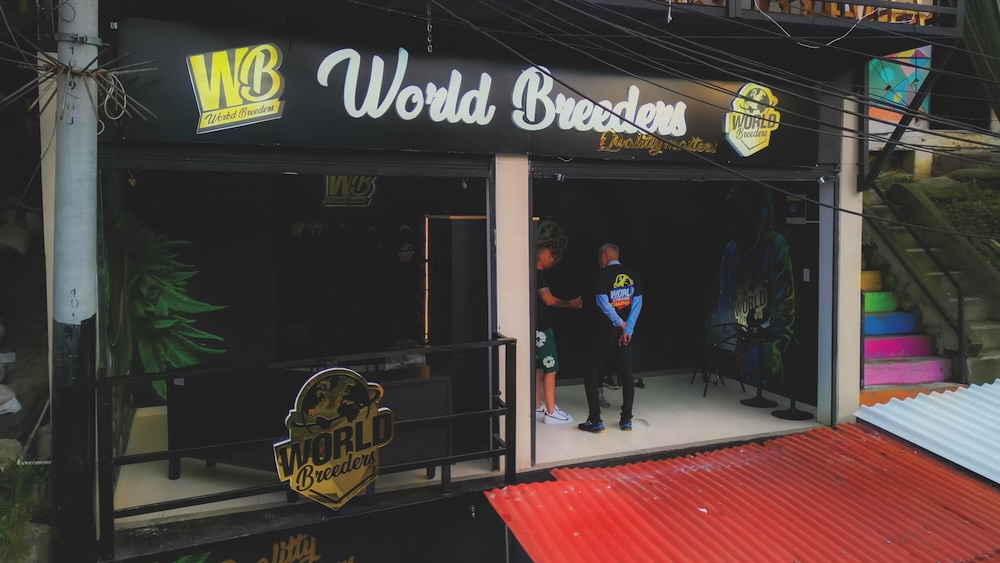
World Breeders, a cannabis seed company with who is making good on its promise to export seeds worldwide, has three founders, and it’s taken them all to shape the trajectory they have now—from working in cannabis on the “underground side,” as co-director Gorka Cid Luaces says, to an enterprise with operations on three continents and the momentum to fulfill their ambitions.
Jon Urriola Rementeria—responsible for seed development, genetics and research—was growing tomatoes for Spanish supermarkets before he switched to hierba with the emergence of the first “cannabis associations” in the País Vasco, Spain’s northeast Basque Country. Leandro García Rodriguez handles client and concept development, while Cid Luaces is responsible for overall management of the company. García Rodriguez is originally from Seville, while Rementeria and Cid Luaces are native to the Basque Country.
World Breeders claims to have dedicated itself to selecting and developing its own genetics with meticulous attention to details.
Rementeria and Cid Luaces first came together in GreenFarm Éibar, which was among the first cannabis associations in Euskadi, as the País Vasco is known in the Basque language. They produced flower for the association in a mixed greenhouse and outdoor operation, with the local police informed.
“The experience with GreenFarm marked our entry into the cannabis industry,” Cid says. “It was a highly rewarding stage, yet also one filled with tension. Working constantly on the edge of legality takes a heavy psychological toll.”
GreenFarm was a member organization of the Federation of Cannabis User Associations of Euskadi (EUSFAC) which coordinates rules and standards for a sector operating in a kind of legal gray area. These regulations allowed private cultivation for the associations but limited members to two grams per day, to be consumed on club premises. Several associations closed during the pandemic in 2020, as these restrictions became untenable, and the sector never fully recovered. Associations continue to thrive in the regions of Catalonia and Andalusia, but regional authorities in País Vasco cracked down, with some clubs busted and herb confiscated.
The GreenFarm veterans moved into the commercial space, anticipating an expanding market for the recreational side as policy in several European countries liberalized. World Breeders was registered as a seed company in the Czech Republic in 2019, though they had already been working with third partner García Rodriguez from Medical Weed Sevilla, one of the first associations in Andalusia’s southern region, for some time with different companies.
Seeking a suitable country for production, the trio settled on the rising industry player of Colombia. Cannabis had been decriminalized there since 1994 and medical marijuana was legalized in December 2015 by decree of then-president Juan Manuel Santos—who would the following year win the Nobel Peace Prize for negotiating peace with the guerillas. Along with the historic peace deal in 2016, Colombia’s Congress that year approved commercial cannabis cultivation under government license.
“We knew we wanted to continue working in the cannabis industry—it’s our passion, and our professional path,” Cid says. “But we were equally clear that we wanted to do it within a fully legal framework. Colombia offered the chance to operate under official licenses, with a transparent regulatory environment and the ability to develop genetics and production at scale, without legal uncertainty. That’s why we took the leap and established our operations there.”
In 2020, World Breeders set up its mixed indoor/greenhouse production facility in Antioquia in the northwest region of the country. Their first greenhouses were in Guarne, a charming mountain town in the Andes. Production began in January 2021 and licensed export of seed to Spain began that year.
The seed stock they’d been working with initially had difficulties adjusting to higher altitude and new, more acidic soil and water conditions. Operations later moved to Ebéjico, on the outskirts of the Medellín metropolitan area, where the altitude is lower and the climate warmer.
Based in Colombia since 2020, World Breeders’ new environment creates exceptional photoperiods: 12 hours of daylight and 12 hours of darkness per day. “It’s ideal for complex terpene profiles,” says co-founder Gorka Cid Luaces.
Conditions here, as it turns out, are exceptional. The light offers perfect photoperiods: about 12 hours of daylight and 12 hours of darkness per day. And the altitude of some 1,400 meters above sea level, Cid describes as “ideal for complex terpene profiles.”
“Over the years, we have dedicated ourselves to selecting and developing our own genetics with meticulous attention to details,” their website boasts.
The company, a seed bank marketing its genetic creations to specialty growers, currently offers nine strains, with names including Clementine Slush, Fizzy Gum and Pink Truffle. Cid takes pride in the descriptive accuracy of these appellations. “If we say it tastes like clementine, it really tastes like clementine,” he assures.
A recent addition is La Hokuzan, developed in cooperation with Barcelona-based Hidden Group Genetics. The Catalan group had bred its own indica-heavy hybrid Hokuzai, which World Breeders crossed with their own Fizzy Gum for a more “sparkling and fruity” feel.
Just coming online is Pilot, developed in conjunction with Spanish rapper JC Reyes, combining his favorite traits—a three-way cross of Pink Watermelon x Jokerz x WB Bubba.
World Breeders is also currently working with growers in the Rif Mountains of Morocco to develop a line of triploid seeds. Triploid strains have three sets of chromosomes, as opposed to the traditional diploid varieties with two sets—one from each parent plant. They typically don’t collect pollen and therefore don’t produce seeds. (Most of the bananas we eat are triploid, as well as seedless watermelons.) This is important for cannabis, because a female plant that doesn’t get fertilized will keep secreting resin indefinitely throughout the growing season, even if there are male plants in the vicinity. A triploid line could be a breakthrough for the centuries-old tradition of hashish production in the Rif, and a boon to growers everywhere.
“We’re confident that this new line will mark a before-and-after in the genetic development of cannabis, positioning World Breeders as a benchmark for innovation and quality in the sector,” Cid predicts.
But expanding markets in Europe represent the real opportunity on the imminent horizon, Cid says, pointing to recent moves toward permitting adult-use cultivation in Portugal and Germany. “What began as a dream of the World Breeders team is now a consolidated reality,” he says.
This story was originally published in issue 52 of the print edition of Cannabis Now.
JPMorgan Chase is weighing whether to offer bitcoin trading services to institutional clients, according to a Bloomberg report citing a person familiar with the matter.
The largest U.S. bank by assets is assessing potential products that could include spot bitcoin trading and derivatives within its markets division. The discussions remain preliminary, and no decision has been made to launch the services, the report said.
Any move would depend on several factors, including client demand, internal risk assessments, and whether the bank can structure offerings that fit within existing regulatory frameworks. JPMorgan has not commented publicly on the report.
The internal review reflects growing interest among large investors for access to digital asset markets through established financial institutions. Hedge funds, asset managers, and pension funds increasingly seek trading venues that align with their compliance, governance, and execution requirements.
Institutional clients often prioritize balance sheet strength, operational resilience, and regulated market access when trading new asset classes. For some firms, those requirements narrow the range of acceptable counterparties, even as liquidity in crypto markets has expanded.
Scott Lucas, who leads digital assets for JPMorgan’s markets division, said in an interview earlier this year that the bank planned to pursue trading activities tied to digital assets but did not intend to provide custody services. That approach would mirror how some banks engage with commodities and other non-traditional assets.
JPMorgan analysts also recently said that bitcoin appears cheap relative to gold after a sharp October sell-off, with strategists pointing to upside potential toward $170,000.
JPMorgan is pivoting on bitcoin
The bank’s interest comes as regulatory conditions in the U.S. begin to shift. Market participants expect progress on federal digital asset legislation, while banking regulators have recently clarified that federally chartered banks may act as intermediaries in certain crypto-related activities.
JPMorgan has expanded its engagement with blockchain technology over the past several years without embracing cryptocurrencies as a core asset class. The bank has worked on tokenization, on-chain settlement, and distributed ledger infrastructure.
Earlier this year, it arranged the issuance and settlement of a short-term bond for Galaxy Digital using the Solana network.
The firm has also said it plans to allow institutional clients to use bitcoin and ether as collateral in lending arrangements, a step that acknowledges demand without committing to proprietary exposure.
A move into bitcoin trading would mark a further shift in tone for JPMorgan and its chief executive, Jamie Dimon, who has long criticized bitcoin while maintaining that clients should be free to make their own investment decisions.
JPMorgan would not be alone among global banks reassessing crypto markets. Standard Chartered has launched spot trading for bitcoin and ether through its U.K. operations, while Goldman Sachs continues to operate a crypto derivatives desk.
The bitcoin price could climb to $143,000 next year as continued adoption through exchange-traded funds and a more accommodating U.S. regulatory backdrop draw new capital into the market, according to a new forecast from Citi.
Analysts at the Wall Street bank set $143,000 as their base-case target for the bitcoin price over the next 12 months. They outlined a bullish scenario that places the price above $189,000, while their bearish case sees the bitcoin price falling to around $78,500 if macroeconomic conditions deteriorate, according to MarketWatch reporting.
The bitcoin price was trading near $88,000 on Friday, down roughly 30% from its late-October peak. The pullback followed a sharp wave of selling after the rally earlier this year, though Citi noted that outflows from spot bitcoin exchange-traded funds have moderated in recent weeks.
“Our forecasts, in particular for bitcoin, rest on an assumption that investor adoption continues with flows into ETFs of $15 billion boosting token prices,” the analysts wrote. The note was led by Alex Saunders, Citi’s head of global quantitative macro strategy.
JUST IN: $2.6 trillion Citi says Bitcoin could hit $189,000 in the next 12 months pic.twitter.com/CgGEZ1XKB1
Citi also pointed to potential regulatory clarity in the United States as a key driver of future demand. The U.S. Senate is negotiating its own version of the House-passed Clarity Act, legislation that would place bitcoin under the oversight of the Commodity Futures Trading Commission. The analysts said clearer rules could encourage broader institutional participation.
The bank’s bearish scenario assumes recessionary pressures and weaker appetite for risk assets. The bitcoin price fell to multi-month lows in November as concerns over high technology valuations and broader macro risks weighed on markets.
The cryptocurrency shed more than $18,000 that month, marking its largest dollar decline since May 2021 amid heavy investor withdrawals.
Banks are embracing bicoin
Two weeks ago, the Bank of America told its wealth management clients to allocate 1% to 4% of their portfolios to digital assets, signaling a major shift in its approach to Bitcoin exposure.
The move allowed over 15,000 advisers across Merrill, Bank of America Private Bank, and Merrill Edge to proactively recommend crypto to clients.
Last week, PNC Bank launched direct spot bitcoin trading for eligible Private Bank clients, allowing them to buy, hold, and sell bitcoin natively through its own digital banking platform without using an external exchange. The move was powered by Coinbase’s Crypto-as-a-Service infrastructure.
Bitcoin price analysis
Bitcoin’s latest sell-off underscores a market stuck in consolidation, where positive macro catalysts fail to translate into sustained upside.
After briefly testing $89,000 on cooler-than-expected U.S. inflation data, bitcoin slid back toward the $84,000 range, extending a correction now entering its second month. The pattern has become familiar: sharp, data-driven rallies followed by quick retracements as sellers defend resistance below $90,000.
Macro signals offer mixed support. November CPI eased to 2.7% year over year, with core inflation at 2.6%, strengthening the case for eventual Federal Reserve rate cuts in 2026. That backdrop helped spark the intraday rally. Yet rising U.S. unemployment and uneven job growth complicate the outlook, reinforcing expectations that the Fed will move cautiously. Markets appear reluctant to price in aggressive easing.
A key drag remains U.S.-listed spot Bitcoin ETFs, which have shifted from consistent inflows to net redemptions. The outflows remove a stabilizing bid that previously absorbed sell pressure, making breakouts harder to sustain even on positive news.
Technically, the bitcoin price is range-bound. Resistance sits just below $90,000, while support near $84,000 is weakening. A decisive break lower could open a move toward the $72,000–$68,000 zone, where analysts expect stronger demand.
Extreme fear readings suggest potential undervaluation, but near-term momentum still favors sellers.
At the time of writing, the bitcoin price is dancing around the $88,000 level.
The Office of the Comptroller of the Currency (OCC) has clarified that national banks may engage in “riskless principal” transactions involving crypto-assets.
In its new Interpretive Letter 1188, the OCC explained that such transactions allow a bank to act as a principal between two customers, buying crypto from one while simultaneously selling it to another.
The bank does not hold the assets in inventory, effectively serving as a broker acting on behalf of clients.
This guidance follows a broader regulatory trend to ease restrictions on crypto activities within the traditional banking sector. In March, the OCC removed prior requirements for banks to seek advance approval before engaging in certain crypto operations, signaling growing acceptance of digital assets in mainstream finance.
In other words, U.S. banks can now offer crypto services in a manner similar to traditional brokerage activities.
Last week, Bank of America announced it would allow wealth management clients to allocate 1%–4% of their portfolios to digital assets.
The guidance applied across Merrill, Bank of America Private Bank, and Merrill Edge, enabling more than 15,000 advisers—previously restricted—to recommend crypto proactively.
Also, earlier today, PNC Bank became the first major U.S. bank to offer eligible Private Bank clients direct bitcoin trading through its own platform, powered by Coinbase’s infrastructure. The service allowed qualified clients to buy, hold, and sell bitcoin without using an external exchange.
The launch followed a strategic partnership with Coinbase announced in July.
Full OCC letter details
In essence, the letter basically confirmed that national banks may engage in ‘riskless principal transactions’ in crypto-assets.
Per the letter, a riskless principal transaction occurs when a bank buys an asset from one counterparty with the simultaneous agreement to sell it immediately to another, without holding the asset in inventory except in rare cases like settlement failures.
In this role, the bank functions similarly to a broker, taking on limited settlement, market, and credit risk.
The letter made a distinction between crypto-assets that are securities and those that are not. Riskless principal transactions in crypto-assets classified as securities are already permissible under existing law, as the bank acts without recourse, meaning it does not assume customer risk.
The OCC extends this reasoning to crypto-assets that are not securities, framing the activity as part of the broader “business of banking.”
Under U.S. law, the business of banking is not narrowly defined, allowing banks to engage in new activities that logically extend their traditional functions.
The OCC analyzed the activity using four factors: its similarity to recognized banking activities, its benefit to banks and customers, the nature of the risks involved, and whether state-chartered banks are authorized to perform it.
Riskless principal crypto-asset transactions align with traditional brokerage and custody services, benefit customers by providing regulated access to crypto-assets, and carry risks familiar to banks, such as settlement risk.
State regulatory frameworks do not prohibit similar activity, supporting the federal permissibility.
The bitcoin price is currently pumping and hit highs of $94,640 today, climbing over 4% in the last 24 hours. Bitcoin’s 24-hour trading volume reached $46 billion. It stands at its seven-day high.
The total circulating supply of Bitcoin is 19,959,806 BTC, with a maximum supply of 21 million. Today’s market capitalization is roughly $1.86 trillion, reflecting the 4% daily gain.
The broader bitcoin space is experiencing some momentum. The Bitcoin MENA conference in Abu Dhabi just wrapped up, full of bank leaders and industry thought leaders sharing their thoughts on Bitcoin’s future.
Earlier today, Jack Mallers’ Bitcoin company, Strike, and Twenty One rang the opening bell at the New York Stock Exchange. The company holds over 43,500 BTC — around $4 billion — making it the world’s third-largest publicly listed Bitcoin holder.
Majority-owned by Tether Investments and Bitfinex, with SoftBank as a significant minority investor, the company blends a Bitcoin treasury strategy with operational Bitcoin-focused financial services under CEO Jack Mallers.
Investors are also paying close attention to macroeconomic signals. Ark Invest CEO Cathie Wood said that the Bitcoin price’s four-year cycle may shift. She suggested the market may have already seen its lows.
Neuberger CIO Shannon Saccocia also noted that expected Federal Reserve rate cuts and gains in AI-driven productivity could lift equities and other risk assets. Stocks often perform well when the economy avoids recession and the Fed is easing.
Bitcoin price’s recent rally comes amid growing adoption and institutional interest. Large players are integrating Bitcoin into payments and financial products.
For example, earlier today, PNC Bank became the first major U.S. bank to offer direct spot bitcoin trading to eligible Private Bank clients through its digital platform, using Coinbase’s Crypto-as-a-Service infrastructure.
The service allows qualified clients to buy, hold, and sell bitcoin without relying on external cryptocurrency exchanges.
Coinbase provides the trading, custody, and settlement infrastructure, while PNC retains the direct client relationship and regulatory oversight.
The launch follows a strategic partnership announced in July and reflects a growing trend among U.S. banks to integrate bitcoin into wealth management services.
Also last week, the Bank of America urged its wealth management clients to allocate 1% to 4% of their portfolios to digital assets, signaling a major shift in its approach to Bitcoin exposure. The move allowed over 15,000 advisers across Merrill, Bank of America Private Bank, and Merrill Edge to proactively recommend crypto to clients.
At the time of writing, the bitcoin price is $94, 061.
PNC Bank has launched direct spot bitcoin trading for eligible PNC Private Bank clients, becoming the first major U.S. bank to offer native bitcoin access directly through its own digital banking platform.
The new service allows qualified private banking clients to buy, hold, and sell bitcoin without using an external cryptocurrency exchange.
The offering is powered by Coinbase’s Crypto-as-a-Service (CaaS) infrastructure, which provides trading, custody, and settlement capabilities embedded directly within PNC’s Private Bank Online platform via its Portfolio View interface.
The launch follows a strategic partnership between the bank and Coinbase announced in July and marks one of the clearest steps yet by a major U.S. bank toward integrating spot bitcoin trading into core wealth management services.
JUST IN: $400 billion PNC Private Bank partners with Coinbase to launch #Bitcoin trading.
Last week, Bank of America began allowing its 15,000 wealth management advisers to recommend a 1%–4% allocation to crypto for clients, signaling a broader Wall Street shift toward mainstream Bitcoin exposure.
The guidance, effective next year, focuses on regulated bitcoin ETFs from Bitwise, Fidelity, Grayscale, and BlackRock, with the bank emphasizing a measured approach and clear expectations around volatility.
Similarly, PNC Private Bank serves high- and ultra-high-net-worth individuals and family offices across more than 100 offices nationwide.
“As client interest in digital assets continues to grow, our responsibility is to offer secure and well-designed options that fit within the broader context of their financial lives,” said Chairman and CEO William Demchak.
He added that the collaboration enables clients to access bitcoin trading “in a controlled and familiar environment” consistent with the bank’s regulatory and risk standards.
Under the arrangement, Coinbase provides the institutional-grade infrastructure that powers execution and custody, while the bank retains the direct client relationship.
Coinbase Institutional co-CEO Brett Tejpaul said the partnership demonstrates how traditional financial institutions and crypto-native companies can work together to expand access to digital assets safely and compliantly, according to Bloomberg reporting.
Tejpaul likened Coinbase’s role to that of cloud providers such as Amazon Web Services, supplying the underlying technology while banks focus on client services.
The service is currently limited to PNC’s private bank clients, whose bitcoin purchases can be funded through their existing PNC investment management and checking accounts.
PNC executives said the rollout represents an early phase of a broader digital asset strategy.
PNC has previously offered clients indirect exposure to bitcoin and ether through ETFs, but this marks the bank’s first move into direct spot trading. According to PNC, the bank plans to expand access to additional client segments, including institutional investors such as nonprofits, endowments, and foundations, in future phases.
There are more cannabis cultivars available now than ever before through seed banks and nurseries in Europe and North America.
Growing from seed has its advantages, but also some issues. Seeds are easier to transport and store than cuttings (clones) from a nursery. Unlike clones, cannabis grown from seed is not genetically identical. The degree of homogeneity varies from breeder to breeder. Although plants of the same variety will be closely related, only skilled breeders can create a uniform crop. Starting plants from seed results in decreased uniformity in the canopy, which is undesirable because it can reduce yield in larger operations. Home growers and those with smaller farms may not mind the decreased uniformity in the crop.
Large-scale farmers are more likely to prefer uniformity, so choosing varieties from a nursery that takes cuttings from mother plants or from tissue culture will help provide those identical genetics that drive uniformity in the canopy.
Whether growing from seeds or from clones, choosing the right cultivar is paramount because they differ not only in their effects but also in how they grow.
Cultivar vs. Strain
The word “cultivar” is derived from “cultivated variety.” Although in popular culture cannabis cultivars are referred to as “strains,” the term “strain” is more appropriately used when referencing viruses, bacteria, or fungi. The use of “strains” in the cannabis industry is widely accepted and understood, however. This book uses “varieties” to refer to groups of related plants and the term “cultivar” to refer to specific varieties that are named landraces or the result of a dedicated breeding program.
Cultivars that do best in outdoor gardens tend to need more light than cultivars that grow better indoors. Some cultivars have very little branching, while others prefer to spread their branches and leaves horizontally. Some are heavy yielders with large colas that will need support as the flowers approach final maturity.
While some varieties may finish in 50 days, it can take as long as 12 weeks before the plant can be harvested. Choosing the variety of cannabis best suited to the grower’s goals can be a daunting task; however, it almost always is a pleasurable one. The right variety is the variety of cannabis that meets those goals, whether they are the plants’ medicinal properties, style of growing, taste, aroma, or any other trait desired by the breeder. There is no single perfect variety of cannabis other than the variety that works perfectly for the grower.
Choosing Cultivars
Choosing which cultivar to grow is one of the most important decisions to make when designing a garden. The two most important factors are the quality of the effects and suitability for the growing environment.
Strain: Blueberry Muffin bred by Humboldt Seeds
Find cultivars that produce desired flavors, aromas, highs, or medicinal qualities. Each cultivar has a genetic blueprint that determines how the plant will react to its environment, and therefore each cultivar will respond differently to different climates and garden setups.
New cultivars are the result of the intense competition among seed breeders hoping to find the next big thing.
How cannabis has been bred and for which traits has changed over the years as well. In 1964, THC was isolated and its molecular structure was described. It was understood that THC was driving all of the plant’s effects, which drove breeders to narrowly focus on THC content.
New cultivars were also bred for many other characteristics such as yield, flavor, aroma, medicinal effects, size, and maturation length, but no other aspect of the cannabis flower has been selected for more than THC potency. Popular varieties from the ’60s and ’70s usually had a THC potency that ranged between 6 and 12%, but ordinary Mexican tested in the range of 2 to 4%.
Breeders selected for a wide variety of desirable traits in new varieties. At first they concentrated on increasing potency, decreasing ripening time, and decreasing the growth-to-yield ratio. Later they developed more of an interest in terpenes, which provide the odor as well as “personality” of the high, as well as for cannabinoids other than THC, such as CBD and CBG. Outdoor environments have come into favor due to legalization, as well as a proliferation of autoflowering varieties, homogeneity, and a more scientific approach to obtaining intentional results and micro-adaptation to specific outdoor environments.
Cannabis is particularly easy to breed because it is dioecious, meaning unlike almost all other annual plants, plants are either male or female. This makes it easy to control pollination; separate all males from the females and only use pollen from selected males to pollinate females. Cannabis is wind-pollinated, so a male in proximity to a female plant will pollinate it. Flowers can also be hand pollinated. For this reason, it is relatively easy for a grower to experiment with breeding.
Compare cannabis breeding to tomatoes. Not only does each tomato plant carry both sexes, but tomatoes have “perfect” flowers, meaning each flower carries both sexes. To breed them, the stamen from the designated female must be removed before it matures, which requires tweezers and a sharp eye. Then pollen must be collected from the candidate male, which is painstaking.
As a result of the ease of breeding there are literally thousands of companies producing cannabis seed for commercial sales, so obtaining seeds has never been easier. They are available over the internet as well as in dispensaries. Many of these companies advertise in magazines that feature cultivation articles.
Clones are also available. Just as many people prefer to use tomato starts rather than germinate seed, clones provide a head start and save 10–15 days of cultivation. Another advantage of clones is that they have identical genetics and respond to the environment in a uniform way.
The “ideal” environment for one variety may not be optimal for another. Having cultivars that are genetically identical optimizes large-scale production, since all the plants will thrive under the conditions that the cultivator provides. Creating many microclimates to accommodate the different varieties is expensive and difficult to do if the commercial grower’s goal is to increase yield without compromising quality.
Home gardeners’ preferences tend to be more varied, and their cultivar selections reflect that diversity. Home gardeners have different goals in mind, which is why growing from seed or having many different varieties in the same garden is perfectly acceptable. Home gardeners may be less interested in crop yields than they are with crop quality. They tend to grow different varieties so they can harvest at different times and choose from a selection of cannabinoid potencies, qualities of the high, tastes, and aromas.
It is true that the heterogeneity of maturation times and types of cannabis grown in the same garden often result in smaller yields than from a homogeneous garden. Heterogeneous gardens require more individualized attention to the different cultivars, resulting in more individual care. Most home gardeners don’t mind, especially when they see the fruits (or flowers) of their labor.
Plant Size
The height and spread of the canopy are two varietal characteristics to consider when choosing which cultivar works best in the garden. This is particularly important whether the garden is indoors or outdoors. Sativa-dominant cultivars tend to grow taller and stretch farther than indicas. An outdoor garden with abundant sun and plenty of room for plants to spread out works well with strong sativa varieties such as Sour Diesel, Lemon Skunk, Vanilla Frosting, Lemon Tree, Runtz, Orange Creamsicle, or Lemongrass. These tall cultivars thrive in outdoor gardens with no height restrictions, and the extra intensity of direct sunlight keeps the plants from stretching too much. If they are pruned early in vegetative growth, they will bush out more rather than grow tall. The higher light intensity promotes shorter branching and thus denser buds.
Strain: Ayahuasca Purple bred by Barney’s Farm
Indoor gardens typically have size restrictions. Tall varieties can potentially grow close to or into the lights, causing damage to the plants and undesirable flowers that are light and airy. Shorter varieties such as those associated with most indica-dominant and many hybrid varieties are ideal for smaller indoor grows. Cultivars such as Do-Si-Dos, Wedding Cake, Grease Monkey, Lava Cake, Northern Lights, or Super Skunk have indica characteristics and thrive in indoor climates. However, an indoor garden does not mean it has to be relegated to only growing indicas. There are plenty of sativas and hybrids such as Sour Diesel and OG Kush that thrive in even the smallest of indoor settings if they can be grown with either the SOG or ScrOG method.
Maturation Speed
Cannabis varieties have different rates of maturation once they are set to flower. Typically, this ranges from seven to 11 weeks. The time it takes to reach maturity affects the choice of variety in a couple of significant ways. First and foremost, quicker-maturing varieties allow for more harvests per year. If a grower is looking to maximize yield, and streamline production, quicker plants are a big plus. The other significant reason is that late-season varieties are inappropriate to grow in areas with short growing seasons.
Outdoor growers consider maturation speed depending on the weather in autumn, which can be cold and moist, but varies regionally. Gardens in climates that remain warm through the fall may work best with varieties that have longer flowering times. Finishing the flowering cycle while temperatures are still hot outside can cause the flowers to be less dense and lose a lot of their terpenes (aroma and flavor). Flowering later when temperatures are cool will delay ripening. Conversely, outdoor growers in climates that experience early frosts should plant cultivars that are ready to harvest early in the fall. A lot of the autoflowering varieties flower quickly and still have a lot of the original qualities that make them so great.
Yield
Once the size and maturation speed of the varieties have been decided, maximizing yields is often the next decision that needs to be considered when choosing which cultivar works best for a garden. High-yielding crops provide more medicine after harvest. These varieties are vigorous growers and will usually have higher cannabinoid potencies as well.
Maturation speed has a negative correlation with crop yield. In other words, the faster the maturation time, the lower the yield tends to be, and vice versa. Slower maturing varieties have more time to develop flowers, and thus the yields tend to be larger. However, a quick maturation time and low yield are not mutually exclusive. If it is a necessity to have a quick maturation time, the resulting smaller plants can be more densely planted to fill out the given canopy with more buds.
Examples of heavy yielders are Blue Dream, Sour Diesel, Big Bud, Critical Kush, Super Silver Haze, and White Widow.
Flavor, Aroma & High
The quality of the flower is more important than the yield for many growers. The flavor and aroma of cannabis comes exclusively from the terpene profiles of the varieties. Some cultivars have very distinct noses. The decision to grow a specific variety based on flavor and aroma is a personal decision that is best decided by the end user.
Some people prefer fruity cultivars such as Strawberry Cough or Blackberry Kush. Others prefer a sweet flavor from varieties such as Durban Poison, GSC, or some of the “cake” varieties such as Wedding Cake or Ice Cream Cake. Sour Diesel, Chemdawg 4, and Hindu Kush all have gassy noses due to a relatively high concentration of limonene. Flavor and aroma preferences are personal, but they are also very closely related to the high that comes from smoking/vaping these varieties as well.
The high from cannabis comes from the interplay of the different cannabinoids and terpenes found in the plant. With hundreds of active ingredients, there are practically endless terpene and cannabinoid combinations. Finding the high that works best for different situations is part of the fun of exploring cannabis. Terpenes such as a-pinene and limonene are bronchodilators and tend to give an uplifting energetic high. B-caryophyllene and linalool are smooth muscle relaxers and are generally found in varieties that provide a relaxing, calming high. Cannabinol (CBN) is the only cannabinoid that is regularly mentioned in lab testing that is also a smooth muscle relaxer and can cause that calming high. Many consumers use cannabis to ease anxiety and will look to cultivars with higher than average cannabidiol (CBD) content, such as AC/DC, Cannatonic, Sour Tsunami, Harlequin, and Ringo’s Gift.
Mold Resistance
Cannabis is susceptible to gray mold (Botrytis cinerea) and powdery mildew, which is caused by a number of fungal species. Both of these fungal infections thrive in stagnant, high-humidity environments. Gardens with humidity controls or naturally low humidity and substantial air movement around the plants are less susceptible to mold and fungi. However, cannabis is grown all over the world, and there are a number of regions where high-quality cannabis is grown in high-humidity environments. Cultivars that are grown in high humidity gardens need to have some level of mold resistance.
Cultivars derived from varieties and hybrids from Thailand, Vietnam, and other countries in Southeast Asian where it is humid have a higher resistance to mold. Varieties such as Pineapple Thai, Super Lemon Haze, Voodoo, and Juicy Fruit have Thai ancestry and are less prone to fungal infection.
Russian institutions have responded to a call from а public movement for joint efforts to identify cryptocurrency transfers related to drug trade. The anti-drug organization, Stopnarkotik, recently asked the interior ministry and the central bank to investigate alleged connections between U.S.-sanctioned crypto exchange Suex and a darknet market operating in the region.
Russian Authorities Respond to Stopnarkotik’s Request for Action Against Drug Trade
The Ministry of Internal Affairs of the Russian Federation (MVD) and Bank of Russia have agreed to cooperate with the All-Russian Public Movement Stopnarkotik on identifying financial flows involving cryptocurrencies obtained as a result of drug sales. The Russian online news portal Lenta.ru reported on the agreement, quoting a letter from a high-ranking MVD official.
The letter signed by Major General Andrei Yanishevsky, head of the Drug Control Department at the Interior Ministry, has been issued after a working meeting with representatives of the anti-drug organization. It comes in response to Stopnarkotik’s call for the two institutions to carry out an investigation focused on Suex, a Russia-based OTC crypto broker, and its links to other companies and banks.
In September, the U.S. Treasury Department blacklisted the Czech-registered entity Suex OTC s.r.o. which operates out of physical offices in Moscow and Saint Petersburg. The crypto platform is suspected of processing hundreds of millions of dollars in coin transactions related to scams, ransomware attacks, darknet markets, and the infamous Russian BTC-e exchange.
Since launching in 2018, Suex is believed to have received over $481 million in BTC alone. Close to $13 million came from ransomware operators such as Ryuk, Conti, and Maze, over $24 million was sent by crypto scams like Finiko, $20 million came from mixers, and another $20 million from darknet markets such as the Russia-targeting Hydra, blockchain forensics firm Chainalysis detailed in a report.
In its request to the Russian authorities, following the announcement of the U.S. sanctions, Stopnarkotik noted that Suex had been “involved in money laundering for the largest drug-selling platform.” The organization pointed out that the market’s drug trafficking in the Russian Federation amounts to an estimated $1.5 billion a year or more.
It also mentioned the name of one of Suex’s co-founders and highlighted its alleged connections with other crypto companies and financial institutions such as Exmo, a major digital asset exchange in Eastern Europe, financial services company Qiwi, a leading payment provider in Russia and the CIS countries, as well as the Ukraine-based Concord Bank.
Stopnarkotik asked Bank of Russia to provide its assessment on the matter, check if the operations of Suex and other entities are being conducted in accordance with the law in Russia, and consider blocking Russian payments to a Ukrainian organization.
“We received a response from the Ministry of Internal Affairs and the Central Bank. We also had a personal meeting with the Ministry of Internal Affairs so that they had an understanding of how we receive information, including about money laundering,” the movement’s chairman, Sergei Polozov, has been quoted as saying. He added that the Russian Interior Ministry is ready to accept Stopnarkotik’s data and work together with the organization.
Do you expect the cooperation between Stopnarkotik and Russian government institutions to develop further? Tell us in the comments section below.

 Login
Login