As CEO and co-founder of Innexo, Dominique van Gruisen leads one of Europe’s most advanced cannabis research and development facilities, where cultivation science meets pharmaceutical precision. Innexo is a Dutch cannabis contract research organization that designs and conducts cultivation and technology trials for clients across the cannabis sector, helping companies test innovations under controlled, data-rich conditions.
His impressive career in cannabis spans two decades and encompasses Belgian patient advocacy and clinician networks, as well as European biotech lobbying and cultivation consulting on both sides of the Atlantic. Van Gruisen’s goal is ambitious: to take cannabis beyond cultivation and into a world of validated data, reproducible genetics and true pharmaceutical reliability, which demands consistency. So, how do you do that?
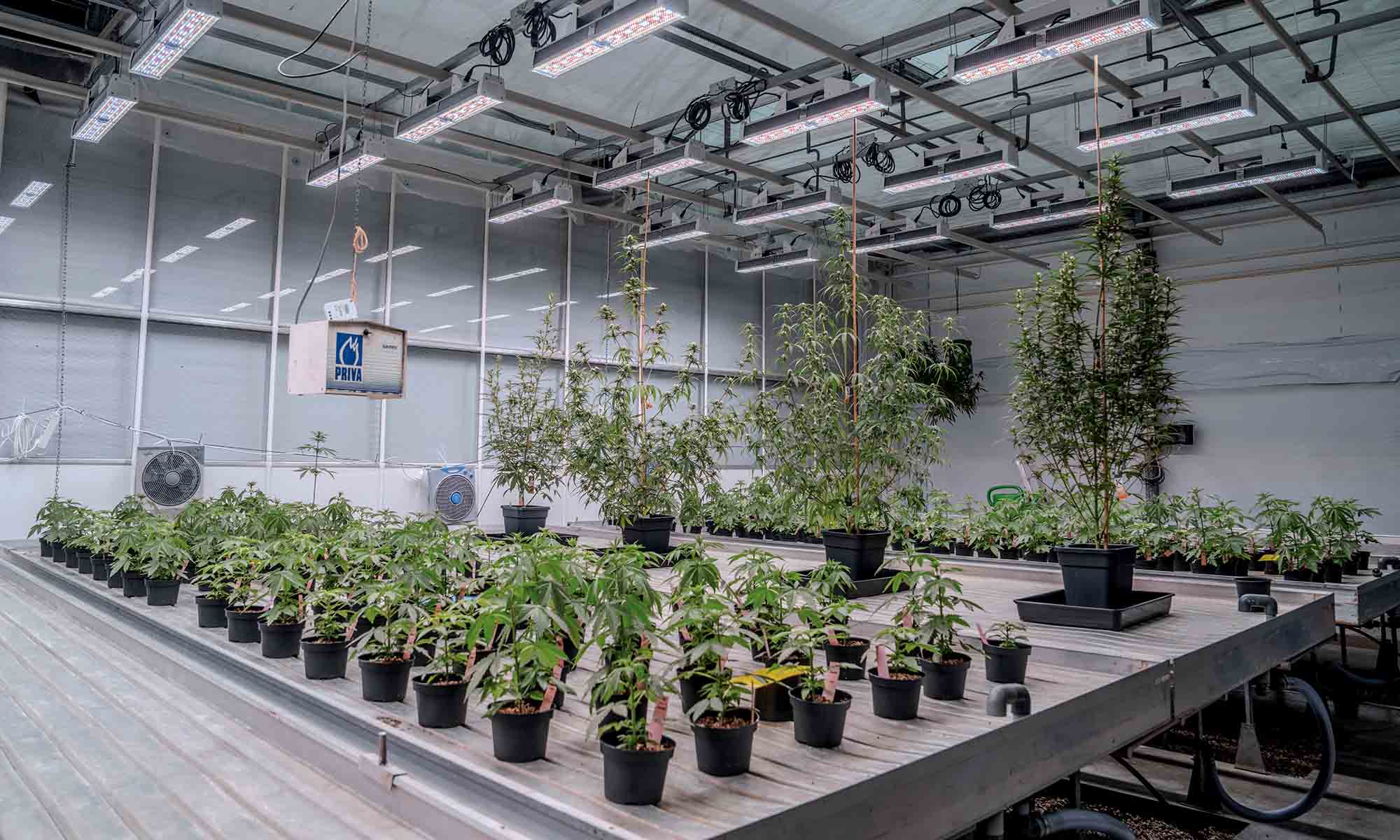
Innexo’s indoor grow facility at work.
Based in Meterik, a village in The Netherlands, Innexo is conducting independent trials on lighting, nutrients and genetics in an effort to generate measurable, reproducible data that brings cultivation closer to pharmaceutical standards. And through some key partnerships, they’ve come up with some profound techniques. The research center is currently working with Las Vegas-based lighting company Fohse, examining how precision lighting from their Cobra LED system affects plant structure, cannabinoid expression and energy efficiency.
“We’re using the Cobra Pros, and soon we’ll have tunable-spectrum models from Fohse,” van Gruisen says. “They have sensors that constantly read the natural light in the greenhouse and adjust automatically. If we can work with a dynamic spectrum that mirrors the sun, we can replicate the same conditions anywhere on Earth, in any season.”
The study benchmarks a range of metrics—from cannabinoid and terpene expression to morphology and energy use—to quantify how light affects consistency. “Their system fills your stack with data,” van Gruisen says. “That’s what we’re after: information that lets us build validated cultivation models rather than assumptions.”
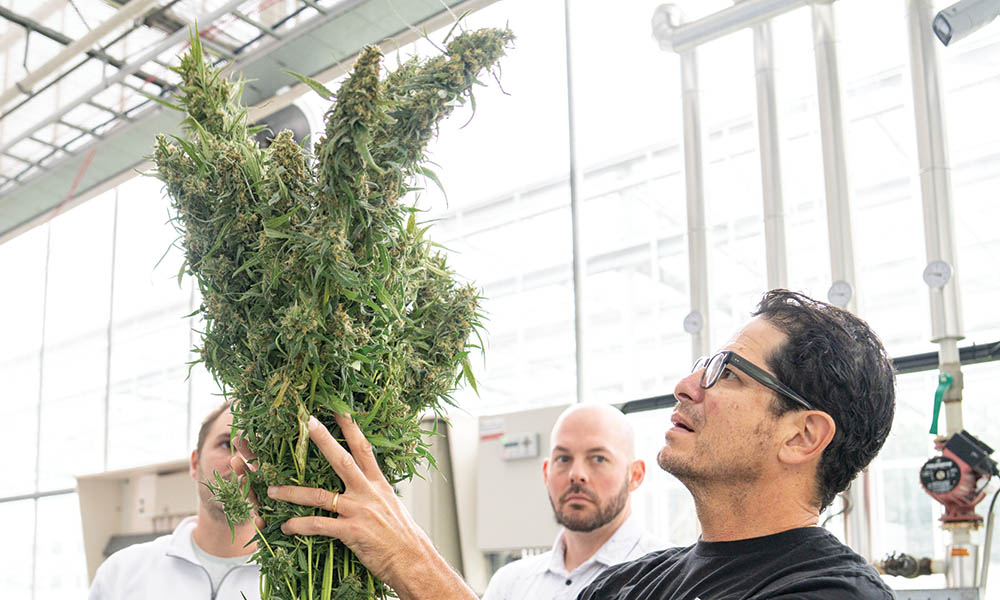
Fohse’s Michael Rosenfeld admires the latest grow.
Lighting defines the environment; genetics define the foundation. To address that, Innexo partnered with sister companies Innoveins Seed Solutions and SeQso to develop—wait for it—the world’s first AI-driven seed-sorting system for cannabis.
“They collect the spectral data of each seed in a non-destructive way,” van Gruisen says. “Then they grow that seed, record its traits, feed those traits back into the system and the algorithm learns which spectral patterns predict which plant characteristics.”
When he first heard of the technology, van Gruisen says, “I literally pulled my car over to call people.” Tests confirmed it worked for cannabis, opening the door to non-destructive quality-control certification at the seed level. “If there’s something you can distinguish, you can design a seed-sorting algorithm and push a batch through to separate the good from the bad,” he says.
The implications of this technology stretch beyond yield. AI analysis can detect pathogens such as hop latent viroid and certify genetic quality before cultivation begins. “Companies are developing F1 hybrids—stabilized lines,” van Gruisen says. “By scanning the seeds, you can fine-tune even further so your starting material is as robust as it can be.”
“By scanning seeds, you can fine-tune even further so your starting material is as robust as it can be,” van Gruisen says.
Van Gruisen believes AI-based seed fingerprinting could also reduce the industry’s dependence on cloning. “Even when you use clones, you still find big deviations in secondary metabolites depending on the season or humidity,” he says. “It’s very difficult to provide a consistent product in flower form.” Regulatory frameworks, he notes, demand pharmaceutical precision.
“When regulators say cannabis has to be a medicine, they mean it should be 98 to 102 percent consistent with what’s on the label,” he says. “That’s almost impossible with a natural product. But with solid F1 hybrid genetics that start from seed, you add another quality-control checkpoint.”
For cultivators, F1 seeds offer cleaner starts, lower costs and easier scalability. For patients, they promise reliability—the same genetics, the same relief—every time.
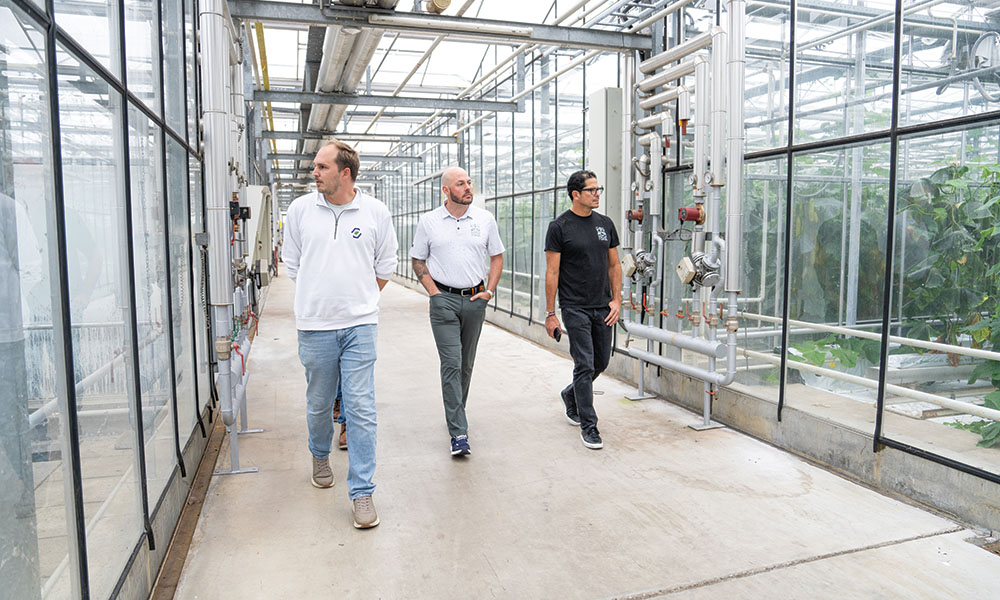
walk this way. Innexo Co-Founder and CEO Dominique van Gruisen, Tom Stanchfield, Fohse’s Senior Vice President and Michael Rosenfeld, Fohse’s Chief Marketing Officer admire the impressive Innexo complex in the village of Meterik in The Netherlands.
Van Gruisen describes Innexo as a link between two sectors that rarely speak the same language. “Growers talk in grams per square meter,” he says. “Pharma talks in validated datasets and deviation tolerances. We sit in the middle, making those conversations possible.”
That bridge extends beyond technology. Innexo is also reviving iconic legacy cannabis genetics—long-flowering, terpene-rich cultivars—and reintroducing them through advanced lighting and AI-guided cultivation. He aims to right some of the wrongs the industry has made. “We took a lot of wrong turns with cannabis in the last 20 years,” he says. “It’s time to rediscover what made this plant valuable in the first place and do it with proper science.”
Legal weed looks good on paper. Dispensaries that feel like Apple stores. Influencer product drops. Celebrities launching “wellness” brands from Manhattan to Malibu. But peel back the shiny packaging and the question hits hard: Who’s really cashing in on cannabis, and who’s still paying the price?
That’s the heartbeat of Kiss My Grass, a short documentary that refuses to let the industry off the hook. Written by Roy Wood, Jr., directed by Mary Pryor, Mara Whitehead, co-directed by Tirsa Hackshaw and narrated by actor and activist Rosario Dawson, the film doesn’t waste time glamorizing the Green Rush. Instead, it zooms in on the people of color, particularly Black women, who’ve had to fight their way into a market that was never built for them.
In less than 20 minutes, Kiss My Grass manages to hit every nerve with candid interviews that strip the false promises of legalization down to its bones. It’s in these raw, personal stories from trailblazers including Kim James, Matha Figaro, Jessica Jackson and Coss Martewhere the documentary hits hardest. Watching them, you’re forced to confront a painful reality: Legalization was sold as a new beginning, but the same old systems keep showing up with new branding.
After watching the film, I had a lot of questions about what it actually takes to make progress in such a complicated system and had the opportunity to ask some of the featured individuals about what’s changed, what hasn’t and what needs to happen.
“True equity requires structural repair,” says Jackson, director of social equity for Minnesota’s Office of Cannabis Management. “That means reinvestment into harmed communities; expungement and record repair; rules that prevent hidden ownership and monopolization; workforce protections; and readiness tools like technical assistance—all interventions Minnesota provided from the start in Chapter 342 legislation.”
While the cannabis industry is expected to hit $45 billion in 2025, equity programs meant to level the field often feel more like public relations stunts than progress in some states. The numbers from around the country tell the story: Only 0.35 percent of venture capital reaches Black women founders. Black people are still 3.7 times more likely to be arrested for possession.
“Access to capital, affordable real estate, and navigating complex regulations are major barriers,” says James, who leads Detroit’s Office of Cannabis Management. “Many equity programs don’t address the systemic economic disadvantages experienced by people who come from communities disproportionately impacted by the War on Drugs.”
Kiss My Grass appeared at the prestigious Tribeca Fim Festival this past summer in advance of its wider digital release. Wanda James, Simply Pure’s CEO and Regent at the University of Colorado, appears in the movie.
It’s just even more of a reminder that legal doesn’t mean fair for the communities that got felonies instead of spots on the Forbes list for selling cannabis.
As Coss Marte, founder of fitness empire CONBODY, puts it, “If you’re making millions off cannabis, you have a moral obligation to invest in the communities that paid the price for prohibition,” he says. “That means jobs, ownership and capital—not charity optics. Repair starts when money, mentorship and opportunity flow directly to the people most impacted.”
Still, this isn’t a film that wallows in defeat. It’s about persistence. You feel the exhaustion, but also the refusal to give up. You see the discouragement, but also a spark of hope for the future. If there’s one message this film makes clear it’s that equity won’t grow on its own, but it can take root if we tend to it.
For Figaro, the founder behind ButACake and CannPowerment, the future of cannabis isn’t just about who gets in the door now, but what the next generation of women of color will inherit. When asked what needs to change to make that possible, she didn’t hold back. “My hope is that future generations inherit thriving cannabis businesses and the tools to bring underrepresented voices to market,” she says. “But to get there, we must dismantle the small-minded and misinformed policymakers writing rules they’ll never be forced to follow.”
After making its debut at the Tribeca Film Festival this past summer, Kiss My Grass is set for a wider digital release at a later date. Whether you work in cannabis or just care about justice, it’s essential viewing about what happens when an industry sells progress but delivers privilege. It leaves you moved. It leaves you mad. And, just maybe, that’s the point.
In a chandelier-lit ballroom at Berlin’s Hotel Adlon Kempinski, a quiet revolution is unfolding. Dozens of investors lean in as founders from Zurich, Barcelona, Lisbon and Warsaw pitch a room full of international cannabis investors and the CEOs of the EU’s next cannabis giants. This is a Talman House event, and it’s where European cannabis capital finds its match.
After years of uneven reform, Europe’s cannabis market is finally entering its investment era. As North America wrestles with oversupply and political fatigue, European operators are drawing global attention to their pharmaceutical precision, export potential and growing regulatory stability.
From Albania to Spain and everywhere in between, governments are expanding medical cannabis access and homegrow rights in various forms. In Germany, the new conservative CDU government is cautious on cannabis, but indications suggest they’ll still advance adult-use legalization. Personal possession of up to 25 grams is allowed in public in Germany. Meanwhile, medical supply chains are growing across Western and Eastern Europe through controlled licensing and pilot programs.
Europe remains a frontier defined by both opportunity and red tape. Many deals favor convertible debt or structured instruments over pure equity. Despite the cautiousness, institutional interest is rising. Germany’s Demecan, for example, recently hit a €100 million valuation backed partly by US investors. Last September, Canada’s High Tide purchased a 51 percent interest in cannabis pharma operator Remexian AG with an option to pick up the other 49 percent. Europe’s cannabis infrastructure is maturing and investors are watching closely.
With most national markets still small in scale, the long-term play centers on trading internationally. Companies are positioning themselves to supply EU GMP-certified cannabis and cannabinoid-based pharmaceuticals across the region. While the legal framework is evolving, transparent governance and robust due diligence are non-negotiable for investors. Recent scandals like the collapse of the JuicyFields Ponzi scheme have left many wary.
Among the new generation of European investment platforms, The Talman Group stands out as a credible, selective, membership-based network connecting cannabis and cannabis-adjacent companies with global investors. Its model blends exclusive events in prestigious venues with curated deal sourcing and introductions to sophisticated investors who want compliant and investable opportunities.
In April 2025, Talman hosted more than 140 participants at the Adlon Kempinski in Berlin, where a handful of highly curated companies pitched to investors in a Shark Tank-style setting. As the investment arm of Europe’s largest B2B conference and expo, International Cannabis Business Conference (ICBC), Talman lends a layer of legitimacy to an industry still working to shake its early growing pains in the adolescence of Europe’s cannabis industry.
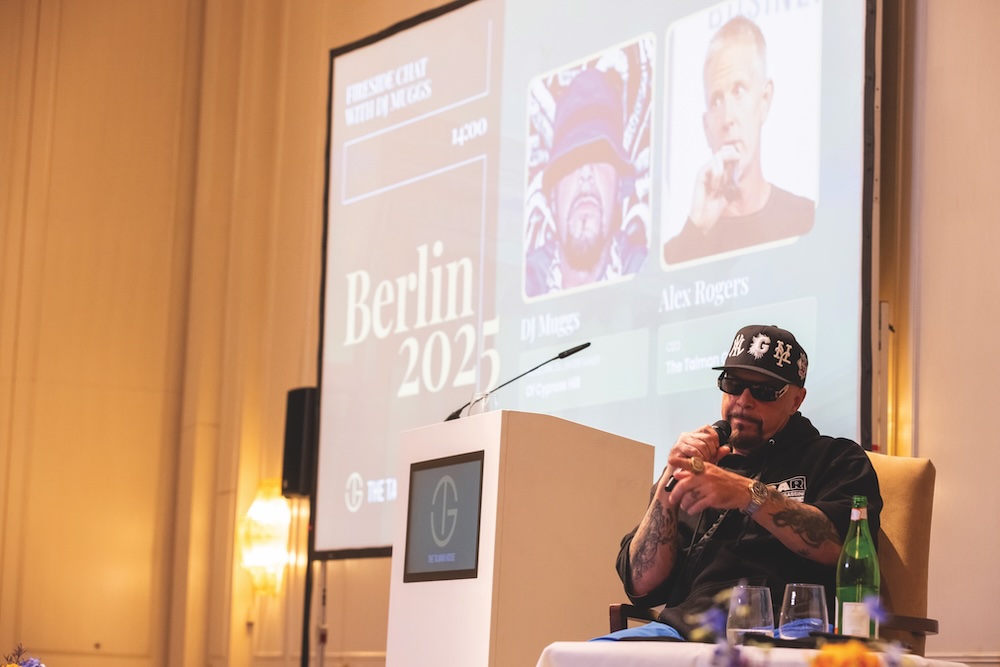
return on investment: Last April’s Talman House event presented cannabis rockstar DJ Muggs, whose investment portfolio is as impressive as his 35-year music career.
Talman serves as a figurative mentor guiding Europe’s cannabis industry toward maturity. Its role extends beyond matchmaking. The platform provides a buffer of due diligence by screening decks, tracking market intelligence and connecting founders to legal, financial and strategic advisors. Creating the conditions for credible, sustainable industry growth, Talman’s curated network brings much-needed capital into reach for operators bridging a capital desert.
And the opportunity is real in these undercapitalized European markets. Early entrants can enjoy “first mover” status, and if they utilize the head start efficiently, can parlay that into market leadership and delight their investors. Additionally, success in one jurisdiction often opens doors across the EU’s emerging regulatory patchwork. The evolution of policies in Germany, the Netherlands and the United Kingdom could provide compliant, scaled operators with significant upside.
All that said, uncertainty due to evolving regulations continues. Pilot programs have faced repeated delays in the Netherlands and Switzerland. Shallow public markets limit exits, and scandals and bankruptcies remind investors that gaps in oversight can be costly.
Big conglomerates such as British American Tobacco and Tilray entering the space raise the bar for smaller firms as well. Investors have witnessed how market exuberance can outpace fundamentals, but greed is a powerful blinder. Valuation discipline will be essential.
Europe’s cannabis story is unfolding in distinct phases. There are policy harmonization efforts across EU member states, with standardized licensing and quality controls being considered. Simultaneously, cross-border consolidation through multi-country acquisitions and partnerships is already underway. Expect consolidation to pick up speed in 2026 as more North American companies consider Europe’s potential. As the cycle matures, institutional investors will participate by having pension and health funds make cautious allocations. That typically triggers financial innovation (e.g. REITs and special-purpose investment vehicles). Lastly, as compliance standards mature, de-risking through transparency becomes the norm.
Europe’s cannabis investment story isn’t about chasing another green rush. It’s about building the infrastructure that makes the rush possible. Platforms like the Talman Group are helping investors see Europe not as 27 fragmented markets, but as one evolving opportunity. For those willing to navigate complexity, the reward may be as lasting as the reform itself.
This story was originally published in issue 52 of the print edition of Cannabis Now.
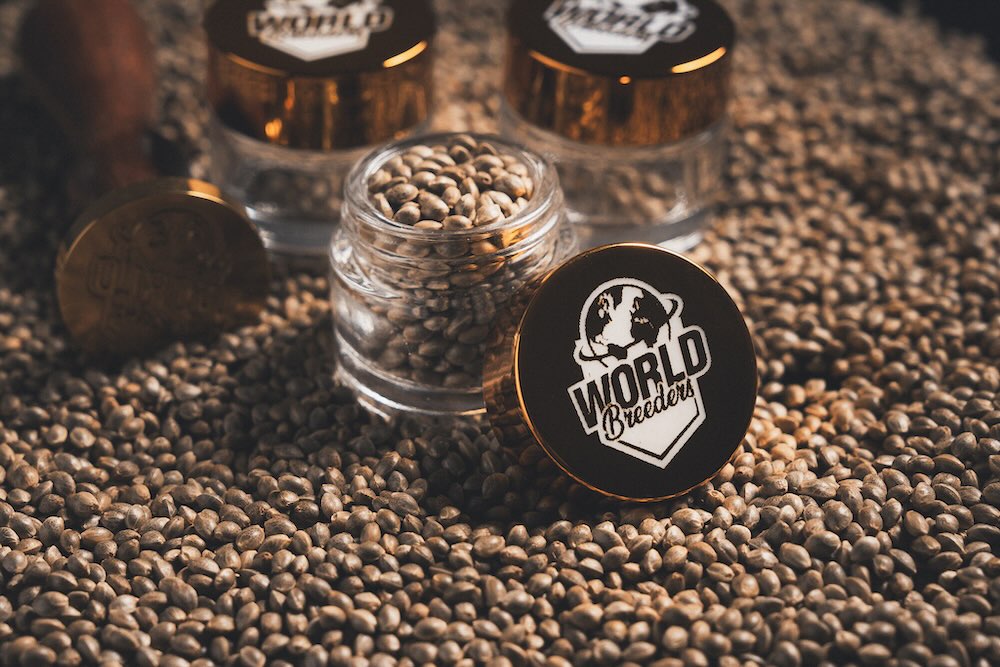
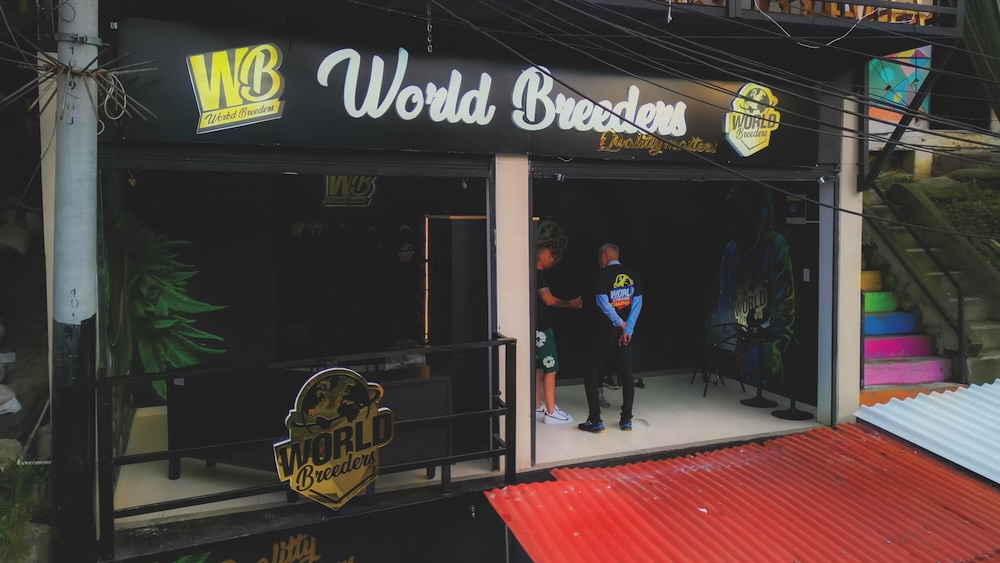
World Breeders, a cannabis seed company with who is making good on its promise to export seeds worldwide, has three founders, and it’s taken them all to shape the trajectory they have now—from working in cannabis on the “underground side,” as co-director Gorka Cid Luaces says, to an enterprise with operations on three continents and the momentum to fulfill their ambitions.
Jon Urriola Rementeria—responsible for seed development, genetics and research—was growing tomatoes for Spanish supermarkets before he switched to hierba with the emergence of the first “cannabis associations” in the País Vasco, Spain’s northeast Basque Country. Leandro García Rodriguez handles client and concept development, while Cid Luaces is responsible for overall management of the company. García Rodriguez is originally from Seville, while Rementeria and Cid Luaces are native to the Basque Country.
World Breeders claims to have dedicated itself to selecting and developing its own genetics with meticulous attention to details.
Rementeria and Cid Luaces first came together in GreenFarm Éibar, which was among the first cannabis associations in Euskadi, as the País Vasco is known in the Basque language. They produced flower for the association in a mixed greenhouse and outdoor operation, with the local police informed.
“The experience with GreenFarm marked our entry into the cannabis industry,” Cid says. “It was a highly rewarding stage, yet also one filled with tension. Working constantly on the edge of legality takes a heavy psychological toll.”
GreenFarm was a member organization of the Federation of Cannabis User Associations of Euskadi (EUSFAC) which coordinates rules and standards for a sector operating in a kind of legal gray area. These regulations allowed private cultivation for the associations but limited members to two grams per day, to be consumed on club premises. Several associations closed during the pandemic in 2020, as these restrictions became untenable, and the sector never fully recovered. Associations continue to thrive in the regions of Catalonia and Andalusia, but regional authorities in País Vasco cracked down, with some clubs busted and herb confiscated.
The GreenFarm veterans moved into the commercial space, anticipating an expanding market for the recreational side as policy in several European countries liberalized. World Breeders was registered as a seed company in the Czech Republic in 2019, though they had already been working with third partner García Rodriguez from Medical Weed Sevilla, one of the first associations in Andalusia’s southern region, for some time with different companies.
Seeking a suitable country for production, the trio settled on the rising industry player of Colombia. Cannabis had been decriminalized there since 1994 and medical marijuana was legalized in December 2015 by decree of then-president Juan Manuel Santos—who would the following year win the Nobel Peace Prize for negotiating peace with the guerillas. Along with the historic peace deal in 2016, Colombia’s Congress that year approved commercial cannabis cultivation under government license.
“We knew we wanted to continue working in the cannabis industry—it’s our passion, and our professional path,” Cid says. “But we were equally clear that we wanted to do it within a fully legal framework. Colombia offered the chance to operate under official licenses, with a transparent regulatory environment and the ability to develop genetics and production at scale, without legal uncertainty. That’s why we took the leap and established our operations there.”
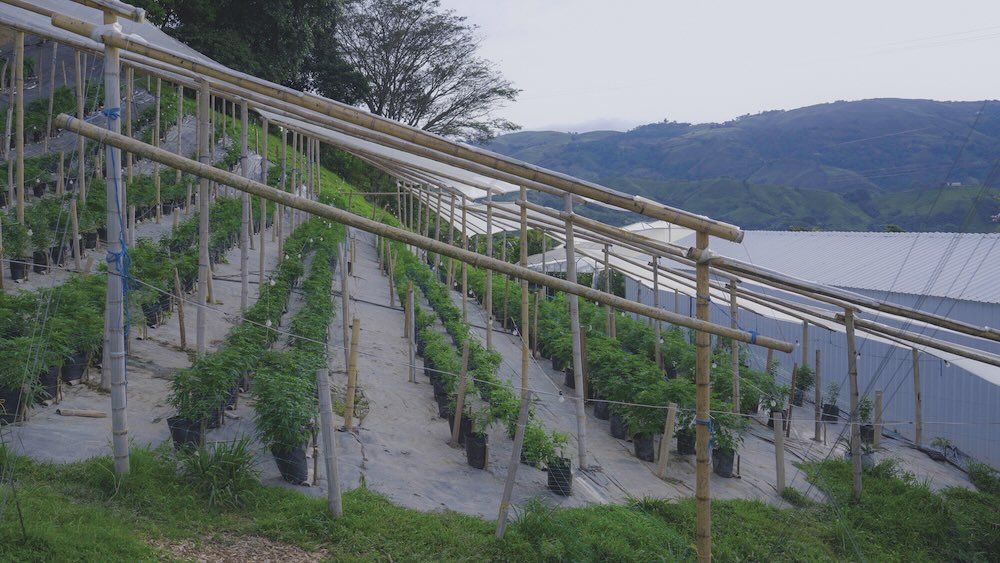
In 2020, World Breeders set up its mixed indoor/greenhouse production facility in Antioquia in the northwest region of the country. Their first greenhouses were in Guarne, a charming mountain town in the Andes. Production began in January 2021 and licensed export of seed to Spain began that year.
The seed stock they’d been working with initially had difficulties adjusting to higher altitude and new, more acidic soil and water conditions. Operations later moved to Ebéjico, on the outskirts of the Medellín metropolitan area, where the altitude is lower and the climate warmer.
Based in Colombia since 2020, World Breeders’ new environment creates exceptional photoperiods: 12 hours of daylight and 12 hours of darkness per day. “It’s ideal for complex terpene profiles,” says co-founder Gorka Cid Luaces.
Conditions here, as it turns out, are exceptional. The light offers perfect photoperiods: about 12 hours of daylight and 12 hours of darkness per day. And the altitude of some 1,400 meters above sea level, Cid describes as “ideal for complex terpene profiles.”
“Over the years, we have dedicated ourselves to selecting and developing our own genetics with meticulous attention to details,” their website boasts.
The company, a seed bank marketing its genetic creations to specialty growers, currently offers nine strains, with names including Clementine Slush, Fizzy Gum and Pink Truffle. Cid takes pride in the descriptive accuracy of these appellations. “If we say it tastes like clementine, it really tastes like clementine,” he assures.
A recent addition is La Hokuzan, developed in cooperation with Barcelona-based Hidden Group Genetics. The Catalan group had bred its own indica-heavy hybrid Hokuzai, which World Breeders crossed with their own Fizzy Gum for a more “sparkling and fruity” feel.
Just coming online is Pilot, developed in conjunction with Spanish rapper JC Reyes, combining his favorite traits—a three-way cross of Pink Watermelon x Jokerz x WB Bubba.
World Breeders is also currently working with growers in the Rif Mountains of Morocco to develop a line of triploid seeds. Triploid strains have three sets of chromosomes, as opposed to the traditional diploid varieties with two sets—one from each parent plant. They typically don’t collect pollen and therefore don’t produce seeds. (Most of the bananas we eat are triploid, as well as seedless watermelons.) This is important for cannabis, because a female plant that doesn’t get fertilized will keep secreting resin indefinitely throughout the growing season, even if there are male plants in the vicinity. A triploid line could be a breakthrough for the centuries-old tradition of hashish production in the Rif, and a boon to growers everywhere.
“We’re confident that this new line will mark a before-and-after in the genetic development of cannabis, positioning World Breeders as a benchmark for innovation and quality in the sector,” Cid predicts.
But expanding markets in Europe represent the real opportunity on the imminent horizon, Cid says, pointing to recent moves toward permitting adult-use cultivation in Portugal and Germany. “What began as a dream of the World Breeders team is now a consolidated reality,” he says.
This story was originally published in issue 52 of the print edition of Cannabis Now.
Tech company Weedmaps is a connector at its core, best known for helping consumers find and order from dispensaries carrying their favorite cannabis products. But that theme of connection extends far past the screens, as Weedmaps moves from traditional to experiential marketing, building authentic moments rooted in the creativity and spirit of the cannabis community. Their 2025 collab with premier sneaker designer Ceeze is just one example of how the tech platform continues to find memorable, made-you-look ways to drive their mission forward.
“Sneakers have long served as a canvas for cultural storytelling, especially across art, streetwear and music—spaces where Weedmaps naturally lives,” says Jonathan “JJ” Jones, Weedmaps’ senior vice president of markets and culture. “Through this collaboration, we were able to highlight how cannabis inspires creativity while showcasing the diverse voices and artists that shape the culture.It also created a physical, limited-edition artifact that fans could connect with—something that doesn’t happen often in the cannabis space.”
The limited-edition sneakers, called the 420 1s, were released ahead of the 4/20 holiday and include detailed stitching that represents the evolution of cannabis legalization, paying homage to those who fought so hard for it. Hidden coordinates on select pairs mark the birthplace of San Francisco’s Cannabis Buyers Club, the first medical dispensary that helped push Prop 215 into law in 1996. The California cannabis warning symbol, introduced in 2018, is stamped on the heel and Weedmaps’ logo is featured on a custom woven tongue, marking the brand’s own spot on the cannabis timeline as pioneers in consumer access since 2008—the height of the fight for cannabis.
The Ceeze collab set the creative tone for Weedmaps’ entire 2025 cultural marketing campaign and into 2026, as they offer more elevated ways for people to connect with cannabis culture beyond the retail experience and into the realms of lifestyle, art and music. In Jones’ words, “Each activation reinforces our mission to celebrate cannabis as part of everyday culture.”
This story was originally published in issue 52 of the print edition of Cannabis Now.
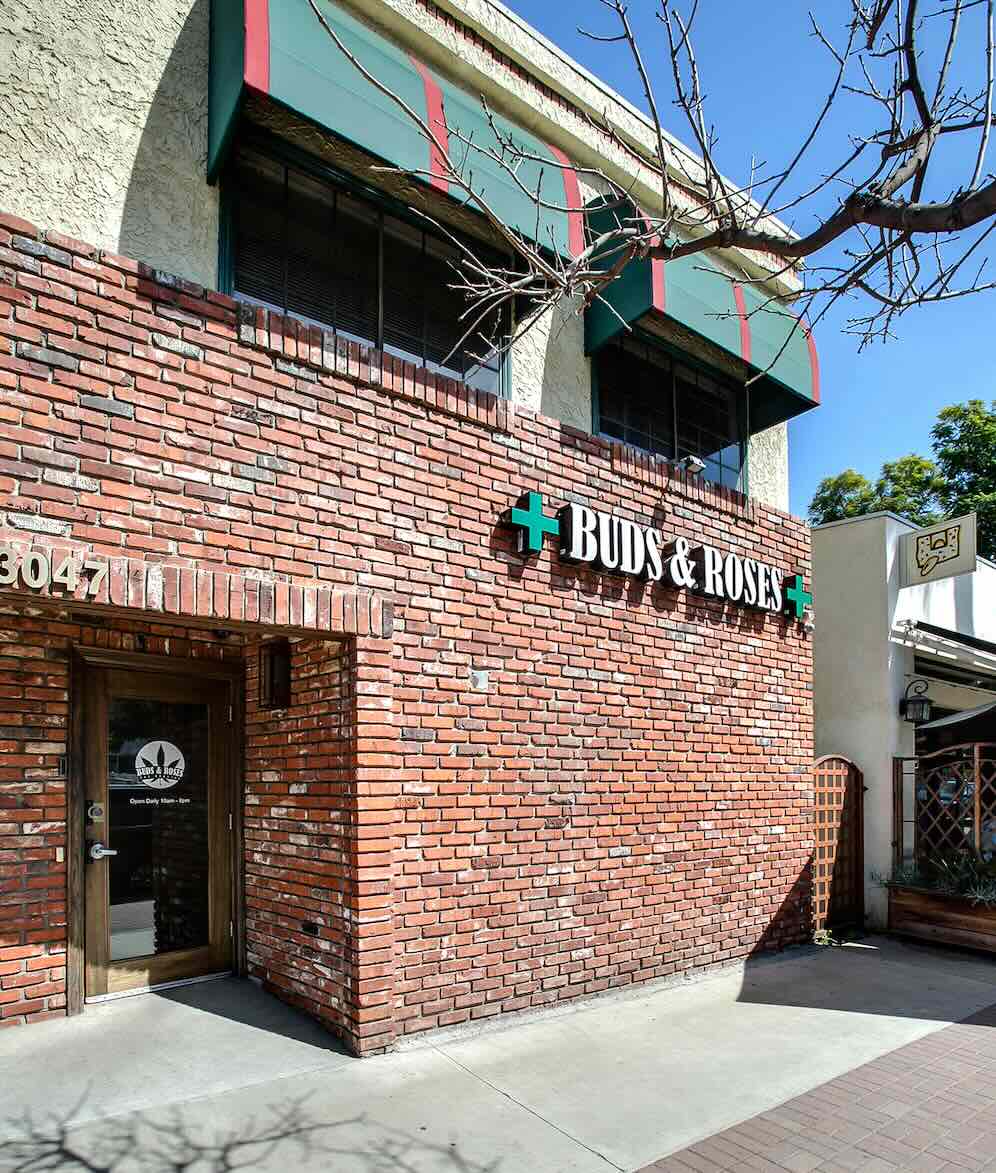
In an industry where many come and go, some names become synonymous with integrity and staying powerful. Aaron Justis is one of them. For over 15 years, he’s been at the helm of Buds & Roses, a Los Angeles dispensary renowned for its unwavering commitment to quality and community. As a pioneer in “veganic” cultivation and a tireless advocate for industry reform, he has faced down a host of challenges, from the persistent illegal market to the complexities of legalization.
But for a true entrepreneur, the journey never stops. Now, Justis is branching out with a new venture, Seeds and Clones, taking his decades of experience and passion for genetics to a global audience.
In this exclusive interview, Cannabis Now CEO and Founder Eugenio Garcia and the veteran operator discuss the highs and lows of his career, the motivation behind his latest business and his vision for the future of cannabis.
Cannabis Now:Aaron, thank you for joining me today. When did you get started in the cannabis industry?
Aaron Justis: I’ve been involved with cannabis since I was a teenager. In 1998, I had a hemp clothing company and actually won a High Times Cannabis Cup award in Amsterdam for it. I purchased Buds and Roses in 2010. It wasn’t a well-known dispensary, but it had been registered in 2007, so it had a license and the potential to become a licensed dispensary. After many years of work, maybe six or seven years later, we got a license in the legal California market.
CN:Were you one of the first licensed dispensaries in Southern California?
AJ: Yes, we were.
CN:Give me and the readers a little bit of a recap. What have been the highs and lows of the last 15 years of running Buds & Roses?
AJ: The beginning was really exciting. My cultivation team and I pioneered “veganics,” a vegan organic cannabis, and won several awards, including “Best in the United States” and “Best Flower Overall.” We received a lot of media attention, and I was deeply involved in advocacy with groups like the National Cannabis Industry Association and the Greater Los Angeles Collectives Alliance.
At the same time, the journey has also had its challenges. The last six or seven years have been a difficult time to operate in the industry.
Even with legalization, we’ve had to compete against thousands of illegal operations that still thrive due to a lack of enforcement. Legalization brought new complexities and tremendously high taxes and regulatory costs, making the last several years particularly difficult. Despite these challenges, Buds & Roses is still here, and customers are still happy.
CN:What do you think has been a differentiator or a highlight that has kept your customer base committed to you?
AJ: It sounds simple, but it’s all about quality products. Our customers are happy because we select products based on their quality, ensuring they get the best product for their price point. Unlike many retailers who focus on what’s popular or heavily marketed, we have a strict rule, especially with flower. My team and I—many of whom have been with me for over a decade—personally vet everything. The product has to be just right for the price. We’ve often pushed back against brands, telling them we can’t carry their entire line because it’s rare for companies to have more than one or two truly great strains. We’re a boutique in that way, bringing only the best to our customers.
CN:How do you build trust with your community, from long-time enthusiasts to first-time customers?
AJ: Our staff has always been a key part of our reputation. They’re knowledgeable, respectful and committed to educating our customers. I was lucky to have great mentors like Steve D’Angelo at Harborside and Eric Pearson at Spark who taught me how to build a well-respected, quality dispensary.
This approach has allowed us to become a positive force in our community. We have discerning customers who are true connoisseurs, but we also have plenty of elderly people—some in their 80s, and 90s—who shop with us because they feel comfortable and safe. We’re in a great location in an upscale neighborhood, and about a year and a half ago, we were honored with a hand-painted certificate of recognition from the City of Los Angeles. It thanked us for being a community staple and for helping to shape the culture in Studio City. That was a true honor.
CN:Wow. Good job on that. It takes a lot of hard work to be recognized in that capacity. If you look back at your history, you’ve received lots of awards and recognitions. You’ve shaken hands with politicians and celebrities and done collaborations. So, coming from that background and having a very good, established reputation in the industry and your community, what was the motivation to branch out and start this new venture, Seeds and Clones?
AJ: We’ve always sold seeds and clones at our dispensary, at least for the last 12 or 13 years. We also have a nursery license where we make our own clones and seeds. We’ve sold plenty of other operators—the best known in the industry in California—and have resold their seeds and even some of their clones. We took all clones in-house about five years ago because there were issues. A lot of those operators were in Northern California and there were issues with transport. So, we stopped reselling theirs at the store and just do our own in-house genetics. Going online was just a way to scale what we’ve already been doing and bring that to people outside of our area. It’s a natural evolution of things.
CN:Had you been sitting on the name “Seeds and Clones” for a while, or did you get lucky one night?
AJ: It’s a crazy story. One day I was meditating and the name “seeds and clones” popped into my head. It’s similar to “Buds & Roses,” so I thought it would be a great name. I wanted to get the website and someone else had owned it. It was available for rent for $8,000 a year, or for lease for about $700 a month. I still have this text message, I believe. I sent it to my graphic designer and said, “I want to get this, but it’s probably not worth leasing it. They could shut it down at any time after we build it up.” The next day, he messaged me and said, “I got the website.” And I said, “What do you mean? I didn’t say I wanted it. It’s $700 a month.” He said, “No, it’s $700.” He sent it to me. I don’t know what happened overnight, because I sent him a screenshot that said specifically “$700 a month.” The next day, he bought it for $700, and we got the site.
CN:That’s amazing. The universe was waiting for its rightful shepherd.
AJ: Exactly. It sure was.
CN:And from that time to launch, when did you formally launch the website?
AJ: About two years ago.
CN:So it’s been a couple of years, and now I bumped into you at Spannabis in Barcelona. This isn’t just a California play or a US play, but this website could be global. Have you intentionally set it as an international platform, or is this mainly for the US and North America?
AJ: It’s definitely international. With all these emerging markets around the world, I’m getting out there to figure out what’s legal, where it’s legal and building relationships. That is a key part of it—laying the groundwork and exploring different opportunities. I’m used to state-by-state regulations in the legal industry. With Seeds and Clones, we’ve been able to go nationwide, but now it’s back to a country-by-country opportunity. There are some countries where you can ship seeds within them and then there are some that are completely standalone. I’m just trying to figure out what’s happening in those different markets and setting up the foundation to be able to scale this on a global level.
CN:Since it’s been two years since launch, are the genetics that are being sold on the platform only genetics that you control or own? Or is it more of a marketplace?
AJ: It goes beyond what we control or own, just like with the store. You will find Buds & Roses seeds there; you will find clones branded Buds & Roses. But we are working with all the same leaders that we’ve been selling at the store for many years, like Humboldt Seed Company, Compound Genetics and Origin Seed Co. We are also expanding to operators who used to be in the market but didn’t make it to legalization, such as The Cali Connection and James Loud Genetics. So, we are reselling all the best genetics companies on our site. We plan on adding five to ten times more brands in the next few years. I am focused on companies that have a good reputation, where I know the owners and the breeders—people we can trust. I’m knocking those out one by one while still running my dispensary full-time and our operations there. It’s a place where you can find many different brands. I believe we have well over 20 different brands right now and over 1200 varieties available.
CN:Wow. Is it only available for business-to-consumer purchasing online and in your retail store? Do you also offer B2B seeds and clones, or is that a different game?
AJ: There are a lot of business operations that order from us, but there are also mom-and-pop cultivators. We are just bringing these genetics to whoever needs them. We do have options for people to buy trays of clones or 100-plus clones. A lot of these businesses only need one or two clones to get those genetics and then they’ll make a mother and make their own clones from it.
CN:And with Seeds and Clones, the end goal is home growing, either for a community, a household or an individual. Is there a greater demand for seeds on this platform or for clones? Or is it split down the middle?
AJ: Seeds are always in higher demand than clones. I think people are a little intimidated by clones and they’re not quite sure about that process. So seeds are the majority of our sales.
CN:I understand putting seeds in an envelope or box and shipping them. But clones seem like a more delicate scenario. How have you figured out how to ship those?
AJ: We have our system dialed in to where we have a 99% success rate with our clone shipping. We guarantee all our clones to arrive healthy and pest-free.
New Money strain
CN:Amazing. Give me two or three genetics that you are super proud of, or that are special and why.
AJ: Our Strawberry Cough clone is probably the most special, although it has had some issues. It hasn’t been available for a little bit, but it’s about to be available again. We’ve won multiple High Times Cannabis Cups with it. It’s just an amazing strain that is always in high demand. It’s a great Sativa. It’s not the easiest strain to grow, but the end result is a great Sativa with a lot of medicinal properties. It has a wonderful high and it smells, looks and tastes good. So that’s very popular.
Also, our Platinum Cookies, which is a Girl Scout Cookie phenotype. It could be the original Girl Scout Cookies; we obtained it back in 2011 in Oakland. We’ve won at least three High Times Cannabis Cups with it, and it just has amazing flavor and taste. The effects are great. It looks amazing.
We also have a seed line, Origin Seed Co., that is very affordable for the average grower. They are classic, foundational strains for a good price. They are what we say they are and customers have been very happy with that seed brand for the strains available, the affordability, the germination rate and the finished product.
CN:Those sound like some exciting genetics. I can’t wait to see some of them in action. Do you offer customization? For example, a brand might come to you and say, “We would like this type of experience and or flavors.” Will you pheno-hunt and create genetics, or do you source them from artists and then make them available?
AJ: We do have some international opportunities in the works for that. We have a very long-standing seed company from Amsterdam looking to create all-new genetics here in the United States, using their genetics with ours.
We do pheno-hunting in-house. We are a retailer, and we resell other people’s products. We’ve acquired some amazing genetics over the years for the clones that we sell and we always give a shout-out to the source or the breeder. We’ve completed our third run for Buds & Roses seeds, where we’re finding a male and we’re selecting that through a rigorous process. Then we’re crossing it with about 20 of our best-selling clone varieties. We don’t actually name the strains; we just say what the cross is.
A lot of people have been very happy with pheno-hunting those seeds and coming out with real winners because we are crossing some of the best-selling strains, from Strawberry Cough to Platinum Cookies to AJ Sour Diesel and classics like Gelato 33 or Legend OG.
GG4 x Gelato
We also have a Mother Pucker strain, which we haven’t made available as a cutting yet. We pheno-hunted that from seeds from The Real Cannaado and came out with this amazing genetic.
CN:Mother Pucker, that sounds like a doozy.
AJ: It has an amazing flavor. It always has the strongest terpene profile of anything we have. It’s citrusy, but it’s also gassy and the high is amazing. It’s about a 50/50 hybrid. So that’s something that cultivators really like. We’ve had a lot of success with the Buds & Roses seeds. Again, we breed those using our best-selling genetics.
CN:Well, thank you very much for this first look at your new endeavor and a little look back at your past. My final question is, What’s your vision for yourself and this brand for the next year? Are you optimistic about the cannabis space in general?
AJ: With Buds & Roses, we’re doing our best to keep bringing the customer the best quality products we can, to give them the customer service they expect, and to stay true to the plant as we always have. For Seeds and Clones, the plan for the next year is to continue adding brands and to expand into other countries and markets by forming strong partnerships with reliable sources and operators. For myself, I’m focused on the international scene, by speaking at international conferences and seeing where I can best assist.
This story was originally published in issue 52 of the print edition of Cannabis Now.
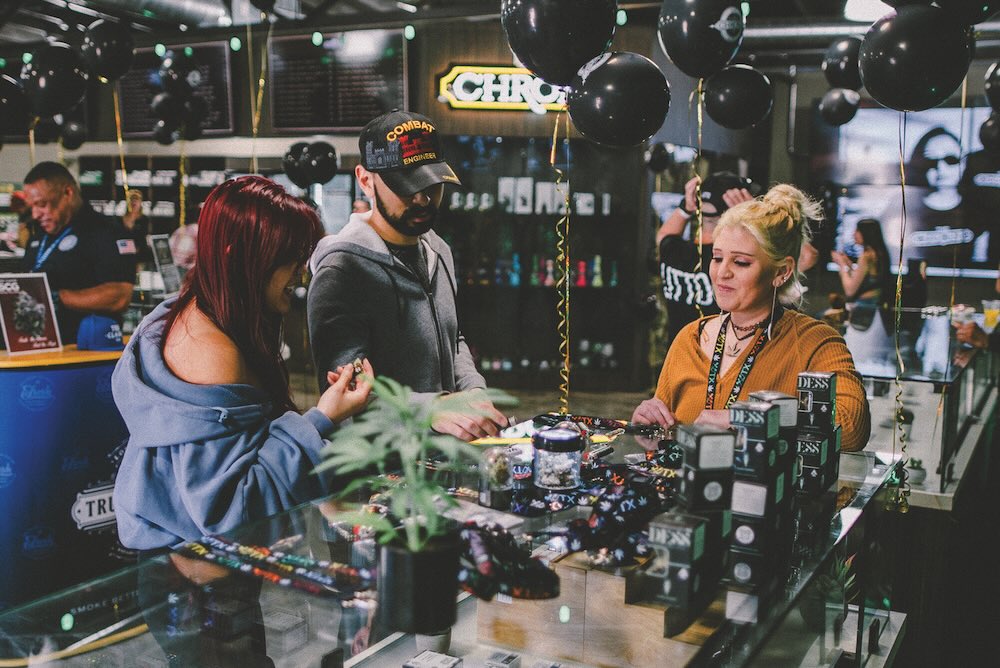
Los Angeles has no shortage of dispensaries. Every neighborhood has one—or three—and most promise the same mix of premium flower, polished interiors and loyalty points. The Chronic, in El Sereno, has managed to stand apart by leaning on something that can’t be manufactured: history.
For decades, “The Chronic” has meant high-grade California weed. The name was embedded in 1990s hip-hop and LA street life long before the plant was legal. When founder Orlando Padilla opened his ivy-covered flagship a little more than two years ago, he built the concept around that legacy. “The mission was clear: build something for the people, by the people,” he says. “Cannabis and culture have always been intertwined—we just brought that truth into the modern space.”
built to last: “With The Chronic, we built something that represents cannabis culture, Padilla says of his LA streetwear and hip-hop influenced dispensary.
The shop sits quietly on Alhambra Avenue, its black-and-gold signage a deliberate nod to LA’s streetwear and hip-hop lineage. The design is minimal but intentional: Greenery softens the dark facade; inside, warm light and gold accents give the space an easy confidence. It’s top-tier without being uptight. Customers come from the surrounding neighborhood and across the city, drawn by word of mouth and the store’s mix of accessibility and polish.
Padilla insists that the culture comes first. “We didn’t just build a dispensary,” he says. “We built something that represents cannabis culture.” His team is mostly local, and that sense of community, he says, shapes both the atmosphere and the service. “We treat customers like family because that’s how we want to be treated—we’re from the neighborhoods we serve.”
The Chronic’s ambitions reach beyond retail. Padilla is developing Chronic Genetics, an in-house line of proprietary strains, alongside a forthcoming branded collection of flower, vapes and edibles. A streetwear label, coded into the store’s black-and-gold aesthetic, is in the works. Padilla says the company plans to host cultural events and collaborations with local artists and creative types. “The Chronic has always stood for high-quality cannabis and the culture surrounding it,” he says. “We’re just showing what that legacy looks like in today’s legal world,” he adds of his lifestyle empire ambitions.
That legacy is complicated in a market as competitive as Los Angeles. The city’s cannabis retail landscape is saturated, and even well-known shops struggle to maintain relevance as regulations, taxes and new brands flood the space. Padilla says The Chronic’s advantage is authenticity—its roots in a community that understands cannabis as more than a product.
“Professional doesn’t have to mean corporate,” he says. “You can set a high standard and still keep it real.”
The Chronic has rapidly built a loyal following and a recognizable aesthetic without losing its neighborhood feel. It hasn’t reinvented SoCal cannabis so much as reminded people what it’s supposed to feel like: personal and grounded in culture. In a city that often treats cannabis as fashion, The Chronic’s success suggests that the old rules—connection, respect and good weed—still might work.
This story was originally published in issue 52 of the print edition of Cannabis Now.
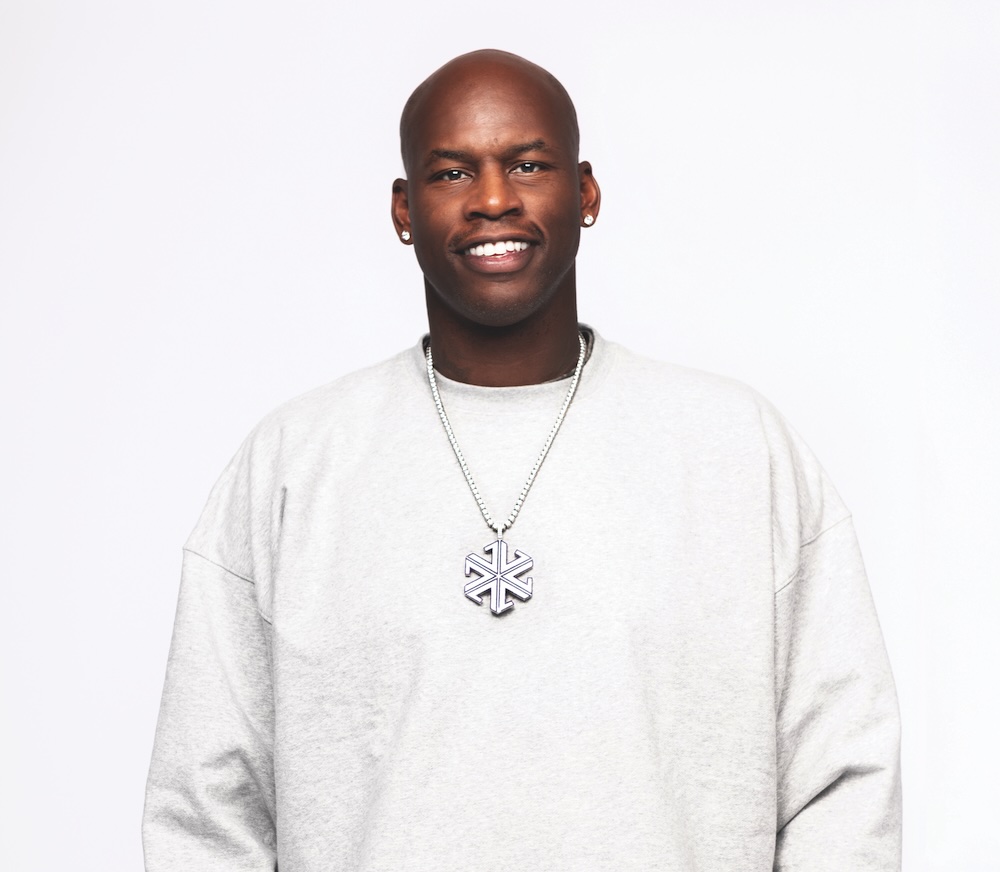
Less than 24 hours after undergoing a heart procedure in an Indiana hospital, former NBA star and owner of the successful cannabis/hemp company Viola Brands, Al Harrington, was all smiles as we sat down to commence a candid conversation. That’s all you need to know about this extraordinary athlete’s toughness, tenacity and determination: When there’s a job to do, Al Harrington shows up and shines. And shine he did.
Born and raised in New Jersey, Harrington was the 25th overall pick in the 1998 NBA draft after being selected as a McDonald’s High School All-American. Bypassing college hoops altogether, Harrington played six seasons with the Indiana Pacers then spent the following decade with the Atlanta Hawks, Golden State Warriors, New York Knicks, Denver Nuggets, Orlando Magic and Washington Wizards before retiring in 2015. In all, Harrington played in 16 seasons in the NBA—that’s quite an impressive run to be sure.
amazing race: “It’s just amazing where we’ve come, and we’re not gonna stop,” Harrington says of his cannabis and hemp brand, Viola.
So it wasn’t a complete surprise when Harrington applied that hard-earned discipline from his playing days to his next venture, Viola Brands, the largest Black-owned cannabis brand producing products since 2011. Currently available in nine states—Arizona, California, Colorado, Florida, Michigan, Missouri, Nevada, New Jersey and Pennsylvania—Viola’s mission, according to Harrington, is to “increase equity and ensure Black and brown people are afforded the opportunity to be a part of a fast-growing industry that has historically left them disenfranchised.”
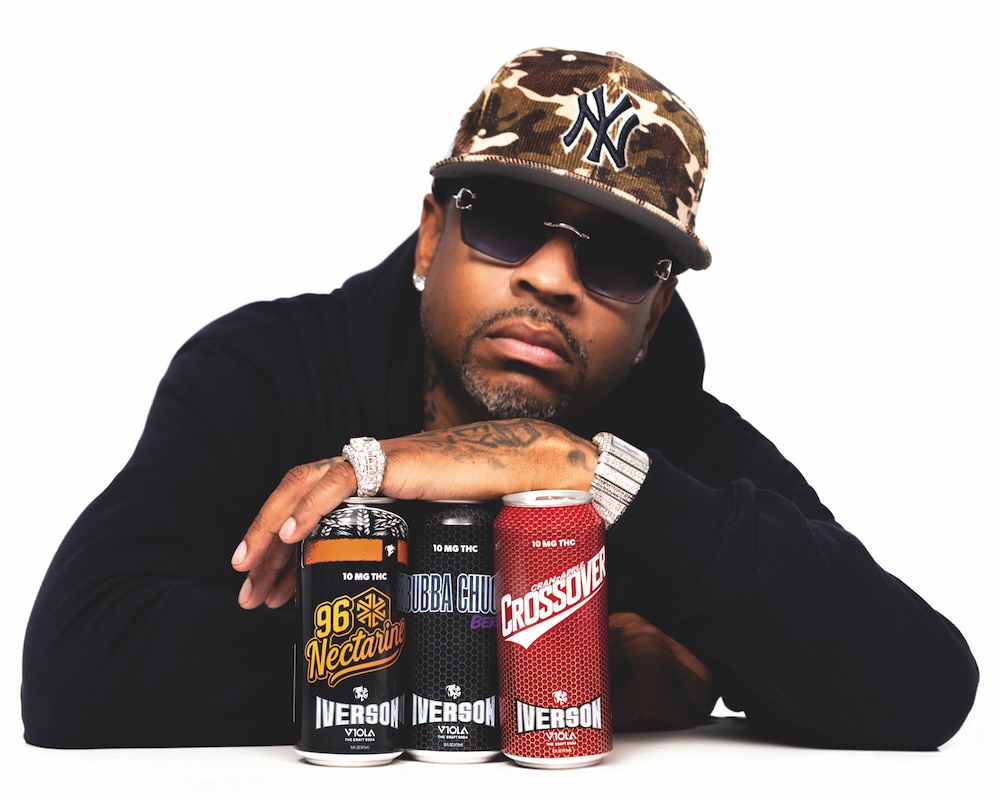
Viola Brands’ latest big moves involve his recent collabs with fellow former NBA star, Allen Iverson, by partnering in distributing the popular strains Iverson ’01 and ’96. Most exciting, perhaps, is the latest news out of this team: Viola Brands recently announced they’re once again partnering with Iverson as well as Horticulture Co. and Circle K to launch a line of Allen Iverson-branded, hemp-derived THC beverages called IVERSON. Circle K is the exclusive retailer for this national rollout, which is considered one of the very largest for THC products in American mainstream retail.
This is a very big deal.
It’s with this knowledge and energy that we entered our conversation with Al Harrington, the tough as nails, eloquent ambassador for all things cannabis. He’s all heart. But you already knew that didn’t you?
full circle: Harrington has partnered with fellow NBA star Allen Iverson (left), Horticulture Co. and Circle K to launch their beverage line nationally at Circle K
Let’s go back to when you were a McDonald’s High School All Star pick—you must’ve been pursued by every top college team—what went into the decision to go straight into the NBA draft?
Yeah, man. Well, my story goes, when I was young, I was always the clumsiest kid in the room. Never got picked to play sports. At the end of my eighth-grade year, I was diagnosed with Osgood-Schlatters, which is basically a huge growth spurt—I grew from 5’10” to 6’4” in one summer. When I got to high school, I wasn’t even gonna try out for basketball, but the JV coach, thank God, put me on the team. I was the worst player on the team. I couldn’t dunk. I couldn’t catch. But the next summer, I met this guy named Sandy Pyonin, who became my AAU coach, and that’s when everything changed, man. He taught me how to play basketball, how to dribble, shoot, run. Everything. I switched high schools and by my junior year, it all started to click. My senior year, I went to the Nike All-American Camp and ended up being MVP there, which put me in the top ten in the country. And I told my coach if I become No.1, I want to go pro. And he was like, “I don’t know about all that.”
It sounds as if you could’ve used a couple of years in college before going pro.
You know what, I probably could have. My AAU coach always says that. But I mean, shit, I played 16 years—so let’s not get it twisted. [Laughs] When I got to the league, I never, not once thought I didn’t belong. I never thought that my teammates, or the guys I played against, were that much better than me or that I should’ve gone to college. You know what I’m saying?
all kobe, no beef: “I had success in New York [with the Knicks] because I just never wanted to get booed,” Harrington says, here in 2010 at Madison Square Garden playing against Los Angeles Lakers’ legend, Kobe Bryant.
Let’s talk about New York City—I remember you with the Knicks, and all of a sudden, everything clicked for you. You scored more points than ever. Was something different playing at Madison Square Garden versus other places?
I’ll say why I had success in New York was really because I just never wanted to get booed. [Laughs] In New York City, they’ll boo your ass in a minute. So, I always made sure I had my best games in New York because I never wanted to get booed. But I can say I never got booed once in my two years playing there!
How did Viola, your successful cannabis brand since 2011, get its name?
So, my grandmother’s name is Viola. Right around the time I started playing for the Denver Nuggets, cannabis was just making its way onto the medical scene and I was reading about it every day in the newspapers—I’m a big newspaper reader—and at the end of that year, my grandmother came to see me play. When she got there, she was taking all this medication for high blood pressure, diabetes, glaucoma…I told her I’d just read that cannabis can cure glaucoma. She looked at me and she said, “Reefer?! Boy, you trying to get me to smoke reefer?! You outta your mind!” And she laughed and laughed. But the next day I come home and she’s sitting in the kitchen complaining about how bad her eyes hurt, and I told her “Grandma, look, you’re in a legal market here. Doctors recommend cannabis for patients dealing with what you’re dealing with, so why don’t you just give it a try?” I called a dispensary, and they recommended a strain called Vietnam Kush. We bought this Volcano bag system, had her go outside and she tried it. I asked her how she was feeling. She was crying, and she said, “I’m healed! I haven’t been able to read the words in my Bible in more than three-and-a-half years.” I hug her and we call my mother, and she’s telling her, “God gave me my sight back. Everything’s so bright.” That’s what inspired me to just start learning more about cannabis, weed, reefer—whatever you want to call it—because of the medicinal benefit—the miracle it was for my grandmother.
Did she live long enough to see the company?
Yep, she did. She died in 2021, so she lived to 91 years. When I launched the company, she came to the launch party. And after we got done with dinner and everything, we were driving home and she was like, “Al, that was a lot of people, and everybody was saying my name, my name was everywhere.” She’s like, “If anything happens bad, will I go to jail?” [Laughs]
Not only do you have the deep medical origin story, but Viola is legitimately committed to entrepreneurs of color.
I mean it’s always been the focus once I got into the industry. This industry isn’t easy and it’s not really set up for us to be successful, especially when people have limited resources. And after COVID, it’s been in this kind of wonky place because so many people lost money betting on these huge players that couldn’t produce. But you know, at the end of the day, it’s like sports—you come into a game with a game plan to stop Steph Curry, and if it don’t work, you got to readjust the plan. So, we’ve pivoted into the adult beverage space; we continue to stay relevant and make sure that we keep a seat at the table as this industry continues to evolve.
A few years ago, you wrote an article stating there was still a war on marijuana. Do you think that’s still in place, particularly given the recent—and shocking— federal ban on hemp Trump signed into law?
Yeah, you see it all the time, man. Obviously, it makes no sense, right? You’d think that train has left the station already when it comes to banning any cannabis at this point. But that’s just the world we live in, especially in the US. Like the fact that there’s still Red Dye 40 in damn near everything we eat—it’s so funny the things they choose to care about when there’s other things that are really, really affecting and hurting all of us, even children. It’s just a weird time and the war on cannabis is continuing. [US Senator] Mitch McConnell throwing that in there in a budget bill is just criminal, right? Because who’s gonna stop a budget bill to address a hemp ban?
And Trump’s not gonna read the fine print, as we know.
I mean, even if he did, he’s not going to stop it—people have been out of work for more than 40 days, right? He can’t stop that to say, “I don’t want hemp in there” and go back and forth. But there’s always gonna be hurdles along the way, ’cause we’re going through prohibition, and we’ll find a way to come out good on the other side, it’s just gonna take us more time and money—and energy that a lot of people don’t seem to have anymore, because we kinda tired and beat up from getting to where are today. But at the end of the day, we see how much good is done and it’d be crazy for us to stop now.
You said post-COVID’s been wonky for the cannabis industry and capital’s sort of dried up—what I’ve seen is a lot of consolidations and collaborations. I’ve seen your recent work with Allen Iverson. I see you with Ricky Williams. How have you teamed up, and how are collaborations a part of Viola now?
Being an NBA player for 16 years, I understand that no matter how good Reggie Miller was by himself, if it wasn’t all of us collectively working together, he ain’t gonna win no games. So that’s kind of how I see it. For me, being able to join forces with people that are like-minded and come from sports is important—I know that athletes don’t quit. And what we do is really intentional.
Is the Iverson collaboration just on the beverage line?
No, so we actually started our collaboration with Allen Iverson in 2021, and it started with just flower. Then it went from flower to vapes to edibles and pre-rolls. Then we started concocting these beverages about two years ago, and we did a collaboration with a company called Tempters, where we provided the terpenes. We’re coming up on our two-year anniversary with them. Last month, we launched the IVERSON beverage and we got a national mandate with Circle K. So we’ll be in 3,000 Circle Ks.
Huge news. What a massive win.
Thank you, bro. I mean that came together so fast, man. God has always been on my side. And the fact that we met Circle K when we did and they allowed us to get in on that fourth quarter set, which was already done six months ago, was a huge play for us. We have all of our beverage line in there, five different brands. Spec’s, which is the biggest grossing THC beverage liquor store chain in the country, based in Texas, we just launched in there last week, and we’re just growing it from there—Goody Goody, Total Wine, Gopuff, we’re working on more. Obviously, with this bill, they just snuck a monkey wrench in there, but we’re still business as usual, we’re just going to have to work and lobby. We got a year to fight it, and I think we’ll make some weight because these products are too good and they’re helping so many people.
We’ve seen a lot of celebrity brands who come into the space, and don’t succeed. Is Viola’s success also partly due because you do enjoy the plant and it’s part of your life? What are some of the strains or forms of consumption that you enjoy?
So for me, I prefer OGs, you know, I just love the way OGs make you feel, it checks all the boxes. It gives you the body high, a little bit of a head high and relaxes me. I’m not a big sativa smoker because it makes my heart race and I get in my head. For OGs, I like the Skittles for flavor and high, so we’ve been doing a lot of variations of cuts with Skittles. Lemon Cherry Gelato had a huge run; we’re doing a lot of crossing with that. We’re crossing a lot of stuff with Blue Nerds right now. I prefer a hybrid, because I don’t like being too high where I can’t do anything. I’m looking more for functional, right? And that’s what we brought to the beverages—I drink beverages every single day and I smoke more socially. All our beverages have clean ingredients—low sugar, low calorie. Always standing true to our roots of health and wellness. I’ve literally lost millions of dollars because I wanted to make sure we stayed with the quality. Bottom line? This brand has my grandmother’s name. If it’s not good enough for Grandma Viola to smoke, then we’re not allowing nobody else to smoke it. And to your point, I honestly believe that’s why we’re still here and well respected after all these years.
Yeah, nobody’s booing you in the cannabis space either, that’s for sure.
No doubt. I still got that fear. [Laughs]
Where are you in five years?
In five years, man, I hope that we’re still in this game. I think we’ll have some of the best spirits in the cannabis space, maybe circle back to edibles. I think we’ll be one of the biggest brands in convenience, through Circle K, hopefully 7-Eleven and we’re talking to Target. You know, when I started I never would’ve thought that I’d ever be sitting in a store next to Doritos and Pepsi. [Laughs] It’s just amazing where we’ve come, and we’re not gonna stop. We’ll keep trying to break down all those damn barriers.
Opening a jar of Super Lemon Haze, I’m hit with an overwhelming wave of citrus aroma. The crystal covered buds smell like a lemonade stand: sweet, sticky and a little bit tart. When I take the first inhalation, the taste reminds me of lemon meringue pie, so light and sweet, but with the unmistakable flavor of lemons. A few seconds later, a smile spreads across my face. I feel uplifted, energized and ready for conversation. Time to go socialize!
Cannabis can sometimes have a bad reputation when it comes to socializing. Since some strains make people feel sleepy, anxious or anti-social, many avoid using marijuana in social contexts. Fortunately, cannabis is an incredibly varied plant with many different effects. While certain strains may have you hiding in the corner rather than talking to friends, others are the ideal party companion, leaving you relaxed, energized and talkative. These differences have everything to do with the terpene and cannabinoid profile of the plant. Some profiles promote social tendencies while others increase anxiety, or leave you too tired to talk. The trick is finding the strains that promote your prosocial tendencies. Here are our top picks for social strains:
Super Lemon Haze
This sweet and sour sativa, described above, has a zippy, energetic high that’s a favorite among sativa smokers. The citrusy taste isn’t just a delicious flavor, it also indicates a terpene profile rich in limonene. This terpene is known for its relaxing, energizing and uplifting effects. If cannabis makes you sleepy, try sativas rich in limonene for a high that won’t put you to sleep.
Hawaiian
Another popular sativa strain for socializing is Hawaiian. Its strong topical aroma has notes of pineapple, guava and passionfruit and will leave you feeling like you just stepped onto a tropical island. The flavor is light and sweet with hints of fruit, but the real vacation is the happy and relaxed high that comes from these beautiful buds. With a perfect blend of terpenes like limonene, pinene (which aids focus and alertness) and myrcene (which has calming effects), this strain has been described as euphoric, talkative and giggly. Hawaiian is likely to leave your whole party smiling.
ACDC
ACDC is a woody, earthy sativa, with notes of pine. This clear-minded social strain is known for its 20:1 CBD:THC ratio and its relaxed, focused effects. Most strains have relatively high levels of THC, which often causes increased anxiety. If you find yourself to be more anxious after smoking a THC-heavy strain, try a sativa like ACDC that’s rich in CBD, as CBD counteracts this anxiety — leaving you relaxed and ready to mingle.
Cabbage Patch
Cabbage Patch is a sweet but tart sativa-dominant hybrid. This tasty flower is rich in THCV, a cannabinoid that can help side-step heightened anxiety from THC. While THCV offers all the energizing and euphoric effects of THC, it also relaxes users and is less likely to cause anxiety and paranoia. Cabbage Patch leaves users feeling relaxed, giggly, and energetic, which is the perfect mix for any party.
Afgoo
For those who prefer the high from indicas, Afgoo is an amazing choice when you want to get social. These sweet and slightly earthy flowers have notes of pine and berry. With high levels of myrcene, Afgoo is exceptionally relaxing and always leaves me feeling happy, warm and loving. It’s an exceptional strain for spending time with loved ones.
Originally published in the print edition of Cannabis Now. LEARN MORE
TELL US, what are your favorite strains to smoke when socializing?
According to the tabloids, celebrities are just like us. They run errands, they wait in lines and they also know which strains of cannabis they love best. In the past few years, many of the world’s most iconic stoners have embraced the legalized industry by launching branded pot products. Willie Nelson has Willie’s Reserve, Snoop Dogg has Leafs By Snoop, and more famous faces are getting in on the action every day. But what is Nelson smoking when he hangs up his guitar after a long day? What’s in the blunts that Snoop allegedly smokes up to 80 of a day? With so many different strains now available — bred to highlight various terpenes and capable of inducing a wide array of physical and mental sensations — what are celebrities reaching for when it’s time to toke up?
Willie Nelson
In the case of the most famous pothead on the planet, country legend Willie Nelson claims he has no preference. In a recent interview with Rolling Stone, Nelson suggested that cannabis was like sex — “It’s all good, some is great.” Later in the same article, Nelson’s wife, Annie D’Angelo, did note that Nelson prefers sativas (“He’s already funny, so it just makes him funnier.”) For the “On the Road Again” musician, a practice of smoking what you’ve got does feel rather fitting. Nelson recently made news for admitting he’s no longer smoking, but hasn’t stopped enjoying cannabis.
Miley Cyrus
The superstar pop singer has made no secret of her love affair with weed — a stance that likely shocked some fans who best knew her as a squeaky-clean Disney star. Yes, even Hannah Montana is riding the green rush. During a 2013 trip to Amsterdam, a member of Cyrus’s entourage revealed that Miley’s strain of choice was Super Lemon Haze, a sativa-dominant hybrid known for sparking energy and joy. Given the sunny vibes of her most 2017 album, ‘Younger Now,’ it appears to have done the trick.
Doug Benson
For some of us, the challenge of performing live comedy may seem daunting, but seasoned comic and podcaster Doug Benson is always at ease when he hits the stage. His secret? Being really, really high, of course. Like Nelson, Benson isn’t too picky when it comes to strains, but in a 2013 interview with Cannabis Now, he did express a fondness for the delightfully named Chocolope. A cross of Chocolate Thai and Cannalope Haze, this strain has notes of coffee and is recognized for its ability to induce a happier mindset.
Snoop Dogg
The legendary West Coast rapper has been hyping cannabis since the day he first hit the studio. One could make the argument that Snoop has done more to bring weed to the mainstream than any other celebrity out there. When it comes to what he likes to burn, he’s given a number of different answers over the years. One that Snoop’s mentioned several times is Herijuana. According to Leafly, this hybrid of Petrolia Headstash (a variety of Humboldt County Afghan) and Killer New Haven “was worked by breeders for 15 generations.” The result is a powerful high that is likely best enjoyed by heavyweight consumers like the D-O-double-G.
Seth Rogen
While Seth Rogen has not officially confirmed his favorite strain, there’s reason to believe it might just be Pineapple Express. After all, the strain didn’t actually exist before he and co-writer Evan Goldberg invented the name for their 2008 stoner comedy. Borrowing the name from a weather phenomenon (an atmospheric river that begins in the islands of Hawaii and moves up towards the West Coast), Pineapple Express is now a bona fide strain the combines Trainwreck and Hawaiian for a sativa-forward blend that will get you up and moving if the afternoon starts to drag.
TELL US, what’s your favorite strain?
Originally published in Issue 39 of Cannabis Now. LEARN MORE
The versatility of soup can be such a beautiful thing. It can be made with four ingredients or 40, completed in 15 minutes or simmered over several hours. In summertime soups are served deliciously chilled, like a supremely refreshing gazpacho — but most of the time they are steaming hot and soul satisfying, like this twice-medicated vegetable soup. With the addition of infused olive oil, this recipe is a keeper.
A hearty soup, a simple salad and some crusty bread make for a fabulous winter meal. Vegetable soup is as simple to make as it is delicious. Just fill a sauce pot with any combination of vegetables, some liquid to cover, a bunch of your favorite fresh herbs and spices, maybe a can of your favorite legume and simmer. Nine times out of 10, it’ll be tasty. And if it’s not, add some shredded cheese, some sour cream and maybe some sriracha.
To add some protein, consider adding firm tofu cubes, sliced cooked sausage, cooked chicken or bacon crisps.
Vegetable Soup / Serves 8-10
Ingredients
2-3 tablespoonscanna-olive oil 2 cups shredded cabbage 2 medium carrots, peeled and sliced 1 large onion, sliced 1 cup green beans, trimmed and cut in pieces 1 cup grape tomatoes (cut in half if large) 3 garlic cloves, peeled and minced 5 ounces kale, rinsed, dried, stacked and sliced 1 cup corn, frozen ½ cup peas, frozen 2 quarts water 2 cans beans (1 can white northern, 1 can pinto) rinsed and drained
Medicated Garlic Croutons
Ingredients
2 tablespoonscanna-oil 1 cup bread cubes 4 tablespoons Parmesan cheese
Directions
1. Heat the canna-olive oil in a large saucepan. Sauté the cabbage, carrots, onion, green beans, grape tomatoes, garlic and kale. Sauté for 8 to 10 minutes.
2. Add the corn and peas and stir. Add the water, followed by the rinsed beans. Allow to simmer for 35 to 40 minutes.
3. Heat the remaining canna-olive oil in a small sauté pan. Cook the bread cubes until golden brown.
4. Divide the soup into bowls, top with croutons and shave the Parmesan over the bowls of soup.
Steve,
51, remembers well the first time he got high.
“I was
a freshman in high school and my friend Chovi from India found me on the
handball court where I had been spray-painting images of Alfred E. Newman with
a stencil I’d made,” says Steve. “Chovi must’ve been about 4’6” and had this
massive afro shaped like a square helmet that was three sizes too big for his
face. The guy was hilarious based on looks alone. I had low expectations,
because I had tried pot twice before and had never felt anything. And I didn’t
notice much from this at first, either, but it turned out to be a creeper.”
Heading
home, Steve remembers “feeling like Albert Hofmann on his famous bike ride”
after discovering the formula for LSD. Then, suddenly, he found himself overly
high and met with a locked door at his parent’s house – meaning he’d have to
confront his mom.
“Oh
God, my mom was going to have to let me in,” he recalls. “I couldn’t face my
mom like that. As soon as she opened the door, I pushed past her and dashed up
the stairs. She shouted up to me all concerned, ‘Is everything okay?’ And I
shouted back, ‘Yep! Everything’s great, Mom!’ And I locked myself in my room
and played my KISS records.”
That
was 1977. Three businesses and a home in the wealthiest zip code of the Bay
Area later, Steve finds himself enjoying a new wave of Mary Jane’s alluring
wiles. Only these days, instead of rolling a doobie, he puffs his vape pen.
Steve’s story isn’t particularly unique. Baby boomers across the nation are getting reacquainted with cannabis after a hiatus from pot through their middle years. According to a 2012 study by the Substance Abuse and Mental Health Services Administration comparing trends with 2002, cannabis use among people between the ages 50-54 and 60-64 has almost doubled. Meanwhile, pot use among boomers age 55-59 has more than quadrupled. And they’re not merely dabbling. The National Institute of Drug Abuse reports that baby boomers are regularly consuming cannabis an average of once a week. And these numbers are expected to rise. By the end of 2015, nearly 111 million Americans over 50 were projected to be cannabis consumers, according to research by IBISWorld. That figure could jump another seven percent by 2020.
Baby boomers across the nation are getting reacquainted with cannabis after a hiatus from pot through their middle years.
Partly
responsible for this reefer renaissance is the rapidly increasing social
acceptance of cannabis as a medicine and recreational choice.
“When
medical marijuana became a thing and I realized I could get a pot prescription
and get my anxiety issues under control at the same time, that’s when I got
reacquainted with pot,” says Steve.
Indeed, studies suggest that boomers are using cannabis medicinally more than recreationally, often to deal with age-related issues such as chronic pain, depression and rheumatoid arthritis. Even Steve calls his vape pen “the most entertaining anti-anxiety medicine I’ve ever been prescribed.” In fact, the only time he labels his cannabis consumption recreational is in the context of a bad trip.
“When I
first came back to it around 2009, I had just met a lady, so I asked the
budtender to give me the very best they had. I didn’t ask for a strain that
does a particular thing, or makes you feel any particular way – just the best.”
The budtender recommended OG Kush, a name that he says he’ll always remember just so that he can avoid its super strength.
“It was
unbelievably intense,” he says. “Way too advanced for my old-school roots. I
brought it with me to my lady friend’s house, thinking I’d impress her with how
hip I was. We had tickets to a show, but ended up just sitting on the couch for
about four hours. Not talking, not moving; I wasn’t even sure she was still
there most of the time. Every now and then, she would laugh, then I’d start
laughing. Then it would be silent again for another hour. That was awkward. I
will never smoke a strain that strong again, not unless I’m method-acting for
the role of a corpse. There was nothing recreational about that experience at
all.”
With
potency five to 10 times greater than the Mexican swag smokers enjoyed in the ’70s,
baby boomers are understandably trepidatious about coming back to cannabis.
“I miss
the giggling,” continues Steve. “Pot back then used to be really light and
giggly. Today’s pot is too heavy for me. It weighs me down.”
Despite the industry’s race to breed strains with the highest THC possible, options do exist for baby boomers who want to get pleasantly elevated without blasting off into the stratosphere. Cannabis with THC in the low double-digits – say, the 10-14 percent range – may provide a low-impact way to get a gentle buzz. And with the advent of the vape pen, boomers are strolling the path back to pot with more ease and grace than ever.
“Last
year, I was bed-ridden after a skiing accident,” recalls Judith, a 60-year-old
San Francisco travel agent. “All I could do was lay in bed taking pain killers
and watching Netflix. The pain pills had me so groggy and out of it that I
would suffer through [the pain] as long as I could before finally giving in and
taking one. When my son came over and offered me a puff off his new vape pen –
my first thought was, ‘My goodness, what kind of robot joint is this?’ But let
me tell you, it literally changed my world.
“I
mean, it [worked] faster than the pain pills, and it didn’t turn me into a
zombie,” she says. “Pretty much one little puff every hour or two kept my pain
at bay, and I have to admit, it was pretty fun, too! I mean, I was laughing at
things that, on the pills, I couldn’t do more than stare at with my eyes glazed
over. With that little pen, I felt like myself again. And bonding with my son,
watching documentaries and laughing at movies together, was a brilliant,
unexpected bonus. Now when I have friends over, we’ll have a little vape with
our tea.”
Vape
pens are becoming ubiquitous as a discreet way for cannabists, many of them
boomers, to consume concentrated versions of the plant. Because it lends itself
so easily to taking just one puff at a time, the vape pen provides users with
an easier way to manage dosage. And because the oil contains such a high
concentration of THC to begin with, one hit will often suffice.
“That’s just a classy way to get high, in my opinion,” says Steve about vape pens. “Mine even doubles as a stylus. It’s my new favorite way to get high.”
Originally published in the print edition of Cannabis Now.
Most people are familiar with the industrial and commercial usefulness of hemp for making clothing, paper, plastic, fuel and even hempcrete, which can be used to build homes and other structures. Hemp’s ability to enrich the soil that it’s grown in with nitrogen and other nutrients, as well as the fact that it grows quicker than trees and produces recyclable and biodegradable products, also makes it an environmentally friendly crop.
This fibrous plant produces edible seeds — sometimes referred to as hemp hearts — which are a great source of vegan, plant-based protein. They can be eaten or pressed into a deeply nourishing oil for use in all kinds of skincare staples like cleansers, lotions, face masks, eye cream and makeup products from mascara to lip gloss.
The nutritional properties of this wondrous oil read like a grocery list of all the best things to put on your skin. It’s rich in protein, polyunsaturated fatty acids, insoluble fiber, vitamin E, potassium, magnesium, iron, zinc, calcium and phosphorus. All of these nutrients are good for you inside and out and can make a major impact on the overall appearance of your skin whether you consume hemp seeds or apply hempseed oil topically in a product. Hempseed oil’s balanced ratio of omega-6 to omega-3 fatty acids improves cardiovascular function, supports the immune system and promotes healthy flow in the intestines.
Unlike other medicated, cannabis-infused topicals that lots of people use to help reduce pain, aching muscles and tension throughout the body, hempseed oil products contain almost no traces of THC, which make them completely legal and easily accessible to anyone in any state, regardless of the legislation surrounding cannabis use.
If you have skin issues that you’re looking for some assistance with, check out all the ways hempseed oil can make a difference and consider adding it to your daily skincare routine.
Moisturize Your Skin
Hemp oil is a humectant that not only draws moisture to the skin, but also helps the skin retain and preserve moisture, reducing dryness overtime. It’s easily absorbed by the skin and can penetrate the epidermis and subdermal layers for deep relief that can stop itching and skin irritations like eczema, which can leave your skin looking and feeling very parched.
Reduce Wrinkles and Fine Lines
Hempseed oil contains all 21 known amino acids that play a role in helping your skin stay plump, firm and looking youthful. Most importantly, hempseed oil has oleic acid that can help to reduce atopic dermatitis and it contains linoleic acid, which can slow down signs of aging. Regular use can regenerate and energize the skin’s natural protective layer that can become dull, porous or rough over time.
Benefit All Skin Types
Because hempseed oil has a composition that’s incredibly similar to lipids produced by the skin’s epidermal cells, it’s suitable for all skin types whether your skin is dry, oily, combination or sensitive. It’s also non-comedogenic, meaning that it softens and smooths skin without the risk of clogging pores, which can cause unsightly blackheads due to excess oil on the surface.
Fight Acne and Skin Irritation
This powerful anti-inflammatory also has antioxidant properties that can balance the skin’s natural sebum production and even-out skin tone. When combined with a good cleanser, hempseed oil can reduce and prevent acne caused by dead skin cells, dirt buildup or hormonal changes.
What is the right dosage for an edible? — Indy Gestion
I wish I knew. Everyone is different. Body weight, personal tolerance levels, how much you’ve had to eat beforehand, all kinds of things factor into how an edible will make you feel. Anecdotal experience shows me that 10 mgs of THC per 100 pounds of person is a good rule of thumb. One way to get an idea of your ideal dosage without going too far is to get some of those “microdose” candies that are usually about 5 mgs of THC apiece, eat a few and keep track of how you feel. This should give you a good idea of what you can handle. Have fun.
I often get migraines the day after taking edibles. Is this unusual? — Brianne Payne
Not really unusual. You are most likely dehydrated. People don’t talk about it much, but it is possible to have a sort of “hangover” after ingesting a bunch of pot. Think about the cottonmouth you get after smoking a joint. Now think about how much more THC is in an edible. Boom. Problem solved. Drink way more water next time. If you still get headaches, lay off the edibles. Good talk.
High Ngaio, I have been smoking weed on the daily for a long time. I just don’t get as high as I used to get. What should I do? —Tommy Tolerance
You have two choices: Start smoking a bunch of hash, or just quit smoking weed for a while. Hash will get you hella high, but eventually, you will also develop a tolerance to hash as well, and hash gets expensive. Just take a “tolerance break”: Stop smoking for like a week or two. You may feel weird at first, but you will have vivid dreams and a little extra money. After two weeks, smoke a bowl and see if you don’t get higher than you’ve been in a while.
Where are edibles made? I’m asking specifically about chocolate bars, cookies, brownies, et al. that are sold at medical cannabis dispensaries. Are they made in commercially licensed kitchens? Do local health departments approve? What’s the law? What assurances do we have that medical cannabis food products are prepared with attention to food-safety standards? — Alkali Hank
Good question. Back in the day, most commercially sold edibles were made in someone’s home. These days, commercial kitchens pump out most of what you find in the clubs. Fortunately, there have been no known instances of someone getting food poisoning from an edible bought at a dispensary, although I am sure some people have gotten uncomfortably high.
If you are asking me this question because you want to make cannabis-infused foods to sell, remember: You aren’t making a batch of cookies for friends. You’re making food for people with a variety of illnesses, and some people may have weakened immune systems, so you need to be as clean as you can possibly be. The biggest challenge is making sure the product is consistent. The guidelines from the San Francisco Department of Public Health are a good place to start.
Perhaps we should discuss the dangers of ingesting cannabis instead of smoking it. When you eat marijuana-infused foods, the THC is metabolized by the liver instead of the bloodstream, leading to stronger, longer-lasting effects. People need to be careful. Three years ago, New York Times columnist Maureen Dowd wrote about a bad adventure she had with some cannabis-infused chocolates. Turns out she ate a 16-dose piece of chocolate. No bueno. But here is the best part: She didn’t die. No one has died purely from eating too much marijuana, although they may feel like they might. Too much booze can kill you. Too much weed just makes you feel weird. So there’s that.
What we need to do is learn to be careful with the weed products. Err on the side of caution, people. If you are unused to marijuana, perhaps you should start with a 5 or 10 mg candy before eating a 16-dose brownie. Likewise, the people that work at the recreational cannabis stores should work very hard to make sure the noobies know just how strong a particular edible is. Like Alyssa Rosenberg points out in a nice column for the Washington Post, it’s going to take a little bit of trial and error for us to get it dialed in. Enjoy your adventures.
Ngaio Bealum has been a cannabis advocate for more than 20 years. He is the former editor of West Coast Cannabis magazine. He also writes about cannabis for a variety of publications and also produces canna-centric events all over the country. In his spare time, he travels around the country telling jokes. He has opened for Dave Chappelle and Weird Al, and is a frequent guest on the Doug Benson podcasts. Mr. Bealum also prefers sun-grown cannabis to indoor marijuana.
Cannabis can be tasted and appreciated like fine wine and the idea is gaining momentum nationwide. Over in the global ganja epicenter of California, encouraging people to blind test cannabis is nearly standardized.
Local chef, entrepreneur and industry veteran Chip Moore, 36, is the founder of the 4 and 20 Blackbirds collective and has been treating its members to the blind tasting concept — wherein participants don’t learn strain names before sampling, followed by discussion about the key characteristics of tastes, smells and effects.
In the hippy hamlet of Fairfax north of San Francisco, the newly formed Herba Buena collective, whose co-founder Alicia Rose comes from the wine industry, incorporated blind wine-style tastings as well.
Alicia said the “effusiveness of the aromas” should guide aficionados through the tasting process. She’ll often make collective members smell a jar of Herba Buena’s ultra-organic cannabis before revealing the strain. “I like them to smell and experience the flower before identifying it,” she says.
It’s not a totally surprising development. TheSan Francisco Chronicle mentioned treating cannabis like wine as far back as 2007 and magazine The Clever Root — a farm-to-table foodie publication backed by the wine industry — has included an entire column devoted to cannabis. The magazine Marijuana Business Daily now publishes the results of blind taste tests in each issue.
As cannabis continues to be normalized and elevated through taste-testing events like these, industry leaders are wise to borrow from the wine and food culture, further illustrating how cannabis can offer as much of a connoisseur experience as wine or fine chocolate.
How to Conduct Your Own Blind Smell & Taste Test
1. When you blind test weed, make it blind. “The main difference is that when someone knows the strain they are tasting they have already categorized how it’s supposed to smell and taste based on their previous experience with that strain,” said Moore.
2. Pick rare strains. Don’t choose popular favorites like Sour Diesel or OG Kush — aficionados can identify their signature lemonhead or pine-sol funk aromas in one whiff, and the results lead to sample bias.
3. Pre-roll some joints. Unlike wine, cannabis strains can be identified visually from across a room, rendering moot the whole point of the blind taste. “I want to challenge the participants to use their senses,” says Moore, “particularly smell to reach past their preconceived notions and really get to know the bud they are smoking.”
4. Take a “dry hit.” Draw on an unlit joint to taste its terpenes at room temperature. A dry toke reveals a lot about the quality of the herb. It should have a clean herbal taste without any sharp salty notes which can indicate the presence of unflushed fertilizers.
5. Fire it up, but no bogarting. “I tell them to start off slow, not take one of those big, ‘I’m not going to get this joint back’ hits,” laughs Moore.
6. Write down your notes. Privately record initial impressions and share joints to taste how the joint changes as it smokes. As leading cannabis judge Swami of Swami Select says, “Each joint is a journey and each tells its own story, how well it was flushed, whether it’s indoor or sungrown, this kind of things.”
7. Use coffee beans as a palette cleanser. Coffee beans help refresh noses over-exposed to the onslaught of cannabis terpenes and smoke.
8. No spoilers. As the joint burns, Moore asks folks to continue to record their observations, but don’t shout out what they think the strain is. It creates expectation bias.
9. Don’t overdo it. Wine tasters spit out the wine. Smokers just need to go slow. “The purpose is not to get so high they forgot what they’re doing,” says Moore with a chuckle.
10. Guess the strain. Write down your last impressions, along with any possible guesses as to what the strain is. Discuss.
11. Repeat. The best way to elevate your cannabis critiquing is to keep practicing.
TELL US, how do you choose your cannabis?
Originally published in Issue 21 of Cannabis Now. LEARN MORE
Our bodies all have a network of cannabinoid receptors that is vital to the health of all mammals: the endocannabinoid system. The ECS is a vast network of chemical compounds and receptors (namely CB1 and CB2) that regulate our most basic functions – sleep, appetite, mood, the immune system, inflammatory response, aging and memory. Endocannabinoids even produce feelings of relaxation and euphoria similar to those which come from ingesting cannabis.
Aside from regulating essential everyday functions, the ECS maintains the body’s homeostasis down to the cell level by reversing damage in whatever way necessary. In cancer patients, for instance, cancer cells can be programmed to kill themselves when endocannabinoid levels increase.
But as with most things, balance within this system is key. An overly inhibited CB1 receptor may lead to moodiness, depression and a suppressed immune system. On the other hand, an over-activated CB1 can increase risk of psychoactivity, inflammation, diabetes, obesity and cardiovascular problems. One study found that a highly sensitive endocannabinoid system is linked to almost all chronic diseases. So, a balanced ECS is fundamental to good health.
Consuming cannabis is one fun and easy way to optimize the ECS. But not everyone has the freedom to enjoy this medicinal plant. Here are our top five simple ways to boost the endocannabinoid system without the aid of marijuana.
Drink Less Alcohol
Martin Lee, director of Project CBD and author of “Smoke Signals: A Social History of Marijuana – Medical, Recreational and Scientific,” explained the problem with drinking:
“Alcohol is a poison that causes an acute stress response upon occasional consumption, which, in turn, provokes a temporary uptick of endocannabinoid activity as a protective response against stress,” Lee said. He added that while occasional drinking probably wouldn’t harm the ECS, “chronic alcoholism has the opposite effect, resulting in a depletion of endocannabinoid tone due to the wear and tear of too much stress. A low endocannabinoid baseline level makes a person more vulnerable to disease.”
Get Bodywork Treatments
A study by Auckland’s Unitec Institute of Technology showed that levels of anandamide — a cannabinoid responsible for feelings of bliss and joy — more than doubled after patients received osteopathic manipulative medicine treatments. This therapy can take various forms, including chiropractic, physical therapy and massage. Even acupuncture has a positive effect on the endocannabinoid system, so there’s never been a better excuse to take a spa day.
Eat Leafy Greens
If smoking frosty greens is not an option, then eating leafy greens will suffice. Along with oregano and black pepper, leafy greens contain beta-caryophyllene, a terpene that activates the CB2 receptor and is believed to have high potential for combatting inflammatory conditions and autoimmune disorders.
Eat More Omega-3s
Omega-3 fatty acids are essential for a well functioning ECS. Some scientists say that without them, CB1 receptors may not form correctly, which could lead to “impaired emotional behavior.” While fish oils are widely considered one of the best sources of omega-3s, hemp is an excellent alternative. Whether in seed, oil or protein form, hemp’s omega-3s can help keep your ECS functioning properly.
Exercise
German researchers have shown that “runner’s high” is not actually caused by an endorphin rush, but instead is a result of an increase in endocannabinoid production. And running isn’t the only activity that produces this effect. Any exercise can lead to an increase in endocannabinoids, so long as the activity doesn’t feel forced. The body interprets forced exercise as a stressor, which can actually produce the opposite effect and decrease endocannabinoid receptor signaling. So, dust off the yoga mat, jump up and down on a trampoline or even go out dancing to maintain a healthy endocannabinoid system.
Originally published in the print edition of Cannabis Now.LEARN MORE
TELL US, how do you combine cannabis with other wellness techniques?
There are more cannabis cultivars available now than ever before through seed banks and nurseries in Europe and North America.
Growing from seed has its advantages, but also some issues. Seeds are easier to transport and store than cuttings (clones) from a nursery. Unlike clones, cannabis grown from seed is not genetically identical. The degree of homogeneity varies from breeder to breeder. Although plants of the same variety will be closely related, only skilled breeders can create a uniform crop. Starting plants from seed results in decreased uniformity in the canopy, which is undesirable because it can reduce yield in larger operations. Home growers and those with smaller farms may not mind the decreased uniformity in the crop.
Large-scale farmers are more likely to prefer uniformity, so choosing varieties from a nursery that takes cuttings from mother plants or from tissue culture will help provide those identical genetics that drive uniformity in the canopy.
Whether growing from seeds or from clones, choosing the right cultivar is paramount because they differ not only in their effects but also in how they grow.
Cultivar vs. Strain
The word “cultivar” is derived from “cultivated variety.” Although in popular culture cannabis cultivars are referred to as “strains,” the term “strain” is more appropriately used when referencing viruses, bacteria, or fungi. The use of “strains” in the cannabis industry is widely accepted and understood, however. This book uses “varieties” to refer to groups of related plants and the term “cultivar” to refer to specific varieties that are named landraces or the result of a dedicated breeding program.
Cultivars that do best in outdoor gardens tend to need more light than cultivars that grow better indoors. Some cultivars have very little branching, while others prefer to spread their branches and leaves horizontally. Some are heavy yielders with large colas that will need support as the flowers approach final maturity.
While some varieties may finish in 50 days, it can take as long as 12 weeks before the plant can be harvested. Choosing the variety of cannabis best suited to the grower’s goals can be a daunting task; however, it almost always is a pleasurable one. The right variety is the variety of cannabis that meets those goals, whether they are the plants’ medicinal properties, style of growing, taste, aroma, or any other trait desired by the breeder. There is no single perfect variety of cannabis other than the variety that works perfectly for the grower.
Choosing Cultivars
Choosing which cultivar to grow is one of the most important decisions to make when designing a garden. The two most important factors are the quality of the effects and suitability for the growing environment.
Strain: Blueberry Muffin bred by Humboldt Seeds
Find cultivars that produce desired flavors, aromas, highs, or medicinal qualities. Each cultivar has a genetic blueprint that determines how the plant will react to its environment, and therefore each cultivar will respond differently to different climates and garden setups.
New cultivars are the result of the intense competition among seed breeders hoping to find the next big thing.
How cannabis has been bred and for which traits has changed over the years as well. In 1964, THC was isolated and its molecular structure was described. It was understood that THC was driving all of the plant’s effects, which drove breeders to narrowly focus on THC content.
New cultivars were also bred for many other characteristics such as yield, flavor, aroma, medicinal effects, size, and maturation length, but no other aspect of the cannabis flower has been selected for more than THC potency. Popular varieties from the ’60s and ’70s usually had a THC potency that ranged between 6 and 12%, but ordinary Mexican tested in the range of 2 to 4%.
Breeders selected for a wide variety of desirable traits in new varieties. At first they concentrated on increasing potency, decreasing ripening time, and decreasing the growth-to-yield ratio. Later they developed more of an interest in terpenes, which provide the odor as well as “personality” of the high, as well as for cannabinoids other than THC, such as CBD and CBG. Outdoor environments have come into favor due to legalization, as well as a proliferation of autoflowering varieties, homogeneity, and a more scientific approach to obtaining intentional results and micro-adaptation to specific outdoor environments.
Cannabis is particularly easy to breed because it is dioecious, meaning unlike almost all other annual plants, plants are either male or female. This makes it easy to control pollination; separate all males from the females and only use pollen from selected males to pollinate females. Cannabis is wind-pollinated, so a male in proximity to a female plant will pollinate it. Flowers can also be hand pollinated. For this reason, it is relatively easy for a grower to experiment with breeding.
Compare cannabis breeding to tomatoes. Not only does each tomato plant carry both sexes, but tomatoes have “perfect” flowers, meaning each flower carries both sexes. To breed them, the stamen from the designated female must be removed before it matures, which requires tweezers and a sharp eye. Then pollen must be collected from the candidate male, which is painstaking.
As a result of the ease of breeding there are literally thousands of companies producing cannabis seed for commercial sales, so obtaining seeds has never been easier. They are available over the internet as well as in dispensaries. Many of these companies advertise in magazines that feature cultivation articles.
Clones are also available. Just as many people prefer to use tomato starts rather than germinate seed, clones provide a head start and save 10–15 days of cultivation. Another advantage of clones is that they have identical genetics and respond to the environment in a uniform way.
The “ideal” environment for one variety may not be optimal for another. Having cultivars that are genetically identical optimizes large-scale production, since all the plants will thrive under the conditions that the cultivator provides. Creating many microclimates to accommodate the different varieties is expensive and difficult to do if the commercial grower’s goal is to increase yield without compromising quality.
Home gardeners’ preferences tend to be more varied, and their cultivar selections reflect that diversity. Home gardeners have different goals in mind, which is why growing from seed or having many different varieties in the same garden is perfectly acceptable. Home gardeners may be less interested in crop yields than they are with crop quality. They tend to grow different varieties so they can harvest at different times and choose from a selection of cannabinoid potencies, qualities of the high, tastes, and aromas.
It is true that the heterogeneity of maturation times and types of cannabis grown in the same garden often result in smaller yields than from a homogeneous garden. Heterogeneous gardens require more individualized attention to the different cultivars, resulting in more individual care. Most home gardeners don’t mind, especially when they see the fruits (or flowers) of their labor.
Plant Size
The height and spread of the canopy are two varietal characteristics to consider when choosing which cultivar works best in the garden. This is particularly important whether the garden is indoors or outdoors. Sativa-dominant cultivars tend to grow taller and stretch farther than indicas. An outdoor garden with abundant sun and plenty of room for plants to spread out works well with strong sativa varieties such as Sour Diesel, Lemon Skunk, Vanilla Frosting, Lemon Tree, Runtz, Orange Creamsicle, or Lemongrass. These tall cultivars thrive in outdoor gardens with no height restrictions, and the extra intensity of direct sunlight keeps the plants from stretching too much. If they are pruned early in vegetative growth, they will bush out more rather than grow tall. The higher light intensity promotes shorter branching and thus denser buds.
Strain: Ayahuasca Purple bred by Barney’s Farm
Indoor gardens typically have size restrictions. Tall varieties can potentially grow close to or into the lights, causing damage to the plants and undesirable flowers that are light and airy. Shorter varieties such as those associated with most indica-dominant and many hybrid varieties are ideal for smaller indoor grows. Cultivars such as Do-Si-Dos, Wedding Cake, Grease Monkey, Lava Cake, Northern Lights, or Super Skunk have indica characteristics and thrive in indoor climates. However, an indoor garden does not mean it has to be relegated to only growing indicas. There are plenty of sativas and hybrids such as Sour Diesel and OG Kush that thrive in even the smallest of indoor settings if they can be grown with either the SOG or ScrOG method.
Maturation Speed
Cannabis varieties have different rates of maturation once they are set to flower. Typically, this ranges from seven to 11 weeks. The time it takes to reach maturity affects the choice of variety in a couple of significant ways. First and foremost, quicker-maturing varieties allow for more harvests per year. If a grower is looking to maximize yield, and streamline production, quicker plants are a big plus. The other significant reason is that late-season varieties are inappropriate to grow in areas with short growing seasons.
Outdoor growers consider maturation speed depending on the weather in autumn, which can be cold and moist, but varies regionally. Gardens in climates that remain warm through the fall may work best with varieties that have longer flowering times. Finishing the flowering cycle while temperatures are still hot outside can cause the flowers to be less dense and lose a lot of their terpenes (aroma and flavor). Flowering later when temperatures are cool will delay ripening. Conversely, outdoor growers in climates that experience early frosts should plant cultivars that are ready to harvest early in the fall. A lot of the autoflowering varieties flower quickly and still have a lot of the original qualities that make them so great.
Yield
Once the size and maturation speed of the varieties have been decided, maximizing yields is often the next decision that needs to be considered when choosing which cultivar works best for a garden. High-yielding crops provide more medicine after harvest. These varieties are vigorous growers and will usually have higher cannabinoid potencies as well.
Maturation speed has a negative correlation with crop yield. In other words, the faster the maturation time, the lower the yield tends to be, and vice versa. Slower maturing varieties have more time to develop flowers, and thus the yields tend to be larger. However, a quick maturation time and low yield are not mutually exclusive. If it is a necessity to have a quick maturation time, the resulting smaller plants can be more densely planted to fill out the given canopy with more buds.
Examples of heavy yielders are Blue Dream, Sour Diesel, Big Bud, Critical Kush, Super Silver Haze, and White Widow.
Flavor, Aroma & High
The quality of the flower is more important than the yield for many growers. The flavor and aroma of cannabis comes exclusively from the terpene profiles of the varieties. Some cultivars have very distinct noses. The decision to grow a specific variety based on flavor and aroma is a personal decision that is best decided by the end user.
Some people prefer fruity cultivars such as Strawberry Cough or Blackberry Kush. Others prefer a sweet flavor from varieties such as Durban Poison, GSC, or some of the “cake” varieties such as Wedding Cake or Ice Cream Cake. Sour Diesel, Chemdawg 4, and Hindu Kush all have gassy noses due to a relatively high concentration of limonene. Flavor and aroma preferences are personal, but they are also very closely related to the high that comes from smoking/vaping these varieties as well.
The high from cannabis comes from the interplay of the different cannabinoids and terpenes found in the plant. With hundreds of active ingredients, there are practically endless terpene and cannabinoid combinations. Finding the high that works best for different situations is part of the fun of exploring cannabis. Terpenes such as a-pinene and limonene are bronchodilators and tend to give an uplifting energetic high. B-caryophyllene and linalool are smooth muscle relaxers and are generally found in varieties that provide a relaxing, calming high. Cannabinol (CBN) is the only cannabinoid that is regularly mentioned in lab testing that is also a smooth muscle relaxer and can cause that calming high. Many consumers use cannabis to ease anxiety and will look to cultivars with higher than average cannabidiol (CBD) content, such as AC/DC, Cannatonic, Sour Tsunami, Harlequin, and Ringo’s Gift.
Mold Resistance
Cannabis is susceptible to gray mold (Botrytis cinerea) and powdery mildew, which is caused by a number of fungal species. Both of these fungal infections thrive in stagnant, high-humidity environments. Gardens with humidity controls or naturally low humidity and substantial air movement around the plants are less susceptible to mold and fungi. However, cannabis is grown all over the world, and there are a number of regions where high-quality cannabis is grown in high-humidity environments. Cultivars that are grown in high humidity gardens need to have some level of mold resistance.
Cultivars derived from varieties and hybrids from Thailand, Vietnam, and other countries in Southeast Asian where it is humid have a higher resistance to mold. Varieties such as Pineapple Thai, Super Lemon Haze, Voodoo, and Juicy Fruit have Thai ancestry and are less prone to fungal infection.
The primary goal of any extraction method is to separate the cannabinoid-rich resin of the cannabis plant from the inert plant matter. In the dry ice kief separation process, dry CO2 literally freezes the resin glands on the plant, making them easy to shake loose from foliage. These frozen glands fall through a 120- to 220-micron mesh sieve and are collected in a container below.
Done properly, CO2 extraction is exceptionally efficient, and the most common method of small-scale CO2 extraction is dry-ice separation.
A Few Notes on Dry Ice
Dry ice is actually solidified CO2 gas. It’s super cold, because the freezing point of CO2 is very low, and it must be kept in specialized freezers that are even colder.
When not kept in a frozen state, dry ice doesn’t melt — it “sublimes” or “sublimates.” That means it transforms directly from a solid to a gas without going through a liquid state. This unique feature, along with its super-cold temperature, makes it ideal for CO2 separation.
As a safety note, remember that dry ice is so cold that it can cause frostbite on contact, so always handle with gloves and wear eye protection.
Getting Started
The following step-by-step technique is excellent for processing and preserving large quantities of leaf and small buds that might otherwise go to waste. In simple experiments, this method yields 15 to 18 percent of the source material’s weight in the final product —kief.
As with any kief or concentrate, that final product is contingent on the original buds. Resinous buds make the best kief. Lower-quality leaf and buds make lower-quality kief. The final product can be of many grades, but the first few shakes will always yield the highest quality. These smaller sieves (120, 160, etc.) let less green matter through. Larger mesh (200, 220, etc.) lets a lot through!
And always remember to shake over a large, flat mirror or large, smooth surface. Such an area makes it easy to scrape up kief.
The Dry-Ice Kief Separation Process
Step 1: Place a few chunks of dry ice directly into a container. A can would work. Add about 3 times as many leaves and small buds to the container and let the pieces of dry ice mix with the chilled cannabis so it freezes the resin glands. The cannabis should be as intact as possible, so don’t grind it up.
Step 2: Use a Bubble Bag (or something similar with a 160-micron mesh sieve) to cover the opening of the container. The sieve end of the bag should be secured so it is pulled taut over the opening of the container.
Step 3: Holding the container right-side-up, shake the CO2 cannabis mixture in the can so the chunks of dry ice break up and freeze the supercooled cannabis.
Step 4: Turn the container upside down so the sieve is facing the mirror below. Shake the container for a few seconds or up to 5 minutes. During this time, white vapor should emerge from the container as the CO2 sublimes and resin glands slide through the sieve onto the mirror.
In the first couple of shakes, you’ll get top-quality resin glands. The resulting powder progressively turns to green leaf matter. Shake the container a few times so that the highest-quality kief passes through the sieve. Collect this kief before progressing to the next grade. Repeat the process as many times as desired and keep separate jars for different potency grades
Step 5: Remove any remaining pieces of dry ice. Scrape kief still stuck to the sieve and the inside of the container onto the mirror. Scrape all this kief into a pile and store it in a glass container to use for cooking. This hash is of lower quality and contains contaminants, but the cannabinoids are concentrated in the final product when you cook with it.
This story was originally published in the print editionof Cannabis Now.
Seibo Shen, co-founder and CEO at VapeXhale brings intention to his workouts and is eager to share that using cannabis accentuates this mindset.
“Cannabis promotes homeostasis. When I’m amped up it calms me down, when I’m drowsy it gives me energy. No matter what strain I consume getting high will bring me to the perfect baseline.”
A pre-workout combination of breathing exercises and cannabis leaves Shen feeling physically loose with a sharp state of mind allowing him to perform at a higher level.
Jim McAlpine, president and founder of The 420 Games also attributes improved performance to cannabis. When he goes for a long swim without cannabis he frequently gets too bored to finish.
“THC allows for me to push myself harder because without it I lose my motivation.”
Prevent Injury
Ask any fitness geek, body awareness improves performance. Shen has found that cannabis helps him to better feel specific muscle groups. This attention to detail improves Shen’s exercise form which both prevents injury and increases effectiveness. Shen also finds that consuming CBD pre-workout reduces joint inflammation.
“After I consume cannabis I feel like the Tin Man and I just oiled my joints.”
According to the British Journal of Clinical Pharmacology there are there are anti-inflammatory benefits to CBD proving Shen isn’t just so stoned he thinks he’s in Oz.
Burn Calories More Efficiently
A 2013 study performed by The American Journal of Medicine found cannabis lowers insulin resistance, improves fasting insulin levels and facilitates metabolic function. In layman’s terms your body will actually burn those extra holiday calories more efficiently than those friends who voted no on Prop 64 — especially if you are working out! Bonus? They also found cannabis users have significantly smaller average waist circumferences than those who abstain.
Stay Motivated
McAlpine loves the feeling he gets after a workout.
“When I get out of the pool I feel better than after any bong rip. My heart is beating hard and I just feel amazing, regardless of whether or not I’ve smoked.”
Turns out, this sensation, commonly termed “runner’s high,” actually is akin to getting stoned. A 2003 study from the Georgia Institute of Technology found that as we reach the peak of our workouts our body releases its own natural cannabinoids.
The natural activation of the body’s endocannabinoid system late in a workout, promoting athletes to push through explains why toking up pre-workout helps Shen and McAlpine get in the right headspace for fitness and maintain their motivational peak throughout.

 Login
Login