
 Login
Login
The World’s First AI-Driven Cannabis Seed-Sorting System Is Here
As CEO and co-founder of Innexo, Dominique van Gruisen leads one of Europe’s most advanced cannabis research and development facilities, where cultivation science meets pharmaceutical precision. Innexo is a Dutch cannabis contract research organization that designs and conducts cultivation and technology trials for clients across the cannabis sector, helping companies test innovations under controlled, data-rich conditions.
His impressive career in cannabis spans two decades and encompasses Belgian patient advocacy and clinician networks, as well as European biotech lobbying and cultivation consulting on both sides of the Atlantic. Van Gruisen’s goal is ambitious: to take cannabis beyond cultivation and into a world of validated data, reproducible genetics and true pharmaceutical reliability, which demands consistency. So, how do you do that?
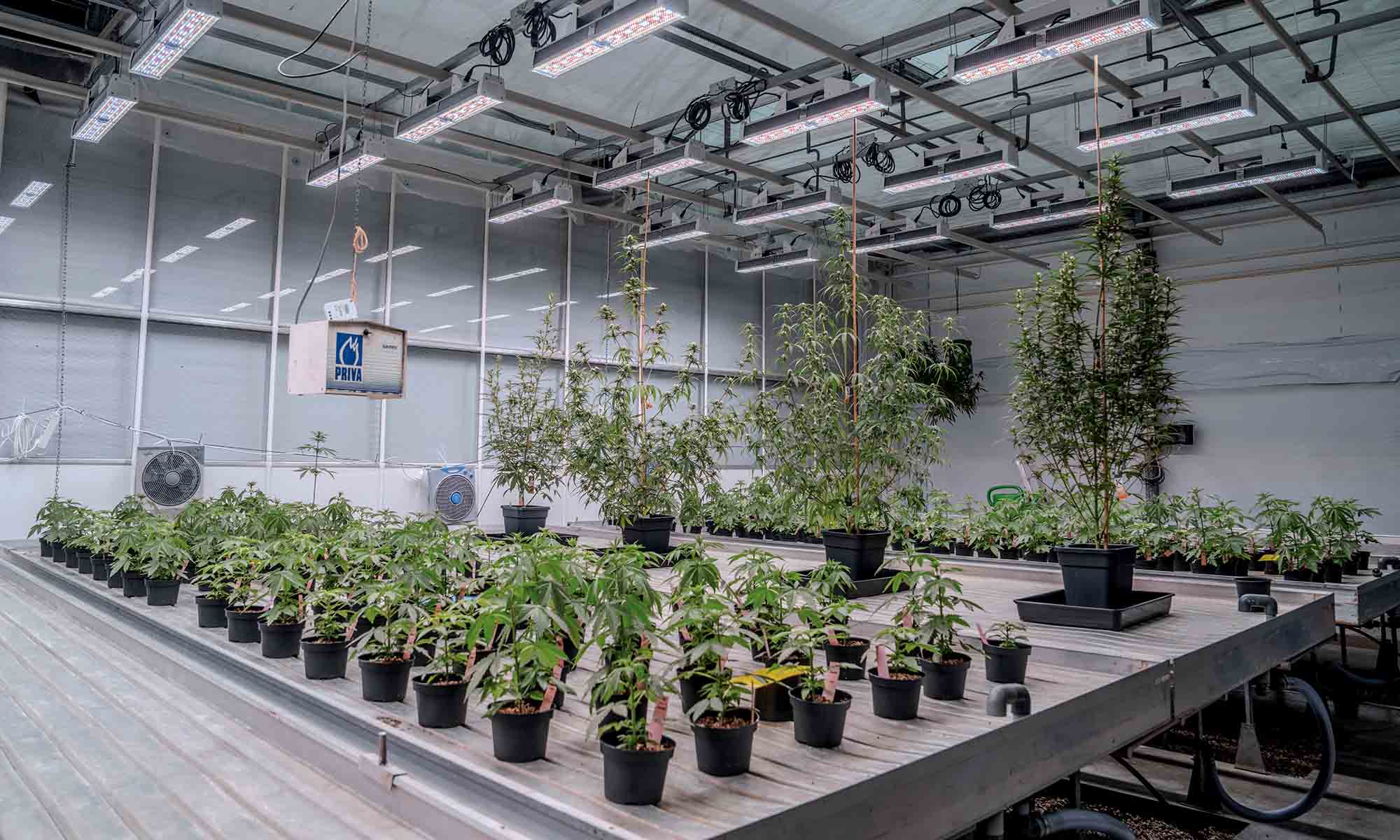
Based in Meterik, a village in The Netherlands, Innexo is conducting independent trials on lighting, nutrients and genetics in an effort to generate measurable, reproducible data that brings cultivation closer to pharmaceutical standards. And through some key partnerships, they’ve come up with some profound techniques. The research center is currently working with Las Vegas-based lighting company Fohse, examining how precision lighting from their Cobra LED system affects plant structure, cannabinoid expression and energy efficiency.
“We’re using the Cobra Pros, and soon we’ll have tunable-spectrum models from Fohse,” van Gruisen says. “They have sensors that constantly read the natural light in the greenhouse and adjust automatically. If we can work with a dynamic spectrum that mirrors the sun, we can replicate the same conditions anywhere on Earth, in any season.”
The study benchmarks a range of metrics—from cannabinoid and terpene expression to morphology and energy use—to quantify how light affects consistency. “Their system fills your stack with data,” van Gruisen says. “That’s what we’re after: information that lets us build validated cultivation models rather than assumptions.”
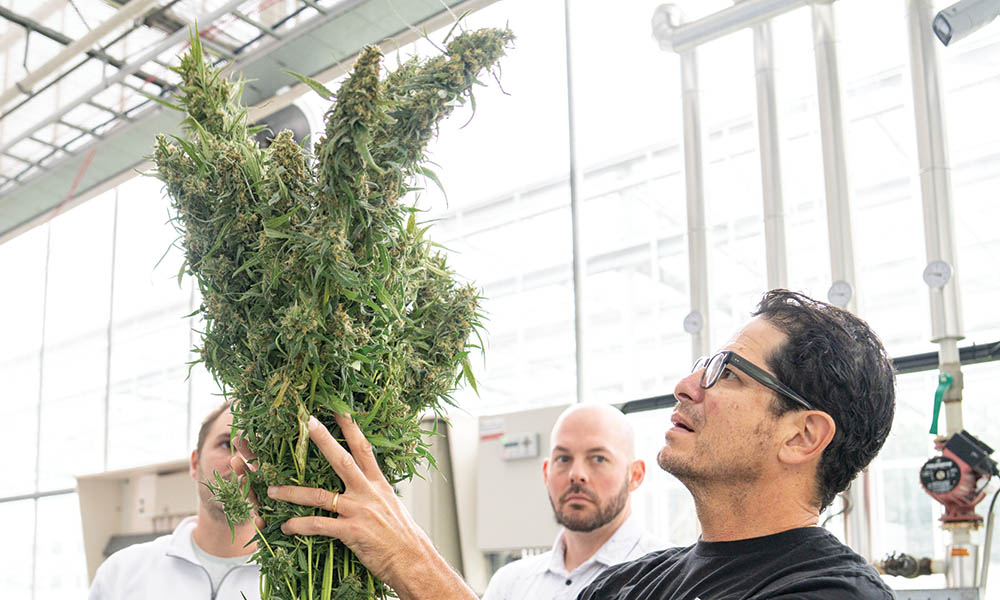
Lighting defines the environment; genetics define the foundation. To address that, Innexo partnered with sister companies Innoveins Seed Solutions and SeQso to develop—wait for it—the world’s first AI-driven seed-sorting system for cannabis.
“They collect the spectral data of each seed in a non-destructive way,” van Gruisen says. “Then they grow that seed, record its traits, feed those traits back into the system and the algorithm learns which spectral patterns predict which plant characteristics.”
When he first heard of the technology, van Gruisen says, “I literally pulled my car over to call people.” Tests confirmed it worked for cannabis, opening the door to non-destructive quality-control certification at the seed level. “If there’s something you can distinguish, you can design a seed-sorting algorithm and push a batch through to separate the good from the bad,” he says.
The implications of this technology stretch beyond yield. AI analysis can detect pathogens such as hop latent viroid and certify genetic quality before cultivation begins. “Companies are developing F1 hybrids—stabilized lines,” van Gruisen says. “By scanning the seeds, you can fine-tune even further so your starting material is as robust as it can be.”
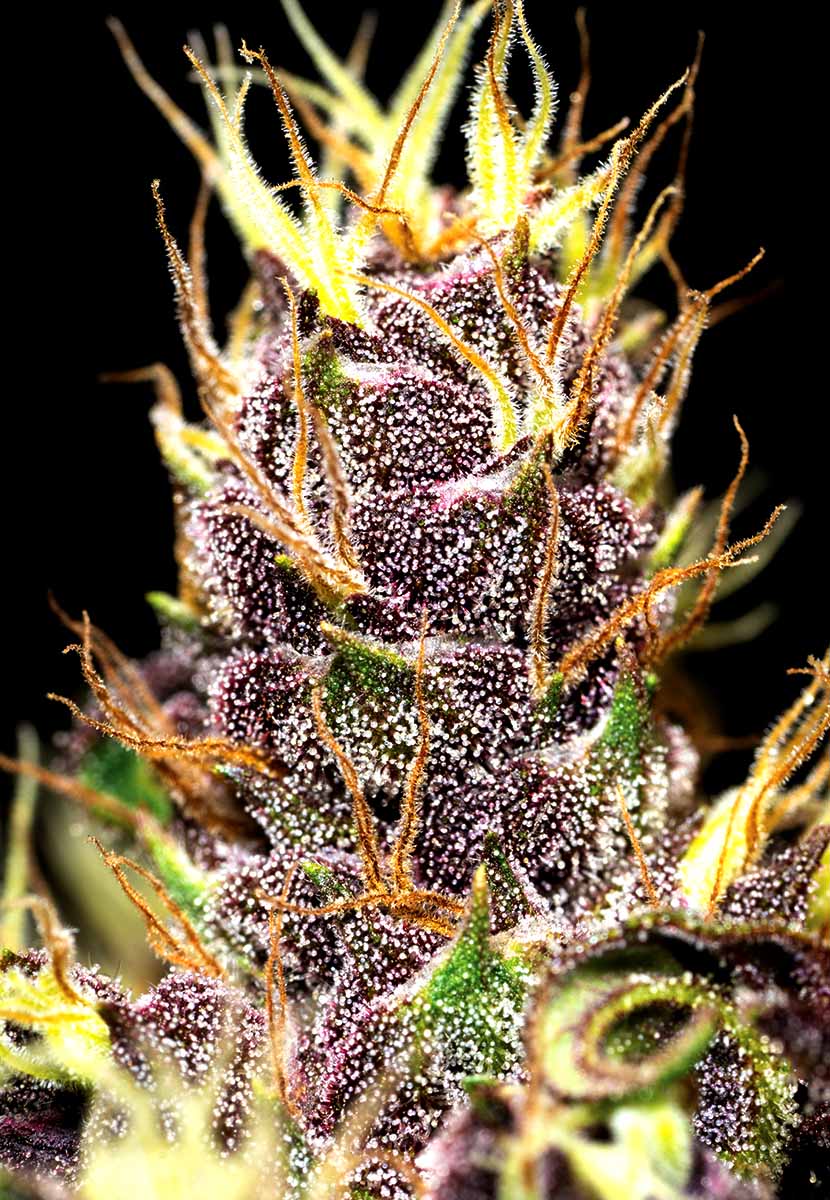
Van Gruisen believes AI-based seed fingerprinting could also reduce the industry’s dependence on cloning. “Even when you use clones, you still find big deviations in secondary metabolites depending on the season or humidity,” he says. “It’s very difficult to provide a consistent product in flower form.” Regulatory frameworks, he notes, demand pharmaceutical precision.
“When regulators say cannabis has to be a medicine, they mean it should be 98 to 102 percent consistent with what’s on the label,” he says. “That’s almost impossible with a natural product. But with solid F1 hybrid genetics that start from seed, you add another quality-control checkpoint.”
For cultivators, F1 seeds offer cleaner starts, lower costs and easier scalability. For patients, they promise reliability—the same genetics, the same relief—every time.
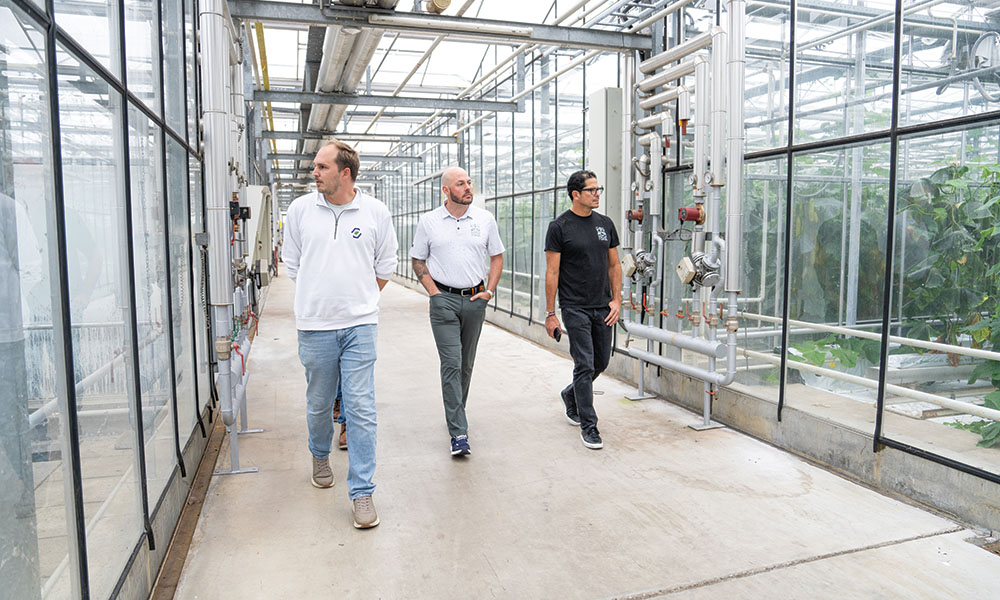
Van Gruisen describes Innexo as a link between two sectors that rarely speak the same language. “Growers talk in grams per square meter,” he says. “Pharma talks in validated datasets and deviation tolerances. We sit in the middle, making those conversations possible.”
That bridge extends beyond technology. Innexo is also reviving iconic legacy cannabis genetics—long-flowering, terpene-rich cultivars—and reintroducing them through advanced lighting and AI-guided cultivation. He aims to right some of the wrongs the industry has made. “We took a lot of wrong turns with cannabis in the last 20 years,” he says. “It’s time to rediscover what made this plant valuable in the first place and do it with proper science.”
The post The World’s First AI-Driven Cannabis Seed-Sorting System Is Here appeared first on Cannabis Now.
