Normal view

There are new articles available, click to refresh the page.
Before yesterdayMain stream

Dogecoin Developer Creates New Way To Use DOGE With Banking IBAN – Here’s How

3 December 2025 at 23:00

Paulo Vidal, a Dogecoin Foundation developer, has created a new protocol that transforms DOGE addresses into International Bank Account Numbers (IBANs). This development could make it easier to link Dogecoin with conventional financial systems, offering a new level of usability for both crypto enthusiasts and mainstream players. While the protocol is still in its early stages, Vidal has shared updates on its developments and insights into its core features. 

Dogecoin Dev Introduces Banking IBAN For DOGE

Dogecoin could be taking a step closer to mainstream financial integration as Vidal unveils an innovative protocol that allows addresses tied to the meme coin to function like bank-validated IBANs. Announced on X this week, the Dogecoin developer explained that his effort to simplify Dogecoin addresses has evolved into a D-IBAN system fully compliant with ISO 13616-1:2020 Standard. 

Vidal has explained that the D-IBAN protocol allows Dogecoin addresses to be formatted in a way that banking systems can easily validate, effectively bridging the gap between cryptocurrency and traditional finance. He explained that the system supports multiple address types, including P2PKH, P2SH, P2WPKH, and time-locked addresses, automatically detecting the type from the address prefix. Additionally, it automatically detects the address type and uses the same MOD-97-10 Checksum algorithm used by banks worldwide. 

The Dogecoin developer notes that the D-IBAN encoding is fully reversible, allowing users to convert back and forth without losing any data. The protocol also formats the IBAN into standard four-character groups for readability, making DOGE addresses more user-friendly and appearing bank-compliant

Beyond the core D-IBAN functionality, Vidal has also introduced playful and practical extensions of the system. The DogeMoji protocol converts addresses into memorable, visually appealing emoji sequences—ideal for social media or QR codes. 

The second DogeWords protocol encodes addresses into short, positive word sequences that are easy to read and remember, while maintaining complete reversibility and ensuring accuracy through validation. Both D-IBAN features are designed to make Dogecoin easier to share and interact with in creative ways. 

Community Reacts To D-IBAN Invention

Members of the crypto community who read about Vidal’s new D-IBAN protocol responded with a mix of enthusiasm, curiosity, and caution. Crypto analyst Astro noted that sending fiat to a crypto address via IBAN would require compliance with Anti-Money Laundering (AML) rules, KYC verification, and potentially obtaining a Virtual Asset Service Provider (VASP) license. 

Astro warned that integration with traditional banks could undermine the decentralized narrative of blockchain technology, contending that banks and crypto have inherently conflicting interests. A community member also highlighted that creating a mathematically valid IBAN from a Dogecoin address does not guarantee that banks will process actual transactions. He stated that only IBANs issued by authorized institutions are recognized for fund transfers. 

Vidal addressed these concerns by emphasizing that the D-IBAN protocol is intended to provide optional banking integration rather than enforce it. He argued that banks could handle Dogecoin in a familiar format while users retain full control of their wallets, preserving self-custody and upholding the core principles of decentralization.

Dogecoin

Coconut Sambar Recipe

By: Aarthi
16 November 2025 at 23:33

Coconut sambar is a simple delicious and comforting sambar made with cooked dal, a mix of vegetables, fresh coconut paste and a flavourful tempering. The addition of coconut gives the sambar a creamy, rich texture and a mild sweetness. This sambar perfectly pairs with tiffin items like idli, dosai, pongal, medu vadai or can be...

Read More

The post Coconut Sambar Recipe appeared first on Yummy Tummy.

Restaurant-Style Dal Makhani

By: Richa
1 October 2025 at 07:00

Dal Makhani is one of the most ordered Indian dish in restaurants. You can make authentic, buttery, rich dal makhani at home. It’s just as good as the restaurant version! Black gram and kidney beans are simmered in a creamy spiced sauce and is perfect for special occasions or a great dinner. With Instant Pot and Sauce pan instructions. (gluten-free, soy-free, nut-free, oil-free option).

dal makhani in the pan with tadka and toppings

Love ordering Dal Makhani at restaurants? You’ll love this homemade version even more! This is adapted from my home-style dal makhani that’s on the blog and in my books. The difference is that this version has more spices, including some whole spices, which create more layers of flavor. 

This version of dal makhani is a little bit more involved than my home-style version. It has both a base sauce and a spiced oil. This levels up the flavor and adds a smoky, creamy flavor, like restaurants usually serve.  There’s also a lot more Kashmiri chili powder in this version compared to the home-style one. 

The home-style recipe is quicker and still delicious, but this one takes it up another couple of notches, simmering the beans in a deeply-flavored sauce.

dal makhani in a bowl

Makhani means both “butter” and “like butter,” and the dish is called dal makhani, both because of the butter content and the creamy, buttery texture of the dal. The goal is to cook the beans long enough that they become soft and almost break down into the sauce, thickening it and creating a smooth consistency. For the right texture, I prefer to use a pressure cooker / instant pot, but you can also cook it in a saucepan. I included both methods in the recipe.

After cooking the beans, we make a delicious sauce with whole spices, aromatics, and ground spices, then add the cooked beans to it. Then, we prepare a spice oil with toasted fenugreek leaves, Kashmiri chili, smoked paprika, and a smoky burnt cinnamon stick. Burning the cinnamon stick for just half a second before adding it to give the dal its smoky restaurant-style flavor.

Traditionally, restaurants achieve this smoky flavor by using food-grade charcoal. They place a piece of hot charcoal in a bowl with oil, which immediately smokes. Then, they nestle the bowl inside the dal pot and cover the pan for 10 to 15 minutes. If you don’t want to use charcoal or burnt cinnamon, liquid smoke can also work.

spoon taking a bite of dal makhani

Why You’ll Love Dal Makhani

  • creamy, buttery dal with two kinds of beans
  • deep flavor from the sauce and the spice oil, no dairy needed!
  • flexible! Cook the beans in the Instant Pot or on the stovetop
  • naturally gluten-free, soy-free, and nut-free with an oil-free option

More Authentic Dal Recipes

Continue reading: Restaurant-Style Dal Makhani

The post Restaurant-Style Dal Makhani appeared first on Vegan Richa.

Yellow Moong Dal with Vegetables

By: Rapti B
29 September 2022 at 22:30

Golden, sweet yellow moong dal is roasted, tempered in whole spices and cooked with a handful of vegetables for a dish that soothes and satiates.

There is a joy in simplicity, after all, it is the simple things that make your heart sing in delight. And that, my dear friends, is an attempt to express the depth of emotion and devotion I feel towards the Yellow Moong Dal with Vegetables.

The Yellow Moong Dal with Vegetables is one of those Bengali dishes that uses minimal spices and aromatics, thus allowing the hero – the roasted yellow moong dal – to shine. The addition of fresh vegetables bumps up the nutrition value and lets you serve the dal as a main course with steaming hot rice and a bhaja (fried vegetables or fish) on the side.

Another USP of this particular dish is that it comes together in a relatively short time, especially if you put it together in a pressure cooker, which is what we prefer to do.

Yellow Moong Dal with Veggies | copyright image | From The Corner Table

Do let me know if you try this recipe! Leave a comment and don’t forget to tag me on Instagram at from.the.corner.table and hashtag it #fromthecornertable. I’d love to see it ❤

For regular updates on recipes, recommendations on things to read and watch and ramblings that make sense, subscribe to the newsletter – you’ll find the form in the sidebar if viewing on a screen and at the bottom if viewing on the phone. Since spamming or flooding your inbox is a huge no for me, these newsletters go out only when I’ve put up a new post or sometimes, once in a month only.

Yellow Moong Dal with Veggies

Golden, sweet yellow moong dal is roasted, tempered in whole spices and cooked with a handful of vegetables for a dish that soothes and satiates.

  • ¾ cup Yellow moong dal
  • ½ cup Green peas
  • ½ cup Potato ((cubed/diced))
  • ½ cup Carrot ((cubed/diced))
  • 1 Green chilli
  • 1 tablespoon Ghee
  • ½ inch Ginger ((crushed))
  • ½ teaspoon Cumin seeds
  • 2-3 Cloves
  • 2-3 Cardamom pods
  • ½ stick Cinnamon
  • 1 Bay leaf
  • Salt ((to taste))
  • ¼ teaspoon Sugar
  • ½ teaspoon Turmeric powder
  • Red chilli powder ((to taste))
  • 4 cups Water
  1. Peel and cube/dice the carrots and potato and set aside.
  2. Slit the green chilli lengthwise, crush the ginger and keep ready.
  3. In a kadhai/pan, dry roast the yellow moong dal until fragrant. Stir constantly to avoid the dal from burning. This will take approximately 5 minutes.
  4. Pour the roasted yellow moong dal into a bowl and set aside to cool.
  5. In a pressure cooker, heat ghee.
  6. Add cumin seeds, cloves, cardamom pods, cinnamon and bay leaf. Stir fry till fragrant.
  7. Add the crushed ginger, green chilli, potato and carrot.
  8. Stir fry for 2-3 minutes, until the potatoes are slightly brown at the edges.
  9. Add the yellow moong dal and green peas into the cooker. If you are a cleanliness maniac like me, wash the roasted yellow moong dal before you dump it into the cooker.
  10. Add salt, turmeric powder, red chilli powder if using it and salt.
  11. Pour in 3 cups of water and stir well.
  12. Close the pressure cooker and let the dal cook for up to three whistles.
  13. Gradually release the cooker’s steam.
  14. Open and stir the dal gently to avoid breaking the cooked vegetables.
  15. Check the seasoning and the consistency – a thicker dal pairs well with breads like roti, paratha, luchi or naan. A slightly soupy dal is best for rice.
  16. To adjust the consistency, add warm water and gently stir the dal.
Main
Bengali (Indian)
dal, vegetables, yellow moong dal, yellow mung dal

Yellow Moong Dal with Vegetables

By: Rapti B
29 September 2022 at 22:30

Golden, sweet yellow moong dal is roasted, tempered in whole spices and cooked with a handful of vegetables for a dish that soothes and satiates.

There is a joy in simplicity, after all, it is the simple things that make your heart sing in delight. And that, my dear friends, is an attempt to express the depth of emotion and devotion I feel towards the Yellow Moong Dal with Vegetables.

The Yellow Moong Dal with Vegetables is one of those Bengali dishes that uses minimal spices and aromatics, thus allowing the hero – the roasted yellow moong dal – to shine. The addition of fresh vegetables bumps up the nutrition value and lets you serve the dal as a main course with steaming hot rice and a bhaja (fried vegetables or fish) on the side.

Another USP of this particular dish is that it comes together in a relatively short time, especially if you put it together in a pressure cooker, which is what we prefer to do.

Yellow Moong Dal with Veggies | copyright image | From The Corner Table

Do let me know if you try this recipe! Leave a comment and don’t forget to tag me on Instagram at from.the.corner.table and hashtag it #fromthecornertable. I’d love to see it ❤

For regular updates on recipes, recommendations on things to read and watch and ramblings that make sense, subscribe to the newsletter – you’ll find the form in the sidebar if viewing on a screen and at the bottom if viewing on the phone. Since spamming or flooding your inbox is a huge no for me, these newsletters go out only when I’ve put up a new post or sometimes, once in a month only.

Yellow Moong Dal with Veggies

Golden, sweet yellow moong dal is roasted, tempered in whole spices and cooked with a handful of vegetables for a dish that soothes and satiates.

  • ¾ cup Yellow moong dal
  • ½ cup Green peas
  • ½ cup Potato ((cubed/diced))
  • ½ cup Carrot ((cubed/diced))
  • 1 Green chilli
  • 1 tablespoon Ghee
  • ½ inch Ginger ((crushed))
  • ½ teaspoon Cumin seeds
  • 2-3 Cloves
  • 2-3 Cardamom pods
  • ½ stick Cinnamon
  • 1 Bay leaf
  • Salt ((to taste))
  • ¼ teaspoon Sugar
  • ½ teaspoon Turmeric powder
  • Red chilli powder ((to taste))
  • 4 cups Water
  1. Peel and cube/dice the carrots and potato and set aside.
  2. Slit the green chilli lengthwise, crush the ginger and keep ready.
  3. In a kadhai/pan, dry roast the yellow moong dal until fragrant. Stir constantly to avoid the dal from burning. This will take approximately 5 minutes.
  4. Pour the roasted yellow moong dal into a bowl and set aside to cool.
  5. In a pressure cooker, heat ghee.
  6. Add cumin seeds, cloves, cardamom pods, cinnamon and bay leaf. Stir fry till fragrant.
  7. Add the crushed ginger, green chilli, potato and carrot.
  8. Stir fry for 2-3 minutes, until the potatoes are slightly brown at the edges.
  9. Add the yellow moong dal and green peas into the cooker. If you are a cleanliness maniac like me, wash the roasted yellow moong dal before you dump it into the cooker.
  10. Add salt, turmeric powder, red chilli powder if using it and salt.
  11. Pour in 3 cups of water and stir well.
  12. Close the pressure cooker and let the dal cook for up to three whistles.
  13. Gradually release the cooker’s steam.
  14. Open and stir the dal gently to avoid breaking the cooked vegetables.
  15. Check the seasoning and the consistency – a thicker dal pairs well with breads like roti, paratha, luchi or naan. A slightly soupy dal is best for rice.
  16. To adjust the consistency, add warm water and gently stir the dal.
Main
Bengali (Indian)
dal, vegetables, yellow moong dal, yellow mung dal

Paneer fry and dal plate

17 June 2025 at 20:24
 Here’s a nutrition estimate for the meal in my photo.1. Dal (Lentil Soup) – ~1 cup• Calories: ~180 kcal• Protein: ~12 g• Carbs: ~24 g• Fat: ~5 g• Fiber: ~5 g2. Paneer & Veggie Stir-Fry – ~1 cup(Made with paneer, bell peppers, zucchini, broccoli, carrots, onions; sautéed in minimal oil)• Calories: ~280 kcal• Protein: ~16 g• Carbs: ~12 g• Fat: ~20 g• Fiber: ~4 g 3. Quinoa – ~¾ cup

Palakura Pesarapappu

By: Pavani
22 April 2024 at 20:00

This is one of the simplest and tastiest dal recipes. I usually make spinach dal with toor dal and add either tomato or tamarind to make it slightly tangy. But for this dal, I kept it simple and you can the leafy spinach and the slight sweetness of moong dal; tadka with garlic completes the dish. This is my entry Cooking For Kids-Leafy Greens being hosted on this blog. Don't forget to send in your entries before June 30th.

The post Palakura Pesarapappu appeared first on Cook's Hideout.

Vegetable Kootu Recipe

By: Pavani
21 January 2024 at 20:10

Dal is something that is made almost every other day in my household. Not just my home, but that is the case in almost every Indian households. Lentils form one of the main source of protein to vegetarians. I am always looking for new ways of making the same old pappu/ dal. My everyday dals are usually very simple like this tomato pappu or this palakura pappu. But occasionally I do make kootu where dal is cooked with vegetables and coconut-peppercorn masala paste. My mom learned it from a Tamil neighbor. Today's recipe is from the cookbook, Dakshin by Chandra...

The post Vegetable Kootu Recipe appeared first on Cook's Hideout.

Peerkangai thol thogayal | ridgegourd chutney

11 May 2025 at 04:16
Peerkangai thol thoyayal

Enjoy a lipsmacking thogayal made with dals and peels of the ridge gourd in traditional south Indian flavour. Pair it with meals of your choice to wow, your family.

What I see as a difference between home cooks and chefs is not just in the size of meals that we make. Chefs have to keep up with so many of our taste factors, cost control and visual appeal. Home cooks, do know the people they cook for, so fairly easier for them to play around with the ingredients to suit the home needs. Moreover, home cooks can focus on ensuring the best of nutrition from best of produce.What do you think

Here is an age old recipe that a lot of South Indian home cooks rely on, peerkangai thol thogayal.

What is peerkangai thol thogayal?

Peerkangai thol is the peel of ridgegrord. This along with roasted lentils, spices, coconut and tamarind is ground into a coarse paste. This is peerkangai thogayal or ridgegourd chutney. It is a popular recipe among all South Indian states and has a few different names, peechinga chutney in Kerala, beerakaya pachadi in Telugu,  heerakai chutney in Kannada.  Often paired with steamed rice, a dollop of ghee and some stirfried vegetables on the side, the recipe is a classic homestyle one.
The recipe as such is

  • Vegan
  • Gluten free
  • Onion and garlic free
  • No nightshade added
  • And dairy free


peerkangai thogayal

Ingredients from ridge gourd chutney

 Angled loofah or ridge gourd belongs to the cucumber family. The tough outer skin has predominant ridges. The gourd as such has soft flesh that is cooked into curries or stirfries. The peel is the one we have used to make this recipe

Dals: the dals add volume and depth of flavour to this recipe. I use a mix of skinned black gram dal (urad dal) and chick pea dal(channa dal). When roasted thr dals and ground the dals add the necessary volume to the dish.
Spices:there is very minimal spices in the recipe. Red dried chillies are a huge part if the flavour. The second main flavour comes from curry leaves. Along with the salt, the small pinch of asafoetida added offsets any need for garlic or onion.
Coconut: grated coconut added a softness. The milky flavour of the coconut works well with the ridgegourd. Tamarind: there is a slight hint of sourness that you experience while having this recipe. This comes frontiers dried tamarind that is added and  ground along with the ingredients. It adds a zesty flavour to the dish when having with grains or breads.

Let’s make peerkangai thogayal

The recipe is a medium intensity one where the roasting of dals is the one that can go wrong as it burns easily.

Prep the peerkangai: the peel of the ridge gourd is the one used to make this recipe. However, the ridges have a tough fiber running through them that needs to be removed.

  • Wash and pat dry the riodge gourd.
  • Using a knife or peeler approach of the pointed ridges. This js where the fibres are.
  • Press down the peeler and remove the green skin completely. Save this part of this chutney. Save the spongy part to make kootu or stirfry.

Roast the dals and spices: in a heavy bottomed pan, add the urad dal and channa dal and a tsp of coconut oil. Dry roast this on low heat. Add the curry leaves and red chillies as the dals start turning golden and roast all together till the chillies are crisp and the dals deep golden. Remove this from heat on to a plate and set it aside.

Roast the peerkangai thol: Add the skin. Stir fry this till the peels look deep green and vibrant. Remove and add to the same plate. Let this cool down as well.

Grind the thogayal: once cooler to handle add the roasted dals, chilli,curry leaves, sauteed ridgegourd peel, tamarind, salt and coconut to the food processor and blend into a coarse mix.
Remove the coarse ground mix to a bowl and the thogayal is ready to be served.

peerkangai thogayal

Best pairings with peerkangai thol thogayal

Here are a few ideas for you to try with this thogayal
Peerkangai thogayal with steamed rice, a small spoon of ghee and poriyal on the side is one great Sunday meal.
At home, we like this as a side to rasam rice and often with some kootu.
Alternatively, you can use this as a dip for idlies, dosa etc too.
We use this as a spread for wraps and sandwiches. Pretty much the thogayal and cheese sandwich is a great try. Use some  grana padano or  aged cheddar instead of saltier ones like feta.

Meal prep and lunch boxes

Thogayal stays well in the fridge for up to a week without any issues. It also freezes so well, that we often rely on a frozen block for quick lunches. We love thogayal cheese sandwiches for our lunch box. You could also use it to stirfry the rice with, like we made ghee podi rice.

Print

Peerkangai thogayal

Enjoy a lipsmacking thogayal made with dals and peels of the ridge gourd in traditional south Indian flavour. Pair it with meals of your choice to wow, your family.
Course Appetizer, Side Dish
Cuisine South indian
Keyword beans and legumes, chutneys and podi, Indian vegetarian dinner, leftover recipes
Prep Time 15 minutes
Cook Time 20 minutes
Servings 8 people

Equipment

  • Kadai
  • mixing bowls and spoons.

Ingredients

  • 3 medium ridge gourd
  • 4 tbsp urad dal
  • 4 tbsp channa dal
  • 6 dry red chillies
  • 8 tbsp grated coconut
  • 1 small lime sized ball tamarind
  • salt to taste

Instructions

  • Wash and remove the fibers of ridge gourd.
  • Remove the peels and set them aside.
  • In a pan roast the dals, curry leaves and red chillies.
  • Once they are golden brown, remove on to a plate.
  • Roast the peel of ridge gourd.
  • Let all this cool.
  • Add the coconut, lemon and salt.
  • Grind this mix to a coarse mix.
  • Remove into a bowl and serve.

Other chutneys and thogayals

Thogayals, chammandi and chutneys are a big part of South Indian meals. Here are a couple of ideas
Thenga chammandi
Curry leaves thogayal
Doddapathra chutney
Mango chammandhi
Watermelon rind thogayal

Stay connected

The comfort of hot rasam on a plate with steamed rice and a ball of this thogayal is Sunday for us. We enjoy it as a meal together that screams simplicity yet home.Hope you enjoy making this chutney as much as we love bring it to you. If you make it slightly different tell us your version, we always love to try different ones .
Pin this for later
See you in the next post. 

ridge gourd thogayal

Basic Vanilla Cake {Recipe}

11 February 2023 at 03:36

It was my birthday during the first Covid lockdown. Even though I had laid out a feast for my family, there was one very important, missing element. Cake. Two months later, the same emotion got repeated for my husband’s birthday. I felt as if I was the only one who didn’t know how to bake. But I had one sorry excuse – no oven. 

I received a small OTG as a present after a few months and then I didn’t even have my sorry excuse.  My fear of baking was at its peak with home bakers using the lockdown to flaunt their beautiful creations on Facebook and Instagram. 

The first known cake can be traced back to the Egyptians and then the Greeks and Roman. All I could remember was my failed attempt at baking a few years earlier. I had gone and purchased all the ingredients and baking equipment with enthusiasm when my husband requested a home-baked teacake. After zeroing in on an easy looking recipe, I readied the batter. What came out of the oven 40 minutes later was something that vaguely resembled a cake. It tasted eggy and was raw in places. That was the hint I needed. The oven mittens, cake tin and everything else was shoved into the cupboard. I am glad that there exists no photographic evidence of my baking fiasco.

The memories of that experience made me even more jittery. After contemplating for a few days, I decided that it was time to take the plunge. Or maybe just some baby steps. Another round of shopping and with the help of Google baba, I was as prepared as I could be, given my lack of confidence. I could imagine myself pulling a hard-as-rock cake out of the oven.

The day dawned and the cake was baked. What happened next was unfathomable. My whole house was fragrant with a yummy aroma. That soft, spongy and buttery vanilla cake lasted for just a few hours.

I have followed the same recipe ever since. Here is the foolproof recipe for a basic vanilla cake. It is a very forgiving recipe and you can convert it into a tutti frutti or walnut or marble cake very easily. You can easily replace the maida with whole wheat flour and reduce sugar if you like it less sweet. It will still turn out good.

Ingredients

1 & 1/2 cups All purpose flour (maida)

1 cup  sugar

1/2 cup / 113 grams  unsalted butter

2 tsp oil

1/4 cup malai

2 large eggs 

1 & 1/2 tsp baking powder

1/4 tsp baking soda

1/2 cup milk

1 tsp vanilla extract/essence 

1/4 tsp salt

Method

Preheat the oven to 350 degrees F. Grease and line an 8-inch cake tin.

In a mixing bowl, sieve flour, salt, baking powder and baking soda. 

Beat together sugar and malai till it is light and fluffy. At the same time, heat the milk with the butter till the butter melts.

To the sugar and malai mix, add the oil and mix. Then start adding the eggs, one at a time. Beat till the mix is light in colour. 

Add the vanilla essence.

I stop using the beater at this stage. I use a silicon spatula to mix the wet and dry ingredients. You can use the beater but at the lowest speed possible.

Start adding the flour little by little. DO NOT OVER MIX. 

Once the wet and dry ingredients are mixed well, add in the warm milk and butter. Mix for a few seconds till you have a smooth batter.

Transfer into the lined cake tin and put it on the middle rack of your oven. 

Bake for about 40 minutes or till a tooth pick comes out clean.

Cool for a few minutes before you cut a slice for yourself and don’t forget to pat yourself on the back!

The post Basic Vanilla Cake {Recipe} appeared first on Indian Food Freak.

Boju’s Kitchen, Gurgaon: Delectable Himalayan Cuisine

7 February 2023 at 02:29

My friend and I walked into Boju’s Kitchen on a lovely, sunny winter afternoon. A small, unpretentious Himalayan kitchen with limited seating, run by the charming mother daughter duo – Arati Thapa and Chitrangada Gupta who hail from Darjeeling. The size of the kitchen is in contrast with the large hearted, warm women. Boju means grandma and that is the source of all recipes that one can see on their menu and the secret behind the hearty, no-fuss and authentic Nepali food. Started as a home kitchen during the first lockdown, this restaurant now sits at a very pretty location at 32nd Avenue, Gurugram.

From cooking herself, Arati now has a chef from Nepal running the kitchen but the recipes are still hers.

We sat at a table outdoors and the first thing we had was the first flush Darjeeling tea. So mellow and yet so flavourful. This was followed by their chicken thukpa that we divided into two for ease of eating. The broth was light, fresh and delicious with a touch of chilli oil. The experience got elevated when we learnt that the noodles in it weren’t made of maida but healthier rice flour. I could imagine myself sitting with a large bowl, slurping the broth, on a cold winter evening. Like a hug that warms up the coldest cockles of your heart. That’s how good it was.

Then came the thing that made Boju’s Kitchen popular. Those not-so-little, beautiful nuggets of yumminess. Momos. We decided to have an assorted platter. We started with pork, followed by chicken and then mushroom and cheese. I would have loved the pork to be a touch juicier but they were yum. My favourite were the mushroom and cheese. A hardcore non-vegetarian fell in love with mushroom momos!

From top to bottom – pork, chicken, mushroom and cheese
Sadeko Momos

We followed this platter up with sadeko momos. These are pan fried momos with Nepalese spices. It is a best seller at the restaurant and after taking the first bite I understood why. The subtle spice with timur berry hits all the right spots. Even though momos are available at every other corner in the city, these sit differently.

Next up was their chilli pork. When it was brought to the table, my first reaction was – oh that looks gorgeous! And it tasted exactly the same. Gorgeous!

I was full by then but there still was the pork curry meal which we had already ordered. A bowl of steamed rice with pork curry and alu dum served with a side of aloo pickle and fermented leafy vegetables. We requested the kitchen to up the spice levels of the aloo pickle and they gladly obliged. The fermented vegetables were new for both of us and you can think of it as a Nepalese kimchi. Look at the dish this way – pork, potatoes and rice, together are a match made in heaven. We couldn’t have asked for more.

This meal was exactly what food dreams are made of. Laidback atmosphere, delicious food and recipes straight out of mumma’s cookbook. There is an indescribable sense of comfort when one eats at restaurants born out of love. And when you have a grandma, her daughter and granddaughter at the helm, you know that you are up for a happy and satisfying meal. One thing I can say for sure. I will definitely go back especially for sadeko momos.

Address

Boju’s Kitchen, The Highline, 32nd Avenue, Sector 15 Part 2, Gurugram

Phone number:  95820 81749

The post Boju’s Kitchen, Gurgaon: Delectable Himalayan Cuisine appeared first on Indian Food Freak.

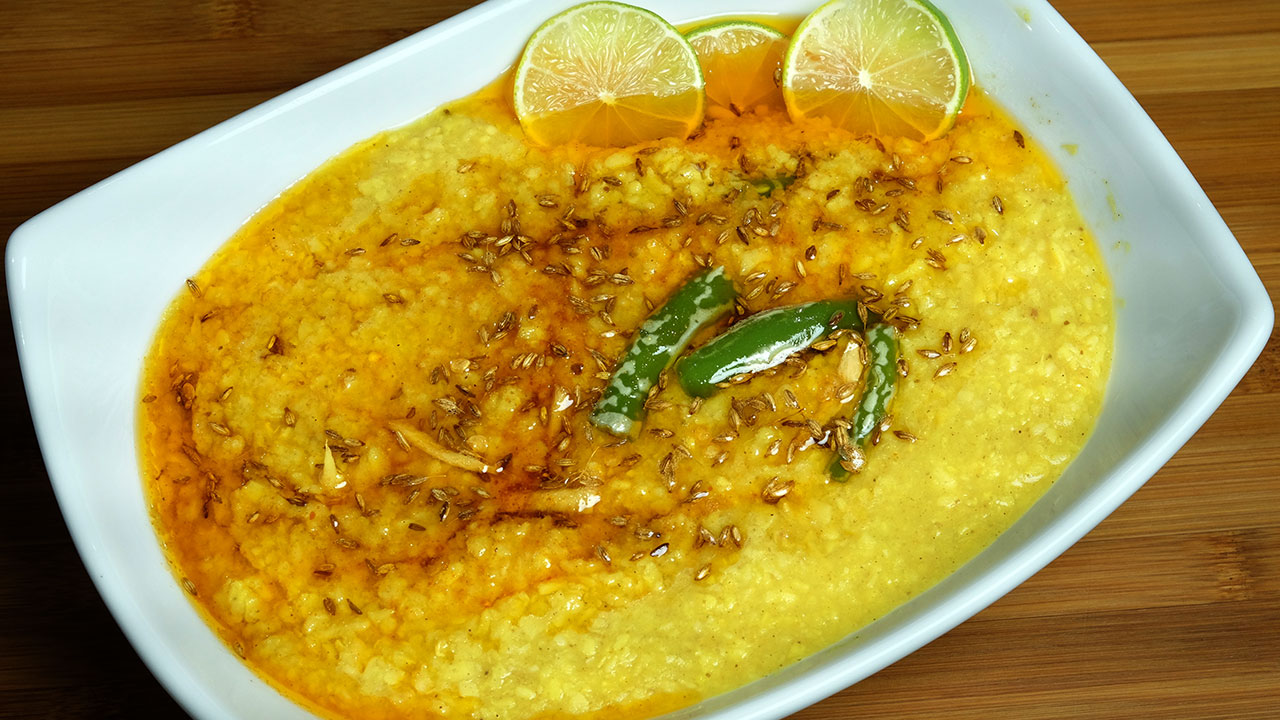
Urad Dal Tadka

5 February 2023 at 06:05
Urad Dal Tadka
Print

Tadka Urad Dal

Tadka Urad Dal was a favored lentil dish in my family while I was growing up. Dal is a staple dish in Indian meals and, for most Indian vegetarians, a frequent source of protein. This delicious, nourishing dish can accompany any number of different meals.
Course Main Course
Cuisine Indian
Prep Time 10 minutes
Cook Time 15 minutes
Total Time 45 minutes
Servings 4 people

Ingredients

  • 1 cup urad dal washed
  • 1 tsp salt
  • 1/4 tsp turmeric
  • 1 Tbsp ginger finely chopped
  • 2 cups water
  • 1/4 tsp garam masala
  • 1/2 tsp mango powder amchoor

Seasoning

  • 3 Tbsp ghee clarified butter
  • 1/2 tsp cumin seeds jeera
  • 1/8 tsp asafetida hing
  • 1 green chili sliced
  • 1 Tbsp ginger thinly sliced
  • 1/2 tsp red pepper adjust to taste
  • 4 pieces lemon for garnishing

Instructions

  • Wash and soak urad dal for at least 20 minutes. Dal will be double in volume after soaking. Drain the water.
  • Put dal with 2 cups water into a pressure cooker and add salt, turmeric, and ginger. Close the cover and cook on medium high heat.
  • When the pressure cooker starts to steam, turn the heat down to low and cook for five minutes.
  • Turn off the heat and wait until all the steam has escaped before opening the pressure cooker. Dal should be soft. If needed add more water, dal should be not very mushy you should be able to see the grains. You should be able to scoop the dal with roti. Dal will thicken as it sits after cooking. So leave it more liquid than you want it to be.
  • Add garam masala, and mango powder mix it well.

Seasoning

  • Heat ghee in a small saucepan. Test the heat by adding one cumin seed to the ghee; if it cracks immediately, the oil is ready. Add the cumin seeds. When they begin to crack, add the asafetida, ginger, and green chilies. Stir for a few seconds. Add red chili powder and 1 tablespoon of water to prevent the spices from burning. Pour spiced chaunk over hot dal, before serving.

Notes

Tadka urad dal is ready serve with roti or paratha, or with plain rice.

Originally posted 2016-07-07 23:21:08.

The post Urad Dal Tadka appeared first on Manjula's Kitchen.

Shepuchi Bhaji (Stir fried Dill leaves dish)

Shepuchi bhaji is a well known Maharashtrian dish. Very popular food amongst villagers and farmers. It falls under the category of either you Love it or Hate it, more or less like Karela (bitter gourd). It has a cult followers of its own if you ask me heheh and I am one of them. I can polish off my plate when I get served these cult vegetable curries like karela, shepu(dill), bitter beans etc. My husband is just the opposite, he doesn't like it at all. One other reason I look forward to make it as I make it once in a while :)


It is used as a herb in western countries. Dill has been used for culinary and medicinal purposes for hundreds of years. Apart from giving a strong, tangy, appetizing flavor and taste, it possesses plenty of medicinal properties. It is very good for health and has a pretty green color on it. Used these days for garnish, flavoring and for styling food plates to present on Internet handles, it is has multipurpose value- so Dill ain't going anywhere soon :)


I have enjoyed it so much while growing up- eating it with jowar bhakri or rice bhakri elevates its taste 10 folds more. I sill get all nostalgic when I visit my hometown in Belgaum and step into our family friends home, that aroma always lingers in their house. Have you ever experienced that? Every house has its own typical aroma and energy around it.


Anyways coming back to Shepu- my moms fav dish is shepu Idlis...well that is one thing which I am not a great fan of maybe because we add loads of jaggery in it... my tastebuds go crazy where ever it finds spice. Even now when I visit home there is a list of things that I want from my moms kitchen and Shepuchi, methichi bhajis are one of them. I am actually drooling as I am writing this as its dinner time and I cant wait to get my hands on it :)

Lets check the simple recipe:


Ingredients: 
  • 2 bunch of Dill leaves (about 21/2 cups of chopped dill)
  • 4-5 garlic pods chopped (large in size)
  • 3 green chillies slit
  • 1 onion med size chopped
  • 1/4th cup toor dal soaked for 30 mins (or split yellow moong dal)
  • 1 tbsp grated coconut for garnish
  • 1/4th tsp jaggery 
  • 3 tbsp oil
  • salt to taste


Preparation:
  • Clean and wash Dill leaves for a couple of times. It is usually muddy by the roots, so clean it nicely.
  • Chop the leaves and keep aside.
  • Soak the toor dal in little water for about 30 minutes and drain the water.
  • Heat oil in a pan, then add garlic, saute for a few seconds. Add onions and chillies, saute and let it cook till onions are translucent. 
  • Add toor dal and mix it well, add 2 tbsp water and cook it covered for 5-6 minutes.
  • Now add the dill leaves, salt, jaggery and mix everything nicely. Close the lid and let it cook for another 5-6 minutes. Do not add water. It gets cooked in the steam that gets generated. If need be then add very little water. 
  • Garnish with grated coconut and serve hot with roti, yogurt, rice etc


Njoy cooKing!

Health Benefits:


Dill is packed with micronutrients that provide health benefits. It is a good vitamin A intake that helps you to maintain healthy vision, skin, immune function, growth, and reproductive health. You'll also get a significant boost of vitamin C, an important antioxidant that helps your body to resist infection. Dill is also a good source of fiber, folate (important for cell division and production of DNA), calcium for healthy bones, riboflavin for cell function and development, manganese, and iron.
Dill has been used for centuries in traditional Asian and Ayurvedic medicine. Currently, people use dill for certain medicinal purposes, including: Gastrointestinal disorders  Loss of appetite, Kidney disease, Flatulence, Fever and colds, Cough, Bronchitis, Urinary tract disorders, Hemorrhoids, Insomnia and other sleep disorders.
source:https://www.verywellfit.com

Dalitoy (konkani dal curry)

Famous dalitoy (sound toy as tou-yee, close to the original sound :)) of konkani cuisine, hands down is the slurpicious simple dal curry. It is staple and mostly loved by all. It's so funny that even though it's such a simple recipe, it's like making tea. Every house you visit, the taste of tea/chai is different and unique. Everyone puts in their own twist when it comes to making dalitoy. The one that is served in the temple's, is the ultimate one 😀


DaliToy A konkani Dal Preparation

I was surprised to get many messages and comments from my close friends who tried it out and loved it. It then occurred to me that I had never mentioned this recipe to anyone before- thinking that everyone must be knowing it and that's how a basic dal preparation is! I was wrong and so here is a post on this super simple yet powerfully delicious dal- dalitoy!

DaliToy with Plain Rice and Pickle

Here is the recipe of the magical and most common dalitoy.

Ingredients:
  • 1 cup Toovar(toor) dal [for healthier version I use yellow split moong dal]
  • 2 green chillies slit 
  • 10 leaves of curry leaves
  • 1 tsp mustard seeds
  • big pinch asafoetida (can increase the quantity if you like)
  • 1/2 tsp turmeric
  • 2 cups water 
  • 1 tbsp ghee or oil
  • 1/2 tsp salt or as per taste
  • handful chopped cilantro as garnish
  • 2 tsp grated coconut [optional]
DaliToy Ingredients in pic


DalliToy after Tadka

DaliToy after cilantro garnish


Preparation:

  • Wash dal and keep it soaked for 30 min. [Always soak lentils and pulses before using, helps to reduce the gas formation in the stomach :)]. You can skip if in a hurry.
  • Add dal and water in a pressure cooker and cook the dal for 2 whistles. [for toovar dal 2, for moong dal 1] One can also cook on stove top, takes a little longer and need to keep an eye as its getting boiled. Usually will take 20 + minutes on stove top[or till dal is fully cooked].
  • Let the cooker cool down, check the dal, mash it a little bit if needed with a spoon. I use traditional wooden handmasher, ghotni :)
  • In a vessel, heat ghee/oil, add mustard seeds, once it starts to splutter add green chillies, curry leaves, stir quickly, lower the gas to sim, then add turmeric and asafoetida(hing)
  • Into this immediately add the cooked dal, give it a stir and add more water to adjust the consistency of the dal as per your requirements, some like it thick and some like it thin.
    • Add salt and bring to a quick boil. Switch off the gas and garnish it with a handful of chopped cilantro and grated coconut(optional).
    • While serving with rice, top it with little bit of ghee OR lemon juice it tastes super yum!


    Notes: 
    *You can have variations while making dalitoy. One can add tomatoes and green chillies while pressure cooking the dal.
    * You can also add 2 inches of ginger roughly chopped either in your tadka or while cooking dal.
    * You can give garlic tadka too.


    njoY!! happY cookinG!!

    Nutrition Facts: Lentils is a mighty member of legume family, it's a good source of cholesterol-lowering fibre. It has good amount of folate and magnesium which is needed for a healthy and loving heart :) It replenishes our iron stores. Light on body, a good source of protein for vegetarians. Lentils Rule :)

    Puran Poli (Holige, Ubbati, Bobatlu)

    Many names and one magical sweet dish that melts in the mouth. Holi, festival of colors and Puran Poli go hand in hand, it is a must to do dish during this festival in the state of Maharashtra. It is offered into the fire which is lit for Holika Dahan and after that everyone gets to eat and enjoy it. It is a fun dish and one may need a little practice to roll out these stuffed polis. It basically contains 2 parts, puran(huran) the stuffing (chana dal/jaggery mixture) and all-purpose flour dough called kanik. It feels like an accomplishment when you make these polis successfully :)
    Let's quickly check the recipe:

    Ingredients:
    • 1 cup chana dal
    • 1 cup jaggery (grated)
    • 1 cup all-purpose flour (maida)
    • 2 tbsp whole wheat flour
    • 1/2 tsp turmeric powder (haldi)
    • 4 tbsp Oil (vegetable)
    • 1 tsp cardamom powder


    puran and dough


     Preparation:

    • In a pressure cooker, add 3 cups of water and washed chana dal. Pressure cook for 3 whistles, then switch off the gas and let the cooker cool down.
    • Open the pressure cooker, strain the cooked chana dal and reserve the water. This water can be used to make katachi amati. Drain water completely from the dal. Then add this dal into a deep pan. 
    • Add jaggery in it and let this mixture cook over medium heat. Keep stirring over medium heat until the mixture becomes thick (keep stirring for like 7-8 minutes). 
    • Let it cool down a bit. Then using a mesh strainer try to gather all the smooth mixture and keep aside else you can use mixer to blend this mixture smoothly too or if you feel lazy you can skip this step, just see to it that dal and jaggery is nicely mixed.
    • Add cardamom powder and mix. * Keep aside, this is your puran.
    • In a mixing bowl take all-purpose flour, whole wheat flour and turmeric pwd. Add 4 tbsp oil and mix well. Now add water little by little and make a smooth consistency dough. 
    • Knead the dough until the it becomes very elastic. Put this dough into a bowl and cover it with lid. Let it rest for 30 minutes atleast.
    • Make small balls of the stuffing. Then make balls (smaller than stuffing) of the dough. Grease your fingertips and spread one dough ball gently to make a small round disc. Put one stuffing ball on it. spread the dough gently over the stuffing with fingers and cover the stuffing. Use dry rice flour to roll the poli. Heat the frying tawa, place rolled roti in the center and roast on both sides over medium heat, add little ghee while roasting. Serve hot with Ghee. Puran-poli tastes good with cold milk too.
    • These puran polis stay fresh for approximately 1 week at room temperature.

    njoY!! happY cookinG!!

    Note*: The huran has to be nice and dry for rolling out the Poli without breaking it. If you feel that the huran has moisture you can either freeze it for some time or microwave it for a couple of minutes stirring it after every minute. Knead the kanik nicely for couple extra minutes before making balls and rolling out. 

    I made one batch with 3/4 cup whole wheat flour and 1/4 cup maida without adding turmeric, see the picture below. 
    Maida Poli are more fluffy and soft.


                                              HAPPY HOLI 

    Making of Puran Poli in pictures:


    Soft Ubbati


    Health Benefits: Puran Poli made with whole wheat is rich in complex carbs, fibre and certain minerals. Jaggery used in the preparation is loaded with iron, calcium, phosphorus minerals. It digests slowly and hence helps to release energy slowly. Cardamom used also aids in digestion.

    Chickpea ‘Sundal’ Salad

    By: Fouzia
    27 March 2019 at 19:22

    “Sundal” a south indian delicacy is a delicious salad which is mostly enjoyed as a snack especially at the beach.
    Strolling along the shore at the Marina Beach (Chennai, India) on a hot summer evening, all you would crave for is this “sundal”. It is a tongue tingling melange of boiled dried yellow peas tossed with chopped pink onions, grated fresh coconut, green chillies, green mango, ginger, cilantro, salt and drizzled with freshly squeezed lemon juice, then infused with flavour by tempering with mustard seeds, dried red chillies, curry leaves and asafoetida. Such a popular street snack to enjoy at the beach and so yummy!

    This ‘sundal’ is usually made with dried whole yellow peas called ‘battani’ in tamil. If you don’t find it in the stores the best alternative is chickpeas. I prefer using the dried chickpeas to the canned ones even though it is more time saving and convenient. Canned food has always been my last priority for most of the food items as you know it not only contains preservatives but most of its nutrients are lost during the canning process, therefore are not as flavourful and tasty as well. It probably takes the same time to dump the dried chickpeas into the instant pot, add water and close the lid as it takes to open a can of chickpeas and rinse before using them. Why not make good choices and reap the health benefits by incorporating wholesome foods in our diet and avoiding canned foods?

    It is best to hydrate the chickpeas prior to cooking. If they are soaked all the way through, then they not only swell up and soften evenly but also in less amount of time. It is much easier cooking them in the Instant Pot as it not only saves time but is so convenient. You could also pressure cook them in the Instant pot without soaking them but it would take longer – between 45 minutes to an hour, while pre soaked chickpeas are al dente tender in 35 minutes. Slow cooking them in the Instant Pot retains all their water soluble nutrients such as vitamins, minerals and antioxidants. Pre soaking them and draining away the water does break down the complex sugars that produce gas but very slightly (upto 25%). I prefer not to drain out the soaking water to prevent the loss of the valuable nutrients.

    With this ‘sundal’ are tagged so many memories too. Here is one …..
    I remember, I still remember
    the taste, the flavour
    the whiff of the aroma
    that hit our olfactory nerves
    as we sat watching the waves
    dancing in glee
    bouncing on the shore
    as if they were enjoying
    our company!
    Yes, I still remember
    those little vendors
    scooping out the ‘sundal’
    with their little hands
    while we sat waiting,
    drooling with impatience
    over this sensational concoction,
    this melange of flavours
    that stimulates your brain
    and leaves you craving for it
    over and over again!
    But in all this ecstatic endeavour
    little did we realize how hard
    those little hands worked
    to combat their dire needs
    to help, support and provide
    for their poverty stricken families.
    They were little kids indeed
    but burdened down
    by so many responsibilities!!

    chickpea sundal salad

    Here’s the recipe:

    Ingredients:
    1 cup chickpeas
    1/2 a medium onion
    1-2 green chillies
    1/4 cup cilantro chopped
    1/4 cup coconut grated
    1/3 cup green mango chopped or grated
    1 inch piece of ginger julienned and chopped.
    Juice of half a lemon
    a pinch of asafoetida
    a few curry leaves
    1/4 tsp mustard seeds
    1 tsp ghee(clarified butter)
    1 – 2 dried red chilies


    Instructions:
    1. Soak the chickpeas overnight or at least for 8+ hours to hydrate them to the core.
    2. Place the soaked chickpeas in the Instant Pot and Pressure cook on manual for 30 – 35 minutes till they are soft but al dente.  It is up to you to use the same water to cook or discard it. I prefer not to lose the valuable nutrients in the water so I use the same. Sauté till the chickpeas absorb all the water left in the Instant pot. If you forgot to soak them, just cover them up with boiling water and simmer on the stove till they are soft and tender. Or slow cook in the Instant pot.
    3. Add to the boiled chickpeas, chopped onions, green chilli, ginger, cilantro, grated coconut, squeeze in the lemon juice and toss them we till they get mixed well.
    4. Heat the ghee in a tadka (tempering) pan. When hot, crackle the mustard seeds, then add dried red chillies followed by curry leaves and asafoetida. Immediately pour the tempering over the chickpeas. Toss once more to mix well. Enjoy!

    You may also like:

    Spicy Carrot & Green Apple Salad

    Egg Salad

    Pineapple Kachumbar

    Chickpea Sundal Salad

    The post Chickpea ‘Sundal’ Salad appeared first on Mama's Secret Recipes.

    kollu paruppu recipe – how to cook horse gram recipe, horse gram recipe

    How to make horse gram recipe ?

    kollu paruppu recipe is very famous in Kongunadu. People prefer horse gram for weight loss in ayurveda also horse gram good for diabetes. we used to prepare kollu paruppu recipe often especially to treat cold which goes well with white rice. lets see how to cook horse gram recipe now.

    Ingredients:

    • kollu paruppu ( known as horse gram tamil & kulthi beans in hindi ) – 1 cup
    • Water to cook horse gram
    • Castor oil – ½ spoon
    • Country tomato – 1(big)
    • Turmeric powder – ¼ spoon
    • Shallots – ¼ cup (cleaned)
    • Red chilli – 3 no’s
    • Curry leaves – 1 sprig
    • Garlic – 4 cloves
    • Cumin seeds – ½ spoon
    • Coriander seeds – 1 spoon
    • Coriander leaves – 4 stalks
    • Required salt

    Steps to cook kollu paruppu recipe in pressure cooker:

    1. To begin take a bowl add horse gram and wash them thoroughly.
    2. Switch on the stove place a cooker then add 2 ½ cups of water, ½ spoon of castor oil, ¼ spoon of turmeric powder, one big country tomato.
    3. Now close the pressure cooker and cook kollu paruppu up to 3 whistles.
    4. Steps to cook kollu paruppu in earthen pots and normal pan:
    5. Switch on the stove place earthen pot or steel pan, add 3 cups of water then is hot add in washed horse gram.
    6. Followed by ½ spoon castor oil, one big country tomato then cook up to 15 minutes
    7. After horse gram half cooked add turmeric powder then cook until horse gram fully cooked.

    Steps to grind kollu paruppu:

    1. At first switch off the stove drain the excess water in horse gram and keep it aside.
    2. Next add cleaned shallots, red chilli, curry leaves, coriander leaves, cumin seeds, coriander seeds, required salt in cooker, earthen pot or normal pan.
    3. Leave it all spices for 10 minutes.
    4. Now take a mixer grinder put all things in to it and grind them as semi coarse paste. (No need to add water if you want add drained water from horse gram)
    5. You can also add kollu paruppu in Aattu kal and grind well as semi coarse paste. (Taste will be super good)
    6. Spicy authentic Kongu special kollu paruppu recipe is ready to serve.
    7. Drizzle some homemade ghee or coconut oil on the top of the kollu paruppu and serve with hot white rice.

    Various names of kollu paruppu

    • Kollu Paruppu is known ashorse lentil or horse gram, horse gram beans in english (also Cowpea)
    • kulthi horse gram in Hindi
    • ulavalu recipes in telugu
    • It is called as Muthira in Malayalam
    • Its botanical name is Macrotyloma uniflorum

    Tips:

    • This is authentic Kongu style kollu paruppu; there also another way.
    • The only difference is seasoning, after grind the kollu paruppu, take a kadai add some ground nut oil when it is hot add mustard seeds, one red chilli and curry leaves then fry for a second and add kollu paruppu and cook up to 5 minutes. (This process will help to avoid spoilage of kollu paruppu)
    • As of now you need kollu paruppu in semi streaming consistency implies include water at that point cook well.
    • kollu paruppu in semi gravy is the good texture to eat.
    • More vegetarian recipes : thuthuvalai rasam recipe | pirandai chutney recipe | Mini Sambar Idly recipe | Pachai Payaru Paruppu | Paruppu Rasam recipe | murungakkai paruppu recipe
    • black horse gram another variety of kollu.
    • We can make more than 40+ kollu recipes ( ulavalu recipes – kulith recipes) using horse gram dal.
      • horse gram soup
      • horse gram juice ( kollu juice)
      • kollu chutney
      • kollu kanji recipe
      • horse gram powder recipe for weight loss ( kollu powder)
      • kollu kulambu
      • kollu podi
      • kollu rasam (i’ll post kollu rasam in tamil soon)
      • paruppu thogayal
      • horse gram flour ( kulith flour) used for Weight loss Roti Recipe

    horse gram health benefits / ulavacharu health benefits / kollu benefits

    • Kollu known in english as horse dal, horse gram lentils or horse peas. Horse gram benefits for more people who are following horse gram diet for weight loss.
    • Refer this web link for horse gram benefits in tamil : kollu for weight loss in tamil
    • horse gram nutrition :  Horse gram seed contains carbohydrate (57.2% w/w), protein (22% w/w), dietary fiber (5.3% w/w), fat (0.50% w/w), calcium (287 mg), phosphorus (311 mg), iron (6.77 mg) and calories (321 kcal) as well as vitamins like thiamine (0.4 mg), riboflavin (0.2 mg) and niacin (1.5 mg) per 100 grams of dry matter.
    • benefits of drinking horse gram water: Drink the horse gram water twice a day on an empty stomach for weight loss.
    • horse gram benefits diabetes : Anti-oxidants help in controlling oxidative stress by scavenging free radicals. He said the study found that raw horse gram seed has the ability to reduce post-prandial hyperglycemia by slowing down carbohydrate digestion and reduce insulin resistance by inhibiting protein-tyrosine phosphatase 1 beta enzyme.
    • horse gram and diabetes: This helps to reduce insulin resistance.Hence it is highly used for diabetics.The seed is beneficial for reducing the blood glucose level.It can reduce the digestion of carbohydrate.This leads to lower the blood sugar level.This is used as insulin resistance in type 2 diabetes.Including Horse gram (മുതിര) in your daily food is very effective for diabetics.This can also help to reduce the cholesterol level.
    • horse gram benefits for weight loss : Consuming horse gram can help you lose burn calories. Horse gram is low in calories. It can keep your bad cholesterol levels in check and prevent the risk of heart diseases. Also, consuming horse gram will provide you with protein and fibre, which will keep you full for long and prevent you from eating more.
    • horse gram sprouts benefits : Doctors recommends having sprouts as a good source of protein and also to cool the body.
    • horse gram for hair growth : Drink it horse gram for hair growth once a day when bearable hot. Add 1/4 cup of Horse Gram ( Kulthi in India a pinch of Asafoetida ( Hing in India ) and 2 pinches each of dried horse gram for hair growth Ginger ( Adrak in India ) and Liquorice ( Mulethi in India )
    • horse gram for kidney stones ( kulthi for kidney stone): The importance of horse gram was well recognized by folk medicine as a potential therapeutic agent to treat kidney stones, urinary diseases, piles, common cold, throat infection, fever, lowering cholesterol levels and blood sugar levels. Horse gram water was prescribed for treating jaundice.
    • flaxseed and horse gram : Flax seed is a seed, while Horse Gram is a pulse. * Nutrient Value of 100 gram of Flax seed is: 50 calories, 20 grams of protein, 41 grams of fat, and 28 grams of fiber. * Nutrient Value of 100 gram of Horse grain is: 321 calories, 22 grams of protein, 287 mg of Calcium, 311 mg of Phosphorus and 7mg of Iron.
    • is horse gram good for health : If you are trying to lose weight, you can consume horse gram as much as you want, but remember moderation is the key. Moreover, the high protein and fibre content of horse gram will keep you fuller for a long time.
    • horse gram where to buy : its available local stores, super market and even online portals.

    The post kollu paruppu recipe – how to cook horse gram recipe, horse gram recipe appeared first on Famous Indian Recipes.

    Instant Ragi Dosa – how to make Instant Ragi Dosa, Finger Millet Dosa

    how to make Instant Ragi Dosa ?

    Finger Millet is a nutritious grain which is staple food in most of the South India. This Ragi Dosa also know as Finger Millet Dosa and Nachni Dosa. Instant ragi dosa made with homemade sprouted ragi flour is a healthy breakfast/Dinner for babies, toddlers and kids. Lets see how to prepare Instant Ragi Dosa with simple steps

    Ingredients:

    • Ragi flour – 1 cup
    • Water to mix ragi flour
    • Salt to taste

    For seasoning:

    • Oil – 3 spoons
    • Mustard seeds – ½ tea spoon
    • Chana dal – 1 spoon
    • Big Onion – 1 (finely chopped)
    • Red chilli – 1 no
    • Curry leaves – 1 sprig

    Steps to cook instant ragi dosa:

    1. Take a bowl add one cup of ragi flour, required salt then mix well and keep it aside.
    2. Turn on the stove. place a fry pan when it is heated add oil, after one minute add mustard seeds when it is splutters add chana dal fry for a second.
    3. Now add finely chopped onion fry till it become transparent, then add red chilli and curry leaves then fry for a minute then switch off the stove.
    4. Next take a ragi mixture in bowl add these fried item into ragi flour.
    5. This is time to add required water in to ragi flour then mix well.
    6. Ragi dosa batter should be in not thick and not thin consistency.
    7. Switch on the stove place a dosa tawa, when it is heated sprinkle some water and pour the instant ragi dosa batter and make dosa.
    8. Turn other side and cooked well both sides of ragi dosa.
    9. Healthy, easy and instant ragi dosa is ready to serve.
    10. Serve this ragi dosa with tomato chutney and coconut chutney etc.,
    11. More millet recipes from Famous Indian Recipes | kambu curd rice | Varagu Arisi Ven Pongal | Ragi murukku recipe | varagu rice dosa | Ragi vada |

    Tips:

    • Here I used simple method to cook easy and healthy ragi dosa version and anyone can try it.
    • We can also prepare ragi dosa with curd. but i tried instant ragi dosa without curd.
    • Some people like to have ragi dosa with rice flour. Here i shared instant ragi dosa without rice flour. Even some people trying ragi dosa with urad dal.

    Ragi dosa health benefits

    • Loaded with Calcium
    • Helps in Controlling Diabetes
    • Reverts Skin Ageing
    • Battles Anemia
    • Relaxes the Body
    • Helps in Weight Loss

    The post Instant Ragi Dosa – how to make Instant Ragi Dosa, Finger Millet Dosa appeared first on Famous Indian Recipes.

    Navaratri Special Prasadams

    22 September 2022 at 13:48

     Navaratri is just round the corner and it is a very special festival for Hindus.  The whole of India celebrates Navratri in different ways and it is the most awaited festival for the ladies.

    Navaratri is a festival that  celebrates the victory of good over evil by Goddess Durga . The festival is spread across 9 nights and 10 days hence the name Nav Ratri (Nav is 9 and Ratri is night) .

    The last day is celebrated as Dussehra or Dassera, a  day that is considered very auspicious to start anything new . 

    As I already said each region in India celebrates Navaratri in different ways and the ladies thoroughly enjoy this festival .

    Read the full blog to know how various regions celebrate Navratri across our country.

    In Northern India , each day is dedicated to 9 forms of Maa Durga  ; Shailaputri  ,Brahmacharini ,Chandraghanta ,Kushmanda ,Skandamaata , Katyayani  ,Kaalaratri, Mahagauri,Siddhadhatri. 

    Devi is worshipped  by chanting Chandi Paath/ Havan ,devi Mahatmyam etc. Most ladies fast for the 9 days and break their fast on Navami .

    The Ashtami Day is  celebrated as Kanya Puja where young girls who haven't attained Puberty are called home and worshipped as an Incarnation of lord Durga ma and offered with Prasadam and small gifts like Bindi , chunri , mehendi etc. Prasad on Ashtami is Poori ,Halwa and Kala Channa .

    In Gujarat , a decorated earthen pot called Garba is placed with a lamp lit inside which is kept as Akhand Diya for all 9 days ..this Garba is symbolic of the womb and the word is derived from the Sanskrit word "Garbh". There is a  belief that just as the mother protects the baby in the womb, Ambe Maa is the protector of the world and she protects us from the wordly  wrath. 

    Bengal and Eastern India is known for its Durga Puja Utsav during Navratri and the massive pandals that are set up all over the city which have huge and beautiful idols of Durga Maa sculpted to perfection and on the day of Dassera after the Pooja ,the idols are immersed in water bodies 


    In Tamil Nadu and Karnataka ladies set up Golu ,which is a display of dolls of various Gods and Goddesses and also other mythological characters.  Social themes are also displayed and lot of contests are conducted to applaud and recognize the hard work .  The 9 nights of Navratri are dedicated for Durga ,Lakshmi and Saraswati . The 9th Day is celebrated as Saraswati Pooja / Ayudha Pooja in Tamil Nadu ..to know more about how it is celebrated, read my post on Saraswati Pooja Special.

    What is Golu / Bomma Kolu / Bombe Habba ?

    GOLU is a display of Dolls arranged on steps like structure which are odd in number like 1 , 3, 5 , 7 , 9 steps etc .

    Traditionally beautifully colored clay dolls of various Gods and Goddess & Mythological story related dolls would be on the display and these dolls are handed down from generations.  Carefully packed and stored for use year on year. 

     Slowly, with social awareness and creativity,  dolls with social themes also got added to the collection and people who display golu started presenting various themes to bring related to current affairs and social responsibilities. 


    Each day a special prasadam is offered to Devi after pooja in the morning and evening. 
    Normally in the morning, we offer some kind of sweet as prasadam and in the evening we offer sundal prasadam. Navaratri and Sundal go hand in hand .

    Sundal is a simple stir fry using various beans and legumes . A very good source of protein and energy. 

    This sundal prasadam is distributed along with the Haldi Kumkum Thamboolam which is given to all the ladies who visit the house for Golu .

    Refer to the collection of recipes below which I am linking for your easy reference 


    Seeyam / Sugiyan (Saraswati Pooja Spl )


    Molake Menthya Tovvae / Mulai Kattiya Vendaya Paruppu / Sprouted Fenugreek Dal

    MOLAKE MENTHYA TOVVAE / 
    MULAI KATTIYA VENDAYA PARUPPU
    Fenugreek seeds / Menthya / Vendayam have their own health benefits. Including these seeds in the diet helps in good digestion . Chewing 1/4 tsp of these seeds followed by drinking a warm cup of water alleviates flatulence. They are said to have lactogenic properties hence used in the preparation of postpartum diets. Soak a spoon of Fenugreek Seeds in a cup of warm milk and stir in a teaspoon of curd . Allow it to set overnight . Having the fresh 'Fenugreek Curd' along with the soaked seeds on an empty stomach in the morning cools down the body system . Sprouted Fenugreek Seeds are known as Molake Menthya in Kannada and Mulai Kattiya Vendayam in Tamil. These sprouts are as nutritious as all other sprouts and are especially rich in protein. Fenugreek Sprouts can be included in salads . They can be made into Kuzhambus or added to the batter while steaming Idlies or making Dosas. Here is a recipe where Fenugreek Sprouts are used in making a delicious Dal / Tovvae / Parupu.


    INGREDIENTS
    Fenugreek Sprouts - 1 cup
    Split pigeon peas/ Tur Dal  - 1cup
    Turmeric powder - 1/4 tsp
    Onion ( Finely chopped ) - 1/2 cup
    Tomatoes ( Chopped ) - 1/2 cup
    Fresh ginger ( Finely chopped) - 1 tsp
    Curry leaves - a few
    Mustard seeds - 1 pinch
    Cumin seeds - 1/4 tsp
    Sambar Powder - 3/4 tsp
    Salt - 3/4 tsp
    Sesame oil - 2 tbsps
    TO SPROUT THE FENUGREEK SEEDS
    Wash and soak 1 cup of Fenugreek Seeds in clean water for 12 hours.
    Drain the seeds and store them in an air tight container.
    Leave the container in a warm place overnight.
    Next morning you will see the sprouts.
    Sprinkle little water if they look very dry , close the lid , shake well and leave it for another day to obtain longer sprouts.


    Store in refrigerator for future use .
    TO MAKE THE DAL
    1. Pressure cook dal adding turmeric powder and 2 cups of water .
    2. Heat oil in a kadai and splutter mustard seeds followed by cumin seeds .
    3. Add ginger, curry leaves and chopped onion and saute till the onion turns golden in colour.
    4. Stir in chopped tomatoes, followed by Sambar powder and salt .

                                                                                      
    5. Cook till the tomatoes become mushy.
    6. Add the Fenugreek Sprouts and stir for two minutes.

                                                                                       
    7. Mash the cooked dal and add it to the kadai .
    8. Add 1/2 cup of water, stir and bring it to a boil. ( Optional : Half a tsp of garam masala powder may be added at this stage )
    9. Switch off flame when all the ingredients combine well.

                                                                       
    Enjoy the Molake Menthya Tovvae / Mulai Kattiya Vendaya Paruppu / Sprouted Fenugreek Dal
    with rice or chapaties  . 

    ❌
    ❌