❌

Normal view

There are new articles available, click to refresh the page.
Today β€” 26 January 2026Main stream

Turning the tide on the hidden toll of cross-border trafficking

By: wfedstaff
26 January 2026 at 06:01

Beyond the headlines, behind the statistics, real lives are being devastated by cross-border trafficking, with impacts that ripple through families and communities for generations.

Every day at U.S. borders, trafficking networks exploit our most vulnerable – children, women, migrant families and communities already at risk – using increasingly sophisticated tactics to smuggle people, drugs, money, weapons and contraband. For many of these victims, the trauma doesn’t stop at the border – they’re often trafficked for forced labor in the nation’s interior.

The human cost of the fentanyl epidemic, its enterprise propagated illicitly across borders, is likewise unspeakable. Entire communities have been hollowed out as hundreds of lives are lost to fentanyl overdoses every single day in the U.S.

Cross-border traffickers put a literal price on human lives and are quick to discard them if they become an inconvenience. In open desert, treacherous mountains and brutal heat, migrants, including unaccompanied minors, are abandoned in the harshest environments to fend for themselves.

U.S. Border Patrol (USBP) personnel, acting as first responders, give these people hope for another day. Operating in remote terrain in border regions hundreds to thousands of miles between points of entry (BPOE) – at significant risk to themselves – the USBP, with support from the Border Patrol Search, Trauma, and Rescue Unit (BORSTAR) as well as Air and Marine Operations (AMO), provide crucial rescue operations and humanitarian aid.

The trauma and loss suffered by the victims of these criminal trafficking schemes is unfathomable. For those brave enough to help – the personnel of the Department of Homeland Security (DHS), U.S. Customs and Border Protection (CBP) and adjacent agencies – tending to this daily tragedy takes a tremendous personal toll.

More than anything, these personnel simply want to return home safely to their loved ones at the end of their shift.

Securing a vast border

CBP recorded approximately 444,000 migrant encounters in 2025 (fiscal year). Of these, roughly 238,000 were migrants crossing BPOE, underscoring the operational challenges shouldered by the USBP and AMO resources along remote border terrain.

In parallel, federal funding has seen a major uptick in budget targeted for border security, with a focus on physical infrastructure like border walls complemented by intelligence technology improvements that extend border protection capabilities far beyond where walls can reach.

The USBP continues to monitor this wide-open border terrain using a suite of technology and infrastructure assets like heat sensors and patrol operations. False alarms are commonplace, triggered by trivial events – heat signatures of roving animals, for example. Traditional camera and radar sensors remain encumbered by line-of-sight obstructions, and lighting and weather sensitivity.

The time, effort and effectiveness lost to these conventional measures is significant.

There’s a major opportunity to upgrade detection and search capabilities such that USBP can close the gaps – the geographical distance gaps and efficiency gaps – to achieve vastly improved investigative precision.

Precise tactical intelligence

Cross-border traffickers move quickly to avoid detection. Transnational criminal organizations adapt their routes overnight. Border security teams need to respond in real-time.

The USBP can gain significant operational and investigative benefits by improving their capabilities in tactical intelligence gathering focused on network communication used in BPOE trafficking.

Location-aware operations enable Ground, Air and Marine teams to intercept smugglers before they reach interior distribution hubs. These teams are likewise better equipped to recover missing or distressed migrants before they succumb to exposure, and they can deploy support and rescue assets more efficiently.

These advanced capabilities are at the forefront of the fight against cross-border trafficking because they yield precise and actionable insights.

These capabilities provide lifesaving intelligence and ultimately will help to relieve the hard and hidden tolls of cross-border trafficking.

In addition, these capabilities reduce operational risks to USBP personnel, to help ensure they get home safely.

These are worthy goals and the technology to achieve them is well within our grasp. For more information about advanced tactical and decision intelligence capabilities for combating cross-border trafficking, visit www.cognyte.com.

The post Turning the tide on the hidden toll of cross-border trafficking first appeared on Federal News Network.

Β© Federal News Network

Border patrol agent

Bitcoin Analysis for Jan 26: Buyers Defend $87,311 Support But Where Next?

26 January 2026 at 06:39

Bitcoin Analysis for Jan 26: Buyers Defend $87,311 Support But Where Next?

Bitcoin saw choppy trade after a sharp dip and rebound, with bulls defending a key support zone while indicators stayed bearish. Bitcoin traded modestly lower over the past 24 hours, slipping about 1.0% to around $87,814 after a sharp mid-session selloff and a subsequent rebound.

Visit Website

These Key Levels Are Crucial for XRP Next Trend DirectionΒ 

By: Lele Jima
26 January 2026 at 06:32

These Key Levels Are Crucial for XRP Next Trend DirectionΒ 

XRP is once again attracting heightened attention in the crypto market, as the broader crypto market suffers another round of downturn. Following a multi-month pullback from its 2025 high of $3.65, XRP is currently trading below $1.9, succumbing to renewed bearish pressure over the weekend.

Visit Website

70% of Institutions Say Bitcoin is Undervalued Despite 30% Crash – Bitcoin About to Rally?

26 January 2026 at 07:39

Most institutional investors remain bullish on Bitcoin despite brutal fourth-quarter volatility that erased nearly a third of the asset’s value from recent peaks.

A new Coinbase Institutional and Glassnode survey found 70% of institutions view BTC as undervalued, even after the token dropped from above $125,000 in early October 2025 to trade around $90,000 by year-end, while 60% of non-institutional investors share that conviction.

Institutions Bitcoin Is Undervalued - Coinbase Chart
Source: Coinbase Institutional

The findings come from a quarterly poll of 148 global investors, split between 75 institutions and 73 non-institutions, conducted between December 10, 2025, and January 12, 2026.

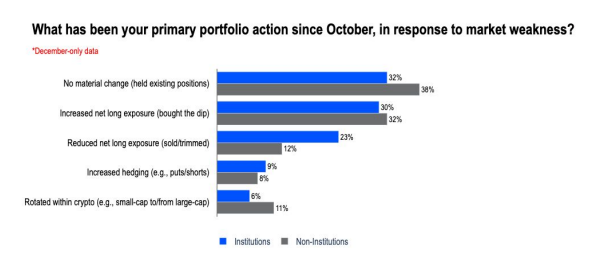
Despite the October liquidation event that shook altcoin markets and compressed leverage across derivatives platforms, most respondents held or added to crypto positions rather than retreating.

Around 62% of institutions and 70% of non-institutions either maintained existing allocations or increased net long exposure since October.

Institutions Bitcoin Is Undervalued - Coinbase Chart
Source: Coinbase Institutional

Bearish Sentiment Rises, But Doesn’t Dominate Positioning

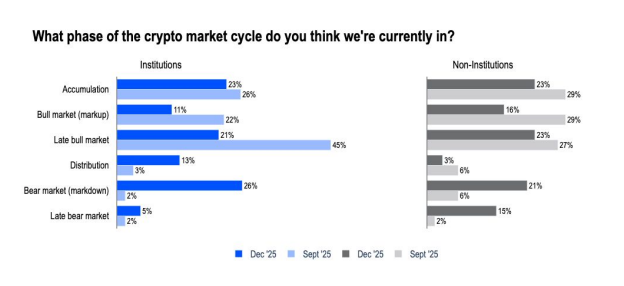
Perceptions of the market cycle shifted noticeably during the quarter.

Around 26% of institutions and 21% of non-institutions now believe crypto has entered the bear-market markdown phase, up sharply from just 2% and 7%, respectively, in the prior survey.

Institutions Bitcoin Is Undervalued - Coinbase Chart
Source: Coinbase Institutional

That shift exposes the weight of October’s deleveraging event, which saw the Altcoin Season Index plummet and mid-cap tokens struggle to recover their third-quarter gains despite the launch of several spot altcoin ETFs in the US.

Still, the uptick in bearish views did not translate into widespread selling. Most investors stuck with their positions, and sentiment toward Bitcoin specifically remained constructive.

β€œWe have a constructive view for 1Q26,” Coinbase Global Head of Research David Duong wrote in the report. β€œWe believe that crypto markets are entering 2026 in a healthier state, with excess leverage having been flushed from the system in Q4.β€œ

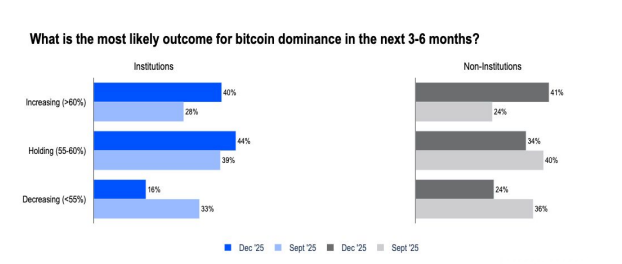
Bitcoin dominance held relatively steady through the turbulence, rising only marginally from 58% to 59% over the quarter, a sign that institutional capital continued to favor the largest digital asset even as smaller tokens faced sustained selling pressure.

Institutions Bitcoin Is Undervalued - Coinbase Chart
Source: Coinbase Institutional

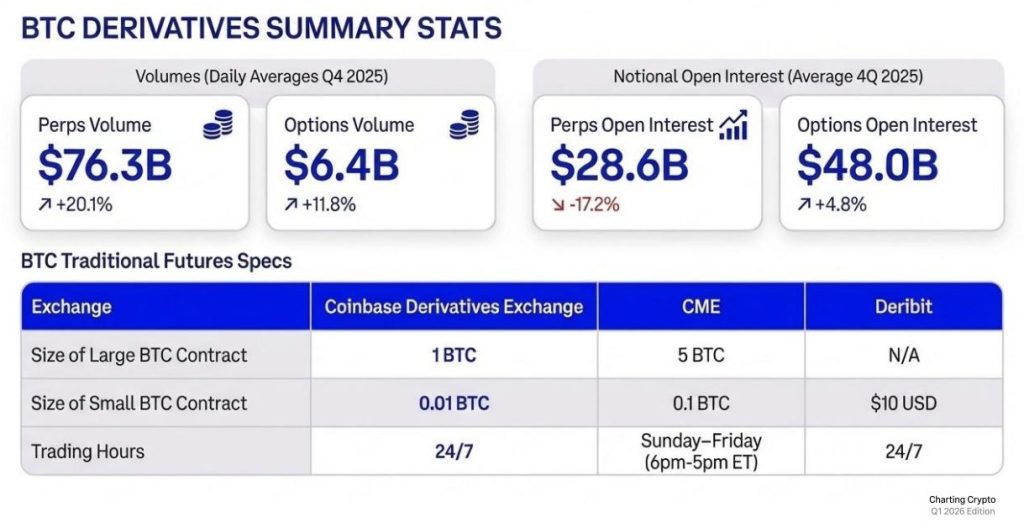
Open interest in BTC options overtook perpetual futures as market participants sought downside protection, with the 25-day put-call skew staying positive across 30-day, 90-day, and 180-day expiries.

Source: Coinbase Institutional

Coinbase Survey Points to Macro Support and Policy Progress

Several factors underpinned the optimistic outlook. Inflation held steady at 2.7% in December’s Consumer Price Index reading, and the Atlanta Fed’s GDPNow model projected robust 5.3% real GDP growth for the fourth quarter as of January 14.

While the future direction of monetary policy remained uncertain, Duong said the firm still expects the Federal Reserve to deliver two rate cuts totaling 50 basis points currently priced into Fed funds futures, β€œwhich should provide a tailwind for risk assets broadly and crypto specifically.β€œ

Questions about comprehensive crypto market structure legislation persist, but confidence in eventual regulatory clarity stayed firm.

β€œWe’re confident that we will eventually see a set of rules that allows the industry to reach its full potential,” the report stated, noting that major policy progress in the US, particularly around the proposed CLARITY Act, could boost investor sentiment further.

Beyond the survey, separate data shows institutional engagement deepening across channels.

πŸš€ Crypto allocations by financial advisors hit 32% in 2025, up from 22% a year earlier, as Bitcoin reached new highs and US rules moved closer to the mainstream, a @BitwiseInvest survey showed. #DigitalAssets #WealthManagement https://t.co/dCIdMFRG7I

β€” Cryptonews.com (@cryptonews) January 14, 2026

A recent Bitwise and VettaFi poll found 32% of financial advisors allocated to crypto in client accounts during 2025, up from 22% in 2024, with registered investment advisors leading at 42%.

Similarly, a separate Coinbase survey found that younger US investors now allocate 25% of their portfolios to non-traditional assets, compared with 8% among older cohorts.

Risks Remain, But Long-Term Trajectory Holds

The Coinbase report acknowledged headwinds. While the economy appears solid, the jobs market cooled in 2025, with the US adding just 584,000 positions, down from 2 million in 2024, partly due to increased AI adoption.

Geopolitical tensions have flared in several regions, and any escalation that disrupts energy markets could dampen investor appetite.

β€œA meaningful uptick in inflation, a spike in energy prices, or a significant flare up of geopolitical tensions could warrant a more cautious approach to risk assets,” the report warned.

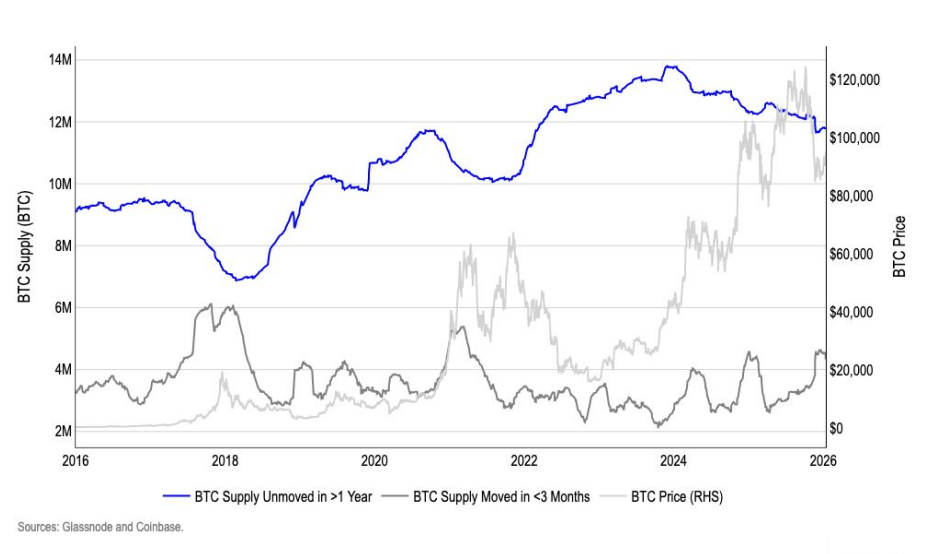
Still, onchain metrics improved after October’s shakeout. Bitcoin supply moved within three months, surged 37% in the fourth quarter, while coins unmoved for over a year fell 2%, indicating short-term distribution that likely cleared weaker hands.

Institutions Bitcoin Is Undervalued - Coinbase Chart
Source: Coinbase Institutional

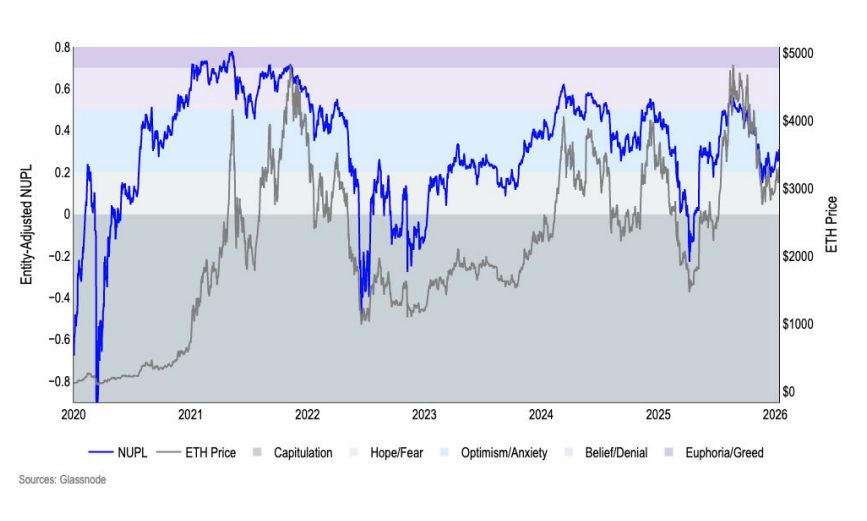
Ethereum’s Net Unrealized Profit/Loss ratio swung sharply through 2025, hitting capitulation in the first quarter, then rising to optimism in the third quarter, and settling back into fear territory by year-end.

Institutions Bitcoin Is Undervalued - Coinbase Chart
Source: Coinbase Institutional

Despite recent ETF outflows totaling $1.62 billion over four trading days and Bitcoin slipping below $90,000, institutional conviction appears durable. As Duong put it, β€œcrypto markets are entering 2026 in a healthier state.”

The post 70% of Institutions Say Bitcoin is Undervalued Despite 30% Crash – Bitcoin About to Rally? appeared first on Cryptonews.

Polymarket’s U.S. Comeback Positions Prediction Markets as a Coinbase Retention Play: Analyst

26 January 2026 at 07:29

Polymarket has re-entered the U.S. market following regulatory approval from the Commodity Futures Trading Commission (CFTC), a move that could position prediction markets as a new engagement tool for major crypto platforms such as Coinbase, according to a report by Clear Street analyst Owen Lau.

The prediction market operator which was restricted from serving U.S. customers in 2022, has returned after receiving a CFTC approval of an Amended Order of Designation.

Polymarket has now launched a U.S.-based application initially offering a limited set of sports-related event contracts, with additional verticals such as politics and crypto expected over time.

Lau describes the development as a meaningful reversal allowing Polymarket to onboard brokerages and customers directly while facilitating trading on regulated U.S. venues.

πŸš€ In 2026, prediction models will be used to collectively decide what is true and what is not [true] and as a guide for fact-checking, analysts say. #Polymarket #Kalshi #PredictionMarkets #BTChttps://t.co/fkQeRz28Qs

β€” Cryptonews.com (@cryptonews) December 30, 2025

Ultra-Low Fees Show Growing Competition

Polymarket’s comeback is accompanied by a notably aggressive pricing structure. The platform is offering 10 basis point taker fees and zero maker fees which Lau believes is the lowest among major prediction market and sports betting platforms.

For comparison, DraftKings and FanDuel reported net revenue margins of 6.7% and 10.1%, respectively. Lau said Polymarket’s pricing makes it a credible alternative to incumbent sports betting operators and signals increasing fee compression across event-based trading markets.

State-Level Regulatory Risk Remains Fragmented

While the CFTC approval may suggest improved federal-level clarity for certain event contracts, Lau cautioned that regulatory risk remains uneven at the state level.

On Jan. 20, 2026, a Massachusetts judge granted an injunction preventing rival platform Kalshi from offering sports-related event contracts in the state.

More broadly, at least three states β€” Massachusetts, Nevada, and Maryland β€” have issued unfavorable rulings against prediction market platforms, highlighting continued fragmentation across U.S. jurisdictions. This patchwork environment could complicate the sector’s expansion even as federal oversight becomes clearer.

Coinbase Seen as Key Distribution Partner

Lau argues that these developments represent an opportunity for Coinbase and indirectly Circle to partner with Polymarket or other prediction market platforms.

Coinbase’s scale β€” more than 100 million verified users and 9.3 million monthly transacting users β€” provides a sizable and relevant distribution base for event contracts. In his note, Lau suggests that prediction markets could benefit from being embedded into larger platforms with existing user engagement.

However, he notes that prediction markets may not become major standalone profit centers in the near term. Instead, Lau expects them to serve primarily as engagement and retention tools within Coinbase and other integrated platforms, helping drive activity and user stickiness amid rising competition.

As prediction markets expand beyond sports into politics and crypto, Polymarket’s U.S. return could mark a new phase for event-based trading β€” even as regulatory uncertainty continues to shape the sector’s trajectory.

The post Polymarket’s U.S. Comeback Positions Prediction Markets as a Coinbase Retention Play: Analyst appeared first on Cryptonews.

Why Is Crypto Down Today? – January 26, 2026

26 January 2026 at 07:28

The crypto market is down today again. The cryptocurrency market capitalisation decreased by 0.8% over the past 24 hours, now standing at $3.05 trillion. At the time of writing, 93 of the top 100 coins recorded price drops. The total crypto trading volume stands at $139 billion.

TLDR:
  • Crypto market cap is down 0.8% on Monday morning (UTC);
  • 93 of the top 100 coins and all top 10 coins are down;
  • BTC decreased by 0.7% to $87,860 and ETH fell by 1.5% to $2,89;
  • ETH will more likely revisit $2,000 than move above $4,000;
  • Heightened geopolitical tensions and ongoing conflicts drive volatility across markets;
  • Macroeconomic developments have influenced risk assets broadly;
  • Macro uncertainty triggered over $550 million in crypto liquidations;
  • Larger Bitcoin’s response to recent uncertainty may emerge later;
  • The UK FCA moved into the final stage of consultations on crypto regulation;
  • Japan may approve its first set of spot crypto ETFs as early as 2028;
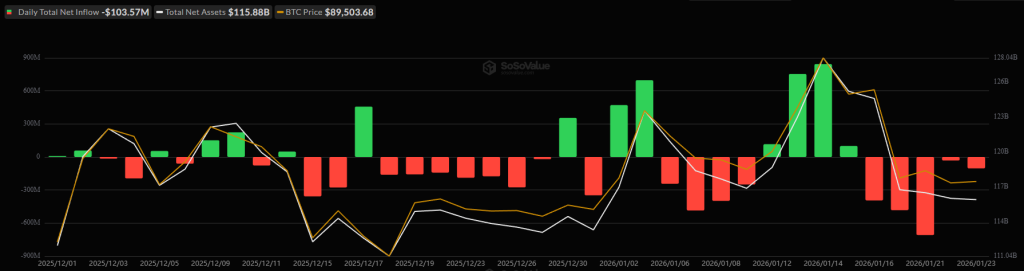
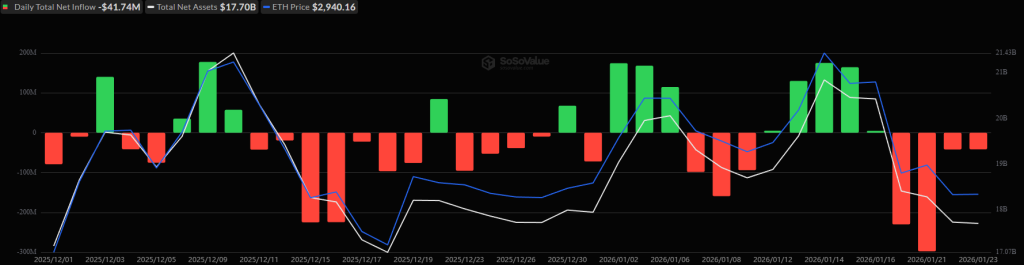
  • US spot BTC and ETH ETFs saw $103.57 million and $41.74 million in outflows, respectively;
  • Crypto market sentiment continued falling within the fear zone.
  • Crypto Winners & Losers

    We started the new week very much in the red. As of Monday morning (UTC), all top 10 coins per market capitalisation have posted price drops over the past 24 hours.

    Bitcoin (BTC) fell by 0.7%, currently trading at $87,860. This is the smallest drop on the list,

    btc logo
    Bitcoin (BTC)
    24h7d30d1yAll time

    Ethereum (ETH) decreased by 1.5%, changing hands at $2,892.

    The highest fall among the top 10 is Solana (SOL)’s 3.3% to the price of $122.

    It’s followed by Dogecoin (DOGE)’s drop of 1.6%, now trading at $0.1213.

    At the same time, Tron (TRX) fell the least: 0.4% to $0.2953.

    Moreover, of the top 100 coins per market cap, 93 have seen their price drop today.

    MYX Finance (MYX) fell the most. It’s down 14%, now trading at $5.86.

    Monero (XMR) follows, with a decrease of 5.4%, currently standing at $466.

    Of the green coins, River (RIVER) stands at the top, having jumped by 43% to the price of $84.7.

    The next on the list is Algorand (ALGO), which saw an increase of 2.3% to $0.1189.

    The rest are up 1.3% and less per coin.

    Macro uncertainty triggered over $550 million in crypto liquidations as BTC and ETH came under pressure.

    QCP analysis notes that crypto assets traded in a narrow range over the weekend before coming under pressure in early Asian hours, triggering over $550 million in leveraged long liquidations. BTC briefly tested $86K before finding support, while Ethereum fell to the $2,785 area.…

    β€” Wu Blockchain (@WuBlockchain) January 26, 2026

    Meanwhile, the UK’s Financial Conduct Authority (FCA) moved into the final stage of consultations on a set of proposed crypto regulations. The FCA said it is seeking feedback on 10 proposed rules, describing this as the β€œfinal step” in the consultation process.

    β€œThese proposals continue our progress towards an open, sustainable and competitive crypto market that people can trust,” the regulator said.

    πŸ‡¬πŸ‡§ BREAKING: The UK Just Moved to Fully Integrate Crypto Firms Into the FCA Rulebook pic.twitter.com/mGBJ61hLLB

    β€” Ryan (King) Solomon (@IOV_OWL) January 23, 2026

    BTC May See Belated Reaction

    Gadi Chait, Investment Manager at Xapo Bank, commented that recent weakness in Bitcoin follows a brief recovery last week, β€œset against a backdrop of macroeconomic developments that have influenced risk assets broadly.”

    A convergence of factors drives volatility across markets. These include heightened geopolitical tensions and ongoing conflicts. Renewed focus on US strategic positioning toward Greenland and Donald Trump’s address at Davos β€œadded to an already unsettled global environment.”

    Regulatory uncertainty, especially in the US, and macroeconomic pressures add to this. β€œCentral bank policy divergence, including expectations around further tightening by the Bank of Japan and the continued reduction of liquidity by the US Federal Reserve, continues to shape market behaviour.”

    Chait says that, β€œamid this uncertainty, traditional commodities have rallied, while Bitcoin has underperformed. The reasons for this divergence are not yet clear, though such sequencing across asset classes is not without precedent.”

    β€œIt remains possible that Bitcoin’s response emerges later, particularly as volatility subsides. For long-term participants, however, short- to medium-term price fluctuations remain a familiar feature rather than a signal of impaired fundamentals,” Chait concluded.

    Moreover, Petr Kozyakov, Co-Founder and CEO at Mercuryo, argued that as a speculative asset, BTC has come under sustained selling pressure, and altcoins have followed suit.

    β€œWhile the fortunes of the digital asset space will always be viewed through a lens fixated on token prices, the bigger picture is one of continued stablecoin adoption and the steady development of payment infrastructure,” he says.

    He continues: β€œThe evolution of the digital token space is being driven by merger and acquisition activity, alongside the inherent efficiencies of blockchain-based technology and its ability to operate around the clock, at speed and at lower cost.”

    β€œThis reality is increasingly unavoidable for financial institutions still reliant on technology that dates back to the 1960s. Away from daily price movements, a quiet revolution is most definitely afoot,” Kozyakov concluded.

    Levels & Events to Watch Next

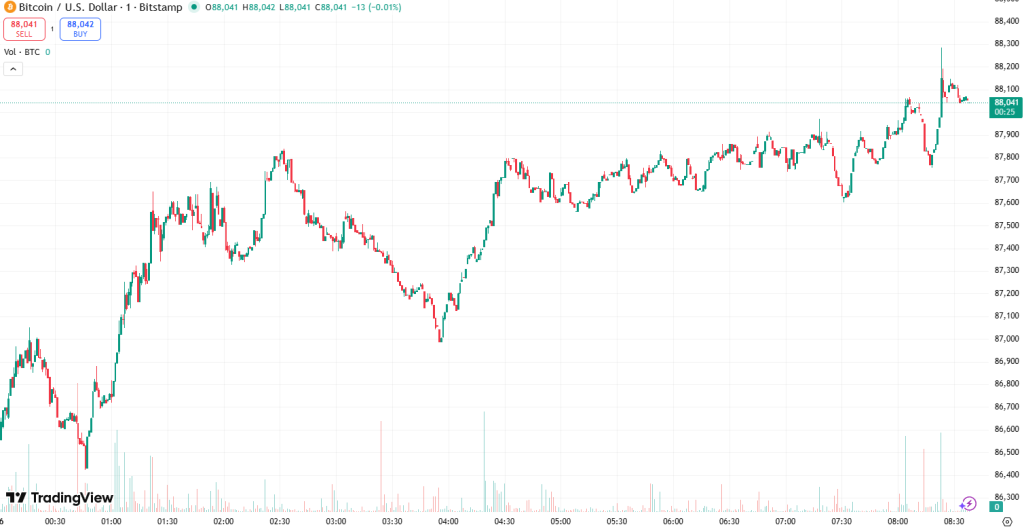
    At the time of writing on Monday morning, BTC was changing hands at $87,860. While the coin begun the day at the intraday high of $88,800, it relatively swiftly dropped to the low of $86,126. It has recovered somewhat since.

    Over the past seven days, BTC decreased by 5.1%, trading in the $86,319–$93,252 range. It’s now 30% away from its all-time high of $126,080.

    Failing to hold the current level risks additional pullbacks towards the $85,000 level, followed by $84,300 and $83,800.

    Bitcoin Price Chart. Source: TradingView

    At the same time, Ethereum was trading at $2,892. Earlier in the day, it traded at the intraday high level of $2,941. However, it then plunged to the intraday low of $2,787. It managed to shift course and move higher following this drop.

    In a week, ETH fell 9.2%, moving between $2,801 and $3,222. Moreover, it decreased 41% from its ATH of $4,946.

    Currently, the price risks a fall toward $2,670 and $2,520 in the near term.

    eth logo
    Ethereum (ETH)
    24h7d30d1yAll time

    Additionally, according to Bloomberg Intelligence Senior Commodity Strategist Mike McGlone, it is more likely that ETH will revisit the $2,000 level than push upwards and above $4,000.

    ETH has been stuck in the $2,000–$4,000 range since 2023. However, it is leaning toward the lower end of this range.

    Ether appears to be heading toward the lower end of its $2,000-$4,000 range since 2023. I see greater risks of it staying below $2,000 than above $4,000, especially when stock market volatility rebounds. pic.twitter.com/1IAMV10Jwe

    β€” Mike McGlone (@mikemcglone11) January 25, 2026

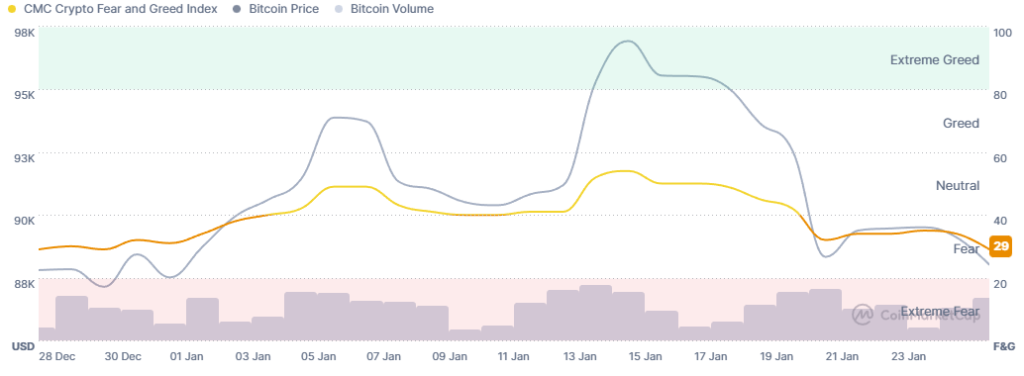
    Meanwhile, the crypto market sentiment exited the neutral zone a week ago, and it has continued falling lower within the fear zone since.

    The crypto fear and greed index decreased further over the weekend, currently standing at 29, compared to 34 seen over the weekend.

    Unsurprisingly, given the market conditions, the sentiment reflects the overall worry and caution. It is now possible that the metric will drop further.

    Source: CoinMarketCap

    ETFs Continue The Red Streak

    The US BTC spot exchange-traded funds (ETFs) posted another day of outflows on Friday, totalling $103.57 million. This is the fifth consecutive day of negative flows.

    The total net inflow has pulled back yet again and now stands at $56.49 billion.

    Of the twelve ETFs, two recorded outflows, and none saw inflows. BlackRock let go of $101.62 million, and Fidelity followed with $1.95 million in outflows.

    Source: SoSoValue

    Moreover, the US ETH ETFs posted outflows as well on 22 January, with $41.74 million – a similar level as the day earlier. With this fourth consecutive red day, the total net inflow now stands at $12.3 billion.

    Of the nine funds, two ETH ETFs posted outflows, and two saw inflows. BlackRock recorded $44.49 million in outflows, followed by Grayscale’s $10.8 million.

    At the same time, Grayscale Mini Trust took in 9.16 million, followed by Fidelity’s $4.4 million in inflows.

    Source: SoSoValue

    Meanwhile, Japan’s Financial Services Agency is reportedly planning to add cryptocurrencies to the list of assets eligible for spot ETF products.

    Japan would likely approve its first set of spot crypto ETFs as early as 2028, ending the agency’s ban on spot crypto ETFs.

    πŸ‡―πŸ‡΅ Japan’s Nomura Holdings and SBI Holdings are developing the first crypto ETF products, awaiting approval for listing on the Tokyo Stock Exchange. #JapanCryptoETF #NomuraHoldings #SBIHoldingshttps://t.co/zT14u2QbqK

    β€” Cryptonews.com (@cryptonews) January 26, 2026

    Quick FAQ

    1. Did crypto move with stocks today?

    The crypto market has seen yet another drop over the past day. Meanwhile, the US stock market closed the week with a mixed picture. That said, it also posted a second consecutive red week. By the closing time on Friday, 23 January, the S&P 500 was up 0.033%, the Nasdaq-100 increased by 0.34%, and the Dow Jones Industrial Average fell by 0.58%. Due to high volatility, investors are shifting their money into safe-haven assets, particularly gold.

    1. Is this drop sustainable?

    For now, the drops may continue in the near- to mid-term, pushed by macroeconomic developments. Occasional smaller and brief jumps are expected, intersecting the current trend.

    The post Why Is Crypto Down Today? – January 26, 2026 appeared first on Cryptonews.

    Matcha Meta Breach Drains $16.8M via SwapNet Exploit β€” Users Urged to Revoke Access

    26 January 2026 at 06:33

    A security breach tied to decentralized exchange aggregator Matcha Meta has resulted in the theft of roughly $16.8 million in crypto assets, adding to a growing list of smart-contract exploits that continue to test the safety assumptions of DeFi users.

    The incident unfolded on Sunday and was traced not to Matcha’s core infrastructure, but to SwapNet, one of the liquidity providers integrated into the platform.

    Matcha Meta disclosed the issue publicly in a post on X, saying users who had disabled its β€œOne-Time Approval” feature and instead granted direct token allowances to individual aggregator contracts may have been exposed.

    We are aware of an incident with SwapNet that users may have been exposed to on Matcha Meta for those who turned off One-Time Approvals

    We are in contact with the SwapNet team and they have temporarily disabled their contracts

    The team is actively investigating and will provide…

    β€” Matcha Meta πŸŽ† (@matchametaxyz) January 25, 2026

    The protocol urged affected users to immediately revoke approvals connected to SwapNet’s router contract, warning that failure to do so could leave wallets vulnerable to further unauthorized transfers.

    $17M Vanishes in Seconds: How Matcha Hackers Slipped Funds Onto Ethereum

    Blockchain security firms quickly began tracking the exploit as funds moved on-chain.

    PeckShield reported that approximately $16.8 million had been drained in total, with the attacker swapping around $10.5 million in USDC for roughly 3,655 ETH on the Base network before starting to bridge assets to Ethereum.

    #PeckShieldAlert Matcha Meta has reported a security breach involving SwapNet. Users who opted out of "One-Time Approvals" are at risk.

    So far, ~$16.8M worth of crypto has been drained.

    On #Base, the attacker swapped ~10.5M $USDC for ~3,655 $ETH and has begun bridging funds to… https://t.co/QOyV4IU3P3 pic.twitter.com/6OOJd9cvyF

    β€” PeckShieldAlert (@PeckShieldAlert) January 26, 2026

    CertiK independently flagged suspicious transactions, identifying one wallet that siphoned about $13.3 million in USDC on Base and converted the funds into wrapped Ether.

    Both firms pointed to a vulnerability in the SwapNet contract that allowed arbitrary calls, enabling the attacker to transfer tokens that users had previously approved.

    1/ The vulnerability seems to be in arbitrary call in @0xswapnet contract that let attacker to transfer funds approved to it. (https://t.co/B7ux5zzMLS)

    The team have temporarily disabled their contracts is actively investigating.https://t.co/NBNvzxHCRw

    Please revoke approval…

    β€” CertiK Alert (@CertiKAlert) January 26, 2026

    Matcha later clarified that the incident was not connected to 0x’s AllowanceHolder or Settler contracts, which underpin its One-Time Approval system.

    The team noted that users who interacted with Matcha using One-Time Approvals were not affected, as this design limits how much access a third-party contract can retain.

    After reviewing with 0x's protocol team, we have confirmed that the nature of the incident was not associated with 0x's AllowanceHolder or Settler contracts.

    Users who have interacted with Matcha Meta via One-Time Approval are thus safe.

    Users who have disabled One-Time… https://t.co/VQVmj4LL0F

    β€” Matcha Meta πŸŽ† (@matchametaxyz) January 25, 2026

    The exposure, the team said, applied only to users who opted out of that system and granted ongoing allowances directly to aggregator contracts. In response, Matcha has removed the option for users to set such direct approvals going forward.

    Old Token Approvals Emerge as a Persistent DeFi Weak Spot

    The breach highlights a recurring tension in DeFi between flexibility and safety. Token approvals, while necessary for interacting with smart contracts, have long been a weak point, particularly when permissions remain active long after a transaction is completed.

    In this case, previously granted allowances became the pathway for the exploit once the SwapNet contract was compromised.

    The incident arrives amid continued concerns over smart-contract security across the crypto sector.

    SlowMist’s year-end report shows that vulnerabilities in smart contracts accounted for just over 30% of crypto exploits in 2025, making them the leading cause of losses.

    Source: SlowMist

    Researchers have also warned that advances in artificial intelligence are accelerating how quickly attackers can identify and exploit weaknesses in on-chain code.

    While overall crypto losses declined in December, falling about 60% month-on-month to roughly $76 million, security firms cautioned that the drop did not reflect a structural improvement.

    πŸ“‰ Crypto-related losses from hacks and cybersecurity exploits fell sharply in December, dropping 60% month-on-month to about $76 million.#Crypto #Hackhttps://t.co/mke6K8sLVQ

    β€” Cryptonews.com (@cryptonews) January 2, 2026

    PeckShield noted that a single address-poisoning scam accounted for $50 million of December’s losses, showing how concentrated and severe individual incidents can be even during quieter periods.

    January has already seen several notable exploits. IPOR Labs confirmed a $336,000 attack on its USDC Fusion Optimizer vault on Arbitrum, while Truebit disclosed a smart-contract incident that on-chain analysts estimate drained more than 8,500 ETH, triggering a near-total collapse in the project’s token price.

    Last week, Layer-1 network Saga paused its SagaEVM chain after an exploit moved close to $7 million in assets to Ethereum.

    The post Matcha Meta Breach Drains $16.8M via SwapNet Exploit β€” Users Urged to Revoke Access appeared first on Cryptonews.

    Cyber Insights 2026: Threat Hunting in an Age of Automation and AI

    26 January 2026 at 07:00

    Understanding how threat hunting differs from reactive security provides a deeper understanding of the role, while hinting at how it will evolve in the future.

    The post Cyber Insights 2026: Threat Hunting in an Age of Automation and AI appeared first on SecurityWeek.

    The cURL Project Drops Bug Bounties Due To AI Slop

    26 January 2026 at 07:00

    Over the past years, the author of the cURL project, [Daniel Stenberg], has repeatedly complained about the increasingly poor quality of bug reports filed due to LLM chatbot-induced confabulations, also known as β€˜AI slop’. This has now led the project to suspend its bug bounty program starting February 1, 2026.

    Examples of such slop are provided by [Daniel] in a GitHub gist, which covers a wide range of very intimidating-looking vulnerabilities and seemingly clear exploits. Except that none of them are vulnerabilities when actually examined by a knowledgeable developer. Each is a lengthy word salad that an LLM churned out in seconds, yet which takes a human significantly longer to parse before dealing with the typical diatribe from the submitter.

    Although there are undoubtedly still valid reports coming in, the truth of the matter is that the ease with which bogus reports can be generated by anyone who has access to an LLM chatbot and some spare time has completely flooded the bug bounty system and is overwhelming the very human developers who have to dig through the proverbial midden to find that one diamond ring.

    We have mentioned before how troubled bounty programs are for open source, and how projects like Mesa have already had to fight off AI slop incidents from people with zero understanding of software development.

    ❌
    ❌