Student teams competed in the 2025 Invention Challenge at NASA’s Jet Propulsion Laboratory on Dec. 5. The event pits middle and high school teams against each other as they try to get handmade devices to accomplish a task.
NASA/JPL-Caltech
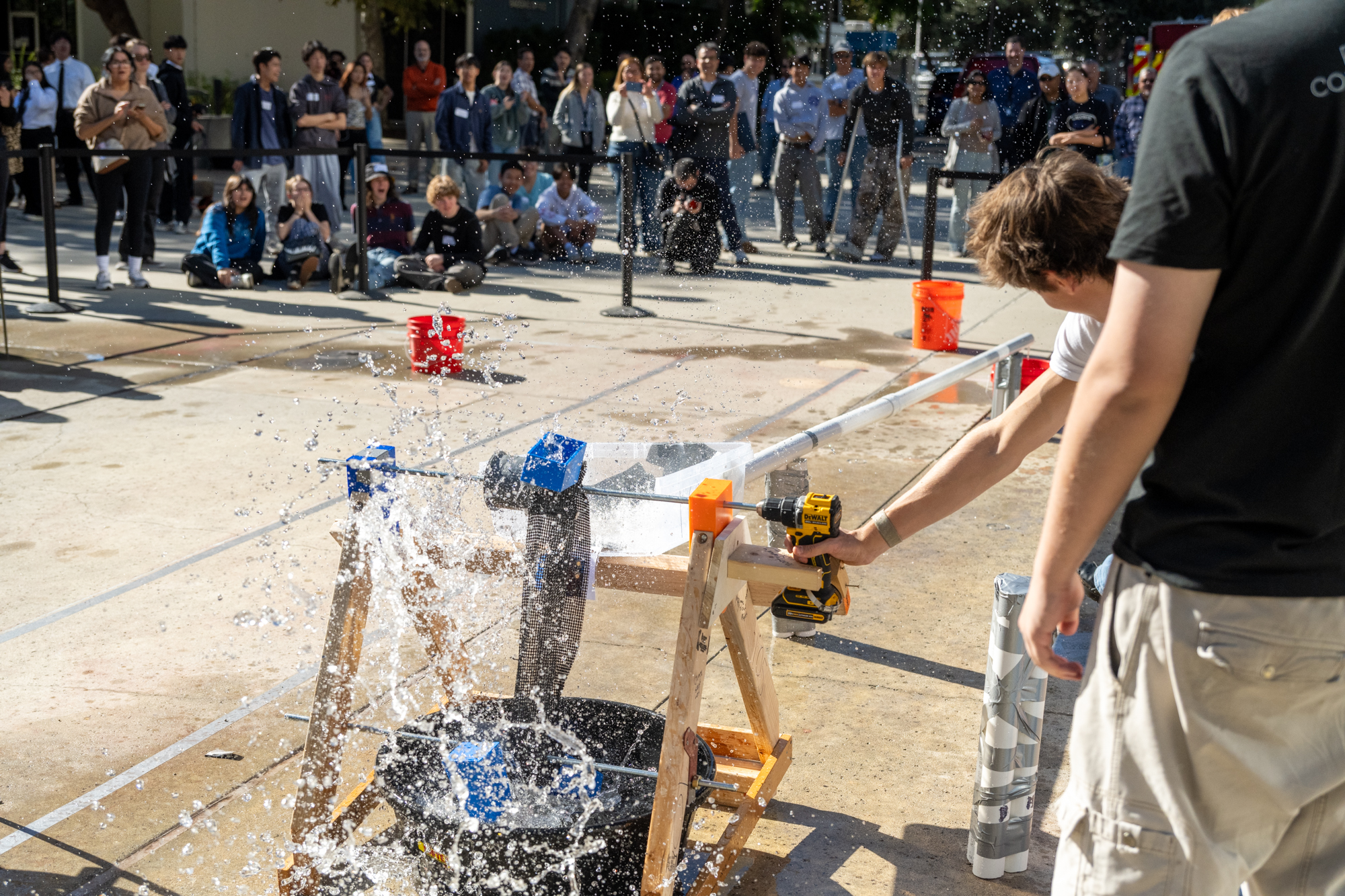
The 2025 Invention Challenge at JPL called on teams to build devices capable of moving about 2 gallons (8 liters) of water from a holding reservoir into a bucket about 16 feet (5 meters) away within 60 seconds.
Teams at JPL’s 2025 Invention Challenge built their devices with plywood, PVC pipe, duct tape, and even soda cans.
NASA/JPL-Caltech
Now in its 26th year, the event brings teams of middle and high school students to the lab to compete with home-built contraptions.
Teenagers wielding power tools and plywood demonstrated their engineering prowess at the annual Invention Challenge at NASA’s Jet Propulsion Laboratory in Southern California on Friday. Also in evidence: lots of small motors, 3D-printed gears, PVC pipe, and duct tape.
First held at JPL in 1998, the event pits middle and high school teams against each other as they try to get handmade devices to accomplish a task that changes annually. For this year’s challenge, dubbed the “Bucket Brigade Contest,” teams needed to create devices capable of moving about 2 gallons (8 liters) of water from a holding reservoir into a bucket about 16 feet (5 meters) away in 60 seconds while satisfying a long list of rules.
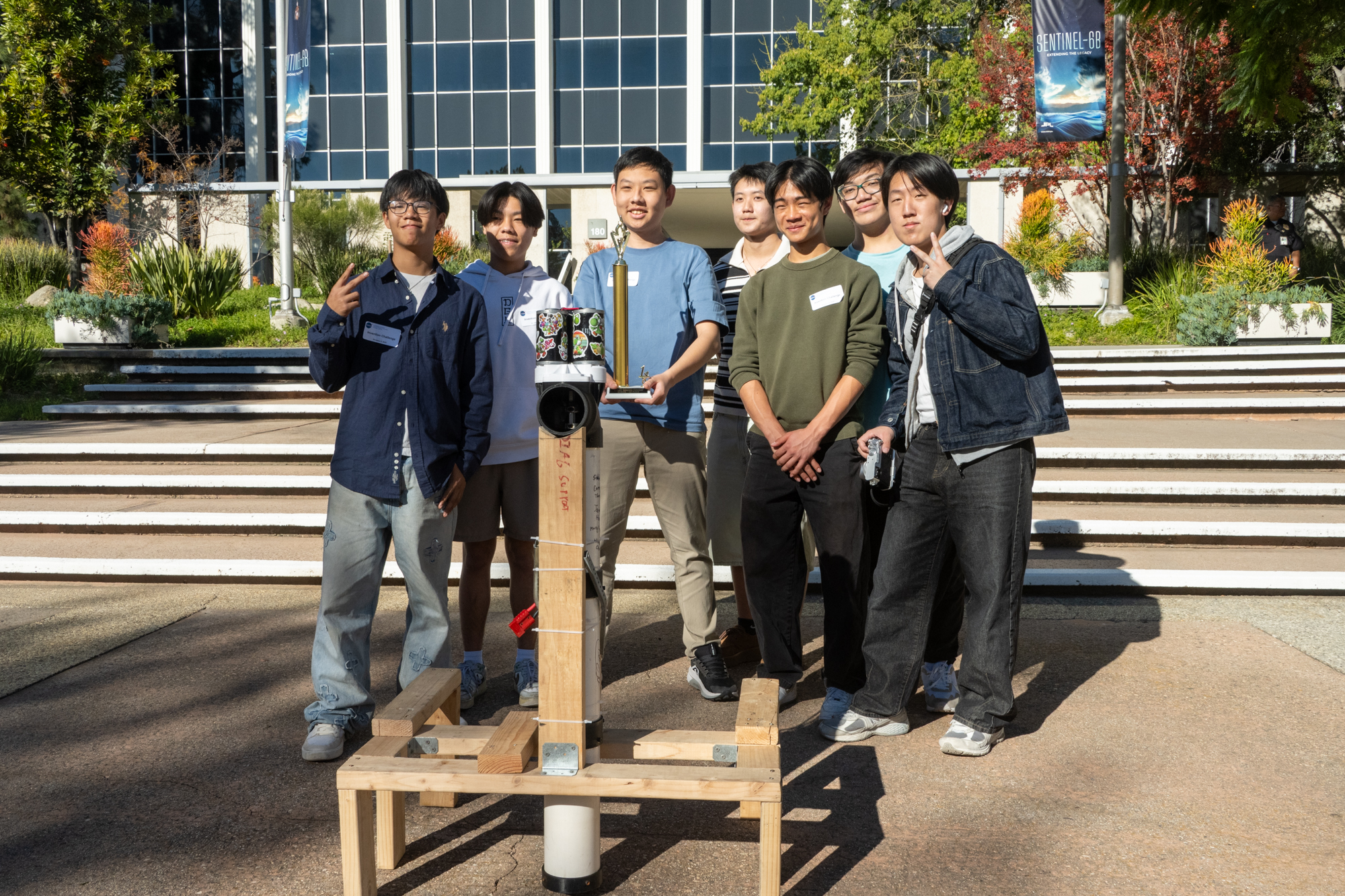
Arcadia High School’s Team Still Water won first place among student teams in the 2025 Invention Challenge at JPL.
NASA/JPL-Caltech
In all, 18 teams of students from middle and high schools across Los Angeles and Orange counties competed. First place went to Arcadia High School’s Team Still Water, which completed the task in just 6.45 seconds. Mission Viejo High’s Team Senior Citizens was close behind, finishing in 6.71 seconds. The Samo Seals of Santa Monica High came in third, at 9.18 seconds.
Five teams from outside the area — four from schools in Colorado and Massachusetts and one involving professional engineers — were invited to compete as well. Of those, the team led by retired JPL engineer Alan DeVault’s Team “Trial and Error Engineering” came in first (a repeat from last year). And “Team 6” from Pioneer Charter School of Science in the Boston area took second place (also a repeat performance from 2024). No team qualified for third place.
Some of the devices in the 2025 Invention Challenge at NASA JPL made a big splash.
NASA/JPL-Caltech
Judges named Team Clankers from Mission Viejo High most artistic, Team 6 from Pioneer Charter School of Science most unusual, and Team Winning Engineering Team (WET) from Temple City High most creative.
The event was supported by dozens of volunteers from JPL staff. JPL Fire Chief Dave Dollarhide, familiar with a bucket brigade, was a guest judge.
Preparations for Next Moonwalk Simulations Underway (and Underwater)
NASA’s broadcast of the April 8, 2024, total solar eclipse has won an Emmy Award for Excellence in Production Technology.
At the 76th Technology & Engineering Emmy Awards on Dec. 4, in New York City, the Academy of Television Arts & Sciences announced the win. Walt Lindblom and Sami Aziz accepted the award on behalf of the agency. For the broadcast, Lindblom served as the coordinating producer and Aziz served as the executive producer.
“By broadcasting the total solar eclipse, this team brought joy and wonder for our Sun, Moon, and Earth to viewers across America and the world,” said Will Boyington, associate administrator for the Office of Communications at NASA Headquarters in Washington. “Congratulations to the production team, whose efforts demonstrate the hard work and dedication to the sharing the marvel that makes our solar system something we strive to understand.”
NASA’s live broadcast coverage of the 2024 total solar eclipse was the most complex live project ever produced by the agency. In total, NASA’s eclipse broadcasts garnered almost 40 million live and replay views across its own distribution channels, including on NASA+, the agency’s free streaming service. Externally, the agency’s main broadcast was picked up in 2,208 hits on 568 channels in 25 countries.
“Our unique place in the solar system allows us on Earth to witness one of the most spectacular science shows nature has to offer. NASA’s production team captured the action every step of the way across the path of totality, including the rare glimpse of the Sun’s corona,” said Nicky Fox, associate administrator for science at NASA Headquarters. “Congratulations to the NASA team for successfully showing the 2024 total solar eclipse through the eyes of NASA for the whole world to experience together.”
The broadcast spanned three hours, showcasing the eclipse across seven American states and two countries. From cities, parks, and stadiums, 11 hosts and correspondents provided on air commentary, interviews, and live coverage. Viewers tuned in from all over the world, including at watch parties in nine locations, from the Austin Public Library to New York’s Times Square. An interactive “Eclipse Board” provided real time data analysis as the Moon’s shadow crossed North America.
Live feeds from astronauts aboard the International Space Station and NASA’s WB-57 high-altitude research aircraft were brought in to provide rare and unique perspectives of the solar event. To make this possible, NASA deployed and enabled 67 cameras, 6 NASA Wide Area Network control rooms, 38 encoders, and 35 decoders. The team coordinated 20 live telescope feeds which represented 12 locations across the path of totality.
NASA’s eclipse broadcast won another Emmy award earlier this year at the 46th Annual News & Documentary Emmy Awards for Outstanding Live News Special. Additionally, the show received an Emmy nomination for Outstanding Show Open or Title Sequence – News. NASA’s eclipse communication and broadcast efforts also won two Webby Awards and two Webby People’s Voice Awards.
On April 8, 2024, North America's last total solar eclipse until 2045 moved across the continent. It made landfall in Mexico, crossed the United States from ...
Researchers from NASA’s Jet Propulsion Laboratory monitor a research drone in this September 2025 photo. This flight occurred in Dumont Dunes, an area of the Mojave Desert, as part of a larger test campaign to develop navigation software that would guide future rotorcraft on Mars. The work was among 25 projects funded by NASA’s Mars Exploration Program this past year to push the limits of future technologies.
Whether it’s new navigation software, slope-scaling robotic scouts, or long-distance gliders, the technology being developed by the Mars Exploration Program envisions a future where robots can explore all on their own — or even help astronauts do their work.
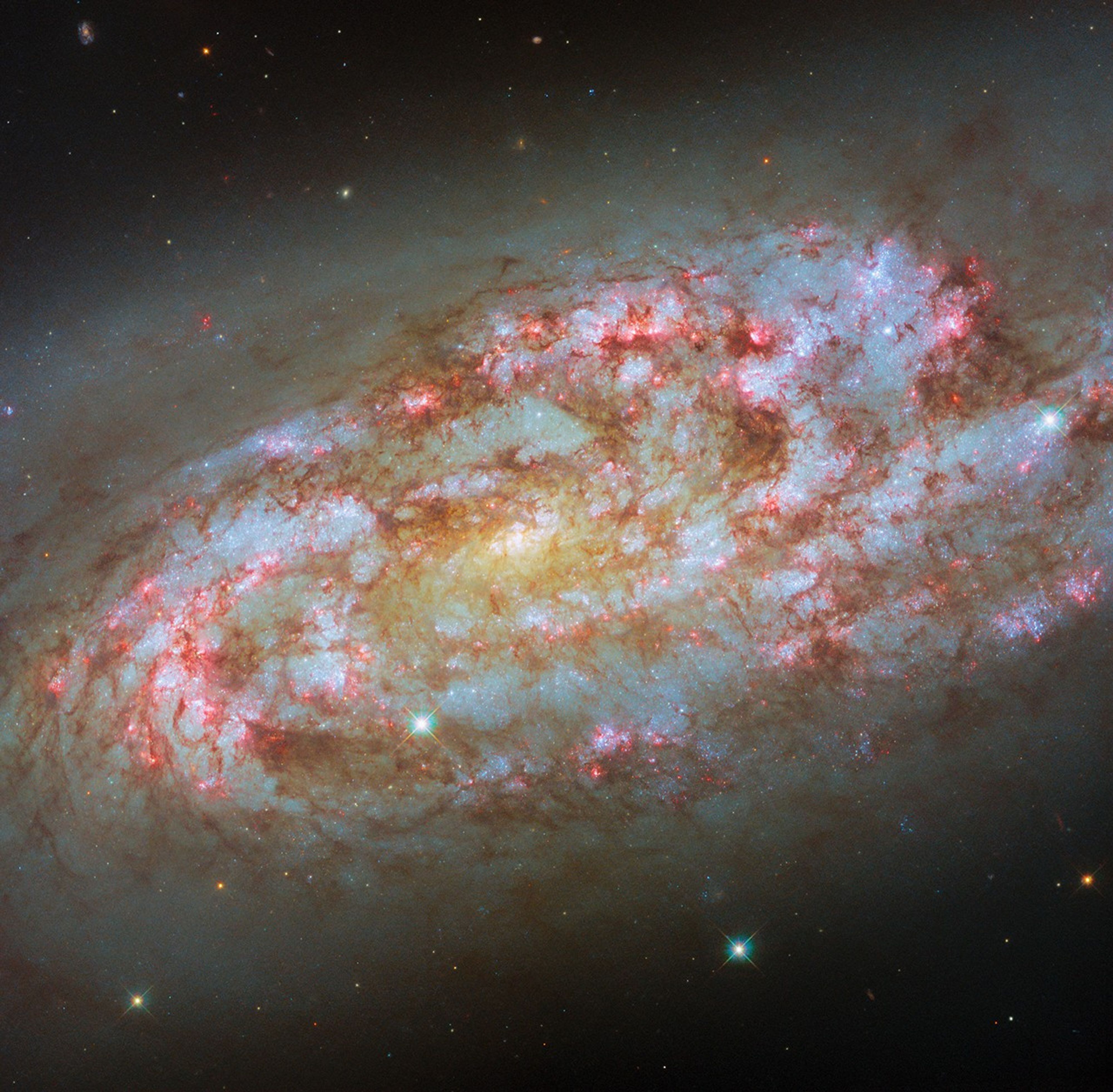
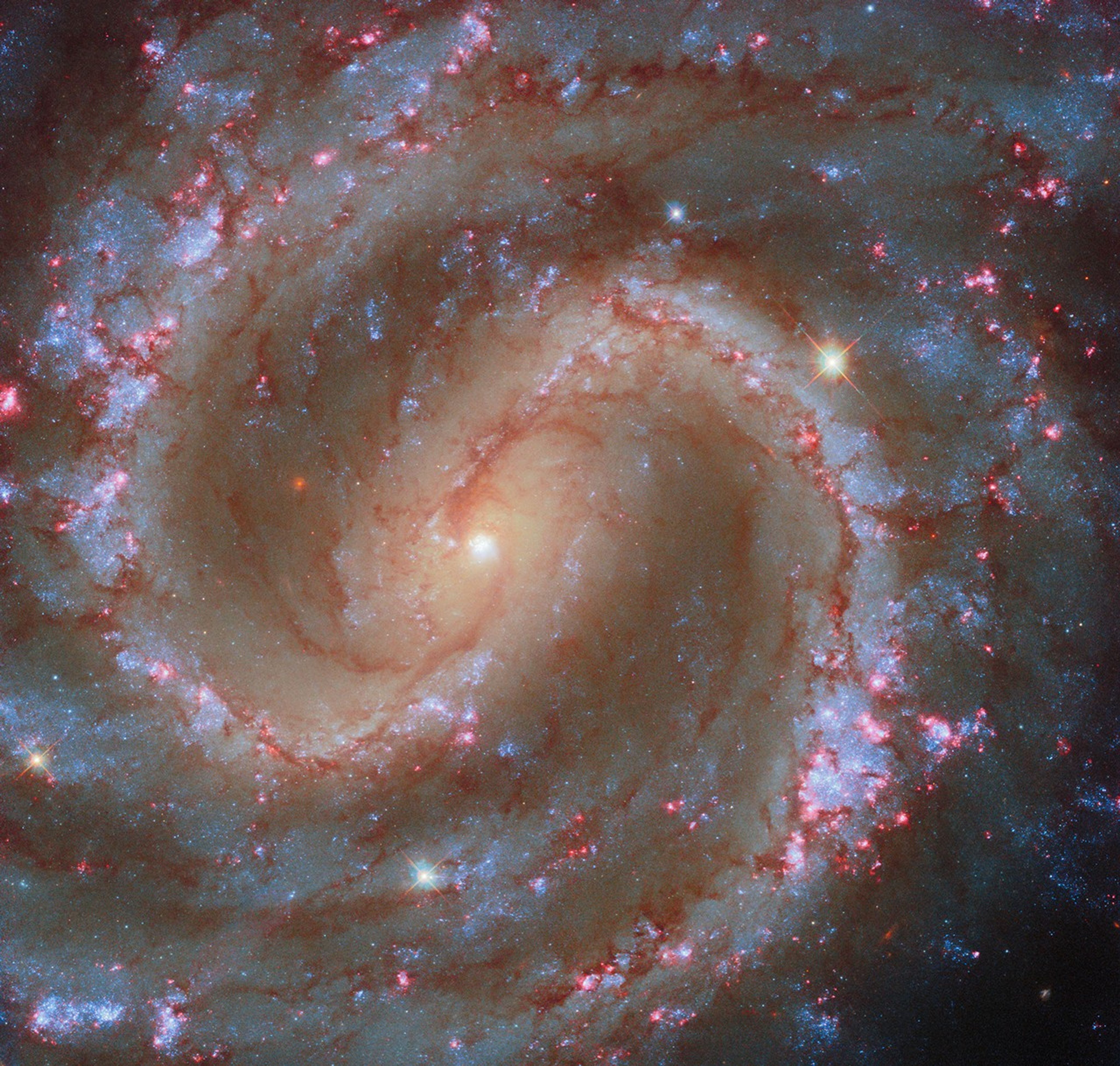
This NASA/ESA Hubble Space Telescope image features the spiral galaxy named NGC 1792.
ESA/Hubble & NASA, D. Thilker, F. Belfiore, J. Lee and the PHANGS-HST Team
This NASA/ESA Hubble Space Telescope image features a stormy and highly active spiral galaxy named NGC 1792. Located over 50 million light-years from Earth in the constellation Columba (the Dove), the bright glow of the galaxy’s center is offset by the flocculent and sparkling spiral arms swirling around it.
NGC 1792 is just as fascinating to astronomers as its chaotic look might imply. Classified as a starburst galaxy, it is a powerhouse of star formation, with spiral arms rich in star-forming regions. In fact, it is surprisingly luminous for its mass. The galaxy is close to a larger neighbor, NGC 1808, and astronomers think the strong gravitational interaction between the two stirred up the reserves of gas in this galaxy. The result is a torrent of star formation, concentrated on the side closest to its neighbor, where gravity has a stronger effect. NGC 1792 is a perfect target for astronomers seeking to understand the complex interactions between gas, star clusters, and supernovae in galaxies.
Hubble studied this galaxy before. This new image includes additional data collected throughout 2025, providing a deeper view of the tumultuous activity taking place in the galaxy. Blossoming red lights in the galaxy’s arms mark Hydrogen-alpha (H-alpha) emission from dense clouds of hydrogen molecules. The newly forming stars within these clouds shine powerfully with ultraviolet radiation. This intense radiation ionizes the hydrogen gas, stripping away electrons which causes the gas to emit H-alpha light. H-alpha is a very particular red wavelength of light and a tell-tale sign of new stars.
Tropical cyclones almost never form over the Strait of Malacca. The narrow waterway separating Peninsular Malaysia from the Indonesian island of Sumatra sits so close to the equator that the Coriolis effect is usually too weak to allow storms to rotate enough to organize into cyclones. But on November 25, 2025, meteorologists watched as a tropical depression intensified into Cyclone Senyar—just the second documented case of a tropical cyclone forming in the strait.
Hemmed in by land on both sides, Senyar made landfall in Sumatra later that day as it made a U-turn and headed east toward Malaysia. As the slow-moving storm passed over Sumatra’s mountainous terrain, it dropped nearly 400 millimeters (16 inches) of rain in many areas, according to satellite-based estimates from NASA’s Global Precipitation Measurement (GPM) mission. (Due to the averaging of the satellite data, local rainfall amounts may differ when measured from the ground.)
The torrent caused extensive flash floods and landslides in Sumatra’s rugged terrain. Streams and rivers rapidly overflowed with sediment-laden, debris-filled waters that swept through villages, cities, and towns. News reports suggest that the damage was worsened by an earthquake that struck on November 27 and the abundance of loose piles of timber in the region that became destructive battering rams in high water. As of December 4, Indonesian authorities reported several hundred deaths and more than 700,000 displaced people.
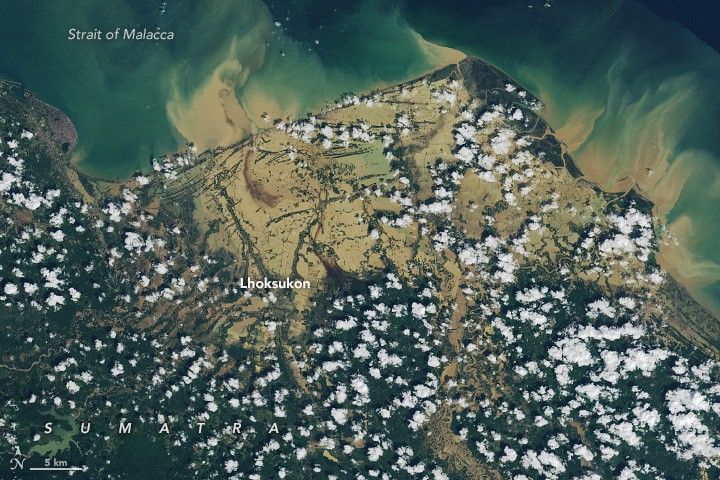
The OLI-2 (Operational Land Imager-2) on Landsat 9 captured this image of flooding in Aceh and North Sumatra provinces on November 30, 2025. Muddy sediment-filled water appears to have swamped much of Lhoksukon, a town of 40,000 people, and several surrounding villages.
Other tropical cyclones and monsoon rains hitting Sri Lanka, Thailand, Malaysia, and Vietnam at roughly the same time have also caused extensive destruction in the broader region. According to one estimate from the United Nations Office for the Coordination of Humanitarian Affairs, flooding has affected more than 10.8 million people in the region and displaced more than 1.2 million.
NASA Earth Observatory image by Lauren Dauphin, using Landsat data from the U.S. Geological Survey. Story by Adam Voiland.
References & Resources
BNPB (2025) News Index. Accessed December 4, 2025.
NASA Selects 2 Instruments for Artemis IV Lunar Surface Science
NASA has selected two science instruments designed for astronauts to deploy on the surface of the Moon during the Artemis IV mission to the lunar south polar region. The instruments will improve our knowledge of the lunar environment to support NASA’s further exploration of the Moon and beyond to Mars.
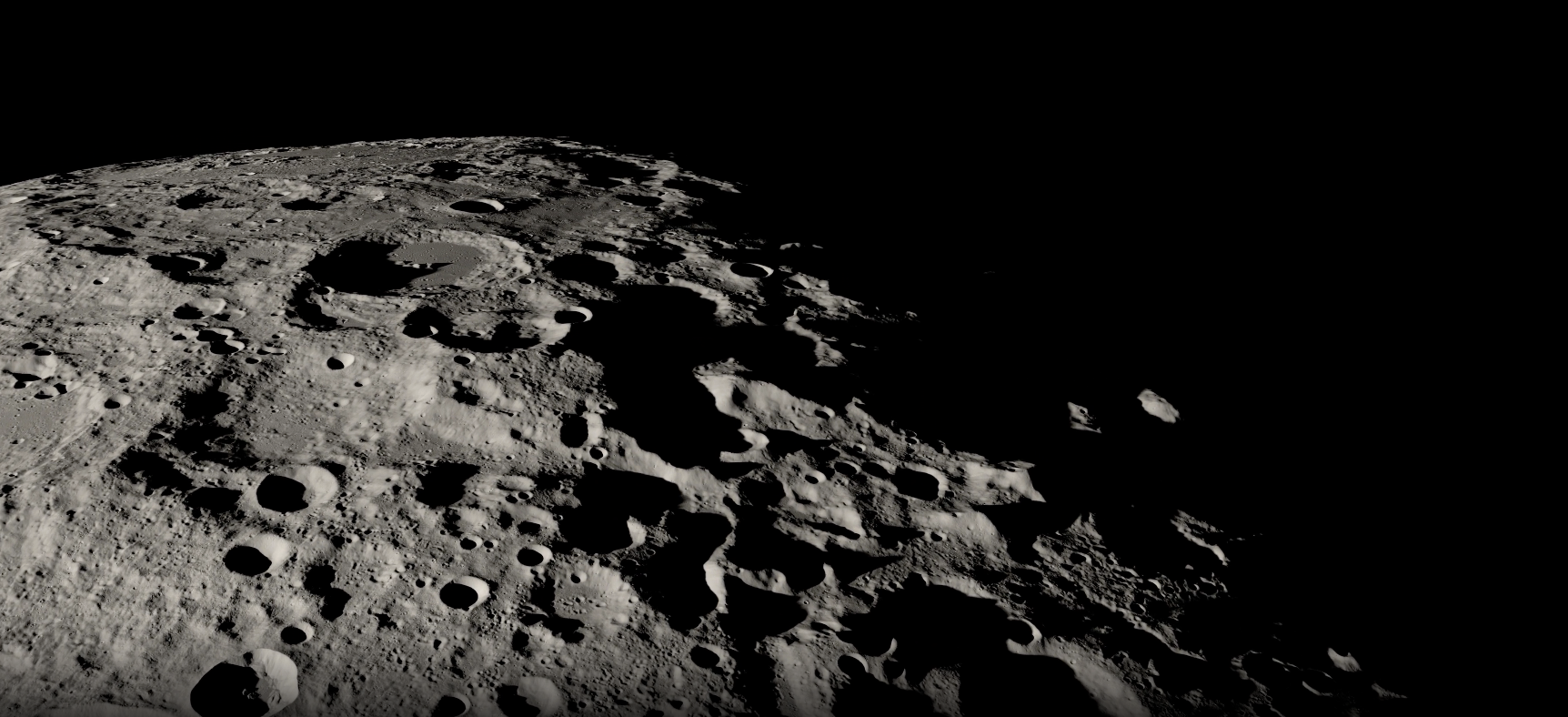
A visualization of the Moon’s South Pole region created with data from NASA’s Lunar Reconnaissance Orbiter, which has been surveying the Moon with seven instruments since 2009.
“The Apollo Era taught us that the further humanity is from Earth, the more dependent we are on science to protect and sustain human life on other planets,” said Nicky Fox, associate administrator, Science Mission Directorate at NASA Headquarters in Washington. “By deploying these two science instruments on the lunar surface, our proving ground, NASA is leading the world in the creation of humanity’s interplanetary survival guide to ensure the health and safety of our spacecraft and human explorers as we begin our epic journey back to the Moon and onward to Mars.”
After his voyage to the Moon’s surface during Apollo 17, astronaut Gene Cernan acknowledged the challenge that lunar dust presents to long-term lunar exploration. Moon dust sticks to everything it touches and is very abrasive. The knowledge gained from the DUSTER (DUst and plaSma environmenT survEyoR) investigation will help mitigate hazards to human health and exploration. Consisting of a set of instruments mounted on a small autonomous rover, DUSTER will characterize dust and plasma around the landing site. These measurements will advance understanding of the Moon’s natural dust and plasma environment and how that environment responds to the human presence, including any disturbance during crew exploration activities and lander liftoff. The DUSTER instrument suite is led by Xu Wang of the University of Colorado Boulder. The contract is for $24.8 million over a period of three years.
A model of the DUSTER instrument suite consisting of the Electrostatic Dust Analyzer (EDA)—which will measure the charge, velocity, size, and flux of dust particles lofted from the lunar surface—and Relaxation SOunder and differentiaL VoltagE (RESOLVE)—which will characterize the average electron density above the lunar surface using plasma sounding. Both instruments will be housed on a Mobile Autonomous Prospecting Platform (MAPP) rover, which will be supplied by Lunar Outpost, a company based in Golden, Colorado, that develops and operates robotic systems for space exploration.
LASP/CU Boulder/Lunar Outpost
Data from the SPSS (South Pole Seismic Station) will enable scientists to characterize the lunar interior structure to better understand the geologic processes that affect planetary bodies. The seismometer will help determine the current rate at which the Moon is struck by meteorite impacts, monitor the real-time seismic environment and how it can affect operations for astronauts, and determine properties of the Moon’s deep interior. The crew will additionally perform an active-source experiment using a “thumper” that creates seismic energy to survey the shallow structure around the landing site. The SPSS instrument is led by Mark Panning of NASA’s Jet Propulsion Laboratory in Southern California. The award is for $25 million over a period of three years.
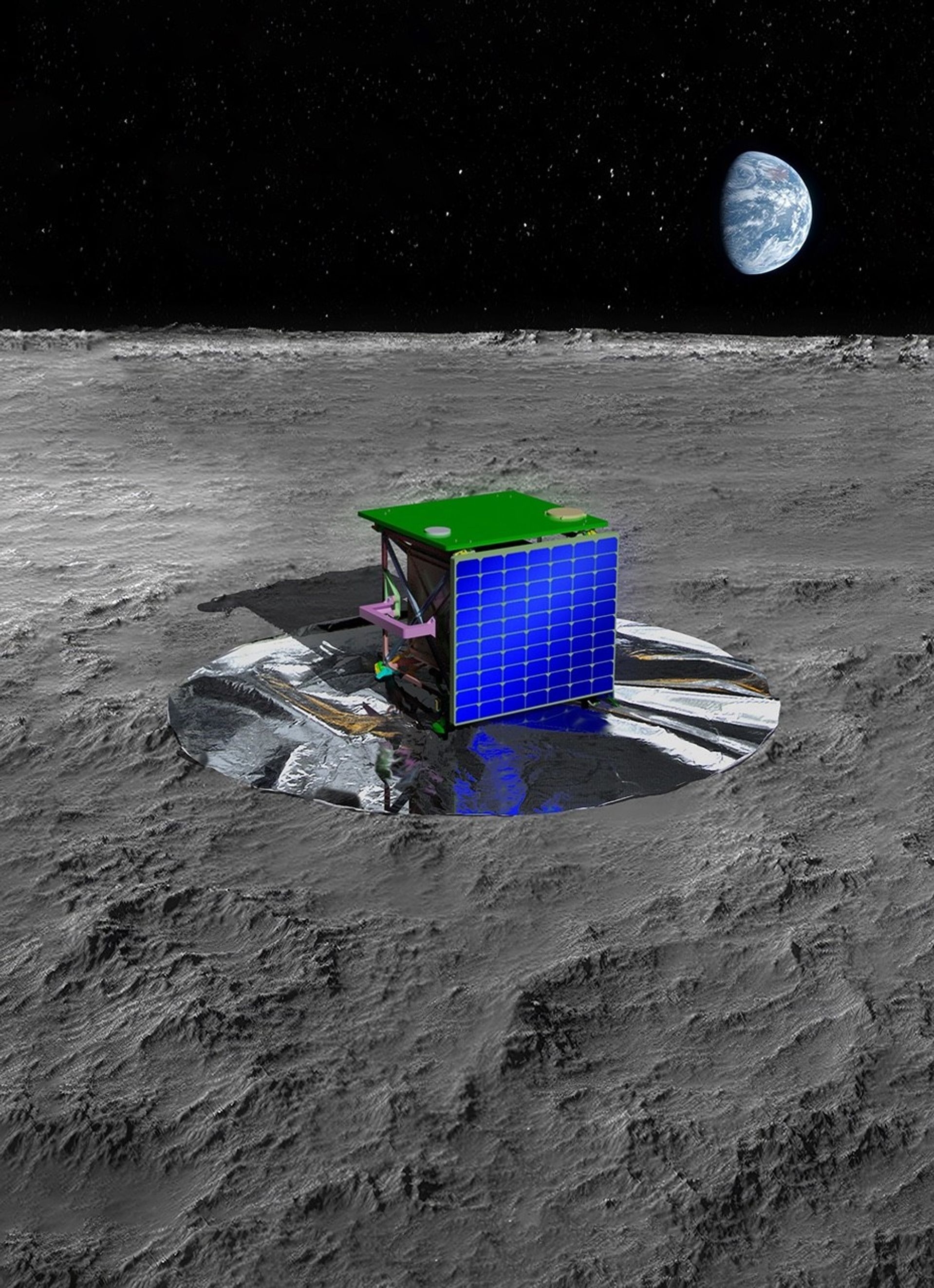
An artist’s concept of SPSS (South Pole Seismic Station) to be deployed by astronauts on the lunar surface.
NASA/JPL-Caltech
“These two scientific investigations will be emplaced by human explorers on the Moon to achieve science goals that have been identified as strategically important by both NASA and the larger scientific community”, said Joel Kearns, deputy associate administrator for exploration, Science Mission Directorate at NASA Headquarters. “We are excited to integrate these instrument teams into the Artemis IV Science Team.”
The two payloads were selected for further development to fly on Artemis IV; however, final manifesting decisions about the mission will be determined at a later date.
Through Artemis, NASA will address high priority science questions, focusing on those that are best accomplished by on-site human explorers on and around the Moon and by using the unique attributes of the lunar environment, aided by robotic surface and orbiting systems. The Artemis missions will send astronauts to explore the Moon for scientific discovery, economic benefits, and build the foundation for the first crewed missions to Mars.
NASA-JAXA XRISM Finds Elemental Bounty in Supernova Remnant
For the first time, scientists have made a clear X-ray detection of chlorine and potassium in the wreckage of a star using data from the Japan-led XRISM (X-ray Imaging and Spectroscopy Mission) spacecraft.
The Resolve instrument aboard XRISM, pronounced “crism,” discovered these elements in a supernova remnant called Cassiopeia A or Cas A, for short. The expanding cloud of debris is located about 11,000 light-years away in the northern constellation Cassiopeia.
“This discovery helps illustrate how the deaths of stars and life on Earth are fundamentally linked,” said Toshiki Sato, an astrophysicist at Meiji University in Tokyo. “Stars appear to shimmer quietly in the night sky, but they actively forge materials that form planets and enable life as we know it. Now, thanks to XRISM, we have a better idea of when and how stars might make crucial, yet harder-to-find, elements.”
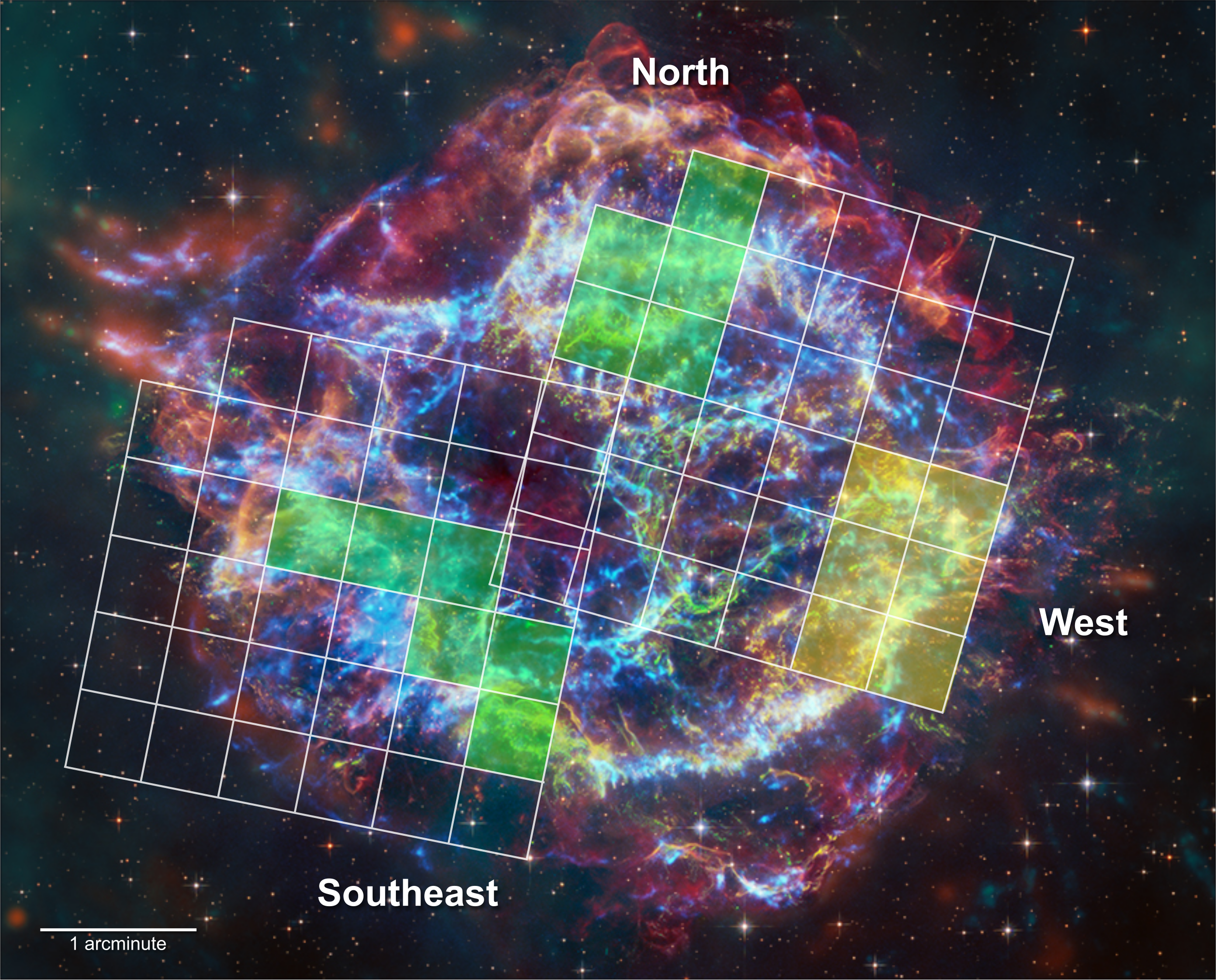
Observations of the Cassiopeia A supernova remnant by the Resolve instrument aboard the NASA-JAXA XRISM (X-ray Imaging and Spectroscopy Mission) spacecraft revealed strong evidence for potassium (green squares) in the southeast and northern parts of the remnant. Grids superposed on a multiwavelength image of the remnant represent the fields of view of two Resolve measurements made in December 2023. Each square represents one pixel of Resolve’s detector. Weaker evidence of potassium (yellow squares) in the west suggests that the original star may have had underlying asymmetries before it exploded.
NASA’s Goddard Space Flight Center; X-ray: NASA/CXC/SAO; Optical: NASA/ESA/STScI; IR: NASA/ESA/CSA/STScI/Milisavljevic et al., NASA/JPL/CalTech; Image Processing: NASA/CXC/SAO/J. Schmidt and K. Arcand
Stars produce almost all the elements in the universe heavier than hydrogen and helium through nuclear reactions. Heat and pressure fuse lighter ones, like carbon, into progressively heavier ones, like neon, creating onion-like layers of materials in stellar interiors.
Nuclear reactions also take place during explosive events like supernovae, which occur when stars run out of fuel, collapse, and explode. Elemental abundances and locations in the wreckage can, respectively, tell scientists about the star and its explosion, even after hundreds or thousands of years.
Some elements — like oxygen, carbon, and neon — are more common than others and are easier to detect and trace back to a particular part of the star’s life.
Other elements — like chlorine and potassium — are more elusive. Since scientists have less data about them, it’s more difficult to model where in the star they formed. These rarer elements still play important roles in life on Earth. Potassium, for example, helps the cells and muscles in our bodies function, so astronomers are interested in tracing its cosmic origins.
The roughly circular Cas A supernova remnant spans about 10 light-years, is over 340 years old, and has a superdense neutron star at its center — the remains of the original star’s core. Scientists using NASA’s Chandra X-ray Observatory had previously identified signatures of iron, silicon, sulfur, and other elements within Cas A.
In the hunt for other elements, the team used the Resolve instrument aboard XRISM to look at the remnant twice in December 2023. The researchers were able to pick out the signatures for chlorine and potassium, determining that the remnant contains ratios much higher than expected. Resolve also detected a possible indication of phosphorous, which was previously discovered in Cas A by infrared missions.
Watch to learn more about how the Resolve instrument aboard XRISM captures extraordinary data on the make-up of galaxy clusters, exploded stars, and more using only 36 pixels. Credit: NASA’s Goddard Space Flight Center
“Resolve’s high resolution and sensitivity make these kinds of measurements possible,” said Brian Williams, the XRISM project scientist at NASA’s Goddard Space Flight Center in Greenbelt, Maryland. “Combining XRISM’s capabilities with those of other missions allows scientists to detect and measure these rare elements that are so critical to the formation of life in the universe.”
The astronomers think stellar activity could have disrupted the layers of nuclear fusion inside the star before it exploded. That kind of upheaval might have led to persistent, large-scale churning of material inside the star that created conditions where chlorine and potassium formed in abundance.
The scientists also mapped the Resolve observations onto an image of Cas A captured by Chandra and showed that the elements were concentrated in the southeast and northern parts of the remnant.
This lopsided distribution may mean that the star itself had underlying asymmetries before it exploded, which Chandra data indicated earlier this year in a study Sato led.
“Being able to make measurements with good statistical precision of these rarer elements really helps us understand the nuclear fusion that goes on in stars before and during supernovae,” said co-author Paul Plucinsky, an astrophysicist at the Center for Astrophysics | Harvard & Smithsonian in Cambridge, Massachusetts. “We suspected a key part might be asymmetry, and now we have more evidence that’s the case. But there’s still a lot we just don’t understand about how stars explode and distribute all these elements across the cosmos.”
A satellite image shows parts of Ethiopia and Eritrea on the left, the Red Sea in the center, and Yemen on the right. Most of the land appears dry and in shades of light brown. A label indicates the location of the Hayli Gubbi volcano in Ethiopia amid an area of darker volcanic rock.
NASA Earth Observatory
A satellite image shows parts of Ethiopia and Eritrea on the left, the Red Sea in the center, and Yemen on the right. A large plume of volcanic ash drifts east-northeast across the scene from the Hayli Gubbi volcano in Ethiopia.
NASA Earth Observatory
A satellite image shows parts of Ethiopia and Eritrea on the left, the Red Sea in the center, and Yemen on the right. Most of the land appears dry and in shades of light brown. A label indicates the location of the Hayli Gubbi volcano in Ethiopia amid an area of darker volcanic rock.
NASA Earth Observatory
A satellite image shows parts of Ethiopia and Eritrea on the left, the Red Sea in the center, and Yemen on the right. A large plume of volcanic ash drifts east-northeast across the scene from the Hayli Gubbi volcano in Ethiopia.
NASA Earth Observatory
November 15, 2025
November 23, 2025
On November 23, 2025, the Hayli Gubbi volcano in northern Ethiopia erupted in dramatic fashion. The shield volcano in the Danakil (or Afar) Depression began spewing ash and volcanic gases at around 11:30 a.m. local time (8:30 Universal Time) that day, marking its first documented explosive eruption. The plume reached into the upper troposphere and drifted northeast, eventually crossing over northern India and China and disrupting flights.
The MODIS (Moderate Resolution Imaging Spectroradiometer) instrument on NASA’s Aqua satellite acquired the image above (right) of the eruption, about 4 hours after it was first detected. Other satellite data indicated the plume reached 15 kilometers (9 miles) above sea level and contained approximately 0.2 teragrams (220,000 tons) of sulfur dioxide, according to a Global Volcanism Program report. Another light-colored cloud, likely of pyroclastic material, is visible spreading to the north and appears to be on or close to the ground, the report stated. For comparison, the left image was acquired with the same sensor on November 15, before the eruption.
In this remote area of East Africa, tectonic plates are moving away from each other, which allows magma to rise to the surface and feed several active volcanoes. Due in part to Hayli Gubbi’s remote setting, geologists are unsure when Hayli Gubbi last erupted. Geologic evidence suggests it was within the past 8,000 years, though experts speculate it may have been within the past few centuries.
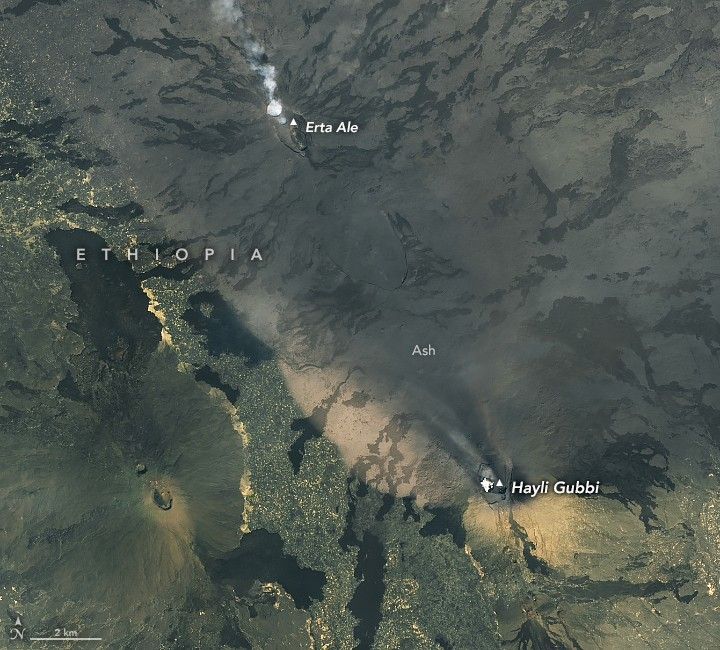
Hayli Gubbi lies about 12 kilometers (7 miles) south-southeast of Ethiopia’s most active volcano, Erta Ale, where a lava lake has roiled for decades. After Erta Ale’s most recent eruption in July 2025, scientists tracked the movement of magma beneath the surface using interferometric synthetic aperture radar (InSAR) measurements and other techniques. They found that magma propagated south from Erta Ale, passing beneath Hayli Gubbi and beyond.
November 24, 2025
Low-level activity was observed at Hayli Gubbi beginning in late July and included sulfur dioxide emissions, lingering white clouds in its summit crater, and upward ground displacement measuring several centimeters, according to the Centre for Observation and Modelling of Earthquakes, Volcanoes and Tectonics (COMET). The magma intrusion following Erta Ale’s eruption likely triggered the activity, said COMET co-director Juliet Biggs in a recorded statement.
Hayli Gubbi’s eruption was brief, subsiding by November 25, but caused visible changes to the land surface. Ash covered large areas, which included nearby villages in Ethiopia’s Afar region. Residents struggled with respiratory issues due to the ash fallout, and grass and water for livestock were contaminated, according to news reports.
The summit area of the volcano also took on a new appearance. The detailed view above, acquired with the OLI-2 (Operational Land Imager-2) on Landsat 9, shows the craters atop Hayli Gubbi and neighboring Erta Ale on November 24, 2025. The eruption enlarged Hayli Gubbi’s existing crater, which is partially filled with a low-lying cloud in the image, and created two new craters to the southeast. Ash deposits cover older lava flows on the volcano’s slopes.
NASA Earth Observatory images by Michala Garrison, using MODIS data from NASA EOSDIS LANCE and GIBS/Worldview, and Landsat data from the U.S. Geological Survey. Story by Lindsey Doermann.
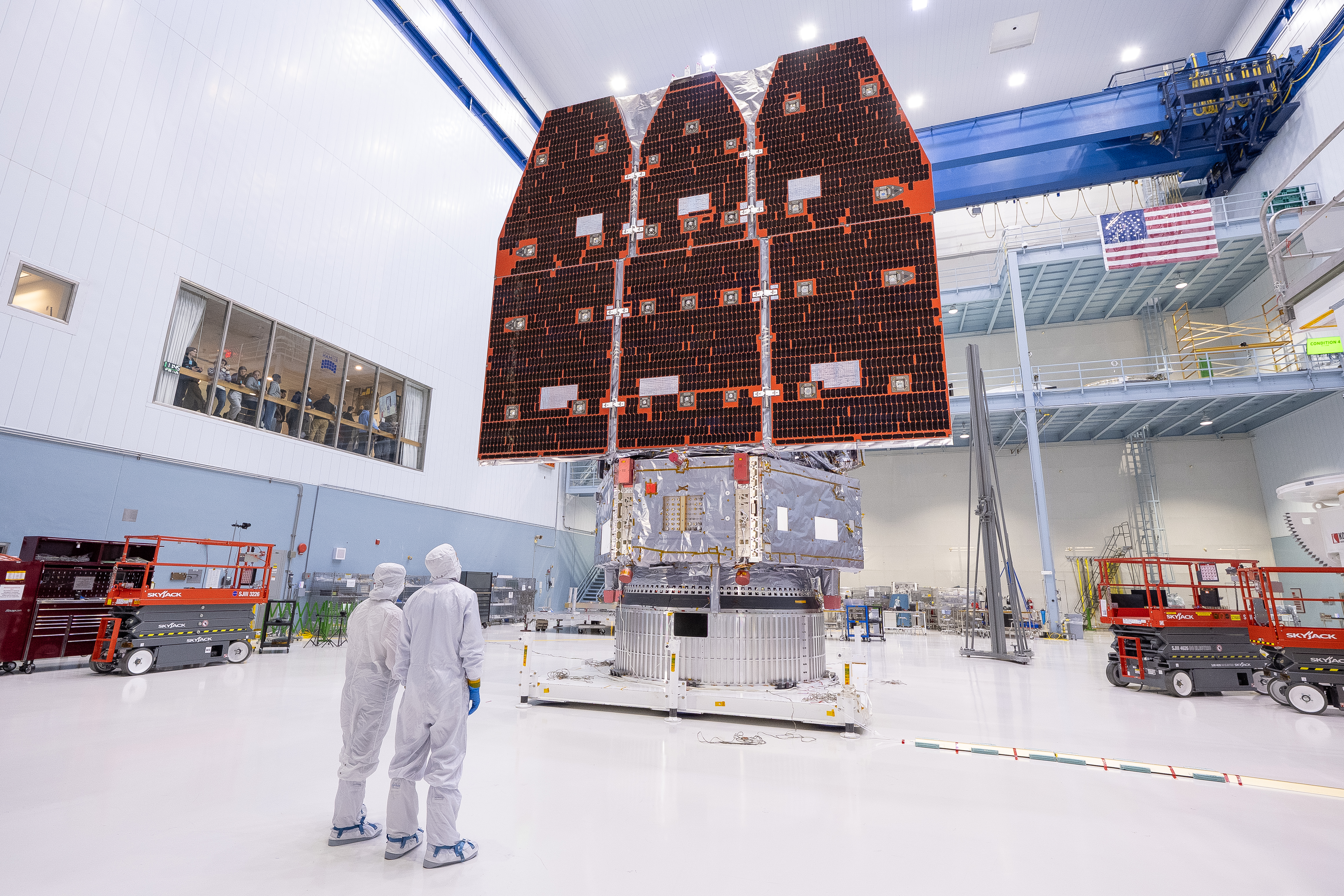
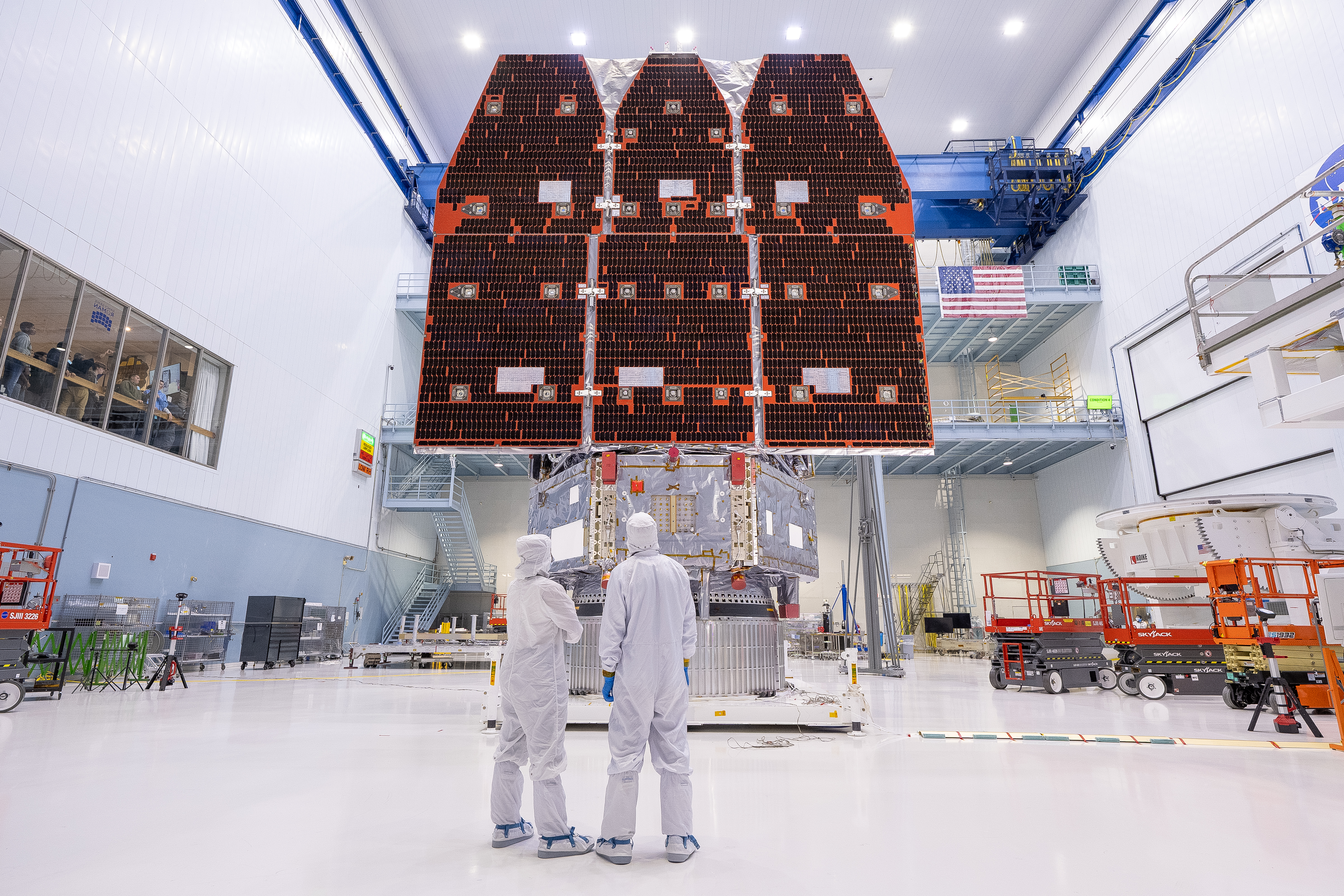
Over the course of several hours, technicians meticulously connected the inner and outer segments of NASA’s Nancy Grace Roman Space Telescope.
NASA/Jolearra Tshiteya
Two technicians look up at NASA’s Nancy Grace Roman Space Telescope after its inner and outer segments were connected at the agency’s Goddard Space Flight Center in Greenbelt, Maryland on Nov. 25, 2025. This marked the end of Roman’s construction. After final testing, the telescope will move to the launch site at NASA’s Kennedy Space Center in Florida for launch preparations in summer 2026. Roman — named after Dr. Nancy Grace Roman, NASA’s first chief astronomer — is slated to launch by May 2027, but the team is on track for launch as early as fall 2026.
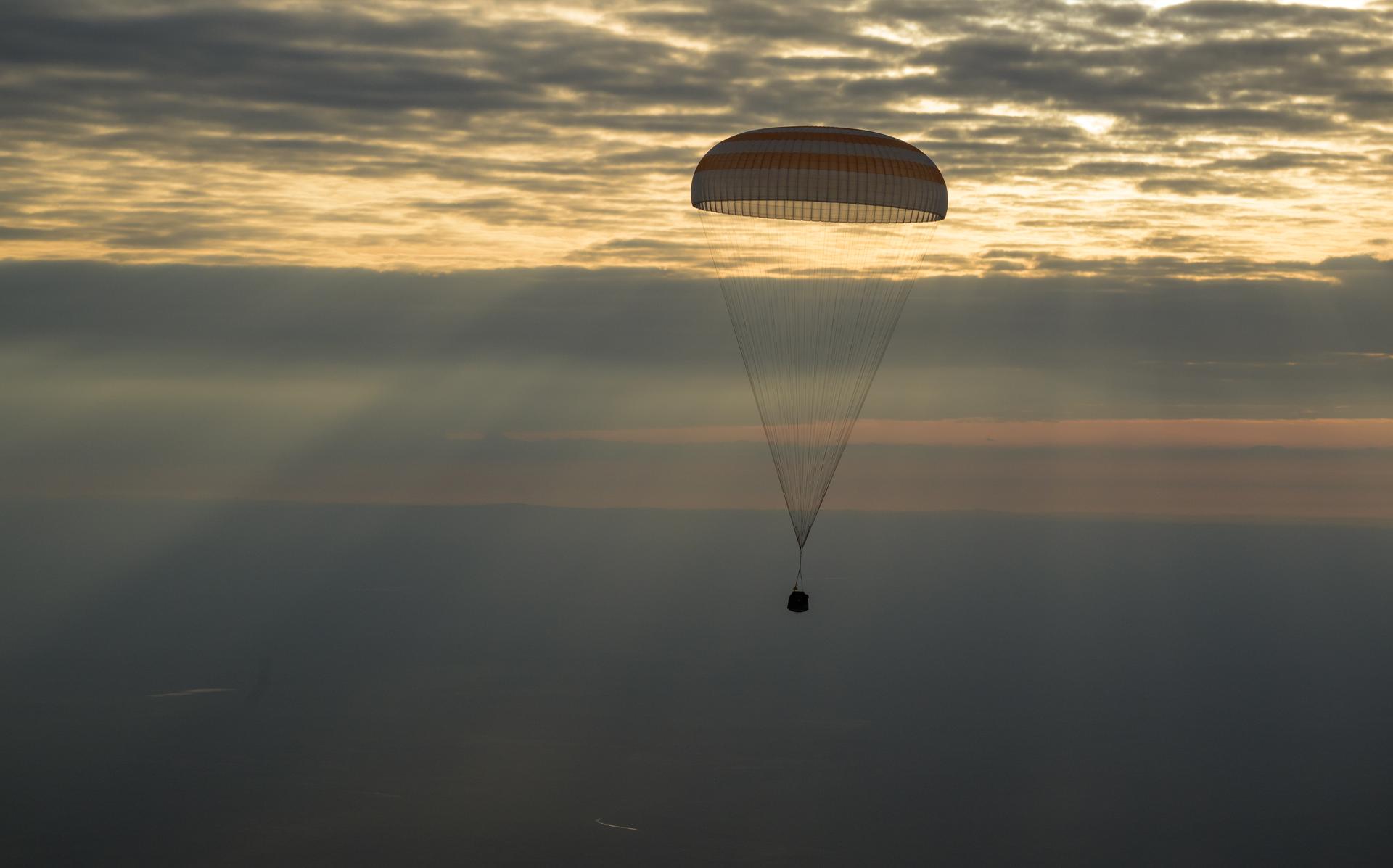
The Soyuz MS-26 spacecraft is seen as it lands on April 20, 2025 (April 19 Eastern time) in a remote area near the town of Zhezkazgan, Kazakhstan, with the Expedition 71/72 crew aboard.
NASA/Bill Ingalls
NASA astronaut Jonny Kim, accompanied by Roscosmos cosmonauts Sergey Ryzhikov and Alexey Zubritsky, is preparing to depart the International Space Station aboard the Soyuz MS-27 spacecraft and return to Earth.
Kim, Ryzhikov, and Zubritsky will undock from the station’s Prichal module at 8:41 p.m. EST on Monday, Dec. 8, headed for a parachute-assisted landing at 12:04 a.m. on Tuesday, Dec. 9 (10:04 a.m. local time in Kazakhstan), on the steppe of Kazakhstan, southeast of the city of Dzhezkazgan.
Watch NASA’s live coverage of the crew’s return on NASA+, Amazon Prime, and the agency’s YouTube channel. Learn how to stream NASA content through a variety of online platforms, including social media.
The space station change of command ceremony will begin at 10:30 a.m. Sunday, Dec. 7, on NASA+ and the agency’s YouTube channel. Rzyhikov will hand over station command to NASA astronaut Mike Fincke for Expedition 74, which begins at the time of Soyuz MS-27 undocking.
Kim and his crewmates are completing a 245-day mission aboard the station. At the conclusion of their mission, they will have orbited Earth 3,920 times and traveled nearly 104 million miles. This was the first flight for Kim and Zubritsky to the orbiting laboratory, while Ryzhikov is ending his third trip to space.
After landing, the three crew members will fly by helicopter to Karaganda, Kazakhstan, where recovery teams are based. Kim will board a NASA aircraft and return to Houston, while Ryzhikov and Zubritsky will depart for their training base in Star City, Russia.
NASA’s coverage is as follows (all times Eastern and subject to change based on real-time operations):
Sunday, Dec. 7:
10:30 a.m. – Expedition 73/74 change of command ceremony begins on NASA+Amazon Prime, and YouTube.
For more than 25 years, people have lived and worked continuously aboard the International Space Station, advancing scientific knowledge and making research breakthroughs that are not possible on Earth. The station is a critical testbed for NASA to understand and overcome the challenges of long-duration spaceflight and to expand commercial opportunities in low Earth orbit. As commercial companies concentrate on providing human space transportation services and destinations as part of a robust low Earth orbit economy, NASA is focusing its resources on deep space missions to the Moon as part of the Artemis campaign in preparation for future human missions to Mars.
Learn more about International Space Station research and operations at:
NASA’s next big eye on the cosmos is now fully assembled. On Nov. 25, technicians joined the inner and outer portions of the Nancy Grace Roman Space Telescope in the largest clean room at the agency’s Goddard Space Flight Center in Greenbelt, Maryland.
NASA’s Nancy Grace Roman Space Telescope is now fully assembled following the integration of its two major segments on Nov. 25 at the agency’s Goddard Space Flight Center in Greenbelt, Md. The mission is slated to launch by May 2027, but the team is on track for launch as early as fall 2026.
Credit: NASA/Jolearra Tshiteya
“Completing the Roman observatory brings us to a defining moment for the agency,” said NASA Associate Administrator Amit Kshatriya. “Transformative science depends on disciplined engineering, and this team has delivered—piece by piece, test by test—an observatory that will expand our understanding of the universe. As Roman moves into its final stage of testing following integration, we are focused on executing with precision and preparing for a successful launch on behalf of the global scientific community.”
After final testing, Roman will move to the launch site at NASA’s Kennedy Space Center in Florida for launch preparations in summer 2026. Roman is slated to launch by May 2027, but the team is on track for launch as early as fall 2026. A SpaceX Falcon Heavy rocket will send the observatory to its final destination a million miles from Earth.
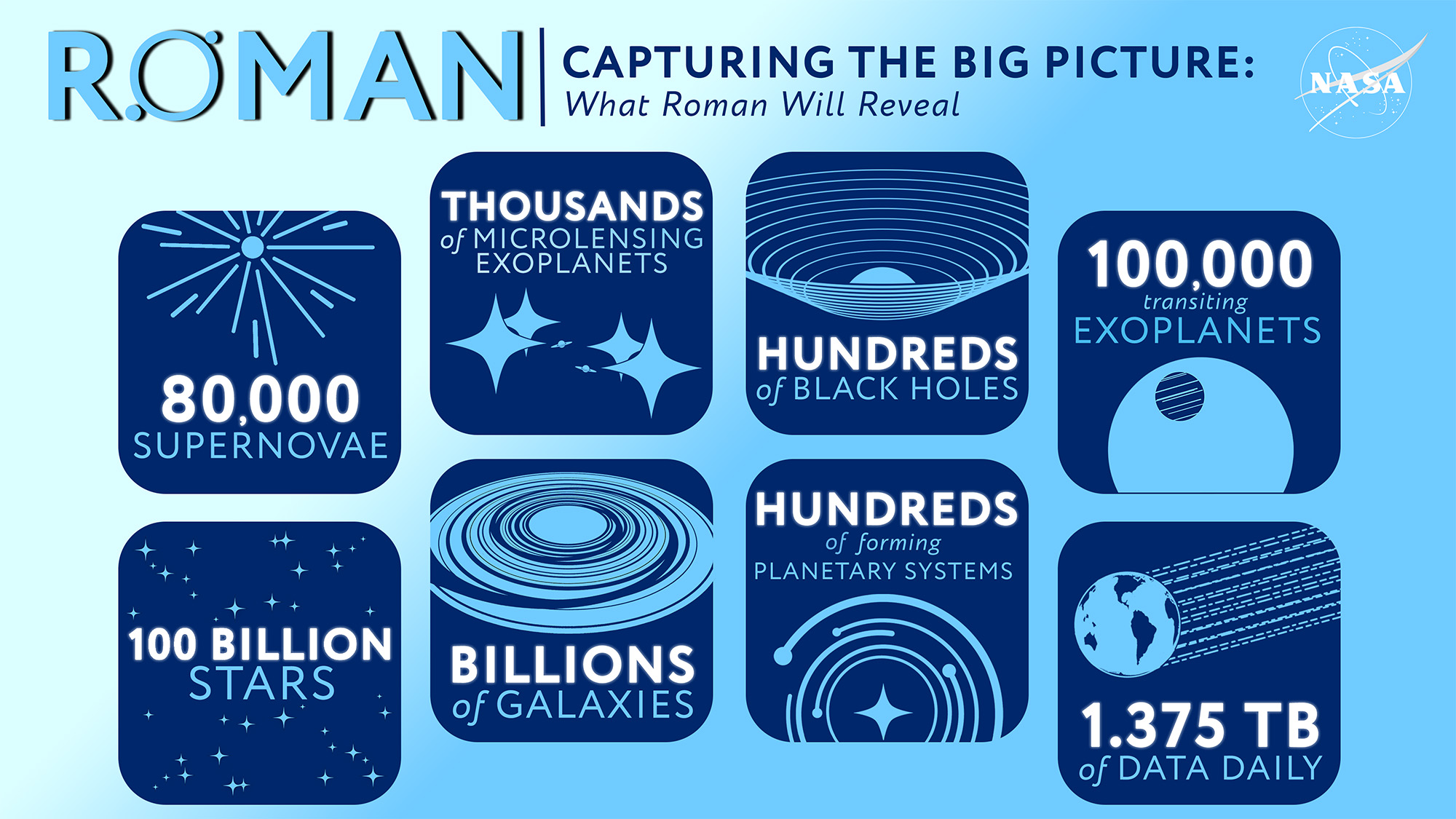
“With Roman’s construction complete, we are poised at the brink of unfathomable scientific discovery,” said Julie McEnery, Roman’s senior project scientist at NASA Goddard. “In the mission’s first five years, it’s expected to unveil more than 100,000 distant worlds, hundreds of millions of stars, and billions of galaxies. We stand to learn a tremendous amount of new information about the universe very rapidly after Roman launches.”
NASA’s Nancy Grace Roman Space Telescope will survey vast swaths of sky during its five-year primary mission. During that time, scientists expect it to see an incredible number of new objects, including stars, galaxies, black holes and planets outside our solar system, known as exoplanets. This infographic previews some of the discoveries scientists anticipate from Roman’s data deluge.
Credit: NASA’s Goddard Space Flight Center
Observing from space will make Roman very sensitive to infrared light — light with a longer wavelength than our eyes can see — from far across the cosmos. Pairing its crisp infrared vision with a sweeping view of space will allow astronomers to explore myriad cosmic topics, from dark matter and dark energy to distant worlds and solitary black holes, and conduct research that would take hundreds of years using other telescopes.
“Within our lifetimes, a great mystery has arisen about the cosmos: why the expansion of the universe seems to be accelerating. There is something fundamental about space and time we don’t yet understand, and Roman was built to discover what it is,” said Nicky Fox, associate administrator, Science Mission Directorate, NASA Headquarters in Washington. “With Roman now standing as a complete observatory, which keeps the mission on track for a potentially early launch, we are a major step closer to understanding the universe as never before. I couldn’t be prouder of the teams that have gotten us to this point.”
The coronagraph will demonstrate new technologies for directly imaging planets around other stars. It will block the glare from distant stars and make it easier for scientists to see the faint light from planets in orbit around them. The Coronagraph aims to photograph worlds and dusty disks around nearby stars in visible light to help us see giant worlds that are older, colder, and in closer orbits than the hot, young super-Jupiters direct imaging has mainly revealed so far.
“The question of ‘Are we alone?’ is a big one, and it’s an equally big task to build tools that can help us answer it,” said Feng Zhao, the Roman Coronagraph Instrument manager at NASA’s Jet Propulsion Laboratory in Southern California. “The Roman Coronagraph is going to bring us one step closer to that goal. It’s incredible that we have the opportunity to test this hardware in space on such a powerful observatory as Roman.”
The coronagraph team will conduct a series of pre-planned observations for three months spread across the mission’s first year-and-a-half of operations, after which the mission may conduct additional observations based on scientific community input.
The Wide Field Instrument is a 288-megapixel camera that will unveil the cosmos all the way from our solar system to near the edge of the observable universe. Using this instrument, each Roman image will capture a patch of the sky bigger than the apparent size of a full moon. The mission will gather data hundreds of times faster than NASA’s Hubble Space Telescope, adding up to 20,000 terabytes (20 petabytes) over the course of its five-year primary mission.
“The sheer volume of the data Roman will return is mind-boggling and key to a host of exciting investigations,” said Dominic Benford, Roman’s program scientist at NASA Headquarters.
Over the course of several hours, technicians meticulously connected the inner and outer segments of NASA’s Nancy Grace Roman Space Telescope, as shown in this time-lapse. Next, Roman will undergo final testing prior to moving to the launch site at NASA’s Kennedy Space Center in Florida for launch preparations in summer 2026.
Credit: NASA/Sophia Roberts
Survey trifecta
Using the Wide Field Instrument, Roman will conduct three core surveys which will account for 75% of the primary mission. The High-Latitude Wide-Area Survey will combine the powers of imaging and spectroscopy to unveil more than a billion galaxies strewn across a wide swath of space and time. Astronomers will trace the evolution of the universe to probe dark matter — invisible matter detectable only by how its gravity affects things we can see — and trace the formation of galaxies and galaxy clusters over time.
The High-Latitude Time-Domain Survey will probe our dynamic universe by observing the same region of the cosmos repeatedly. Stitching these observations together to create movies will allow scientists to study how celestial objects and phenomena change over time periods of days to years. That will help astronomers study dark energy — the mysterious cosmic pressure thought to accelerate the universe’s expansion — and could even uncover entirely new phenomena that we don’t yet know to look for.
Roman’s Galactic Bulge Time-Domain Survey will look inward to provide one of the deepest views ever of the heart of our Milky Way galaxy. Astronomers will watch hundreds of millions of stars in search of microlensing signals — gravitational boosts of a background star’s light caused by the gravity of an intervening object. While astronomers have mainly discovered star-hugging worlds, Roman’s microlensing observations can find planets in the habitable zone of their star and farther out, including worlds like every planet in our solar system except Mercury. Microlensing will also reveal rogue planets—worlds that roam the galaxy untethered to a star — and isolated black holes. The same dataset will reveal 100,000 worlds that transit, or pass in front of, their host stars.
The remaining 25% of Roman’s five-year primary mission will be dedicated to other observations that will be determined with input from the broader scientific community. The first such program, called the Galactic Plane Survey, has already been selected.
Because Roman’s observations will enable such a wide range of science, the mission will have a General Investigator Program designed to support astronomers to reveal scientific discoveries using Roman data. As part of NASA’s commitment to Gold Standard Science, NASA will make all of Roman’s data publicly available with no exclusive use period. This ensures multiple scientists and teams can use data at the same time, which is important since every Roman observation will address a wealth of science cases.
NASA’s freshly assembled Nancy Grace Roman Space Telescope will revolutionize our understanding of the universe with its deep, crisp, sweeping infrared views of space. The mission will transform virtually every branch of astronomy and bring us closer to understanding the mysteries of dark energy, dark matter, and how common planets like Earth are throughout our galaxy. Roman is on track for launch by May 2027, with teams working toward a launch as early as fall 2026. Credit: NASA’s Goddard Space Flight Center
Roman’s namesake — Dr. Nancy Grace Roman, NASA’s first chief astronomer — made it her personal mission to make cosmic vistas readily accessible to all by paving the way for telescopes based in space.
“The mission will acquire enormous quantities of astronomical imagery that will permit scientists to make groundbreaking discoveries for decades to come, honoring Dr. Roman’s legacy in promoting scientific tools for the broader community,” said Jackie Townsend, Roman’s deputy project manager at NASA Goddard. “I like to think Dr. Roman would be extremely proud of her namesake telescope and thrilled to see what mysteries it will uncover in the coming years.”
The Nancy Grace Roman Space Telescope is managed at NASA’s Goddard Space Flight Center in Greenbelt, Maryland, with participation by NASA’s Jet Propulsion Laboratory in Southern California; Caltech/IPAC in Pasadena, California; the Space Telescope Science Institute in Baltimore; and a science team comprising scientists from various research institutions. The primary industrial partners are BAE Systems Inc. in Boulder, Colorado; L3Harris Technologies in Rochester, New York; and Teledyne Scientific & Imaging in Thousand Oaks, California.
Preparations for Next Moonwalk Simulations Underway (and Underwater)
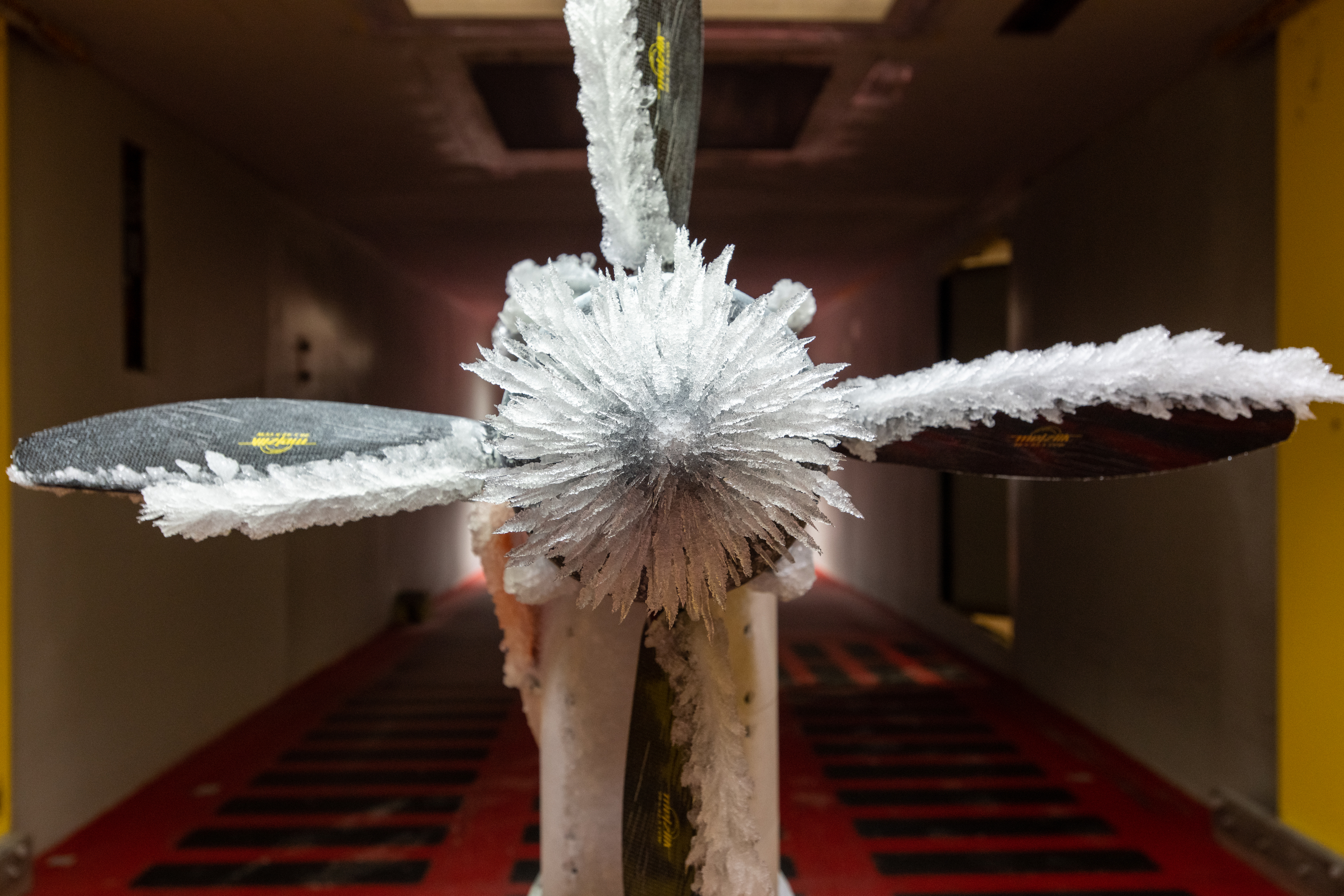
Researchers at NASA’s Glenn Research Center in Cleveland used the Glenn Icing Computational Environment (GlennICE) software to create 3D computational models of this advanced air mobility rotor and study propeller icing issues. The physical model of this rotor was installed and tested in the Icing Research Tunnel in 2023 as part of an icing evaluation study, which also sought to validate the computational models.
Credit: NASA/Jordan Cochran
When flying in certain weather conditions, tiny freezing water droplets floating in the air can pose a risk to aircraft. If not taken into consideration, these water droplets can accumulate on an aircraft as ice and pose a safety risk.
But NASA software tools such as Glenn Icing Computational Environment (GlennICE) are working to keep passengers and pilots safe.
NASA developed GlennICE, a new NASA software code, to transform the way we explore, understand, and prevent ice buildup on aircraft wings and engines, as well as control surfaces like rudders and elevators.
Owing to decades of world-class NASA research, engineers nationwide can now use GlennICE to design aircraft in such a way that ice buildup will either occur rarely or pose very little risk.
Named for NASA’s Glenn Research Center in Cleveland, GlennICE is part of NASA’s work to provide the aviation industry with computational tools, including design software, to improve aircraft safety and enable innovation. For icing research and modeling, NASA computer codes have become the industry standard over the past several decades. And GlennICE builds on this work, performing highly advanced digital modeling of water and ice particles in just about any atmospheric condition you can imagine.
With updated capabilities and a streamlined user experience, GlennICE will enable users to advance the state of the art – particularly researchers working on complex, unusual future aircraft designs.
“The legacy codes are well formulated to handle simulations of traditional tube-and-wing shaped aircraft,” said Christopher Porter, lead for GlennICE’s development. “But now, we have new vehicles with new designs that present icing research challenges. This requires a more advanced tool, and that’s where GlennICE comes in.”
So far, dozens of industry partners as well as other government agencies have started using GlennICE, which is available on NASA’s software catalog.
Timelapse video of an ice accretion on the 65% common research model.
Credit: NASA/Jordan Cochran
Ice buildup: not cool
Though based on legacy NASA codes such as LEWICE 3D, GlennICE is a whole different ballgame. The new toolkit can be tailored to unique situations and is compatible with other software tools. In other words, it is more configurable, and much less time consuming for researchers to set up and use.
This streamlined process, along with its more-advanced ability to model icing, allows GlennICE to easily tackle 21st-century concepts such as supersonic planes, advanced air mobility drones and other aircraft, unconventionally shaped wings, open-rotor turbofan designs, or new configurations for conventional aircraft such as radar domes.
But how does this simulation process work?
“Imagine an aircraft flying through a cloud,” Porter said. “Some of those water and ice droplets hit the aircraft and some of them don’t. GlennICE simulates these droplets and exactly where they will end up, both on the aircraft and not.”
When these water droplets hit the aircraft, they attach, freeze, and start to gather even more droplets that do the same. The software simulates exactly where this will occur, and what shape the ice will take over time.
“We’re not just dealing with the airplane, but the physics of the air and water as well,” Porter said.
Because it’s designed for simulating droplets, researchers have expressed interest in using GlennICE to simulate other conditions involving sand and ash. These substances, when ingested by aircraft engines, can pose separate risks that aeronautical engineers work to prevent.
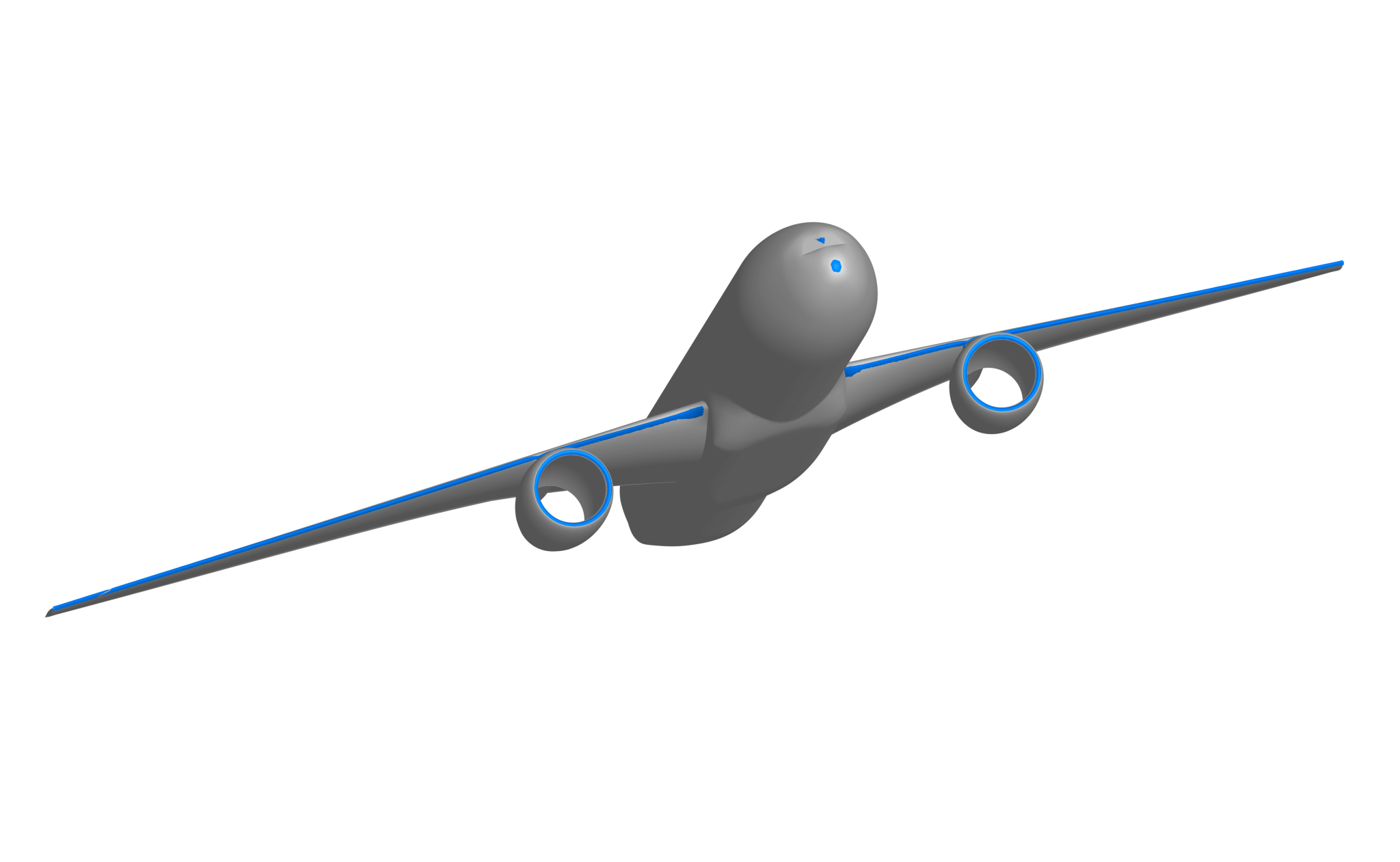
Glenn Icing Computational Environment (GlennICE) simulated ice accretions (blue) on the High Lift Common Research Model (gray).
Credit: NASA/Thomas Ozoroski
World-class research
Icing research is fundamental to aviation safety, and NASA fulfils a key role in ensuring pilots and passengers fly more safely and ice-free. The agency’s wind tunnels, for instance, have world-class icing research capabilities not commonly found in aeronautics research.
Paired with wind tunnel testing, GlennICE offers a holistic set of capabilities to researchers. While wind tunnels can verify and validate data with real-world models and conditions, tools like GlennICE can fill gaps in research not easily achieved with wind tunnels.
“Some environments we need to test in are impractical with wind tunnels because of the tunnel size required and complex physics involved,” Porter said. “But with GlennICE, we can do these tests digitally. For example, we can model all the icing conditions noted in new regulations.”
The GlennICE development falls under NASA’s Transformative Aeronautics Concept and Advanced Air Vehicles programs. Those programs supported GlennICE to further NASA’s work on computational tool development for aerospace design. More about the history of icing research at NASA is available on the agency’s website.
Select walls at NASA’s Johnson Space Center have been transformed into works of art. Each piece reflects creativity, collaboration, and the spirit of discovery. Painted by Texas students, the murals honor the legacy of the International Space Station and 25 years of continuous human presence in space.
The International Space Station Program Mural Project began in 2022 as part of a broader effort to bring color and inspiration into the workplace while connecting classrooms to NASA’s mission.
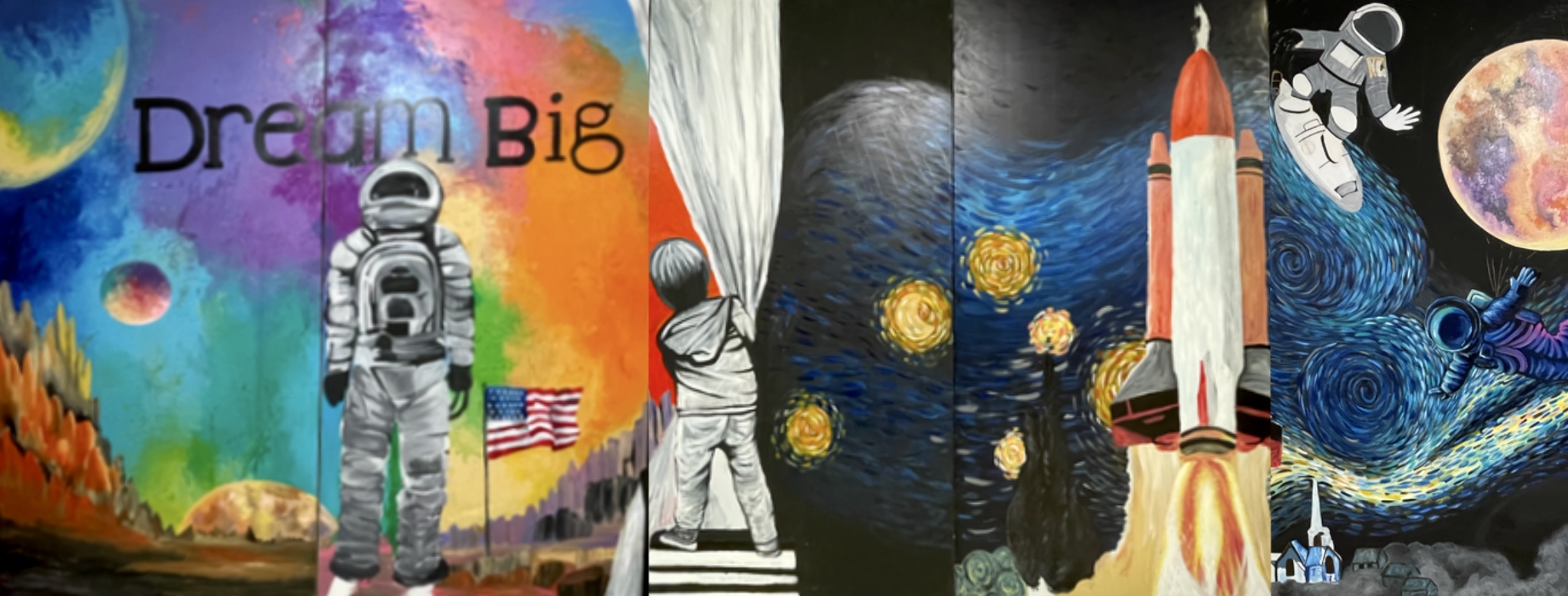
“Dream Big,” created by Texas City High School students with the International Space Station Program Mission and Program Integration team in 2025, symbolizes imagination becoming exploration.
“The mural collection is a reminder that today’s dreams can be tomorrow’s realities,” said Space Operations Mission Directorate Deputy Associate Administrator Joel Montalbano. “The future of space exploration depends on the imagination of our students.”
As NASA prepares for the next giant leap through Artemis, the art on the walls serves as a reminder that every mission begins with creativity and courage. This initiative continues to inspire the next generation to Dare | Unite | Explore. While art allows for interpretation, each mural required careful planning, communication, and problem-solving, just like the work behind human spaceflight.
The most recent mural, “Dream Big,” was installed in the hallway leading to the International Space Station Program suite on the fifth floor of building 1. Created by Texas City High School students with the International Space Station Program Mission Integration and Operations team, the artwork shows a grayscale child pulling back a curtain to reveal rockets, astronauts, and bright planetary landscapes.
The mural’s design draws from both classic and modern art influences. The students were inspired by Van Gogh’s impressionistic style and Banksy’s Behind the Curtain, combining movement and curiosity to reflect how imagination can open the door to exploration.
“The National Art Honor Society was honored to take on this inspiring project,” said Texas City High School art teacher Jennifer Massie. “They chose ‘Where Creativity Meets Reality’ to show how a child’s creative mind keeps moving and evolving—and that with big dreams and hard work, kids can follow in their heroes’ footsteps.”
What started as an idea between Gary Johnson, technical manager in the International Space Station Mission Integration and Operations Office, and Raul Tijerina, then the program’s building graphics lead, has grown into a gallery-sized initiative that bridges science and creativity.
“We want students to have the unique opportunity to contribute to NASA’s legacy through their artwork,” Johnson said. “These murals show that every mission begins with imagination and that the next generation of explorers is already helping paint humanity’s future among the stars.”
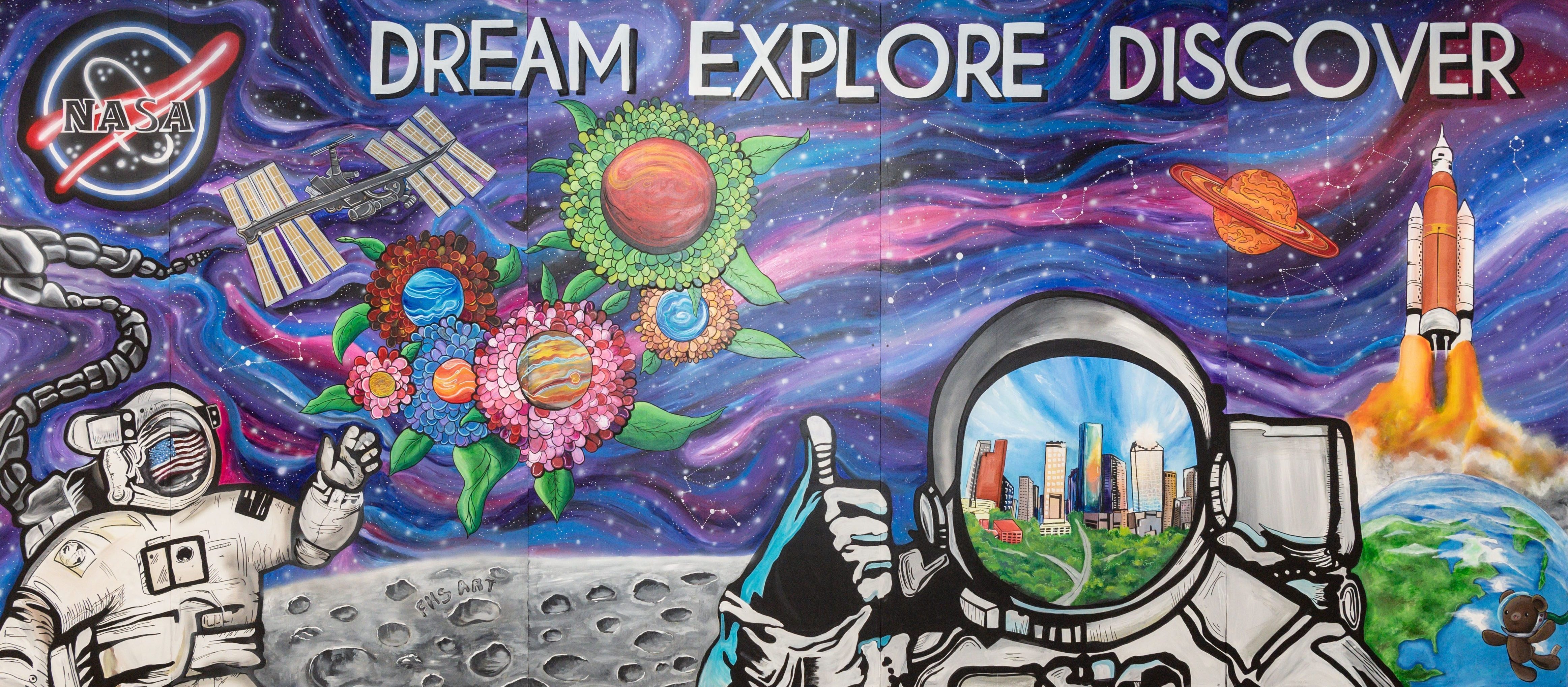
“Dream Explore Discover” was the first art mural created by Friendswood High School students in 2022.
NASA/Bill Stafford
Two murals are now housed in the hallway of the Neutral Buoyancy Laboratory’s International Space Development Integration Laboratory, known as the SDIL. The first, “Dream Explore Discover,” created by Friendswood High School students, was originally displayed in building 4 south. Under the guidance of art teacher Mandy Harris, more than 30 students designed and painted the 8-by-18-foot mural, starting with sketches and brainstorming sessions that considered how art could reflect human space exploration. The students combined their ideas into a single design celebrating the beauty and excitement of discovery.
Elements of the mural include an astronaut’s visor reflecting the Houston skyline, zinnias symbolizing life and science connecting beyond Earth, and a small floating teddy bear representing both the dreams of children who look up to the stars and the generations of explorers who carried small tokens of home into space. It serves as a reminder of the human heart behind every mission.
The mural also features the launch of NASA’s SLS (Space Launch System) rocket with NASA’s Orion spacecraft riding on top, heading for the next giant leap in exploration. Beside the capsule, the Orion constellation appears in the sky, symbolizing how the stars continue to guide humanity’s journey to the Moon, Mars, and beyond.
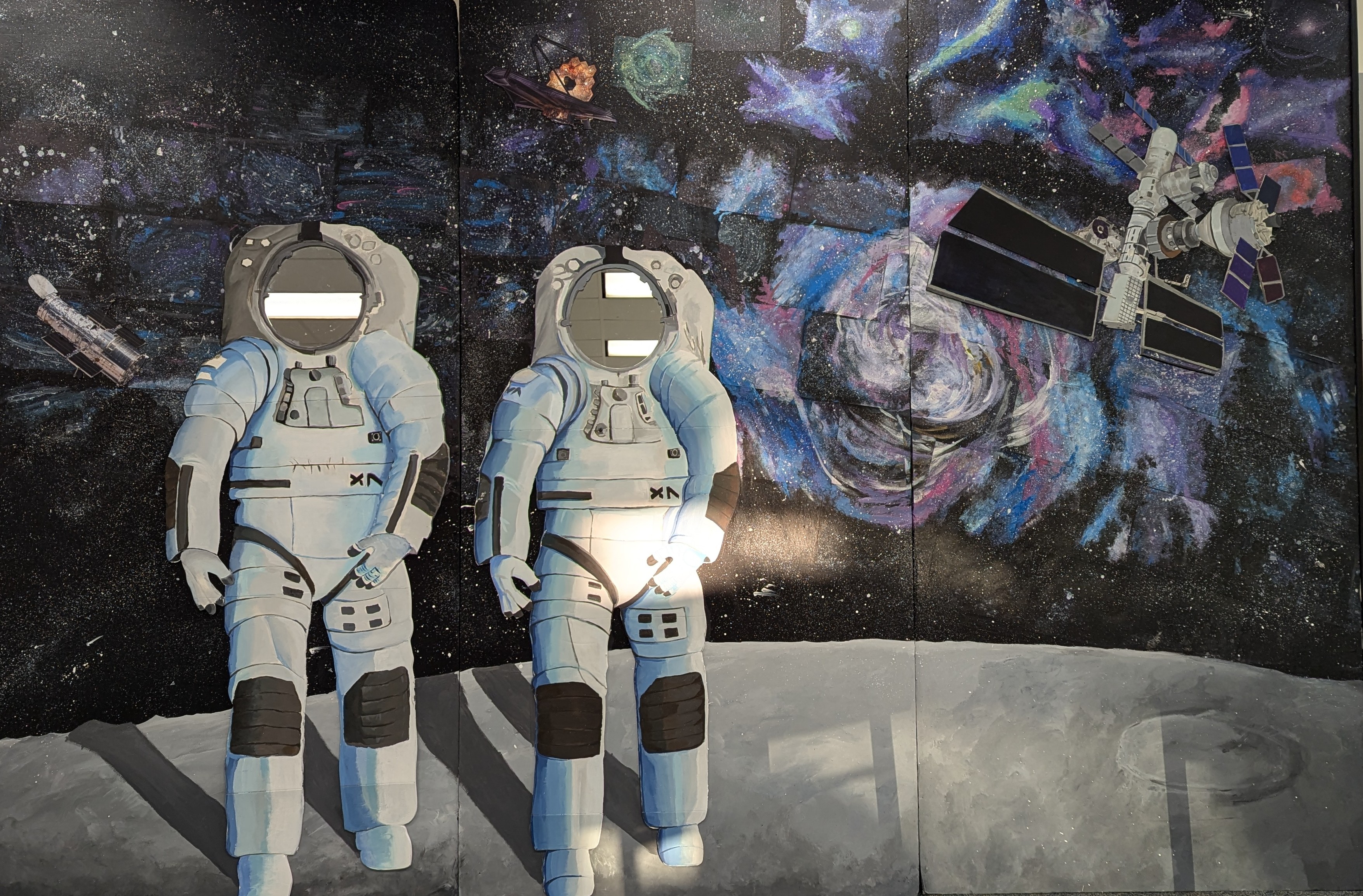
“The Moon Now,” created by La Marque High School students, depicts two astronauts on the lunar surface in Axiom spacesuits with mirrored visors.
“The Moon Now,” created by students from La Marque High School, Blocker Middle School, and Giles Middle School, is also housed at the SDIL. The artwork depicts two astronauts on the lunar surface wearing Axiom spacesuits with mirrored visors that reflect the faces of the next generation who will carry humanity back to the Moon. Individual student artworks of the Milky Way and celestial objects were collaged into the final piece, creating a tapestry of imagination and exploration.
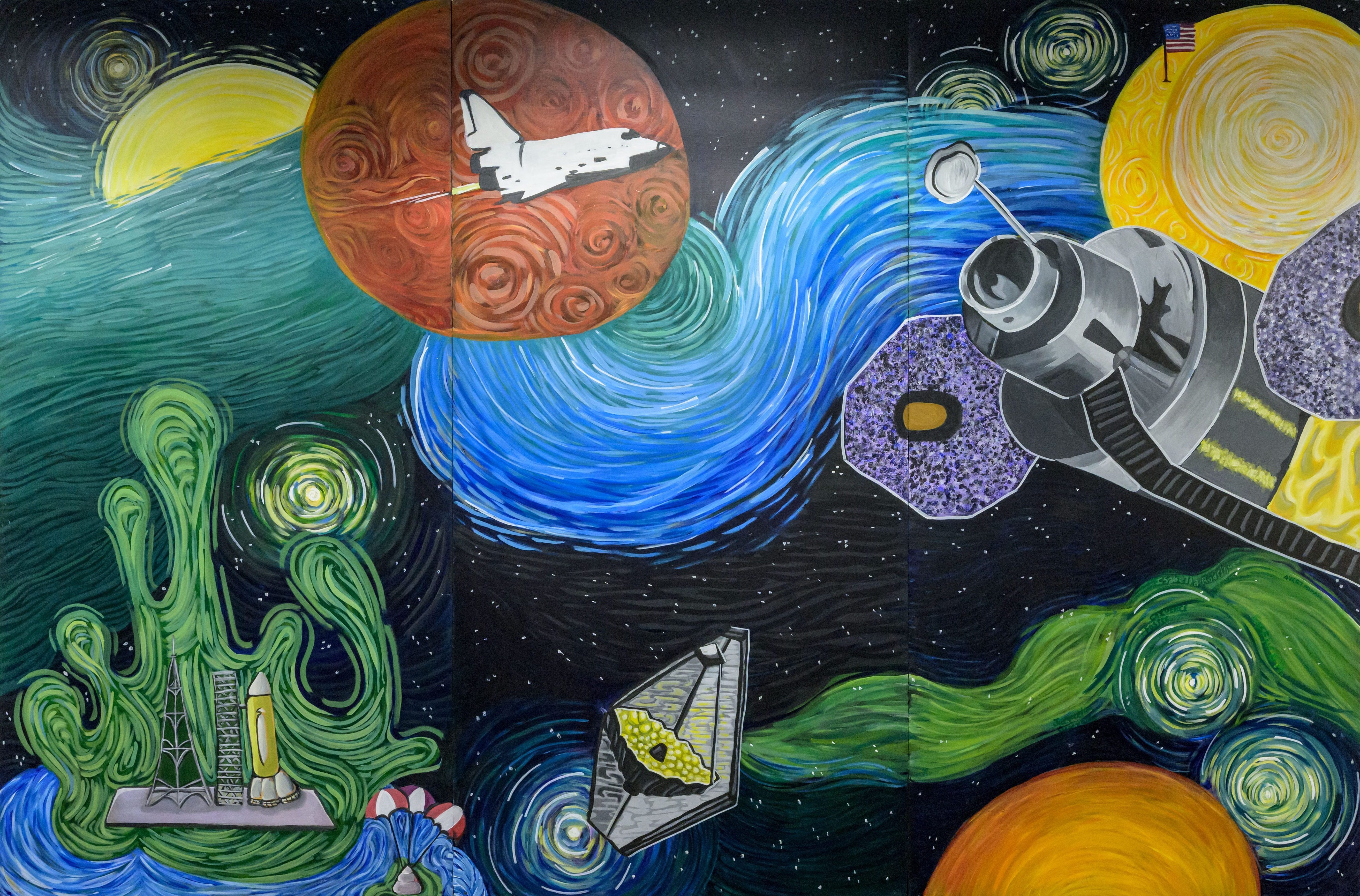
Dickinson High School’s “A Starry Night” reimagines classic artistry through the lens of modern spaceflight.
NASA/Josh Valcarcel
The remaining murals are installed in building 4 south at Johnson. In 2023, the program expanded to include Dickinson High School, whose students created “A Starry Night,” a blend of Renaissance-style painting and modern space imagery. “Everyone wanted to be involved,” said art teacher Jennifer Sumrall. “The kids loved it and did their own research on how each of NASA’s missions impacts the world.”
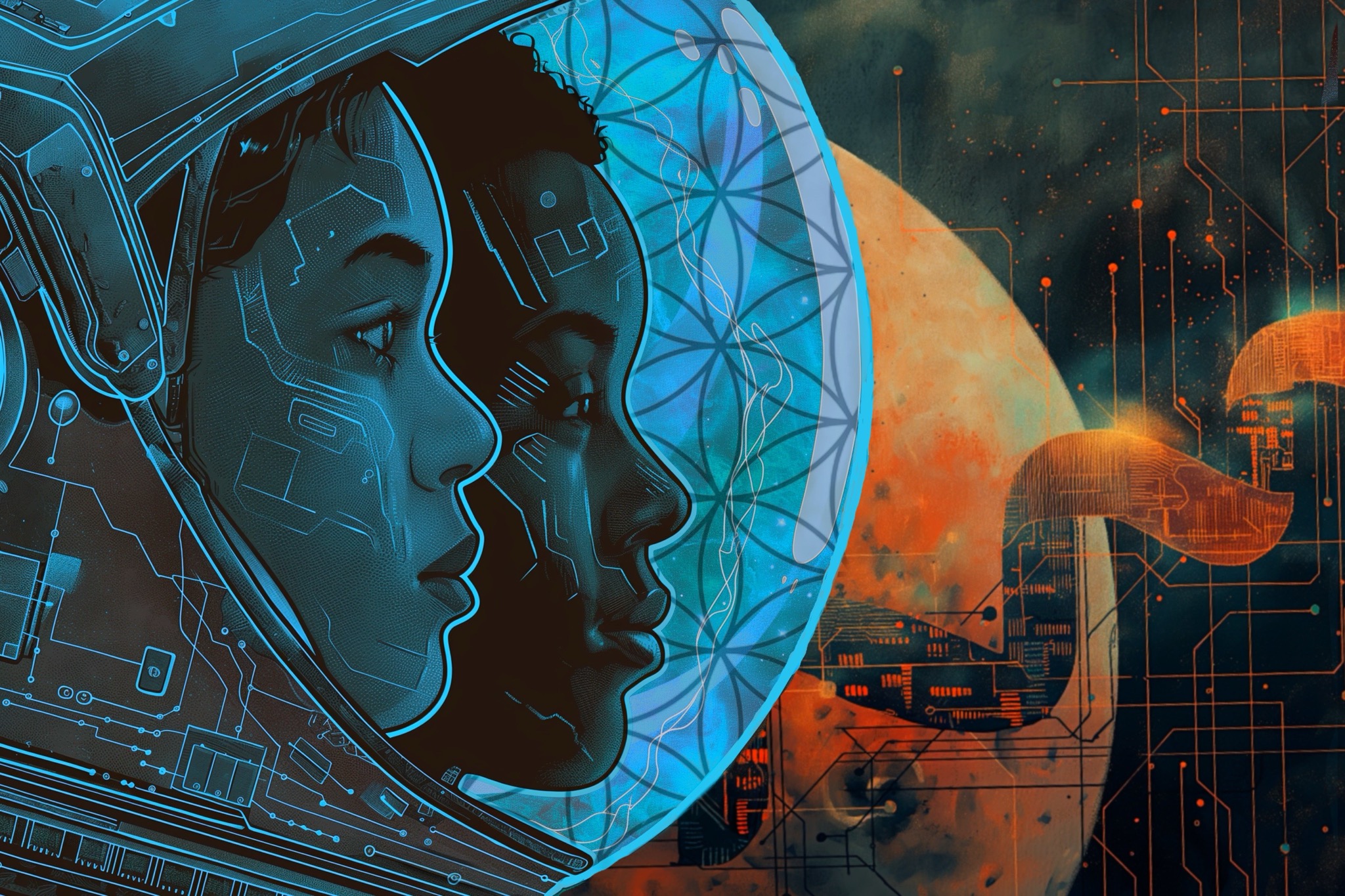
“Absolute Equality: Breaking Boundaries” by Reginald C. Adams, symbolizes unity and humanity’s collective future in space exploration.
“Absolute Equality: Breaking Boundaries” by Houston artist Reginald C. Adams symbolizes unity and humanity’s shared future in space exploration. Two figures share a single helmet. Patterns inspired by circuitry surround the faces and suggest the role of technology in connecting people around the world and beyond it.
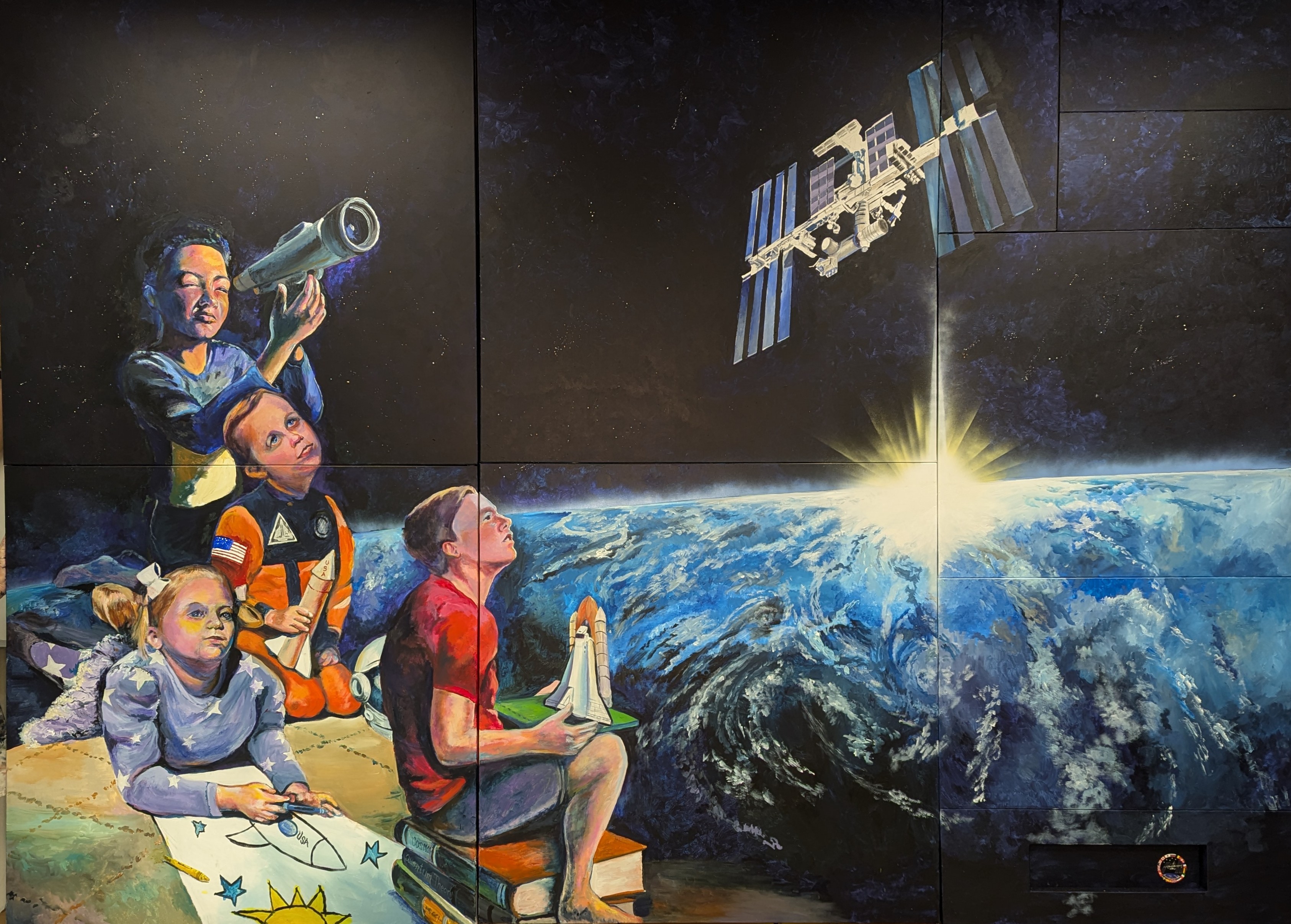
La Marque High School students, art teacher Joan Finn, and artist Cheryl Evans painted “Collaboration” to illustrate the interconnected roles in space exploration.
“Collaboration” was painted by La Marque High School students with art teacher Joan Finn and artist Cheryl Evans to depict the interconnected roles of visionaries, engineers, artists, and astronauts in exploration. Built from 10 stretched canvases bolted together — a nod to the station’s assembly across more than 40 missions — the mural includes the space station patch at the bottom to represent the collaboration of the 15 countries involved.
NASA Johnson thanks Joel Montalbano, who championed student engagement that connects classrooms to mission work during his tenure as International Space Station Program manager. The center also acknowledges Gary Johnson for conceiving the mural project and guiding its partnerships, Raul Tijerina for early design leadership that set the standard, Gordon Andrews for opening doors through behind-the-scenes tours, and art educators for mentoring the students who brought each mural to life.
Three Martian dust devils can be seen near the rim of Jezero Crater in this short video made of images taken by a navigation camera aboard NASA’s Perseverance rover on Sept. 6, 2025. The microphone on the rover’s SuperCam previously captured audio when a dust devil passed over.
NASA/JPL-Caltech/SSI
Perseverance confirmed a long-suspected phenomenon in which electrical discharges and their associated shock waves can be born within Red Planet mini-twisters.
NASA’s Perseverance Mars rover has recorded the sounds of electrical discharges —sparks — and mini-sonic booms in dust devils on Mars. Long theorized, the phenomenon has now been confirmed through audio and electromagnetic recordings captured by the rover’s SuperCam microphone. The discovery, published Nov. 26 in the journal Nature, has implications for Martian atmospheric chemistry, climate, and habitability, and could help inform the design of future robotic and human missions to Mars.
A frequent occurrence on the Red Planet, dust devils form from rising and rotating columns of warm air. Air near the planet’s surface becomes heated by contact with the warmer ground and rises through the denser, cooler air above. As other air moves along the surface to take the place of the rising warmer air, it begins to rotate. When the incoming air rises into the column, it picks up speed like spinning ice skaters bringing their arms closer to their body. The air rushing in also picks up dust, and a dust devil is born.
SuperCam has recorded 55 distinct electrical events over the course of the mission, beginning on the mission’s 215thMartian day, or sol, in 2021. Sixteen have been recorded when dust devils passed directly over the rover.
Decades before Perseverance landed, scientists theorized that the friction generated by tiny dust grains swirling and rubbing against each other in Martian dust devils could generate enough of an electrical charge to eventually produce electrical arcs. Called the triboelectric effect, it’s the phenomenon at play when someone walks over a carpet in socks and then touches a metal doorknob, generating a spark. In fact, that is about the same level of discharge as what a Martian dust devil might produce.
“Triboelectric charging of sand and snow particles is well documented on Earth, particularly in desert regions, but it rarely results in actual electrical discharges,” said Baptiste Chide, a member of the Perseverance science team and a planetary scientist at L’Institut de Recherche en Astrophysique et Planétologie in France. “On Mars, the thin atmosphere makes the phenomenon far more likely, as the amount of charge required to generate sparks is much lower than what is required in Earth’s near-surface atmosphere.”
Perseverance’s SuperCam instrument carries a microphone to analyze the sounds of the instrument’s laser when it zaps rocks, but the team has also captured the sounds of wind and even the first audio recording of a Martian dust devil. Scientists knew it could pick up electromagnetic disturbance (static) and sounds of electrical discharges in the atmosphere. What they didn’t know was if such events happened frequently enough, or if the rover would ever be close enough, to record one. Then they began to assess data amassed over the mission, and it didn’t take long to find the telltale sounds of electrical activity.
The SuperCam microphone on NASA’s Perseverance captured this recording of the sounds of electrical discharge as a dust devil passed over the Mars rover on Oct. 12, 2024. The three crackles can be heard in between the sounds of the dust devil’s front and trailing walls. Credit: NASA/JPL-Caltech/LANL/CNES/CNRS/ISAE-Supaero
Crackle, pop
“We got some good ones where you can clearly hear the ‘snap’ sound of the spark,” said coauthor Ralph Lorenz, a Perseverance scientist at the Johns Hopkins Applied Physics Lab in Laurel, Maryland. “In the Sol 215 dust devil recording, you can hear not only the electrical sound, but also the wall of the dust devil moving over the rover. And in the Sol 1,296 dust devil, you hear all that plus some of the particles impacting the microphone.”
Thirty-five other discharges were associated with the passage of convective fronts during regional dust storms. These fronts feature intense turbulence that favor triboelectric charging and charge separation, which occurs when two objects touch, transfer electrons, and separate — the part of the triboelectric effect that results in a spark of static electricity.
Researchers found electrical discharges did not seem to increase during the seasons when dust storms, which globally increase the presence of atmospheric dust, are more common on Mars. This result suggests that electrical buildup is more closely tied to the localized, turbulent lifting of sand and dust rather than high dust density alone.
While exploring the rim of Jezero Crater on Mars, NASA’s Perseverance rover captured new images of multiple dust devils in January 2025. These captivating phenomena have been documented for decades by the agency’s Red Planet robotic explorers. Credit: NASA/JPL-Caltech/LANL/CNES/CNRS/INTA-CSIC/Space Science Institute/ISAE-Supaero/University of Arizona
Profound effects
The proof of these electrical discharges is a discovery that dramatically changes our understanding of Mars. Their presence means that the Martian atmosphere can become sufficiently charged to activate chemical reactions, leading to the creation of highly oxidizing compounds, such as chlorates and perchlorates. These strong substances can effectively destroy organic molecules (which constitute some of the components of life) on the surface and break down many atmospheric compounds, completely altering the overall chemical balance of the Martian atmosphere.
This discovery could also explain the puzzling ability of Martian methane to vanish rapidly, offering a crucial piece of the puzzle for understanding the constraints life may have faced and, therefore, the planet’s potential to be habitable.
Given the omnipresence of dust on Mars, the presence of electrical charges generated by particles rubbing together would seem likely to influence dust transport on Mars as well. How dust travels on Mars plays a central role in the planet’s climate but remains poorly understood.
Confirming the presence of electrostatic discharges will also help NASA understand potential risks to the electronic equipment of current robotic missions. That no adverse electrostatic discharge effects have been reported in several decades of Mars surface operations may attest to careful spacecraft grounding practices. The findings could also inform safety measures developed for future astronauts exploring the Red Planet.
More about Perseverance
Managed for NASA by Caltech, the Jet Propulsion Laboratory in Southern California built and manages operations of the Perseverance rover on behalf of the agency’s Science Mission Directorate as part of NASA’s Mars Exploration Program portfolio.
ESA/Hubble & NASA, F. Belfiore, J. Lee and the PHANGS-HST Team
This NASA/ESA Hubble Space Telescope image features the spiral galaxy NGC 4535, which is situated about 50 million light-years away in the constellation Virgo (the Maiden). Through a small telescope, this galaxy appears extremely faint, giving it the nickname ‘Lost Galaxy’. With a mirror spanning nearly eight feet (2.4 meters) across and its location above Earth’s light-obscuring atmosphere, Hubble can easily observe dim galaxies like NGC 4535 and pick out features like its massive spiral arms and central bar of stars.
This image features NGC 4535’s young star clusters, which dot the galaxy’s spiral arms. Glowing-pink clouds surround many of these bright-blue star groupings. These clouds, called H II (‘H-two’) regions, are a sign that the galaxy is home to especially young, hot, and massive stars that blaze with high-energy radiation. Such massive stars shake up their surroundings by heating their birth clouds with powerful stellar winds, eventually exploding as supernovae.
The image incorporates data from an observing program designed to catalog roughly 50,000 H II regions in nearby star-forming galaxies like NGC 4535. Hubble released a previous image of NGC 4535 in 2021. Both the 2021 image and this new image incorporate observations from the PHANGS observing program, which seeks to understand the connections between young stars and cold gas. Today’s image adds a new dimension to our understanding of NGC 4535 by capturing the brilliant red glow of the nebulae that encircle massive stars in their first few million years of life.
Image credit: ESA/Hubble & NASA, F. Belfiore, J. Lee and the PHANGS-HST Team
Preparations for Next Moonwalk Simulations Underway (and Underwater)
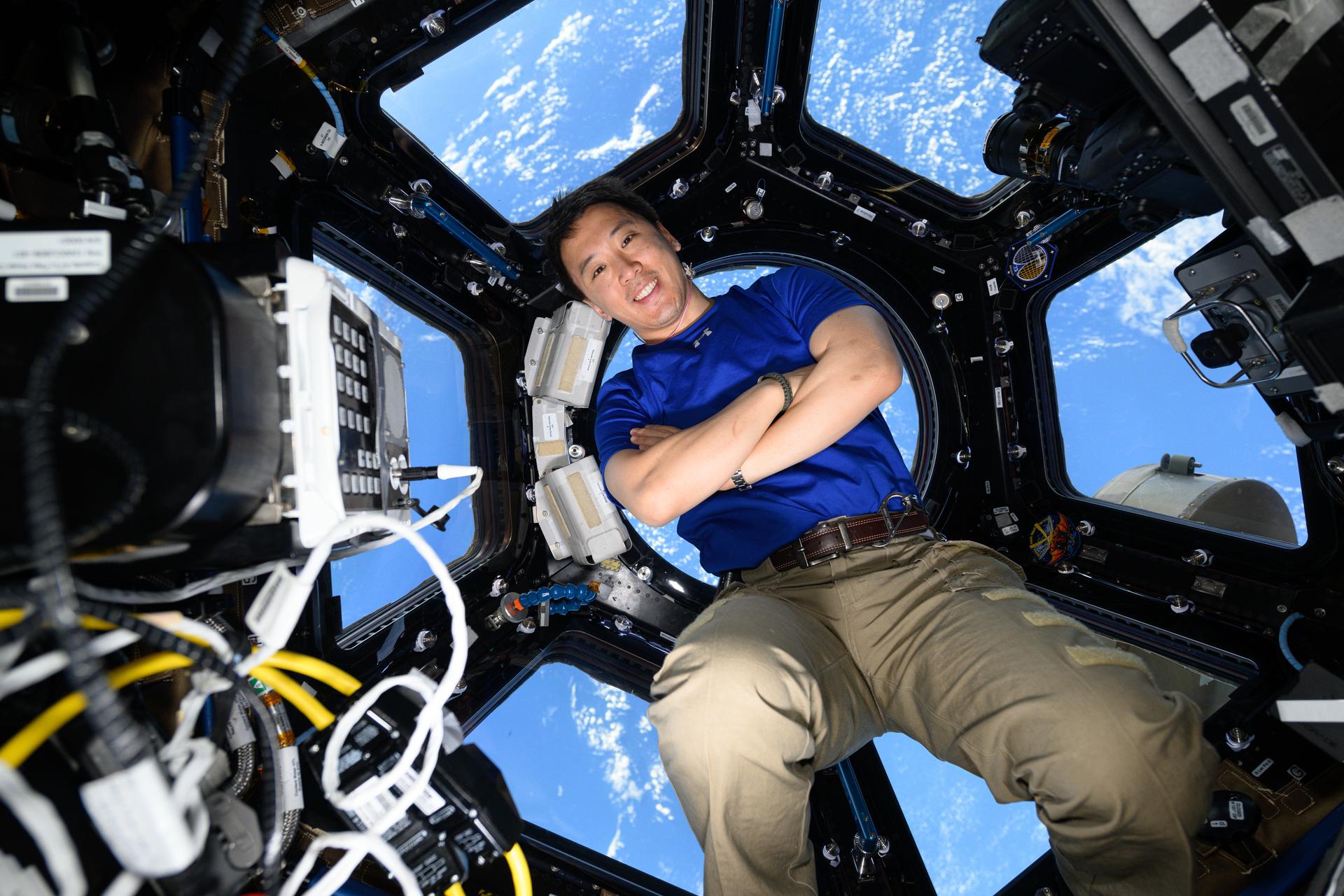
NASA astronaut Jonny Kim floats inside the Cupola of the International Space Station.
NASA
NASA astronaut Jonny Kim is wrapping up his first mission aboard the International Space Station in early December. During his stay, Kim conducted scientific experiments and technology demonstrations to benefit humanity on Earth and advance NASA’s Artemis campaign in preparation for future human missions to Mars.
Here is a look at some of the science Kim completed during his mission:
Medical check-ups in microgravity
NASA
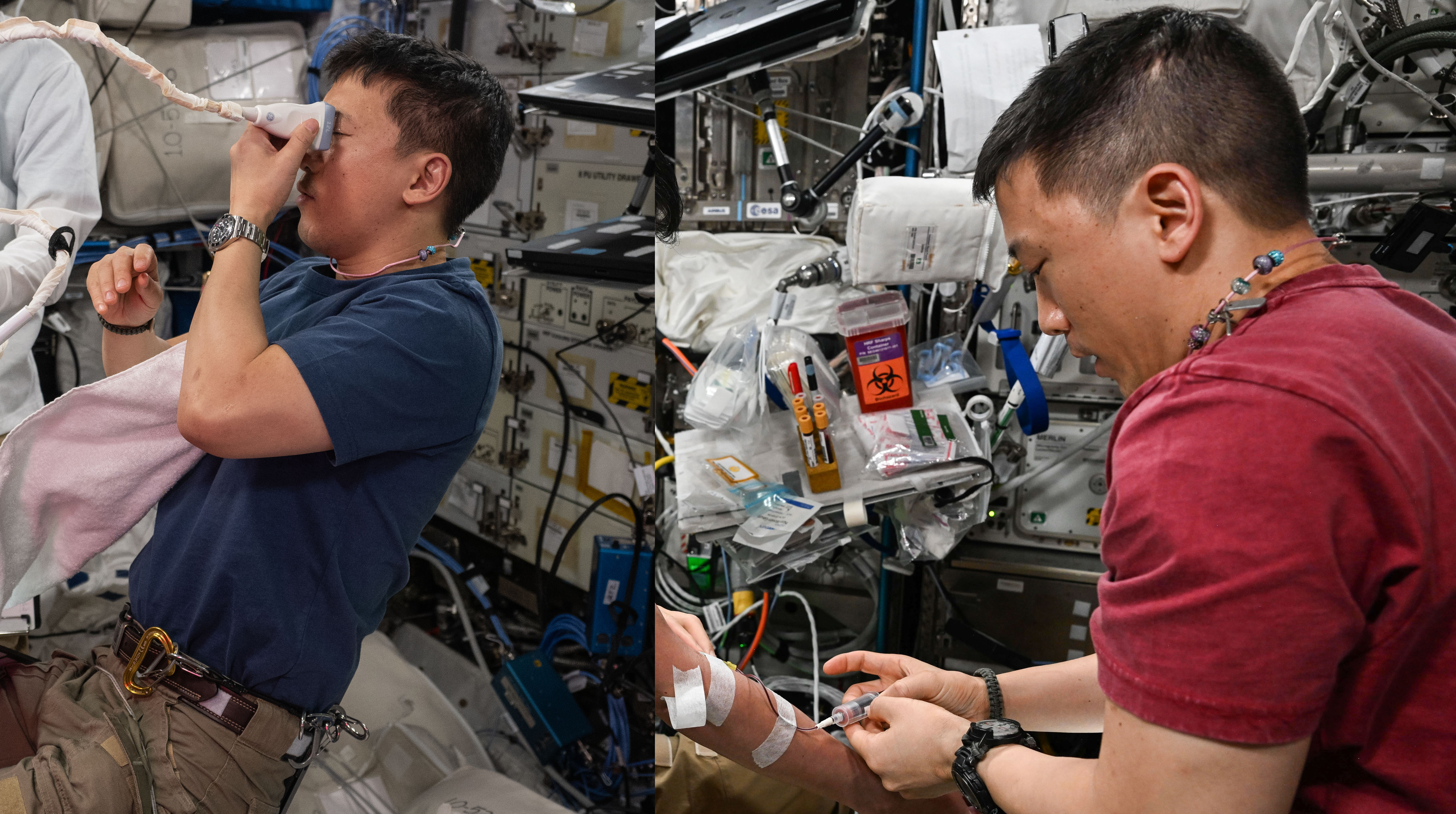
NASA astronaut Jonny Kim, a medical doctor, completed several routine medical exams while aboard the International Space Station. NASA flight surgeons and researchers monitor crew health using a variety of tools, including blood tests, eye exams, and ultrasounds.
Kim conducts an ultrasound of his eye in the left image. Eye exams are essential as long-duration spaceflight may cause changes to the eye’s structure and affect vision, a condition known as spaceflight associated neuro-ocular syndrome, or SANS. In the right image, Kim draws blood from a fellow crew member. These blood sample collections provide important insights into crew cartilage and bone health, cardiovascular function, inflammation, stress, immune function, and nutritional status.
NASA astronauts complete regular medical exams before, during, and after spaceflight to monitor astronaut health and develop better tools and measures for future human exploration missions to the Moon and Mars.
NASA astronaut Jonny Kim photographs dwarf tomato sprouts grown using a nutrient supplement instead of photosynthesis as part of a study on plant development and gene expression. The plants are given an acetate supplement as a secondary nutrition source, which could increase growth and result in better yields, all while using less power and fewer resources aboard the space station and future spacecraft.
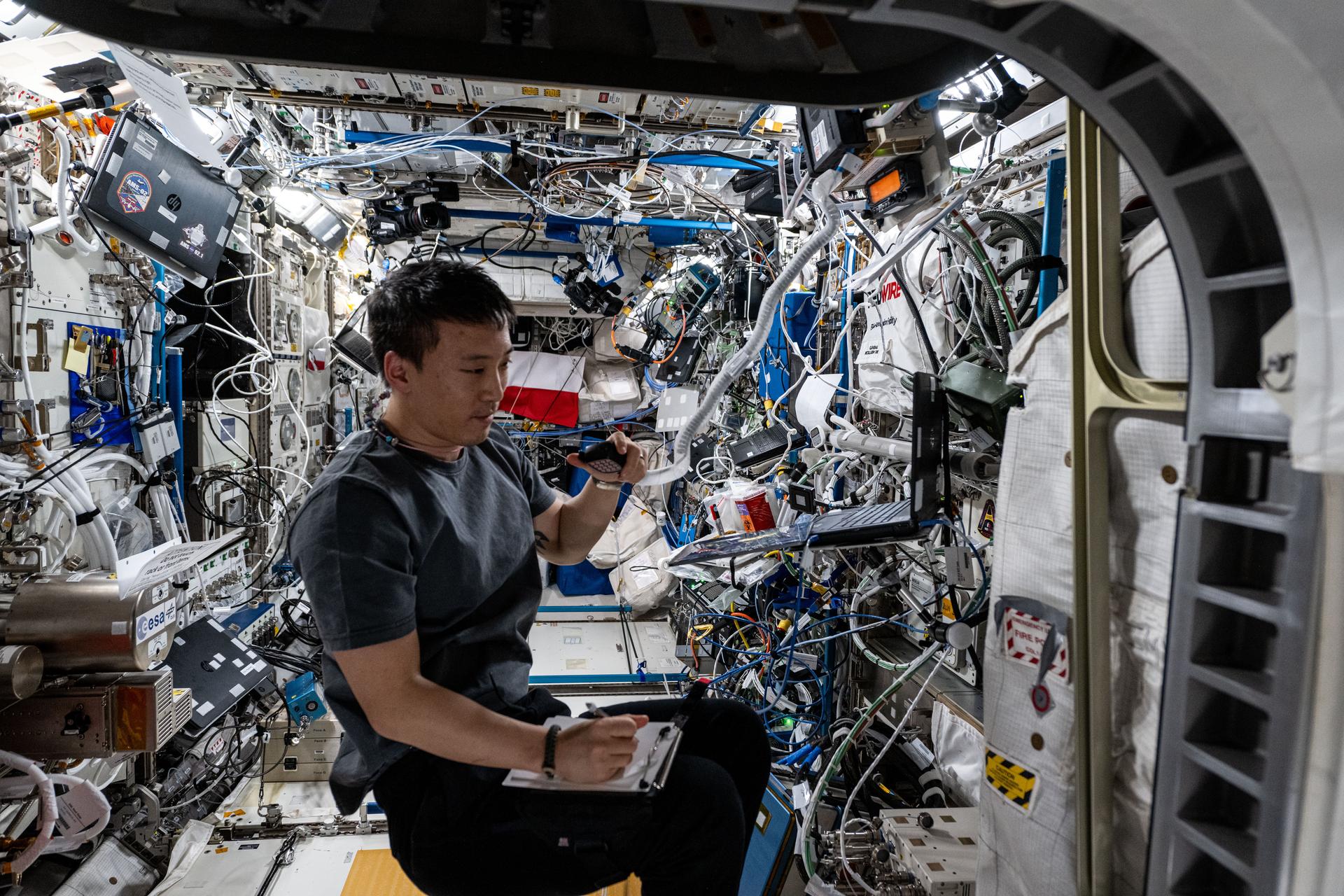
NASA astronaut Jonny Kim uses a ham radio to speak with students on Earth via an educational program connecting students worldwide with astronauts aboard the International Space Station. Students can ask about life aboard the orbiting laboratory and the many experiments conducted in microgravity. This program encourages an interest in STEM (science, technology, engineering, and mathematics) and inspires the next generation of space explorers.
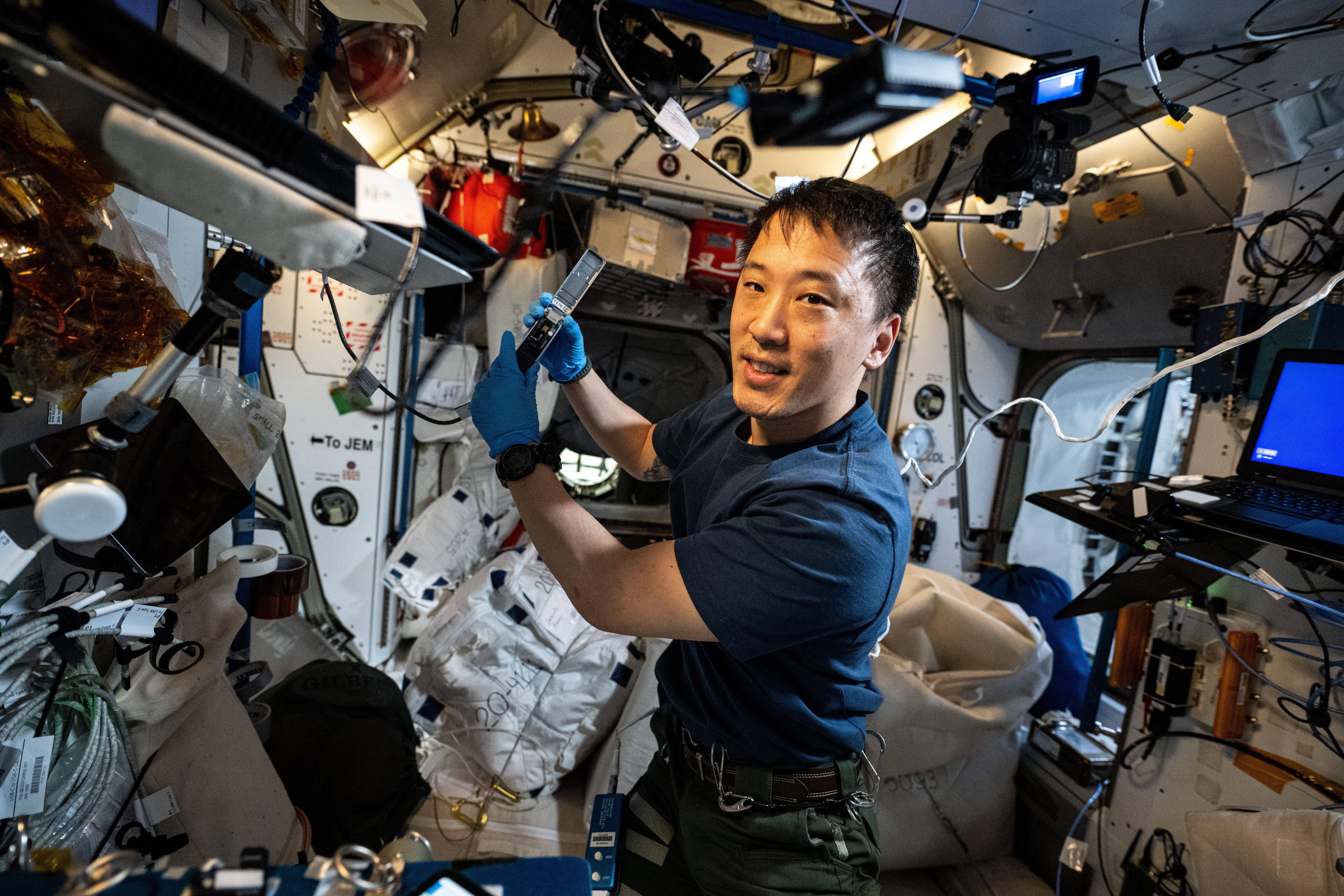
Secure and reliable data storage and transmission are essential to maintain the protection, accuracy, and accessibility of information. In this photo, NASA astronaut Jonny Kim displays research hardware that tests the viability of encoding, transmitting, and decoding encrypted information via DNA sequences. As part of this experiment, DNA with encrypted information is sequenced aboard the space station to determine the impact of the space environment on its stability. Using DNA to store and transmit data could reduce the weight and energy requirements compared to traditional methods used for long-duration space missions and Earth-based industries.
Future deep space exploration could rely on robotics remotely operated by humans. NASA astronaut Jonny Kim tests a technology demonstration that allows astronauts to remotely control robots on Earth from the International Space Station. Findings from this investigation could help fine-tune user-robot operating dynamics during future missions to the Moon, Mars, and beyond.
NASA astronaut Jonny Kim conducts an investigation to assess the effects of microgravity on bone marrow stem cells, including their ability to secrete proteins that form and dissolve bone. Bone loss, an age-related factor on Earth, is aggravated by weightlessness and is a health concern for astronauts. Researchers are evaluating whether blocking signals that cause loss could protect astronauts during long-duration spaceflights. The findings could also lead to preventative measures and treatments for bone loss caused by aging or disease on Earth.
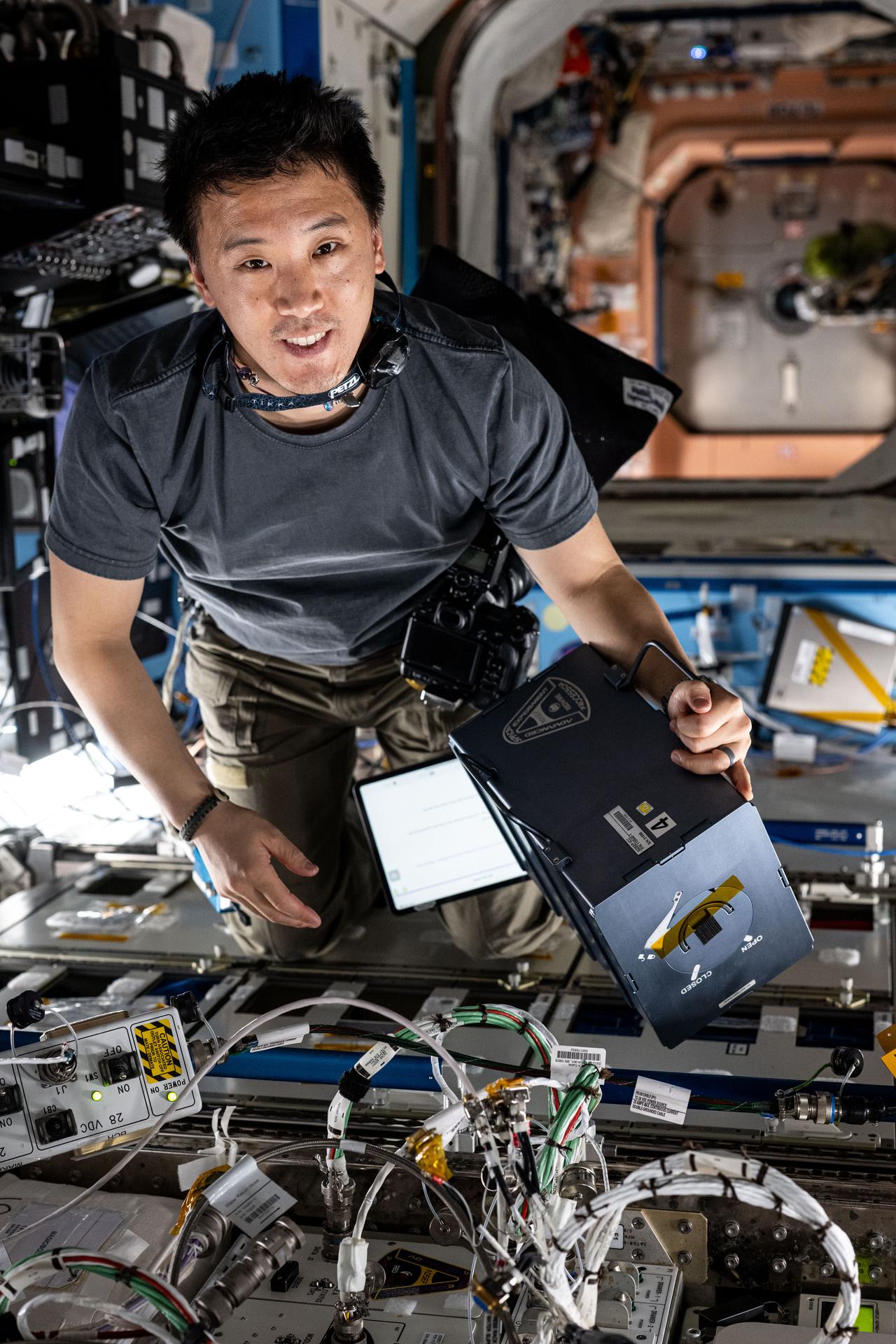
NASA astronaut Jonny Kim tests new hardware installed to an existing crystallization facility that enables increased production of crystals and other commercially relevant materials, like golden nanospheres. These tiny, spherical gold particles have optical and electronic applications, and are biocompatible, making them useful for medication delivery and diagnostics. As part of this experiment aboard the space station, Kim attempted to process larger, more uniform golden nanospheres than those produced on the ground.
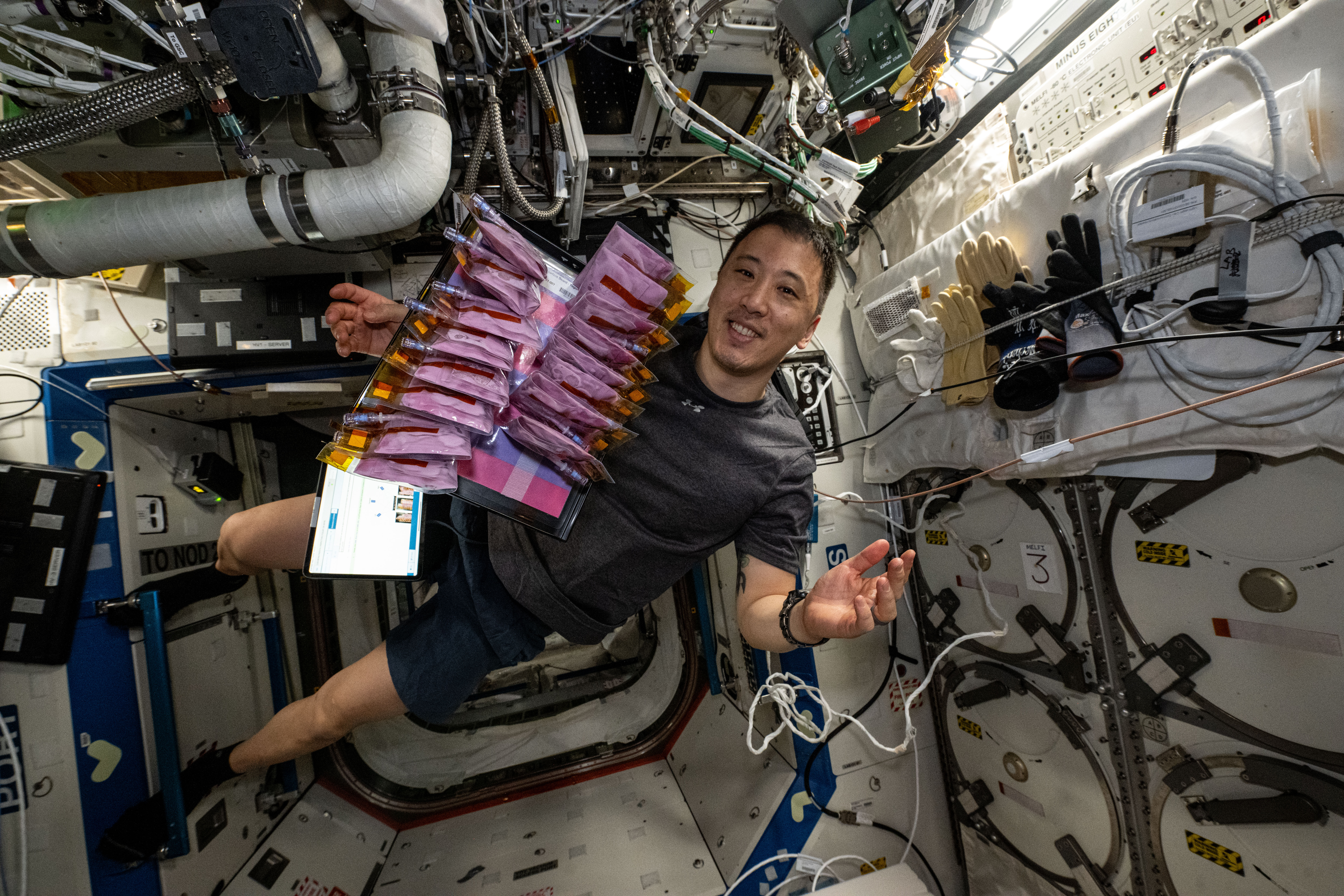
Some vitamins and nutrients in foods and supplements lose their potency during long-term storage, and insufficient intake of even a single nutrient can lead to diseases and other health issues. NASA astronaut Jonny Kim displays purple-pink production bags for an investigation aimed at producing nutrient-rich yogurt and kefir using bioengineered yeasts and probiotics. The unique color comes from a food-grade pH indicator that allows astronauts to visually monitor the fermentation process.
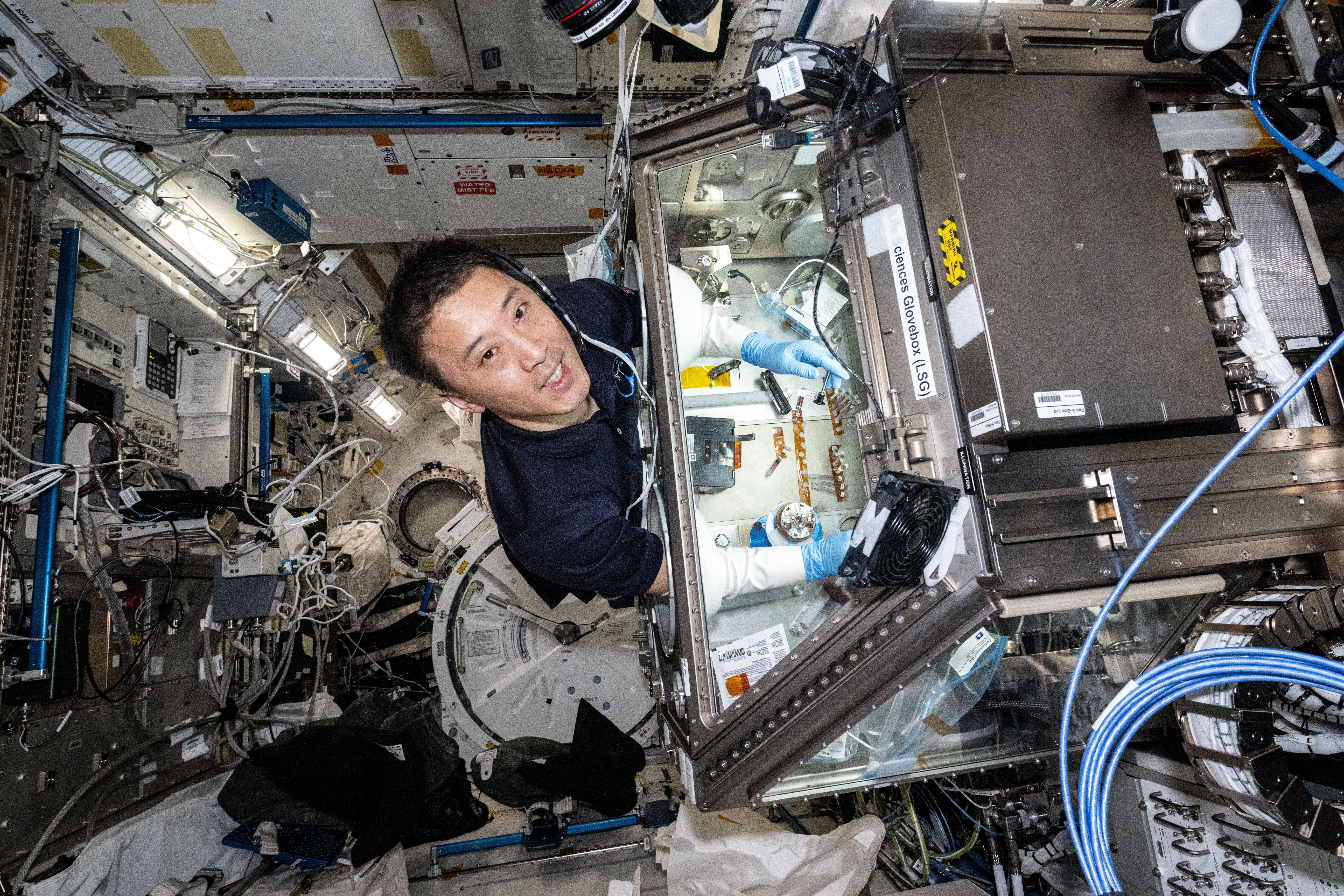
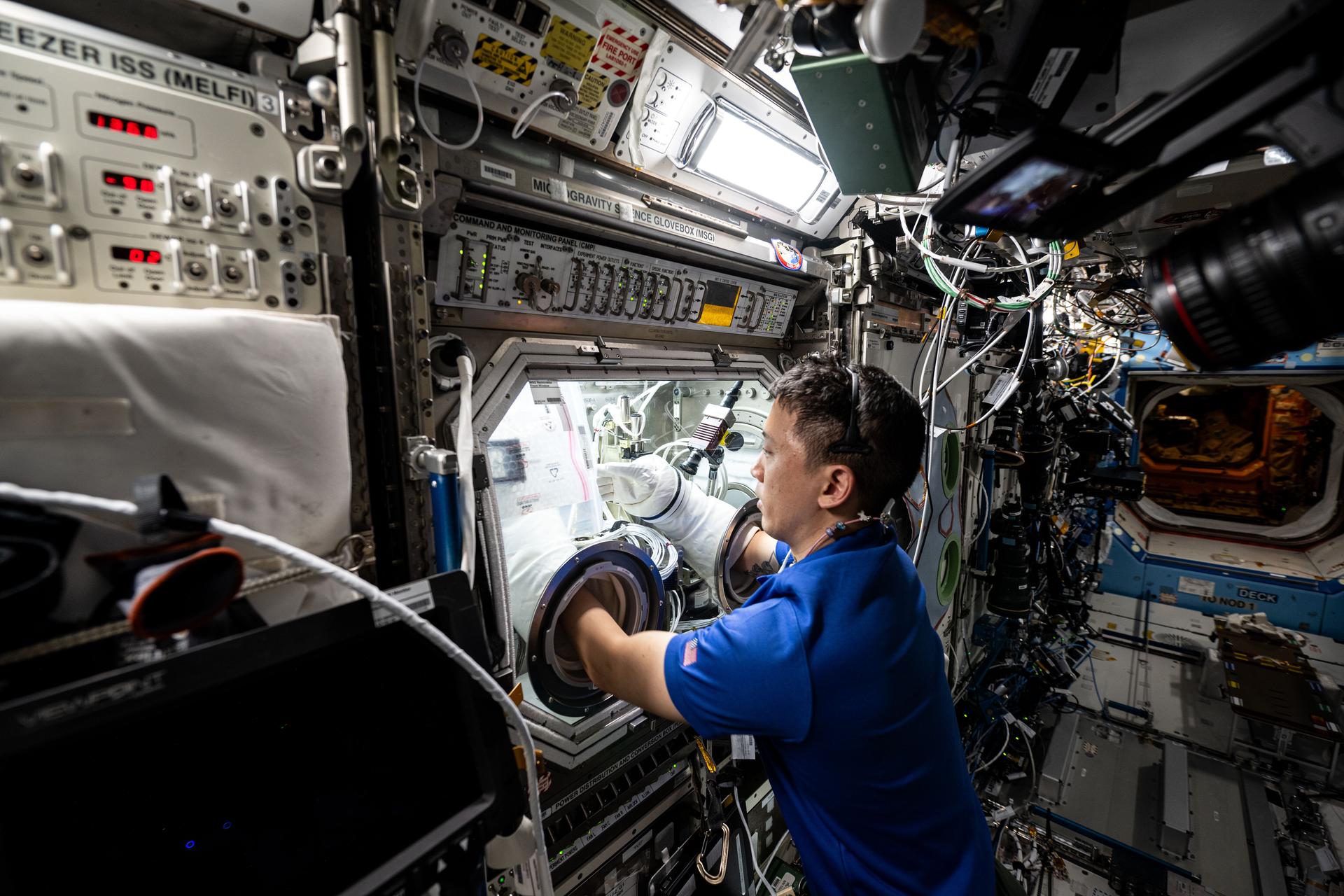
NASA astronaut Jonny Kim uses the Microgravity Science Glovebox to study how high-concentration protein fluids behave in microgravity. This study helps researchers develop more accurate models to predict the behavior of these complex fluids in various scenarios, which advances manufacturing processes in space and on Earth. It also can enable the development of next-generation medicines for treating cancers and other diseases.
On Sept. 28, 2025, NASA astronaut Jonny Kim photographed Hurricane Humberto from the International Space Station. Located at 250 miles above Earth, the orbiting laboratory’s unique orbit allows crew members to photograph the planet’s surface including hurricanes, dust storms, and fires. These images are used to document disasters and support first responders on the ground.
Preparations for Next Moonwalk Simulations Underway (and Underwater)
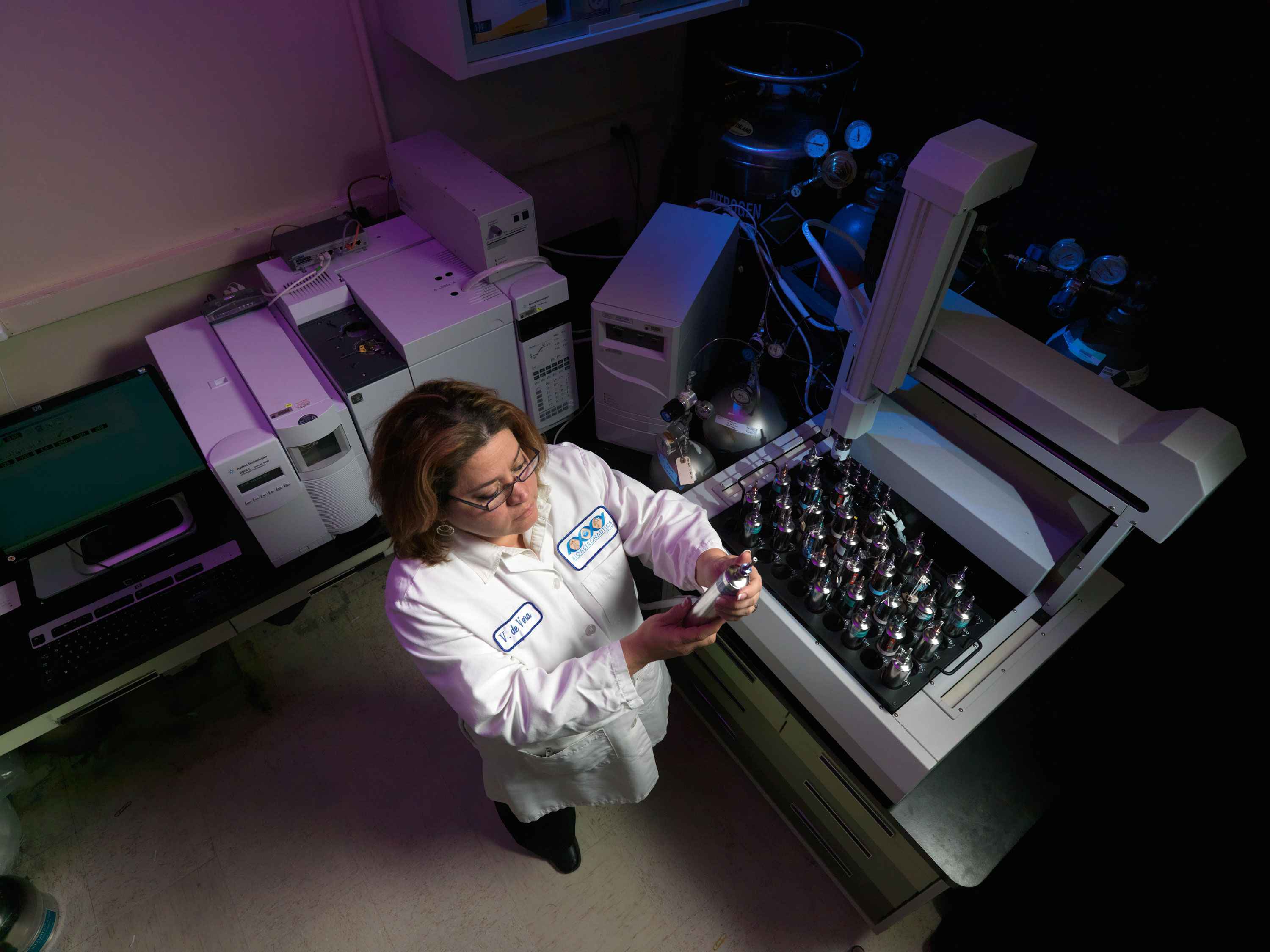
A space toxicologist at NASA JSC.
NASA
Hazardous Materials Summary Tables (HMSTs) are a compilation of the chemical, biological, and flammability hazards of materials on a given flight or mission. HMSTs are required by Safety for all Programs, including but not limited to ISS, Commercial Crew Program (CCP), Multi Purpose Crew Vehicle (MPCV), and Gateway. Johnson Space Center (JSC) toxicologists evaluate the toxic hazard level of all liquids, gases, particles, or gels flown on or to any manned U.S. spacecraft. The biosafety hazard level and flammability levels are assigned by JSC microbiologists and materials experts and are documented in an HMST and in a computerized in-flight version of the HMST called the HazMat (Hazardous Materials) database.
How To Obtain Toxicological Hazard Assessments
“Requirements for Submission of Data Needed for Toxicological Assessment of Chemical and Biologicals to be Flown on Manned Spacecraft”
JSC 27472 (PDF, 766KB) defines the terms “chemicals” and “biological materials” as applied to items being flown on or to any U.S. spacecraft. It explains who must submit information to the JSC toxicologists concerning the materials to be flown and specifies what information is needed. It provides schedules, formats, and contact information.
Additional US requirements for environmental control and life support (ECLS) assessments can be found in JSC 66869 (PDF, 698KB).
Data Submission
For all flights to ISS and all Artemis requests (Orion, Gateway, Human Lander System (HLS)), please submit data via the electronic hazardous materials summary table (eHMST) tool. If you do not have access to this tool, please submit a NAMS request for access to JSC – CMC External Tools. Please reference eHMST training for more information
NOTE: For experimental payloads/hardware planned for launch on a Russian vehicle, stowed and/or operated on the Russian Segment of ISS, or planned for return or disposal on a Russian vehicle, we strongly encourage payload providers to submit biological and chemical data to the Russian Institute for Biomedical Problems (moukhamedieva@imbp.ru OR barantseva@imbp.ru).
Hazard Assessments
Toxicological hazard assessments are conducted according to JSC 26895 – Guidelines for Assessing the Toxic Hazard of Spacecraft Chemicals and Test Materials. The resulting Toxicity Hazard Level (THL) in combination with the BioSafety Level (BSL) and Flammability Hazard Level (FHL) form the basis for the combined Hazard Response Level (HRL) used for labeling and operational response per flight rule B20-16.
Preparations for Next Moonwalk Simulations Underway (and Underwater)
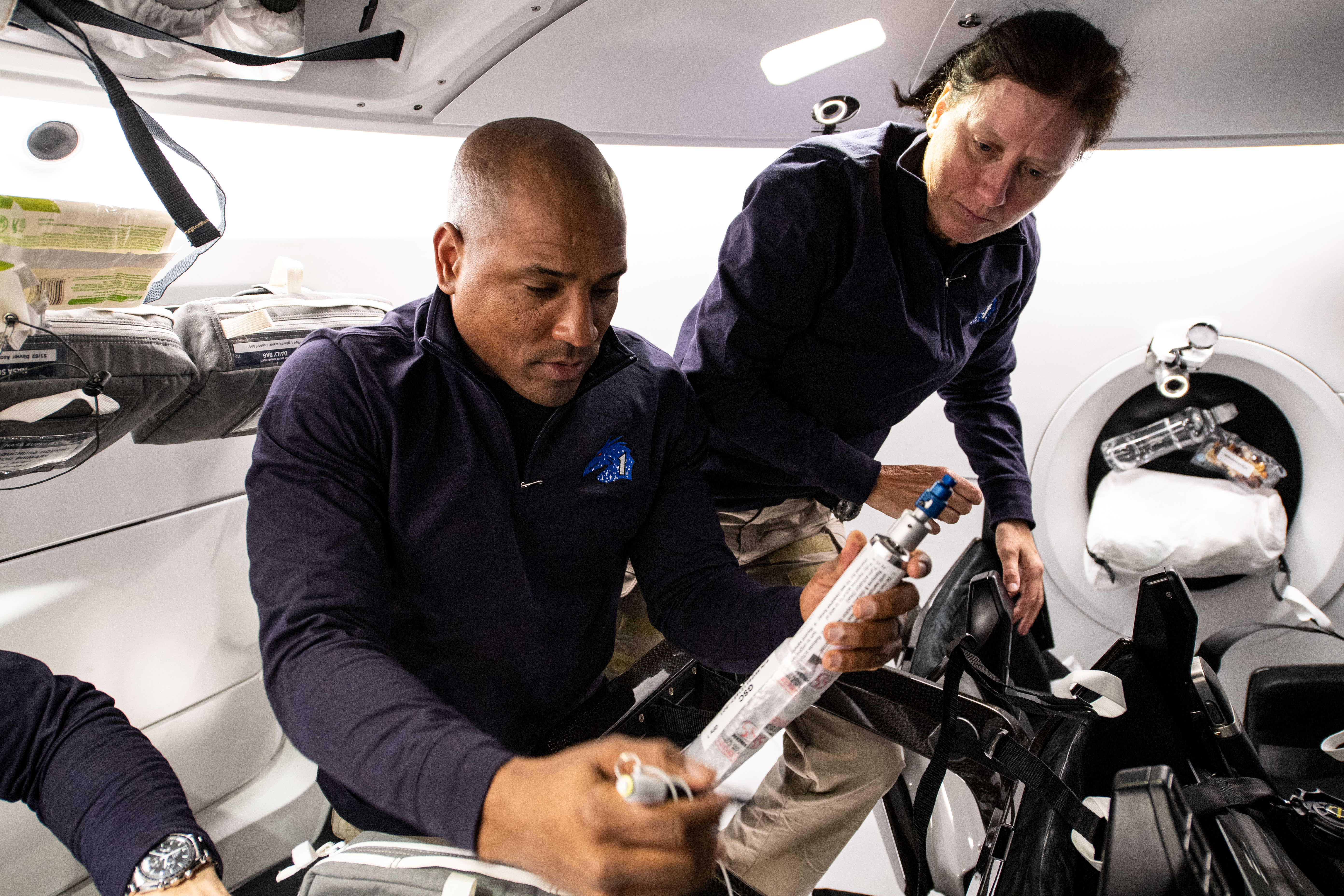
SpaceX Crew-1 Pilot Victor Glover and Mission Specialist Shannon Walker work with a Grab Sample Container (GSC) in the SpaceX Crew Dragon Resilience spacecraft while en route to the ISS.
NASA
Toxicology and Environmental Chemistry (TEC) monitors airborne contaminants in both spacecraft air and water. In-flight monitors are employed to provide real-time insight into the environmental conditions on ISS. Archival samples are collected and returned to Earth for full characterization of ISS air and water.
Real-time in-flight air analytical instruments include the Air Quality Monitors (AQM), carbon dioxide (CO2 monitors), and a compound specific analyzer for combustion products (CSA-CP). Real-time in-flight water monitoring capabilities include the colorimetric water quality monitoring kit (CWQMK) and the ISS total organic carbon analyzer (TOCA).
Post-flight analyses are performed on archival samples of spacecraft air and water obtained at specific times and locations during a mission. Air archival samples are collected using “grab sample containers” (GSC) and formaldehyde badges. The U.S. and Russian water recovery systems on the ISS process atmospheric moisture (U.S. and Russian systems) and urine distillate (U.S. system only) into clean, potable water for the crew to use. The Water Kit is utilized to collect archival samples of the potable water and are routinely returned to the ground to monitor the quality of the water produced by the systems. Samples of condensate and wastewater are also collected and returned to check for the presence of contaminants that could break through the water recovery systems.
Results of Post-Flight Analysis of In-Flight Air Samples (Most Recent First)
NASA has selected the University of Alabama at Birmingham to provide the necessary systems required to return temperature sensitive science payloads to Earth from the Moon.
The Lunar Freezer System contract is an indefinite-delivery/indefinite-quantity award with cost-plus-fixed-fee delivery orders. The contract begins Thursday, Dec. 4, with a 66-month base period along with two optional periods that could extend the award through June 3, 2033. The contract has a total estimated value of $37 million.
Under the contract, the awardee will be responsible for providing safe, reliable, and cost-effective hardware and software systems NASA needs to maintain temperature-critical science materials, including lunar geological samples, human research samples, and biological experimentation samples, as they travel aboard Artemis spacecraft to Earth from the lunar surface. The awarded contractor was selected after a thorough evaluation by NASA engineers of the proposals submitted. NASA’s source selection authority made the selection after reviewing the evaluation material based on the evaluation criteria contained in the request for proposals.
For information about NASA and other agency programs, visit:
NASA and industry partners will fly and operate a commercial robotic arm in low Earth orbit through the Fly Foundational Robots mission set to launch in late 2027. This mission aims to revolutionize in-space operations, a critical capability for sustainably living and working on other planets. By enabling this technology demonstration, NASA is fostering the in-space robotics industry to unlock valuable tools for future scientific discovery and exploration missions.
“Today it’s a robotic arm demonstration, but one day these same technologies could be assembling solar arrays, refueling satellites, constructing lunar habitats, or manufacturing products that benefit life on Earth,” said Bo Naasz, senior technical lead for In-space Servicing, Assembly, and Manufacturing (ISAM) in the Space Technology Mission Directorate at NASA Headquarters in Washington. “This is how we build a dominant space economy and sustained human presence on the Moon and Mars.”
Artist concept of the FFR Mission’s robotic system payload atop the Astro Digital spacecraft. The robotic arm, provided by Motiv Space Systems, will perform robotic demonstrations in orbit.
Motiv Space Systems
The Fly Foundational Robots (FFR) mission will leverage a robotic arm from small business Motiv Space Systems capable of dexterous manipulation, autonomous tool use, and walking across spacecraft structures in zero or partial gravity. This mission could enable ways to repair and refuel spacecraft, construct habitats and infrastructure in space, maintain life support systems on lunar and Martian surfaces, and serve as robotic assistants to astronauts during extended missions. Advancing robotic systems in space could also enhance our understanding of similar technologies on Earth across industries including construction, medicine, and transportation.
To demonstrate FFR’s commercial robotic arm in space, NASA’s Space Technology Mission Directorate is contracting with Astro Digital to provide a hosted orbital test through the agency’s Flight Opportunities program.
Guest roboticists will have the opportunity to contribute to the FFR mission, and participation will allow them to use Motiv’s robotic platform as a testbed and perform unique tasks. NASA will serve as the inaugural guest operator and is currently seeking other interested U.S. partners to participate.
The future of in-space robotics relies on testing robotic operations in space prior to launching more complex and extensive servicing and refueling missions. Through FFR, the demonstration of Motiv’s robotic arm operations in space will begin to push open the door to endless possibilities.
NASA’s Fly Foundational Robots demonstration is funded through the NASA Space Technology Mission Directorate’s ISAM portfolio and managed by NASA’s Goddard Space Flight Center in Greenbelt, Maryland. Motiv Space Systems of Pasadena, California, will supply the mission’s robotic arm system through a NASA Small Business Innovation Research Phase III award. Astro Digital of Littleton, Colorado, will flight test Motiv’s robotic payload through NASA’s Flight Opportunities program managed by NASA’s Armstrong Flight Research Center in Edwards, California.

 Login
Login