Normal view

There are new articles available, click to refresh the page.
Yesterday — 5 December 2025Main stream

NASA Selects 2 Instruments for Artemis IV Lunar Surface Science

4 December 2025 at 15:59

4 min read

NASA Selects 2 Instruments for Artemis IV Lunar Surface Science

NASA has selected two science instruments designed for astronauts to deploy on the surface of the Moon during the Artemis IV mission to the lunar south polar region. The instruments will improve our knowledge of the lunar environment to support NASA’s further exploration of the Moon and beyond to Mars. 

A visualization of the Moon’s South Pole region created with data from NASA’s Lunar Reconnaissance Orbiter, which has been surveying the Moon with seven instruments since 2009. 
NASA’s Scientific Visualization Studio/Ernie Wright

“The Apollo Era taught us that the further humanity is from Earth, the more dependent we are on science to protect and sustain human life on other planets,” said Nicky Fox, associate administrator, Science Mission Directorate at NASA Headquarters in Washington. “By deploying these two science instruments on the lunar surface, our proving ground, NASA is leading the world in the creation of humanity’s interplanetary survival guide to ensure the health and safety of our spacecraft and human explorers as we begin our epic journey back to the Moon and onward to Mars.”

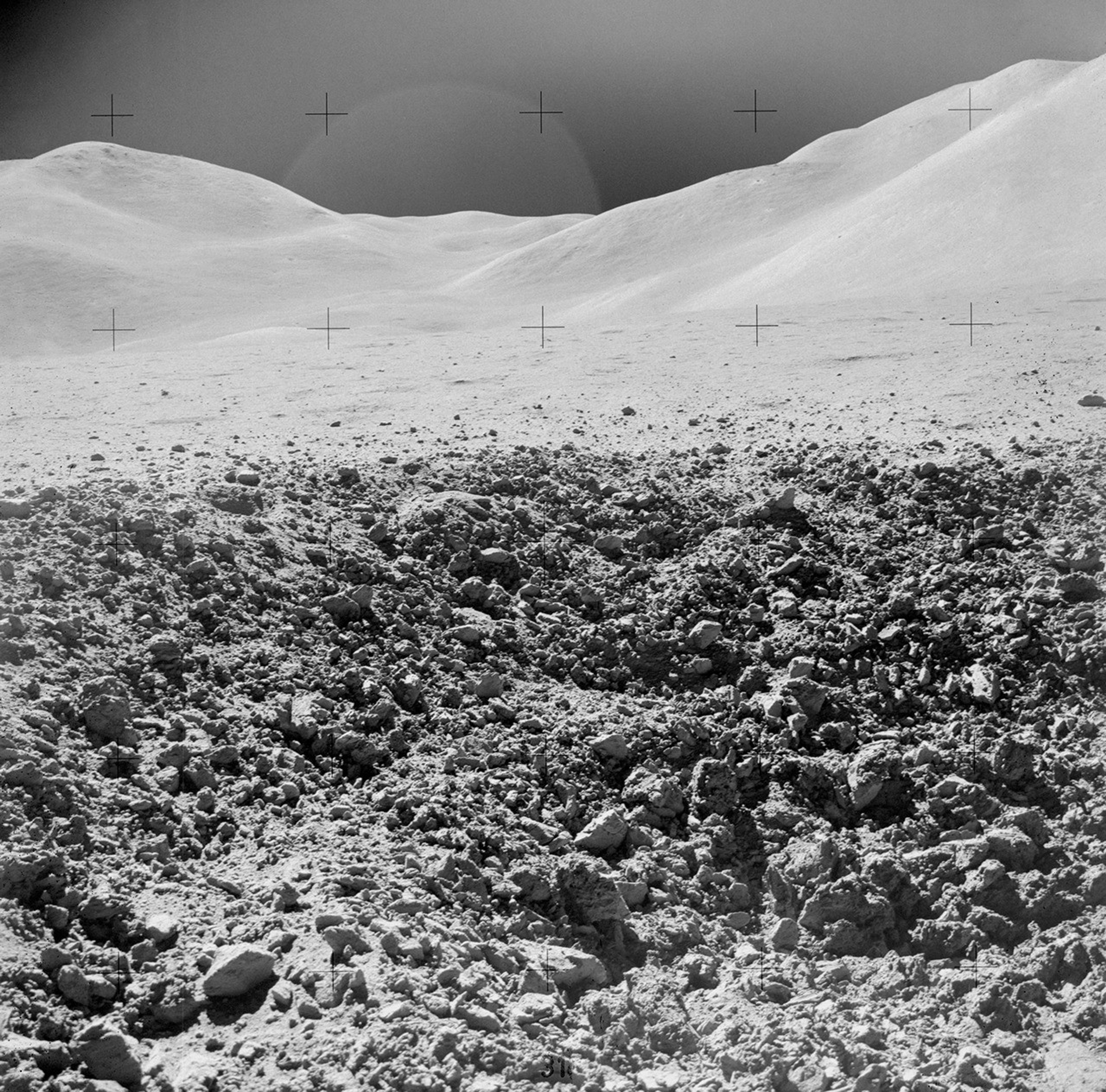
After his voyage to the Moon’s surface during Apollo 17, astronaut Gene Cernan acknowledged the challenge that lunar dust presents to long-term lunar exploration. Moon dust sticks to everything it touches and is very abrasive. The knowledge gained from the DUSTER (DUst and plaSma environmenT survEyoR) investigation will help mitigate hazards to human health and exploration. Consisting of a set of instruments mounted on a small autonomous rover, DUSTER will characterize dust and plasma around the landing site. These measurements will advance understanding of the Moon’s natural dust and plasma environment and how that environment responds to the human presence, including any disturbance during crew exploration activities and lander liftoff. The DUSTER instrument suite is led by Xu Wang of the University of Colorado Boulder. The contract is for $24.8 million over a period of three years. 

A model of the DUSTER instrument suite
A model of the DUSTER instrument suite consisting of the Electrostatic Dust Analyzer (EDA)—which will measure the charge, velocity, size, and flux of dust particles lofted from the lunar surface—and Relaxation SOunder and differentiaL VoltagE (RESOLVE)—which will characterize the average electron density above the lunar surface using plasma sounding. Both instruments will be housed on a Mobile Autonomous Prospecting Platform (MAPP) rover, which will be supplied by Lunar Outpost, a company based in Golden, Colorado, that develops and operates robotic systems for space exploration.
LASP/CU Boulder/Lunar Outpost

Data from the SPSS (South Pole Seismic Station) will enable scientists to characterize the lunar interior structure to better understand the geologic processes that affect planetary bodies. The seismometer will help determine the current rate at which the Moon is struck by meteorite impacts, monitor the real-time seismic environment and how it can affect operations for astronauts, and determine properties of the Moon’s deep interior. The crew will additionally perform an active-source experiment using a “thumper” that creates seismic energy to survey the shallow structure around the landing site. The SPSS instrument is led by Mark Panning of NASA’s Jet Propulsion Laboratory in Southern California. The award is for $25 million over a period of three years. 

An artist’s concept of SPSS (South Pole Seismic Station)
An artist’s concept of SPSS (South Pole Seismic Station) to be deployed by astronauts on the lunar surface.
NASA/JPL-Caltech

“These two scientific investigations will be emplaced by human explorers on the Moon to achieve science goals that have been identified as strategically important by both NASA and the larger scientific community”, said Joel Kearns, deputy associate administrator for exploration, Science Mission Directorate at NASA Headquarters. “We are excited to integrate these instrument teams into the Artemis IV Science Team.”

The two payloads were selected for further development to fly on Artemis IV; however, final manifesting decisions about the mission will be determined at a later date. 

Through Artemis, NASA will address high priority science questions, focusing on those that are best accomplished by on-site human explorers on and around the Moon and by using the unique attributes of the lunar environment, aided by robotic surface and orbiting systems. The Artemis missions will send astronauts to explore the Moon for scientific discovery, economic benefits, and build the foundation for the first crewed missions to Mars.

For more information on Artemis, visit:

https://www.nasa.gov/humans-in-space/artemis

Karen Fox / Molly Wasser
Headquarters, Washington
202-358-1600 
karen.c.fox@nasa.gov / molly.l.wasser@nasa.gov

Facebook logo
Instagram logo
Linkedin logo
Before yesterdayMain stream

Waxing Gibbous Moon

2 December 2025 at 12:30
The Moon is nearly full and a deep gray-brown color in this image. Below it is Earth’s blue atmosphere and and white clouds. This photo was taken from the International Space Station.
NASA

The waxing gibbous moon rises above Earth’s blue atmosphere in this photograph taken from the International Space Station on Oct. 3, 2025, as it orbited 263 miles above a cloudy Atlantic Ocean off the coast of Quebec, Canada.

In our entire solar system, the only object that shines with its own light is the Sun. That light always beams onto Earth and the Moon from the direction of the Sun, illuminating half of our planet in its orbit and reflecting off the surface of the Moon to create moonlight. Sometimes the entire face of the Moon glows brightly. Other times we see only a thin crescent of light. Sometimes the Moon seems to disappear. These shifts are called Moon phases. The waxing gibbous phase comes just before the full moon.

Learn more about our Moon.

Image credit: NASA

Lunar Challenge Winner Tests Technology in NASA Thermal Vacuum Chamber

By: Lee Mohon
26 September 2025 at 12:38

By Savannah Bullard

One year after winning second place in NASA’s Break the Ice Lunar Challenge, members of the small business Starpath visited NASA’s Marshall Space Flight Center in Huntsville, Alabama, as part of their prize opportunity to test their upgraded lunar regolith excavation and transportation rover in the center’s 20-foot thermal vacuum chamber.

The technology startup headquartered in Hawthorne, California, won second place overall at the Break the Ice Lunar Challenge’s live demonstration and finale in June 2024. This competition, one of NASA’s Centennial Challenges, tasked competitors to design, build, and demonstrate robotic technologies that could excavate and transport the icy, rocky dirt – otherwise known as regolith – found on the Moon.

A person wearing glasses and a dark polo shirt stands indoors holding an open laptop in one hand. In front of him is a piece of large mechanical equipment resembling a planetary surface rover, with white structural arms and panels covered in gold foil. Behind him, another person is carrying a large, flat, rectangular object. The background shows industrial equipment and a large American flag hanging on the wall.
Starpath team members (foreground: Josh Kavilaveettil, mechanical engineer; background: Aakash Ramachandran, lead rover engineer) put their upgraded lunar regolith rover to the test inside NASA Marshall’s 20-foot thermal vacuum chamber – a prize opportunity marking one year since their 2nd place win in the Break the Ice Lunar Challenge.
NASA/Joe Kuner

“NASA’s Centennial Challenges are a great way to discover new, innovative technologies, including those for future use on the Moon and even Mars,” said Naveen Vetcha, Break the Ice Lunar Challenge manager at NASA Marshall. “Working with winners after the challenge concludes is a perfect example of how we can use NASA facilities to continue advancing these technologies to generate valuable solutions for the agency and industry.”

Starpath built a four-wheeled rover capable of excavating, collecting, and hauling material under extremely harsh environmental conditions that simulate the lunar South Pole. On the rover, a dual drum barrel can extend from the body of the robot – mimicking a movement similar to a crab’s claws – and scrape into rough, hard regolith to excavate material quickly without compromising finite battery life.

Before Starpath made the 2,000-mile drive from California to Alabama this summer, NASA Marshall’s Engineering Test Facility staff prepared a concrete slab outfitted with rocky terrain to act as a testbed for the robot to interact inside the chamber. The V-20 Thermal Vacuum Chamber, located at Marshall’s Environmental Test Facility, can simulate harsh environments by manipulating the chamber’s vacuum, temperature, humidity, and pressure effects. Starpath staff spent about three days at NASA Marshall in August, testing their robot with excavation and mobility trials while collecting data on its performance.

The Starpath team is honing the development of its technology for missions located at the permanently shadowed regions of the lunar South Pole. As a future landing site for NASA’s Artemis missions, which will send astronauts to the Moon and prepare to send the first Americans to Mars, the South Pole region of the Moon is known to contain ice within its regolith. This was the leading inspiration behind the development of the Break the Ice Lunar Challenge, as NASA will require robust technologies that can excavate and transport lunar ice for extraction, purification, and use as drinking water or rocket fuel.

A close-up view of a robotic lunar rover with golden metal treads and a white body, featuring exposed wiring and gold thermal insulation panels. The rover is indoors on a smooth concrete floor. Behind the rover, two individuals wearing dark polo shirts and jeans are standing, one holding a laptop and the other with a hand near his face. An American flag is partially visible in the background. The focus is on the rover, with the people and background slightly out of focus.
Starpath, one of three winning teams in NASA’s Break the Ice Lunar Challenge, was invited by NASA Centennial Challenges to test their lunar excavation and traversal rover at the agency’s thermal vacuum chamber facility at NASA’s Marshall Space Flight Center in Huntsville, Alabama. The invitation was an added perk to the team’s successful participation in Break the Ice, which took place from 2020 to 2024. A space hardware startup from Hawthorne, California, Starpath won a cumulative $838,461 across three levels of Phase 2 before winning second place overall at the challenge’s live demonstration and finale in June 2024. In this image, two members of the Starpath team remotely operate the rover and run data in preparation for its entrance to the V20 Thermal Vacuum Chamber.
NASA/Joe Kuner
A white and gold lunar rover prototype is suspended mid-air by heavy-duty straps and chains attached to a ceiling-mounted crane system inside a clean, industrial facility. The rover, featuring gold-colored metal treads and white body panels with reflective gold thermal insulation, is being carefully guided by two workers. One man stands on a rolling blue metal staircase, using a pole to stabilize the rover. Another worker observes nearby on an elevated platform. The background includes a large thermal vacuum chamber. The setting is well-lit with overhead fluorescent lights, and parts of an American flag are visible through transparent plastic curtains framing the entrance of the thermal vacuum chamber.
Starpath, one of three winning teams in NASA’s Break the Ice Lunar Challenge, was invited by NASA Centennial Challenges to test their lunar excavation and traversal rover at the agency’s thermal vacuum chamber facility at NASA’s Marshall Space Flight Center in Huntsville, Alabama. The invitation was an added perk to the team’s successful participation in Break the Ice, which took place from 2020 to 2024. A space hardware startup from Hawthorne, California, Starpath won a cumulative $838,461 across three levels of Phase 2 before winning second place overall at the challenge’s live demonstration and finale in June 2024. In this image, employees from NASA Marshall’s Environmental Test Facility work with the Starpath team to carefully maneuver the rover onto a platform that will slide the rover into the chamber.
NASA/Joe Kuner
A technician wearing a black hard hat and gloves kneels on an elevated metal platform, carefully positioning a large robotic lunar rover into place. The rover has gold-colored wheels with a complex tread design and is suspended by heavy-duty chains and straps attached to a lifting rig. Another individual in the foreground watches the procedure closely. The scene takes place inside an industrial testing facility with metal scaffolding, safety rails, and visible structural supports.
Starpath, one of three winning teams in NASA’s Break the Ice Lunar Challenge, was invited by NASA Centennial Challenges to test their lunar excavation and traversal rover at the agency’s thermal vacuum chamber facility at NASA’s Marshall Space Flight Center in Huntsville, Alabama. The invitation was an added perk to the team’s successful participation in Break the Ice, which took place from 2020 to 2024. A space hardware startup from Hawthorne, California, Starpath won a cumulative $838,461 across three levels of Phase 2 before winning second place overall at the challenge’s live demonstration and finale in June 2024. In this image, employees from NASA Marshall’s Environmental Test Facility situate the rover over the concrete slab that it will operate on before removing the suspension straps that lifted it onto the platform.
NASA/Joe Kuner
Two people wearing black hard hats stand on an elevated metal platform with yellow guardrails inside a large industrial building. The platform holds a concrete slab and a large lunar rover, featuring gold-colored metal treads and white body panels with reflective gold thermal insulation. Behind the people is a large vacuum chamber with an open door, showing a dark interior lined with metal panels and hooks. The background includes ladders, railings, and metal structures.
Starpath, one of three winning teams in NASA’s Break the Ice Lunar Challenge, was invited by NASA Centennial Challenges to test their lunar excavation and traversal rover at the agency’s thermal vacuum chamber facility at NASA’s Marshall Space Flight Center in Huntsville, Alabama. The invitation was an added perk to the team’s successful participation in Break the Ice, which took place from 2020 to 2024. A space hardware startup from Hawthorne, California, Starpath won a cumulative $838,461 across three levels of Phase 2 before winning second place overall at the challenge’s live demonstration and finale in June 2024. In this image, the rover finally freely rests on its concrete slab at the end of the platform. The large metal structure will slide into the chamber, bringing the rover and concrete slab with it.
NASA/Joe Kuner
Three people wearing hard hats stand on a grated metal walkway facing a large circular vacuum chamber with its door open. They are working near a metal platform inside the chamber. The scene includes yellow guardrails sidelining the walkway, overhead lights reflecting on white panels, and cables and metal structures inside the chamber. The vacuum chamber’s door features the NASA “meatball” insignia next to the words “V20 Thermal Vacuum Chamber Environmental Test Facility Huntsville, AL.”
Starpath, one of three winning teams in NASA’s Break the Ice Lunar Challenge, was invited by NASA Centennial Challenges to test their lunar excavation and traversal rover at the agency’s thermal vacuum chamber facility at NASA’s Marshall Space Flight Center in Huntsville, Alabama. The invitation was an added perk to the team’s successful participation in Break the Ice, which took place from 2020 to 2024. A space hardware startup from Hawthorne, California, Starpath won a cumulative $838,461 across three levels of Phase 2 before winning second place overall at the challenge’s live demonstration and finale in June 2024. In this image, NASA Environmental Test Facility employees work with members from the Starpath team to push the sliding platform into the thermal vacuum chamber, with the heavy rover and concrete slab in tow.
NASA/Joe Kuner
Two people wearing dark shirts stand on a metal platform inside a large vacuum chamber, with bright lights mounted nearby. They are next to a large lunar rover, featuring gold-colored metal treads and white body panels with reflective gold thermal insulation. The platform has metal railings, cables running along its base, and a step ladder leading down to a grated walkway.
Starpath, one of three winning teams in NASA’s Break the Ice Lunar Challenge, was invited by NASA Centennial Challenges to test their lunar excavation and traversal rover at the agency’s thermal vacuum chamber facility at NASA’s Marshall Space Flight Center in Huntsville, Alabama. The invitation was an added perk to the team’s successful participation in Break the Ice, which took place from 2020 to 2024. A space hardware startup from Hawthorne, California, Starpath won a cumulative $838,461 across three levels of Phase 2 before winning second place overall at the challenge’s live demonstration and finale in June 2024. In this image, the large concrete platform is fully slid into the vacuum chamber, and members from the Starpath team discuss what final preparations need to be made before the chamber is closed.
NASA/Joe Kuner
A person works on a rugged robotic vehicle inside a dimly lit chamber. The robot features gold metallic wheels with deep tread patterns, exposed gears, and motors, and sits atop a concrete slab. The workspace is cluttered with cables and equipment, and a bright overhead light illuminates the area. Sand and rocks scattered on the floor indicate a testing environment simulating planetary surfaces.
Starpath, one of three winning teams in NASA’s Break the Ice Lunar Challenge, was invited by NASA Centennial Challenges to test their lunar excavation and traversal rover at the agency’s thermal vacuum chamber facility at NASA’s Marshall Space Flight Center in Huntsville, Alabama. The invitation was an added perk to the team’s successful participation in Break the Ice, which took place from 2020 to 2024. A space hardware startup from Hawthorne, California, Starpath won a cumulative $838,461 across three levels of Phase 2 before winning second place overall at the challenge’s live demonstration and finale in June 2024. In this image, the rover sits on a concrete slab that will be used to mimic the rugged lunar surface. The slab features a sandy, rocky terrain, and lamps within the chamber will turn on and off to simulate sunlight.
NASA/Joe Kuner
A person kneels beside a large, metallic rover with a golden finish, inspecting it. The robot, whose large golden wheels can be seen just out of focus, is connected to multiple cables as it prepares for testing. The individual wears a black polo shirt, jeans, and tan work boots. The setting is a thermal vacuum chamber with a dark wall and visible wiring, and a concrete floor.
Starpath, one of three winning teams in NASA’s Break the Ice Lunar Challenge, was invited by NASA Centennial Challenges to test their lunar excavation and traversal rover at the agency’s thermal vacuum chamber facility at NASA’s Marshall Space Flight Center in Huntsville, Alabama. The invitation was an added perk to the team’s successful participation in Break the Ice, which took place from 2020 to 2024. A space hardware startup from Hawthorne, California, Starpath won a cumulative $838,461 across three levels of Phase 2 before winning second place overall at the challenge’s live demonstration and finale in June 2024. In this image, Starpath mechanical engineer Josh Kavilaveettil monitors a component of the rover, attached to wires, in preparation for testing.
NASA/Joe Kuner
A large cylindrical chamber labeled "V20 Thermal Vacuum Chamber" with the NASA “meatball” insignia next to it is shown in an indoor testing facility. Inside the chamber, a robotic lunar rover prototype can be seen sitting atop a concrete slab on a sliding platform. The robot features golden metal treads on its four large wheels and a white body, surrounded by cables and structural supports.
Starpath, one of three winning teams in NASA’s Break the Ice Lunar Challenge, was invited by NASA Centennial Challenges to test their lunar excavation and traversal rover at the agency’s thermal vacuum chamber facility at NASA’s Marshall Space Flight Center in Huntsville, Alabama. The invitation was an added perk to the team’s successful participation in Break the Ice, which took place from 2020 to 2024. A space hardware startup from Hawthorne, California, Starpath won a cumulative $838,461 across three levels of Phase 2 before winning second place overall at the challenge’s live demonstration and finale in June 2024. In this image, the rover sits atop its concrete slab at the mouth of the thermal vacuum chamber, ready to be closed in and commence testing.
NASA/Joe Kuner

NASA’s Break the Ice Lunar Challenge was a NASA Centennial Challenge that ran from 2020 to 2024. The challenge was led by the agency’s Marshall Space Flight Center with support from NASA’s Kennedy Space Center in Florida. Centennial Challenges are part of the Prizes, Challenges, and Crowdsourcing program under NASA’s Space Technology Mission Directorate.

For more information about the challenge and its conclusion, visit:

nasa.gov/winit

💾

One year after winning second place in NASA’s Break the Ice Lunar Challenge, members of the small business Starpath visited NASA’s Marshall Space Flight Cent...
❌
❌