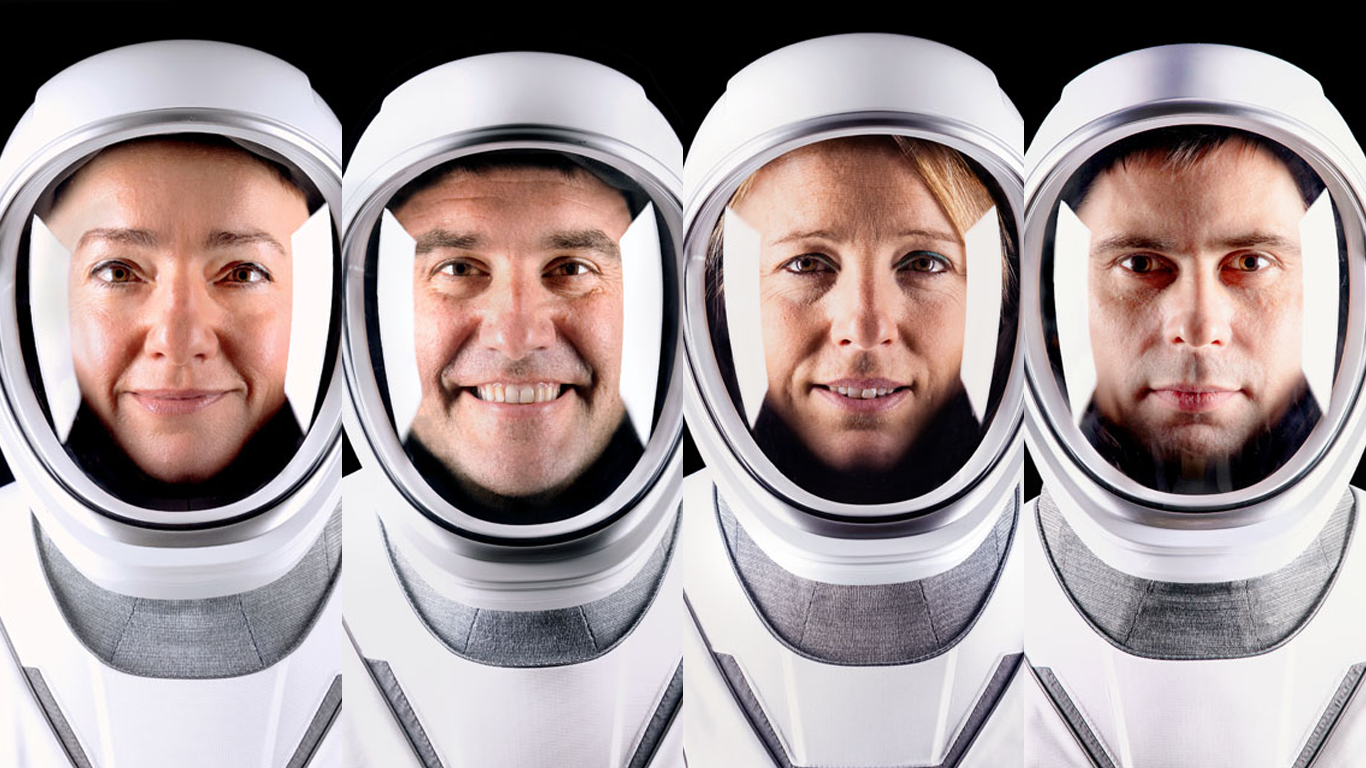
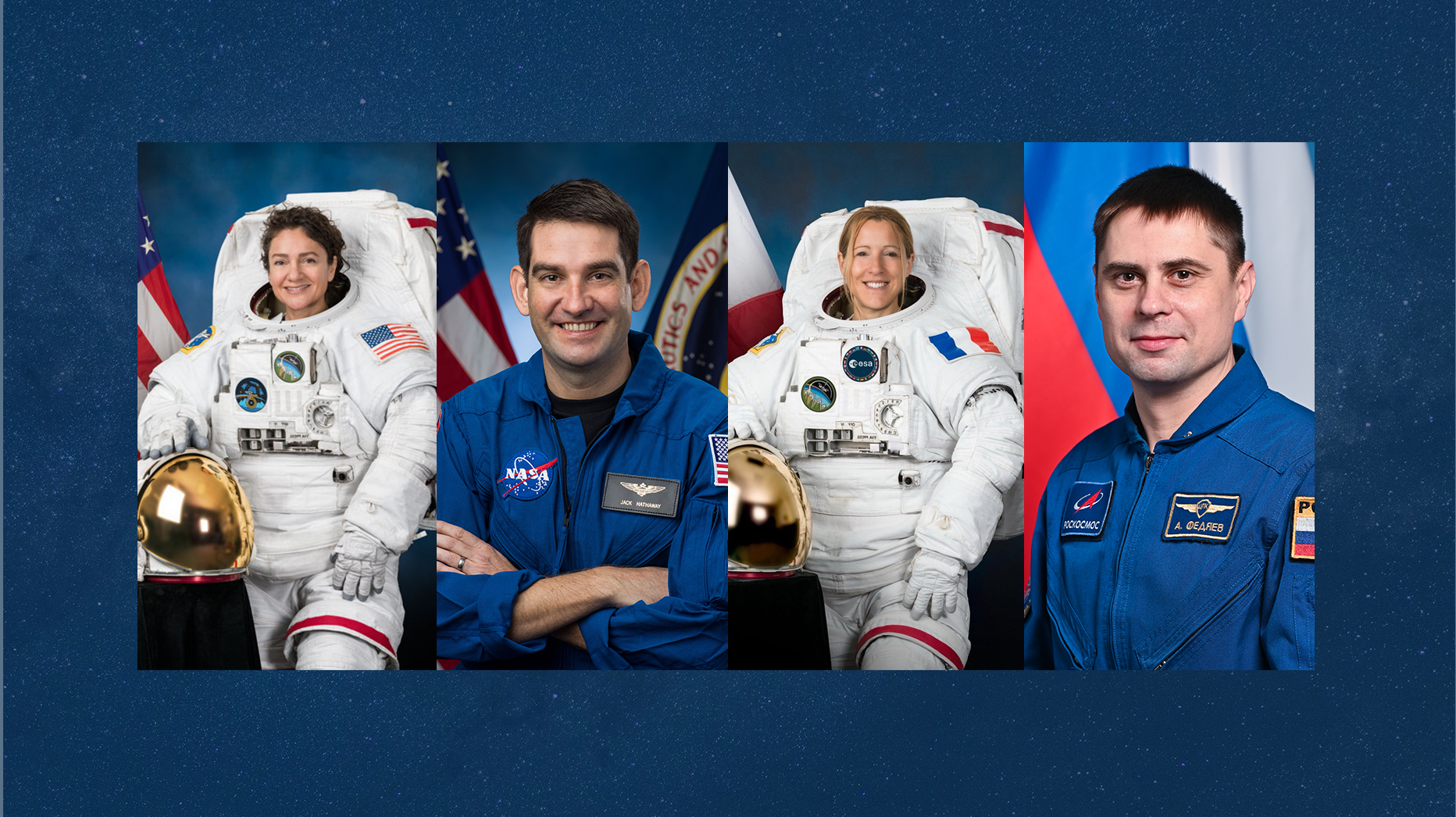
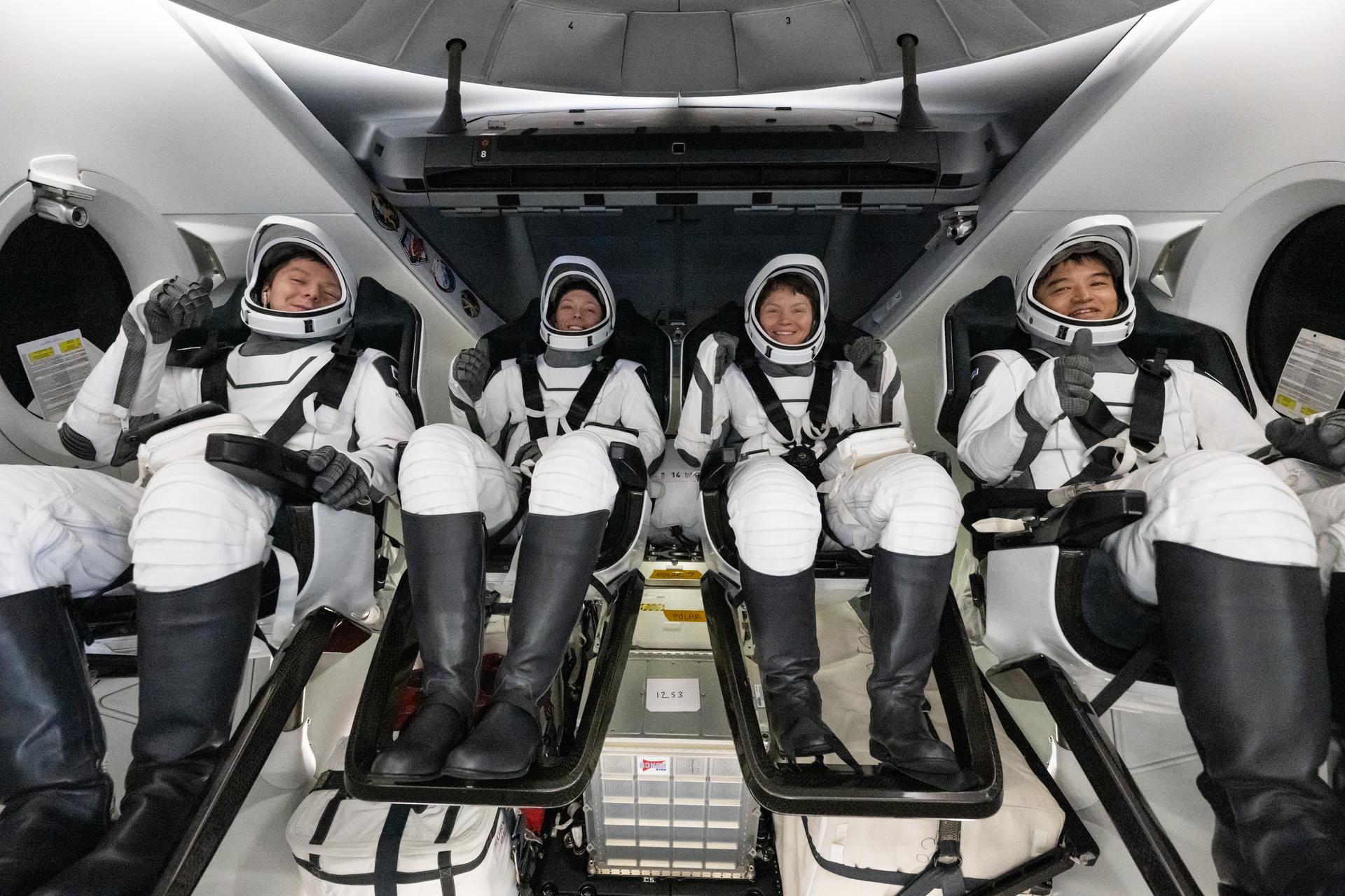
NASA’s SpaceX Crew-12 crew, from left to right, is NASA astronauts Jessica Meir and Jack Hathaway, ESA (European Space Agency) astronaut Sophie Adenot, and Roscosmos cosmonaut Andrey Fedyaev.
Credit: SpaceX
NASA and its partners will discuss the upcoming crew rotation to the International Space Station during a pair of news conferences on Friday, Jan. 30, from the agency’s Johnson Space Center in Houston.
At 11 a.m. EST, mission leadership will discuss final launch and mission preparations in a news conference that will stream on the agency’s YouTube channel.
Next, the crew of NASA’s SpaceX Crew-12 mission will participate in a virtual news conference from NASA Johnson crew quarters at 1 p.m., also on the agency’s YouTube channel. Individual streams for each of the events will be available on that page. This is the final media opportunity with Crew-12 before they travel to NASA’s Kennedy Space Center in Florida for launch.
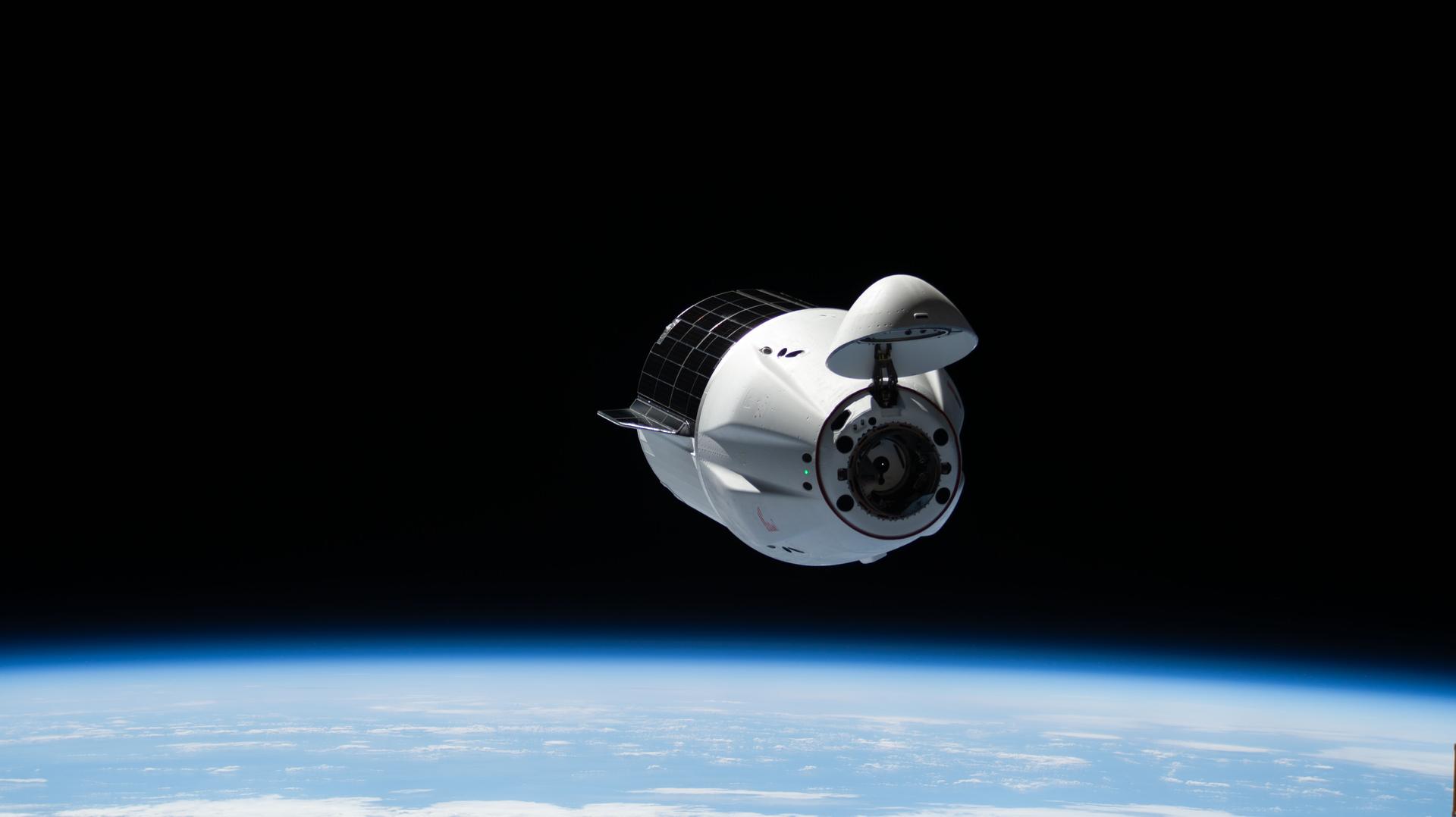
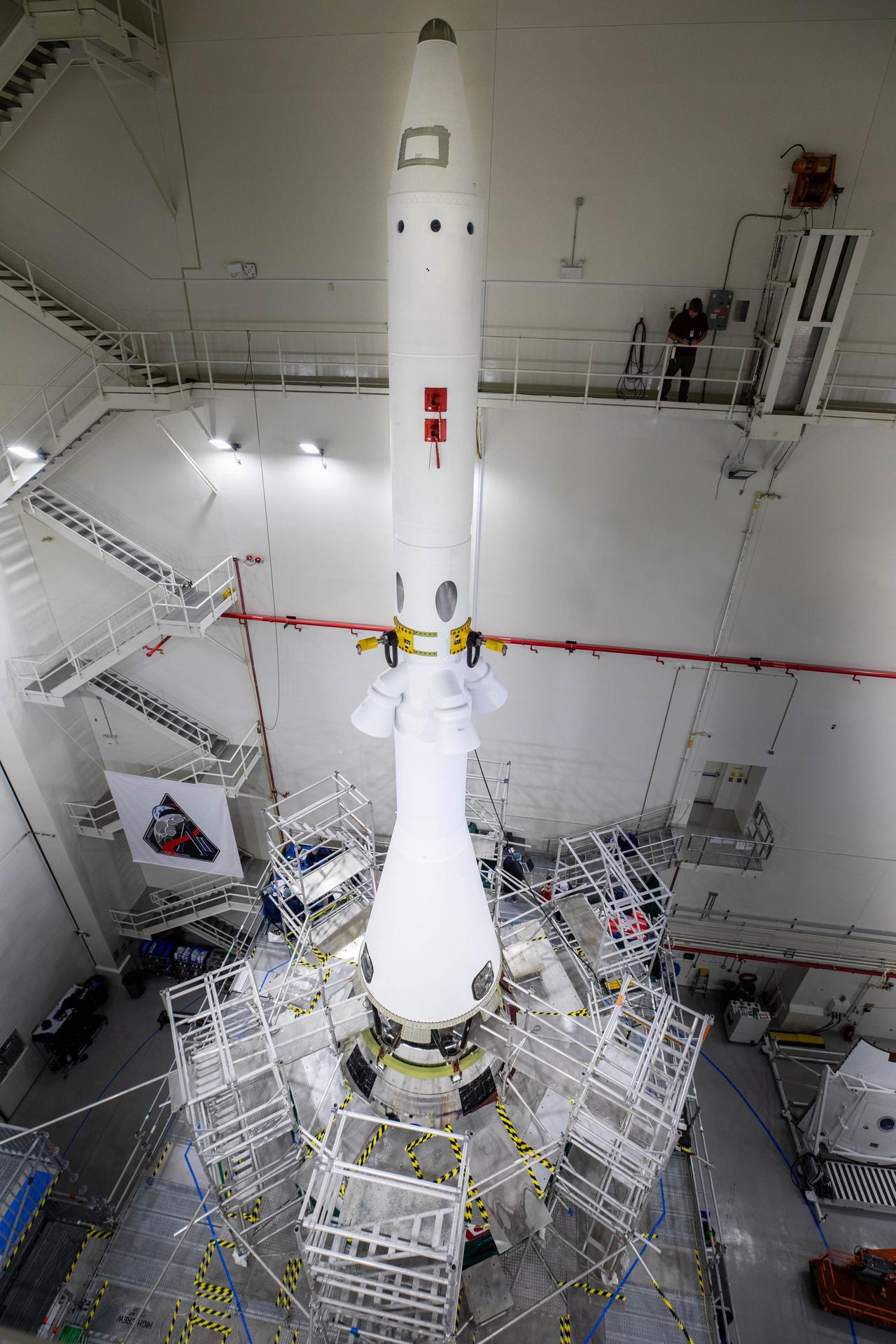
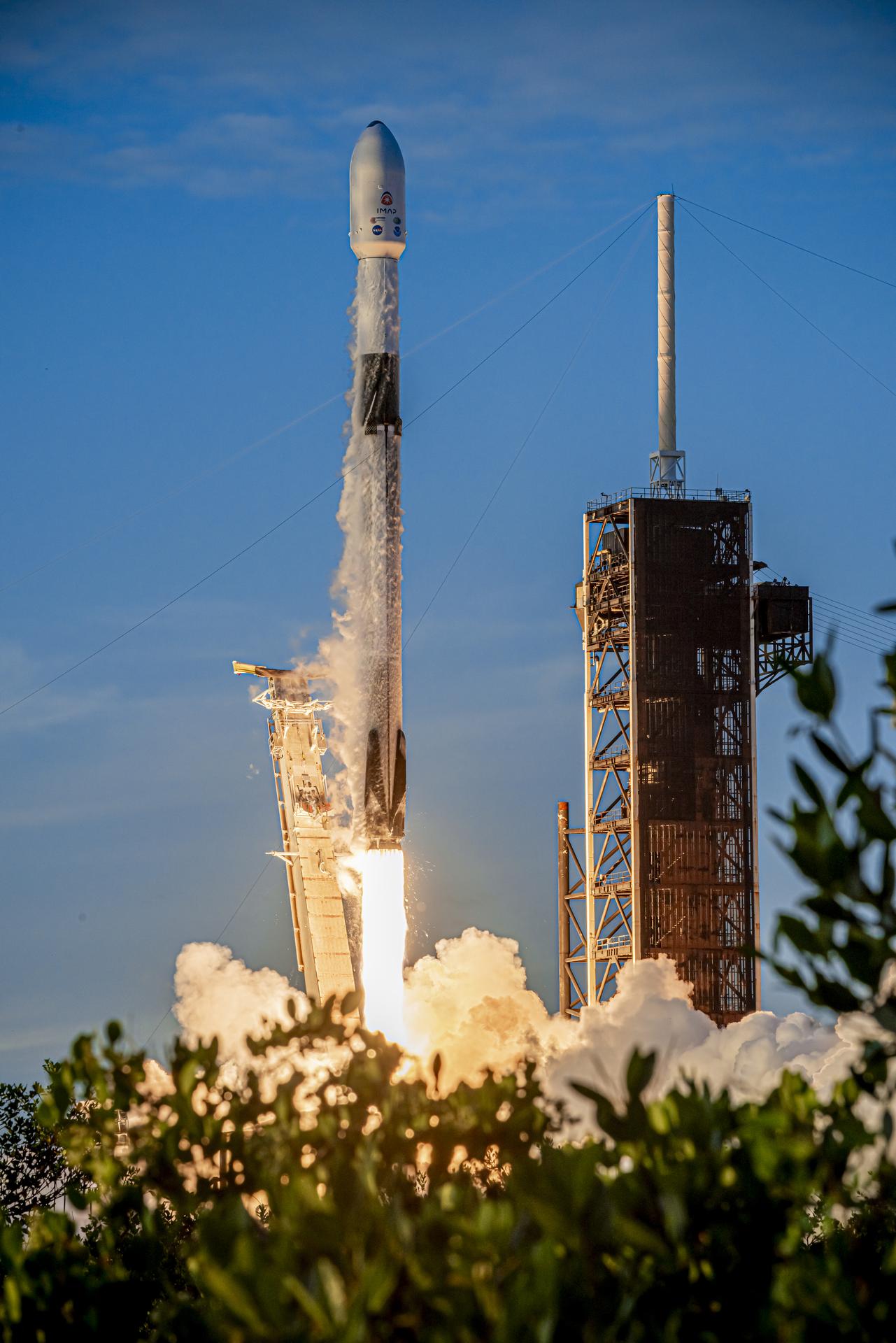
Crew-12 will carry NASA astronauts Jessica Meir and Jack Hathaway, ESA (European Space Agency) astronaut Sophie Adenot, and Roscosmos cosmonaut Andrey Fedyaev to the orbiting laboratory. The crew will launch aboard a SpaceX Dragon spacecraft on the company’s Falcon 9 rocket from Space Launch Complex 40 at Cape Canaveral Space Force Station in Florida. The agency is working with SpaceX and its international partners to review options to advance the launch of Crew-12 from its original target date of Sunday, Feb. 15.
United States-based media interested in attending in person must contact the NASA Johnson newsroom no later than 5 p.m. CST on Thursday, Jan. 29, at 281-483-5111 or jsccommu@mail.nasa.gov.
Media wishing to join the news conferences by phone must contact the Johnson newsroom by 9:45 a.m. on the day of the event. A copy of NASA’s media accreditation policy is available online.
Briefing participants are as follows (all times Eastern and subject to change based on real-time operations):
11 a.m.: Mission Overview News Conference
Ken Bowersox, associate administrator, NASA’s Space Operations Mission Directorate
Steve Stich, manager, Commercial Crew Program, NASA Kennedy
Dana Weigel, manager, International Space Station Program, NASA Johnson
Andreas Mogensen, Human Exploration Group Leader, ESA
This will be the second flight to the space station for Meir, who was selected as a NASA astronaut in 2013. The Caribou, Maine, native earned a bachelor’s degree in biology from Brown University, a master’s degree in space studies from the International Space University, and a doctorate in marine biology from Scripps Institution of Oceanography in San Diego. On her first spaceflight, Meir spent 205 days as a flight engineer during Expedition 61/62, and she completed the first three all-woman spacewalks with fellow NASA astronaut Christina Koch, totaling 21 hours and 44 minutes outside of the station. Since then, she has served in various roles, including assistant to the chief astronaut for commercial crew (SpaceX), deputy for the Flight Integration Division, and assistant to the chief astronaut for the human landing system.
A commander in the United States Navy, Hathaway was selected as part of the 2021 astronaut candidate class. This will be Hathaway’s first spaceflight. The South Windsor, Connecticut, native holds a bachelor’s degree in physics and history from the U.S. Naval Academy and master’s degrees in flight dynamics from Cranfield University and national security and strategic studies from the U.S. Naval War College, respectively. Hathaway also is a graduate of the Empire Test Pilot’s School, Fixed Wing Class 70 in 2011. At the time of his selection, Hathaway was deployed aboard the USS Truman, serving as Strike Fighter Squadron 81’s prospective executive officer. He has accumulated more than 2,500 flight hours in 30 different aircraft, including more than 500 carrier arrested landings and 39 combat missions.
The Crew-12 mission will be Adenot’s first spaceflight. Before her selection as an ESA astronaut in 2022, Adenot earned a degree in engineering from ISAE-SUPAERO in Toulouse, France, specializing in spacecraft and aircraft flight dynamics. She also earned a master’s degree in human factors engineering at Massachusetts Institute of Technology in Cambridge. After earning her master’s degree, she became a helicopter cockpit design engineer at Airbus Helicopters and later served as a search and rescue pilot at Cazaux Air Base from 2008 to 2012. She then joined the High Authority Transport Squadron in Villacoublay, France, and served as a formation flight leader and mission captain from 2012 to 2017. Between 2019 and 2022, Adenot worked as a helicopter experimental test pilot in Cazaux Flight Test Center with DGA (Direction Générale de l’Armement – the French Defence Procurement Agency). She has logged more than 3,000 hours flying 22 different helicopters.
This will be Fedyaev’s second long-duration stay aboard the orbiting laboratory. He graduated from the Krasnodar Military Aviation Institute in 2004, specializing in aircraft operations and air traffic organization, and earned qualifications as a pilot engineer. Prior to his selection as a cosmonaut, he served as deputy commander of an Ilyushin-38 aircraft unit in the Kamchatka Region, logging more than 600 flight hours and achieving the rank of second-class military pilot. Fedyaev was selected for the Gagarin Research and Test Cosmonaut Training Center Cosmonaut Corps in 2012 and has served as a test cosmonaut since 2014. In 2023, he flew to the space station as a mission specialist during NASA’s SpaceX Crew-6 mission, spending 186 days in orbit, as an Expedition 69 flight engineer. For his achievements, Fedyaev was awarded the title Hero of the Russian Federation and received the Yuri Gagarin Medal.
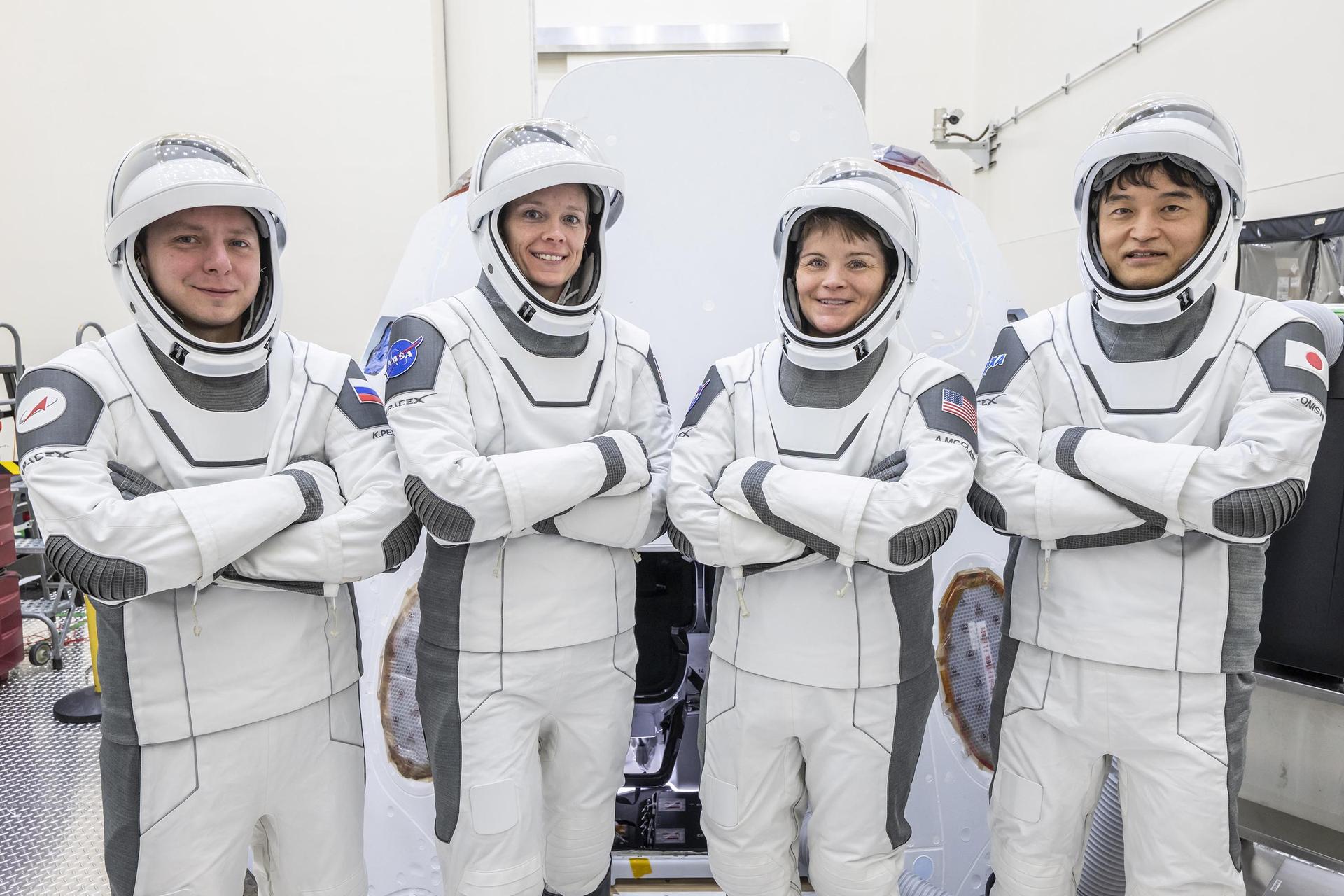
Official crew portrait for NASA’s SpaceX Crew-10 mission with NASA astronauts Anne McClain and Nichole Ayers, JAXA (Japan Aerospace Exploration Agency) astronaut Takuya Onishi, and Roscosmos cosmonaut Kirill Peskov. Ayers and Onishi will discuss their recent mission to the International Space Station during a visit to Marshall Space Flight Center on Jan. 23.
Credit: NASA
NASA will host two astronauts at 10 a.m. CST Friday, Jan. 23, for a media opportunity at the agency’s Marshall Space Flight Center in Huntsville, Alabama.
NASA astronaut Nichole Ayers and JAXA (Japan Aerospace Exploration Agency) astronaut Takuya Onishi, who served as part of NASA’s SpaceX Crew-10 mission, will discuss their recent mission to the International Space Station.
Media interested in attending the event must confirm their attendance with Lance D. Davis, lance.d.davis@nasa.gov, and Molly Porter, molly.a.porter@nasa.gov, by 12 p.m., Thursday, Jan. 22 to receive further instructions.
The Crew-10 mission launched March 14 and was NASA’s 11th human spaceflight with SpaceX to the space station for the agency’s Commercial Crew Program. Aboard the station, the crew completed dozens of experiments and technology demonstrations before safely returning to Earth on Aug. 9, 2025.
NASA’s Commercial Crew Program provides reliable access to space, maximizing the use of the station for research and development and supporting future missions beyond low Earth orbit by partnering with private companies to transport astronauts to and from the space station.
The International Space Station remains the springboard to NASA’s next leap in space exploration, including future missions to the Moon and, eventually, Mars. The agency’s Huntsville Operations Support Center, or HOSC, at Marshall provides engineering and mission operations support for the space station, Commercial Crew Program, and other missions.
Within the HOSC, the commercial crew support team provides engineering and safety and mission assurance expertise for launch vehicles, spacecraft propulsion, and integrated vehicle performance. The HOSC’s Payload Operations Integration Center, which operates, plans, and coordinates science experiments aboard the space station 365 days a year, 24 hours a day, supported the Crew-10 mission, managing communications between the International Space Station crew and researchers worldwide.
Learn more about Crew-10 and agency’s Commercial Crew Program at:
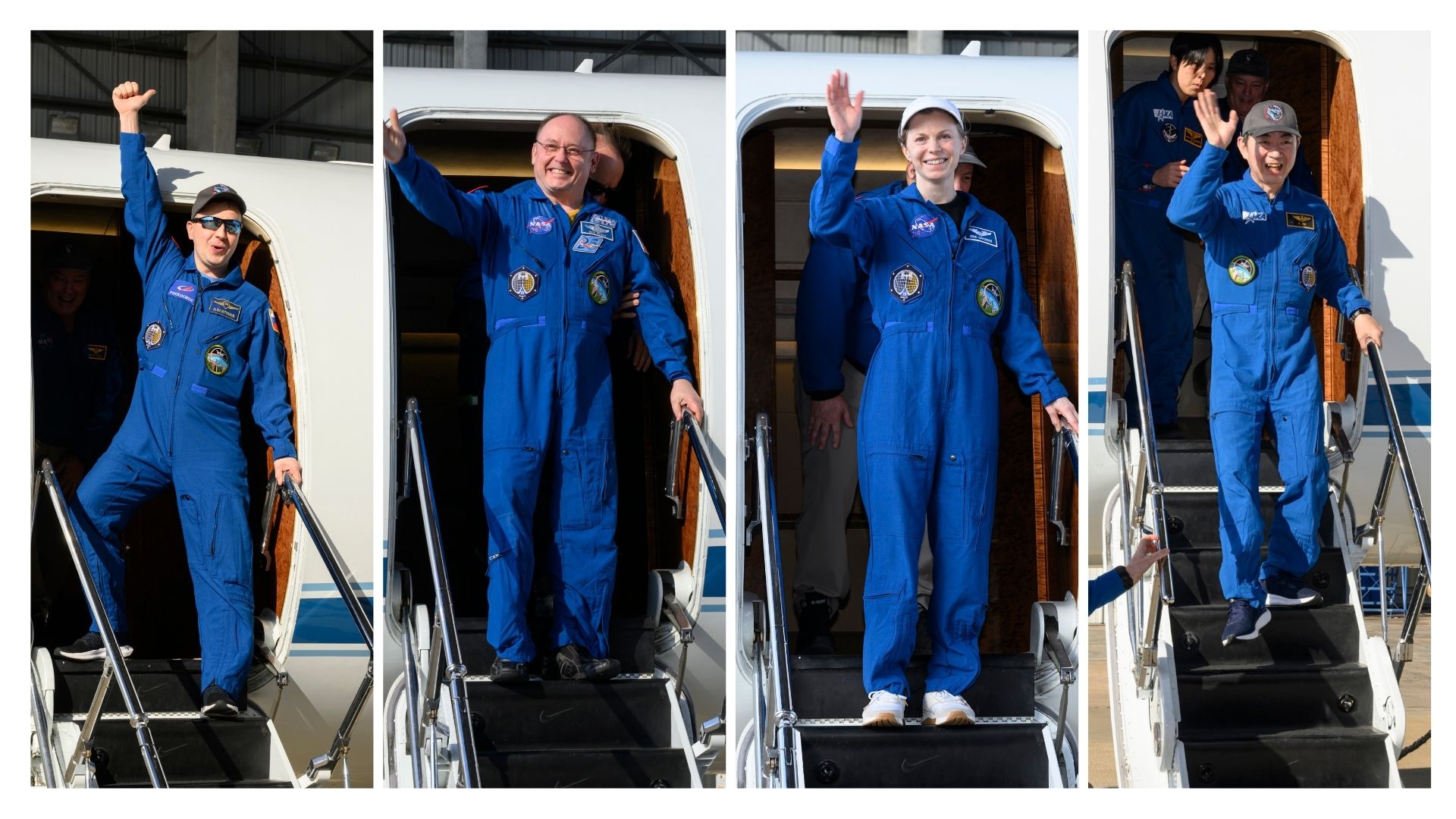
NASA’s SpaceX Crew-11 crew returns to Ellington Field’s Guppy Hangar in Houston on Jan. 16, 2026, from left to right is Roscosmos cosmonaut Oleg Platonov, NASA astronauts Mike Fincke, and Zena Cardman, and JAXA (Japan Aerospace Exploration Agency) astronaut Kimya Yui.
NASA
After 167 days in space, the crew members of NASA’s SpaceX Crew-11 mission will hold a news conference at 2:15 p.m. EST, Wednesday, Jan. 21, at the agency’s Johnson Space Center in Houston to discuss their science expedition aboard the International Space Station.
NASA astronauts Zena Cardman and Mike Fincke, JAXA (Japan Aerospace Exploration Agency) astronaut Kimiya Yui, and Roscosmos cosmonaut Oleg Platonov will answer questions about their mission. The crew members returned to Earth on Jan. 15, splashing down off the coast of San Diego, and arrived in Houston on Friday, where they will undergo standard postflight reconditioning and evaluations.
NASA will provide live coverage on the agency’s YouTube channel. Learn how to watch NASA content through a variety of additional online platforms, including social media.
Media are invited to attend in person or virtually. For in-person attendance, contact the NASA Johnson newsroom no later than 5 p.m. CST, Tuesday, Jan. 20, at jsccommu@mail.nasa.gov or 281-483-5111. Media participating by phone must dial into the news conference no later than 10 minutes prior to the start of the event to ask questions. Questions also may be submitted on social media using #AskNASA. A copy of NASA’s media accreditation policy is available on the agency’s website.
The crew spent more than five months in space, including 165 days aboard the orbiting laboratory, traveling nearly 71 million miles, and completing more than 2,670 orbits around Earth. While living and working aboard the station, the crew completed hundreds of science experiments and technology demonstrations.
Get the latest NASA space station news, images, and features on Instagram, Facebook, and X.
NASA’s Commercial Crew Program has delivered on its goal of safe, reliable, and cost-effective transportation to and from the International Space Station from the United States through a partnership with American private industry. This partnership is opening access to low Earth orbit and the space station to more people, more science, and more commercial opportunities. For more than 25 years, people have continuously lived and worked aboard the space station, advancing scientific knowledge and demonstrating new technologies that enable us to prepare for human exploration of the Moon as we prepare for Mars.
Learn more about NASA’s Commercial Crew Program at:
Two Americans, a Japanese astronaut, and a Russian cosmonaut returned to Earth early Thursday after 167 days in orbit, cutting short their stay on the International Space Station by more than a month after one of the crew members encountered an unspecified medical issue last week.
The early homecoming culminated in an on-target splashdown in the Pacific Ocean off the coast of San Diego at 12:41 am PST (08:41 UTC) inside a SpaceX Crew Dragon spacecraft. The splashdown occurred minutes after the Dragon capsule streaked through the atmosphere along the California coastline, with sightings of Dragon's fiery trail reported from San Francisco to Los Angeles.
Four parachutes opened to slow the capsule for the final descent. Zena Cardman, NASA's commander of the Crew-11 mission, radioed SpaceX mission control moments after splashdown: "It feels good to be home, with deep gratitude to the teams who got us there and back."
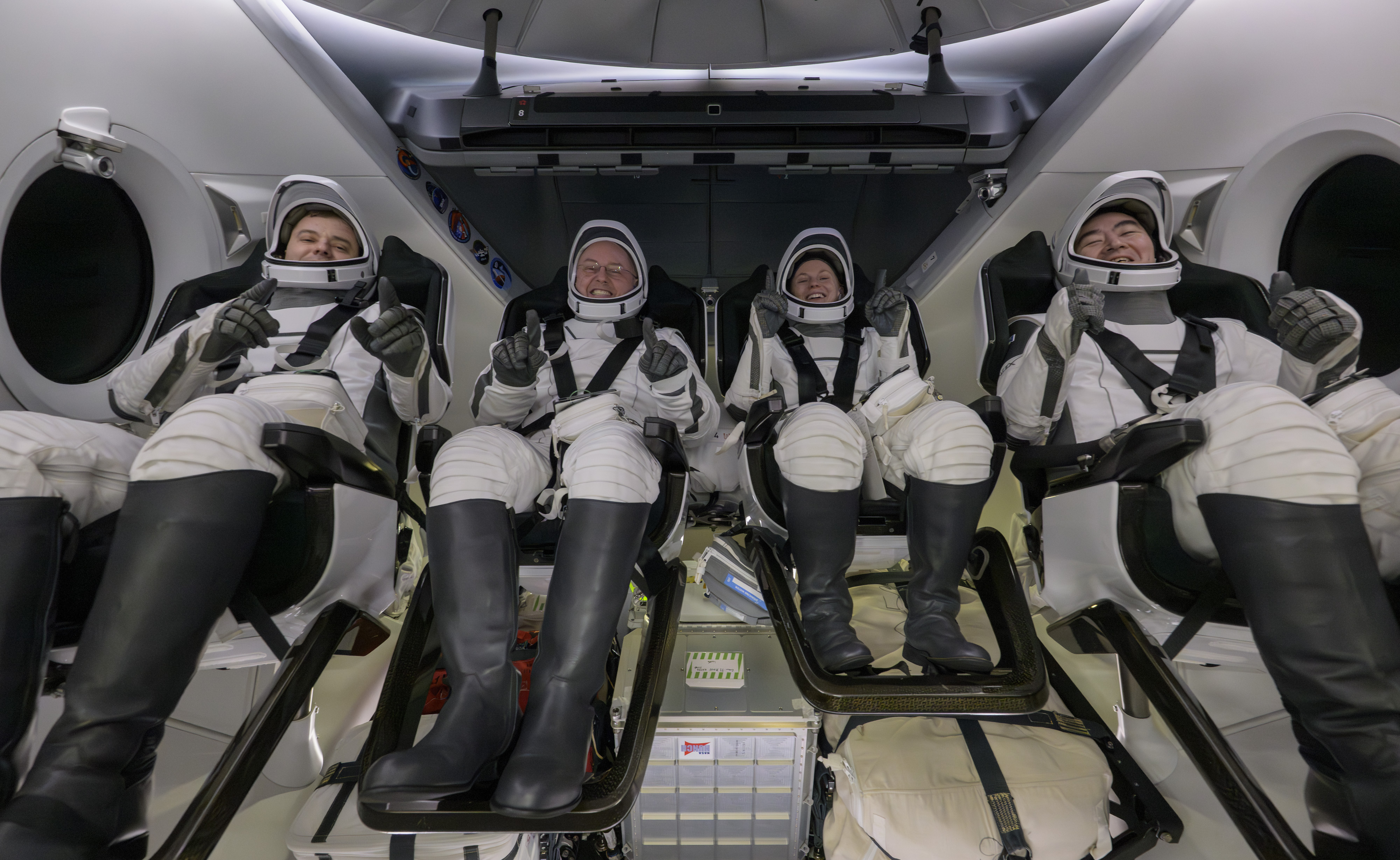
Roscosmos cosmonaut Oleg Platonov, left, NASA astronauts Mike Fincke, Zena Cardman, and JAXA (Japan Aerospace Exploration Agency) astronaut Kimiya Yui are seen inside the SpaceX Dragon Endeavour spacecraft onboard the SpaceX recovery ship SHANNON shortly after having landed in the Pacific Ocean off the coast of Long Beach, Calif., Thursday, Jan. 15, 2026. Cardman, Fincke, Yui, Platonov are returning after 167 days in space as part of Expedition 74 aboard the International Space Station.
NASA/Bill Ingalls
NASA’s SpaceX Crew-11 mission safely splashed down early Thursday morning in the Pacific Ocean off the coast of San Diego, concluding a more than five-month mission aboard the International Space Station.
NASA astronauts Zena Cardman and Mike Fincke, JAXA (Japan Aerospace Exploration Agency) astronaut Kimiya Yui, and Roscosmos cosmonaut Oleg Platonov returned to Earth at 12:41 a.m. PST. Teams aboard SpaceX recovery vessels retrieved the spacecraft and its crew shortly after landing.
“I couldn’t be prouder of our astronauts and the teams on the ground at NASA, SpaceX, and across our international partnerships,” said NASA Administrator Jared Isaacman. “Their professionalism and focus kept the mission on track, even with an adjusted timeline. Crew-11 completed more than 140 science experiments that advance human exploration. Missions like Crew-11 demonstrate the capability inherent in America’s space program—our ability to bring astronauts home as needed, launch new crews quickly, and continue pushing forward on human spaceflight as we prepare for our historic Artemis II mission, from low Earth orbit to the Moon and ultimately Mars.”
Crew-11 returned home about a month earlier than planned because of a medical concern teams are monitoring with one of the crew members, who remains stable. Due to medical privacy, it is not appropriate for NASA to share more details about the crew member. Prior to return, NASA previously coordinated for all four crew members to be transported to a local hospital for additional evaluation, taking advantage of medical resources on Earth to provide the best care possible.
Following the planned overnight hospital stay, the crew members will return to NASA’s Johnson Space Center in Houston and undergo standard postflight reconditioning and evaluations.
The Crew-11 mission lifted off at 11:43 a.m. EDT on Aug.1, 2025, from Launch Complex 39A at NASA’s Kennedy Space Center in Florida. About 15 hours later, the crew’s SpaceX Dragon spacecraft docked to the orbital outpost at 1:27 a.m. CDT on Aug. 2.
During their 167-day mission, the four crew members traveled nearly 71 million miles and completed more than 2,670 orbits around Earth. The Crew-11 mission was Fincke’s fourth spaceflight, Yui’s second, and the first for Cardman and Platonov. Fincke has logged 549 days in space, ranking him fourth among all NASA astronauts for cumulative days in space.
Along the way, Crew-11 logged hundreds of hours of research, maintenance, and technology demonstrations. The crew members also celebrated the 25th anniversary of continuous human presence aboard the orbiting laboratory on Nov. 2, 2025. Research conducted aboard the space station advances scientific knowledge and demonstrates new technologies that enable us to prepare for human exploration of the Moon and Mars.
NASA’s Commercial Crew Program provides reliable access to space, maximizing the use of the International Space Station for research and development by partnering with private U.S. companies, including SpaceX, to transport astronauts to and from the space station.
Learn more about NASA’s Commercial Crew Program at:
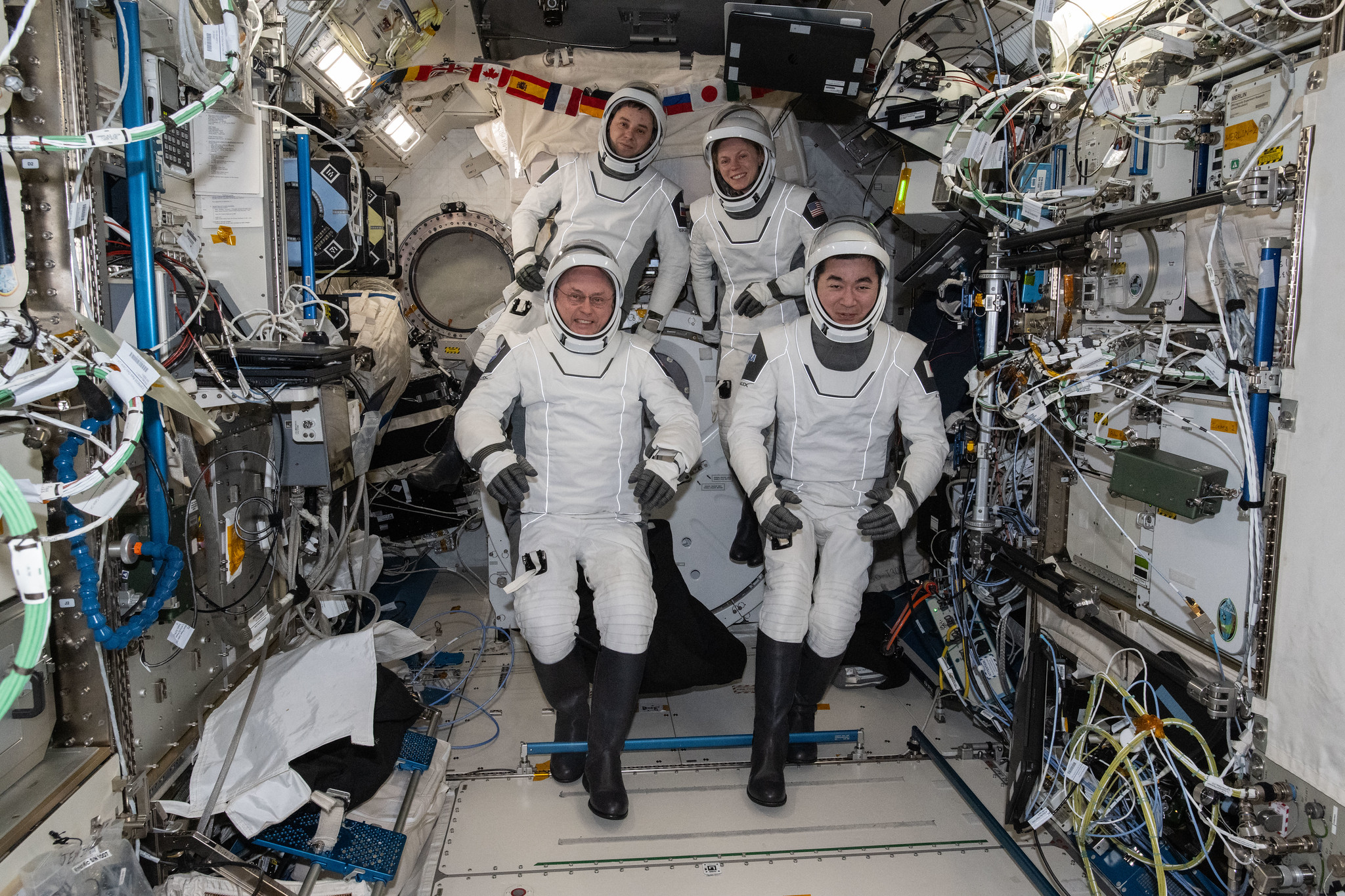
Los cuatro miembros de la tripulación SpaceX Crew-11 se juntaron para una foto de grupo con sus trajes presurizados Dragon durante una comprobación de dichos trajes en el módulo laboratorio Kibo de la Estación Espacial Internacional. En el sentido de las agujas del reloj, desde la parte inferior izquierda, aparecen el astronauta de la NASA Mike Fincke, el cosmonauta de Roscosmos Oleg Platonov, la astronauta de la NASA Zena Cardman y el astronauta de la JAXA (Agencia Japonesa de Exploración Aeroespacial) Kimiya Yui.
La NASA y SpaceX prevén que, si las condiciones meteorológicas lo permiten, el desacoplamiento de la misión SpaceX Crew 11 de la agencia espacial estadounidense de la Estación Espacial Internacional se produzca no antes de las 5:05 p.m. EST (hora del este) del miércoles 14 de enero.
El 8 de enero, la NASA anunció su decisión de traer de vuelta a la Tierra antes de lo previsto a los integrantes de la misión SpaceX Crew 11 de la agencia desde la estación espacial, mientras los equipos técnicos siguen de cerca un problema médico que afecta a un miembro de la tripulación que actualmente vive y trabaja a bordo del laboratorio orbital. Debido a la confidencialidad médica, no es apropiado que la NASA comparta más detalles sobre el miembro de la tripulación, quien se encuentra estable.
Está planeado que los astronautas de la NASA Zena Cardman y Mike Fincke, el astronauta de JAXA (Agencia Japonesa de Exploración Aeroespacial) Kimiya Yui y el cosmonauta de Roscosmos Oleg Platonov americen frente a la costa de California a las 3:41 a.m. del jueves 15 de enero.
Los responsables de la misión continúan supervisando las condiciones en la zona de recuperación, ya que el desacoplamiento de la nave Dragon de SpaceX depende de las condiciones operativas de la nave espacial, la preparación del equipo de recuperación, las condiciones meteorológicas, el estado del mar y otros factores. La NASA y SpaceX seleccionarán una hora y un lugar concretos para el amerizaje cuando se acerque la fecha del desacoplamiento de la nave espacial de Crew 11.
La cobertura en directo (en inglés) de la NASA del regreso y las actividades relacionadas se retransmitirá en NASA+, Amazon Prime, y el canal de YouTube de la agencia. Aprenda cómo transmitir contenido de la NASA a través de diversas plataformas en línea, incluidas las redes sociales.
La cobertura de la NASA es la siguiente (todas las horas son del este y están sujetas a cambios en función de las operaciones en tiempo real):
Tras la finalización de la cobertura del desacoplamiento, la NASA distribuirá las conversaciones (solo en formato audio) entre la tripulación Crew 11, la estación espacial y los controladores de vuelo durante el tránsito de la nave Dragon alejándose del complejo orbital.
5:45 a.m. – El administrador de la NASA, Jared Isaacman, liderará una rueda de prensa sobre el regreso a la Tierra que se transmitirá en directo a través de NASA+,Amazon Prime, y el canal de YouTube de la agencia.
Para participar virtualmente en la conferencia de prensa, los medios de comunicación deben ponerse en contacto con la sala de prensa del Centro Espacial Johnson de la NASA para obtener los detalles de la llamada antes de las 5 p.m. CST (hora del centro) del 14 de enero, enviando un correo electrónico a jsccommu@mail.nasa.gov o llamando al +1 281-483-5111. Para hacer preguntas, los medios de comunicación deben llamar al menos 10 minutos antes del inicio de la conferencia. La política de acreditación de medios de comunicación de la agencia está disponible en línea (en inglés).
Encuentre la cobertura completa de la misión, el blog de tripulaciones comerciales de la NASA y más información sobre la misión Crew 11 (todo en inglés) en:
Four SpaceX Crew-11 members gather together for a crew portrait wearing their Dragon pressure suits during a suit verification check inside the International Space Station’s Kibo laboratory module. Clockwise from bottom left are, NASA astronaut Mike Fincke, Roscosmos cosmonaut Oleg Platonov, NASA astronaut Zena Cardman, and JAXA (Japan Aerospace Exploration Agency) astronaut Kimiya Yui.
Credit: NASA
Editor’s note: This advisory was updated on Wednesday, Jan. 14 to update the undocking time and coverage
NASA and SpaceX are targeting no earlier than 5:20 p.m. EST, Wednesday, Jan. 14, for the undocking of the agency’s SpaceX Crew-11 mission from the International Space Station, pending weather conditions.
On Jan. 8, NASA announced its decision to return the agency’s SpaceX Crew-11 mission to Earth from the space station earlier than originally planned as teams monitor a medical concern with a crew member currently living and working aboard the orbital laboratory, who is stable. Due to medical privacy, it is not appropriate for NASA to share more details about the crew member.
NASA astronauts Zena Cardman and Mike Fincke, JAXA (Japan Aerospace Exploration Agency) astronaut Kimiya Yui, and Roscosmos cosmonaut Oleg Platonov are targeted to splash down off the coast of California at 3:41 a.m. on Thursday, Jan. 15.
Mission managers continue monitoring conditions in the recovery area, as undocking of the SpaceX Dragon depends on spacecraft readiness, recovery team readiness, weather, sea states, and other factors. NASA and SpaceX will select a specific splashdown time and location closer to the Crew-11 spacecraft undocking.
NASA’s live coverage of return and related activities will stream on NASA+, Amazon Prime, and the agency’s YouTube channel. Learn how to stream NASA content through a variety of online platforms, including social media.
NASA’s coverage is as follows (all times Eastern and subject to changed based on real-time operations):
Following the conclusion of undocking coverage, NASA will distribute audio-only communications between Crew-11, the space station, and flight controllers during Dragon’s transit away from the orbital complex.
5:45 a.m. – NASA Administrator Jared Isaacman will lead a Return to Earth news conference streaming live on NASA+,Amazon Prime, and the agency’s YouTube channel.
To participate virtually in the news conference, media must contact the NASA Johnson newsroom for call details by 5 p.m. CST, Jan. 14, at: jsccommu@mail.nasa.gov or 281-483-5111. To ask questions, media must dial in no later than 10 minutes before the start of the call. The agency’s media credentialing policy is available online.
Find full mission coverage, NASA’s commercial crew blog, and more information about the Crew-11 mission at:
From left to right, NASA astronauts Jessica Meir and Jack Hathaway, ESA (European Space Agency) astronaut Sophie Adenot, and Roscosmos cosmonaut Andrey Fedyaev.
NASA
Media accreditation is open for the launch of NASA’s 12th rotational mission of a SpaceX Falcon 9 rocket and Dragon spacecraft carrying astronauts to the International Space Station for a science expedition from Space Launch Complex 40 at Cape Canaveral Space Force Station in Florida.
NASA announced it is targeting no earlier than Thursday, Jan. 15, for a splashdown of its Crew-11 mission. The agency also is working with SpaceX and international partners to advance the launch of Crew-12, which is currently slated for Sunday, Feb. 15.
The crew includes NASA astronauts Jessica Meir, commander, Jack Hathaway, pilot; ESA (European Space Agency) astronaut Sophie Adenot, mission specialist; and Roscosmos cosmonaut Andrey Fedyaev, mission specialist. This will be the second spaceflight for Meir and Fedyaev, and the first for Hathaway and Adenot to the orbiting laboratory.
Media accreditation deadlines for the Crew-12 launch as part of NASA’s Commercial Crew Program are as follows:
International media without U.S. citizenship must apply by 11:59 p.m. EST on Thursday, Jan. 15.
U.S. media and U.S. citizens representing international media organizations must apply by 11:59 p.m. on Sunday, Jan. 18.
All accreditation requests must be submitted online at:
NASA’s media accreditation policy is online. For questions about accreditation or special logistical requests, email: ksc-media-accreditat@mail.nasa.gov. Requests for space for satellite trucks, tents, or electrical connections are due by Friday, Jan. 23.
For other questions, please contact NASA Kennedy’s newsroom at: 321-867-2468.
Para obtener información sobre cobertura en español en el Centro Espacial Kennedy o si desea solicitar entrevistas en español, comuníquese con Antonia Jaramillo: 321-501-8425, o Messod Bendayan: 256-930-1371.
For launch coverage and more information about the mission, visit:
NASA officials said Thursday they have decided to bring home four of the seven crew members on the International Space Station after one of them experienced a "medical situation" earlier this week.
The space agency has said little about the incident, and officials have not identified which crew member suffered the medical issue. James "JD" Polk, NASA's chief health and medical officer, told reporters Thursday the crew member is "absolutely stable" but that the agency is "erring on the side of caution" with the decision to return the astronaut to Earth.
The ailing astronaut is part of the Crew-11 mission, which launched to the station August 1 and was slated to come back to Earth around February 20. Instead, the Crew-11 astronauts will depart the International Space Station (ISS) in the coming days and head for reentry and a parachute-assisted splashdown in the Pacific Ocean off the coast of California.
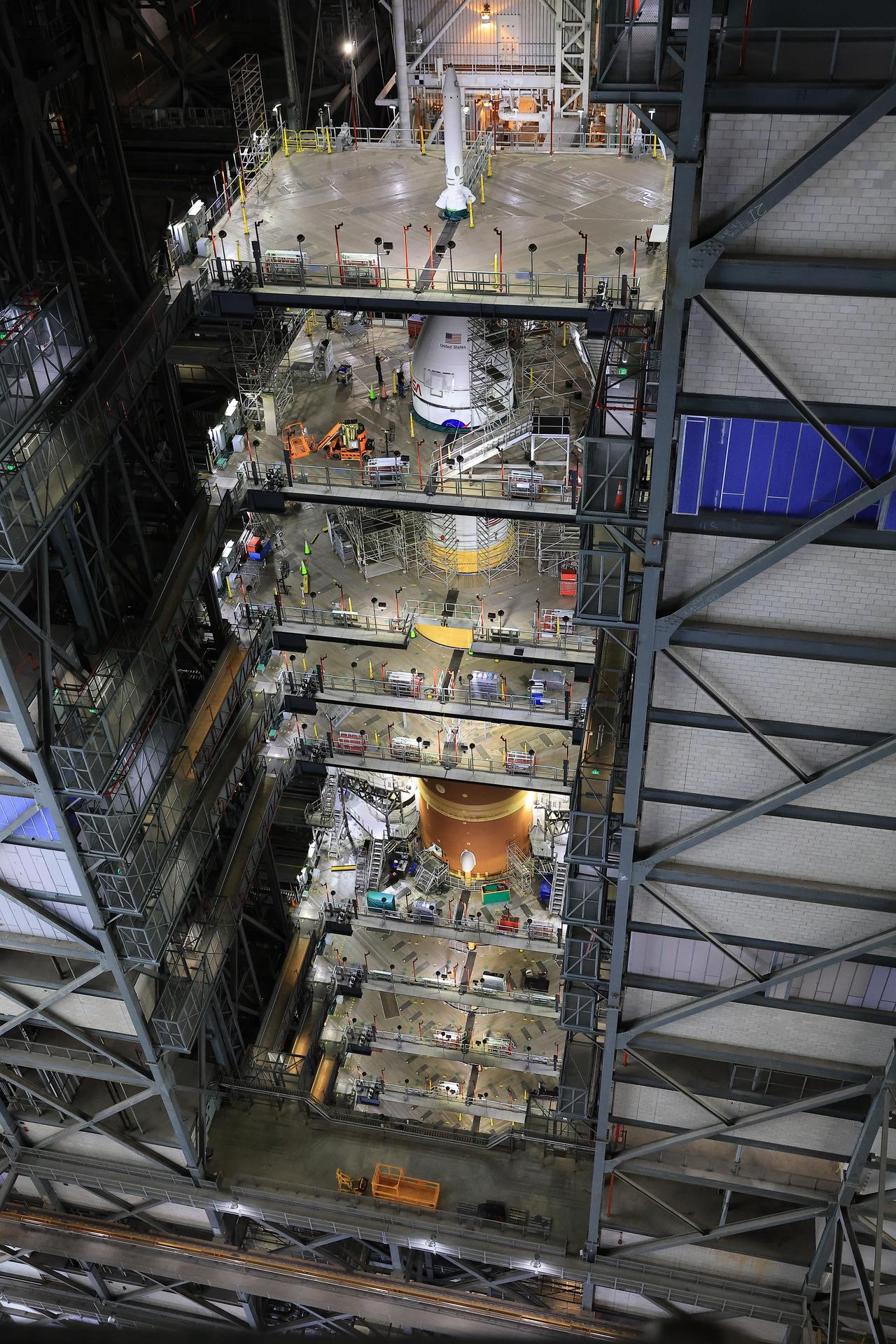
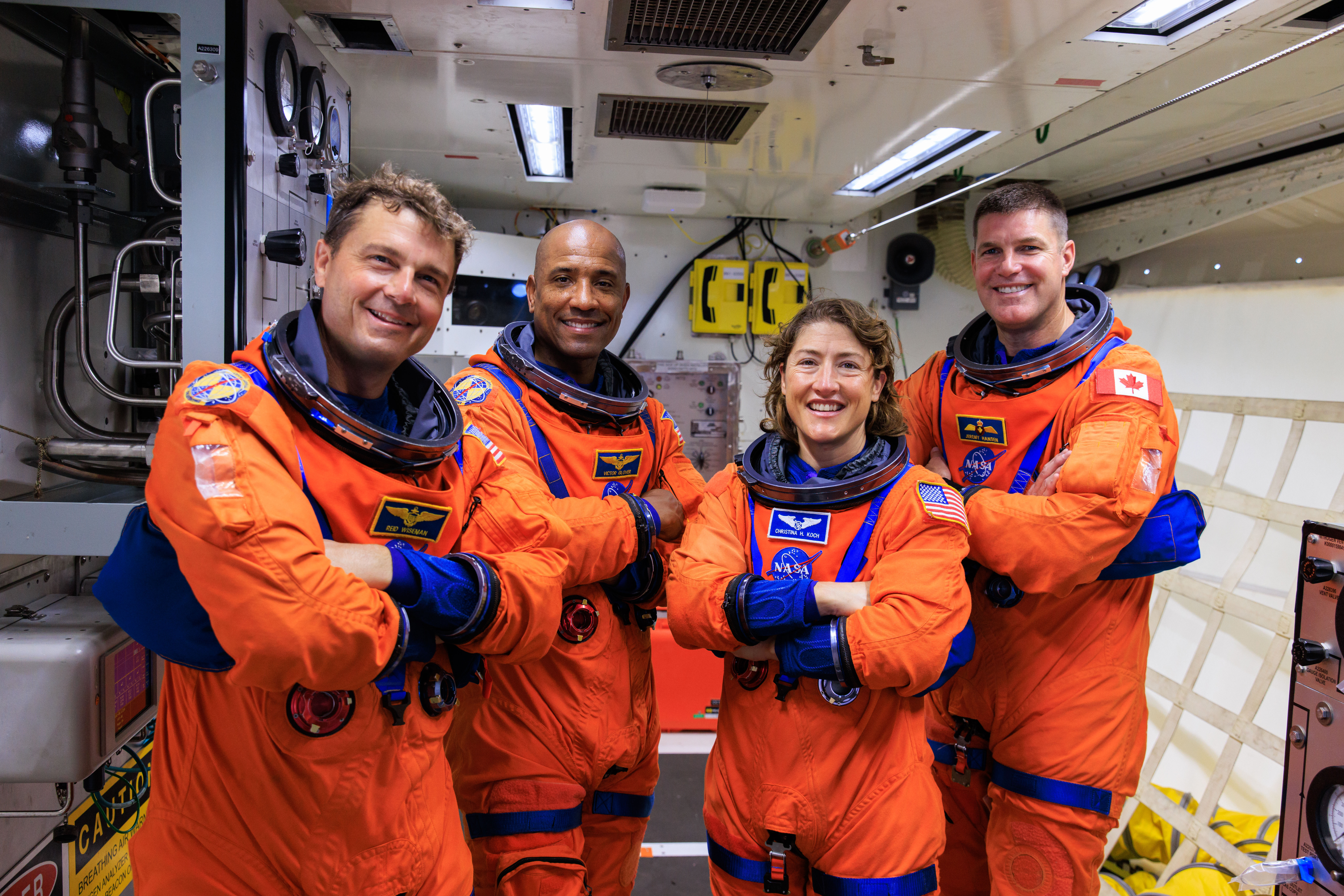
NASA’s Artemis II Orion spacecraft with its launch abort system is stacked atop the agency’s SLS (Space Launch System) rocket in High Bay 3 of the Vehicle Assembly Building at NASA’s Kennedy Space Center in Florida on Monday, Oct. 20, 2025. The spacecraft will carry NASA astronauts Reid Wiseman, Victor Glover, Christina Koch, and CSA (Canadian Space Agency) astronaut Jeremy Hansen on a 10-day mission around the Moon and back in early 2026. Teams will begin conducting a series of verification tests ahead of rolling out the integrated SLS rocket to NASA Kennedy’s Launch Complex 39B for the wet dress rehearsal.
NASA/Kim Shiflett
Teams at NASA’s Kennedy Space Center in Florida spent 2025 preparing the launch vehicle and its powerhouse SLS (Space Launch System) rocket to launch four astronauts around the Moon for Artemis II in early 2026. The center also celebrated milestones by conducting science experiments at the International Space Station to studying the Sun’s solar wind impacts on Earth to traveling to Mars in hopes of one day exploring the Red Planet in person.
JANUARY NASA Kennedy Marks New Chapter for Florida Space Industry

Kennedy Space Center Director Janet Petro and charter members of the Florida University Space Research Consortium sign a memorandum of understanding in research and development to assist with missions and contribute to NASA’s Moon to Mars exploration approach.
From left: Jennifer Kunz, Associate Director, Technical, Kennedy Space Center; Kelvin Manning, Deputy Director, Kennedy Space Center; Dr. Kent Fuchs, Interim President, University of Florida; Janet Petro, Director, Kennedy Space Center; Jeanette Nuñez, Florida Lieutenant Governor; Dr. Alexander Cartwright, President, University of Central Florida; Dr. Barry Butler, President, Embry-Riddle Aeronautical University.
NASA/Kim Shifflet
Firefly Launches Blue Ghost Mission One
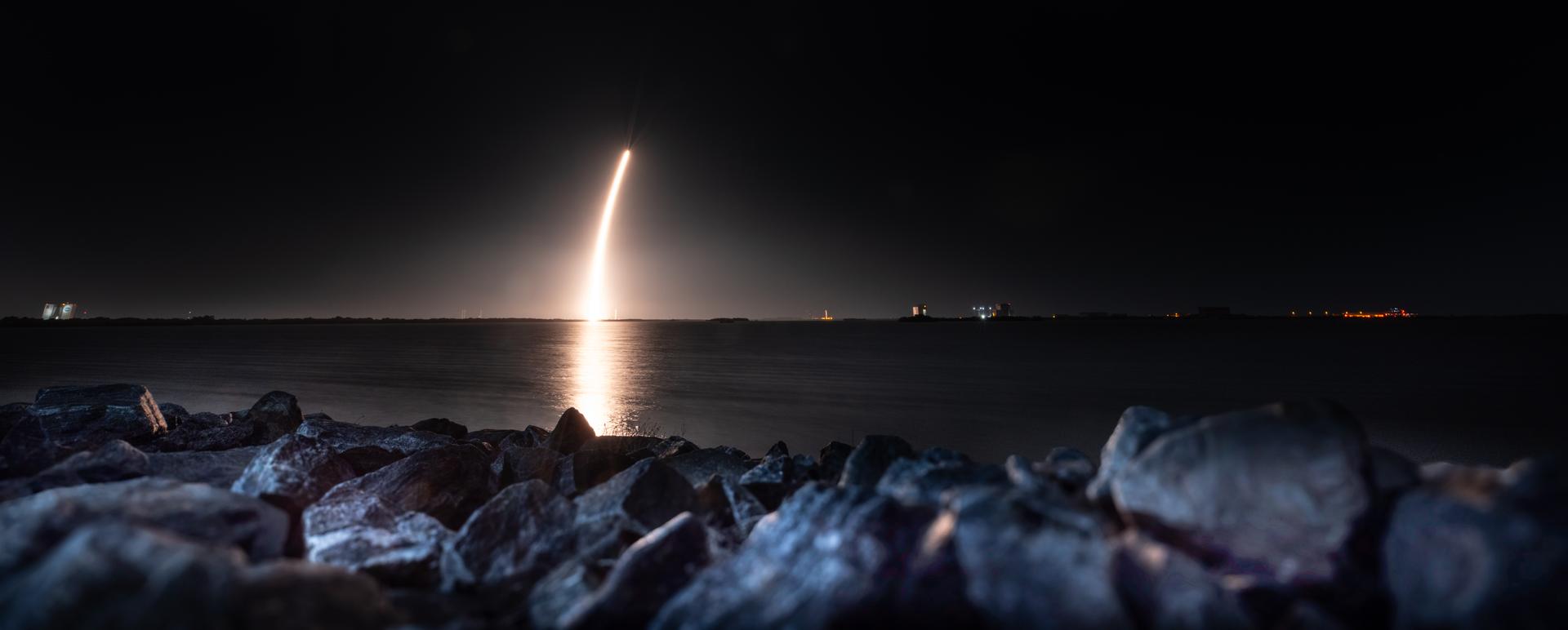
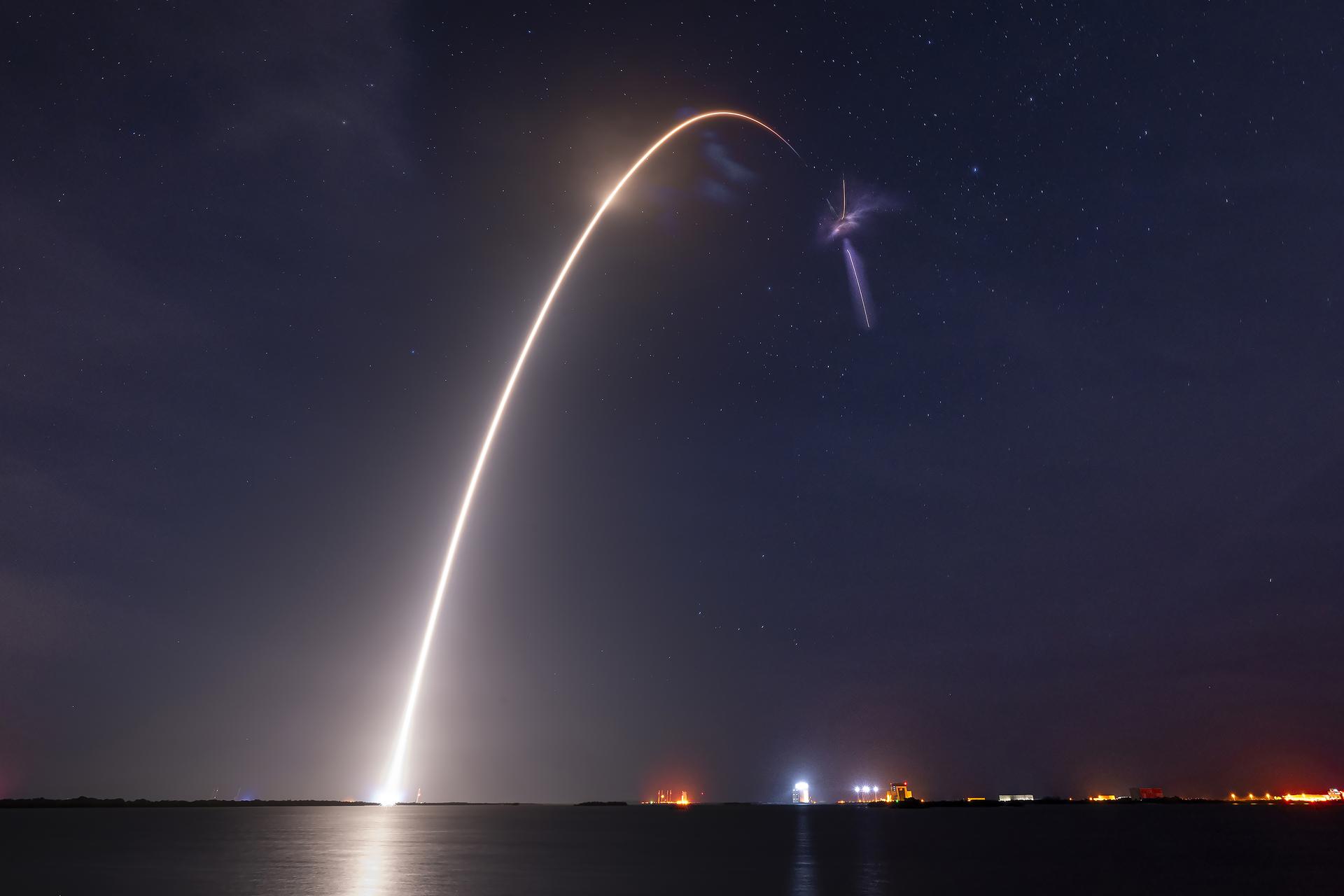
Firefly Aerospace launched Blue Ghost Mission One lunar lander with a suite of NASA scientific instruments on January 15, from Launch Complex 39A at NASA Kennedy. The lander and instruments landed March 2 on the Moon.
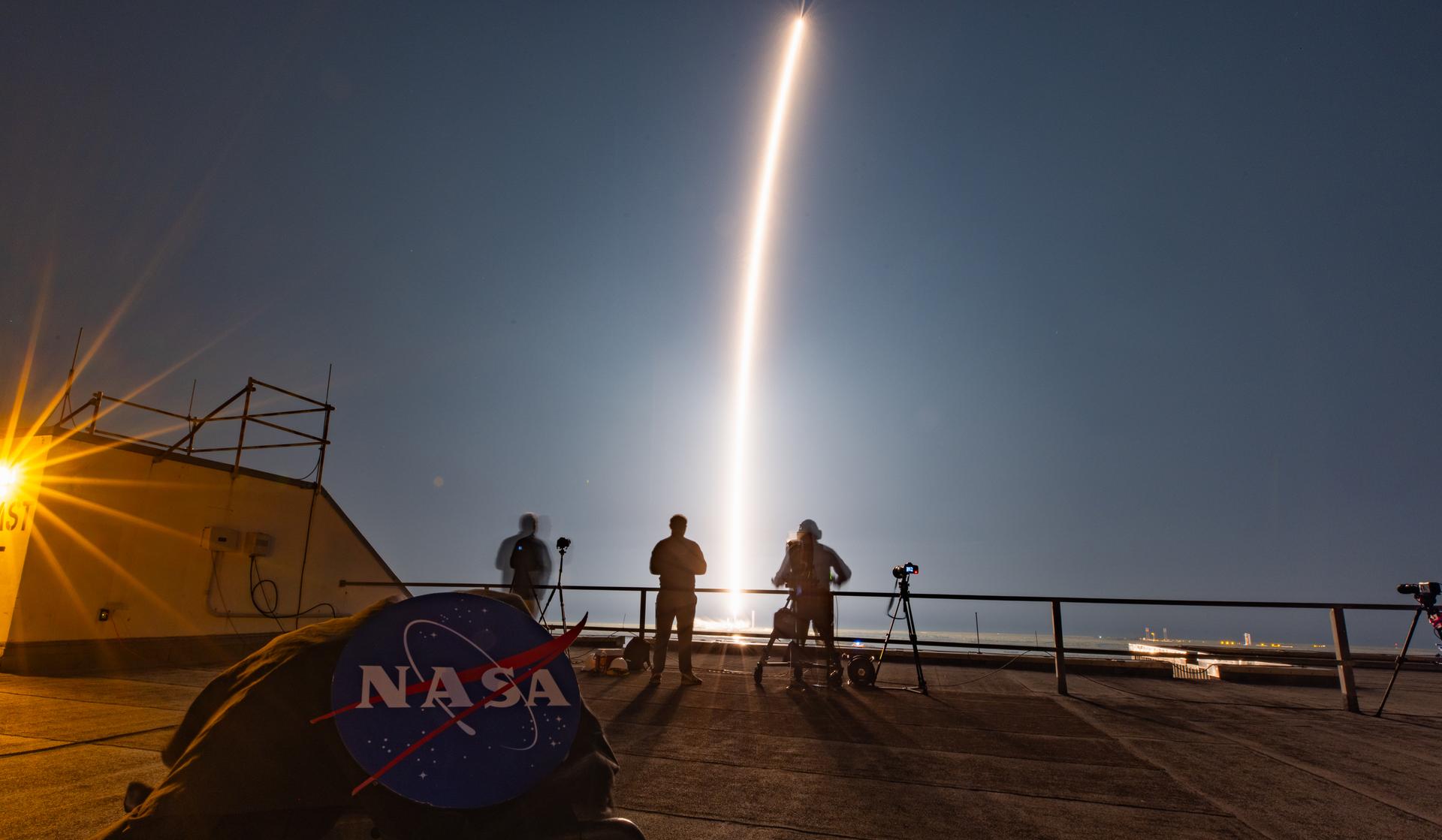
Creating a golden streak in the night sky, a SpaceX Falcon 9 rocket carrying Firefly Aerospace’s Blue Ghost Mission One lander soars upward after liftoff from Launch Complex 39A at NASA’s Kennedy Space Center in Florida on Wednesday, Jan. 15, 2025 as part of NASA’s CLPS (Commercial Lunar Payload Services) initiative.
NASA/Cory S Huston
FEBRUARY Intuitive Machines Launches to the Moon
Intuitive Machines’ IM-2 Nova C lunar lander launched Feb. 26 from Launch Complex 39A, carrying NASA science and technology demonstrations to the Mons Mouton region of the Moon. IM-2 reached the surface of the Moon on March 6.
Creating a golden streak in the night sky, a SpaceX Falcon 9 rocket carrying Intuitive Machines’ Nova-C lunar lander (IM-2) soars upward after liftoff from Launch Complex 39A at NASA’s Kennedy Space Center in Florida at 7:16 p.m. EST Wednesday, Feb. 26, 2025, as part of NASA’s CLPS (Commercial Lunar Payload Services) initiative.
NASA/Frank Michaux
MARCH NASA’s SpaceX Crew-10 Launch
NASA astronauts Anne McClain and Nicole Ayers, JAXA (Japan Aerospace Exploration Agency) Takuya Onishi, and Roscosmos cosmonaut Kirill Peskov launched March 14 from Launch Complex 39A to the International Space Station for a five-month science mission.
Members of NASA’s SpaceX Crew-10, from left, Roscosmos cosmonaut Kirill Peskov, mission specialist; NASA astronauts Nichole Ayers, pilot and Anne McClain, commander; and JAXA (Japan Aerospace Exploration Agency) astronaut Takuya Onishi, mission specialist.
SpaceX
NASA’s SPHEREx, PUNCH Missions Launch
A SpaceX Falcon 9 rocket launched on March 11, from Space Launch Complex 4 East at Vandenberg Space Force Base in California carrying NASA’s SPHEREx (Spectro-Photometer for the History of the Universe, Epoch of Reionization and Ices Explorer) and PUNCH (Polarimeter to Unify the Corona and Heliosphere) missions. NASA’s Launch Services Program, based at NASA Kennedy managed the launch service for SPHEREx.
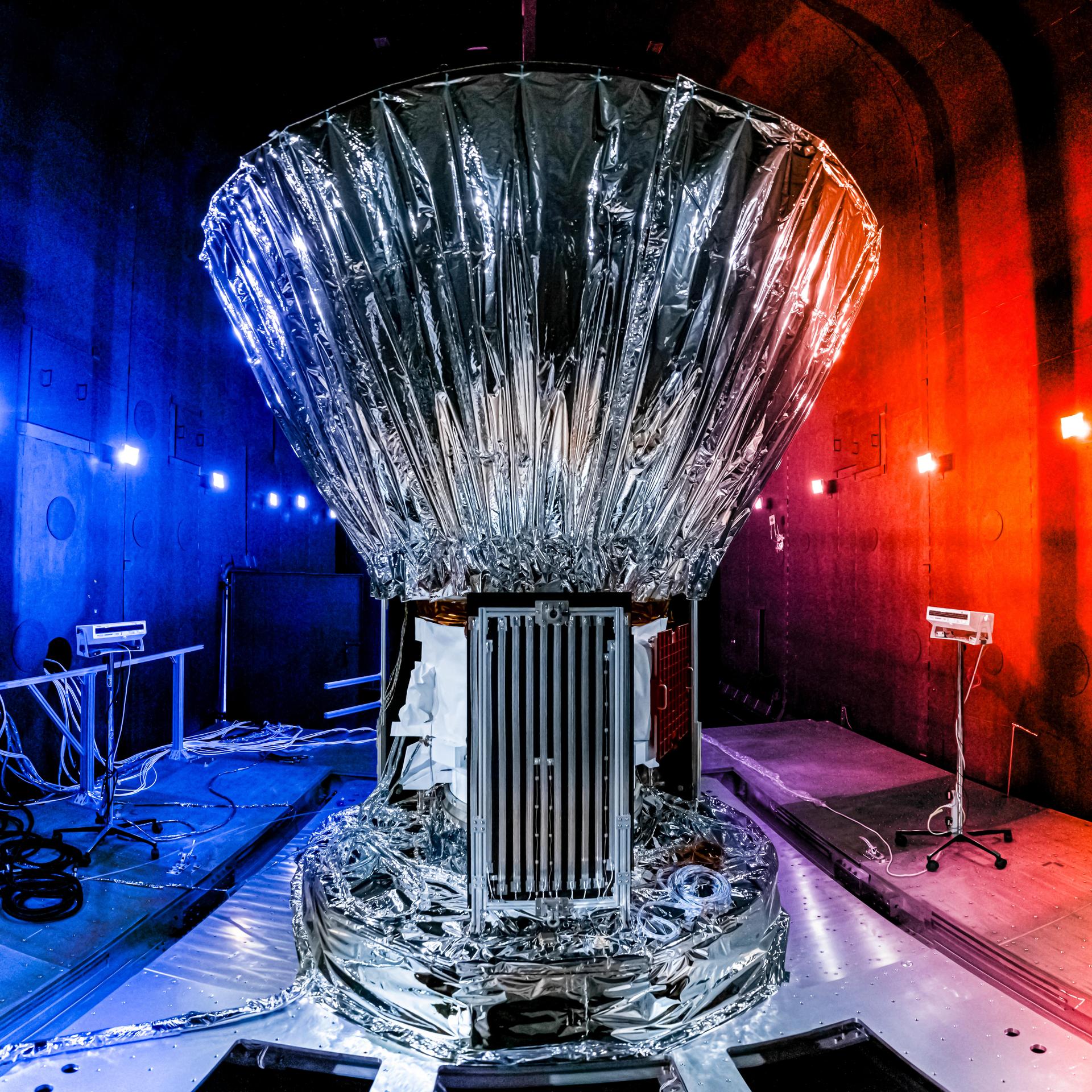
NASA’s SPHEREx observatory is installed in the Titan Thermal Vacuum (TVAC) test Chamber at BAE Systems in Boulder, Colorado, in June 2024. As part of the test setup, the spacecraft and photon shield are covered in multilayer insulation and blankets and surrounded by ground support equipment.
Jet Propulsion Laboratory
NASA’s SpaceX Crew-9 Returns
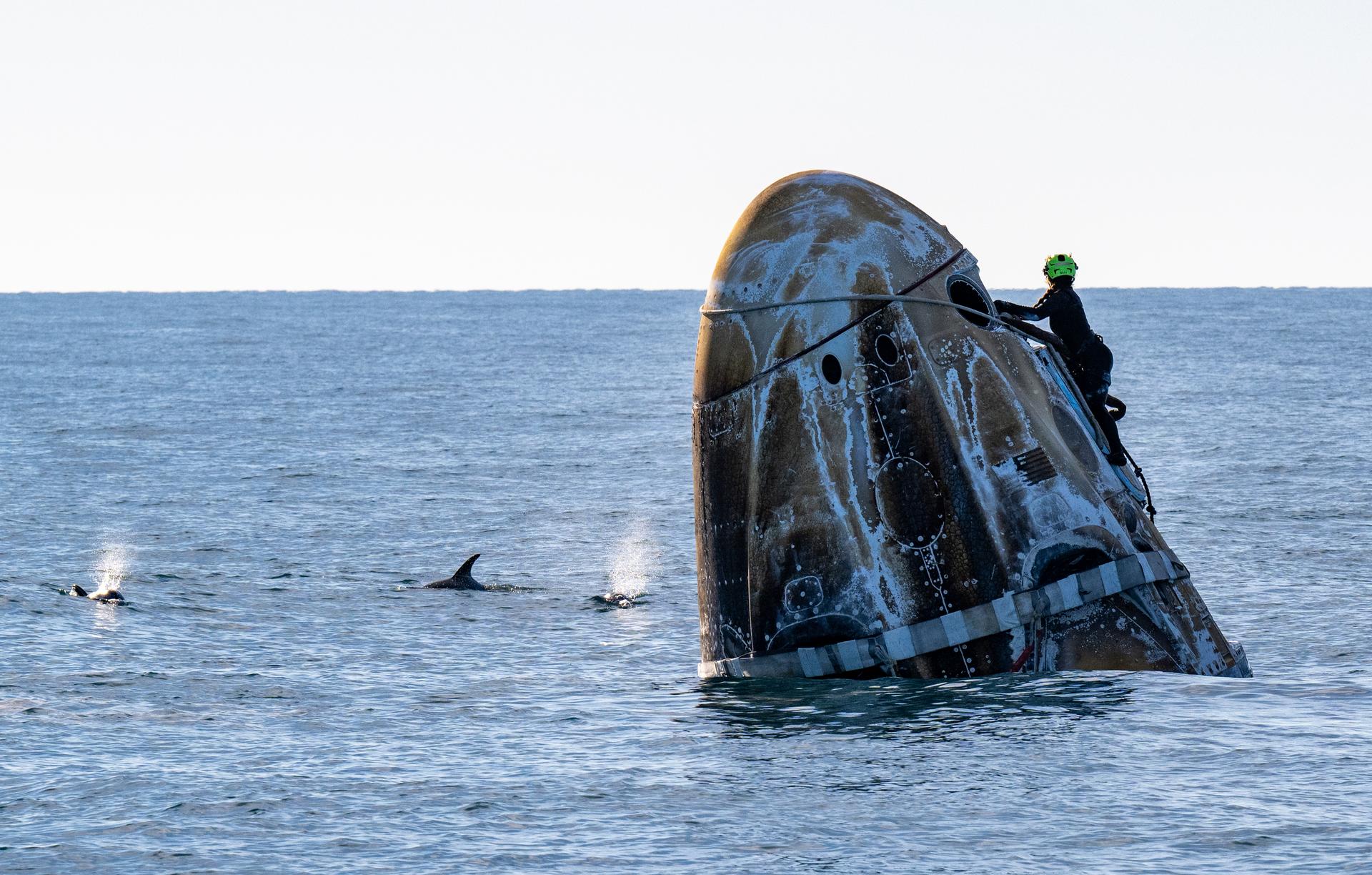
NASA astronauts Nick Hague, Suni Williams, and Butch Wilmore were greeted by dolphins and recovery teams after their SpaceX Dragon spacecraft splashed down on March 18, off the coast of Tallahassee, Florida following their long-duration mission at the International Space Station.
Support teams work around a SpaceX Dragon spacecraft shortly after it landed with NASA astronauts Nick Hague, Suni Williams, Butch Wilmore, and Roscosmos cosmonaut Aleksandr Gorbunov aboard in the water off the coast of Tallahassee, Florida, Tuesday, March 18, 2025. Hague, Gorbunov, Williams, and Wilmore are returning from a long-duration science expedition aboard the International Space Station.
NASA/Keegan Barber
NASA Causeway Bridge Opens
The Florida Department of Transportation opened the westbound portion of the NASA Causeway Bridge on March 19, completing construction in both directions spanning the Indian River Lagoon and connecting NASA Kennedy and Cape Canaveral Space Force Station to the mainland.
Cars drive over the newly completed westbound portion (right side of photo) of the NASA Causeway Bridge leading away from NASA’s Kennedy Space Center in Florida on Wednesday, March 19, 2025. The Florida Department of Transportation (FDOT) opened the span on Tuesday, March 18, 2025, alongside its twin on the eastbound side, which has accommodated traffic in both directions since FDOT opened it on June 9, 2023.
NASA/Glenn Benson
NASA Artemis Teams Complete URT-12
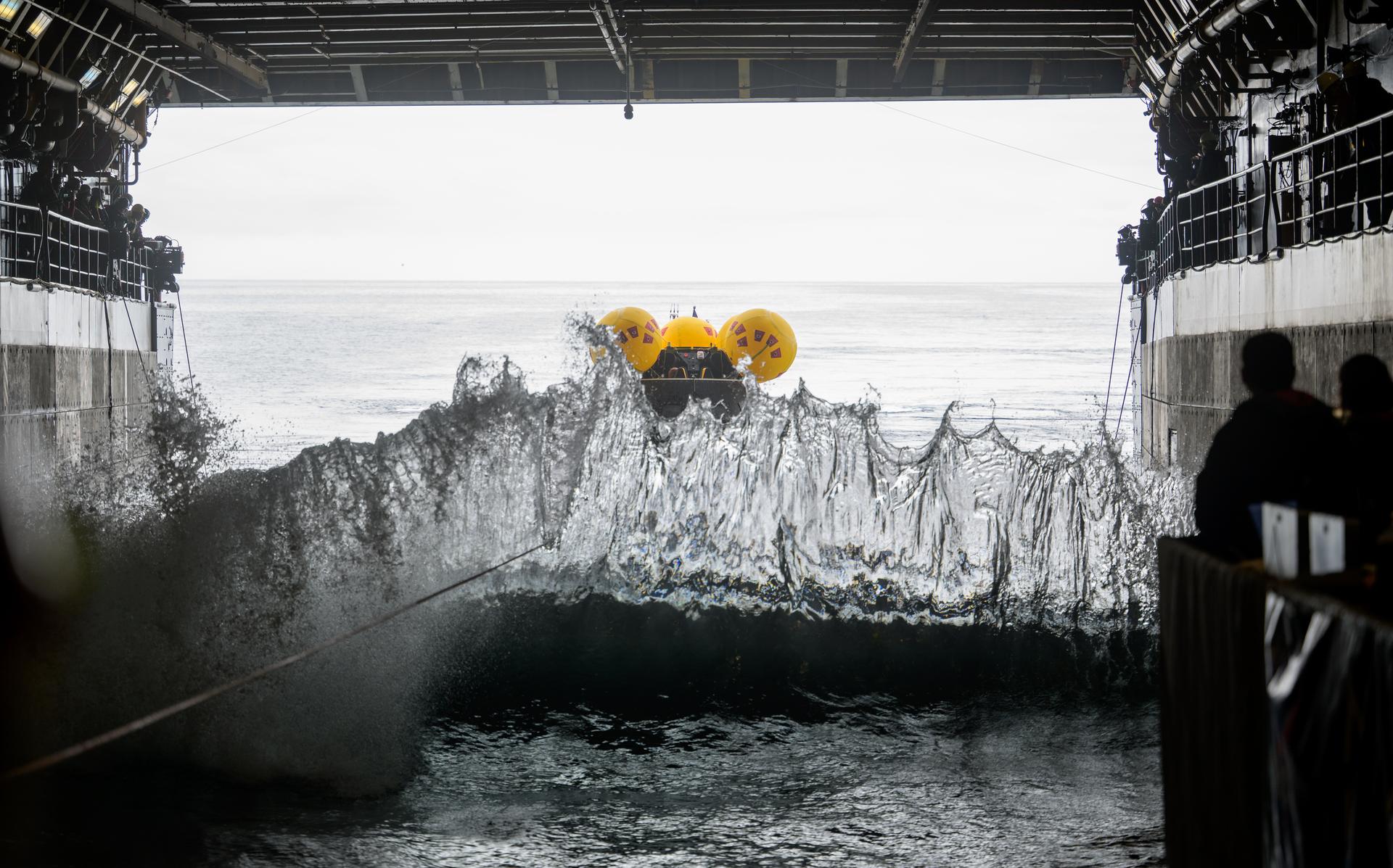
Teams from NASA and the Department of War train during a week-long Underway Recovery Test-12 in March off the coast of California for Artemis II test flight crewmembers and the Orion spacecraft. The series of tests demonstrate and evaluate the processes, procedures, and hardware used in recovery operations for crewed lunar missions.
Waves break inside USS Somerset as the Crew Module Test Article, a full scale mockup of the Orion spacecraft, is tethered during Underway Recovery Test-12 off the coast of California, Wednesday, March 26, 2025. During the test, NASA and Department of Defense teams are practicing to ensure recovery procedures are validated as NASA plans to send Artemis II astronauts around the Moon and splashdown in the Pacific Ocean.
NASA/Joel Kowsky
APRIL NASA’s SpaceX 32nd Commercial Resupply Mission
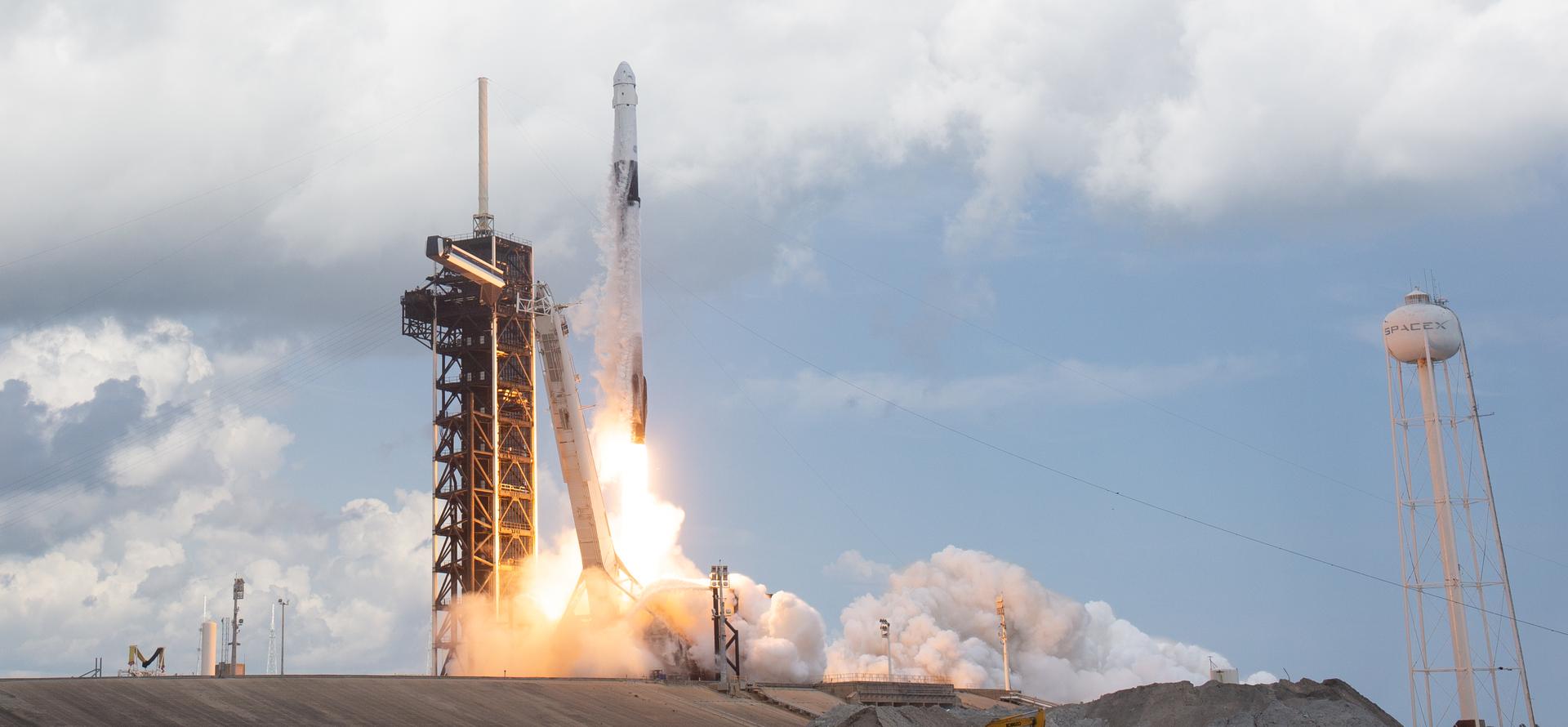
A SpaceX Falcon 9 rocket and a Dragon spacecraft carrying nearly 6,700 pounds of scientific investigations, food, supplies, and equipment launched on April 21 from Launch Complex 39A to the International Space Station.
The SpaceX Falcon 9 rocket carrying the Dragon spacecraft lifts off from Launch Complex 39A at NASA’s Kennedy Space Center in Florida on Monday, April 21, on the company’s 32nd commercial resupply services mission for the agency to the International Space Station.
SpaceX
JULY Artemis III Begins Processing
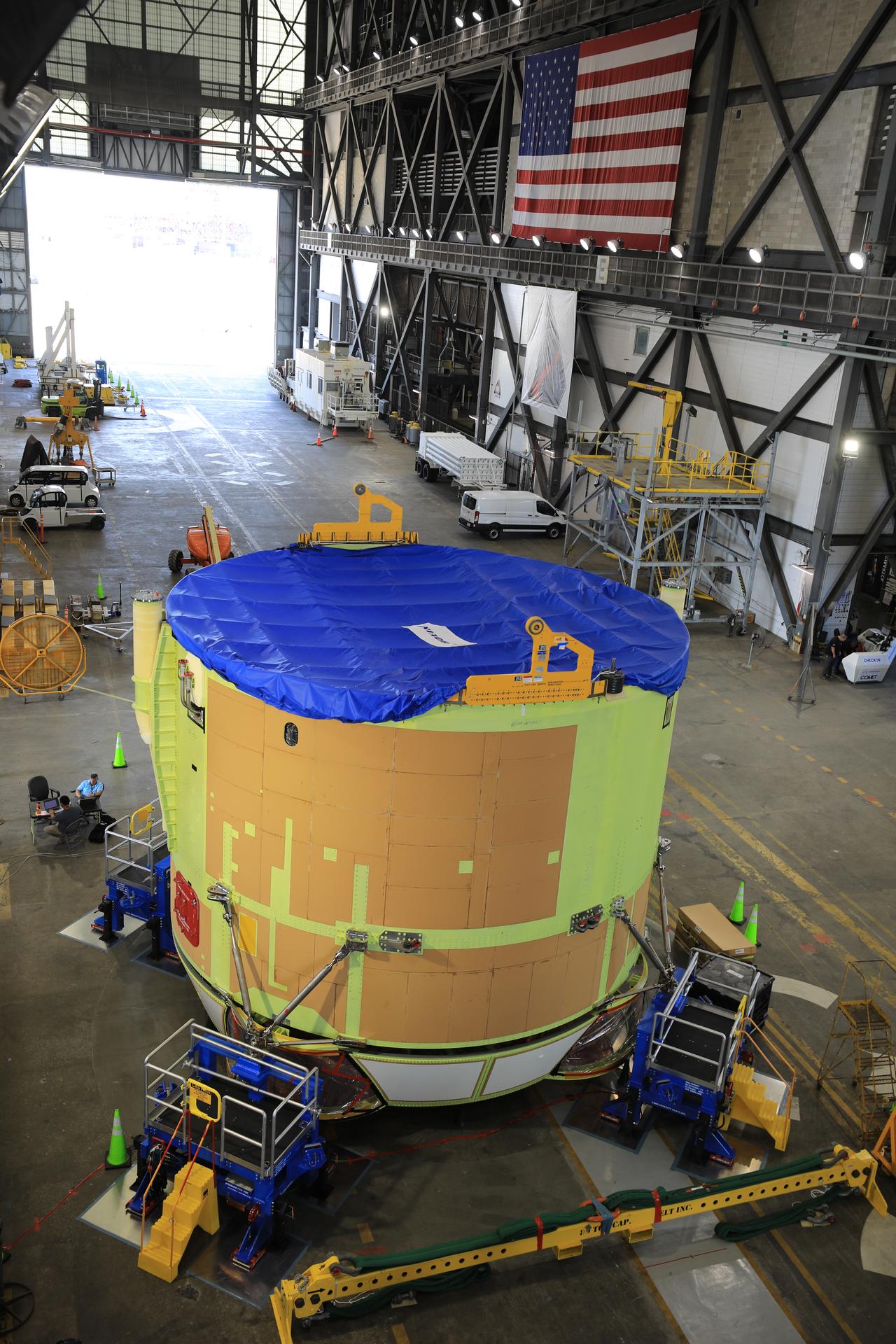
NASA’s Artemis III SLS engine section and boat-tail made the journey from the Space Systems Processing Facility at NASA Kennedy to the spaceport’s Vehicle Assembly Building in July to complete integration and check-out testing. Beginning with the Artemis III hardware, NASA moved certain operations to NASA Kennedy to streamline the manufacturing process and enable simultaneous production operations of two core stages.
Teams from NASA’s Kennedy Space Center in Florida integrate NASA’s Artemis III SLS (Space Launch System) core stage engine section with its boat-tail inside the spaceport’s Vehicle Assembly Building on Wednesday, July 30, 2025. The boat-tail is a fairing-like structure that protects the bottom end of the core stage, while the engine section is one the most complex and intricate parts of the rocket stage that will help power the Artemis missions to the Moon.
NASA/Ronald Beard
AUGUST NASA’s SpaceX Crew-11 Launches
NASA astronauts Zena Cardman and Mike Fincke, JAXA (Japan Aerospace Exploration Agency) astronaut Kimiya Yui, and Roscosmos cosmonaut Oleg Platonov launched aboard a SpaceX Dragon spacecraft and its Falcon 9 rocket on Aug. 1 from Launch Complex 39A bound for a long-duration mission to the International Space Station.
NASA’s SpaceX Crew-11 mission is the eleventh crew rotation mission of the SpaceX Dragon spacecraft and Falcon 9 rocket to the International Space Station as part of the agency’s Commercial Crew Program.
NASA/Joel Kowsky
NASA’s SpaceX Crew-10 Returns
NASA astronauts Anne McClain and Nicole Ayers, JAXA (Japan Aerospace Exploration Agency) astronaut Takuya Onishi, and Roscosmos cosmonaut Kirill Peskov became the first Commercial Crew to splash down in the Pacific Ocean off the coast of California on Aug. 9, completing their nearly five-month mission at the orbiting outpost as part of the agency’s Commercial Crew Program.
Roscosmos cosmonaut Kirill Peskov, left, NASA astronauts Nichole Ayers, Anne McClain, and JAXA (Japan Aerospace Exploration Agency) astronaut Takuya Onishi returned after 147 days in space as part of Expedition 73 aboard the International Space Station.
NASA/Keegan Barber
NASA’s SpaceX 33rd Commercial Resupply Mission
A SpaceX Falcon 9 launched the company’s Dragon spacecraft carrying more than 5,000 pounds of food, crew supplies, science investigations, spacewalk equipment, and more to the space station on Aug. 24 from Launch Complex 39A.
A SpaceX Dragon cargo spacecraft with its nosecone open and carrying over 5,000 pounds of science, supplies, and hardware for NASA’s SpaceX CRS-33 mission approaches the International Space Station for an automated docking to the Harmony module’s forward port.
NASA
Orion Tested, Stacked With Hardware
Teams transported NASA’s Orion spacecraft from Kennedy’s Multi-Payload Processing Facility to the Launch Abort System Facility in August where crews integrated the 44-foot-tall launch abort system. The Orion spacecraft will send NASA astronauts Reid Wiseman, Victor Glover, Christina Koch, and CSA (Canadian Space Agency) astronaut Jeremy Hansen around the Moon for the Artemis II mission in early 2026. The launch abort system is designed to carry the crew to safety in the event of an emergency atop the SLS.
The launch abort tower on NASA’s Artemis II Orion spacecraft is pictured inside the Launch Abort System Facility at the agency’s Kennedy Space Center in Florida on Wednesday, Aug. 27, 2025, after teams with NASA’s Exploration Ground Systems Program installed the tower on Wednesday, Aug. 20, 2025. Positioned at the top of Orion, the 44-foot-tall launch abort system is designed to carry the crew to safety in the event of an emergency during launch or ascent, with its three solid rocket motors working together to propel Orion – and astronauts inside – away from the rocket for a safe landing in the ocean, or detach from the spacecraft when it is no longer needed. The final step to complete integration will be the installation of the ogive fairings, which are four protective panels that will shield the crew module from the severe vibrations and sounds it will experience during launch.
NASA/Cory Huston
SEPTEMBER NASA Launches IMAP Mission
NASA’s IMAP (Interstellar Mapping and Acceleration Probe) launched from Launch Complex 39A on Sept. 24, to help researchers better understand the boundary of the heliosphere, a huge bubble created by the Sun surrounding and protecting our solar system.
A SpaceX Falcon 9 rocket carrying NASA’s IMAP (Interstellar Mapping and Acceleration Probe), the agency’s Carruthers Geocorona Observatory, and National Oceanic and Atmospheric Administration’s (NOAA) Space Weather Follow On–Lagrange 1 (SWFO-L1) spacecraft lifts off from Launch Complex 39A at NASA’s Kennedy Space Center in Florida at 7:30 a.m. EDT Wednesday, Sept. 24, 2025. The missions will each focus on different effects of the solar wind — the continuous stream of particles emitted by the Sun — and space weather — the changing conditions in space driven by the Sun — from their origins at the Sun to their farthest reaches billions of miles away at the edge of our solar system.
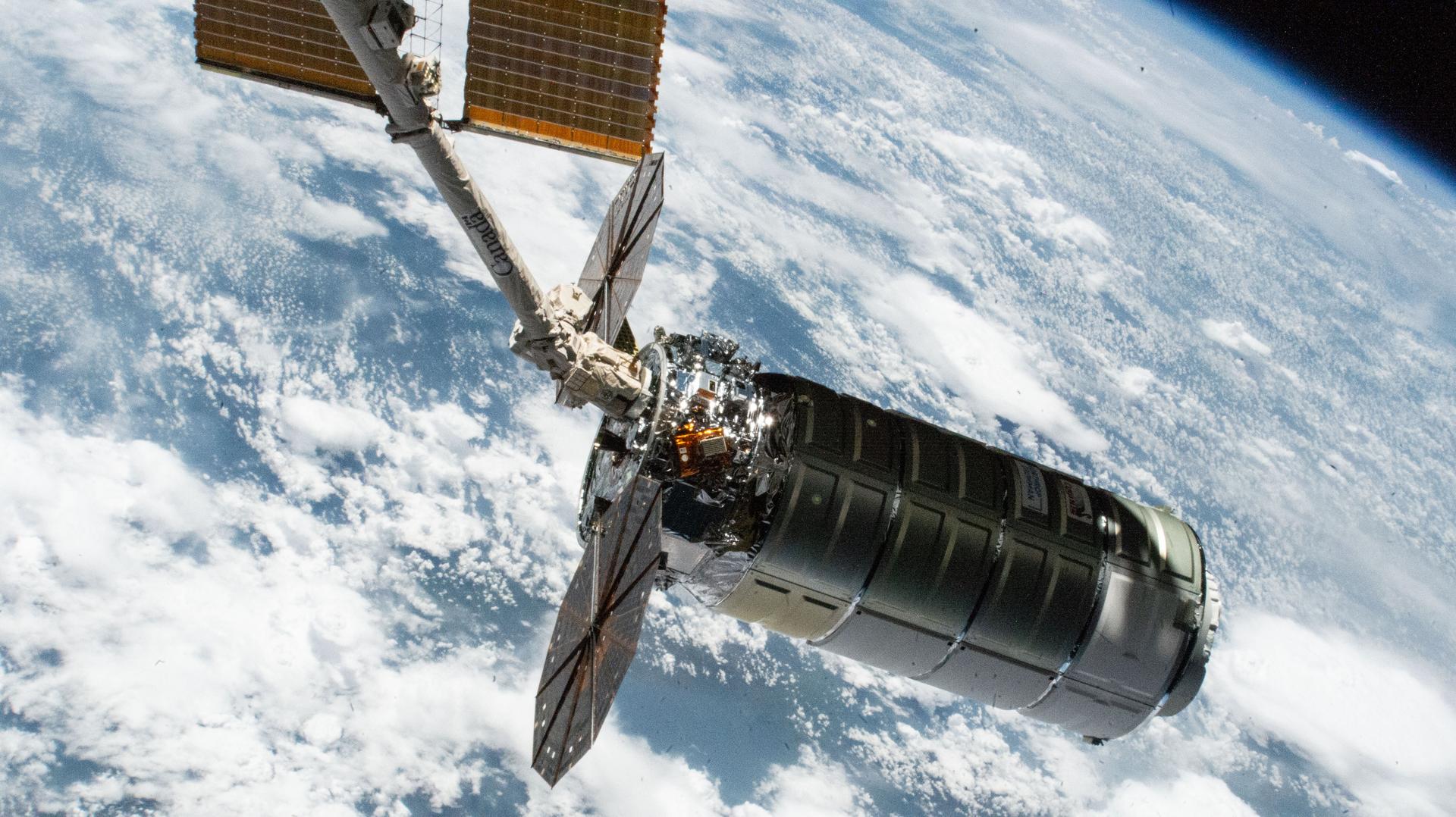
A Northrop Grumman Cygnus XL spacecraft atop a SpaceX Falcon 9 rocket lifted off from Launch Complex 39A to the International Space Station delivering NASA science investigations, supplies, and equipment as part of the agency’s partnership to resupply the orbiting laboratory.
Northrop Grumman’s Cygnus XL cargo craft, carrying over 11,000 pounds of new science and supplies for the Expedition 73 crew, is pictured in the grips of the International Space Station’s Canadarm2 robotic arm following its capture. Both spacecraft were orbiting 257 miles above Tanzania. Cygnus XL is Northrop Grumman’s expanded version of its previous Cygnus cargo craft increasing its payload capacity and pressurized cargo volume.
NASA
OCTOBER Orion Integrated With SLS Rocket
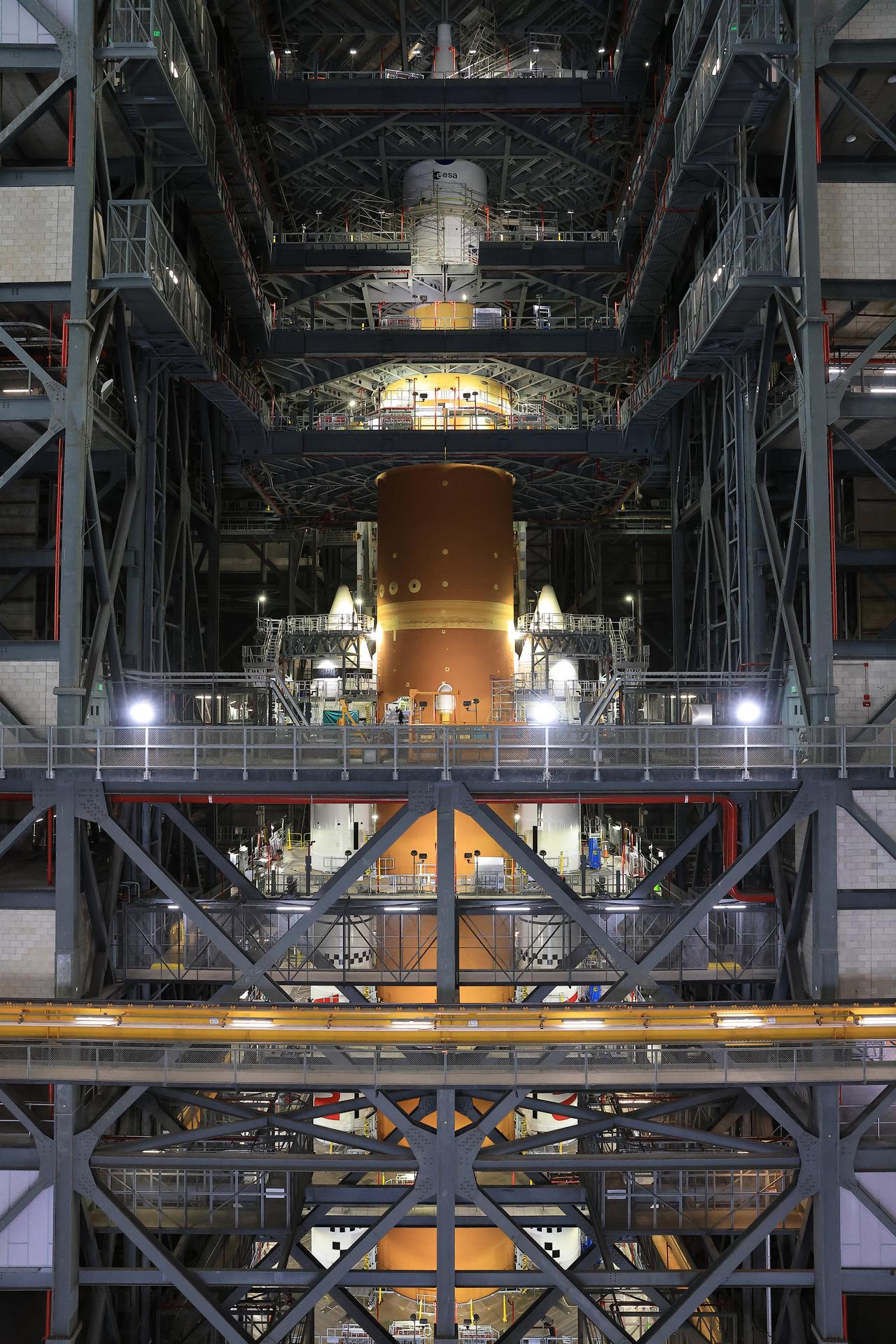
Teams stacked NASA’s Orion spacecraft with its launch abort system on the agency’s SLS rocket in High Bay 3 of the Vehicle Assembly Building at NASA Kennedy on Oct. 20 for the agency’s Artemis II mission. Teams will begin conducting a series of verification tests ahead of rolling out the integrated SLS rocket to Launch Complex 39B for the wet dress rehearsal.
NASA’s Artemis II Orion spacecraft with its launch abort system is stacked atop the agency’s SLS (Space Launch System) rocket in High Bay 3 of the Vehicle Assembly Building at NASA’s Kennedy Space Center in Florida on Monday, Oct. 20, 2025.
NASA/Kim Shiflett
NOVEMBER NASA’s ESCAPADE Begins Journey to Mars
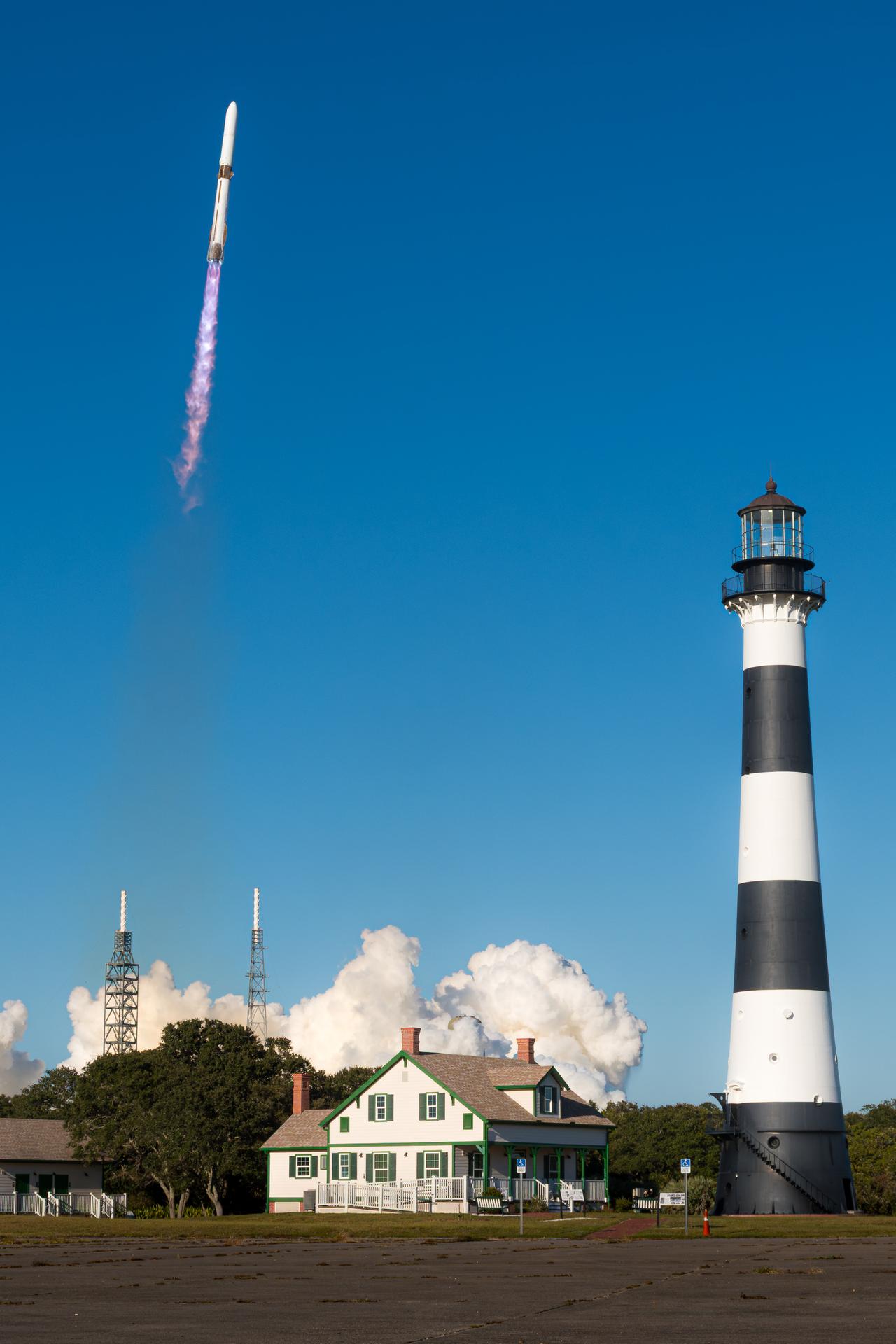
NASA’s ESCAPADE (Escape and Plasma Acceleration and Dynamics Explorers) twin spacecraft launched aboard Blue Origin’s New Glenn rocket on Nov. 13 from Launch Complex 36 at Cape Canaveral Space Force Station. Its twin orbiters will take simultaneous observations from different locations around Mars to reveal how the solar wind interacts with Mars’ magnetic environment and how this interaction drives the planet’s atmospheric escape.
Near Cape Canaveral Lighthouse, Blue Origin’s New Glenn rocket carrying NASA’s twin ESCAPADE (Escape and Plasma Acceleration and Dynamics Explorers) spacecraft launches at 3:55 p.m. EST, Thursday, Nov. 13, 2025, from Launch Complex 36 at Cape Canaveral Space Force Station in Florida. The ESCAPADE mission, built by Rocket Lab, will study how solar wind and plasma interact with Mars’ magnetosphere and how this interaction drives the planet’s atmospheric escape to prepare for future human missions on Mars.
Blue Origin
NASA, European Partners Launch Sea Satellite
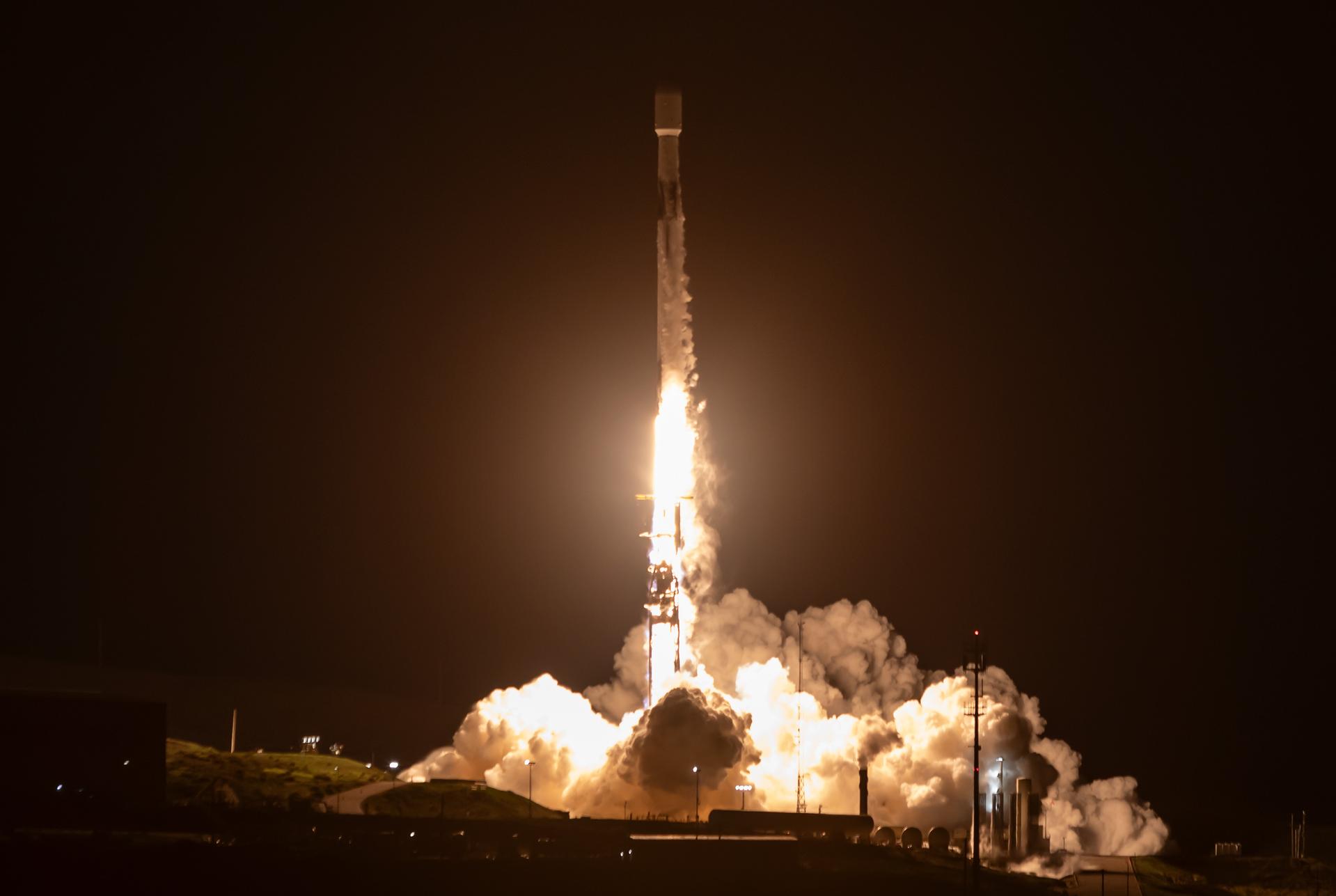
A SpaceX Falcon 9 rocket carrying the U.S.-European Sentinel-6B satellite launched at Nov. 16 from Space Launch Complex 4 East at Vandenberg Space Force Base in California. Sentinel-6B will observe Earth’s ocean, measuring sea levels to improve weather forecasts and flood predictions, safeguard public safety, benefit commercial industry, and protect coastal infrastructure.
A SpaceX Falcon 9 rocket carrying the international Sentinel-6B spacecraft lifts off from Space Launch Complex 4 East at Vandenberg Space Force Base in California at 9:21 p.m. PST Sunday, Nov. 16, 2025. A collaboration between NASA, ESA (European Space Agency), EUMETSAT (European Organisation for the Exploitation of Meteorological Satellites), and the National Oceanic and Atmospheric Administration (NOAA), Sentinel-6B is designed to measure sea levels down to roughly an inch for about 90% of the world’s oceans.
SpaceX
DECEMBER
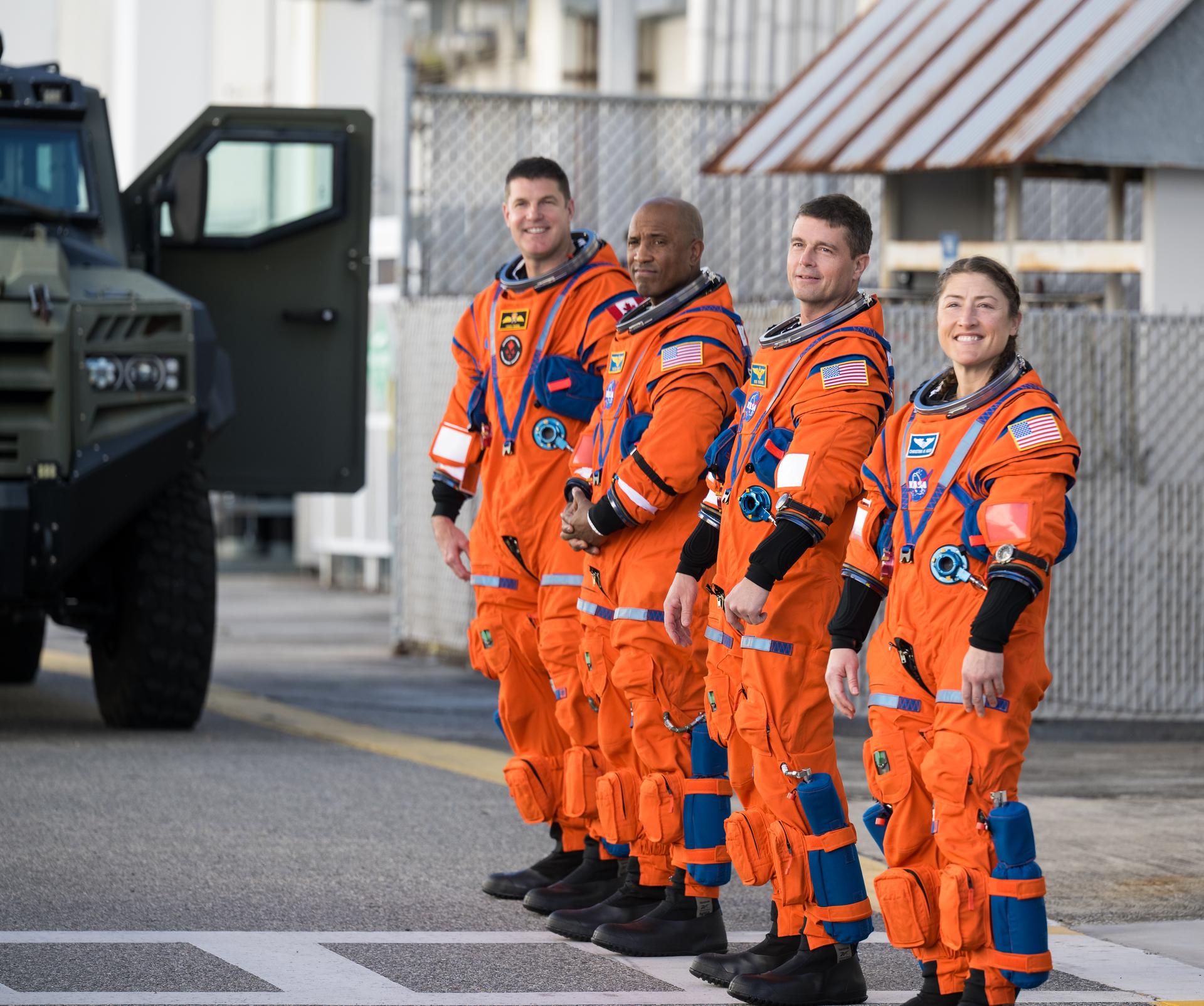
NASA astronauts Reid Wiseman, Victor Glover, Christina Koch, and CSA astronaut Jeremy Hansen participated in a dry dress rehearsal at NASA Kennedy on Dec. 20 to mimic launch day operations for the Artemis II launch. The crew donned their spacesuits, exited the Neil A. Operations and Checkout Building, and took the journey to the Vehicle Assembly Building, up the mobile launcher to the crew access arm, and entered the Orion spacecraft that will take them around the Moon and back to Earth.
From right to left, NASA astronauts Christina Koch, mission specialist; Reid Wiseman, commander; Victor Glover, pilot; and CSA (Canadian Space Agency) astronaut Jeremy Hansen, mission specialist are seen as they depart the Neil A. Armstrong Operations and Checkout Building to board their Orion spacecraft atop NASA’s Space Launch System rocket inside the Vehicle Assembly Building as part of the Artemis II countdown demonstration test, Saturday, Dec. 20, 2025, at NASA’s Kennedy Space Center in Florida. For this operation, the Artemis II crew and launch teams are simulating the launch day timeline including suit-up, walkout, and spacecraft ingress and egress. Through the Artemis campaign, NASA will send astronauts to explore the Moon for scientific discovery, economic benefits, and to build the foundation for the first crewed missions to Mars, for the benefit of all.
From left to right, NASA astronauts Jessica Meir and Jack Hathaway, ESA (European Space Agency) astronaut Sophie Adenot, and Roscosmos cosmonaut Andrey Fedyaev.
Credit: NASA
As part of NASA’s SpaceX Crew-12 mission, four crew members from three space agencies will launch no earlier than Sunday, Feb. 15, 2026, to the International Space Station for a long-duration science expedition.
NASA astronauts Jessica Meir and Jack Hathaway will serve as spacecraft commander and pilot, respectively, and will be accompanied by ESA (European Space Agency) astronaut Sophie Adenot and Roscosmos cosmonaut Andrey Fedyaev, who will both serve as mission specialists. Crew-12 will join Expedition 74 crew members currently aboard the space station.
The flight is the 12th crew rotation with SpaceX to the orbiting laboratory as part of NASA’s Commercial Crew Program. Crew-12 will conduct scientific investigations and technology demonstrations to help prepare humans for future exploration missions to the Moon and Mars, as well as benefit people on Earth.
This will be the second flight to the space station for Meir, who was selected as a NASA astronaut in 2013. The Caribou, Maine, native earned a bachelor’s degree in biology from Brown University, a master’s degree in space studies from the International Space University, and a doctorate in marine biology from Scripps Institution of Oceanography in San Diego. On her first spaceflight, Meir spent 205 days as a flight engineer during Expedition 61/62, and she completed the first three all-woman spacewalks with fellow NASA astronaut Christina Koch, totaling 21 hours and 44 minutes outside of the station. Since then, she has served in various roles, including assistant to the chief astronaut for commercial crew (SpaceX), deputy for the Flight Integration Division, and assistant to the chief astronaut for the human landing system.
A commander in the United States Navy, Hathaway was selected as part of the 2021 astronaut candidate class. This will be Hathaway’s first spaceflight. The South Windsor, Connecticut, native holds a bachelor’s degree in physics and history from the U.S. Naval Academy and master’s degrees in flight dynamics from Cranfield University and national security and strategic studies from the U.S. Naval War College, respectively. Hathaway also is a graduate of the Empire Test Pilot’s School, Fixed Wing Class 70 in 2011. At the time of his selection, Hathaway was deployed aboard the USS Truman, serving as Strike Fighter Squadron 81’s prospective executive officer. He has accumulated more than 2,500 flight hours in 30 different aircraft, including more than 500 carrier arrested landings and 39 combat missions.
The Crew-12 mission will be Adenot’s first spaceflight. Before her selection as an ESA astronaut in 2022, Adenot earned a degree in engineering from ISAE-SUPAERO in Toulouse, France, specializing in spacecraft and aircraft flight dynamics. She also earned a master’s degree in human factors engineering at Massachusetts Institute of Technology in Cambridge. After earning her master’s degree, she became a helicopter cockpit design engineer at Airbus Helicopters and later served as a search and rescue pilot at Cazaux Air Base from 2008 to 2012. She then joined the High Authority Transport Squadron in Villacoublay, France, and served as a formation flight leader and mission captain from 2012 to 2017. Between 2019 and 2022, Adenot worked as a helicopter experimental test pilot in Cazaux Flight Test Center with DGA (Direction Générale de l’Armement – the French Defence Procurement Agency). She has logged more than 3,000 hours flying 22 different helicopters.
This will be Fedyaev’s second long-duration stay aboard the orbiting laboratory. He graduated from the Krasnodar Military Aviation Institute in 2004, specializing in aircraft operations and air traffic organization, and earned qualifications as a pilot engineer. Prior to his selection as a cosmonaut, he served as deputy commander of an Ilyushin-38 aircraft unit in the Kamchatka Region, logging more than 600 flight hours and achieving the rank of second-class military pilot. Fedyaev was selected for the Gagarin Research and Test Cosmonaut Training Center Cosmonaut Corps in 2012 and has served as a test cosmonaut since 2014. In 2023, he flew to the space station as a mission specialist during NASA’s SpaceX Crew-6 mission, spending 186 days in orbit, as an Expedition 69 flight engineer. For his achievements, Fedyaev was awarded the title Hero of the Russian Federation and received the Yuri Gagarin Medal.
For more than 25 years, people have lived and worked continuously aboard the International Space Station, advancing scientific knowledge and making research breakthroughs that are not possible on Earth. The station is a critical testbed for NASA to understand and overcome the challenges of long-duration spaceflight and to expand commercial opportunities in low Earth orbit. As commercial companies concentrate on providing human space transportation services and destinations as part of a robust low Earth orbit economy, NASA is focusing its resources on deep space missions to the Moon as part of the Artemis campaign in preparation for future human missions to Mars.
Learn more about International Space Station research and operations at:
Artemis II NASA astronauts (left to right) Reid Wiseman, Victor Glover, and Christina Koch, and CSA (Canadian Space Agency) astronaut Jeremy Hansen stand in the white room on the crew access arm of the mobile launcher at Launch Pad 39B as part of an integrated ground systems test at the agency’s Kennedy Space Center in Florida on Sept. 20, 2023.
Credit: NASA/Frank Michaux
With a second Trump Administration at the helm in 2025, NASA marked significant progress toward the Artemis II test flight early next year, which is the first crewed mission around the Moon in more than 50 years, as well as built upon its momentum toward a human return to the lunar surface in preparation to send the first astronauts — Americans — to Mars.
As part of the agency’s Golden Age of innovation and exploration, NASA and its partners landed two robotic science missions on the Moon; garnered more signatories for the Artemis Accords with 59 nations now agreeing to safe, transparent, and responsible lunar exploration; as well as advanced a variety of medical and technological experiments for long-duration space missions like hand-held X-ray equipment and navigation capabilities.
NASA also led a variety of science discoveries, including launching a joint satellite mission with India to regularly monitor Earth’s land and ice-covered surfaces, as well as identifying and tracking the third interstellar object in our solar system; achieved 25 continuous years of human presence aboard the International Space Station; and, for the first time, flew a test flight of the agency’s X-59 supersonic plane that will help revolutionize air travel.
Sean Duffy, named by President Trump, is serving as the acting administrator while NASA awaits confirmation of Jared Isaacman to lead the agency. Isaacman’s nomination hearing took place in early December, and his nomination was passed out of committee with bipartisan support. The full Senate will consider Isaacman’s nomination soon. President Trump also nominated Matt Anderson to serve as deputy administrator, and Greg Autry to serve as chief financial officer, both of whom are awaiting confirmation hearings. NASA named Amit Kshatriya to associate administrator, the agency’s highest-ranking civil servant position.
Key accomplishments by NASA in 2025 include:
Astronauts exploring Moon, Mars is on horizon
Under Artemis, NASA will send astronauts on increasingly difficult missions to explore more of the Moon for scientific discovery, economic benefits, and to build upon our foundation for the first crewed mission to Mars. The Artemis II test flight is the first flight with crew under NASA’s Artemis campaign and is slated to launch in early 2026. The mission will help confirm systems and hardware for future lunar missions, including Artemis III’s astronaut lunar landing.
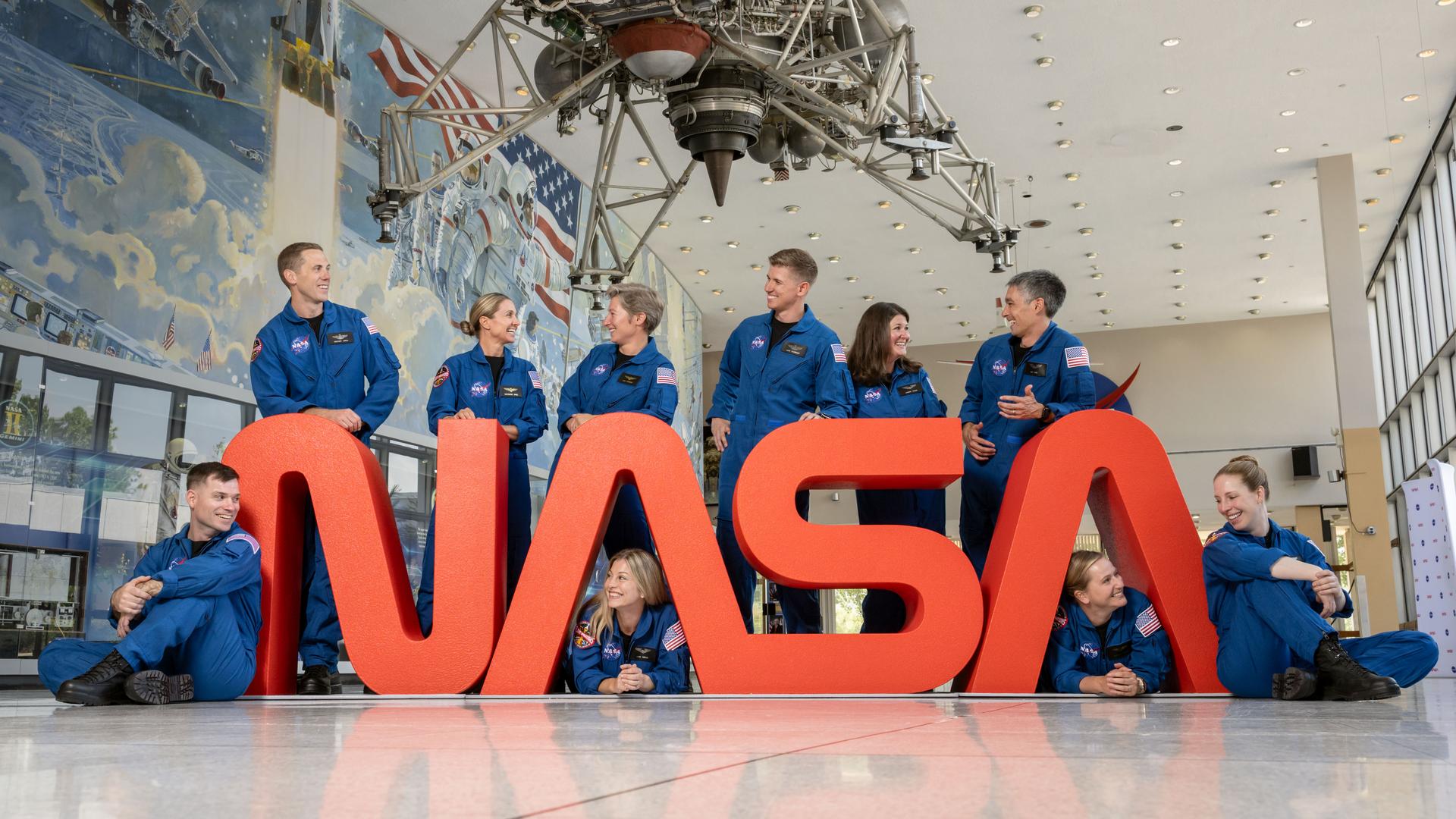
NASA also introduced 10 new astronaut candidates in September, selected from more than 8,000 applicants. The class is undertaking nearly two years of training for future missions to low Earth orbit, the Moon, and Mars.
Progress to send the first crews around the Moon and on the lunar surface under Artemis includes:
NASA completed stacking of its Space Launch System rocket and Orion spacecraft for Artemis II. Teams integrated elements manufactured across the country at NASA’s Kennedy Space Center in Florida, including the rocket’s boosters and core stage, as well as Orion’s stage adapter and launch abort system, to name a few.
Ahead of America’s 250th birthday next year, the SLS rocket’s twin-pair of solid rocket boosters showcases the America 250 emblem.
The Artemis II crew participated in more than 30 mission simulations alongside teams on the ground, ensuring the crew and launch, flight, and recovery teams are prepared for any situation that may arise during the test flight. Soon, crew will don their survival suits and get strapped into Orion during a countdown demonstration test, serving as a dress rehearsal for launch day.
The agency worked with the Department of War to conduct a week-long underway recovery test in preparation to safely collect the Artemis II astronauts after they splashdown following their mission.
To support later missions, teams conducted a booster firing test for future rocket generations, verified new RS-25 engines, test-fired a new hybrid rocket motor to help engineering teams better understand the physics of rocket exhaust and lunar landers, as well using various mockups to test landing capabilities in various lighting conditions. Teams also conducted human-in-the-loop testing in Japan with JAXA (Japan Aerospace Exploration Agency) with a rover mockup from their agency.
NASA also continued work with Axiom Space, to develop and test the company’s spacesuit, including completing a test run at the Neutral Buoyancy Laboratory at NASA Johnson ahead of using the suit for Artemis training. The spacesuit will be worn by Artemis astronauts during the Artemis III mission to the lunar South Pole.
On the Moon, future crew will use a lunar terrain vehicle, or LTV, to travel away from their landing zone. NASA previously awarded three companies feasibility studies for developing LTV, followed by a request for proposals earlier this year. The agency is expected to make an award soon to develop, deliver, and demonstrate LTV on the lunar surface later this decade. The agency also selected two science instruments that will be included on the LTV to study the Moon’s surface composition and scout for potential resources.
For operations around the Moon, NASA and its partners continued to develop Gateway to support missions between lunar orbit and the Moon’s surface. Construction and production of the first two elements, a power and propulsion system and habitation element, each progressed, as did development and testing of potential science and technology demonstrations operated from Gateway. International partners also continued work that may contribute technology to support those elements, as well as additional habitation capabilities and an airlock.
This past year, NASA’s Lunar Surface Innovation Consortium team collaborated with over 3,900 members from academia, industry, and government on key lunar surface capabilities. Members from across the U.S. and 71 countries participated in two biannual meetings, three lunar surface workshops, and monthly topic meetings, resulting in 10 studies, four reports, and nine conference presentations.
Building on previous missions and planning for the future, NASA will conduct more science and technology demonstrations on and around the Moon than ever before. Work toward effort included:
Selected a suite of science studies for the Artemis II mission, including studies that focus on astronauts’ health.
Launched two CLPS (Commercial Lunar Payload Services) flights with NASA as a key customer, including Firefly’s Blue Ghost Mission One, which landed on the Moon March 2, and Intuitive Machines’ Nova C lunar lander, which touched down on March 6.
Experiments and tech demos aboard these flights included an electrodynamic dust shield, lunar navigation system, high-performance computing, collection of more than 9,000 first-of-a-kind images of the lunar lander’s engine plumes, and more.
For future CLPS flights, NASA awarded Blue Origin a task order with an option to deliver the agency’s VIPER (Volatiles Investigating Polar Exploration Rover) to the lunar South Pole in late 2027, as well as awarded Firefly another flight, slated for 2030.
Teams studied regolith (lunar dirt and rocks) in a simulated lunar gravity environment and tested how solid materials catch fire in space.
The agency’s 55-pound CubeSat in lunar orbit, CAPSTONE, exceeded 1,000 days in space, serving as a testbed for autonomous navigation and in-space communications.
Published findings from this Artemis I experiment highlighting why green algae may be a very good deep space travel companion.
NASA announced its 2025 Astronaut Candidate Class on Sept. 22, 2025. The 10 candidates, pictured here at NASA’s Johnson Space Center in Houston are: U.S. Army CW3 Ben Bailey, Anna Menon, Rebecca Lawler, Katherine Spies, U.S. Air Force Maj. Cameron Jones, Dr. Lauren Edgar, U.S. Navy Lt. Cmdr. Erin Overcash, Yuri Kubo, Dr. Imelda Muller, and U.S. Air Force Maj. Adam Fuhrmann.
Credit: NASA/Josh Valcarcel
Technological and scientific steps toward humanity’s next giant leap on the Red Planet include:
Launched a pair of spacecraft, known as ESCAPADE, on a mission to Mars, arriving in September 2027, to study how its magnetic environment is impacted by the Sun. This data will better inform our understanding of space weather, which is important to help minimize the effects of radiation for future missions with crew.
NASA announced Steve Sinacore, from the agency’s Glenn Research Center in Cleveland, to lead the nation’s fission surface power efforts.
Selected participants for a second yearlong ground-based simulation of a human mission to Mars, which began in October, as well as tested a new deep space inflatable habitat concept.
Completed the agency’s Deep Space Optical Communications experiment, which exceeded all of its technical goals after two years. This type of laser communications has the potential to support high-bandwidth connections for long duration crewed missions in deep space.
NASA completed its fourth Entry Descent and Landing technology test in three months, accelerating innovation to achieve precision landings on Mars’ thin atmosphere and rugged terrain.
Through the Artemis Accords, seven new nations have joined the United States, led by NASA and the U.S. Department of State, in a voluntary commitment to the safe, transparent, and responsible exploration of the Moon, Mars, and beyond. With nearly 60 signatories, more countries are expected to sign in the coming months and years.
A NASA delegation participated in the 76th International Astronautical Congress in Sydney, Australia. During the congress, NASA co-chaired the Artemis Accords Principals’ Meeting, bringing together dozens of nations furthering discussions on their implementation.
Finally, NASA engaged the public to join its missions to the Moon and Mars through a variety of activities. The agency sought names from people around the world to fly their name on a SD card aboard Orion during the Artemis II mission. NASA also sponsored a global challenge to design the spacecraft’s zero gravity indicator, announcing 25 finalists this year for the mascot design. Artemis II crew members are expected to announce a winner soon.
NASA’s gold standard science benefits humanity
In addition to conducting science at the Moon and Mars to further human exploration in the solar system, the agency continues its quest in the search for life, and its scientific work defends the planet from asteroids, advances wildfire monitoring from its satellites, studies the Sun, and more.
Garnering significant interest this year, NASA has coordinated a solar system-wide observation campaign to follow comet 3I/ATLAS, the third known interstellar object to pass through our solar system. To date, 12 NASA spacecraft and space-based telescopes have captured and processed imagery of the comet since its discovery in the summer.
Astrobiology
A Perseverance sample found on Mars potentially contain biosignatures, a substance or structure that might have a biological origin but requires additional data and studying before any conclusions can be reached about the absence or presence of life.
Samples from asteroid Bennu revealed sugars, amino acids, and other life-building molecules.
Planetary Defense
In defense of Earth and protecting humanity, NASA has continued to monitor a near-Earth object that triggered potential impact notifications.
Scientists have worked to calculate more precise impact models, noting the asteroid, which poses no significant threat to Earth, has only a 0.0004% chance of hitting our planet. An international satellite determined NASA’s DART (Double Asteroid Redirect Test) released 35.5 million pounds of dust and rock from the mission’s impact in 2022.
In addition to launching the NISAR mission, here are other key science moments:
Completion of NASA’s next flagship observatory, the Nancy Grace Roman Space Telescope, is done, with final testing underway. The telescope will help answer questions about dark energy and exoplanets and will be ready to launch as early as fall of 2026.
The agency’s newest operating flagship telescope, James Webb Space Telescope, now in its third year, continued to transform our understanding of the universe, and Hubble celebrated its 35th year with a 2.5-gigapixel Andromeda galaxy mosaic.
Juno found a massive, hyper-energetic volcano on Jupiter’s moon Io.
NASA’s Parker Solar Probe team shared new images of the Sun’s atmosphere, taken closer to the star than ever captured before.
Lucy completed a successful rehearsal flyby of the asteroid Donaldjohanson.
NASA space telescopes including Chandra X-ray Observatory, IXPE, Fermi, Swift, and NuSTAR continued to reveal secrets in the universe from record-setting black holes to the first observations of the cosmos’ most magnetic objects.
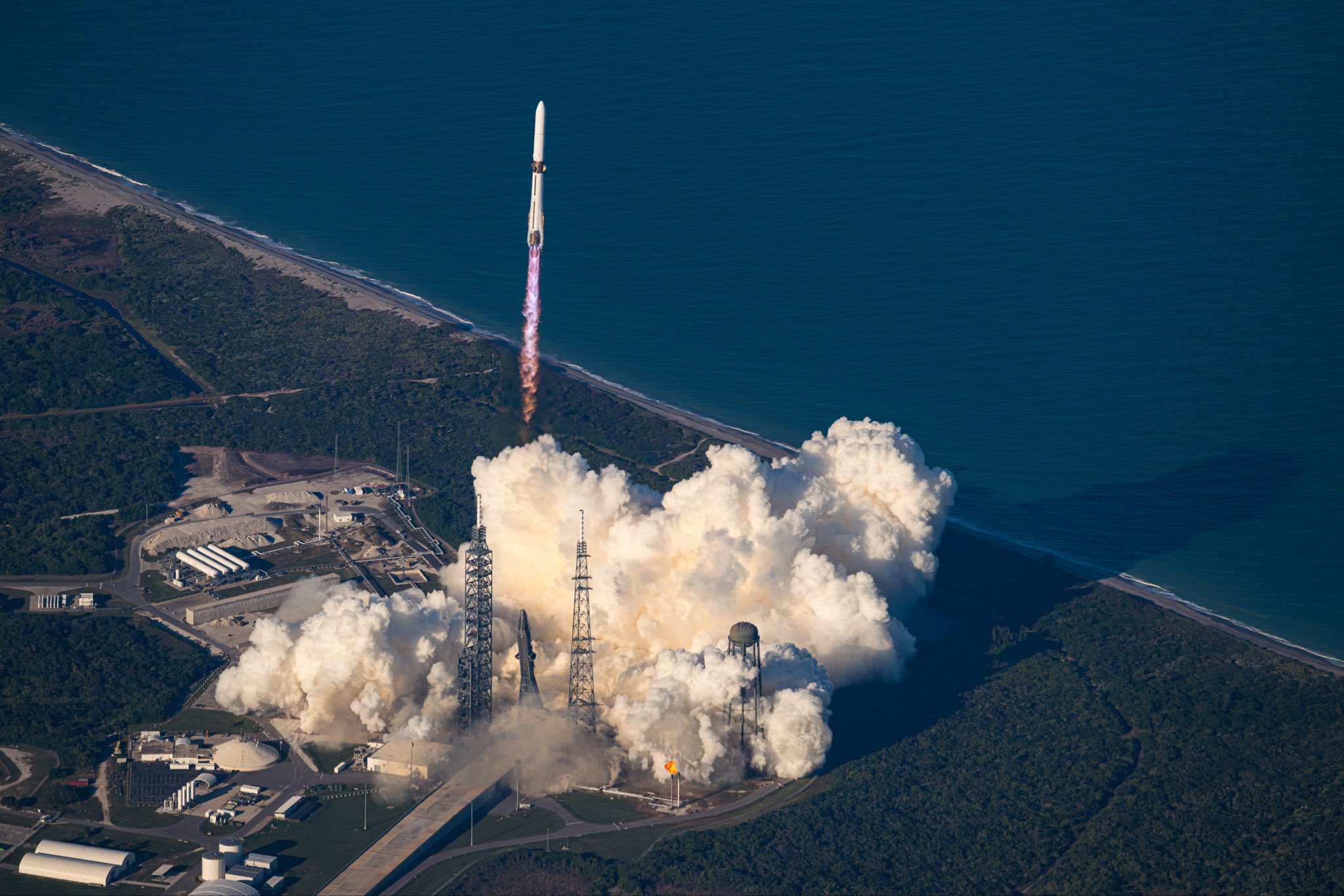
NASA’s ESCAPADE (Escape and Plasma Acceleration and Dynamics Explorers) mission launched on Nov. 13, 2025, atop a Blue Origin New Glenn rocket at Launch Complex 36 at Cape Canaveral Space Force Station.
Credit: Blue Origin
25 years of continuous presence in low Earth orbit
In 2025, the International Space Station celebrated 25 years of continuous human presence, a milestone achievement underscoring its role as a beacon of global cooperation in space. The orbital laboratory supported thousands of hours of groundbreaking research in microgravity in 2025, advancing commercial space development and preparing for future human exploration of the Moon and Mars.
For the first time, all eight docking ports were occupied by visiting spacecraft to close out the year, demonstrating the strength of NASA’s commercial and international partnerships. Twenty-five people from six countries lived and worked aboard the station this year. In all, 12 spacecraft visited the space station in 2025, including seven cargo missions delivering more than 50,000 pounds of science, tools, and critical supplies to the orbital complex.
Research aboard the International Space Station continues to benefit life on Earth and support deep space exploration.
Several studies with Crew-10 and Crew 11 aimed at understanding how the human body adapts to spaceflight, including a new study to assess astronauts’ performance, decision making, and piloting capabilities during simulated lunar landings.
In September, the U.S. Food and Drug Administration approved an early-stage cancer treatment, supported by research aboard the space station, that could reduce costs and shorten treatment times for patients.
Scientists also published findings in peer-reviewed journals on topics such as astronaut piloting performance after long missions, the use of biologically derived materials to shield against space radiation, robotic telesurgery in space, and how spaceflight affects stem cells, all advancing our understanding of human physiology in space and on Earth.
Researchers 3D-printed medical implants with potential to support nerve repair; advanced work toward large-scale, in-space semiconductor manufacturing; and researched the production of medical components with increased stability and biocompatibility that could improve medication delivery.
Additional notable space operations accomplishments included:
NASA’s SpaceX Crew-9 astronauts Nick Hague, Suni Williams, and Butch Wilmore returned in March after a long-duration mission, including more than eight months for Williams and Wilmore. The trio completed more than 150 scientific experiments and 900 hours of research during the stay aboard the orbiting laboratory. Williams also conducted two spacewalks, setting a new female spacewalking record with 62 hours, 6 minutes, and ranking her fourth all-time in spacewalk duration.
NASA astronaut Don Pettit returned in April with Roscosmos cosmonauts Alexey Ovchinin and Ivan Vagner, concluding a seven-month mission. Pettit, who turned 70 the day of his return, completed 400 hours of research during his flight, and has now logged 590 days in space across four missions.
SpaceX Dragon cargo missions 32 and 33 launched in April and August, delivering more than 11,700 pounds of cargo, while SpaceX 33 tested a new capability to help maintain the altitude of station.
Axiom Mission 4, the fourth private astronaut mission to the space station, concluded in July, furthering NASA’s efforts to support and advance commercial operations in low Earth orbit.
NASA SpaceX Crew-11 mission launched in August with NASA astronauts Zena Cardman and Mike Fincke, JAXA (Japan Aerospace Exploration Agency) astronaut Kimiya Yui, and Roscosmos cosmonaut Oleg Platonov aboard. The crew remains aboard the space station where they are conducting long-duration research to support deep space exploration and benefit life on Earth.
NASA’s SpaceX Crew-10 mission completed more than 600 hours of research before returning in August, when they became the first crewed SpaceX mission for NASA to splash down in the Pacific Ocean.
In September, the first Northrop Grumman Cygnus XL spacecraft arrived, delivering more than 11,000 pounds of cargo, including research supporting Artemis and Mars exploration.
NASA Glenn researchers tested handheld X-ray devices that could help astronauts quickly check for injuries or equipment problems during future space missions.
For nearly six years, NASA’s BioNutrients project has studied how to produce essential nutrients to support astronaut health during deep space missions, where food and vitamins have limited shelf lives. With its third experiment now aboard the International Space Station, the research continues to advance preparations for long-duration spaceflight.
NASA astronaut Chris Williams arrived with Roscosmos cosmonauts Sergey Kud-Sverchkov and Sergei Mikaev for an eight-month science mission aboard the station. Following their arrival, NASA astronaut Jonny Kim returned home, concluding his own eight-month mission.
NASA has worked with commercial companies to advance development of privately owned and operated space stations in low Earth orbit from which the agency, along with other customers, can purchase services and stimulate the growth of commercial activities in microgravity. This work is done in advance of the International Space Station’s retirement in 2030.
Among the many achievements made by our partners, recent advancements include:
Axiom Space has completed critical design review, machining activities, and the final welds, moving to testing for the primary structure of Axiom Station’s first module.
Completed testing of the trace contaminant control system for Vast’s Haven-1 space station using facilities at NASA Marshall, confirming the system can maintain a safe and healthy atmosphere.
Blue Origin’s Orbital Reef completed a human-in-the-loop testing milestone using individual participants or small groups to perform day-in-the-life walkthroughs in life-sized mockups of major station components.
The agency also continues to support the design and development of space stations and technologies through agreements with Northrop Grumman, Sierra Space, SpaceX, Special Aerospace Services, and ThinkOrbital.
On Nov. 2, 2025, the International Space Station celebrated 25 years of continuous human presence. Here, clouds swirl over the Gulf of Alaska and underneath the aurora borealis blanketing Earth’s horizon in this photograph from the space station as it orbited 261 miles above on March 12, 2025.
Credit: NASA
Pioneering aviation research
This year saw a major triumph for NASA’s aviation researchers, as its X-59 one-of-a-kind quiet supersonic aircraft made its historic first flight Oct 28. NASA test pilot Nils Larson flew the X-59 for 67 minutes up to an altitude of about 12,000 feet and an approximate top speed of 230 mph, precisely as planned. The flight capped off a year of engine testing including afterburner testing, taxi testing, and simulated flights from the ground — all to make sure first flight went safely and smoothly. The X-59 team will now focus on preparing for a series of flight tests where the aircraft will operate at higher altitudes and supersonic speeds. This flight test phase will ensure the X-59 meets performance and safety expectations. NASA’s Quesst mission also began testing the technologies that they will use to measure the X-59’s unique shock waves and study its acoustics during future mission phases.
Researchers also made other major strides to further aviation technologies that will benefit the public and first responders, including live flight testing of a new portable airspace management system with the potential to greatly improve air traffic awareness during wildland fire operations.
During the past year, the agency’s aeronautics researchers also:
Conducted live flight testing with aircraft performing simulated wildland fire response using NASA’s new portable airspace management system known as Advanced Capabilities for Emergency Response Operations (ACERO) project.
Used NASA’s Transonic Dynamics Tunnel in Virginia to test the performance of rotors designed for NASA’s Dragonfly rotorcraft, which will explore Saturn’s moon, Titan.
Performed wind tunnel tests to see how icing could affect longer, thinner wings on future airliners and to evaluate a tiltwing design likely to see wide usage in advanced air mobility vehicles.
Tested NASA-designed ultralight aerogel antennas that could be embedded into aircraft skin for more aerodynamic, reliable, satellite communications.
Worked to advance the airborne transportation of people and goods, including a collaboration with the Department of War to advance capabilities for long-distance cargo drones; a partnership to test a tool for remotely piloted urban air transportation; flight tests with partners exploring large-scale drone cargo flights; and work with ResilienX to enhance preflight planning for safer future skies.
Performed research to help with the integration of air taxis and similar future aircraft, such as producing real-world data to help understand their flight dynamics; dropping a full-scale fuselage model to test its materials upon impact; collecting to evaluate strategies for urban airspace integration; investigating passenger comfort; and testing 5G-based aviation network technology to boost air taxi connectivity. Evaluated a system that would help prevent collisions between air taxis and other future aircraft in urban environments.
Made advances to unsteady pressure sensitive paint wind tunnel technology, allowing it to measure air pressure on miniature aircraft and rocket models 10,000 times faster with 1,000 times higher resolution.
Collected data on mixed reality systems that allow users to interact with physical flight simulators while wearing virtual reality headsets.
Developed the GlennICE tool for U.S. researchers and aircraft developers to integrate icing-related considerations into aircraft design.
Supported research for safer and smoother airline and airport operations, including; developing a preflight rerouting tool to actively curb commercial airline delays and save fuel; demonstrating a unique air traffic management concept for safer aircraft operate at higher altitudes; and hosting technology testing to make runway taxiing safer and more efficient.
NASA’s X-59 quiet supersonic research aircraft lifts off for its first flight on Oct. 28, 2025, from U.S. Air Force Plant 42 in Palmdale, California. The aircraft’s first flight marks the start of flight testing for NASA’s Quesst mission, the result of years of design, integration, and ground testing.
Credit: NASA/Lori Losey
Technologies that advance exploration, support growing space economies
From spinoff technologies on Earth to accelerating development of technologies in low Earth orbit and at the Moon and Mars, NASA develops, demonstrates, and transfer new space technologies that benefit the agency, private companies, and other government agencies and missions.
Accomplishments by NASA and our partners in 2025 included:
NASA and Teledyne Energy Systems Inc. demonstrated a next-generation fuel cell system aboard a Blue Origin New Shepard mission, proving it can deliver reliable power in the microgravity environment of space.
Varda Space Industries licensed cutting-edge heatshield material from NASA, allowing it to be produced commercially for the company’s capsule containing a platform to process pharmaceuticals in microgravity. Through this commercial collaboration NASA is making entry system materials more readily available to the U.S. space economy and advancing the industries that depend on it.
The maiden flight of UP Aerospace’s Spyder hypersonic launch system demonstrated the U.S. commercial space industry’s capacity to test large payloads (up to 400 pounds) at five times the speed of sound. NASA’s support of Spyder’s development helped ensure the availability of fast-turnaround, lower cost testing services for U.S. government projects focused on space exploration and national security.
The NASA Integrated Rotating Detonation Engine System completed a test series for its first rotating detonation rocket engine technology thrust chamber assembly unit.
NASA successfully completed its automated space traffic coordination objectives between the agency’s four Starling spacecraft and SpaceX’s Starlink constellation. The Starling demonstration matured autonomous decision-making capabilities for spacecraft swarms using Distributed Spacecraft Autonomy software, developed by NASA’s Ames Research Center in California’s Silicon Valley.
NASA announced an industry partnership to design the Fly Foundational Robots mission to demonstrate use of Motiv Space Systems’ robotic arm aboard a hosted orbital flight test with Astro Digital.
The third spacecraft in the R5 (Realizing Rapid, Reduced-cost high-Risk Research) demonstration series launched aboard SpaceX’s Transporter-15 mission. This series of small satellites leverage terrestrial commercial off-the-shelf hardware to enable affordable, rapid orbital flight tests of rendezvous and proximity operations payloads.
The DUPLEX CubeSat developed by CU Aerospace deployed from the International Space Station to demonstrate two commercial micro-propulsion technologies for affordable small spacecraft propulsion systems.
Harnessing NASA’s brand power in real life, online
As one of the most recognized global brands and most followed on social media, NASA amplified its reach through force-multiplying engagement activities that generate excitement and support for the agency’s missions and help foster a Golden Age of innovators and explorers.
From collaborations with sport organizations and players to partnerships with world-renowned brands, these activities provide low-cost, high-impact avenues to engage an ever-expanding audience and reinforce NASA’s position as the world’s premier space agency. Engagement highlights from 2025 include:
Second Lady Usha Vance also kicked off her summer reading challenge at NASA’s Johnson Space Center in Houston, encouraging youth to seek adventure, imagination, and discovery in books, a sentiment close to NASA and everyone the agency inspires.
Reached nearly 5 million people through participation in hybrid and in-person events across the agency, including the White House’s Summer Reading Challenge, Open Sauce 2025, the Expedition 71 and 72 postflight visits, featuring NASA astronauts recently returned from missions aboard the space station, and more.
Participated in a variety of space policy conferences to include Space Symposium and the International Aeronautical Congress highlighting America’s leadership in human exploration to the Moon and Mars, responsible exploration under the Artemis Accords, and support for the commercial space sector.
In 2025, NASA also consolidated its social media accounts to improve clarity, compliance, and strategic alignment. After streamlining the number of active accounts, the agency grew its total following on these accounts by more than eight million, reaching nearly 367 million followers.
Other digital highlights included:
In 2025, NASA expanded access to its NASA+ streaming service by launching a free, ad-supported channel on Prime Video and announcing a new partnership with Netflix to stream live programming, including rocket launches and spacewalks, making its missions more accessible to global audiences and inspiring the next generation of explorers. As of November 2025, viewers have streamed more than 7.7 million minutes of NASA content on the Prime Video FAST channel.
NASA’s SpaceX Crew-9 return from the space station drew over 2.5 million live viewers, making it the agency’s most-watched event of 2025.
NASA aired live broadcasts for 17 launches in 2025, which have a combined 3.7 million views while live. NASA’s SpaceX Crew-10 and NISAR launches have the most views on YouTube, while crewed launches (Crew-10, Crew-11, and Axiom Mission 4) were the most-viewed while the broadcast was live.
The agency’s YouTube livestreams in 2025 surpassed 18.8 million total live views. The agency’s YouTube channel has more than 50.4 million total views for the year.
The agency’s podcasts were downloaded more than 2 million times in 2025 by more than 750,000 listeners.
Increased content production nearly tenfold for its science-focused website in Spanish, Ciencia de la NASA, and grew the website’s page views by 24% and visitor numbers by 25%. NASA’s Spanish language social media accounts experienced a 17% growth in followers in 2025.
The number of subscribers to NASA’s flagship and Spanish newsletters total more than 4.6 million.
NASA earned a spot on The Webby 30, a curated list celebrating 30 companies and organizations that have shaped the digital landscape.
More than 2.9 million viewers watched 38,400 hours of NASA’s on-demand streaming service NASA+ in 2025. November marked two years since NASA+ debuted.
Premiered “Planetary Defenders,” a new documentary that follows the dedicated team behind asteroid detection and planetary defense. The film debuted at an event at the agency’s headquarters with digital creators, interagency and international partners, and now is streaming on NASA+, YouTube, and X. In its first 24 hours, it saw 25,000 views on YouTube – 75% above average – and reached 4 million impressions on X.
“Cosmic Dawn,” a feature-length documentary following the creation of the James Webb Space Telescope, was released this year. The film has been viewed 1.6 million times on the agency’s YouTube channel.
Among agency awards:
NASA’s broadcast of the April 8, 2024, total solar eclipse won multiple Emmy Awards.
Received six Webby Awards and six People’s Voice Awards across platforms — recognition of America’s excellence in digital engagement and public communication.

 Login
Login