Normal view

There are new articles available, click to refresh the page.
Before yesterdayMain stream

NASA’s Day of Remembrance Honors Fallen Heroes of Exploration
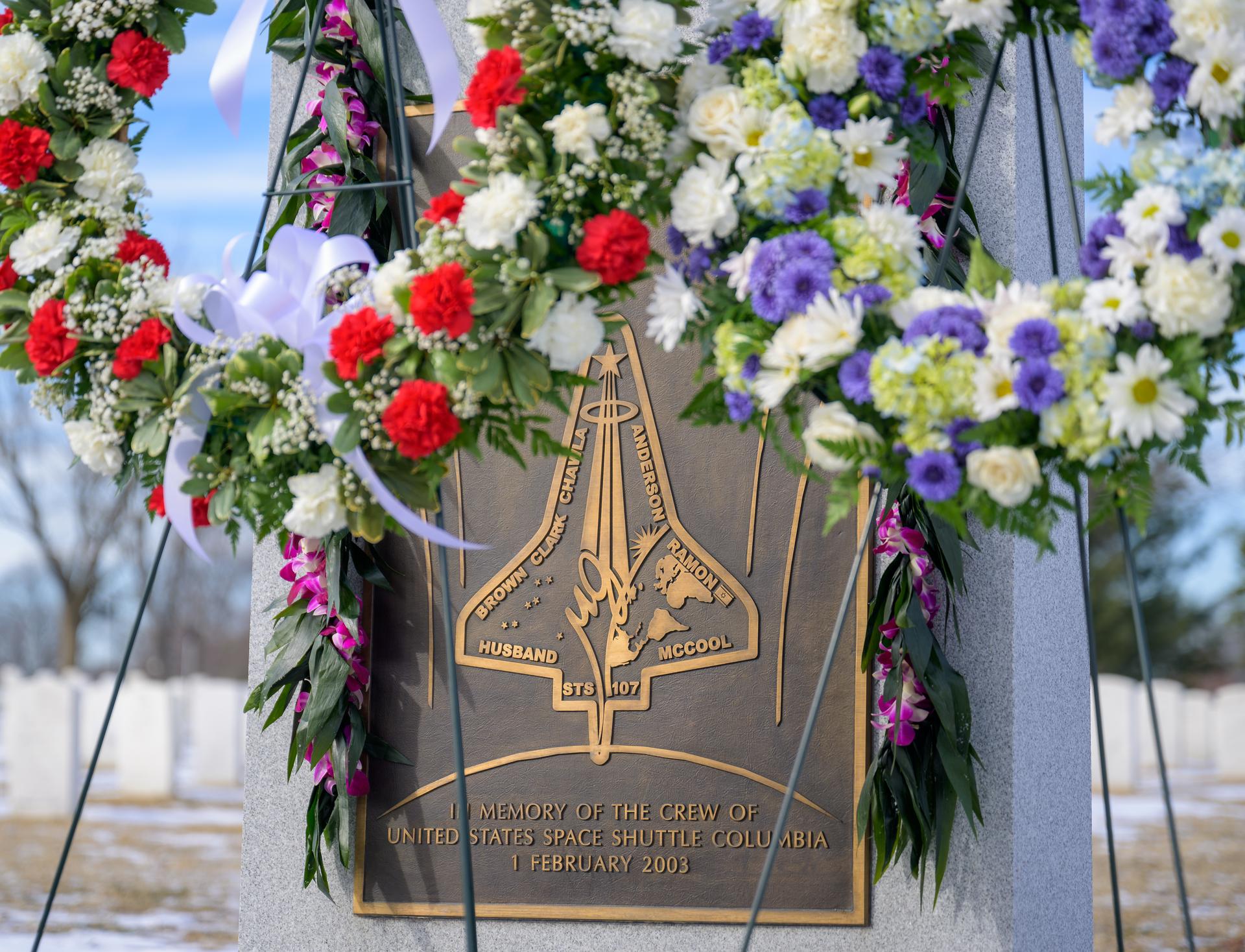
20 January 2026 at 18:17
The Space Shuttle Columbia Memorial is seen during a wreath laying ceremony that was part of NASA’s Day of Remembrance, Thursday, Jan. 23, 2025, at Arlington National Cemetery in Virginia. Wreaths were laid in memory of those men and women who lost their lives in the quest for space exploration.
Credit: NASA/Bill Ingalls

NASA will observe its annual Day of Remembrance on Thursday, Jan. 22, which includes commemorating the crews of Apollo 1 and the space shuttles Challenger and Columbia. The event is traditionally held every year on the fourth Thursday of January, as all three astronaut accidents happened around the end of the month.

“On NASA’s Day of Remembrance, we pause to honor the members of the NASA family who lost their lives while pushing the boundaries of exploration and discovery,” said NASA Administrator Jared Isaacman. “We remember them not to retreat from risk, but to respect it — to learn, to improve, and continue onward. Their sacrifice and the strength of their families will forever inspire us as we continue to reach for the stars and pursue the secrets of the universe.”

Isaacman will lead an observance at 1 p.m. EST at Arlington National Cemetery in Virginia, which will begin with a wreath-laying ceremony at the Tomb of the Unknown Soldier, followed by observances for the Apollo 1, Challenger, and Columbia crews.

Several agency centers also will hold observances:

Johnson Space Center in Houston

NASA Johnson will hold a commemoration at 10 a.m. CST at the Astronaut Memorial Grove with remarks by Center Director Vanessa Wyche, NASA astronaut Jasmin Moghbeli, and Cheryl McNair, widow of Challenger astronaut Ronald McNair. The event will have a moment of silence, a NASA T-38 flyover, taps performed by the Texas A&M Squadron 17, and a procession placing flowers at Apollo I, Challenger, and Columbia memorial trees.

Kennedy Space Center in Florida

NASA Kennedy and the Astronauts Memorial Foundation will host a ceremony at the Space Shuttle Atlantis building at Kennedy’s Visitor Complex at 11 a.m. EST. The event will include musical guests, a bell ringing commemoration, a moment of silence, and wreath-laying. Kelvin Manning, deputy director at NASA Kennedy, and Bob Cabana, former NASA associate administrator and Kennedy center director, will provide remarks during the ceremony, which will livestream on the center’s Facebook page.

Ames Research Center in California’s Silicon Valley

NASA Ames will hold a remembrance ceremony at 1 p.m. PST that includes remarks from Center Director Eugene Tu, a moment of silence, and bell ringing commemoration for each astronaut lost in service.

Langley Research Center in Hampton, Virginia

NASA Langley will hold a remembrance ceremony at 1 p.m. EST with acting Center Director Trina Dyal, followed by placing flags at the Langley Workers Memorial.

Marshall Space Flight Center in Huntsville, Alabama

NASA Marshall will hold a candle-lighting ceremony and wreath placement at 9:30 a.m. CST and include remarks from Rae Ann Meyer, Marshall’s acting center director, and Bill Hill, director of Safety and Mission Assurance at Marshall.

Stennis Space Flight Center in Bay St. Louis, Mississippi

NASA Stennis and the NASA Shared Services Center will hold a wreath-laying ceremony and moment of silence at 10:30 a.m. CST with remarks from Center Director John Bailey and Anita Harrell, NASA Shared Services Center executive director.

The agency also is paying tribute to its fallen astronauts with special online content, updated on NASA’s Day of Remembrance, at:

https://www.nasa.gov/dor

-end-

Bethany Stevens / Elizabeth Shaw
Headquarters, Washington
202-358-1600
bethany.c.stevens@nasa.gov / elizabeth.a.shaw@nasa.gov
New NASA Artemis Payloads To Study Moon’s Terrain, Radiation, History

20 January 2026 at 16:21
NASA insignia.
NASA

NASA announced Tuesday the selection of three new science investigations that will strengthen humanity’s understanding and exploration of the Moon. As part of the agency’s CLPS (Commercial Lunar Payload Services) initiative and Artemis campaign, American companies will deliver these research payloads to the lunar surface no earlier than 2028.

“With CLPS, NASA has been taking a new approach to lunar science, relying on U.S. industry innovation to travel to the surface of the Moon and enable scientific discovery,” said Joel Kearns, deputy associate administrator for exploration, Science Mission Directorate, NASA Headquarters in Washington. “These selections continue this pipeline of lunar exploration, through research that will not only expand our knowledge about the Moon’s history and environment, but also inform future human safety and navigation on the Moon and beyond.”

The selected scientific payloads are:

  • Emission Imager for Lunar Infrared Analysis in 3D (EMILIA-3D). The EMILIA-3D payload will create three-dimensional thermal models of the lunar terrain, using a thermal imager to measure the temperature of the landscape coupled with a stereo pair of visible-light cameras. These models will help the U.S. better image and navigate the Moon’s surface through improved understanding of the properties of the dusty lunar soil, called regolith, and what temperature measurements convey about the lunar surface. The principal investigator is Andrew Ryan at the University of Arizona.
  • Lunar Instrumentation for Subsurface Thermal Exploration with Rapidity (LISTER). The LISTER instrument will measure the heat flow of the Moon’s interior by drilling beneath the lunar surface, pausing at intervals to measure temperature changes and the ability of the subsurface material to conduct heat. A previous version of LISTER flew on the Blue Ghost Mission 1 CLPS delivery to the Moon’s near side, where it took eight temperature and thermal conductivity measurements and drilled down to about three feet beneath the lunar surface. This new LISTER investigation will study the heat flow generated by the Moon itself, giving us a better understanding of its thermal history. The principal investigator is Seiichi Nagihara at Texas Tech University.
  • Site-agnostic Energetic Lunar Ion and Neutron Environment (SELINE). The SELINE payload will provide new insight into the Moon’s radiation environment by studying, for the first time at the lunar surface, the radiation from both primary galactic cosmic rays and their secondary particles and how this radiation interacts with the lunar regolith. Data from SELINE will improve our understanding of the planetary processes at work on the Moon, as well as inform space weather preparation and safety for long-term human exploration of the lunar surface. The principal investigator is Drew Turner at Johns Hopkins University.

These science experiments, selected through NASA’s Payloads and Research Investigations on the Surface of the Moon call for proposals, do not require a specific landing site on the lunar surface to gather their data, and NASA will assign them to specific CLPS delivery task orders at a later time.

NASA uses CLPS to send scientific instruments and technology demonstrations to advance capabilities for science, exploration, or commercial development of the Moon and beyond. By supporting a steady cadence of lunar deliveries, the agency will continue to enable a growing lunar economy while leveraging the entrepreneurial innovation of the commercial space industry.

To learn more about CLPS and Artemis, visit:

https://www.nasa.gov/clps

-end-

Alise Fisher
Headquarters, Washington
202-358-2546
alise.m.fisher@nasa.gov

NASA’s SpaceX Crew-11 to Discuss Space Station Science Mission

16 January 2026 at 18:18
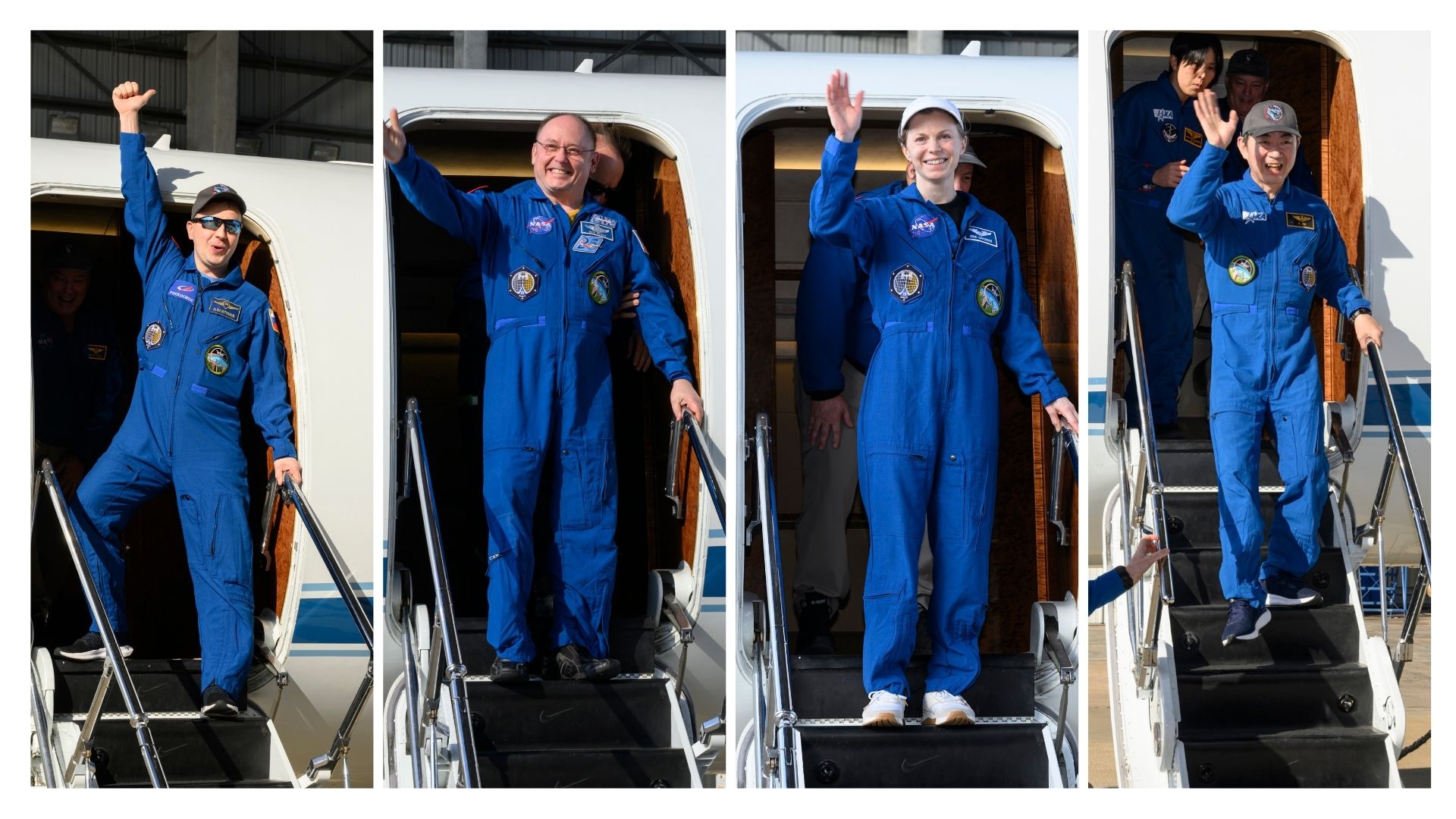
NASA’s SpaceX Crew-11 crew returns to Ellington Field’s Guppy Hangar in Houston on Jan. 16, 2026, from left to right is Roscosmos cosmonaut Oleg Platonov, NASA astronauts Mike Fincke, and Zena Cardman, and JAXA (Japan Aerospace Exploration Agency) astronaut Kimya Yui.
NASA

After 167 days in space, the crew members of NASA’s SpaceX Crew-11 mission will hold a news conference at 2:15 p.m. EST, Wednesday, Jan. 21, at the agency’s Johnson Space Center in Houston to discuss their science expedition aboard the International Space Station.

NASA astronauts Zena Cardman and Mike Fincke, JAXA (Japan Aerospace Exploration Agency) astronaut Kimiya Yui, and Roscosmos cosmonaut Oleg Platonov will answer questions about their mission. The crew members returned to Earth on Jan. 15, splashing down off the coast of San Diego, and arrived in Houston on Friday, where they will undergo standard postflight reconditioning and evaluations.

NASA will provide live coverage on the agency’s YouTube channel. Learn how to watch NASA content through a variety of additional online platforms, including social media.

Media are invited to attend in person or virtually. For in-person attendance, contact the NASA Johnson newsroom no later than 5 p.m. CST, Tuesday, Jan. 20, at jsccommu@mail.nasa.gov or 281-483-5111. Media participating by phone must dial into the news conference no later than 10 minutes prior to the start of the event to ask questions. Questions also may be submitted on social media using #AskNASA. A copy of NASA’s media accreditation policy is available on the agency’s website.

The crew spent more than five months in space, including 165 days aboard the orbiting laboratory, traveling nearly 71 million miles, and completing more than 2,670 orbits around Earth. While living and working aboard the station, the crew completed hundreds of science experiments and technology demonstrations.

Get the latest NASA space station news, images, and features on Instagram, Facebook, and X.

NASA’s Commercial Crew Program has delivered on its goal of safe, reliable, and cost-effective transportation to and from the International Space Station from the United States through a partnership with American private industry. This partnership is opening access to low Earth orbit and the space station to more people, more science, and more commercial opportunities. For more than 25 years, people have continuously lived and worked aboard the space station, advancing scientific knowledge and demonstrating new technologies that enable us to prepare for human exploration of the Moon as we prepare for Mars.

Learn more about NASA’s Commercial Crew Program at:

https://www.nasa.gov/commercialcrew

-end-

Joshua Finch / Jimi Russell
Headquarters, Washington
202-358-1100
joshua.a.finch@nasa.gov / james.j.russell@nasa.gov  

Anna Schneider / Shaneequa Vereen
Johnson Space Center, Houston
281-483-5111
anna.c.schneider@nasa.gov / shaneequa.y.vereen@nasa.gov

NASA’s SpaceX Crew-11 Mission Returns, Splashes Down off California

15 January 2026 at 05:59
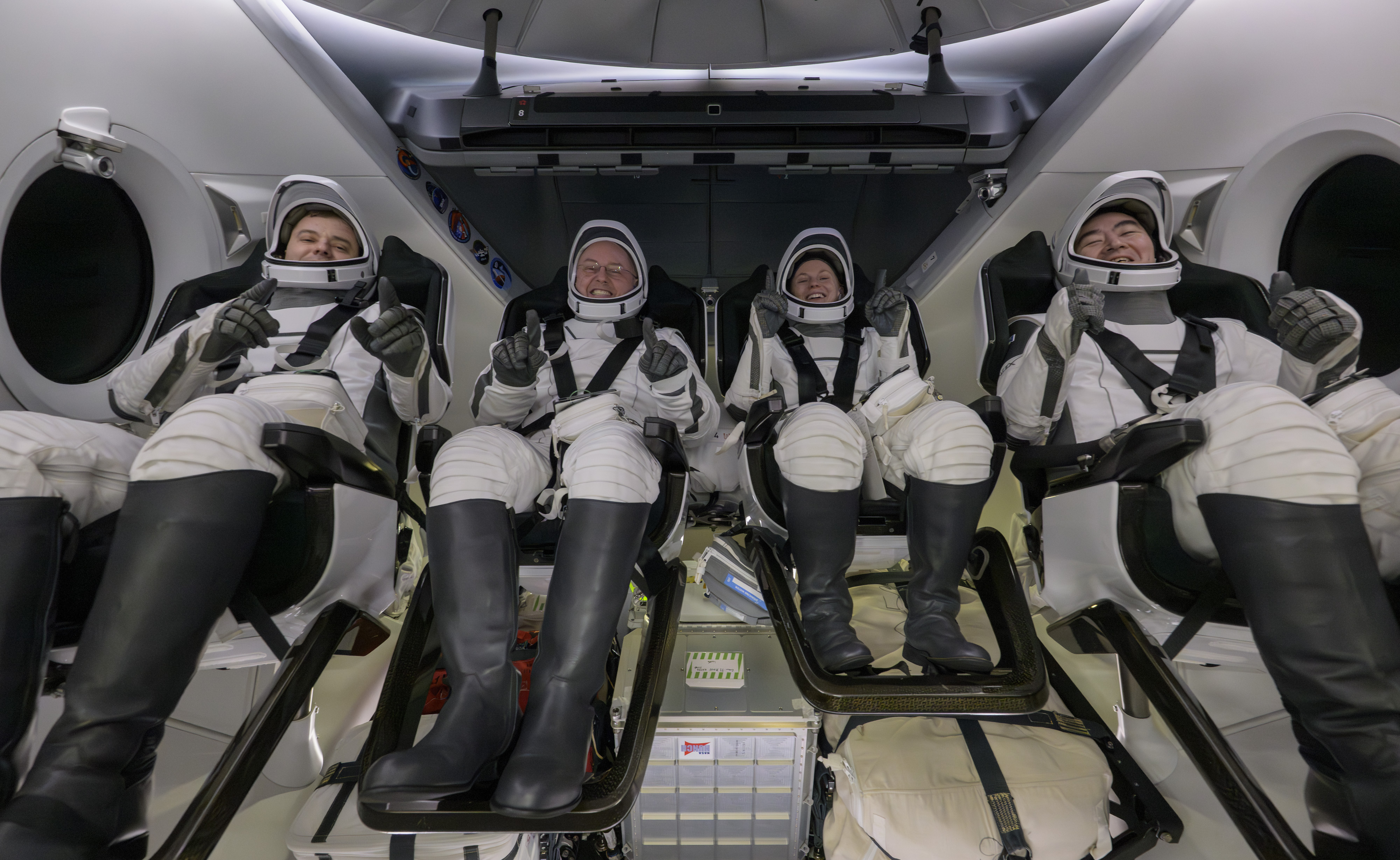
Roscosmos cosmonaut Oleg Platonov, left, NASA astronauts Mike Fincke, Zena Cardman, and JAXA (Japan Aerospace Exploration Agency) astronaut Kimiya Yui are seen inside the SpaceX Dragon Endeavour spacecraft onboard the SpaceX recovery ship SHANNON shortly after having landed in the Pacific Ocean off the coast of Long Beach, Calif., Thursday, Jan. 15, 2026. Cardman, Fincke, Yui, Platonov are returning after 167 days in space as part of Expedition 74 aboard the International Space Station.
NASA/Bill Ingalls

NASA’s SpaceX Crew-11 mission safely splashed down early Thursday morning in the Pacific Ocean off the coast of San Diego, concluding a more than five-month mission aboard the International Space Station.

NASA astronauts Zena Cardman and Mike Fincke, JAXA (Japan Aerospace Exploration Agency) astronaut Kimiya Yui, and Roscosmos cosmonaut Oleg Platonov returned to Earth at 12:41 a.m. PST. Teams aboard SpaceX recovery vessels retrieved the spacecraft and its crew shortly after landing.

“I couldn’t be prouder of our astronauts and the teams on the ground at NASA, SpaceX, and across our international partnerships,” said NASA Administrator Jared Isaacman. “Their professionalism and focus kept the mission on track, even with an adjusted timeline. Crew-11 completed more than 140 science experiments that advance human exploration. Missions like Crew-11 demonstrate the capability inherent in America’s space program—our ability to bring astronauts home as needed, launch new crews quickly, and continue pushing forward on human spaceflight as we prepare for our historic Artemis II mission, from low Earth orbit to the Moon and ultimately Mars.”

Crew-11 returned home about a month earlier than planned because of a medical concern teams are monitoring with one of the crew members, who remains stable. Due to medical privacy, it is not appropriate for NASA to share more details about the crew member. Prior to return, NASA previously coordinated for all four crew members to be transported to a local hospital for additional evaluation, taking advantage of medical resources on Earth to provide the best care possible.

Following the planned overnight hospital stay, the crew members will return to NASA’s Johnson Space Center in Houston and undergo standard postflight reconditioning and evaluations.

The Crew-11 mission lifted off at 11:43 a.m. EDT on Aug.1, 2025, from Launch Complex 39A at NASA’s Kennedy Space Center in Florida. About 15 hours later, the crew’s SpaceX Dragon spacecraft docked to the orbital outpost at 1:27 a.m. CDT on Aug. 2.

During their 167-day mission, the four crew members traveled nearly 71 million miles and completed more than 2,670 orbits around Earth. The Crew-11 mission was Fincke’s fourth spaceflight, Yui’s second, and the first for Cardman and Platonov. Fincke has logged 549 days in space, ranking him fourth among all NASA astronauts for cumulative days in space.

Along the way, Crew-11 logged hundreds of hours of research, maintenance, and technology demonstrations. The crew members also celebrated the 25th anniversary of continuous human presence aboard the orbiting laboratory on Nov. 2, 2025. Research conducted aboard the space station advances scientific knowledge and demonstrates new technologies that enable us to prepare for human exploration of the Moon and Mars.

NASA’s Commercial Crew Program provides reliable access to space, maximizing the use of the International Space Station for research and development by partnering with private U.S. companies, including SpaceX, to transport astronauts to and from the space station.

Learn more about NASA’s Commercial Crew Program at:

https://www.nasa.gov/commercialcrew

-end-

Joshua Finch / Jimi Russell
Headquarters, Washington
202-358-1100
joshua.a.finch@nasa.gov / james.j.russell@nasa.gov

Sandra Jones / Joseph Zakrzewski
Johnson Space Center, Houston
281-483-5111
sandra.p.jones@nasa.gov / joseph.a.zakrzewski@nasa.gov

Steven Siceloff
Kennedy Space Center, Florida
321-867-2468
steven.p.siceloff@nasa.gov

NASA to Provide Media with International Space Station Update Today

8 January 2026 at 14:26
NASA insignia.
Credit: NASA

NASA will host a live news conference at 5 p.m. EST on Thursday from the agency’s headquarters in Washington to discuss the International Space Station and its crew.

On Jan. 7, the agency announced it was postponing a planned spacewalk originally scheduled for Jan. 8 while teams monitored a medical concern with a crew member currently living and working aboard the orbital laboratory.

The matter involved a single crew member, who is stable. Due to medical privacy, it is not appropriate for NASA to share more details about the crew member.

Participants in the news conference include:

  • NASA Administrator Jared Isaacman
  • Amit Kshatriya, associate administrator
  • Dr. James Polk, chief health and medical officer, NASA Headquarters

NASA will provide live coverage of the news conference on NASA+Amazon Prime, and the agency’s YouTube channel. Learn how to stream NASA content through a variety of online platforms, including social media.

To participate in the news conference virtually or in-person, media must RSVP for details no later than one hour before the start of the event to the NASA Newsroom at: hq-media@mail.nasa.gov. NASA’s media credentialing policy is online.

To learn more about the International Space Station, visit:

https://www.nasa.gov

-end-

Bethany Stevens / Cheryl Warner
Headquarters, Washington
202-358-1600
bethany.c.stevens@nasa.gov / cheryl.m.warner@nasa.gov

NASA Welcomes 15th Administrator Jared Isaacman

18 December 2025 at 12:56
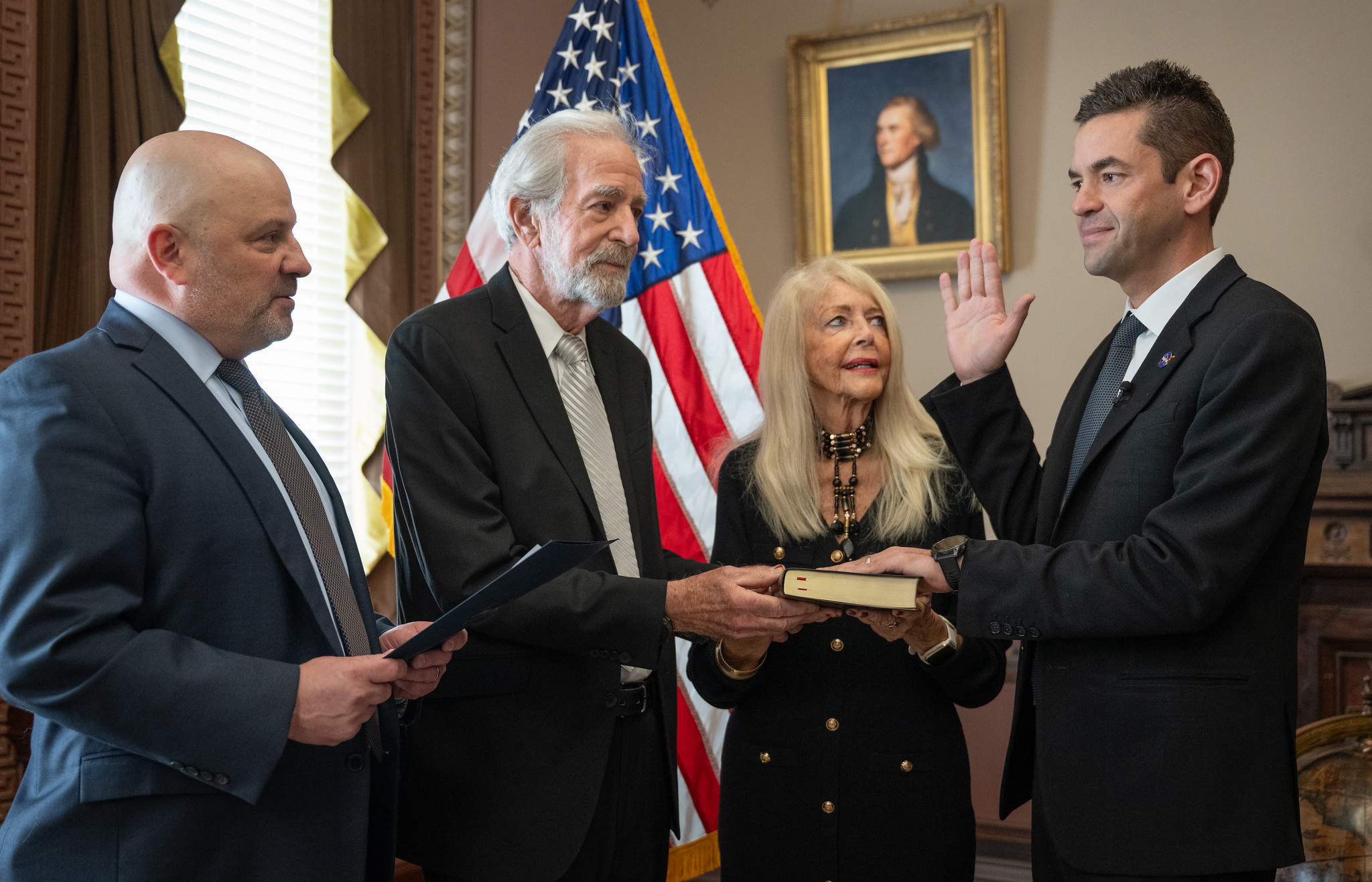
Four people, including NASA Administrator Jared Isaacman, stand in an office with an American flag in the background, as Isaacman is sworn in, with his right hand raised.
U.S. District Judge Timothy Kelly, left, swears in Jared Isaacman, right, as the 15th administrator of NASA, as Isaacman’s parents, Donald and Sandra Marie, join on Dec. 18, 2025, at the Eisenhower Executive Office Building in Washington.
Credit: NASA/Bill Ingalls

Jared Isaacman was sworn in Thursday as NASA’s 15th administrator by District Judge Timothy J. Kelly. The oath was taken during a ceremony held at the Eisenhower Executive Office Building in Washington. 

As NASA administrator, Isaacman will lead the agency in bold pursuit of exploration, innovation, and scientific discovery. 

“I am deeply honored to be sworn in as NASA administrator,” said Isaacman. “NASA’s mission is as imperative and urgent as ever — to push the boundaries of human exploration, ignite the orbital economy, drive scientific discovery, and innovate for the benefit of all of humanity. I look forward to serving under President Trump’s leadership and restoring a mission-first culture at NASA — focused on achieving ambitious goals, to return American astronauts to the Moon, establish an enduring presence on the lunar surface, and laying the groundwork to deliver on President Trump’s vision of planting the Stars and Stripes on Mars.” 

Isaacman, nominated by President Donald J. Trump on Nov. 4th, was confirmed to serve as NASA administrator by the U.S. Senate on Dec. 17. Isaacman is expected to address the workforce this week. 

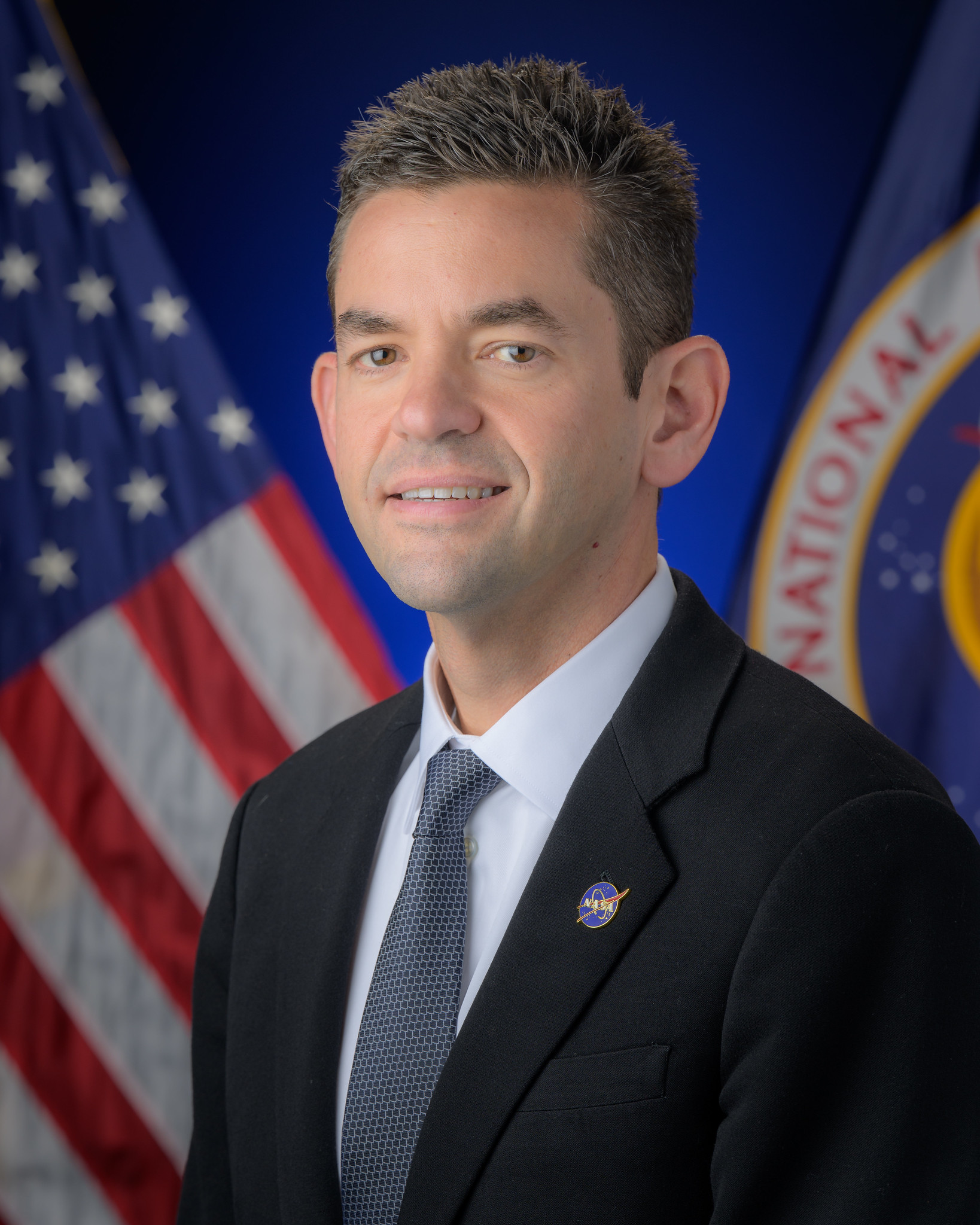
Jared “Rook” Isaacman is the 15th administrator of NASA, a pilot, astronaut, seasoned entrepreneur, philanthropist, and pioneer in commercial spaceflight. Read Isaacman’s official biography online. 

Official portrait of NASA Administrator Jared Isaacman
Credit: NASA/Bill Ingalls

For more about NASA’s mission, visit: 

https://www.nasa.gov

-end-

Bethany Stevens / George Alderman
Headquarters, Washington
(771) 216-2606
bethany.c.stevens@nasa.gov / george.a.alderman@nasa.gov

Share

Details

Last Updated
Dec 18, 2025
Editor
Jessica Taveau
❌
❌