NASA conducts a hot fire of RS-25 engine No. 2063 on the Fred Haise Test Stand at NASA’s Stennis Space Center near Bay St. Louis, Mississippi, on Jan. 22, 2026.
NASA/Chris Russell
NASA conducts a hot fire of RS-25 engine No. 2063 on the Fred Haise Test Stand at NASA’s Stennis Space Center near Bay St. Louis, Mississippi, on Jan. 22, 2026.
NASA/Chris Russell
NASA conducts a hot fire of RS-25 engine No. 2063 on the Fred Haise Test Stand at NASA’s Stennis Space Center near Bay St. Louis, Mississippi, on Jan. 22, 2026.
NASA/Chris Russell
NASA conducts a hot fire of RS-25 engine No. 2063 on the Fred Haise Test Stand at NASA’s Stennis Space Center near Bay St. Louis, Mississippi, on Jan. 22, 2026.
NASA/Chris Russell
NASA successfully conducted a hot fire of RS-25 engine No. 2063 on Jan. 22 at the Fred Haise Test Stand at NASA’s Stennis Space Center near Bay St. Louis, Mississippi, clearing the way for the engine to be installed for the agency’s Artemis IV mission.
The RS-25 engines help power NASA’s SLS (Space Launch System) rocket that will carry astronauts to the Moon under the Artemis campaign.
Engine No. 2063 originally was installed on the SLS core stage for the Artemis II mission but was removed in 2025 after engineers discovered a hydraulic leak on the engine’s main oxidizer valve actuator, which controls propellant flow into the engine combustion chamber.
Following standard NASA procedures, teams removed the engine from the core stage and replaced the actuator.
Because NASA requires any significantly modified or repaired engine to undergo hot fire testing before flight, teams at NASA Stennis fired the engine for five minutes (300 seconds), at up to 109% of its rated power level in a test known as a confidence test that demonstrates the engine is ready for flight.
The test was conducted by a team of operators from NASA, L3Harris Technologies, and Sierra Lobo, Inc., the NASA Stennis test operations contractor. NASA Stennis provides critical data to L3Harris, the prime engines contractor for the SLS rocket.
With the successful test complete, engine No. 2063 is scheduled to be installed on the SLS core stage for Artemis IV. All RS-25 engines for NASA’s Artemis missions are tested and proven flightworthy at NASA Stennis before flight.
NASA is targeting as soon as February to send four astronauts around the Moon and back on Artemis II, the first crewed mission under the Artemis campaign. During launch, the SLS rocket will use four RS-25 engines, along with a pair of solid rocket boosters, to help lift the Orion spacecraft and the crew away from Earth using more than 8.8 million pounds of thrust.
Under the Artemis campaign, NASA is returning humans to the Moon for economic benefits, scientific discovery, and to prepare for crewed missions to Mars.
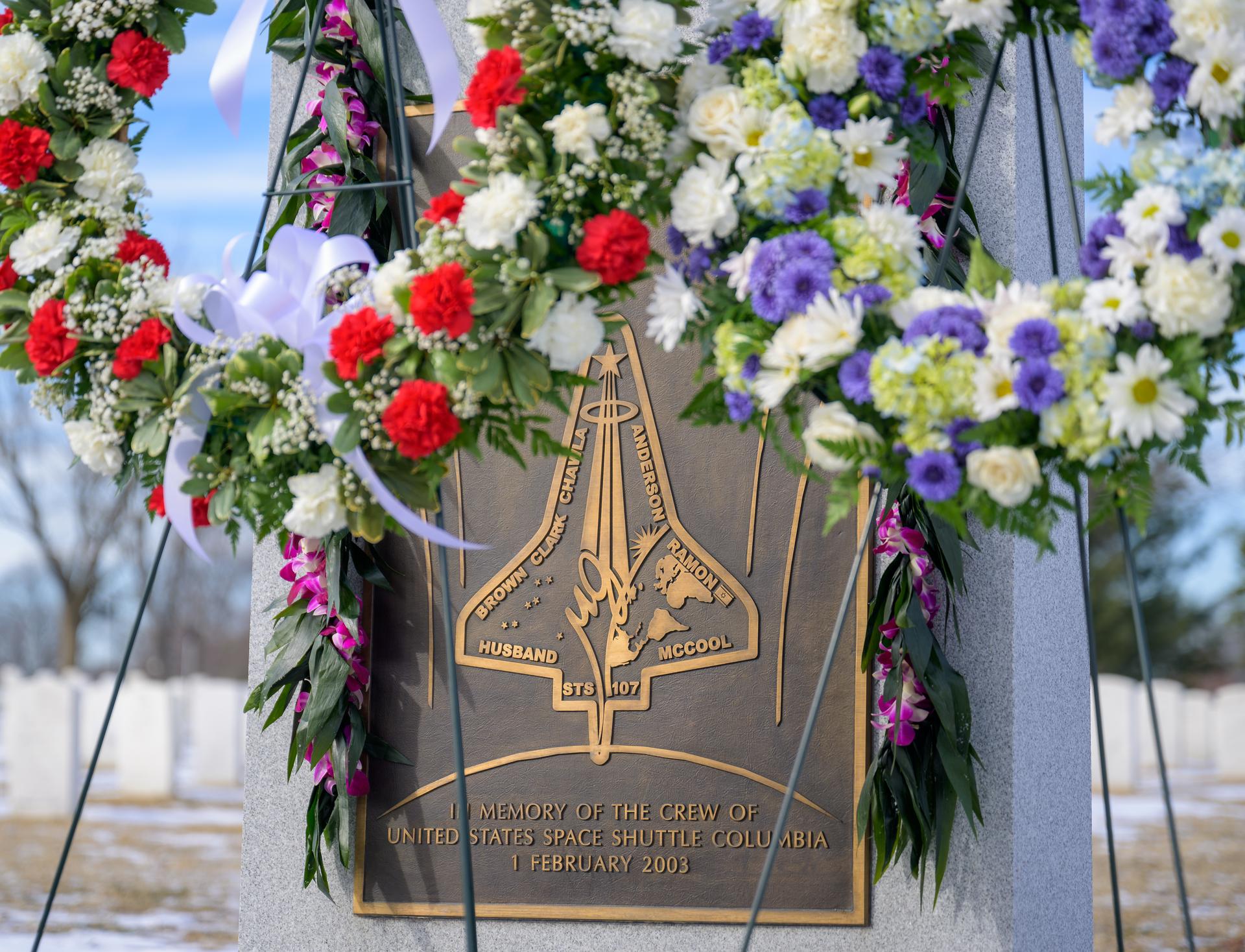
The Space Shuttle Columbia Memorial is seen during a wreath laying ceremony that was part of NASA’s Day of Remembrance, Thursday, Jan. 23, 2025, at Arlington National Cemetery in Virginia. Wreaths were laid in memory of those men and women who lost their lives in the quest for space exploration.
Credit: NASA/Bill Ingalls
NASA will observe its annual Day of Remembrance on Thursday, Jan. 22, which includes commemorating the crews of Apollo 1 and the space shuttles Challenger and Columbia. The event is traditionally held every year on the fourth Thursday of January, as all three astronaut accidents happened around the end of the month.
“On NASA’s Day of Remembrance, we pause to honor the members of the NASA family who lost their lives while pushing the boundaries of exploration and discovery,” said NASA Administrator Jared Isaacman. “We remember them not to retreat from risk, but to respect it — to learn, to improve, and continue onward. Their sacrifice and the strength of their families will forever inspire us as we continue to reach for the stars and pursue the secrets of the universe.”
Isaacman will lead an observance at 1 p.m. EST at Arlington National Cemetery in Virginia, which will begin with a wreath-laying ceremony at the Tomb of the Unknown Soldier, followed by observances for the Apollo 1, Challenger, and Columbia crews.
Several agency centers also will hold observances:
Johnson Space Center in Houston
NASA Johnson will hold a commemoration at 10 a.m. CST at the Astronaut Memorial Grove with remarks by Center Director Vanessa Wyche, NASA astronaut Jasmin Moghbeli, and Cheryl McNair, widow of Challenger astronaut Ronald McNair. The event will have a moment of silence, a NASA T-38 flyover, taps performed by the Texas A&M Squadron 17, and a procession placing flowers at Apollo I, Challenger, and Columbia memorial trees.
Kennedy Space Center in Florida
NASA Kennedy and the Astronauts Memorial Foundation will host a ceremony at the Space Shuttle Atlantis building at Kennedy’s Visitor Complex at 11 a.m. EST. The event will include musical guests, a bell ringing commemoration, a moment of silence, and wreath-laying. Kelvin Manning, deputy director at NASA Kennedy, and Bob Cabana, former NASA associate administrator and Kennedy center director, will provide remarks during the ceremony, which will livestream on the center’s Facebook page.
Ames Research Center in California’s Silicon Valley
NASA Ames will hold a remembrance ceremony at 1 p.m. PST that includes remarks from Center Director Eugene Tu, a moment of silence, and bell ringing commemoration for each astronaut lost in service.
Langley Research Center in Hampton, Virginia
NASA Langley will hold a remembrance ceremony at 1 p.m. EST with acting Center Director Trina Dyal, followed by placing flags at the Langley Workers Memorial.
Marshall Space Flight Center in Huntsville, Alabama
NASA Marshall will hold a candle-lighting ceremony and wreath placement at 9:30 a.m. CST and include remarks from Rae Ann Meyer, Marshall’s acting center director, and Bill Hill, director of Safety and Mission Assurance at Marshall.
Stennis Space Flight Center in Bay St. Louis, Mississippi
NASA Stennis and the NASA Shared Services Center will hold a wreath-laying ceremony and moment of silence at 10:30 a.m. CST with remarks from Center Director John Bailey and Anita Harrell, NASA Shared Services Center executive director.
The agency also is paying tribute to its fallen astronauts with special online content, updated on NASA’s Day of Remembrance, at:
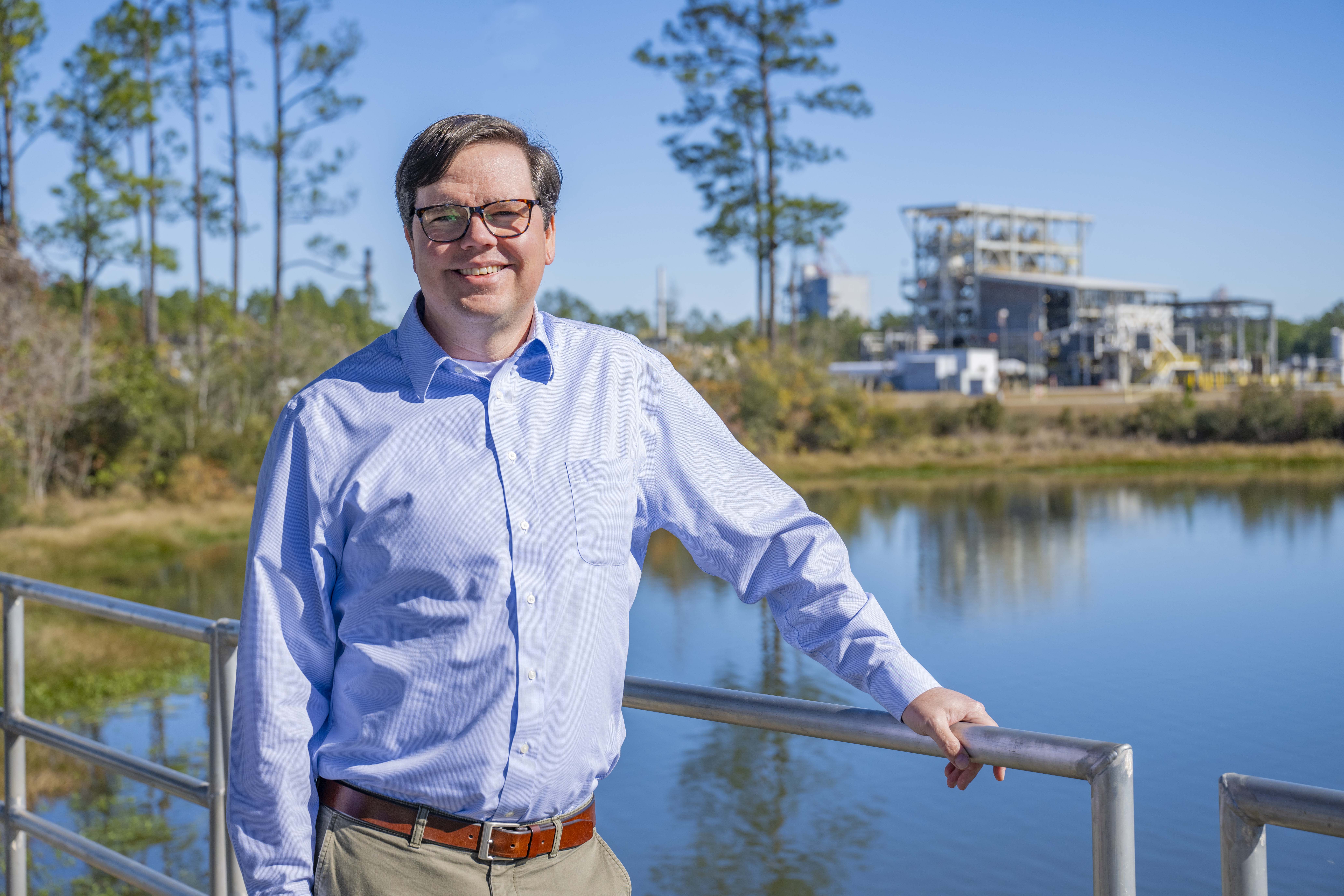
Richard Wear stands with the E Test Complex in the background at NASA’s Stennis Space Center, where he is acting chief of the Mechanical Engineering Branch.
NASA/Danny Nowlin
Richard Wear calls it an honor to be working at NASA’s Stennis Space Center near Bay St. Louis, Mississippi, during a historic time as NASA prepares to send astronauts around the Moon for the first time in more than 50 years on the Artemis II mission.
“I have not stopped learning in the 15 years that I have been here,” Wear said.
As acting chief of the Mechanical Engineering Branch, the Slidell, Louisiana, resident primarily supports testing at the E Test Complex, where NASA and commercial companies carry out propulsion test operations.
The complex features four stands with 12 test cells capable of supporting a range of component and engine test activities. The versatility of the complex infrastructure and test team allows it to support projects for commercial aerospace companies, large and small.
“The unique high pressure systems bring customers from all over the country,” Wear said. “I am proud to have been a part of testing for our commercial partners over the years, some of which have become successful and recognized across the world.”
From Alabama to NASA Stennis
Education was always a priority in Wear’s household. His mom taught math, and his dad majored in chemistry. It influenced the Tuscaloosa, Alabama, native’s decision to pursue engineering.
After earning bachelor’s and master’s degrees in mechanical engineering from the University of Alabama, Wear began his career in 2006 at NASA’s Michoud Assembly Facility in New Orleans as a contractor for Lockheed Martin. He worked in the thermal analysis group to support the space shuttle external tank program. His role focused on studying how heat moved through the tank’s structure and its thermal protection systems.
When NASA needed to fill a thermal analysis role at NASA Stennis in 2010, Wear applied and quickly embraced the challenge. Initially hired to focus on thermal analysis, he soon expanded his expertise to include fluid analysis and thermodynamics. Even in his current supervisory role, Wear continues to contribute technical analysis and support testing.
Life at NASA Stennis
Wear describes NASA Stennis as a “hands-on, get-it-done center” with a culture that is serious, yet fun.
As a smaller NASA center, everyone has the chance to make a difference.
Wear believes the work environment provides new employees the opportunity to meet developmental goals faster.
“I think that is also true for our test customers and tenants,” Wear said. “Sometimes with our customers at the E Test Complex, they are just starting out, so we can guide them to a successful outcome by sharing our knowledge. We want all our employees and customers to be successful and I think that really shows.”
The mission-focused culture has shaped Wear’s own career.
Since joining NASA Stennis in 2010 as a junior analyst, he advanced to senior analyst, then lead project fluid systems analyst, before being named thermal-fluid subject matter expert in 2018. In 2022, he accepted the deputy chief position in the Mechanical Engineering Branch and has served as acting chief since March 2025.
Even in a supervisor role, Wear continues to find inspiration in the teamwork around him.
“The focus here is always on the mission, not on whose job it is,” he said. “That true team effort motivates me to do my best every day.”
Advice for Future Engineers
One part of Wear’s role he enjoys is training students. Inspiration came to him during recent interviews with students for the Pathways Internship. The conversations were with several students that have a passion for NASA, its mission, and for space exploration.
“Working hard in school and getting good grades is part of it, but I think persistence and attitude plays a huge part,” Wear said. “For example, we have told our prospective Pathways Interns multiple times that attitude is one of the most important parts of getting a job at NASA Stennis after an internship.”
Wear recommends all students do their research, figure out what he or she does not know, and then find someone who can help fill the gap.
This approach of staying curious and persistent is what put Wear in the right place at the right time as NASA writes a new chapter of space history that will return America to the Moon and beyond.
Preparations for Next Moonwalk Simulations Underway (and Underwater)
In 2025, NASA’s Stennis Space Center near Bay St. Louis, Mississippi, marked a year of progress by supporting NASA’s Artemis campaign, celebrating historic milestones, and continuing its role as a trusted propulsion test partner at America’s largest rocket propulsion test site.
“For more than six decades, NASA Stennis has proudly represented the Gulf Coast region and America in advancing our nation’s space exploration goals,” said NASA Stennis Director John Bailey. “This year, we continued our progress forward as we near the launch of Artemis II, while honoring milestones that have brought our center to this point.”
Supporting Artemis
As NASA prepares for the launch of Artemis II in early 2026, with the first crewed mission to the Moon in over 50 years, NASA Stennis continues its frontline work.
Every RS-25 engine used to help launch NASA’s SLS (Space Launch System) rocket to the Moon is tested in south Mississippi.
NASA Stennis teams provided data to lead engines contractor L3Harris Technologies by successfully testing two new production RS-25 flight engines.
NASA tested RS-25 engine No. 20001 at the Fred Haise Test Stand in June, and RS-25 engine No. 20002 in November. Each engine fired for 500 seconds, reaching 111% of its rated power, while simulating launch conditions.
Teams at NASA’s Stennis Space Center deliver, lift, and install the first new production RS-25 engine on the Fred Haise Test Stand on Feb. 18, 2025.
NASA/Danny Nowlin
Teams at NASA’s Stennis Space Center deliver, lift, and install the first new production RS-25 engine on the Fred Haise Test Stand on Feb. 18, 2025.
NASA/Danny Nowlin
Teams at NASA’s Stennis Space Center deliver, lift, and install the first new production RS-25 engine on the Fred Haise Test Stand on Feb. 18, 2025.
NASA/Danny Nowlin
Teams at NASA’s Stennis Space Center deliver, lift, and install the first new production RS-25 engine on the Fred Haise Test Stand on Feb. 18, 2025.
NASA/Danny Nowlin
Teams at NASA’s Stennis Space Center deliver, lift, and install the first new production RS-25 engine on the Fred Haise Test Stand on Feb. 18, 2025.
NASA/Danny Nowlin
Teams at NASA’s Stennis Space Center deliver, lift, and install the first new production RS-25 engine on the Fred Haise Test Stand on Feb. 18, 2025.
NASA/Danny Nowlin
NASA tests RS-25 engine No. 20001 on June 20, 2025, at the Fred Haise Test Stand at NASA’s Stennis Space Center at Bay St. Louis, Mississippi.
NASA/Danny Nowlin
Supporting Commercial Propulsion
The commercial aerospace industry is growing, and NASA Stennis is a secure location providing support for it. Companies that have conducted work at NASA Stennis include Blue Origin, Boeing, Evolution Space; Launcher, a Vast company; Relativity Space and Rolls-Royce.
Three companies – Relativity Space, Rocket Lab, and Evolution Space – have established, or continue progress to establish, production and/or test operations at NASA Stennis.
Infrastructure upgrades and planning efforts across the test complex are laying the foundation for future propulsion test projects as well.
“As the commercial space industry continues to accelerate their development, NASA Stennis is adapting to meet their propulsion testing needs,” said Joe Schuyler, director of the NASA Stennis Engineering and Test Directorate. “We are proud that our proven experience makes us a trusted partner.”
Honoring the Past
In 2025, NASA Stennis honored a defining era of space shuttle main engine testing. An image shows the first space shuttle main engine installed on May 8, 1975, at the Fred Haise Test Stand (formerly A-1).
NASA
While NASA Stennis operates as the nation’s largest rocket propulsion test site, the NASA Stennis Federal City also is home to more than 50 federal, state, academic, and commercial tenants.
This year marked the birth of the federal city concept 55 years ago. The unique operating approach serves as a model of government efficiency and a powerful economic engine for the Gulf Coast region.
Meanwhile, the 50thanniversary of space shuttle main engine testing honored a defining era for NASA Stennis.
From May 1975 to July 2009, NASA Stennis tested space shuttle main engines that enabled 135 shuttle missions and notable space milestones, like deployment of the Hubble Space Telescope and construction of the International Space Station.
Both the federal city model and the decades of propulsion excellence continue to inform work at NASA Stennis.
Engineering the Future
Innovation extended beyond the test stands. The versatile testing environment at NASA Stennis is uniquely positioned to support unmanned systems testing across air, land, and water. With restricted airspace, a closed canal system, and vast protected terrain, the site offers a safe, flexible environment for range operations.
In addition to physical infrastructure, NASA Stennis progressed in digital innovation with the release of its first open-source software tool to streamline propulsion test data collection and collaboration across NASA and industry. The peer review tool is designed to facilitate more efficient and collaborative creation of systems applications, such as those used in frontline government and propulsion test work.
U.S. Naval Research Laboratory personnel conduct a field experiment involving an unmanned aerial system at NASA Stennis in March 2024.
NASA/Danny Nowlin
U.S. Naval Research laboratory personnel conduct tests on The Blue Boat made by Blue Robotics, an unmanned surface vessel, at NOAA’s National Data Buoy Center basin at NASA Stennis on Dec. 19, 2024.
NASA/Danny Nowlin
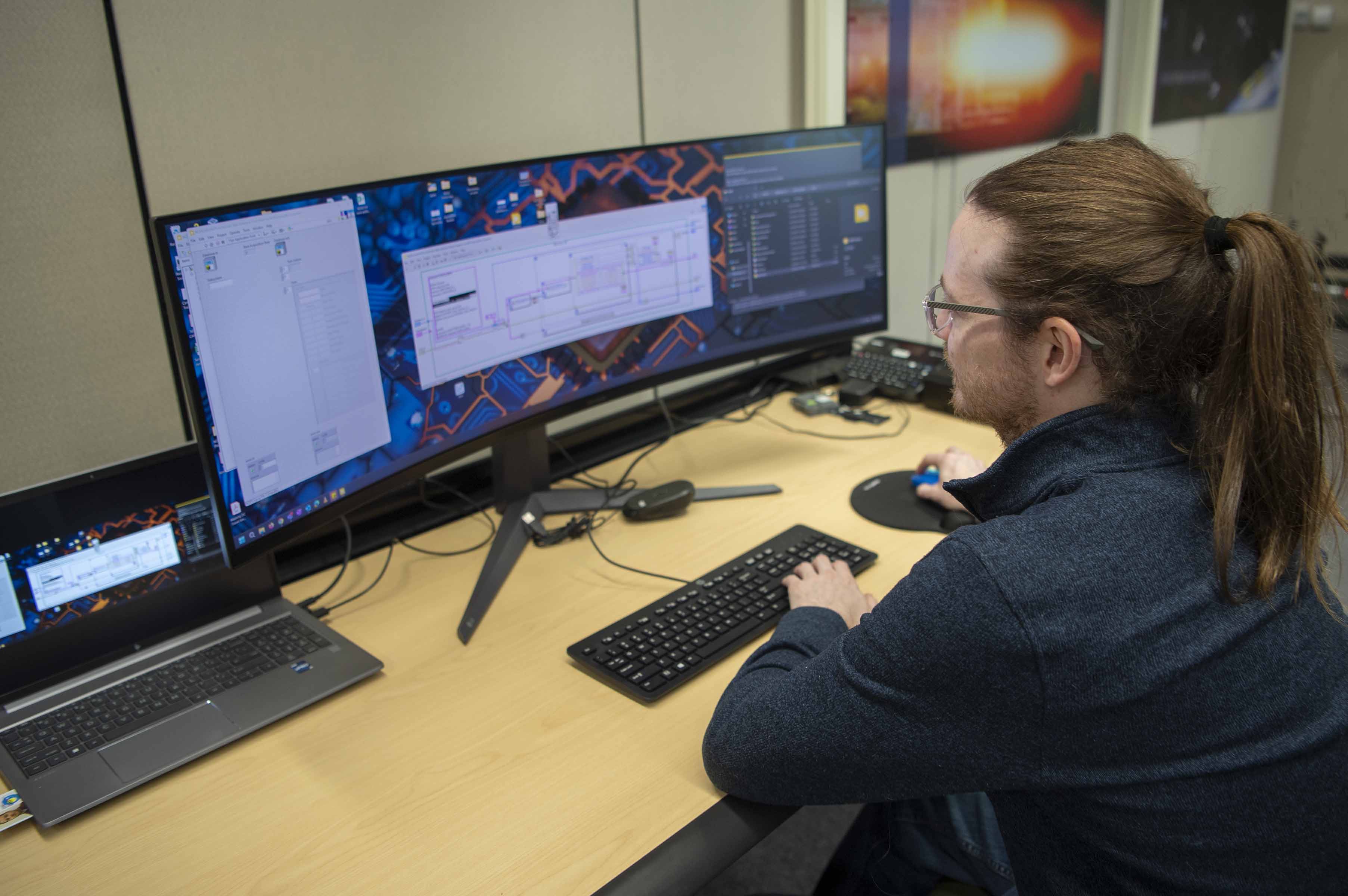
NASA software engineer Brandon Carver updates how the main data acquisition software processes information on March 5, 2025, at NASA’s Stennis Space Center, where he has contributed to the creation of the center’s first-ever open-source software.
NASA/Danny Nowlin
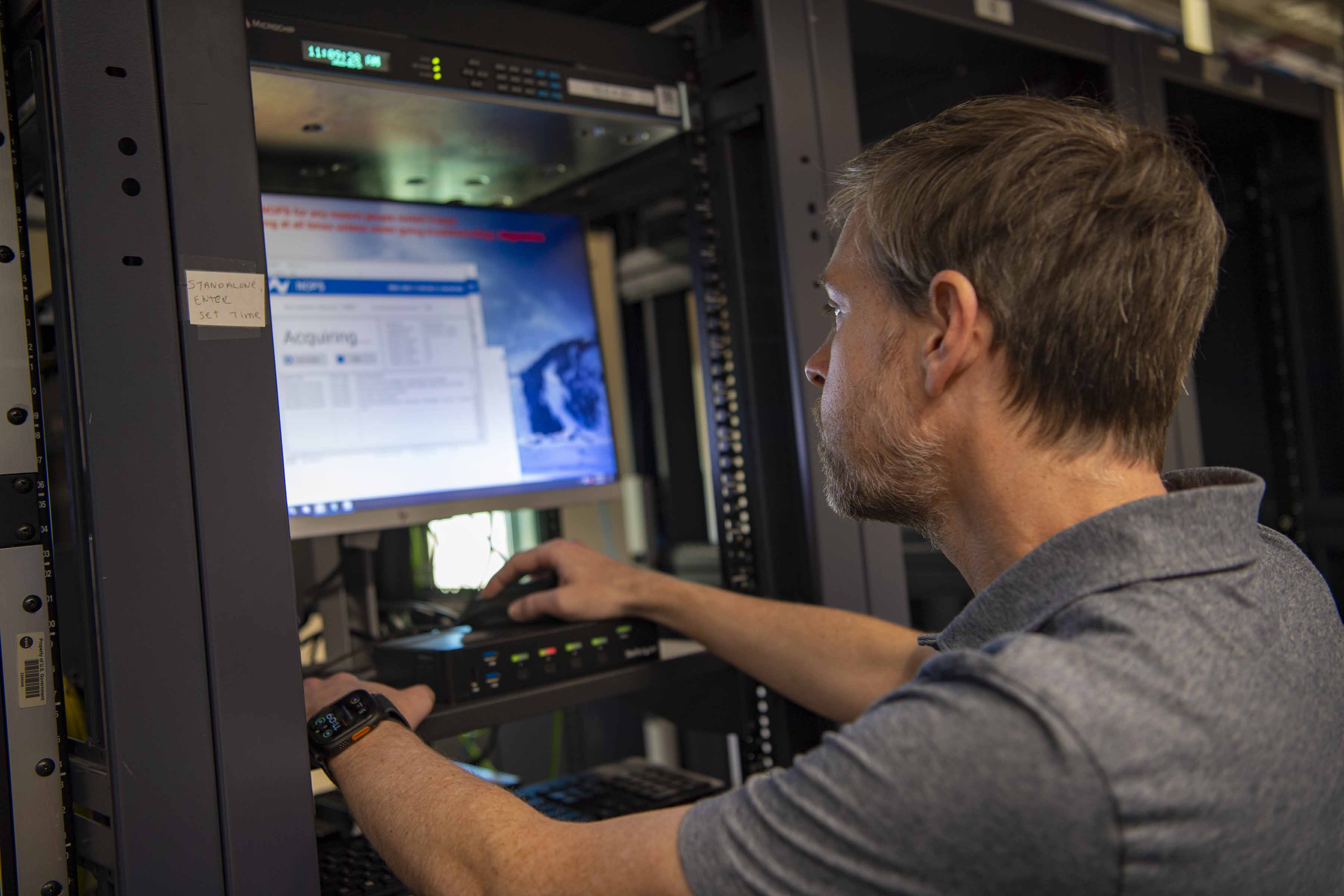
Syncom Space Services software engineer Shane Cravens, the chief architect behind the first-ever open-source software at NASA’s Stennis Space Center, verifies operation of the site’s data acquisition hardware.
NASA/Danny Nowlin
Community and Inspiration
NASA Stennis connected with communities in creative ways in 2025.
During Super Bowl week, NASA Stennis representatives inspired future explorers by bringing Artemis mission displays and hands-on activities to families at the Audubon Aquarium in New Orleans.
In March, NASA Stennis supported the third annual FIRST Robotics Magnolia Regional as a lead sponsor with employees and interns volunteering at the event. The competition in Laurel, Mississippi, brought together 37 teams from eight U.S. states (Alabama, California, Florida, Louisiana, Minnesota, Mississippi, Missouri, and Tennessee) and Mexico. The FIRST (For the Inspiration and Recognition of Science and Technology) Robotics event joined NASA’s Robotics Alliance Project to combine the excitement of sport with the rigors of science, technology, engineering, and mathematics (STEM) in field games using industrial-sized robots.
That same spirit of hands-on learning continues at INFINITY Science Center, the official visitor center of NASA Stennis. A new interactive exhibit has provided visitors a chance to become a test conductor and simulate RS-25 engine tests for the engines that will help power NASA’s Artemis missions.
A pair of young visitors to INFINITY Science Center carry out the steps of a simulated RS-25 engine hot fire on Dec. 19, 2024. The engine test simulator exhibit provided by NASA’s Stennis Space Center takes users through the hot fire process just as real engineers do at NASA Stennis.
NASA/Danny Nowlin
NASA Stennis representatives inspire the Artemis Generation at the Audubon Aquarium in New Orleans on Feb. 7-8, 2025, with activities and displays highlighting space exploration, including NASA’s Artemis missions to the Moon.
NASA/Danny Nowlin
NASA Stennis representatives inspire the Artemis Generation at the Audubon Aquarium in New Orleans on Feb. 7-8, 2025, with activities and displays highlighting space exploration, including NASA’s Artemis missions to the Moon.
NASA/Danny Nowlin
NASA serves as a lead sponsor, along with NASA Stennis employees and interns volunteering, for the third annual FIRST Robotics Magnolia Regional Competition on March 14, 2025. The event in Laurel, Mississippi, welcomed 37 teams from eight states (Alabama, California, Florida, Louisiana, Minnesota, Missouri, Mississippi, and Tennessee) and one team from Mexico. The FIRST (For the Inspiration and Recognition of Science and Technology) Robotics event joined NASA’s Robotics Alliance Project to combine the excitement of sport with the rigors of science, technology, engineering, and mathematics (STEM) in field games using industrial-sized robots.
NASA/Danny Nowlin
NASA serves as a lead sponsor, along with NASA Stennis employees and interns volunteering, for the third annual FIRST Robotics Magnolia Regional Competition on March 14, 2025. The event in Laurel, Mississippi, welcomed 37 teams from eight states (Alabama, California, Florida, Louisiana, Minnesota, Missouri, Mississippi, and Tennessee) and one team from Mexico. The FIRST (For the Inspiration and Recognition of Science and Technology) Robotics event joined NASA’s Robotics Alliance Project to combine the excitement of sport with the rigors of science, technology, engineering, and mathematics (STEM) in field games using industrial-sized robots.
NASA/Danny Nowlin
A Winter Wonderland
Hancock County, where NASA Stennis is located, received five to seven inches of snow on Jan. 21, 2025, according to the National Weather Service. It marked the most snow Hancock County, Mississippi, has received in 61 years. The Dec. 31, 1963, snowfall holds the record at 10 inches of snow for Bay St. Louis, Mississippi.
A series of cell phone and stationary camera images record snowfall at NASA’s Stennis Space Center on Jan. 21, 2025.
NASA/Stennis
A series of cell phone and stationary camera images record snowfall at NASA’s Stennis Space Center on Jan. 21, 2025.
NASA/Stennis
A series of cell phone and stationary camera images record snowfall at NASA’s Stennis Space Center on Jan. 21, 2025.
NASA/Stennis
A series of cell phone and stationary camera images record snowfall at NASA’s Stennis Space Center on Jan. 21, 2025.
NASA/Stennis
A series of cell phone and stationary camera images record snowfall at NASA’s Stennis Space Center on Jan. 21, 2025.
NASA/Stennis
A series of cell phone and stationary camera images record snowfall at NASA’s Stennis Space Center on Jan. 21, 2025.
NASA/Stennis
A series of cell phone and stationary camera images record snowfall at NASA’s Stennis Space Center on Jan. 21, 2025.
NASA/Stennis
A series of cell phone and stationary camera images record snowfall at NASA’s Stennis Space Center on Jan. 21, 2025.
NASA/Stennis
A series of cell phone and stationary camera images record snowfall at NASA’s Stennis Space Center on Jan. 21, 2025.
NASA/Stennis
Looking Ahead
All in all, the year closes with members of the NASA Stennis team focused on what is to come.
“As we close out 2025, NASA Stennis looks forward to the next chapter of our center as NASA sends astronauts to the Moon to prepare for future human exploration of Mars through the agency’s Artemis campaign,” said NASA Stennis Deputy Director Christine Powell. “We are ready for what’s next.”

 Login
Login