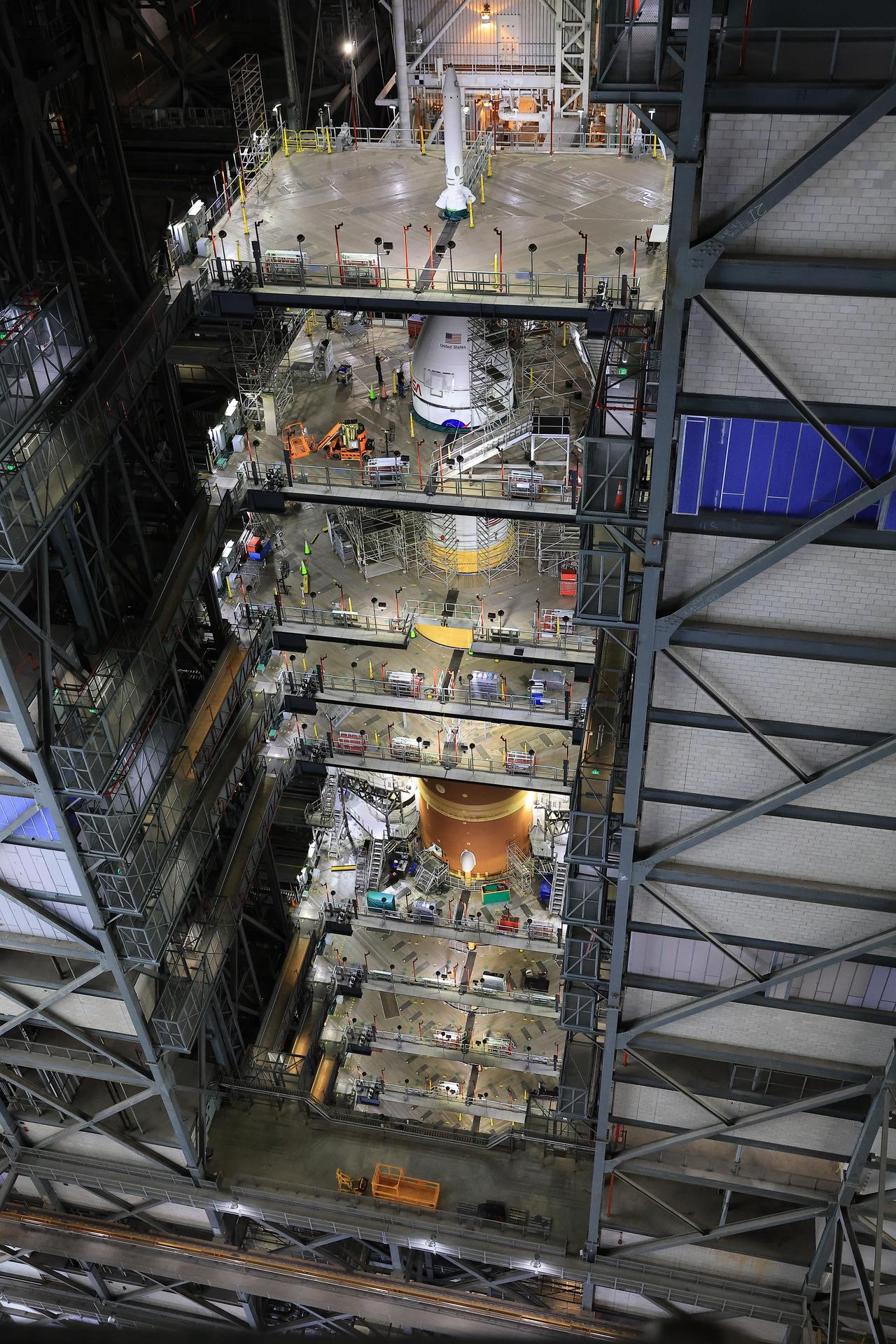
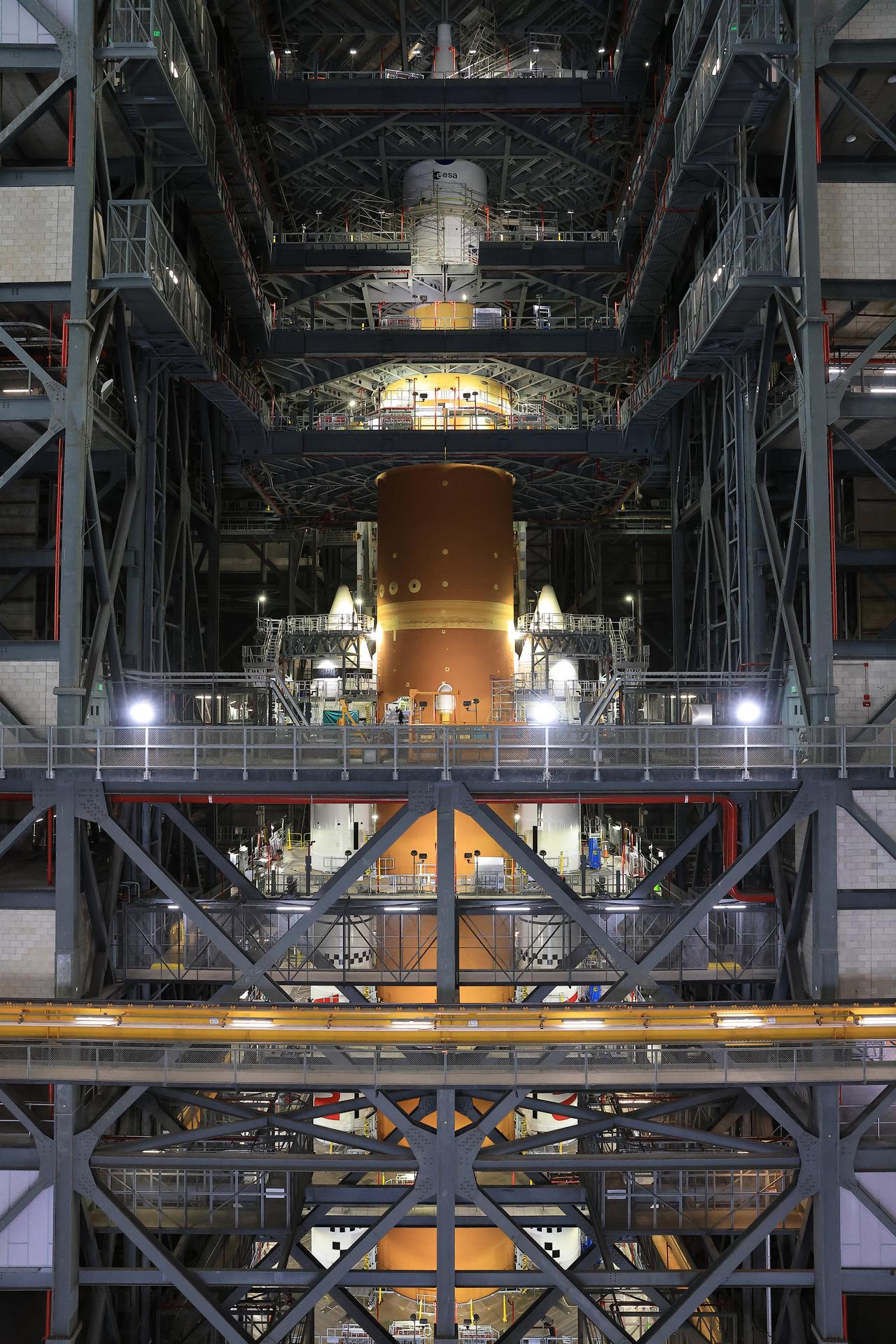
NASA’s Artemis II Orion spacecraft with its launch abort system is stacked atop the agency’s SLS (Space Launch System) rocket in High Bay 3 of the Vehicle Assembly Building at NASA’s Kennedy Space Center in Florida on Monday, Oct. 20, 2025. The spacecraft will carry NASA astronauts Reid Wiseman, Victor Glover, Christina Koch, and CSA (Canadian Space Agency) astronaut Jeremy Hansen on a 10-day mission around the Moon and back in early 2026. Teams will begin conducting a series of verification tests ahead of rolling out the integrated SLS rocket to NASA Kennedy’s Launch Complex 39B for the wet dress rehearsal.
NASA/Kim Shiflett
Teams at NASA’s Kennedy Space Center in Florida spent 2025 preparing the launch vehicle and its powerhouse SLS (Space Launch System) rocket to launch four astronauts around the Moon for Artemis II in early 2026. The center also celebrated milestones by conducting science experiments at the International Space Station to studying the Sun’s solar wind impacts on Earth to traveling to Mars in hopes of one day exploring the Red Planet in person.

JANUARY NASA Kennedy Marks New Chapter for Florida Space Industry
Kennedy Space Center Director Janet Petro and charter members of the Florida University Space Research Consortium sign a memorandum of understanding in research and development to assist with missions and contribute to NASA’s Moon to Mars exploration approach.
From left: Jennifer Kunz, Associate Director, Technical, Kennedy Space Center; Kelvin Manning, Deputy Director, Kennedy Space Center; Dr. Kent Fuchs, Interim President, University of Florida; Janet Petro, Director, Kennedy Space Center; Jeanette Nuñez, Florida Lieutenant Governor; Dr. Alexander Cartwright, President, University of Central Florida; Dr. Barry Butler, President, Embry-Riddle Aeronautical University.
NASA/Kim Shifflet
Firefly Launches Blue Ghost Mission One
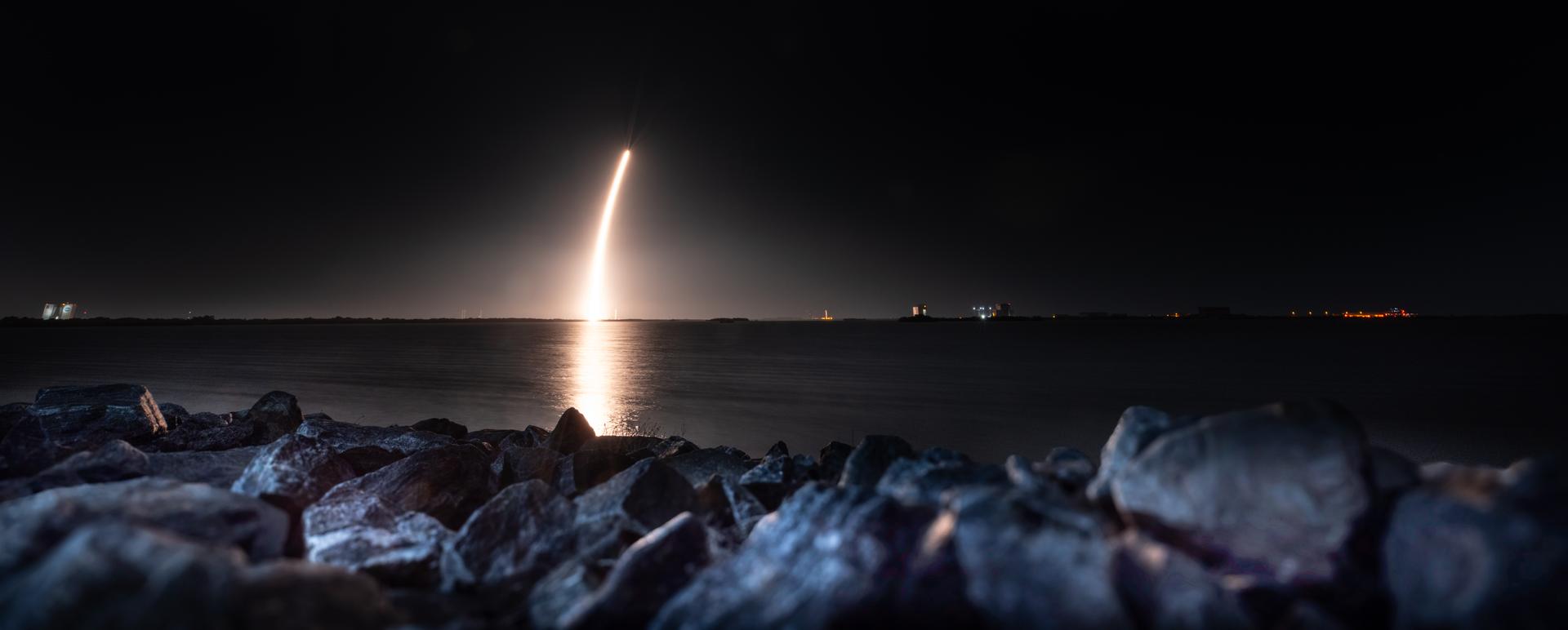
Firefly Aerospace launched Blue Ghost Mission One lunar lander with a suite of NASA scientific instruments on January 15, from Launch Complex 39A at NASA Kennedy. The lander and instruments landed March 2 on the Moon.
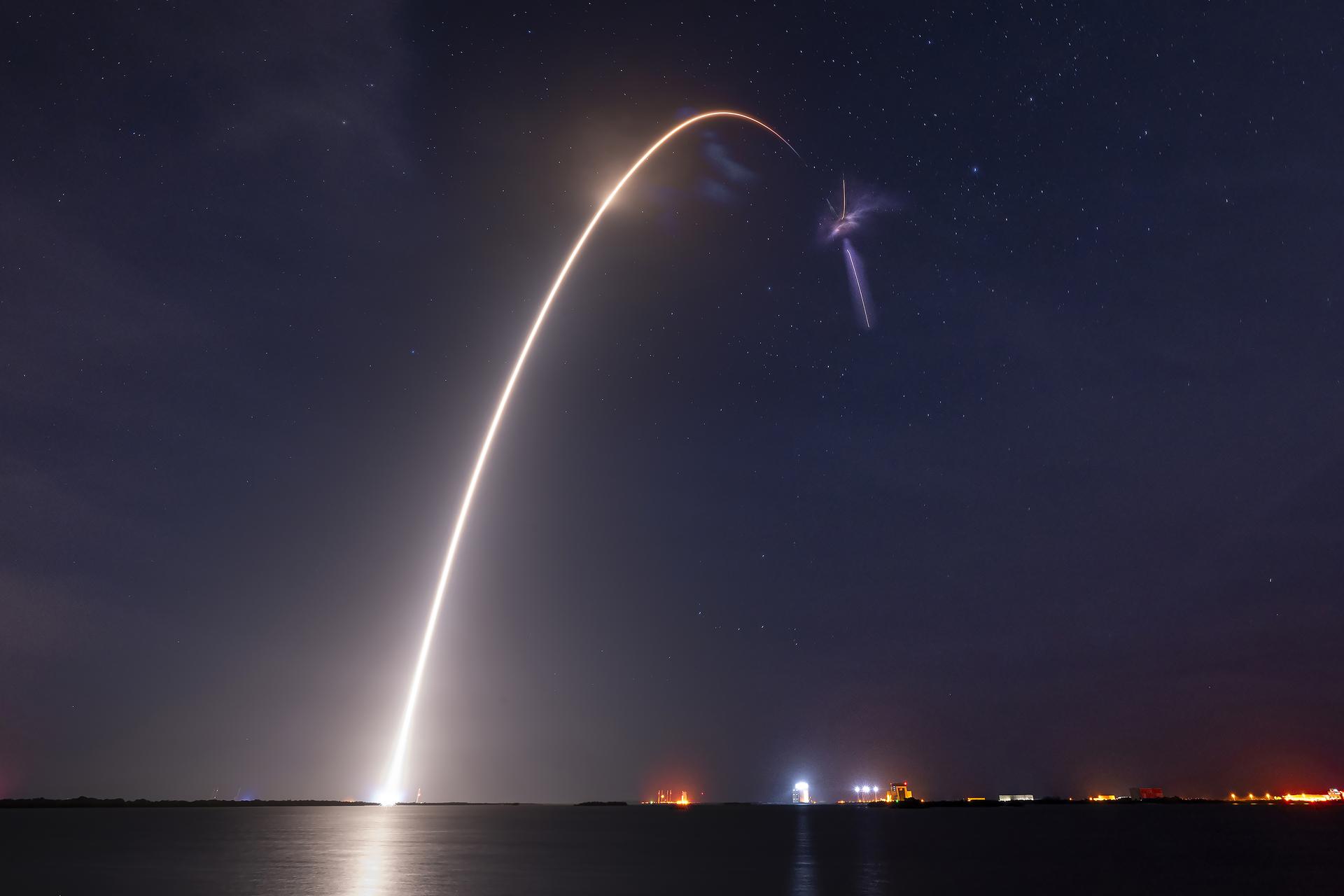
Creating a golden streak in the night sky, a SpaceX Falcon 9 rocket carrying Firefly Aerospace’s Blue Ghost Mission One lander soars upward after liftoff from Launch Complex 39A at NASA’s Kennedy Space Center in Florida on Wednesday, Jan. 15, 2025 as part of NASA’s CLPS (Commercial Lunar Payload Services) initiative.
NASA/Cory S Huston
FEBRUARY Intuitive Machines Launches to the Moon
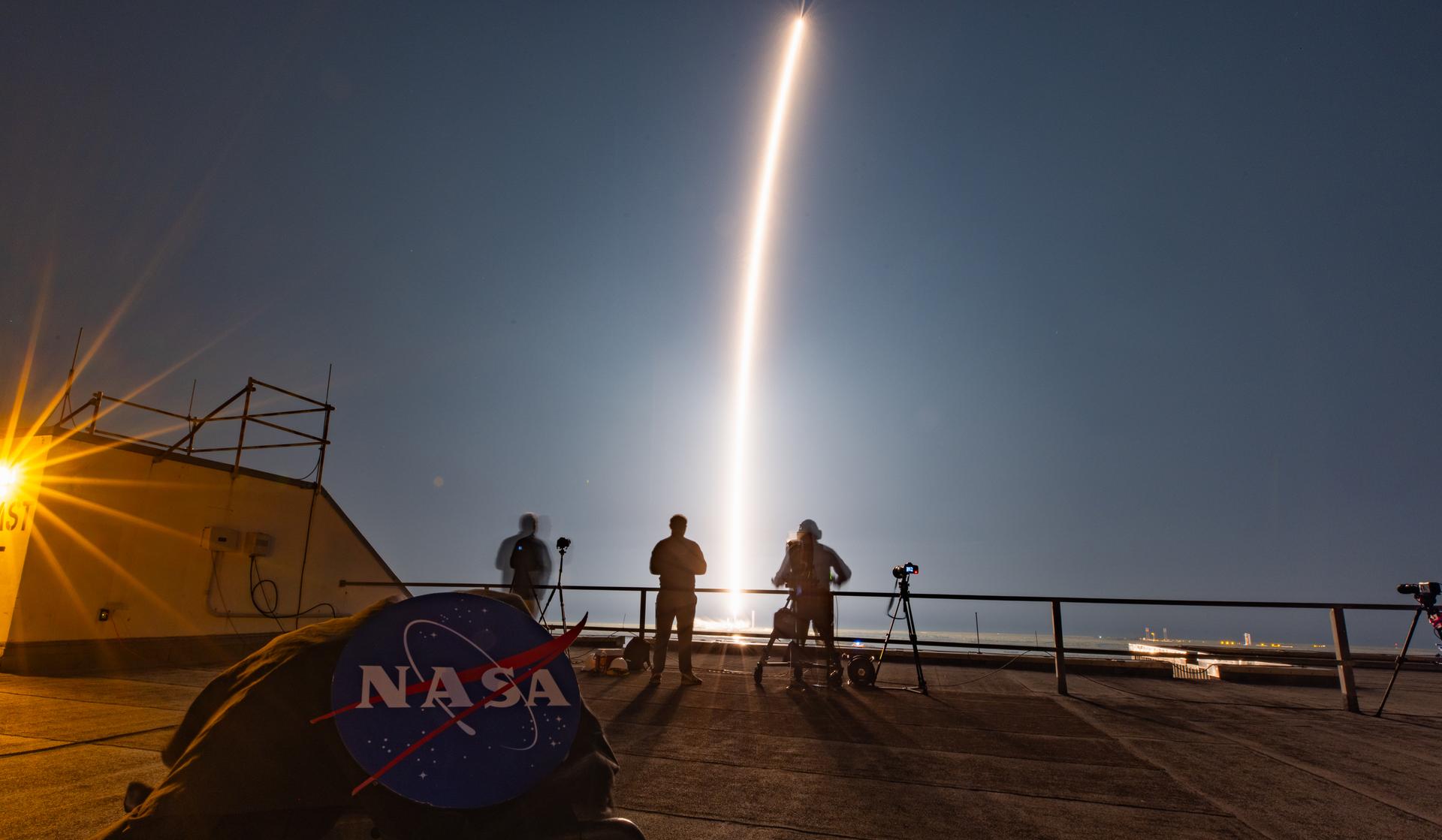
Intuitive Machines’ IM-2 Nova C lunar lander launched Feb. 26 from Launch Complex 39A, carrying NASA science and technology demonstrations to the Mons Mouton region of the Moon. IM-2 reached the surface of the Moon on March 6.
Creating a golden streak in the night sky, a SpaceX Falcon 9 rocket carrying Intuitive Machines’ Nova-C lunar lander (IM-2) soars upward after liftoff from Launch Complex 39A at NASA’s Kennedy Space Center in Florida at 7:16 p.m. EST Wednesday, Feb. 26, 2025, as part of NASA’s CLPS (Commercial Lunar Payload Services) initiative.
NASA/Frank Michaux
MARCH NASA’s SpaceX Crew-10 Launch
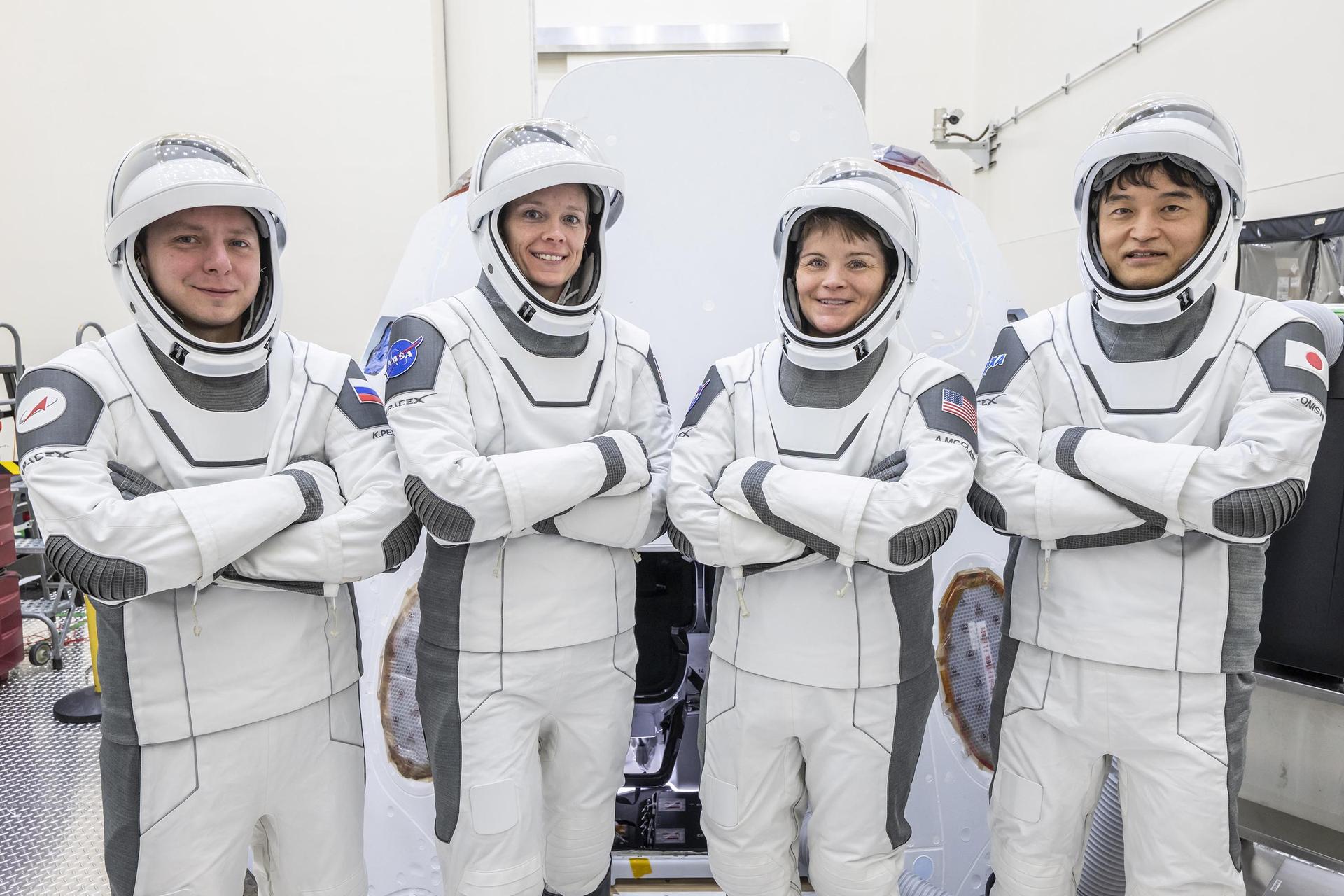
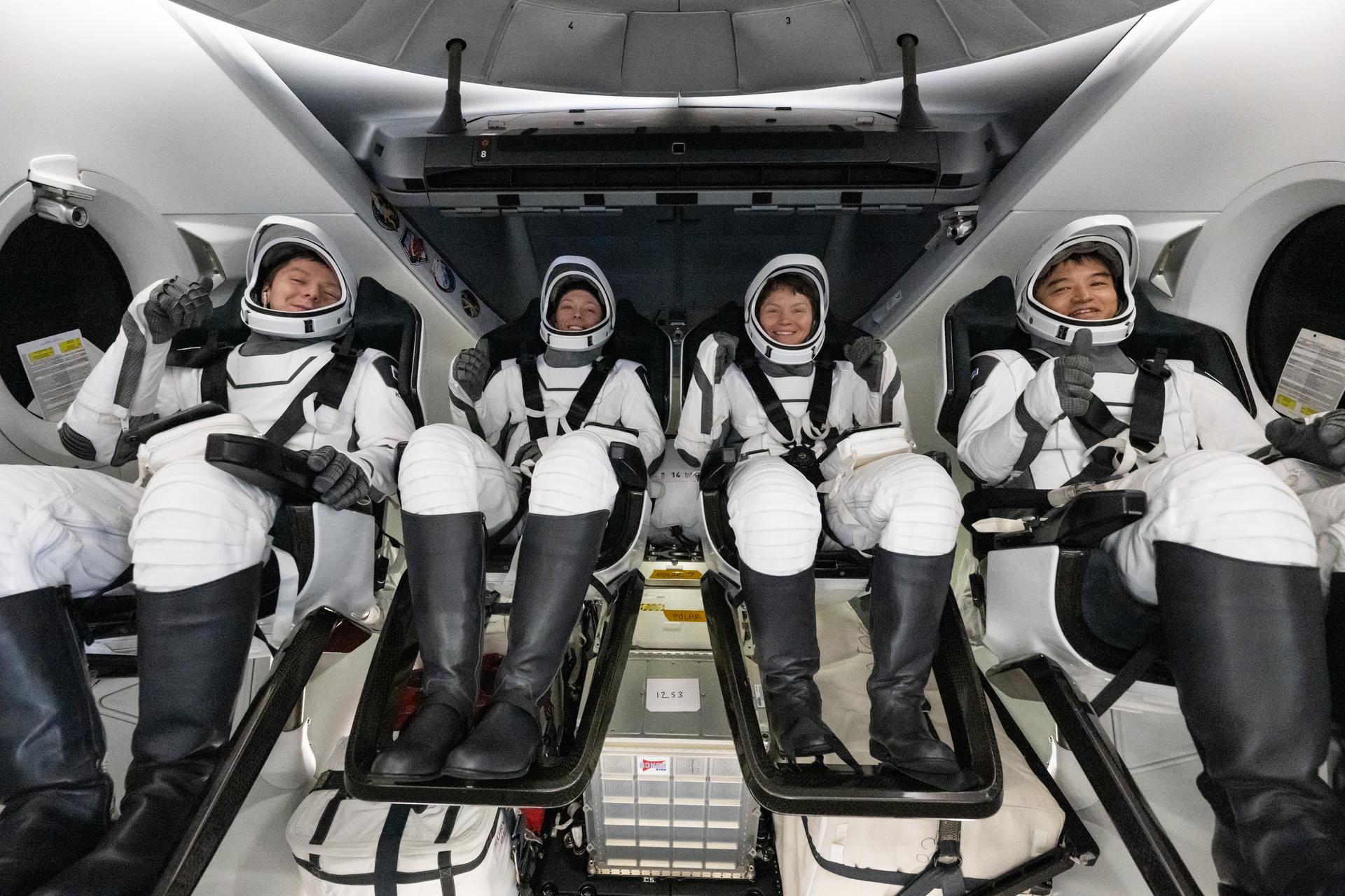
NASA astronauts Anne McClain and Nicole Ayers, JAXA (Japan Aerospace Exploration Agency) Takuya Onishi, and Roscosmos cosmonaut Kirill Peskov launched March 14 from Launch Complex 39A to the International Space Station for a five-month science mission.
Members of NASA’s SpaceX Crew-10, from left, Roscosmos cosmonaut Kirill Peskov, mission specialist; NASA astronauts Nichole Ayers, pilot and Anne McClain, commander; and JAXA (Japan Aerospace Exploration Agency) astronaut Takuya Onishi, mission specialist.
SpaceX
NASA’s SPHEREx, PUNCH Missions Launch
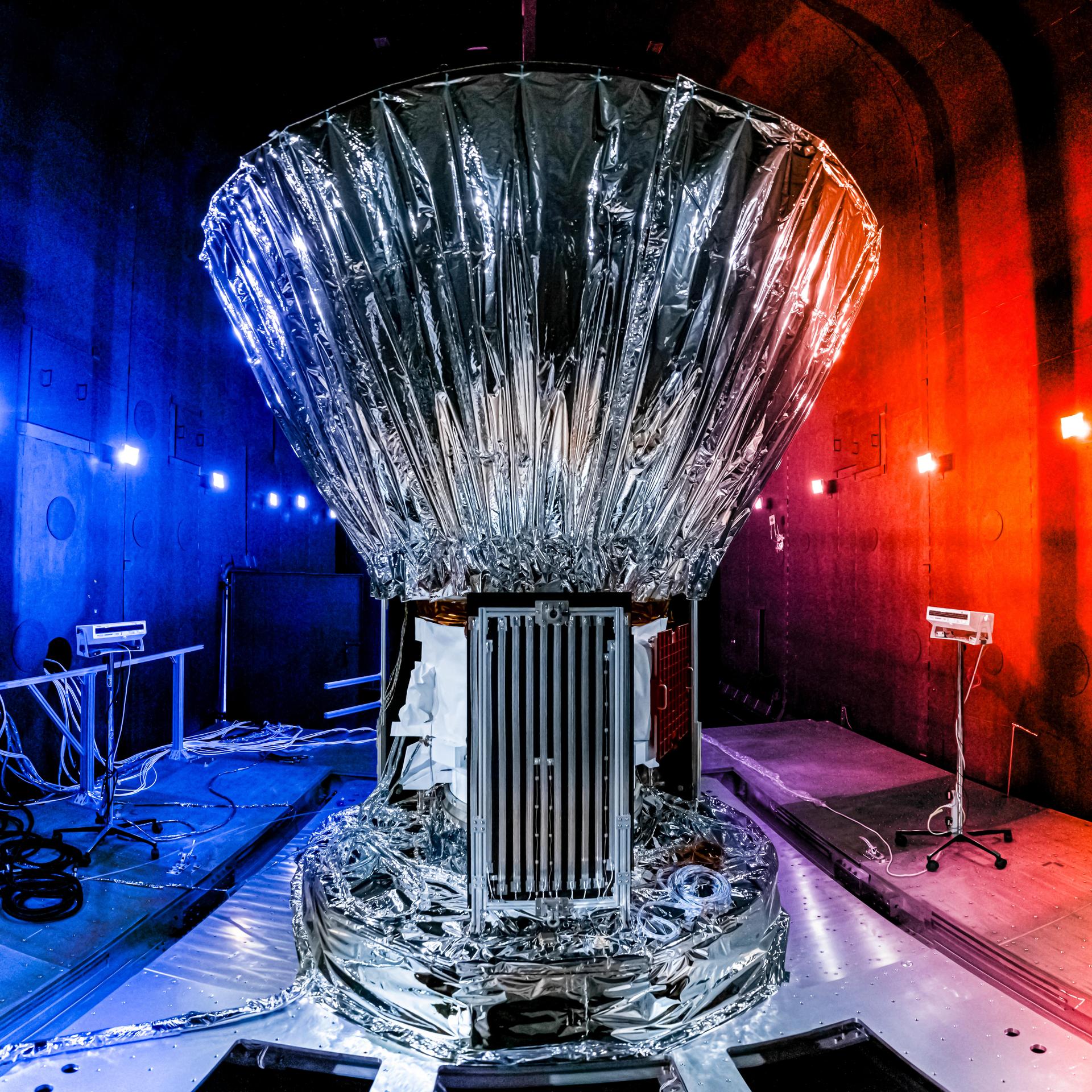
A SpaceX Falcon 9 rocket launched on March 11, from Space Launch Complex 4 East at Vandenberg Space Force Base in California carrying NASA’s SPHEREx (Spectro-Photometer for the History of the Universe, Epoch of Reionization and Ices Explorer) and PUNCH (Polarimeter to Unify the Corona and Heliosphere) missions. NASA’s Launch Services Program, based at NASA Kennedy managed the launch service for SPHEREx.
NASA’s SPHEREx observatory is installed in the Titan Thermal Vacuum (TVAC) test Chamber at BAE Systems in Boulder, Colorado, in June 2024. As part of the test setup, the spacecraft and photon shield are covered in multilayer insulation and blankets and surrounded by ground support equipment.
Jet Propulsion Laboratory
NASA’s SpaceX Crew-9 Returns
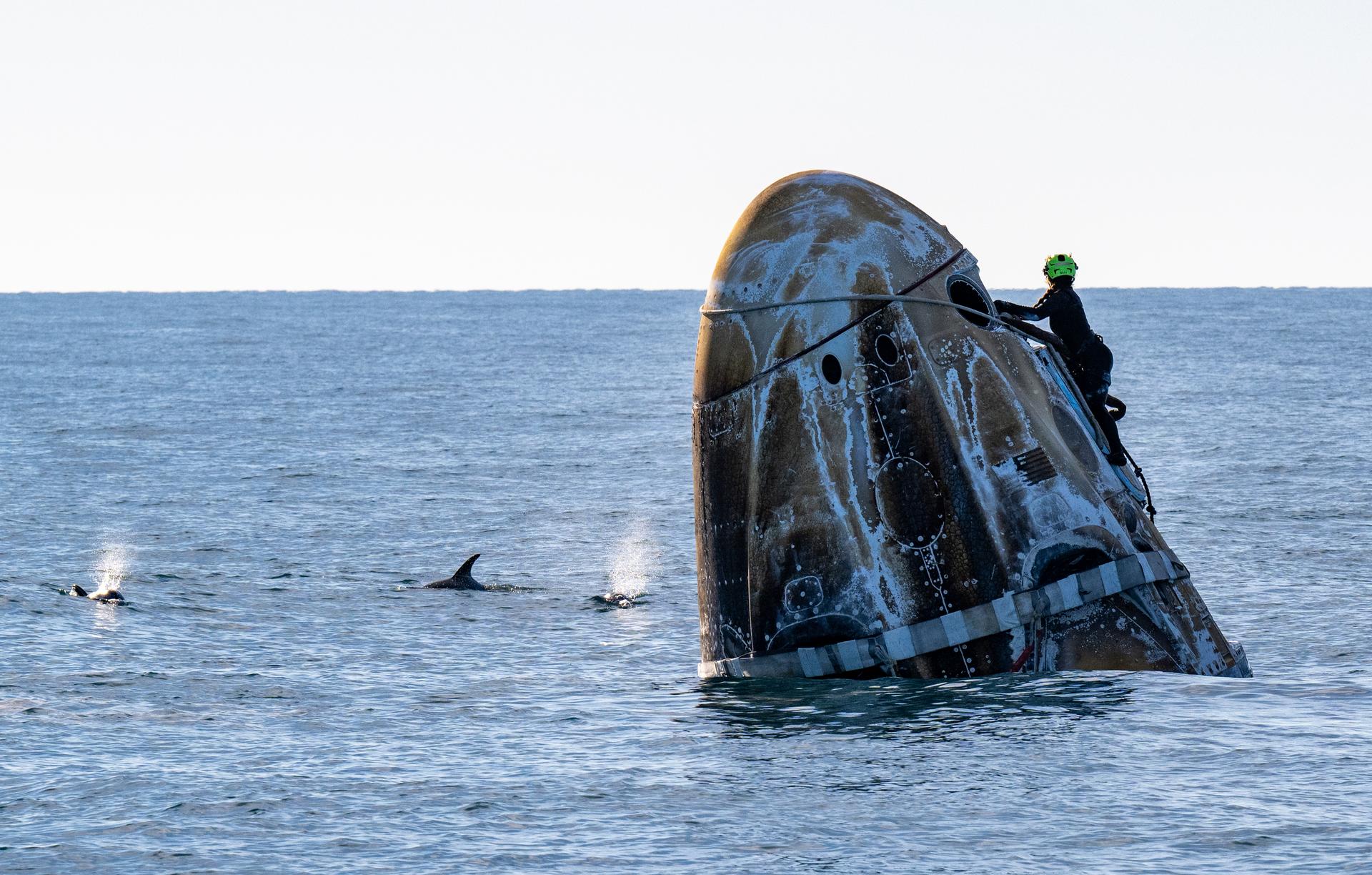
NASA astronauts Nick Hague, Suni Williams, and Butch Wilmore were greeted by dolphins and recovery teams after their SpaceX Dragon spacecraft splashed down on March 18, off the coast of Tallahassee, Florida following their long-duration mission at the International Space Station.
Support teams work around a SpaceX Dragon spacecraft shortly after it landed with NASA astronauts Nick Hague, Suni Williams, Butch Wilmore, and Roscosmos cosmonaut Aleksandr Gorbunov aboard in the water off the coast of Tallahassee, Florida, Tuesday, March 18, 2025. Hague, Gorbunov, Williams, and Wilmore are returning from a long-duration science expedition aboard the International Space Station.
NASA/Keegan Barber
NASA Causeway Bridge Opens
The Florida Department of Transportation opened the westbound portion of the NASA Causeway Bridge on March 19, completing construction in both directions spanning the Indian River Lagoon and connecting NASA Kennedy and Cape Canaveral Space Force Station to the mainland.
Cars drive over the newly completed westbound portion (right side of photo) of the NASA Causeway Bridge leading away from NASA’s Kennedy Space Center in Florida on Wednesday, March 19, 2025. The Florida Department of Transportation (FDOT) opened the span on Tuesday, March 18, 2025, alongside its twin on the eastbound side, which has accommodated traffic in both directions since FDOT opened it on June 9, 2023.
NASA/Glenn Benson
NASA Artemis Teams Complete URT-12
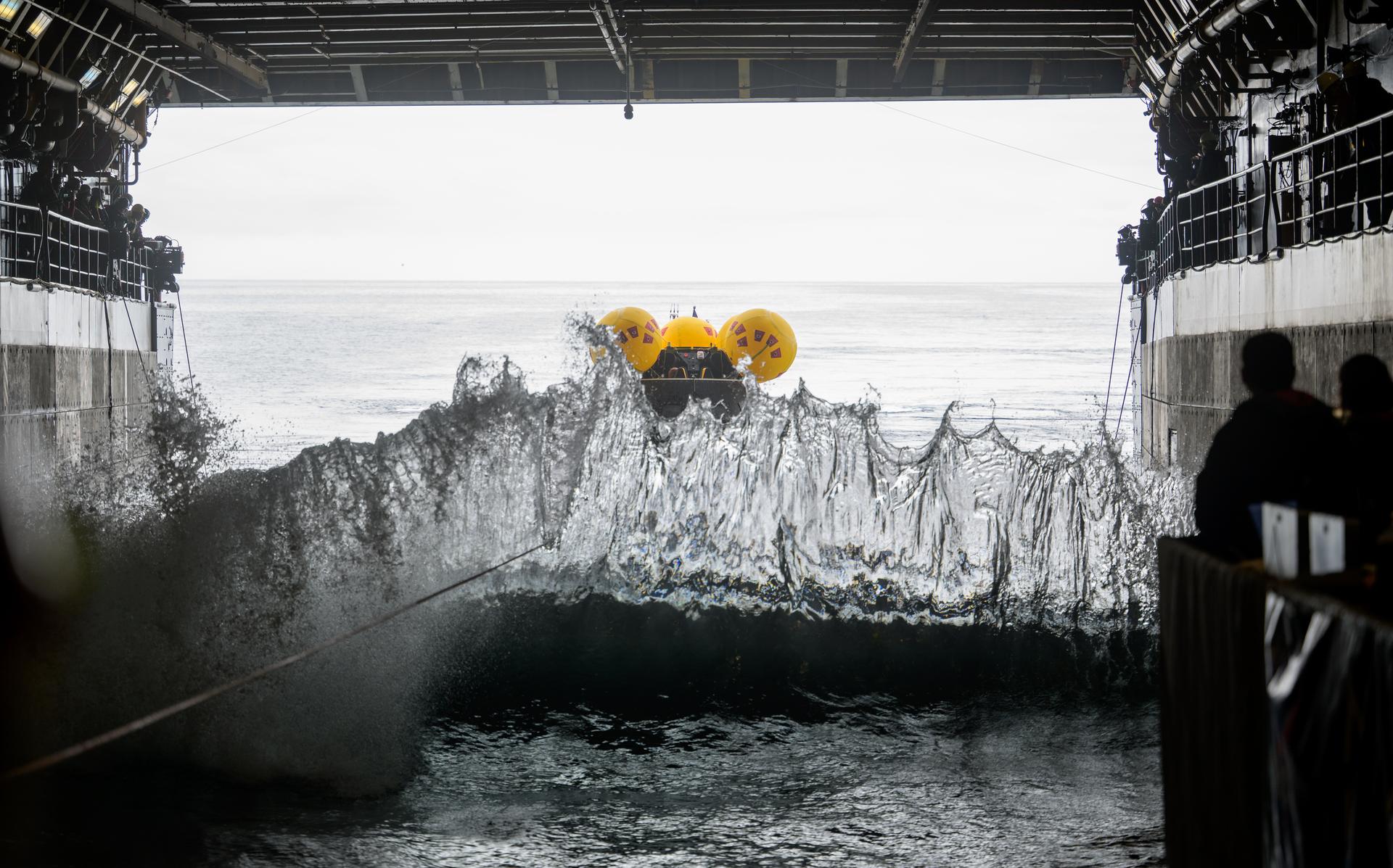
Teams from NASA and the Department of War train during a week-long Underway Recovery Test-12 in March off the coast of California for Artemis II test flight crewmembers and the Orion spacecraft. The series of tests demonstrate and evaluate the processes, procedures, and hardware used in recovery operations for crewed lunar missions.
Waves break inside USS Somerset as the Crew Module Test Article, a full scale mockup of the Orion spacecraft, is tethered during Underway Recovery Test-12 off the coast of California, Wednesday, March 26, 2025. During the test, NASA and Department of Defense teams are practicing to ensure recovery procedures are validated as NASA plans to send Artemis II astronauts around the Moon and splashdown in the Pacific Ocean.
NASA/Joel Kowsky
APRIL NASA’s SpaceX 32nd Commercial Resupply Mission
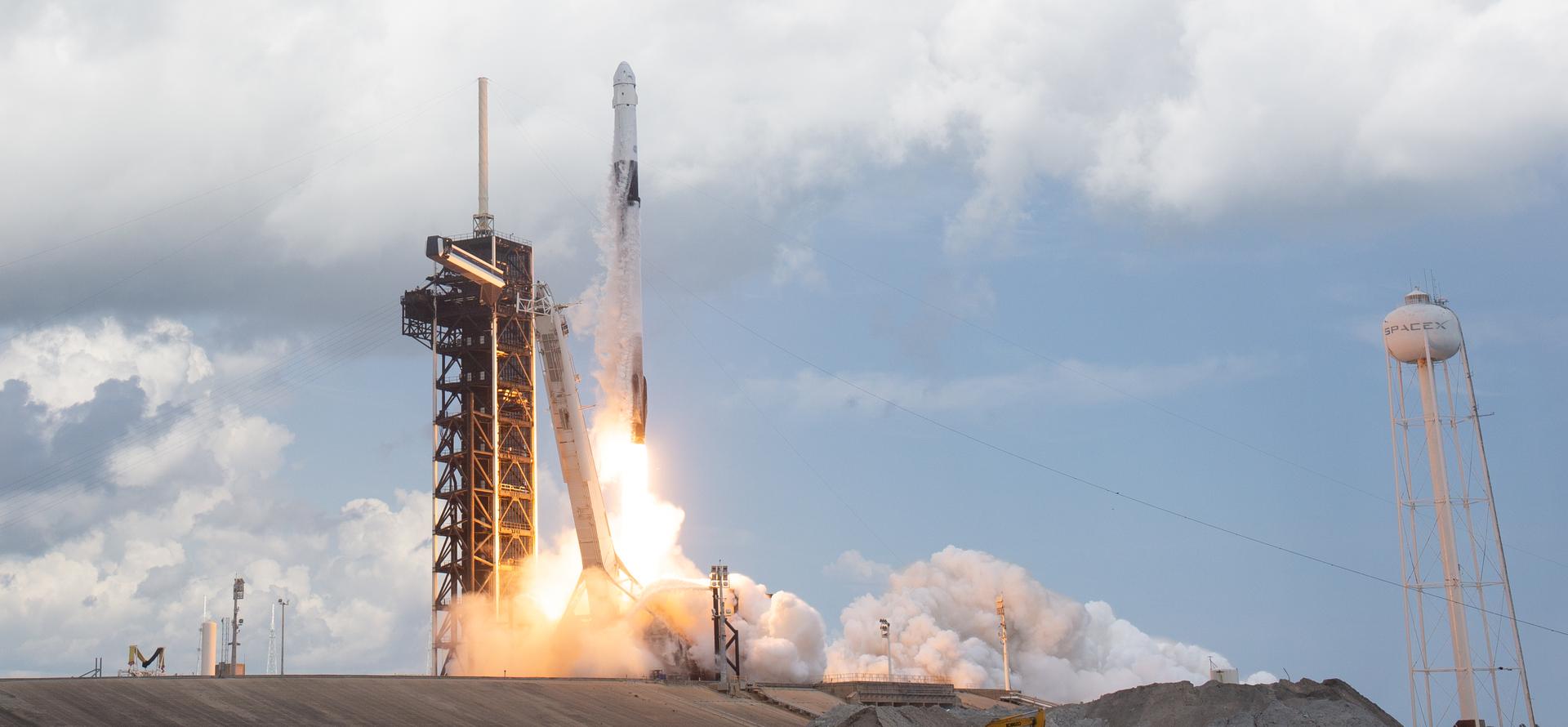
A SpaceX Falcon 9 rocket and a Dragon spacecraft carrying nearly 6,700 pounds of scientific investigations, food, supplies, and equipment launched on April 21 from Launch Complex 39A to the International Space Station.
The SpaceX Falcon 9 rocket carrying the Dragon spacecraft lifts off from Launch Complex 39A at NASA’s Kennedy Space Center in Florida on Monday, April 21, on the company’s 32nd commercial resupply services mission for the agency to the International Space Station.
SpaceX
JULY Artemis III Begins Processing
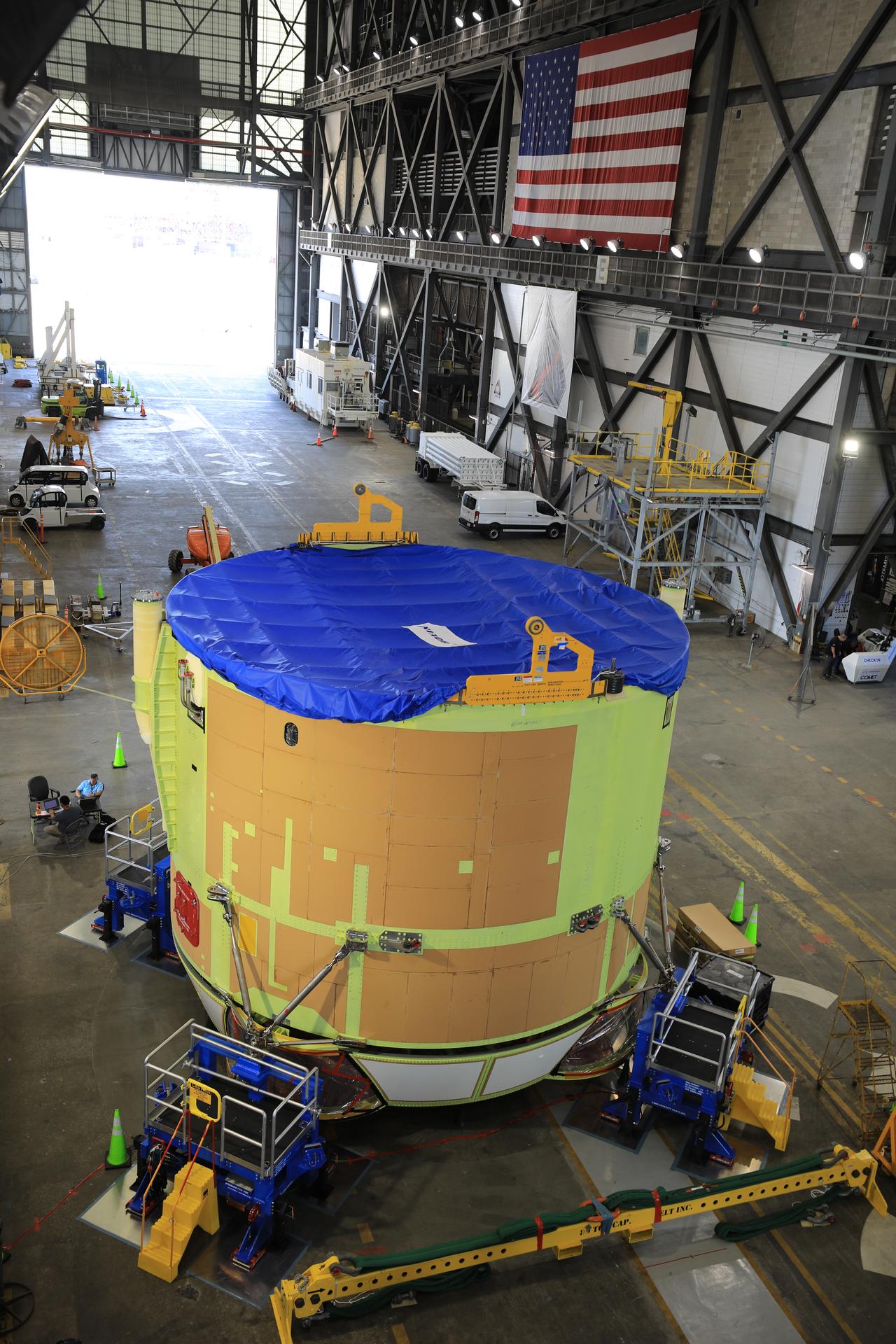
NASA’s Artemis III SLS engine section and boat-tail made the journey from the Space Systems Processing Facility at NASA Kennedy to the spaceport’s Vehicle Assembly Building in July to complete integration and check-out testing. Beginning with the Artemis III hardware, NASA moved certain operations to NASA Kennedy to streamline the manufacturing process and enable simultaneous production operations of two core stages.
Teams from NASA’s Kennedy Space Center in Florida integrate NASA’s Artemis III SLS (Space Launch System) core stage engine section with its boat-tail inside the spaceport’s Vehicle Assembly Building on Wednesday, July 30, 2025. The boat-tail is a fairing-like structure that protects the bottom end of the core stage, while the engine section is one the most complex and intricate parts of the rocket stage that will help power the Artemis missions to the Moon.
NASA/Ronald Beard
AUGUST NASA’s SpaceX Crew-11 Launches
NASA astronauts Zena Cardman and Mike Fincke, JAXA (Japan Aerospace Exploration Agency) astronaut Kimiya Yui, and Roscosmos cosmonaut Oleg Platonov launched aboard a SpaceX Dragon spacecraft and its Falcon 9 rocket on Aug. 1 from Launch Complex 39A bound for a long-duration mission to the International Space Station.
NASA’s SpaceX Crew-11 mission is the eleventh crew rotation mission of the SpaceX Dragon spacecraft and Falcon 9 rocket to the International Space Station as part of the agency’s Commercial Crew Program.
NASA/Joel Kowsky
NASA’s SpaceX Crew-10 Returns
NASA astronauts Anne McClain and Nicole Ayers, JAXA (Japan Aerospace Exploration Agency) astronaut Takuya Onishi, and Roscosmos cosmonaut Kirill Peskov became the first Commercial Crew to splash down in the Pacific Ocean off the coast of California on Aug. 9, completing their nearly five-month mission at the orbiting outpost as part of the agency’s Commercial Crew Program.
Roscosmos cosmonaut Kirill Peskov, left, NASA astronauts Nichole Ayers, Anne McClain, and JAXA (Japan Aerospace Exploration Agency) astronaut Takuya Onishi returned after 147 days in space as part of Expedition 73 aboard the International Space Station.
NASA/Keegan Barber
NASA’s SpaceX 33rd Commercial Resupply Mission
A SpaceX Falcon 9 launched the company’s Dragon spacecraft carrying more than 5,000 pounds of food, crew supplies, science investigations, spacewalk equipment, and more to the space station on Aug. 24 from Launch Complex 39A.
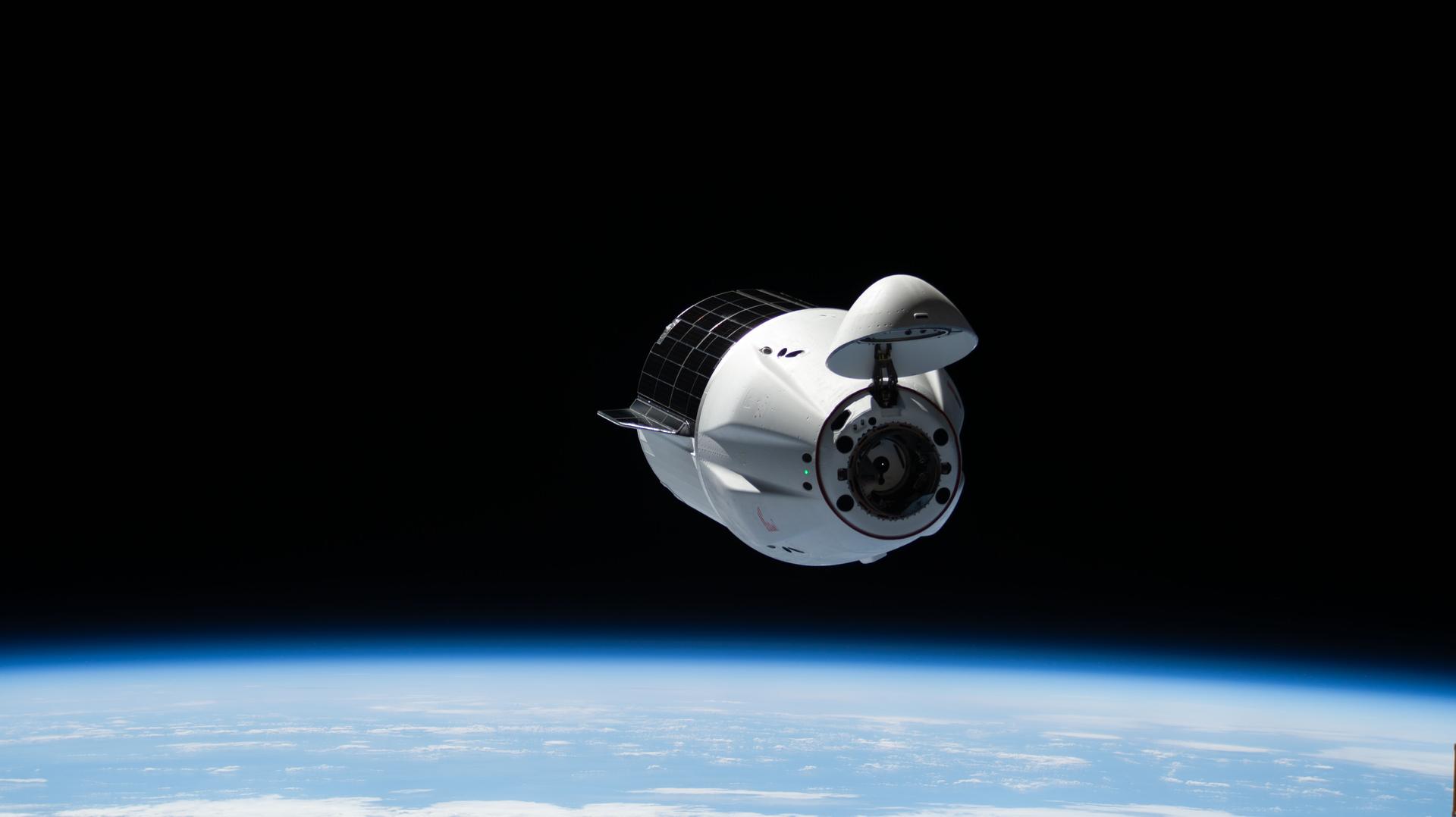
A SpaceX Dragon cargo spacecraft with its nosecone open and carrying over 5,000 pounds of science, supplies, and hardware for NASA’s SpaceX CRS-33 mission approaches the International Space Station for an automated docking to the Harmony module’s forward port.
NASA
Orion Tested, Stacked With Hardware
Teams transported NASA’s Orion spacecraft from Kennedy’s Multi-Payload Processing Facility to the Launch Abort System Facility in August where crews integrated the 44-foot-tall launch abort system. The Orion spacecraft will send NASA astronauts Reid Wiseman, Victor Glover, Christina Koch, and CSA (Canadian Space Agency) astronaut Jeremy Hansen around the Moon for the Artemis II mission in early 2026. The launch abort system is designed to carry the crew to safety in the event of an emergency atop the SLS.
The launch abort tower on NASA’s Artemis II Orion spacecraft is pictured inside the Launch Abort System Facility at the agency’s Kennedy Space Center in Florida on Wednesday, Aug. 27, 2025, after teams with NASA’s Exploration Ground Systems Program installed the tower on Wednesday, Aug. 20, 2025. Positioned at the top of Orion, the 44-foot-tall launch abort system is designed to carry the crew to safety in the event of an emergency during launch or ascent, with its three solid rocket motors working together to propel Orion – and astronauts inside – away from the rocket for a safe landing in the ocean, or detach from the spacecraft when it is no longer needed. The final step to complete integration will be the installation of the ogive fairings, which are four protective panels that will shield the crew module from the severe vibrations and sounds it will experience during launch.
NASA/Cory Huston
SEPTEMBER NASA Launches IMAP Mission
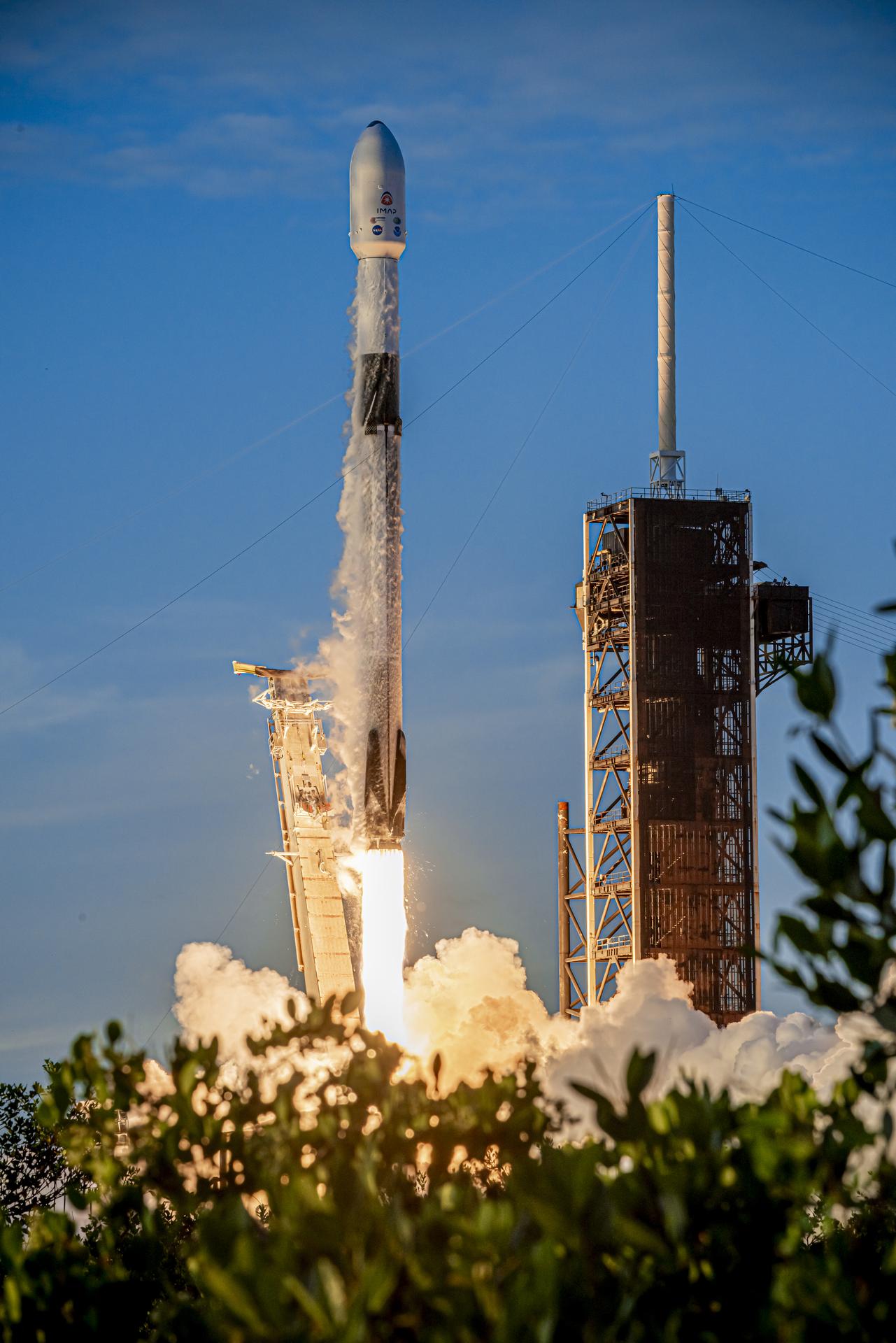
NASA’s IMAP (Interstellar Mapping and Acceleration Probe) launched from Launch Complex 39A on Sept. 24, to help researchers better understand the boundary of the heliosphere, a huge bubble created by the Sun surrounding and protecting our solar system.
A SpaceX Falcon 9 rocket carrying NASA’s IMAP (Interstellar Mapping and Acceleration Probe), the agency’s Carruthers Geocorona Observatory, and National Oceanic and Atmospheric Administration’s (NOAA) Space Weather Follow On–Lagrange 1 (SWFO-L1) spacecraft lifts off from Launch Complex 39A at NASA’s Kennedy Space Center in Florida at 7:30 a.m. EDT Wednesday, Sept. 24, 2025. The missions will each focus on different effects of the solar wind — the continuous stream of particles emitted by the Sun — and space weather — the changing conditions in space driven by the Sun — from their origins at the Sun to their farthest reaches billions of miles away at the edge of our solar system.
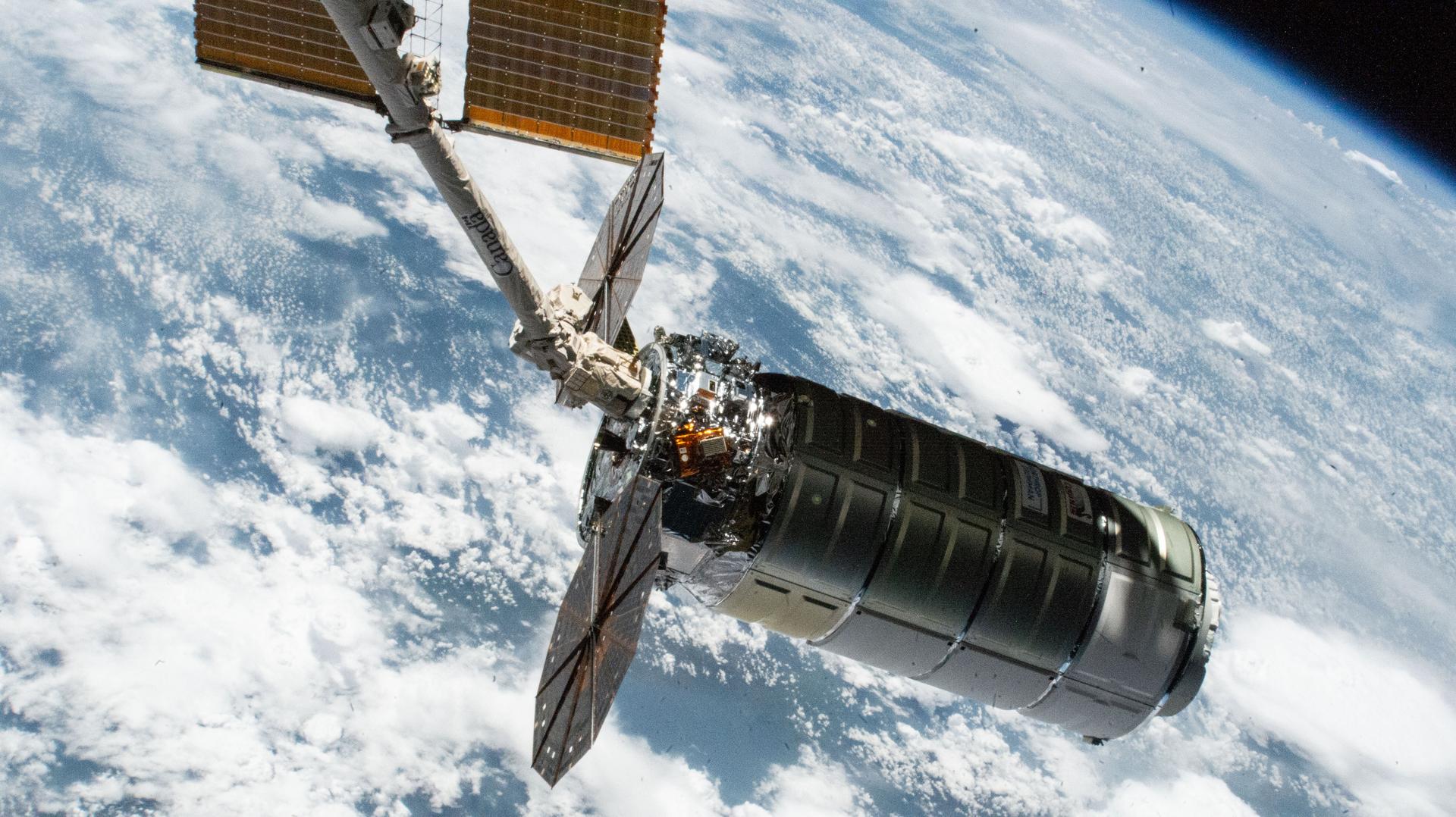
A Northrop Grumman Cygnus XL spacecraft atop a SpaceX Falcon 9 rocket lifted off from Launch Complex 39A to the International Space Station delivering NASA science investigations, supplies, and equipment as part of the agency’s partnership to resupply the orbiting laboratory.
Northrop Grumman’s Cygnus XL cargo craft, carrying over 11,000 pounds of new science and supplies for the Expedition 73 crew, is pictured in the grips of the International Space Station’s Canadarm2 robotic arm following its capture. Both spacecraft were orbiting 257 miles above Tanzania. Cygnus XL is Northrop Grumman’s expanded version of its previous Cygnus cargo craft increasing its payload capacity and pressurized cargo volume.
NASA
OCTOBER Orion Integrated With SLS Rocket
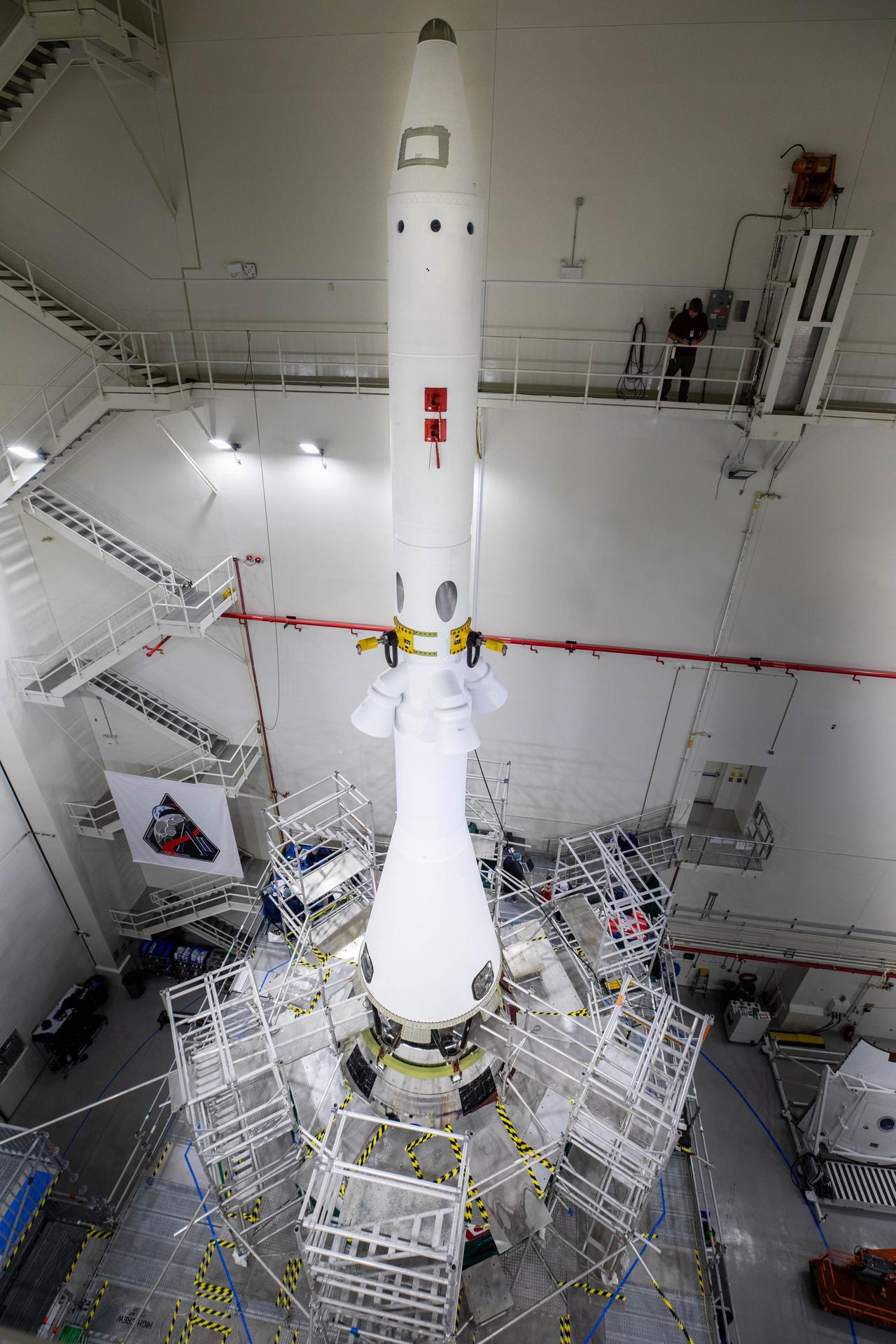
Teams stacked NASA’s Orion spacecraft with its launch abort system on the agency’s SLS rocket in High Bay 3 of the Vehicle Assembly Building at NASA Kennedy on Oct. 20 for the agency’s Artemis II mission. Teams will begin conducting a series of verification tests ahead of rolling out the integrated SLS rocket to Launch Complex 39B for the wet dress rehearsal.
NASA’s Artemis II Orion spacecraft with its launch abort system is stacked atop the agency’s SLS (Space Launch System) rocket in High Bay 3 of the Vehicle Assembly Building at NASA’s Kennedy Space Center in Florida on Monday, Oct. 20, 2025.
NASA/Kim Shiflett
NOVEMBER NASA’s ESCAPADE Begins Journey to Mars
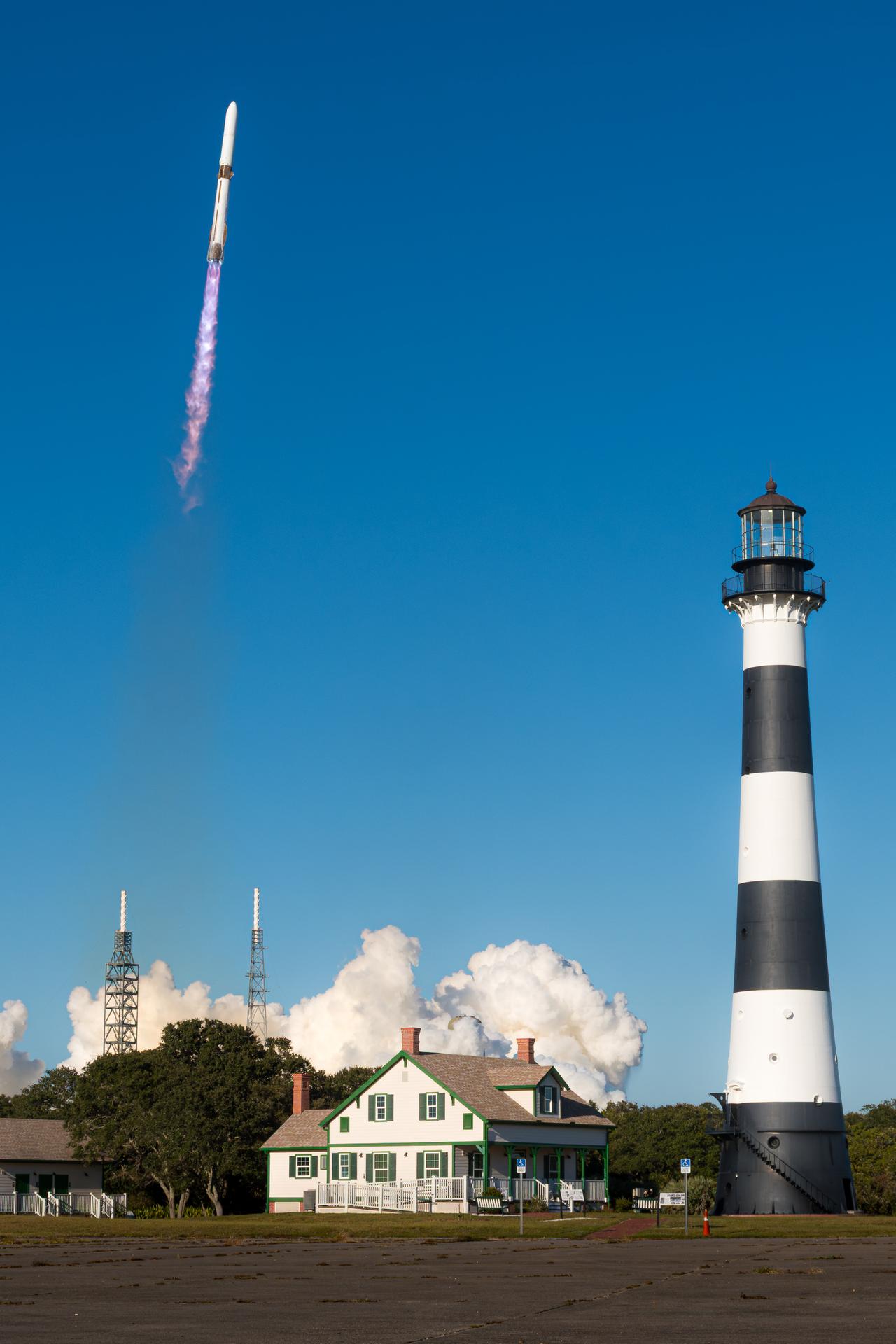
NASA’s ESCAPADE (Escape and Plasma Acceleration and Dynamics Explorers) twin spacecraft launched aboard Blue Origin’s New Glenn rocket on Nov. 13 from Launch Complex 36 at Cape Canaveral Space Force Station. Its twin orbiters will take simultaneous observations from different locations around Mars to reveal how the solar wind interacts with Mars’ magnetic environment and how this interaction drives the planet’s atmospheric escape.
Near Cape Canaveral Lighthouse, Blue Origin’s New Glenn rocket carrying NASA’s twin ESCAPADE (Escape and Plasma Acceleration and Dynamics Explorers) spacecraft launches at 3:55 p.m. EST, Thursday, Nov. 13, 2025, from Launch Complex 36 at Cape Canaveral Space Force Station in Florida. The ESCAPADE mission, built by Rocket Lab, will study how solar wind and plasma interact with Mars’ magnetosphere and how this interaction drives the planet’s atmospheric escape to prepare for future human missions on Mars.
Blue Origin
NASA, European Partners Launch Sea Satellite
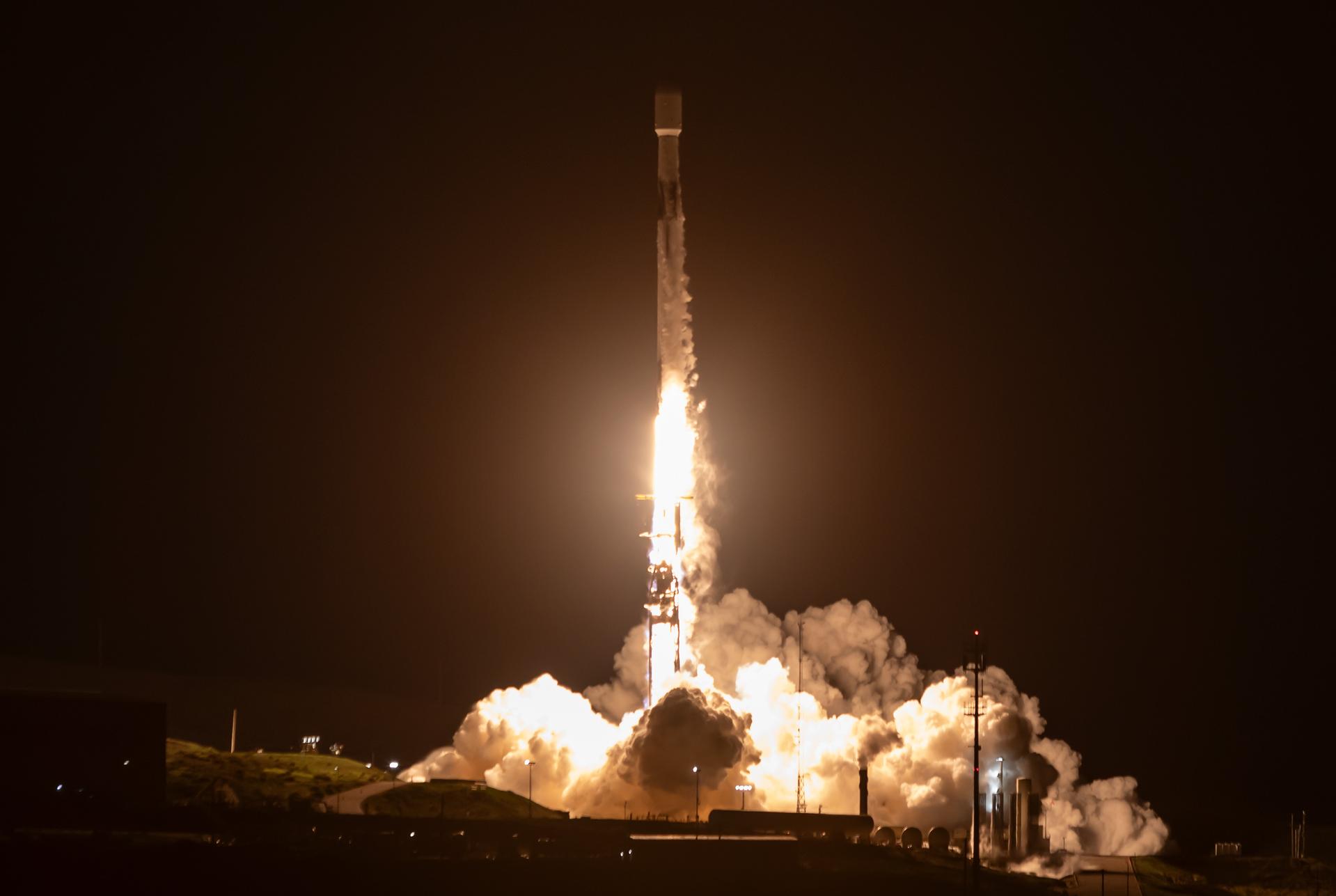
A SpaceX Falcon 9 rocket carrying the U.S.-European Sentinel-6B satellite launched at Nov. 16 from Space Launch Complex 4 East at Vandenberg Space Force Base in California. Sentinel-6B will observe Earth’s ocean, measuring sea levels to improve weather forecasts and flood predictions, safeguard public safety, benefit commercial industry, and protect coastal infrastructure.
A SpaceX Falcon 9 rocket carrying the international Sentinel-6B spacecraft lifts off from Space Launch Complex 4 East at Vandenberg Space Force Base in California at 9:21 p.m. PST Sunday, Nov. 16, 2025. A collaboration between NASA, ESA (European Space Agency), EUMETSAT (European Organisation for the Exploitation of Meteorological Satellites), and the National Oceanic and Atmospheric Administration (NOAA), Sentinel-6B is designed to measure sea levels down to roughly an inch for about 90% of the world’s oceans.
SpaceX
DECEMBER
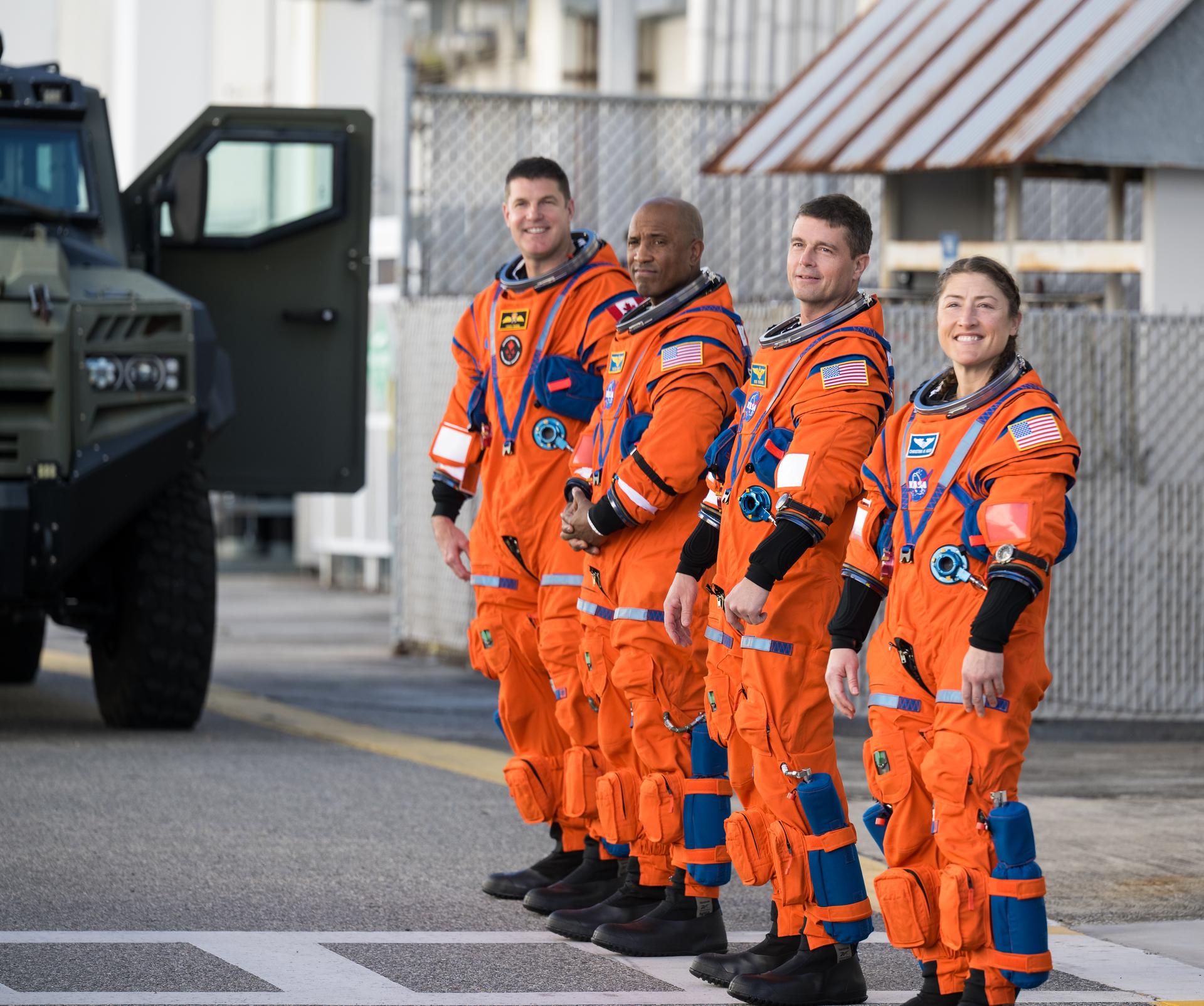
NASA astronauts Reid Wiseman, Victor Glover, Christina Koch, and CSA astronaut Jeremy Hansen participated in a dry dress rehearsal at NASA Kennedy on Dec. 20 to mimic launch day operations for the Artemis II launch. The crew donned their spacesuits, exited the Neil A. Operations and Checkout Building, and took the journey to the Vehicle Assembly Building, up the mobile launcher to the crew access arm, and entered the Orion spacecraft that will take them around the Moon and back to Earth.
From right to left, NASA astronauts Christina Koch, mission specialist; Reid Wiseman, commander; Victor Glover, pilot; and CSA (Canadian Space Agency) astronaut Jeremy Hansen, mission specialist are seen as they depart the Neil A. Armstrong Operations and Checkout Building to board their Orion spacecraft atop NASA’s Space Launch System rocket inside the Vehicle Assembly Building as part of the Artemis II countdown demonstration test, Saturday, Dec. 20, 2025, at NASA’s Kennedy Space Center in Florida. For this operation, the Artemis II crew and launch teams are simulating the launch day timeline including suit-up, walkout, and spacecraft ingress and egress. Through the Artemis campaign, NASA will send astronauts to explore the Moon for scientific discovery, economic benefits, and to build the foundation for the first crewed missions to Mars, for the benefit of all.

 Login
Login