
❌

Normal view

There are new articles available, click to refresh the page.
Before yesterdayMain stream

Are Crypto Exchanges Manipulating The Bitcoin Price Crash?

20 January 2026 at 11:00

Crypto pundit Wimar has claimed that crypto exchanges are manipulating the Bitcoin price, causing it to crash from its 2026 high. This comes amid recent developments with the Trump tariffs, which have caused the flagship crypto to also decline.Β 

Crypto Pundit Accuses Crypto Exchanges Of Manipulating Bitcoin Price

In an X post, Wimar asserted that crypto exchanges are manipulating the Bitcoin price. He noted how BTC just dumped from $95,500 to $91,900 with no news. The pundit claimed it is the same script, over and over again, as the flagship crypto rose from $89,000 to $95,000 and has now fallen to $91,000, just as it did when it rose from $85,000 to $88,000 and then fell to $84,000.Β 

Wimar claimed that this is a liquidity hunt, alluding to the flows to prove that the Bitcoin price is manipulated. He noted that within minutes, Wintermute, Binance, Coinbase, and ETF-linked wallets were all active simultaneously. Large blocks were said to have moved from exchange to exchange, with huge market buys hitting thin books, and then, just as fast, these tokens were dumped.Β Β 

The crypto pundit also highlighted Arkham data, noting that the flows tell the real story. Wimar claimed that coins move into exchanges right after the pump, which he stated is not a coincidence. The pundit further remarked that these crypto exchanges wait for a setup where liquidity is low, leverage is high, and funding is stretched.Β 

Bitcoin

Wimar asserted that these crypto exchanges run the same play every time, where they first pump the Bitcoin price fast on thin books to trigger FOMO and then liquidate shorts. Retail investors then see green candles and open long positions because the price action appears to be a breakout, but they fall into the trap, according to the pundit.Β 

Wimar stated that once enough people are stuck in leverage, the coins hit crypto exchanges and selling starts, leading to a Bitcoin price crash. The pundit accused these exchanges of dumping into the demand they just created, forcing fresh longs to get liquidated and farming both long and short traders with no news.Β 

BTC’s Current Price Action Isn’t Based On Headlines

Wimar doubled down on his accusation of crypto exchanges being responsible for the Bitcoin price crash, stating that BTC doesn’t move like this because of headlines. He claimed that it moves like because leverage piles up, and someone decides it is β€œpayday.” As such, the pundit suggested that the Trump tariffs fears aren’t what is sparking this recent market crash.

Trump had announced fresh tariffs on France, the U.K., the Netherlands, Denmark, Germany, Sweden, Finland, and Norway over the weekend. The Bitcoin price had remained unchanged following the announcement, but began to crash following reports that the European Union (EU) was considering retaliatory tariffs.Β 

At the time of writing, the Bitcoin price is trading at around $90,900, down over 2% in the last 24 hours, according to data from CoinMarketCap.

Bitcoin

Featured image from Pixabay, chart from Tradingview.com
Wintermute Says Crypto’s Bull Cycle Is Over – Three Forces Will Drive 2026

20 January 2026 at 06:24

Cryptocurrency’s traditional four-year cycle has collapsed, replaced by a new market structure where liquidity concentration and investor positioning now determine price action, according to a comprehensive year-end analysis from leading OTC desk Wintermute.

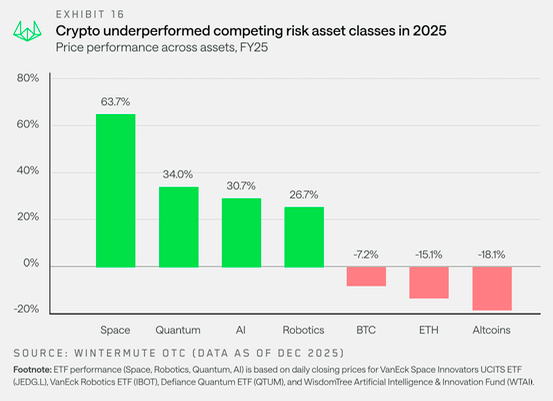
The firm’s proprietary trading data reveals that 2025 marked a fundamental shift in how digital assets trade, with the year’s muted performance indicating crypto’s transition from speculation-driven rallies to a more institutionally anchored asset class.

Wintermute’s OTC flow data shows the historic pattern of Bitcoin gains recycling into Ethereum, then blue chips, and finally altcoins has weakened dramatically.

2026 Crypto's Bull Cycle - Wintermute Chart
Source: Wintermute

Exchange-traded funds and digital asset treasury companies evolved into what the firm describes as β€œwalled gardens,” providing sustained demand for large-cap assets without naturally rotating capital into the broader market.

With retail interest diverted toward equities, 2025 became a year of extreme concentration where a handful of major tokens absorbed the vast majority of new capital while the rest of the market struggled.

2026 Crypto's Bull Cycle - Wintermute Chart
Source: Wintermute

Traditional Seasonality Shattered by Structural Shifts

Trading activity in 2025 followed a distinctly different pattern than previous years, breaking what had felt like seasonal rhythms.

Early-year optimism around the pro-crypto U.S. administration quickly disappointed as risk sentiment deteriorated sharply through the first quarter when memecoin and AI-agent narratives faded.

Trump’s tariff announcement on April 2 further pressured markets, concentrating activity early in the year before broad softening through spring and summer.

The late-year pickup seen in 2023 and 2024 failed to materialize, shattering narratives around β€œUptoberβ€œ and year-end rallies.

Wintermute’s data reveals these were never true seasonal patterns but rather rallies driven by idiosyncratic catalysts like ETF approvals in 2023 and the new U.S. administration in 2024.

Markets became increasingly choppy as macro forces took control, with flows turning reactive and episodic around headlines without sustained momentum.

Altcoin rallies shortened dramatically, averaging roughly 19 days in 2025, down from 61 days the prior year.

Themes including memecoin launchpads, perpetual DEXs, and the x402 meta sparked brief activity bursts but failed to develop into durable market-wide rallies, largely due to choppy macro conditions and market fatigue after 2024’s excesses.

Institutional Engagement Deepens Despite Muted Returns

Despite modest price activity, institutional counterparties showed staying power through 2025.

Wintermute saw 23% year-over-year growth among institutional participants, including crypto-native funds, asset managers, and traditional financial institutions.

Engagement deepened materially, with activity becoming more sustained and focused on deliberate execution rather than exploratory positioning.

The firm’s derivatives data also reveals options activity more than doubled year-over-year, with systematic yield and risk management strategies dominating flow for the first time rather than one-off directional bets.

By the fourth quarter, options notional reached 3.8 times first-quarter levels, while trade counts doubled, indicating sustained growth across both ticket size and frequency.

Both institutional and retail investors rotated back into majors by year-end following the October 10 deleveraging event that triggered roughly $19 billion in liquidations over 24 hours.

Altcoin open interest also collapsed by 55%, from around $70 billion to $30 billion by mid-December, as forced unwinding flushed out excess leverage concentrated outside Bitcoin and Ethereum.

Three Catalysts Could Broaden 2026 Recovery

Wintermute identifies three scenarios that would need to materialize for market breadth to recover beyond large-cap concentration.

First, ETFs and DATs must broaden their mandates, with early signs emerging in the Solana and XRP ETF filings.

Second, strong rallies in Bitcoin or Ethereum could generate wealth effects that spill over into the broader market, similar to 2024’s pattern, though capital recycling remains uncertain.

Third and least likely, retail investor mindshare could rotate back from equities and AI themes toward crypto, bringing fresh capital inflows and stablecoin minting.

β€œ2025 fell short of the expected rally, but it may mark the beginning of crypto’s transition from speculative to an established asset class,” Wintermute’s analysis concludes.

Independent analysis from Adler Asset Management reinforces the ongoing deleveraging theme, extending into 2026.

Adler pointed out that the Bitcoin Advanced Sentiment Index collapsed from the High Bull zone around 80% to 44.9%, breaking below neutral 50% and signaling a market regime shift.

The largest long liquidation cascade over their entire observation period occurred on January 19, with over $205 million liquidated in a single hour as the price dropped from $95,400 to $92,600 within 24 hours.

Whether concentration persists or liquidity broadens beyond a handful of large-cap assets will determine 2026 outcomes, with understanding where capital can flow and what structural changes are needed proving critical for navigating the post-cycle crypto market.

The post Wintermute Says Crypto’s Bull Cycle Is Over – Three Forces Will Drive 2026 appeared first on Cryptonews.

Altcoin Rallies Are Getting Shorter, And Wintermute Has The Data

16 January 2026 at 04:00

According to Wintermute’s 2025 Digital Asset OTC Markets report, altcoin rallies last year were much shorter than traders expected, averaging about 19–20 days. That is a steep drop from the roughly 60-day runs seen in 2024.

Market flows tightened, and many smaller tokens saw gains vanish faster than before. The result: capital moved back into the big names β€” Bitcoin and Ethereum β€” where liquidity is deeper.

Altcoin Open Interest Drops

Based on reports, one key trigger was a sharp deleveraging on October 10, 2025, which pushed retail traders to reduce risk and rotate out of smaller tokens.

Open interest in many altcoin futures contracts fell, with some coverage noting about a 55% decline in altcoin futures open interest since October.

Trading desks said lower liquidity made it harder for rallies to keep going beyond a few weeks, turning what used to be multi-month moves into short bursts.

Major Coins Reclaimed Center Stage

Institutional flows and product structures played a role. Reports have disclosed that ETFs and other institutional channels helped funnel funds toward Bitcoin and Ethereum. As a result, the market’s attention narrowed.

Where narratives once pushed dozens of tokens into rallies, more capital was now concentrated in the top tier. Traders say they preferred assets where orders could be filled without dramatically moving the price.

Short, Intense Moves Replaced Long Trends

Wintermute’s analysis points to a change in how momentum forms. Rally drivers became more tactical and less about broad, lasting narratives. In practice, that meant memecoin pumps and exchange-themed rallies burned out quickly.

Some traders described these moves as hair-trigger events: quick upswings followed by equally rapid retracements. Liquidity bands tightened and stops were hit sooner than in past cycles.

What Traders And Firms Are Watching

Market participants say the path to a sustained altcoin season now requires a few things aligning. Reports indicate renewed retail interest, clearer institutional support for smaller tokens, and calmer macro markets could help.

Otherwise, rallies are likely to remain short. Execution desks reported that when big buyers reappeared for a token, it could run fast, but keeping that momentum proved difficult without deeper market participation.

Outlook For 2026

Based on the report and market commentary, a broader crypto rebound in 2026 depends on several moving parts: interest from institutions, shifts in macro rates, and retail returning to risk-on strategies.

If those elements arrive, rallies might last longer than the 19–20 day average seen in 2025. If not, traders say the pattern of quick, sharp moves into the majors will continue.

Featured image from Unsplash, chart from TradingView

❌
❌