As Ars reported last week, NASA's plan to replace the International Space Station with commercial space stations is running into a time crunch.
The sprawling International Space Station is due to be decommissioned less than five years from now, and the US space agency has yet to formally publish rules and requirements for the follow-on stations being designed and developed by several different private companies.
Although there are expected to be multiple bidders in "phase two" of NASA's commercial space station program, there are at present four main contenders: Voyager Technologies, Axiom Space, Blue Origin, and Vast Space. At some point later this year, the space agency is expected to select one, or more likely two, of these companies for larger contracts that will support their efforts to build their stations.
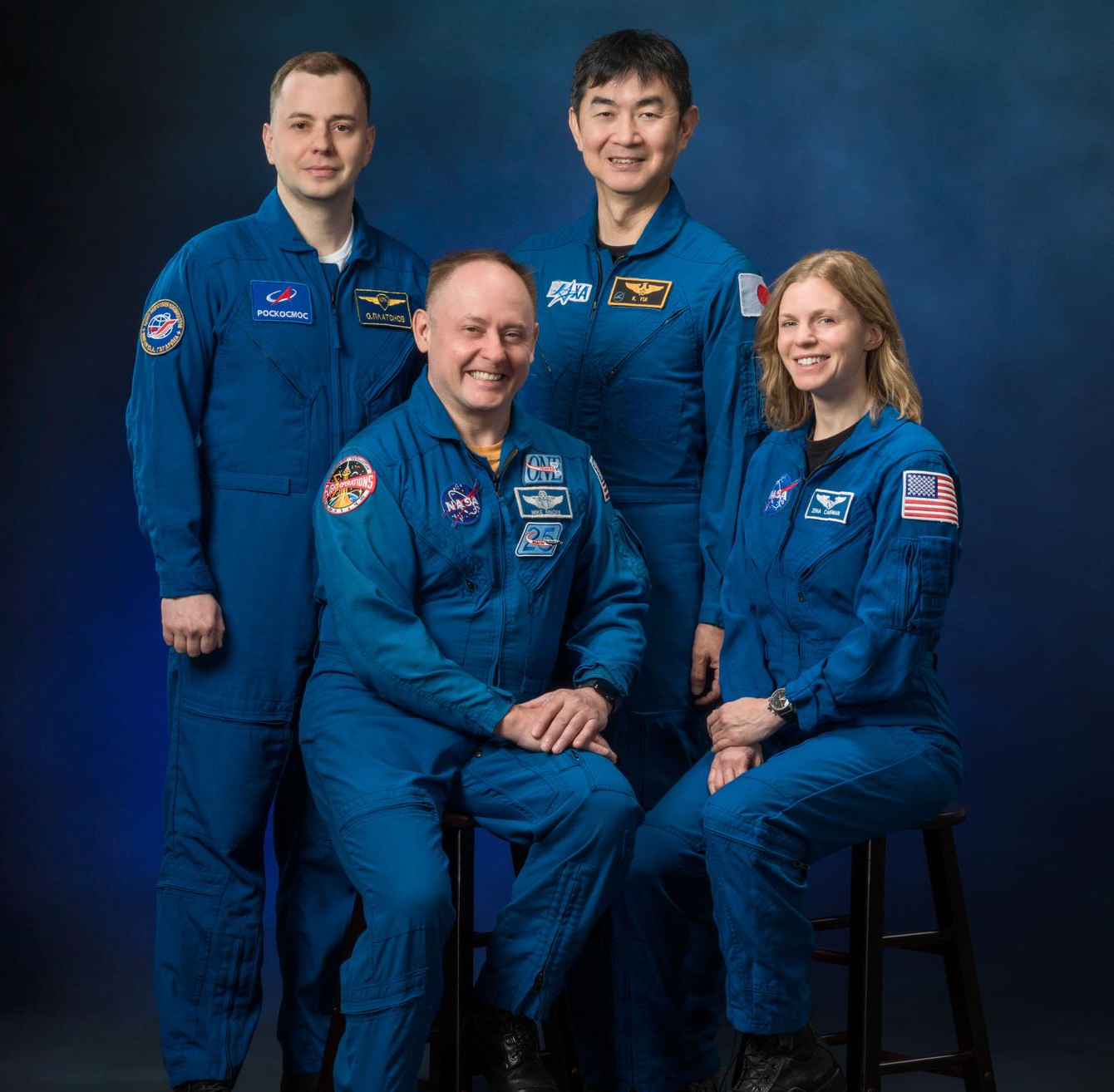
Two Americans, a Japanese astronaut, and a Russian cosmonaut returned to Earth early Thursday after 167 days in orbit, cutting short their stay on the International Space Station by more than a month after one of the crew members encountered an unspecified medical issue last week.
The early homecoming culminated in an on-target splashdown in the Pacific Ocean off the coast of San Diego at 12:41 am PST (08:41 UTC) inside a SpaceX Crew Dragon spacecraft. The splashdown occurred minutes after the Dragon capsule streaked through the atmosphere along the California coastline, with sightings of Dragon's fiery trail reported from San Francisco to Los Angeles.
Four parachutes opened to slow the capsule for the final descent. Zena Cardman, NASA's commander of the Crew-11 mission, radioed SpaceX mission control moments after splashdown: "It feels good to be home, with deep gratitude to the teams who got us there and back."
Over the course of its nearly 30 years in orbit, the International Space Station has played host to more “firsts” than can possibly be counted. When you’re zipping around Earth at five miles per second, even the most mundane of events takes on a novel element. Arguably, that’s the point of a crewed orbital research complex in the first place — to study how humans can live and work in an environment that’s so unimaginably hostile that something as simple as eating lunch requires special equipment and training.
Today marks another unique milestone for the ISS program, albeit a bittersweet one. Just a few hours ago, NASA successfully completed the first medical evacuation from the Station, cutting the Crew-11 mission short by at least a month. By the time this article is released, the patient will be back on terra firma and having their condition assessed in California. This leaves just three crew members on the ISS until NASA’s Crew-12 mission can launch in early February, though it’s possible that mission’s timeline will be moved up.
What We Know (And Don’t)
To respect the privacy of the individual involved, NASA has been very careful not to identify which member of the multi-nation Crew-11 mission is ill. All of the communications from the space agency have used vague language when discussing the specifics of the situation, and unless something gets leaked to the press, there’s an excellent chance that we’ll never really know what happened on the Station. But we can at least piece some of the facts together.
Crew-11: Oleg Platonov, Mike Fincke, Kimiya Yui, and Zena Cardman
On January 7th, Kimiya Yui of Japan was heard over the Station’s live audio feed requesting a private medical conference (PMC) with flight surgeons before the conversation switched over to a secure channel. At the time this was not considered particularly interesting, as PMCs are not uncommon and in the past have never involved anything serious. Life aboard the Station means documenting everything, so a PMC could be called to report a routine ailment that we wouldn’t give a second thought to here on Earth.
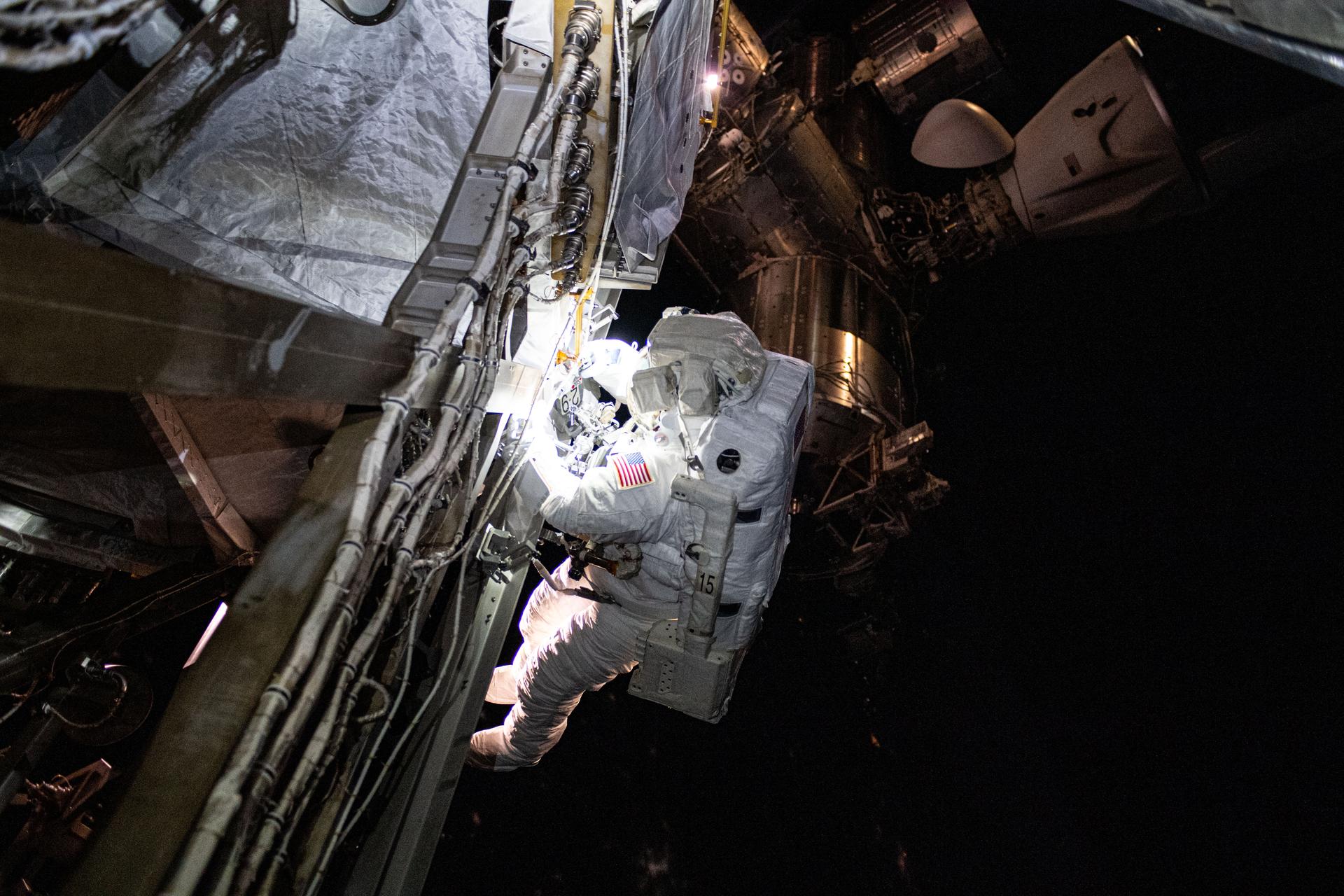
But when NASA later announced that the extravehicular activity (EVA) scheduled for the next day was being postponed due to a “medical concern”, the press started taking notice. Unlike what we see in the movies, conducting an EVA is a bit more complex than just opening a hatch. There are many hours of preparation, tests, and strenuous work before astronauts actually leave the confines of the Station, so the idea that a previously undetected medical issue could come to light during this process makes sense. That said, Kimiya Yui was not scheduled to take part in the EVA, which was part of a long-term project of upgrading the Station’s aging solar arrays. Adding to the mystery, a representative for Japan’s Aerospace Exploration Agency (JAXA) told Kyodo News that Yui “has no health issues.”
This has lead to speculation from armchair mission controllers that Yui could have requested to speak to the flight surgeons on behalf of one of the crew members that was preparing for the EVA — namely station commander Mike Fincke and flight engineer Zena Cardman — who may have been unable or unwilling to do so themselves.
Within 24 hours of postponing the EVA, NASA held a press conference and announced Crew-11 would be coming home ahead of schedule as teams “monitor a medical concern with a crew member”. The timing here is particularly noteworthy; the fact that such a monumental decision was made so quickly would seem to indicate the issue was serious, and yet the crew ultimately didn’t return to Earth for another week.
Work Left Unfinished
While the reusable rockets and spacecraft of SpaceX have made crew changes on the ISS faster and cheaper than they were during the Shuttle era, we’re still not at the point where NASA can simply hail a Dragon like they’re calling for an orbital taxi. Sending up a new vehicle to pickup the ailing astronaut, while not impossible, would have been expensive and disruptive as one of the Dragon capsules in rotation would have had to be pulled from whatever mission it was assigned to.
So unfortunately, bringing one crew member home means everyone who rode up to the Station with them needs to leave as well. Given that each astronaut has a full schedule of experiments and maintenance tasks they are to work on while in orbit, one of them being out of commission represents a considerable hit to the Station’s operations. Losing all four of them at once is a big deal.
Granted, not everything the astronauts were scheduled to do is that critical. Tasks range form literal grade-school science projects performed as public outreach to long-term medical evaluations — some of the unfinished work will be important enough to get reassigned to another astronaut, while some tasks will likely be dropped altogether.
Work to install the Roll Out Solar Arrays (ROSAs) atop the Stations original solar panels started in 2021.
But the EVA that Crew-11 didn’t complete represents a fairly serious issue. The astronauts were set to do preparatory work on the outside of the Station to support the installation of upgraded roll-out solar panels during an EVA scheduled for the incoming Crew-12 to complete later on this year. It’s currently unclear if Crew-12 received the necessary training to complete this work, but even if they have, mission planners will now have to fit an unforeseen extra EVA into what’s already a packed schedule.
What Could Have Been
Having to bring the entirety of Crew-11 back because of what would appear to be a non-life-threatening medical situation with one individual not only represents a considerable logistical and monetary loss to the overall ISS program in the immediate sense, but will trigger a domino effect that delays future work. It was a difficult decision to make, but what if it didn’t have to be that way?
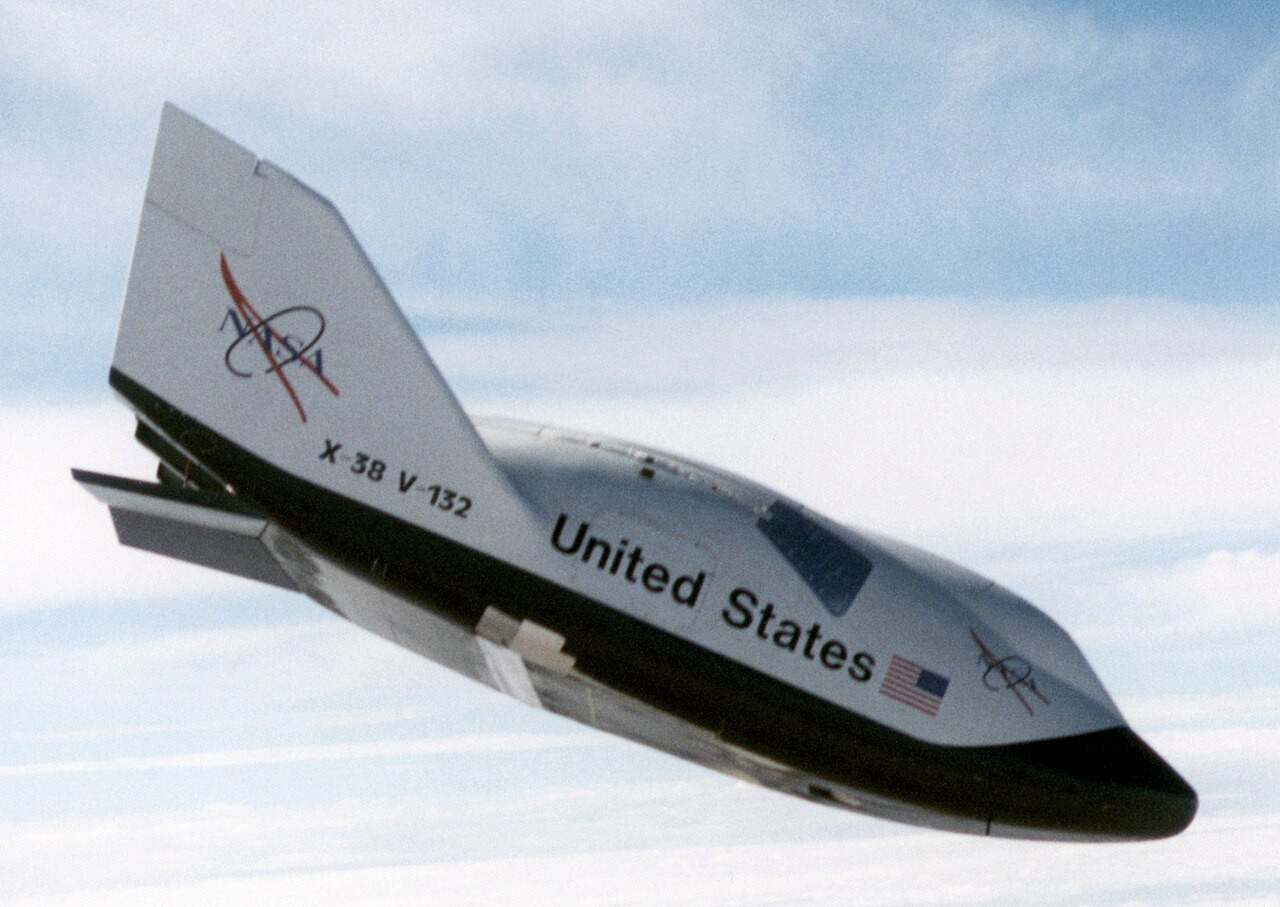
The X-38 CRV prototype during a test flight in 1999.
In other timeline, the ISS would have featured a dedicated “lifeboat” known as the Crew Return Vehicle (CRV). A sick or injured crew member could use the CRV to return to Earth, leaving the spacecraft they arrived in available for the remaining crew members. Such a capability was always intended to be part of the ISS design, with initial conceptual work for the CRV dating back to the early 1990s, back when the project was still called Space Station Freedom. Indeed, the idea that the ISS has been in continuous service since 2000 without such a failsafe in place is remarkable.
Unfortunately, despite a number of proposals for a CRV, none ever made it past the prototype stage. In practice, it’s a considerable engineering challenge. A space lifeboat needs to be cheap, since if everything goes according to plan, you’ll never actually use the thing. But at the same time, it must be reliable enough that it could remain attached to the Station for years and still be ready to go at a moment’s notice.
In practice, it was much easier to simply make sure there are never more crew members on the Station than there are seats in returning spacecraft. It does mean that there’s no backup ride to Earth in the event that one of the visiting vehicles suffers some sort of failure, but as we saw during the troubled test flight of Boeing’s CST-100 in 2024, even this issue can be resolved by modifications to the crew rotation schedule.
No Such Thing as Bad Data
Everything that happens aboard the International Space Station represents an opportunity to learn something new, and this is no different. When the dust settles, you can be sure NASA will commission a report to dives into every aspect of this event and tries to determine what the agency could have done better. While the ISS itself may not be around for much longer, the information can be applied to future commercial space stations or other long-duration missions.
Was ending the Crew-11 mission the right call? Will the loses and disruptions triggered by its early termination end up being substantial enough that NASA rethinks the CRV concept for future missions? There are many questions that will need answers before it’s all said and done, and we’re eager to see what lessons NASA takes away from today.
In remarks this week to a Texas space organization, a key Senate staff member said an "extension" of the International Space Station is on the table and that NASA needs to accelerate a program to replace the aging station with commercial alternatives.
Maddy Davis, a space policy staff member for US Sen. Ted Cruz, R-Texas, made the comments to the Texas Space Coalition during a virtual event.
Cruz is chairman of the Senate Committee on Commerce, Science, and Transportation and has an outsized say in space policy. As a senator from Texas, he has a parochial interest in Johnson Space Center, where the International Space Station Program is led.
It’s turned into an unusual mission for SpaceX’s Crew-11. Instead of remaining at the International Space Station (ISS) for the full duration of their mission, the four crew members are coming home a month early due to a medical issue with one of the astronauts. Crew-11 departed the ISS on Wednesday afternoon and is due […]
NASA officials said Thursday they have decided to bring home four of the seven crew members on the International Space Station after one of them experienced a "medical situation" earlier this week.
The space agency has said little about the incident, and officials have not identified which crew member suffered the medical issue. James "JD" Polk, NASA's chief health and medical officer, told reporters Thursday the crew member is "absolutely stable" but that the agency is "erring on the side of caution" with the decision to return the astronaut to Earth.
The ailing astronaut is part of the Crew-11 mission, which launched to the station August 1 and was slated to come back to Earth around February 20. Instead, the Crew-11 astronauts will depart the International Space Station (ISS) in the coming days and head for reentry and a parachute-assisted splashdown in the Pacific Ocean off the coast of California.
Preparations for Next Moonwalk Simulations Underway (and Underwater)
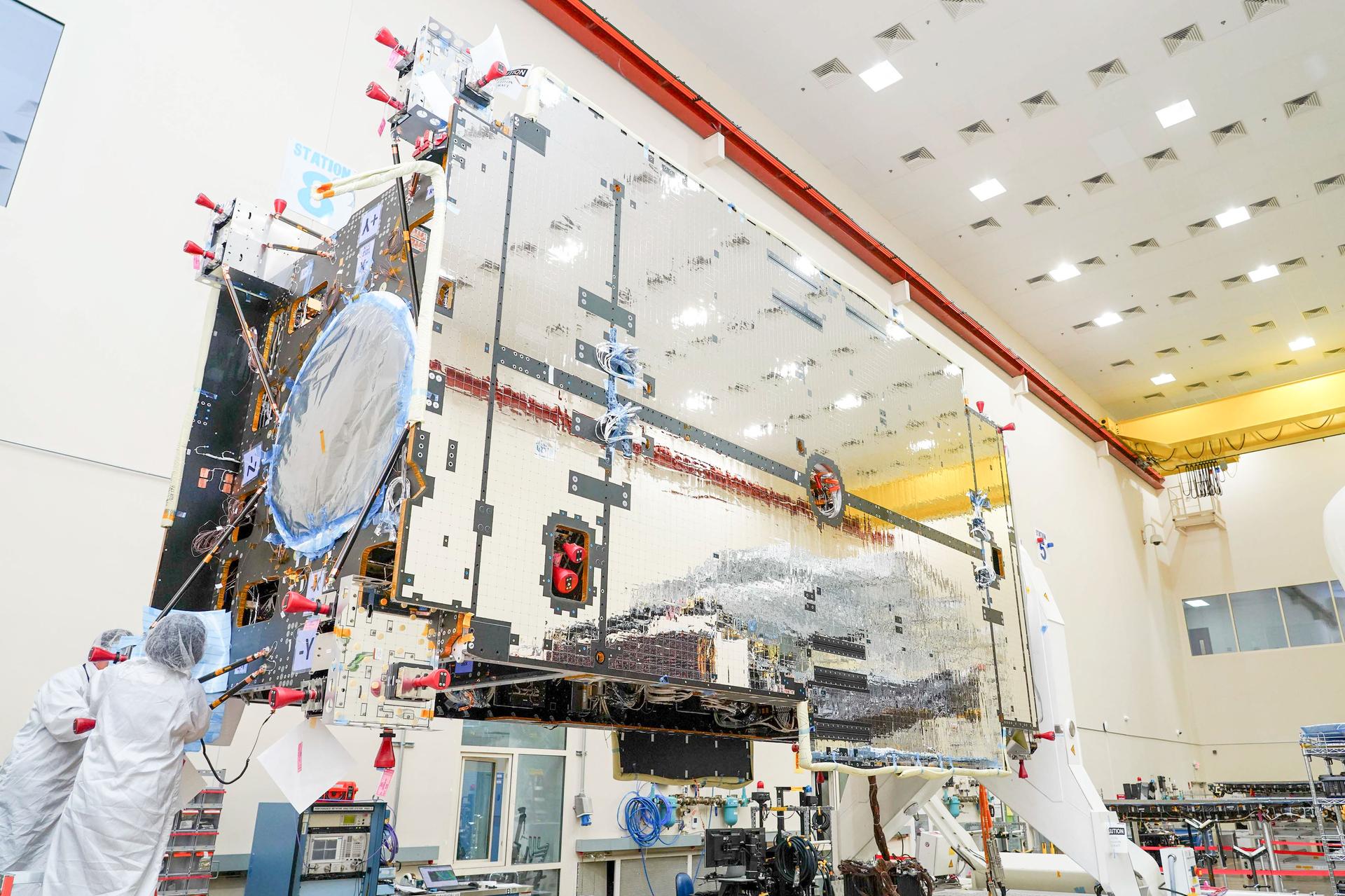
The primary structure of Gateway’s Power and Propulsion Element (PPE) undergoing assembly, integration, and testing at Lanteris Space Systems in Palo Alto, California, on September 29, 2025.
Lanteris Space Systems
Development continues on NASA’s Power and Propulsion Element, a solar electric propulsion spacecraft designed to provide power for Gateway in lunar orbit.
Able to generate 60 kilowatts of power, the element was successfully powered on earlier last year. The milestone demonstrates the element can provide the spacecraft with power, high-rate communications, attitude control, as well as the ability to maintain and maneuver between orbits.
The Power and Propulsion Element is managed by NASA’s Glenn Research Center in Cleveland and built by industry partner Lanteris Space Systems in Palo Alto, California, where teams have secured the element’s main electrical system inside protective exterior panels. On deck for installation at Lanteris Space Systems are three 12-kilowatt advanced electric propulsion system thrusters, manufactured by L3Harris, and four 6-kilowatt Busek-built BHT-6000 thrusters. The roll-out solar arrays for Gateway are complete and moving through testing at Redwire’s facility in Goleta, California.
For more information about NASA’s lunar exploration missions, visit:
Someone on the International Space Station suffered an unspecified "medical situation" Wednesday, prompting the postponement of a planned spacewalk and raising the possibility of an early return for a portion of the lab's seven-person crew, NASA said in a statement.
NASA has never ordered a medical evacuation from space before, but the option has always been available at the International Space Station with lifeboats ready for activation.
The space agency announced the spacewalk postponement Wednesday afternoon due to a "medical concern" with a member of the space station's crew. NASA officials declined to identify the crew member or release further details about their condition, citing medical privacy restrictions.
A small section of the International Space Station that has experienced persistent leaks for years appears to have stopped venting atmosphere into space.
The leaks were caused by microscopic structural cracks inside the small PrK module on the Russian segment of the space station, which lies between a Progress spacecraft airlock and the Zvezda module. The problem has been a long-running worry for Russian and US operators of the station, especially after the rate of leakage doubled in 2024. This prompted NASA officials to label the leak as a "high likelihood" and "high consequence" risk.
However, recently two sources indicated that the leaks have stopped. And NASA has now confirmed this.
U.S. Marines with Marine Corps Base Camp Blaz, Northern Mariana Islands, hand out toys to children during the Toys for Tots campaign, San Jose, Tinian, on Dec. 18, 2025. This year marks the 78th year of the national Marine Corps Toys for Tots Campaign and the 9th year in the Commonwealth of the Northern Mariana Islands. The mission of the Toys for Tots Program is to collect new, unwrapped toys and distribute those toys to children at Christmas. (Photo credit: U.S. Marine Corps/Lance Cpl. Afton Smiley)
An update from the North American Aerospace Defense Command (NORAD) Tracks Santa Call Center: As of late afternoon Dec. 24, the bustling call center, staffed by volunteers, received more than 100,000 calls from families around the world tracking Santa’s journey on Christmas Eve. “Thank you to our volunteers who are answering phones and helping keep this holiday tradition going strong,” organizers said on Facebook. (Photo credit: NORAD Tracks Santa on Facebook)
Onlookers take in the National Menorah during the annual lighting ceremony in celebration of Hanukkah. The event took place on the Ellipse near the White House in Washington, Sunday, Dec. 14, 2025. (Photo credit: AP Photo/Jose Luis Magana)
At the African Burial Ground National Monument, visitors on Dec. 26 can take part in Kwanzaa festivities and learn more about the holiday. According to the National Park Service, Kwanzaa is an annual, non-religious cultural holiday that takes place from Dec. 26 to Jan. 1. Established in 1966 by Maulana Karenga, the seven-day celebration of Black culture, history and community draws on African harvest festival traditions, promoting unity and self-determination and connecting people of African descent with their heritage. The name originates from the Swahili phrase matunda ya kwanza, meaning “first fruits.” (Photo credit: NPS)
Looking for inspiration this holiday season? NPS hosts winter festivities and holiday happenings at parks across the country and joins in the many historical and cultural traditions of the season. Pictured here is a holiday display from the Harry S. Truman National Historic Site in Independence, Missouri. (Photo credit: NPS)
The Fish and Wildlife Service has holiday card “fin-spiration” for, in their words, “all the fish aficionados and feather freaks in your life.” So light those Hanukkah candles, decorate that Christmas tree, or prepare to dance alone under the Solstice moon. However you celebrate this December, have a safe and totally not “crappie” holiday. Explore the gallery of holiday e-cards online and send one upstream to your fishy friends and family. (Photo credit: USFWS/Candy Darter Christmas Card, Erin Huggins)
The Nordic Air Forces offered Christmas greetings from the air as Sweden invited Finland and Denmark to join its Christmas tree flight over all three nations. Meanwhile, Norway continued its iconic F-35 Christmas star. This celebratory show case had it all: a festive salute from the air, an entertaining exhibition of cooperation and valuable precision-flying training for the crews. (Photo credit: NATO Air Command)
U.S. Ambassador to Belgium Bill White met with Jewish leaders in Brussels to celebrate the Jewish Festival of Lights. “My husband Bryan Eure and I marked Hanukkah in Brussels by celebrating light, resilience, and hope at the Great Synagogue. Even more so after the antisemitic terror attack in Sydney, we stand in solidarity with Jewish communities in Belgium and around the world. We must work together to confront and eliminate antisemitism decisively and collectively,” White posted on X.
“Fa-la-la-la-law, we’ll fund it all:” On X, the House Appropriations Committee showcased a holiday-themed overview of their work, culminating on Day 12 with a post highlighting “three bills signed into law with care, not folly.” Those would be fiscal 2026 Military Construction-VA, Legislative Branch and Agriculture-FDA, according to the committee. (Photo credit: House Appropriations GOP on X.)
Need more Fish and Wildlife Service holiday inspo…this time, for Kwanzaa? You’re in luck. Check out “A Very Paddlefish Kwanzaa Holiday Card.” (Photo credit: USFWS/Gwen Bausmith)
Unlike some gifts, the US Consumer Product Safety Commission’s posts never disappoint. On Christmas Eve, they reminded all Americans to exercise ATV safety — in all scenarios.
“A very Merry Christmas from all of us at CPSC! We hope you have a wonderful (and safe) holiday! Take it slow on your new e-bike/e-scooter/hoverboard and stand by your pan!” they followed up, on the big day.
NASA’s “Cosmic Snowman:” Icons of winter are sometimes found in unexpected places. In one striking example, a series of oval lagoons in a remote part of Siberia forms the shape of a towering snowman when viewed from above. (Photo credit: NASA Earth Observatory image by Michala Garrison, using Landsat data from the U.S. Geological Survey)
But wait, there’s more! Don’t miss a few great video greetings:
The Expedition 74 crew aboard the International Space Station sends warm wishes for happy holidays and a stellar New Year from orbit, where they’re celebrating a year of science, teamwork, and discoveries that connect us all. (Video courtesy NASA)
The 39th Commandant of the Marine Corps, Gen. Eric M. Smith, and the 20th Sergeant Major of the Marine Corps, Sgt. Maj. Carlos A. Ruiz, provide a message to the force on holidays at the Pentagon, Arlington, Virginia. (U.S. Marine Corps video by Communication Directorate/Headquarters Marine Corps)
Space Force Chief of Space Operations Gen. B. Chance Saltzman and Chief Master Sgt. of the Space Force John F. Bentivegna send holiday wishes across the Guardian force and beyond: “Thank you to every Guardian and family member for your commitment to our mission, especially those standing watch over the holidays. We hope you each find time to relax, recharge, and enjoy this special time with loved ones. Semper Supra.”
NASA’s Johnson Space Center in Houston closed 2025 with major progress across human spaceflight, research, and exploration. From Artemis II mission preparations to science aboard the International Space Station, teams at Johnson helped prepare for future missions to the Moon and, ultimately, Mars.
Orion Stacked for Artemis II, Orion Mission Evaluation Room Unveiled
NASA’s Artemis II Orion spacecraft with its launch abort system is stacked atop the agency’s SLS (Space Launch System) rocket in High Bay 3 of the Vehicle Assembly Building at NASA’s Kennedy Space Center in Florida on Oct. 20, 2025.
NASA/Kim Shiflett
As NASA prepares for the crewedArtemis II mission, a 10-day journey around the Moon and back in early 2026, teams at Johnson continue work to ensure the Orion spacecraft is flight-ready. The mission will carry NASA astronauts Reid Wiseman, Victor Glover, Christina Koch, and CSA (Canadian Space Agency) astronaut Jeremy Hansen.
In October, NASA completedstacking of the Orion spacecraft and launch abort system atop the agency’s SLS (Space Launch System) rocket inside the Vehicle Assembly Building at NASA’s Kennedy Space Center in Florida. Following Orion stacking, teams completed testing critical communications systems between SLS and Orion, and confirmed the interfaces function properly between the rocket, Orion, and the ground systems.
The new Orion Mission Evaluation Room inside the Mission Control Center at NASA’s Johnson Space Center in Houston.
NASA/Bill Stafford
Teams also unveiled theOrion Mission Evaluation Room inside NASA’s Mission Control Center in Houston. The new facility will support Artemis II by allowing engineers to monitor Orion spacecraft systems in real time and assess vehicle performance throughout the mission, strengthening flight operations beyond low Earth orbit.
These milestones were made possible by teams across Johnson, including the Orion Program, Flight Operations Directorate, Systems Engineering and Integration Office, Crew and Thermal Systems Division, and the Human Health and Performance Directorate, working closely with other NASA centers and industry partners.
These accomplishments mark steady progress toward Artemis II and reflect the work underway across NASA to advance the next era of human spaceflight.
Gateway Lunar Space Station
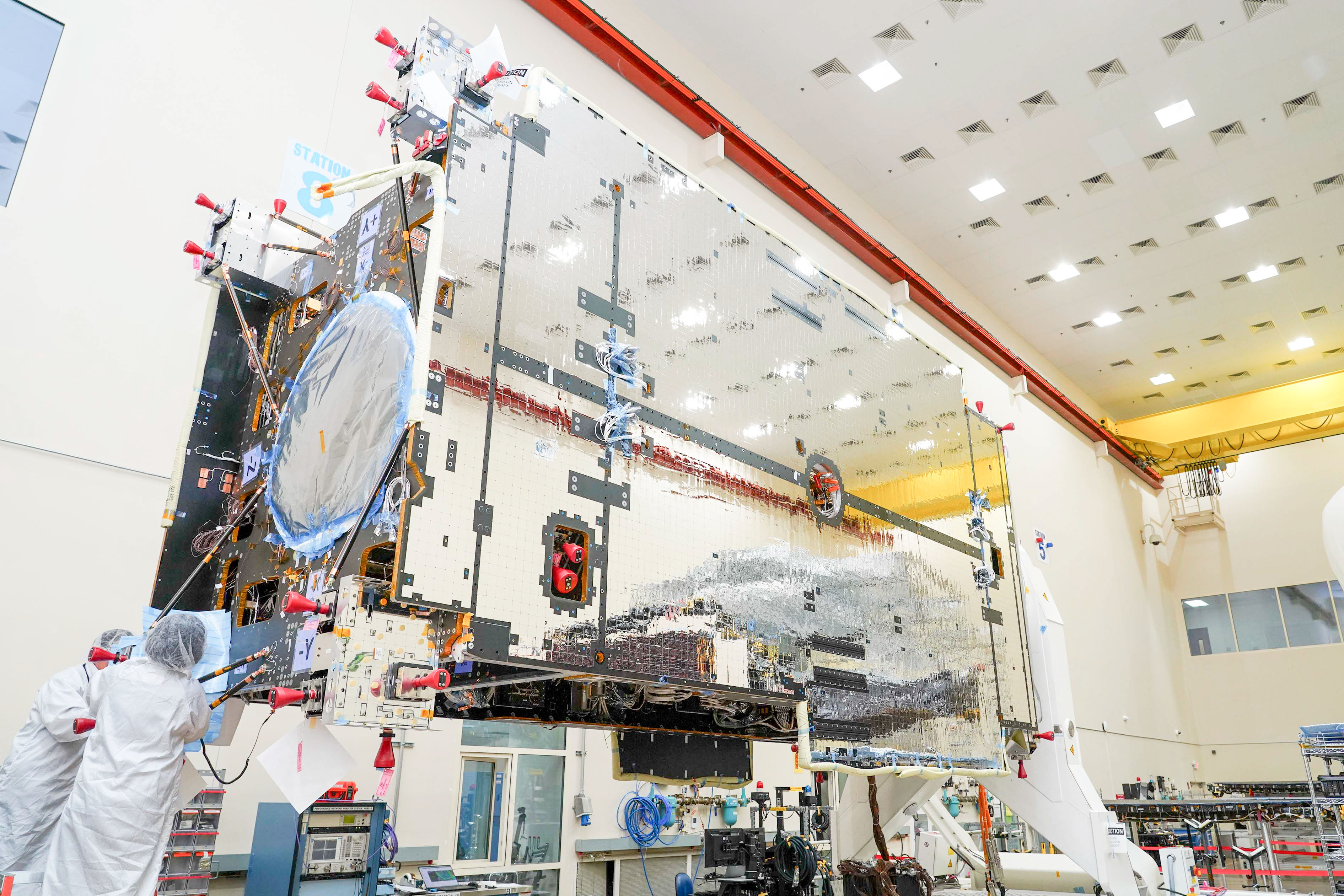
The primary structure of Gateway’s Power and Propulsion Element (PPE) undergoing assembly, integration, and testing at Lanteris Space Systems in Palo Alto, California, on September 29, 2025.
Lanteris Space Systems
Together with international and industry partners, the Gateway Program continued progress toward building humanity’s first lunar space station. The powerhouse reached a major milestone this fall with its successful initial power on.
NASA Selects 2025 Astronaut Candidate Class
NASA’s new astronaut candidates greet the crowd for the first time at Johnson Space Center.
NASA/James Blair
NASA’s 10 new astronaut candidates were introduced Sept. 22 following a competitive selection process of more than 8,000 applicants from across the United States. The class will complete nearly two years of training before becoming eligible for flight assignments supporting missions to low Earth orbit, the Moon, and Mars.
When they graduate, they will join NASA’s active astronaut corps, advancing research aboard the space station and supporting Artemis missions that will carry human exploration farther than ever before.
A Space Station Anniversary
NASA and its partners have supported humans continuously living and working in space since November 2000.
NASA/Jonny Kim
On Nov. 2, 2025, NASA marked 25 years of continuous human presence aboard the space station. What began as a set of connected modules has grown into a cornerstone of international partnership, scientific discovery, and technology development in low Earth orbit. For a quarter of century, the orbiting laboratory has supported research that advances human health, drives innovation, and prepares NASA for future crewed missions to the Moon and Mars.
A truly global endeavor, the space station has been visited by more than 290 people from 26 countries and a variety of international and commercial spacecraft. The unique microgravity laboratory has hosted more than 4,000 experiments from over 5,000 researchers from 110 countries. The orbital outpost also is facilitating the growth of a commercial market in low Earth orbit for research, technology development, and crew and cargo transportation.
After 25 years of habitation, the space station remains a symbol of international cooperation and a proving ground for humanity’s next giant leaps.
Record-Breaking Spacewalks
NASA astronaut and Expedition 72 Commander Suni Williams is pictured during a six-hour spacewalk for science and maintenance on the International Space Station. At upper right, is the SpaceX Dragon crew spacecraft docked to the Harmony module’s space-facing port.
NASA
NASA astronauts Nick Hague, Suni Williams, and Butch Wilmore began 2025 with two successful spacewalks, completing key maintenance and research tasks. Their work included removing an antenna assembly and collecting surface material samples for analysis at Johnson’s Astromaterials Research and Exploration Services, or ARES, division.
With her latest spacewalks, Williams now holds the record for the most cumulative spacewalking time by a woman–62 hours and 6 minutes–placing her fourth among the most experienced spacewalkers.
NASA astronauts Anne McClain and Nichole Ayers also conducted spacewalk operations, installing a mounting bracket to prepare for the future installation of an additional set of International Space Station Rollout Solar Arrays and relocating a space station communications antenna.
These achievements were made possible by countless Johnson teams across the International Space Station, Flight Operations Directorate, and Exploration Architecture, Integration, and Science Directorate.
Two Expeditions Take Flight
NASA’s SpaceX Crew-10 arrived at the space station on March 15 and returned to Earth on on Aug. 9. Crew-10 included NASA astronauts Anne McClain and Nichole Ayers, JAXA (Japan Aerospace Exploration Agency) astronaut Takuya Onishi, and Roscosmos cosmonaut Kirill Peskov—all of whom are trained pilots. Crew-9 also splashed down off Florida’s coast on March 18.
NASA astronaut Jonny Kim launched aboard the Soyuz MS-27 spacecraft on April 8, marking his first mission to the space station. Expedition 73 officially began following the departure of NASA astronaut Don Pettit aboard Soyuz MS-26 on April 19. NASA astronaut Chris Williams then launched aboard the Soyuz MS-28 spacecraft on Nov. 27 with Kim returning to Earth shortly after on Dec. 9, marking the start of Expedition 74.
A Year of Lunar Firsts
Firefly’s Blue Ghost lunar lander captured a bright image of the Moon’s South Pole (on the far left) through the cameras on its top deck, while it travels to the Moon as part of NASA’s CLPS (Commercial Lunar Payload Services) initiative and Artemis campaign.
Firefly Aerospace
Firefly Aerospace’s Blue Ghost Mission 1 launched delivering 10 NASA science and technology instruments to the Moon on March 2. The lander touched down near Mons Latreille in Mare Crisium, a basin on the near side of the Moon. Just days later on March 6, Intuitive Machines’ IM-2 mission landed closer to the lunar South Pole than any previous lander.
Part of NASA’s Commercial Lunar Payload Services (CLPS) and Artemis campaign, these lunar deliveries are helping scientists address challenges like lunar dust mitigation, resource utilization, and radiation tolerance.
These milestones were made possible by the collaborative efforts of Johnson teams across NASA’s CLPS initiative, as well as the Engineering; Exploration Architecture, Integration, and Science; and Flight Operations directorates—along with support from other NASA centers.
First Asteroid-Detecting Space Telescope Completes Testing
The instrument enclosure of NASA’s Near-Earth Object Surveyor is prepared for critical environmental tests inside the historic Chamber A at the Space Environment Simulation Laboratory at NASA’s Johnson Space Center.
NASA
NASA’s Near-Earth Object (NEO) Surveyor—its first space-based telescope designed specifically for planetary defense—has successfully completed thermal vacuum testing in Johnson’s Space Environment Simulation Laboratory in Chamber A.
Set to launch no earlier than late 2027, NEO Surveyor will seek out, measure, and characterize hard-to-detect asteroids and comets that could pose a hazard to Earth. The spacecraft is now at NASA’s Jet Propulsion Laboratory in Southern California for continued development.
These achievements were made possible by countless Johnson teams across the ARES Division and Engineering Directorate.
First Houston AutoBoative Show
Johnson Space Center employees present the Artemis Exhibit at the 2025 Houston AutoBoative Show at NRG Center.
NASA/Robert Markowitz
For the first time, NASA rolled out its Artemis exhibit at the Houston AutoBoative Show at NRG Center from Jan. 29 to Feb. 2. Johnson employees introduced vehicle enthusiasts to the technologies NASA and its commercial partners will use to explore more of the lunar surface than ever before.
The Artemis exhibit stood alongside some of the world’s most advanced cars and boats, offering visitors an up-close look at the future of human space exploration.
Attendees explored Artemis II and Artemis III mission road maps, practiced a simulated Orion docking with Gateway in lunar orbit, and tested their skills driving a virtual lunar rover simulator.
NASA showcased lunar rover concepts, highlighting vehicles under development to help Artemis astronauts travel farther across the Moon’s surface.
All three Lunar Terrain Vehicle (LTV) contractors, Astrolab, Intuitive Machines, and Lunar Outpost, completed their Preliminary Design Review milestones in June 2025, marking the end of Phase 1 feasibility study task orders that began in May 2024. NASA is preparing to award Phase 2 of the Lunar Terrain Vehicle Services contract with a demonstration mission task order that will result in the development, delivery, and demonstration of an LTV on the Moon later this decade.
First Dual NBL Run for NASA’s Artemis III Lunar Spacesuit
NASA astronauts Loral O’Hara (left) and Stan Love (right) pose during the first dual spacesuit run at NASA’s Neutral Buoyancy Laboratory in Houston on Sept. 24, 2025. The astronauts wore Axiom Space’s Artemis III lunar spacesuit, known as the Axiom Extravehicular Mobility Unit (AxEMU), during the final integrated underwater test, confirming the spacesuit and facility are ready to support Artemis training.
NASA
NASA and Axiom Space teams held the first dual spacesuit run at NASA’s Neutral Buoyancy Laboratory with NASA astronauts Stan Love and Loral O’Hara. Both crewmembers wore Axiom Space’s lunar spacesuit, called the Axiom Extravehicular Mobility Unit (AxEMU), while performing simulated lunar surface operations underwater to test the spacesuit’s functionality and mobility. This was the final integration test in the pool, proving both the spacesuit and facility are ready to support NASA Artemis training. To date, the Axiom team has conducted over 700 hours of manned, pressurized testing of the Artemis III lunar spacesuit. Axiom Space is scheduled to complete the critical design review in 2026.
These efforts were made possible by teams across Johnson’s Joint Extravehicular Activity and Human Surface Mobility Test Team.
Watch how astronauts, engineers, and scientists are preparing for the next giant leap on the lunar surface.
OSIRIS-REx Team Honored for Asteroid Sample Return
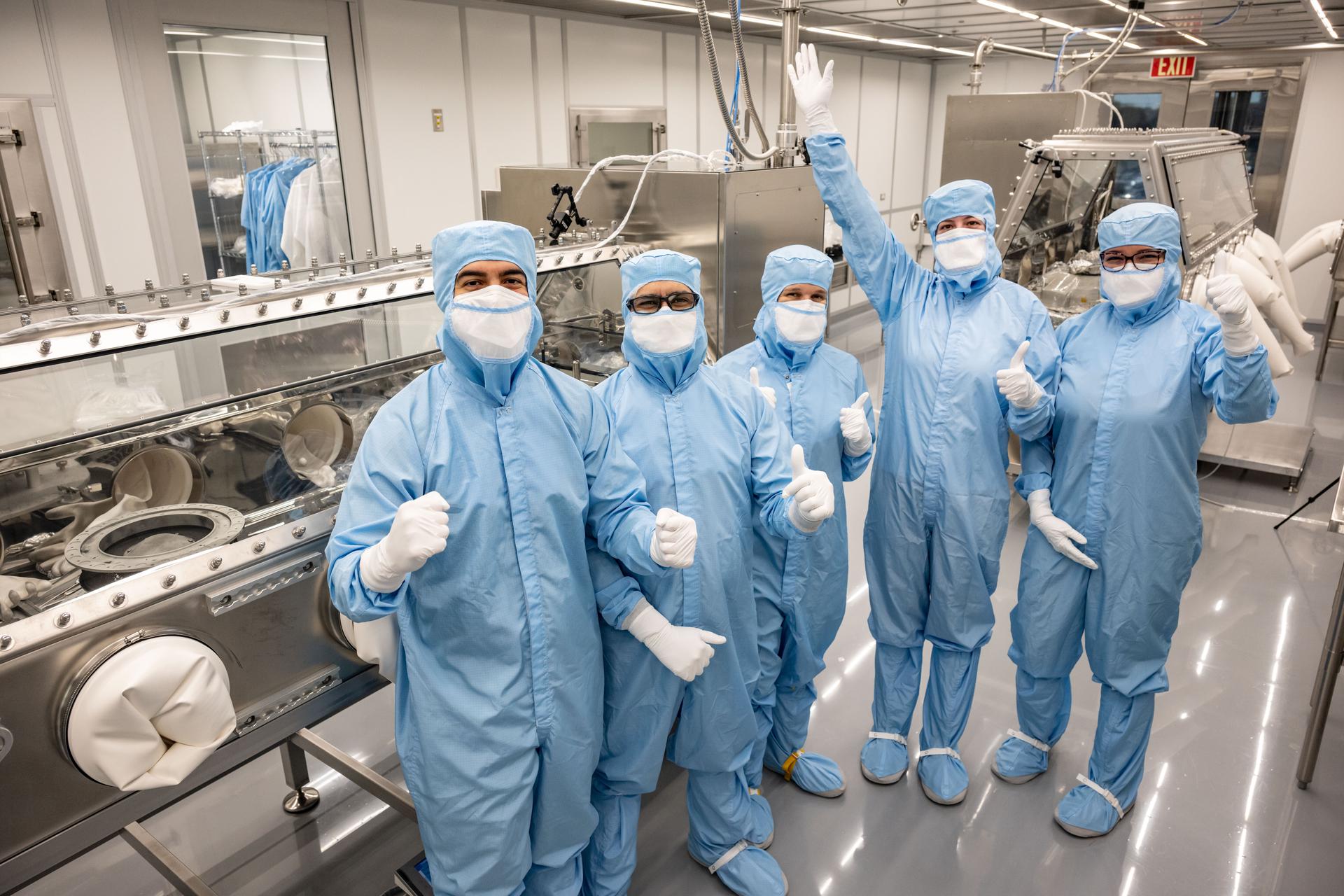
NASA’s OSIRIS-REx team poses inside a cleanroom at Johnson Space Center after successfully freeing fasteners on the TAGSAM (Touch-and-Go Sample Acquisition Mechanism) head, allowing access to samples collected from asteroid Bennu.
NASA/Robert Markowitz
NASA’s OSIRIS-REx curation team earned an Agency Group Achievement Award for their dedication to acquiring, preserving, and distributing asteroid samples from Bennu—the agency’s first asteroid sample return mission.
“The curation team ensured we were ready to receive and safeguard the samples, prepare and allocate them, and make them available to the broader scientific community,” said Jemma Davidson, Astromaterials curator and branch chief of the Astromaterials Acquisition and Curation Office.
After years of preparation, the team overcame unforeseen technical challenges to recover and preserve more than 120 grams of asteroid material—now accessible to scientists worldwide for research into the origins of our solar system.
These achievements were made possible by Johnson teams across the ARES Division and the Exploration Architecture, Integration, and Science Directorate.
Axiom Mission 4 Marks International Firsts in Space Station Mission
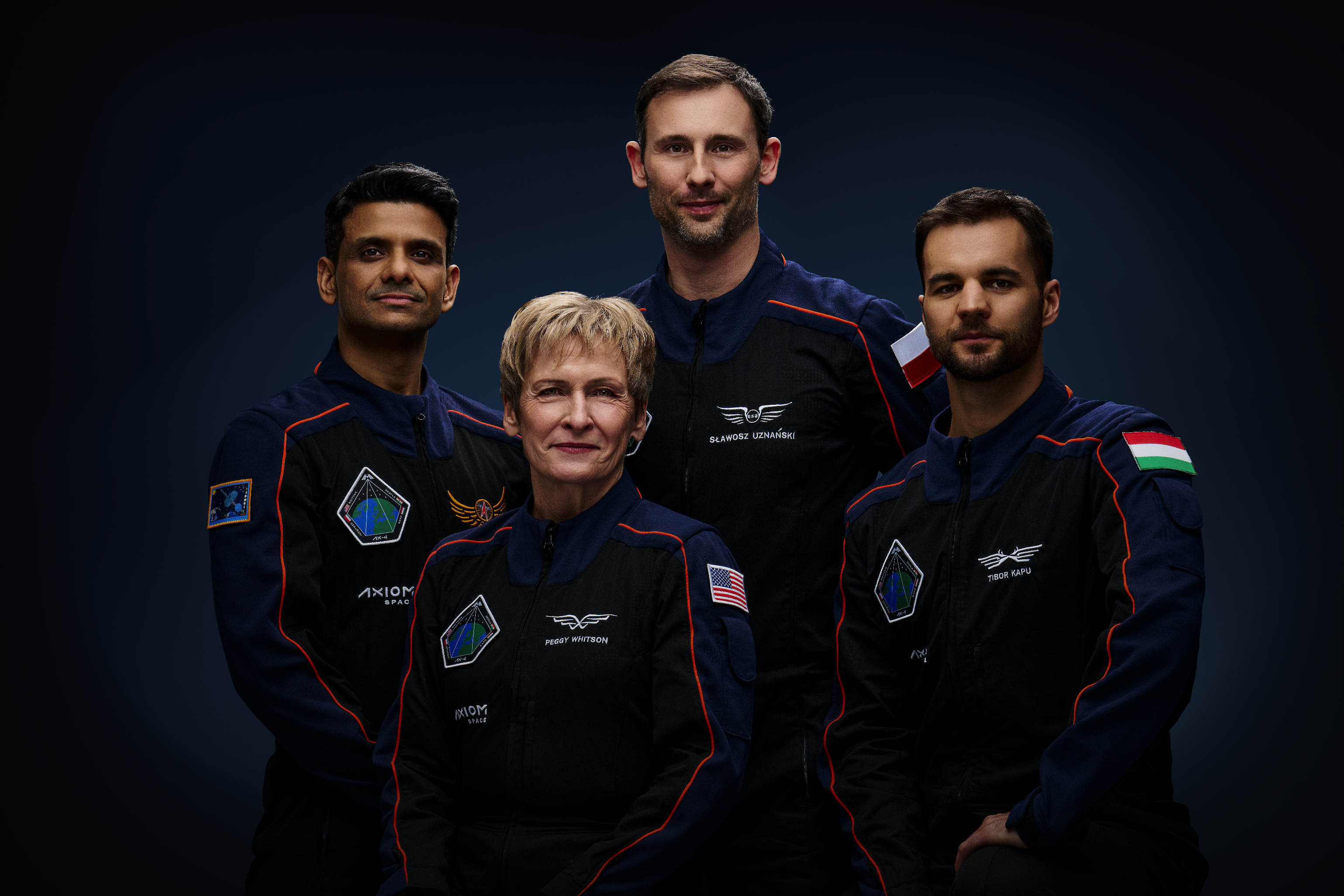
The official crew portrait of the Axiom Mission-4 private astronaut mission to the International Space Station. From left are, Pilot Shubhanshu Shukla from India, Commander Peggy Whitson from the U.S., and Mission Specialists Sławosz Uzanański-Wiśniewksi from Poland and Tibor Kapu from Hungary.
Axiom Space
The Axiom Mission 4 crew successfully returned to Earth after an 18-day mission aboard the space station, conducting more than 60 experiments and educational outreach activities. Launched aboard a SpaceX Dragon spacecraft on June 25, the crew docked with the orbiting laboratory the following day to begin a packed schedule of science and outreach.
The mission marked the first space station flight for India, Poland, and Hungary. Led by former NASA astronaut and Axiom Space director of human spaceflight Peggy Whitson, the crew included ISRO (Indian Space Research Organization) astronaut Shubhanshu Shukla, ESA (European Space Agency) project astronaut Sławosz Uznański-Wiśniewski of Poland, and Hungarian to Orbit (HUNOR) astronaut Tibor Kapu.
These achievements were made possible by Johnson’s dedicated teams across the International Space Station Program, Commercial Low Earth Orbit Development Program, and Flight Operations Directorate.
Johnson-Built Mars Hardware on Display at the Smithsonian
At left is NASA’s Perseverance Mars rover, with a circle indicating the location of the calibration target for the rover’s SHERLOC instrument. At right is a close-up of the calibration target. Along the bottom row are five swatches of spacesuit materials that scientists are studying as they de-grade.
NASA/Malin Space Science Systems
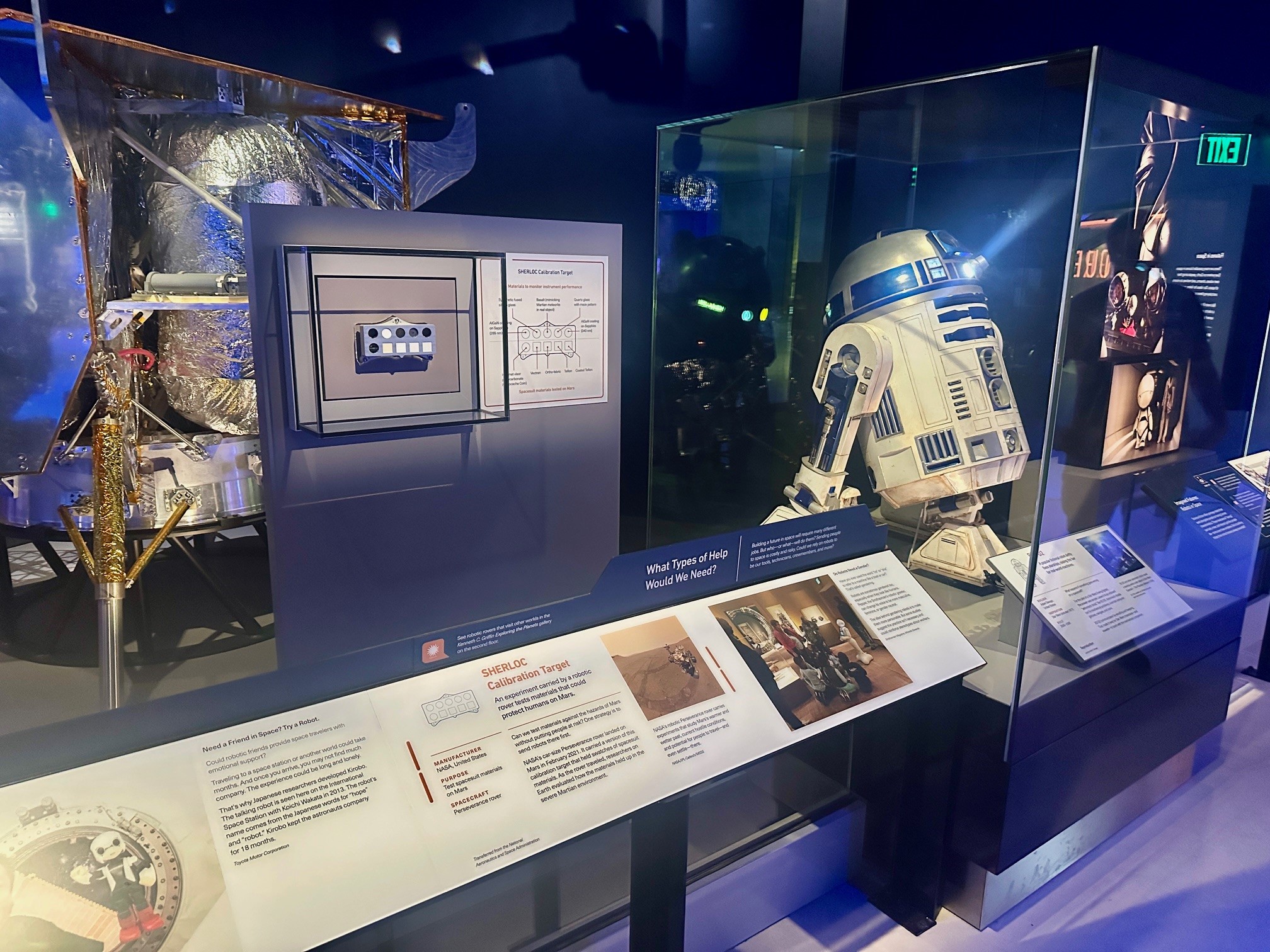
Scanning Habitable Environments with Raman & Luminescence for Organics & Chemicals (SHERLOC) calibration target built at NASA’s Johnson Space Center is on display in the Smithsonian National Air and Space Museum’s Futures in Space gallery in Washington, D.C.
NASA/Smithsonian National Air and Space Museum
A piece of NASA Johnson Space Center’s Mars legacy has landed at the Smithsonian National Air and Space Museum in Washington, D.C.
Nearly 10 years in the making, the Scanning Habitable Environments with Raman & Luminescence for Organics & Chemicals (SHERLOC) calibration target—built by Johnson’s ARES Division with partners at NASA’s Jet Propulsion Laboratory and Amentum—now has a permanent place in the museum’s Futures in Space gallery.
The palm-sized device is displayed beside an R2-D2 replica, connecting the wonder of space travel with the inspiration of seeing real flight hardware up close.
The calibration target, still in use aboard NASA’s Perseverance rover after more than four years of operations in Jezero Crater, Mars, helps keep SHERLOC’s laser, cameras, and spectrometers precisely tuned as it searches for ancient signs of life on Mars. Mounted on the rover’s front, the target carries 10 known samples so engineers can check SHERLOC’s performance during routine operations.
Trevor Graff, an ARES scientist who conceived the idea and led the team that designed and built SHERLOC’s calibration device, said the project highlights the unique role of geology in space exploration. “What excites me most is the practical application of geology—where science enables exploration and exploration enables science,” he said.
SHERLOC itself sits on the rover’s seven-foot robotic arm and combines a laser, camera, and chemical analyzers to look for signs that water once altered the Martian surface, potentially revealing evidence of past microscopic life. Several calibration targets are made from spacesuit material samples, allowing Johnson scientists to study how fabrics endure the harsh Martian environment to protect future explorers.
The Joint Extravehicular Activity and Human Surface Mobility Test Team (JETT), led out of Johnson Space Center in Houston, Texas, is a specialized group that...
Good morning, readers, and happy Friday. Welcome to This Week in Space, our Friday morning roundup of the week’s most important space news. Today we’ve got a bunch of good news, including a newfound exoplanet and a dozen new moons orbiting Jupiter. We’ve also got a report of an absolutely wild idea — a literal moonshot — for fighting climate change with moon dust.
SpaceX Starship Aces Static Fire Test
Thursday afternoon, SpaceX ran a successful static fire test of its gigantic Starship rocket. With 33 separate Raptor engines, Starship has the most engines of any rocket ever. Together, their thrust is twice that of a Saturn V or the Space Launch System. Is anyone else amazed the struts can hold that thing on the gantry?
Only 31 of the 33 engines fired. However, that’s actually good news because it means Starship can handle multiple engine failures.
SpaceX hopes to attempt a test flight for Starship in March. “That first flight test is going to be really exciting. It’s going to happen in the next month or so,” said Gwynne Shotwell, SpaceX’s president and chief operating officer.
“We will go for a test flight and we will learn from the test flight and we will do more test flights,” Shotwell added. “The real goal is to not blow up the launch pad. That is success.”
ISS Astronauts Work On Plasma Crystals, Space Plumbing
We’ve talked about how the folks aboard the International Space Station have to become polymaths to keep up with the demands of life in orbit. This winter, among many other pursuits, NASA astronauts on the ISS have been tending tomatoes and working on avant-garde methods of space propulsion. But the most recent projects in low-earth orbit make space tomatoes sound outdated. Over the past few days, crew on the ISS have been working on plasma crystals, servicing jetpacks, and… doing space plumbing.
NASA astronaut Frank Rubio and JAXA astronaut Koichi Wakata spent Thursday doing maintenance on the station’s water recovery system and orbital plumbing for the station’s bathroom, respectively. Meanwhile, station commander Sergey Prokopyev worked inside the Columbus lab “configuring video hardware that records how clouds of highly charged particles, or plasma crystals, behave in microgravity.”
Hubble Captures New Portrait of Tarantula Nebula
The Tarantula Nebula is the brightest star-forming region in our cosmic neighborhood. It’s not even in our galaxy — it’s in the Large Magellanic Cloud, one of the Milky Way’s satellite galaxies. But it’s so bright that it dazzles even at that distance. Astronomers recently used the Hubble space telescope to capture this image of the Tarantula Nebula in all its splendor:
What you see here is actually a joint effort between two different astronomy projects. One team sought to analyze the properties of dust grains floating between stars — a proposal dubbed Scylla by the Hubble team. Those dust grains create the dark, wispy clouds spread across the frame. The other, called Ulysses, studies interstellar dust and starlight interactions.
Curiosity Finds Clues to Mars’ Watery Past
NASA’s Perseverance rover went to Mars with a plan: Scour the planet’s surface for evidence that can teach us about Mars’ history and tell us whether the Red Planet might once have supported life. During its two years on Mars, the rover has found silicate clay and other minerals, signs that liquid water once flowed across Mars’ surface. But none of its discoveries have had evidence of water as visually obvious as a photograph that the agency’s Curiosity rover recently captured. The rover caught a photo of sandstone rock with ripples carved out of its surface, showing that the rock was once at the bottom of a lake.
The ripples support our observations of Mars’ weather and climate. Gentle, constant winds create standing ripple patterns like these. This fits with the constant prevailing winds and planetwide dust storms we’ve seen on Mars. It’s also exciting evidence that Mars indeed had liquid water once upon a time.
Russia Launches Progress Spacecraft to International Space Station
Russia successfully launched a Progress capsule aboard a Soyuz rocket this week, bound for the International Space Station. The rocket launched from Russia’s Baikonur aerodrome early Thursday morning, local time. This capsule, ISS Progress 83 (83P), carries about three tons of supplies, including food, water, and air. It will dock with the Russian Zvezda module on Saturday morning, replacing the Progress capsule that left Monday afternoon.
What happens to Progress 82 once it departs? Progress capsules are expendable. This means that the crew on the ISS loads the capsules with trash from the station while it’s docked. Then, hours or days after the capsule undocks, it burns up in the atmosphere.
CAPSTONE Lunar Satellite Reports In After 11-Day Glitch
NASA’s CAPSTONE satellite is finally responding to hails after nearly two weeks incommunicado. A software glitch left the probe unresponsive on Jan. 26 until it rebooted itself Monday.
“The spacecraft remained overall healthy and on-course throughout the issue,” NASA said in a blog post. “On Feb. 6, an automatic command-loss timer rebooted CAPSTONE, clearing the issue and restoring two-way communications between CAPSTONE and the ground.”
The satellite has made twelve successful circuits in its near-rectilinear halo orbit (NRHO) — twice what its original mission expected. That’s great news for NASA. CAPSTONE is trying out the fancy new NRHO orbit because it’s more fuel efficient than other lunar orbits we’ve used. In twelve orbits, CAPSTONE has only had to fire its engine twice. This smashing success means the agency may use the new orbital pattern for lunar support satellites under the aegis of its Artemis project.
Rolls-Royce Building Nuclear Engine For Spaceships
Did you know Ball makes Mason jars — and parts for space telescopes? Ball made parts for Hubble and the mirrors for the JWST. In a similar fashion, Rolls-Royce appears to be branching out. Way out. The luxury automaker’s subsidiary, Rolls-Royce Holdings, has announced plans to build a nuclear engine for deep space exploration.
Webb Telescope Breaks Own ‘Speed Limit’ Tracking DART Impact
NASA’s Guaranteed Time Observation program gives a certain amount of telescope time to those who worked on the JWST. One GTO project: Making observations of NASA’s DART kinetic asteroid redirect test. However, the project brought an unlooked-for surprise. Wednesday, JWST deputy project scientist Stefanie Milam explained how the telescope broke its own speed limit watching the asteroid impact.
Webb launched with the ability to track objects moving through the sky as fast as Mars. But scientists who study fast-moving small bodies like asteroids, comets, and interstellar objects “really wanted to study objects that moved faster than Mars,” said Milam. So, the team set out to show that not only could Webb exceed this “notional speed limit,” it could go much faster. Their efforts paid off when it came time to observe the DART asteroid impact.
NASA’s DART kinetic asteroid redirect test, as seen by the JWST. Image: NASA/JPL
The video Webb captured of the Dimorphos impact showed that the telescope can move its field of regard at more than triple its original maximum speed. Most of the time, though, Milam says the telescope will confine itself to double its original turning speed. Darn.
Chris Hadfield Meets With King Charles III
On Thursday, Canada’s favorite astronaut, Chris Hadfield, met with King Charles III at Buckingham Palace. The two sat down to discuss “efforts to encourage sustainability in space,” according to the Royal Family’s official Twitter.
“What a pleasure and privilege to be asked to advise and assist, and make the King laugh,” Hadfield wrote afterward.
While we don’t yet have specifics, Charles is a longtime environmentalist. Could it be that the King is interested in cleaning up space junk?
A Shield of Lunar Dust Could Help Cool Earth
Astrophysicists are pondering the pros and cons of a literal moonshot to blunt the effects of climate change. In a recent study, a group of researchers proposed launching moon dust into orbit around Earth to create a dusty shield that would reduce Earth’s exposure to the Sun. Evidently, lunar dust grains are just the right size and composition to block some of the solar energy that would hit the Earth.
For six days out of the year, the researchers say, the dust cloud would shield Earth from a few percent of the Sun’s radiation. To carry out this plan, the researchers’ numbers require dredging up some 22 billion pounds of lunar dust. They could fire the dust into orbit from the Moon or a platform in orbit — potato, poterrible idea. Surely there is some lower-hanging fruit?
Scientists Find a Dozen New Moons Orbiting Jupiter
In October 2019, astronomers at the Carnegie Institution for Science found 20 new moons orbiting Saturn. This made Saturn the “moon king” of the Solar System, with a total of 83. However, the same team has announced they’ve found a dozen new moons orbiting Jupiter.
An international team of astronomers has reported a newfound exoplanet in our cosmic backyard. The new planet, Wolf 1069 b, is between 1 and 1.4 Earth masses and just 8% bigger. Calling it Earth-like might be a stretch: Wolf 1069 b zips around its low-mass red dwarf star in just 15 Earth days. However, it’s just 31 light-years away.
Unlike our nearest neighbor, Proxima Centauri, Wolf 1069 doesn’t show the characteristic bursts of violent flares we frequently see in red dwarf stars. This could mean it has managed to retain an atmosphere. If so, the planet’s surface temperature could be about 55 degrees Fahrenheit. If not, it’s more likely an iceball, too cold to sustain liquid water.
Skywatchers Corner
Comet C/2022 E3 (ZTF) is a once-in-an-epoch visitor from the outer solar system. We haven’t seen it since the time of the Neanderthals, but it’s come back for one last visit. The outbound comet passed close to Earth last week. Now, it’s buzzing Mars.
It’s green! Comet C/2022 E3 (ZTF) and its twin tails. Image: NASA
The green comet will be near Mars in the constellation of Taurus for the next several days. After sunset, look high in the sky for the best shot at catching it through binoculars or a telescope. After Feb. 14, the comet will start heading toward Orion and Eridanus.
If you don’t have a good shot at viewing the comet where you are, you can still catch it online. This weekend, the Virtual Telescope Project is webcasting a free livestream of the comet’s approach to the Red Planet. The livestream will begin this Saturday, Feb. 11, at 2 p.m. EST (1900 GMT). You can watch it on the project’s website and YouTube channel.
Feature image: This week’s waning gibbous moon, taken from the International Space Station. Courtesy of NASA HQ Flickr.

 Login
Login