NASA Selects 2 Instruments for Artemis IV Lunar Surface Science
NASA has selected two science instruments designed for astronauts to deploy on the surface of the Moon during the Artemis IV mission to the lunar south polar region. The instruments will improve our knowledge of the lunar environment to support NASA’s further exploration of the Moon and beyond to Mars.
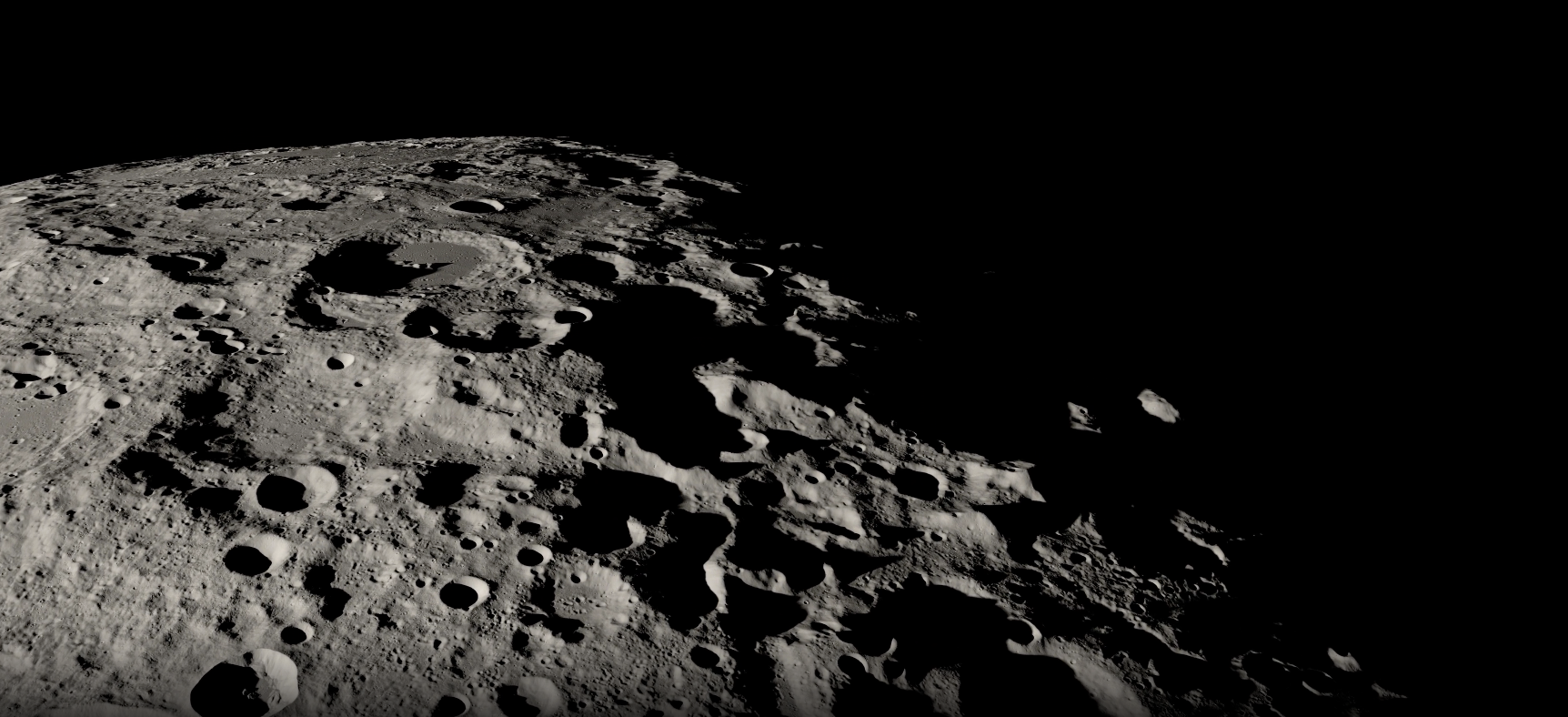
A visualization of the Moon’s South Pole region created with data from NASA’s Lunar Reconnaissance Orbiter, which has been surveying the Moon with seven instruments since 2009.
“The Apollo Era taught us that the further humanity is from Earth, the more dependent we are on science to protect and sustain human life on other planets,” said Nicky Fox, associate administrator, Science Mission Directorate at NASA Headquarters in Washington. “By deploying these two science instruments on the lunar surface, our proving ground, NASA is leading the world in the creation of humanity’s interplanetary survival guide to ensure the health and safety of our spacecraft and human explorers as we begin our epic journey back to the Moon and onward to Mars.”
After his voyage to the Moon’s surface during Apollo 17, astronaut Gene Cernan acknowledged the challenge that lunar dust presents to long-term lunar exploration. Moon dust sticks to everything it touches and is very abrasive. The knowledge gained from the DUSTER (DUst and plaSma environmenT survEyoR) investigation will help mitigate hazards to human health and exploration. Consisting of a set of instruments mounted on a small autonomous rover, DUSTER will characterize dust and plasma around the landing site. These measurements will advance understanding of the Moon’s natural dust and plasma environment and how that environment responds to the human presence, including any disturbance during crew exploration activities and lander liftoff. The DUSTER instrument suite is led by Xu Wang of the University of Colorado Boulder. The contract is for $24.8 million over a period of three years.
A model of the DUSTER instrument suite consisting of the Electrostatic Dust Analyzer (EDA)—which will measure the charge, velocity, size, and flux of dust particles lofted from the lunar surface—and Relaxation SOunder and differentiaL VoltagE (RESOLVE)—which will characterize the average electron density above the lunar surface using plasma sounding. Both instruments will be housed on a Mobile Autonomous Prospecting Platform (MAPP) rover, which will be supplied by Lunar Outpost, a company based in Golden, Colorado, that develops and operates robotic systems for space exploration.
LASP/CU Boulder/Lunar Outpost
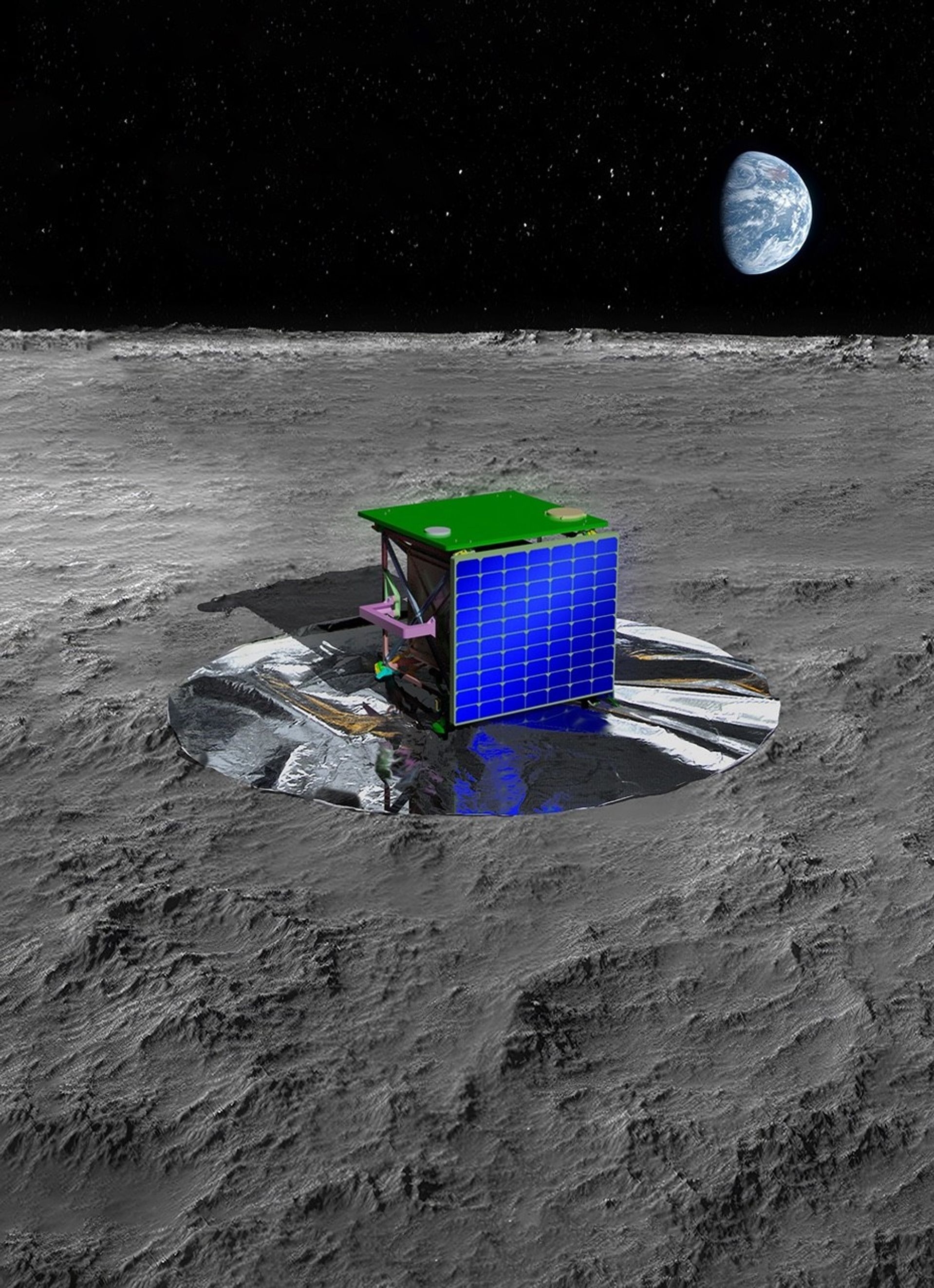
Data from the SPSS (South Pole Seismic Station) will enable scientists to characterize the lunar interior structure to better understand the geologic processes that affect planetary bodies. The seismometer will help determine the current rate at which the Moon is struck by meteorite impacts, monitor the real-time seismic environment and how it can affect operations for astronauts, and determine properties of the Moon’s deep interior. The crew will additionally perform an active-source experiment using a “thumper” that creates seismic energy to survey the shallow structure around the landing site. The SPSS instrument is led by Mark Panning of NASA’s Jet Propulsion Laboratory in Southern California. The award is for $25 million over a period of three years.
An artist’s concept of SPSS (South Pole Seismic Station) to be deployed by astronauts on the lunar surface.
NASA/JPL-Caltech
“These two scientific investigations will be emplaced by human explorers on the Moon to achieve science goals that have been identified as strategically important by both NASA and the larger scientific community”, said Joel Kearns, deputy associate administrator for exploration, Science Mission Directorate at NASA Headquarters. “We are excited to integrate these instrument teams into the Artemis IV Science Team.”
The two payloads were selected for further development to fly on Artemis IV; however, final manifesting decisions about the mission will be determined at a later date.
Through Artemis, NASA will address high priority science questions, focusing on those that are best accomplished by on-site human explorers on and around the Moon and by using the unique attributes of the lunar environment, aided by robotic surface and orbiting systems. The Artemis missions will send astronauts to explore the Moon for scientific discovery, economic benefits, and build the foundation for the first crewed missions to Mars.
The asteroid Bennu continues to provide new clues to scientists’ biggest questions about the formation of the early solar system and the origins of life. As part of the ongoing study of pristine samples delivered to Earth by NASA’s OSIRIS-REx (Origins, Spectral Interpretation, Resource Identification, and Security-Regolith Explorer) spacecraft, three new papers published Tuesday by the journals Nature Geosciences and Nature Astronomy present remarkable discoveries: sugars essential for biology, a gum-like substance not seen before in astromaterials, and an unexpectedly high abundance of dust produced by supernova explosions.
Sugars essential to life
Scientists led by Yoshihiro Furukawa of Tohoku University in Japan found sugars essential for biology on Earth in the Bennu samples, detailing their findings in the journal Nature Geoscience. The five-carbon sugar ribose and, for the first time in an extraterrestrial sample, six-carbon glucose were found. Although these sugars are not evidence of life, their detection, along with previous detections of amino acids, nucleobases, and carboxylic acids in Bennu samples, show building blocks of biological molecules were widespread throughout the solar system.
For life on Earth, the sugars deoxyribose and ribose are key building blocks of DNA and RNA, respectively. DNA is the primary carrier of genetic information in cells. RNA performs numerous functions, and life as we know it could not exist without it. Ribose in RNA is used in the molecule’s sugar-phosphate “backbone” that connects a string of information-carrying nucleobases.
“All five nucleobases used to construct both DNA and RNA, along with phosphates, have already been found in the Bennu samples brought to Earth by OSIRIS-REx,” said Furukawa. “The new discovery of ribose means that all of the components to form the molecule RNA are present in Bennu.”
The discovery of ribose in asteroid samples is not a complete surprise. Ribose has previously been found in two meteorites recovered on Earth. What is important about the Bennu samples is that researchers did not find deoxyribose. If Bennu is any indication, this means ribose may have been more common than deoxyribose in environments of the early solar system.
Researchers think the presence of ribose and lack of deoxyribose supports the “RNA world” hypothesis, where the first forms of life relied on RNA as the primary molecule to store information and to drive chemical reactions necessary for survival.
A team of Japanese and US scientists have discovered the bio-essential sugars ribose and glucose in samples of asteroid Bennu that were collected by NASA’s OSIRIS-REx mission. This finding builds on the earlier discovery of nucleobases (the genetic components of DNA and RNA), phosphate, and amino acids (the building blocks of proteins) in the Bennu samples, showing that the molecular ingredients of life could have been delivered to early Earth by meteorites. Download this graphic from NASA’s Scientific Visualization Studio website: https://svs.gsfc.nasa.gov/14932
NASA/Goddard/University of Arizona/Dan Gallagher
“Present day life is based on a complex system organized primarily by three types of functional biopolymers: DNA, RNA, and proteins,” explains Furukawa. “However, early life may have been simpler. RNA is the leading candidate for the first functional biopolymer because it can store genetic information and catalyze many biological reactions.”
The Bennu samples also contained one of the most common forms of “food” (or energy) used by life on Earth, the sugar glucose, which is the first evidence that an important energy source for life as we know it was also present in the early solar system.
Mysterious, ancient ‘gum’
A second paper, in the journal Nature Astronomy led by Scott Sandford at NASA’s Ames Research Center in California’s Silicon Valley and Zack Gainsforth of the University of California, Berkeley, reveals a gum-like material in the Bennu samples never seen before in space rocks – something that could have helped set the stage on Earth for the ingredients of life to emerge. The surprising substance was likely formed in the early days of the solar system, as Bennu’s young parent asteroid warmed.
Once soft and flexible, but since hardened, this ancient “space gum” consists of polymer-like materials extremely rich in nitrogen and oxygen. Such complex molecules could have provided some of the chemical precursors that helped trigger life on Earth, and finding them in the pristine samples from Bennu is important for scientists studying how life began and whether it exists beyond our planet.
On this primitive asteroid that formed in the early days of the solar system, we’re looking at events near the beginning of the beginning.
Scott SandFord
Astrophysicist, NASA's Ames Research Center
Bennu’s ancestral asteroid formed from materials in the solar nebula – the rotating cloud of gas and dust that gave rise to the solar system – and contained a variety of minerals and ices. As the asteroid began to warm, due to natural radiation, a compound called carbamate formed through a process involving ammonia and carbon dioxide. Carbamate is water soluble, but it survived long enough to polymerize, reacting with itself and other molecules to form larger and more complex chains impervious to water. This suggests that it formed before the parent body warmed enough to become a watery environment.
“With this strange substance, we’re looking at, quite possibly, one of the earliest alterations of materials that occurred in this rock,” said Sandford. “On this primitive asteroid that formed in the early days of the solar system, we’re looking at events near the beginning of the beginning.”
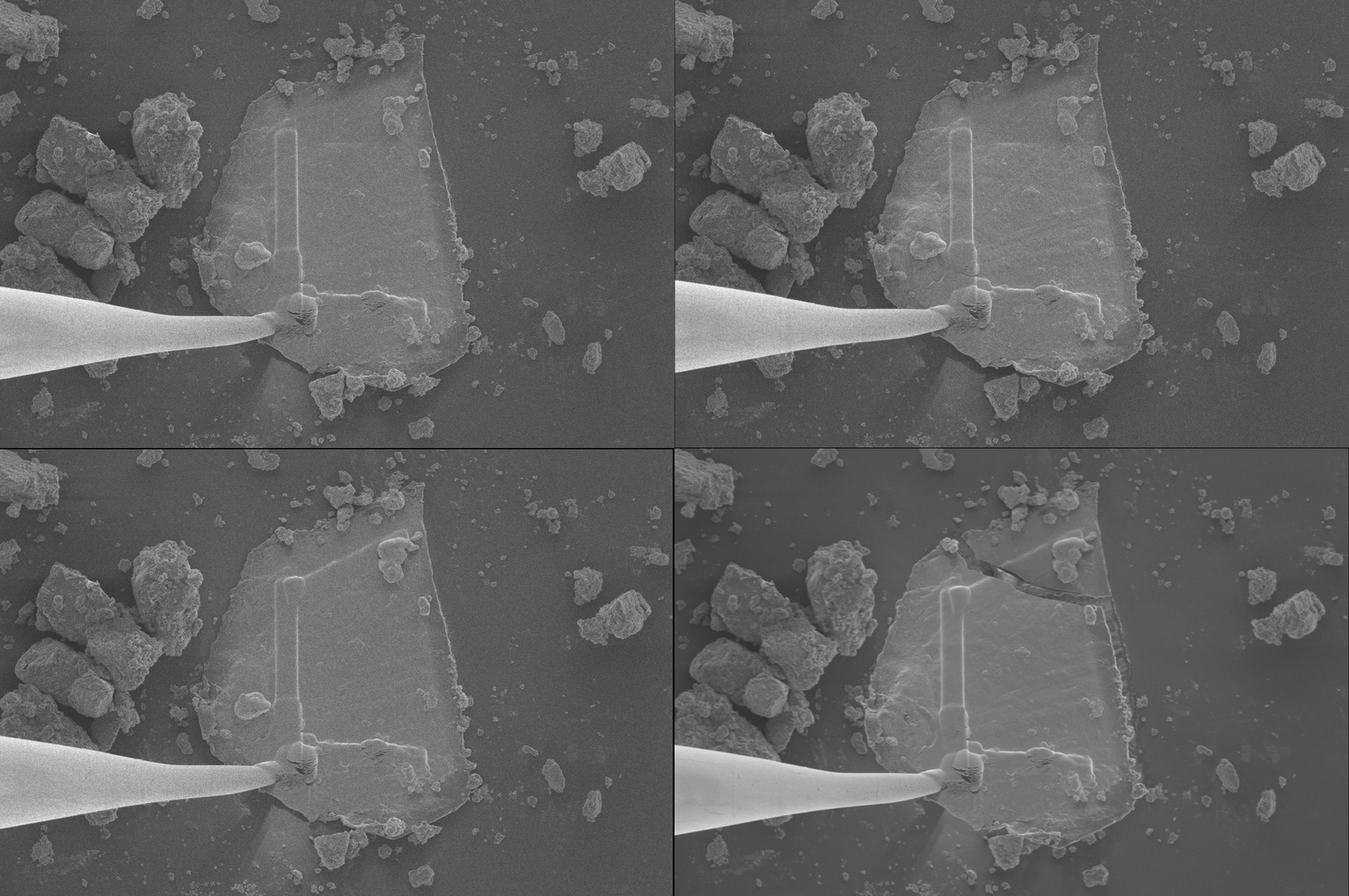
Using an infrared microscope, Sandford’s team selected unusual, carbon-rich grains containing abundant nitrogen and oxygen. They then began what Sandford calls “blacksmithing at the molecular level,” using the Molecular Foundry at Lawrence Berkeley National Laboratory (Berkeley Lab) in Berkeley, California. Applying ultra-thin layers of platinum, they reinforced a particle, welded on a tungsten needle to lift the tiny grain, and shaved the fragment down using a focused beam of charged particles.
A microscopic particle of asteroid Bennu, brought to Earth by NASA’s OSIRIS-REx mission, is manipulated under a transmission electron microscope. In order to move the fragment for further analysis, researchers first reinforced it with thin strips of platinum (the “L” shape on the particle’s surface) then welded a tungsten microneedle to it. The asteroid fragment measures 30 micrometers (about one-one thousandth of an inch) across.
NASA/University of California, Berkeley
When the particle was a thousand times thinner than a human hair, they analyzed its composition via electron microscopy at the Molecular Foundry and X-ray spectroscopy at Berkeley Lab’s Advanced Light Source. The ALS’s high spatial resolution and sensitive X-ray beams enabled unprecedented chemical analysis.
“We knew we had something remarkable the instant the images started to appear on the monitor,” said Gainsforth. “It was like nothing we had ever seen, and for months we were consumed by data and theories as we attempted to understand just what it was and how it could have come into existence.”
The team conducted a slew of experiments to examine the material’s characteristics. As the details emerged, the evidence suggested the strange substance had been deposited in layers on grains of ice and minerals present in the asteroid.
It was also flexible – a pliable material, similar to used gum or even a soft plastic. Indeed, during their work with the samples, researchers noticed the strange material was bendy and dimpled when pressure was applied. The stuff was translucent, and exposure to radiation made it brittle, like a lawn chair left too many seasons in the sun.
“Looking at its chemical makeup, we see the same kinds of chemical groups that occur in polyurethane on Earth,” said Sandford, “making this material from Bennu something akin to a ‘space plastic.’”
The ancient asteroid stuff isn’t simply polyurethane, though, which is an orderly polymer. This one has more “random, hodgepodge connections and a composition of elements that differs from particle to particle,” said Sandford. But the comparison underscores the surprising nature of the organic material discovered in NASA’s asteroid samples, and the research team aims to study more of it.
By pursuing clues about what went on long ago, deep inside an asteroid, scientists can better understand the young solar system – revealing the precursors to and ingredients of life it already contained, and how far those raw materials may have been scattered, thanks to asteroids much like Bennu.
Abundant supernova dust
Another paper in the journal Nature Astronomy, led by Ann Nguyen of NASA’s Johnson Space Center in Houston, analyzed presolar grains – dust from stars predating our solar system – found in two different rock types in the Bennu samples to learn more about where its parent body formed and how it was altered by geologic processes. It is believed that presolar dust was generally well-mixed as our solar system formed. The samples had six-times the amount of supernova dust than any other studied astromaterial, suggesting the asteroid’s parent body formed in a region of the protoplanetary disk enriched in the dust of dying stars.
The study also reveals that, while Bennu’s parent asteroid experienced extensive alteration by fluids, there are still pockets of less-altered materials within the samples that offer insights into its origin.
An artistic visualization of the OSIRIS-REx spacecraft descending towards asteroid Bennu to collect a sample.
NASA/Goddard/University of Arizona
“These fragments retain a higher abundance of organic matter and presolar silicate grains, which are known to be easily destroyed by aqueous alteration in asteroids,” said Nguyen. “Their preservation in the Bennu samples was a surprise and illustrates that some material escaped alteration in the parent body. Our study reveals the diversity of presolar materials that the parent accreted as it was forming.”
NASA’s Goddard Space Flight Center provided overall mission management, systems engineering, and the safety and mission assurance for OSIRIS-REx. Dante Lauretta of the University of Arizona, Tucson, is the principal investigator. The university leads the science team and the mission’s science observation planning and data processing. Lockheed Martin Space in Littleton, Colorado, built the spacecraft and provided flight operations. Goddard and KinetX Aerospace were responsible for navigating the OSIRIS-REx spacecraft. Curation for OSIRIS-REx takes place at NASA’s Johnson Space Center in Houston. International partnerships on this mission include the OSIRIS-REx Laser Altimeter instrument from CSA (Canadian Space Agency) and asteroid sample science collaboration with JAXA’s (Japan Aerospace Exploration Agency’s) Hayabusa2 mission. OSIRIS-REx is the third mission in NASA’s New Frontiers Program, managed by NASA’s Marshall Space Flight Center in Huntsville, Alabama, for the agency’s Science Mission Directorate in Washington.
For more information on the OSIRIS-REx mission, visit:
How did the molecular building blocks of life arrive at early Earth? To find out, NASA sent a spacecraft called OSIRIS-REx to collect samples from the carbon...
PLANETS Units Have Landed – Free NASA-Funded Out-of-School Time Resources
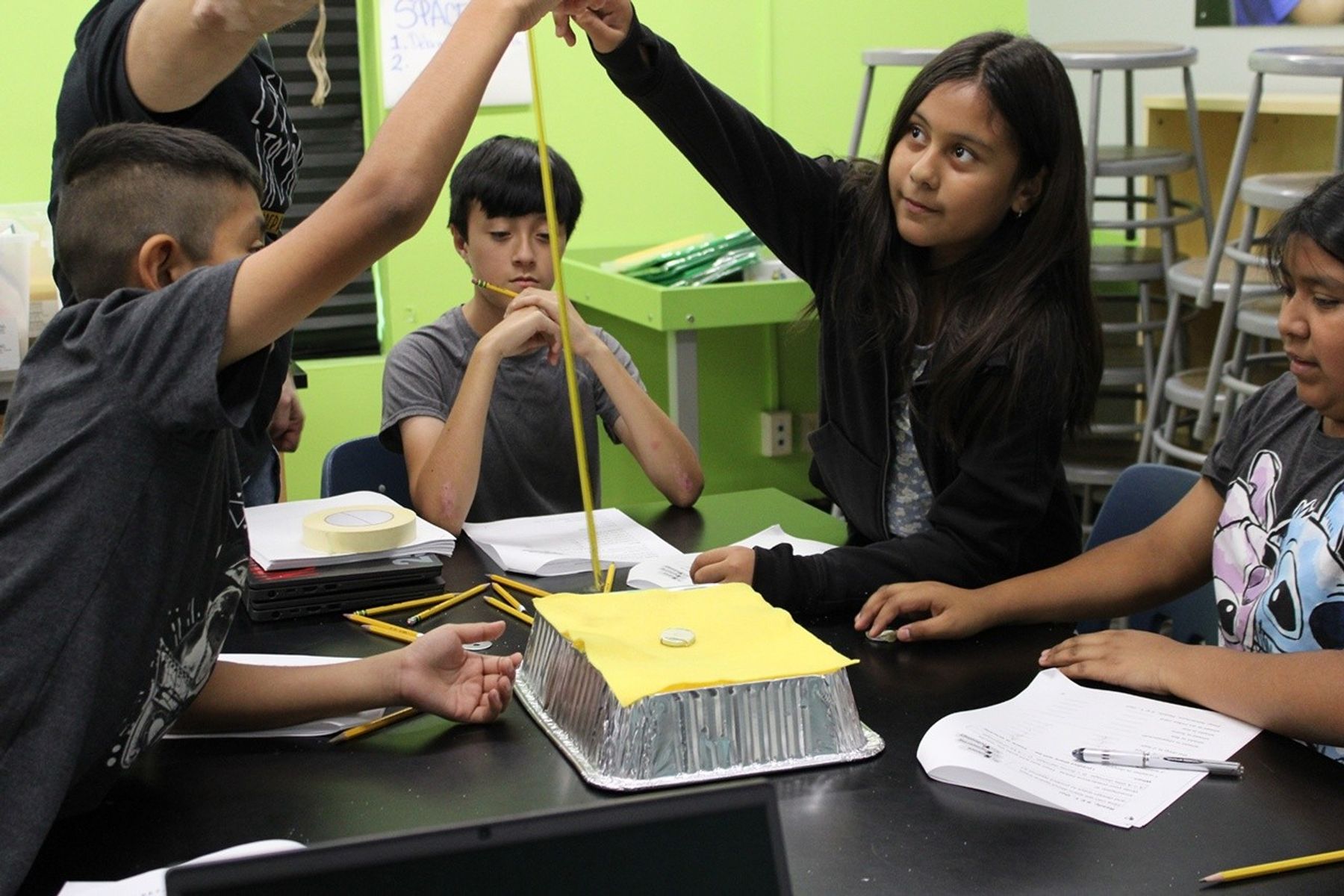
Constructing a three dimensional topographic map from the Remote Sensing Science Pathway.
The NASA Science Activation program’s PLANETS (Planetary Learning that Advances the Nexus of Engineering, Technology, and Science) project, led by Northern Arizona University (NAU), is pleased to announce the official launch of three free out-of-school (OST) time units that give all learners in grades 3-5 and 6-8 the chance to do real planetary science and engineering. These units are supported by comprehensive educator guides, videos, and resources.
These three units – Space Hazards, Water in Extreme Environments, and Remote Sensing – have complementary engineering and science pathways that can be taught on their own or together. Subject matter experts in planetary science from the USGS Astrogeology Science Center were involved in every part of developing the activities, working with STEM (Science, Technology, Engineering, & Mathematics) education experts from Northern Arizona University Center for STEM Teaching & Learning, the Boston Museum of Science, and WestEd to ensure the activities are educational, engaging, and accurate.
PLANETS intentionally designed the units to benefit all learners. The curriculum reflects research-based pedagogical strategies, including those for multilingual learners, Indigenous learners, and learners with differing physical abilities. The units have been tested extensively in out-of-school time programs across the country and revised based on their feedback to ensure the needs of all learners are met. PLANETS provides a practical guide for out-of-school time educators with useful advice to effectively teach all students. All units also include educator background on the subject matter, as well as videos, and many useful tips and links to relevant NASA projects and resources.
“PLANETS is one of the most thoughtfully designed STEM resources I’ve used in an out-of-school setting. The hands-on activities are engaging, accessible, and grounded in real-world challenges that spark curiosity in every learner. What sets it apart is the intentional support for diverse learners and the clear, practical guidance for facilitators—making it truly turnkey for OST educators at any experience level. If you’re looking to build STEM identity, teamwork, and creative problem-solving in your program, PLANETS is a must.” ~ Kara Branch, CEO & Founder, Black Girls Do Engineer
In the Space Hazards unit, intended for learners in grades 3-5, students play a card game to learn about how to protect against the different hazards that people face on Earth and that astronauts and robotic probes face in space. The engineering pathway for this unit presents students with a challenge: design a space glove that will keep astronauts safe while still allowing them to do their work.
The Water in Extreme Environments unit is designed for grades 6-8. In the science pathway, students use planet “water cards” to learn where there is the most water in our solar system (hint: it’s not Earth!). The engineering pathway introduces learners to the scarcity of fresh water, both in extreme environments on Earth and for astronauts in space. Students design a filtration system to purify water for reuse.
The engineering pathway for the Remote sensing unit, also designed for grades 6-8, puts students into the shoes of NASA spacecraft engineers, designing remote sensing devices to learn about the surface of planets, like Mars. The science pathway then uses real NASA remote sensing data from Mars landing site candidates to choose the best place to land a rover on Mars.
All PLANETS materials are available at no cost on the website: planets-stem.org. Check them out and empower every learner to see themselves as scientists and engineers.
PLANETS is supported by NASA under cooperative agreement award number NNX16AC53 and is part of NASA’s Science Activation Portfolio. Learn more about how Science Activation connects NASA science experts, real content, and experiences with community leaders to do science in ways that activate minds and promote deeper understanding of our world and beyond: https://science.nasa.gov/learn/about-science-activation/.
Our exploration of the outer Solar System has revealed a host of icy moons, many with surface features that suggest a complex geology. In some cases, these features—most notably the geysers of Enceladus—hint at the presence of oceans beneath the icy surfaces. These oceans have been ascribed to gravitational interactions that cause flexing and friction within the moon, creating enough heat to melt the body’s interior.
Something that has received a bit less attention is that some of these orbital interactions are temporary or cyclical. The orbits of any body are not always regular and often have long-term cycles. That’s also true for the other moons that provide the gravitational stress. As a result, the internal oceans may actually come and go, as the interiors of the moons melt and refreeze.
A new study, released today by Nature Astronomy, looks at one of the consequences of the difference in density between liquid water and ice (about 10 percent): the potential for the moon’s interior to shrink as it melts, leaving an area of low pressure immediately below its icy shell. If the moon is small enough, this study suggests, that could cause the surface of the ocean to boil.
Since early July, telescopes around the world have been tracking just our third confirmed interstellar visitor, the comet 3I/ATLAS—3I, for third interstellar, and ATLAS (Asteroid Terrestrial-impact Last Alert System) for the telescope network that first spotted it. But the object’s closest approach to the Sun came in late October during the US government shutdown. So, while enough people went to work to ensure that the hardware continued to do its job, nobody was available at NASA to make the images available to the public or discuss their implications.
So today, NASA held a press conference to discuss everything that we now know about 3I/ATLAS and how NASA’s hardware contributed to that knowledge. And to say one more time that the object is a fairly typical comet and not some spaceship doing its best to appear like one.
Extrasolar comet
3I/ATLAS is an extrasolar comet and the third visitor from another star that we’ve detected. We know the comet part because it looks like one, forming a coma of gas and dust, as well as a tail as the Sun heats up its materials. That hasn’t stopped the usual suspect (Avi Loeb) from speculating that it might be a spacecraft, as he had for the earlier visitors. NASA doesn’t want to hear it. “This object is a comet,” said Associate Administrator Amit Kshatrya. “It looks and behaves like a comet, and all evidence points to it being a comet.”
Mars is cold, parched, and extremely dusty. Powerful gusts of wind kick up literal tons of reddish dust that often takes the form of whorls known as dust devils. These winds also shroud the planet in dust by lifting material from the surface and blowing it into the atmosphere (what little Mars has left of an atmosphere), sometimes creating dust storms that rage for days.
Researcher Valentin Bickel wanted to know just how intense winds can be on the red planet. Using data obtained by the Mars camera CaSSIS (Color and Stereo Surface Imaging System), the ExoMars Trace Gas Orbiter, and stereo camera HRSC (High Resolution Stereo Camera) on board ESA orbiter Mars Express, he and his team used deep learning to analyze stereo images that were taken seconds apart at the same location. These images can track the motion of dust devils, and the researchers use them to infer how the winds behind the dust devils move and lift dust from the surface. That dust goes on to have a big influence on the Martian weather.
Bickel, of the Center for Space and Habitability at the University of Bern, noticed that the tumultuous Martian winds are even faster than previous observations had made them out to be. They carry more dust than was previously thought. “Our observations show that strong near-surface winds are abundant on Mars and play an important role in atmospheric dust sourcing, directly informing more accurate models of Mars’ atmosphere, weather, and climate,” the researchers said in a study recently published in Science Advances.
NASA Helps Connect Astronomers and Community Colleges Across the Nation
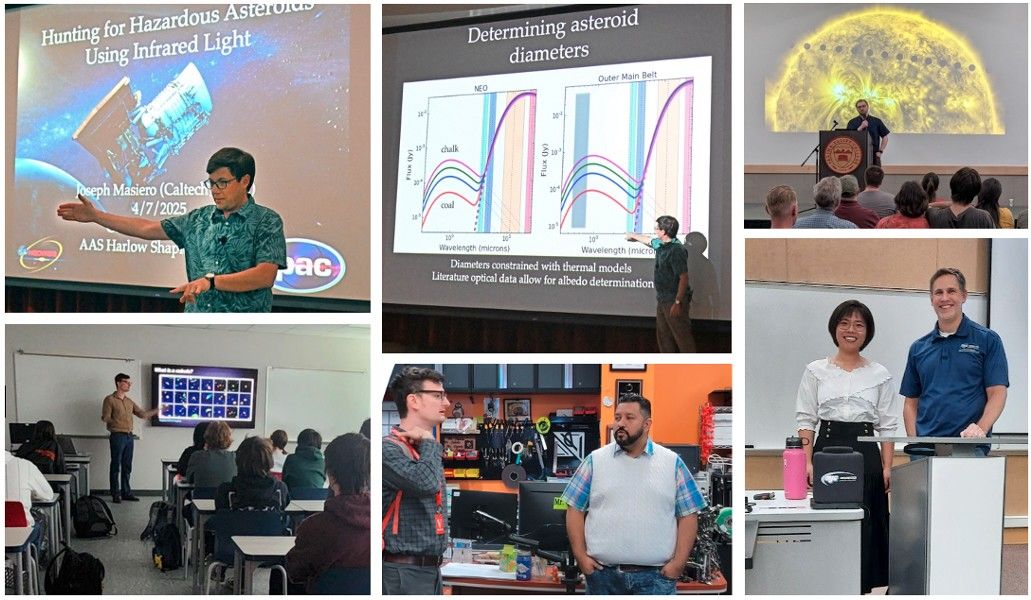
The NASA Community College Network (NCCN) and the American Astronomical Society (AAS) have teamed up to provide an exciting and impactful program that brings top astronomy researchers into the classrooms of community colleges around the United States.
The Harlow Shapley Visiting Lectureship Program, named for astronomer Harlow Shapley (1885-1972), has a history dating back to the 1950s, when it provided support for a scientist to give a series of astronomy-themed lectures at a college or university, coupled with a public talk to the local community. In 2024, AAS partnered with NCCN to broaden the impact of the Shapley lectureship program to community colleges, making use of NCCN’s existing network of 260 college instructors across 44 states and 120 participating Subject Matter Experts (SME) to “matchmake” community colleges with astronomers.
NCCN has supported the teaching of astronomy at community college since 2020. Community colleges serve a vital role in STEM education, with one-third of their students being first-generation college attendees and 64% being part-time students working jobs and raising families. Factor in that up to 40% of students taking introductory astronomy courses nationally each year do so at a community college, and the motivation behind NCCN and the initiatives of the AAS become clear.
In 2024, the pilot collaboration between NCCN and the AAS matched two community colleges — Chattanooga State Community College in Tennessee and Modesto Junior College in California — with SMEs from University of Virginia and Stanford University. In 2025, nine NCCN subject matter experts are engaging with 14 community colleges in six states. They are:
Joe Masiero (Caltech) at Grossmont Community College CA Vivian U (Caltech) at Scottsdale & Chandler Gilbert Community Colleges AZ Dave Leisawitz (NASA) & Michael Foley (Harvard) at Elgin Community College IL Michael Rutkowski (MN State) at Dallas Area Colleges (five colleges) TX Joe Masiero (Caltech) at Mt. San Jacinto College, Menifee Campus CA Quyen Hart (STScI) at Casper College WY Nathan McGregor (UCSC) at Yakima Valley College WA Patrick Miller (Hardin-Simmons) at Evergreen Valley College CA Kim Arcand (Harvard-Smithsonian) at Anne Arundel Community College MD Natasha Batalha (NASA) at Modesto Junior College CA
Each visit of an AAS Shapley Lecturer is unique. The center of each event is the public Shapley Lecture, which is broadly advertised to the local community. Beyond the Shapley Lecture itself, host institutions organize a variety of local engagement activities – ranging from star parties and classroom visits to meeting with college deans and faculty – to make the most of their time with the Shapley Lecturer.
Astronomy instructor James Espinosa from Weatherford College said, “[The visiting Shapley Lecturer’s] visit made a permanent change in how my classes will be taught, in the sense that ‘honors’ projects will be available for ambitious students. I intend to keep in touch with him for several years to come, which is a big impact for our present and future students.”
Dr. Tom Rice, AAS Education Program Manager and AAS lead on the partnership with NCCN, stated, “The AAS’s Harlow Shapley Visiting Lectureship Program represents one of the most impactful ways that astronomers can share our scientific understanding with the widest possible audience, and I am very proud that we have partnered with the SETI Institute and NASA to bring astronomers to their network of community colleges.”
NCCN is supported by NASA under cooperative agreement award number 80NSSC21M0009 and is part of NASA’s Science Activation Portfolio. Learn more about how Science Activation connects NASA science experts, real content, and experiences with community leaders to do science in ways that activate minds and promote deeper understanding of our world and beyond: https://science.nasa.gov/learn/about-science-activation/.

 Login
Login