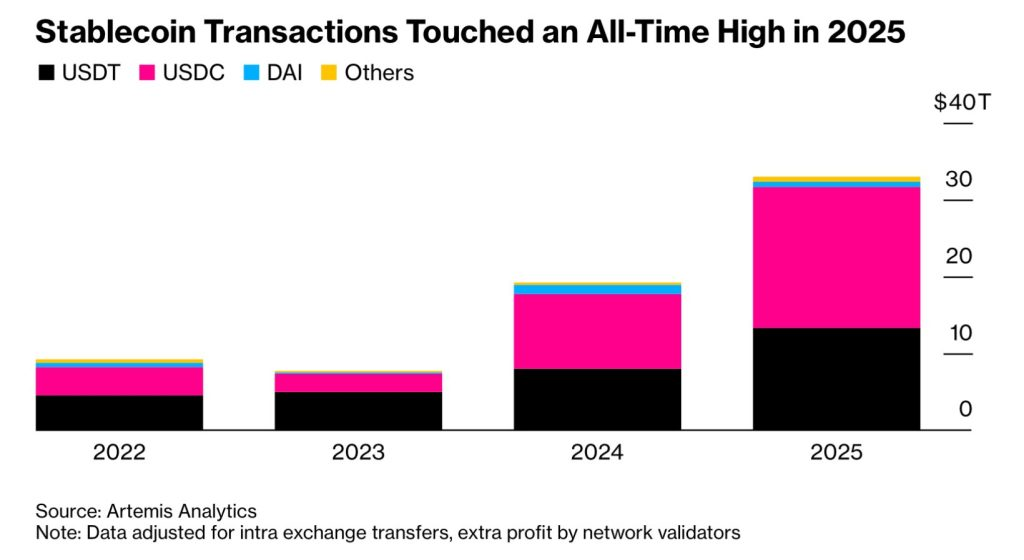
A truly inclusive financial system does not reward people for navigating cross-chain friction; it removes friction, and that is the path to democratization.
On January 20, 2026, the Makina DeFi protocol — an execution engine for on-chain yield and asset management — suffered a ~$4 million exploit targeting its Dialectic USD (DUSD)/USDC Curve stableswap pool. The attack stemmed from oracle manipulation via external Curve Finance integrations, where unvalidated pool data was used to calculate assets under management (AUM) and sharePrice.
By leveraging flash loans, the attacker artificially inflated AUM values, manipulated sharePrice calculations, and extracted profit in a single transaction. While the exploit impacted only the DUSD/USDC pool, it highlighted a broader and recurring DeFi risk: over-reliance on external liquidity data without adequate safeguards.
How the Exploit Worked?
The attacker executed a carefully orchestrated multi-step attack using large flash loans sourced from Morpho and Aave V2. These borrowed funds were temporarily injected into multiple Curve pools to distort liquidity balances and pricing assumptions.
First, the attacker added liquidity to Makina’s DUSD/USDC pool and swapped USDC for DUSD, positioning themselves to benefit from price manipulation. They then added substantial liquidity to Curve’s DAI/USDC/USDT and MIM-related pools, receiving LP tokens that were later partially withdrawn to skew pool balances.
These manipulated balances were critical. Makina’s Caliber contract relied on external Curve functions — such as calc_withdraw_one_coin() and pool balance readings—to compute positional AUM. With liquidity temporarily inflated, these calculations produced artificially high values.
Once the attacker called accountForPosition(), the inflated external data propagated through Makina’s accounting system. The protocol’s total AUM jumped significantly, pushing the sharePrice from ~1.01 to ~1.33 within the same transaction.
With the sharePrice distorted, the attacker arbitraged the DUSD/USDC pool, withdrew liquidity, and repeated the cycle until the pool’s USDC reserves were largely drained. After unwinding the flash loans, the attacker converted the stolen funds to ETH and transferred ~1,299 ETH to external addresses.
Notably, part of the transaction was front-run by an MEV bot, which captured a portion of the profit — further illustrating how composability amplifies loss surfaces during exploits.
Root Cause: Unchecked External Data
At its core, the vulnerability lay in Makina’s trust assumptions. External pool data was treated as reliable input for critical accounting logic, without sufficient sanity checks, rate limits, or flash-loan resistance. The use of upgradeable contracts and the absence of time-weighted or delayed AUM calculations compounded the issue.
This exploit reinforces a key DeFi lesson: external data should inform systems — not directly dictate their financial state.
Notably, many of the largest DeFi exploits in 2025 followed similar patterns, where untrusted external data and integration assumptions were repeatedly abused at scale. These recurring failure modes are analyzed in depth in our Web3 2025 Hack Report, which examines how such vulnerabilities continue to dominate real-world attacks.
Want the Full Technical Breakdown?
This summary covers only the high-level mechanics and lessons from the Makina exploit. If you want a step-by-step transaction flow, detailed root-cause analysis, and mitigation insights, check out our full deep dive: Makina’s $4M Exploit
Aftermath and Response
Following the attack, Makina paused protocol operations, advised LPs on withdrawal options, and coordinated with multiple security firms for investigation and recovery. A 10% whitehat bounty was offered to the exploiter, though no funds had been returned at the time of writing.
Cryptocurrency exchanges continue to be one of the most profitable segments of the digital asset economy. The combination of market maturity, institutional adoption, and regulatory clarity has made exchange platforms viable fintech products for startups, brokerage firms, and enterprise operators.
This guide explains the full process of launching a crypto exchange in 2026— from infrastructure and compliance to liquidity and go-to-market strategy.
1. Define Your Exchange Model
The first step is choosing your platform type. Common models include:
Circle CEO Jeremy Allaire dismissed banking industry warnings that stablecoin rewards could destabilize traditional finance, calling such concerns “totally absurd” during a World Economic Forum panel discussion on Thursday.
His remarks came amid escalating tensions between crypto platforms and banks over provisions in pending U.S. market structure legislation.
Speaking at the Davos summit, Allaire defended the stablecoin industry’s growth trajectory while addressing claims from Bank of America CEO Brian Moynihan that yield-bearing digital dollars could trigger massive deposit flight from commercial banks.
The panel, which included International Monetary Fund First Deputy Managing Director Dan Katz and development finance expert Vera Songwe, examined stablecoins’ expanding role in global payments following last year’s passage of the GENIUS Act.
Banks Warn of “Parallel Banking System”
Banking executives have intensified lobbying against stablecoin rewards programs, with JPMorgan CFO Jeremy Barnum recently warning that interest-paying tokens create “a parallel banking system that sort of has all the features of banking, including something that looks a lot like a deposit that pays interest, without the associated prudential safeguards.“
The Community Bankers Council of the American Bankers Association also urged Congress earlier this month to close what it called a “loophole” allowing stablecoin issuers to indirectly fund yield through exchange partners.
Community bankers warned that large-scale deposit outflows could reduce credit availability for small businesses and homebuyers.
Allaire countered that such arguments ignore financial market history and mischaracterize how stablecoins function within regulatory frameworks.
“Rewards around financial products exist in every balance that you have with a credit card that you use,” he said, noting these incentives help with customer retention without functioning as monetary policy dampeners.
Money Market Funds Precedent Cited
The Circle chief executive drew parallels to government money market funds, which banking groups once claimed would devastate deposit bases.
“The exact same arguments were made,” Allaire stated, pointing out that roughly $11 trillion in money market funds has grown without preventing lending activity.
He argued that lending itself has shifted toward private credit markets, with “the vast vast majority of GDP growth in the United States” historically funded through capital market formation around junk bonds rather than bank credit.
Allaire emphasized that all major stablecoin regulations (including the GENIUS Act, Europe’s MiCA framework, and laws in Japan, UAE, Hong Kong, and Singapore) explicitly prohibit stablecoin issuers from paying interest.
Source: YouTube
“Payment stablecoins” are legally defined as cash instruments used for settlement and require cash-level safeguards under supervision by central bankers and global standard-setters.
While Circle generates income from reserves and revenue-sharing partnerships with platforms like Coinbase, Binance, and Visa, the company itself cannot pay interest directly to tokenholders.
Partner platforms may offer rewards based on their own commercial arrangements, but Allaire argued that this mirrors loyalty programs across traditional financial products.
IMF Acknowledges Benefits Amid Risks
The IMF’s Katz acknowledged stablecoins present “very significant potential benefits” for cross-border payments and financial inclusion while noting risks including banking disintermediation and currency substitution in emerging markets.
Katz emphasized the importance of international regulatory interoperability, stating that realizing stablecoins’ full benefits requires scale and effective cross-border frameworks.
He pointed out the competitive pressures stablecoins create for traditional finance and weak fiscal regimes alike.
Songwe detailed stablecoins’ transformative impact across Africa, where remittance costs averaging 6% can drop to under $1 with digital dollar transfers that complete in minutes, versus five-day settlement delays.
With 650 million Africans lacking bank accounts and 12-15 countries experiencing inflation above 20%, stablecoins provide dollar-denominated savings accessible via smartphones.
Egypt, Nigeria, and Ethiopia lead African adoption, with most transactions below $1 million, indicating heavy small-business use.
In fact, according to Chainalysis, Sub-Saharan Africa received over $205 billion in on-chain value, up roughly 52% from the previous year between July 2024 and June 2025.
However, Songwe noted that 75% of stablecoin reserves remain dollar-denominated, prompting the development of SDR-backed alternatives to reduce dollar dependency and improve transparency around illicit financial flows.
Allaire concluded that stablecoins should remain “cash instrument money, credentially supervised, very very safe money,” with efficient credit delivery systems built atop them through decentralized finance protocols that can be “safer, more transparent, more efficient, more inclusive, and more globally available than what we have with bank credit today.“
Tron founder Justin Sun invested $8 million in DeFi project River to support ecosystem integration on the Tron blockchain and deployment of River’s chain abstraction stablecoin infrastructure.
The deal positions Tron to leverage River’s cross-chain technology through satUSD, a stablecoin mintable at a 1:1 ratio with USDT, USDD, or USD1.
River announced the funding on X, emphasizing its mission to build a system that connects every asset to its opportunity while allowing value to flow freely across ecosystems without locking capital away.
The investment comes weeks after MaelstromFund, founded by BitMEX co-founder Arthur Hayes, also backed the project in early January.
River Bags Stablecoin Integration Across the Tron Ecosystem
Per the announcement, Justin Sun’s capital will support multiple deployments, including stablecoin pools alongside USDT and USDD on SUN, lending and borrowing on JustLend, and price feeds provided by WinkLink.
Integration extends across core assets,s including USDT, TRX, wBTC, BTT, JST, SUN, WIN, and NFT use cases, with native sTRX staking yield serving as the initial entry point.
River also plans to launch Smart Vault and Prime Vault products targeting yield strategies for stablecoins, TRX, and other core Tron assets.
Since the funding announcement, River’s ($RIVER) token appreciated over 20%, reaching an all-time high of $48.74.
The token posted over 800% gains in the last 30 days to reach a market capitalization of around $840 million, jumping from $8 to the current $42.68 after starting January with approximately $100 million market cap.
Hayes’ Maelstrom investment in early January triggered a 600% surge for RIVER within weeks, with the token rising from around $3 to $19.
Market observers attributed the rally to Hayes’ endorsement and his stated belief in chain abstraction technology as fundamental to DeFi’s next growth phase.
River currently integrates with over 30 protocols across major ecosystems, including Ethereum, BNB Chain, and Base, with satUSD circulation exceeding $100 million.
Legal Challenges Shadow Sun’s Investment Activity
Sun’s recent capital commitment unfolds amid ongoing legal scrutiny around the alleged misappropriation of TrueUSD (TUSD) stablecoin reserves.
Last November, a judge at the Dubai International Financial Centre imposed a worldwide freeze on $456 million in assets tied to TUSD reserves, linked to Sun’s earlier bailout of the token.
According to case filings, Techteryx, which acquired TrueUSD in 2020, failed to redeem a large portion of its U.S. dollar reserves managed by First Digital Trust between 2022 and 2023.
Counsel for Techteryx stated that reserves originally custodied in Hong Kong saw around $468 million invested in the Aria Commodity Finance Fund, though nearly $456 million was transferred directly to Aria Commodities DMCC.
The diverted funds gave rise to claims of breach of trust and knowing receipt, prompting the proprietary injunction and subsequent global asset freeze.
Beyond Dubai, Congressional Democrats on January 15 formally accused the Securities and Exchange Commission of operating a pay-to-play scheme in its handling of crypto enforcement cases, with particular focus on the agency’s treatment of Sun.
Representative Maxine Waters sent a detailed letter to SEC Chairman Paul Atkins highlighting Sun’s extensive financial relationship with Trump family ventures, noting his $75 million investment in World Liberty Financial.
Sun is also a top holder of Trump’s memecoin, which earned him an invitation to a May 2025 White House dinner for major investors.
Regulators also claimed Sun engineered the offer and sale of two crypto asset securities without proper registration while directing hundreds of thousands of TRX wash trades that generated approximately $31 million from unsuspecting investors.
Judge Vernon Broderick of the Southern District of New York sustained core allegations in a parallel private class action, finding that plaintiffs plausibly alleged Sun and Tron illegally sold TRX as an unregistered security.
Despite these ongoing legal challenges, Sun continues to expand his cryptocurrency portfolio and investments, with Bloomberg estimating his net worth at approximately $12.5 billion.
Liquid staking has become a foundational primitive in Proof-of-Stake ecosystems. It allows users to stake assets while retaining liquidity through derivative tokens, removing the need to choose between yield and flexibility. However, most liquid staking systems are still single-chain by design. While users receive a liquid representation of their staked assets, using that liquidity elsewhere often requires manual bridging, fragmented liquidity, and additional trust assumptions.
In a multi-chain ecosystem, this creates friction. Liquidity becomes siloed, and users are forced to actively manage cross-chain exposure rather than letting capital move naturally.
This is the problem space where vUSD on Bifrost is designed to operate.
Agenda
In this article, we will cover:
How voucher tokens work and why parachains matter
The earning dynamics behind voucher tokens
Why stablecoins are a natural extension of liquid staking
A Liquity-inspired borrowing model
How vUSD works in practice
Where to explore the implementation
How voucher tokens work and why parachains matter
Bifrost is designed as a Polkadot parachain, which fundamentally changes how liquid staking assets are issued and utilised.
Instead of creating liquid staking derivatives confined to a single chain, Bifrost introduces voucher tokens (vTokens) as cross-chain financial primitives.
Voucher Tokens and the Power of Parachains
When a user stakes through Bifrost:
The underlying asset is staked at the protocol level
A voucher token (such as vDOT or vETH) is issued
The vToken represents the staked position and accrues staking rewards over time
Because Bifrost operates as a parachain, these vTokens are designed to move across the Polkadot ecosystem, benefiting from shared security and native cross-chain messaging. Rather than being isolated receipts, vTokens act as portable, yield-bearing collateral. Which naturally leads to the question of how value continues to accumulate once these tokens are in circulation.
The Earning Dynamics of Voucher Tokens
Voucher tokens are yield-bearing by design. Staking rewards are continuously reflected in the value of the vToken relative to the underlying asset. Over time:
One vToken represents a growing claim on the staked asset
Users retain exposure to staking rewards
Liquidity is preserved without unstaking
This embedded yield is a critical property. It ensures that vTokens remain economically active even when they are no longer held in a passive staking position. Because yield continues to accrue, vTokens can safely be reused within DeFi without sacrificing their core purpose.
Once yield-bearing assets become composable, the next requirement is a stable unit of account to unlock more advanced financial use cases.
Why Stablecoins Matter for Voucher Tokens
As DeFi activity grows around voucher tokens, a stable unit of account becomes essential. Stablecoins enable:
Predictable pricing
Capital efficiency
Risk management without selling assets
Using voucher tokens as collateral for stablecoins allows users to:
access liquidity without exiting staking positions
avoid bridging or selling yield-bearing assets
keep collateral productive while borrowing
Using voucher tokens as collateral for stablecoins allows users to unlock liquidity without exiting staking positions, avoid unnecessary bridging or asset sales, and keep collateral productive while borrowing. This makes over-collateralised stablecoins a natural extension of liquid staking rather than an unrelated financial primitive.
At this point, the design question becomes how borrowing should be structured to preserve safety while leveraging yield-bearing collateral.
Borrowing Models: A Liquity-Inspired Approach
Over-collateralised borrowing protocols typically follow one of two models: Maker-style vaults or Liquity-style positions.
Liquity’s design emphasises:
Conservative collateralization
No variable interest rates
Explicit user actions for borrowing, repayment, and collateral withdrawal
System safety is enforced at every state transition
This approach minimises ambiguity and avoids hidden debt dynamics. It is particularly well-suited for yield-bearing collateral, where predictability and transparency are critical. These principles directly inform how vUSD is structured.
vUSD: A Stablecoin Built on Voucher Tokens
vUSD is an over-collateralised stablecoin designed specifically for the Bifrost ecosystem.
Users lock vTokens (such as vDOT) as collateral and mint vUSD based on a predefined collateralization ratio. For example, at a 150% collateral ratio:
$1 of vUSD is backed by at least $1.50 worth of vDOT
The system remains solvent even under market volatility
Once minted, vUSD can be used across DeFi, swapped, held, or integrated into other protocols while the underlying collateral continues to earn staking rewards. To understand this more concretely, it helps to walk through a simple lifecycle example.
vUSD Lifecycle Example
Alice stakes DOT and receives vDOT
Alice locks vDOT as collateral and mints vUSD
vUSD enters circulation and can be used across DeFi
Underlying DOT continues to earn staking rewards
When Alice repays vUSD, the stablecoin is burned and collateral is unlocked
Because minting and burning are explicit actions, the vUSD supply expands and contracts strictly through borrowing and repayment. There is no reflexive supply adjustment or algorithmic minting outside user-driven actions.
This lifecycle also sets the stage for how yield is distributed across the system.
Yield Distribution: How vUSD Earns Without Interest
vUSD is yield-backed, not interest-bearing.
Staking yield generated by excess collateral value is shared between:
vUSD holders
vToken collateral positions
At the minimum collateralization ratio of 150%:
Each $1 of vUSD debt controls $2.50 of economic value
Yield is split proportionally based on backing value
The yield share for vUSD is defined as:
Yield(vUSD) = vUSD value ÷ (vUSD value + vDOT collateral value)
At minimum collateralization, this results in a 40% yield share. If collateral prices fall, vUSD’s share is reduced to preserve safety, ensuring yield extraction never weakens collateral backing.
Yield is distributed via rebasing, which increases all vUSD balances proportionally without requiring explicit transfers.
Conclusion
Bifrost’s parachain-native voucher token model enables cross-chain, yield-bearing collateral that remains productive beyond simple staking. vUSD builds on this foundation by introducing a conservative, Liquity-inspired stablecoin designed to unlock stable liquidity while preserving safety and composability.
The current implementation represents a minimal first iteration focused on the core building blocks of the system: voucher-token-backed collateral, explicit borrowing and repayment flows, and a clear over-collateralization model. More advanced components — such as staking yield distribution, liquidation mechanisms, and system-level risk controls — are intentionally not included yet and will be introduced in subsequent iterations.
The full codebase, including the initial contracts, mock voucher tokens, and documented design assumptions, is open-source and available here: https://github.com/yehia67/vUSD
As the protocol evolves, each major iteration will be accompanied by a follow-up article that documents the new components, design decisions, and trade-offs introduced at that stage. This approach ensures that both the code and the system design evolve transparently, with clear context provided at every step.
Private key management is the most critical aspect of security for enterprise-grade crypto wallets. Losing control of a private key can result in permanent financial loss, reputational harm, and regulatory penalties. In contrast to retail wallets, enterprise wallets must deal with large amounts of assets, multiple users, complicated workflows, and being in compliance with many regulations, meaning key management takes on an even greater importance.
The following are the recommended key management strategies for enterprise-grade crypto wallets.
1. Self-Custody and Non-Custodial Architecture
Enterprises should focus on self-management of private keys as opposed to using third-party custody solutions.
Advantages of self-custody:
Total ownership/control of digital assets
Decreased counterparty risk
Increased regulatory transparency
By using a self-custody model, enterprises avoid the risks associated with the potential failure of an exchange or service provider.
2. Use of Hardware Security Modules (HSMs)
HSMs provide a standard method of generating, storing, and securing cryptographic keys inside secure and tamper-evident environments.
Advantages for enterprises:
The keys will never be stored outside of the hardware environment
HSMs protect from both physical and remote attacks
HSMs meet security certification requirements (e.g., FIPS 140–2/3).
HSMs are in use by most banks and other financial institutions to provide cryptographic key management.
3. Multi-Signature (Multi-Sig) Wallets
Three types of wallets to consider are multi-signature, multi-party computation, and cold wallet/hot wallet segregation.
A Multi-signature wallet is another type of wallet that requires the approval of multiple private keys to execute a transaction.
Why do Businesses use Multi-Signature Wallets?
The reason is that they eliminate a single point of failure.
Prevent insider threats.
They enable businesses to implement role-based transaction approvals.
For example, if there is a 3 of 5 multi-signature wallet, this means the finance, security, and compliance teams must approve a transaction.
4. Multi-Party Computation (MPC)
A Multi-Party Computation (MPC) Wallet is a modern way to think of multi-signature wallet technology. Instead of having one key, it creates the key by splitting it up and distributing the shares across many encrypted systems.
The benefits of Multi-Party Computation are:
At no time do you have a single key.
They have a much greater ability to resist key theft.
They allow you to process transactions faster than multi-signature wallets.
They are designed for businesses that require high levels of daily volume.
Institutions that are in the business of storing Crypto are starting to prefer the use of multi-party computation.
5. Cold Wallet/Hot Wallet Segregation
The best practices for businesses when it comes to separating their wallets by how they will be used and how they will be exposed to risk are:
Cold wallets for long-term storage.
Hot wallets for operational liquidity (online).
Rebalance funds between wallets.
By doing so, businesses are able to limit their risk of exposure to the financial markets while also being able to continue to operate at optimal levels of efficiency by doing so as well.
6. Role-Based Access Control (RBAC)
Not all employees should have access to private keys or be able to sign transactions.
RBAC provides:
Separation of duties
Control over who can sign
Reduction of insider threat
Access should be granted based on roles rather than the individual.
7. Backup and Recovery Securely
Enterprises should be prepared for disaster recovery without sacrificing security.
Best Practices Include:
Encrypted backups of keys
Distributed storage in multiple geographic locations
Shamir’s secret sharing for recovery
Approval processes for recovery heavily regulated
Backups should not jeopardize the confidentiality of the key.
8. Audit Logging and Monitoring
Every action related to a key should be logged and monitored.
Audit logs should provide:
Created and used keys
Approved transactions
Attempts to access and change keys
This will facilitate compliance, forensic investigations, and audits within the organization.
9. Compliance and Regulatory Expectations
Regional and industry regulations dictate how enterprise wallets are to comply.
Key requirements include:
AML and transaction monitoring
Secure custody standards
Regular third-party security audits
Private key management regulatory compliance
10. Security Audits and Penetration Testing
The evolution of threats requires that private key management systems continuously evaluate the security of their systems.
Best Practices Include:
Independent security audits
Penetration testing
Code reviews for cryptographic logic
Continuous monitoring for vulnerabilities
As threats change, so must security systems.
Summary
The success of enterprise-grade cryptocurrency wallet development depends on robust private key management. The ability to protect digital asset portfolios at scale using self-custody models, Hardware Security Modules (HSMs), multi-signature or Multi-Party Computation (MPC), cold-storage solutions with strict physical access control, and other best practices for comprehensive remote management provides the opportunity to build a secure and scalable foundation for your organization’s digital assets.
Launching a crypto exchange is no longer just an idea for large tech companies. Many startups, fintech firms, and entrepreneurs now explore crypto exchange businesses as part of their growth plans. One option that often comes up is white label cryptocurrency exchange software. It promises faster launch times and lower technical effort, but it may not suit every business equally. Before choosing this path, it is important to understand what white label crypto exchange software offers, what it limits, and how it aligns with different business models. This article breaks down those aspects in a clear and practical way.
Understanding What White Label Crypto Exchange Software Really Is
White label cryptocurrency exchange software is a ready-made trading platform that can be rebranded and customized to some extent. Instead of building an exchange from scratch, businesses adopt an existing framework and launch under their own name. The core trading engine, wallet system, admin panel, and security setup are already developed. Businesses mainly focus on configuration, branding, and compliance setup. This approach significantly reduces development time and technical complexity. However, using white label software also means accepting certain predefined structures. Understanding this trade-off is key when evaluating whether it fits your business goals.
white label crypto exchange software
Business Models That Benefit the Most From White Label Exchanges
White label crypto exchange software works best for businesses that prioritize speed and market entry. If the goal is to launch quickly, test a market, or expand an existing financial service offering, this model can be practical. Startups with limited technical teams often benefit because they avoid long development cycles. Financial service providers entering crypto for the first time can use white label solutions to reduce risk while learning market behavior. Educational platforms, regional exchanges, and niche trading communities also find value in white label exchanges, especially when customization needs are moderate rather than complex.
Cost, Time, and Resource Considerations
One of the biggest reasons businesses choose white label cryptocurrency exchange software is cost efficiency. Building a custom exchange requires significant investment in development, testing, security audits, and long-term maintenance. White label solutions reduce upfront costs and shorten launch timelines. Instead of months or years, businesses can go live in weeks. This allows faster revenue generation and earlier market feedback. However, long-term costs should also be considered. Licensing fees, customization limits, and scaling expenses can affect profitability over time. A lower initial cost does not always mean lower total cost.
Customization Limits and Brand Differentiation
While white label platforms allow branding changes such as logos, colors, and basic feature settings, deep customization can be limited. The underlying architecture remains the same for all users of the software. For businesses that rely heavily on unique trading features or innovative user experiences, this can be a challenge. Differentiating the platform beyond surface-level branding may require additional development layers or integrations. If your business model depends on standing out through advanced trading tools or novel workflows, it is important to assess whether white label software can support that vision.
Security, Compliance, and Operational Control
Security is a major concern for any crypto exchange. White label cryptocurrency exchange software usually comes with built-in security features such as encryption, wallet protection, and access controls. This can be beneficial for teams without deep security expertise. However, operational control may be shared or limited depending on the setup. Businesses must understand who manages updates, security patches, and infrastructure stability. Compliance flexibility also matters. Regulatory requirements vary by region, and not all white label platforms are equally adaptable. A business must ensure the software can support necessary identity checks, transaction monitoring, and reporting standards.
Scalability and Long-Term Growth Planning
White label exchanges are often designed to handle moderate growth efficiently. They can support increasing user numbers and trading volume up to a certain point. For businesses planning aggressive expansion or global operations, scalability becomes a critical question. Some white label platforms may struggle under high load or require costly upgrades to scale further. Long-term growth planning should include evaluating whether the software can evolve with market changes, new asset types, and increasing regulatory demands.
When White Label Software May Not Be the Right Choice
White label cryptocurrency exchange software may not be ideal for every business. Companies with strong technical teams and long-term innovation goals may prefer building a custom platform. If control, flexibility, and unique architecture are central to your business strategy, white label solutions may feel restrictive. Similarly, businesses targeting institutional traders or complex financial products may need deeper customization than white label platforms can offer. Choosing white label software without aligning it to the business model can lead to limitations that slow growth later.
Final Thoughts
White label cryptocurrency exchange software can be the right fit for many businesses, but only when used with clear expectations. It offers speed, cost efficiency, and reduced technical complexity, making it attractive for startups and market entrants. At the same time, it comes with limits around customization, control, and long-term scalability. The decision should be based on your business goals, technical capacity, and growth plans rather than convenience alone. Understanding where white label exchanges perform best and where they fall short helps businesses make informed choices and build sustainable crypto trading platforms.
Meme coins have evolved far beyond internet jokes and speculative hype. What began as playful experiments inspired by online culture has matured into a serious niche within blockchain development. Today, meme coin development when executed with discipline and technical clarity represents the transformation of digital culture into functional financial code. Stripped of noise and short-term speculation, this process blends community psychology, token engineering, and decentralized infrastructure into a credible blockchain asset.
From Internet Humor to Programmable Value
Internet culture thrives on relatability, speed, and shared identity. Memes spread because they compress complex emotions or ideas into instantly recognizable symbols. Meme coins leverage this same mechanism, but instead of stopping at humor, they encode it into programmable assets. The meme becomes the entry point, while the blockchain gives it permanence, transparency, and utility.
In practical terms, meme coin development starts with a cultural narrative that resonates with a specific online community. This narrative is then translated into smart contract logic that defines how the token is minted, distributed, transferred, and governed. The success of a meme coin depends not on the joke itself, but on how effectively that cultural energy is transformed into a secure, scalable, and trustable digital asset.
Tokenomics as Cultural Architecture
One of the most overlooked aspects of meme coin development is tokenomics. While many projects rely on exaggerated supply numbers or aggressive burn mechanisms to attract attention, sustainable meme coins use tokenomics as a form of cultural architecture. Every economic decision reflects how the community interacts with the token.
For example, fair launch models reinforce decentralization and inclusivity, values often celebrated in internet-native communities. Liquidity locks and transparent vesting schedules help counter skepticism fueled by past rug pulls. Even transaction taxes, when used carefully, can fund community initiatives, marketing, or long-term development without exploiting holders.
By designing tokenomics that align with community behavior rather than speculative manipulation, developers turn cultural participation into measurable economic activity.
Smart Contracts: Where Culture Meets Code
At the core of every meme coin lies its smart contract. This is where internet culture stops being abstract and becomes enforceable logic. Smart contracts define rules that cannot be altered on a whim, making trust a technical feature rather than a marketing promise.
Modern meme coin development emphasizes contract audits, gas optimization, and modular design. Features such as automated liquidity provisioning, governance hooks, and cross-chain compatibility allow meme coins to exist beyond a single viral moment. When the contract is well-structured, the meme coin can integrate with decentralized exchanges, NFT platforms, and Web3 applications, extending its relevance.
This disciplined approach ensures that humor does not compromise security and that creativity coexists with engineering rigor.
Community Is the Real Infrastructure
Unlike traditional financial assets, meme coins derive much of their value from social consensus. Community engagement is not an accessory, it is the infrastructure. Development teams that understand this focus on tools that empower participation, such as DAO-based voting, transparent treasury management, and open communication channels.
However, sustainable growth requires filtering noise from meaningful engagement. Instead of chasing fleeting trends, successful meme coin projects nurture long-term contributors: developers, designers, content creators, and moderators. These participants help the project evolve organically, keeping the cultural narrative alive while reinforcing technical credibility.
When community governance is backed by on-chain mechanisms, internet culture gains a formal structure without losing its spontaneity.
Utility Beyond the Meme
The next phase of meme coin development centers on utility. While cultural appeal attracts attention, functional use cases sustain relevance. Integration with gaming ecosystems, NFT marketplaces, tipping systems, or creator economies allows meme coins to circulate naturally rather than relying solely on trading volume.
Some projects use meme coins as access tokens, rewarding participation or unlocking exclusive experiences. Others embed them into decentralized applications where cultural identity and financial interaction intersect. In these cases, the meme becomes a brand layer on top of real economic activity.
This shift from novelty to function marks the transition from speculative tokens to digital assets with purpose.
Cutting Through the Hype
Developing meme coins without noise requires restraint. Clear documentation, transparent roadmaps, and realistic expectations replace exaggerated promises. Instead of overloading contracts with unnecessary features, developers prioritize clarity, security, and adaptability.
In a market saturated with hype, simplicity becomes a competitive advantage. A well-built meme coin does not need constant promotion; it survives through consistent community use and technical reliability.
Conclusion
Meme coin development at its best, is not about chasing trends or manufacturing hype. It is about translating internet culture into financial code that people can trust, use, and build around. When humor is paired with solid tokenomics, secure smart contracts, and engaged communities, meme coins become more than jokes; they become living digital systems shaped by collective identity. By removing the noise, developers unlock the true potential of meme coins as cultural and financial instruments in the evolving Web3 economy.
Why Multi-Chain DeFi Is Hard — And How AI Agents Can Help
Why Multi-Chain DeFi Is Hard — And How AI Agents Can Help
Last year, our team started exploring a case study on a DeFi project that had strong fundamentals but a complex technical challenge.
Users were distributed across Ethereum, Solana, and Aptos. While adoption looked promising, syncing smart contracts across multiple chains quickly became a bottleneck. 😅
What sounded like a growth strategy turned into an operational headache.
At Duredev, we often see this pattern when teams move from single-chain products to cross-chain DeFi platforms.
🌐 Why Multi-Chain DeFi Looks Simple (But Isn’t)
On paper, multi-chain means more users, more liquidity, and better reach. In reality, each blockchain behaves like a different system altogether.
Ethereum, Solana, and Aptos differ in:
Smart contract standards
Deployment pipelines
Upgrade mechanisms
Monitoring and debugging tools
This is why many teams struggle with cross chain app development once they move beyond MVPs.
In the case study we analyzed, developers faced recurring issues:
Feature updates deployed on one chain but delayed on others
Configuration mismatches between networks
Manual monitoring across dashboards
Rising maintenance costs
The biggest challenge wasn’t writing smart contracts — it was maintaining consistency across chains.
This is where many multi-chain products slow down or silently fail.
🤖 The Role of AI Agents in Cross-Chain DeFi
Instead of adding more tools, the solution explored a smarter layer: AI agents.
AI agents can act as intelligent coordinators for cross chain smart contract management, helping teams automate tasks that usually require constant human oversight.
In multi-chain DeFi systems, AI agents can:
Automate deployments across multiple chains
Monitor smart contract behavior in real time
Detect inconsistencies between chain states
Trigger alerts or rollbacks when anomalies appear
This transforms chaotic workflows into predictable, developer-friendly systems.
💡 From Automation to Intelligence
Traditional automation follows rules. AI agents understand patterns.
That difference matters in multichain DeFi development, where systems are dynamic and conditions change frequently.
The goal becomes clear:
One platform. Multiple chains. A seamless user experience. A headache-free workflow for developers. 💡
This is the direction modern Web3 infrastructure is moving toward.
Users don’t care which chain they’re on. They care about speed, reliability, and trust.
As DeFi matures, platforms that rely on manual multi-chain coordination will struggle to keep up. Intelligent systems powered by AI agents will define the next generation of decentralized products.
This shift is already visible across:
DeFi protocols
Infrastructure layers
Enterprise blockchain platforms
At Duredev, this evolution is central to how we build AI + Web3 systems.
🧩 Why Teams Choose Duredev
Choosing the right technology partner is critical for multi-chain success.
Teams work with Duredev because we focus on:
Practical cross-chain multichain app development
Reduced operational complexity
Secure, auditable smart contracts
AI-enabled monitoring and automation
You can learn more about our approach and team through about Duredev or start a conversation directly via contact Duredev.
🚀 Final Takeaway
Multi-chain DeFi is hard — not because the idea is flawed, but because coordination is complex.
AI agents offer a realistic way forward by:
Reducing human error
Automating cross-chain workflows
Making multi-chain systems sustainable
As DeFi moves toward a truly multi-chain future, platforms that combine AI intelligence with decentralized infrastructure will lead the way.
And that’s exactly what Duredev is building for the next generation of Web3.
Think you don’t use blockchain? Think again… You’re using it every single day — without even realizing it.
💳 ATM withdrawals rely on secure, ledger-based systems to protect your money 📦 Online order tracking depends on tamper-proof records to ensure delivery accuracy 📝 Digital document verification uses automated validation to prevent fraud
The smartest systems don’t announce themselves. They work quietly behind the scenes, ensuring security, transparency, and trust.
At Duredev, we design blockchain-powered digital systems that users rarely notice — but businesses rely on every single day.
Think You Don’t Use Blockchain? Think Again…
🔗 Why Blockchain Development Services Matter for Businesses Today
Blockchain is no longer limited to cryptocurrency. Today, blockchain development services are becoming core infrastructure for businesses that handle sensitive data, transactions, and multi-party processes.
Companies now look for solutions that:
Reduce fraud
Improve transparency
Automate trust
Remove manual verification
That’s why demand for a reliable blockchain development company has increased across industries like finance, logistics, and enterprise platforms.
🧠 Custom Blockchain Development for Real-World Use Cases
Every business has different workflows. Off-the-shelf solutions often fail to match real operational needs.
The result is faster execution, fewer errors, and reduced operational costs. Duredev focuses on smart contracts that are secure, auditable, and aligned with real business logic.
💰 Blockchain in Finance and Lending Platforms
Finance is one of the biggest adopters of blockchain technology.
With blockchain for finance and lending, platforms can offer:
Transparent transaction records
Automated loan agreements
Secure data sharing
Reduced dependency on intermediaries
Businesses building blockchain-based financial platforms gain higher user trust and operational efficiency. At Duredev, finance-focused blockchain solutions are designed to meet compliance and scalability requirements from day one.
📦 Blockchain Supply Chain Solutions for Transparency
Supply chains involve multiple stakeholders, which often leads to delays, disputes, and data mismatches.
Blockchain supply chain solutions solve this by creating a single, immutable source of truth. Businesses can:
📈 Final Thoughts: Blockchain Is Already Part of Your Business
Blockchain is no longer futuristic — it’s already embedded in modern digital systems.
From decentralized business applications to blockchain-powered digital systems, companies that invest in the right infrastructure today gain long-term advantages in trust, efficiency, and scalability.
If you’re planning to build or upgrade a secure digital platform, exploring blockchain consulting services early can save time, cost, and complexity later.
And that’s where Duredev helps businesses build systems that work — quietly, reliably, and every day.
Ethereum’s co-founder Vitalik Buterin has renewed his push for decentralized social media arguing that competition — rather than engagement-maximising algorithms or speculative tokens — is essential to building healthier mass communication systems.
In 2026, I plan to be fully back to decentralized social.
If we want a better society, we need better mass communication tools. We need mass communication tools that surface the best information and arguments and help people find points of agreement. We need mass communication… https://t.co/ye249HsojJ
In a post on X, Buterin said he plans to be “fully back to decentralized social” in 2026, framing the shift as a response to deep structural problems in today’s dominant platforms.
“If we want a better society, we need better mass communication tools,” he wrote, calling for systems that surface high-quality information, help people find points of agreement, and serve users’ long-term interests instead of optimising for short-term engagement.
According to Buterin decentralization provides a starting point by allowing real competition. Shared data layers allow multiple clients to be built on top of the same social graph, reducing the power of any single interface or algorithm.
“Decentralization is the way to enable that,” he said, arguing that choice at the client level is critical to improving online discourse. Buterin notes that his return to decentralized social is already underway.
Since the start of the year, he said every post he has written or read has been accessed through Firefly, a multi-client interface that supports X, Lens, Farcaster and Bluesky.
The experience, he suggested, highlights how decentralized tools can coexist with — and gradually pull attention away from — centralized platforms.
Tokens Are Not Social Innovation
Buterin was sharply critical of how many crypto-native social projects have evolved. Too often, he argued, teams mistake the addition of a speculative token for meaningful innovation.
While combining money and social interaction is not inherently flawed — he cited Substack as an example of a system that successfully supports high-quality content — problems arise when platforms create price bubbles around creators instead of rewarding the content itself.
Over the past decade, Buterin said, repeated attempts to financialise social influence have failed in predictable ways: rewarding pre-existing social capital rather than quality and ultimately collapsing as tokens trend toward zero.
He dismissed claims that creating new markets and assets is automatically beneficial, describing such thinking as “galaxy-brained” rhetoric that masks a lack of genuine interest in improving information flow. “That is not Hayekian info-utopia,” he wrote. “That is corposlop.”
A Renewed Focus on the ‘Social’
For decentralized social to succeed, Buterin argued, it must be led by teams that care deeply about the social problem itself.
He praises the Aave team’s stewardship of Lens to date and said he is optimistic about the project’s next phase, pointing to the incoming team’s long-standing interest in encrypted social communication.
Buterin said he plans to post more actively on Lens this year and encouraged users to spend more time across Lens, Farcaster and the broader decentralized social ecosystem.
The goal is to move beyond “a single global info warzone” and reopen a frontier where new and healthier forms of online interaction can emerge.
U.S. Commodity Futures Trading Commission (CFTC) Chairman Mike Selig posted an op-ed on Tuesday outlining an aggressive push to modernize U.S. financial regulation, pledging to move away from what he called years of “regulation by enforcement” and toward clear, tailored rules for digital assets, prediction markets and other emerging technologies.
In a policy statement and accompanying opinion piece, Selig framed the effort as a pivotal moment for American financial markets, arguing that advances in blockchain and artificial intelligence are enabling entirely new products, platforms and business models that legacy regulations were never designed to oversee.
“Advances in technology are transforming the financial services landscape as we know it,” Selig said, adding that Congress is now “on the cusp” of passing the Digital Asset Market Clarity Act, which would establish a formal market structure for crypto in the United States.
If enacted, the legislation would expand the CFTC’s authority over digital asset markets, positioning the agency as a primary regulator for large segments of the crypto economy.
Selig said the CFTC is prepared to take on that role and ensure innovation remains onshore rather than being driven overseas by regulatory uncertainty.
CFTC’s ‘Future-Proof’ Initiative
The chairman announced the launch of a new “Future-Proof” initiative, under which agency staff will conduct a comprehensive review of existing CFTC rules — many of which were originally written for agricultural futures markets — to determine which should be updated or replaced to better accommodate new asset classes and trading venues.
“Decades-old rules designed for pork bellies and wheat futures do not contemplate blockchain-native markets that trade 24/7,” Selig said. “The CFTC must meet innovators where they are.”
Selig drew a sharp contrast with the Biden administration’s approach, criticizing prior regulators for applying legacy rules to novel products such as digital assets and perpetual futures through enforcement actions rather than formal rulemaking.
That strategy, he argued, pushed startups offshore and limited access for U.S. market participants.
Under the new approach, Selig said the agency will focus on “the minimum effective dose of regulation” — rules that protect against fraud, manipulation and abuse without stifling experimentation. Future policy, he added, should be established through notice-and-comment rulemaking to provide durability across administrations.
The chairman also highlighted rapid growth in areas such as prediction markets and digital assets, noting that crypto has expanded from a niche experiment into a market exceeding $3 trillion in value. These developments, he said, require regulatory frameworks that are purpose-built rather than retrofitted.
“Anyone with a smartphone and an internet connection can now access peer-to-peer markets that operate around the clock,” Selig said, pointing to both blockchain-based platforms and the increasing use of artificial intelligence in risk management and trading strategies.
Selig credited President Donald Trump’s broader regulatory agenda for creating the conditions for what he described as a potential “golden age” of American financial markets. He said coordination among financial regulators will be critical as new legislation reshapes oversight of digital assets.
“If Congress passes market structure legislation and hands us the torch, we will ensure these markets flourish at home,” Selig said. “The great innovations of today and tomorrow should be made in America.”
Coinbase CEO Brian Armstrong unveiled a sweeping vision to democratize global capital markets through blockchain tokenization, targeting roughly 4 billion adults worldwide who lack access to equity and bond investments despite the accelerating divergence between capital and labor income growth.
The exchange published a comprehensive policy paper titled “From the Unbanked to the Unbrokered: Unlocking Wealth Creation for the World,” arguing that technological barriers and cost structures have systematically excluded two-thirds of the global adult population from wealth-building opportunities.
In the United States, labor income has grown by 57% since 1987, while capital income has surged by 136%, creating what Armstrong describes as a structural impediment to broad-based prosperity.
Source: Coinbase
Capital Chasm Widens Across Geographic Lines
The paper identifies participation in capital markets as fundamentally determined by wealth and geography rather than merit or savings discipline.
Roughly 4 billion adults do not participate in equity and bond markets, with engagement rates ranging from 55-60% in the United States to below 10% in China and India.
Source: Coinbase
“I think about a talented worker in Lagos or Jakarta who has the drive and ability to build a better life for themselves and their family—but who faces near-total exclusion from the same capital markets available to a wealthy investor in New York,” Armstrong wrote, emphasizing that geography rather than ability determines who gets access.
Beyond national participation rates, the research highlights severe home bias among existing investors.
Data shows domestic equity holdings far exceeding countries’ share of global market capitalization, with investors in Indonesia, Russia, and Turkey allocating over 95% of portfolios to local markets despite representing fractions of global equity value.
Source: Coinbase
Tokenization as an Infrastructure Solution
The policy blueprint positions blockchain-based tokenization as the primary mechanism to collapse legacy cost structures that price out small savers.
Traditional financial infrastructure operates on fixed compliance costs, custody fees, settlement delays, and minimum account thresholds that render participation uneconomic for anyone below certain wealth levels.
According to the paper, recent studies estimate that tokenized equity trading could reduce investor transaction costs by more than 30%, with efficiency gains expanding over time as atomic settlement eliminates multi-day reconciliation cycles.
“Permissioned systems inevitably replicate existing power dynamics, allowing infrastructure owners to limit competition,” Armstrong wrote, comparing blockchain protocols to TCP/IP internet infrastructure that enables open innovation without gatekeeping.
Policy Roadmap Targets Regulatory Coordination
Coinbase outlined five policy pillars necessary to realize tokenized capital markets at scale.
The recommendations particularly prioritize base-layer neutrality, treating blockchain protocols as impartial infrastructure where compliance is concentrated at the application layers rather than at the protocol level.
The five policy pillars include:
Uphold base-layer neutrality with compliance at application layers
Create clear pathways for tokenizing traditional assets
Foster integration with traditional finance institutions
Recognize self-custody rights with blockchain transparency oversight
Modernize safeguards through exchange controls rather than wallet bans
Modern blockchain analytics tools enable the detection and tracing of suspicious patterns with unprecedented precision, challenging historical assumptions that bearer instruments inherently facilitate illicit finance.
Everything Exchange Strategy Takes Shape
Armstrong defines success as a small saver anywhere on earth being able to convert spare earnings into fractional ownership of productive global assets as easily as sending a text message.
“When a farmer in a country without a functional stock exchange can own shares in the same companies as a hedge fund manager in New York, both on the same neutral infrastructure at basis-point costs, then the capital chasm will have truly narrowed,” he wrote.
Coinbase rolls out stock trading to select users as CEO Brian Armstrong pursues "everything exchange" vision combining crypto and traditional equities.#Coinbase#Stockhttps://t.co/hTsBWCELvu
Earlier this month, Armstrong outlined three 2026 priorities, including building an “everything exchange” globally across crypto, equities, prediction markets, and commodities, scaling stablecoins and payments, and bringing users on-chain through the Base blockchain.
“Goal is to make Coinbase the #1 financial app in the world,” he posted. The exchange currently offers stocks through conventional methods using Apex Fintech Solutions, with plans to expand access to all customers within weeks.
David Duong, Coinbase’s head of investment research, also said regulatory clarity improvements and deepening institutional participation create favorable conditions ahead.
“We expect these forces to compound in 2026 as ETF approval timelines compress, stablecoins take a larger role in delivery-vs-payment structures, and tokenized collateral is recognized more broadly,” Duong wrote, as Armstrong projected up to 10% of global GDP could run on crypto rails by decade’s end.
TRON DAO has announced the integration of Blockaid, adding real-time, production-grade security protections across the TRON ecosystem as the network continues to scale global usage.
TRON announced today the integration of @blockaid_, a leading on-chain security platform for detecting, understanding, and responding to on-chain and off-chain threats, to further strengthen security and transparency across the TRON ecosystem.
The integration introduces transaction simulation and validation, dApp risk detection, and token validation tools designed to block malicious activity before users are exposed.
TRON said the collaboration brings an additional layer of protection to its more than 358 million users, strengthening security across token transfers, decentralized applications, and DeFi activity.
Real-Time Protection for a Growing Ecosystem
The announcement comes as TRON surpasses 12 billion total transactions and maintains its position as one of the most widely used blockchain networks for stablecoin activity. With adoption accelerating, the network has prioritized security infrastructure that can operate at internet scale.
According to the firm, by adding Blockaid’s security capabilities directly into the TRON network, users gain real-time visibility into potentially malicious behavior.
Transaction simulation and validation help identify wallet drainers and exploit attempts before transactions are signed, while dApp validation flags risky or malicious applications prior to user connection.
Token validation further enhances protection by detecting impersonation tokens, spam assets, and common scam patterns that have proliferated across public blockchains.
Scaling Security Alongside Adoption
TRON DAO explains that the integration is designed to ensure security scales in parallel with user growth.
“With more than 358 million users interacting across the TRON ecosystem, proactive security is essential to protecting users at scale,” said Sam Elfarra, Community Spokesperson at TRON DAO. “
At this scale, even isolated vulnerabilities can impact a large user base. Integrating Blockaid helps protect users from malicious activity as they explore on-chain applications and ensures security scales alongside adoption,” Elfarra added.
The collaboration reflects a broader industry trend toward preventative security, moving beyond reactive responses to exploits and scams.
Blockaid Expands Reach Across Web3 Infrastructure
Blockaid specializes in detecting and responding to on-chain and off-chain threats. The integration allows users to receive immediate, contextual insight into the risks associated with their on-chain interactions.
“As adoption accelerates, users need immediate, reliable insight into what they’re interacting with on-chain,” said Ido Ben-Natan, co-founder and CEO of Blockaid. “Together, TRON and Blockaid are protecting users and builders at the exact moments where trust matters most.”
Strengthening Trust in Decentralized Infrastructure
By integrating real-time security directly into the network layer, TRON seeks to reinforce trust across one of the most active blockchain ecosystems in Web3.
The move shows the growing importance of security and transparency as decentralized infrastructure supports increasingly mainstream financial and application use cases.

 Login
Login