Iran’s central bank quietly built up a large stash of Tether’s USDT last year as the rial struggled and trade with the outside world grew harder. The move turned parts of the crypto ledger into a public trail of a policy that would normally be private.
Central Bank’s Crypto Moves
According to a blockchain analysis by Elliptic, the Central Bank of Iran acquired at least $507 million in USDT over 2025, a figure the firm treats as a conservative minimum because it only counts wallets it could tie to the bank with high confidence.
Reports say much of the buying happened in the spring months of 2025 and that payments were routed through channels that included Emirati dirhams and public blockchains. Those stablecoins were then used in local crypto markets to add dollar-linked liquidity and help slow the rial’s slide.
New Elliptic research: We have identified wallets used by Iran’s Central Bank to acquire at least $507 million worth of cryptoassets.
The findings suggest that the Iranian regime used these cryptoassets to evade sanctions and support the plummeting value of Iran’s currency,… pic.twitter.com/I7NHGO0wtP
Elliptic’s tracing shows an early flow of USDT into Nobitex, Iran’s biggest crypto exchange, where the coins could be swapped into rials and fed into the market. After a breach and growing scrutiny in mid-2025, other paths were used, including cross-chain bridges and decentralized exchanges, to move and convert funds.
A Freeze And A Warning
That open ledger also left the transactions visible to outside observers. On June 15, 2025, Tether blacklisted several wallets linked to the central bank and froze about $37 million in USDT, showing that stablecoins can be cut off when issuers or regulators step in. That intervention narrowed some options for on-chain liquidity.
This episode matters for two reasons. First, it shows how a state institution can use stablecoins to gain access to dollar value when normal banking routes are closed.
Second, it highlights a weakness: if a private issuer can freeze balances, those reserves are not the same as cash held in hard foreign accounts.
Trade, Sanctions, And A New Tool
Reports note the purchases likely served a twin goal — to smooth domestic exchange rates and to help settle trade with partners who avoid direct dollar banking.
The method is blunt. It gives a way to move value, but it also creates new points of control and exposure that can be tracked on public ledgers.
Analysts will be watching how regulators and stablecoin issuers respond. They will also track whether other countries under pressure turn to similar mixes of centralized and decentralized tools.
The public tracing of these flows makes it harder to hide big moves, even when actors try to obscure them across chains and exchanges.
Featured image from Unsplash, chart from TradingView
In a small clinical trial, customized mRNA vaccines against high-risk skin cancers appeared to reduce the risk of cancer recurrence and death by nearly 50 percent over five years when compared with standard treatment alone. That's according to Moderna and Merck, the two pharmaceutical companies that have collaborated on the experimental cancer vaccine, called intismeran autogene (mRNA-4157 or V940).
So far, the companies have only reported the top-line results in a press release this week. However, the results align closely with previous, more detailed analyses from the trial, which examined rates of recurrence and death at earlier time points, specifically at two years and three years after the treatment. More data from the trial—a Phase 2 trial—will soon be presented at a medical conference, the companies said. A Phase 3 trial is also underway, with enrollment complete.
The ongoing Phase 2 trial included 157 patients who were diagnosed with stage 3 or stage 4 melanoma and were at high risk of having it recur after surgical removal. A standard treatment to prevent recurrence after such surgery is immunotherapy, including Merck's Keytruda (pembrolizumab). This drug essentially enables immune cells, specifically T cells, to attack and kill cancer cells—something they normally do. But, in many types of cancers, including melanoma, cancer cells have the ability to bind to receptors on T cells (called PD-1 receptors), which basically shuts the T cells down. Keytruda works by physically blocking the PD-1 receptors, preventing cancer cells from binding and keeping the T cells activated so they can kill the cancer.
You have a part that needs different colors or different material properties — with a multi-color 3D printer, no problem. You can also laboriously switch filaments on a single-color printer. But [anonymous kiwi] points out a different way, which is surprisingly obvious once you think about it. You simply add a previously made part to another one.
If you’ve ever experimented with adding a nut or a magnet into a print in the middle, the idea is exactly the same: you print one piece and then print a second piece, pausing in the middle to insert the completed first piece. The video example shows TPU robot wheels with PLA hubs. Of course, the same idea could apply to using different colors or even multiple materials or parts. You could imagine a hub with a steel nut embedded in it, then further being embedded in a TPU wheel, for example.
With multi-material printers becoming more commonplace, this technique might seem antiquated. But even if you have one of such a printer, this technique could save time and reduce waste. Not every part would work out this cleanly, but it is something to remember for the times when it does.
If you’re reading this, that means you’ve successfully made it through 2025! Allow us to be the first to congratulate you — that’s another twelve months of skills learned, projects started, and hacks….hacked. The average Hackaday reader has a thirst for knowledge and an insatiable appetite for new challenges, so we know you’re already eager to take on everything 2026 has to offer.
But before we step too far into the unknown, we’ve found that it helps to take a moment and reflect on where we’ve been. You know how the saying goes: those that don’t learn from history are doomed to repeat it. That whole impending doom bit obviously has a negative connotation, but we like to think the axiom applies for both the lows and highs in life. Sure you should avoid making the same mistake twice, but why not have another go at the stuff that worked? In fact, why not try to make it even better this time?
As such, it’s become a Hackaday tradition to rewind the clock and take a look at some of the most noteworthy stories and trends of the previous year, as seen from our rather unique viewpoint in the maker and hacker world. With a little luck, reviewing the lessons of 2025 can help us prosper in 2026 and beyond.
Love it or Hate it, AI is Here
While artificial intelligence software — or at least, what passes for it by current standards — has been part of the technical zeitgeist for a few years, 2026 was definitely the year that AI seemed to be everywhere. So much so that the folks at Merriam-Webster decided to make “slop”, as in computer-generated garbage content, their Word of the Year. They also gave honorable mention to “touch grass”, which they describe as a phrase that’s “often aimed at people who spend so much time online that they become disconnected from reality.” But we’re going to ignore that one for personal reasons.
At Hackaday, we’ve obviously got some strong feelings on AI. For those who earn a living by beating the written word into submission seven days a week, the rise of AI is nothing less than an existential crisis. The only thing we have going for us is the fact that the average Hackaday reader is sharp enough to recognize the danger posed by a future in which all of our media is produced by a Python script running on somebody’s graphics card and will continue to support us, warts and all.
Like all powerful tools, AI can get you into trouble if you aren’t careful.
But while most of us are on the same page about AI in regards to things like written articles or pieces of art, it’s not so clear cut when it comes to more utilitarian endeavours. There’s a not insignificant part of our community that’s very interested in having AI help out with tedious tasks such as writing code, or designing PCBs; and while the technology is still in its infancy, there’s no question the state of the art is evolving rapidly.
Make no mistake, an over-reliance on AI tools can be dangerous. In the best case, the user is deprived of the opportunity to actually learn the material at hand. In the worst case, you make an LLM-enhanced blunder that costs you time and money. But when used properly, the takeaway seems to be that a competent maker or hacker can leverage these new AI tools to help bring more of their projects across the finish line — and that’s something we’ve got a hard time being against.
Meshtastic Goes Mainstream
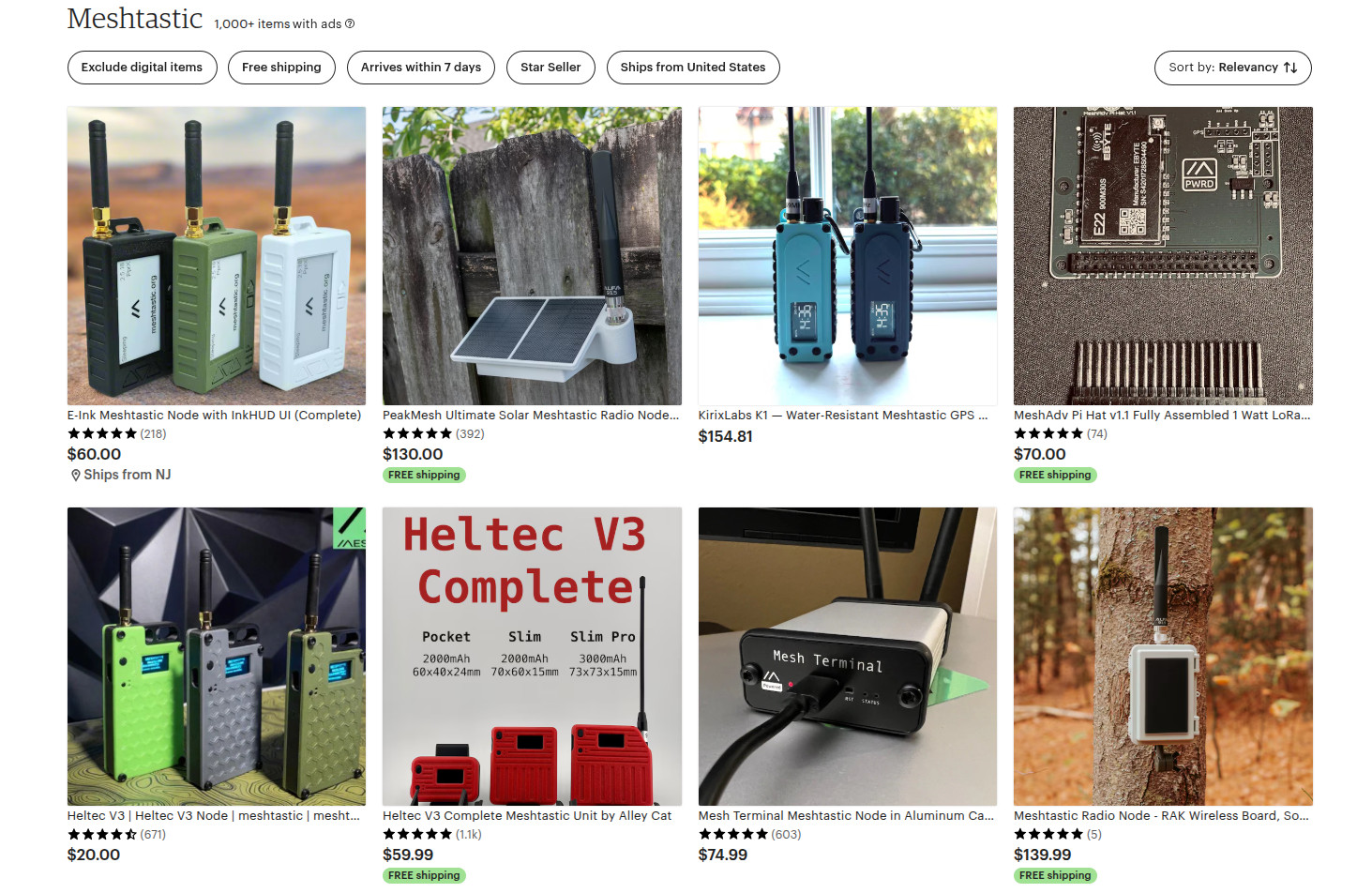
Another tech that gained steam this year is Meshtastic. This open source project aims to allow anyone to create an off-grid, decentralized, mesh network with low cost microcontrollers and radio modules. We fell in love with the idea as soon as we heard about it, as did many a hacker. But the project has reached a level of maturity that it’s starting to overflow into other communities, with the end result being a larger and more capable mesh that benefits everyone.
Part of the appeal is really how ridiculously cheap and easy it is to get started. If you’re starting from absolutely zero, connecting up to an existing mesh network — or creating your own — can cost you as little as $10 USD. But if you’re reading Hackaday, there’s a good chance you’ve already got a supported microcontroller (or 10) laying around, in which case you may just need to spring for the LoRa radio module and wire it up. Add a 3D printed case, and you’re meshin’ with the best of them.
There are turn-key Meshtastic options available for every budget, from beginner to enthusiast.
If you’re OK with trading some money for time, there’s a whole world of ready to go Meshtastic devices available online from places like Amazon, AliExpress, and even Etsy for that personal touch. Fans of the retro aesthetic would be hard pressed to find a more stylish way to get on the grid than the Hacker Pager, and if you joined us in Pasadena this year for Hackaday Supercon, you even got to take home a capable Meshtastic device in the form of the Communicator Badge.
Whether you’re looking for a backup communication network in the event of a natural disaster, want to chat with neighbors without a megacorp snooping on your discussion, or are simply curious about radio communications, Meshtastic is a fantastic project to get involved with. If you haven’t taken the plunge already, point your antenna to the sky and see who’s out there, you might be surprised at what you find.
Arduino’s New Overlord
In terms of headlines, the acquisition of Arduino by Qualcomm was a pretty big one for our community. Many a breathless article was written about what this meant for the future of the company. And things only got more frantic a month later, when the new Arduino lawyers updated the website’s Terms and Conditions.
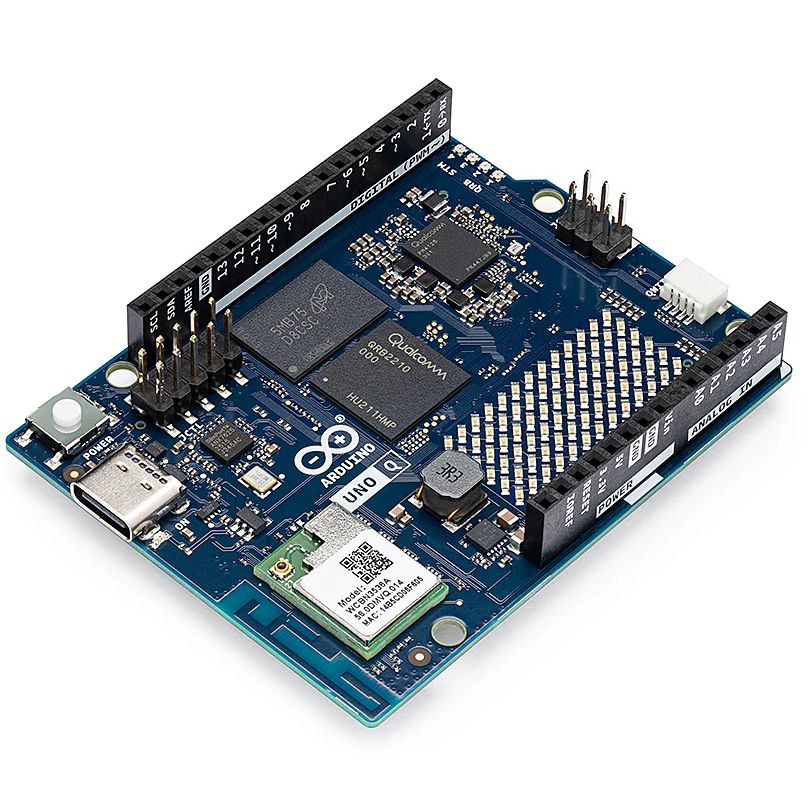
But you didn’t see any articles about that here on Hackaday. The most interesting part of the whole thing to us was the new Arduino Uno Q: an under $50 USD single-board computer that can run Linux while retaining the classic Uno layout. With the cost of Raspberry Pi hardware steadily increasing over the years, some competition on the lower end of the price spectrum is good for everyone.
The Arduino Uno Q packs enough punch to run Linux.
As for the Qualcomm situation — we’re hackers, not lawyers. Our immediate impression of the new ToS changes was that they only applied to the company’s web services — “The Platform” in the contract — and had no bearing on the core Arduino software and hardware offerings that we’re all familiar with. The company eventually released a blog post explaining more or less the same thing, explaining that evolving privacy requirements for online services meant they had to codify certain best practices, and that their commitment to open source is unwavering.
For now, that’s good enough for us. But the whole debacle does bring to mind a question: if future Arduino software development went closed-source tomorrow, how much of an impact would it really have on the community at this point? Today when somebody talks about doing something with Arduino they are more likely to be talking about the IDE and development environment than one of the company’s microcontroller boards — the licenses for which mean the versions we have now will remain open in perpetuity. The old AVR Arduino code is GPLed, after all, as are the newer cores for microcontrollers like the ESP32 and RP2040, which weren’t written by Arduino anyway. On the software side, we believe that we have nothing to lose.
But Arduino products have also always been open hardware, and we’ve all gained a lot from that. This is where Qualcomm could still upset the applecart, but we don’t see why they would, and they say they won’t. We’ll see in 2026.
The Year of Not-Windows on the Desktop?
The “Year of Linux on the Desktop” is a bit like fusion power, in that no matter how many technical hurdles are cleared, it seems to be perennially just over the horizon. At this point it’s become a meme, so we won’t do the cliché thing and claim that 2025 (or even 2026) is going to finally be the year when Linux breaks out of the server room and becomes a mainstream desktop operating system. But it does seem like something is starting to shift.
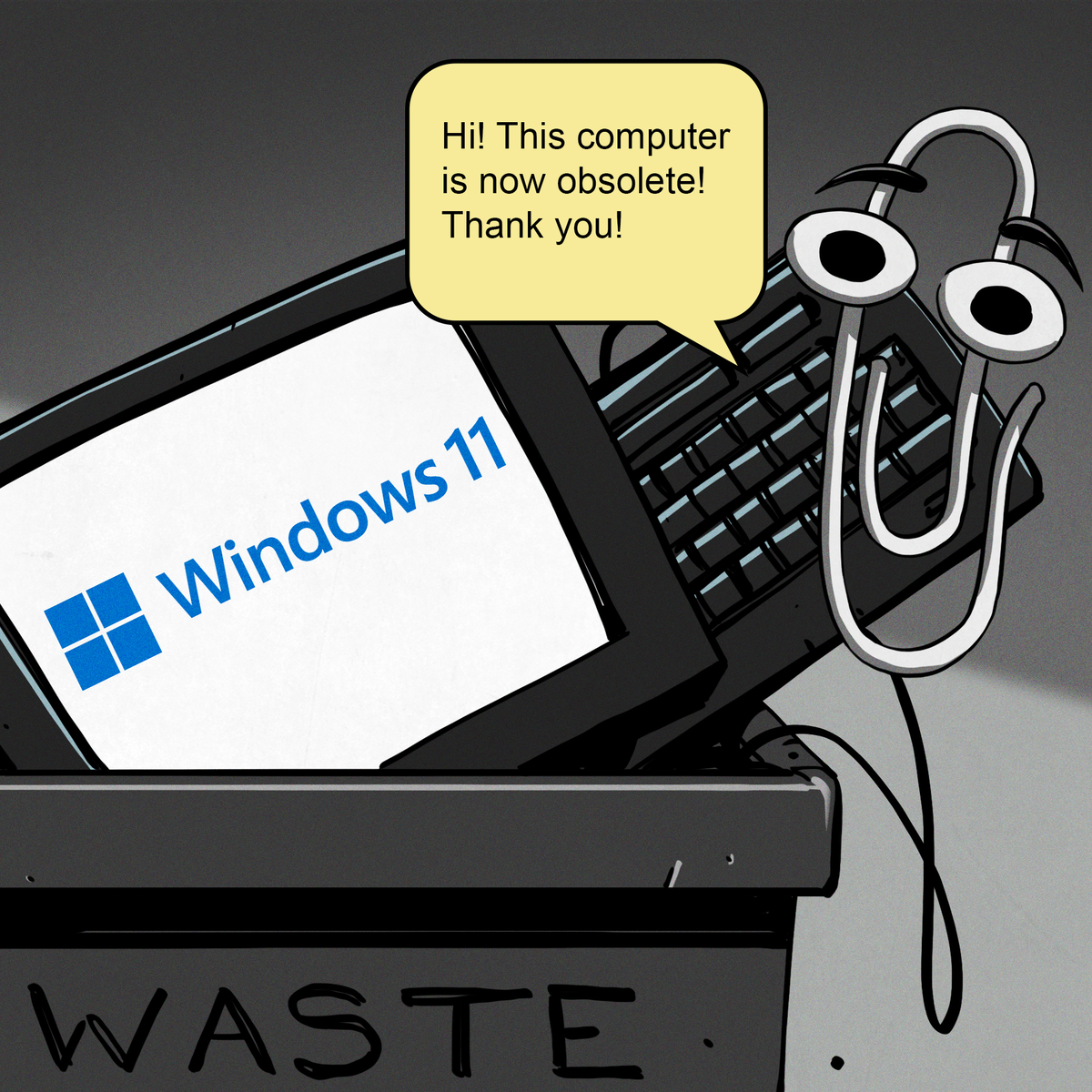
That’s due, at least in part, to Microsoft managing to bungle the job so badly with their Windows 11 strategy. In spite of considerable push-back in the tech community over various aspects of the operating system, the Redmond software giant seems hell-bent on getting users upgraded. At the same time, making it a hard requirement that all Windows 11 machines have a Trusted Platform Module means that millions of otherwise perfectly usable computers are left out in the cold.
What we’re left with is a whole lot of folks who either are unwilling, or unable, to run Microsoft’s latest operating system. At the same time desktop Linux has never been more accessible, and thanks in large part to the efforts of Valve, it can now run the majority of popular Windows games. That last bit might not seem terribly exciting to folks in our circles, but historically, the difficulty involved in playing AAA games on Linux has kept many a techie from making the switch.
Does that mean everyone is switching over to Linux? Well, no. Certainly Linux is seeing an influx of new users, but for the average person, it’s more likely they’d switch to Mac or pick up a cheap Chromebook if all they want to do is surf the web and use social media.
Of course, there’s an argument to be made that Chromebook users are technically Linux users, even if they don’t know it. But for that matter, you could say anyone running macOS is a BSD user. In that case, perhaps the “Year of *nix” might actually be nigh.
Grandma is 3D Printing in Color
There was a time when desktop 3D printers were made of laser-cut wood, used literal strings instead of belts, and more often then not, came as a kit you had to assemble with whatever assistance you could scrounge up from message boards and IRC channels — and we liked it that way. A few years later, printers were made out of metal and became more reliable, and within a decade or so you could get something like an Ender 3 for a couple hundred bucks on Amazon that more or less worked out of the box. We figured that was as mainstream as 3D printing was likely to get…but we were very wrong.
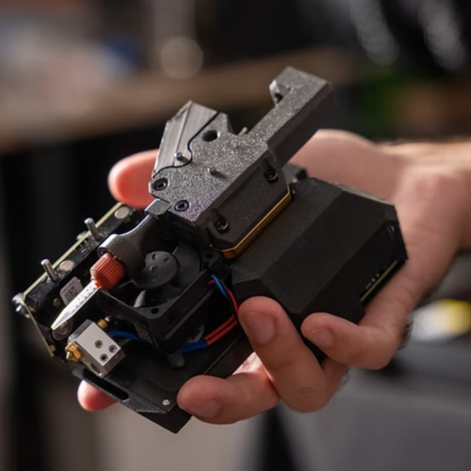
A Prusa hotend capable of printing a two-part liquid silicone.
Today 3D printing is approaching a point where the act of downloading a model, slicing it, and manifesting it into physical form has become, dare we say it, mundane. While we’re not always thrilled with the companies that make them and their approach to things that are important to us like repairability, open development, and privacy, we have to admit that the new breed of printers on the market today are damn good at what they do. Features like automatic calibration and filament run-out sensors, once the sort of capabilities you’d only see on eye-wateringly expensive prosumer machines, have became standard equipment.
Desktop 3D printing still hasn’t reached the sort of widespread adoption that all those early investors would have had us believe in the 2000s, where every home would one day have their own Star Trek style personal replicator. But they are arguably approaching the commonality of something like a table saw or drill press — specialized but affordable and reliable tools that act as a force multiplier rather than a tinkerer’s time sink.
Tariffs Take Their Toll
Finally, we couldn’t end an overview of 2025 without at least mentioning the ongoing tariff situation in the United States. While it hasn’t ground DIY electronics to a halt as some might have feared, it’s certainly had an impact.
A tax on imported components is nothing new. We first ran into that back in 2018, and though it was an annoyance, it didn’t have too much of an impact at the hobbyist scale. When an LED costs 20 cents, even a 100% tariff wouldn’t be much of a hit to the wallet at the scale most of us are operating at. Plus there are domestic, or at least non-Chinese, options for some jellybean components. The surplus market can also help here — you can often find great deals on things like partial reels of SMD capacitors and resistors on eBay if you keep an eye out for them.
We’ve heard more complaints about PCB production than anything. After years of being able to get boards made overseas for literal pennies, seeing a import tax that added at checkout can be quite a shock. But just like the added tax on components, while annoying, it’s not enough to actually keep folks from ordering. Even with the tariffs, the cost of getting a PCB made at OSH Park is going to be much higher than any Chinese board house.
Truth be told, if an import tax on Chinese-made PCBs and components resulted in a boom of affordable domestic alternatives, we’d be all over it. The idea that our little hobby boards needed to cross an ocean just to get to us always seemed unsustainable anyway. It wouldn’t even have to be domestic, there’s an opportunity for countries with a lower import tariff to step in. Instead of having our boards made in China, why not India or Mexico?
But unfortunately, the real-world is more complex than that. Building up those capabilities, either at home or abroad, takes time and money. So while we’d love to see this situation lead to greater competition, we’ve got a feeling that the end result is just more money out of our pockets.
Thanks for Another Year of Hacks
One thing that absolutely didn’t change in 2025 was you — thanks to everyone that makes Hackaday part of their daily routine, we’ve been able to keep the lights on for another year. Everyone here knows how incredibly fortunate we are to have this opportunity, and your ongoing support is never taken for granted.
We’d love to hear what you thought the biggest stories or trends of 2025 were, good and bad. Let us know what lessons you’ll be taking with you into 2026 down below in the comments.
Mark Litton, president and CEO of Athira Pharma. (Athira Photo)
In a remarkable pivot, Athira Pharma is shifting its primary focus from Alzheimer’s to oncology following a multi-year period marked by clinical failures and leadership turnover.
The Bothell, Wash.-based company announced today that it has licensed a Phase 3 breast cancer drug from Sermonix Pharmaceuticals, supported by $90 million in funding from a group of healthcare investment firms. It could land an additional $146 million if the research yields promising results.
Athira will simultaneously continue researching ATH-1105, its own drug candidate for treating ALS.
Athira President and CEO Mark Litton called the development “exciting and transformative news.”
“By securing rights to this late-stage program — while also advancing pATH-1105 for ALS — we are building a pipeline that we believe has the potential to change lives and create enduring value,” Litton said on LinkedIn. “We are honored to have the backing of some of the most respected biotechnology funds in the industry.”
Following the deal announcement, the company’s stock rose 70% to $7 per share.
Athira has been through a tumultuous few years:
Its Alzheimer’s disease drug candidate, called fosgonimeton, stumbled and then failed a Phase 2/3 trial last year.
That sank Athira’s stock price and triggered a layoff of 49 employees, or about 70% of its workforce in September 2024.
In 2021, Athira CEO and President Leen Kawas resigned after it was confirmed she had altered images in scientific papers from her graduate studies that helped form the company’s foundation.
Details on the deal
Under today’s deal, Athira secures an exclusive license to develop and commercialize the breast cancer therapeutic for nations outside of Asia and select Middle Eastern countries. The drug, called lasofoxifene, is currently in a clinical trial that has enrolled over half of its target patient population, with initial results expected in mid-2027.
The agreement provides Sermonix with 5.5 million shares of Athira’s stock. The Seattle company has also committed to paying Sermonix up to $100 million plus limited royalties if certain commercial targets are reached.
Three lead investors are backing the research: New York’s Commodore Capital, biotech hedge fund Perceptive Advisors, and California-based TCGX. Additional participants are ADAR1, Blackstone Multi-Asset Investing, Kalehua Capital, Ligand Pharmaceuticals, New Enterprise Associates (NEA), Spruce Street Capital and 9vc.
Athira raised $90 million by selling stock and warrants to investors, extending its cash runway into 2028. If investors choose to exercise those warrants in the future, the company could receive up to an additional $146 million to fund its clinical programs.
“We’re proud to support this evolution and excited by the opportunity to deliver meaningful impact for patients and shareholders alike,” said Joseph Edelman, founder and CEO of Perceptive Advisors, in a statement.
Regarding its own ALS drug candidate, Athira this year successfully completed Phase 1 safety trials, and plans to start Phase 2 trials early next year.
I took a regular spiral ham and gave it the double-smoke treatment. Then I hit it with a hot honey glaze that gives it that sticky-sweet heat. Not too hot for the family… just a little kick.
And really, smoked ham is about the easiest thing you can cook… and you can use whatever glaze you want. Just make sure you smoke one for your Easter dinner cause left-over holiday ham from a ziplock in the fridge is one of the small joys of life!
Ground brisket WITH raw bacon to make the best smoked burgers. These brisket bacon burgers are rich, smoky, and packed with flavor. The brisket gives you that beefy bite and the bacon brings in a smoky saltiness that puts ’em over the top. You might wanna wear a bib — these burgers are juicy!
Ingredients
16 lb whole packer brisket (untrimmed)
2–3 lbs bacon ends & pieces (or thick-cut bacon)
Killer Hogs Steak Rub (or salt, pepper, garlic)
Burger buns (toasted)
Sliced cheese
Pickles
Red onion slices
Lettuce
Tomato slices
Big Malc’s Burger Sauce (or your favorite burger sauce)
Big Malc’s Burger Sauce
½ cup Blue Plate mayonnaise (or your favorite mayo)
1 tablespoon yellow mustard
¼ cup sweet pickle relish (juice and all)
1 tablespoon freshly grated onion (with juice)
½ teaspoon Killer Hogs TX Rub (or a mix of coarse salt & black pepper)
½ teaspoon paprika (for color)
1–2 teaspoons red wine vinegar (just a drizzle)
Instructions
Prep the Brisket and Bacon
Cut the brisket into 1½ to 2-inch chunks, separating the flat from the point if needed.
Keep the fat on — you want a good lean-to-fat ratio for juicy burgers.
Cut bacon into similar-sized pieces so it runs through the grinder easily.
Chill the meat in the freezer for 20 minutes before grinding.
Grind the Meat
Alternate brisket and bacon as you feed it through the grinder to evenly mix.
Grind the meat with the large plate first then if you want a finer grind, repeat the grind process
Chill the ground brisket-bacon mix in the refrigerator until ready to form patties.
Form the Burger Patties
Weigh out about 8 oz portions and loosely form into balls.
Use a burger press or hand-form into patties. Use parchment or a Ziploc bag for easy cleanup.
Make a slight dimple in the center to prevent the patties from puffing up too much.
Season the Burgers
Season the outside of each patty with Killer Hogs Steak Rub or your favorite burger seasoning.
Remember the bacon adds salt, so don’t overdo it.
Fire Up the Smoker
Set your pit to 275°F using Royal Oak briquettes for a coal bed then add wood splits for heat.
Place burgers directly on the grates and smoke for about 45 minutes, flipping after 30.
Cook to an internal temp of 145°F for a juicy medium finish.
Build Your Burger
Toast your buns and spread Big Malc’s Burger Sauce on both sides.
Layer on: Pickles, Red onion, Lettuce, Tomato, Double cheese (cheddar + Swiss), Smoked brisket bacon patty
Crown it with the top bun and get ready to lean in.
In this walkthrough, we’ll explore the Dogcat room on TryHackMe, a box that features a Local File Inclusion (LFI) vulnerability and Docker privilege escalation. LFI allows us to read sensitive files from the system and eventually gain access to the server.There are a total of 4 flags in this machine which we need to find. […]
Prime: 1 is a challenging boot2root machine created by Suraj Pandey. It is designed for those who are preparing for the OSCP exam and is a great way to practice your penetration testing skills. In this blog post, I will walk you through the steps I took to root the machine, including: Performing a port […]
Vengeance is one of the digital world.local series which makes vulnerable boxes closer to OSCP labs. This box has a lot of services and there could be multiple ways to exploit this, Below is what I have tried. Lab requirement: 1. Kali VM 2. Download Vengeance: https://www.vulnhub.com/entry/digitalworldlocal-vengeance,704 3. Some patience. I have written article already […]
Recently, My focus turned more towards OSCP and I am thinking of taking the exam. After reading tons of people’s experience over Reddit, I took some notes on what would be my way of studying for this. It isn’t easy from the looks of it and to win with time, I need a lot of […]
There was a time when Sahara Star, with its iconic dome and enviable location near Mumbai Airport, was among the city’s proudest hospitality offerings. A favorite of many visiting the city for business or leisure, it carried a promise of elegance, comfort, and good food. That star, sadly, has faded. My recent experience at the hotel made me wonder if it should be renamed Sahara Scars.
The first impression was nothing short of a red flag. The hotel’s entrance, once grand, now stands neglected, crying out for a fresh coat of paint. Inside, the disinterest continues. The front lobby staff, far from welcoming, seemed more engaged in banter with each other than with guests. Not a smile. Not a nod. Just indifference.
My ordeal began even before I entered my room. We requested an early check in, and were promptly asked to pay five thousand rupees. That is standard practice, I understand. But when we offered to pay by card, the staff insisted on cash, warning us that card payments would include extra taxes. Begrudgingly, we paid in cash. Two hours later, when I asked for a receipt, they finally handed one over — with no tax breakup. That is not just shady. That is unacceptable.
Once inside the room, I hoped things would improve. They did not. Barely warm water in the bathroom. Only one side table with the bed — the other side left inconveniently bare. The socket near the bed did not work, so charging a phone required acrobatics. The AC mysteriously shut down early morning. Curtains too narrow to actually block sunlight. The carpeted hallway leading to the room was a story in itself — worn out, dirty, and faintly smelling of mildew. If this is luxury, I would rather downgrade.
With the General Manager being an ex chef, I thought the food might be the hotel’s saving grace. It was not. We ordered pav bhaji to the room — a dish so bad it does not deserve a second mention. Breakfast next morning was an exercise in frustration. A simple request for scrambled eggs was repeatedly messed up. When they finally served something, it looked like a single egg beaten with air. Toast? Forgotten. Repeated requests for uttapam led nowhere — until I walked to the counter and discovered the kitchen had marked it as served even though it never reached my table.
The final straw came when I requested a pyaaz aloo parantha — my last hope to salvage the morning. Ten minutes passed, nothing came. I walked back, only to find the breakfast counter shut. Timing over. I called the restaurant manager, Abhijeet (if I remember right), who had earlier taken my order. He apologised sincerely, and even promised to send food to my room.
To their credit, the parantha did eventually arrive — but an hour later. By then, I was leaving the room, so I politely declined.
I made several attempts to reach the General Manager, Salil Fadnis. I was told he was not available. No one would share his number. I left him a message on Facebook. No reply. At this point, my patience had run out. And hence this column.
To clarify, Sahara Star is still being run by the Sahara family, though they are reportedly facing significant financial strain, including delays in lease payments to the Airport Authority of India. One of the staff members I spoke to even admitted that employees have been receiving their salaries after considerable delays. That perhaps explains the lack of morale, but cannot justify the complete breakdown of hospitality standards.
Sahara Star, once the crown jewel of airport hotels in Mumbai, is now an ill managed relic of its former self. A star that once shone bright now flickers feebly — a victim of neglect, financial stress, and managerial apathy.
One can only hope that a revival is still possible. Until then, I for one am steering clear of this property. And if you value your time, money and sanity, perhaps you should too.
Foxtail Millet Sweet Pidi Kozhukattai Recipe : I have been making Millet based kozhukattai recipes for a couple of years on festive occasions. And this Foxtail Millet Sweet Pidi Kozhukattai is one among them. I am posting a recipe in blog after few months of break. So I was pulling myself to post this recipe...
Ragi Millet Kozhukattai With Verkadalai Puranam / Ragi Millet Modaks (dumplings) With Sweet Peanut Stuffing : Before stepping into the detailed recipe I would like to apologize for not being active in blog and social medias for a while. I took a break in last May to help kids for their exams. And I couldn’t...
Vengeance is one of the digital world.local series which makes vulnerable boxes closer to OSCP labs. This box has a lot of services and there could be multiple ways to exploit this, Below is what
Recently, My focus turned more towards OSCP and I am thinking of taking the exam. After reading tons of people’s experience over Reddit, I took some notes on what would be my way of studying
Pwned vulnhub challenge is an easy boot2root machine. One of the key take away from this machine is how you can escalate your privileges using Dockers. This blog post is about how I exploited this
This article is a walkthrough for Pylington Virtual machine. The machine is based on getting root flag, I did it via bypassing python sandbox environment and privilege escalation by SUID bit. I have worked with

 Login
Login
New Elliptic research: We have identified wallets used by Iran’s Central Bank to acquire at least $507 million worth of cryptoassets.


 Print Recipe
 Pin Recipe