Normal view

There are new articles available, click to refresh the page.
Before yesterdayMain stream

Sugars, ‘Gum,’ Stardust Found in NASA’s Asteroid Bennu Samples

2 December 2025 at 08:29

The asteroid Bennu continues to provide new clues to scientists’ biggest questions about the formation of the early solar system and the origins of life. As part of the ongoing study of pristine samples delivered to Earth by NASA’s OSIRIS-REx (Origins, Spectral Interpretation, Resource Identification, and Security-Regolith Explorer) spacecraft, three new papers published Tuesday by the journals Nature Geosciences and Nature Astronomy present remarkable discoveries: sugars essential for biology, a gum-like substance not seen before in astromaterials, and an unexpectedly high abundance of dust produced by supernova explosions.

Sugars essential to life

Scientists led by Yoshihiro Furukawa of Tohoku University in Japan found sugars essential for biology on Earth in the Bennu samples, detailing their findings in the journal Nature Geoscience. The five-carbon sugar ribose and, for the first time in an extraterrestrial sample, six-carbon glucose were found. Although these sugars are not evidence of life, their detection, along with previous detections of amino acids, nucleobases, and carboxylic acids in Bennu samples, show building blocks of biological molecules were widespread throughout the solar system.

For life on Earth, the sugars deoxyribose and ribose are key building blocks of DNA and RNA, respectively. DNA is the primary carrier of genetic information in cells. RNA performs numerous functions, and life as we know it could not exist without it. Ribose in RNA is used in the molecule’s sugar-phosphate “backbone” that connects a string of information-carrying nucleobases.

“All five nucleobases used to construct both DNA and RNA, along with phosphates, have already been found in the Bennu samples brought to Earth by OSIRIS-REx,” said Furukawa. “The new discovery of ribose means that all of the components to form the molecule RNA are present in Bennu.”

The discovery of ribose in asteroid samples is not a complete surprise. Ribose has previously been found in two meteorites recovered on Earth. What is important about the Bennu samples is that researchers did not find deoxyribose. If Bennu is any indication, this means ribose may have been more common than deoxyribose in environments of the early solar system. 

Researchers think the presence of ribose and lack of deoxyribose supports the “RNA world” hypothesis, where the first forms of life relied on RNA as the primary molecule to store information and to drive chemical reactions necessary for survival. 

Graphic labeled "Bio-essential sugars ribose and glucose in samples from asteroid Bennu." The left half of the graphic has a background image of Bennu. In front of it are the RNA molecular components on Bennu: guanine, cytosine, ribose, adenine, uracil, and phosphate. Below them, the molecular structure of glucose is accompanied by text: "Ribose and glucose are sugars essential to life on Earth. RNA uses ribose for its structure. Glucose provides cells with energy and is used to make fibers like cellulose. A team of Japanese and US scientists have found ribose and glucose in samples of asteroid Bennu (collected by NASA'S OSIRIS-REx mission), suggesting that these simple sugars were brought to the early Earth by meteorites." The right half of the graphic has a background image of Earth. In front of it is the genetic code for protein synthesis, including ribose, phosphate, and the RNA nucleobases guanine, cytosine adenine, and uracil. Below that, the chemical process of energy production via glycolysis and the chemical structure of cellulose are annotated.
A team of Japanese and US scientists have discovered the bio-essential sugars ribose and glucose in samples of asteroid Bennu that were collected by NASA’s OSIRIS-REx mission. This finding builds on the earlier discovery of nucleobases (the genetic components of DNA and RNA), phosphate, and amino acids (the building blocks of proteins) in the Bennu samples, showing that the molecular ingredients of life could have been delivered to early Earth by meteorites. Download this graphic from NASA’s Scientific Visualization Studio website: https://svs.gsfc.nasa.gov/14932
NASA/Goddard/University of Arizona/Dan Gallagher 

“Present day life is based on a complex system organized primarily by three types of functional biopolymers: DNA, RNA, and proteins,” explains Furukawa. “However, early life may have been simpler. RNA is the leading candidate for the first functional biopolymer because it can store genetic information and catalyze many biological reactions.”

The Bennu samples also contained one of the most common forms of “food” (or energy) used by life on Earth, the sugar glucose, which is the first evidence that an important energy source for life as we know it was also present in the early solar system.

Mysterious, ancient ‘gum’

A second paper, in the journal Nature Astronomy led by Scott Sandford at NASA’s Ames Research Center in California’s Silicon Valley and Zack Gainsforth of the University of California, Berkeley, reveals a gum-like material in the Bennu samples never seen before in space rocks – something that could have helped set the stage on Earth for the ingredients of life to emerge. The surprising substance was likely formed in the early days of the solar system, as Bennu’s young parent asteroid warmed.

Once soft and flexible, but since hardened, this ancient “space gum” consists of polymer-like materials extremely rich in nitrogen and oxygen. Such complex molecules could have provided some of the chemical precursors that helped trigger life on Earth, and finding them in the pristine samples from Bennu is important for scientists studying how life began and whether it exists beyond our planet.

On this primitive asteroid that formed in the early days of the solar system, we’re looking at events near the beginning of the beginning.

Scott SandFord

Scott SandFord

Astrophysicist, NASA's Ames Research Center

Bennu’s ancestral asteroid formed from materials in the solar nebula – the rotating cloud of gas and dust that gave rise to the solar system – and contained a variety of minerals and ices. As the asteroid began to warm, due to natural radiation, a compound called carbamate formed through a process involving ammonia and carbon dioxide. Carbamate is water soluble, but it survived long enough to polymerize, reacting with itself and other molecules to form larger and more complex chains impervious to water. This suggests that it formed before the parent body warmed enough to become a watery environment.

“With this strange substance, we’re looking at, quite possibly, one of the earliest alterations of materials that occurred in this rock,” said Sandford. “On this primitive asteroid that formed in the early days of the solar system, we’re looking at events near the beginning of the beginning.”

Using an infrared microscope, Sandford’s team selected unusual, carbon-rich grains containing abundant nitrogen and oxygen. They then began what Sandford calls “blacksmithing at the molecular level,” using the Molecular Foundry at Lawrence Berkeley National Laboratory (Berkeley Lab) in Berkeley, California. Applying ultra-thin layers of platinum, they reinforced a particle, welded on a tungsten needle to lift the tiny grain, and shaved the fragment down using a focused beam of charged particles.
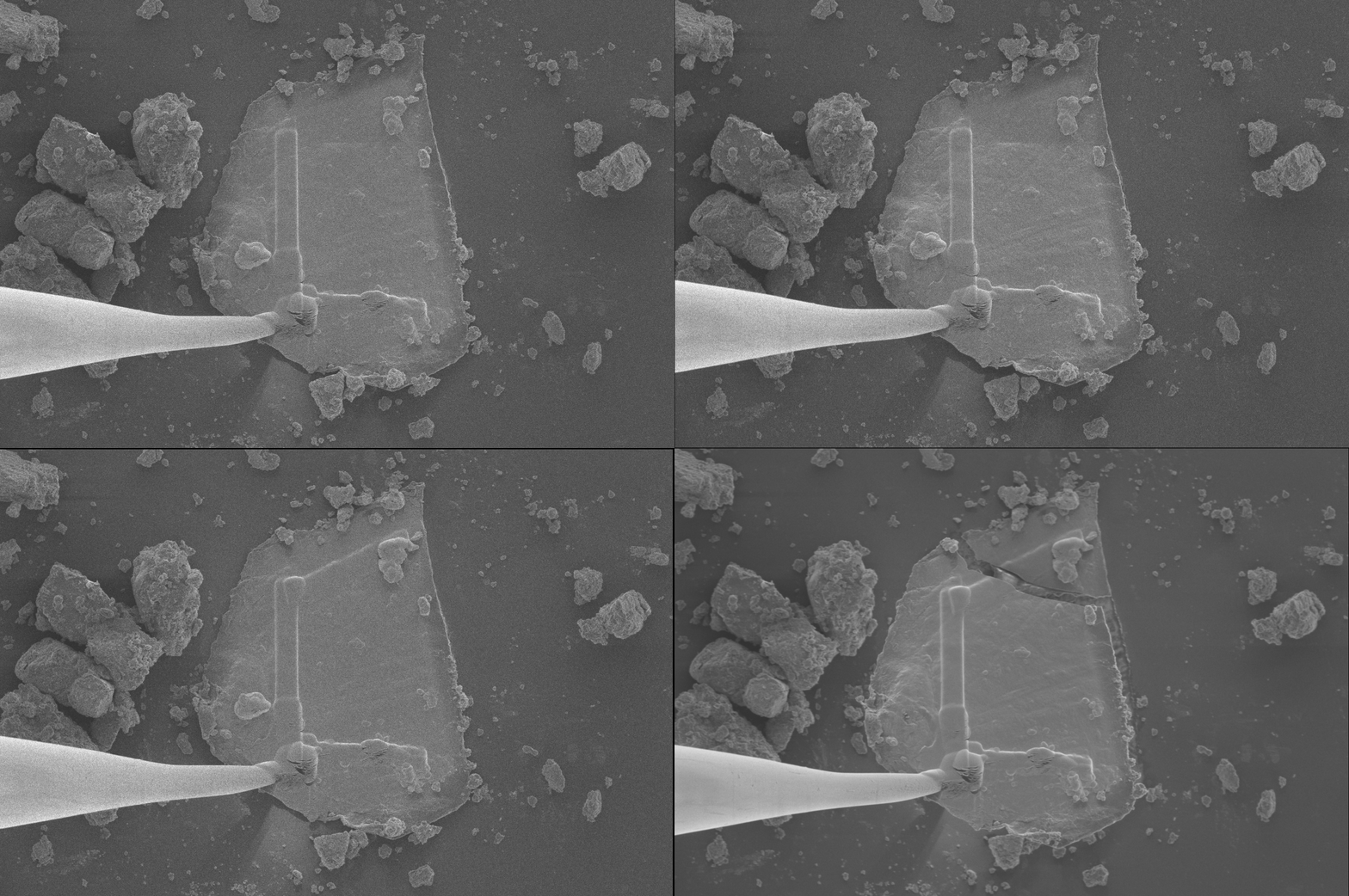
A mostly flat, gray irregular shape moves back and forth against a grayscale background. It's moved by a long thin arm coming from the bottom left of the image.
A microscopic particle of asteroid Bennu, brought to Earth by NASA’s OSIRIS-REx mission, is manipulated under a transmission electron microscope. In order to move the fragment for further analysis, researchers first reinforced it with thin strips of platinum (the “L” shape on the particle’s surface) then welded a tungsten microneedle to it. The asteroid fragment measures 30 micrometers (about one-one thousandth of an inch) across.
NASA/University of California, Berkeley

When the particle was a thousand times thinner than a human hair, they analyzed its composition via electron microscopy at the Molecular Foundry and X-ray spectroscopy at Berkeley Lab’s Advanced Light Source. The ALS’s high spatial resolution and sensitive X-ray beams enabled unprecedented chemical analysis.

“We knew we had something remarkable the instant the images started to appear on the monitor,” said Gainsforth. “It was like nothing we had ever seen, and for months we were consumed by data and theories as we attempted to understand just what it was and how it could have come into existence.” 

The team conducted a slew of experiments to examine the material’s characteristics. As the details emerged, the evidence suggested the strange substance had been deposited in layers on grains of ice and minerals present in the asteroid.

It was also flexible – a pliable material, similar to used gum or even a soft plastic. Indeed, during their work with the samples, researchers noticed the strange material was bendy and dimpled when pressure was applied. The stuff was translucent, and exposure to radiation made it brittle, like a lawn chair left too many seasons in the sun.

“Looking at its chemical makeup, we see the same kinds of chemical groups that occur in polyurethane on Earth,” said Sandford, “making this material from Bennu something akin to a ‘space plastic.’” 

The ancient asteroid stuff isn’t simply polyurethane, though, which is an orderly polymer. This one has more “random, hodgepodge connections and a composition of elements that differs from particle to particle,” said Sandford. But the comparison underscores the surprising nature of the organic material discovered in NASA’s asteroid samples, and the research team aims to study more of it.

By pursuing clues about what went on long ago, deep inside an asteroid, scientists can better understand the young solar system – revealing the precursors to and ingredients of life it already contained, and how far those raw materials may have been scattered, thanks to asteroids much like Bennu.

Abundant supernova dust

Another paper in the journal Nature Astronomy, led by Ann Nguyen of NASA’s Johnson Space Center in Houston, analyzed presolar grains – dust from stars predating our solar system – found in two different rock types in the Bennu samples to learn more about where its parent body formed and how it was altered by geologic processes. It is believed that presolar dust was generally well-mixed as our solar system formed. The samples had six-times the amount of supernova dust than any other studied astromaterial, suggesting the asteroid’s parent body formed in a region of the protoplanetary disk enriched in the dust of dying stars.  

The study also reveals that, while Bennu’s parent asteroid experienced extensive alteration by fluids, there are still pockets of less-altered materials within the samples that offer insights into its origin.

Artist's concept of OSIRIS-REx about to collect a sample from Bennu's rocky surface.
An artistic visualization of the OSIRIS-REx spacecraft descending towards asteroid Bennu to collect a sample.
NASA/Goddard/University of Arizona

“These fragments retain a higher abundance of organic matter and presolar silicate grains, which are known to be easily destroyed by aqueous alteration in asteroids,” said Nguyen. “Their preservation in the Bennu samples was a surprise and illustrates that some material escaped alteration in the parent body. Our study reveals the diversity of presolar materials that the parent accreted as it was forming.”

NASA’s Goddard Space Flight Center provided overall mission management, systems engineering, and the safety and mission assurance for OSIRIS-REx. Dante Lauretta of the University of Arizona, Tucson, is the principal investigator. The university leads the science team and the mission’s science observation planning and data processing. Lockheed Martin Space in Littleton, Colorado, built the spacecraft and provided flight operations. Goddard and KinetX Aerospace were responsible for navigating the OSIRIS-REx spacecraft. Curation for OSIRIS-REx takes place at NASA’s Johnson Space Center in Houston. International partnerships on this mission include the OSIRIS-REx Laser Altimeter instrument from CSA (Canadian Space Agency) and asteroid sample science collaboration with JAXA’s (Japan Aerospace Exploration Agency’s) Hayabusa2 mission. OSIRIS-REx is the third mission in NASA’s New Frontiers Program, managed by NASA’s Marshall Space Flight Center in Huntsville, Alabama, for the agency’s Science Mission Directorate in Washington.

For more information on the OSIRIS-REx mission, visit:

https://www.nasa.gov/osiris-rex

Karen Fox / Molly Wasser
Headquarters, Washington
202-285-5155 / 240-419-1732
karen.c.fox@nasa.gov   / molly.l.wasser@nasa.gov
💾

How did the molecular building blocks of life arrive at early Earth? To find out, NASA sent a spacecraft called OSIRIS-REx to collect samples from the carbon...

What is BioSentinel?

21 November 2025 at 10:35
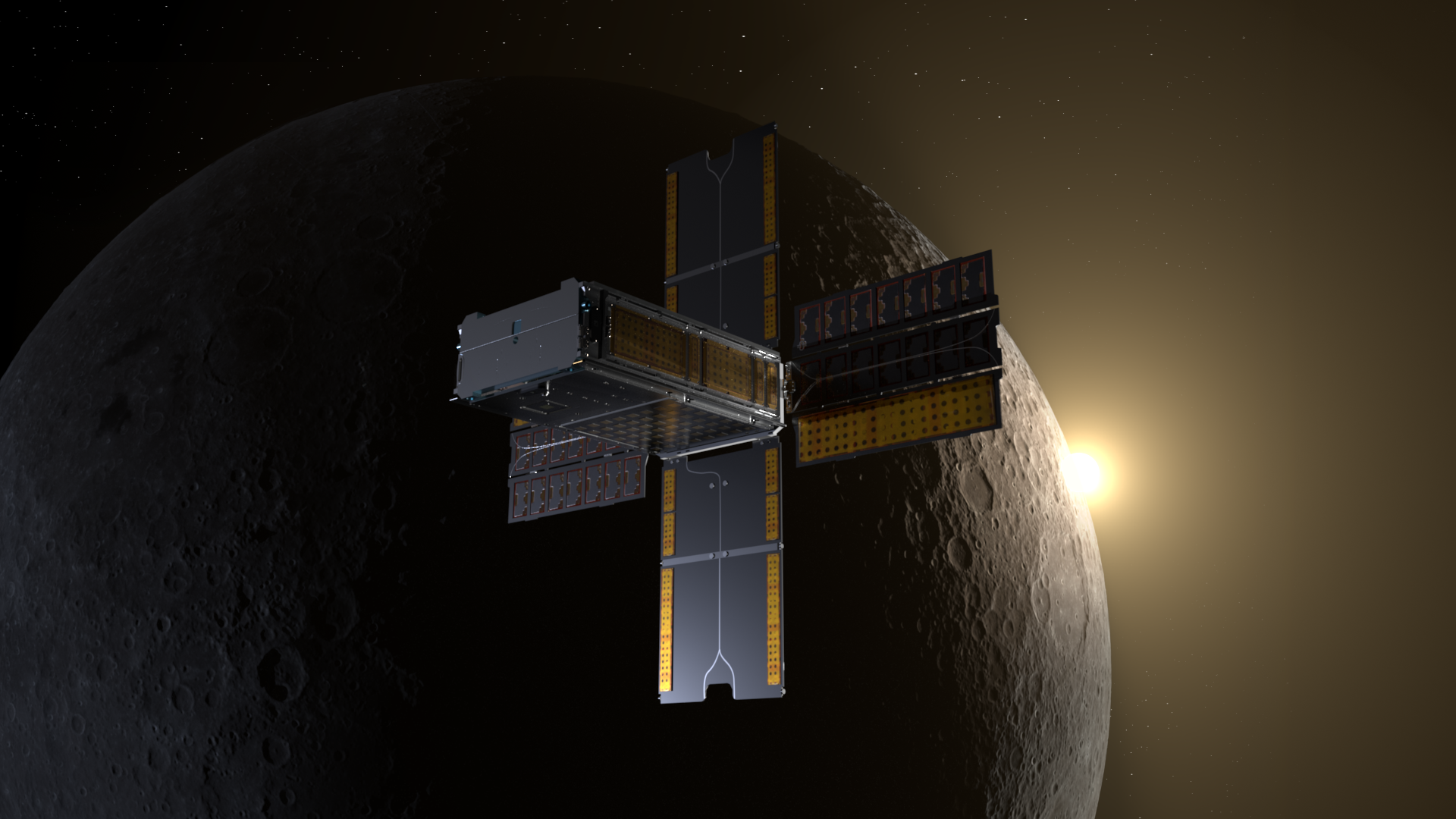
Illustration of the BioSentinel spacecraft, flying past the Moon with the CubeSat's solar arrays fully deployed, facing the Sun.
llustration of BioSentinel’s spacecraft flying past the Moon.
NASA/Daniel Rutter

Editor’s Note: This article was updated Nov. 21, 2025 shortly after BioSentinel’s mission marked three years of operation in deep space.

Astronauts live in a pretty extreme environment aboard the International Space Station. Orbiting about 250 miles above the Earth in the weightlessness of microgravity, they rely on commercial cargo missions about every two months to deliver new supplies and experiments. And yet, this place is relatively protected in terms of space radiation. The Earth’s magnetic field shields space station crew from much of the radiation that can damage the DNA in our cells and lead to serious health problems. When future astronauts set off on long journeys deeper into space, they will be venturing into more perilous radiation environments and will need substantial protection. With the help of a biology experiment within a small satellite called BioSentinel, scientists at NASA’s Ames Research Center, in California’s Silicon Valley, are taking an early step toward finding solutions.

To learn the basics of what happens to life in space, researchers often use “model organisms” that we understand relatively well. This helps show the differences between what happens in space and on Earth more clearly. For BioSentinel, NASA is using yeast – the very same yeast that makes bread rise and beer brew. In both our cells and yeast cells, the type of high-energy radiation encountered in deep space can cause breaks in the two entwined strands of DNA that carry genetic information. Often, DNA damage can be repaired by cells in a process that is very similar between yeast and humans.                             

Conceptual graphic of a radiation particle causing a DNA DSB
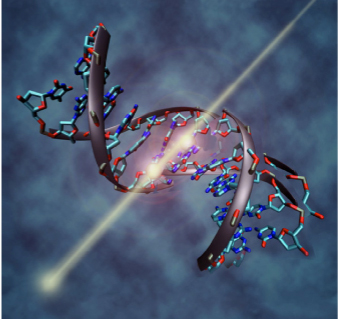
Conceptual graphic of a radiation particle causing a double-stranded DNA break.

BioSentinel set out to be the first long-duration biology experiment to take place beyond where the space station orbits near Earth. BioSentinel’s spacecraft is one of 10 CubeSats that launched aboard Artemis I, the first flight of the Artemis program’s Space Launch System, NASA’s powerful new rocket. The cereal box-sized satellite traveled to deep space on the rocket then flew past the Moon in a direction to orbit the Sun.  Once the satellite was in position beyond our planet’s protective magnetic field, the BioSentinel team triggered a series of experiments remotely, activating two strains of the yeast Saccharomyces cerevisiae to grow in the presence of space radiation. Samples of yeast were activated at different time points throughout the six- to twelve-month mission.

One strain is the yeast commonly found in nature, while the other was selected because it has trouble repairing its DNA. By comparing how the two strains respond to the deep space radiation environment, researchers will learn more about the health risks posed to humans during long-term exploration and be able to develop informed strategies for reducing potential damage.

During the initial phase of the mission, which began in December 2022 and completed in April 2023, the BioSentinel team successfully operated BioSentinel’s BioSensor hardware – a miniature biotechnology laboratory designed to measure how living yeast cells respond to long-term exposure to space radiation – in deep space. The team completed four experiments lasting two-weeks each but did not observe any yeast cell growth. They determined that deep space radiation was not the cause of the inactive yeast cells, but that their lack of growth was likely due to the yeast expiring after extended storage time of the spacecraft ahead of launch. 

Although the yeast did not activate as intended to gather observations on the impact of radiation on living yeast cells, BioSentinel’s onboard radiation detector – that measures the type and dose of radiation hitting the spacecraft – continues to collect data in deep space.

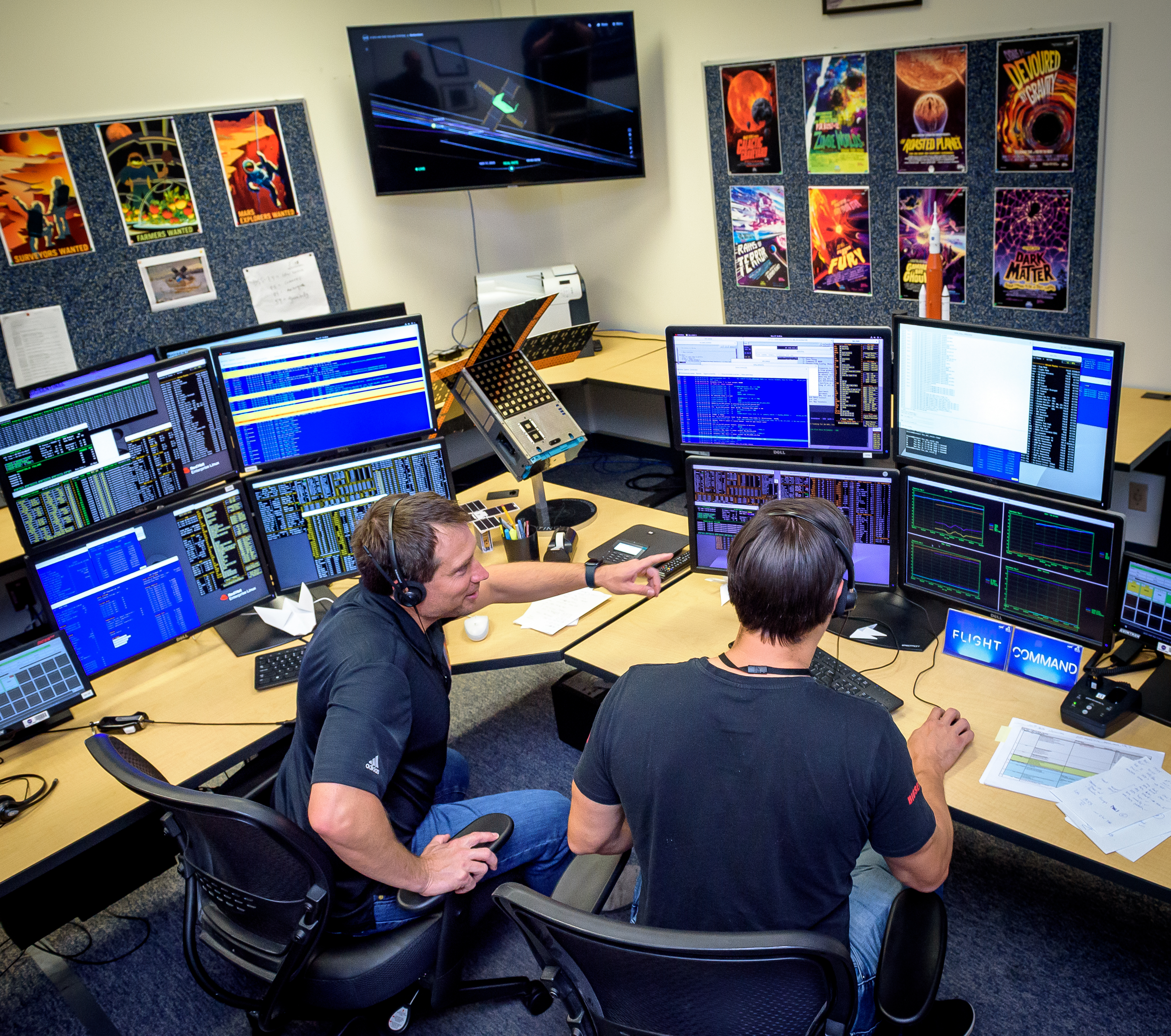
Two people looking at data on several computer monitors, with a model of the BioSentinel spacecraft in the background.
Jesse Fusco, left, and James Milsk, right, at the BioSentinel command console at the Multi-Mission Operations Center at NASA’s Ames Research Center in Silicon Valley. The team is receiving spacecraft telemetry at the three-year timepoint since the mission launched on Artemis I. BioSentinel continues to fly in its heliocentric orbit, now more than 48 million miles from Earth.
NASA/Don Richey

NASA has extended BioSentinel’s mission to continue collecting valuable deep space radiation data in the unique, high-radiation environment beyond low Earth orbit.

The Sun has an 11-year cycle, in which solar activity rises and falls in the form of powerful solar flares and giant eruptions called coronal mass ejections. As the solar cycle progresses from maximum to a declining phase, scientists expect strong solar activity to continue through 2026, with some of the strongest storms seen during this declining phase. These events send powerful bursts of energy, magnetic fields, and plasma into space which causes the aurora and can interfere with satellite signals. Solar radiation events from particles accelerated to high speeds can also pose a threat to astronauts in space.

Built on a history of small-satellite biology

The BioSentinel project builds on Ames’ history of carrying out biology studies in space using CubeSats – small satellites built from individual units each about four inches cubed. BioSentinel is a six-unit spacecraft weighing about 30 pounds. It houses the yeast cells in tiny compartments inside microfluidic cards – custom hardware that allows for the controlled flow of extremely small volumes of liquids that will activate and sustain the yeast. Data about radiation levels and the yeast’s growth and metabolism will be collected and stored aboard the spacecraft and then transmitted to the science team back on Earth.

A reserve set of microfluidic cards containing yeast samples will be activated if the satellite encounters a solar particle event, a radiation storm coming from the Sun that is a particularly severe health risk for future deep space explorers. 

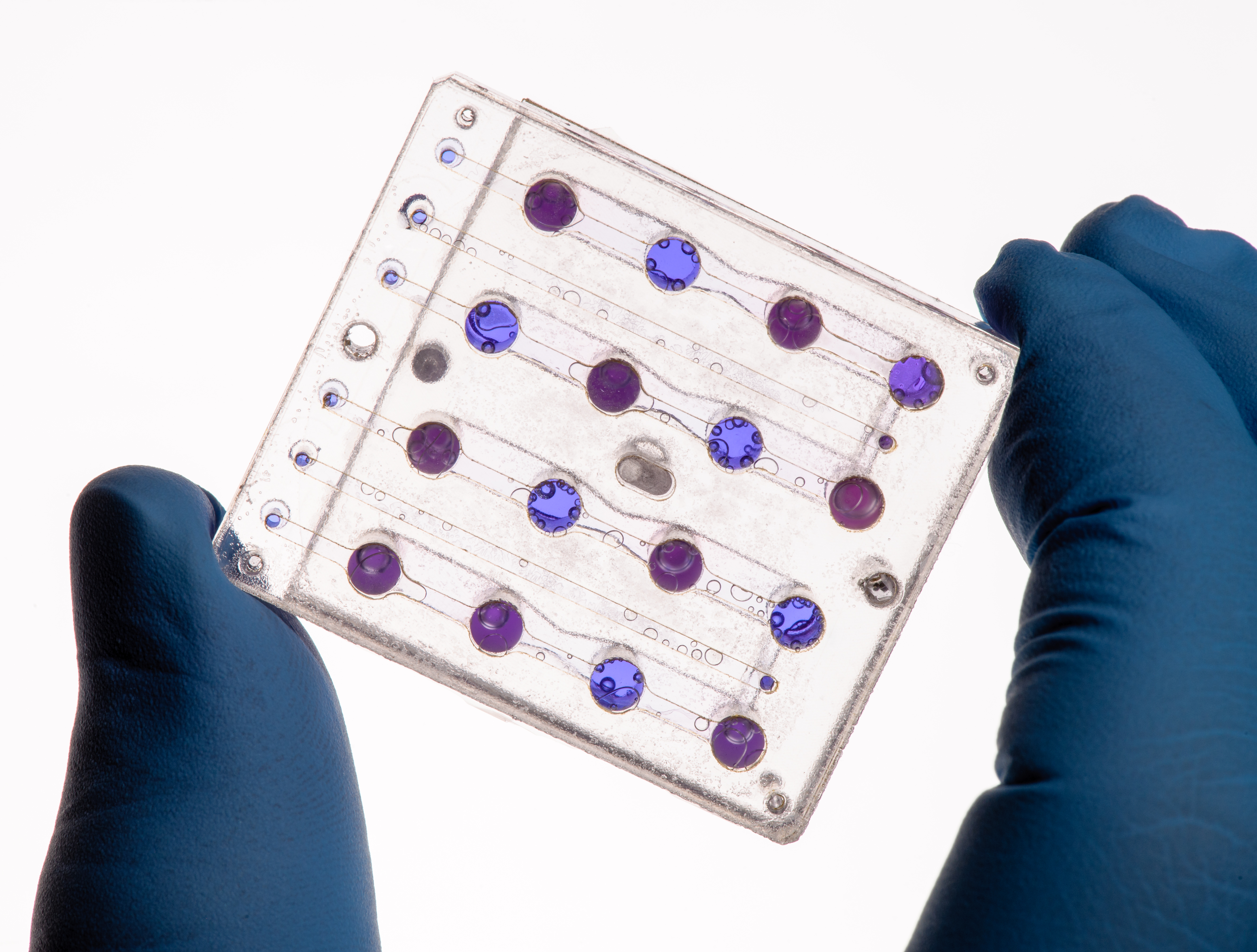
BioSentinel Fluidics Card
BioSentinel’s microfluidics card, designed at NASA’s Ames Research Center in Silicon Valley, California, will be used to study the impact of interplanetary space radiation on yeast. Once in orbit, the growth and metabolic activity of the yeast will be measured using a three-color LED detection system and a dye that provides a readout of yeast cell activity. Here, pink wells contain actively growing yeast cells that have turned the dye from blue to pink color.
NASA/Dominic Hart

Multiple BioSentinels will compare various gravity and radiation environments

In addition to the pioneering BioSentinel mission that will traverse the deep space environment, identical experiments take place under different radiation and gravity conditions. One ran on the space station, in microgravity that is similar to deep space, but with comparatively less radiation. Other experiments took place on the ground, for comparison with Earth’s gravity and radiation levels. These additional versions show scientists how to compare Earth and space station-based science experiments – which can be conducted much more readily – to the fierce radiation that future astronauts will encounter in space.

Taken together, the BioSentinel data will be critical for interpreting the effects of space radiation exposure, reducing the risks associated with long-term human exploration, and confirming existing models of the effects of space radiation on living organisms. 

Milestones

  • December 2021: The BioSentinel ISS Control experiment launched to the International Space Station aboard SpaceX’s 24th commercial resupply services mission.
  • January 2022: The BioSentinel ISS Control experiment began science operations aboard the International Space Station.
  • February 2022: The BioSentinel ISS Control experiment began ground control science operations at NASA Ames.
  • June 2022: The BioSentinel ISS Control experiment completed science operations. The hardware was returned to Earth in August aboard SpaceX’s CRS-25 Dragon.
  • October 2022: The BioSentinel ISS Control experiment completed ground control science operations at NASA Ames. 
  • Nov. 16, 2022: BioSentinel launched to deep space aboard Artemis I.
  • Dec. 5, 2022: BioSentinel began science operations in deep space.
  • Dec. 19, 2022: BioSentinel began ground control science operations at NASA Ames.
  • Nov. 16, 2024: BioSentinel marks two years of continuous radiation observations in deep space, now more than 30 million miles from Earth.
  • Nov. 16, 2025: BioSentinel marks three years of continuous radiation observations in deep space, now more than 48 million miles from Earth.

Partners:

  • NASA Ames leads the science, hardware design and development of the BioSentinel mission.
  • Partner organizations include NASA’s Johnson Space Center in Houston and NASA’s Jet Propulsion Laboratory in Southern California. 
  • BioSentinel is funded by the Mars Campaign Development (MCO) Division within the Exploration Systems Development Mission Directorate at NASA headquarters in Washington.
  • BioSentinel’s extended mission is supported by the Heliophysics Division of NASA’s Science Mission Directorate at NASA headquarters in Washington, the MCO, and the NASA Electronic Parts and Packaging Program within NASA’s Space Technology Mission Directorate at NASA Headquarters in Washington.

Learn more:

For researchers: 

For news media:

  • Members of the news media interested in covering this topic should reach out to the NASA Ames newsroom

NASA’s Quesst Mission Marks X-59’s Historic First Flight

20 November 2025 at 12:18
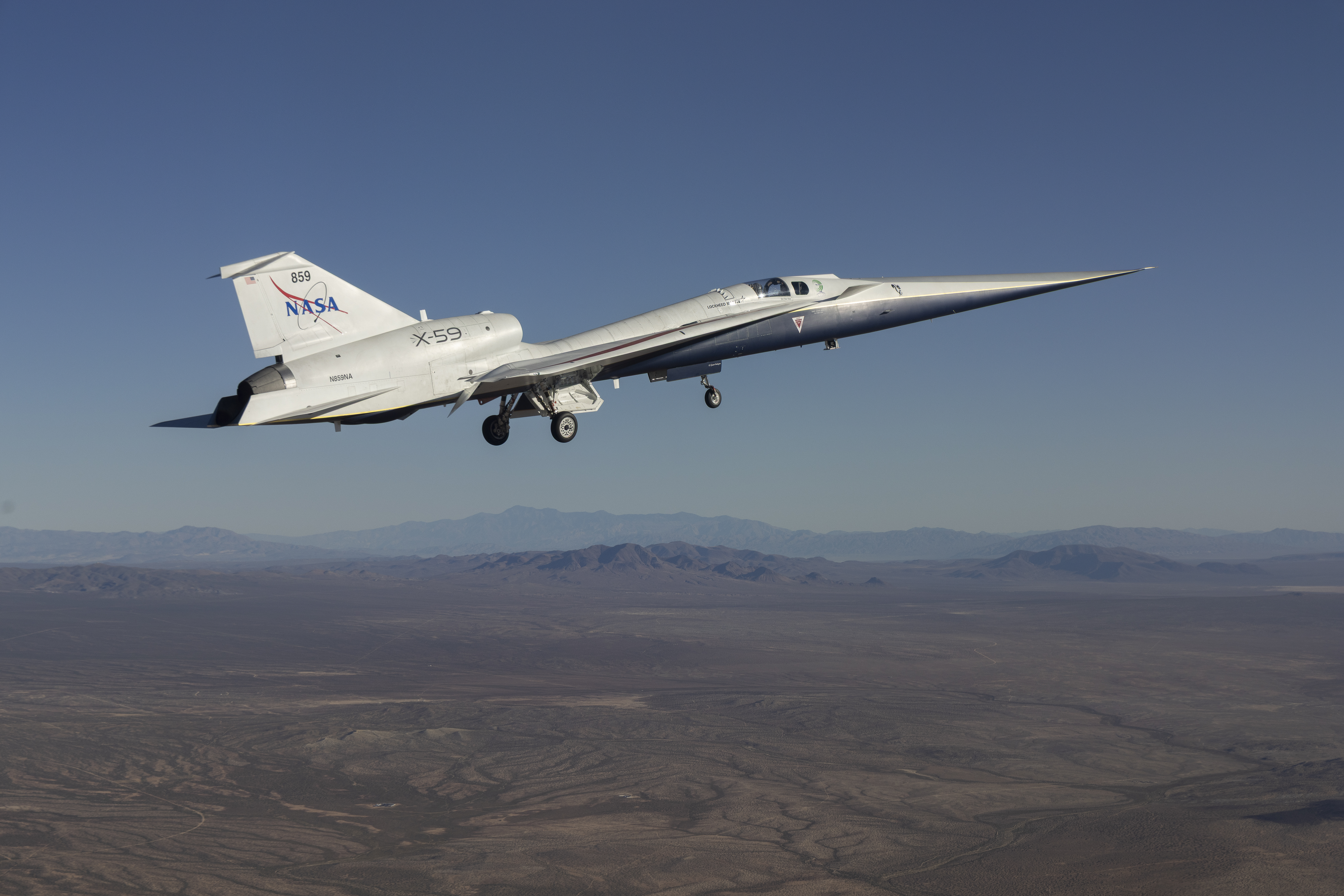
The X-59 is shown during its historic first flight flown by NASA test pilot Nils Larson.
NASA/Lori Losey

NASA’s X-59 quiet supersonic research aircraft took off for its historic first flight on Oct. 28 at 11:14 a.m. EDT from Lockheed Martin Skunk Works in Palmdale, California. The one-of-a-kind aircraft flew for 67 minutes before landing and taxiing to NASA’s Armstrong Flight Research Center in Edwards, California.

NASA test pilot Nils Larson flew the X-59 up to an altitude of about 12,000 feet and an approximate top speed of 230 mph, precisely as planned. The plane’s landing gear remained down during the entire flight, a common practice for experimental aircraft flying for the first time.

Now that the X-59’s first flight is in the books, the team is focused on preparing for a series of test flights where the aircraft will operate at higher altitudes and supersonic speeds. This test flight phase of NASA’s Quesst mission will ensure the X-59 meets performance and safety expectations.

Through the Quesst mission, NASA aims to usher in a new age of quiet supersonic flight, achieved through the unique design and technology of the X-59 in future supersonic transport aircraft.

NASA, Industry Weave Data Fabric with Artificial Intelligence

17 November 2025 at 13:53

3 min read

Preparations for Next Moonwalk Simulations Underway (and Underwater)

This concept graphic shows how a future AAM vehicle could aid in healthcare by carrying passengers to a hospital.
NASA’s research into the field of Advanced Air Mobility looks to enable autonomous aircraft with complex capabilities such as carrying cargo or providing medical aid, as seen in this artist’s concept. The Data and Reasoning Fabric project out of Ames Research Center tested delivery of programs and information to these kinds of vehicles.
Credit: NASA

One of the biggest goals for companies in the field of artificial intelligence is developing “agentic” or autonomous systems. These metaphorical agents can perform tasks without a guiding human hand. This parallels the goals of the emerging urban air mobility industry, which hopes to bring autonomous flying vehicles to cities around the world. One company got a head start on doing both with some help from NASA.

Autonomy Association International Inc. (AAI) is a public benefit corporation based in Mountain View, California, near NASA’s Ames Research Center in Silicon Valley. In 2022, AAI signed a Space Act Agreement with Ames to support the agency’s Data and Reasoning Fabric project, which aimed to support the transportation of people and cargo to areas previously unserved or underserved by aviation, and to provide reliable, accurate, and current data for aeronautic decision-making. 

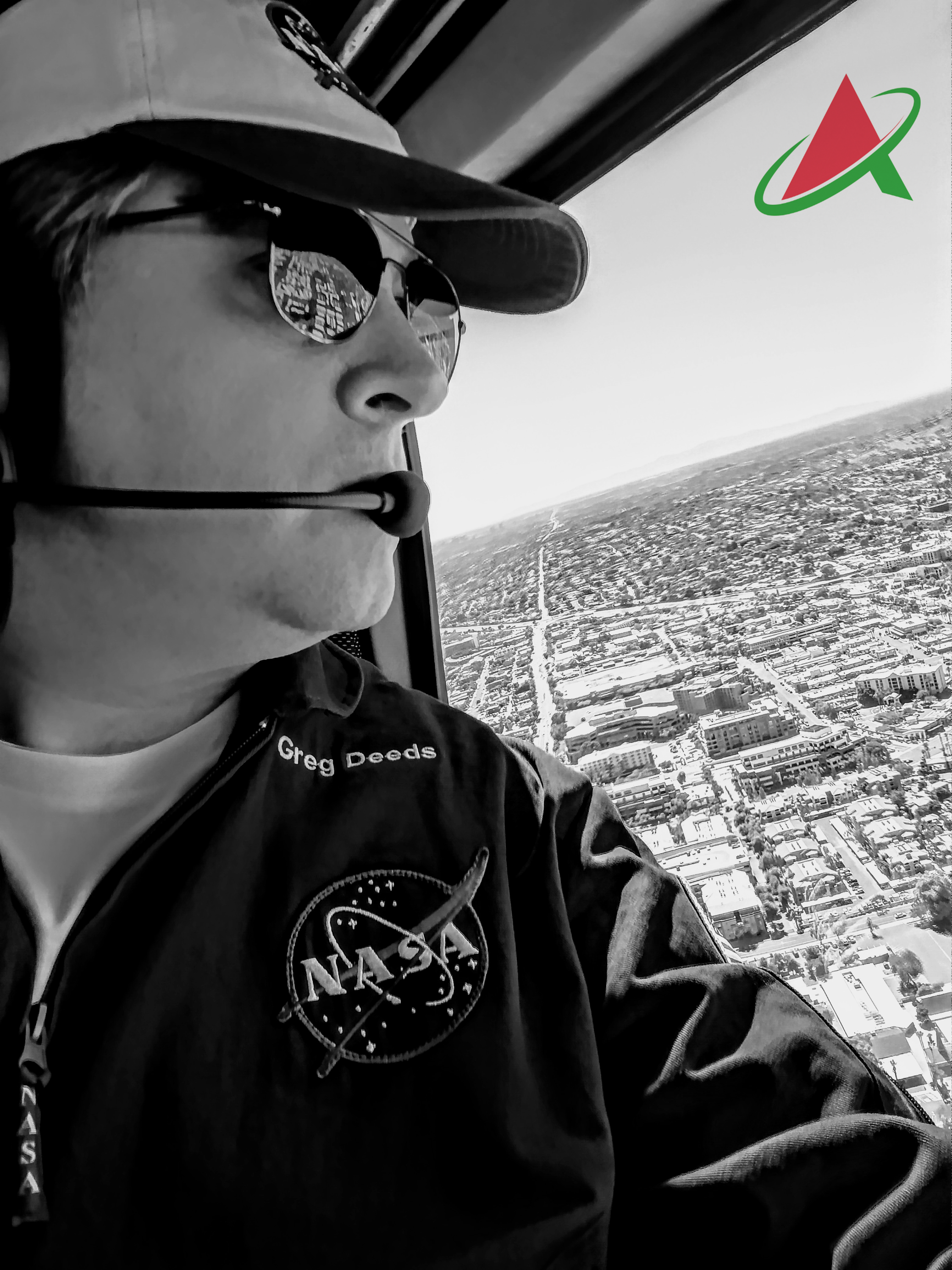
“Inspiration to lean into data fabric to solve certain complexities came from our NASA partnership,” said AAI cofounder and the project’s industry principal investigator Greg Deeds. “Working on this project was a great experience. Working with NASA engineers and leaders gave us experience that we’ll carry forward in all of our products.” 

A black and white photo of a man wearing a shirt emblazoned with the NASA emblem looking out of the window of a helicopter at the city below.
Greg Deeds looks out the window of a helicopter flying over Arizona during a test of Autonomy Association International’s data fabric technology in collaboration with NASA. Through multiple evaluations above Phoenix, the testing proved the capabilities of the company’s Digital Infrastructure Platform.
Credit: Autonomy Association International Inc.

Similar to how clothing fabric is made of intertwined threads, a data fabric comprises intertwined data sources. While a data fabric built by a tech company may include data from a few different cloud service providers, NASA’s Data and Reasoning Fabric can also use information provided by local governments and other service providers. By viewing airspace as a large data fabric, an autonomous vehicle can take in data and requests from the cities and towns it flies over and prioritize responses between them.

Working with Ken Freeman, principal investigator of the project at Ames, AAI and NASA performed four testing adaptations of the data fabric technology in the air over Arizona. Using hardware and software developed by AAI, the flights tested advanced air mobility passenger flights and the use of a drone for rapid delivery of medical supplies from urban to rural areas and back, while sending new tasks to the aircraft in flight. A helicopter stood in for the drone and air taxi, flying over towns, universities, tribal lands, and the airspace around Phoenix Sky Harbor airport and obtaining data and programs given to it from different places.

“We’re focusing on the digital infrastructure building blocks of smart cities and regions of the future,” said Jennifer Deeds, chief operating officer and cofounder of AAI.

In the years since the original NASA project, the company has cultivated relationships and customers abroad, including companies in agriculture, real estate development, and industrial food production using its system to aggregate and manage data. Released in 2024, the company’s Digital Infrastructure Platform uses the same technology originally designed for the NASA flight test. A new, “agentic” version followed not long after, able to retrieve necessary AI programs with minimal interaction. 

As AI unlocks innovation across American industries, NASA is equipping its commercial partners with the keys, using proven technology to generate breakthrough solutions. 

Learn more: https://spinoff.nasa.gov/  

NASA’s Astrobee Robots Advance Through Strategic Partnership

24 September 2025 at 15:12
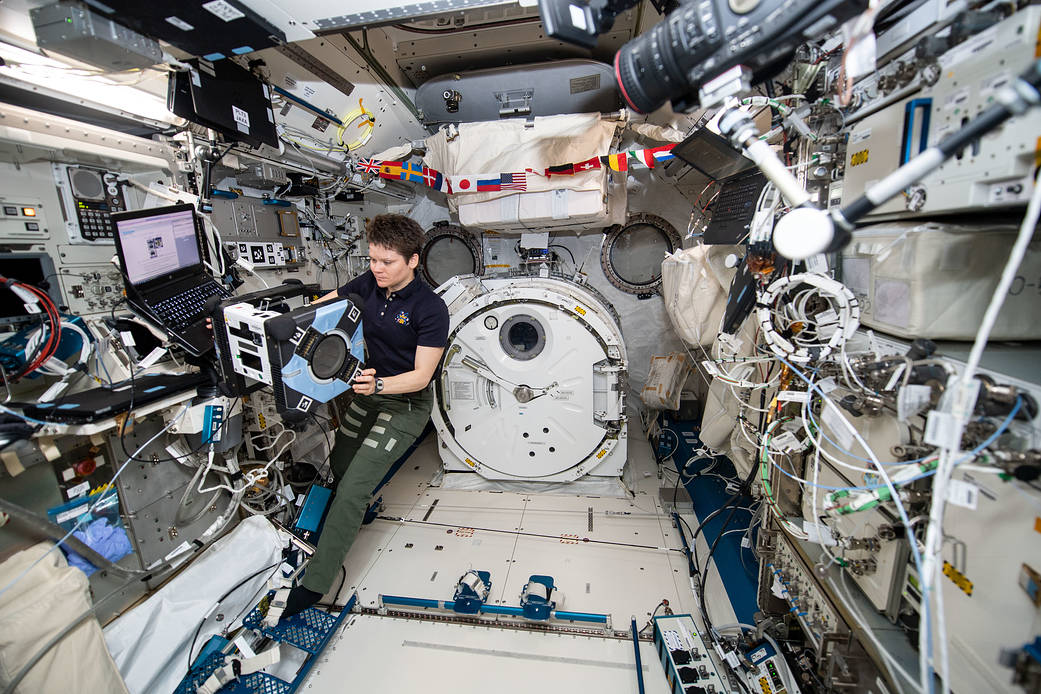
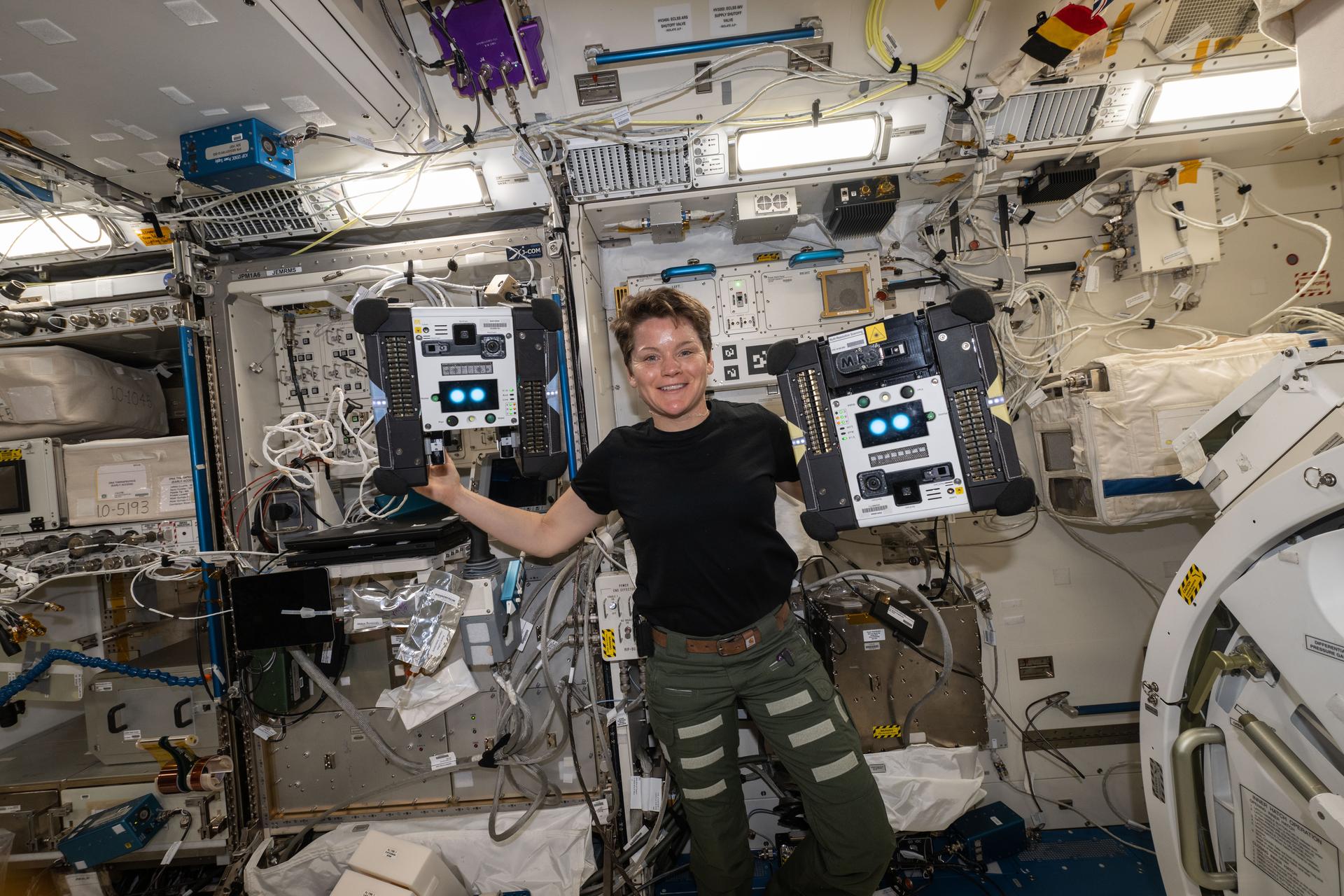
NASA astronaut Anne McClain performs the first series of tests of an Astrobee robot, Bumble, during a hardware checkout.
NASA astronaut and Expedition 73 Flight Engineer Anne McClain shows off a pair of Astrobee robotic free-flyers inside the International Space Station's Kibo laboratory. Ground controllers were monitoring the cube-shaped, toaster-sized devices as they autonomously performed docking maneuvers using multi-resolution scanning units installed earlier by McClain.
(Top) NASA astronaut Anne McClain performs the first series of tests of an Astrobee robot, Bumble, during a hardware checkout in May, 2019.  
(Bottom) NASA astronaut McClain poses with Astrobee robots Bumble (left) and Honey during their latest on orbit activity in May, 2025.  
NASA

NASA is continuing the Astrobee mission through a collaboration with Arkisys, Inc., of Los Alamitos, California, who was awarded a reimbursable Space Act Agreement to sustain and maintain the robotic platform aboard the International Space Station. As the agency returns astronauts to the Moon, robotic helpers like Astrobee could one day take over routine maintenance tasks and support future spacecraft at the Moon and Mars without relying on humans for continuous operation.

In March, the agency issued a call for partnership proposals to support its ongoing space research initiatives. Arkisys was selected to maintain the platform and continue enabling partners to use the Astrobee system as a means to experiment with new technologies in the microgravity environment of the space station.

NASA launched the Astrobee mission to the space station in 2018. Since then, the free-flying robots have marked multiple first-in-space milestones for robots working alongside astronauts to accomplish spacecraft monitoring, alert simulations, and more in partnership with researchers from industry and academia.

The Astrobee system includes three colorful, cube-shaped robots – named “Bumble,” “Honey,” and “Queen” – along with software and a docking station for recharging. The mission has advanced NASA’s goal of developing robotic systems and technologies that can perform tasks and support exploration, maintenance, and monitoring as humans venture further into space for longer durations.

The International Space Station is a convergence of science, technology, and human innovation enabling research not possible on Earth. For nearly 25 years, NASA has supported a continuous U.S. human presence aboard the orbiting laboratory, where astronauts have learned to live and work in space for extended periods of time. The space station is a springboard for developing a low Earth economy and NASA’s next great leaps in human exploration at the Moon and Mars.

NASA Selects Blue Origin to Deliver VIPER Rover to Moon’s South Pole

19 September 2025 at 16:24
This artist’s concept shows Blue Origin’s Blue Moon Mark 1 lander and NASA’s VIPER (Volatiles Investigating Polar Exploration Rover) on the lunar surface.
Credit: Blue Origin

As part of the agency’s Artemis campaign, NASA has awarded Blue Origin of Kent, Washington, a CLPS (Commercial Lunar Payload Services) task order with an option to deliver a rover to the Moon’s South Pole region. NASA’s VIPER (Volatiles Investigating Polar Exploration Rover) will search for volatile resources, such as ice, on the lunar surface and collect science data to support future exploration at the Moon and Mars.

“NASA is leading the world in exploring more of the Moon than ever before, and this delivery is just one of many ways we’re leveraging U.S. industry to support a long-term American presence on the lunar surface,” said acting NASA Administrator Sean Duffy. “Our rover will explore the extreme environment of the lunar South Pole, traveling to small, permanently shadowed regions to help inform future landing sites for our astronauts and better understand the Moon’s environment – important insights for sustaining humans over longer missions, as America leads our future in space.”

The CLPS task order has a total potential value of $190 million. This is the second CLPS lunar delivery awarded to Blue Origin. Their first delivery – using their Blue Moon Mark 1 (MK1) robotic lander – is targeted for launch later this year to deliver NASA’s Stereo Cameras for Lunar-Plume Surface Studies and Laser Retroreflective Array payloads to the Moon’s South Pole region.

With this new award, Blue Origin will deliver VIPER to the lunar surface in late 2027, using a second Blue Moon MK1 lander, which is in production. NASA previously canceled the VIPER project and has since explored alternative approaches to achieve the agency’s goals of mapping potential off-planet resources, like water.

“NASA is committed to studying and exploring the Moon, including learning more about water on the lunar surface, to help determine how we can harness local resources for future human exploration,” said Nicky Fox, associate administrator, Science Mission Directorate, NASA Headquarters in Washington. “We’ve been looking for creative, cost-effective approaches to accomplish these exploration goals. This private sector-developed landing capability enables this delivery and focuses our investments accordingly – supporting American leadership in space and ensuring our long-term exploration is robust and affordable.”

The task order, called CS-7, has an award base to design the payload-specific accommodations and to demonstrate how Blue Origin’s flight design will off-load the rover to the lunar surface. There is an option on the contract to deliver and safely deploy the rover to the Moon’s surface. NASA will make the decision to exercise that option after the execution and review of the base task and of Blue Origin’s first flight of the Blue Moon MK1 lander. This unique approach will reduce the agency’s cost and technical risk. The rover has a targeted science window for its 100-day mission that requires a landing by late 2027.

Blue Origin is responsible for the complete landing mission architecture and will conduct design, analysis, and testing of a large lunar lander capable of safely delivering the lunar volatiles science rover to the Moon. Blue Origin also will handle end-to-end payload integration, planning and support, and post-landing payload deployment activities. NASA will conduct rover operations and science planning.

“The search for lunar volatiles plays a key role in NASA’s exploration of the Moon, with important implications for both science and human missions under Artemis,” said Joel Kearns, deputy associate administrator for exploration, Science Mission Directorate, NASA Headquarters. “This delivery could show us where ice is most likely to be found and easiest to access, as a future resource for humans. And by studying these sources of lunar water, we also gain valuable insight into the distribution and origin of volatiles across the solar system, helping us better understand the processes that have shaped our space environment and how our inner solar system has evolved.”

Through CLPS, American companies continue to demonstrate leadership in commercial space advancing capabilities and accomplishing NASA’s goal for a commercial lunar economy. NASA’s Ames Research Center in California’s Silicon Valley led the VIPER rover development and will lead its science investigations, and NASA’s Johnson Space Center in Houston provided rover engineering development for Ames.

To learn more about CLPS and Artemis, visit:

https://www.nasa.gov/clps

-end-

Alise Fisher
Headquarters, Washington
202-358-2546
alise.m.fisher@nasa.gov

Kenna Pell / Nilufar Ramji
Johnson Space Center, Houston
281-483-5111
kenna.m.pell@nasa.gov / nilufar.ramji@nasa.gov  

From Supercomputers to Wind Tunnels: NASA’s Road to Artemis II

By: Lee Mohon
18 September 2025 at 16:41
5 Min Read

From Supercomputers to Wind Tunnels: NASA’s Road to Artemis II

By Jill Dunbar

Of the many roads leading to successful Artemis missions, one is paved with high-tech computing chips called superchips. Along the way, a partnership between NASA wind tunnel engineers, data visualization scientists, and software developers verified a quick, cost-effective solution to improve NASA’s SLS (Space Launch System) rocket for the upcoming Artemis II mission. This will be the first crewed flight of the SLS rocket and Orion spacecraft, on an approximately 10-day journey around the Moon.  

A high-speed network connection between high-end computing resources at the NASA Advanced Supercomputing facility and the Unitary Plan Wind Tunnel, both located at NASA’s Ames Research Center in California’s Silicon Valley, is enabling a collaboration to improve the rocket for the Artemis II mission. During the Artemis I test flight, the SLS rocket experienced higher-than-expected vibrations near the solid rocket booster attach points, caused by unsteady airflow between the gap.

One solution proposed for Artemis II was adding four strakes. A strake is a thin, fin-like structure commonly used on aircraft to improve unsteady airflow and stability. Adding them to the core stage minimizes the vibration of components.

The strake solution comes from previous tests in the Unitary Plan Wind Tunnel, where NASA engineers applied an Unsteady Pressure Sensitive Paint (uPSP) technique to SLS models. The paint measures changes over time in aerodynamic pressures on air and spacecraft.

This supercomputer simulation peers down at a close-up of the SLS rocket during ascent. The force of friction is represented in greens, yellows, and blues. A six-foot-long strake flanking each booster’s forward connection point on the SLS intertank smooths vibrations induced by airflow, represented by purples, yellows, and reds. The white streams represent a contour plot of density magnitude, highlighting the change of density in the air.
Credit: NASA/NAS/Gerrit-Daniel Stich, Michael Barad, Timothy Sandstrom, Derek Dalle

It is sprayed onto test models, and high-speed cameras capture video of the fluctuating brightness of the paint, which corresponds to the local pressure fluctuations on the model. Capturing rapid changes in pressure across large areas of the SLS model helps engineers understand the fast-changing environment. The data is streamed to the NASA Advanced Supercomputing facility via a high-speed network connection.

“This technique lets us see wind tunnel data in much finer detail than ever before. With that extra clarity, engineers can create more accurate models of how rockets and spacecraft respond to stress, helping design stronger, safer, and more efficient structures,” said Thomas Steva, lead engineer, SLS sub-division in the Aerodynamics Branch at NASA’s Marshall Space Flight Center in Huntsville, Alabama.

For the SLS configuration with the strakes, the wind tunnel team applied the paint to a scale model of the rocket. Once the camera data streamed to the supercomputing facility, a team of visualization and data analysis experts displayed the results on the hyperwall visualization system, giving the SLS team an unprecedented look at the effect of the strakes on the vehicle’s performance. Teams were able to interact with and analyze the paint data.

NASA’s high-end computing capability and facilities, paired with unique facilities at Ames, give us the ability to increase productivity by shortening timelines, reducing costs, and strengthening designs in ways that directly support safe human spaceflight.

Kevin Murphy

Kevin Murphy

NASA's Chief Science Data Officer

“NASA’s high-end computing capability and facilities, paired with unique facilities at Ames, give us the ability to increase productivity by shortening timelines, reducing costs, and strengthening designs in ways that directly support safe human spaceflight,” said Kevin Murphy, NASA’s chief science data officer and lead for the agency’s High-End Computing Capability portfolio at NASA Headquarters in Washington. “We’re actively using this capability to help ensure Artemis II is ready for launch.”

Leveraging the high-speed connection between the Unitary Plan Wind Tunnel and NASA Advanced Supercomputing facility reduces the typical data processing time from weeks to just hours.

For years, the NASA Advancing Supercomputing Division’s in-house Launch, Ascent, and Vehicle Aerodynamics software has helped play a role in designing and certifying the various SLS vehicle configurations.

“Being able to work with the hyperwall and the visualization team allows for in-person, rapid engagement with data, and we can make near-real-time tweaks to the processing,” said Lara Lash, an aerospace engineering researcher in the Experimental Aero-Physics Branch at NASA Ames who leads the uPSP work.

This video shows two simulations of the SLS (Space Launch System) rocket using NASA’s Launch Ascent and Vehicle Aerodynamics solver. For the Artemis II test flight, a pair of six-foot-long strakes will be added to the core stage of SLS that will smooth vibrations induced by airflow during ascent. The top simulation is without strakes while the bottom shows the airflow with strakes. The green and yellow colors on the rocket’s surface show how the airflow scrapes against the rocket’s skin. The white and gray areas show changes in air density between the boosters and core stage, with the brightest regions marking shock waves. The strakes reduce vibrations and improves the safety of the integrated vehicle.
NASA/NAS/Gerrit-Daniel Stich, Michael Barad, Timothy Sandstrom, Derek Dalle

This time, NASA Advanced Supercomputing researchers used the Cabeus supercomputer, which is the agency’s largest GPU-based computing cluster containing 350 NVIDIA superchip nodes. The supercomputer produced a series of complex computational fluid dynamic simulations that helped explain the underlying physics of the strake addition and filled in gaps between areas where the wind tunnel cameras and sensors couldn’t reach.

This truly was a joint effort across multiple teams.

“The beauty of the strake solution is that we were able to add strakes to improve unsteady aerodynamics, and associated vibration levels of components in the intertank,” said Kristin Morgan, who manages the strake implementation effort for the SLS at Marshall.

A team from Boeing is currently installing the strakes on the rocket at NASA’s Kennedy Space Center in Florida and are targeting October 2025 to complete installation.

Through Artemis, NASA will send astronauts to explore the Moon for scientific discovery, economic benefits, and build the foundation for the first crewed missions to Mars.

To learn more about Artemis, visit:

https://www.nasa.gov/artemis

News Media Contact

Jonathan Deal
Marshall Space Flight Center, Huntsville, Ala. 
256.544.0034
jonathan.e.deal@nasa.gov

Share

Details

Last Updated
Sep 19, 2025
Editor
Lee Mohon
Contact
Jonathan Deal
Keep Exploring

Discover More Topics From NASA

NASA, Partners Push Forward with Remotely Piloted Airspace Integration 

16 September 2025 at 14:43
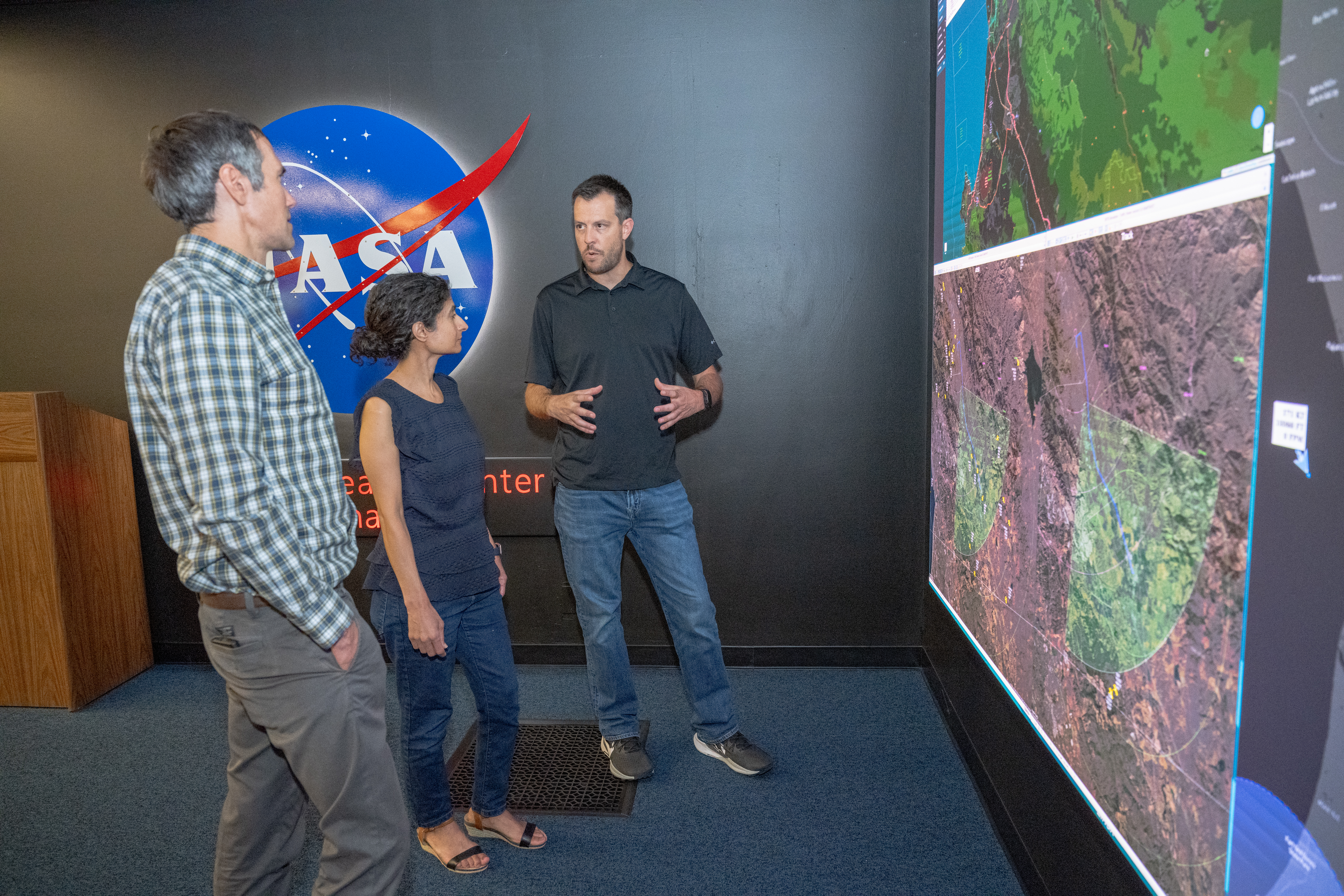
NASA researchers stand in front of a floor-to-ceiling monitor displaying live flight data during a flight test of a Bell 206 helicopter.
NASA researchers Matt Gregory, right, Arwa Awiess, center, and Andrew Guion, left, discuss live flight data being ingested at the Mission Visualization and Research Control Center (MVRCC) at NASA’s Ames Research Center in California’s Silicon Valley on Aug. 21, 2025.
NASA/ Brandon Torres-Navarrete

NASA and its partners recently tested a tool for remotely piloted operations that could enable operators to transport people and goods more efficiently within urban areas.  

The team’s goal is to ensure that when these remotely piloted aircraft – including electric vertical takeoff and landing vehicles (eVTOLs) – take to the skies, air traffic controllers won’t be overburdened by increased flight operations and safety is maintained across the national airspace. 

On Aug. 21, NASA’s Air Traffic Management eXploration Project (ATM-X) assisted Wisk Aero when they flew a Bell 206 helicopter in Hollister, California. The purpose of the flight test was to evaluate and fine-tune a ground-based radar developed by Collins Aerospace. The radar, which provides aircraft location data, could be used during future remotely piloted operations to detect and avoid other aircraft in the vicinity.  NASA, Wisk, and Collins researchers also used the flight to test data exchange capabilities across different geographic locations between the groups, a critical capability for future remotely piloted operators in a shared airspace. This work builds on a November 2024 flight test NASA performed with Reliable Robotics and Collins Aerospace.  

Initial analysis of the August testing of Collins’ ground-based radar actively and accurately surveilled the airspace during the aircraft’s flight test. The Collins radar system also successfully transmitted these data to NASA’s Mission Visualization Research Command Center lab at NASA’s Ames Research Center in California’s Silicon Valley. NASA, Wisk, and Collins will further analyze the flight data to better understand the radar’s performance and data exchange capabilities for future remotely piloted flight tests. This testing is a part of ATM-X’s remotely piloted testing campaign, designed to identify the infrastructure and technologies needed for the Federal Aviation Administration to safely integrate drones and air taxis into the airspace, bringing the movement of people and goods off the ground, and into the sky.   

Remotely piloted eVTOL aircraft could bridge the gap for urban communities by offering a more affordable and accessible method of transportation and delivery services in congested, highly-populated areas. 

NASA and Wisk will continue to collaborate on emerging eVTOL technologies to safely integrate advanced aircraft, into the national airspace. Together, the teams will gather data on eVTOL performance and characteristics during a flight test of a helicopter, which will act as a “surrogate” simulating an eVTOL flight. This work will mark another critical step towards better connecting communities across the globe.

❌
❌