NASA Selects 2 Instruments for Artemis IV Lunar Surface Science
NASA has selected two science instruments designed for astronauts to deploy on the surface of the Moon during the Artemis IV mission to the lunar south polar region. The instruments will improve our knowledge of the lunar environment to support NASA’s further exploration of the Moon and beyond to Mars.
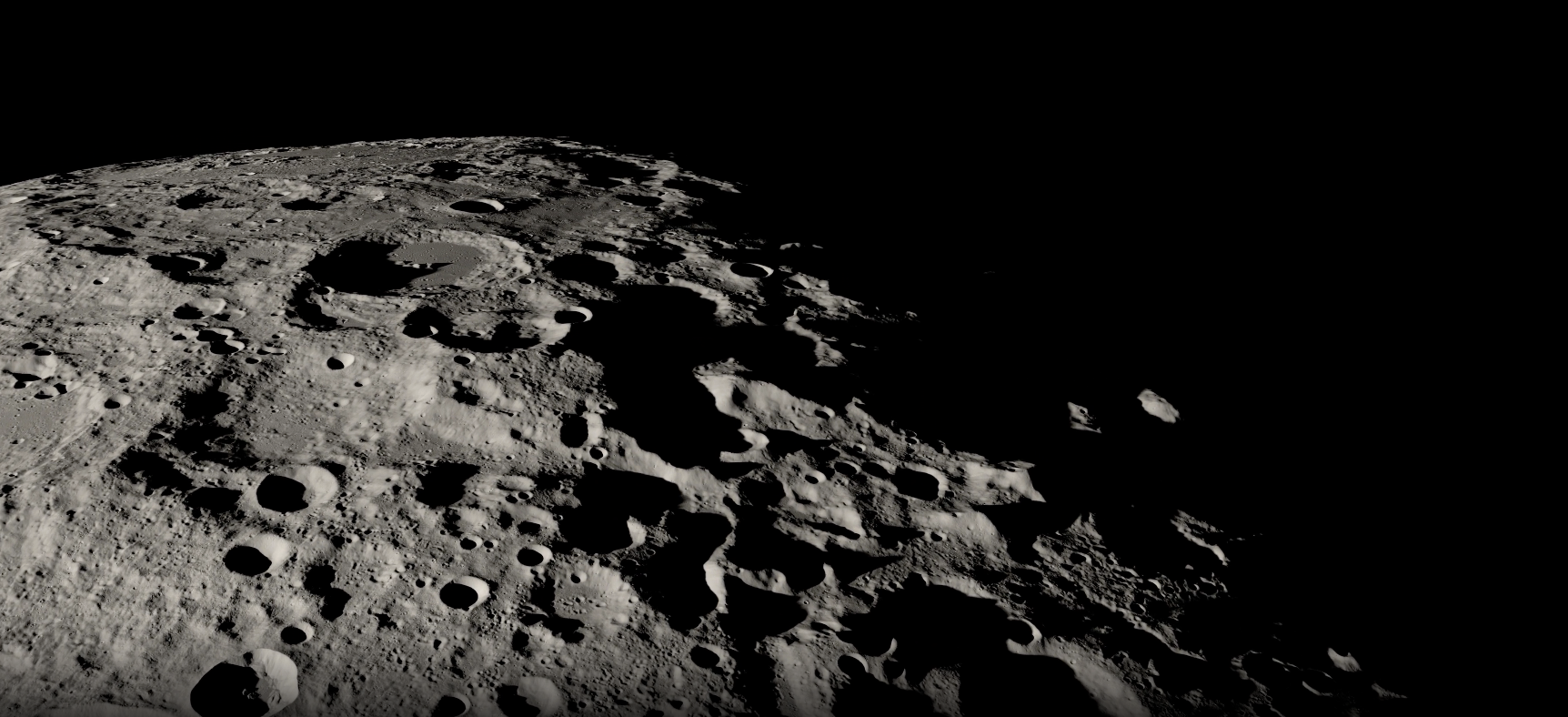
A visualization of the Moon’s South Pole region created with data from NASA’s Lunar Reconnaissance Orbiter, which has been surveying the Moon with seven instruments since 2009.
“The Apollo Era taught us that the further humanity is from Earth, the more dependent we are on science to protect and sustain human life on other planets,” said Nicky Fox, associate administrator, Science Mission Directorate at NASA Headquarters in Washington. “By deploying these two science instruments on the lunar surface, our proving ground, NASA is leading the world in the creation of humanity’s interplanetary survival guide to ensure the health and safety of our spacecraft and human explorers as we begin our epic journey back to the Moon and onward to Mars.”
After his voyage to the Moon’s surface during Apollo 17, astronaut Gene Cernan acknowledged the challenge that lunar dust presents to long-term lunar exploration. Moon dust sticks to everything it touches and is very abrasive. The knowledge gained from the DUSTER (DUst and plaSma environmenT survEyoR) investigation will help mitigate hazards to human health and exploration. Consisting of a set of instruments mounted on a small autonomous rover, DUSTER will characterize dust and plasma around the landing site. These measurements will advance understanding of the Moon’s natural dust and plasma environment and how that environment responds to the human presence, including any disturbance during crew exploration activities and lander liftoff. The DUSTER instrument suite is led by Xu Wang of the University of Colorado Boulder. The contract is for $24.8 million over a period of three years.
A model of the DUSTER instrument suite consisting of the Electrostatic Dust Analyzer (EDA)—which will measure the charge, velocity, size, and flux of dust particles lofted from the lunar surface—and Relaxation SOunder and differentiaL VoltagE (RESOLVE)—which will characterize the average electron density above the lunar surface using plasma sounding. Both instruments will be housed on a Mobile Autonomous Prospecting Platform (MAPP) rover, which will be supplied by Lunar Outpost, a company based in Golden, Colorado, that develops and operates robotic systems for space exploration.
LASP/CU Boulder/Lunar Outpost
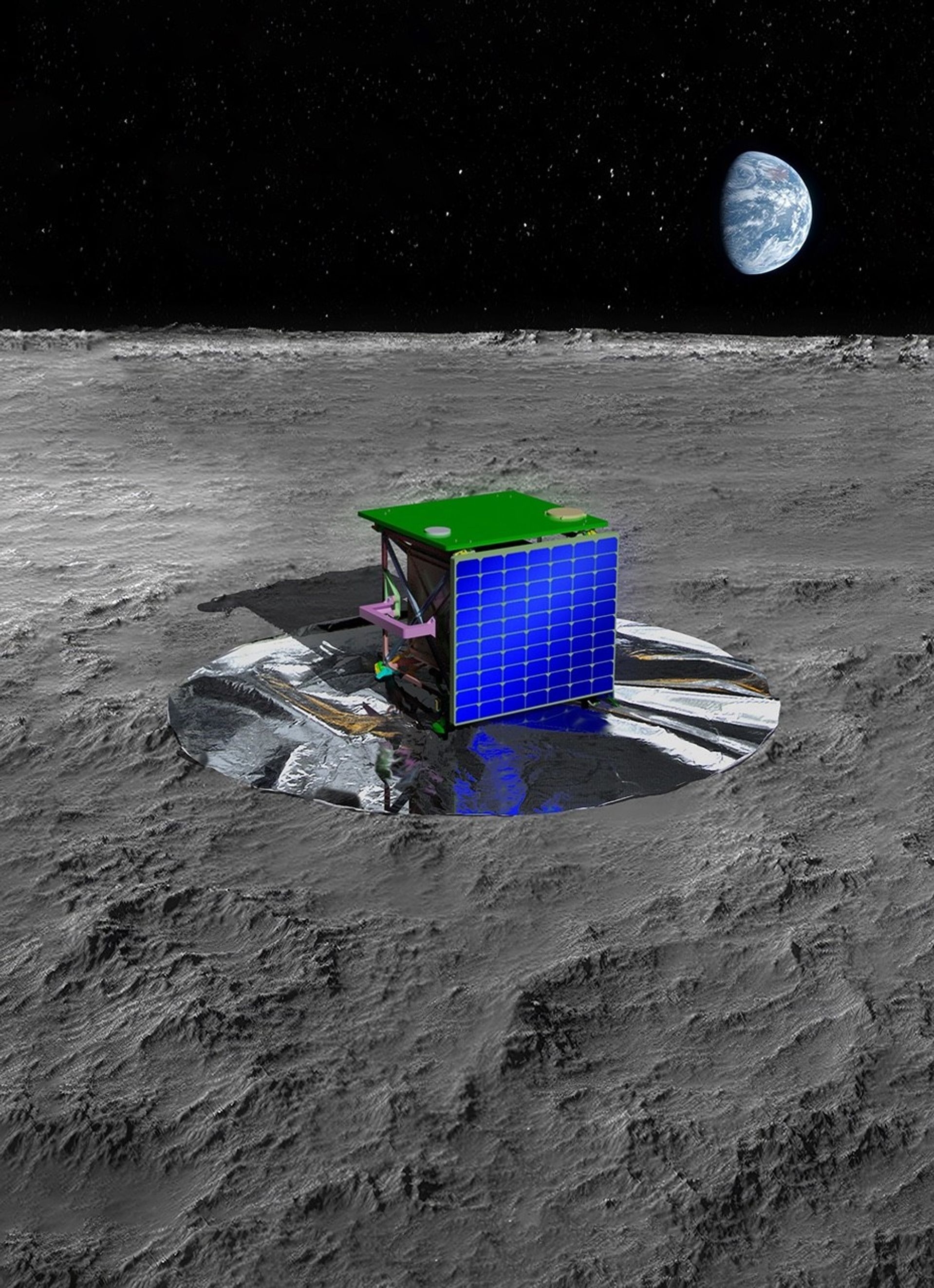
Data from the SPSS (South Pole Seismic Station) will enable scientists to characterize the lunar interior structure to better understand the geologic processes that affect planetary bodies. The seismometer will help determine the current rate at which the Moon is struck by meteorite impacts, monitor the real-time seismic environment and how it can affect operations for astronauts, and determine properties of the Moon’s deep interior. The crew will additionally perform an active-source experiment using a “thumper” that creates seismic energy to survey the shallow structure around the landing site. The SPSS instrument is led by Mark Panning of NASA’s Jet Propulsion Laboratory in Southern California. The award is for $25 million over a period of three years.
An artist’s concept of SPSS (South Pole Seismic Station) to be deployed by astronauts on the lunar surface.
NASA/JPL-Caltech
“These two scientific investigations will be emplaced by human explorers on the Moon to achieve science goals that have been identified as strategically important by both NASA and the larger scientific community”, said Joel Kearns, deputy associate administrator for exploration, Science Mission Directorate at NASA Headquarters. “We are excited to integrate these instrument teams into the Artemis IV Science Team.”
The two payloads were selected for further development to fly on Artemis IV; however, final manifesting decisions about the mission will be determined at a later date.
Through Artemis, NASA will address high priority science questions, focusing on those that are best accomplished by on-site human explorers on and around the Moon and by using the unique attributes of the lunar environment, aided by robotic surface and orbiting systems. The Artemis missions will send astronauts to explore the Moon for scientific discovery, economic benefits, and build the foundation for the first crewed missions to Mars.
Preparations for Next Moonwalk Simulations Underway (and Underwater)
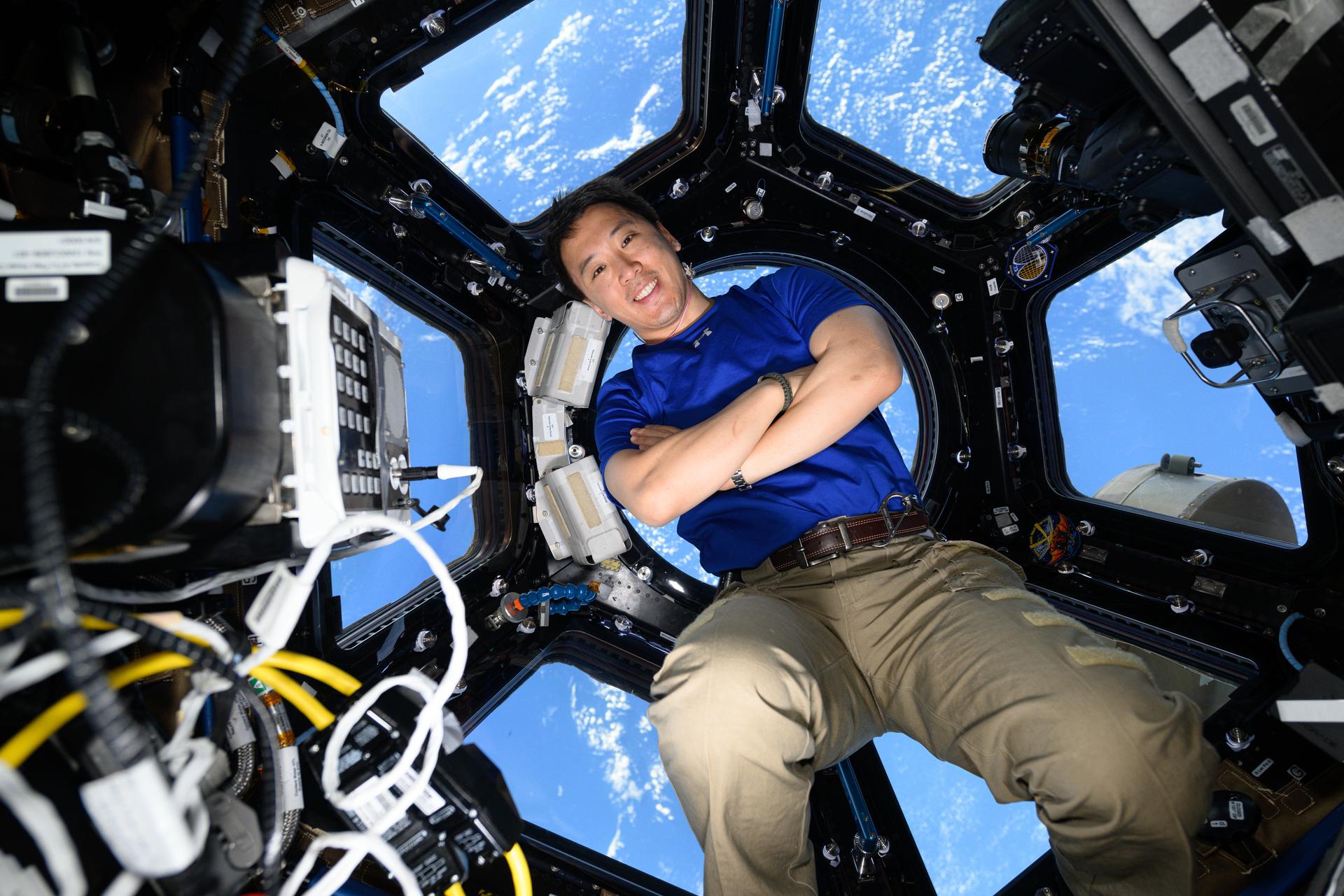
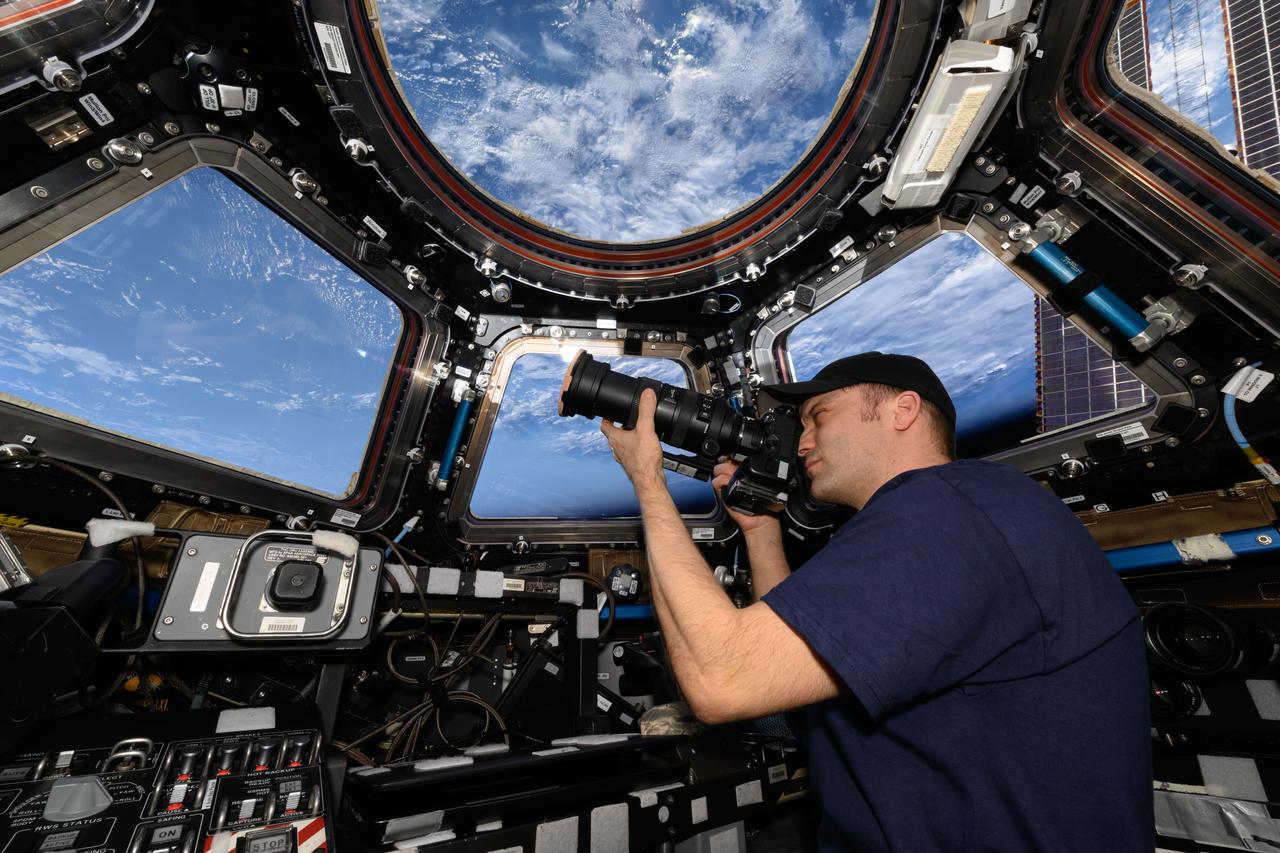
NASA astronaut Jonny Kim floats inside the Cupola of the International Space Station.
NASA
NASA astronaut Jonny Kim is wrapping up his first mission aboard the International Space Station in early December. During his stay, Kim conducted scientific experiments and technology demonstrations to benefit humanity on Earth and advance NASA’s Artemis campaign in preparation for future human missions to Mars.
Here is a look at some of the science Kim completed during his mission:
Medical check-ups in microgravity
NASA
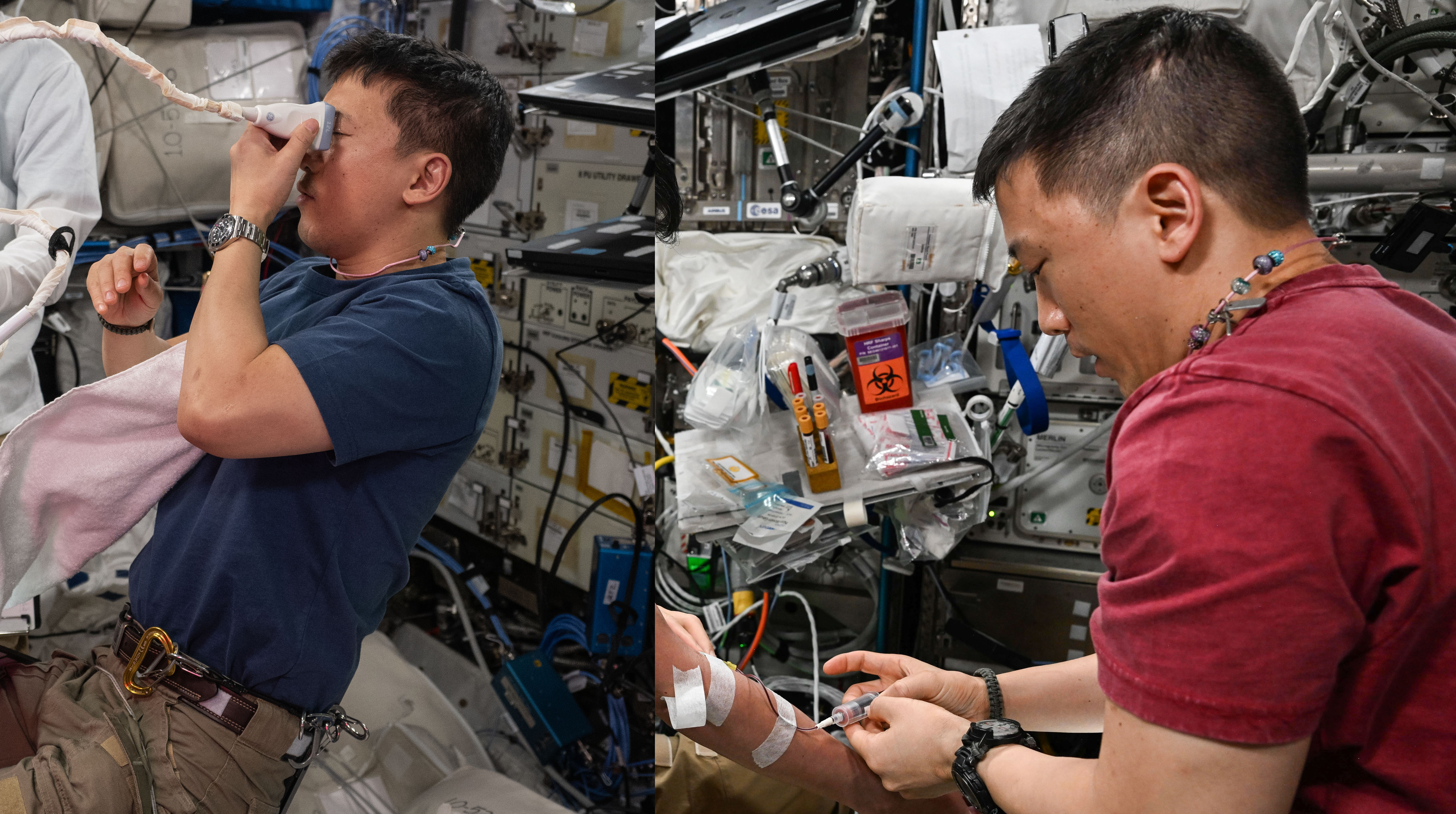
NASA astronaut Jonny Kim, a medical doctor, completed several routine medical exams while aboard the International Space Station. NASA flight surgeons and researchers monitor crew health using a variety of tools, including blood tests, eye exams, and ultrasounds.
Kim conducts an ultrasound of his eye in the left image. Eye exams are essential as long-duration spaceflight may cause changes to the eye’s structure and affect vision, a condition known as spaceflight associated neuro-ocular syndrome, or SANS. In the right image, Kim draws blood from a fellow crew member. These blood sample collections provide important insights into crew cartilage and bone health, cardiovascular function, inflammation, stress, immune function, and nutritional status.
NASA astronauts complete regular medical exams before, during, and after spaceflight to monitor astronaut health and develop better tools and measures for future human exploration missions to the Moon and Mars.
NASA astronaut Jonny Kim photographs dwarf tomato sprouts grown using a nutrient supplement instead of photosynthesis as part of a study on plant development and gene expression. The plants are given an acetate supplement as a secondary nutrition source, which could increase growth and result in better yields, all while using less power and fewer resources aboard the space station and future spacecraft.
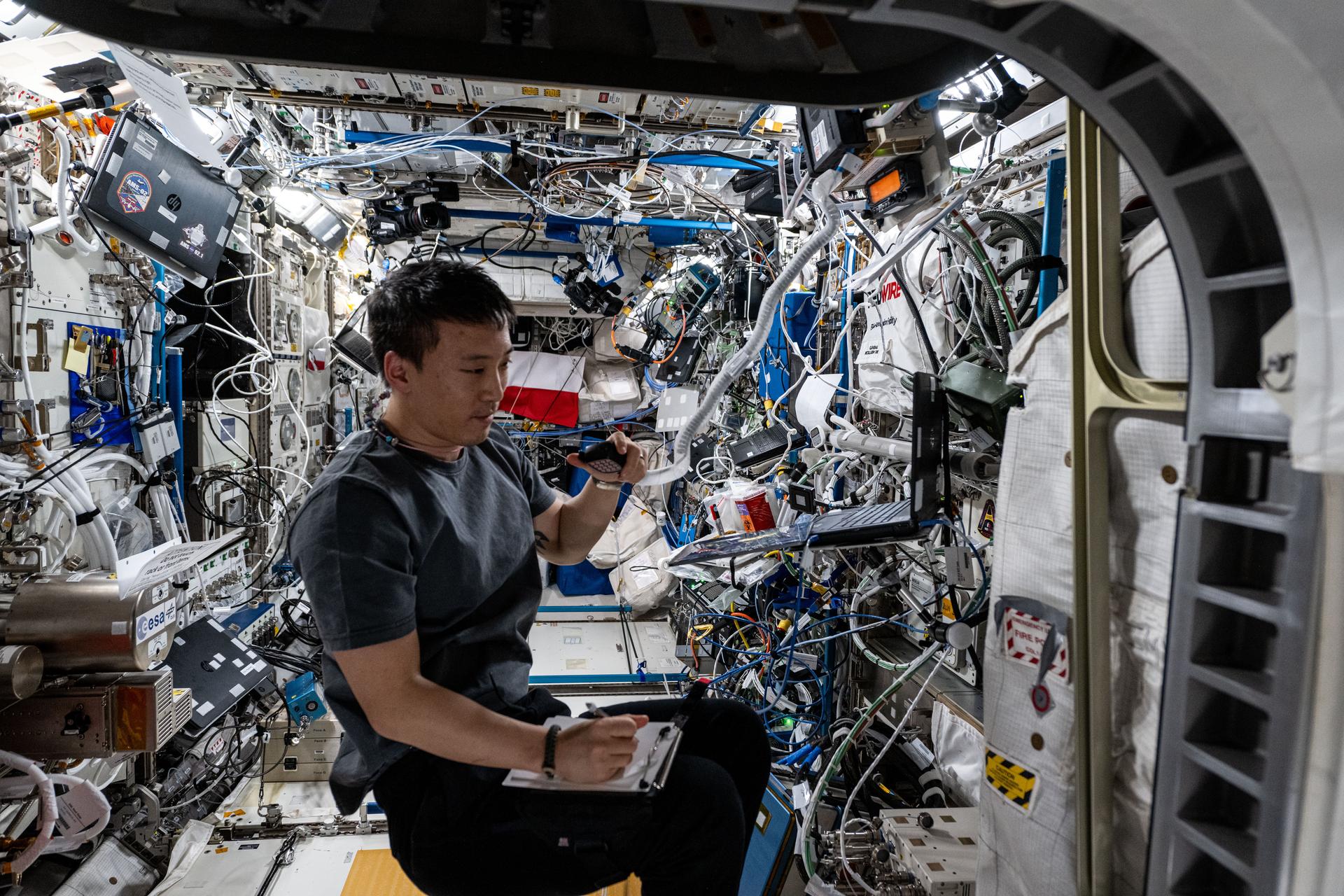
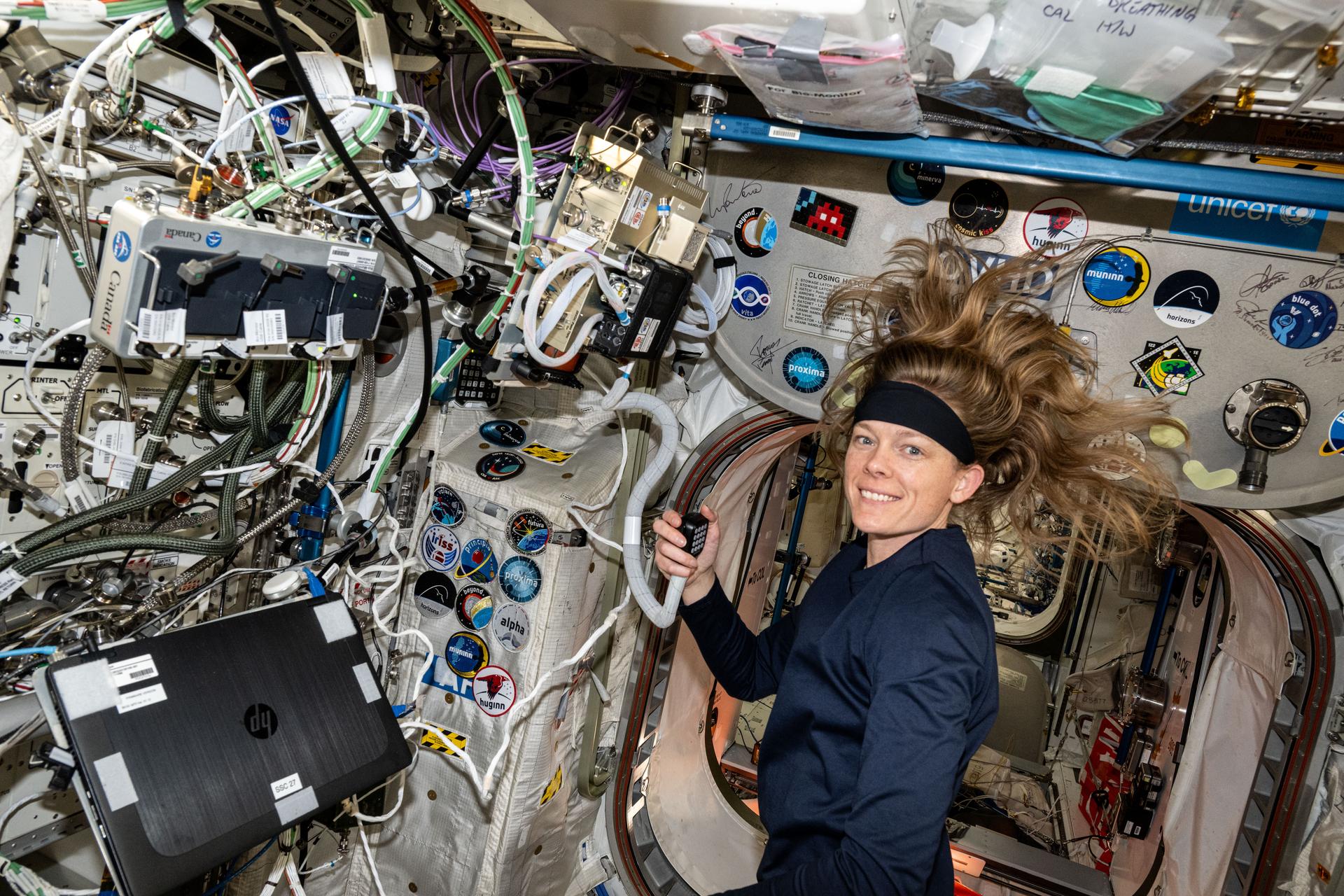
NASA astronaut Jonny Kim uses a ham radio to speak with students on Earth via an educational program connecting students worldwide with astronauts aboard the International Space Station. Students can ask about life aboard the orbiting laboratory and the many experiments conducted in microgravity. This program encourages an interest in STEM (science, technology, engineering, and mathematics) and inspires the next generation of space explorers.
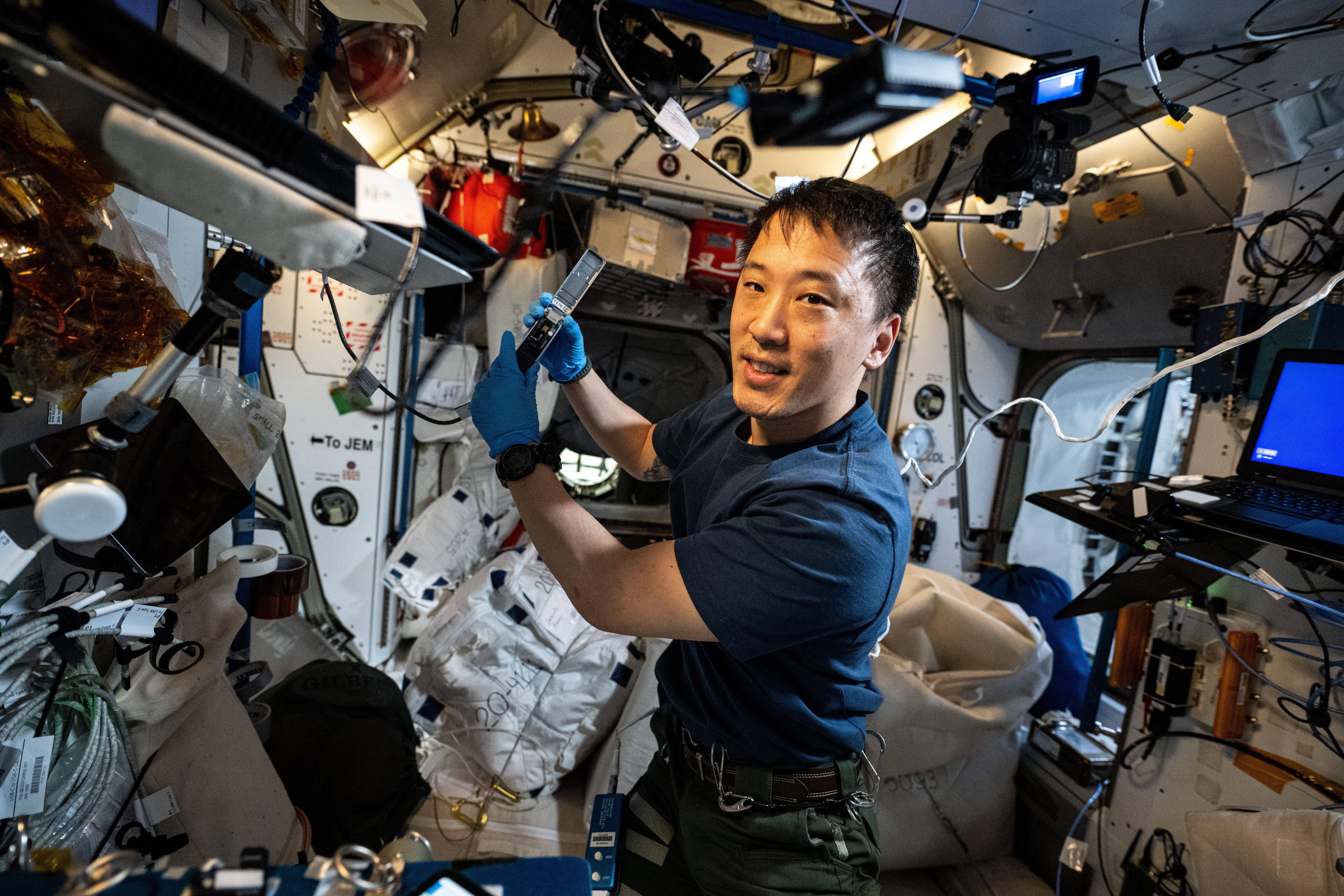
Secure and reliable data storage and transmission are essential to maintain the protection, accuracy, and accessibility of information. In this photo, NASA astronaut Jonny Kim displays research hardware that tests the viability of encoding, transmitting, and decoding encrypted information via DNA sequences. As part of this experiment, DNA with encrypted information is sequenced aboard the space station to determine the impact of the space environment on its stability. Using DNA to store and transmit data could reduce the weight and energy requirements compared to traditional methods used for long-duration space missions and Earth-based industries.
Future deep space exploration could rely on robotics remotely operated by humans. NASA astronaut Jonny Kim tests a technology demonstration that allows astronauts to remotely control robots on Earth from the International Space Station. Findings from this investigation could help fine-tune user-robot operating dynamics during future missions to the Moon, Mars, and beyond.
NASA astronaut Jonny Kim conducts an investigation to assess the effects of microgravity on bone marrow stem cells, including their ability to secrete proteins that form and dissolve bone. Bone loss, an age-related factor on Earth, is aggravated by weightlessness and is a health concern for astronauts. Researchers are evaluating whether blocking signals that cause loss could protect astronauts during long-duration spaceflights. The findings could also lead to preventative measures and treatments for bone loss caused by aging or disease on Earth.
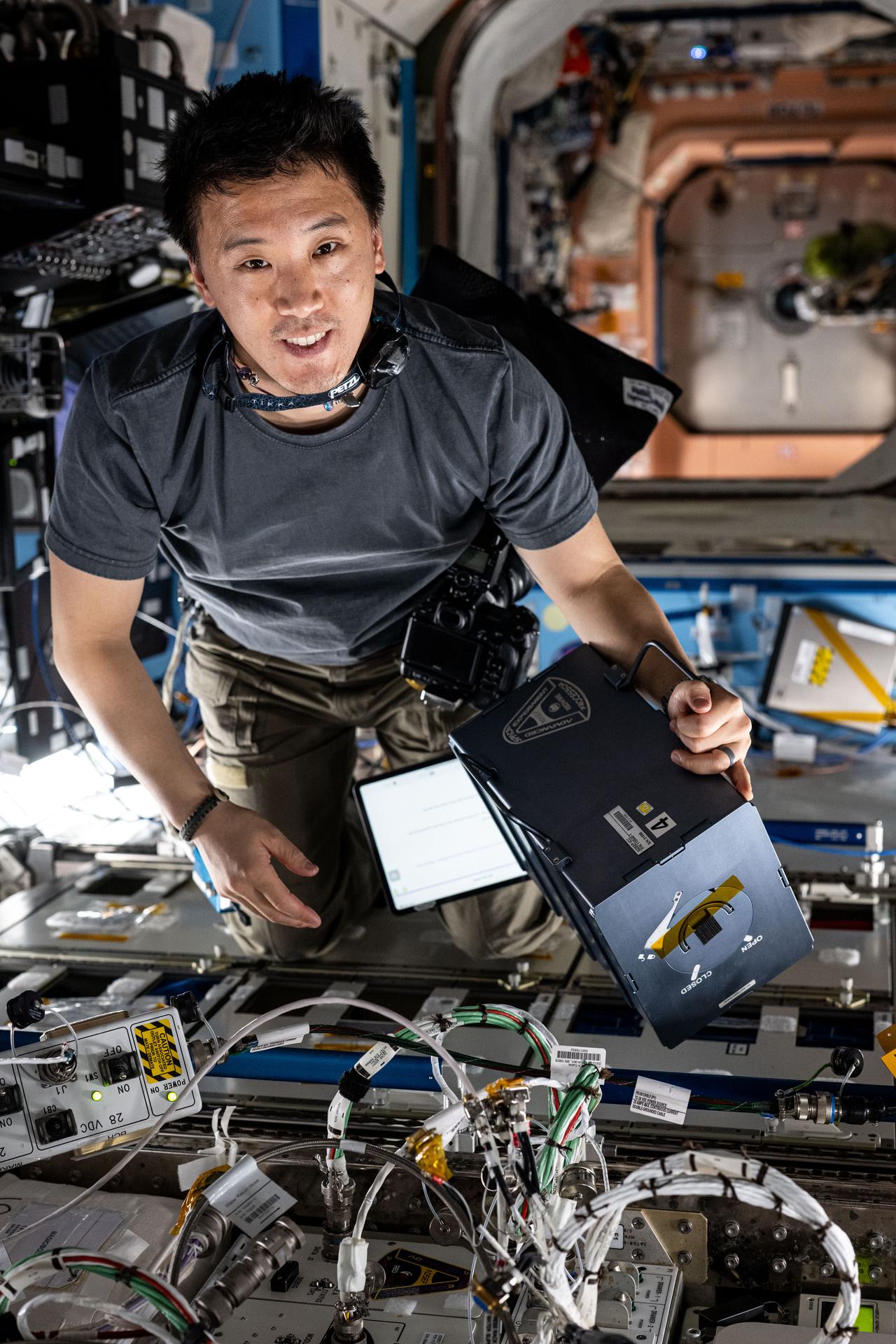
NASA astronaut Jonny Kim tests new hardware installed to an existing crystallization facility that enables increased production of crystals and other commercially relevant materials, like golden nanospheres. These tiny, spherical gold particles have optical and electronic applications, and are biocompatible, making them useful for medication delivery and diagnostics. As part of this experiment aboard the space station, Kim attempted to process larger, more uniform golden nanospheres than those produced on the ground.
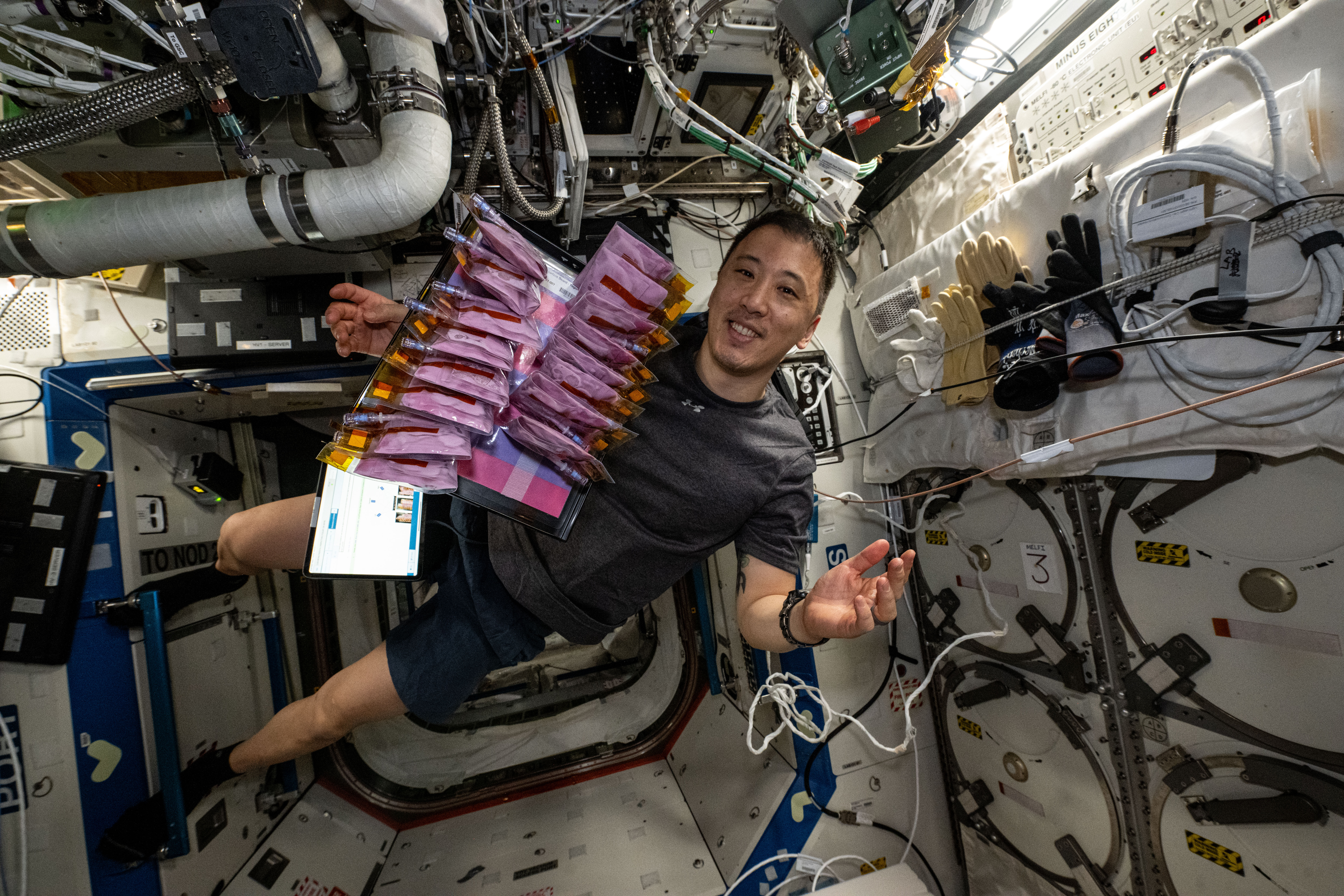
Some vitamins and nutrients in foods and supplements lose their potency during long-term storage, and insufficient intake of even a single nutrient can lead to diseases and other health issues. NASA astronaut Jonny Kim displays purple-pink production bags for an investigation aimed at producing nutrient-rich yogurt and kefir using bioengineered yeasts and probiotics. The unique color comes from a food-grade pH indicator that allows astronauts to visually monitor the fermentation process.
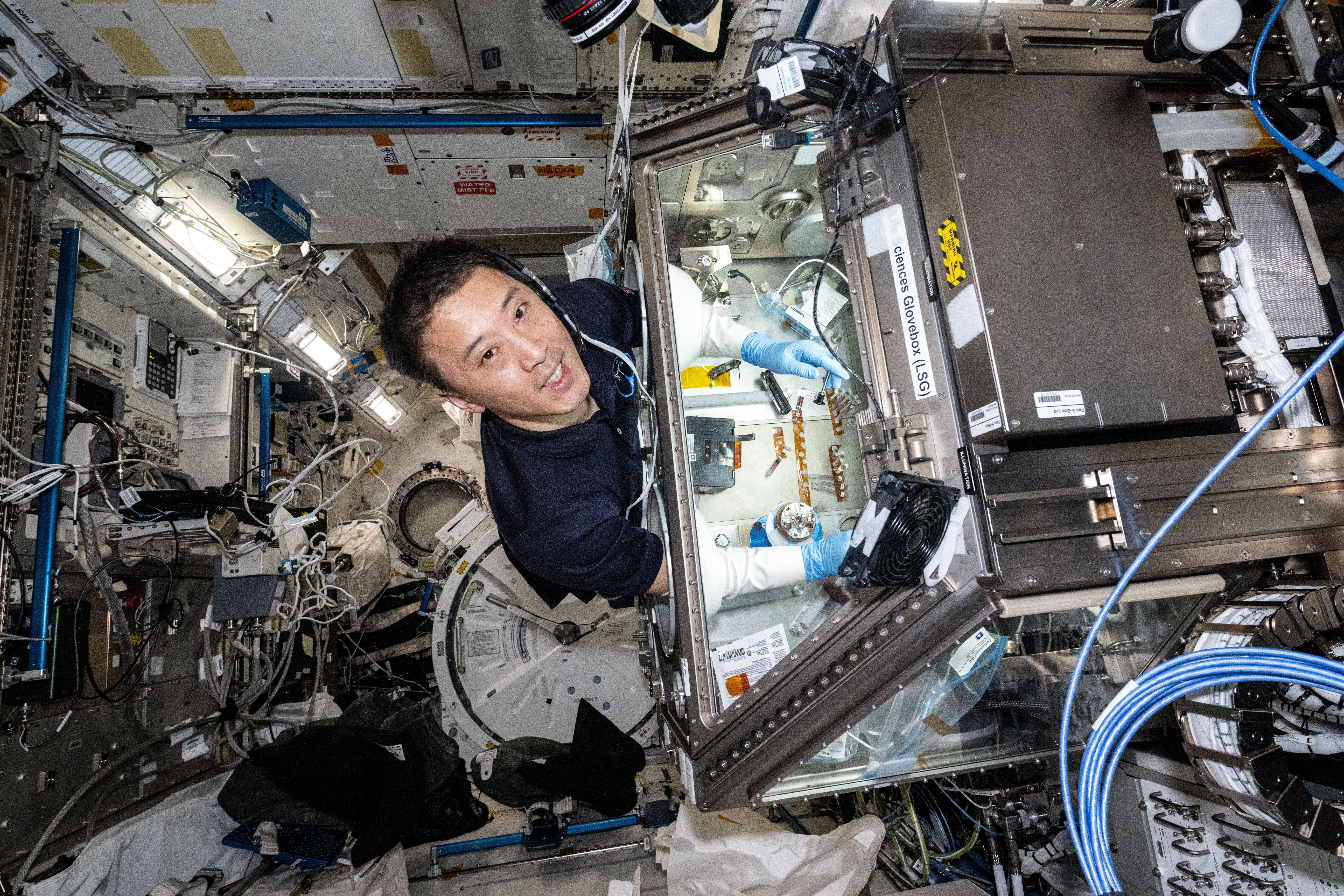
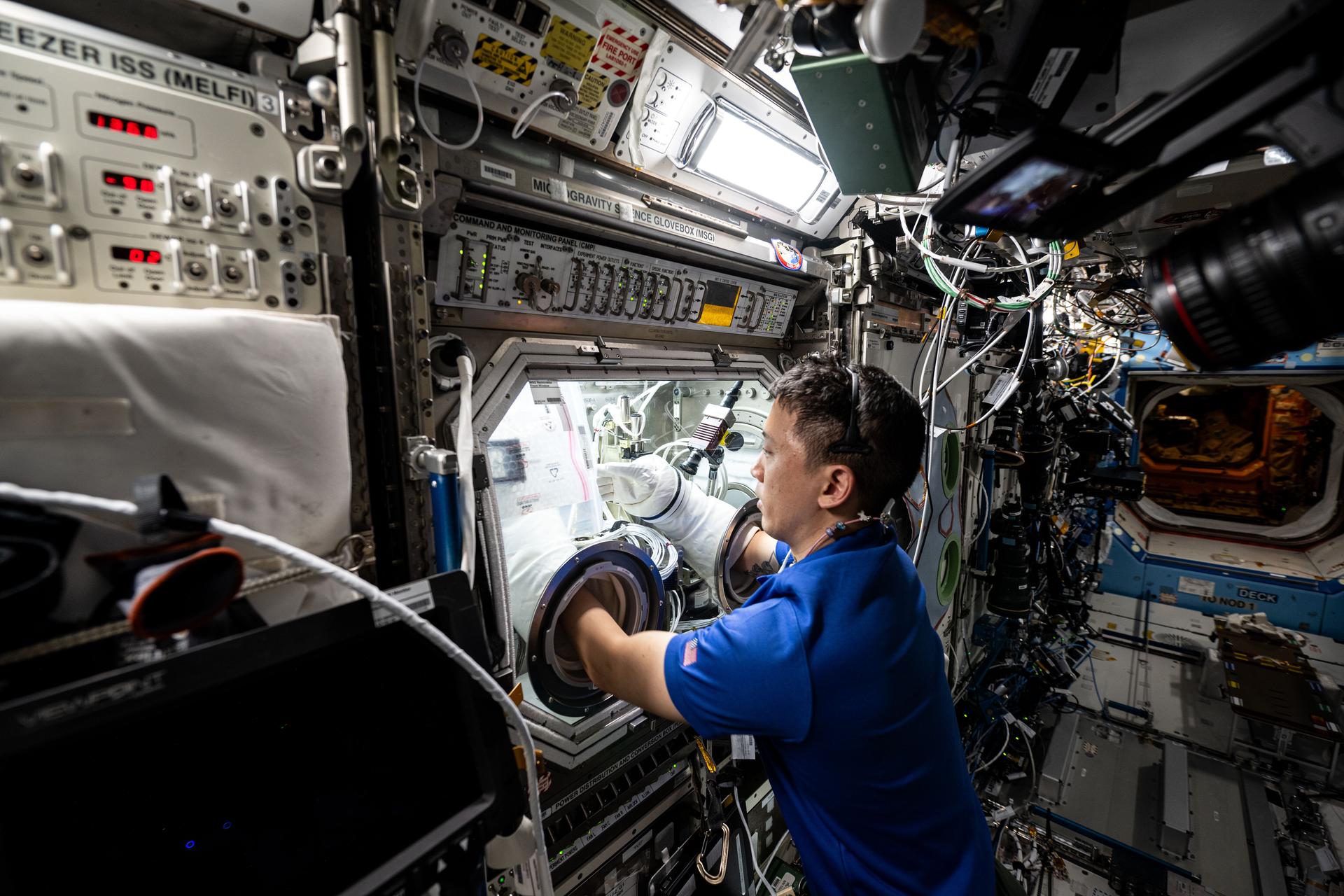
NASA astronaut Jonny Kim uses the Microgravity Science Glovebox to study how high-concentration protein fluids behave in microgravity. This study helps researchers develop more accurate models to predict the behavior of these complex fluids in various scenarios, which advances manufacturing processes in space and on Earth. It also can enable the development of next-generation medicines for treating cancers and other diseases.
On Sept. 28, 2025, NASA astronaut Jonny Kim photographed Hurricane Humberto from the International Space Station. Located at 250 miles above Earth, the orbiting laboratory’s unique orbit allows crew members to photograph the planet’s surface including hurricanes, dust storms, and fires. These images are used to document disasters and support first responders on the ground.
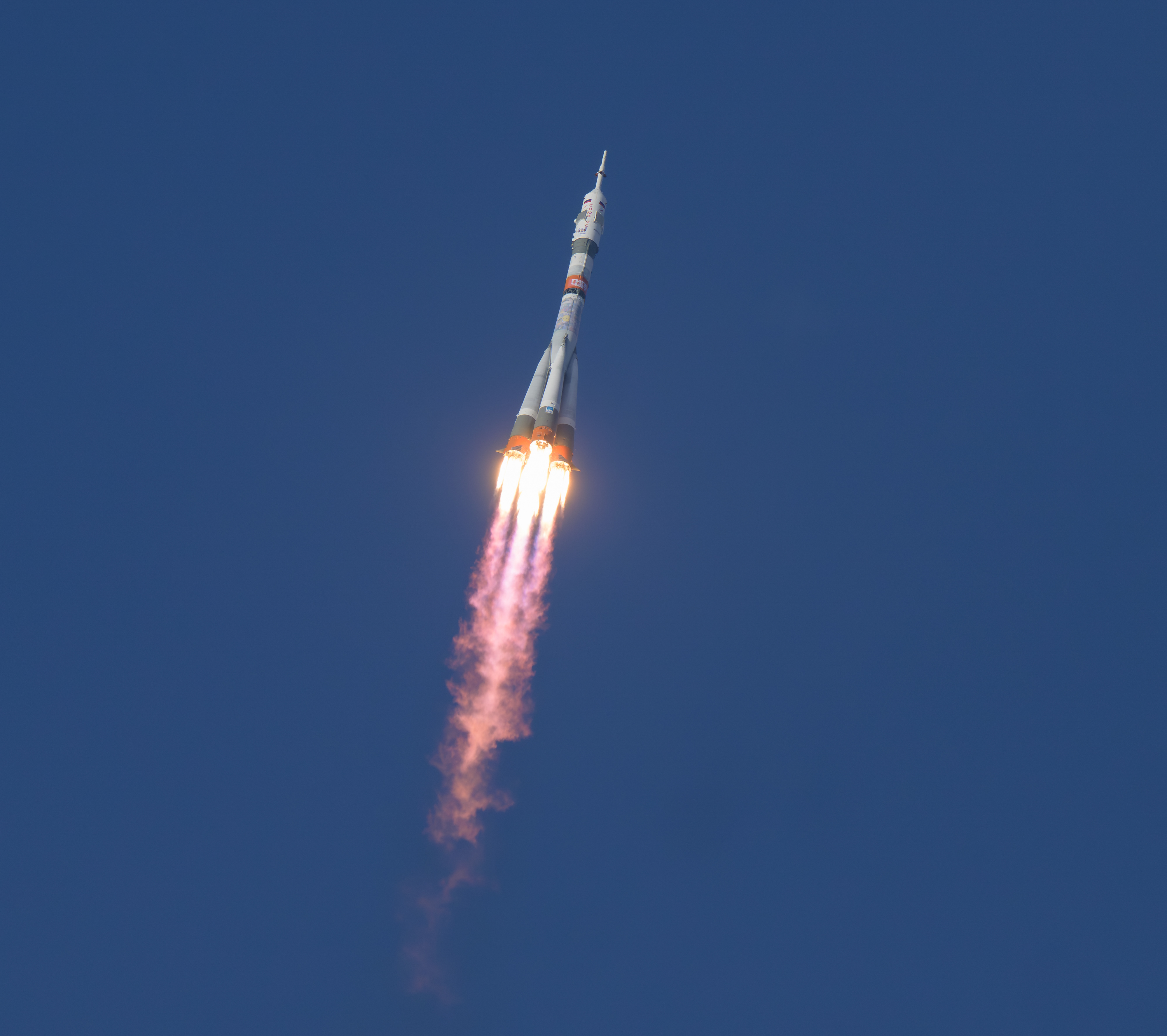
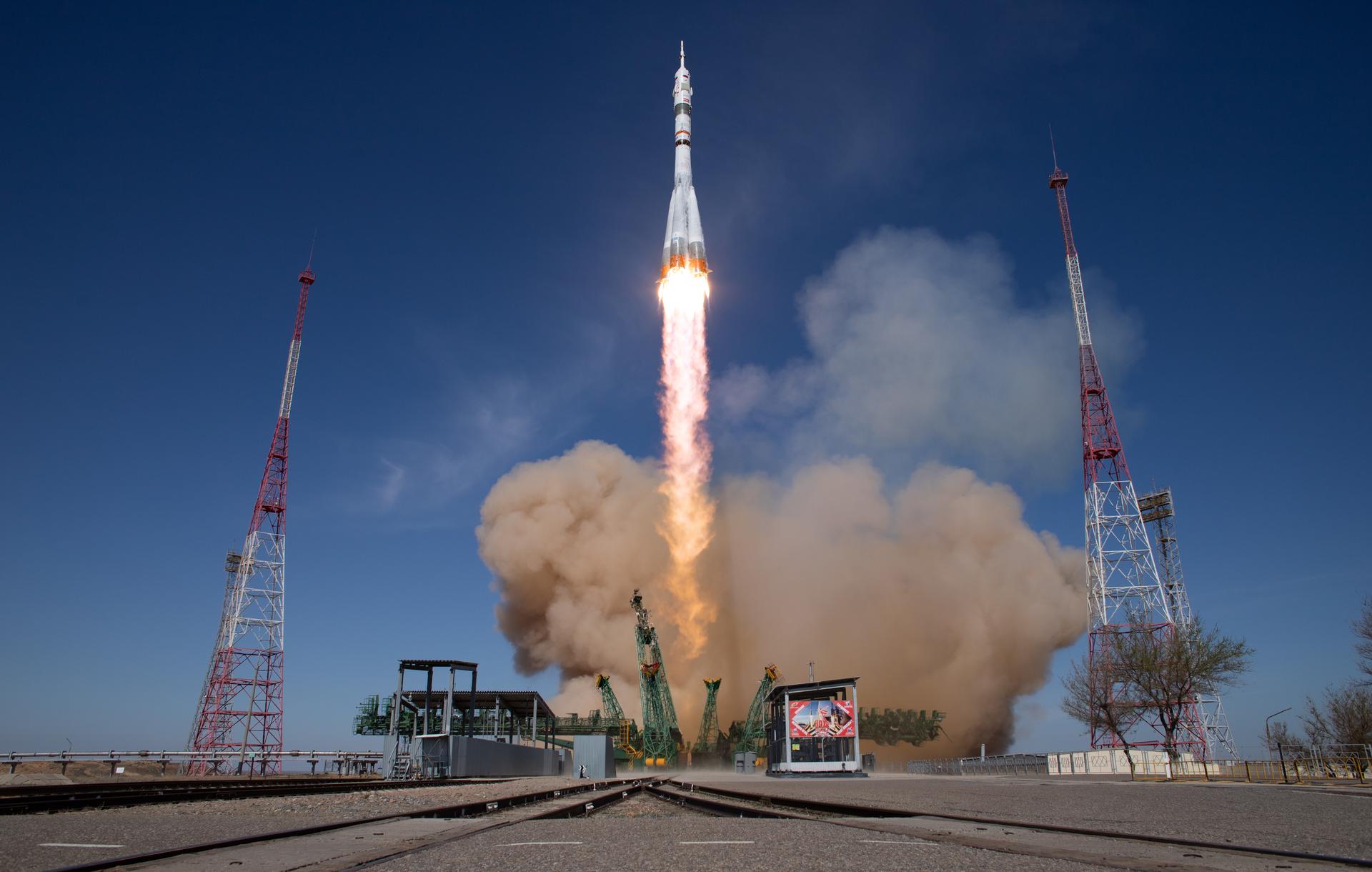
The Soyuz rocket launches to the International Space Station with Expedition 74 crew members: NASA astronaut Chris Williams, and Roscosmos cosmonauts Sergey Kud-Sverchkov and Sergei Mikaev, on Thursday, Nov. 27, 2025, at the Baikonur Cosmodrome in Kazakhstan.
NASA/Bill Ingalls
NASA astronaut Chris Williams, accompanied by Roscosmos cosmonauts Sergey Kud-Sverchkov and Sergei Mikaev, safely arrived at the International Space Station on Thursday, expanding the orbiting laboratory’s crew to 10 for the next two weeks.
The trio launched aboard the Soyuz MS-28 spacecraft at 4:27 a.m. EST (2:27 p.m. Baikonur time) from the Baikonur Cosmodrome in Kazakhstan. After a three-hour, two-orbit journey, the spacecraft docked at 7:34 a.m. to the space station’s Rassvet module.
Following hatch opening, expected about 10:10 a.m., the new arrivals will be welcomed by the Expedition 73 crew, including NASA astronauts Mike Fincke, Zena Cardman, and Jonny Kim; JAXA (Japan Aerospace Exploration Agency) astronaut Kimiya Yui; and Roscosmos cosmonauts Sergey Ryzhikov, Alexey Zubritsky, and Oleg Platonov.
NASA’s live coverage of hatch opening begins at 9:50 a.m. on NASA+, Amazon Prime, and YouTube. Learn how to watch NASA content through a variety of platforms, including social media.
During his stay aboard the space station, Williams will conduct scientific research and technology demonstrations aimed at advancing human space exploration and benefiting life on Earth. He will help install and test a new modular workout system for long-duration missions, support experiments to improve cryogenic fuel efficiency and grow semiconductor crystals in space, as well as assist NASA in designing new re-entry safety protocols to protect crews during future missions.
Expedition 74 is scheduled to begin on Monday, Dec. 8, following the departure of Kim, Ryzhikov, and Zubritsky, as they conclude an eight-month science mission aboard the orbital outpost.
Watch the change of command ceremony at 10:25 a.m. on Sunday, Dec. 7, as station leadership transfers from Ryzhikov to Fincke, live on NASA+.
Learn more about International Space Station, crews, research, and operations at:
CHAPEA mission 2 crew members (from left) Ross Elder, Ellen Ellis, Matthew Montgomery, and James Spicer pose in front of the door to the simulated Martian landscape for their first photo inside the CHAPEA habitat after their mission began in October 2025. Credits: NASA/CHAPEA Crew
A crew of four research volunteers stepped inside NASA’s CHAPEA (Crew Health and Performance Exploration Analog) habitat on Oct. 19, marking the start of the agency’s second 378-day simulated Mars mission.
Ross Elder, Ellen Ellis, Matthew Montgomery, and James Spicer are living and working inside the roughly 1,700-square-foot 3D-printed habitat at the agency’s Johnson Space Center in Houston until Oct. 31, 2026.
“The information and lessons learned through CHAPEA will inform real-life mission planning, vehicle and surface habitat designs, and other resources NASA needs to support crew health and performance as we venture beyond low-Earth orbit,” said Sara Whiting, Human Research Program project scientist. “Through these lessons, NASA’s Human Research Program is reducing human health and performance risks of spaceflight to enable safe and successful crewed missions to the Moon, Mars, and beyond.”
The crew will face the challenges of a real Mars mission, and only leave to perform simulated “Marswalk” activities directly outside the habitat, wearing spacesuits, to traverse a simulated Mars environment filled with red sand. During these Marswalks, they will remain isolated within the building that houses CHAPEA at NASA Johnson.
“These crewmembers will help provide foundational data for mission planning and vehicle design and inform trades between resources, methods, and technologies that best support health and performance within the constraints of living on Mars,” said Grace Douglas, CHAPEA principal investigator. “The information gained from these simulated missions is critical to NASA’s goal of sending astronauts to explore Mars.”
During the year ahead, the crew will complete a variety of activities designed to replicate life and work on a long-duration mission on Mars, including high-tempo simulated Marswalks, robotic operations, habitat maintenance, physical exercise, and crop cultivation. The mission also aims to investigate how the crew adapts and responds to various environmental stressors that may arise during a real Martian mission, including limited access to resources, prolonged isolation, 22-minute communication delays, and equipment failures. Researchers will study how the team manages these conditions, which will inform future protocols and plans ahead of future crewed missions to Mars.
The first CHAPEA mission, which took place in the same habitat, concluded on July 6, 2024.
The CHAPEA mission 2 main crew and two alternate crew members are pictured in front of the Space Exploration Vehicle, the prototype pressurized rover that transported crew members to the habitat at the start of the mission. Credits: NASA/James Blair
Ross Elder, CHAPEA mission 2 commander, waves to agency leaders and staff who are supporting the mission before he steps into the habitat. Credits: NASA/James Blair
Suzanne Bell, CHAPEA Mission 2 Co-Principal Investigator, offers remarks to crew members Matthew Montgomery, James Spicer, Ross Elder, and Ellen Ellis directly before they enter the habitat for the 378-day mission. Credits: NASA/James Blair
____
NASA’s Human Research Program
NASA’s Human Research Program pursues methods and technologies to support safe, productive human space travel. Through science conducted in laboratories, ground-based analogs, commercial missions, the International Space Station and Artemis missions, the program scrutinizes how spaceflight affects human bodies and behaviors. Such research drives the program’s quest to innovate ways that keep astronauts healthy and mission ready as human space exploration expands to the Moon, Mars, and beyond.
To see Earth from space is to be forever changed by the view. Since Alan Shepard became the first American to lay eyes on our home planet from above, countless NASA astronauts have described feeling awed by the astonishing sight and a profound shift in perspective that followed.
NASA astronaut Matthew Dominick points his camera through a cupola window as the International Space Station orbits 262 miles above the Atlantic Ocean off the coast of Africa.
NASA
This unique experience is known as the overview effect – a term coined in 1987 by space philosopher and author Frank White in a book of the same name. The phenomenon creates powerful changes in the way astronauts think about Earth and life and can be particularly strong for those who lived and worked aboard the International Space Station during its 25 years of continuous human presence. The orbiting laboratory’s cupola module, equipped with seven windows looking down on Earth, provides the perfect place for observation and reflection.
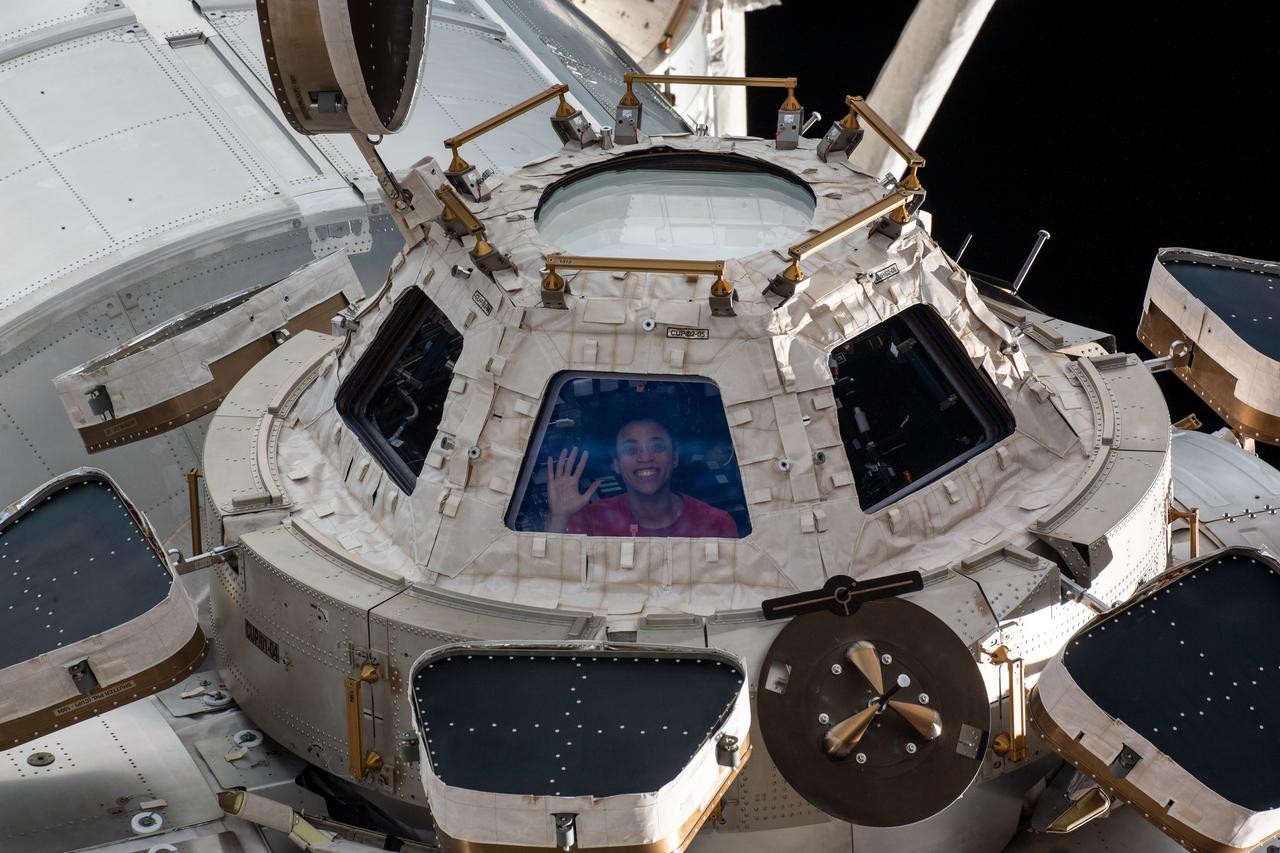
NASA astronaut Jessica Watkins is pictured looking out from the International Space Station’s “window to the world” – the cupola. Astronauts use the seven-windowed observation module to monitor the arrival of spacecrafts at the orbiting laboratory and view the Earth below.
NASA
As Artemis II Mission Specialist Christina Koch explained:
“The overview effect is when you’re looking through the cupola and you see the Earth as it exists with the whole universe in the background. You see the thin blue line of the atmosphere, and then when you’re on the dark side of the Earth, you actually see this very thin green line that shows you where the atmosphere is. What you realize is every single person that you know is sustained and inside of that green line and everything else outside of it is completely inhospitable. You don’t see borders, you don’t see religious lines, you don’t see political boundaries. All you see is Earth and you see that we are way more alike than we are different.”
Koch’s Artemis II crewmate, NASA astronaut Victor Glover, said the overview effect’s potency is closely tied to the “sea level effect” – humanity’s shared experience on Earth. “You come back to sea level, and then you have a choice,” he explained. “Are you going to try to live your life a little differently? Are you going to really choose to be a member of this community of Earth?”
NASA astronaut Don Pettit, Expedition 30 flight engineer, is pictured in a window of the cupola of the International Space Station, backdropped by Earth’s horizon and the blackness of space.
NASA
Many astronauts emphasize the importance of unity after experiencing the overview effect. “You see that it’s a single planet with a shared atmosphere. It’s our shared place in this universe,” said former NASA astronaut Bob Behnken. “I think that perspective, as we go through things like the pandemic or we see the challenges across our nation or across the world, we recognize that we all face them together.”
Seeing the Earth from space can also change their concept of home. Former NASA astronaut Nicole Stott recalls wanting to see her home state of Florida during her first mission to the International Space Station. “Finally, we were flying over Florida. I wanted to go to the window and see it, and then realized somewhere down the line that I wasn’t looking at Florida that same way anymore,” she said. “I still wanted to see Florida, but Florida had just become this special part of home, which is Earth. We’re all earthlings.”
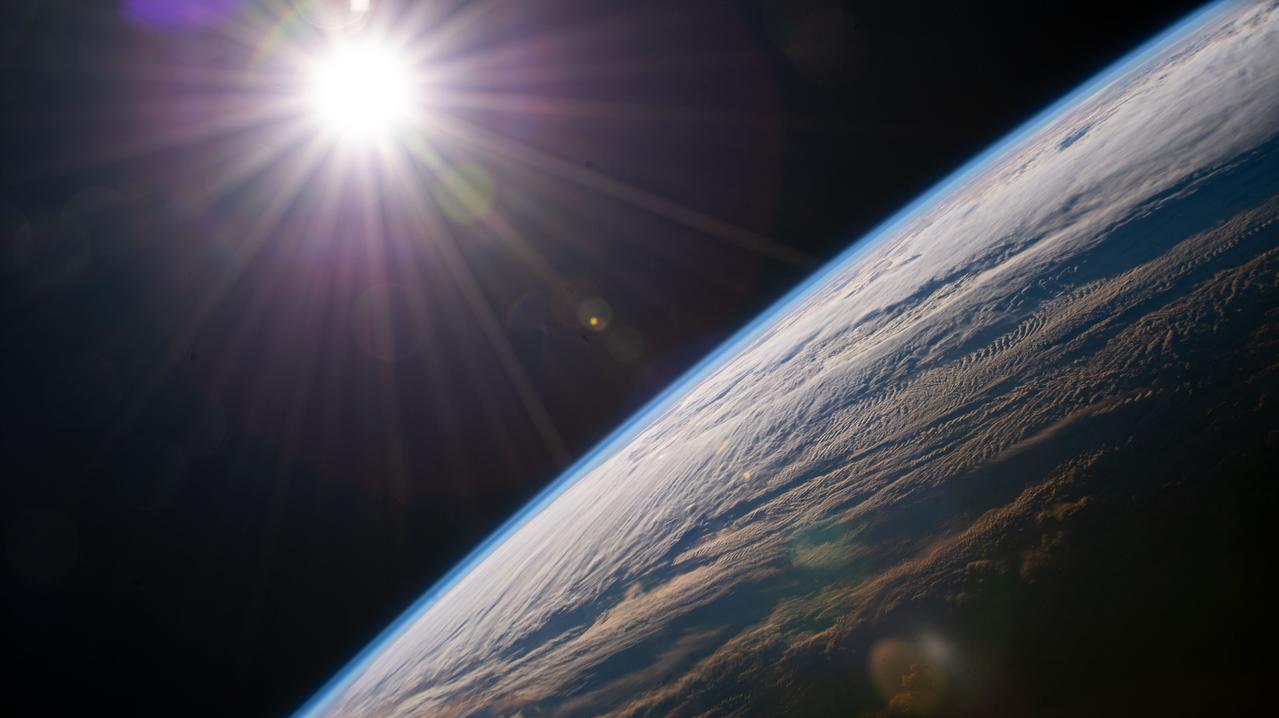
The sun shines above Earth’s horizon as the space station orbits 264 miles above the Canadian province of Quebec.
NASA
For some astronauts, their perspective shift inspired them to make changes on the ground. “I think if you’re not a conservationist before you go to space, you’re at least partly a conservationist when you come back. Because when you see how thin that atmosphere is, that protective layer that we have here, you think, wow, we really have to take care of this because it does look so fragile from space,” said retired NASA astronaut Mike Foreman.
Others hope to share the overview effect with more people. “That perspective helps you grow. It has really inspired me to try to get more people this experience and to get a permanent foothold in the stars for our species,” said former NASA astronaut Jack Fischer. “I want to do everything I possibly can to help the human species, humanity as a whole, go further and grow and evolve like I know they’re capable of.”
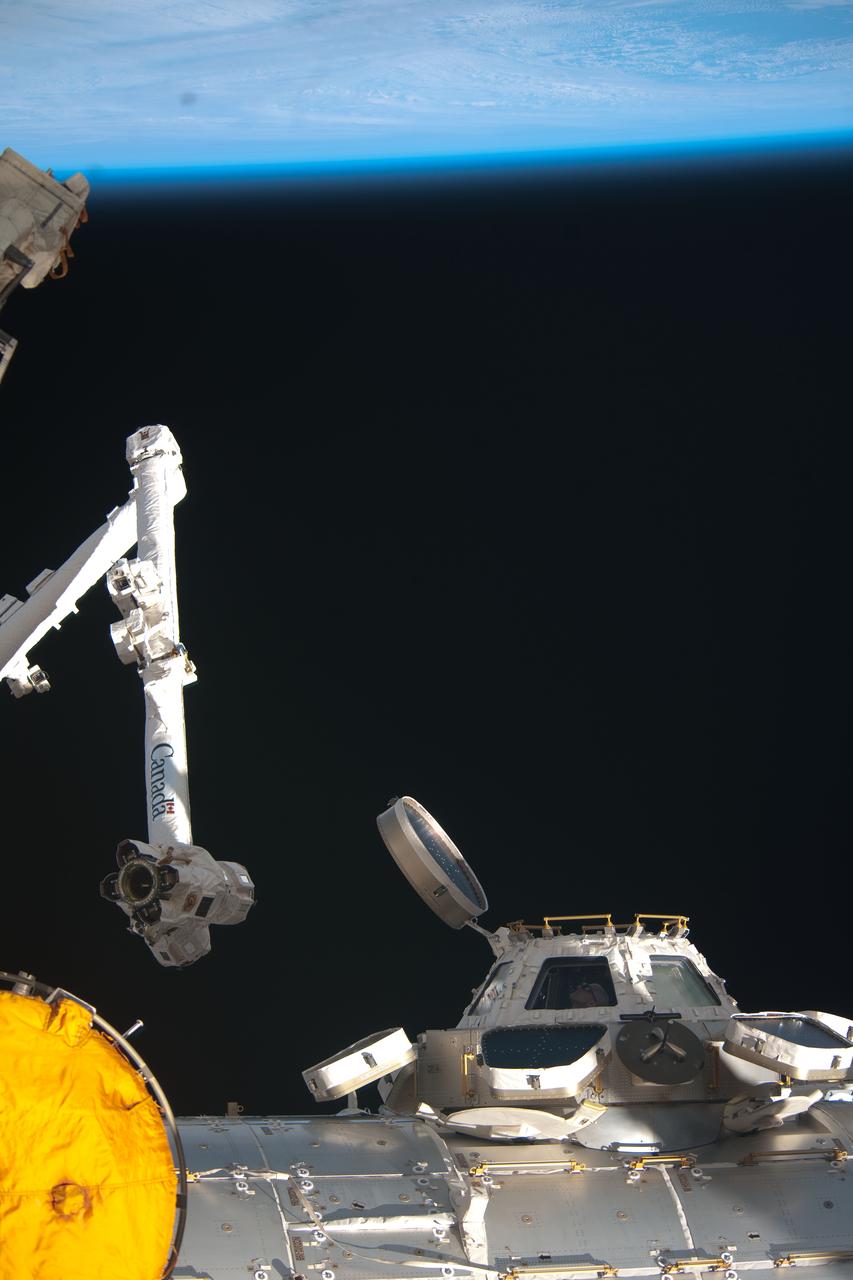
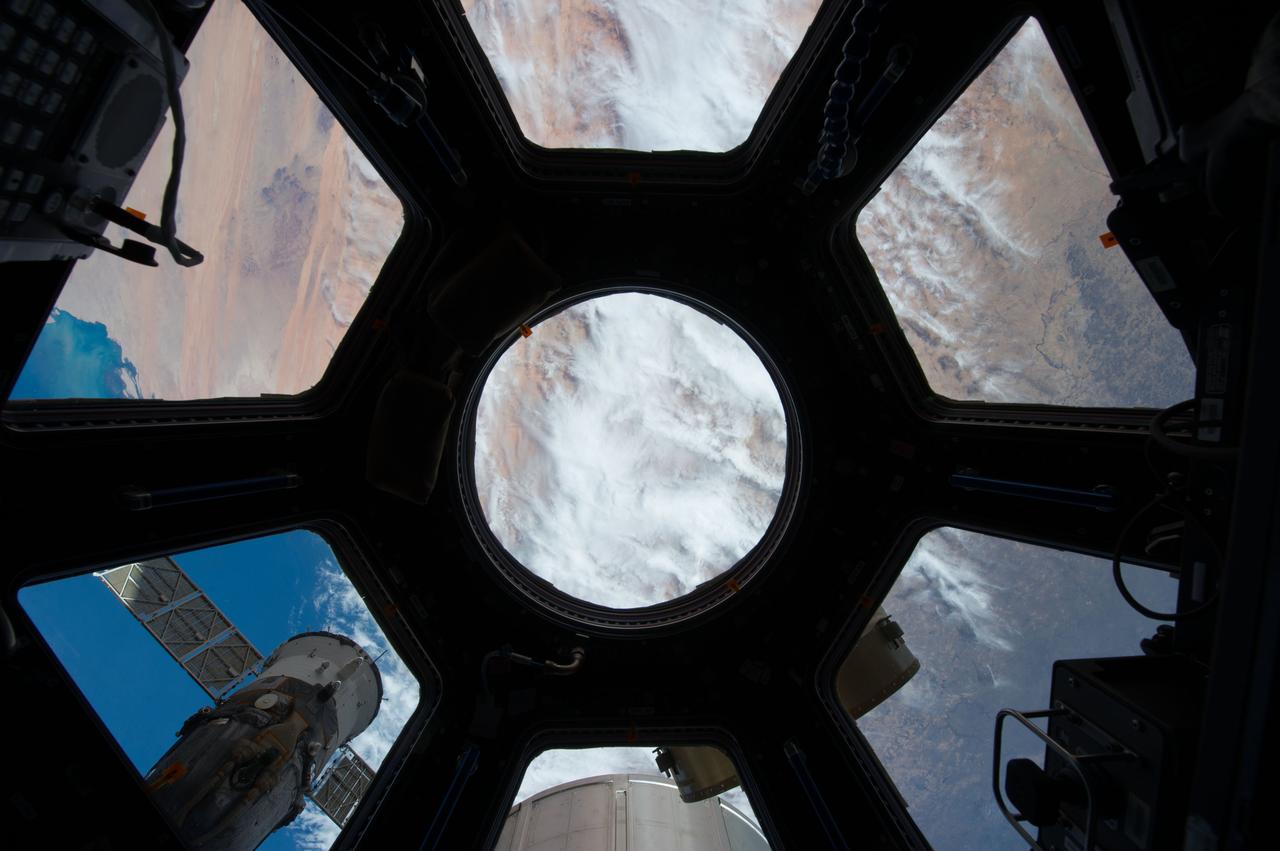
An Earth observation taken through cupola windows by the Expedition 39 crew. Portions of the International Space Station are in view.
NASA
Future crews to the orbiting laboratory can look forward to a similar experience. “In that instant, when you’re overwhelmed with that vista, when your eyes see nothing but the beauty of the Earth – every single crew member that I brought in [the cupola] for that exposure, cried,” said retired NASA astronaut T.J. Creamer. “It is heart stopping. It is soul pounding. It is breathtaking.”
For more astronaut perspectives from the International Space Station, watch “Down to Earth” on NASA+.
25 Years of Scientific Discovery Aboard the International Space Station
November marks 25 years of human presence aboard the International Space Station, a testament to international collaboration and human ingenuity. Since the first crew arrived on Nov. 2, 2000, NASA and its partners have conducted thousands of research investigations and technology demonstrations to advance exploration of the Moon and Mars and benefit life on Earth.
Researchers have taken advantage of the unique microgravity environment to conduct experiments impossible to replicate on Earth, transforming research across disciplines. More than 4,000 experiments have pushed the boundaries of science, sparked discoveries, and driven scientific breakthroughs.
“25 years ago, Expedition 1 became the first crew to call the International Space Station home, beginning a period of continuous human presence in space that still continues to this day,” said NASA acting administrator Sean Duffy. “This historic milestone would not have been possible without NASA and its partners, as well as every astronaut and engineer who works to keep the lights on in low Earth orbit.”
To celebrate a quarter century of innovation in microgravity, NASA is highlighting 25 scientific breakthroughs that exemplify the station’s enduring impact on science, technology, and exploration.
Building the road to the Moon and Mars
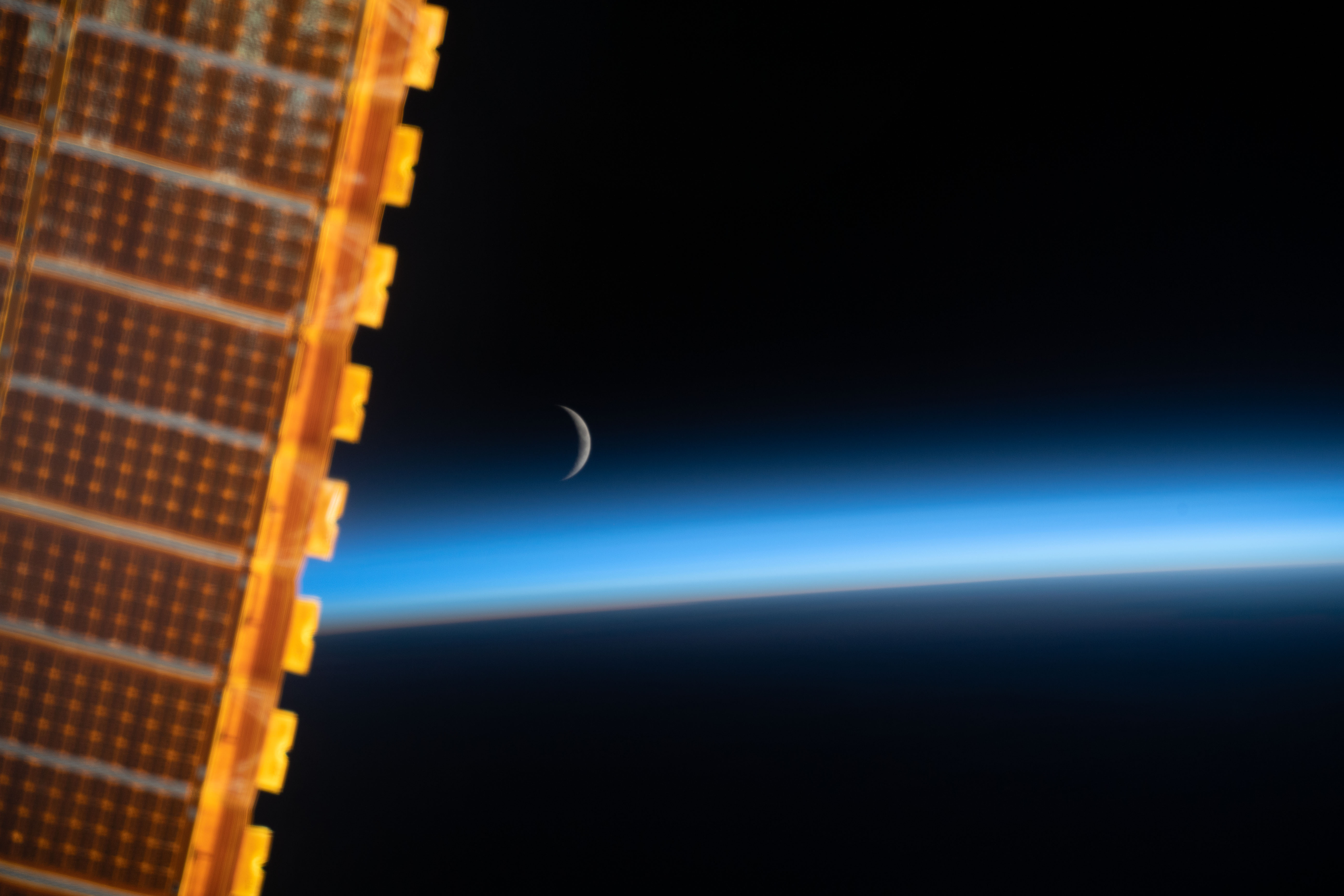
The waxing crescent moon appears just above the Earth’s atmosphere as the International Space Station orbits the Earth.
Navigation, communication, and radiation shielding technologies proven aboard the space station are being integrated into spacecraft and missions to reach the Moon and Mars.
Robotic systems, for example a robotic surgeon and autonomous assistants, will expand available medical procedures and allow astronauts to dedicate time to more crucial tasks during missions far from Earth.
Astronauts have used recycled plastic and stainless steel to 3D print tools and parts. The ability to 3D print in space lays the groundwork for on-demand repair and fabrication during future deep space missions where resupply isn’t readily available.
Humanity’s push to the Moon and Mars begins with discoveries in low Earth orbit. From demonstrating how astronauts can live, work, and repair equipment off Earth to testing life-support systems and advanced materials, every innovation aboard the station helps to advance NASA’s Artemis and other exploration initiatives and brings humanity closer to thriving beyond our planet.
Sustaining life beyond Earth
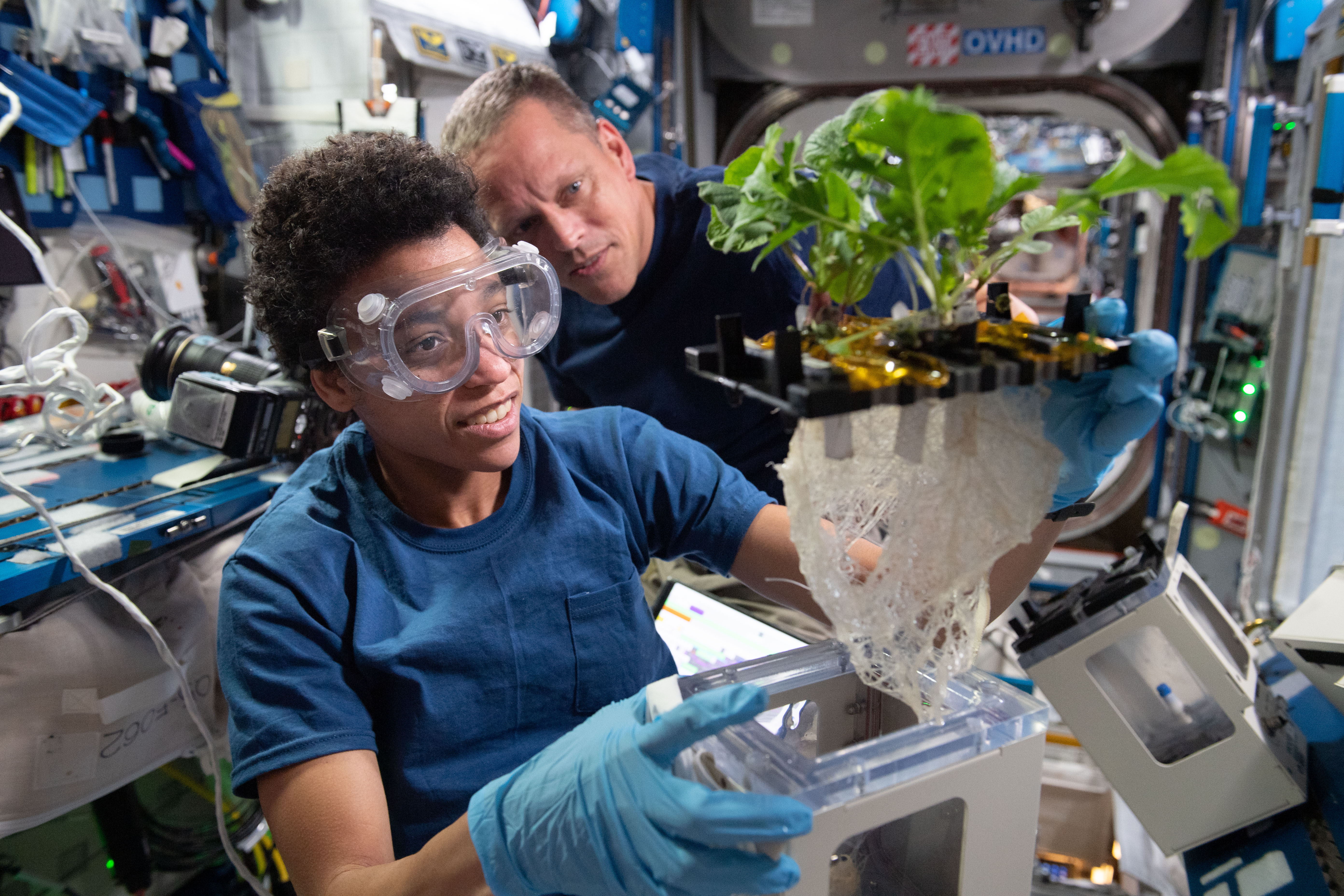
NASA astronauts Jessica Watkins, front, and Bob Hines, back, work on XROOTS aboard the International Space Station. This experiment used the station’s Veggie facility to test soilless hydroponic and aeroponic plant growth.
NASA
As NASA prepares to return humans to the Moon through the Artemis program and push onward to Mars, sustaining life beyond Earth is more critical than ever.
Astronauts have grown more than 50 species of plants in space, including tomatoes, bok choi, romaine lettuce, and chili peppers.
Advanced life support systems are capable of recycling up to 98% of water in the U.S. segment aboard the space station, the ideal level needed for exploration missions.
Researchers have sequenced DNA in orbit and are advancing techniques to enable real-time assessment of microbial life in space, which is essential to maintaining astronaut health.
Why this matters:
By growing food, recycling water, and improving medical care in space, NASA is paving the way for future long-duration missions to the Moon and Mars while revolutionizing agriculture and medicine back home.
Helping humanity on Earth
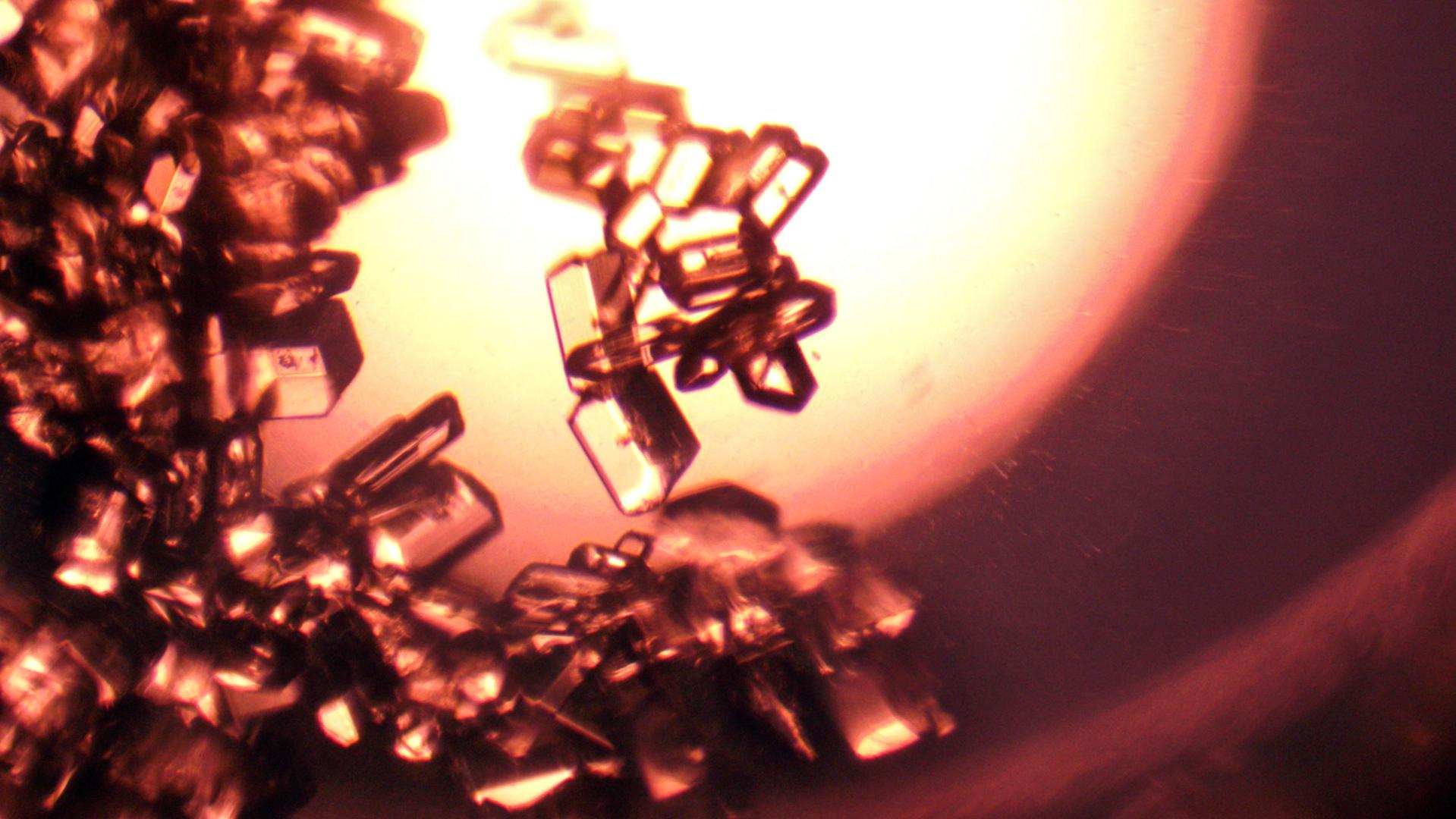
Pharmaceutical crystals grown aboard the International Space Station are shown after returning to Earth.
Redwire
Research aboard the orbiting laboratory not only pushes humanity farther into the cosmos but can help address complex human health issues on the ground. By providing a platform for long-term microgravity research, the space station fosters breakthroughs that yield direct benefits to people on Earth.
Research aboard the space station provides new insights to develop treatments for diseases like cancer, Alzheimer’s, Parkinson’s, and heart disease by revealing how microgravity alters cellular functions.
New developments in medicine for cancer, muscular dystrophy, and neurodegenerative diseases have come from growing protein crystals in microgravity with larger, more organized structures.
High quality stem cells can be grown in greater quantities in space, helping to develop new regenerative therapies for neurological, cardiovascular, and immunological conditions.
Pioneering efforts in 3D bioprinting, which uses cells, proteins, and nutrients as source material, have produced human tissue structures such as a knee meniscus and heart tissue, a major step toward manufacturing organs in space for transplant patients on Earth.
Researchers are using miniaturized tissue models to observe how space affects tissues and organ systems, offering new ways to develop and test medicines to protect astronauts on future missions and improve treatments on Earth.
Photos taken by astronauts have supported emergency response to natural disasters, such as hurricanes, with targeted views from space.
Instruments mounted on the space station protect critical space infrastructure and provide data on the planet’s natural patterns by measuring Earth’s resources and space weather.
Why this matters:
Microgravity research is moving us closer to manufacturing human organs in space for transplant and revealing new ways to fight cancer, heart disease, osteoporosis, neurodegenerative disease, and other serious illnesses that affect millions of people worldwide. The station also serves as an observation platform to monitor natural disasters, weather patterns, and Earth’s resources.
Understanding our universe
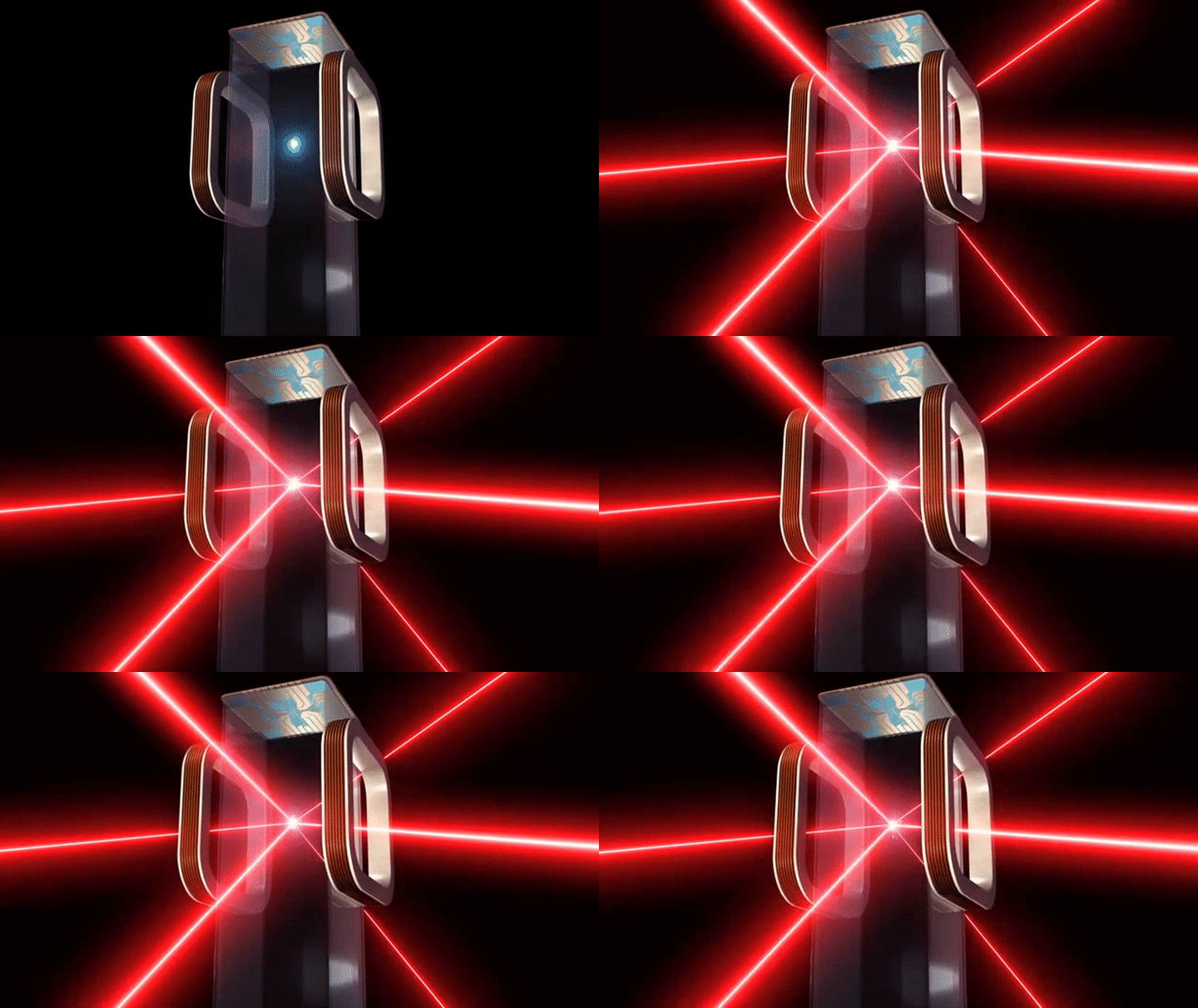
Artist concept of operations inside NASA’s Cold Atom Laboratory aboard the International Space Station.
NASA
The space station offers scientists an unparalleled vantage point to learn about the fundamental behavior of the universe. By studying cosmic phenomena typically blocked or absorbed by Earth’s atmosphere and observing physics at an atomic level, researchers can probe mysteries impossible to study from Earth.
Researchers have recorded billions of cosmic events, helping scientists search for antimatter and dark matter signatures in space.
Scientists have created and studied the fifth state of matter on the space station, allowing researchers to use quantum science to advance technology like space navigation, satellite operations, and GPS systems on Earth.
Why this matters:
Research aboard the space station is helping us unravel the deepest mysteries of our universe, from the smallest quantum particles to the most powerful cosmic explosions. Observations of collapsing stars and black holes could inspire new navigation tools using cosmic signals and expand our grasp of space-time. Studies of antimatter and dark matter bring us closer to understanding the 95% of the universe invisible to the human eye. Creating the fifth state of matter in space unlocks new quantum pathways that could transform technology on Earth and in space.
Learning new physics
This image shows a flame ignited as part of the Flame Design investigation on the International Space Station.
NASA
Physical processes behave differently in microgravity, offering scientists a new lens for discovery.
Engineers can design more efficient fuel and life support systems for future spacecraft thanks to studies of fluid boiling, containment, and flow.
Analyzing gels and liquids mixed with tiny particles in space helps researchers fine-tune material compositions and has led to new patents for consumer products.
Breakthroughs in fundamental physics aboard the space station drive innovation on Earth and advance spacecraft fuel, thermal control, plant watering, and water purification systems. Research in soft materials is improving products in medicine, household products, and renewable energy, while cool flames studies may lead to cleaner, more efficient engines.
Enabling global access to space
NASA astronaut Nichole Ayers talks on a ham radio with students from Lakeside Junior High School in Springdale, Arkansas. Ayers answered questions from the students about her experience living and working aboard the International Space Station.
NASA
Since 2000, the space station has opened doors for private companies, researchers, students, and astronauts around the world to participate in exploration and help propel humanity forward to the Moon and Mars.
The space station is a launchpad for the commercial space economy, enabling private astronaut missions and hosting hundreds of experiments from commercial companies, giving them the chance to strengthen their technologies through in-orbit research, manufacturing demonstrations, and innovation.
CubeSats deployed from the space station enable students and innovators around the world to test radio antennas, small telescopes, and other scientific demonstrations in space.
More than one million students have engaged with astronauts via ham radio events, inspiring the next generation to participate in science, technology, engineering, and mathematics.
The space station has enabled the space economy, where commercial research, manufacturing, and technology demonstrations are shaping a new global marketplace. NASA and its international partners have established a leadership position in low Earth orbit, creating new opportunities for industry and paving the way for exploration missions to the Moon, Mars, and beyond.
Learn more about the research aboard the International Space Station at:
NASA named astronaut Scott Tingle as chief of the Astronaut Office at the agency’s Johnson Space Center in Houston, effective Nov. 10. A decorated spaceflight veteran and former captain in the United States Navy, Tingle has logged more than 4,500 flight hours in 51 different aircraft and served as a flight engineer aboard the International Space Station.
As chief astronaut, Tingle is responsible for managing astronaut resources and operations. He also will help develop astronaut flight crew operations and make crew assignments for future human spaceflight missions, including Artemis missions to the Moon.
“Our Johnson Space Center team extends heartfelt congratulations to Scott on his appointment as chief of the Astronaut Office. We wish him every success as he steps into this dynamic and inspiring leadership position,” said Johnson Space Center Director Vanessa Wyche. “I also offer my deepest gratitude to Joe Acaba for his devoted leadership of the Astronaut Office. He accomplished the remarkable work of readying our astronaut corps for bold missions to and from the International Space Station and channeling their expertise to shape and evaluate the technologies, software, and procedures that will make future spaceflight safer and more achievable for our nation’s explorers.”
A native of Randolph, Massachusetts, Tingle was selected as a NASA astronaut in 2009. He holds a bachelor’s degree in mechanical engineering from Southeastern Massachusetts University and a master’s degree in mechanical engineering from Purdue University in West Lafayette, Indiana.
Tingle most recently served as a flight engineer aboard the space station, spending more than six months in orbit during Expedition 54/55. He was the flight engineer and United States Operational Segment lead for the mission, which launched from the Baikonur Cosmodrome aboard a Soyuz spacecraft on Dec. 17, 2017, and concluded with landing on June 3, 2018. Since returning to Earth, he has supported the Astronaut Office in various roles, including mission support, technical leadership, and crew readiness activities.
Before coming to NASA, Tingle worked for The Aerospace Corporation in El Segundo, California, where he served as a technical staff member supporting the company’s propulsion department. He was commissioned as a naval officer in 1991 and went on to complete a distinguished career, earning the rank of captain before retiring. Follow Tingle on X.
Tingle succeeds NASA astronaut Joe Acaba, who had served as chief of the Astronaut Office since February 2023. Acaba has transitioned to the center director’s staff, where he provides technical advice on mission planning and strategy at NASA Johnson. In this new role, he leads the center’s alignment with NASA’s strategic plan and human spaceflight priorities, supports the agency’s STEM workforce goals, and advances collaboration with commercial space, academia, and other government partners as NASA continues its exploration beyond low Earth orbit.
A Soyuz rocket launches to the International Space Station with Expedition 73 crew members aboard, Tuesday, April 8, 2025, at the Baikonur Cosmodrome in Kazakhstan.
NASA/Joel Kowsky
NASA astronaut Chris Williams will launch aboard the Roscosmos Soyuz MS-28 spacecraft to the International Space Station on Thursday, Nov. 27, accompanied by cosmonauts Sergey Kud-Sverchkov and Sergei Mikaev, where they will join the Expedition 73 crew advancing scientific research.
Williams, Kud-Sverchkov, and Mikaev will lift off at 4:27 a.m. EST (2:27 p.m. Baikonur time) from the Baikonur Cosmodrome in Kazakhstan. Live launch and docking coverage will be available on NASA+, Amazon Prime, and the agency’s YouTube channel. Learn how to watch NASA content through a variety of platforms, including social media.
After a two-orbit, three-hour trip to the orbital complex, the spacecraft will automatically dock to the station’s Rassvet module at approximately 7:38 a.m. Shortly after, hatches will open between Soyuz and the space station.
Once aboard, the trio will join NASA astronauts Mike Fincke, Zena Cardman, and Jonny Kim, JAXA (Japan Aerospace Exploration Agency) astronaut Kimiya Yui, and Roscosmos cosmonauts Sergei Ryzhikov, Alexey Zubritsky, and Oleg Platonov.
NASA’s coverage is as follows (all times Eastern and subject to change based on real-time operations):
9:50 a.m. – Hatch opening and welcome remarks coverage begins on NASA+, Amazon Prime, and YouTube.
10:10 a.m. – Hatch opening
Williams, Kud-Sverchkov, and Mikaev will spend approximately eight months aboard the space station as Expedition 73/74 crew members, before returning to Earth in summer 2026. This will be the first spaceflight for Williams and Mikaev, and the second for Kud-Sverchkov.
During his stay aboard station, Williams will conduct scientific research and technology demonstrations aimed at advancing human space exploration and benefiting life on Earth. He will help install and test a new modular workout system for long-duration missions, support experiments to improve cryogenic fuel efficiency and grow semiconductor crystals in space, and assist NASA in designing new re-entry safety protocols to protect crews during future missions.
For more than 25 years, people have lived and worked continuously aboard the International Space Station, advancing scientific knowledge and making research breakthroughs that are not possible on Earth. The station is a critical testbed for NASA to understand and overcome the challenges of long-duration spaceflight and to expand commercial opportunities in low Earth orbit. As commercial companies concentrate on providing human space transportation services and destinations as part of a robust low Earth orbit economy, NASA is focusing its resources on deep space missions to the Moon as part of the Artemis campaign in preparation for future human missions to Mars.
Learn more about International Space Station research and operations at:
NASA Opens 2026 Human Lander Challenge for Life Support Systems, More
NASA’s 2026 Human Lander Challenge is seeking ideas from college and university students to help evolve and transform technologies for life support and environmental control systems. These systems are critical for sustainable, long-duration human spaceflight missions to the Moon, Mars, and beyond.
The Human Lander Challenge supports NASA’s efforts to foster innovative solutions to a variety of areas for NASA’s long-duration human spaceflight plans at the Moon under the Artemis campaign. The Human Lander Challenge is sponsored by the Human Landing System Program within the Exploration Systems Development Mission Directorate.
The 2026 competition invites undergraduate and graduate-level teams based in the U.S., along with their faculty advisors, to develop innovative, systems-level solutions to improve aspects for a lander’s ECLSS (Environmental Control and Life Support System) performance. These air, water, and waste systems provide vital life support so future Artemis astronauts can live and work safely and effectively on the Moon during crewed missions.
Each proposed solution should focus on one of the following long-duration ECLSS subtopics:
Noise suppression and control
Sensor reduction in hardware health monitoring systems
Potable water dispenser
Fluid transfer between surface assets on the Moon and Mars
“A robust ECLSS transforms a spacecraft like a lander from just hardware into a livable environment, providing breathable air, clean water, and safe conditions for astronauts as they explore the Moon,” said Kevin Gutierrez, acting office manager for the Human Landing Systems Missions Systems Management Office at NASA Marshall. “Without ECLSS we can’t sustain human presence on the Moon or take the next steps toward Mars. The subtopics in the 2026 Human Lander Challenge reflect opportunities for students to support the future of human spaceflight.”
2026 Competition
Teams should submit a non-binding notice of intent by Monday, Oct. 20, if they intend to participate. Proposal packages are due March 4, 2026.
Based on proposal package evaluations in Phase 1, up to 12 finalist teams will be selected to receive a $9,000 stipend and advance to Phase 2 of the competition, which includes a final design review near NASA’s Marshall Space Flight Center in Huntsville, Alabama, June 23-25, 2026. The top three placing teams from Phase 2 will share a total prize of $18,000.
Landers are in development by SpaceX and Blue Origin as transportation systems that will safely ferry astronauts from lunar orbit to the Moon’s surface and back for the agency’s Artemis campaign. NASA Marshall manages the Human Landing System Program.
The challenge is administered by the National Institute of Aerospace on behalf of the agency.
Through the agency’s Artemis campaign, NASA will send astronauts to explore the Moon for scientific discovery, economic benefits, and to build the foundation for the first crewed missions to Mars – for the benefit of all.
For more information on NASA’s Human Lander Challenge and how to participate, visit:
The Sierra Space Dream Chaser winged spacecraft is seen stacked atop its Shooting Star cargo module on the vibration table at NASA’s Armstrong Test Facility in Sandusky, Ohio, while undergoing testing to simulate launch and re-entry conditions.
NASA
In 2016, NASA awarded a Commercial Resupply Services-2 contract to Sierra Space, formerly part of Sierra Nevada Corporation, to resupply the International Space Station with its Dream Chaser spaceplane and companion Shooting Star cargo module. As part of its contract, Sierra Space was awarded a minimum seven flights, and the agency previously issued firm-fixed price task orders for four Dream Chaser resupply missions based on the needs of the space station.
After a thorough evaluation, NASA and Sierra Space have mutually agreed to modify the contract as the company determined Dream Chaser development is best served by a free flight demonstration, targeted in late 2026. Sierra Space will continue providing insight to NASA into the development of Dream Chaser, including through the flight demonstration. NASA will provide minimal support through the remainder of the development and the flight demonstration. As part of the modification, NASA is no longer obligated for a specific number of resupply missions; however, the agency may order Dream Chaser resupply flights to the space station from Sierra Space following a successful free flight as part of its current contract.
“Development of new space transportation systems is difficult and can take longer than what’s originally planned. The ability to perform a flight demonstration can be a key enabler in a spacecraft’s development and readiness, as well as offering greater flexibility for NASA and Sierra Space,” said Dana Weigel, manager of NASA’s International Space Station Program. “As NASA and its partners look toward space station deorbit in 2030, this mutually agreed to decision enables testing and verification to continue on Dream Chaser, as well as demonstrating the capabilities of the spaceplane for future resupply missions in low Earth orbit.”
NASA, and its commercial and international partners, will continue to supply the orbital complex with critical science, supplies, and hardware as the agency prepares to transition to commercial space stations in low Earth orbit. NASA continues to work with a variety of private companies to develop a competitive, space industrial base for cargo services, which will be needed for future commercial space stations. With a strong economy in low Earth orbit, NASA will be one of many customers of private industry as the agency explores the Moon under the Artemis campaign and Mars along with commercial and international partners.
NASA astronaut Chris Williams poses for an official portrait at the agency’s Johnson Space Center in Houston.
Credit: NASA
NASA will host a news conference at 2 p.m. EDT Wednesday, Oct. 1, from the agency’s Johnson Space Center in Houston to highlight the upcoming mission of astronaut Chris Williams to the International Space Station.
The news conference will stream live on NASA’s website and YouTube channel. Learn how to watch NASA content through a variety of platforms, including social media.
The Soyuz MS-28 spacecraft, targeted to launch Nov. 27 from the Baikonur Cosmodrome in Kazakhstan, will carry Williams on his first flight, as well as Sergey Kud-Sverchkov and Sergey Mikaev of Roscosmos, to the space station for an eight-month mission as part of Expeditions 73/74.
Media interested in participating must contact the newsroom at NASA Johnson no later than 5 p.m., Monday, Sept. 29, at 281-483-5111 or jsccommu@mail.nasa.gov. A copy of NASA’s media accreditation policy is online. Media interested in participating by phone must contact the Johnson newsroom by 10 a.m. the day of the event.
Selected as a candidate in 2021, Williams graduated with the 23rd astronaut class in 2024. He began training for his first space station flight assignment immediately after completing initial astronaut candidate training.
Williams was born in New York City, and considers Potomac, Maryland, his hometown. He holds a bachelor’s degree in physics from Stanford University in California and a doctorate in physics from the Massachusetts Institute of Technology in Cambridge, where his research focused on astrophysics. Williams completed medical physics residency training at Harvard Medical School in Boston. He was working as a clinical physicist and researcher at the Brigham and Women’s Hospital in Boston when he was selected as an astronaut candidate.
The International Space Station is a convergence of science, technology, and human innovation enabling research not possible on Earth. For nearly 25 years, NASA has supported a continuous U.S. human presence aboard the orbiting laboratory, where astronauts have learned to live and work in space for extended periods of time. The space station is a springboard for developing a low Earth economy and NASA’s next great leaps in human exploration at the Moon under the Artemis campaign and Mars.
La NASA anunció su promoción de candidatos a astronautas de 2025 el 22 de septiembre de 2025. Los diez candidatos, que aparecen aquí en el Centro Espacial Johnson de la NASA en Houston, son: el suboficial mayor de 3.ª clase del Ejército de los Estados Unidos Ben Bailey, el mayor de la Fuerza Aérea de los Estados Unidos Cameron Jones, Katherine Spies, Anna Menon, la capitana de corbeta de la Marina de los Estados Unidos Erin Overcash, el mayor de la Fuerza Aérea de los Estados Unidos Adam Fuhrmann, la Dra. Lauren Edgar, Yuri Kubo, Rebecca Lawler y la Dra. Imelda Muller.
Diez nuevos candidatos a astronauta de la NASA fueron presentados el lunes tras un competitivo proceso de selección en el que participaron más de 8.000 aspirantes de todo Estados Unidos. Ahora, la nueva clase completará casi dos años de formación antes de poder optar a asignaciones de vuelo en apoyo de futuras misiones científicas y de exploración a la órbita terrestre baja, la Luna y Marte.
El administrador interino de la NASA, Sean Duffy, dio la bienvenida a la promoción de candidatos a astronautas estadounidenses de 2025 durante una ceremonia celebrada en el Centro Espacial Johnson de la agencia en Houston.
“¡Es un honor para mí dar la bienvenida a nuestra agencia a la próxima generación de exploradores estadounidenses! Más de 8.000 candidatos se presentaron a esta convocatoria: científicos, pilotos, ingenieros y soñadores, de todos los rincones del país. Los diez hombres y mujeres que hoy se sientan aquí personifican la realidad de que, en Estados Unidos, independientemente de dónde se empiece, no hay límites para lo que un soñador decidido puede lograr, ni siquiera ir al espacio”, afirmó Duffy. “Juntos, daremos paso a la Edad de Oro de la exploración”.
La 24.ª promoción de astronautas de la agencia se presentó al servicio en el centro Johnson a mediados de septiembre y comenzó inmediatamente su entrenamiento. Su plan de estudios incluye instrucción y adquisición de destrezas para operaciones complejas a bordo de la Estación Espacial Internacional, en misiones Artemis a la Luna y más allá. En concreto, la capacitación incluye robótica, supervivencia en tierra y agua, geología, idiomas extranjeros, medicina y fisiología espaciales, entre otras materias, además de simulacros de caminatas espaciales y vuelos en aviones de alto rendimiento.
Tras su graduación, la promoción de 2025 se incorporará al cuerpo de astronautas activos de la agencia. Los astronautas en activo llevan a cabo investigaciones científicas a bordo de la estación espacial, a la vez que se preparan para la transición a estaciones espaciales comerciales y los próximos grandes avances en la exploración humana de la Luna y Marte. La experiencia operativa, los conocimientos científicos y la formación y experiencia técnica de los candidatos son esenciales para avanzar en los objetivos de exploración del espacio profundo de la NASA y mantener una presencia humana a largo plazo más allá de la órbita terrestre baja.
Los candidatos a astronauta de 2025 son:
Ben Bailey, de 38 años de edad, suboficial mayor de 3.ª clase del Ejército de los Estados Unidos, nació y se crio en Charlottesville, Virginia. Es licenciado en Ingeniería Mecánica de la Universidad de Virginia y está completando una maestría en Ingeniería de Sistemas en la Escuela Naval de Postgrado en Monterrey, California. Bailey es graduado de la Escuela de Pilotos de Prueba de la Marina de los Estados Unidos, y tiene más de 2.000 horas de vuelo en más de 30 aeronaves diferentes, tanto de ala fija como rotatoria. En el momento de su selección, Bailey era responsable de las pruebas de desarrollo de tecnologías emergentes a bordo de aeronaves de ala rotatoria del Ejército, especializándose en el UH-60 Black Hawk y el CH-47F Chinook.
Lauren Edgar, de 40 años de edad, considera a Sammamish, Washington, su ciudad natal. Obtuvo una licenciatura en Ciencias de la Tierra en Dartmouth College, y una maestría y un doctorado en Geología en el Instituto Tecnológico de California. Edgar se ha desempeñado como investigadora principal adjunta del equipo de geología de Artemis III. En este cargo, ayudó a definir los objetivos científicos lunares, las actividades de geología que llevarán a cabo los astronautas de la NASA y las operaciones científicas para el regreso de la NASA a la Luna. También dedicó más de 17 años a apoyar a los rovers de exploración de Marte. Era científica participante en el Laboratorio de Ciencias de Marte en el momento de su selección.
Adam Fuhrman, de 35 años de edad, mayor de la Fuerza Aérea de los Estados Unidos, es originario de Leesburg, Virginia, y ha acumulado más de 2.100 horas de vuelo en 27 aeronaves diferentes, incluyendo el F-16 y el F-35. Es licenciado en Ingeniería Aeroespacial por el Instituto de Tecnología de Massachusetts y tiene una maestría en Ingeniería de Pruebas de Vuelo y otra en Ingeniería de Sistemas de la Escuela de Pilotos de Pruebas de la Fuerza Aérea de los Estados Unidos y la Universidad de Purdue, respectivamente. Ha participado en las operaciones Centinela de la libertad y Apoyo decidido, con 400 horas de combate a sus espaldas. En el momento de su selección, Fuhrmann ocupaba el cargo de director de operaciones de una unidad de pruebas de vuelo de la Fuerza Aérea.
Cameron Jones, de 35 años de edad, mayor de la Fuerza Aérea de los Estados Unidos, es oriundo de Savanna, Illinois. Tienes una licenciatura y una maestría en Ingeniería Aeroespacial de la Universidad de Illinois en Urbana-Champaign. También es graduado de la Escuela de Pilotos de Pruebas de la Fuerza Aérea de los Estados Unidos en la Base Aérea Edwards, en California, y en la Escuela de Armas de la Fuerza Aérea de los Estados Unidos en la Base Aérea Nellis, en Nevada. Es un piloto de pruebas con amplia experiencia, con más de 1.600 horas de vuelo en más de 30 aeronaves diferentes, incluyendo 150 horas de combate. En el momento de su selección, Jones era miembro académico de la Fuerza Aérea en la Agencia de Proyectos de Investigación Avanzada de Defensa.
Yuri Kubo, de 40 años de edad, es oriundo de Columbus, Indiana. Obtuvo una licenciatura en Ingeniería Eléctrica y una maestría en Ingeniería Eléctrica e Informática de la Universidad de Purdue. Trabajó durante 12 años en diferentes equipos de SpaceX, incluyendo como director de lanzamiento de los cohetes Falcon 9, director de aviónica para el programa Starshield y director del Segmento Terrestre. Al principio de su carrera, Kubo fue estudiante en el Programa de Educación Cooperativa del centro Johnson, donde completó varias rotaciones en apoyo a la nave espacial Orion, la Estación Espacial Internacional y el programa del transbordador espacial. En el momento de su selección, Kubo era vicepresidente sénior de Electric Hydrogen.
Rebecca Lawler, de 38 años de edad, es originaria de Little Elm, Texas, y excapitana de corbeta de la Marina de los Estados Unidos. Es expiloto de aviones P-3 de la Marina y expiloto de pruebas experimentales con más de 2.800 horas de vuelo en más de 45 aeronaves. Lawler es licenciada en Ingeniería Mecánica de la Academia Naval de los Estados Unidos y tiene maestrías de la Universidad Johns Hopkins y la Escuela Nacional de Pilotos de Pruebas. También es graduada de la Escuela de Pilotos de Pruebas de la Marina de los Estados Unidos. Lawler voló anteriormente como cazadora de huracanes para la Administración Nacional Oceánica y Atmosférica y pilotó vuelos de la Operación IceBridge de la NASA. En el momento de su selección era piloto de pruebas de United Airlines.
Anna Menon, de 39 años de edad, es originaria de Houston y obtuvo su licenciatura en la Universidad Cristiana de Texas con una doble especialización en Matemáticas y Español. También tiene un máster en Ingeniería Biomédica de la Universidad de Duke. Menon trabajó anteriormente en el Centro de Control de Misión del centro Johnson de la NASA, prestando apoyo al hardware y software médico a bordo de la Estación Espacial Internacional. En 2024, Menon voló al espacio como especialista de misión y oficial médico a bordo de la misión Polaris Dawn de SpaceX. En esta misión, se estableció un nuevo récord de altitud para una mujer, se realizó la primera caminata espacial comercial y se completaron aproximadamente 40 experimentos de investigación. En el momento de su selección, Menon era ingeniera sénior en SpaceX.
Imelda Muller, de 34 años de edad, considera a Copake Falls, Nueva York, su ciudad natal. Fue teniente de la Marina de los Estados Unidos y prestó servicio como oficial médico de buceo tras formarse en el Instituto Médico para Buceo de la Escuela Naval. Muller obtuvo una licenciatura en neurociencia conductual de la Northeastern University y una licenciatura en medicina de la Facultad de Medicina de la Universidad de Vermont. Su experiencia incluye la prestación de apoyo médico durante el entrenamiento operativo en buceo de la Marina en el Laboratorio de Flotabilidad Neutral de la NASA. En el momento de su selección, Muller estaba completando su residencia en anestesia en la Escuela de Medicina Johns Hopkins en Baltimore.
Erin Overcash, de 34 años de edad, capitana de corbeta de la Marina de Estados Unidos, es originaria de Goshen, Kentucky. Es licenciada en Ingeniería Aeroespacial y tiene una maestría en Bioastronáutica de la Universidad de Colorado, Boulder. Graduada por la Escuela de Pilotos de Pruebas de la Marina de los Estados Unidos, Overcash es una experimentada piloto de aeronaves F/A-18E y F/A-18F Super Hornet con participación en múltiples despliegues militares. Ha acumulado más de 1.300 horas de vuelo en 20 aeronaves, incluyendo 249 aterrizajes de apontaje en portaaviones. Overcash formó parte del Programa de Atletas de Clase Mundial de la Marina y se entrenó a tiempo completo en el Centro de Entrenamiento Olímpico con el Equipo Nacional Femenino de Rugby de Estados Unidos. En el momento de su selección, se estaba entrenando para una rotación como jefa de departamento de escuadrón.
Katherine Spies, de 43 años de edad, es originaria de San Diego y tiene una licenciatura en Ingeniería Química de la Universidad del Sur de California y una maestría en Ingeniería de Diseño de la Universidad de Harvard. Es expiloto de helicópteros de ataque AH-1 del Cuerpo de Marines y expiloto de pruebas experimentales, con más de 2.000 horas de vuelo en más de 30 aeronaves diferentes. Graduada de la Escuela de Pilotos de Pruebas de la Marina de los Estados Unidos, ocupó el cargo de oficial de proyectos para aviones UH-1Y/AH-1Z y coordinadora de la plataforma AH-1W durante su servicio activo. En el momento de su selección, Spies era directora de ingeniería de pruebas de vuelo en Gulfstream Aerospace Corporation.
Con la incorporación de estos diez candidatos, la NASA ha seleccionado a un total de 370 candidatos a astronauta desde que eligió al grupo original, conocido como “Mercury Seven”, en 1959.
“Hoy en día, nuestra misión nos impulsa aún más mientras nos preparamos para nuestro próximo gran avance con la nueva clase de candidatos a astronauta de la NASA”, afirmó Vanessa Wyche, directora del centro Johnson de la NASA. “Esta promoción, que representa a los mejores y más brillantes de Estados Unidos, marcará el comienzo de la edad de oro de la innovación y la exploración conforme avanzamos hacia la Luna y Marte”.
Se ofrecerán entrevistas con los candidatos a astronauta de forma virtual y en persona el martes 7 de octubre. Los representantes de medios de comunicación interesados en esta oportunidad limitada deben ponerse en contacto con la sala de prensa del centro Johnson llamando al teléfono +1 281-483-5111 o por correo electrónico en jsccommu@mail.nasa.gov. La política de acreditación de medios de la NASA está disponible en línea.
Para obtener más información (en inglés) y fotos de los nuevos aspirantes a astronautas, consulte el sitio web:
NASA announced its 2025 Astronaut Candidate Class on Sept. 22, 2025. The 10 candidates, pictured here at NASA’s Johnson Space Center in Houston are: U.S. Army CW3 Ben Bailey, U.S. Air Force Maj. Cameron Jones, Katherine Spies, Anna Menon, U.S. Navy Lt. Cmdr. Erin Overcash, U.S. Air Force Maj. Adam Fuhrmann, Dr. Lauren Edgar, Yuri Kubo, Rebecca Lawler, and Dr. Imelda Muller.
NASA’s 10 new astronaut candidates were introduced Monday following a competitive selection process of more than 8,000 applicants from across the United States. The class now will complete nearly two years of training before becoming eligible for flight assignments supporting future science and exploration missions to low Earth orbit, the Moon, and Mars.
Acting NASA Administrator Sean Duffy welcomed the all-American 2025 astronaut candidate class during a ceremony at the agency’s Johnson Space Center in Houston.
“I’m honored to welcome the next generation of American explorers to our agency! More than 8,000 people applied – scientists, pilots, engineers, dreamers from every corner of this nation. The 10 men and women sitting here today embody the truth that in America, regardless of where you start, there is no limit to what a determined dreamer can achieve – even going to space,” said Duffy. “Together, we’ll unlock the Golden Age of exploration.”
The agency’s 24th astronaut class reported for duty at NASA Johnson in mid-September and immediately began their training. Their curriculum includes instruction and skills development for complex operations aboard the International Space Station, Artemis missions to the Moon, and beyond. Specifically, training includes robotics, land and water survival, geology, foreign language, space medicine and physiology, and more, while also conducting simulated spacewalks and flying high-performance jets.
After graduation, the 2025 class will join the agency’s active astronaut corps. Active astronauts are conducting science research aboard the space station while preparing for the transition to commercial space stations and the next great leaps in human exploration at the Moon and Mars. The candidates’ operational expertise, scientific knowledge, and technical backgrounds are essential to advancing NASA’s deep space exploration goals and sustaining a long-term human presence beyond low Earth orbit.
The 2025 astronaut candidates are:
Ben Bailey, 38, chief warrant officer 3, U.S. Army, was born and raised in Charlottesville, Virginia. He has a bachelor’s degree in mechanical engineering from the University of Virginia and is completing a master’s in systems engineering at the Naval Postgraduate School in Monterey, California. Bailey is a U.S. Naval Test Pilot School graduate with more than 2,000 flight hours in more than 30 different rotary and fixed-wing aircraft. At the time of his selection, Bailey was responsible for the developmental testing of emerging technologies aboard Army rotary wing aircraft, specializing in the UH-60 Black Hawk and CH-47F Chinook.
Lauren Edgar, 40, considers Sammamish, Washington, her hometown. She earned a bachelor’s degree in Earth sciences from Dartmouth College, and her master’s and doctorate in geology from the California Institute of Technology. Edgar has served as the deputy principal investigator for the Artemis III Geology Team. In this role, she helped define lunar science goals, geology activities NASA astronauts will conduct, and science operations for NASA’s return to the Moon. She also spent more than 17 years supporting Mars exploration rovers. She was working at the U.S. Geological Survey at the time of her selection.
Adam Fuhrmann, 35, major, U.S. Air Force, is from Leesburg, Virginia, and has accumulated more than 2,100 flight hours in 27 aircraft, including the F-16 and F-35. He holds a bachelor’s degree in aerospace engineering from the Massachusetts Institute of Technology and master’s degrees in flight test engineering and systems engineering from the U.S. Air Force Test Pilot School and Purdue University, respectively. He has deployed in support of Operations Freedom’s Sentinel and Resolute Support, logging 400 combat hours. At the time of his selection, Fuhrmann served as the director of operations for an Air Force flight test unit.
Cameron Jones, 35, major, U.S. Air Force, is a native of Savanna, Illinois. He holds bachelor’s and master’s degrees in aerospace engineering from the University of Illinois at Urbana-Champaign. He is also a graduate of the U.S. Air Force Test Pilot School at Edwards Air Force Base in California and the U.S. Air Force Weapons School at Nellis Air Force Base in Nevada. He’s an experienced test pilot with more than 1,600 flight hours in more than 30 different aircraft, including 150 combat hours. The majority of his flight time is in the F-22 Raptor. At the time of his selection, Jones was an Air Force Academic Fellow at the Defense Advanced Research Projects Agency.
Yuri Kubo, 40, is a native of Columbus, Indiana. He earned a bachelor’s degree in electrical engineering and a master’s in electrical and computer engineering from Purdue University. He spent 12 years working across various teams at SpaceX, including as launch director for Falcon 9 rocket launches, director of avionics for the Starshield program, and director of Ground Segment. Earlier in his career, Kubo was a co-op student at NASA Johnson, where he completed multiple tours supporting the Orion spacecraft, the International Space Station, and the Space Shuttle Program. At the time of his selection, Kubo was the senior vice president of Engineering at Electric Hydrogen.
Rebecca Lawler, 38, is a native of Little Elm, Texas, and a former lieutenant commander in the U.S. Navy. She is a former Navy P-3 pilot and experimental test pilot with more than 2,800 flight hours in more than 45 aircraft. Lawler holds a bachelor’s degree in mechanical engineering from the U.S. Naval Academy and master’s degrees from Johns Hopkins University and the National Test Pilot School. She also is a U.S. Naval Test Pilot School graduate. Lawler also flew as a National Oceanic and Atmospheric Administration hurricane hunter and during NASA’s Operation IceBridge. She was a test pilot for United Airlines at the time of selection.
Anna Menon, 39, is from Houston and earned her bachelor’s degree from Texas Christian University with a double major in mathematics and Spanish. She also holds a master’s in biomedical engineering from Duke University. Menon previously worked in the Mission Control Center at NASA Johnson, supporting medical hardware and software aboard the International Space Station. In 2024, Menon flew to space as a mission specialist and medical officer aboard SpaceX’s Polaris Dawn. The mission saw a new female altitude record, the first commercial spacewalk, and the completion of approximately 40 research experiments. At the time of her selection, Menon was a senior engineer at SpaceX.
Imelda Muller, 34, considers Copake Falls, New York, her hometown. She formerly was a lieutenant in the U.S. Navy and served as an undersea medical officer after training at the Naval Undersea Medical Institute. Muller earned a bachelor’s degree in behavioral neuroscience from Northeastern University and a medical degree from the University of Vermont College of Medicine. Her experience includes providing medical support during Navy operational diving training at NASA’s Neutral Buoyancy Laboratory. At the time of her selection, Muller was completing a residency in anesthesia at Johns Hopkins School of Medicine in Baltimore.
Erin Overcash, 34, lieutenant commander, U.S. Navy, is from Goshen, Kentucky. She holds a bachelor’s degree in aerospace engineering and a master’s in bioastronautics from the University of Colorado, Boulder. A U.S. Naval Test Pilot School graduate, Overcash is an experienced F/A-18E and F/A-18F Super Hornet pilot with multiple deployments. She has logged more than 1,300 flight hours in 20 aircraft, including 249 carrier arrested landings. Overcash was part of the Navy’s World Class Athlete Program and trained full-time at the Olympic Training Center with the USA Rugby Women’s National Team. She was training for a squadron department head tour at the time of selection.
Katherine Spies, 43, is a native of San Diego and holds a bachelor’s degree in chemical engineering from the University of Southern California and a master’s in design engineering from Harvard University. She is a former Marine Corps AH-1 attack helicopter pilot and experimental test pilot, with more than 2,000 flight hours in more than 30 different aircraft. A graduate of the U.S. Naval Test Pilot School, she served as UH-1Y/AH-1Z project officer and AH-1W platform coordinator during her time on active duty. At the time of her selection, Spies was the director of flight test engineering at Gulfstream Aerospace Corporation.
With the addition of these 10 individuals, NASA now has recruited 370 astronaut candidates since selecting the original Mercury Seven in 1959.
“Today, our mission propels us even further as we prepare for our next giant leap with NASA’s newest astronaut candidate class,” said Vanessa Wyche, director of NASA Johnson. “Representing America’s best and brightest, this astronaut candidate class will usher in the Golden Age of innovation and exploration as we push toward the Moon and Mars.”
The astronaut candidates will be available to speak with media virtually and in-person on Tuesday, Oct. 7. Media interested in this limited opportunity should contact the NASA Johnson Newsroom at 281-483-5111 or jsccommu@mail.nasa.gov. NASA’s media accreditation policy is available online.
Find photos and additional information about the new astronaut candidates at:

 Login
Login