❌

Normal view

There are new articles available, click to refresh the page.
Before yesterdayMain stream

I Am Artemis: Ethan Jacobs

By: Lee Mohon
20 November 2025 at 11:05
3 Min Read

I Am Artemis: Ethan Jacobs

Colorado National Guard Chief Warrant Officer and military helicopter pilot Ethan Jacobs stands in the hangar bay at the High-Altitude Army National Guard Training Site near Gypsum, Colorado. NASA and the Colorado Army National Guard are partnering on a simulated lander flight training course for Artemis in the mountains of northern Colorado. Jacobs is the lead instructor and helped to develop the course.

Listen to this audio excerpt from Ethan Jacobs, a helicopter pilot and member of the Colorado Army National Guard developing a foundational flight training course for Artemis astronauts:

0:00 / 0:00

High above the Rocky Mountains, Ethan Jacobs is helping NASA preparing to land people on the Moon for the first time in more than 50 years. NASA will send astronauts to the lunar South Pole during the Artemis III mission and beyond. As part of their journeys, crew will travel in a human landing system that will safely transport them from lunar orbit to the lunar surface and back.

Jacobs, a chief warrant officer with the Colorado National Guard and helicopter pilot for 20 years, both privately, and with the U.S. Army active duty and National Guard, has been working with NASA to develop a foundational training course at the High-Altitude Army National Guard Aviation Training Site, near Gypsum, Colorado. The culmination of that work is a NASA-certified foundational training course for astronauts that exposes them to the challenges of vertical flight profiles and landing in extreme conditions.

The challenging conditions we fly in replicates – as much as possible here on Earth – some of the challenges astronauts will face when landing on the Moon.

Ethan Jacobs

Ethan Jacobs

Chief Warrant Officer, Colorado Army National Guard

Colorado’s challenging terrain, dusty and white-out conditions in certain places, and high desert landscape make it an ideal setting for replicating a lunar environment for flight. In addition, there can be flat light where there is little to no shadow, all of which can create visual illusions and challenge a crew’s sense of depth perception.

And a lot of the visual illusions the NASA astronauts training at the High-Altitude Army National Guard Aviation Training Site experience are eye-opening.

β€œI teach the astronauts how to distinguish slopes in degraded visual conditions because we normally judge slope by shadows and changes in vegetation color,” Jacobs said. β€œBut these conditions in the Colorado mountains can be monochromatic, like on the Moon.”

On a typical flight in a UH-72 Lakota helicopter, Jacobs sits in the front with one astronaut crew member and another astronaut sits in the back. Jacobs trains the astronaut team on how best to identify and overcome visual and cognitive illusions while evaluating techniques and team dynamics. Working with NASA, Jacobs and his team have studied maps of the lunar terrain, then located similar landing zones in the Colorado mountains.

Colorado National Guard Chief Warrant Officer and military helicopter pilot Ethan Jacobs stands in the hangar bay at the High-Altitude Army National Guard Training Site near Gypsum, Colorado. NASA and the Colorado Army National Guard are partnering on a simulated lander flight training course for Artemis in the mountains of northern Colorado. Jacobs is the lead instructor and helped to develop the course.
NASA/Charles Beason
Colorado National Guard Chief Warrant Officer and military helicopter pilot Ethan Jacobs stands in the hangar bay at the High-Altitude Army National Guard Training Site near Gypsum, Colorado. NASA and the Colorado Army National Guard are partnering on a simulated lander flight training course for Artemis in the mountains of northern Colorado. Jacobs is the lead instructor and helped to develop the course.
NASA/Charles Beason
Colorado National Guard Chief Warrant Officer and military helicopter pilot Ethan Jacobs stands in the hangar bay at the High-Altitude Army National Guard Training Site near Gypsum, Colorado. NASA and the Colorado Army National Guard are partnering on a simulated lander flight training course for Artemis in the mountains of northern Colorado. Jacobs is the lead instructor and helped to develop the course.
NASA/Charles Beason

β€œThe two-person astronaut crew has to work together, communicate, and navigate with real-world consequences,” Jacobs said. β€œFuel is burning and they can’t press the pause button like in a simulator. I try to expose them to as many different conditions and various landing zones as possible.”

At the end of the day, adaptability is key to successfully landing in extreme conditions.

Ethan Jacobs

Ethan Jacobs

Chief Warrant Officer, Colorado Army National Guard

NASA recently certified the course, marking a milestone in preparing for the future Artemis III crew. Since 2021, astronauts with NASA and ESA (European Space Agency) have taken part in the high-altitude aviation course have proven to be receptive to the training and adaptable to expanding their piloting skills, Jacobs said.

Artemis astronauts will receive specialized training on the specific lander for their mission from NASA’s commercial providers, SpaceX and Blue Origin. The training course, along with simulators and specialized crew training, provides fundamental coursework that will allow Artemis astronauts to be best prepared to land on the lunar surface.

Through the Artemis campaign, NASA will send astronauts to explore the Moon for scientific discovery, economic benefits, and to build the foundation for the first crewed missions to Mars for the benefit of all.

For more information about Artemis visit:
https://www.nasa.gov/artemis

Share

Details

Last Updated
Nov 20, 2025
Editor
Lee Mohon
Contact
Corinne M. Beckinger

Guiding Artemis: Brian Alpert Turns Lessons Learned Into Lunar Progress

18 November 2025 at 05:00

Brian Alpert’s path was always destined for the aerospace industry, but his journey turned toward NASA’s Johnson Space Center during his sophomore year in college. That was when Tricia Mack, who works in NASA’s Transportation Integration Office within the International Space Station Program, spoke to his aerospace seminar about planning spacewalks, training crews, and supporting operations from the Mission Control Center in Houston.

Alpert was inspired to join the agency and later earned a spot as an engineering co-op student at Johnson. β€œMy first stop after new employee orientation was Tricia’s office,” he said.

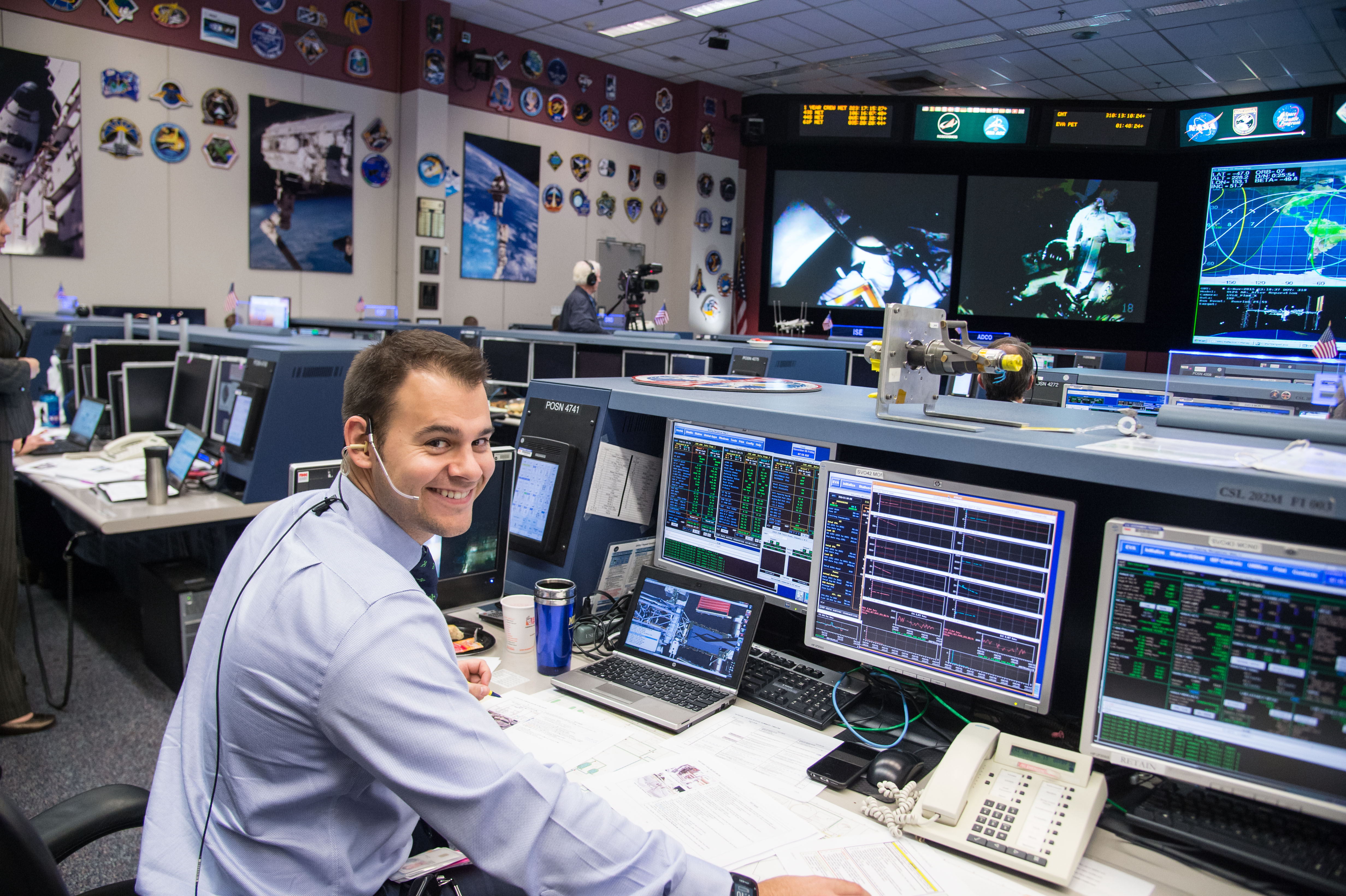
A man wearing a headset sits at a computer console in the Mission Control Center at Johnson Space Center.
Brian Alpert supports a spacewalk outside of the International Space Station from the Mission Control Center at Johnson Space Center in 2015.
NASA/Bill Stafford

Eighteen years later, Alpert is the cross-program integration deputy for NASA’s human landing system (HLS) – the mode of transportation that will take astronauts to the lunar surface as part of the Artemis campaign. In his role, Alpert is responsible for coordinating with other Artemis programs, like the Orion Program, on issue resolution, joint agreements, data exchanges, hardware integration, and reviews. He also co-leads the Exploration Atmospheres Issue Resolution Team, assessing risks to and impacts on space vehicle atmosphere, spacesuit pressure, and operational timelines for Artemis missions.

Alpert has enjoyed the opportunity to participate in several proposal reviews for Artemis program contracts as well. β€œNASA’s model of embracing public-private partnerships to achieve its strategic goals and objectives is exciting and will continue to expand opportunities in space,” he said.

He applies lessons learned and skills gained from his previous roles as a spacewalk crew instructor, flight controller, and systems engineer to his current work on HLS. β€œI hope to pass on to the next generation that skills and lessons you learn as a student or a young employee can and will help you in your future work,” he said.

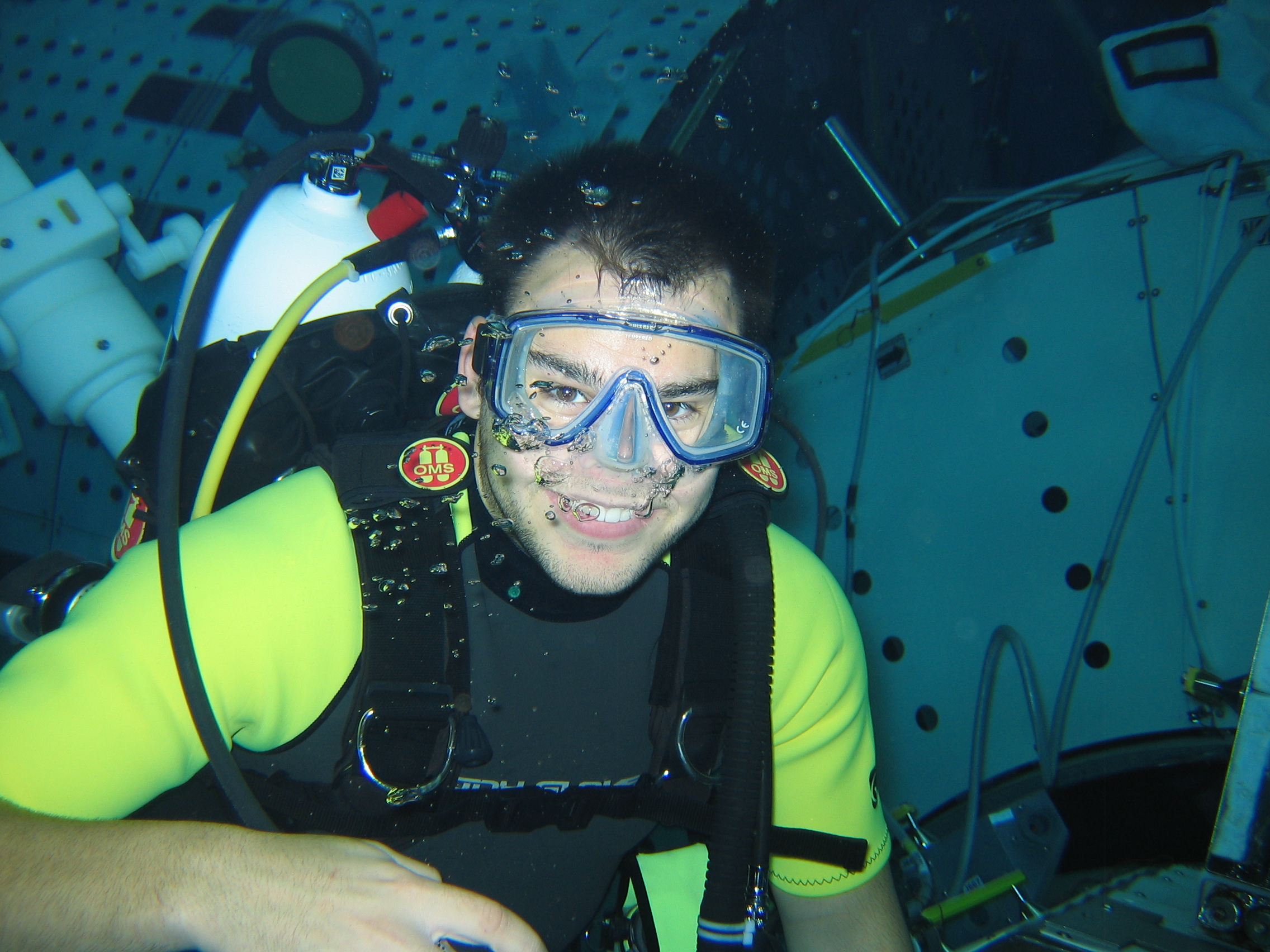
Underwater image of a man wearing scuba gear, smiling at the camera, with a mockup of the International Space Station in the background.
Brian Alpert routes cables in the Johnson Space Center’s Neutral Buoyancy Laboratory in preparation for a crew training run in 2011.
Image courtesy of Brian Alpert

Alpert’s prior NASA roles involved memorable experiences like working to address spacesuit and vehicle failures that occurred during a spacewalk on International Space Station Expedition 32. He was serving as the lead spacewalk systems flight controller in the Mission Control Center at the time and played a key role in getting NASA astronaut Suni Williams and JAXA (Japan Aerospace Exploration Agency) astronaut Aki Hoshide safely back aboard the space station. Since Williams and Hoshide did not complete the spacewalk’s primary objective – replacing a Main Bus Switching Unit – a backup spacewalk was scheduled several days later. Alpert was on console for that spacewalk, too.

β€œOne important lesson that I have learned through my career to date is how exceptionally talented, passionate, and hard-working everyone is here at NASA,” he said. β€œWhenever work gets stressful or problems get hard, there are teams of people that have your back, are willing to problem-solve with you, and can bring another perspective to finding a solution that you may not have considered.” He added that his colleagues are the best part of his job. β€œAs much as I love what we do at NASA, what really gets me excited to come to work is all the outstanding people I get to work with every day.”

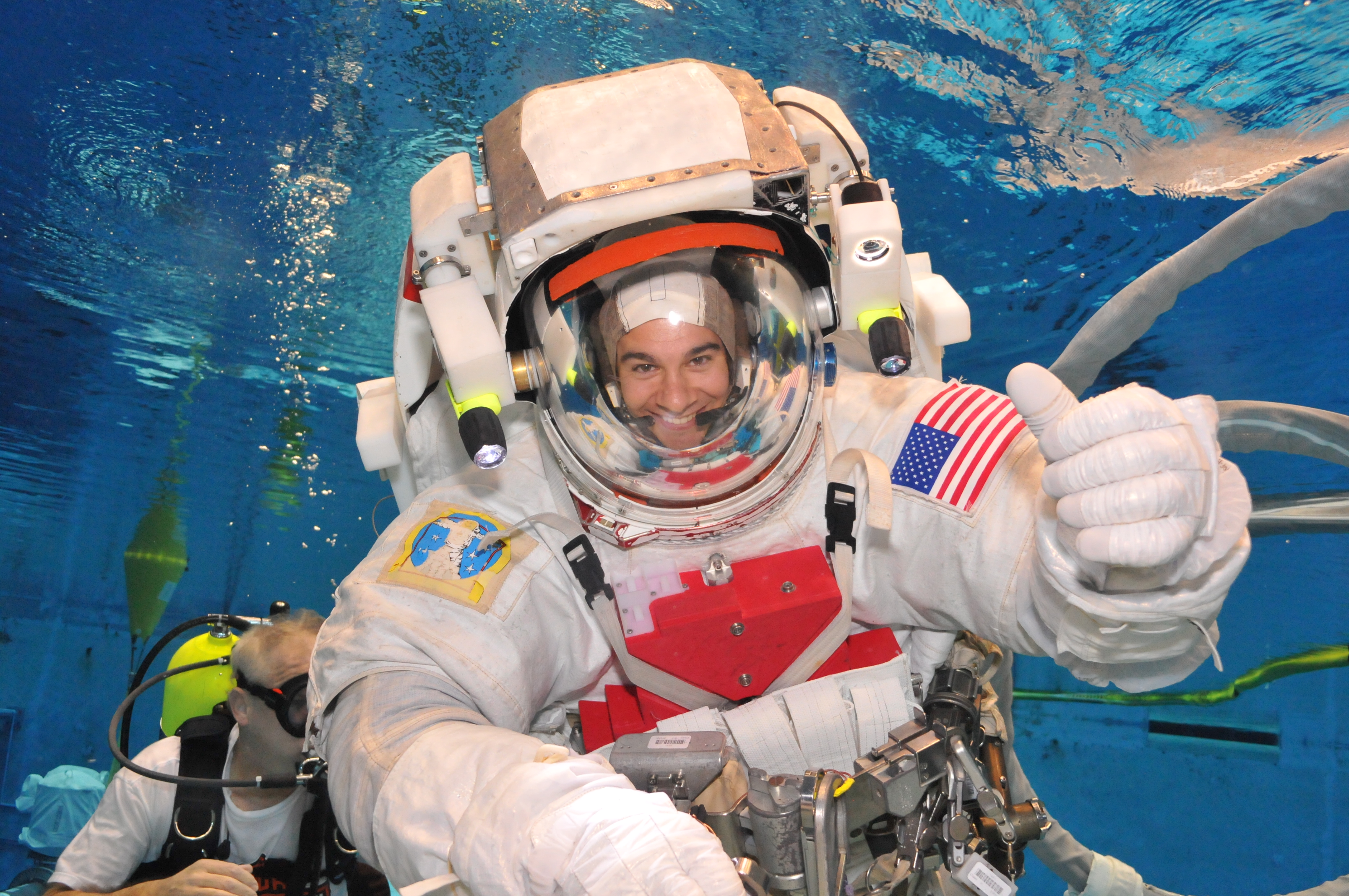
A man wears a full spacesuit underwater while conducting a test dive at NASA's Neutral Buoyancy Laboratory.
Brian Alpert completes a dive in NASA Johnson Space Center’s Neutral Buoyancy Laboratory for a spacesuit familiarization exercise in 2009.
Image courtesy of Brian Alpert

Learning how to navigate change has been an important lesson for Alpert, as well. β€œNASA has been through a lot of change since I became a full-time employee in 2009,” he said. β€œMaking sure that I have clear goals for myself, my work, and my team helps us all stay focused on the mission and the work at hand and helps us prioritize projects and tasks as questions or challenges inevitably arise.”

One challenge Alpert especially enjoys? Johnson’s annual Chili Cookoff. He has participated in many cookoffs as part of the Cosmic Chili team, noting that he often dons a Wolverine costume as part of the festive fun. He also welcomes a space trivia challenge – and a chance to add to his collection of trivia trophies.

NASA Opens 2026 Human Lander Challenge for Life Support Systems, More

By: Lee Mohon
25 September 2025 at 14:00
3 Min Read

NASA Opens 2026 Human Lander Challenge for Life Support Systems, More

NASA’s 2026 Human Lander Challenge banner showing an illustration of an astronaut looking out over the surface of the Moon.

NASA’s 2026 Human Lander Challenge is seeking ideas from college and university students to help evolve and transform technologies for life support and environmental control systems. These systems are critical for sustainable, long-duration human spaceflight missions to the Moon, Mars, and beyond.

The Human Lander Challenge supports NASA’s efforts to foster innovative solutions to a variety of areas for NASA’s long-duration human spaceflight plans at the Moon under the Artemis campaign. The Human Lander Challenge is sponsored by the Human Landing System Program within the Exploration Systems Development Mission Directorate.

The 2026 competition invites undergraduate and graduate-level teams based in the U.S., along with their faculty advisors, to develop innovative, systems-level solutions to improve aspects for a lander’s ECLSS (Environmental Control and Life Support System) performance. These air, water, and waste systems provide vital life support so future Artemis astronauts can live and work safely and effectively on the Moon during crewed missions.

Each proposed solution should focus on one of the following long-duration ECLSS subtopics:

  • Noise suppression and control
  • Sensor reduction in hardware health monitoring systems
  • Potable water dispenser
  • Fluid transfer between surface assets on the Moon and Mars

β€œA robust ECLSS transforms a spacecraft like a lander from just hardware into a livable environment, providing breathable air, clean water, and safe conditions for astronauts as they explore the Moon,” said Kevin Gutierrez, acting office manager for the Human Landing Systems Missions Systems Management Office at NASA Marshall. β€œWithout ECLSS we can’t sustain human presence on the Moon or take the next steps toward Mars. The subtopics in the 2026 Human Lander Challenge reflect opportunities for students to support the future of human spaceflight.”

2026 Competition

Teams should submit a non-binding notice of intent by Monday, Oct. 20, if they intend to participate. Proposal packages are due March 4, 2026.

Based on proposal package evaluations in Phase 1, up to 12 finalist teams will be selected to receive a $9,000 stipend and advance to Phase 2 of the competition, which includes a final design review near NASA’s Marshall Space Flight Center in Huntsville, Alabama, June 23-25, 2026. The top three placing teams from Phase 2 will share a total prize of $18,000.

Landers are in development by SpaceX and Blue Origin as transportation systems that will safely ferry astronauts from lunar orbit to the Moon’s surface and back for the agency’s Artemis campaign. NASA Marshall manages the Human Landing System Program.

The challenge is administered by the National Institute of Aerospace on behalf of the agency.

Through the agency’s Artemis campaign, NASA will send astronauts to explore the Moon for scientific discovery, economic benefits, and to build the foundation for the first crewed missions to Mars – for the benefit of all.

For more information on NASA’s Human Lander Challenge and how to participate, visit:

https://hulc.nianet.org/

Keep Exploring

Discover More Topics From NASA

❌
❌