Normal view

There are new articles available, click to refresh the page.
Before yesterdayMain stream

Mark Elder: Building the Future of Spacewalking for Artemis and Beyond 

1 December 2025 at 06:00

For more than 25 years, Mark Elder has helped make human spaceflight safe and possible. As the International Space Station EVA hardware manager in the Extravehicular Activity (EVA) Office within the EVA and Human Surface Mobility Program, he leads the team responsible for the spacesuits, tools, and logistics that keep astronauts protected during spacewalks—and ensures NASA is ready for the next era of Artemis exploration. 

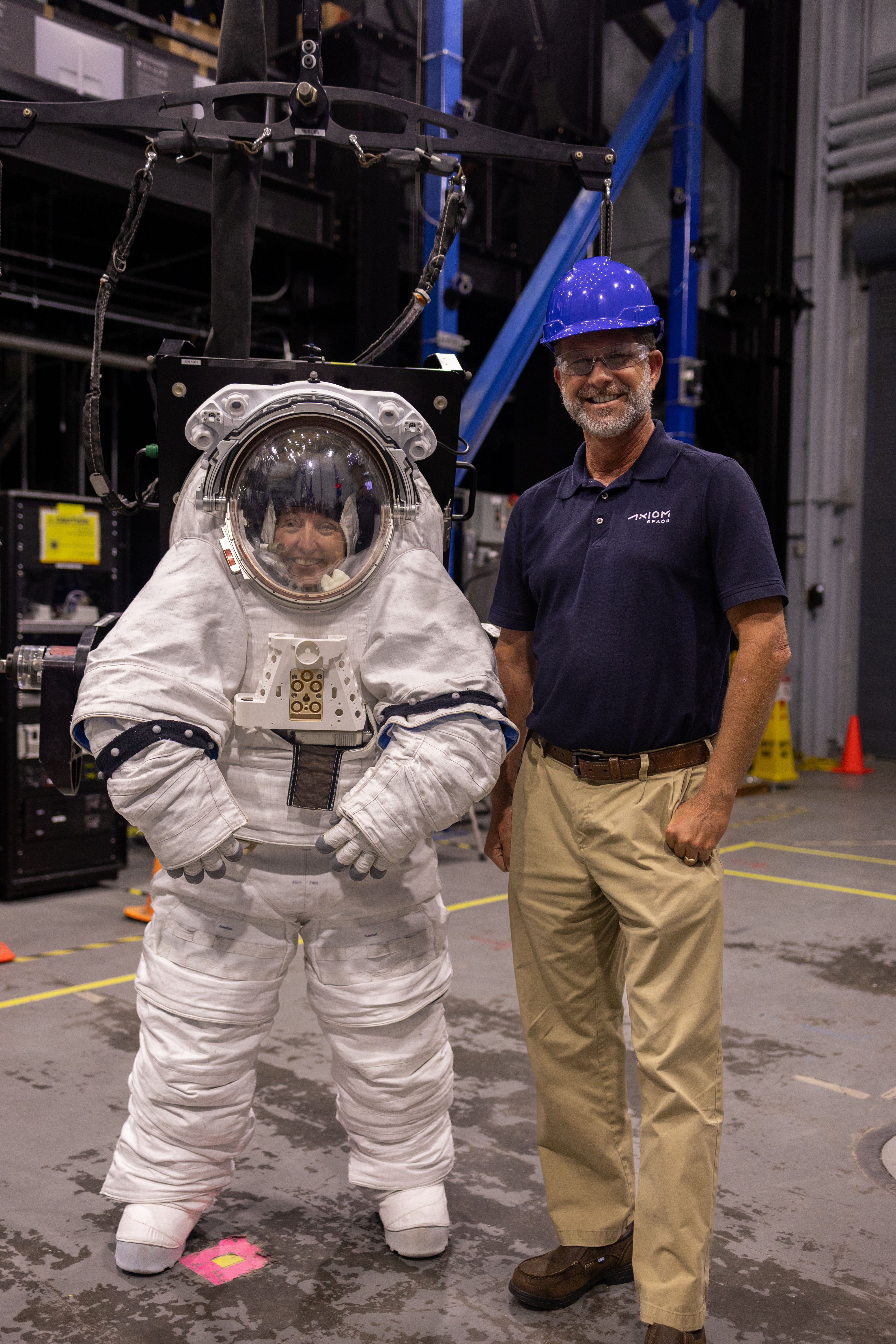
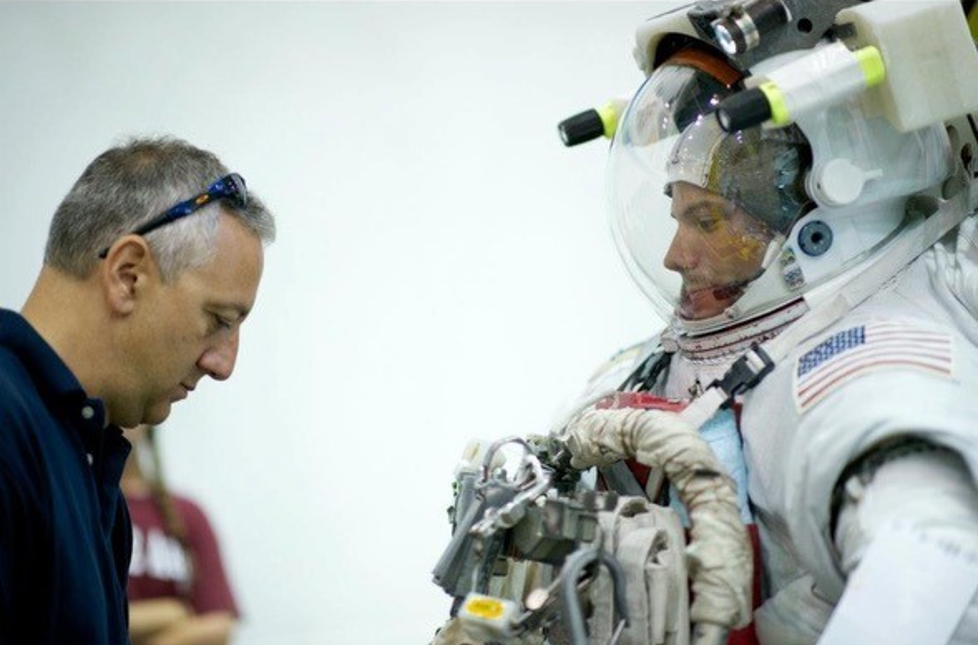
Mark Elder with NASA’s Exploration Extravehicular Mobility Unit (xEMU) spacesuit at Johnson Space Center in Houston.
NASA/Bill Stafford

His team is programmatically responsible for the Extravehicular Mobility Unit, or EMU, spacesuit. That means every bolt, bearing, and battery astronauts rely on outside the International Space Station ultimately falls under their watch. He also oversees the EVA Space Operations Contract, which provides engineering and technical support to keep spacesuit systems flight ready. 

Elder’s work directly supports every EVA, or spacewalk, conducted at the station. His team coordinates with astronauts, engineers, and the Mission Control Center in Houston to make sure the suits and tools operate reliably in the most unforgiving environment imaginable. Their work helps ensure every EVA is conducted safely and successfully. 

Elder’s passion for NASA began at an early age. 

“When I was little, my parents gave me a book called ‘The Astronauts,’” he said. “It had drawings of a reusable spacecraft—the space shuttle—and I fell in love with it. From then on, I told everyone I was going to work at NASA.” 

That dream took off at age 16, when he attended Space Academy in Huntsville, Alabama. “That cemented my dream of someday working at NASA, and it taught me a little bit more about the different roles within the agency,” he said. 

While attending Case Western Reserve University as a mechanical engineering student, he learned about a new NASA program that allowed college students to design and build an experiment and then come to Johnson Space Center for a week to fly with their experiment on the Boeing KC-135 Stratotanker. “I jumped on the chance to be part of the team,” he said. “The experience further cemented my dream of working at NASA one day—Johnson in particular.” 

After graduation, Elder worked with Pratt & Whitney on jet engines. While the experience was invaluable, he knew his heart belonged in human spaceflight. “I learned that one of Pratt’s fellow companies under the United Technologies umbrella was Hamilton Sundstrand, which was the prime contractor for the spacesuit,” he said. “I jumped at the chance to transfer, and my career at NASA finally began.” 

Elder spent his first three years at Johnson performing tool-to-tool fit checks on spacewalking equipment, giving him hands-on experience with nearly every tool that he would eventually become responsible for as a hardware manager. 

Mark Elder stands in front of the Space Shuttle Atlantis before the STS-117 launch on June 8, 2007.

His early years coincided with the shuttle return-to-flight era, when he worked on reinforced carbon-carbon panel repairs and thermal protection systems. Those experiences built his technical foundation and prepared him for the leadership roles to come. 

Over time, Elder took on increasingly complex assignments, eventually leading the team that developed the EVA Long Life Battery—the first human-rated lithium battery used in space. His team created a rigorous test plan to certify the battery for human spaceflight at a time when lithium batteries were under scrutiny for safety concerns. 

“Finally signing the certification paperwork was satisfying, but watching an EVA powered by the batteries provided a great sense of pride,” he said. 

This innovation set the stage for future generations of even safer, higher-capacity batteries that power today’s spacewalking operations and will eventually support lunar surface activities. 

Looking back, Elder said some of his greatest lessons came from learning how to lead with purpose. “The great thing about NASA is the highly motivated and dedicated workforce,” he said. “When I first became a team lead, I thought success meant making quick decisions and moving fast. I learned that leadership is really about listening. Strong teams are built on trust and open communication.” 

Another defining lesson, he said, has been learning to assume positive intent. “In a place like NASA, everyone is deeply passionate about what they do,” he said. “It’s easy to misinterpret a disagreement as opposition, but when you remember that everyone is working toward the same goal, the conversation changes. You focus on solving problems, not winning arguments.” 

That mindset has guided Elder through some of NASA’s most complex programs and helped him build lasting partnerships across the agency. 

Mark Elder receives an award at the 2024 Rotary National Award for Space Achievement Stellar Awards ceremony at the Hyatt Regency in downtown Houston.
NASA/Josh Valcarcel

Today, Elder’s work extends beyond the orbiting laboratory. As NASA prepares for Artemis missions to the Moon, his team’s experience maintaining and improving the EMU informs the design of next-generation exploration suits. 

“The foundation we’ve built on the space station is critical for the future,” he said. “Every tool we’ve refined, every system we’ve upgraded—it all feeds into how we’ll operate on the lunar surface and eventually on Mars.” 

Elder believes that the key to future success lies in perseverance. He advises the next generation to never stop dreaming. “My path wasn’t direct, and it would have been easy for me to give up,” he said. “But dreams have a way of guiding you if you don’t let go of them.” 

When he’s not supporting those missions, Elder’s creativity takes shape in his workshop. “In my spare time, I love woodworking,” he said. “Building something useful from a pile of rough-sawn boards helps calm me and gives me a great sense of accomplishment. I love being able to build furniture for my family,” he added, after recently finishing a desk for his youngest son. 

The same patience and precision he brings to woodworking defines his approach to exploration—steady progress, careful craftmanship, and attention to detail. “As NASA goes to the Moon and Mars, there will be challenges,” Elder said. “As long as we keep dreaming, we will see the next generation walking on the Moon and heading to Mars.” 

Station Nation: Meet Alyssa Yockey, Neutral Buoyancy Laboratory Flight Lead 

19 November 2025 at 06:00

Alyssa Yockey supports the International Space Station from NASA’s Johnson Space Center in Houston as a flight lead at the Neutral Buoyancy Laboratory. The Neutral Buoyancy Laboratory is one of the world’s largest indoor pools where astronauts and support teams conduct trainings and other large-scale operations, both in the water and on the pool deck. 

In this role, Yockey guides teams through integration efforts, including test readiness reviews to ensure all requirements are met, and helps prepare for suited or other testing events. She ensures smooth planning and execution of each mission-focused activity. Yockey also serves as a safety diver during astronaut suited testing events, giving her a unique perspective on both the planning and execution of Neutral Buoyancy Laboratory operations. 

Read on to learn about Yockey’s career with NASA and more! 

Alyssa Yockey, flight lead at the Neutral Buoyancy Laboratory in the Sonny Carter Training Facility in Houston.
Alyssa Yockey

Where are you from? 

Friendswood, Texas. 

How long have you been working for NASA? 

Eleven and a half years. 

What was your path to NASA? 

My path to NASA has been a unique blend of science and hands-on experience. I grew up in Friendswood, Texas, surrounded by the influence of NASA and the space community. While many around me were drawn to engineering, I knew early on that wasn’t the path I wanted to take. Instead, I followed my curiosity for the natural world and earned a master’s degree in marine biology, which gave me a strong foundation in research, problem-solving, and working in challenging environments. From there, I pursued opportunities that built on those skills, including completing offshore water survival training at the Neutral Buoyancy Laboratory for the job I held at the time. This role also allowed me to learn more about the wide range of opportunities at the facility. In addition, I became a certified scuba diver during college, which strengthened my capability and confidence in underwater and extreme environments. Together, these experiences combined my academic background with practical training, and ultimately guided me toward my role at NASA. 

Alyssa Yockey and her younger brother with Space Shuttle Columbia at Ellington Field, early 1990s.
Alyssa Yockey

How would you describe your job to family or friends that may not be familiar with NASA? 

When I explain my job to family and friends, I usually say I help make sure “astronaut pool days” go smoothly. I work with different teams to get their projects ready for NASA’s giant pool – the Neutral Buoyancy Laboratory – where astronauts practice for spacewalks both on the International Space Station and on the lunar surface. That means taking care of the paperwork, preparing checklists for mock-up setup, and ensuring everything’s ready before anyone puts on a suit and hops in the water. When I am not doing that, I sometimes have the opportunity to jump in myself as a safety diver, which essentially makes me an underwater lifeguard for the astronauts. 

Two divers pose underwater. The diver on the left is wearing a spacesuit.
Alyssa Yockey (right) supporting NASA astronaut Chris Cassidy (left) as a safety diver during his last suited event in the Neutral Buoyancy Laboratory prior to his retirement.
NASA

What advice would you give to young individuals aspiring to work in the space industry or at NASA? 

The space field is built on innovation and problem-solving, so don't be afraid to ask questions, explore different disciplines, and step outside your comfort zone.

Alyssa Yockey

Alyssa Yockey

Neutral Buoyancy Laboratory Flight Lead 

Stay curious, be resilient, and never stop learning. Seek internships, research opportunities, and mentorships, as they can open doors and give you hands-on experience. Most importantly, remember that there is no single path into this industry. Whether you come from engineering, science, business, policy, or even the arts, your unique perspective can contribute to pushing the boundaries of what’s possible in space exploration. 

Is there a space figure you’ve looked up to or someone that inspires you?  

For me, it hasn’t been about looking up to one individual but rather being inspired by the collective effort it takes to make space exploration possible. What inspires me most is seeing how different disciplines and perspectives unite toward a single goal, often under intense pressure. That kind of teamwork and dedication motivates me to give my best and reminds me that every role, no matter how big or small, contributes to the larger success of the space program. 

Every mission is the result of countless people—engineers, divers, scientists, technicians, trainers, flight controllers, and more—all bringing their expertise together to solve complex problems.

Alyssa Yockey

Alyssa Yockey

Neutral Buoyancy Laboratory Flight Lead 

What is your favorite NASA memory or the most meaningful project you’ve worked on during your time with NASA? 

My favorite NASA memory is getting to witness, over multiple years, the collaboration of various NASA groups in developing the choreography for the four Alpha Magnetic Spectrometer (AMS) spacewalks. It was incredible to be part of that process from the very beginning. I was lucky enough to see the very first development run at the Neutral Buoyancy Laboratory, and then later watch as ESA (European Space Agency) astronaut Luca Parmitano and NASA astronaut Drew Morgan performed those same spacewalks on orbit. Being able to see all that preparation, teamwork, and problem-solving come full circle was both rewarding and unforgettable. 

A woman smiles and gives a thumbs up underwater in a spacesuit.
Alyssa Yockey in the Extravehicular Mobility Unit during a suited egress training at the Neutral Buoyancy Laboratory.
NASA

What do you love sharing about station? 

I love sharing how the space station connects directly back to life on Earth. People often think of it only as a place for astronauts to live and work in space, but it’s really a one-of-a-kind laboratory that helps us solve problems here at home. From medical research that leads to new treatments, to technology that improves clean water and sustainability, to international cooperation that shows what we can achieve when we work together—the station is a powerful reminder that exploration drives innovation and benefits everyone on Earth. 

November 2, 2025, marks 25 years of continuous human presence. What does this milestone mean to you? 

This milestone is inspiring – it represents the innovation, persistence, and teamwork required to make the extraordinary seem routine. Personally, it reminds me why exploration matters: it connects us across nations, pushes the limits of what’s possible, and builds the foundation for the next steps in our journey beyond Earth. 

If you could have dinner with any astronaut, past or present, who would it be? 

I would choose Karen Nyberg. Not only did she contribute significantly as a NASA astronaut and engineer, but she also brought a very human and creative element to her time in space. I admire how she combined her professional expertise with her passion for sewing and quilting, even creating a quilt block while aboard the space station. As someone who enjoys quilting myself, I think it would be fascinating to hear about how she balanced technical work with creative expression in such a unique environment. I imagine our conversation would cover both science and stitching, which is the perfect blend of my own interests. 

Do you have a favorite space-related memory or moment that stands out to you? 

One of my favorite space-related memories is getting to meet and chat with former NASA flight director Gene Kranz during a book signing. It was fun to hear stories firsthand from someone who played such a pivotal role in NASA’s history, and to gain insight into the dedication, teamwork, and problem-solving that make spaceflight possible. Meeting him brought history to life and reinforced why I’m grateful to be part of this field. 

A man at a desk signs autographs. Two people stand in front of him as he shaked
Alyssa Yockey (center) and her husband (left) meeting Gene Kranz (right) at a book signing event.
Alyssa Yockey

What are some of the key projects you have worked on during your time at NASA? What have been your favorite? 

During my time at NASA, I first served as a dive operations training officer, where I was responsible for training and supporting divers in the Neutral Buoyancy Laboratory. From there, I took on the role of flight lead, supporting a range of projects including Axiom Space’s integration into the Neutral Buoyancy Laboratory, working with the Micro-G Neutral Buoyancy Experiment Design Teams (Micro-G NExT) student experiment design teams, and participating in various lunar operations testing events. Each of these projects has been rewarding in different ways, whether through helping commercial partners prepare for their missions, mentoring and guiding students as they see their concepts come to life, or contributing to the future of lunar exploration. I especially enjoy the challenges each project brings, as they push me to adapt, collaborate across disciplines, and continuously grow in my role. 

What are your hobbies/things you enjoy doing outside of work? 

Outside of work, I enjoy spending time outdoors with my husband and our pups, traveling and camping in different state and national parks. Hiking is one of our favorite ways to explore new places and take in the scenery together. At home, I like to unwind with a good book or by sewing and quilting. Quilting has become a truly rewarding creative outlet for me — I love selecting fabrics, experimenting with patterns, and watching a design come to life piece by piece. Each quilt has its own story, whether it’s made for a friend, a family member, or simply for the joy of creating something new. 

Left: “One Giant Stitch” quilt, crafted by Alyssa Yockey with unique modifications. Original pattern by Kelli Fannin Quilt Designs.
Right: Signature Quilt made by Alyssa Yockey featuring fabric from retired astronaut Karen Nyberg’s “Earth Views” line, created from her favorite photos taken from space. 
Alyssa Yockey

Day launch or night launch? 

Night launch! 

Favorite space movie? 

Hidden Figures. 

NASA Worm or Meatball logo? 

Worm! 

NASA spelled out in red letters.

NASA and its partners have supported humans continuously living and working in space since November 2000. After 25 years of continuous human presence, the space station remains a training and proving ground for the future of commercial space stations, deep space missions, enabling NASA’s Artemis campaign, lunar exploration, and future Mars missions. 

Every day, we are conducting exciting research aboard our orbiting laboratory that will help us explore farther into space and bring benefits back to people on Earth. You can keep up with the latest news, videos, and pictures about space station science on the Station Research & Technology news page. It is a curated hub of space station research digital media from Johnson and other centers and space agencies.  

Sign up for our weekly email newsletter to get the updates delivered directly to you.  

Follow updates on social media at @Space_Station on X, and on the space station accounts on Facebook and Instagram.  

Guiding Artemis: Brian Alpert Turns Lessons Learned Into Lunar Progress

18 November 2025 at 05:00

Brian Alpert’s path was always destined for the aerospace industry, but his journey turned toward NASA’s Johnson Space Center during his sophomore year in college. That was when Tricia Mack, who works in NASA’s Transportation Integration Office within the International Space Station Program, spoke to his aerospace seminar about planning spacewalks, training crews, and supporting operations from the Mission Control Center in Houston.

Alpert was inspired to join the agency and later earned a spot as an engineering co-op student at Johnson. “My first stop after new employee orientation was Tricia’s office,” he said.

A man wearing a headset sits at a computer console in the Mission Control Center at Johnson Space Center.
Brian Alpert supports a spacewalk outside of the International Space Station from the Mission Control Center at Johnson Space Center in 2015.
NASA/Bill Stafford

Eighteen years later, Alpert is the cross-program integration deputy for NASA’s human landing system (HLS) – the mode of transportation that will take astronauts to the lunar surface as part of the Artemis campaign. In his role, Alpert is responsible for coordinating with other Artemis programs, like the Orion Program, on issue resolution, joint agreements, data exchanges, hardware integration, and reviews. He also co-leads the Exploration Atmospheres Issue Resolution Team, assessing risks to and impacts on space vehicle atmosphere, spacesuit pressure, and operational timelines for Artemis missions.

Alpert has enjoyed the opportunity to participate in several proposal reviews for Artemis program contracts as well. “NASA’s model of embracing public-private partnerships to achieve its strategic goals and objectives is exciting and will continue to expand opportunities in space,” he said.

He applies lessons learned and skills gained from his previous roles as a spacewalk crew instructor, flight controller, and systems engineer to his current work on HLS. “I hope to pass on to the next generation that skills and lessons you learn as a student or a young employee can and will help you in your future work,” he said.

Underwater image of a man wearing scuba gear, smiling at the camera, with a mockup of the International Space Station in the background.
Brian Alpert routes cables in the Johnson Space Center’s Neutral Buoyancy Laboratory in preparation for a crew training run in 2011.
Image courtesy of Brian Alpert

Alpert’s prior NASA roles involved memorable experiences like working to address spacesuit and vehicle failures that occurred during a spacewalk on International Space Station Expedition 32. He was serving as the lead spacewalk systems flight controller in the Mission Control Center at the time and played a key role in getting NASA astronaut Suni Williams and JAXA (Japan Aerospace Exploration Agency) astronaut Aki Hoshide safely back aboard the space station. Since Williams and Hoshide did not complete the spacewalk’s primary objective – replacing a Main Bus Switching Unit – a backup spacewalk was scheduled several days later. Alpert was on console for that spacewalk, too.

“One important lesson that I have learned through my career to date is how exceptionally talented, passionate, and hard-working everyone is here at NASA,” he said. “Whenever work gets stressful or problems get hard, there are teams of people that have your back, are willing to problem-solve with you, and can bring another perspective to finding a solution that you may not have considered.” He added that his colleagues are the best part of his job. “As much as I love what we do at NASA, what really gets me excited to come to work is all the outstanding people I get to work with every day.”

A man wears a full spacesuit underwater while conducting a test dive at NASA's Neutral Buoyancy Laboratory.
Brian Alpert completes a dive in NASA Johnson Space Center’s Neutral Buoyancy Laboratory for a spacesuit familiarization exercise in 2009.
Image courtesy of Brian Alpert

Learning how to navigate change has been an important lesson for Alpert, as well. “NASA has been through a lot of change since I became a full-time employee in 2009,” he said. “Making sure that I have clear goals for myself, my work, and my team helps us all stay focused on the mission and the work at hand and helps us prioritize projects and tasks as questions or challenges inevitably arise.”

One challenge Alpert especially enjoys? Johnson’s annual Chili Cookoff. He has participated in many cookoffs as part of the Cosmic Chili team, noting that he often dons a Wolverine costume as part of the festive fun. He also welcomes a space trivia challenge – and a chance to add to his collection of trivia trophies.

Astronaut Candidates Get to Work at Johnson Space Center

29 September 2025 at 11:08

NASA announced its newest class of astronaut candidates on Sept. 22, 2025, at the agency’s Johnson Space Center in Houston. After the welcome ceremony, the 10 highly qualified individuals rolled up their sleeves and prepared for the next step in their journey to the stars: nearly two years of training to become flight-eligible for missions to low Earth orbit, the Moon, and ultimately, Mars.

An astronaut wears a VR headset and holds controllers in his hands during a training exercise.
NASA astronaut Chris Williams participates in a spacewalk safety system training in the virtual reality lab at NASA’s Johnson Space Center.
NASA/Riley McClenaghan

The training astronaut candidates complete is comprehensive and rigorous. They learn about NASA’s history and vision, and how astronauts advance the agency’s mission. They take classes on space health – gaining an understanding of radiation exposure, microgravity’s effects on the human body, space food and nutrition, and how to use the exercise equipment aboard the International Space Station. They also study first aid and practice providing medical care for crewmates. Each candidate will receive flight training, learning to pilot or improving their current piloting skills through the T-38 supersonic jet and other aviation platforms.

Three astronauts in casual clothing test life support systems, including a face mask, inside a space station mockup.
NASA astronauts Andre Douglas, Christina Birch, and Deniz Burnham during life support systems training in a mockup of an International Space Station airlock at Johnson Space Center.
NASA/James Blair

With NASA’s plans for the future of exploration, this class of astronauts may have opportunities to fly to low Earth orbit, or even beyond. Some may contribute to research and technology investigations taking place aboard the space station – which is about to celebrate 25 years of continuous human presence in space. Others may venture to the Moon to prepare for future Mars missions.   

A man uses a small magnifying glass to study a rock that is being held up by a woman wearing a bucket hat.
NASA astronaut Marcos Berríos studies a rock sample during Earth and planetary sciences field training in northern Arizona.
NASA/Riley McClenaghan

To be ready for any destination, this class will complete both space station training and advanced preparation for deep space. These exercises allow astronaut candidates to work through problems and build relationships with their classmates while preparing them for space flights.

“Training was such an intense period that we got to know each other really well,” said NASA astronaut Anil Menon, who joined the agency as part of the 2021 class – astronaut group 23. “Now when we come together, there are these moments – like we might be handing off a capcom shift, or we might be flying a jet together – and in those moments, I feel like I know them so well that we know how to navigate all sorts of challenges together and just be our best selves as a team.”

A NASA astronaut wearing a blue flight suit is pictured climbing a ladder into a T-38 training jet.
NASA astronaut Luke Delaney prepares for a training flight in a T-38 jet.
NASA/Robert Markowitz

Astronaut candidate training also teaches foundational skills that can be applied to any destination in space. The group will complete several dives in the Neutral Buoyancy Laboratory, simulating spacewalks in different environments and learning how to do maintenance tasks in microgravity with a full-scale underwater mockup of the International Space Station as their worksite. They will also train inside other mockups of space vehicles, learning emergency procedures, maintenance, and repair of spacecraft, along with how to contribute to future developmental programs.

A NASA astronaut is helped into a spacesuit on the deck of the large training pool in NASA's Neutral Buoyancy Laboratory.
NASA astronaut Anil Menon suits up before completing a training dive in the Neutral Buoyancy Laboratory at Johnson Space Center.
NASA/Josh Valcarcel

Robotics training will prepare them to use the station’s Canadarm2 robotic arm. They will trek through the wilderness as part of their land and water survival training, and they will study geology in the classroom and in the field. The group will practice tasks in a variety of simulations, leveraging Johnson’s world-class facilities, virtual reality, and immersive technologies. Additionally, the class will work shifts in the Mission Control Center in Houston to experience a day in the life of the people who keep watch over the astronauts and vehicles.

Astronaut candidates who successfully complete the training program celebrate their achievement in a graduation ceremony, after which they are officially flight-eligible members of NASA’s astronaut corps. They will also receive office and ground support roles at Johnson while they await future flight assignments.

Three people wearing brown camouflage build a shelter out of branches in the woods.
NASA astronauts Anil Menon, Nichole Ayers, and Andre Douglas work to build a shelter during wilderness survival training at Ft. Rucker, Alabama.
NASA/Robert Markowitz

“I’ve been exposed to a lot of different parts of what we do at Johnson Space Center, working both with the current increment of supporting operations aboard the International Space Station, as well as supporting some development of the Orion spacecraft and Artemis II preparations,” said NASA astronaut Chris Birch, another member of astronaut group 23.

Many members of NASA’s active astronaut corps emphasize that the learning does not stop when astronaut candidate training ends. “You have the foundational training and you continue to build off of that,” said Deniz Burnham, adding that the hardest days can be the most educational. “You get to learn, you get to improve, and then you’re still getting the opportunity. It’s such a positively unique experience and environment, and you can’t help but be grateful.”

As NASA astronaut Frank Rubio, class mentor, told the group, “You’ll become part of a legacy of those who trained before you, continuing the adventure they started, and looking ahead to future human exploration.”

❌
❌