 Login
Login
A Radical Cure for Internet Addiction Brings Chilling Consequences in This Dystopian Story
4 December 2025 at 19:30

Read 'Reality Check,' a sci-fi short story by Hugo and Nebula-winning author Nancy Kress, right here on io9.

We can’t get enough of [Bettina Neumryn’s] videos. If you haven’t seen her, she takes old electronics magazines, finds interesting projects, and builds them. If you remember these old projects, it is nostalgic, and if you don’t remember them, you can learn a lot about basic electronics and construction techniques. This installment (see below) is an Elektor digital voltmeter and frequency counter from late 1981.
As was common in those days, you could find the PCB layouts in the magazine. In this case, there were two boards. The schematic shows that a counter and display driver chip — a 74C928 — does most of the heavy lifting for the display and the counter.
It is easy to understand how the frequency counter works. You clip the input with a pair of diodes, amplify it a bit, square it with a Schmitt trigger, and then, possibly, prescale it using a divider. The voltmeter is a little trickier: it uses a voltage divider, an op amp, and a 555 to convert the voltage to a frequency.
Of course, finding the parts for an old project can be a challenge. A well-stocked junk drawer doesn’t hurt. A PCB etching setup helps, too.
We’ve looked at her magazine rebuilds before. If you ever get the urge to tackle a project like this, you can find all the grand old magazines online.
According to the tabloids, celebrities are just like us. They run errands, they wait in lines and they also know which strains of cannabis they love best. In the past few years, many of the world’s most iconic stoners have embraced the legalized industry by launching branded pot products. Willie Nelson has Willie’s Reserve, Snoop Dogg has Leafs By Snoop, and more famous faces are getting in on the action every day. But what is Nelson smoking when he hangs up his guitar after a long day? What’s in the blunts that Snoop allegedly smokes up to 80 of a day? With so many different strains now available — bred to highlight various terpenes and capable of inducing a wide array of physical and mental sensations — what are celebrities reaching for when it’s time to toke up?
In the case of the most famous pothead on the planet, country legend Willie Nelson claims he has no preference. In a recent interview with Rolling Stone, Nelson suggested that cannabis was like sex — “It’s all good, some is great.” Later in the same article, Nelson’s wife, Annie D’Angelo, did note that Nelson prefers sativas (“He’s already funny, so it just makes him funnier.”) For the “On the Road Again” musician, a practice of smoking what you’ve got does feel rather fitting. Nelson recently made news for admitting he’s no longer smoking, but hasn’t stopped enjoying cannabis.
The superstar pop singer has made no secret of her love affair with weed — a stance that likely shocked some fans who best knew her as a squeaky-clean Disney star. Yes, even Hannah Montana is riding the green rush. During a 2013 trip to Amsterdam, a member of Cyrus’s entourage revealed that Miley’s strain of choice was Super Lemon Haze, a sativa-dominant hybrid known for sparking energy and joy. Given the sunny vibes of her most 2017 album, ‘Younger Now,’ it appears to have done the trick.
For some of us, the challenge of performing live comedy may seem daunting, but seasoned comic and podcaster Doug Benson is always at ease when he hits the stage. His secret? Being really, really high, of course. Like Nelson, Benson isn’t too picky when it comes to strains, but in a 2013 interview with Cannabis Now, he did express a fondness for the delightfully named Chocolope. A cross of Chocolate Thai and Cannalope Haze, this strain has notes of coffee and is recognized for its ability to induce a happier mindset.
The legendary West Coast rapper has been hyping cannabis since the day he first hit the studio. One could make the argument that Snoop has done more to bring weed to the mainstream than any other celebrity out there. When it comes to what he likes to burn, he’s given a number of different answers over the years. One that Snoop’s mentioned several times is Herijuana. According to Leafly, this hybrid of Petrolia Headstash (a variety of Humboldt County Afghan) and Killer New Haven “was worked by breeders for 15 generations.” The result is a powerful high that is likely best enjoyed by heavyweight consumers like the D-O-double-G.
While Seth Rogen has not officially confirmed his favorite strain, there’s reason to believe it might just be Pineapple Express. After all, the strain didn’t actually exist before he and co-writer Evan Goldberg invented the name for their 2008 stoner comedy. Borrowing the name from a weather phenomenon (an atmospheric river that begins in the islands of Hawaii and moves up towards the West Coast), Pineapple Express is now a bona fide strain the combines Trainwreck and Hawaiian for a sativa-forward blend that will get you up and moving if the afternoon starts to drag.
TELL US, what’s your favorite strain?
Originally published in Issue 39 of Cannabis Now. LEARN MORE
The post Hollyweed: What Strains Do Celebrities Smoke? appeared first on Cannabis Now.
Bitcoin Magazine
BTC Inc Appoints Brandon Green as Chief Executive Officer
Nashville, TN – November 17, 2025 – BTC Inc (the “Company”), the leading provider of Bitcoin-related news and events, today announced the appointment of Brandon Green as Chief Executive Officer, effective immediately. In this role, Green will oversee the Company’s strategic and operational direction, including leading the continued growth of Bitcoin Magazine and the global Bitcoin Conference series.
As part of this leadership transition, David Bailey, Chairman and CEO of KindlyMD (NASDAQ:NAKA) and Co-Founder of BTC Inc, will step down as Chief Executive Officer of BTC Inc and continue to serve as the Company’s Chairman of the Board, supporting the advancement of BTC Inc’s long-term vision and strategic initiatives.
Since joining the Company in 2017, Green has been a core member of BTC Inc, holding a variety of leadership roles including Managing Director, Chief of Staff, and Head of Events. During his tenure, he has helped drive the global expansion of the Bitcoin Conference franchise beyond the United States to Amsterdam, Hong Kong, and Abu Dhabi.
“Brandon has been an integral part of BTC Inc’s story since the early days, and it’s been a privilege to watch him grow into a leader capable of driving the company in its next chapter,” said David Bailey. “He is a product-driven leader who places the highest value on the customer relationships and brand integrity we have cultivated over the years. I have complete confidence that under his leadership, BTC Inc will thrive.”
Green added, “Over the past eight years, I’ve had the privilege to work alongside an incredible team dedicated to amplifying Bitcoin’s story and building the global Bitcoin movement. Through that process, we’ve created a media and conference powerhouse. I am excited and honored to lead BTC Inc into its next chapter, as we continue to grow our movement to every household in every corner of the globe.”
BTC Inc also reported the Company’s preliminary, unaudited financial and marketing results for the nine months ended September 30, 2025, which demonstrate significant year-over-year growth and continued expansion of its global media platform. For the period, the Company reported estimated revenue of $61.9 million and EBITDA of $23 million, representing approximately 140% revenue growth compared to the same period in 2024. In addition to its financial growth, BTC Inc reported record audience engagement and marketing performance during this period:
Through a previously negotiated marketing services agreement (MSA), BTC Inc has the option to acquire UTXO Management, a thesis-driven, high conviction hedge fund focused on Bitcoin companies and the market leader in Bitcoin treasury company investment through its fund 210K Capital. This agreement underscores BTC Inc’s expanding institutional strategy. Looking ahead to 2026 and beyond, BTC Inc is positioned to accelerate the path toward hyperbitcoinization by expanding its institutional product suite, diversifying its digital media platform, and deepening its global reach.
Started in 2013, BTC Inc has grown to be the leading global platform for Bitcoin education, advocacy, and community engagement. The Bitcoin Conference, most recently held in Las Vegas, welcomed more than 30,000 attendees and 400 speakers, including the sitting Vice President of the United States. Beyond its events, BTC Inc serves as a cornerstone of Bitcoin advocacy and media through Bitcoin Magazine, the industry’s original publication, and Bitcoin for Corporations, the leading platform for companies adopting Bitcoin as a strategic asset, enhancing treasury management, financial resilience, and growth.
Over the last year, BTC Inc achieved several corporate milestones reflective of its growing global footprint and long-term strategy, including international licensing agreements, expansion of the Bitcoin Conference series into Asia, approval for Bitcoin Magazine’s White House press credentials, and hosting the Crypto Ball during the 2025 United States Presidential Inauguration week in partnership with industry and administration leaders. BTC Inc also continued its expansion of Bitcoin for Corporations as the leading platform for enterprise Bitcoin adoption.
About BTC Inc
BTC Inc is the parent company of BTC Media, LLC, publisher of Bitcoin Magazine, the original and most trusted source for Bitcoin news and education, and producer of The Bitcoin Conference, the largest and most influential Bitcoin event in the world. Headquartered in Nashville, BTC Inc builds media, data, events, and advocacy products that accelerate Bitcoin adoption around the globe.
Media Contact: BTCInc@gasthalter.com
This post BTC Inc Appoints Brandon Green as Chief Executive Officer first appeared on Bitcoin Magazine and is written by Bitcoin Magazine.
The versatility of soup can be such a beautiful thing. It can be made with four ingredients or 40, completed in 15 minutes or simmered over several hours. In summertime soups are served deliciously chilled, like a supremely refreshing gazpacho — but most of the time they are steaming hot and soul satisfying, like this twice-medicated vegetable soup. With the addition of infused olive oil, this recipe is a keeper.
A hearty soup, a simple salad and some crusty bread make for a fabulous winter meal. Vegetable soup is as simple to make as it is delicious. Just fill a sauce pot with any combination of vegetables, some liquid to cover, a bunch of your favorite fresh herbs and spices, maybe a can of your favorite legume and simmer. Nine times out of 10, it’ll be tasty. And if it’s not, add some shredded cheese, some sour cream and maybe some sriracha.
To add some protein, consider adding firm tofu cubes, sliced cooked sausage, cooked chicken or bacon crisps.

Ingredients
2-3 tablespoons canna-olive oil
2 cups shredded cabbage
2 medium carrots, peeled and sliced
1 large onion, sliced
1 cup green beans, trimmed and cut in pieces
1 cup grape tomatoes (cut in half if large)
3 garlic cloves, peeled and minced
5 ounces kale, rinsed, dried, stacked and sliced
1 cup corn, frozen
½ cup peas, frozen
2 quarts water
2 cans beans (1 can white northern, 1 can pinto) rinsed and drained

Ingredients
2 tablespoons canna-oil
1 cup bread cubes
4 tablespoons Parmesan cheese
1. Heat the canna-olive oil in a large saucepan. Sauté the cabbage, carrots, onion, green beans, grape tomatoes, garlic and kale. Sauté for 8 to 10 minutes.
2. Add the corn and peas and stir. Add the water, followed by the rinsed beans. Allow to simmer for 35 to 40 minutes.
3. Heat the remaining canna-olive oil in a small sauté pan. Cook the bread cubes until golden brown.
4. Divide the soup into bowls, top with croutons and shave the Parmesan over the bowls of soup.
Originally published in issue 13 of Cannabis Now Magazine.
The post Vegetable Soup with Medicated Garlic Croutons appeared first on Cannabis Now.
Steve, 51, remembers well the first time he got high.
“I was a freshman in high school and my friend Chovi from India found me on the handball court where I had been spray-painting images of Alfred E. Newman with a stencil I’d made,” says Steve. “Chovi must’ve been about 4’6” and had this massive afro shaped like a square helmet that was three sizes too big for his face. The guy was hilarious based on looks alone. I had low expectations, because I had tried pot twice before and had never felt anything. And I didn’t notice much from this at first, either, but it turned out to be a creeper.”
Heading home, Steve remembers “feeling like Albert Hofmann on his famous bike ride” after discovering the formula for LSD. Then, suddenly, he found himself overly high and met with a locked door at his parent’s house – meaning he’d have to confront his mom.
“Oh God, my mom was going to have to let me in,” he recalls. “I couldn’t face my mom like that. As soon as she opened the door, I pushed past her and dashed up the stairs. She shouted up to me all concerned, ‘Is everything okay?’ And I shouted back, ‘Yep! Everything’s great, Mom!’ And I locked myself in my room and played my KISS records.”
That was 1977. Three businesses and a home in the wealthiest zip code of the Bay Area later, Steve finds himself enjoying a new wave of Mary Jane’s alluring wiles. Only these days, instead of rolling a doobie, he puffs his vape pen.
Steve’s story isn’t particularly unique. Baby boomers across the nation are getting reacquainted with cannabis after a hiatus from pot through their middle years. According to a 2012 study by the Substance Abuse and Mental Health Services Administration comparing trends with 2002, cannabis use among people between the ages 50-54 and 60-64 has almost doubled. Meanwhile, pot use among boomers age 55-59 has more than quadrupled. And they’re not merely dabbling. The National Institute of Drug Abuse reports that baby boomers are regularly consuming cannabis an average of once a week. And these numbers are expected to rise. By the end of 2015, nearly 111 million Americans over 50 were projected to be cannabis consumers, according to research by IBISWorld. That figure could jump another seven percent by 2020.
Baby boomers across the nation are getting reacquainted with cannabis after a hiatus from pot through their middle years.
Partly responsible for this reefer renaissance is the rapidly increasing social acceptance of cannabis as a medicine and recreational choice.
“When medical marijuana became a thing and I realized I could get a pot prescription and get my anxiety issues under control at the same time, that’s when I got reacquainted with pot,” says Steve.
Indeed, studies suggest that boomers are using cannabis medicinally more than recreationally, often to deal with age-related issues such as chronic pain, depression and rheumatoid arthritis. Even Steve calls his vape pen “the most entertaining anti-anxiety medicine I’ve ever been prescribed.” In fact, the only time he labels his cannabis consumption recreational is in the context of a bad trip.
“When I first came back to it around 2009, I had just met a lady, so I asked the budtender to give me the very best they had. I didn’t ask for a strain that does a particular thing, or makes you feel any particular way – just the best.”
The budtender recommended OG Kush, a name that he says he’ll always remember just so that he can avoid its super strength.
“It was unbelievably intense,” he says. “Way too advanced for my old-school roots. I brought it with me to my lady friend’s house, thinking I’d impress her with how hip I was. We had tickets to a show, but ended up just sitting on the couch for about four hours. Not talking, not moving; I wasn’t even sure she was still there most of the time. Every now and then, she would laugh, then I’d start laughing. Then it would be silent again for another hour. That was awkward. I will never smoke a strain that strong again, not unless I’m method-acting for the role of a corpse. There was nothing recreational about that experience at all.”
With potency five to 10 times greater than the Mexican swag smokers enjoyed in the ’70s, baby boomers are understandably trepidatious about coming back to cannabis.
“I miss the giggling,” continues Steve. “Pot back then used to be really light and giggly. Today’s pot is too heavy for me. It weighs me down.”
Despite the industry’s race to breed strains with the highest THC possible, options do exist for baby boomers who want to get pleasantly elevated without blasting off into the stratosphere. Cannabis with THC in the low double-digits – say, the 10-14 percent range – may provide a low-impact way to get a gentle buzz. And with the advent of the vape pen, boomers are strolling the path back to pot with more ease and grace than ever.
“Last year, I was bed-ridden after a skiing accident,” recalls Judith, a 60-year-old San Francisco travel agent. “All I could do was lay in bed taking pain killers and watching Netflix. The pain pills had me so groggy and out of it that I would suffer through [the pain] as long as I could before finally giving in and taking one. When my son came over and offered me a puff off his new vape pen – my first thought was, ‘My goodness, what kind of robot joint is this?’ But let me tell you, it literally changed my world.
“I mean, it [worked] faster than the pain pills, and it didn’t turn me into a zombie,” she says. “Pretty much one little puff every hour or two kept my pain at bay, and I have to admit, it was pretty fun, too! I mean, I was laughing at things that, on the pills, I couldn’t do more than stare at with my eyes glazed over. With that little pen, I felt like myself again. And bonding with my son, watching documentaries and laughing at movies together, was a brilliant, unexpected bonus. Now when I have friends over, we’ll have a little vape with our tea.”
Vape pens are becoming ubiquitous as a discreet way for cannabists, many of them boomers, to consume concentrated versions of the plant. Because it lends itself so easily to taking just one puff at a time, the vape pen provides users with an easier way to manage dosage. And because the oil contains such a high concentration of THC to begin with, one hit will often suffice.
“That’s just a classy way to get high, in my opinion,” says Steve about vape pens. “Mine even doubles as a stylus. It’s my new favorite way to get high.”
Originally published in the print edition of Cannabis Now.
The post Buds & Baby Boomers appeared first on Cannabis Now.
Most people are familiar with the industrial and commercial usefulness of hemp for making clothing, paper, plastic, fuel and even hempcrete, which can be used to build homes and other structures. Hemp’s ability to enrich the soil that it’s grown in with nitrogen and other nutrients, as well as the fact that it grows quicker than trees and produces recyclable and biodegradable products, also makes it an environmentally friendly crop.
This fibrous plant produces edible seeds — sometimes referred to as hemp hearts — which are a great source of vegan, plant-based protein. They can be eaten or pressed into a deeply nourishing oil for use in all kinds of skincare staples like cleansers, lotions, face masks, eye cream and makeup products from mascara to lip gloss.
The nutritional properties of this wondrous oil read like a grocery list of all the best things to put on your skin. It’s rich in protein, polyunsaturated fatty acids, insoluble fiber, vitamin E, potassium, magnesium, iron, zinc, calcium and phosphorus. All of these nutrients are good for you inside and out and can make a major impact on the overall appearance of your skin whether you consume hemp seeds or apply hempseed oil topically in a product. Hempseed oil’s balanced ratio of omega-6 to omega-3 fatty acids improves cardiovascular function, supports the immune system and promotes healthy flow in the intestines.
Unlike other medicated, cannabis-infused topicals that lots of people use to help reduce pain, aching muscles and tension throughout the body, hempseed oil products contain almost no traces of THC, which make them completely legal and easily accessible to anyone in any state, regardless of the legislation surrounding cannabis use.
If you have skin issues that you’re looking for some assistance with, check out all the ways hempseed oil can make a difference and consider adding it to your daily skincare routine.
Hemp oil is a humectant that not only draws moisture to the skin, but also helps the skin retain and preserve moisture, reducing dryness overtime. It’s easily absorbed by the skin and can penetrate the epidermis and subdermal layers for deep relief that can stop itching and skin irritations like eczema, which can leave your skin looking and feeling very parched.
Hempseed oil contains all 21 known amino acids that play a role in helping your skin stay plump, firm and looking youthful. Most importantly, hempseed oil has oleic acid that can help to reduce atopic dermatitis and it contains linoleic acid, which can slow down signs of aging. Regular use can regenerate and energize the skin’s natural protective layer that can become dull, porous or rough over time.
Because hempseed oil has a composition that’s incredibly similar to lipids produced by the skin’s epidermal cells, it’s suitable for all skin types whether your skin is dry, oily, combination or sensitive. It’s also non-comedogenic, meaning that it softens and smooths skin without the risk of clogging pores, which can cause unsightly blackheads due to excess oil on the surface.
This powerful anti-inflammatory also has antioxidant properties that can balance the skin’s natural sebum production and even-out skin tone. When combined with a good cleanser, hempseed oil can reduce and prevent acne caused by dead skin cells, dirt buildup or hormonal changes.
Originally published in Issue 30 of Cannabis Now. LEARN MORE
TELL US, have you ever tried hemp oil?
The post Hempseed Oil Inside & Out appeared first on Cannabis Now.
What is the right dosage for an edible? — Indy Gestion
I wish I knew. Everyone is different. Body weight, personal tolerance levels, how much you’ve had to eat beforehand, all kinds of things factor into how an edible will make you feel. Anecdotal experience shows me that 10 mgs of THC per 100 pounds of person is a good rule of thumb. One way to get an idea of your ideal dosage without going too far is to get some of those “microdose” candies that are usually about 5 mgs of THC apiece, eat a few and keep track of how you feel. This should give you a good idea of what you can handle. Have fun.
I often get migraines the day after taking edibles. Is this unusual? — Brianne Payne
Not really unusual. You are most likely dehydrated. People don’t talk about it much, but it is possible to have a sort of “hangover” after ingesting a bunch of pot. Think about the cottonmouth you get after smoking a joint. Now think about how much more THC is in an edible. Boom. Problem solved. Drink way more water next time. If you still get headaches, lay off the edibles. Good talk.
High Ngaio, I have been smoking weed on the daily for a long time. I just don’t get as high as I used to get. What should I do? —Tommy Tolerance
You have two choices: Start smoking a bunch of hash, or just quit smoking weed for a while. Hash will get you hella high, but eventually, you will also develop a tolerance to hash as well, and hash gets expensive. Just take a “tolerance break”: Stop smoking for like a week or two. You may feel weird at first, but you will have vivid dreams and a little extra money. After two weeks, smoke a bowl and see if you don’t get higher than you’ve been in a while.
Where are edibles made? I’m asking specifically about chocolate bars, cookies, brownies, et al. that are sold at medical cannabis dispensaries. Are they made in commercially licensed kitchens? Do local health departments approve? What’s the law? What assurances do we have that medical cannabis food products are prepared with attention to food-safety standards? — Alkali Hank
Good question. Back in the day, most commercially sold edibles were made in someone’s home. These days, commercial kitchens pump out most of what you find in the clubs. Fortunately, there have been no known instances of someone getting food poisoning from an edible bought at a dispensary, although I am sure some people have gotten uncomfortably high.
If you are asking me this question because you want to make cannabis-infused foods to sell, remember: You aren’t making a batch of cookies for friends. You’re making food for people with a variety of illnesses, and some people may have weakened immune systems, so you need to be as clean as you can possibly be. The biggest challenge is making sure the product is consistent. The guidelines from the San Francisco Department of Public Health are a good place to start.
Perhaps we should discuss the dangers of ingesting cannabis instead of smoking it. When you eat marijuana-infused foods, the THC is metabolized by the liver instead of the bloodstream, leading to stronger, longer-lasting effects. People need to be careful. Three years ago, New York Times columnist Maureen Dowd wrote about a bad adventure she had with some cannabis-infused chocolates. Turns out she ate a 16-dose piece of chocolate. No bueno. But here is the best part: She didn’t die. No one has died purely from eating too much marijuana, although they may feel like they might. Too much booze can kill you. Too much weed just makes you feel weird. So there’s that.
What we need to do is learn to be careful with the weed products. Err on the side of caution, people. If you are unused to marijuana, perhaps you should start with a 5 or 10 mg candy before eating a 16-dose brownie. Likewise, the people that work at the recreational cannabis stores should work very hard to make sure the noobies know just how strong a particular edible is. Like Alyssa Rosenberg points out in a nice column for the Washington Post, it’s going to take a little bit of trial and error for us to get it dialed in. Enjoy your adventures.
Ngaio Bealum has been a cannabis advocate for more than 20 years. He is the former editor of West Coast Cannabis magazine. He also writes about cannabis for a variety of publications and also produces canna-centric events all over the country. In his spare time, he travels around the country telling jokes. He has opened for Dave Chappelle and Weird Al, and is a frequent guest on the Doug Benson podcasts. Mr. Bealum also prefers sun-grown cannabis to indoor marijuana.
Originally published in Issue 28 of Cannabis Now. LEARN MORE
TELL US, do you know how to take the right dose of marijuana for you?
The post Dear Dabby: How To Take a Proper Dose of Cannabis appeared first on Cannabis Now.
Cannabis can be tasted and appreciated like fine wine and the idea is gaining momentum nationwide. Over in the global ganja epicenter of California, encouraging people to blind test cannabis is nearly standardized.
Local chef, entrepreneur and industry veteran Chip Moore, 36, is the founder of the 4 and 20 Blackbirds collective and has been treating its members to the blind tasting concept — wherein participants don’t learn strain names before sampling, followed by discussion about the key characteristics of tastes, smells and effects.
In the hippy hamlet of Fairfax north of San Francisco, the newly formed Herba Buena collective, whose co-founder Alicia Rose comes from the wine industry, incorporated blind wine-style tastings as well.
Alicia said the “effusiveness of the aromas” should guide aficionados through the tasting process. She’ll often make collective members smell a jar of Herba Buena’s ultra-organic cannabis before revealing the strain. “I like them to smell and experience the flower before identifying it,” she says.
It’s not a totally surprising development. The San Francisco Chronicle mentioned treating cannabis like wine as far back as 2007 and magazine The Clever Root — a farm-to-table foodie publication backed by the wine industry — has included an entire column devoted to cannabis. The magazine Marijuana Business Daily now publishes the results of blind taste tests in each issue.
As cannabis continues to be normalized and elevated through taste-testing events like these, industry leaders are wise to borrow from the wine and food culture, further illustrating how cannabis can offer as much of a connoisseur experience as wine or fine chocolate.
1. When you blind test weed, make it blind. “The main difference is that when someone knows the strain they are tasting they have already categorized how it’s supposed to smell and taste based on their previous experience with that strain,” said Moore.
2. Pick rare strains. Don’t choose popular favorites like Sour Diesel or OG Kush — aficionados can identify their signature lemonhead or pine-sol funk aromas in one whiff, and the results lead to sample bias.
3. Pre-roll some joints. Unlike wine, cannabis strains can be identified visually from across a room, rendering moot the whole point of the blind taste. “I want to challenge the participants to use their senses,” says Moore, “particularly smell to reach past their preconceived notions and really get to know the bud they are smoking.”
4. Take a “dry hit.” Draw on an unlit joint to taste its terpenes at room temperature. A dry toke reveals a lot about the quality of the herb. It should have a clean herbal taste without any sharp salty notes which can indicate the presence of unflushed fertilizers.
5. Fire it up, but no bogarting. “I tell them to start off slow, not take one of those big, ‘I’m not going to get this joint back’ hits,” laughs Moore.
6. Write down your notes. Privately record initial impressions and share joints to taste how the joint changes as it smokes. As leading cannabis judge Swami of Swami Select says, “Each joint is a journey and each tells its own story, how well it was flushed, whether it’s indoor or sungrown, this kind of things.”
7. Use coffee beans as a palette cleanser. Coffee beans help refresh noses over-exposed to the onslaught of cannabis terpenes and smoke.
8. No spoilers. As the joint burns, Moore asks folks to continue to record their observations, but don’t shout out what they think the strain is. It creates expectation bias.
9. Don’t overdo it. Wine tasters spit out the wine. Smokers just need to go slow. “The purpose is not to get so high they forgot what they’re doing,” says Moore with a chuckle.
10. Guess the strain. Write down your last impressions, along with any possible guesses as to what the strain is. Discuss.
11. Repeat. The best way to elevate your cannabis critiquing is to keep practicing.
TELL US, how do you choose your cannabis?
Originally published in Issue 21 of Cannabis Now. LEARN MORE
The post How to Blind Test Cannabis for an Elevated Experience appeared first on Cannabis Now.
Our bodies all have a network of cannabinoid receptors that is vital to the health of all mammals: the endocannabinoid system. The ECS is a vast network of chemical compounds and receptors (namely CB1 and CB2) that regulate our most basic functions – sleep, appetite, mood, the immune system, inflammatory response, aging and memory. Endocannabinoids even produce feelings of relaxation and euphoria similar to those which come from ingesting cannabis.
Aside from regulating essential everyday functions, the ECS maintains the body’s homeostasis down to the cell level by reversing damage in whatever way necessary. In cancer patients, for instance, cancer cells can be programmed to kill themselves when endocannabinoid levels increase.
But as with most things, balance within this system is key. An overly inhibited CB1 receptor may lead to moodiness, depression and a suppressed immune system. On the other hand, an over-activated CB1 can increase risk of psychoactivity, inflammation, diabetes, obesity and cardiovascular problems. One study found that a highly sensitive endocannabinoid system is linked to almost all chronic diseases. So, a balanced ECS is fundamental to good health.
Consuming cannabis is one fun and easy way to optimize the ECS. But not everyone has the freedom to enjoy this medicinal plant. Here are our top five simple ways to boost the endocannabinoid system without the aid of marijuana.
Martin Lee, director of Project CBD and author of “Smoke Signals: A Social History of Marijuana – Medical, Recreational and Scientific,” explained the problem with drinking:
“Alcohol is a poison that causes an acute stress response upon occasional consumption, which, in turn, provokes a temporary uptick of endocannabinoid activity as a protective response against stress,” Lee said. He added that while occasional drinking probably wouldn’t harm the ECS, “chronic alcoholism has the opposite effect, resulting in a depletion of endocannabinoid tone due to the wear and tear of too much stress. A low endocannabinoid baseline level makes a person more vulnerable to disease.”
A study by Auckland’s Unitec Institute of Technology showed that levels of anandamide — a cannabinoid responsible for feelings of bliss and joy — more than doubled after patients received osteopathic manipulative medicine treatments. This therapy can take various forms, including chiropractic, physical therapy and massage. Even acupuncture has a positive effect on the endocannabinoid system, so there’s never been a better excuse to take a spa day.
If smoking frosty greens is not an option, then eating leafy greens will suffice. Along with oregano and black pepper, leafy greens contain beta-caryophyllene, a terpene that activates the CB2 receptor and is believed to have high potential for combatting inflammatory conditions and autoimmune disorders.
Omega-3 fatty acids are essential for a well functioning ECS. Some scientists say that without them, CB1 receptors may not form correctly, which could lead to “impaired emotional behavior.” While fish oils are widely considered one of the best sources of omega-3s, hemp is an excellent alternative. Whether in seed, oil or protein form, hemp’s omega-3s can help keep your ECS functioning properly.
German researchers have shown that “runner’s high” is not actually caused by an endorphin rush, but instead is a result of an increase in endocannabinoid production. And running isn’t the only activity that produces this effect. Any exercise can lead to an increase in endocannabinoids, so long as the activity doesn’t feel forced. The body interprets forced exercise as a stressor, which can actually produce the opposite effect and decrease endocannabinoid receptor signaling. So, dust off the yoga mat, jump up and down on a trampoline or even go out dancing to maintain a healthy endocannabinoid system.
Originally published in the print edition of Cannabis Now. LEARN MORE
TELL US, how do you combine cannabis with other wellness techniques?
The post 5 Simple Ways to Boost Your Endocannabinoid System Without Cannabis appeared first on Cannabis Now.
There are more cannabis cultivars available now than ever before through seed banks and nurseries in Europe and North America.
Growing from seed has its advantages, but also some issues. Seeds are easier to transport and store than cuttings (clones) from a nursery. Unlike clones, cannabis grown from seed is not genetically identical. The degree of homogeneity varies from breeder to breeder. Although plants of the same variety will be closely related, only skilled breeders can create a uniform crop. Starting plants from seed results in decreased uniformity in the canopy, which is undesirable because it can reduce yield in larger operations. Home growers and those with smaller farms may not mind the decreased uniformity in the crop.
Large-scale farmers are more likely to prefer uniformity, so choosing varieties from a nursery that takes cuttings from mother plants or from tissue culture will help provide those identical genetics that drive uniformity in the canopy.
Whether growing from seeds or from clones, choosing the right cultivar is paramount because they differ not only in their effects but also in how they grow.
The word “cultivar” is derived from “cultivated variety.” Although in popular culture cannabis cultivars are referred to as “strains,” the term “strain” is more appropriately used when referencing viruses, bacteria, or fungi. The use of “strains” in the cannabis industry is widely accepted and understood, however. This book uses “varieties” to refer to groups of related plants and the term “cultivar” to refer to specific varieties that are named landraces or the result of a dedicated breeding program.
Cultivars that do best in outdoor gardens tend to need more light than cultivars that grow better indoors. Some cultivars have very little branching, while others prefer to spread their branches and leaves horizontally. Some are heavy yielders with large colas that will need support as the flowers approach final maturity.
While some varieties may finish in 50 days, it can take as long as 12 weeks before the plant can be harvested. Choosing the variety of cannabis best suited to the grower’s goals can be a daunting task; however, it almost always is a pleasurable one. The right variety is the variety of cannabis that meets those goals, whether they are the plants’ medicinal properties, style of growing, taste, aroma, or any other trait desired by the breeder. There is no single perfect variety of cannabis other than the variety that works perfectly for the grower.
Choosing which cultivar to grow is one of the most important decisions to make when designing a garden. The two most important factors are the quality of the effects and suitability for the growing environment.
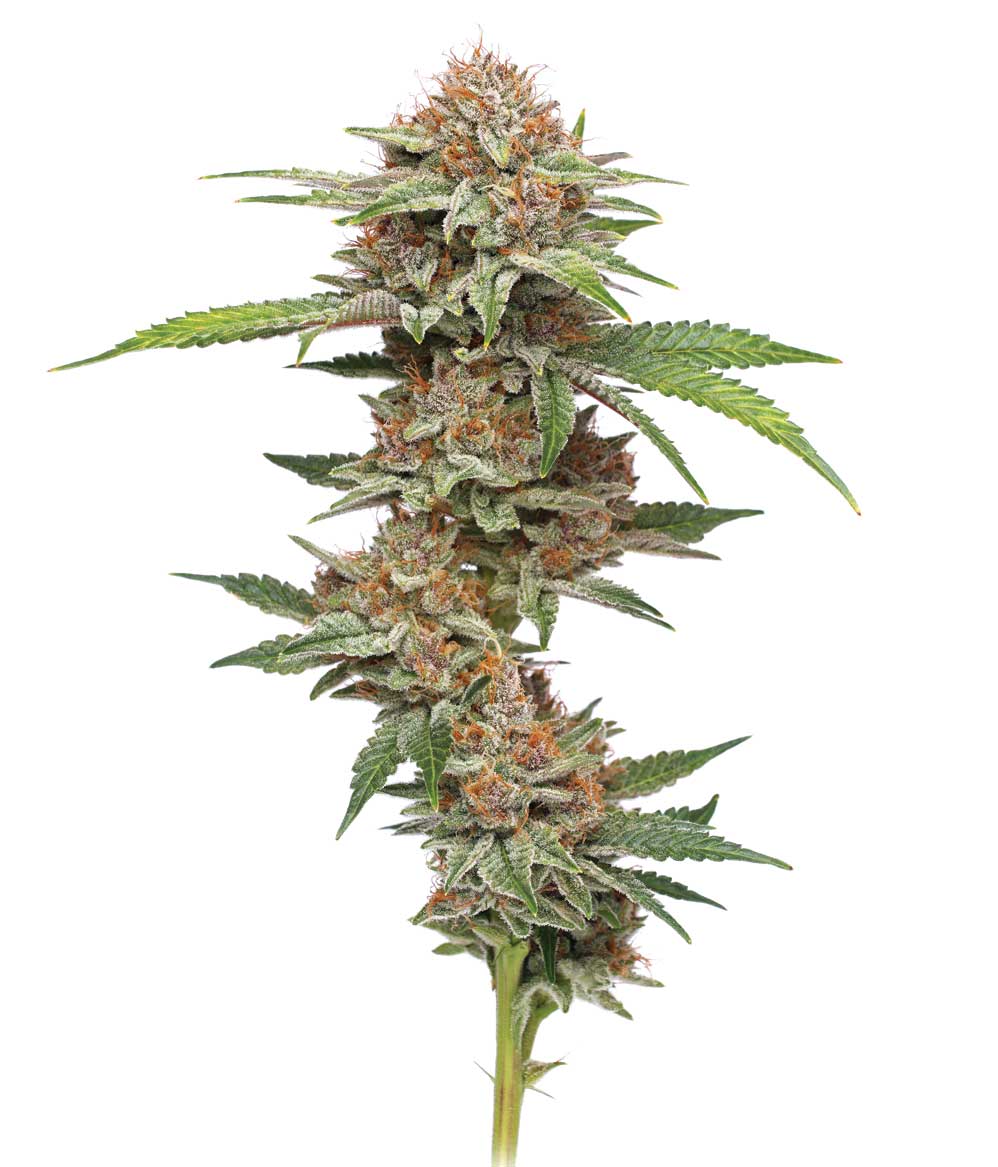
Find cultivars that produce desired flavors, aromas, highs, or medicinal qualities. Each cultivar has a genetic blueprint that determines how the plant will react to its environment, and therefore each cultivar will respond differently to different climates and garden setups.
New cultivars are the result of the intense competition among seed breeders hoping to find the next big thing.
How cannabis has been bred and for which traits has changed over the years as well. In 1964, THC was isolated and its molecular structure was described. It was understood that THC was driving all of the plant’s effects, which drove breeders to narrowly focus on THC content.
New cultivars were also bred for many other characteristics such as yield, flavor, aroma, medicinal effects, size, and maturation length, but no other aspect of the cannabis flower has been selected for more than THC potency. Popular varieties from the ’60s and ’70s usually had a THC potency that ranged between 6 and 12%, but ordinary Mexican tested in the range of 2 to 4%.
Breeders selected for a wide variety of desirable traits in new varieties. At first they concentrated on increasing potency, decreasing ripening time, and decreasing the growth-to-yield ratio. Later they developed more of an interest in terpenes, which provide the odor as well as “personality” of the high, as well as for cannabinoids other than THC, such as CBD and CBG. Outdoor environments have come into favor due to legalization, as well as a proliferation of autoflowering varieties, homogeneity, and a more scientific approach to obtaining intentional results and micro-adaptation to specific outdoor environments.
Cannabis is particularly easy to breed because it is dioecious, meaning unlike almost all other annual plants, plants are either male or female. This makes it easy to control pollination; separate all males from the females and only use pollen from selected males to pollinate females. Cannabis is wind-pollinated, so a male in proximity to a female plant will pollinate it. Flowers can also be hand pollinated. For this reason, it is relatively easy for a grower to experiment with breeding.
Compare cannabis breeding to tomatoes. Not only does each tomato plant carry both sexes, but tomatoes have “perfect” flowers, meaning each flower carries both sexes. To breed them, the stamen from the designated female must be removed before it matures, which requires tweezers and a sharp eye. Then pollen must be collected from the candidate male, which is painstaking.
As a result of the ease of breeding there are literally thousands of companies producing cannabis seed for commercial sales, so obtaining seeds has never been easier. They are available over the internet as well as in dispensaries. Many of these companies advertise in magazines that feature cultivation articles.
Clones are also available. Just as many people prefer to use tomato starts rather than germinate seed, clones provide a head start and save 10–15 days of cultivation. Another advantage of clones is that they have identical genetics and respond to the environment in a uniform way.
The “ideal” environment for one variety may not be optimal for another. Having cultivars that are genetically identical optimizes large-scale production, since all the plants will thrive under the conditions that the cultivator provides. Creating many microclimates to accommodate the different varieties is expensive and difficult to do if the commercial grower’s goal is to increase yield without compromising quality.
Home gardeners’ preferences tend to be more varied, and their cultivar selections reflect that diversity. Home gardeners have different goals in mind, which is why growing from seed or having many different varieties in the same garden is perfectly acceptable. Home gardeners may be less interested in crop yields than they are with crop quality. They tend to grow different varieties so they can harvest at different times and choose from a selection of cannabinoid potencies, qualities of the high, tastes, and aromas.
It is true that the heterogeneity of maturation times and types of cannabis grown in the same garden often result in smaller yields than from a homogeneous garden. Heterogeneous gardens require more individualized attention to the different cultivars, resulting in more individual care. Most home gardeners don’t mind, especially when they see the fruits (or flowers) of their labor.
The height and spread of the canopy are two varietal characteristics to consider when choosing which cultivar works best in the garden. This is particularly important whether the garden is indoors or outdoors. Sativa-dominant cultivars tend to grow taller and stretch farther than indicas. An outdoor garden with abundant sun and plenty of room for plants to spread out works well with strong sativa varieties such as Sour Diesel, Lemon Skunk, Vanilla Frosting, Lemon Tree, Runtz, Orange Creamsicle, or Lemongrass. These tall cultivars thrive in outdoor gardens with no height restrictions, and the extra intensity of direct sunlight keeps the plants from stretching too much. If they are pruned early in vegetative growth, they will bush out more rather than grow tall. The higher light intensity promotes shorter branching and thus denser buds.
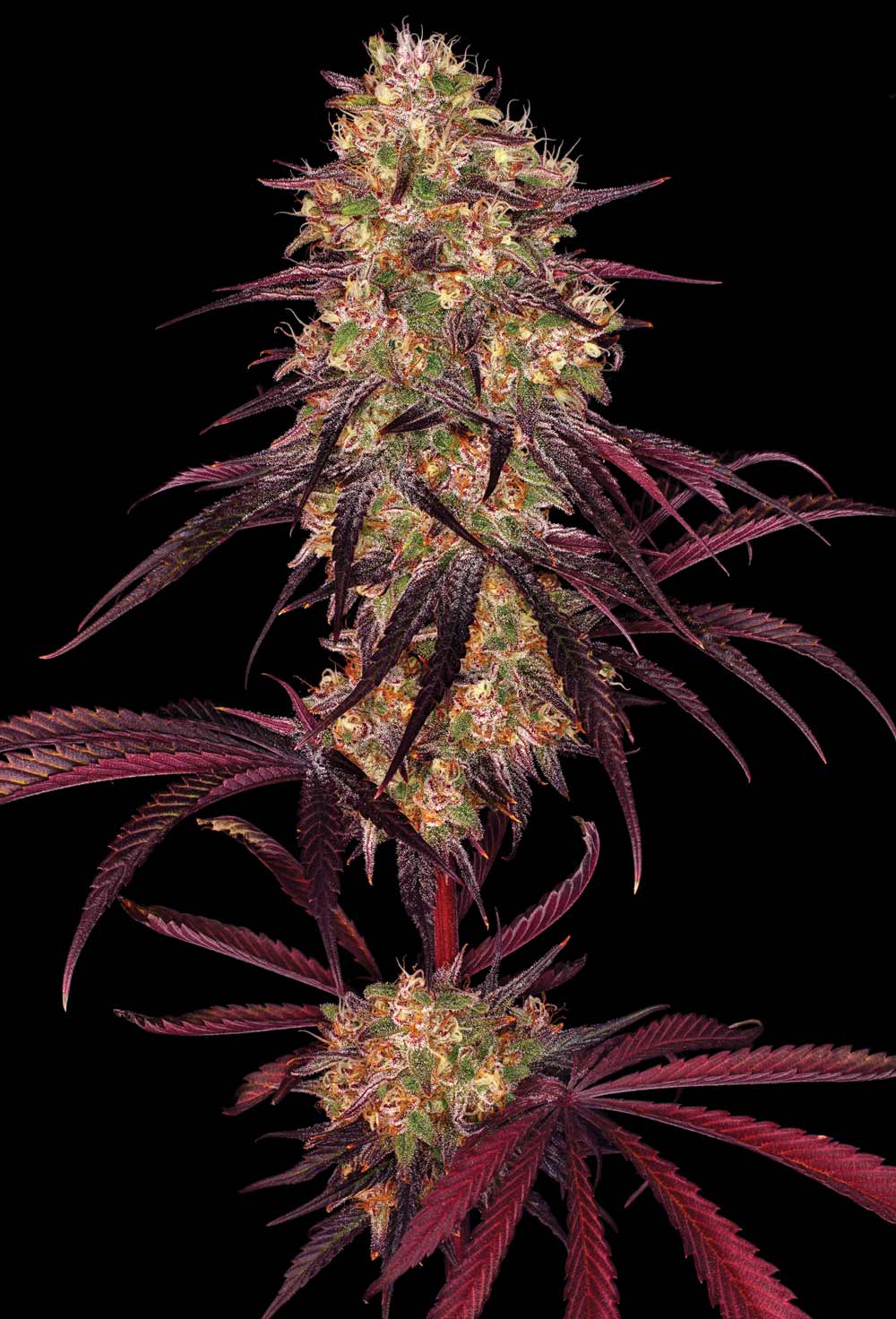
Indoor gardens typically have size restrictions. Tall varieties can potentially grow close to or into the lights, causing damage to the plants and undesirable flowers that are light and airy. Shorter varieties such as those associated with most indica-dominant and many hybrid varieties are ideal for smaller indoor grows. Cultivars such as Do-Si-Dos, Wedding Cake, Grease Monkey, Lava Cake, Northern Lights, or Super Skunk have indica characteristics and thrive in indoor climates. However, an indoor garden does not mean it has to be relegated to only growing indicas. There are plenty of sativas and hybrids such as Sour Diesel and OG Kush that thrive in even the smallest of indoor settings if they can be grown with either the SOG or ScrOG method.
Cannabis varieties have different rates of maturation once they are set to flower. Typically, this ranges from seven to 11 weeks. The time it takes to reach maturity affects the choice of variety in a couple of significant ways. First and foremost, quicker-maturing varieties allow for more harvests per year. If a grower is looking to maximize yield, and streamline production, quicker plants are a big plus. The other significant reason is that late-season varieties are inappropriate to grow in areas with short growing seasons.
Outdoor growers consider maturation speed depending on the weather in autumn, which can be cold and moist, but varies regionally. Gardens in climates that remain warm through the fall may work best with varieties that have longer flowering times. Finishing the flowering cycle while temperatures are still hot outside can cause the flowers to be less dense and lose a lot of their terpenes (aroma and flavor). Flowering later when temperatures are cool will delay ripening. Conversely, outdoor growers in climates that experience early frosts should plant cultivars that are ready to harvest early in the fall. A lot of the autoflowering varieties flower quickly and still have a lot of the original qualities that make them so great.
Once the size and maturation speed of the varieties have been decided, maximizing yields is often the next decision that needs to be considered when choosing which cultivar works best for a garden. High-yielding crops provide more medicine after harvest. These varieties are vigorous growers and will usually have higher cannabinoid potencies as well.
Maturation speed has a negative correlation with crop yield. In other words, the faster the maturation time, the lower the yield tends to be, and vice versa. Slower maturing varieties have more time to develop flowers, and thus the yields tend to be larger. However, a quick maturation time and low yield are not mutually exclusive. If it is a necessity to have a quick maturation time, the resulting smaller plants can be more densely planted to fill out the given canopy with more buds.
Examples of heavy yielders are Blue Dream, Sour Diesel, Big Bud, Critical Kush, Super Silver Haze, and White Widow.
The quality of the flower is more important than the yield for many growers. The flavor and aroma of cannabis comes exclusively from the terpene profiles of the varieties. Some cultivars have very distinct noses. The decision to grow a specific variety based on flavor and aroma is a personal decision that is best decided by the end user.
Some people prefer fruity cultivars such as Strawberry Cough or Blackberry Kush. Others prefer a sweet flavor from varieties such as Durban Poison, GSC, or some of the “cake” varieties such as Wedding Cake or Ice Cream Cake. Sour Diesel, Chemdawg 4, and Hindu Kush all have gassy noses due to a relatively high concentration of limonene. Flavor and aroma preferences are personal, but they are also very closely related to the high that comes from smoking/vaping these varieties as well.
The high from cannabis comes from the interplay of the different cannabinoids and terpenes found in the plant. With hundreds of active ingredients, there are practically endless terpene and cannabinoid combinations. Finding the high that works best for different situations is part of the fun of exploring cannabis. Terpenes such as a-pinene and limonene are bronchodilators and tend to give an uplifting energetic high. B-caryophyllene and linalool are smooth muscle relaxers and are generally found in varieties that provide a relaxing, calming high. Cannabinol (CBN) is the only cannabinoid that is regularly mentioned in lab testing that is also a smooth muscle relaxer and can cause that calming high. Many consumers use cannabis to ease anxiety and will look to cultivars with higher than average cannabidiol (CBD) content, such as AC/DC, Cannatonic, Sour Tsunami, Harlequin, and Ringo’s Gift.
Cannabis is susceptible to gray mold (Botrytis cinerea) and powdery mildew, which is caused by a number of fungal species. Both of these fungal infections thrive in stagnant, high-humidity environments. Gardens with humidity controls or naturally low humidity and substantial air movement around the plants are less susceptible to mold and fungi. However, cannabis is grown all over the world, and there are a number of regions where high-quality cannabis is grown in high-humidity environments. Cultivars that are grown in high humidity gardens need to have some level of mold resistance.
Cultivars derived from varieties and hybrids from Thailand, Vietnam, and other countries in Southeast Asian where it is humid have a higher resistance to mold. Varieties such as Pineapple Thai, Super Lemon Haze, Voodoo, and Juicy Fruit have Thai ancestry and are less prone to fungal infection.
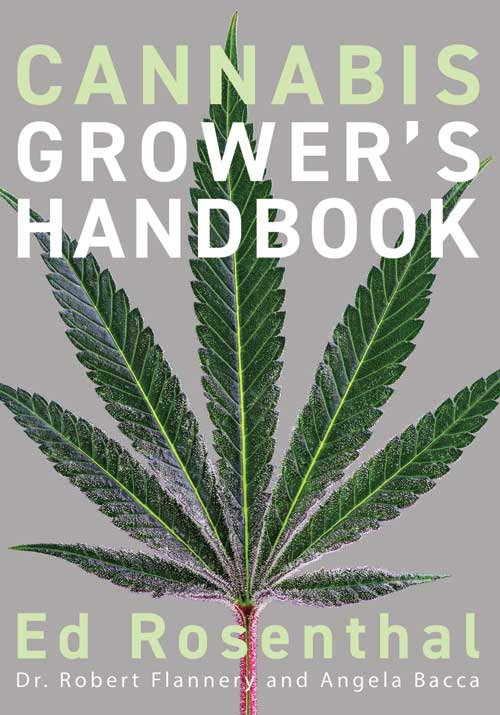
This excerpt of the Cannabis Grower’s Handbook by Ed Rosenthal was originally published in the print edition of Cannabis Now.
The post How to Know Which Plants to Grow appeared first on Cannabis Now.
The primary goal of any extraction method is to separate the cannabinoid-rich resin of the cannabis plant from the inert plant matter. In the dry ice kief separation process, dry CO2 literally freezes the resin glands on the plant, making them easy to shake loose from foliage. These frozen glands fall through a 120- to 220-micron mesh sieve and are collected in a container below.
Done properly, CO2 extraction is exceptionally efficient, and the most common method of small-scale CO2 extraction is dry-ice separation.
Dry ice is actually solidified CO2 gas. It’s super cold, because the freezing point of CO2 is very low, and it must be kept in specialized freezers that are even colder.
When not kept in a frozen state, dry ice doesn’t melt — it “sublimes” or “sublimates.” That means it transforms directly from a solid to a gas without going through a liquid state. This unique feature, along with its super-cold temperature, makes it ideal for CO2 separation.
As a safety note, remember that dry ice is so cold that it can cause frostbite on contact, so always handle with gloves and wear eye protection.
The following step-by-step technique is excellent for processing and preserving large quantities of leaf and small buds that might otherwise go to waste. In simple experiments, this method yields 15 to 18 percent of the source material’s weight in the final product —kief.
As with any kief or concentrate, that final product is contingent on the original buds. Resinous buds make the best kief. Lower-quality leaf and buds make lower-quality kief. The final product can be of many grades, but the first few shakes will always yield the highest quality. These smaller sieves (120, 160, etc.) let less green matter through. Larger mesh (200, 220, etc.) lets a lot through!
And always remember to shake over a large, flat mirror or large, smooth surface. Such an area makes it easy to scrape up kief.
Step 1: Place a few chunks of dry ice directly into a container. A can would work. Add about 3 times as many leaves and small buds to the container and let the pieces of dry ice mix with the chilled cannabis so it freezes the resin glands. The cannabis should be as intact as possible, so don’t grind it up.
Step 2: Use a Bubble Bag (or something similar with a 160-micron mesh sieve) to cover the opening of the container. The sieve end of the bag should be secured so it is pulled taut over the opening of the container.
Step 3: Holding the container right-side-up, shake the CO2 cannabis mixture in the can so the chunks of dry ice break up and freeze the supercooled cannabis.
Step 4: Turn the container upside down so the sieve is facing the mirror below. Shake the container for a few seconds or up to 5 minutes. During this time, white vapor should emerge from the container as the CO2 sublimes and resin glands slide through the sieve onto the mirror.
In the first couple of shakes, you’ll get top-quality resin glands. The resulting powder progressively turns to green leaf matter. Shake the container a few times so that the highest-quality kief passes through the sieve. Collect this kief before progressing to the next grade. Repeat the process as many times as desired and keep separate jars for different potency grades
Step 5: Remove any remaining pieces of dry ice. Scrape kief still stuck to the sieve and the inside of the container onto the mirror. Scrape all this kief into a pile and store it in a glass container to use for cooking. This hash is of lower quality and contains contaminants, but the cannabinoids are concentrated in the final product when you cook with it.
This story was originally published in the print edition of Cannabis Now.
The post Demystifying the Dry Ice Kief Separation Method appeared first on Cannabis Now.
If you resolved to look and feel your very fittest in 2017 definitely hit the gym… but first consider consuming cannabis.
Experts say getting stoned pre-workout helps:
Seibo Shen, co-founder and CEO at VapeXhale brings intention to his workouts and is eager to share that using cannabis accentuates this mindset.
“Cannabis promotes homeostasis. When I’m amped up it calms me down, when I’m drowsy it gives me energy. No matter what strain I consume getting high will bring me to the perfect baseline.”
A pre-workout combination of breathing exercises and cannabis leaves Shen feeling physically loose with a sharp state of mind allowing him to perform at a higher level.
Jim McAlpine, president and founder of The 420 Games also attributes improved performance to cannabis. When he goes for a long swim without cannabis he frequently gets too bored to finish.
“THC allows for me to push myself harder because without it I lose my motivation.”
Ask any fitness geek, body awareness improves performance. Shen has found that cannabis helps him to better feel specific muscle groups. This attention to detail improves Shen’s exercise form which both prevents injury and increases effectiveness. Shen also finds that consuming CBD pre-workout reduces joint inflammation.
“After I consume cannabis I feel like the Tin Man and I just oiled my joints.”
According to the British Journal of Clinical Pharmacology there are there are anti-inflammatory benefits to CBD proving Shen isn’t just so stoned he thinks he’s in Oz.
A 2013 study performed by The American Journal of Medicine found cannabis lowers insulin resistance, improves fasting insulin levels and facilitates metabolic function. In layman’s terms your body will actually burn those extra holiday calories more efficiently than those friends who voted no on Prop 64 — especially if you are working out! Bonus? They also found cannabis users have significantly smaller average waist circumferences than those who abstain.
McAlpine loves the feeling he gets after a workout.
“When I get out of the pool I feel better than after any bong rip. My heart is beating hard and I just feel amazing, regardless of whether or not I’ve smoked.”
Turns out, this sensation, commonly termed “runner’s high,” actually is akin to getting stoned. A 2003 study from the Georgia Institute of Technology found that as we reach the peak of our workouts our body releases its own natural cannabinoids.
The natural activation of the body’s endocannabinoid system late in a workout, promoting athletes to push through explains why toking up pre-workout helps Shen and McAlpine get in the right headspace for fitness and maintain their motivational peak throughout.
Originally published in Issue 24 of Cannabis Now. LEARN MORE
TELL US, how do you incorporate cannabis into your workout routine?
The post All Strains for Awesome Gains appeared first on Cannabis Now.
People who grow cannabis for the sick perform a truly sacred act. Anyone who goes through the time, the effort, and the risk of growing medicinal-grade cannabis should be celebrated and respected. Vendors should be treated with the utmost respect. There should be a separate vendor waiting area as well as more than one trained dedicated buyer, if possible, to help guide them through the steps of buying clean cannabis.
First, visually examine the cannabis. What color is it? Bright green usually indicates that the flowers are not cured. As cannabis cures, the greens darken and more orange, red, and yellow colors appear, blue and purple also.
After the initial visual inspection, smell the flowers. Give the bag a gentle squeeze and allow the aroma to waft over you. A wide variety of smells from lemon pine sol to earthy musk could be present. Fresh berries, grass and leather cannabis express at least as many olfactory notes as wine.
After visual and nasal inspection, gently break open a bud or two, or maybe three. You are looking for evidence of mold. At its earliest stages, it will appear as a brown streaking on the stem. As it advances, white, grey, or brown webbing will begin to grow. The most common form is botrytis, or gray mold, although it can appear in the aforementioned colors. Also examine the surface leaf area that remains on the bud for signs of powdery mildew (PM). It will express itself as white downy spots or chunks on the leaf. It looks quite similar to chalk or paint lightly speckled on the leaf. The use of a 3x light and a 30x microscope will aid in determining whether cannabis flowers are clean.
When looking for mold, one should also be looking for little critters, bugs that is. A variety of nasty pests can be present on cannabis flowers. Spider mites are perhaps the most common. Look for small black or brown spots through a microscope, as they might be invisible to the naked eye. Under magnification, the little nasties appear as spider-like horrors. Combusting cannabis with these present can result in a very unappetizing snap and crackle in your pot. Other commonly seen pests include thrips, gnats, and the occasional caterpillar. Again, rigorous examination with at least a 30x microscope is essential.
After flowers or concentrates pass our initial inspection procedure, they are then lab tested. THC, CBD, and CBN are all tested for using the GCMS method. Pathogenic molds are also tested for including aspergillus and aurobasidium. The presence of pathogenic molds has potentially fatal consequences, particularly for someone with a compromised immune system. Testing also allows us to give vendors feedback on the cleanliness and potency of their medicine.
Another commonly seen mistake is heat stress. Heat stressed cannabis will generally be orange, with most if not all of the exterior trichomes burned away. THC is concentrated in the trichome glands, so when they are burned off, a good portion of the THC is gone. Above 80 degrees most indicas start to suffer, whereas sativas can take a little more heat due to their being from more temperate climates.
Correct temperature, adequate ventilation, proper flushing and heat stress are other major factors. The final common problem is inadequate flushing. Hydro systems should be flushed periodically during the flowering cycle, and then at the end for at least 7-10 days. Many professionals like to use a flushing solution and/or a carbohydrate/sugar solution to help wash salts and heavy hydro fertilizers away. Flushing for soil is basically the same. When cannabis is properly flushed, it will burn with a clean white ash. Improperly flushed medicine will produce a gray to black ash, and a joint may go out frequently; while a correctly flushed joint will burn for several minutes even without drawing on it, similar to a fine cigar.
Teaching the vendors on how to improve their medicine is one component of successfully buying clean cannabis. Educating medicinal growers about keeping rooms clean and free of contaminants is an important and often overlooked part of buying. During the initial inspection, the buyer should pull several different flowers out of the bag and break them open looking for the presence of mold or powdery mildew. Often larger buds will harbor mold that is not seen on the surface or in smaller flowers. After the laboratory tests, grind a small amount of cannabis and smell it afterward. Does it smell like chemicals, or do you detect individual terpenes? Terpenes are the compounds that form all of the incredible varieties of aromas that cannabis exhibits.
The next step is to vaporize the sample. Hopefully, this is the most enjoyable part of the process. Does the cannabis taste harsh or burnt? That will usually be the result of poor flushing. Cannabis flowers, especially if grown hydroponically, need 7-14 days of flushing. Organic hydro will be on the closer end of the time, regular chemical fertilizer longer. The vaporized sample should have a variety of different pleasant tastes; from lemon pledge to pine or mango, cannabis terpenes create hundreds of different flavor profiles, at least as complex as wine. When buying clean cannabis, one is most interested in how the flavors are expressed. Basically, do you taste chemicals, or do you taste terpenes? Another indication of incorrect flushing is a tickle or harshness at the back of the throat. Correctly flushed cannabis will be exceptionally smooth and tasty, often tickling nasal passages upon exhalation. Chem Dawg, OG Kush, and Sour Diesel strains often have this effect.
The last part of the process is evaluating your subjective experience. Do you feel up? Relaxed? Everyone’s experience is different, but there seem to be basic trends with indicas being associated with more “body” or sedative effects, and with sativas having a racier edge to them. For some, this will be completely the opposite. Ultimately, individual preferences will also play a large role in determining which cannabis to purchase, but if the above guidelines are followed, a patient can be assured of buying clean cannabis that’s up to standard.
TELL US, what do you look for when you’re buying cannabis?
The post The Cannabis Now Guide to Buying Clean Cannabis appeared first on Cannabis Now.
Cannabis topicals are having a moment. From A-list celebrities using Lord Jones balms to soothe aching feet at the Golden Globes to professional athletes debuting their own line of muscle rub, transdermal products infused with cannabinoids seem to be everywhere.
But it isn’t just millennials and the Hollywood elite jumping on the bandwagon. An increasing number of senior citizens are also turning to topicals, often desperate to alleviate a painful and often debilitating condition that affects nearly 54 million American adults: arthritis.
The disease, which causes aches, swelling and stiffness in the joints and muscles, is typically treated with a combination of medications including steroids and opiates, which may have dramatic side effects. However, cannabis is becoming a popular and viable alternative. Infused creams and lotions work when the products’ cannabinoids bind to the network of cannabinoid receptors called CB2 receptors on the skin, without needing to enter the bloodstream. This means people using topicals infused with psychoactive cannabinoids such as THC will not feel a cerebral effect — only localized relief. Transdermal patches, however, do allow the cannabinoids to enter the bloodstream and travel to receptors in the brain, but because the release is so slow, it’s also unlikely to impart a high feeling.
While research on the efficacy of topicals is limited, there have been some promising results. A 2015 study published in the European Journal of Pain found that, when applied transdermally to rats with arthritic joints, the cannabinoid CBD (cannabidiol) offered relief. Another study conducted in 2017 on rats with osteoarthritis (the most common type of arthritis, wherein bone cartilage breaks down over time) concluded CBD prevents pain and nerve damage. In fact, scientists are also exploring evidence that concludes CB2 receptors themselves may be responsible for regulating inflammation — one of the main issues arthritis causes.
The science is still early, but according to Radicle Health founder and nurse Eloise Theisen, CBD topicals appear to help with inflammation and itchiness, but people should try a THC topical — or a combination of THC and CBD — if they’re not finding relief from a CBD-only product.
Since the average senior citizen in the United States takes around five prescription medications daily, concerns about interactions between drugs, side effects and potentials for abuse have many seeking another way.
And since those who might be averse to getting high from smoking or eating cannabis are often not intimidated by using a non-psychoactive cannabis balm, topicals offer a way to discover the healing properties of cannabis while eliminating the fear of Grandma and Grandpa getting too buzzed.
Karen Rumics Averill is a 63-year-old business owner from Oregon who began making her own cannabis-infused topicals a few years ago to help her husband. He was suffering from a severe type of arthritis called ankylosing spondylitis, also known as “curved back syndrome.”
“He was initially put on Enbrel, which is an injection, and he was actually receiving twice the dose that is normally required,” Averill said. “Then, [the doctors] put him on Oxycontin and Vicodin and then all of a sudden one day, at two in the morning, we’re rushing him to the emergency room for a bleeding ulcer and they had to remove him from all of those drugs.”
She believes the drugs her husband had been prescribed were actually making his condition worse.
“Once he went off of [pharmaceuticals], he became more mobile, more active. He wasn’t comatose on the couch because he was over-medicated.”
Averill began experimenting, utilizing byproducts from top-shelf indica strains to infuse in coconut oil, creating a THC-infused topical.
“Actually, my 94-year-old aunt is now using it for her arthritis. She called me yesterday and said it works great!” Averill said.
For many within the cannabis industry, one of the biggest challenges is getting accurate information to the general public — without being overwhelming or unconvincing. After getting phone call after phone call from seniors asking about their transdermal product, the team at NanoSphere Health Sciences decided they needed to focus not on getting their products to seniors, but on bringing the seniors to them.
“A lot of times, the way that a senior gets our product is because a niece or nephew, granddaughter, son or daughter has gone in, bought them the product and then told them that they need to use it, versus them actually going into the dispensary and purchasing the product themselves,” said Crystal Colwell, marketing director for NanoSphere.
So the company decided to partner with several dispensaries in their home state of Colorado, offering residents of nearby assisted living facilities and 55-plus communities round-trip bus rides to their locations in order to educate them on the many useful applications of cannabis. They also work with the non-profit group Realm of Caring in order to further their outreach towards the senior citizen demographic. Colwell says the feedback has been remarkable.
“We had one woman who had such severe arthritis in her hands that she was unable to open her hands all the way,” Colwell said. “One of her most favorite things to do is to write letters and handwritten notes. She started using NanoSerum on her hands and she was using it once a day for a month and after the first month she was able to open her hand and hold a pen or a pencil in her hand again. Within a two-month time span, she was actually able to write handwritten notes again.”
Colwell adds that while it will take time to dismantle all the misinformation about marijuana and the ways it can be consumed, topicals offer a non-threatening introduction to a medicine that could make all the difference.
“A lot of misconceptions that senior citizens have is that the only time you can get relief from cannabis is if you smoke it or you ingest as an edible,” she said. “Once they learn that there are alternative applications, that’s when they become intrigued and it gets their mind going.”
Originally published in the print edition of Cannabis Now.
The post Topicals: The Real Gateway Drug for Senior Citizens appeared first on Cannabis Now.
One of the worst nights of Susan Barron’s career came a few years ago, when the artist was in Manhattan to unveil her mixed-media art series, Depicting The Invisible. Military veteran portraits adorned with paint and text comprised the collection, which Barron designed to highlight veteran struggles with post-traumatic stress disorder (PTSD).
Just before the show, Barron’s phone rang. On the other end of the line was the mother of one of her photographic subjects. “She said he had succumbed to PTSD and taken his own life,” Barron says. “It was a gut punch.”
Nearly three million service members have deployed in support of the Global War on Terror since 2001. Of those who served in Iraq or Afghanistan, between 11 and 20 percent now suffer from PTSD. These glaring statistics have left an interminable trail of suicide victims in their wake—individuals, like Barron’s friend, who quietly endure the invisible wounds of combat, personal loss or sexual assault.
22 veterans per day. The suicide statistic has circulated extensively since such data first reached the public sphere. In 2020, the Department of Veterans Affairs reported 6,146 military vets died by suicide, an astonishing 17 per day. And while that number amounted to the lowest total since 2006, any semblance of empathy would suggest it stands at 6,146 too many.
It was learning about this epidemic that inspired Barron to create “Depicting The Invisible,” an exhibit that, since its launch, has occupied the hallowed halls of the National Veterans Memorial and Museum in Columbus, OH, and the Army and Navy Club in Washington, DC. among others.
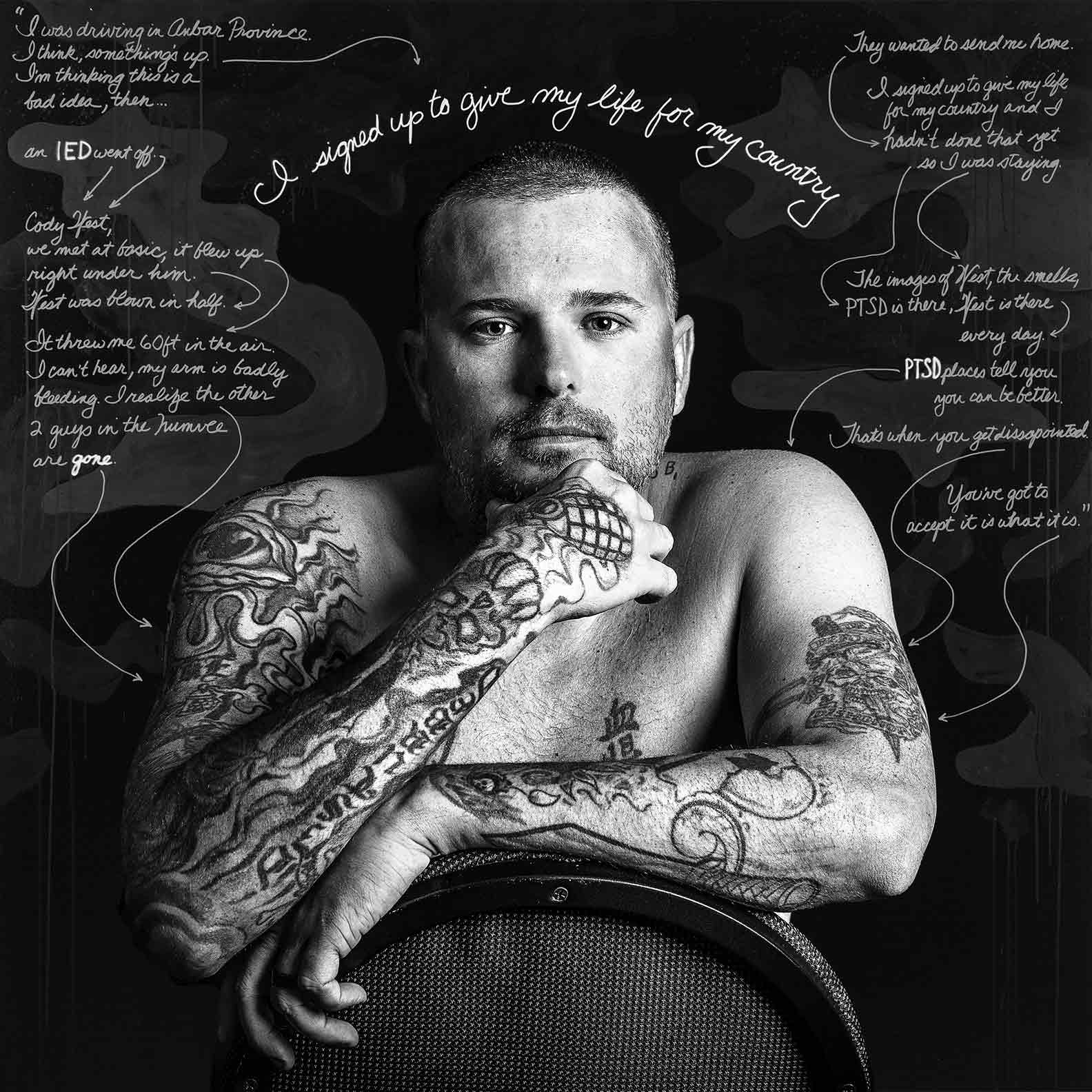


“I’m really grateful these very brave men and women shared their stories with me,” Barron says. “I wanted to shine a light on this epidemic of PTSD and suicide and help break down the stigma around issues of mental health. Every one of us needs to do whatever we can to help. As an artist, this is what I felt I could do.”
Barron’s photo series was shot using a classical black-and-white style that she says, “was intentionally in direct contrast to the brutality of their stories.”
“They’re heroic. They’re elegant,” Barron says.
The works also proved to be conversation starters, eventually becoming the subject of an NPR podcast and an award-winning short documentary of the same name.
“This project has had so many hands lift it up, and throughout all of it, I’ve been contacted by people I don’t even know telling me what a huge difference it made in their life or in their spouse’s life,” Barron says. “Sons, mothers, grandmothers—so many family members have been thankful for destigmatizing this, for honoring this as a wound of war and not a mental illness.”
Shattering stigmas has also opened the door to a more expansive network of PTSD treatment options for veterans, cannabis principal among them.

Ryan Cauley may not be one of Barron’s subjects, but his story, like the myriad of veterans enduring the trials of neurological trauma, is remarkably similar. Originally from Pendleton, Indiana, Cauley joined the Army in 2004 and served as a cavalry scout until 2007 with the service’s 1st Squadron, 32nd Cavalry Regiment, 101st Airborne Division.
Life after the service proved difficult. Post-traumatic stress impacted Cauley’s ability to connect. Depression and anxiety became a viciously cyclical norm. His attitude and behavior soured, and in turn, his marriage and personal relationships eroded.
Months of anger management and cognitive behavioral therapy helped Cauley understand how to manage the condition, but it wasn’t until his 2016 foray into medical cannabis—and subsequent launch of the cannabis and PTSD advocacy company Combat Cultivators—that he’d experience a real transformation.
“I had to convince my wife about using cannabis, but almost instantly, she was able to see the change in my attitude,” Cauley says. “I was able to give more love and be more compassionate. I could focus on tasks and not be consumed by negative thoughts.”
Noticeable attitude changes eventually manifested a genuine interest in the industry, and in 2018, Cauley set out to complete his first grow. “I was such a baby,” he says, smiling at the memory. “I wanted to grow my own cannabis, because, at the time, prices were more expensive than they are now. Today, we grow our own because it’s better than anything in the dispensaries.”
Cauley’s infantile curiosity soon blossomed into a profession. He became a lead grower at a company in Michigan, learning the ins and outs of large-scale growth, environmental control and cloning. He even recruited his best friend from the Army, Carlos Ozuna, to work in the same role. Together, the duo launched the Combat Cultivators Instagram account to be a vehicle of contacting other veteran cannabis advocates struggling with PTSD.

And while the friends have since left the company, Cauley credits the knowledge the two accumulated there for the duo’s success with Combat Cultivators. More than that, however, has been the remarkable difference cannabis has made in Cauley’s personal life. “It’s given me so much of my life back,” he says. “That sense of doing something for a reason. It also gave Carlos and I the opportunity to work together again.”
The number of ways veterans are learning to confront PTSD is ever-expanding. For Barron and Cauley, using their respective platforms has injected life into a conversation about mental health that remained dormant for far too long.
The dreaded phone call Barron received that day in Manhattan is one that many of today’s veterans and military family members have endured ad nauseam. Every story is unique, but the excruciating pain of loss is undeniably similar. Preventing that from happening to anyone else, Barron says, is a calling we should all gravitate toward.
“That day was a personal low for me, but it ignited an even stronger drive to get these stories out there,” Barron says. “We all just really need to do more.”
This story was originally published in issue 47 of the print edition of Cannabis Now.
The post The Healing Art: Military Veteran Portraits Highlight PTSD & Cannabis appeared first on Cannabis Now.
Since the beginning of his career in the early ’90s, when he arrived on the West Coast music scene as a smooth-talking gangsta-rap standout, Snoop Dogg has been more than open about how much he loves smoking weed.
From that “bubonic chronic” he bragged about on ‘Gin and Juice’ to his numerous successful forays into today’s legal cannabis industry, almost 25 years later, the D-O-double-G and marijuana are practically synonymous. That’s why we were initially a little disappointed when we found out Snoop’s first cookbook, “From Crook to Cook: Platinum Recipes from Tha Boss Dogg’s Kitchen,” wouldn’t include any recipes that incorporate cannabis.
It’s not as if cookbooks that combine marijuana and cooking are remotely taboo anymore — see “Bong Appetit” and “Edibles: Small Bites for the Modern Cannabis Kitchen” for two examples from late 2018 alone. And it seems unusual that one of the titular stars of “Mac & Devin Go to High School” would shy away from a chance to include pot in… anything. But, for whatever reason, “From Cook to Crook” declines to teach its readers how to dose their home-cooked munchies.
That’s not to say the plant is entirely absent in “From Crook to Cook,” either. The text is full of cheeky, wink-wink references to smoking pot. Snoop talks about “OG munchies” in three different sections interspersed throughout the book, where he ranks his favorite cereal, chips and candy. He tells readers to “go get baked!” in the introduction for a brownie sundae recipe. And one of the recipes, dubbed “The Lunch Briz-eak,” is literally just a plate of fruit with honey and peanut butter on it that you’re supposed to eat while you get high at work — though, for the record, it sounds tasty.
All we’re saying is, it’s kind of a weird branding choice to not even have a cannabutter recipe in the Snoop Dogg cookbook.
But enough about what “From Crook to Cook”doesn’t have, because at the end of the day, this cookbook is tons of fun, provided you’re a fan of Mr. Doggy Dogg and comprehensive recipes for some truly decadent home-cooked meals. It is undeniably engaging to read. Its pages are colorful, Snoop cracks jokes throughout the copy and there are beautiful photographs of many of the dishes described therein — plus, a great shot of Snoop smirking while he holds a lobster.
The whole thing starts off with a bite-sized opener from his TV co-host Martha Stewart, an introduction from Snoop and a visually delightful tour of Snoop’s cabinet and fridge, photographs absolutely included. From there, the book breaks down into chapters on breakfast, lunch, dinner, dessert, drinks (again, booze but not pot? C’mon!) and parties.
In total, this book boasts dozens of different recipes. You could conceivably cook Thanksgiving dinner using “From Crook to Cook” alone, which is genuinely impressive. And there are lots of extras tucked away among the recipes, too. The last chapter, for instance, includes playlists to listen to while cooking. Snoop’s “Game Day Playlist” includes “Eye of the Tiger” and “Black & Yellow,” which we simply cannot argue with.
Sure, these recipes are not for those among us looking to count calories or exclude goodies like meat, dairy or gluten from our dietary intake. Biscuits and gravy, cinnamon rolls, fried bologna sandwiches, chicken and waffles, lobster thermidor, chocolate chip cookies and s’mores pie all make appearances in Snoop’s cooking repertoire, for good reason — they’re all delicious. This is a cookbook for people who have tried putting chocolate on pizza at least once, just in case it’s actually really good. Even though this food doesn’t get you high, “From Crook to Cook” is tailor-made for indulging your cravings once you’ve done the hard work of getting yourself high without edible assistance.
In the spirit of accuracy, we tried one of Snoop’s dinner recipes, and overall, we approve. The Last Meal Shrimp Alfredo, apparently inspired by Snoop’s love of the Godfather (gangsta sh*t is another big motif in this cookbook), was intense and required a fair amount of prep and cleanup. But the recipe was easy to follow, the alfredo sauce was thick and creamy and it tasted even better a few hours later, eaten in bed while watching the newest season of the “Great British Baking Show,” if you catch our drift.
TELL US, what’s your favorite cannabis cookbook?
Originally published in the print edition of Cannabis Now. LEARN MORE
The post Snoop Dogg’s Cookbook Provides Recipes For When You’re Already High appeared first on Cannabis Now.
Although it’s not nearly as popular as indica and sativa, ruderalis has become a more prevalent species in more recent years. Originating from Central Russia, it has a similar chemical profile to hemp and contains very low levels of THC.
The name ruderalis comes from the word ruderal, a term used by botanists to describe hardy, non-domesticated plants. So any breed of cannabis that has the ability to adapt to extreme environments and avoid human cultivation has been classified as ruderalis. Only recently have indoor growers begun to utilize the characteristics of the ruderalis plant to influence new hybrid varieties.
This stalky species of cannabis only grows to a height of 1 to 21⁄2 feet tall (30.5cm to .75m) and produces small, chunky buds. But what really differentiates the ruderalis from indica and sativa is its flowering cycle. Unlike the other cannabis species, ruderalis’s flowering cycle is induced according to its maturity and not by the photoperiod (seasonal changes in night length), a process known as auto-flowering. This auto-flowering can begin in as little as 21 days.
Over time, growers have combined their top indica, sativa, or ruderalis strains to create strains with the best aspects of both parents, known as hybrids. One well-known hybrid is Afghanica. This strain, once erroneously identified as indica, is an indica-predominant strain with a potent and sedating high. Great for indoor or outdoor growing, the plant can grow between 5 and 6 feet (1 and 2m) tall, depending on the setting.
Another well-known type of hybrid is an auto-flowering strain. As you might expect, this comes from cross-breeding a strain with ruderalis. Very popular with growers, this hybrid is easy to grow due to the short time from seed to harvest and its ability to flower when mature rather than when seasonal changes happen.
Reprinted from “Idiot’s Guides: Growing Marijuana” by permission of Alpha Books, an imprint of DK, a division of Penguin Random House LLC. Copyright © 2016 Dorling Kindersley Limited. All rights reserved.
Originally published in Issue 26 of Cannabis Now. LEARN MORE
TELL US, ruderalis is very rare, have you ever seen a ruderalis strain?
The post Species of Cannabis: Ruderalis and Hybrids appeared first on Cannabis Now.
In November 2012, my Colorado neighbors and I voted to legalize adult-use cannabis.
The following month, Gov. John Hickenlooper signed Amendment 64 into the state constitution, immediately legalizing the cultivation, possession and use of marijuana – though the legal sales would take more than a year to begin.
Shortly after Hickenlooper’s historic signature, I found myself wanting to grow cannabis for the first time. I hardly have a green thumb, but how many times have I heard the adage, “It grows like a weed?”
But does it really?
There seemed to be a disconnect. If cannabis sprouts as automatically and wildly as the lovely-but-noxious morning glory vines growing along the side of my house, why is there a need for a multimillion-dollar nutrients market? Why are we still arguing about light spectrums and growing mediums when, let’s be real, we see weeds surviving and even thriving in the most unlikely and impossible of places?
With marijuana finally legal for the first time in modern history, and with cannabis surpassing alcohol as my personal intoxicant of choice, it was time to grow my first plant. But instead of reaching out to my master grower pals or seeking the advice of cultivation experts, I wanted to do this on my own terms.
I wanted this plant to serve as an experiment of sorts in my own home laboratory, and I wanted to answer the age-old question: Does weed legitimately grow like a weed?
There’s a modest, no-frills medical marijuana shop near my home that I sometimes frequent. The staff is always friendly; you’re met with a cold beverage of your choice upon check-in and I appreciate their edibles selection.
When I stopped by early this last summer and noticed their empty clone counter I asked where all their plants were.
“They always sell so fast,” the budtender replied.
On my next visit a month later, I noticed their picked-over selection of clones, the baby plants that are almost unrecognizable as cannabis. I asked the woman behind the counter about her favorite sativa-dominant strain, and a few minutes later I was walking home with a replenished edibles supply and a fragile little plant that seemed as if it might snap in half in the light afternoon wind.
A few hours later I went to the backyard with purpose. I gently took the plant out of its plastic flat. I dug a shovel deep into a random patch of soil and merged the plant and the soil into a disposable Solo cup.
After feeding it some water from the kitchen faucet, I set the tiny clone on the south-facing kitchen windowsill alongside a houseplant that has thrived in that spot for years.
When my wife came home later that evening, she immediately commented on our new house plant and named her Shelby.
And just like that we became marijauna farmers.
One of my favorite things about musician Jack White — and there are many — is his penchant for limiting himself in the name of art. He intentionally avoided guitar solos entirely on one White Stripes record, while another recording session had him using only antique instruments and gear. He famously created the oft-imitated Seven Nation Army bassline, not with a bass guitar, but with a heavily modified semi-acoustic hollow body guitar.
With Shelby, I too played by my own set of rules: I would plant her in soil dug up from my backyard, I would feed her only water and she would exist on whatever sunlight we could manage – mostly what she took in from the windowsill, though sometimes we’d set her out back to soak up more direct rays.
No special soil or compost tea. No nutrients or grow lights.
This hyper-basic construct was more than enough to fuel the growth of weeds throughout my yard. But was it enough for this particular weed?
Shelby did grow in those first weeks and months. When I first carried her home that afternoon she stood a proud 3 inches tall. Soon her stalk changed from a light green to a sturdier brown, and her size had doubled. Teeny flowers started to develop as she started pushing 9 inches, warranting a bigger pot, and her buds became more defined when she reached the 12-inch mark.
And while observing her evolution was incredibly gratifying, it was also clear to me – and painfully, hilariously clear to my friends who cultivate professionally – that Shelby was wanting for more. She wanted a more consistent light source. She wanted better food and vitamins. She was happy and green and flowering, sure, but she was far from thriving, as evidenced by her stunted size.
As fall began to settle in, Shelby felt the seasonal changes more than I did. She almost drooped with seasonal depression as her excursions outside became less frequent and as the days became shorter. At 13 inches tall, she was but a shadow of the magnificent plants I’ve seen in legal indoor cultivations throughout the legal world. When compared to the giant 12-footers in Humboldt and Mendo, she was merely an ant.
Weed does not grow like a weed, as it turns out, but there’s something more important to be learned from my experience.
Something unexpected happened in those months of caring for Shelby. As I was sticking a knuckle into the soil each morning – sometimes watering her and sometimes not, sometimes taking her out to sunbathe and other times leaving her in the kitchen window – I connected with her, and with cannabis, on a different level than I ever had before.
Instead of identifying myself as a consumer of marijuana products, I was now growing the plant itself. I was planning a modest harvest and thinking about how I’d grow my next crop differently.
I was a marijuana farmer.
Of course it makes sense. If you grow anything, you develop a deeper relationship with it. The pride of eating and sharing the cucumbers and tomatoes from your own garden exists for a reason, and that pride is of course shared by professional cannabis cultivators and home-growers alike.
While I didn’t expect this deepened relationship with cannabis from growing only one plant, I’m embracing it. It’s a powerful reminder of this being a product of nature, and even if marijuana doesn’t grow as simply as a weed, its simple complexity is something that will surely make this a future hobby in my home.
Originally published in the print edition of Cannabis Now. LEARN MORE
TELL US, have you tried your hand at marijuana farming?
The post Becoming a Marijuana Farmer appeared first on Cannabis Now.
The week of August 4th, I had the opportunity to attend two exciting conferences in the cybersecurity world: Black Hat USA 2025 and Squadcon which were held in Las Vegas....
The post Vegas, Vulnerabilities, and Voices: Black Hat and Squadcon 2025 appeared first on Cyber Defense Magazine.
