❌

Normal view

There are new articles available, click to refresh the page.
Before yesterdayMain stream

Bariatric Gelatin Recipe Dr Jennifer Ashton Gelatin Trick Recipe

30 November 2025 at 07:19

Bariatric gelatin recipe orΒ Dr Jennifer Ashton gelatin trickΒ is one of 2025’s most talked about wellness habits. You’ve probably seen it on tiktok, heard about it on morning health segments, or come across people calling it theΒ Jennifer Ashton weight loss trick. But what exactly is this method? And does dr Jennifer Ashton gelatin recipe really helps with appetite control?

Dr Jennifer Ashton Gelatin Trick Recipe

In this post I am sharing with you theΒ complete explanation, theΒ 2025 gelatin trick recipe from tiktok and trending Instagram reels, the gelatin cubes routine, the timing protocol, and aΒ clear bariatric variation comparison.

Why This Gelatin Trick Is Linked to Dr Jennifer Ashton

Many people associate this routine with Dr Jennifer Ashton because it matches her approach towardΒ sustainable, simple, science aligned health habits. And she often talks about nutritional benefits of collagen and gelatin.

She is often seen usingΒ hydrolyzed collagen powderΒ in her daily β€œfirst meal” smoothie.

Small daily habits can make it easier to stay consistent with healthy choices. The gelatin trick fits perfectly into that pattern. However, it’s important to note:

  • This isΒ not an official recipe released by her
  • It is anΒ inspired interpretationΒ widely shared in the wellness community.

While this isn’t an official recipe from Dr Jennifer Ashton, it’s a wellness-community interpretation that aligns with her practical, habit-based approach

What the Gelatin Trick for Weight Loss Actually Is

The gelatin trick for weight loss is essentially a pre-meal fullness strategy. By consuming a small amount of unflavored gelatin before meals, you create a gentle gel in the stomach that adds volume without significant calories. This slows gastric emptying, increases feelings of satiety, and helps regulate appetite more effectively.

As a result, many people find they naturally eat smaller portions, avoid overeating, and make more mindful food choices. The trick doesn’t burn fat or boost metabolism, and it’s not intended to replace meals

So this viral gelatin trick is a supportive tool that helps reduce cravings and promote portion awareness in a practical, achievable way. The benefits of this Viral genetic trick comes entirely fromΒ appetite control and healthier meal behaviors.

Dr Jennifer Ashton Gelatin Trick Recipe

This is the gentle, simple recipe most closely aligned with what people call the Dr Jennifer Ashton gelatin trick recipe .

Ingredients

  • 1 tablespoon unflavored gelatin
  • Β½ cup hot water
  • Β½ cup cold water or unsweetened tea (black tea)
  • 1 teaspoon lemon juiceΒ (optional)
bariatric gelatin recipe ingredients

Instructions

Step 1: Bloom the gelatin
Sprinkle the gelatin over 1–2 tablespoons of cold water.
Let it sit for 1 minute until it becomes spongey.
(This prevents clumping.)

Step 2: Add hot water
Pour in the hot water and stir continuously until fully dissolved.

Step 3: Add cold water or tea
Stir again and add lemon juice if desired.

Step 4: Chill
Refrigerate for 2–3 hours until it lightly sets.
You can also drink it warm immediately.

Step 5: Take before meals
ConsumeΒ 15–30 minutes before lunch or dinner.

Gelatin Cubes for Weight Loss

Gelatin cubes have become a popular version of the 2025 gelatin trick because they make the routine easier and more convenient. Instead of preparing the mixture daily, the gelatin is poured into silicone molds and set into small, ready-to-eat cubes that can be taken before meals.

These cubes are low in calories, easy to carry, and perfectly portioned, ideal for busy schedules. Most people use two to four cubes per day, typically before lunch and dinner, to support appetite control and reduce mid-meal cravings.

The gelatin cubes routine fits seamlessly into the overall gelatin trick protocol and offers a simple way to stay consistent. This supports fullness without adding significant calories. Geletin Cubes Recipe for Weightloss

What is Gelatin?

Gelatin is a colorless, flavorless protein made from collagen. The collagen helps to keep our skin, joints, and tissues strong. When you mix gelatin with hot water and let it cool, it turns into a soft gel. That gel-like texture is what makes the β€œgelatin trick” helpful, because it creates gentle fullness in the stomach before a meal.

Once you eat it, gelatin breaks down into amino acids like glycine and proline, which support your gut lining, skin, and joints. It’s an easy way to get some of the benefits of collagen without needing any fancy ingredients.

2025 Gelatin Trick Timing Protocol

This updated routine is often called theΒ 2025 gelatin trick protocolΒ or theΒ 7-day gelatin routine. Here is the safest and most effective way to use it:

Morning (optional)

1 cube with warm water or herbal tea. Supports appetite rhythm and reduces mid-morning snacking.

Afternoon (before lunch)

1–2 cubes: Best timing for preventing overeating at lunch.

Early Evening (not right before bed)

1 small cube: Helps reduce evening cravings and late-night snacking.

Why Timing Works

Taking gelatinΒ beforeΒ meals triggers satiety signals early leading to better food decisions, smaller portions, and calmer hunger patterns.

Bariatric Gelatin Variation vs Viral Gelatin Trick

People often confuse theΒ bariatric gelatin variationΒ with theΒ viral gelatin trick, but they are very different.

Bariatric Gelatin is

  • Designed for people recovery after bariatric surgery
  • Soft, very gentle texture
  • Sometimes higher in protein or fortified
  • Intended as aΒ temporary nutrition support food
  • Must follow a doctor’s guidance

Viral Gelatin Trick (2025)

  • is used as aΒ pre meal appetite control tool
  • Very low calorie
  • Not a nutrition replacement
  • Not for medical recovery
  • Helps with fullness not with nutrient intake

Key Difference

The bariatric version supports healing and viral gelatin trick supportsΒ fullness before meals. They areΒ not interchangeable.

Does the Jennifer Ashton Gelatin trick Actually Work?

The answer is yes but for appetite control. The fullness effect created by gelatin is real and rooted in basic digestive physiology. When gelatin forms a gel in the stomach, it delays gastric emptying, helps you feel satisfied sooner, and makes it easier to choose smaller portions.

It also creates a natural pause before eating, which supports mindful eating and reduces the likelihood of overeating. However, the gelatin trick does not burn fat or accelerate metabolism.

But I important point to note is It works best as a gentle support habit when paired with balanced meals, adequate protein, fiber, hydration, daily movement, and consistent sleep. TheΒ gelatin trick not a magic solution, but it can play a meaningful role in helping you eat more intentionally.

Is Dr Jennifer Ashton Gelatin trick recipe for weight loss an official method?

No. It is an inspired routine shared within the wellness community that aligns with her overall practical health philosophy.

How many gelatin cubes should I take per day?

2–4 small cubes, typically before meals.

Does gelatin break a fast?

Yes, gelatin contains calories and is not fasting safe.

Can I use sugar-free Jell O?

You can, but it may not provide the same fullness, and artificial sweeteners may not suit everyone.

Is this safe for bariatric patients?

Only with medical approval. Bariatric gelatin is a different formula used for recovery.

Does the gelatin trick burn fat?

No. It supports fullness, not fat metabolism.

When should I take gelatin for best results?

15–30 minutes before meals is the most effective timing.

What is the difference between the Jennifer Ashton gelatin Recipe and the basic gelatin trick?

The Jennifer Ashton gelatin trick focuses on a simple pre-meal habit often associated with her practical wellness style, while the basic gelatin trick is the generic version used for appetite control. Both use the same concept, but the 2025 β€œAshton” version emphasizes timing, cubes, and habit structure.

How does the Jennifer Ashton gelatin recipe help with weight loss?

It does not burn fat, but it creates a fullness effect before meals, helping reduce overeating and supporting mindful portion control. The benefit is appetite regulation, not metabolism changes.

TheΒ Dr Jennifer Ashton gelatin trick recipeΒ andΒ gelatin cubes routineΒ are popular because they’re simple, accessible, and effective forΒ supporting fullness before meals. They don’t promise miracle results but theyΒ doΒ make mindful eating easier.

Think of this as a gentle, steady habit you can layer into your day one that helps with appetite, cravings, and portion control, especially when paired with balanced meals.

bariatric gelatin recipe for weight loss

If you want to understand the basic version of the gelatin trick for weight loss, you can read my detailed guide here

More Such Recipes

  1. Glucose Reset Ritual Recipes for Weightloss
  2. LMNT electrolyte for Hydration
  3. Cabbage Soup Recipe for Weight Loss
  4. 7 Days Low Carb Meal ideas for Weight Loss

If You like this recipe and made it Please rate the recipe. It helps us to reach more people. For the Latest updates Subscribe toΒ Rekha’s Whatsapp. You can follow me onΒ Instagram,Β Facebook,Β Youtube,Β PinterestΒ for more food inspirations.

bariatric gelatin recipe
Print

Dr Jennifer Ashton Gelatin Trick Recipe (2025 Version)

A simple pre-meal gelatin mixture inspired by the routine associated with Dr Jennifer Ashton, designed to help support fullness and mindful eating.
Course Snack
Cuisine American
Keyword dr jennifer ashton gelatin trick recipe, gelatin cubes routine, gelatin trick 2025
Prep Time 5 minutes
Cook Time 5 minutes
Servings 4
Calories 6kcal
Author Rekha Kakkar

Ingredients

  • 1 tablespoon gelatin
  • Β½ cup hot water
  • Β½ cup cold water unsweetened herbal/green tea
  • 1 teaspoon lemon juice optional

Instructions

  • Sprinkle gelatin over 1–2 tablespoons cold water and let bloom for 1 minute.
  • Add hot water and stir until fully dissolved.
  • Stir in cold water or tea and add lemon juice if desired.
  • Chill for 2–3 hours until lightly set, or drink warm immediately.
  • Take 15–30 minutes before meals for best appetite-control benefits.

Notes

For gelatin cubes, pour into silicone molds before chilling.
Most people take 2–4 cubes per day before meals.
Do not use as a meal replacement.
Not intended for bariatric recovery unless medically approved.
Nutrition

Calories: 6kcal | Carbohydrates: 0.1g | Protein: 2g | Fat: 0.01g | Sodium: 3mg | Potassium: 2mg | Fiber: 0.003g | Sugar: 0.03g | Vitamin A: 0.1IU | Vitamin C: 0.5mg | Calcium: 1mg | Iron: 0.02mg

Borek Recipe (Vegan Borek)

By: Aarthi
28 November 2025 at 00:07

Vegan soya borek is a delicious, crispy savoury pastry made with phyllo sheets, olive oil and soya filling. The soya is cooked with spices like onion, garlic, spice powders to create a comforting and delicious flavor. When baked with phyllo pastry sheets, it turns super crunchy. Borek Recipe During this week's grocery shopping, I ended...

Read More

The post Borek Recipe (Vegan Borek) appeared first on Yummy Tummy.

Dahi ke Sholay (Crispy Yogurt Rolls)

24 November 2025 at 13:43

Dahi ke Sholay (Crispy Yogurt Rolls)

Dahi ke Sholay is a popular North Indian street snack made with spiced hung curd (greek yogurt) stuffed in bread and fried until crisp. You might also see it spelledΒ Dahi ke Sholey, especially in Delhi stalls. The filling is creamy, tangy, lightly spiced and pairs so well with the crunchy bread exterior. You can shape...

READ: Dahi ke Sholay (Crispy Yogurt Rolls)

Holiday Vegan Cheese Log

By: Richa
19 November 2025 at 07:00

A creamy vegan cheese log coated in crunchy pecans and fresh herbs is perfect for holiday parties served with crackers and veggies. This recipe is super easy, delicious, and versatile! (gluten-free, soy-free and nut-free options)

holiday cheese log on a party platter with veggies, chips, pita, and apple slices

This is a wow-worthy, super easy vegan cheese log that you can whip up for any party, potluck, or holiday gathering. It’s delicious, cheesy, and creamy with a fantastic pecan-herb crumb which adds wonderful texture and flavor.Β 

The holiday cheese log pairs beautifully with all kinds of veggies, crudites, crackers, fruit, or even spicy jams and chutneys. It’s perfect on a charcuterie board served with mango chutney and paired with one of my cheese balls, like my Jalapeno popper cheese ball.

close-up of holiday cheese log after taking out some of the spread

You can also use this creamy cheese as a spread for baguettes or bagels or even to make grilled cheese, quesadillas, or mac and cheese. For mac and cheese, just add some stock to a pan, heat it up with the cheese log to make a sauce, and toss in your cooked pasta of choice.Β 

This vegan cheese log recipe is flexible and easy to adapt to your flavor profile. Try adding paprika and jerk seasoning, Cajun spices, or extra red pepper flakes for a spicy version.

pita spread with holiday cheese log

Why You’ll Love this Vegan Cheese Log

  • creamy vegan cheese log coated in crunchy toasted pecans and fresh herbs
  • perfect for parties, potlucks, cheese boards, and charcuterie boards
  • easy to make and versatile! Try different base and seasoning options.
  • easy to make gluten-free, soy-free, and/or, nut-free

Continue reading: Holiday Vegan Cheese Log

The post Holiday Vegan Cheese Log appeared first on Vegan Richa.

Pori Kadalai Recipe | Saraswathi Pooja Recipes

12 November 2025 at 08:04

Pori Kadalai is a light and crunchy sweet and salty mix made using puffed rice, peanuts, chutney dal and little jaggery. It is very quick to make and need only few simple things from kitchen shelf. The mix of crispy pori with nutty taste of kadalai and mild sweetness from jaggery make this such a nice snack to munch anytime.

pori kadalai served

This recipe is very simple and easy to make. You just roast, mix and it gets ready to eat in few minutes. It is perfect when you feel like eat something light but tasty. The mild sweetness and crunchy texture makes it enjoyable for everyone at home. Even small kids like it so much because of the balance taste and crispy bite that feels nice to eat.

[feast_advanced_jump_to]

About Pori Kadalai

Pori Kadalai is made by mixing puffed rice, roasted peanuts and chutney dal with small amount of jaggery powder. It is an easy snack mix which can be made at home quickly. The taste is mild sweet and salty together which make it very satisfying. The puffed rice gives light airy crunch and peanuts bring that nice roasted smell.

You can add little cardamom powder or small coconut bits if you like, but even plain one taste very good. There is no cooking or sugar syrup here, just mix all in one bowl. It is light on stomach and easy to digest too. I like how jaggery gives earthy sweetness without making it too heavy.

The best thing is it can be done in few minutes and need no oil or frying. Even when you crave something crunchy at night, this can be made fast. The mix is dry and simple, so you can carry easily for travel or small snack break. It is such a comforting snack to eat something homemade and simple like this instead of packed ones.

I usually make this in small amount and finish same day. I love the smell of roasted peanuts and puffed rice, it itself make me hungry.

roasted peanuts

Similar Recipes

Pori Kadalai Ingredients

  • Pori (Puffed Rice) - I used crisp and fresh pori that gives nice crunch and lightness. If pori is soft or old, it not taste good, so make sure it is fresh.
  • Whole Peanuts - I roasted peanuts in low flame till they turn golden and gives nice aroma. You can use skinned or deskinned ones.
  • Chutney Dal (Roasted Gram) - I have used chutney dal to bring soft crunchy texture and light salty taste. It blends well with sweetness of jaggery.
  • Powdered Jaggery - I used fine powdered jaggery which mix evenly with pori and nuts. It gives mild sweetness and bit earthy smell. If the jaggery is hard, powder it first before using.
saraswathipooja

How to make Pori Kadalai Step by Step

1.Roast peanuts until crisp, Set aside. Measure and get ready with all your ingredients.

how to make pori kadalai step1

2.In a mixing bowl, add pori, then add chutney dal, roasted peanuts

how to make pori kadalai step2

3.Then add powdered jaggery. Mix it well

how to make pori kadalai step3

Serve!

pori kadalai served

Expert Tips

  • Use fresh crisp pori - I have used freshly bought pori. If yours feel soft, dry roast for few minutes to make it crunchy again.
  • Roast peanuts slowly - I usually roast peanuts in low flame so it does not burn. This brings nice aroma and makes the mixture taste better.
  • Powder jaggery fine - I have powdered jaggery very fine so it mixes evenly. If you add big pieces, it will not spread properly.
  • Mix while warm - I like to mix the pori and peanuts while it is still slightly warm so jaggery stick lightly and coat well.
  • Serve immediately - I usually serve it soon after mixing. If you keep for long, pori starts becoming soft and lose that crunch.

Serving and Storage

Serve Pori Kadalai as simple light snack with tea or coffee. It also goes well when you want something crunchy after meal. Store the leftover in clean dry airtight box and keep it in room temperature. It stays crisp for one day but best to eat fresh for best crunch and taste.

FAQS

1.Can I make it sweeter?

Yes, you can add little more if you like it sweeter, just make sure it not becomes too sticky.

2.Can I add coconut?

Yes if you like richer taste, you can add roasted coconut to the dish.

3.Is it ok to use nylon pori?

No, normal pori works best for this recipe, nylon one will be too light and not hold flavor well.

4.Can I skip chutney dal?

Yes, you can skip and add more peanuts or puffed rice instead.

5.How long can I keep this mixture?

You can keep for a day in airtight box, after that it starts losing crunch, so make small batch and finish same day.

puffed rice

If you have any more questions about this Pori Kadalai Recipe do mail me at sharmispassions@gmail.com. In addition, follow me on Instagram, Facebook,Β  Pinterest, Youtube andΒ TwitterΒ .

Tried this Pori Kadalai Recipe? Do let me know how you liked it. Also tag us on Instagram @sharmispassions and hash tag it on #sharmispassions.

πŸ“– Recipe Card

30227994965 b3dc0fbb0f o
Print

Pori Kadalai Recipe | Puffed Rice Mixture Recipe

Pori Kadalai is a light and crunchy sweet and salty mix made using puffed rice, peanuts, chutney dal and little jaggery. It is very quick to make and need only few simple things from kitchen shelf. The mix of crispy pori with nutty taste of kadalai and mild sweetness from jaggery make this such a nice snack to munch anytime.
Course Snack
Cuisine Indian
Keyword Festival, jaggery recipes, peanut recipes, puffed rice recipes, savoury recipes, snack recipes
Prep Time 5 minutes
Cook Time 10 minutes
Total Time 15 minutes
Servings 2 people
Calories 201kcal
Author Sharmilee J

Ingredients

  • 1 and Β½ cups pori / puffed rice
  • ΒΌ cup whole peanuts
  • 2 tablespoon chutney dal
  • 2 tablespoon powdered jaggery

Instructions

  • Roast peanuts until crisp, set aside.
  • Measure and get ready with all your ingredients.
  • In a mixing bowl, add pori, then add chutney dal, roasted peanuts.
  • Then add powdered jaggery. Mix it well.
  • Offer Pori Kadalai to God on Saraswathi Pooja and serve!

Notes

  • Use fresh crisp pori - I have used freshly bought pori. If yours feel soft, dry roast for few minutes to make it crunchy again.
  • Roast peanuts slowly - I usually roast peanuts in low flame so it does not burn. This brings nice aroma and makes the mixture taste better.
  • Powder jaggery fine - I have powdered jaggery very fine so it mixes evenly. If you add big pieces, it will not spread properly.
  • Mix while warm - I like to mix the pori and peanuts while it is still slightly warm so jaggery stick lightly and coat well.
  • Serve immediately - I usually serve it soon after mixing. If you keep for long, pori starts becoming soft and lose that crunch.

Nutrition

Serving: 75g | Calories: 201kcal | Carbohydrates: 23g | Protein: 8g | Fat: 9g | Saturated Fat: 1g | Polyunsaturated Fat: 3g | Monounsaturated Fat: 4g | Sodium: 5mg | Potassium: 251mg | Fiber: 5g | Sugar: 13g | Vitamin A: 5IU | Vitamin C: 1mg | Calcium: 30mg | Iron: 2mg

The post Pori Kadalai Recipe | Saraswathi Pooja Recipes appeared first on Sharmis Passions.

Namak Para | Namakpare

9 November 2025 at 19:39

Namak Para is a quite simple and crispy snack made with wheat flour, maida, ghee and some spices. These small fried pieces are very crunchy and perfect to munch anytime. Namak Para is an Indian version of cookie perfect for tea time. It is a favorite tea time snack in many homes and liked by all age groups.

namak pare served with coffee

Namak Pare is made by making a flour dough then the dough is rolled, cut and fried till golden to get that perfect crunch. Namak Para has mild flavor of ajwain and ghee which makes it so aromatic. It tastes best with evening tea or can be packed for small trips and picnics. Once you make a batch, it stays crisp for many days if stored properly.

[feast_advanced_jump_to]

About Namak Para

Namak Para is quite common during festivals like Diwali or Holi. It is also called as Nimki or Namakpare in different parts of India. The snack is made by deep frying small dough pieces prepared using flour, ghee and few spices. The texture is crispy outside and little soft inside which makes it very nice to eat.

The recipe is quite simple and does not need any special ingredient. The mix of maida, wheat flour and sooji give right crunch and light texture. Ghee gives flaky texture and rich flavor which is main secret for perfect Namak Para. Ajwain gives a small punch of flavor and also helps in digestion.

You can see both sweet and salty versions of this snack. The salty one is called Namak Para and the sweet one is known as Shakkar Para. You can even flavor it with kasuri methi, black pepper or cumin seeds for some change. It can be made only with maida or wheat flour or even mix of both as per your choice.

I usually make Namak Para during weekends or festival time. I enjoy making a big batch, store in jar and serve with hot tea in the evening. The sound of that crisp bite is so satisfying. Once you start eating, it is hard to stop with few pieces only.

namak pare served with coffee

Namak Para Ingredients

  • Maida - I have used maida to get that light and crisp texture. You can make fully with wheat flour also but maida gives more crunch.
  • Wheat Flour - Added along with maida for light healthy touch. It makes the snack bit firm and gives good color after frying.
  • Fine Sooji - I have used fine sooji for crispness. It helps Namak Para to stay crunchy for a long time.
  • Ajwain Seeds - This adds mild flavor and helps in digestion too. You can replace with jeera or skip if you do not like the taste.
  • Ghee - I add this for richness and nice aroma. It gives that flaky texture in each bite. Oil can be used too but ghee gives better flavor.
  • Water - I used to knead the dough into soft and smooth texture. Add little by little to get correct consistency.
  • Oil - I used for deep frying. Use fresh oil and fry them in low medium flame for even color and crispness.

Similar Recipes

How to make Namak Pare Step by Step

1.Take maida, wheat flour, sooji, ajwain, ghee and required salt. First mix it well, then add water little by little.

how to make namak pare step1

2.Keep kneading and adding water little by little to form a soft pliable dough like this. Keep covered for 15 minutes.

how to make namak pare step2

3.Then take it out and knead it once. Roll it using a chapathi roller to slightly thick, it should thick like salted crackers. Now prick with fork to avoid puffing.

how to make namak pare step3

4.Using a knife cut like this.Each piece can be 1and Β½ inches long. Carefully separate them.

how to make namak pare step4

5.Now heat oil - add few pieces, do not overcrowd. It will slowly come up and change color. Do not keep the flame in high, low medium should be fine.

how to make namak pare step5

6.Deep fry till golden on both sides. Take it out and drain in tissue paper. Like wise fry the remaining.

how to make namak pare step6

Cool down and store in airtight container.

namak pare served with coffee

Expert Tips

  • Dough Texture - I usually knead the dough soft and smooth but not sticky. If dough is too tight, Namak Para will turn hard, so add water little by little while mixing.
  • Rolling - Roll the dough bit thick like how we roll crackers. If it is too thin, it will become extra crisp and break soon after frying.
  • Pricking - I always prick the rolled dough with fork before cutting. It helps to stop from puffing up while frying.
  • Frying - Keep the flame on low medium so Namak Para cook nice and even. If flame is high, outside turn brown fast but inside stay soft and uncooked.
  • Cooling - Let it cool down fully before putting in jar. This will help to keep it crisp and tasty for long time.

Serving and Storage

Serve Namak Para with hot cup of tea or coffee. It is nice snack to serve when guests come home also. Keep cooled Namak Para in airtight box and it stay good for around 10 to 15 days.

FAQS

1.Can I make this with wheat flour?

Yes you can make it fully with wheat flour, but texture will be little tight though still very nice in taste.

2.Can I bake this recipe?

Yes you can bake this in oven at 180Β°C till it turn golden and crisp. Baking makes it lighter and less oily, good for healthy option.

3.Why my Namak Para became soft after frying?

If oil is not hot enough or dough rolled too thick, it will turn soft. Fry in right heat and roll evenly.

4.Can I add other spices for flavor?

Yes you can add crushed pepper, jeera or kasuri methi for different taste. All versions come out nice.

5.How long can I store Namak Para?

If stored in airtight box, it stays good for around two weeks. Make sure it cools completely before storing.

namak pare served with coffee

If you have any more questions about this Namak Para RecipeΒ do mail me at sharmispassions@gmail.com. In addition, follow me on Instagram,Β Facebook,Β PinterestΒ ,YoutubeΒ andΒ TwitterΒ .

Tried this Namak Para Recipe? Do let me know how you liked it. Also tag us on Instagram @sharmispassions and hash tag it on #sharmispassions.

πŸ“– Recipe Card

30316188321 2b14869ec5 o
Print

Namak Para Recipe | Namakpare Recipe

Namak Para is a quite simple and crispy snack made with wheat flour, maida, ghee and some spices. These small fried pieces are very crunchy and perfect to munch anytime. Namak Para is an Indian version of cookie perfect for tea time. It is a favorite tea time snack in many homes and liked by all age groups.
Course Snack
Cuisine Indian
Keyword 30 mins recipes, all purpose flour recipes, diwali dishes, diwali food, diwali recipes, diwali snacks, diwali snacks recipes, easy diwali recipes, easy diwali snacks, Festival, maida recipes, rava recipes, savoury recipes, snack recipes, virtual diwali party, wheat flour recipes
Prep Time 10 minutes
Cook Time 20 minutes
Total Time 30 minutes
Servings 25 namakpare
Calories 15kcal
Author Sharmilee J

Ingredients

  • ΒΌ cup maida
  • ΒΌ cup wheat flour
  • 1 tablespoon fine sooji
  • ΒΌ teaspoon ajwain seeds
  • 1 tablespoon ghee
  • oil to deep fry
  • salt to taste
  • less than ΒΌ cup water

Instructions

  • Take maida, wheat flour, sooji, ajwain, ghee and required salt. First mix it well, then add water little by little.
  • Keep kneading and adding water little by little to form a soft pliable dough like this. Keep covered for 15mins.
  • Then take it out and knead it once. Roll it using a chapathi roller to slightly thick, it should thick like salted crackers. Now prick with fork to avoid puffing.
  • Using a knife cut into into rectangular shapes . Each piece can be 1and Β½ inches long. Carefully separate them.
  • Now heat oil - add few pieces, do not overcrowd. It will slowly come up and change color. Do not keep the flame in high, low medium should be fine.
  • Deep fry till golden on both sides.
  • Take it out and drain in tissue paper. Likewise fry the remaining.
  • Cool down and store Namak Para in airtight container.
  • Enjoy Namakpare!

Notes

  • Dough Texture - I usually knead the dough soft and smooth but not sticky. If dough is too tight, Namak Para will turn hard, so add water little by little while mixing.
  • Rolling - Roll the dough bit thick like how we roll crackers. If it is too thin, it will become extra crisp and break soon after frying.
  • Pricking - I always prick the rolled dough with fork before cutting. It helps to stop from puffing up while frying.
  • Frying - Keep the flame on low medium so Namak Para cook nice and even. If flame is high, outside turn brown fast but inside stay soft and uncooked.
  • Cooling - Let it cool down fully before putting in jar. This will help to keep it crisp and tasty for long time.

Nutrition

Serving: 25g | Calories: 15kcal | Carbohydrates: 2g | Protein: 0.3g | Fat: 1g | Saturated Fat: 0.4g | Polyunsaturated Fat: 0.1g | Monounsaturated Fat: 0.2g | Cholesterol: 2mg | Sodium: 0.1mg | Potassium: 5mg | Fiber: 0.1g | Sugar: 0.01g | Vitamin A: 0.03IU | Calcium: 0.5mg | Iron: 0.1mg

The post Namak Para | Namakpare appeared first on Sharmis Passions.

Sago Murukku | Javvarisi Murukku

6 November 2025 at 19:27

Sago Murukku is a crispy snack made with rice flour and sago pearls as main ingredients. It has that perfect crunch with mild spicy flavor which makes it a great tea time snack in the evening. The texture is bit different from regular murukku because of the soaked sago, it gives nice bubbly look and extra crisp feel when you bite.

sago murukku served with coffee

This murukku is very popular during festival time but also a nice choice for casual snacking anytime. The method is quite simple but the soaking of sago should be done properly else it may burst while frying. Once fried, the murukku turns golden and crunchy with that little taste of cumin and butter which make it so addictive.

[feast_advanced_jump_to]

About Sago Murukku

Sago Murukku, also called Javvarisi Murukku, is one interesting twist to the usual South Indian murukku recipe. Instead of using only rice flour, this version adds soaked sago pearls which give lovely crisp texture and airy bubbles on top when fried. The look itself is tempting and taste is even more.

The recipe mainly uses rice flour, sago, curd, and butter. The curd and soaked sago helps in binding the dough easily and adds slight tangy flavor too. Once deep-fried in medium hot oil, the murukku puffs up slightly, gets crunchy on the outside and remains light inside.

This version is perfect for those who are bored of making same old thenkuzhal or butter murukku every time. It is something new and flavorful with nice crispness. Even though soaking part takes little time, the actual mixing and frying are very simple and quick to do.

At my home, I usually make this in small batches during festive or when guests come. It stays good for many days and goes well with tea, coffee or even with rasam rice. Kids also love it because of its crunch and mild spicy taste.

sago murukku served with coffee

Sago Murukku Ingredients

  • Rice flour - I add homemade flour as it gives the best crisp texture. You can use store bought also, but make sure it is fine and smooth.
  • Sago (Javvarisi) - This is the main ingredient that gives the murukku its bubbly look and light crunchy feel. I always soak it well in curd, else it may pop while frying. The soaking part is really important.
  • Curd - I have used thick curd to soak the sago, it helps to soften it and gives mild tang taste too. If the curd is very thick, I add little water or sometimes use buttermilk instead.
  • Butter - I add a small piece of butter to give rich flavor and soft crispness. Too much butter will make dough break while pressing, so I always add carefully.
  • Red chilli powder - I used mild red chilli powder just for light spice and color. You can add more if you like little extra heat.
  • Cumin seeds - I like adding cumin seeds as it gives nice aroma and also helps for easy digestion. Sometimes I mix few sesame seeds also for change in flavor.
  • Hing (asafoetida) - I always add one small pinch of hing for flavor and also to avoid gas trouble after eating fried snacks. It adds nice subtle aroma.
  • Oil - I used refined oil for deep frying, it helps to makes the murukku more crispy and tasty. You can also use groundnut oil for better taste.

Similar Recipes

How to make Sago Murukku Step by Step

1.Measure and soak sago in curd at least for 6 hours. I soaked it overnight

how to make sago murukku step1

2.Morning when you see the sago pearls will be soft. Now in a mixing bowl - add rice flour, red chili powder, sago, jeera, butter, hing.

how to make sago murukku step2

3.Mix it well with your hands, then add water little by little. Gather together to form a non sticky dough like this.

how to make sago murukku step3

4.Shape it into a log and keep it ready. Fix your thenkuzhal murukku mold.

how to make sago murukku step4

5.Now fill the murukku press with the dough, in parallel heat oil. When oil is hot, drop a pinch of batter to check it comes up immediately, then oil is at the correct temperature. Squeeze in a spread manner, do not crowd. Fry till golden and until shh sound ceases.

how to make sago murukku step5

6.t will stick together just break it while frying. You can break it after frying. Drain in tissue paper. Once it cools down, break it and set aside.

how to make sago murukku step6

Store in a dry jar.

sago murukku served with coffee

Expert Tips

  • Soaking sago- I always soak sago for minimum 6 hours or overnight. When I press it between fingers it should feel soft, else it may burst while frying.
  • Dough consistency - The dough should be smooth and soft. If it feels dry, I sprinkle few drops of water and knead again till it becomes even.
  • Oil temperature - I check the oil by dropping tiny piece of dough, it should come up slowly. If oil is too hot, murukku will turn brown fast and stay soft inside.
  • Shaping method - Because of the sago, the dough will not come perfectly in circles. So i just press directly into oil to make uthiri murukku, it comes more crunchy this way.
  • Storage - I always cool the murukku completely before storing. I keep it in airtight tin box and it stays crisp for about 10 days easily.

Serving and Storage

Serve this Sago Murukku along with evening tea or filter coffee as a light crunchy snack. It is also a nice addition to your festive snacks box to share with friends and family. Once cooled completely, transfer to clean airtight container or steel box. If kept away from moisture, it stays fresh and crispy up to 10-12 days easily.

FAQS

1.Can I skip curd and use only water?

Yes, but curd helps to soften the sago and gives slight flavor. Only water may make the murukku little hard in texture.

2.My sago is popping while frying, what to do?

That happens when sago is not soaked enough. Soak it for more hours till it turns soft when pressed.

3.Can I make in air fryer?

No, it will not give same texture as deep frying, it gives best crisp and taste for this murukku.

4.Can I use ghee?

You can use ghee also, but butter gives a lighter and flakier result with nice golden color.

5.Why my murukku is breaking while pressing?

It means the dough is too dry. Sprinkle little water, knead again till soft and then press gently.

sago murukku served with coffee

If you have any more questions about this Sago Murukku RecipeΒ do mail me at sharmispassions@gmail.com. In addition, follow me on Instagram,Β Facebook,Β PinterestΒ ,YoutubeΒ andΒ TwitterΒ .

Tried this Sago Murukku Recipe? Do let me know how you liked it. Also tag us on Instagram @sharmispassions and hash tag it on #sharmispassions.

πŸ“– Recipe Card

30284045920 218726727d o
Print

Sago Murukku | Javvarisi Murukku

Sago Murukku is a tasty, savoury snack made by frying a dough of powdered sago passed through murukku press. Sago Murukku is an alternate murukku to try for Diwali & other festivals. Sago Murukku translated as Javvarisi Murukku is a healthy snack compared to the packed foods.
Course Snack
Cuisine Indian
Keyword diwali dishes, diwali recipes, diwali snacks, diwali snacks recipes, easy diwali recipes, easy diwali snacks, Festival, fry, fry recipes, sago recipes, savoury recipes, snack recipes, virtual diwali party
Prep Time 15 minutes
Cook Time 30 minutes
Total Time 45 minutes
Servings 10 Murukku
Calories 87kcal
Author Sharmilee J

Ingredients

  • 1 cup rice flour
  • β…“ cup sago
  • ΒΌ cup curd
  • ΒΎ tablespoon butter
  • Β½ teaspoon red chilli powder
  • Β½ teaspoon cumin seeds
  • a tiny pinch hing
  • salt to taste
  • oil to deep fry

Instructions

  • Measure and soak sago in curd at least for 6 hrs. I soaked it overnight. Morning when you see the sago pearls will be soft.
  • Now in a mixing bowl - add rice flour, red chilli powder, sago, jeera, butter, hing.
  • Mix it well with your hands, then add water little by little. Gather together to form a non sticky dough.
  • Shape it into a log and keep it ready.
  • Fix your thenkuzhal murukku mould and fill the murukku press with the dough.
  • Now, in parallel heat oil. When oil is hot, drop a pinch of batter to check it comes up immediately, then oil is at the correct temperature. Squeeze in a spreaded manner, do not crowd.
  • Fry till golden and until shh sound ceases. It will stick together just break it while frying. You can break it after frying.
  • Drain in tissue paper. Once it cools down, break it and set aside.
  • Serve Sago Murukku with tea!

Notes

  • Do not overcook, it should golden.
  • As sago is more in this recipe, I recommend to make it as uthiri murukku as I don't think we can make circles with this recipe.
  • Soaking for more hours is required else sago may pop out so be at a safer distance while frying.
  • When you squeeze the dough will stick to each other, when it becomes crispy try to break with the ladle else after frying you can break it.
  • Regulate flame and cook, do not cook in high flame.
  • I used my thenkuzhal press to get this shape.
  • If you are making in larger quantity keep the dough closed to avoid from drying.
    If the dough is too dry sprinkle little water.

Nutrition

Serving: 25g | Calories: 87kcal | Carbohydrates: 17g | Protein: 1g | Fat: 1g | Saturated Fat: 1g | Polyunsaturated Fat: 0.1g | Monounsaturated Fat: 0.4g | Trans Fat: 0.03g | Cholesterol: 3mg | Sodium: 18mg | Potassium: 26mg | Fiber: 1g | Sugar: 0.3g | Vitamin A: 63IU | Vitamin C: 0.2mg | Calcium: 11mg | Iron: 0.1mg

The post Sago Murukku | Javvarisi Murukku appeared first on Sharmis Passions.

Arisi Murukku

4 November 2025 at 19:55

Arisi Murukku is a crispy and light South Indian snack made using rice and few spices. It is little different from regular murukku as it is made using soaked and ground rice batter instead of ready made rice flour. The texture comes out light, crunchy with mild spice flavor that makes it perfect to have with evening tea or coffee.

arisi murukku served

This murukku is a very good choice when you do not have rice flour at home but still want to make something crunchy and tasty. Because it is made with ground rice batter, it tastes more fresh and has nice homemade feel. Arisi Murukku can be made for any festival time or even as small evening snack when you feel like eating something savory and crisp.

[feast_advanced_jump_to]

About Arisi Murukku

Arisi Murukku is a traditional South Indian snack where "Arisi" means rice. This version is made using parboiled rice, also called puzhungal arisi, which is soaked and ground like idli batter then mixed with few simple ingredients to make a smooth dough. The ground rice gives special flavor and make the murukku light, crispy and tasty after frying.

The main flavor in this murukku comes from red chili, cumin and ajwain. These spices give small burst of flavor in every bite while butter add that melt in the mouth crispness. Roasted gram dal powder add mild nutty taste and also help to bind the dough well.

The process may look long but it is very simple once you start step by step. The rice is soaked, ground thick and mixed with spices, butter and flour to make smooth dough. The aroma while frying these golden murukkus fills the house and brings that festive feel.

I usually make Arisi Murukku on weekends or whenever family feels like having something crunchy with tea. It feels nice to make snack fully from scratch without using any packed flour.

arisi murukku served

Arisi Murukku Ingredients

  • Parboiled Rice - I used puzhungal arisi soaked and ground into thick smooth batter. It gives soft inside and crisp outer after frying. You can use raw rice also, but texture will be little different.
  • Roasted Gram Dal - I ground it to fine powder which makes dough soft and gives light nutty flavor. If not available, you can replace with besan but taste change a bit.
  • Butter - I used soft butter at room temperature. It gives rich taste and nice crisp texture. You can replace half of it with oil if you want lighter version.
  • Red Chillies - I added it with rice to give mild spice and light color. You can add more or less as per taste.
  • Cumin Seeds - It gives nice aroma and helps for easy digestion. Can replace with carom seeds also if you like.
  • Ajwain - I used small amount for flavor and mild crunch. It gives very nice smell while frying.
  • Oil - I used for frying murukku till golden and crispy. Use any neutral oil, but keep flame medium for even color.

Similar Recipes

How to make Arisi Murukku Step by Step

1.Measure 1 cup parboiled rice, rinse it well drain water, Then soak it in water till immersing level for at least 2 hours. Then grind it in wet grinder along with 2 red chilies.

how to make arisi murukku step1

2.Add very little water as possible and grind at least for 30 minutes to get a smooth thick batter like this.

how to make arisi murukku step2

3.Take fried gram dal in a mixer jar and grind it to a fine powder. Sieve it in a fine sieve.

how to make arisi murukku step3

4.Discard the coarse particles. In a wide mixing bowl - add rice batter along with butter, salt, jeera, ajwain and fried gram dal powder.

how to make arisi murukku step4

5.Mix well to form a smooth non sticky dough, mine was too dry so sprinkled little water to get a smooth dough consistency.

how to make arisi murukku step5

6.Take a portion, Grease the murukku press and use the murukku press(I used the thenkuzhal mold). Fill the dough till ΒΎth of the murukku press.

how to make arisi murukku step6

7.Β Start pressing. I usually press in 2 ladles and flip it in oil. Heat oil , check by adding a pinch of dough if it raises immediately with a shh sound then the oil is ready.

how to make arisi murukku step7

8.Now carefully flip over the prepared murukkus and deep fry till golden. Fry in batches. Repeat the process until the entire dough finishes. Drain in tissue paper and store it.

how to make arisi murukku step8

Serve with tea.

arisi murukku served

Expert Tips

  • Soaking - Always soak the rice for at least 2 hours and grind it to a smooth thick batter. Do not pour too much water else the dough becomes sticky and little hard to press.
  • Butter Quantity - Adding more butter can make murukku break while pressing. If lines break, add little fried gram powder or rice flour and knead again.
  • Oil Temperature - Oil should be hot but not smoking. Drop small dough piece, if it comes up slowly then oil is ready for frying.
  • Keep Dough Covered - Always keep rest of dough covered with wet cloth while frying to prevent drying. If dough turn dry, sprinkle little water and knead again.
  • Pressing Shape - I usually use thenkuzhal mould for even thin lines. You can try star or other moulds too for different pattern.

Serving and Storage

Serve Arisi Murukku with a hot cup of tea or coffee for nice evening snack. It also makes lovely gift during Diwali or small family functions. Cool down the murukku completely and the keep it in airtight container so it stay crisp and fresh. It stay good for around 10 to 12 days at room temperature.

arisi murukku served

FAQS

1.Can I use raw rice instead?

Yes you can use, but murukku will turn bit hard. Parboiled rice give more light and crispy texture.

2.Why murukku dough is too dry?

Hard douh makes the murukku dry. Just sprinkle little water and knead again till smooth.

3.The murukku is breaking while pressing, why?

That happen if butter is more or dough too soft. Add small amount of rice flour or roasted gram powder to fix it.

4.Can I store the dough and fry later?

Yes you can, just keep it covered properly so it not dry out. But better to fry fresh for nice crispness.

5.Which mold is best for this recipe?

I use thenkuzhal mould as it give thin and even lines. But you can use any mold shape you like, all come out nice and tasty.

arisi murukku served

The post Arisi Murukku appeared first on Sharmis Passions.

Sweet Sev | Seeni Sev

4 November 2025 at 19:39

Sweet Sev, also known as Seeni Sev, is a light and crispy snack covered with thin sugar coating that makes it slightly crunchy and sweet in each bite. It is a simple and tasty sweet made using gram flour and rice flour, deep fried into thin golden strands and then mixed with sugar syrup. The whole process fills the kitchen with lovely aroma and gives that festive feel.

seeni sev served

This sweet sev is mostly made during festivals and special family occasions, and it is liked by both kids and elders equally. It has that melt in mouth texture with sugar coating holding on each strand, giving nice crunch and sweetness together. The cardamom and dry ginger flavor adds small warmth which makes it more comforting and homely.

[feast_advanced_jump_to]

About Sweet Sev

Sweet Sev or Seeni Sev is a simple South Indian sweet that mix the crunchy taste of fried sev with sugar coating. The sev is first made by mixing gram flour and rice flour with hot oil which makes it crispy. Then it is fried golden and later tossed in sugar syrup that coat the sev evenly.

The texture of Sweet Sev is light, crispy and little sticky when just made, but turns fully crisp after cooling. It stays crunchy for many days if stored properly in airtight box. The small hint of cardamom and dry ginger powder gives nice traditional flavor that balance the sweetness.

The main step here is the sugar syrup consistency. It should reach hard ball stage, that means when you drop syrup in water, it form a hard ball without dissolving. This stage gives perfect coating to the sev. If syrup go little more thick, it make sev stick together, so this part needs bit careful watching.

Seeni Sev is my favorite. I love all sweet recipes especially when sweet murukku. Kovilpatti and Sattur are famous for this cheeni sev / seeni sev apart from kadala mittai. I don't really remember when I tasted seeni sev first but I loved it like anything that I finished half of it myself.

I usually make Sweet Sev on weekends or when guests visit home. It is one of those sweets that stay well for long time and go perfect with evening tea or coffee. It also looks very pretty when packed for gifting during festive time.

seeni sev served

Sweet Sev Ingredients

  • Besan Flour - I used gram flour as main base for sev. It gives nice golden color and crispy texture when fried. Always use fresh flour for better taste.
  • Rice Flour - I added little rice flour to make sev more light and crunchy. You can use idiyappam flour also if you like same result.
  • Hot Oil - I used few spoons of hot oil while mixing the dough. It gives that perfect crispness and helps sev absorb less oil while frying.
  • Oil - I used refined oil for frying. Keep oil in medium heat to get even color and crisp texture. Too hot oil will brown sev fast but keep inside soft.
  • Sugar - I used white sugar for syrup as it gives best coating. You can also use light brown sugar but color will come little darker.
  • Cardamom Powder - It adds a nice smell and mild sweet flavor to the syrup. It add that perfect traditional touch to the sev.
  • Dry Ginger Powder - Small pinch adds warmth and helps to balance sweetness. You can skip it if not available but it really gives nice taste.

Why This Recipe Works

  • The sev stays crisp and light even after mixing with sugar syrup.
  • The sugar syrup coating form thin crystal layer that shine and give small crunch.
  • The combination of besan and rice flour gives perfect balance.
  • It can be made easily at home with basic ingredients from kitchen.
  • It store well for long time and perfect to make during festivals or holidays.

Similar Recipes

How to make Sweet Sev Step by Step

1.In a mixing bowl - measure and add besan flour, rice flour along with required salt. Add hot oil to it.

how to make seeni sev step1

2.Mix it well with your hands, then add water little by little

how to make seeni sev step2

3.Gather together to form a non sticky dough like this. Shape it into a log and keep it ready. Fix your thenkuzhal murukku mold.

how to make seeni sev step3

4.Now fill the murukku press with the dough, in parallel heat oil. When oil is hot, drop a pinch of batter to check it comes up immediately, then oil is at the correct temperature. Squeeze in circular motion, do not crowd, just 2 layers is enough.

how to make seeni sev step4

5.Fry till golden and until shh sound ceases. Drain in tissue paper. Once it cools down, break it and set aside.

how to make seeni sev step5

6.Take sugar in a pan,add water to it. Heat it up.

how to make seeni sev step7

7.Add cardamom and dry grinder powder, keep cooking. Sugar will first dissolve then start to thicken up.

how to make seeni sev step7

8.Keep a small plate of water and keep checking. When you add few drops to the plate first the syrup will get dissolved after sometime it will stand still in water without dissolving and try to gather and form a hard ball, this is the right consistency we want.

how to make seeni sev step8

9.Switch off. Now add the broken sev and toss it well.

how to make seeni sev step9

10.Toss it for a minute and leave it un disturbed, in few minutes sugar will be coated so beautifully. Cool down then store in airtight container.

how to make seeni sev step10

Store in a dry jar.

seeni sev served

Expert Tips

  • Syrup Consistency - Always check syrup by dropping small bit in water. When it form hard ball and not dissolve, off the flame immediately. That gives perfect coating on sev.
  • Dough Texture - Make dough soft and smooth, not tight. If it is too stiff, sev will break when pressing. Add water little by little till right texture.
  • Oil Temperature - Keep oil medium hot always. Too hot oil will brown sev quick but make inside soft, too low heat will make it oily.
  • Breaking the Sev - After frying, let sev cool fully before breaking to small pieces. This keep it crisp and clean.
  • Mixing with Syrup - Once syrup reaches right stage, quickly add sev and toss nicely so it coat well. Do not stir too much later, just leave to set.

Serving and Storage

Serve Sweet Sev as light snack with evening tea or coffee, or enjoy anytime when craving sweet. It is also a nice sweet to gift during Diwali or festive days. Once sev cool completely, store in airtight box and keep in room temperature. It stays fresh and crispy for about one week or even more if handled properly.

FAQS

1.Can I use store bought sev for this recipe?

Yes you can, but homemade sev taste much better and has nice crisp texture that holds sugar perfectly.

2.Why my sev is not crispy?

Maybe oil was not hot enough or dough was tight. Always fry in medium hot oil to get right crispness.

3.How to fix sev that became too hard?

That happens when syrup becomes thick. Add one spoon water, heat again slightly and toss sev once more to make it soft again.

4.Can I use brown sugar?

Yes, you can use, but color will turn darker and taste will be more caramel like. Still it taste good.

5.How long does Sweet Sev stay fresh?

It stays good for around one week in airtight container. Keep it away from moisture else it may turn sticky.

seeni sev served

If you have any more questions about this Sweet Sev RecipeΒ do mail me at sharmispassions@gmail.com. In addition, follow me on Instagram,Β Facebook,Β PinterestΒ ,YoutubeΒ andΒ TwitterΒ .

Tried this Sweet Sev Recipe? Do let me know how you liked it. Also tag us on Instagram @sharmispassions and hash tag it on #sharmispassions.

πŸ“– Recipe Card

30532968705 2ea030e7cb o
Print

Sweet Sev Recipe | Seeni Sev Recipe

Sweet Sev, also known as Seeni Sev, is a light and crispy snack covered with thin sugar coating that makes it slightly crunchy and sweet in each bite. It is a simple and tasty sweet made using gram flour and rice flour, deep fried into thin golden strands and then mixed with sugar syrup. The whole process fills the kitchen with lovely aroma and gives that festive feel.
Course Snack
Cuisine Indian
Keyword cardamom powder recipe, diwali dishes, diwali food, diwali mithai, diwali recipes, diwali snacks, diwali snacks recipes, diwali sweets, diwali sweets recipes, easy diwali recipes, Festival, rice flour recipes, sev, sweet recipes
Prep Time 10 minutes
Cook Time 30 minutes
Total Time 40 minutes
Servings 2 cups
Calories 469kcal
Author Sharmilee J

Ingredients

  • Β½ cup besan flour
  • β…› cup rice flour / idiyappam flour
  • 2 tablespoon hot oil
  • oil to deep fry
  • salt to taste

To make sugar syrup

  • Β½ cup sugar
  • ΒΌ cup water
  • β…› teaspoon cardamom powder
  • 1 pinch dry ginger powder

Instructions

Making Sev:

  • In a mixing bowl - measure and add besan flour, rice flour along with required salt. Add hot oil to it.
  • Mix it well with your hands, then add water little by little.
  • Gather together to form a non sticky dough. Shape it into a log and keep it ready.
  • Fix your thenkuzhal murukku mold and fill the murukku press with the dough.
  • In parallel heat oil. When oil is hot, drop a pinch of batter to check it comes up immediately, then oil is at the correct temperature.
  • Squeeze the press in circular motion, do not crowd, just 2 layers is enough.
  • Fry till golden and until shh sound ceases. Drain in tissue paper. Once it cools down, break it and set aside.

Making Sugar Syrup:

  • Take sugar in a pan, add water to it. Heat it up.
  • Add cardamom and dry grinder powder, keep cooking. Sugar will first dissolve then start to thicken up.
  • Keep a small plate of water and keep checking. When you add few drops to the plate first the syrup will get dissolved after sometime it will stand still in water without dissolving and try to gather and form a ball, it will form a little loose ball, this is the right consistency we want.Switch off.

Making Sweet Sev:

  • Now add the broken sev and toss it well.
  • Toss it for a minute and leave it undisturbed, in few mins sugar will be coated so beautifully. Cool down then store in airtight container.
  • Offer Seeni Sev to God and enjoy!

Notes

  • Syrup Consistency - Always check syrup by dropping small bit in water. When it form hard ball and not dissolve, off the flame immediately. That gives perfect coating on sev.
  • Dough Texture - Make dough soft and smooth, not tight. If it is too stiff, sev will break when pressing. Add water little by little till right texture.
  • Oil Temperature - Keep oil medium hot always. Too hot oil will brown sev quick but make inside soft, too low heat will make it oily.
  • Breaking the Sev - After frying, let sev cool fully before breaking to small pieces. This keep it crisp and clean.
  • Mixing with Syrup - Once syrup reaches right stage, quickly add sev and toss nicely so it coat well. Do not stir too much later, just leave to set.

Nutrition

Serving: 125g | Calories: 469kcal | Carbohydrates: 75g | Protein: 7g | Fat: 16g | Saturated Fat: 1g | Polyunsaturated Fat: 5g | Monounsaturated Fat: 9g | Trans Fat: 0.1g | Sodium: 21mg | Potassium: 264mg | Fiber: 4g | Sugar: 53g | Vitamin A: 12IU | Vitamin C: 0.03mg | Calcium: 16mg | Iron: 2mg

The post Sweet Sev | Seeni Sev appeared first on Sharmis Passions.

Hot Honey Pork Belly

3 November 2025 at 14:25

Hot Honey Pork Belly

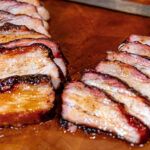
Smoked Hot Honey Pork Belly is the ultimate combo of rich smoke, sweet heat, and sticky glaze. I start with thick-cut slabs of pork belly, smoke them low and slow at 275Β°F, then finish with a buttery hot honey-vinegar BBQ glaze that caramelizes perfectly.

The result? Tender, glossy bites that melt in your mouth. Great for appetizers, tailgates, or any time you want bold BBQ flavor straight from the pit.

WHAT MALCOM USED IN THIS RECIPE:

Print
hot honey pork belly

Hot Honey Pork Belly


5 Stars 4 Stars 3 Stars 2 Stars 1 Star

No reviews

Description

Smoked pork belly finished with a buttery hot-honey glaze – sweet heat, rich smoke, snack-worthy flavor.


Ingredients

  • 1 whole pork belly (4–5 lbs total), split into two smaller slabs
  • Killer Hogs Hot BBQ Rub, for coating the pork belly
  • 1 stick (Β½ cup) unsalted butter
  • ΒΌ cup hot honey
  • Β½ cup Killer Hogs Vinegar Sauce

Instructions

Pit Temp: 275Β°F indirect
Final Internal Temp: 202Β°F

  1. Prep the Pork Belly
    Trim any thin edges or loose fat so both slabs cook evenly. Split the pork belly in half for easier handling and appetizer-sized portions.
  2. Season
    Apply a generous coat of Killer Hogs Hot BBQ Rub to all sides β€” top, bottom, and edges. Pat the rub in gently so it sticks.
  3. Fire Up the Grill
    Set your pit to cook at 275Β°F. – For charcoal, build a two-zone fire (coals on one side, cool zone on the other). – For pellet grills, hold a steady 275Β°F. Cook the pork belly on the indirect side of the pit.
  4. Smoke
    Place both slabs on the cool side of the grill. Let them cook about 1Β½ hours until the surface turns a deep mahogany color.
  5. Check Internal Temperature
    Continue cooking until the pork belly reaches 202Β°F internal. At that point, the fat will be fully rendered and the meat tender and jiggly.
  6. Make the Hot Honey Glaze
    In a small saucepan or foil pan, combine: – 1 stick butter – ΒΌ cup hot honey – Β½ cup Killer Hogs Vinegar Sauce Warm until smooth
  7. Glaze and Finish
    Place each slab in a small foil β€œboat” to catch drips. Brush on a heavy coat of the hot honey glaze every 20–30 minutes until it caramelizes into a sticky layer. (Optional: a light dusting of rub over the glaze at the very end can deepen the bark, but it’s not required.)
  8. Rest and Slice
    Let the pork belly rest 10–15 minutes before slicing so it holds together. Cut into thick slices or bite-size cubes and serve right off the board.

That’s it β€” pork belly turned into a show-stopper: slow smoked until the fat’s silky, then glazed with sticky hot honey and butter for sweet-heat perfection. Slice it, serve it, and watch it disappear.

Malcom Reed
Connect on Facebook
Follow me on TikTok
Subscribe to my YouTube Channel
Follow me on Instagram

Buy Killer Hogs Products Here

The post Hot Honey Pork Belly appeared first on HowToBBBQRight.

Egg Puffs Recipe

2 November 2025 at 07:09

Egg Puffs is one of the most loved snacks popular in bakeries which is made with puff pastry sheets, boiled egg and a simple onion masala. It is flaky, crisp on outside with soft spicy filling inside makes it so delicious. The taste is mild spicy, tangy and the layers of puff makes every bite interesting.

egg puffs served with tomato sauce and tea

Egg Puffs is mostly enjoyed with evening tea or coffee, but honestly you can serve it any time as snacks. The recipe is simple to make and feels more fresh and flavorful than the store bought ones. It is also a good choice to prepare on weekends when you want to serve your family something special and filling.

[feast_advanced_jump_to]

About Egg Puffs

Egg Puffs is a very popular bakery snack, especially in South India. Almost every bakery counter will have these golden brown puffs stacked neatly. It is popularly called Mutta Puffs in Tamil. They are flaky pastry stuffed with masala onion filling and half of boiled egg. These puff up beautifully with crisp edges and soft inside when baked.

I studied in a convent where they have a small canteen which has only limited snacks and this egg puffs is one of them. I am so obsessed with it since my school days as my canteen serves the best egg puffs.

The origin of egg puffs goes back when bakeries started selling puff pastry based snacks. Since egg is simple and protein rich, it became a common filling. Over time, the onion masala was added to give more spice and taste. Even now many people buy egg puffs as quick snack instead of samosas or vadas.

The flavor is mainly from the caramelized onions and the masala powders. The tomato sauce adds slight tang, making it different from plain boiled egg puff. I have added just curry leaves for flavor, you can add coriander leaves too. If you prefer spicy, you can increase chili powder or pepper powder.

I used store bought puff pastry sheet, slightly thawed and used it. The layers and the color purely depends on the quality of the puff pastry sheets used. Here in my place only few brands are available so used that. I will surely try and post homemade puff pastry sheet in the near future.

I usually make egg puffs on Sunday evenings. Kids love it warm from oven, and it makes the house smell so nice while baking. Since puff pastry sheets are available frozen, this snack hardly takes much time. Once you try at home, you will not miss bakery version.

egg puffs served with tomato sauce and tea

Egg Puffs Video

Egg Puff Ingredients

  • Puff pastry sheets - I have used ready frozen puff pastry sheets. It gives nice flaky layers after baking.
  • Oil - I used little oil to sautΓ© onion and masala. You can use any cooking oil you have, even butter for rich flavor.
  • Onion - I have used large onions sliced thin, it caramelizes and gives sweetness to balance the spices. You can use small onions too but slicing is more work.
  • Ginger garlic paste - This adds strong aroma and flavor to masala. If it is not available, you can crush fresh ginger and garlic.
  • Spice powders - I added turmeric powder, kashmiri chili powder, pepper powder, garam masala for color, little heat, good flavor and taste.
  • Tomato sauce - I have just used for a slight tangy taste. You can also use tomato puree but sauce makes it more tasty.
  • Boiled eggs - I used half of boiled egg in each puff, yolk side down. You can season eggs with pinch of pepper before placing.

Why This Recipe Works

  • This recipe is simple to make at home with easily available puff pastry sheets.
  • The filling is flavorful with caramelised onion and spice mix.
  • Egg puff is flaky outside but soft and tasty inside, perfect balance.
  • You can serve this as tea-time snack or even light dinner.
  • It is a bakery favorite that can be recreated fresh in your own kitchen.

Similar Recipes

How to make Egg Puffs Step by Step

1.To a pan heat 1 and Β½ tablespoon oil , add 2 medium sized onion(sliced).

add onion

2.Saute until it turns transparent then add 1 teaspoon ginger garlic paste.

saute, add ginger garlic paste

3.Saute for 2 minutes.

saute until transparent

4.Cook covered until it turns soft.

cook covered until soft

5.Now give a quick sautΓ© then add salt to taste, 1 and Β½ teaspoon chili powder, ΒΌ teaspoon turmeric powder, Β½ teaspoon pepper powder and Β½ teaspoon garam masala powder.

add spice powders

6.Saute well for a minute then add Β½ cup water.

add water

7.Saute and cook for 2 minutes.

saute well

8.Add 1 tablespoon tomato sauce and few curry leaves torn.

add tomato sauce, curry leaves

9.Give a quick mix and switch off.

mix well

10.Boil eggs slice into half and keep it ready. Transfer the filling to a bowl and set aside to cool. Both filling and eggs are ready.

filling and boiled eggs ready

11.Take a puff pastry sheet. I have used 5'X5' frozen puff pastry sheet. Dip your finger with water and wet the edges first.

wet the edges

12.Add around 2 tablespoon onion filling first then add half an egg with yoke side facing down like shown.

add egg, filling

13.Close from the sides like shown. While you do this preheat oven at 200 DEG C for 10 minutes.

seal the edges

14.Close from all four sides and seal completely. Repeat to finish.

seal well

15.Beat an egg well, dip using a brush.

beat an egg

16.Give egg wash for all.

add egg wash

17.Repeat to finish.

repeat to finish

18. Bake in preheated oven at 200 DEG C for 20-25 minutes.

bake in oven

Serve it hot!

egg puffs served with tomato sauce and tea

Expert Tips

  • Thawing pastry - I usually take puff pastry sheets out just 10-15 minutes before baking. Don't leave long, else it becomes sticky and hard to handle.
  • Filling cooling - Always cool onion masala before filling pastry. If it is hot, the pastry will turn soggy.
  • Egg placement - I place egg yolk side down so that puff seals better and egg sits flat.
  • Sealing edges - I use little water at the edges to seal well. You can also press with fork for design and sealing.
  • Baking - I bake at 200Β°C until golden brown. Don't open oven often, let it puff up nicely.

Serving and Storage

Serve Egg Puffs warm with tea, coffee or even with a simple ketchup or chutney. It tastes best when fresh and hot, right out of oven. If storing, keep in airtight container once cooled. You can reheat in oven or tawa before serving, but it is always most crisp on the same day.

FAQS

1.Can I skip tomato sauce?

Yes you can skip. Tomato sauce adds a tangy taste to the filling so I recommend adding it. The puffs will be more plain but still tasty with onion masala with just spice powders.

2.Can I use homemade puff pastry sheet?

Yes, you can use homemade puff pastry sheets but it takes much more time to prepare compared to frozen sheets.

3.Can I make it spicy?

Yes, you can just add more chili powder or black pepper if you want it more spicy.

4.Can I add other vegetables with the filling?

Yes you can add carrot, capsicum or even mushrooms along with onion if you like variation.

5.Can I replace egg with other filling?

Yes, you can try potato masala, paneer or even chicken filling instead of eggs.

egg puffs served with tomato sauce and tea

If you have any more questions about thisΒ Egg Puffs RecipeΒ do mail me at sharmispassions@gmail.com. In addition, follow me onΒ Instagram,Β Facebook,Β Β Pinterest,Β YoutubeΒ andΒ TwitterΒ .

Tried thisΒ Egg PuffsΒ Recipe? Do let me know how you liked it. Also tag us on Instagram @sharmispassions and hash tag it on #sharmispassions.

πŸ“– Recipe Card

Print

Egg Puffs Recipe

Egg Puffs is one of the most loved snacks popular in bakeries which is made with puff pastry sheets, boiled egg and a simple onion masala. It is flaky, crisp on outside with soft spicy filling inside makes it so delicious. The taste is mild spicy, tangy and the layers of puff makes every bite interesting.
Course Baking, snacks
Cuisine Indian
Prep Time 15 minutes
Cook Time 40 minutes
Total Time 55 minutes
Servings 3
Calories 2356kcal
Author Sharmilee J

Ingredients

Instructions

  • To a pan heat 1 and Β½ tablespoon oil , add 2 medium sized onion(sliced).
  • Saute until it turns transparent then add 1 teaspoon ginger garlic paste.
  • Saute for 2 minutes.
  • Cook covered until it turns soft.
  • Now give a quick sautΓ© then add salt to taste, 1 and Β½ teaspoon chili powder, ΒΌ teaspoon turmeric powder, Β½ teaspoon pepper powder and Β½ teaspoon garam masala powder.
  • Saute well for a minute then add Β½ cup water.
  • Saute and cook for 2 minutes.
  • Add 1 tablespoon tomato sauce and few curry leaves torn.
  • Give a quick mix and switch off.
  • Boil eggs slice into half and keep it ready. Transfer the filling to a bowl and set aside to cool. Both filling and eggs are ready.
  • Take a puff pastry sheet. I have used 5'X5' frozen puff pastry sheet. Dip your finger with water and wet the edges first.
  • Add around 2 tablespoon onion filling first then add half an egg with yoke side facing down like shown.
  • Close from the sides like shown. While you do this preheat oven at 200 DEG C for 10 minutes.
  • Close from all four sides and seal completely. Repeat to finish.
  • Beat an egg well, dip using a brush.
  • Give egg wash for all.
  • Repeat to finish.
  • Bake in preheated oven at 200 DEG C for 20-25 minutes.
  • Serve it hot!

Video

Notes

  • Thawing pastry - I usually take puff pastry sheets out just 10-15 minutes before baking. Don't leave long, else it becomes sticky and hard to handle.
  • Filling cooling - Always cool onion masala before filling pastry. If it is hot, the pastry will turn soggy.
  • Egg placement - I place egg yolk side down so that puff seals better and egg sits flat.
  • Sealing edges - I use little water at the edges to seal well. You can also press with fork for design and sealing.
  • Baking - I bake at 200Β°C until golden brown. Don't open oven often, let it puff up nicely.

Nutrition

Calories: 2356kcal | Carbohydrates: 186g | Protein: 38g | Fat: 163g | Saturated Fat: 42g | Polyunsaturated Fat: 21g | Monounsaturated Fat: 91g | Trans Fat: 0.01g | Cholesterol: 241mg | Sodium: 1143mg | Potassium: 373mg | Fiber: 7g | Sugar: 4g | Vitamin A: 800IU | Vitamin C: 1mg | Calcium: 80mg | Iron: 12mg

The post Egg Puffs Recipe appeared first on Sharmis Passions.

How to make paneer | Homemade Paneer Recipe

26 October 2025 at 00:49

Homemade Paneer is fresh, soft and very easy to make at home using just 2 ingredients. Paneer or Indian cottage cheese can be made at home with no added preservatives or additives. Making paneer at home is so easy and comes out perfect every time if you the steps and instructions mentioned in this post.

homemade paneer cubes

Making paneer at home is easy and had been making it for years now. Though we always use homemade paneer, I didn't give much thoughts of posting it here until my best friend asked to post the recipe. I have shared all the tips and tricks to make perfect homemade paneer every single time.

[feast_advanced_jump_to]

What is Paneer?

Paneer also known as Indian Cottage Cheese is fresh cheese made by curdling milk using any acidic foods like lemon juice, curd or vinegar or citric acid etc. The resulting whey water is strained and the curdled milk solids are transferred to a cheese cloth and pressed using a heavy object to form a paneer block. Later the block is cubed into small paneer cubes and used in dishes.

Paneer is basically fresh non melting cheese made without using rennet like other cheese varieties so it is completely vegetarian. Paneer is soft and neutral in flavor so it absorbs the flavors easily.

Paneer can be used to make a lot of dishes including gravies, starters, rice, pulao, biryani and many more. You can even just sautΓ© paneer with onion, capsicum and some basic spices and it is good to go as a side dish or even as a filling for wraps. Paneer is so versatile that it can be used to make so many dishes.

homemade paneer cubes

Video

Homemade Paneer

My paneer making journey started soon after I started cooking. Amma started making homemade paneer even when paneer was not popular in the 80's. When I was in 4th-5th grade when there was no internet or recipes online amma used to make paneer learnt from a popular tamil magazine.

First she used to make crumbled paneer to add it along with vegetables to make stir fry later she started making black of paneer to make gravies and curries. So seeing that from my childhood homemade paneer was not at all new to me. It is one of the few dishes I learnt soon after I started cooking.

Paneer making process is very easy - First boil milk then add any acidic food to curdle the milk. The curdled milk solids are strained to a muslin or cheese cloth to form a block pf paneer. It is pressed with a heavy object to drain out all the excess water and set to make a block of paneer.

Homemade paneer comes out super soft and cannot be compared with store bought ones. Just follow the tips and tricks shared here and you will get perfect homemade paneer.

homemade paneer making process

Homemade Paneer Ingredients

  • Milk - I prefer to use fresh milk that is cows milk. But you can use any full fat or full cream milk. You can use raw milk or even previously boiled milk to make paneer.
  • Curd / Yoghurt - I always use curd to curdle milk for 2 reasons - it gives volume also does not leave any after taste like the other food acids.
ingredients needed to make homemade paneer

Milk to use

You can use raw milk or even leftover boiled milk too to make paneer.

  • Farm Fresh Milk - Farm fresh milk is raw milk without any processing straight from the cow. We usually buy cows milk on a regular basis so mostly use this for making paneer.
  • Processed milk - Milk is processed and sold in packets or bottles to increase shelf life and to kill harmful bacteria. You can use this milk also to make paneer.

Acidic foods to curdle milk

  • Curd - For 1 liter milk you will need Β½ cup curd. The measure of curd may vary depending on the fat content in the milk so you may need 1- 2 tablespoon extra curd based on it.
  • Lemon Juice - For 1 liter milk you will need 2 tablespoon lemon juice. I usually don't suggest lemon juice as it imparts lemony flavor to the paneer even after it is washed.
  • Vinegar - For 1 liter milk you will need 2 tablespoon vinegar juice. Vinegar is the most quickest to curdle the milk.
  • Whey water - Whey water is drained water after collecting the curdled milk solids. For 1 liter milk you will need around 1 cup whey water.
  • Citric acid - For 1 liter milk you will need Β½ teaspoon citric acid.
food acids to curdle milk

How to press paneer (with & without paneer maker)

You don't really need a paneer press to make homemade paneer. Paneer press makes paneer making process a bit quicker and easier, also gives it the perfect square shape as store bought ones. I have shown both making paneer with and without paneer press here.

homemade paneer using paneer maker

You can make homemade paneer with just a cheese cloth or muslin cloth too. I was using cloth to make paneer for so many years only recently I bought this paneer press so wanted to share my experience.

If you don't have a paneer press don't worry - You can make homemade paneer by pouring the curdled milk to a muslin / cheese cloth. Wrap it well and place heavy object on it to remove excess water. The resulting paneer block will be round in shape and it can be cut into cubes. You can even wrap it to a square to make square paneer block.

First pic is homemade paneer using paneer press and second pic is using just a cloth without using paneer maker.

paneer using paneer press and without using paneer maker

How to make Paneer Step by Step

Boiling milk

1.To a large pot add 2 liters milk to it.

boil milk

2.Let it start to boil.

let it start to boil

3.Give a quick mix.

give a quick mix

Curdling milk

4.Add 1 cup curd little by little stirring simultaneously.

curdle milk

5.Keep stirring until you start the milk curdling.

stir it well

6.In few seconds the milk will curdle and you will clear greenish liquid separating which is called whey water.

milk is curdled

7.This is curdled milk solids. Do not overcook immediately switch off.

curdled milk solids

Using paneer maker / paneer press

8.Place a strainer over the bowl first. Then place the paneer press on the strainer.

paneer maker kept ready

Draining

9.Place the cheese cloth on the strainer and pour the milk curdles to it.

strain the curdles

10.Rinse it with water.

rinse it with water

11.Press it with a ladle to drain out excess water.

press with ladle

12.Wrap it with the cloth.

wrap with cloth

Pressing paneer

13.Cloth with the paneer maker lid and press well to remove the excess water.

press with lid

14.Place the paneer maker on a wire rack and place heavy object on the paneer press making sure the paneer maker is pressed well. Let it set for at least 1 hour.

place heavy object on it

Homemade paneer

15.After 1 hour remove the paneer from the press. Fresh, soft homemade paneer is ready.

homemade paneer is ready

16.Cut into cubes.

cut it

17.You can store it as a block as such or cut into small cubes and store in fridge.

cut into small cubes

18.See how soft it is.

soft paneer is ready

Without using paneer maker

19.I served little curdles to show you how to make paneer without the paneer maker.Place the cheese cloth over the strainer first. Transfer the curdles to it.

strain the curdles

20.Pull the edges of the cloth and press well to remove excess water.

press well to squeeze excess water

21.Flatten it slightly.

flatten it slightly

22.Place heavy object on it. Let it set for 1 hour minimum.

place a heavy object

23.Now remove and your homemade paneer is ready.

homemade paneer is ready

24.Cut into cubes.

cut into cubes

25.Homemade paneer is ready!

homemade paneer is ready

26.Store the paneer in a clean container soaked in water. You can store this in fridge for up to a week.

store in soaked water

27.The drained water is whey water, you can collect this and store in a clean bottle in fridge. You can use this to knead chapathi / roti dough or use to curdle milk the next time you make paneer.

whey water

Expert Tips

  • Milk - For perfect soft paneer I would recommend to use full fat whole milk. Pasteurized milk is ok to use but should have high fat content. You can use leftover boiled milk or fresh milk to make paneer.
  • Food Acid - I prefer using curd or yogurt to curdle milk. However you can use lemon juice or vinegar or citric acid too to curdle milk but these have a slight after taste in the paneer.
  • Straining - While straining the milk solid curdles make sure to strain it on a cheese cloth or muslin cloth.
  • Whey water - Use the leftover whey for making rotis or rasgullas or save it for making paneer next time.
  • Pressing Paneer - Use any heavy flat object to be placed directly. You can use heavy stone based chapathi board or hand mortar pestle etc.
  • Setting time - Leave at least minimum 1 hour for the paneer to set well. Leave it undisturbed. Take care to wrap it to form a circle / square so that while cutting into pieces it is easy to form squares.

Storage

You can store the paneer as a block or cut into cubes. Make sure to soak in water and store in fridge for it to stay fresh even for a week. Soaking in water avoids paneer from becoming hard.

FAQS

1.What type of milk to use?

Use full cream or full fa milk for best results. You can use farm fresh milk that is cows milk or processed milk too. You can use raw milk boil and use it or use leftover previously boiled milk too.

2.Even after adding food acids milk is not curdling why?

If the fat or cream content in milk is more then milk may not curdle with less quantity of food acids. So add little more in parts until you see whey water start to separate.

3.My paneer is crumbling or grainy, why?

If you keep stirring after the milk curdles it may result in crumbled paneer.

4.How much paneer do I get?

The measure of paneer you yield purely depends on the cariety of milk used. But on an average if you use full fat milk for 1 adn Β½ liters of milk you will get around 200 grams paneer.

5.Why my paneer is hard or rubbery?

Do not keep cooking after the milk curdles. Immediately switch off when you see milk curdles and strain it. Overcooking results in hard and rubbery paneer.

homemade paneer cubes

Recipes with Paneer

More paneer recipes

homemade paneer cubes in a bowl

If you have any more questions about this How to make paneerΒ do mail me at sharmispassions@gmail.com. In addition, follow me on Instagram,Β Facebook,Β PinterestΒ ,YoutubeΒ andΒ TwitterΒ .

Tried this How to make paneer? Do let me know how you liked it. Also tag us on Instagram @sharmispassions and hash tag it on #sharmispassions.

πŸ“– Recipe Card

Print

How to make paneer | Homemade Paneer Recipe

Homemade Paneer is fresh, soft and very easy to make at home using just 2 ingredients. Paneer or Indian cottage cheese can be made at home with no added preservatives or additives. Making paneer at home is so easy and comes out perfect every time if you the steps and instructions mentioned in this post.
Course howtos
Cuisine Indian
Keyword easy paneer recipes, How to, indian paneer recipes, milk recipes, paneer 65, paneer dishes, paneer recipes
Prep Time 30 minutes
Cook Time 10 minutes
Total Time 40 minutes
Servings 1 cup
Calories 694kcal
Author Sharmilee J

Ingredients

  • 2 liters milk
  • 1 cup curd

Instructions

  • To a large pot add 2 liters milk to it.
  • Let it start to boil.
  • Give a quick mix.
  • Add 1 cup curd little by little stirring simultaneously.
  • Keep stirring until you start the milk curdling.
  • In few seconds the milk will curdle and you will clear greenish liquid separating which is called whey water.
  • This is curdled milk solids. Do not overcook immediately switch off.
  • Place a strainer over the bowl first. Then place the paneer press on the strainer.
  • Place the cheese cloth on the strainer and pour the milk curdles to it.
  • Rinse it with water.
  • Press it with a ladle to drain out excess water.
  • Wrap it with the cloth.
  • Cloth with the paneer maker lid and press well to remove the excess water.
  • Place the paneer maker on a wire rack and place heavy object on the paneer press making sure the paneer maker is pressed well. Let it set for at least 1 hour.
  • After 1 hour remove the paneer from the press. Fresh, soft homemade paneer is ready.
  • Cut into cubes.
  • You can store it as a block as such or cut into small cubes and store in fridge.
  • See how soft it is.
  • I served little curdles to show you how to make paneer without the paneer maker.Place the cheese cloth over the strainer first. Transfer the curdles to it.
  • Pull the edges of the cloth and press well to remove excess water.
  • Flatten it slightly.
  • Place heavy object on it. Let it set for 1 hour minimum.
  • Now remove and your homemade paneer is ready.
  • Cut into cubes.
  • Homemade paneer is ready!
  • Store the paneer in a clean container soaked in water. You can store this in fridge for up to a week.
  • The drained water is whey water, you can collect this and store in a clean bottle in fridge. You can use this to knead chapathi / roti dough or use to curdle milk the next time you make paneer.

Video

Notes

  • I prefer to cut them a bit small so that while added to gravies, it absorbs well. Soaking the paneer 10mins before adding it to gravies also makes it to absorb the gravy well. You can store in fridge for up to 3 to 4 days....After that it starts to harden.
  • Use the leftover whey for making rotis or rasgullas or save it for making paneer next time.
  • Setting time is very important in getting the perfect paneer cubes. Also keeping in fridge before cutting into cubes gives neat pieces.
  • You can even use ΒΌ cup curd to curdle but I used Β½ cup to curdle quickly and to get little more volume of paneer.
  • I used cows milk so had to simmer for a while before I added curd as cows milk is little watery. People here in India can use aavin full cream milk.
  • Use a cheese cloth which drains the water well. I used dhoti cloth for draining.
  • Take care to wrap it to form a circle / square so that while cutting into pieces it is easy to form squares.
  • Also allow the paneer to come to room temperature before cutting it to avoid paneer from crumbling.

Nutrition

Serving: 200g | Calories: 694kcal | Carbohydrates: 54g | Protein: 38g | Fat: 37g | Saturated Fat: 22g | Polyunsaturated Fat: 1g | Monounsaturated Fat: 8g | Cholesterol: 140mg | Sodium: 448mg | Potassium: 1737mg | Sugar: 55g | Vitamin A: 1792IU | Vitamin C: 1mg | Calcium: 1417mg | Iron: 0.1mg

The post How to make paneer | Homemade Paneer Recipe appeared first on Sharmis Passions.

Onion Samosa (Patti Samosa)

19 October 2025 at 12:18

Onion Samosa (Patti Samosa)

Onion Samosa is a small, crispy fried snack filled with a spiced onion and poha (flattened rice) mixture. It’s popular in Mumbai, Pune and Hyderabad, especially in Irani cafΓ©s and some select snack cafΓ©s, where it’s also calledΒ Irani Samosa,Β Patti Samosa, orΒ Chota SamosaΒ (meaning small samosa). These triangular samosas have a light, crunchy texture and a mildly...

READ: Onion Samosa (Patti Samosa)

Roasted Poha Chivda | No Fry Poha Chivda

By: Ramya
19 October 2025 at 07:34

Learn how to make Roasted Poha Chivda recipe with a detailed video tutorial and step by step photos. This easy, crunchy and flavorful Indian snack is made without frying - it's light, guilt-free and perfect for Diwali or just tea-time munching! Poha Chivda is a classic Indian snack made with flattened rice, nuts and mild...

Read More

The post Roasted Poha Chivda | No Fry Poha Chivda appeared first on Cooking From Heart.

Pepper Thattai | Milagu Thattai

17 October 2025 at 22:26

Pepper Thattai is a crispy, spicy snack made during festivals or for evening tea. These are thin rice flour discs which are flavored with pepper and fried till golden and crunchy. They are also called Milagu Thattai and they are simple to make but very satisfying. The pepper gives warm little kick and butter adds richness, it just melts in mouth.

pepper thattai served

These thattais are crisp outside and little nutty inside. The aroma of pepper, hing and curry leaves while frying makes kitchen smell so nice. They can be eaten right after frying or stored for later. They taste much better than store bought ones and are a comforting snack anytime.

[feast_advanced_jump_to]

About Pepper Thattai

Pepper Thattai is a South Indian snack rich in crunch and taste. The dough is soft and easy to press thin which helps to get crispy thattais when fried. The pepper gives mild spicy flavor and chana dal gives small crunchy bites here and there. Butter makes the thattai have a soft crunch and adds nice flavor too.

The mixture of rice flour, fried gram dal powder and spices gives that authentic taste that reminds of festive snacks from childhood. The smell of curry leaves and hing while frying is so lovely and fills the kitchen with nice aroma.

This recipe is easily customizable, you can adjust pepper according how spicy you want. You can try a pinch of red chili powder for extra heat. You can add some sesame seeds for extra crunch. Every family has its own small twist to this recipe, and that what makes homemade thattai special.

I usually make this few days before festivals. Pressing each thattai thin and watching it puff little while frying is satisfying. Once cooled they turn perfectly crisp and stay like that for days.

pepper thattai served

Pepper Thattai Ingredients

  • Rice flour - I have used regular rice flour as the base. It makes the dough soft and gives crisp thattais after frying. You can even mix little idli rice flour if you like more texture.
  • Fried gram dal - I grind them to a fine powder and added it to the dough. This adds a nutty taste and makes thattais light and crunchy.
  • Pepper - I crushed whole pepper coarsely. This gives nice aroma and mild heat. You can increase or decrease as you prefer.
  • Butter - I added little at room temperature. It makes the dough smooth and adds rich flavor. You can use ghee.
  • Chana dal - I soaked them for few minutes before adding it. This gives small crunchy bites in every thattai. You can skip if not available but I like that texture.
  • Hing - I used a small pinch for aroma. It gives that authentic South Indian flavor.
  • Curry leaves - I added few along with pepper. This adds a nice aroma and flavor. You can use dry leaves too.
  • Oil - I used for deep frying. It gives that perfect crisp golden texture. You can either use groundnut or sunflower oil, both work fine.

Similar Recipes

How to make Pepper Thattai Step by Step

1.Take rice flour in the mixing bowl. Grind fried gram dal (pottukadalai) in a mixer to a fine powder.

how to make pepper thattai step1

2.Add it to rice flour. Then add whole pepper and curry leaves in the mixer jar and grind it to a coarse mixture, Set aside.

how to make pepper thattai step2

3.Soak chana dal for 10 minutes. Now to the mixing bowl add chana dal and pepper mixture with salt and butter. Mix well.

how to make pepper thattai step3

4.Now add water little by little to form a smooth dough. The dough should not be too tight. Take a lemon sized ball, I used 1 tablespoon measure to get all the balls of even size.

how to make pepper thattai step4

5.Make few balls, then take a plastic sheet grease it with oil.Β Keep a ball, place another plastic sheet over it then press it with a flat surfaced bowl.

how to make pepper thattai step5

6.Prick with fork to avoid puffing up. Carefully remove it from the plastic sheet. Flatten as thin as possible only then you will get crisp thattais.

how to make pepper thattai step6

7.Heat oil, carefully add 2-3 thattais at a time, deep fry till golden brown. This will take time to cook at least 3 minutes for each batch so fry patiently in low medium flame. Then drain in tissue paper.

how to make pepper thattai step7

Cool down and Store in airtight container.

pepper thattai served

Expert Tips

  • Press thin - I always press dough as thin as possible between greased sheets. This helps to make thattais crisp. If thick, they turn chewy.
  • Prick before frying - I prick each thattai with fork so that it does not puff up while frying. This makes them cook evenly.
  • Frying - I fry them in low medium flame. If flame is high, outside turns brown fast but inside stays soft.
  • Dough - Make sure the dough is soft and not tight. This helps to press it easily and prevents cracks.
  • Cool before storing - I always cool the thattais completely before keeping them in the jar. This keeps them crisp for long.
  • Butter quantity - Do not skip butter. I have tried without once, but thattais become hard. So little butter gives perfect crispness.

Serving and Storage

Serve Pepper Thattai as tea time snack or just as crunchy bite anytime. It also goes well with sweets during festivals. Store them in airtight container. It stays fresh and crisp for 2 to 3 weeks. I usually make small batch so I can enjoy.

FAQS

1.Can I skip curry leaves?

Yes you can skip, but I feel it adds very nice aroma and taste, so I always add.

2.Can I use regular dal instead of fried gram dal?

You can, but roasted fried gram dal gives better taste and lightness.

3.Can I make dough ahead?

Yes, you can prepare dough few hours earlier and keep in fridge covered.

4.Can I bake this recipe?

Frying gives best crisp texture. You can either bake or fry, bith can work but the flavor will be slightly different.

5.How thin should I press them?

I press them very thin, almost like papad thickness. The thinner you press, the crispier they turn out.

pepper thattai served

If you have any more questions about this Pepper Thattai RecipeΒ do mail me at sharmispassions@gmail.com. In addition, follow me on Instagram,Β Facebook,Β PinterestΒ ,YoutubeΒ andΒ TwitterΒ .

Tried this Pepper Thattai Recipe? Do let me know how you liked it. Also tag us on Instagram @sharmispassions and hash tag it on #sharmispassions.

πŸ“– Recipe Card

29117249941 ea293a16cb o
Print

Pepper Thattai Recipe (Milagu Thattai Recipe)

Pepper Thattai is a crispy, spicy snack made during festivals or for evening tea. These are thin rice flour discs which are flavored with pepper and fried till golden and crunchy. They are also called Milagu Thattai and they are simple to make but very satisfying. The pepper gives warm little kick and butter adds richness, it just melts in mouth.
Course Snack
Cuisine Indian
Keyword diwali dishes, diwali recipes, diwali snacks, diwali snacks recipes, easy diwali recipes, easy diwali snacks, fry, fry recipes, rice flour recipes, snack recipes
Prep Time 15 minutes
Cook Time 40 minutes
Total Time 55 minutes
Servings 15 Thattai
Calories 48kcal
Author Sharmilee J

Ingredients

  • 1 cup rice flour
  • 2 tablespoon fried gram dal
  • 1 teaspoon pepper
  • ΒΎ teaspoon butter at room temperature
  • 1 teaspoon chana dal
  • 1 tiny pinch hing
  • few curry leaves
  • salt to taste
  • oil to deep fry

Instructions

  • Take rice flour in the mixing bowl.
  • Grind fried gram dal in a mixer to a fine powder. Add it to rice flour.
  • Then add whole pepper and curry leaves in the mixer jar and grind it to a coarse mixture, set aside.
  • Soak chana dal for 10mins.
  • Now to the mixing bowl add chana dal and pepper mixture with salt and butter. Mix well.
  • Now add water little by little to form a smooth dough. The dough should not be too tight.
  • Take a lemon sized ball, I used 1 tablespoon measure to get all the balls of even size.
  • Make few balls, then take a plasic sheet grease it with oil.Β Keep a ball, place another plastic sheet over it then press it with a flat surfaced bowl.
  • Prick with fork to avoid puffing up. Carefully remove it from the plastic sheet. Flatten as thin as possible only then you will get crisp thattais.
  • Heat oil, carefully add 2-3 thattais at a time, deep fry till golden brown. This will take time to cook at least 3mins for each batch so fry patiently in low medium flame.
  • Then drain in tissue paper.
  • Cool down and store Pepper Thattai in an airtight container.

Notes

  • Press thin - I always press dough as thin as possible between greased sheets. This helps to make thattais crisp. If thick, they turn chewy.
  • Prick before frying - I prick each thattai with fork so that it does not puff up while frying. This makes them cook evenly.
  • Frying - I fry them in low medium flame. If flame is high, outside turns brown fast but inside stays soft.
  • Dough - Make sure the dough is soft and not tight. This helps to press it easily and prevents cracks.
  • Cool before storing - I always cool the thattais completely before keeping them in the jar. This keeps them crisp for long.
  • Butter quantity - Do not skip butter. I have tried without once, but thattais become hard. So little butter gives perfect crispness.

Nutrition

Serving: 25g | Calories: 48kcal | Carbohydrates: 10g | Protein: 1g | Fat: 0.4g | Saturated Fat: 0.2g | Polyunsaturated Fat: 0.1g | Monounsaturated Fat: 0.1g | Trans Fat: 0.01g | Cholesterol: 1mg | Sodium: 2mg | Potassium: 23mg | Fiber: 1g | Sugar: 0.1g | Vitamin A: 7IU | Vitamin C: 0.1mg | Calcium: 3mg | Iron: 0.2mg


The post Pepper Thattai | Milagu Thattai appeared first on Sharmis Passions.

Mixture Recipe | Madras Mixture

16 October 2025 at 20:48

Mixture is a crunchy and flavorful snack that I always love making at home. It has that perfect mix of kara boondi, omapodi, peanuts, poha and few nuts all tossed together in a spice mix. Each bite gives that mix of spice, crunch and flavor which makes it really hard to stop eating. Mixture also known as Madras Mixture is the most commonly relished snack for tea time and made at home for Diwali and special occasions.

mixture served with coffee

This is such a simple snack that can be made easily when you have few fried items ready in hand. You can make it in small batches because it stays fresher and crisper that way. What I like most about this snack is, you can always change the ingredients as you like and make it in your own way. It is one of those snacks that always stays special in every home.

[feast_advanced_jump_to]

About Mixture Recipe

Mixture is a crunchy and tasty snack made by mixing few fried items like kara boondi, omapodi, fried gram dal and peanuts. Chivda as known in North India is called Mixture or Madras Mixture in South India. The flavor comes out so balanced and nice, not too spicy or strong. It is that kind of snack you can enjoy anytime, with tea or just like that.

Mixture is one of the popular South Indian snacks we can make easily at home. If you have omapodi and kara boondi ready then frying all others are just so easy. I usually make these a day before and fry all other ingredients and mix it.

There are many versions of this mixture depending on region and taste. Some people like to make it spicy with lot of nuts and boondi, while few prefer mild and light version with more omapodi. No matter how it is made, mixture always gives that crispy joy in every handful and it never fails to bring that happy munching mood.

mixture in a glass jar

Mixture Video

The texture is the best part of this mixture, crisp boondi, airy poha, crunchy peanuts and that nice aroma from fried curry leaves. You get little bit of everything in each spoon. This recipe is light to eat but still gives that filling feel after few bites.

It is one of those snacks you can just keep munching anytime in the day and still not feel too heavy. I usually make omapodi and boondi one day before to save time. Next day I fry the rest of items and mix all together.

You can even add fried garlic for extra flavor, add raisins for that sweet crunch, add little sugar for balance in taste.

mixture served with coffee

South Indian Mixture Ingredients

  • Kara boondi - I have used homemade kara boondi. It adds nice spice flavor and gives crisp texture. You can even use readymade if short of time.
  • Omapodi - I used slightly thick omapodi for this as while mixing it will not break easily.
  • Poha - Use thick poha, it puffs up well when fried and adds light texture to the mixture. You can skip if not available.
  • Fried gram dal - It adds crunchy bite and nutty flavor. You can use chana dal too.
  • Cashewnuts - I fried till light golden. It gives nice taste and a bit of sweetness.
  • Peanuts - I fried raw peanuts till golden brown and added.
  • Curry leaves - I fried them and added at the final stage after all the ingredients are mixed, it gives lovely aroma and adds flavor to mixture.
  • Red chili powder - I used for both color and spice. You can use pepper if you like that flavor .
  • Hing - I have added a small pinch, it gives good aroma and helps in digestion.
ingredients needed to make mixture

Why This Recipe Works

  • It is very simple to make when you have all fried items ready beforehand.
  • You can change or add ingredients as per your liking.
  • The mix of crunchy, spicy and nutty taste makes it so addictive.
  • It stays crisp for many days when stored properly in airtight jar.
  • This mixture is light to eat and goes well with tea or even plain coffee.

Similar Recipes

How to make Mixture Step by Step

1.Make omapodi and keep it ready. You can check the recipe in ingredients list. You can use slightly big holed press for making mixture so that it does not break easily while mixing.

remove the omapodi

2.Break it slightly and set aside.

break it gently

3.Break it rough as anyways we are going to mix and it will break by itself. We need 2 cups omapodi.

omapodi or sev is ready

4.Prepare kara boondi. You can check the recipe in ingredients list.

boondi strained

5.Strain and keep in a bowl. We need 2 cups kara boondi.

add to a bowl

6.Heat oil in a kadai. Place a strainer inside, add 1 cup poha, add in batches and fry. Mix it well for even frying. Transfer and set aside.

fry poha

6.Again place the strainer inside oil and add Β½ cup raw peanuts and fry until crisp and golden brown. Strain, transfer and set aside.

fry peanuts

7.Add Β½ cup roasted gram dal and fry until golden. Strain, transfer and set aside.

fry roasted gram dal

8.Next add Β½ cup cashews and fry until golden. Strain, transfer and set aside.

fry cashews

9.Add a handful of curry leaves and fry until it splutters. Strain, transfer and set aside.

fry curry leaves

10.To a big mixing bowl add 2 cups omapodi, 2 cups kara boondi, 1 cup fried poha, Β½ cup peanuts, Β½ cup cashews, Β½ cup roasted gram dal along with 1 and Β½ teaspoon red chili powder, Β½ teaspoon hing, salt to taste.

add all ingredients except curry leaves

11.Mix it well.

mix it well

12.Add fried curry leaves.

add curry leaves

12.Give a quick mix.

mix it well

Mixture is ready.

mixture in hands

Expert Tips

  • Ratio - There is no particular ratio of ingredients for making mixture. Omapodi and kara boondi should be slightly more than all other ingredients. Other ingredients you cna plus and minus according to your preference.
  • Frying poha - I always use thick poha and fry in small batches only. If we add more, it gets brown very fast and loses that light crispness. I keep the oil medium hot, so poha becomes puffed and not oily.
  • Nuts and dal - I fry peanuts first, then gram dal and cashews one by one. This way all fry evenly and not burn. Each one takes different time so better to fry separately.
  • Mixing part - I spread all fried items on a large mixing bowl. Then I add salt, red chili powder and hing. I usually mix with a ladle or hands, gently tossing everything. This way masala spreads evenly and not break the poha or omapodi.
  • Spice - I have added just red chili powder, you can even add little pepper powder if you like the flavor. You can increase red chili powder to 2 teaspoon if you like your mixture to be more spicy.
  • Flavor - You can use pepper powder instead of chili powder if you like mild taste or crush 2-3 garlic cloves and fry them till golden, then add to mixture
  • Avoid moisture - If you are mixing later, make sure all fried items are fully cool. Even small moisture can make mixture soggy. I always keep everything ready and mix only when all are at room temperature.

Serving and Storage

Serve South Indian Mixture with a cup of hot tea or coffee. It makes a lovely crunchy evening snack or something to munch while watching TV. Store the mixture in airtight jar once fully cool. It stays crisp easily for about 2 weeks.

FAQS

1.Can I skip boondi?

Yes, you can skip boondi and add more omapodi or poha instead.

2.Can I add garlic flavor in mixture?

Yes, fry few crushed garlic in oil and add it. It gives good aroma and extra flavor.

3.Can I make this less spicy?

Yes you can, just reduce chili powder or use pepper powder instead.

4.How long can I store this mixture?

It stays fresh and crisp for around 2 weeks if you keep it in airtight box. I usually store in steel container, it keeps the crunch better.

5.Can I add cornflakes or other nuts?

Yes of course, you can add fried cornflakes, almonds or even small pieces of murukku. It gives more crunch and makes the mixture even more tasty.

mixture just made

If you have any more questions about this Mixture RecipeΒ do mail me at sharmispassions@gmail.com. In addition, follow me on Instagram,Β Facebook,Β PinterestΒ ,YoutubeΒ andΒ TwitterΒ .

Tried this Mixture Recipe? Do let me know how you liked it. Also tag us on Instagram @sharmispassions and hash tag it on #sharmispassions.

πŸ“– Recipe Card

Print

Mixture Recipe | Madras Mixture Recipe

Mixture is a crunchy and flavorful snack that I always love making at home. It has that perfect mix of kara boondi, omapodi, peanuts, poha and few nuts all tossed together in a spice mix. Each bite gives that mix of spice, crunch and flavor which makes it really hard to stop eating. Mixture also known as Madras Mixture is the most commonly relished snack for tea time and made at home for Diwali and special occasions.
Course Snack
Cuisine Indian
Keyword diwali dishes, diwali food, diwali recipes, diwali snacks, diwali snacks recipes, easy diwali snacks, savoury recipes, snack recipes, virtual diwali party
Prep Time 10 minutes
Cook Time 50 minutes
Total Time 1 hour
Servings 2
Calories 489kcal
Author Sharmilee J

Ingredients

  • 2 cups kara boondi
  • 2 cups omapodi
  • Β½ cup poha
  • Β½ cup fried gram dal
  • Β½ cup cashew nuts
  • Β½ cup peanuts
  • 1 handful curry leaves
  • 1 and Β½ teaspoon red chilli powder
  • Β½ teaspoon hing
  • salt to taste

Instructions

  • Make omapodi and keep it ready. You can check the recipe in ingredients list. You can use slightly big holed press for making mixture so that it does not break easily while mixing.
  • Break it slightly and set aside.
  • Break it rough as anyways we are going to mix and it will break by itself. We need 2 cups omapodi.
  • Prepare kara boondi. You can check the recipe in ingredients list.
  • Strain and keep in a bowl. We need 2 cups kara boondi.
  • Heat oil in a kadai. Place a strainer inside, add 1 cup poha, add in batches and fry. Mix it well for even frying. Transfer and set aside.
  • Again place the strainer inside oil and add Β½ cup raw peanuts and fry until crisp and golden brown. Strain, transfer and set aside.
  • Add Β½ cup roasted gram dal and fry until golden. Strain, transfer and set aside.
  • Next add Β½ cup cashews and fry until golden. Strain, transfer and set aside.
  • Add a handful of curry leaves and fry until it splutters. Strain, transfer and set aside.
  • To a big mixing bowl add 2 cups omapodi, 2 cups kara boondi, 1 cup fried poha, Β½ cup peanuts, Β½ cup cashews, Β½ cup roasted gram dal along with 1 and Β½ teaspoon red chili powder, Β½ teaspoon hing, salt to taste.
  • Mix it well.
  • Add fried curry leaves.
  • Give a quick mix.
  • Mixture is ready.

Video

Notes

  • Ratio - There is no particular ratio of ingredients for making mixture. Omapodi and kara boondi should be slightly more than all other ingredients. Other ingredients you cna plus and minus according to your preference.
  • Frying poha - I always use thick poha and fry in small batches only. If we add more, it gets brown very fast and loses that light crispness. I keep the oil medium hot, so poha becomes puffed and not oily.
  • Nuts and dal - I fry peanuts first, then gram dal and cashews one by one. This way all fry evenly and not burn. Each one takes different time so better to fry separately.
  • Mixing part - I spread all fried items on a large mixing bowl. Then I add salt, red chili powder and hing. I usually mix with a ladle or hands, gently tossing everything. This way masala spreads evenly and not break the poha or omapodi.
  • Spice - I have added just red chili powder, you can even add little pepper powder if you like the flavor. You can increase red chili powder to 2 teaspoon if you like your mixture to be more spicy.
  • Flavor - You can use pepper powder instead of chili powder if you like mild taste or crush 2-3 garlic cloves and fry them till golden, then add to mixture
  • Avoid moisture - If you are mixing later, make sure all fried items are fully cool. Even small moisture can make mixture soggy. I always keep everything ready and mix only when all are at room temperature.

Nutrition

Serving: 100g | Calories: 489kcal | Carbohydrates: 71g | Protein: 25g | Fat: 11g | Saturated Fat: 2g | Polyunsaturated Fat: 3g | Monounsaturated Fat: 5g | Cholesterol: 3mg | Sodium: 266mg | Potassium: 880mg | Fiber: 15g | Sugar: 8g | Vitamin A: 335IU | Vitamin C: 1mg | Calcium: 63mg | Iron: 7mg

The post Mixture Recipe | Madras Mixture appeared first on Sharmis Passions.

Namak Para | Easy Namak Pare

By: Ramya
16 October 2025 at 11:54

Learn how to make Namak Para recipe with a detailed video tutorial and step by step photos. Crispy, crunchy, and perfectly spiced Namak Pare - a classic Indian snack that is a must for Diwali. Namak Para or Namak Pare is a simple Indian snack that is crispy, flaky, and lightly spiced. Growing up, we...

Read More

The post Namak Para | Easy Namak Pare appeared first on Cooking From Heart.

Pickled Cucumber

By: Charlie
15 October 2025 at 19:52

Homemade pickle spears are easier than you might think, and they taste incredible. These refrigerator pickles don’t require any canning equipment or special skillsβ€”just fresh cucumbers, a simple brine, and a bit of patience. They’re perfect for summer cookouts, backyard barbecues, or anytime you want that crisp, tangy crunch alongside your burger or sandwich. They’re […]

The post Pickled Cucumber appeared first on Simply Meat Smoking.

Kheer Ladoo (Indian Rice Pudding Truffles)

By: Richa
15 October 2025 at 07:36

Creamy rich Indian rice pudding rolled into balls and coated in various toppings to make a perfect dessert that’s a hit at any dinner party. These kheer ladoos (rice pudding truffles) have an amazing texture and cardamom flavor! (gluten-free and soy-free)

kheer ladoo on a plate

These are an easy dessert for any festive season or for Diwali. I made this decadent rice pudding flavored with cardamom, which is basically Punjabi kheer.Β 

Then, I mix it with some cashew cream, chill it, scoop it into balls, and roll them in different toppings like pistachios, cocoa powder, almond slivers, rose petals, melted chocolate, toasted coconut, or anything else you like.

rice pudding truffle coated in pistachios

Ladoo are basically Indian truffles, and these are flavored with cardamom for a simple yet delicious dessert.

You can change up the flavor with things like cinnamon or vanilla, and you can play around with toppings and mix-ins to make all kinds of delicious variations! For extra decadent rice pudding truffles, melt some chocolate with a little bit of coconut oil in a double boiler, then coat them in the melted chocolate.

close-up of chocolate pistachio kheer ladoo on a plate

Kheer ladoo are great to serve either as a snack or dessert. They don’t need extra bowls or spoons, and they’re already portioned. You can also make them ahead of time, so you won’t have as much cooking to do on the day of your dinner party.

Why You’ll Love Kheer Ladoo

  • creamy truffles scented with cardamom
  • easy, make-ahead dessert perfect for Diwali or any dinner party
  • versatile! Add mix-ins and toppings of choice to make these your own
  • naturally gluten-free and soy-free

Continue reading: Kheer Ladoo (Indian Rice Pudding Truffles)

The post Kheer Ladoo (Indian Rice Pudding Truffles) appeared first on Vegan Richa.

Makhana Chivda (The Ultimate Indian Snack)

13 October 2025 at 17:39

Makhana Chivda is my go-to chai-time snack! It is light, crispy, and perfectly spiced with gentle heat and warm, toasty notes. Made with roasted makhana (fox nuts/lotus seeds) and a handful of pantry spices, this Indian trail mix delivers that addictive, airy crunch without feeling heavy. It comes together in minutes on the stovetop or […]

The post Makhana Chivda (The Ultimate Indian Snack) appeared first on Ministry of Curry.

❌
❌