In March 2025, we discovered Operation ForumTroll, a series of sophisticated cyberattacks exploiting the CVE-2025-2783 vulnerability in Google Chrome. We previously detailed the malicious implants used in the operation: the LeetAgent backdoor and the complex spyware Dante, developed by Memento Labs (formerly Hacking Team). However, the attackers behind this operation didn’t stop at their spring campaign and have continued to infect targets within the Russian Federation.
In October 2025, just days before we presented our report detailing the ForumTroll APT group’s attack at the Security Analyst Summit, we detected a new targeted phishing campaign by the same group. However, while the spring cyberattacks focused on organizations, the fall campaign honed in on specific individuals: scholars in the field of political science, international relations, and global economics, working at major Russian universities and research institutions.
The emails received by the victims were sent from the address support@e-library[.]wiki. The campaign purported to be from the scientific electronic library, eLibrary, whose legitimate website is elibrary.ru. The phishing emails contained a malicious link in the format: https://e-library[.]wiki/elib/wiki.php?id=<8 pseudorandom letters and digits>. Recipients were prompted to click the link to download a plagiarism report. Clicking that link triggered the download of an archive file. The filename was personalized, using the victim’s own name in the format: <LastName>_<FirstName>_<Patronymic>.zip.
A well-prepared attack
The attackers did their homework before sending out the phishing emails. The malicious domain, e-library[.]wiki, was registered back in March 2025, over six months before the email campaign started. This was likely done to build the domain’s reputation, as sending emails from a suspicious, newly registered domain is a major red flag for spam filters.
Furthermore, the attackers placed a copy of the legitimate eLibrary homepage on https://e-library[.]wiki. According to the information on the page, they accessed the legitimate website from the IP address 193.65.18[.]14 back in December 2024.
A screenshot of the malicious site elements showing the IP address and initial session date
The attackers also carefully personalized the phishing emails for their targets, specific professionals in the field. As mentioned above, the downloaded archive was named with the victim’s last name, first name, and patronymic.
Another noteworthy technique was the attacker’s effort to hinder security analysis by restricting repeat downloads. When we attempted to download the archive from the malicious site, we received a message in Russian, indicating the download link was likely for one-time use only:
The message that was displayed when we attempted to download the archive
Our investigation found that the malicious site displayed a different message if the download was attempted from a non-Windows device. In that case, it prompted the user to try again from a Windows computer.
The message that was displayed when we attempted to download the archive from a non-Windows OS
The malicious archive
The malicious archives downloaded via the email links contained the following:
A malicious shortcut file named after the victim: <LastName>_<FirstName>_<Patronymic>.lnk;
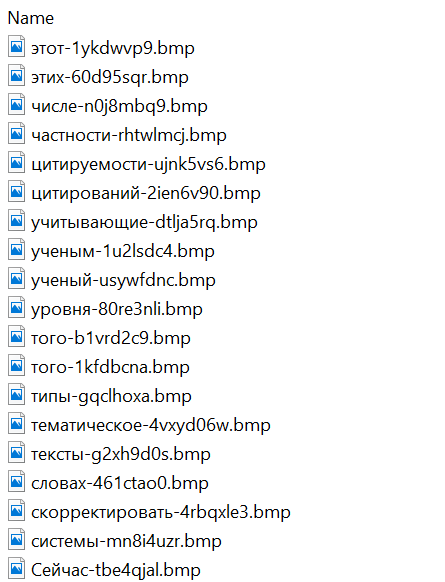
A .Thumbs directory containing approximately 100 image files with names in Russian. These images were not used during the infection process and were likely added to make the archives appear less suspicious to security solutions.
A portion of the .Thumbs directory contents
When the user clicked the shortcut, it ran a PowerShell script. The script’s primary purpose was to download and execute a PowerShell-based payload from a malicious server.
The script that was launched by opening the shortcut
The downloaded payload then performed the following actions:
Contacted a URL in the format: https://e-library[.]wiki/elib/query.php?id=<8 pseudorandom letters and digits>&key=<32 hexadecimal characters> to retrieve the final payload, a DLL file.
Saved the downloaded file to %localappdata%\Microsoft\Windows\Explorer\iconcache_<4 pseudorandom digits>.dll.
Established persistence for the payload using COM Hijacking. This involved writing the path to the DLL file into the registry key HKCR\CLSID\{1f486a52-3cb1-48fd-8f50-b8dc300d9f9d}\InProcServer32. Notably, the attackers had used that same technique in their spring attacks.
Downloaded a decoy PDF from a URL in the format: https://e-library[.]wiki/pdf/<8 pseudorandom letters and digits>.pdf. This PDF was saved to the user’s Downloads folder with a filename in the format: <LastName>_<FirstName>_<Patronymic>.pdf and then opened automatically.
The decoy PDF contained no valuable information. It was merely a blurred report generated by a Russian plagiarism-checking system.
A screenshot of a page from the downloaded report
At the time of our investigation, the links for downloading the final payloads didn’t work. Attempting to access them returned error messages in English: “You are already blocked…” or “You have been bad ended” (sic). This likely indicates the use of a protective mechanism to prevent payloads from being downloaded more than once. Despite this, we managed to obtain and analyze the final payload.
The final payload: the Tuoni framework
The DLL file deployed to infected devices proved to be an OLLVM-obfuscated loader, which we described in our previous report on Operation ForumTroll. However, while this loader previously delivered rare implants like LeetAgent and Dante, this time the attackers opted for a better-known commercial red teaming framework: Tuoni. Portions of the Tuoni code are publicly available on GitHub. By deploying this tool, the attackers gained remote access to the victim’s device along with other capabilities for further system compromise.
As in the previous campaign, the attackers used fastly.net as C2 servers.
Conclusion
The cyberattacks carried out by the ForumTroll APT group in the spring and fall of 2025 share significant similarities. In both campaigns, infection began with targeted phishing emails, and persistence for the malicious implants was achieved with the COM Hijacking technique. The same loader was used to deploy the implants both in the spring and the fall.
Despite these similarities, the fall series of attacks cannot be considered as technically sophisticated as the spring campaign. In the spring, the ForumTroll APT group exploited zero-day vulnerabilities to infect systems. By contrast, the autumn attacks relied entirely on social engineering, counting on victims not only clicking the malicious link but also downloading the archive and launching the shortcut file. Furthermore, the malware used in the fall campaign, the Tuoni framework, is less rare.
ForumTroll has been targeting organizations and individuals in Russia and Belarus since at least 2022. Given this lengthy timeline, it is likely this APT group will continue to target entities and individuals of interest within these two countries. We believe that investigating ForumTroll’s potential future campaigns will allow us to shed light on shadowy malicious implants created by commercial developers – much as we did with the discovery of the Dante spyware.
The global e‑commerce market is accelerating faster than ever before, driven by expanding online retail, and rising consumer adoption worldwide. According to McKinsey Global Institute, global e‑commerce is projected to grow by 7–9% annually through 2040.
At Kaspersky, we track how this surge in online shopping activity is mirrored by cyber threats. In 2025, we observed attacks which targeted not only e‑commerce platform users but online shoppers in general, including those using digital marketplaces, payment services and apps for everyday purchases. This year, we additionally analyzed how cybercriminals exploited gaming platforms during Black Friday, as the gaming industry has become an integral part of the global sales calendar. Threat actors have been ramping up their efforts during peak sales events like Black Friday, exploiting high demand and reduced user vigilance to steal personal data, funds, or spread malware.
This report continues our annual series of analyses published on Securelist in 2021, 2022, 2023, and 2024, which examine the evolving landscape of shopping‑related cyber threats.
Methodology
To track how the shopping threat landscape continues to evolve, we conduct an annual assessment of the most common malicious techniques, which span financial malware, phishing pages that mimic major retailers, banks, and payment services, as well as spam campaigns that funnel users toward fraudulent sites. In 2025, we also placed a dedicated focus on gaming-related threats, analyzing how cybercriminals leverage players’ interest. The threat data we rely on is sourced from the Kaspersky Security Network (KSN), which processes anonymized cybersecurity data shared consensually by Kaspersky users. This report draws on data collected from January through October 2025.
Key findings
In the first ten months of 2025, Kaspersky identified nearly 6.4 million phishing attacks which targeted users of online stores, payment systems, and banks.
As many as 48.2% of these attacks were directed at online shoppers.
We blocked more than 146,000 Black Friday-themed spam messages in the first two weeks of November.
Kaspersky detected more than 2 million phishing attacks related to online gaming.
Around 1.09 million banking-trojan attacks were recorded during the 2025 Black Friday season.
The number of attempted attacks on gaming platforms surged in 2025, reaching more than 20 million, a significant increase compared to previous years.
More than 18 million attempted malicious attacks were disguised as Discord in 2025, a more than 14-time increase year-over-year, while Steam remained within its usual five-year fluctuation range.
Shopping fraud and phishing
Phishing and scams remain among the most common threats for online shoppers, particularly during high-traffic retail periods when users are more likely to act quickly and rely on familiar brand cues. Cybercriminals frequently recreate the appearance of legitimate stores, payment pages, and banking services, making their fraudulent sites and emails difficult to distinguish from real ones. With customers navigating multiple offers and payment options, they may overlook URL or sender details, increasing the likelihood of credential theft and financial losses.
From January through to October 2025, Kaspersky products successfully blocked 6,394,854 attempts to access phishing links which targeted users of online stores, payment systems, and banks. Breaking down these attempts, 48.21% had targeted online shoppers (for comparison, this segment accounted for 37.5% in 2024), 26.10% targeted banking users (compared to 44.41% in 2024), and 25.69% mimicked payment systems (18.09% last year). Compared to previous years, there has been a noticeable shift in focus, with attacks against online store users now representing a larger share, reflecting cybercriminals’ continued emphasis on exploiting high-demand retail periods, while attacks on banking users have decreased in relative proportion. This may be related to online banking protection hardening worldwide.
Financial phishing attacks by category, January–October 2025 (download)
In 2025, Kaspersky products detected and blocked 606,369 phishing attempts involving the misuse of Amazon’s brand. Cybercriminals continued to rely on Amazon-themed pages to deceive users and obtain personal or financial information.
Other major e-commerce brands were also impersonated. Attempts to visit phishing pages mimicking Alibaba brands, such as AliExpress, were detected 54,500 times, while eBay-themed pages appeared in 38,383 alerts. The Latin American marketplace Mercado Libre was used as a lure in 8,039 cases, and Walmart-related phishing pages were detected 8,156 times.
Popular online stores mimicked by scammers, January–October 2025 (download)
In 2025, phishing campaigns also extensively mimicked other online platforms. Netflix-themed pages were detected 801,148 times, while Spotify-related attempts reached 576,873. This pattern likely reflects attackers’ continued focus on high-traffic digital entertainment services with in-service payments enabled, which can be monetized via stolen accounts.
How scammers exploited shopping hype in 2025
In 2025, Black Friday-related scams continued to circulate across multiple channels, with fraudulent email campaigns remaining one of the key distribution methods. As retailers increase their seasonal outreach, cybercriminals take advantage of the high volume of promotional communications by sending look-alike messages that direct users to scam and phishing pages. In the first two weeks of November, 146,535 spam messages connected to seasonal sales were detected by Kaspersky, including 2,572 messages referencing Singles day sales.
Scammers frequently attempt to mimic well-known platforms to increase the credibility of their messages. In one of the recurring campaigns, a pattern seen year after year, cybercriminals replicated Amazon’s branding and visual style, promoting supposedly exclusive early-access discounts of up to 70%. In this particular case, the attackers made almost no changes to the text used in their 2024 campaign, again prompting users to follow a link leading to a fraudulent page. Such pages are usually designed to steal their personal or payment information or to trick the user into buying non-existent goods.
Beyond the general excitement around seasonal discounts, scammers also try to exploit consumers’ interest in newly released Apple devices. To attract attention, they use the same images of the latest gadgets across various mailing campaigns, just changing the names of legitimate retailers that allegedly sell the brand.
Scammers use an identical image across different campaigns, only changing the retailer’s branding
As subscription-based streaming platforms also take part in global sales periods, cybercriminals attempt to take advantage of this interest as well. For example, we observed a phishing website where scammers promoted an offer for a “12-month subscription bundle” covering several popular services at once, asking users to enter their bank card details. To enhance credibility, the scammers also include fabricated indicators of numerous successful purchases from other “users,” making the offer appear legitimate.
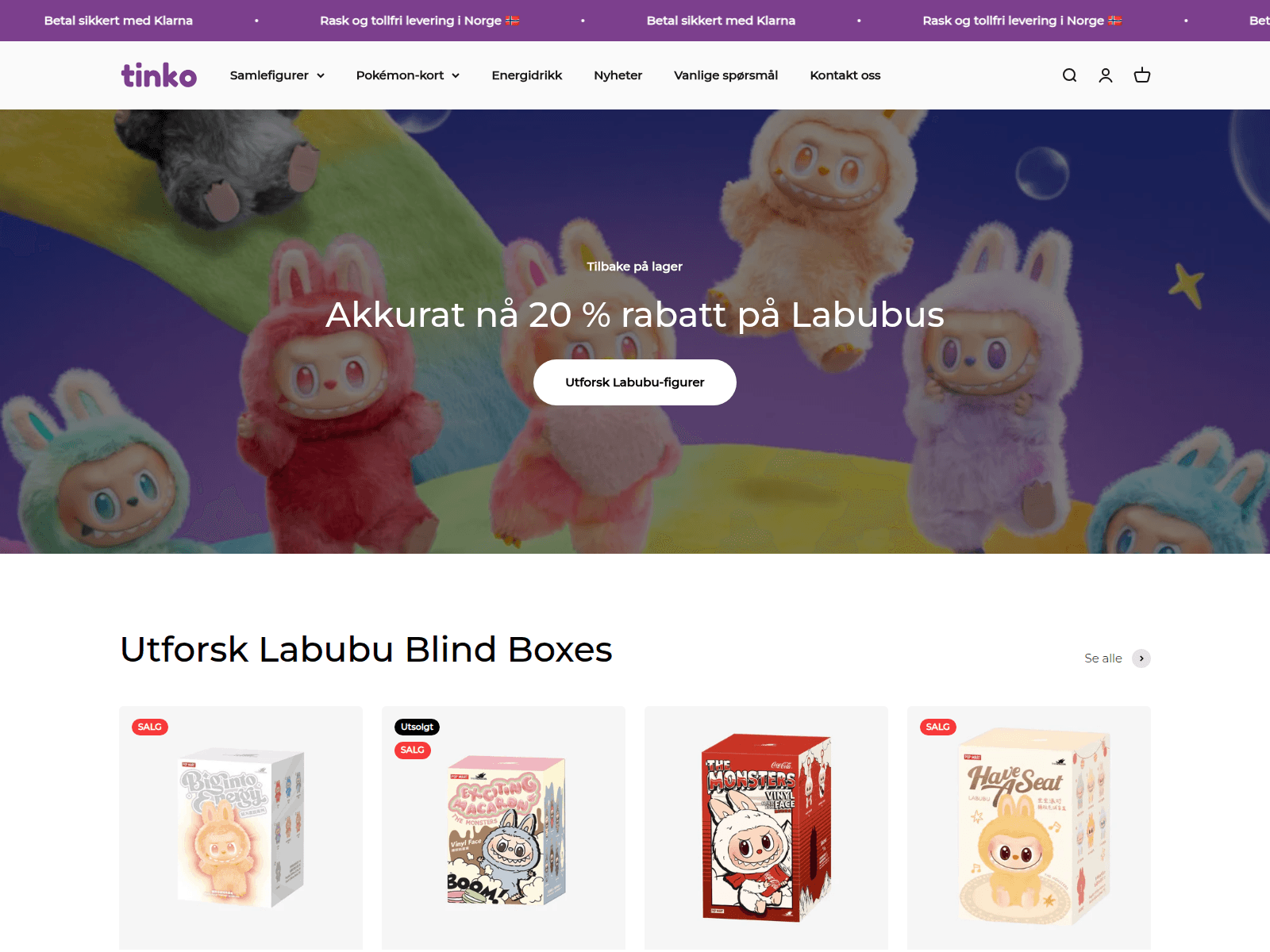
In addition to imitating globally recognized platforms, scammers also set up fake pages that pretend to be local services in specific countries. This tactic enables more targeted campaigns that blend into the local online landscape, increasing the chances that users will perceive the fraudulent pages as legitimate and engage with them.
Non-existent Norwegian online store and popular Labubu toys sale
Banking Trojans
Banking Trojans, or “bankers,” are another tool for cybercriminals exploiting busy shopping seasons like Black Friday in 2025. They are designed to steal sensitive data from online banking and payment systems. In this section, we’ll focus on PC bankers. Once on a victim’s device, they monitor the browser and, when the user visits a targeted site, can use techniques like web injection or form-grabbing to capture login credentials, credit card information, and other personal data. Some trojans also watch the clipboard for crypto wallet addresses and replace them with those controlled by the malicious actors.
As online shopping peaks during major sales events, attackers increasingly target e-commerce platforms alongside banks. Trojans may inject fake forms into legitimate websites, tricking users into revealing sensitive data during checkout and increasing the risk of identity theft and financial fraud. In 2025, Kaspersky detected over 1,088,293* banking Trojan attacks. Among notable banker-related cases analysed by Kaspersky throughout the year, campaigns involving the new Maverick banking Trojan distributed via WhatsApp, as well as the Efimer Trojan which spread through malicious emails and compromised WordPress sites can be mentioned, both illustrating how diverse and adaptive banking Trojan delivery methods are.
*These statistics include globally active banking malware, and malware for ATMs and point-of-sale (PoS) systems. We excluded data on Trojan-banker families that no longer use banking Trojan functionality in their attacks, such as Emotet.
A holiday sales season on the dark web
Apparently, even the criminal underground follows its own version of a holiday sales season. Once data is stolen, it often ends up on dark-web forums, where cybercriminals actively search for buyers. This pattern is far from new, and the range of offers has remained largely unchanged over the past two years.
Threat actors consistently seize the opportunity to attract “new customers,” advertising deep discounts tied to high-profile global sales events. It is worth noting that year after year we see the same established services announce their upcoming promotions in the lead-up to Black Friday, almost as if operating on a retail calendar of their own.
We also noted that dark web forum participants themselves eagerly await these seasonal markdowns, hoping to obtain databases at the most favorable rates and expressing their wishes in forum posts. In the months before Black Friday, posts began appearing on carding-themed forums advertising stolen payment-card data at promotional prices.
Threats targeting gaming
The gaming industry faces a high concentration of scams and other cyberthreats due to its vast global audience and constant demand for digital goods, updates, and in-game advantages. Players often engage quickly with new offers, making them more susceptible to deceptive links or malicious files. At the same time, the fact that gamers often download games, mods, skins etc. from third-party marketplaces, community platforms, and unofficial sources creates additional entry points for attackers.
The number of attempted attacks on platforms beloved by gamers increased dramatically in 2025, reaching 20,188,897 cases, a sharp rise compared to previous years.
Attempts to attack users through malicious or unwanted files disguised as popular gaming platforms (download)
The nearly sevenfold increase in 2025 is most likely linked to the Discord block by some countries introduced at the end of 2024. Eventually users rely on alternative tools, proxies and modified clients. This change significantly expanded the attack surface, making users more vulnerable to fake installers, and malicious updates disguised as workarounds for the restriction.
It can also be seen in the top five most targeted gaming platforms of 2025:
Platform
The number of attempted attacks
Discord
18,556,566
Steam
1,547,110
Xbox
43,560
Uplay
28,366
Battle.net
5,538
In previous years, Steam consistently ranked as the platform with the highest number of attempted attacks. Its extensive game library, active modding ecosystem, and long-standing role in the gaming community made it a prime target for cybercriminals distributing malicious files disguised as mods, cheats, or cracked versions. In 2025, however, the landscape changed significantly. The gap between Steam and Discord expanded to an unprecedented degree as Steam-related figures remained within their typical fluctuation range of the past five years, while the number of attempted Discord-disguised attacks surged more than 14 times compared to 2024, reshaping the hierarchy of targeted gaming platforms.
Attempts to attack users through malicious or unwanted files disguised as Steam and Discord throughout the reported period (download)
From January to October, 2025, cybercriminals used a variety of cyberthreats disguised as popular related to gamers platforms, modifications or circumvention options. RiskTool dominated the threat landscape with 17,845,099 detections, far more than any other category. Although not inherently malicious, these tools can hide files, mask processes, or disable programs, making them useful for stealthy, persistent abuse, including covert crypto-mining. Downloaders ranked second with 1,318,743 detections. These appear harmless but may fetch additional malware among other downloaded files. Downloaders are typically installed when users download unofficial patches, cracked clients, or mods. Trojans followed with 384,680 detections, often disguised as cheats or mod installers. Once executed, they can steal credentials, intercept tokens, or enable remote access, leading to account takeovers and the loss of in-game assets.
Threat
Gaming-related detections
RiskTool
17,845,099
Downloader
1,318,743
Trojan
384,680
Adware
184,257
Exploit
152,354
Phishing and scam threats targeting gamers
In addition to tracking malicious and unwanted files disguised as gamers’ platforms, Kaspersky experts also analysed phishing pages which impersonated these services. Between January and October 2025, Kaspersky products detected 2,054,336 phishing attempts targeting users through fake login pages, giveaway offers, “discounted” subscriptions and other scams which impersonated popular platforms like Steam, PlayStation, Xbox and gaming stores.
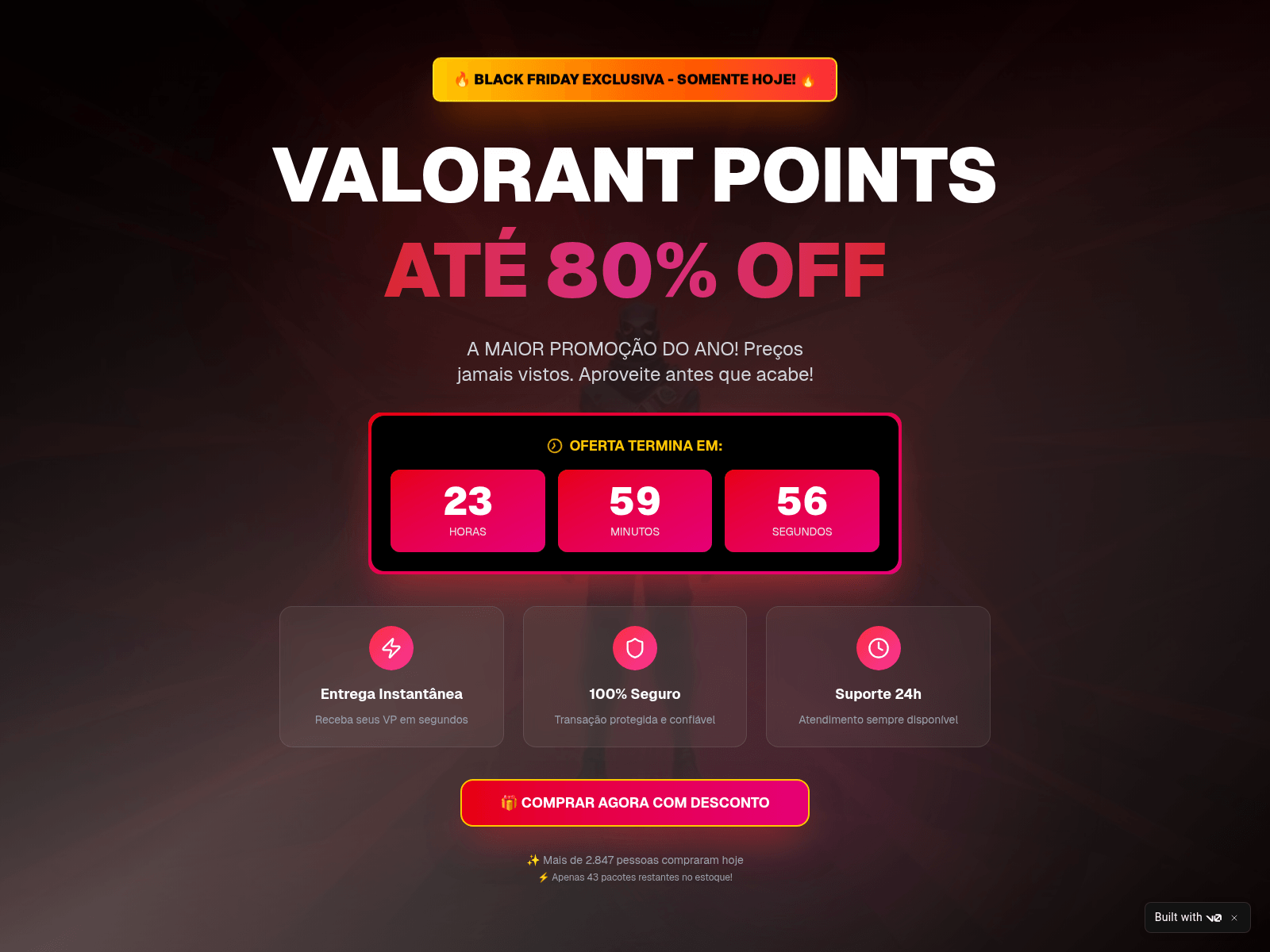
Example of Black Friday scam using a popular shooter as a lure
The page shown in the screenshot is a typical Black Friday-themed scam that targets gamers, designed to imitate an official Valorant promotion. The “Valorant Points up to 80% off” banner, polished layout, and fake countdown timer create urgency and make the offer appear credible at first glance. Users who proceed are redirected to a fake login form requesting Riot account credentials or bank card details. Once submitted, this information enables attackers to take over accounts, steal in-game assets, or carry out fraudulent transactions.
Minor text errors reveal the page’s fraudulent nature. The phrase “You should not have a size limit of 5$ dollars in your account” is grammatically incorrect and clearly suspicious.
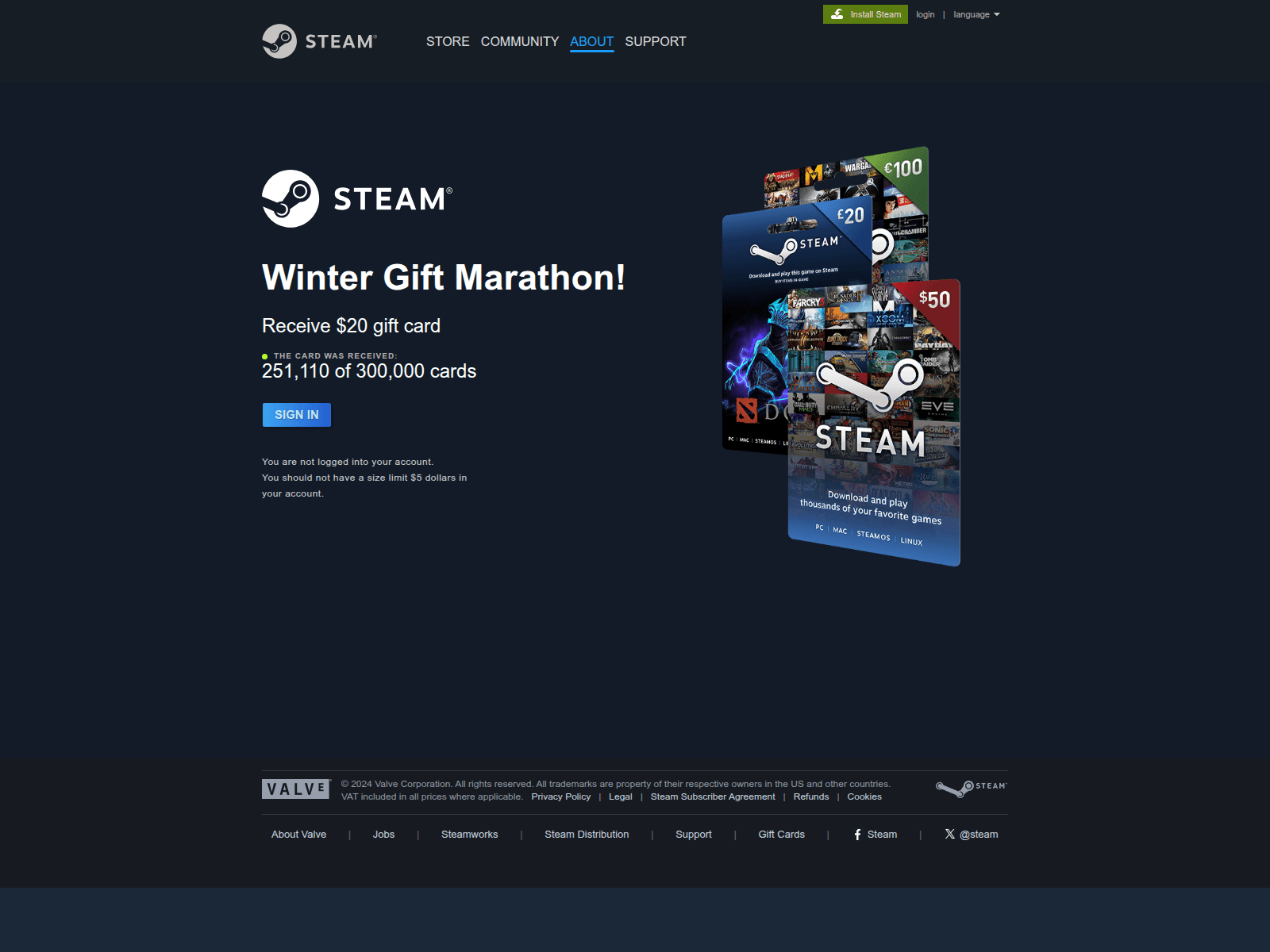
Another phishing page relies on a fabricated “Winter Gift Marathon” that claims to offer a free $20 Steam gift card. The seasonal framing, combined with a misleading counter (“251,110 of 300,000 cards received”), creates an artificial sense of legitimacy and urgency intended to prompt quick user interaction.
The central component of the scheme is the “Sign in” button, which redirects users to a spoofed Steam login form designed to collect their credentials. Once obtained, attackers can gain full access to the account, including payment methods, inventory items, and marketplace assets, and may be able to compromise additional services if the same password is used elsewhere.
Examples of scams on Playstation 5 Pro and Xbox series X
Scams themed around the PlayStation 5 Pro and Xbox Series X appear to be generated from a phishing kit, a reusable template that scammers adapt for different brands. Despite referencing two consoles, both pages follow the same structure which features a bold claim offering a chance to “win” a high-value device, a large product image on the left, and a minimalistic form on the right requesting the user’s email address.
A yellow banner promotes an “exclusive offer” with “limited availability,” pressuring users to respond quickly. After submitting an email, victims are typically redirected to additional personal and payment data-collection forms. They also may later be targeted with follow-up phishing emails, spam, or malicious links.
Conclusions
In 2025, the ongoing expansion of global e-commerce continued to be reflected in the cyberthreat landscape, with phishing, scam activity, and financial malware targeting online shoppers worldwide. Peak sales periods once again created favorable conditions for fraud, resulting in sustained activity involving spoofed retailer pages, fraudulent email campaigns, and seasonal spam.
Threat actors also targeted users of digital entertainment and subscription services. The gaming sector experienced a marked increase in malicious activity, driven by shifts in platform accessibility and the widespread use of third-party tools. The significant rise in malicious detections associated with Discord underscored how rapidly attackers adjust to changes in user behavior.
Overall, 2025 demonstrated that cybercriminals continue to leverage predictable user behavior patterns and major sales events to maximize the impact of their operations. Consumers should remain especially vigilant during peak shopping periods and use stronger security practices, such as two-factor authentication, secure payment methods, and cautious browsing. A comprehensive security solution that blocks malware, detects phishing pages, and protects financial data can further reduce the risk of falling victim to online threats.
RevengeHotels, also known as TA558, is a threat group that has been active since 2015, stealing credit card data from hotel guests and travelers. RevengeHotels’ modus operandi involves sending emails with phishing links which redirect victims to websites mimicking document storage. These sites, in turn, download script files to ultimately infect the targeted machines. The final payloads consist of various remote access Trojan (RAT) implants, which enable the threat actor to issue commands for controlling compromised systems, stealing sensitive data, and maintaining persistence, among other malicious activities.
In previous campaigns, the group was observed using malicious emails with Word, Excel, or PDF documents attached. Some of them exploited the CVE-2017-0199 vulnerability, loading Visual Basic Scripting (VBS), or PowerShell scripts to install customized versions of different RAT families, such as RevengeRAT, NanoCoreRAT, NjRAT, 888 RAT, and custom malware named ProCC. These campaigns affected hotels in multiple countries across Latin America, including Brazil, Argentina, Chile, and Mexico, but also hotel front-desks globally, particularly in Russia, Belarus, Turkey, and so on.
Later, this threat group expanded its arsenal by adding XWorm, a RAT with commands for control, data theft, and persistence, amongst other things. While investigating the campaign that distributed XWorm, we identified high-confidence indicators that RevengeHotels also used the RAT tool named DesckVBRAT in their operations.
In the summer of 2025, we observed new campaigns targeting the same sector and featuring increasingly sophisticated implants and tools. The threat actors continue to employ phishing emails with invoice themes to deliver VenomRAT implants via JavaScript loaders and PowerShell downloaders. A significant portion of the initial infector and downloader code in this campaign appears to be generated by large language model (LLM) agents. This suggests that the threat actor is now leveraging AI to evolve its capabilities, a trend also reported among other cybercriminal groups.
The primary targets of these campaigns are Brazilian hotels, although we have also observed attacks directed at Spanish-speaking markets. Through a comprehensive analysis of the attack patterns and the threat actor’s modus operandi, we have established with high confidence that the responsible actor is indeed RevengeHotels. The consistency of the tactics, techniques, and procedures (TTPs) employed in these attacks aligns with the known behavior of RevengeHotels. The infrastructure used for payload delivery relies on legitimate hosting services, often utilizing Portuguese-themed domain names.
Initial infection
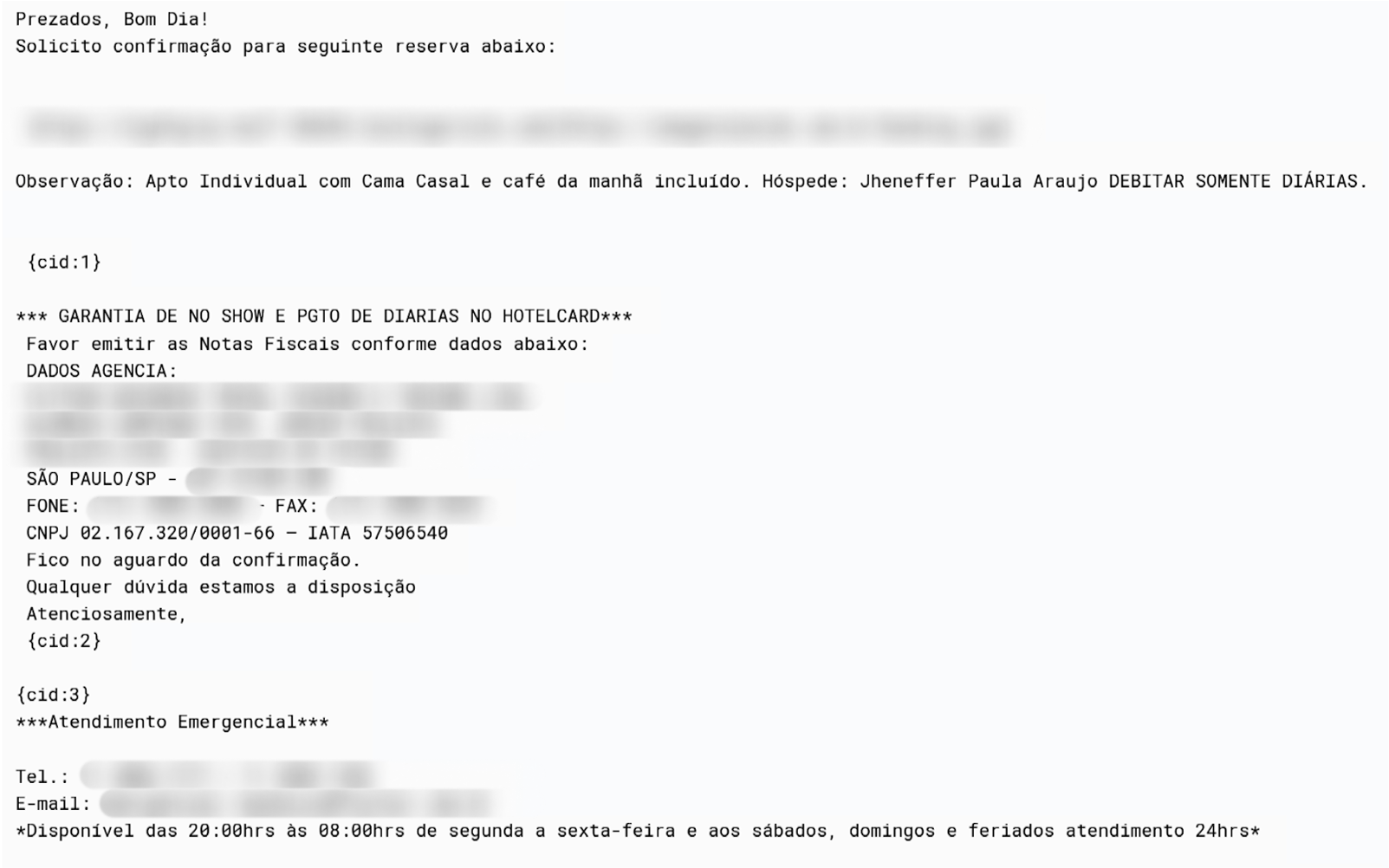
The primary attack vector employed by RevengeHotels is phishing emails with invoicing themes, which urge the recipient to settle overdue payments. These emails are specifically targeted at email addresses associated with hotel reservations. While Portuguese is a common language used in these phishing emails, we have also discovered instances of Spanish-language phishing emails, indicating that the threat actor’s scope extends beyond Brazilian hospitality establishments and may include targets in Spanish-speaking countries or regions.
Example of a phishing email about a booking confirmation
In recent instances of these attacks, the themes have shifted from hotel reservations to fake job applications, where attackers sent résumés in an attempt to exploit potential job opportunities at the targeted hotels.
Malicious implant
The malicious websites, which change with each email, download a WScript JS file upon being visited, triggering the infection process. The filename of the JS file changes with every request. In the case at hand, we analyzed Fat146571.js (fbadfff7b61d820e3632a2f464079e8c), which follows the format Fat\{NUMBER\}.js, where “Fat” is the beginning of the Portuguese word “fatura”, meaning “invoice”.
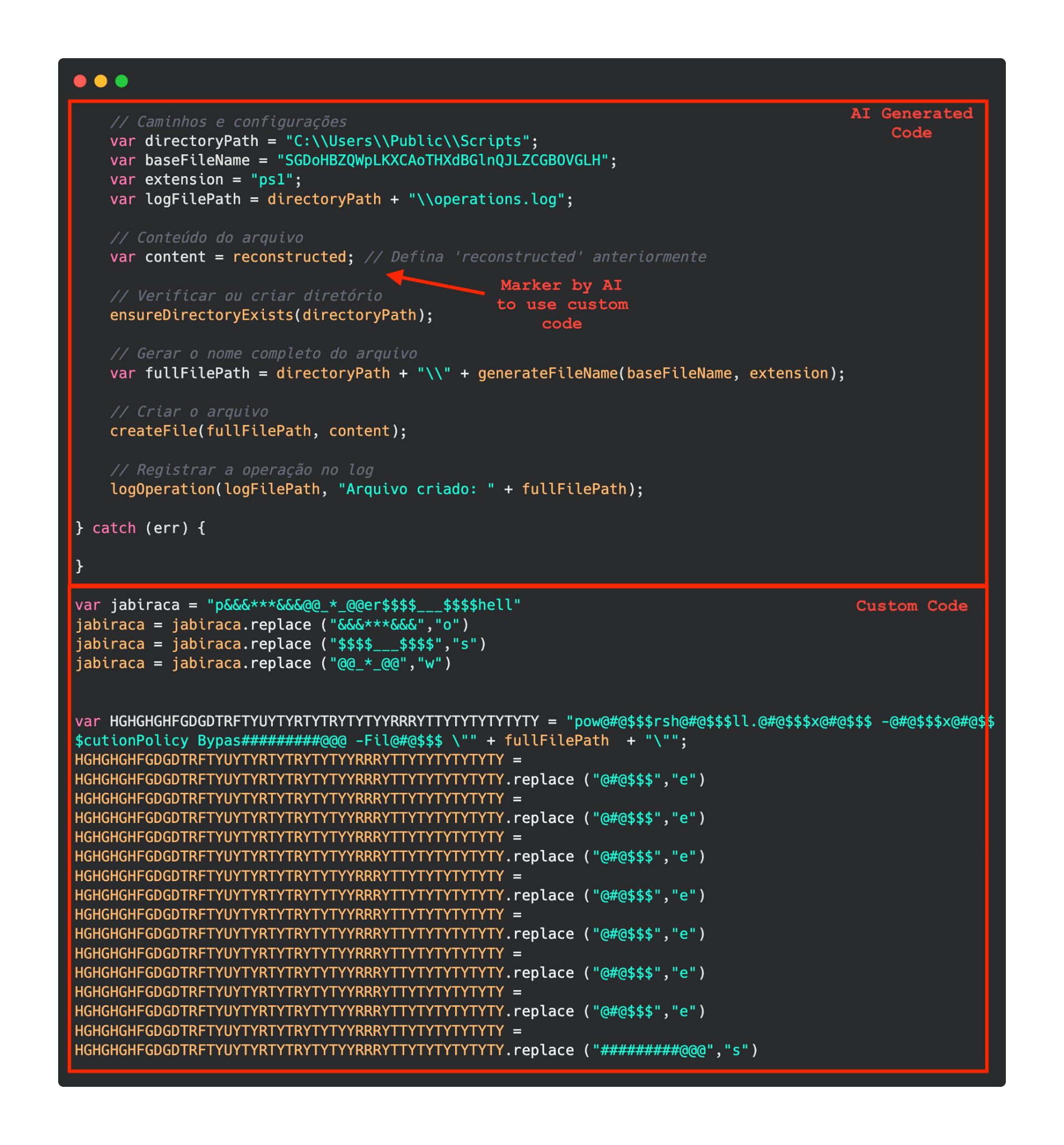
The script appears to be generated by a large language model (LLM), as evidenced by its heavily commented code and a format similar to those produced by this type of technology. The primary function of the script is to load subsequent scripts that facilitate the infection.
A significant portion of the new generation of initial infectors created by RevengeHotels contains code that seems to have been generated by AI. These LLM-generated code segments can be distinguished from the original malicious code by several characteristics, including:
The cleanliness and organization of the code
Placeholders, which allow the threat actor to insert their own variables or content
Detailed comments that accompany almost every action within the code
A notable lack of obfuscation, which sets these LLM-generated sections apart from the rest of the code
AI generated code in a malicious implant as compared to custom code
Second loading step
Upon execution, the loader script, Fat\{NUMBER\}.js, decodes an obfuscated and encoded buffer, which serves as the next step in loading the remaining malicious implants. This buffer is then saved to a PowerShell (PS1) file named SGDoHBZQWpLKXCAoTHXdBGlnQJLZCGBOVGLH_{TIMESTAMP}.ps1 (d5f241dee73cffe51897c15f36b713cc), where “\{TIMESTAMP\}” is a generated number based on the current execution date and time. This ensures that the filename changes with each infection and is not persistent. Once the script is saved, it is executed three times, after which the loader script exits.
The script SGDoHBZQWpLKXCAoTHXdBGlnQJLZCGBOVGLH_{TIMESTAMP}.ps1 runs a PowerShell command with Base64-encoded code. This code retrieves the cargajecerrr.txt (b1a5dc66f40a38d807ec8350ae89d1e4) file from a remote malicious server and invokes it as PowerShell.
This downloader, which is lightly obfuscated, is responsible for fetching the remaining files from the malicious server and loading them. Both downloaded files are Base64-encoded and have descriptive names: venumentrada.txt (607f64b56bb3b94ee0009471f1fe9a3c), which can be interpreted as “VenomRAT entry point”, and runpe.txt (dbf5afa377e3e761622e5f21af1f09e6), which is named after a malicious tool for in-memory execution. The first file, venumentrada.txt, is a heavily obfuscated loader (MD5 of the decoded file: 91454a68ca3a6ce7cb30c9264a88c0dc) that ensures the second file, a VenomRAT implant (3ac65326f598ee9930031c17ce158d3d), is correctly executed in memory.
The malicious code also exhibits characteristics consistent with generation by an AI interface, including a coherent code structure, detailed commenting, and explicit variable naming. Moreover, it differs significantly from previous samples, which had a structurally different, more obfuscated nature and lacked comments.
Exploring VenomRAT
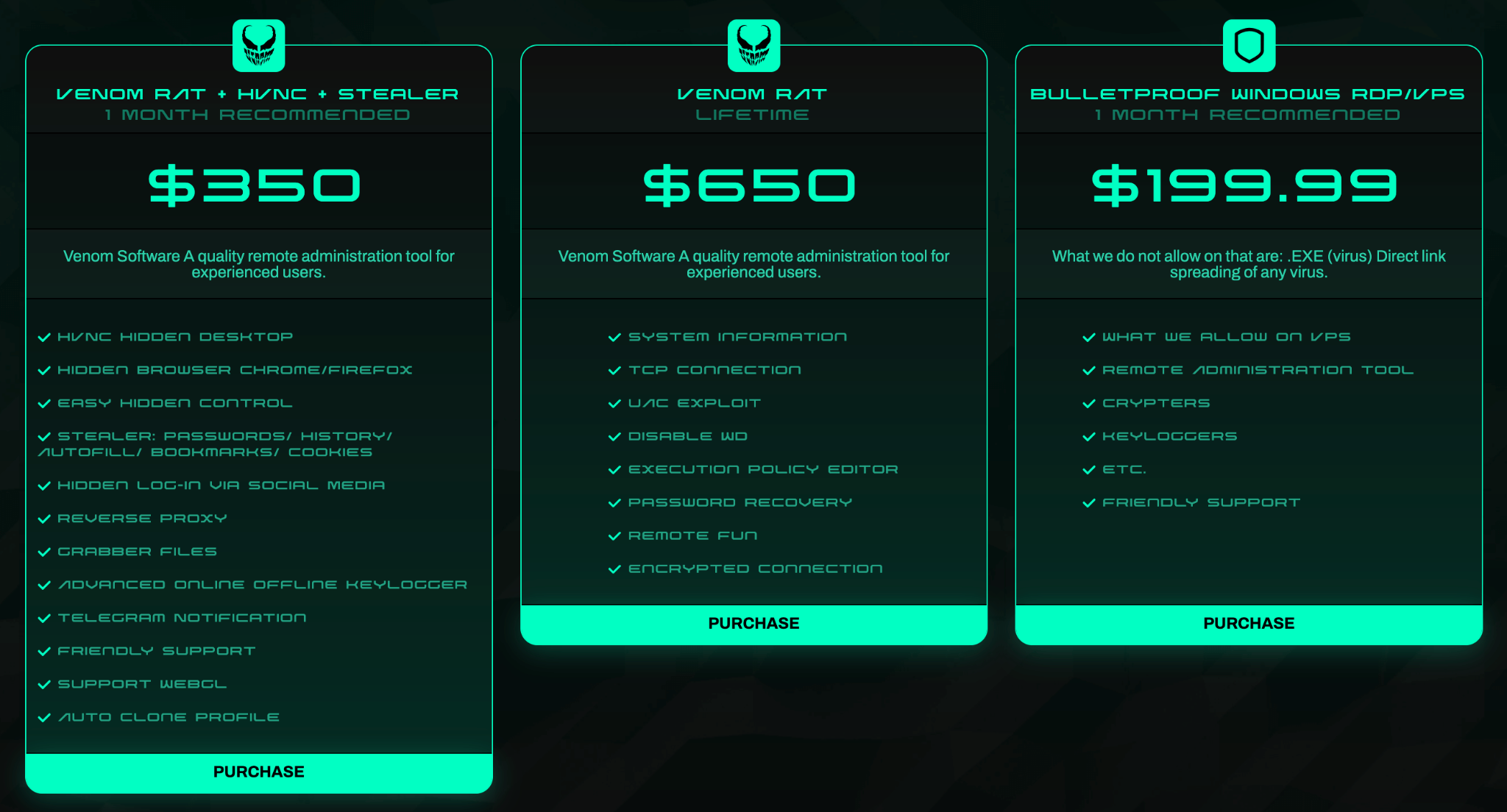
VenomRAT, an evolution of the open-source QuasarRAT, was first discovered in mid-2020 and is offered on the dark web, with a lifetime license costing up to $650. Although the source code of VenomRAT was leaked, it is still being sold and used by threat actors.
VenomRAT packages on the dark web
According to the vendor’s website, VenomRAT offers a range of capabilities that build upon and expand those of QuasarRAT, including HVNC hidden desktop, file grabber and stealer, reverse proxy, and UAC exploit, amongst others.
As with other RATs, VenomRAT clients are generated with custom configurations. The configuration data within the implant (similar to QuasarRAT) is encrypted using AES and PKCS #5 v2.0, with two keys employed: one for decrypting the data and another for verifying its authenticity using HMAC-SHA256. Throughout the malware code, different sets of keys and initialization vectors are used sporadically, but they consistently implement the same AES algorithm.
Anti-kill
It is notable that VenomRAT features an anti-kill protection mechanism, which can be enabled by the threat actor upon execution. Initially, the RAT calls a function named EnableProtection, which retrieves the security descriptor of the malicious process and modifies the Discretionary Access Control List (DACL) to remove any permissions that could hinder the RAT’s proper functioning or shorten its lifespan on the system.
The second component of this anti-kill measure involves a thread that runs a continuous loop, checking the list of running processes every 50 milliseconds. The loop specifically targets those processes commonly used by security analysts and system administrators to monitor host activity or analyze .NET binaries, among other tasks. If the RAT detects any of these processes, it will terminate them without prompting the user.
List of processes that the malware looks for to terminate
The anti-kill measure also involves persistence, which is achieved through two mechanisms written into a VBS file generated and executed by VenomRAT. These mechanisms ensure the malware’s continued presence on the system:
Windows Registry: The script creates a new key under HKCU\Software\Microsoft\Windows\CurrentVersion\RunOnce, pointing to the executable path. This allows the malware to persist across user sessions.
Process: The script runs a loop that checks for the presence of the malware process in the process list. If it is not found, the script executes the malware again.
If the user who executed the malware has administrator privileges, the malware takes additional steps to ensure its persistence. It sets the SeDebugPrivilege token, enabling it to use the RtlSetProcessIsCritical function to mark itself as a critical system process. This makes the process “essential” to the system, allowing it to persist even when termination is attempted. However, when the administrator logs off or the computer is about to shut down, VenomRAT removes its critical mark to permit the system to proceed with these actions.
As a final measure to maintain persistence, the RAT calls the SetThreadExecutionState function with a set of flags that forces the display to remain on and the system to stay in a working state. This prevents the system from entering sleep mode.
Separately from the anti-kill methods, the malware also includes a protection mechanism against Windows Defender. In this case, the RAT actively searches for MSASCui.exe in the process list and terminates it. The malware then modifies the task scheduler and registry to disable Windows Defender globally, along with its various features.
Networking
VenomRAT employs a custom packet building and serialization mechanism for its networking connection to the C2 server. Each packet is tailored to a specific action taken by the RAT, with a dedicated packet handler for each action. The packets transmitted to the C2 server undergo a multi-step process:
The packet is first serialized to prepare it for transmission.
The serialized packet is then compressed using LZMA compression to reduce its size.
The compressed packet is encrypted using AES-128 encryption, utilizing the same key and authentication key mentioned earlier.
Upon receiving packets from the C2 server, VenomRAT reverses this process to decrypt and extract the contents.
Additionally, VenomRAT implements tunneling by installing ngrok on the infected computer. The C2 server specifies the token, protocol, and port for the tunnel, which are sent in the serialized packet. This allows remote control services like RDP and VNC to operate through the tunnel and to be exposed to the internet.
USB spreading
VenomRAT also possesses the capability to spread via USB drives. To achieve this, it scans drive letters from C to M and checks if each drive is removable. If a removable drive is detected, the RAT copies itself to all available drives under the name My Pictures.exe.
Extra stealth steps
In addition to copying itself to another directory and changing its executable name, VenomRAT employs several stealth techniques that distinguish it from QuasarRAT. Two notable examples include:
Deletion of Zone.Identifier streams: VenomRAT deletes the Mark of the Web streams, which contain metadata about the URL from which the executable was downloaded. By removing this information, the RAT can evade detection by security tools like Windows Defender and avoid being quarantined, while also eliminating its digital footprint.
Clearing Windows event logs: The malware clears all Windows event logs on the compromised system, effectively creating a “clean slate” for its operations. This action ensures that any events generated during the RAT’s execution are erased, making it more challenging for security analysts to detect and track its activities.
Victimology
The primary targets of RevengeHotels attacks continue to be hotels and front desks, with a focus on establishments located in Brazil. However, the threat actors have been adapting their tactics, and phishing emails are now being sent in languages other than Portuguese. Specifically, we’ve observed that emails in Spanish are being used to target hotels and tourism companies in Spanish-speaking countries, indicating a potential expansion of the threat actor’s scope. Note that among earlier victims of this threat are such Spanish-speaking countries as Argentina, Bolivia, Chile, Costa Rica, Mexico, and Spain.
It is important to point out that previously reported campaigns have mentioned the threat actor targeting hotel front desks globally, particularly in Russia, Belarus, and Turkey, although no such activity has yet been detected during the latest RevengeHotels campaign.
Conclusions
RevengeHotels has significantly enhanced its capabilities, developing new tactics to target the hospitality and tourism sectors. With the assistance of LLM agents, the group has been able to generate and modify their phishing lures, expanding their attacks to new regions. The websites used for these attacks are constantly rotating, and the initial payloads are continually changing, but the ultimate objective remains the same: to deploy a remote access Trojan (RAT). In this case, the RAT in question is VenomRAT, a privately developed variant of the open-source QuasarRAT.
Kaspersky products detect these threats as HEUR:Trojan-Downloader.Script.Agent.gen, HEUR:Trojan.Win32.Generic, HEUR:Trojan.MSIL.Agent.gen, Trojan-Downloader.PowerShell.Agent.ady, Trojan.PowerShell.Agent.aqx.

 Login
Login