Normal view

There are new articles available, click to refresh the page.
Before yesterdayMain stream

To buy or not to buy: How cybercriminals capitalize on Black Friday

By: Kaspersky
24 November 2025 at 07:30

The global e‑commerce market is accelerating faster than ever before, driven by expanding online retail, and rising consumer adoption worldwide. According to McKinsey Global Institute, global e‑commerce is projected to grow by 7–9% annually through 2040.

At Kaspersky, we track how this surge in online shopping activity is mirrored by cyber threats. In 2025, we observed attacks which targeted not only e‑commerce platform users but online shoppers in general, including those using digital marketplaces, payment services and apps for everyday purchases. This year, we additionally analyzed how cybercriminals exploited gaming platforms during Black Friday, as the gaming industry has become an integral part of the global sales calendar. Threat actors have been ramping up their efforts during peak sales events like Black Friday, exploiting high demand and reduced user vigilance to steal personal data, funds, or spread malware.

This report continues our annual series of analyses published on Securelist in 2021, 2022, 2023, and  2024, which examine the evolving landscape of shopping‑related cyber threats.

Methodology

To track how the shopping threat landscape continues to evolve, we conduct an annual assessment of the most common malicious techniques, which span financial malware, phishing pages that mimic major retailers, banks, and payment services, as well as spam campaigns that funnel users toward fraudulent sites. In 2025, we also placed a dedicated focus on gaming-related threats, analyzing how cybercriminals leverage players’ interest. The threat data we rely on is sourced from the Kaspersky Security Network (KSN), which processes anonymized cybersecurity data shared consensually by Kaspersky users. This report draws on data collected from January through October 2025.

Key findings

  • In the first ten months of 2025, Kaspersky identified nearly 6.4 million phishing attacks which targeted users of online stores, payment systems, and banks.
  • As many as 48.2% of these attacks were directed at online shoppers.
  • We blocked more than 146,000 Black Friday-themed spam messages in the first two weeks of November.
  • Kaspersky detected more than 2 million phishing attacks related to online gaming.
  • Around 1.09 million banking-trojan attacks were recorded during the 2025 Black Friday season.
  • The number of attempted attacks on gaming platforms surged in 2025, reaching more than 20 million, a significant increase compared to previous years.
  • More than 18 million attempted malicious attacks were disguised as Discord in 2025, a more than 14-time increase year-over-year, while Steam remained within its usual five-year fluctuation range.

Shopping fraud and phishing

Phishing and scams remain among the most common threats for online shoppers, particularly during high-traffic retail periods when users are more likely to act quickly and rely on familiar brand cues. Cybercriminals frequently recreate the appearance of legitimate stores, payment pages, and banking services, making their fraudulent sites and emails difficult to distinguish from real ones. With customers navigating multiple offers and payment options, they may overlook URL or sender details, increasing the likelihood of credential theft and financial losses.

From January through to October 2025, Kaspersky products successfully blocked 6,394,854 attempts to access phishing links which targeted users of online stores, payment systems, and banks. Breaking down these attempts, 48.21% had targeted online shoppers (for comparison, this segment accounted for 37.5% in 2024), 26.10% targeted banking users (compared to 44.41% in 2024), and 25.69% mimicked payment systems (18.09% last year). Compared to previous years, there has been a noticeable shift in focus, with attacks against online store users now representing a larger share, reflecting cybercriminals’ continued emphasis on exploiting high-demand retail periods, while attacks on banking users have decreased in relative proportion. This may be related to online banking protection hardening worldwide.

Financial phishing attacks by category, January–October 2025 (download)

In 2025, Kaspersky products detected and blocked 606,369 phishing attempts involving the misuse of Amazon’s brand. Cybercriminals continued to rely on Amazon-themed pages to deceive users and obtain personal or financial information.

Other major e-commerce brands were also impersonated. Attempts to visit phishing pages mimicking Alibaba brands, such as AliExpress, were detected 54,500 times, while eBay-themed pages appeared in 38,383 alerts. The Latin American marketplace Mercado Libre was used as a lure in 8,039 cases, and Walmart-related phishing pages were detected 8,156 times.

Popular online stores mimicked by scammers, January–October 2025 (download)

In 2025, phishing campaigns also extensively mimicked other online platforms. Netflix-themed pages were detected 801,148 times, while Spotify-related attempts reached 576,873. This pattern likely reflects attackers’ continued focus on high-traffic digital entertainment services with in-service payments enabled, which can be monetized via stolen accounts.

How scammers exploited shopping hype in 2025

In 2025, Black Friday-related scams continued to circulate across multiple channels, with fraudulent email campaigns remaining one of the key distribution methods. As retailers increase their seasonal outreach, cybercriminals take advantage of the high volume of promotional communications by sending look-alike messages that direct users to scam and phishing pages. In the first two weeks of November, 146,535 spam messages connected to seasonal sales were detected by Kaspersky, including 2,572 messages referencing Singles day sales.

Scammers frequently attempt to mimic well-known platforms to increase the credibility of their messages. In one of the recurring campaigns, a pattern seen year after year, cybercriminals replicated Amazon’s branding and visual style, promoting supposedly exclusive early-access discounts of up to 70%. In this particular case, the attackers made almost no changes to the text used in their 2024 campaign, again prompting users to follow a link leading to a fraudulent page. Such pages are usually designed to steal their personal or payment information or to trick the user into buying non-existent goods.

Beyond the general excitement around seasonal discounts, scammers also try to exploit consumers’ interest in newly released Apple devices. To attract attention, they use the same images of the latest gadgets across various mailing campaigns, just changing the names of legitimate retailers that allegedly sell the brand.

Scammers use an identical image across different campaigns, only changing the retailer’s branding

As subscription-based streaming platforms also take part in global sales periods, cybercriminals attempt to take advantage of this interest as well. For example, we observed a phishing website where scammers promoted an offer for a “12-month subscription bundle” covering several popular services at once, asking users to enter their bank card details. To enhance credibility, the scammers also include fabricated indicators of numerous successful purchases from other “users,” making the offer appear legitimate.

In addition to imitating globally recognized platforms, scammers also set up fake pages that pretend to be local services in specific countries. This tactic enables more targeted campaigns that blend into the local online landscape, increasing the chances that users will perceive the fraudulent pages as legitimate and engage with them.
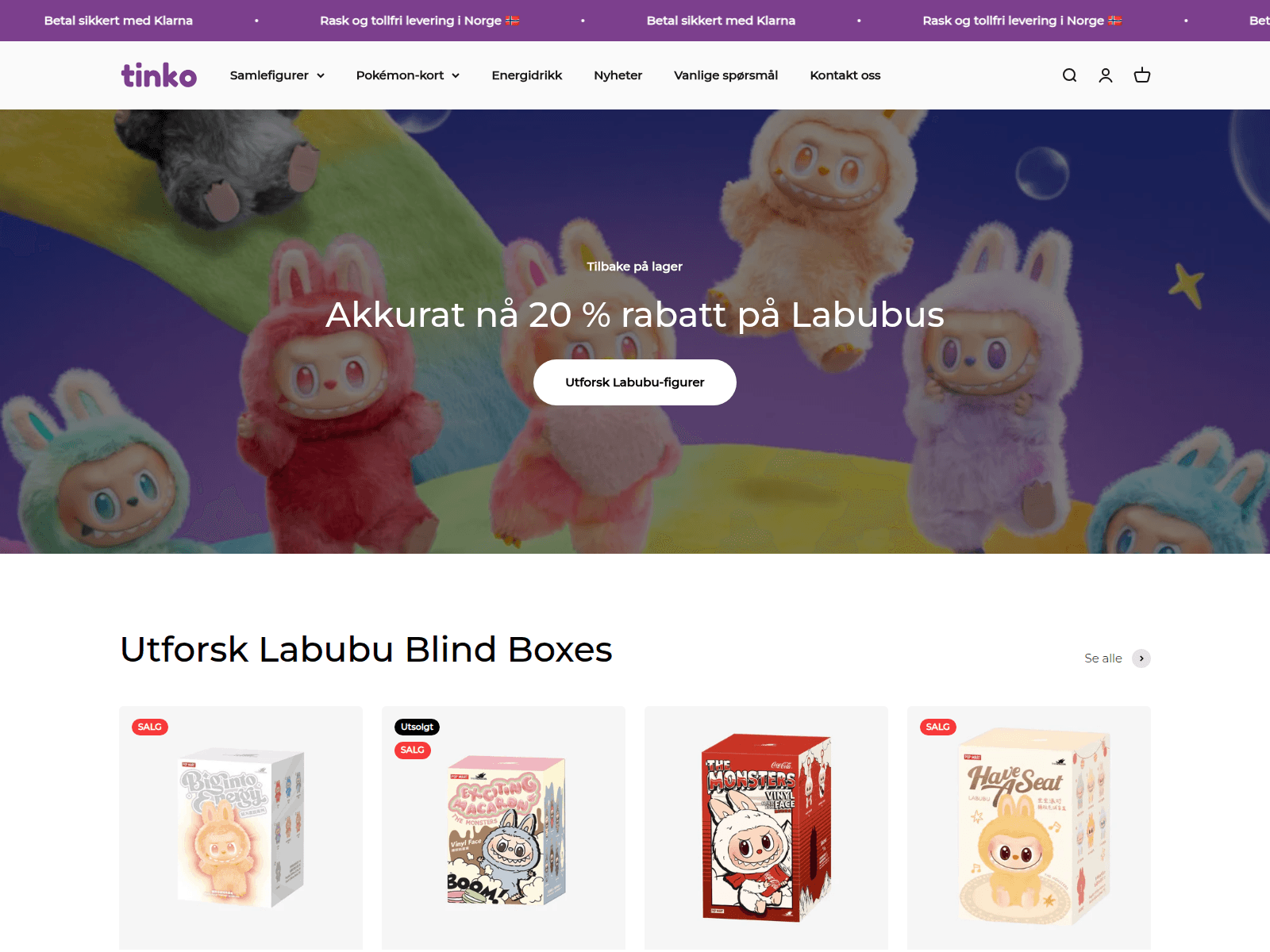
Non-existent Norwegian online store and popular Labubu toys sale

Non-existent Norwegian online store and popular Labubu toys sale

Banking Trojans

Banking Trojans, or “bankers,” are another tool for cybercriminals exploiting busy shopping seasons like Black Friday in 2025. They are designed to steal sensitive data from online banking and payment systems. In this section, we’ll focus on PC bankers. Once on a victim’s device, they monitor the browser and, when the user visits a targeted site, can use techniques like web injection or form-grabbing to capture login credentials, credit card information, and other personal data. Some trojans also watch the clipboard for crypto wallet addresses and replace them with those controlled by the malicious actors.

As online shopping peaks during major sales events, attackers increasingly target e-commerce platforms alongside banks. Trojans may inject fake forms into legitimate websites, tricking users into revealing sensitive data during checkout and increasing the risk of identity theft and financial fraud. In 2025, Kaspersky detected over 1,088,293* banking Trojan attacks. Among notable banker-related cases analysed by Kaspersky throughout the year, campaigns involving the new Maverick banking Trojan distributed via WhatsApp, as well as the Efimer Trojan which spread through malicious emails and compromised WordPress sites can be mentioned, both illustrating how diverse and adaptive banking Trojan delivery methods are.

*These statistics include globally active banking malware, and malware for ATMs and point-of-sale (PoS) systems. We excluded data on Trojan-banker families that no longer use banking Trojan functionality in their attacks, such as Emotet.

A holiday sales season on the dark web

Apparently, even the criminal underground follows its own version of a holiday sales season. Once data is stolen, it often ends up on dark-web forums, where cybercriminals actively search for buyers. This pattern is far from new, and the range of offers has remained largely unchanged over the past two years.

Threat actors consistently seize the opportunity to attract “new customers,” advertising deep discounts tied to high-profile global sales events. It is worth noting that year after year we see the same established services announce their upcoming promotions in the lead-up to Black Friday, almost as if operating on a retail calendar of their own.

We also noted that dark web forum participants themselves eagerly await these seasonal markdowns, hoping to obtain databases at the most favorable rates and expressing their wishes in forum posts. In the months before Black Friday, posts began appearing on carding-themed forums advertising stolen payment-card data at promotional prices.

Threats targeting gaming

The gaming industry faces a high concentration of scams and other cyberthreats due to its vast global audience and constant demand for digital goods, updates, and in-game advantages. Players often engage quickly with new offers, making them more susceptible to deceptive links or malicious files. At the same time, the fact that gamers often download games, mods, skins etc. from third-party marketplaces, community platforms, and unofficial sources creates additional entry points for attackers.

The number of attempted attacks on platforms beloved by gamers increased dramatically in 2025, reaching 20,188,897 cases, a sharp rise compared to previous years.

Attempts to attack users through malicious or unwanted files disguised as popular gaming platforms (download)

The nearly sevenfold increase in 2025 is most likely linked to the Discord block by some countries introduced at the end of 2024. Eventually users rely on alternative tools, proxies and modified clients. This change significantly expanded the attack surface, making users more vulnerable to fake installers, and malicious updates disguised as workarounds for the restriction.

It can also be seen in the top five most targeted gaming platforms of 2025:

Platform The number of attempted attacks
Discord 18,556,566
Steam 1,547,110
Xbox 43,560
Uplay 28,366
Battle.net 5,538

In previous years, Steam consistently ranked as the platform with the highest number of attempted attacks. Its extensive game library, active modding ecosystem, and long-standing role in the gaming community made it a prime target for cybercriminals distributing malicious files disguised as mods, cheats, or cracked versions. In 2025, however, the landscape changed significantly. The gap between Steam and Discord expanded to an unprecedented degree as Steam-related figures remained within their typical fluctuation range of the past five years,  while the number of attempted Discord-disguised attacks surged more than 14 times compared to 2024, reshaping the hierarchy of targeted gaming platforms.

Attempts to attack users through malicious or unwanted files disguised as Steam and Discord throughout the reported period (download)

From January to October, 2025, cybercriminals used a variety of cyberthreats disguised as popular related to gamers platforms, modifications or circumvention options. RiskTool dominated the threat landscape with 17,845,099 detections, far more than any other category. Although not inherently malicious, these tools can hide files, mask processes, or disable programs, making them useful for stealthy, persistent abuse, including covert crypto-mining. Downloaders ranked second with 1,318,743 detections. These appear harmless but may fetch additional malware among other downloaded files. Downloaders are typically installed when users download unofficial patches, cracked clients, or mods. Trojans followed with 384,680 detections, often disguised as cheats or mod installers. Once executed, they can steal credentials, intercept tokens, or enable remote access, leading to account takeovers and the loss of in-game assets.

Threat Gaming-related detections
RiskTool 17,845,099
Downloader 1,318,743
Trojan 384,680
Adware 184,257
Exploit 152,354

Phishing and scam threats targeting gamers

In addition to tracking malicious and unwanted files disguised as gamers’ platforms, Kaspersky experts also analysed phishing pages which impersonated these services. Between January and October 2025, Kaspersky products detected 2,054,336 phishing attempts targeting users through fake login pages, giveaway offers, “discounted” subscriptions and other scams which impersonated popular platforms like Steam, PlayStation, Xbox and gaming stores.
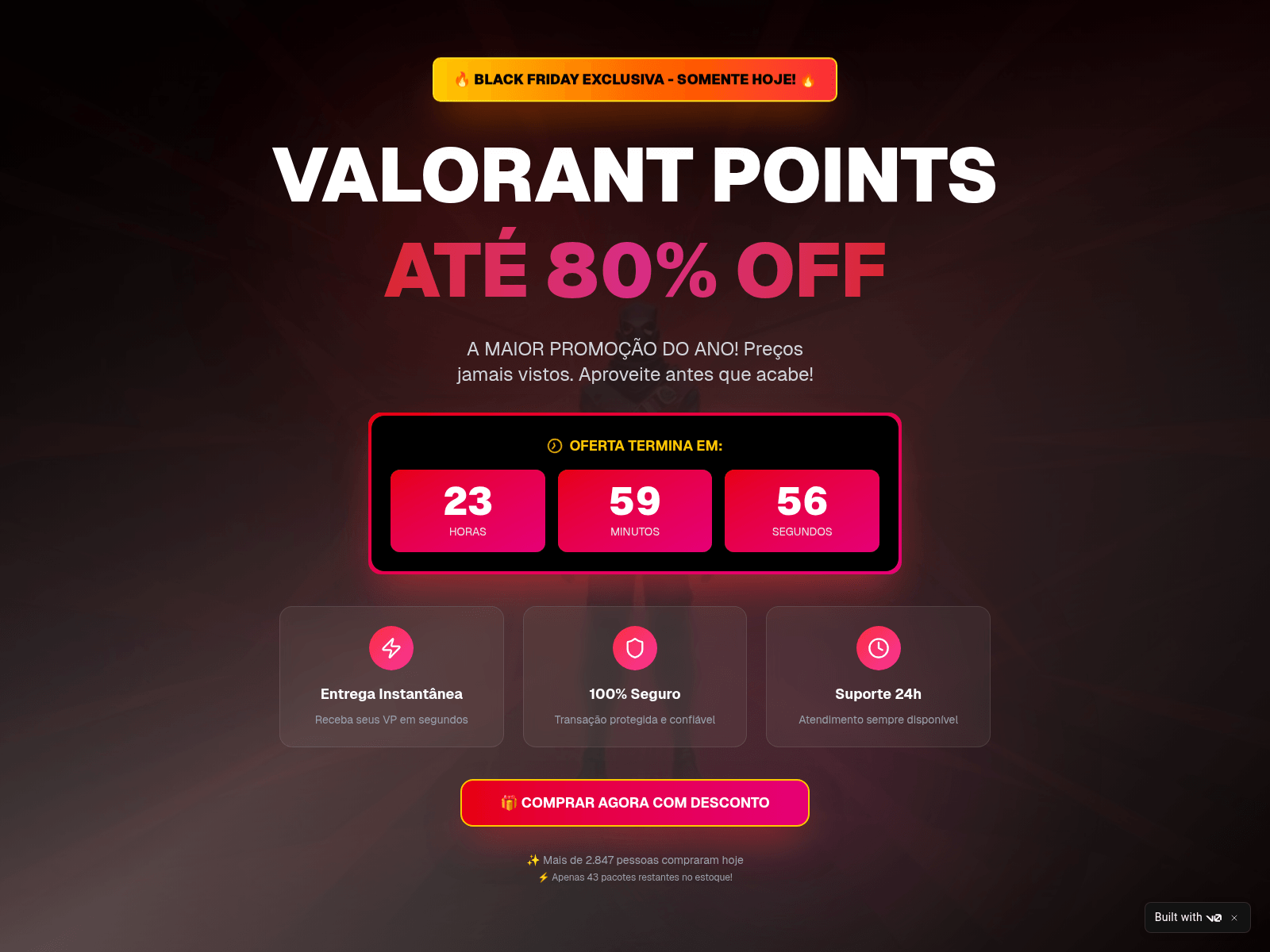
Example of Black Friday scam using a popular shooter as a lure

Example of Black Friday scam using a popular shooter as a lure

The page shown in the screenshot is a typical Black Friday-themed scam that targets gamers, designed to imitate an official Valorant promotion. The “Valorant Points up to 80% off” banner, polished layout, and fake countdown timer create urgency and make the offer appear credible at first glance. Users who proceed are redirected to a fake login form requesting Riot account credentials or bank card details. Once submitted, this information enables attackers to take over accounts, steal in-game assets, or carry out fraudulent transactions.
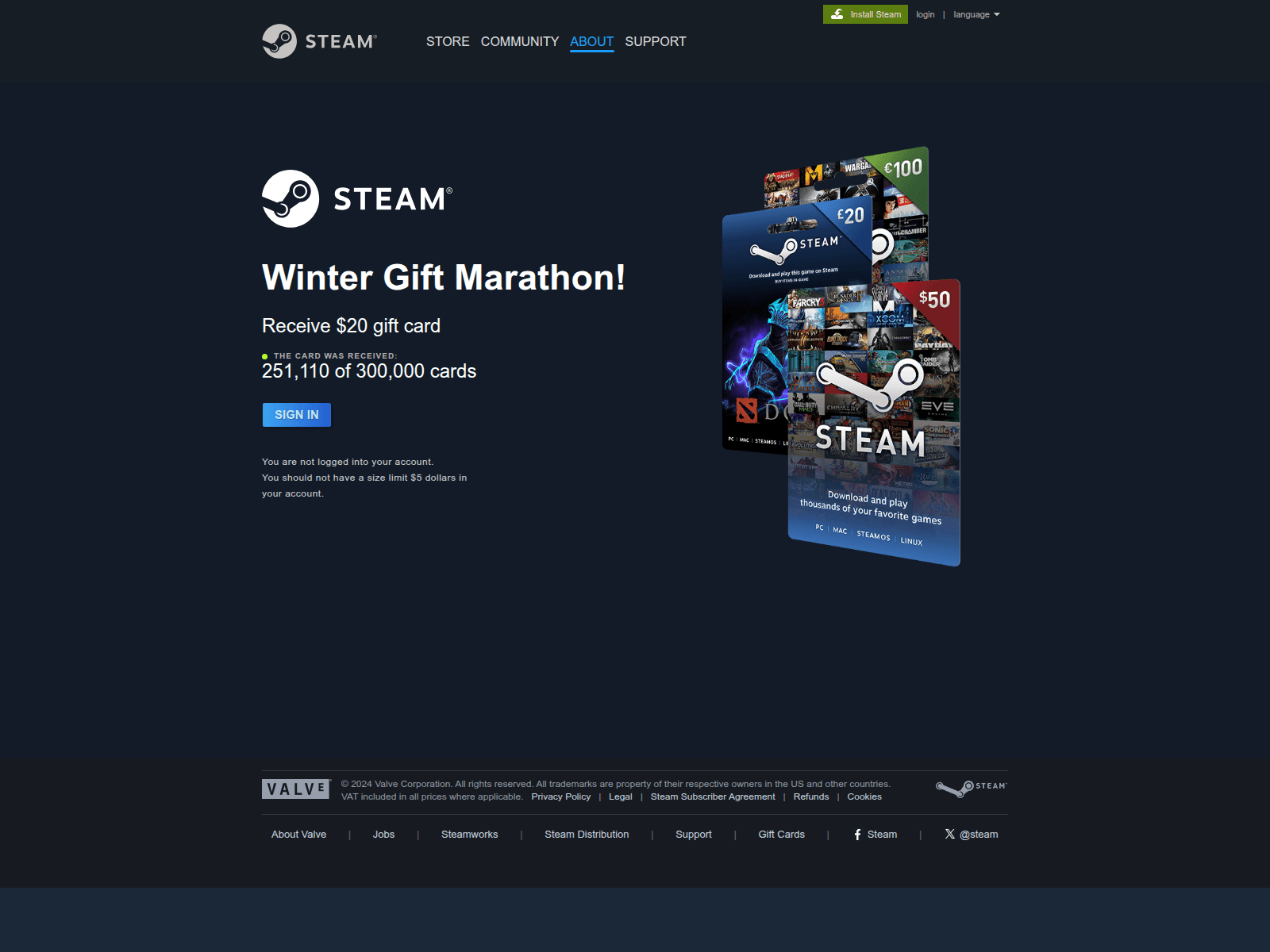
Minor text errors reveal the page's fraudulent nature

Minor text errors reveal the page’s fraudulent nature. The phrase “You should not have a size limit of 5$ dollars in your account” is grammatically incorrect and clearly suspicious.

Another phishing page relies on a fabricated “Winter Gift Marathon” that claims to offer a free $20 Steam gift card. The seasonal framing, combined with a misleading counter (“251,110 of 300,000 cards received”), creates an artificial sense of legitimacy and urgency intended to prompt quick user interaction.

The central component of the scheme is the “Sign in” button, which redirects users to a spoofed Steam login form designed to collect their credentials. Once obtained, attackers can gain full access to the account, including payment methods, inventory items, and marketplace assets, and may be able to compromise additional services if the same password is used elsewhere.

Examples of scams on Playstation 5 Pro and Xbox series X

Scams themed around the PlayStation 5 Pro and Xbox Series X appear to be generated from a phishing kit, a reusable template that scammers adapt for different brands. Despite referencing two consoles, both pages follow the same structure which features a bold claim offering a chance to “win” a high-value device, a large product image on the left, and a minimalistic form on the right requesting the user’s email address.

A yellow banner promotes an “exclusive offer” with “limited availability,” pressuring users to respond quickly. After submitting an email, victims are typically redirected to additional personal and payment data-collection forms. They also may later be targeted with follow-up phishing emails, spam, or malicious links.

Conclusions

In 2025, the ongoing expansion of global e-commerce continued to be reflected in the cyberthreat landscape, with phishing, scam activity, and financial malware targeting online shoppers worldwide. Peak sales periods once again created favorable conditions for fraud, resulting in sustained activity involving spoofed retailer pages, fraudulent email campaigns, and seasonal spam.

Threat actors also targeted users of digital entertainment and subscription services. The gaming sector experienced a marked increase in malicious activity, driven by shifts in platform accessibility and the widespread use of third-party tools. The significant rise in malicious detections associated with Discord underscored how rapidly attackers adjust to changes in user behavior.

Overall, 2025 demonstrated that cybercriminals continue to leverage predictable user behavior patterns and major sales events to maximize the impact of their operations. Consumers should remain especially vigilant during peak shopping periods and use stronger security practices, such as two-factor authentication, secure payment methods, and cautious browsing. A comprehensive security solution that blocks malware, detects phishing pages, and protects financial data can further reduce the risk of falling victim to online threats.

SEO spam and hidden links: how to protect your website and your reputation

17 October 2025 at 03:00

When analyzing the content of websites in an attempt to determine what category it belongs to, we sometimes get an utterly unexpected result. It could be the official page of a metal structures manufacturer or online flower shop, or, say, a law firm website, with completely neutral content, but our solutions would place it squarely in the “Adult content” category. On the surface, it is completely unclear how our systems arrived at that verdict, but one look at the content categorization engine’s page analysis log clears it up.

Invisible HTML block, or SEO spam

The website falls into the questionable category because it contains an HTML block with links to third-party sites, invisible to regular users. These sites typically host content of a certain kind – which, in our experience, is most often pornographic or gambling materials – and in the hidden block, you will find relevant keywords along with the links. These practices are a type of Black Hat SEO, or SEO spam: the manipulation of website search rankings in violation of ethical search engine optimization (SEO) principles. Although there are many techniques that attackers use to raise or lower websites in search engine rankings, we have encountered hidden blocks more frequently lately, so this is what this post focuses on.

Website owners rarely suspect a problem until they face obvious negative consequences, such as a sharp drop in traffic, warnings from search engines, or complaints from visitors. Those who use Kaspersky solutions may see their sites blocked due to being categorized as prohibited, a sign that something is wrong with them. Our engine detects both links and their descriptions that are present in a block like that.

How hidden links work

Hyperlinks that are invisible to regular users but still can be scanned by various analytical systems, such as search engines or our web categorization engine, are known as “hidden links”. They are often used for scams, inflating website rankings (positions in search results), or pushing down the ranking of a victim website.

To understand how this works, let us look at how today’s SEO functions in the first place. A series of algorithms is responsible for ranking websites in search results, such as those served by Google. The oldest and most relevant one to this article is known as PageRank. The PageRank metric, or weight in the context of this algorithm, is a numerical value that determines the importance of a specific page. The higher the number of links from other websites pointing to a page, and the greater those websites’ own weights, the higher the page’s PageRank.

So, to boost their own website’s ranking in search results, the malicious actor places hidden links to it on the victim website. The higher the victim website’s PageRank, the more attractive it is to the attacker. High-traffic platforms like blogs or forums are of particular interest to them.

However, PageRank is no longer the only method search engines use to measure a website’s value. Google, for example, also applies other algorithms, such as the artificial intelligence-based RankBrain or the BERT language model. These algorithms use more sophisticated metrics, such as Domain Authority (that is, how much authority the website has on the subject the user is asking about), link quality, and context. Placing links on a website with a high PageRank can still be beneficial, but this tactic has a severely limited effect due to advanced algorithms and filters aimed at demoting sites that break the search engine’s rules. Examples of these filters are as follows:

  • Google Penguin, which identifies and penalizes websites that use poor-quality or manipulative links, including hidden ones, to boost their own rankings. When links like these are detected, their weight can be zeroed out, and the ranking may be lowered for both sites: the victim and the spam website.
  • Google Panda, which evaluates content quality. If the website has a high PageRank, but the content is of low quality, duplicated, auto-generated, or otherwise substandard, the site may be demoted.
  • Google SpamBrain, which uses machine learning to analyze HTML markup, page layouts, and so forth to identify manipulative patterns. This algorithm is integrated into Google Penguin.

What a Black Hat SEO block looks like in a page’s HTML markup

Let us look at some real examples of hidden blocks we have seen on legitimate websites and determine the attributes by which these blocks can be identified.

Example 1

<div style="display: none;">
افلام سكس اعتصاب <a href="https://www.azcorts.com/" rel="dofollow" target="_self">azcorts.com</a> قنوات جنسية
free indian porn com <a href="https://porngun.mobi" target="_self">porngun.mobi</a> xharmaster
石原莉紅 <a href="https://javclips.mobi/" target="_blank" title="javclips.mobi">javclips.mobi</a> ちっぱい
bank porn <a href="https://pimpmpegs.net" target="_self" title="pimpmpegs.net free video porn">pimpmpegs.net</a> wwwporm
salamat lyrics tagalog <a href="https://www.teleseryeone.com/" target="_blank" title="teleseryeone.com sandro marcos alexa miro">teleseryeone.com</a> play desi
</div>
<div style="display: none;">
كسى بيوجعنى <a href="https://www.sexdejt.org/" rel="dofollow">sexdejt.org</a> سكس سانى
indian sex video bp <a href="https://directorio-porno.com/" rel="dofollow" target="_self" title="directorio-porno.com">directorio-porno.com</a> xvideos indian pussy
swara bhaskar porn <a href="https://greenporn.mobi" title="greenporn.mobi lesbian porn hq">greenporn.mobi</a> kannada sexy video
bp sex full <a href="https://tubepornmix.info" target="_blank" title="tubepornmix.info aloha tube porn video">tubepornmix.info</a> lily sex
pinayflix pamasahe <a href="https://www.gmateleserye.com/" rel="dofollow" target="_blank">gmateleserye.com</a> family feud november 17
</div>
<div style="display: none;">
sunny leone ki bp download <a href="https://eroebony.info" target="_self" title="eroebony.info">eroebony.info</a> hansika xvideos
موقع سكس ايطالى <a href="https://bibshe.com/" target="_self" title="bibshe.com سكس العادة السرية">bibshe.com</a> صور احلى كس
raja rani coupon result <a href="https://booketube.mobi" rel="dofollow">booketube.mobi</a> exercise sex videos
indianbadwap <a href="https://likeporn.mobi" rel="dofollow" target="_blank" title="likeporn.mobi free hd porn">likeporn.mobi</a> rabi pirzada nude video
marathi porn vidio <a href="https://rajwap.biz" rel="dofollow" target="_blank" title="rajwap.biz">rajwap.biz</a> www.livesex.com
</div>
This example utilizes a simple CSS style, <div style="display: none;">. This is one of the most basic and widely known methods for concealing content; the parameter display: none; stands for “do not display”. We also see that each invisible <div> section contains a set of links to low-quality pornographic websites along with their keyword-stuffed descriptions. This clearly indicates spam, as the website where we found this block has no relation whatsoever to the type of content being linked to.

Another sign of Black Hat SEO in the example is the attribute rel="dofollow". This instructs search engines that the link carries link juice, meaning it passes weight. Spammers intentionally set this attribute to transfer authority from the victim website to the ones they are promoting. In standard practice, webmasters may, conversely, use rel="nofollow", which signifies that the presence of the link on the site should not influence the ranking of the website where it leads.

Thus, the combination of a hidden block ( display: none;) and a set of external pornographic (in this instance) links with the rel="dofollow" attribute unequivocally point to a SEO spam injection.

Note that all <div> sections are concentrated in one spot, at the end of the page, rather than scattered throughout the page code. This block demonstrates a classic Black Hat SEO approach.

Example 2

<div style="overflow: auto; position: absolute; height: 0pt; width: 0pt;">سكس انجليز <a href="https://wfporn.com/" target="_self" title="wfporn.com افلام سحاق مترجم">wfporn.com</a> سكس كلاسيك مترجم</div>
<div style="overflow: auto; position: absolute; height: 0pt; width: 0pt;">فيلم سكس <a href="https://www.keep-porn.com/" rel="dofollow" target="_blank">keep-porn.com</a> سكس هندى اغتصاب</div>
<div style="overflow: auto; position: absolute; height: 0pt; width: 0pt;">desi nude tumbler <a href="https://www.desixxxv.net" title="desixxxv.net free hd porn video">desixxxv.net</a> kanpur sexy video</div>
<div style="overflow: auto; position: absolute; height: 0pt; width: 0pt;">www wap sex video com <a href="https://pornorado.mobi" target="_self">pornorado.mobi</a> sexy film video mp4</div>
<div style="overflow: auto; position: absolute; height: 0pt; width: 0pt;">mom yes porn please <a href="https://www.movsmo.net/" rel="dofollow" title="movsmo.net">movsmo.net</a> yes porn please brazzers</div>
<div style="overflow: auto; position: absolute; height: 0pt; width: 0pt;">xxx download hd <a href="https://fuxee.mobi" title="fuxee.mobi">fuxee.mobi</a> fat woman sex</div>
<div style="overflow: auto; position: absolute; height: 0pt; width: 0pt;">bangalore xxx <a href="https://bigassporntrends.com" rel="dofollow" target="_self" title="bigassporntrends.com">bigassporntrends.com</a> sexy video kashmir</div>
<div style="overflow: auto; position: absolute; height: 0pt; width: 0pt;">xnxx sister sex <a href="https://wetwap.info" rel="dofollow" target="_self" title="wetwap.info hd porn streaming">wetwap.info</a> blue film a video</div>
<div style="overflow: auto; position: absolute; height: 0pt; width: 0pt;">tamilschoolsexvideo <a href="https://tubetria.mobi" rel="dofollow" title="tubetria.mobi">tubetria.mobi</a> sex free videos</div>
<div style="overflow: auto; position: absolute; height: 0pt; width: 0pt;">سكس من اجل المال مترجم <a href="https://www.yesexyporn.com/" title="yesexyporn.com فوائد لحس الكس">yesexyporn.com</a> نسوان شرميط</div>
<div style="overflow: auto; position: absolute; height: 0pt; width: 0pt;">kamapishi <a href="https://desisexy.org/" target="_blank" title="desisexy.org free porn gay hd online">desisexy.org</a> savita bhabhi xvideo</div>
<div style="overflow: auto; position: absolute; height: 0pt; width: 0pt;">aflamk2 <a href="https://www.pornvideoswatch.net/" target="_self" title="pornvideoswatch.net">pornvideoswatch.net</a> نيك ثمينات</div>
<div style="overflow: auto; position: absolute; height: 0pt; width: 0pt;">hentaifox futanari <a href="https://www.hentaitale.net/" target="_blank" title="hentaitale.net pisuhame">hentaitale.net</a> hen hentai</div>
<div style="overflow: auto; position: absolute; height: 0pt; width: 0pt;">video sexy wallpaper <a href="https://povporntrends.com" target="_blank">povporntrends.com</a> bengolibf</div>
<div style="overflow: auto; position: absolute; height: 0pt; width: 0pt;">persona 5 hentai manga <a href="https://www.younghentai.net/" rel="dofollow" target="_self" title="younghentai.net oni hentai">younghentai.net</a> toys hentai</div>
This example demonstrates a slightly more sophisticated approach to hiding the block containing Black Hat SEO content. It suggests an attempt to bypass the automated search engine filters that easily detect the display: none; parameter.

Let us analyze the set of CSS styles: <div style="overflow: auto; position: absolute; height: 0pt; width: 0pt;">. The properties position: absolute; height: 0pt; width: 0pt; remove the block from the visible area of the page, while overflow: auto prevents the content from being displayed even if it exceeds zero dimensions. This makes the links inaccessible to humans, but it does not prevent them from being preserved in the DOM (document object model). That’s why HTML code scanning systems, such as search engines, are able to see it.

In addition to the zero dimensions of the block, in this example, just as in the previous one, we see the attribute rel="dofollow", as well as many links to pornographic websites with relevant keywords.

The combination of styles that sets the block dimensions to zero is less obvious than display: none; because the element is technically present in the rendering, although it is not visible to the user. Nevertheless, it is worth noting that modern search engine security algorithms, such as Google Penguin, detect this technique too. To counter this, malicious actors may employ more complex techniques for evading detection. Here is another example:

<script src="files/layout/js/slider3d.js?v=0d6651e2"></script><script src="files/layout/js/layout.js?v=51a52ad1"></script>
<style type="text/css">.ads-gold {height: 280px;overflow: auto;color: transparent;}.ads-gold::-webkit-scrollbar {  display: none;}.ads-gold a {color: transparent;}.ads-gold {font-size: 10px;}.ads-gold {height: 0px;overflow: hidden;}</style>
<div class="ads-gold">
Ganhe Rápido nos Jogos Populares do Cassino Online <a href="https://580-bet.com" target="_blank">580bet</a>
Cassino <a href="https://bet-7k.com" target="_blank">bet 7k</a>: Diversão e Grandes Vitórias Esperam por Você
Aposte e Vença no Cassino <a href="https://leao-88.com" target="_blank">leao</a> – Jogos Fáceis e Populares
Jogos Populares e Grandes Prêmios no Cassino Online <a href="https://luck-2.com" target="_blank">luck 2</a>
Descubra os Jogos Mais Populares no Cassino <a href="https://john-bet.com" target="_blank">john bet</a> e Ganhe
<a href="https://7755-bet.com" target="_blank">7755 bet</a>: Apostas Fáceis, Grandes Oportunidades de Vitória
Jogue no Cassino Online <a href="https://cbet-88.com" target="_blank">cbet</a> e Aumente suas Chances de Ganhar
Ganhe Prêmios Incríveis com Jogos Populares no Cassino <a href="https://bet7-88.com" target="_blank">bet7</a>
Cassino <a href="https://pk55-88.com" target="_blank">pk55</a>: Onde a Sorte Está ao Seu Lado
Experimente o Cassino <a href="https://8800-bet.com" target="_blank">8800 bet</a> e Ganhe com Jogos Populares
Ganhe Facilmente no Cassino Online <a href="https://doce-88.com" target="_blank">doce</a>
Aposte e Vença no Cassino <a href="https://bet-4-br.com" target="_blank">bet 4</a>
Jogos Populares e Grandes Premiações na <a href="https://f12--bet.com" target="_blank">f12bet</a>
Descubra a Diversão e Vitória no Cassino <a href="https://bet-7-br.com" target="_blank">bet7</a>
Aposte nos Jogos Mais Populares do Cassino <a href="https://ggbet-88.com" target="_blank">ggbet</a>
Ganhe Prêmios Rápidos no Cassino Online <a href="https://bet77-88.com" target="_blank">bet77</a>
Jogos Fáceis e Rápidos no Cassino <a href="https://mrbet-88.com" target="_blank">mrbet</a>
Jogue e Ganhe com Facilidade no Cassino <a href="https://bet61-88.com" target="_blank">bet61</a>
Cassino <a href="https://tvbet-88.com" target="_blank">tvbet</a>: Onde a Sorte Está Ao Seu Lado
Aposte nos Melhores Jogos do Cassino Online <a href="https://pgwin-88.com" target="_blank">pgwin</a>
Ganhe Grande no Cassino <a href="https://today-88.com" target="_blank">today</a> com Jogos Populares
Cassino <a href="https://fuwin-88.com" target="_blank">fuwin</a>: Grandes Vitórias Esperam por Você
Experimente os Melhores Jogos no Cassino <a href="https://brwin-88.com" target="_blank">brwin</a>
</div></body>

Aside from the parameters we are already familiar with, which are responsible for concealing a block ( height: 0px, color: transparent, overflow: hidden), and the name that hints at its contents ( \<style type="text/css"\>.ads-gold), strings with scripts in this example can be found at the very beginning: <script src="files/layout/js/slider3d.js?v=0d6651e2"></script> and <script src="files/layout/js/layout.js?v=51a52ad1"></script>. These indicate that external JavaScript can dynamically control the page content, for example, by adding or changing hidden links, that is, modifying this block in real time.

This is a more advanced approach than the ones in the previous examples. Yet it is also detected by filters responsible for identifying suspicious manipulations.

Other parameters and attributes exist that attackers use to conceal a link block. These, however, can also be detected:

  • the parameter visibility: hidden; can sometimes be seen instead of display: none;.
  • Within position: absolute;, the block with hidden links may not have a zero size, but rather be located far beyond the visible area of the page. This can be set, for example, via the property left: -9232px;, as in the example below.
<div style="position: absolute; left: -9232px">
<a href="https://romabet.cam/">روما بت</a><br>
<a href="https://mahbet.cam/">ماه بت</a><br>
<a href="https://pinbahis.com.co/">پین باهیس</a><br>
<a href="https://bettingmagazine.org/">بهترین سایت شرط بندی</a><br>
<a href="https://1betcart.com/">بت کارت</a><br>
<a href="https:// yasbet.com.co/">یاس بت</a><br>
<a href="https://yekbet.cam/">یک بت</a><br>
<a href="https://megapari.cam/">مگاپاری </a><br>
<a href="https://onjabet.net/">اونجا بت</a><br>
<a href="https://alvinbet.org/">alvinbet.org</a><br>
<a href="https://2betboro.com/">بت برو</a><br>
<a href="https://betfa.cam/">بت فا</a><br>
<a href="https://betforward.help/">بت فوروارد</a><br>
<a href="https://1xbete.org/">وان ایکس بت</a><br>
<a href="https://1win-giris.com.co/">1win giriş</a><br>
<a href="https://betwiner.org/">بت وینر</a><br>
<a href="https://4shart.com/">بهترین سایت شرط بندی ایرانی</a><br>
<a href="https://1xbetgiris.cam">1xbet giriş</a><br>
<a href="https://1kickbet1.com/">وان کیک بت</a><br>
<a href="https://winbet-bet.com/">وین بت</a><br>
<a href="https://ritzobet.org/">ریتزو بت</a><br>

How attackers place hidden links on other people’s websites

To place hidden links, attackers typically exploit website configuration errors and vulnerabilities. This may be a weak or compromised password for an administrator account, plugins or an engine that have not been updated in a long time, poor filtering of user inputs, or security issues on the hosting provider’s side. Furthermore, attackers may attempt to exploit the human factor, for example, by setting up targeted or mass phishing attacks in the hope of obtaining the website administrator’s credentials.

Let us examine in detail the various mechanisms through which an attacker gains access to editing a page’s HTML code.

  • Compromise of the administrator password. An attacker may guess the password, use phishing to trick the victim into giving it away, or steal it with the help of malware. Furthermore, the password may be found in a database of leaked credentials. Site administrators frequently use simple passwords for control panel protection or, even worse, leave the default password, thereby simplifying the task for the attacker.
    After gaining access to the admin panel, the attacker can directly edit the page’s HTML code or install their own plugins with hidden SEO blocks.
  • Exploitation of CMS (WordPress, Joomla, Drupal) vulnerabilities. If the engine or plugins are out of date, attackers use known vulnerabilities (SQL Injection, RCE, or XSS) to gain access to the site’s code. After that, depending on the level of access gained by exploiting the vulnerability, they can modify template files (header.php, footer.php, index.php, etc.), insert invisible blocks into arbitrary site pages, and so on.
    In SQL injection attacks, the hacker injects their malicious SQL code into a database query. Many websites, from news portals to online stores, store their content (text, product descriptions, and news) in a database. If an SQL query, such as SELECT * FROM posts WHERE id = '$id' allows passing arbitrary data, the attacker can use the $id field to inject their code. This allows the attacker to change the content of records, for example, by inserting HTML with hidden blocks.
    In RCE (remote code execution) attacks, the attacker gains the ability to run their own commands on the server where the website runs. Unlike SQL injections, which are limited to the database, RCE provides almost complete control over the system. For example, it allows the attacker to create or modify site files, upload malicious scripts, and, of course, inject invisible blocks.
    In an XSS (cross-site scripting) attack, the attacker injects their JavaScript code directly into the web page by using vulnerable input fields, such as those for comments or search queries. When another user visits this page, the malicious script automatically executes in their browser. Such a script enables the attacker to perform various malicious actions, including stealthily adding a hidden <div> block with invisible links to the page. For XSS, the attacker does not need direct access to the server or database, as in the case with SQL injection or RCE; they only need to find a single vulnerability on the website.
  • An attack via the hosting provider. In addition to directly hacking the target website, an attacker may attempt to gain access to the website through the hosting environment. If the hosting provider’s server is poorly secured, there is a risk of it being compromised. Furthermore, if multiple websites or web applications run on the same server, a vulnerability in one of them can jeopardize all other projects. The attacker’s capabilities depend on the level of access to the server. These capabilities may include: injecting hidden blocks into page templates, substituting files, modifying databases, connecting external scripts to multiple websites simultaneously, and so forth. Meanwhile, the website administrator may not notice the problem because the vulnerability is being exploited within the server environment rather than the website code.

Note that hidden links appearing on a website is not always a sign of a cyberattack. The issue often arises during the development phase, for example, if an illegal copy of a template is downloaded to save money or if the project is executed by an unscrupulous web developer.

Why attackers place hidden blocks on websites

One of the most obvious goals for injecting hidden blocks into other people’s websites is to steal the PageRank from the victim. The more popular and authoritative the website is, the more interesting it is to attackers. However, this does not mean that moderate- or low-traffic websites are safe. As a rule, administrators of popular websites and large platforms do their best to adhere to security rules, so it is not so easy to get close to them. Therefore, attackers may target less popular – and less protected – websites.

As previously mentioned, this approach to promoting websites is easily detected and blocked by search engines. In the short term, though, attackers still benefit from this: they manage to drive traffic to the websites that interest them until search engine algorithms detect the violation.

Even though the user does not see the hidden block and cannot click the links, attackers can use scripts to boost traffic to their websites. One possible scenario involves JavaScript creating an iframe in the background or sending an HTTP request to the website from the hidden block, which then receives information about the visit.

Hidden links can lead not just to pornographic or other questionable websites but also to websites with low-quality content whose sole purpose is to be promoted and subsequently sold, or to phishing and malicious websites. In more sophisticated schemes, the script that provides “visits” to such websites may load malicious code into the victim’s browser.

Finally, hidden links allow attackers to lower the reputation of the targeted website and harm its standing with search engines. This threat is especially relevant in light of the fact that algorithms such as Google Penguin penalize websites hosting questionable links. Attackers may use these techniques as a tool for unfair competition, hacktivism, or any other activity that involves discrediting certain organizations or individuals.

Interestingly, in 2025, we have more frequently encountered hidden blocks with links to pornographic websites and online casinos on various legitimate websites. With low confidence, we can suggest that this is partly due to the development of neural networks, which make it easy to automate such attacks, and partly due to the regular updates to Google’s anti-spam systems, the latest of which was completed at the end of September 2025: attackers may have rushed to maximize their gains before the search engine made it a little harder for them.

Consequences for the victim website

The consequences for the victim website can vary in severity. At a minimum, the presence of hidden links placed by unauthorized parties hurts search engine reputation, which may lead to lower search rankings or even complete exclusion from search results. However, even without any penalties, the links disrupt the internal linking structure because they lead to external websites and pass on a portion of the victim’s weight to them. This negatively impacts the rankings of key pages.

Although unseen by visitors, hidden links can be discovered by external auditors, content analysis systems, or researchers who report such findings in public reports. This is something that can undermine trust in the website. For example, sites where our categorization engine detects links to pornography pages will be classified as “Adult content”. Consequently, all of our clients who use web filters to block this category will be unable to visit the website. Furthermore, information about a website’s category is published on our Kaspersky Threat Intelligence Portal and available to anyone wishing to look up its reputation.

If the website is being used to distribute illegal or fraudulent content, the issue enters the legal realm, with the owner potentially facing lawsuits from copyright holders or regulators. For example, if the links lead to websites that distribute pirated content, the site may be considered an intermediary in copyright infringement. If the hidden block contains malicious scripts or automatic redirects to questionable websites, such as phishing pages, the owner can be charged with fraud or some other cybercrime.

How to detect a hidden link block on your website

The simplest and most accessible method for any user to check a website for a hidden block is to view its source code in the browser. This is very easy to do. Navigate to the website, press Control+U, and the website’s code will open in the next tab. Search (Control+F) the code for the following keywords: display: none, visibility: hidden, opacity: 0, height: 0, width: 0, position: absolute. In addition, you can check for keywords that are characteristic of the hidden content itself. When it comes to links that point to adult or gambling sites, you should look for porn, sex, casino, card, and the like.

A slightly more complex method is using web developer tools to investigate the DOM for invisible blocks. After the page fully loads, open DevTools (F12) in the browser and go to the Elements tab. Search (Control+F) for keywords such as <a, iframe, display: none, hidden, opacity. Hover your cursor over suspicious elements in the code so the browser highlights their location on the page. If the block occupies zero area or is located outside the visible area, that is an indicator of a hidden element. Check the Computed tab for the selected element; there, you can see the applied CSS styles and confirm that it is hidden from the user’s view.

You can also utilize specialized SEO tools. These are typically third-party solutions that scan website SEO data and generate reports. They can provide a report about suspicious links as well. Few of them are free, but when selecting a tool, you should be guided primarily by the vendor’s reputation rather than price. It is better to use tried-and-true, well-known services that are known to be free of malicious or questionable payloads. Examples of these trusted services include Google Search Console, Bing Webmaster Tools, OpenLinkProfiler, and SEO Minion.

Another way to discover hidden SEO spam on a website is to check the CMS itself and its files. First, you should scan the database tables for suspicious HTML tags with third-party links that may have been inserted by attackers, and also carefully examine the website’s template files (header.php, footer.php, and index.php) and included modules for unfamiliar or suspicious code. Pay particular attention to encrypted insertions, unclear scripts, or links that should not originally be present in the website’s structure.

Additionally, you can look up your website’s reputation on the Kaspersky Threat Intelligence Portal. If you find it in an uncharacteristic category – typically “Adult content”, “Sexually explicit”, or “Gambling” – there is a high probability that there is a hidden SEO spam block embedded in your website.

How to protect your website

To prevent hidden links from appearing on your website, avoid unlicensed templates, themes, and other pre-packaged solutions. The entire site infrastructure must be built only on licensed and official solutions. The same principle applies to webmasters and companies you hire to build your website: we recommend checking their work for hidden links, but also for vulnerabilities in general. Never cut corners when it comes to security.

Keep your CMS, themes, and plugins up to date, as new versions often patch known vulnerabilities that attackers can exploit. Delete any unused plugins and themes, if any. The less unnecessary components are installed, the lower the risk of an exploit in one of the extensions, plugins, and themes. It is worth noting that this risk never disappears completely – it is still there even if you have a minimal set of components as long as they are outdated or poorly secured.

To protect files and the server, it is important to properly configure access permissions. On servers running Linux and other Unix-like systems, use 644 for files and 755 for folders. This means that the owner can open folders, and read and modify folders and files, while the group and other users can only read files and open folders. If write access is not necessary, for example in template folders, forbid it altogether to lower the risk of malicious actors making unauthorized changes. Furthermore, you must set up regular, automatic website backups so that data can be quickly restored if there is an issue.

Additionally, it is worth using web application firewalls (WAFs), which help block malicious requests and protect the site from external attacks. This solution is available in Kaspersky DDoS Protection.

To protect the administrator panel, use only strong passwords and 2FA (Two-Factor Authentication) at all times. You would be well-advised to restrict access to the admin panel by IP address if you can. Only a limited group of individuals should be granted admin privileges.

Modern vehicle cybersecurity trends

22 August 2025 at 05:00

Modern vehicles are transforming into full-fledged digital devices that offer a multitude of features, from common smartphone-like conveniences to complex intelligent systems and services designed to keep everyone on the road safe. However, this digitalization, while aimed at improving comfort and safety, is simultaneously expanding the vehicle’s attack surface.

In simple terms, a modern vehicle is a collection of computers networked together. If a malicious actor gains remote control of a vehicle, they could be able not only steal user data but also create a dangerous situation on the road. While intentional attacks targeting a vehicle’s functional safety have not become a widespread reality yet, that does not mean the situation will not change in the foreseeable future.

The digital evolution of the automobile

The modern vehicle is a relatively recent invention. While digital systems like the electronic control unit and onboard computer began appearing in vehicles back in the 1970s, they did not become standard until the 1990s. This technological advancement led to a proliferation of narrowly specialized electronic devices, each with a specific task, such as measuring wheel speed, controlling headlight modes, or monitoring door status. As the number of sensors and controllers grew, local automotive networks based on LIN and CAN buses were introduced to synchronize and coordinate them. Fast forward about 35 years, and modern vehicle is a complex technical device with extensive remote communication capabilities that include support for 5G, V2I, V2V, Wi-Fi, Bluetooth, GPS, and RDS.

Components like the head unit and telecommunication unit are standard entry points into the vehicle’s internal infrastructure, which makes them frequent objects for security research.

From a functional and architectural standpoint, we can categorize vehicles into three groups. The lines between these categories are blurred, as many vehicles could fit into more than one, depending on their features.

Obsolete vehicles do not support remote interaction with external information systems (other than diagnostic tools) via digital channels and have a simple internal architecture. These vehicles are often retrofitted with modern head units, but those components are typically isolated within a closed information environment because they are integrated into an older architecture. This means that even if an attacker successfully compromises one of these components, they cannot pivot to other parts of the vehicle.

Legacy vehicles are a sort of transitional phase. Unlike simpler vehicles from the past, they are equipped with a telematics unit, which is primarily used for data collection rather than remote control – though two-way communication is not impossible. They also feature a head unit with more extensive functionality, which allows changing settings and controlling systems. The internal architecture of these vehicles is predominantly digital, with intelligent driver assistance systems. The numerous electronic control units are connected in an information network that either has flat structure or is only partially segmented into security domains. The stock head unit in these vehicles is often replaced with a modern unit from a third-party vendor. From a cybersecurity perspective, legacy vehicles represent the most complex problem. Serious physical consequences, including life-threatening situations, can easily result from cyberattacks on these vehicles. This was made clear 10 years ago when Charlie Miller and Chris Valasek conducted their famous remote Jeep Cherokee hack.

Modern vehicles have a fundamentally different architecture. The network of electronic control units is now divided into security domains with the help of a firewall, which is typically integrated within a central gateway. The advent of native two-way communication channels with the manufacturer’s cloud infrastructure and increased system connectivity has fundamentally altered the attack surface. However, many automakers learned from the Jeep Cherokee research. They have since refined their network architecture, segmenting it with the help of a central gateway, configuring traffic filtering, and thus isolating critical systems from the components most susceptible to attacks, such as the head unit and the telecommunication module. This has significantly complicated the task of compromising functional safety through a cyberattack.

Possible future threat landscape

Modern vehicle architectures make it difficult to execute the most dangerous attacks, such as remotely deploying airbags at high speeds. However, it is often easier to block the engine from starting, lock doors, or access confidential data, as these functions are frequently accessible through the vendor’s cloud infrastructure. These and other automotive cybersecurity challenges are prompting automakers to engage specialized teams for realistic penetration testing. The results of these vehicle security assessments, which are often publicly disclosed, highlight an emerging trend.

Despite this, cyberattacks on modern vehicles have not become commonplace yet. This is due to the lack of malware specifically designed for this purpose and the absence of viable monetization strategies. Consequently, the barrier to entry for potential attackers is high. The scalability of these attacks is also poor, which means the guaranteed return on investment is low, while the risks of getting caught are very high.

However, this situation is slowly but surely changing. As vehicles become more like gadgets built on common technologies – including Linux and Android operating systems, open-source code, and common third-party components – they become vulnerable to traditional attacks. The integration of wireless communication technologies increases the risk of unauthorized remote control. Specialized tools like software-defined radio (SDR), as well as instructions for exploiting wireless networks (Wi-Fi, GSM, LTE, and Bluetooth) are becoming widely available. These factors, along with the potential decline in the profitability of traditional targets (for example, if victims stop paying ransoms), could lead attackers to pivot toward vehicles.

Which vehicles are at risk

Will attacks on vehicles become the logical evolution of attacks on classic IT systems? While attacks on remotely accessible head units, telecommunication modules, cloud services or mobile apps for extortion or data theft are technically more realistic, they require significant investment, tool development, and risk management. Success is not guaranteed to result in a ransom payment, so individual cars remain an unattractive target for now.

The real risk lies with fleet vehicles, such as those used by taxi and carsharing services, logistics companies, and government organizations. These vehicles are often equipped with aftermarket telematics and other standardized third-party hardware that typically has a lower security posture than factory-installed systems. They are also often integrated into the vehicle’s infrastructure in a less-than-secure way. Attacks on these systems could be highly scalable and pose significant financial and reputational threats to large fleet owners.

Another category of potential targets is represented by trucks, specialized machinery, and public transit vehicles, which are also equipped with aftermarket telematics systems. Architecturally, they are similar to passenger cars, which means they have similar security vulnerabilities. The potential damage from an attack on these vehicles can be severe, with just one day of downtime for a haul truck potentially resulting in hundreds of thousands of dollars in losses.

Investing in a secure future

Improving the current situation requires investment in automotive cybersecurity at every level, from the individual user to the government regulator. The driving forces behind this are consumers’ concern for their own safety and the government’s concern for the security of its citizens and national infrastructure.

Automotive cybersecurity is already a focus for researchers, cybersecurity service providers, government regulators, and major car manufacturers. Many automotive manufacturing corporations have established their own product security or product CERT teams, implemented processes for responding to new vulnerability reports, and made penetration testing a mandatory part of the development cycle. They have also begun to leverage cyberthreat intelligence and are adopting secure development methodologies and security by design. This is a growing trend, and this approach is expected to become standard practice for most automakers 10 years from now.

Simultaneously, specialized security operations centers (SOCs) for vehicles are being established. The underlying approach is remote data collection from vehicles for subsequent analysis of cybersecurity events. In theory, this data can be used to identify cyberattacks on cars’ systems and build a database of threat information. The industry is actively moving toward deploying these centers.

For more on trends in automotive security, read our article on the Kaspersky ICS CERT website.

❌
❌