Normal view

There are new articles available, click to refresh the page.
Before yesterdayMain stream

NASA AI Model That Found 370 Exoplanets Now Digs Into TESS Data

22 January 2026 at 09:00

4 min read

NASA AI Model That Found 370 Exoplanets Now Digs Into TESS Data

A bright red-orange star burns in the center of the image, with red flames burning off it in all directions. Two dark gray spheres orbit in front of the star, one on the far left (partially in front of the star, partially off the side), and the other at the bottom center.
This artist’s impression shows the star TRAPPIST-1 with two planets transiting across it. ExoMiner++, a recently updated open-source software package developed by NASA, uses artificial intelligence to help find new transiting exoplanets in data collected by NASA’s missions.
NASA, ESA, and G. Bacon (STScI)

Scientists have discovered over 6,000 planets that orbit stars other than our Sun, known as exoplanets. More than half of these planets were discovered thanks to data from NASA’s retired Kepler mission and NASA’s current TESS (Transiting Exoplanet Survey Satellite) mission. However, the enormous treasure trove of data from these missions still contains many yet-to-be-discovered planets. All of the data from both missions is publicly available in NASA archives, and many teams around the world have used that data to find new planets using a number of techniques.

In 2021, a team from NASA’s Ames Research Center in California’s Silicon Valley created ExoMiner, a piece of open-source software that used artificial intelligence (AI) to validate 370 new exoplanets from Kepler data. Now, the team has created a new version of the model trained on both Kepler and TESS data, called ExoMiner++.
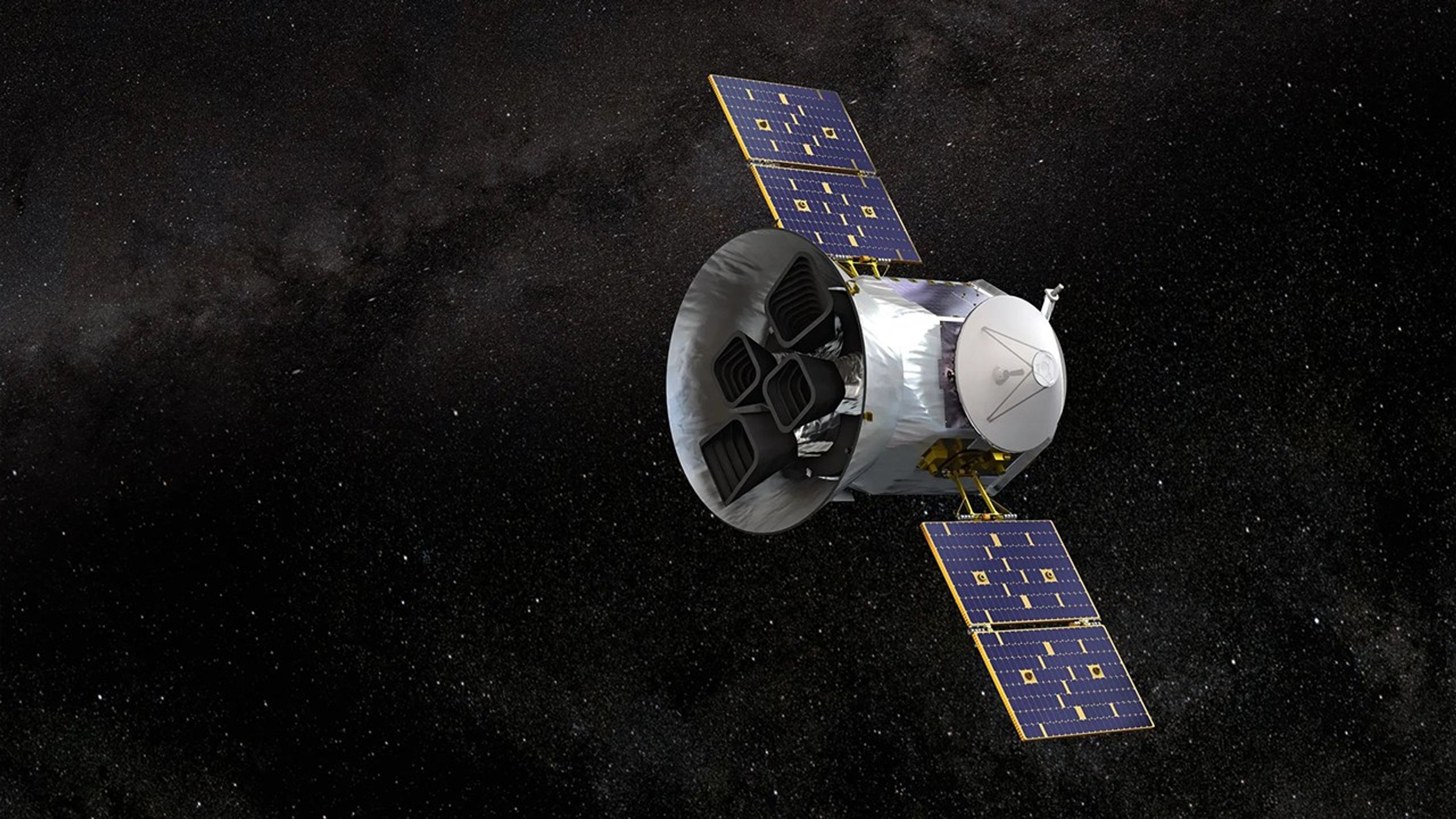
Artist's impression of NASA's Transiting Exoplanet Survey Satellite (TESS), a cylinder-shaped space telescope with two solar panels stretching out on opposite sides of the spacecraft body.
Artist’s impression of NASA’s Transiting Exoplanet Survey Satellite (TESS), which launched in 2018 and has discovered nearly 700 exoplanets so far. NASA’s ExoMiner++ software is working toward identifying more planets in TESS data using artificial intelligence.
NASA’s Goddard Space Flight Center

The new algorithm, which is discussed in a recent paper published in the Astronomical Journal, identified 7,000 targets as exoplanet candidates from TESS on an initial run. An exoplanet candidate is a signal that is likely to be a planet but requires follow-up observations from additional telescopes to confirm.

ExoMiner++ can be freely downloaded from GitHub, allowing any researcher to use the tool to hunt for planets in TESS’s growing public data archive.

“Open-source software like ExoMiner accelerates scientific discovery,” said Kevin Murphy, NASA’s chief science data officer at NASA Headquarters in Washington. “When researchers freely share the tools they’ve developed, it lets others replicate the results and dig deeper into the data, which is why open data and code are important pillars of gold-standard science.”

ExoMiner++ sifts through observations of possible transits to predict which ones are caused by exoplanets and which ones are caused by other astronomical events, such as eclipsing binary stars. “When you have hundreds of thousands of signals, like in this case, it’s the ideal place to deploy these deep learning technologies,” said Miguel Martinho, a KBR employee at NASA Ames who serves as the co-investigator for ExoMiner++.

This animation shows a graph of the tiny amount of dimming that takes place when a planet passes in front of its host star. NASA’s Kepler and TESS missions spot exoplanets by looking for these transits. ExoMiner++ uses artificial intelligence to help separate real planet transits from other, similar-looking astronomical phenomena.
NASA’s Goddard Space Flight Center

Kepler and TESS operate differently — TESS is surveying nearly the whole sky, mainly looking for planets transiting nearby stars, while Kepler looked at a small patch of sky more deeply than TESS. Despite these different observing strategies, the two missions produce compatible datasets, allowing ExoMiner++ to train on data from both telescopes and deliver strong results. “With not many resources, we can make a lot of returns,” said Hamed Valizadegan, the project lead for ExoMiner and a KBR employee at NASA Ames.

The next version of ExoMiner++ will improve the usefulness of the model and inform future exoplanet detection efforts. While ExoMiner++ can currently flag planet candidates when given a list of possible transit signals, the team is also working on giving the model the ability to identify the signals themselves from the raw data.

Open-source science and open-source software are why the exoplanet field is advancing as quickly as it is.

Jon Jenkins

Exoplanet Scientist, NASA Ames Research Center

In addition to the ongoing stream of data from TESS, future exoplanet-hunting missions will give ExoMiner users plenty more data to work with. NASA’s upcoming Nancy Grace Roman Space Telescope will capture tens of thousands of exoplanet transits — and, like TESS data, Roman data will be freely available in line with NASA’s commitment to Gold Standard Science and sharing data with the public. The advances made with the ExoMiner models could help hunt for exoplanets in Roman data, too.

“The open science initiative out of NASA is going to lead to not just better science, but also better software,” said Jon Jenkins, an exoplanet scientist at NASA Ames. “Open-source science and open-source software are why the exoplanet field is advancing as quickly as it is.”

NASA’s Office of the Chief Science Data Officer leads the open science efforts for the agency. Public sharing of scientific data, tools, research, and software maximizes the impact of NASA’s science missions. To learn more about NASA’s commitment to transparency and reproducibility of scientific research, visit science.nasa.gov/open-science. To get more stories about the impact of NASA’s science data delivered directly to your inbox, sign up for the NASA Open Science newsletter.

By Lauren Leese 
Web Content Strategist for the Office of the Chief Science Data Officer

NASA’s Pandora Satellite, CubeSats to Explore Exoplanets, Beyond

9 January 2026 at 09:40

6 min read

NASA’s Pandora Satellite, CubeSats to Explore Exoplanets, Beyond

Editor’s Note, Jan. 11, 2026: NASA’s Pandora and the NASA-sponsored BlackCAT and SPARCS missions lifted off at 8:44 a.m. EST (5:44 a.m. PST) Sunday, Jan. 11.

A new NASA spacecraft called Pandora is awaiting launch ahead of its journey to study the atmospheres of exoplanets, or worlds beyond our solar system, and their stars.

Along for the ride are two shoebox-sized satellites called BlackCAT (Black Hole Coded Aperture Telescope) and SPARCS (Star-Planet Activity Research CubeSat), as NASA innovates with ambitious science missions that take low-cost, creative approaches to answering questions like, “How does the universe work?” and “Are we alone?”

All three missions are set to launch Jan. 11 on a SpaceX Falcon 9 rocket from Space Launch Complex 4 East at Vandenberg Space Force Base in California. The launch window opens at 8:19 a.m. EST (5:19 a.m. PST). SpaceX will livestream the event.

The Pandora spacecraft with an exoplanet and two stars in the background
Artist’s concept of NASA’s Pandora mission, which will help scientists untangle the signals from the atmospheres of exoplanets — worlds beyond our solar system — and their stars.
NASA’s Goddard Space Flight Center/Conceptual Image Lab

“Pandora’s goal is to disentangle the atmospheric signals of planets and stars using visible and near-infrared light,” said Elisa Quintana, Pandora’s principal investigator at NASA’s Goddard Space Flight Center in Greenbelt, Maryland. “This information can help astronomers determine if detected elements and compounds are coming from the star or the planet — an important step as we search for signs of life in the cosmos.”

BlackCAT and SPARCS are small satellites that will study the transient, high-energy universe and the activity of low-mass stars, respectively.

Pandora will observe planets as they pass in front of their stars as seen from our perspective, events called transits.

As starlight passes through a planet’s atmosphere, it interacts with substances like water and oxygen that absorb characteristic wavelengths, adding their chemical fingerprints to the signal.

But while only a small fraction of the star’s light grazes the planet, telescopes also collect the rest of the light emitted by the star’s facing side. Stellar surfaces can sport brighter and darker regions that grow, shrink, and change position over time, suppressing or magnifying signals from planetary atmospheres. Adding a further complication, some of these areas may contain the same chemicals that astronomers hope to find in the planet’s atmosphere, such as water vapor.

All these factors make it difficult to be certain that important detected molecules come from the planet alone.

Pandora will help address this problem by providing in-depth study of at least 20 exoplanets and their host stars during its initial year. The satellite will look at each planet and its star 10 times, with each observation lasting a total of 24 hours. Many of these worlds are among the over 6,000 discovered by missions like NASA’s TESS (Transiting Exoplanet Survey Satellite).

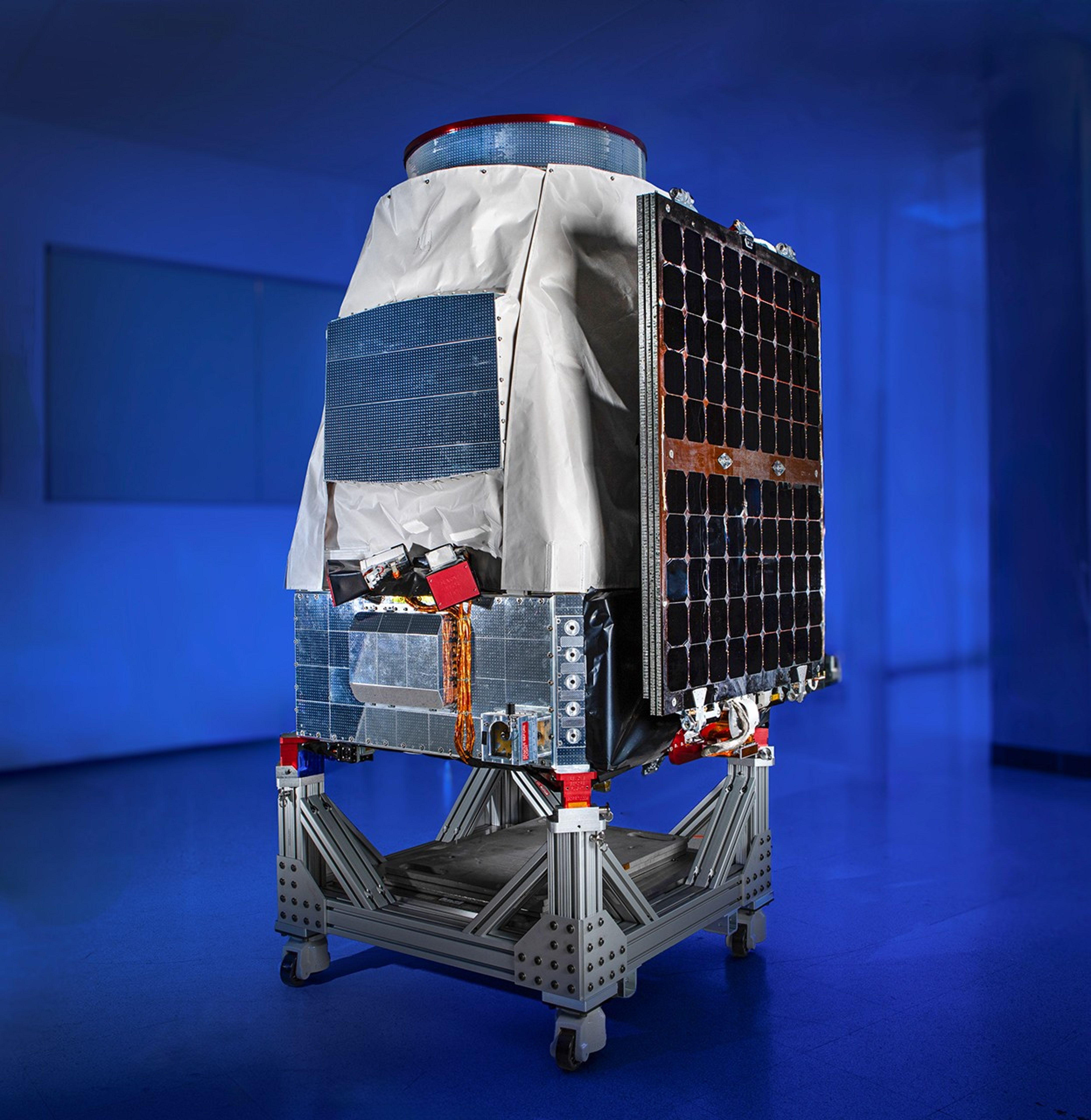
Pandora, fully integrated, with blue-lit background
This view of the fully integrated Pandora spacecraft was taken May 19, 2025, following the mission’s successful environmental test campaign at Blue Canyon Technologies in Lafayette, Colorado. Visible are star trackers (center), multilayer insulation blankets (white), the end of the telescope (top), and the solar panel (right) in its launch configuration.
NASA/BCT

Pandora will collect visible and near-infrared light using a novel, all-aluminum 17-inch-wide (45-centimeter) telescope jointly developed by Lawrence Livermore National Laboratory in California and Corning Incorporated in Keene, New Hampshire. Pandora’s near-infrared detector is a spare developed for NASA’s James Webb Space Telescope.

Each long observation period will capture a star’s light both before and during a transit and help determine how stellar surface features impact measurements.

“These intense studies of individual systems are difficult to schedule on high-demand missions, like Webb,” said engineer Jordan Karburn, Pandora’s deputy project manager at Livermore. “You also need the simultaneous multiwavelength measurements to pick out the star’s signal from the planet’s. The long stares with both detectors are critical for tracing the exact origins of elements and compounds scientists consider indicators of potential habitability.”

Pandora is the first satellite to launch in the agency’s Astrophysics Pioneers program, which seeks to do compelling astrophysics at a lower cost while training the next generation of leaders in space science.

After launching into low Earth orbit, Pandora will undergo a month of commissioning before embarking on its one-year prime mission. All the mission’s data will be publicly available.

“The Pandora mission is a bold new chapter in exoplanet exploration,” said Daniel Apai, an astronomy and planetary science professor at the University of Arizona in Tucson where the mission’s operations center resides. “It is the first space telescope built specifically to study, in detail, starlight filtered through exoplanet atmospheres. Pandora’s data will help scientists interpret observations from past and current missions like NASA’s Kepler and Webb space telescopes. And it will guide future projects in their search for habitable worlds.”

Watch to learn more about NASA’s Pandora mission, which will revolutionize the study of exoplanet atmospheres.
NASA’s Goddard Space Flight Center

The BlackCAT and SPARCS missions will take off alongside Pandora through NASA’s Astrophysics CubeSat program, the latter supported by the Agency’s CubeSat Launch Initiative.

CubeSats are a class of nanosatellites that come in sizes that are multiples of a standard cube measuring 3.9 inches (10 centimeters) across. Both BlackCAT and SPARCS are 11.8 by 7.8 by 3.9 inches (30 by 20 by 10 centimeters). CubeSats are designed to provide cost-effective access to space to test new technologies and educate early career scientists and engineers while delivering compelling science.

The BlackCAT mission will use a wide-field telescope and a novel type of X-ray detector to study powerful cosmic explosions like gamma-ray bursts, particularly those from the early universe, and other fleeting cosmic events. It will join NASA’s network of missions that watch for these changes. Abe Falcone at Pennsylvania State University in University Park, where the satellite was designed and built, leads the mission with contributions from Los Alamos National Laboratory in New Mexico. Kongsberg NanoAvionics US provided the spacecraft bus.

The SPARCS CubeSat will monitor flares and other activity from low-mass stars using ultraviolet light to determine how they affect the space environment around orbiting planets. Evgenya Shkolnik at Arizona State University in Tempe leads the mission with participation from NASA’s Jet Propulsion Laboratory in Southern California. In addition to providing science support, JPL developed the ultraviolet detectors and the associated electronics. Blue Canyon Technologies fabricated the spacecraft bus.

Pandora is led by NASA Goddard. Livermore provides the mission’s project management and engineering. Pandora’s telescope was manufactured by Corning and developed collaboratively with Livermore, which also developed the imaging detector assemblies, the mission’s control electronics, and all supporting thermal and mechanical subsystems. The near-infrared sensor was provided by NASA Goddard. Blue Canyon Technologies provided the bus and performed spacecraft assembly, integration, and environmental testing. NASA’s Ames Research Center in California’s Silicon Valley will perform the mission’s data processing. Pandora’s mission operations center is located at the University of Arizona, and a host of additional universities support the science team.

By Jeanette Kazmierczak
NASA’s Goddard Space Flight Center, Greenbelt, Md.

Media Contact:
Claire Andreoli
301-286-1940
NASA’s Goddard Space Flight Center, Greenbelt, Md.

Facebook logo
Instagram logo
❌
❌