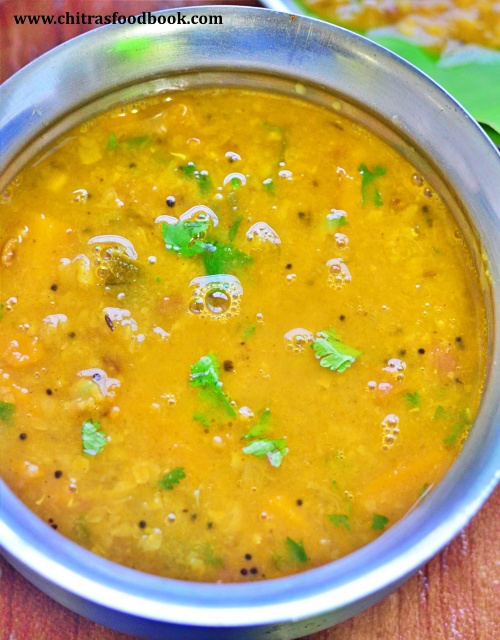
Coconut sambar is a simple delicious and comforting sambar made with cooked dal, a mix of vegetables, fresh coconut paste and a flavourful tempering. The addition of coconut gives the sambar a creamy, rich texture and a mild sweetness. This sambar perfectly pairs with tiffin items like idli, dosai, pongal, medu vadai or can be...
Varutharacha Sambar is a classic Kerala-style lentil dish made with a freshly roasted coconut-spice paste and a mix of vegetables. It is hearty, wholesome, and full of flavor, and a star dish in the Onam Sadya. What is Varutharacha Sambar? Varutharacha Sambar is a traditional Kerala lentil-based side dish made with a freshly roasted and...
Millet sambar rice is a wholesome and flavorful south Indian one pot meal that combines the goodness of barnyard millet and yellow moongdal with variety of fresh vegetables, aromatic spices and tamarind. This dish is packed with nutrients and the recipe is healthier twist on traditional sambar rice which replaces white rice with millet for...
Raw mangoes mark the beginning of summer and the pickling season. Apart from making pickles ,raw mangoes can be used in a variety of recipes in our day to day cooking.
The sourness, tartness and a mild hint of sweetness adds up a lot of flavor profile to the recipe. Earlier we had to wait for summer to get good Raw mangoes, but now with so much improvement in cold storage facilities, we do get good Raw mangoes all through the year .
The current situation in Indian markets,is the cost of tomatoes which are sky high and we have to use them sparingly . In these times,Raw mango sambar has come to my rescue. Raw mangoes are a perfect work around for tomatoes.
Depending on the tartness/sourness in the raw mango we can adjust the usage of tamarind pulp. Most of the times we don't need to use tamarind as the sourness from the mango balances the flavors well .
I use some vegetables like pumpkin and capsicums in my sambar recipe because we like to have lots of veggies in the sambar . You can also use carrots ,drumsticks ,Brinjals as well in this same recipe.
Piping hot sambar mixed in rice with a dollop of ghee is just out of the world . Pair this sambar with a coconut based vegetable stir fry and serve along with some papads to enjoy a wonderful lunch experience.
In our Facebook gourmet food group Shh Cooking Secretly!!! , we are sharing Mango based recipes for the month of June .
Anu Kollon who hosted the theme, suggested we use mango in any form, either raw or ripe in our recipe. I have used raw mango as the star ingredient while my partner Narmadha has made Mango Popsicles using ripe mango .
If you are looking to exploring some lipsmacking recipes using raw mango ,you must definitely check out my list below .
Preparation Time - 15 mins Cooking Time - 20 to 25 mins Complexity - Simple Serves - 3 to 4
Ingredients
100 gms pumpkin
1 medium sized capsicum/green bell pepper
1 medium sized raw mango
3 tbsp sambar powder
3/4 cup thoor dall /pigeon peas
Pinch of turmeric
Salt as needed
2 tsp oil
1/2 tsp mustard seeds
Fresh curry leaves
1/2 tsp jaggery powder
Fresh corriander chopped
Pinch of asafoetida
Method
Chop the capsicum,pumpkin and mango into medium sized cubes .
Add 3/4 cup water ,Pinch of salt and cook the vegetables until they are well cooked. The vegetables must be firm ,yet well cooked . Donot keep stirring with the ladle,they will become mushy.
Meanwhile ,wash the thoor dhall well and pressure cook it with turmeric for 4 to 5 whistles with sufficient water. Release the pressure naturally and mash it well using a whisk or hand blender . The dhall must be soft and mushy.
Once the vegetables are well cooked, add the sambar powder ,jaggery ,some more salt and bring it to a rolling boil.
Slowly add in the cooked thoor dhall, adjust the consistency of sambar by adding some water if needed and let it come to a boil . You can add some sambar powder if you feel the spice is less.
Prepare a tempering of mustard seeds,asafoetida and curry leaves in hot oil and pour it over the sambar .
Garnish with fresh corriander and turn off the stove.
The highlight of today’s lunch box recipe idea features healthy millet mini idlis, boiled sweet potato, and manually processed toor dal. The mini idlis I’ve packed are made from no rice Barnyard Millet Idlis, containing 100% millet and urad dal. Also for snack I packed the store bought baked cheetos. Sweet Potato The variety originating...
Today, I am going to share a South Indian breakfast menu Idea or Pongal breakfast Menu idea. After a break of 1 and 1/4 years from blogging, I am sharing a Pongal-relevant post that is close to my heart. Pongal Festival In South India, on Pongal day, which falls in mid-January, i.e., on the first...
Idli batter is prepared with idli rice and urad dal. In south India, vegetarian recipes index without idli dosa with sambar is incomplete. Idli recipe and dosa recipe has very important place in South India . IR 20 rice variety or vellaikar rice are best rice for idli. soft idli recipe goes well with coconut chutney, sambar, Kara chutney and tomato chutney
Idli ingredients:
Idly rice (vellaikar rice) – 1 kilogram
Ponni rice – ½ kilogram
Black Urad dal – 175 gram
White urad dal – 75 gram
Fenugreek seeds – 2 spoons
Water to soak and grind idly batter
Steps to grinding idli batter/ making batter :
To Begin soak idli rice in a bowl for minimum 4 hours
Soak white and black urad dal separately for 4 hours (add fenugreeks seeds in last 15 minutes).
After 4 hours, wash white urad dal two times and keep it aside.
Mean while take a black urad dal then remove black part of the urad dal and keep it a side.
Now put both urad dal in to grinder (table top grinder is best grinder for dosa batter preparation), and then grind up to 20 to 30 minutes till urad dal become fluffy.
At middle interval add ice cubes instead of water in urad dal, it will increase quantity of urad dal and reduce grinding heat.
Take a idli batter container and pour urad dal batter, and then pour washed rice in grinder and grind up to light semi coarse consistency by adding little amount of water(should not add too much water. consistency should be light thick).
Next mix urad dal batter and rice batter with required salt and ferment up to minimum 10 hours.
Once fermentation completed mix again and well and keep it a side.
The perfect batter is ready to make soft and spongy idllies.
idli batter proportion : vellaikar rice 1 Kg + Ponni rice 500 gram : Black urad dal 175 Gram + White urad dal 75 Gram.
Tips:
idli sambar recipe with chutney is very popular Indian break fast recipe
Are idli and dosa batter same :To make dosa batter recipe add little amount of water and make dosa. (Don’t add too much water; it will be semi flowing consistency)
If you want dosa very crispy means add 1:1 ratio of ponni rice and ration rice.
Otherwise you can also use aval (Flattened rice) for making dosa as crispy. (Probably 1 cup of aval)
some people preparing idli dosa batter recipe with mixie
Frequently asked questions:
how long should idli batter ferment: The dough prepared for making idli rises when kept overnight because of the production of carbon dioxide gas in it. This gas is produced as a byproduct of process of fermentation (anaerobic respiration/respiration in absence of oxygen) in batter of black lentils or rice which is used to cook idli.
what to do if idli batter is not fermented: You can leave it for couple more hours in the open. Mix the batter and leave it in a warm place.
Jack Fruit Seeds have been in use in Indian kitchens since time immemorial , much before researchers found out about their nutritive value and health benefits . My brother's home grown Jack Fruit does not need the customary honey dip since the fruit itself tastes as sweet as honey ! Like always we enjoyed the luscious fruit and collected and saved up all the seeds for future use during this season as well.
A spicy Sambar with Jack Fruit Seeds and Yellow Cucumber (Golden Cucumber also known as Kani Vellari in Malayalam) with steaming hot rice is the perfect food to enjoy on a cold and rainy day !
The outer shells of the Jack Fruit seeds crack open when they are sun dried . They can be easily peeled and cooked along with dal . Or they can be cooked with the shell , peeled and then added to the sambar.
INGREDIENTS
Jack Fruit Seeds - 10 to12
Yellow Cucumber - 1 small (Peeled and cubed)
Tamarind - 1 lemon size ball
Salt - 1 1/2 tsps
Tur Dal - 1/2 cup
Turmeric powder - 1/ 4 tsp
Curry leaves - a few
INGREDIENTS FOR ROASTING AND GRINDING
Coriander seeds - 1 tbsp
Bengal gram dal - 1 tbsp
Red Chillies - 8 ( broken)
Fenugreek seeds - 1/4 tsp
Asafoetida - 1 pinch
Grated coconut - 2 tbsps
Sesame oil - 1 tsp
MAKING THE SPICE POWDER
1. Heat half tea spoon of oil in a kadai and roast coriander seeds, Bengal gram dal, fenugreek seeds, and red chillies together till it emanates a pleasant aroma. Add asafoetida and roast for another minute.
2. Switch off flame and add the fresh coconut gratings and roast in the still hot kadai .
3. Allow to cool and grind the roasted ingredients into a smooth powder .
TO MAKE THE SAMBAR
1. Pressure cook the dal adding 1 1/2 cups of water and turmeric powder.
2. Place a plate with Jack Fruit seeds on top of the dal container so that they get cooked simultaneously.
3. Mash the cooked dal and keep aside . Peel the shells of the Jack Fruit seeds and keep aside.
4. Soak tamarind in warm water and extract the juice adding two glasses of water.
5. Add salt and cook the cucumber cubes in tamarind juice.
6. When the cucumber cubes are soft add the mashed dal and the cooked and peeled Jack Fruit seeds.
7. Mix the ground spice powder with little water and stir into the boiling sambar.
8. Stir and cook till the spice blends well with dal emanating a pleasant aroma.
9. Heat the remaining oil in a seasoning ladle and splutter the curry leaves, and pour it on the sambar .
Enjoy the Palakottai and Kani Vellari Sambar with steaming hot rice topped with a spoon of fresh ghee!
Sambar is a staple side dish for idli, dosa, pongal and other tiffin varieties in South India. It’s difficult to resist its aromatic flavours. I like to add vegetables into it to enhance its nutritional value. In this blog, I will be showing you how to prepare one-pot sambar usingPrestige Svachh Triply Outer Lid Pressure Cooker. This pressure cooker makes the cooking process hassle-free as it has an innovative Deep Lid that controls the spillage of starchy water.
This one-pot recipe is suitable for bachelors and working women as they can prepare it easily during the busy morning hours. You can prepare it within 10 minutes by adding simple ingredients like onions, tomato, carrots, and beans. I have been using this Prestige Svachh stainless steel pressure cooker for the past two years. It has a Unique Deep Stainless Steel Lid designed to prevent froth from flowing down the pressure cooker.
This cooker also has a Revolutionary Pressure Indicator that acts as a locking device. It cannot be opened if the pressure inside the cooker is too high. On most days, I do pot-in-pot cooking by placing a small vessel with chopped vegetables over the dal to prepare both the dishes simultaneously. Its both time and fuel saving for me.
Friends, do try this easy and simple one pot, pressure cooker sambar and enjoy with Idli, dosa, pongal and other tiffin varieties.
One pot idli sambar - Pressure cooker idli sambar recipe
One pot idli sambar - Pressure cooker idli sambar recipe
Heat oil in Prestige pressure cooker. Splutter mustard seeds, methi seeds, curry leaves, red chilli and hing.
Lower the flame completely. Add turmeric, red chilli powder, coriander powder and sambar powder. Mix quickly.
Add chopped onion, chopped carrot, beans and mix quickly. Add washed toor dal. Add required water, jaggery and salt. Lastly add one whole tomato.
Cover the lid and pressure cook in low flame for 2 whistles. Open the cooker after the steam is released.
Mash the dal well. Boil for a minute if sambar is watery. Garnish with coriander leaves and add a tsp of ghee.
Serve with Idli, dosa and pongal.
METHOD - STEP BY STEP PICTURES
Heat oil in a pressure cooker. Splutter mustard seeds, methi seeds, curry leaves, red chilli and hing.
Lower the flame completely and add turmeric powder, red chilli powder, coriander powder and sambar powder. Mix quickly.
Add chopped onion, vegetables and saute quickly. Add washed toor dal, salt, jaggery and required water. Lastly add one whole tomato. Do not cut the tomato because it will prevent the dal turning mushy.
Pressure cook in low flame for one to two whistles. Open the lid after the steam is released. Mash the dal first and then the tomato. Mix everything together.
Boil for few minutes if the sambar is watery. If its too thick, add little water to adjust the consistency. Lastly garnish with finely chopped coriander leaves and a tsp of ghee. Serve with hot idli, dosa and pongal. Enjoy !
Note
Adjust the quantity of spices as per your taste.
You can use moong dal instead of toor dal.
You can dilute 1 tsp of besan flour in 1/4 cup water and add to pressure cooker along with dal.
Make sure you don’t burn the masala powders. It will spoil the taste of sambar. So keep the flame low or switch off the flame after tempering and then add the spice powders.
Try this easy, healthy one pot idli sambar. You will love it.
Kumbakonam Kadappa is a traditional recipe from the region of Tanjore. It is a flavourful and delicious side dish that goes well with idli, dosa, poori, and chapati. Kadappa is mainly made of moong dal and potato as the base ingredient.
In most South Indian restaurants, breakfast is served with sambar, chutney, and podi as the accompaniment. But in Kumbakonam, in most restaurants and hotels, breakfast is served with this kadappa. The preparation of this kadappa is precisely like the potato kurma we prepare, with the added flavor of moong dal.
If you have boiled moong dal and potato, you can make this recipe in just 15 mins. Kadappa is neither sambar nor kurma. It is a combination of both, as it uses both dal and ground coconut paste. If you want this to be served with idli and dosa, keep the kadappa watery consistency. If you want this to be served with poori or chapati, the gravy should be thick. Now let us see how to prepare this recipe.
Enjoy the video of Kumbakonam Kadappa. Subscribe for more videos.
Kumbakonam Kadappa Recipe | Idli Dosa Poori Chapati Side Dish
Kumbakonam kadappa is a delicious side dish for breakfast.
Dry roast moong dal in a pan until it turns aromatic and golden brown. Wash it thoroughly, transfer it to a pressure cooker, and add enough water. Along with this, add a medium size potato and pressure cook it for three whistles.
Once done, mash the moong dal and set it aside. Mash the potato into chunks. Please do not make it into a paste. Set it aside.
Add all the ingredients under "To grind" in a mixer. Add water and grind to a smooth paste.
Heat a pan and add oil. Once the oil gets heated, add cinnamon sticks, cloves, and fennel seeds and let it crackle.
Now add onion and curry leaves. Saute until the onion turns translucent. Then add tomatoes and a little salt. Saute until tomatoes turn mushy.
Now add turmeric powder and saute for a min. Add ground coconut paste, adjust the water consistency, and add mashed moong dal and salt. Close the lid and cook for 10-15 mins.
Then mash and add the potatoes. Keep the potatoes a little bit chunky. Please do not make it to a smooth paste. Now cook the kurma for another 5 mins.
For idli and dosa, keep kadappa slightly watery. For poori and chapathi, keep kadappa thick consistency. Once done, garnish with coriander leaves. Serve hot with idli or dosa.
Recipe Notes
Use only the specified amount of masala while grinding coconut, or it will overpower the taste of kadappa.
We use only green chilies in this kadappa. So increase or decrease green chilies according to your taste.
This kadappa goes well with idli, dosa, poori, and chapathi.
Delicious Kumbakonam kadappa is ready to relish.
If you found this post useful, I would love it if you pin it or share it with your Facebook fans, Twitter followers, or Google+ circles today. All it takes is a simple click on the “pin it,” “like,” “share,” “tweet,” or Google+ buttons below the post. It will keep me motivated. Thank you!

 Login
Login