
 Login
Login
NASA Works with Boeing, Other Collaborators Toward More Efficient Global Flights
3 min read
Preparations for Next Moonwalk Simulations Underway (and Underwater)
Picture this: You’re just about done with a transoceanic flight, and the tracker in your seat-back screen shows you approaching your destination airport. And then … you notice your plane is moving away. Pretty far away. You approach again and again, only to realize you’re on a long, circling loop that can last an hour or more before you land.
If this sounds familiar, there’s a good chance the delay was caused by issues with trajectory prediction. Your plane changed its course, perhaps altering its altitude or path to avoid weather or turbulence, and as a result its predicted arrival time was thrown off.
“Often, if there’s a change in your trajectory – you’re arriving slightly early, you’re arriving slightly late – you can get stuck in this really long, rotational holding pattern,” said Shivanjli Sharma, NASA’s Air Traffic Management–eXploration (ATM-X) project manager and the agency’s Ames Research Center in California’s Silicon Valley.
This inconvenience to travelers is also an economic and efficiency challenge for the aviation sector, which is why NASA has worked for years to study the issue, and recently teamed with Boeing to conduct real-time tests an advanced system that shares trajectory data between an aircraft and its support systems.
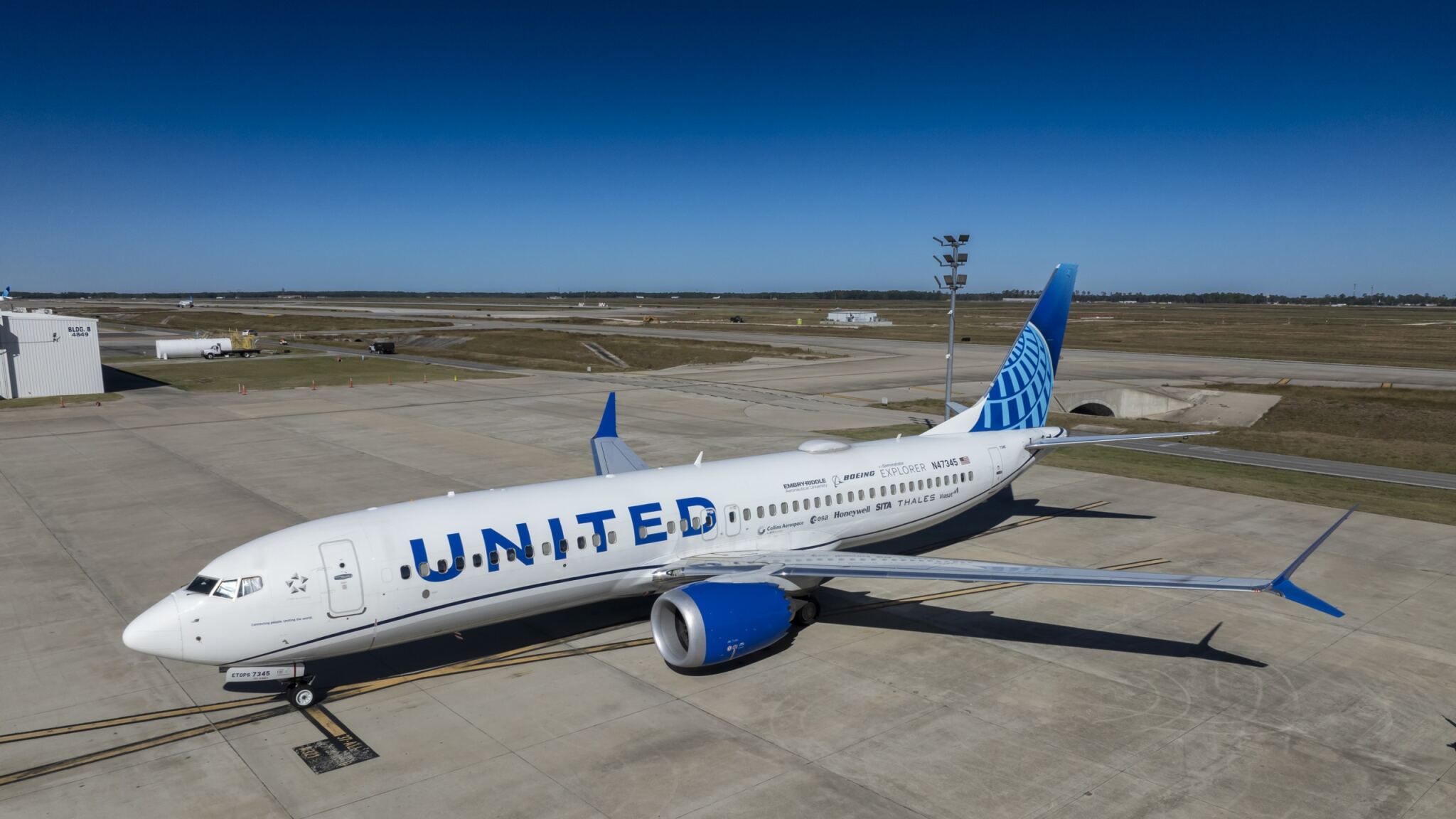
Boeing began flying a United Airlines 737 for about two weeks in October testing a data communication system designed to improve information flow between the flight deck, air traffic control, and airline operation centers. The work involved several domestic flights based in Houston, as well as flight over the Atlantic to Edinburgh, Scotland.
This partnership has allowed NASA to further its commitment to transformational aviation research.

Shivanjli sharma
NASA's Air Traffic Management—eXploration project manager
The testing was Boeing’s most recent ecoDemonstrator Explorer program, through which the company works with public and private partners to accelerate aviation innovations. This year’s ecoDemonstrator flight partners included NASA, the Federal Aviation Administration, United Airlines, and several aerospace companies as well as academic and government researchers.
NASA’s work in the testing involved the development of an oceanic trajectory prediction service – a system for sharing and updating trajectory information, even over a long, transoceanic flight that involves crossing over from U.S. air traffic systems into those of another country. The collaboration allowed NASA to get a more accurate look at what’s required to reduce gaps in data sharing.
“At what rate do you need these updates in an oceanic environment?” Sharma said. “What information do you need from the aircraft? Having the most accurate trajectory information will allow aircraft to move more efficiently around the globe.”
Boeing and the ecoDemonstrator collaborators plan to use the flight data to move the data communication system toward operational service. The work has allowed NASA to continue its work to improve trajectory prediction, and through its connection with partners, put its research into practical use as quickly as possible.
“This partnership has allowed NASA to further its commitment to transformational aviation research,” Sharma said. “Bringing our expertise in trajectory prediction together with the contributions of so many innovative partners contributes to global aviation efficiency that will yield real benefits for travelers and industry.”
NASA ATM-X’s part in the collaboration falls under the agency’s Airspace Operations and Safety Program, which works to enable safe, efficient aviation transportation operations that benefit the flying public and industry. The work is supported through NASA’s Aeronautics Research Mission Directorate.
