Normal view

There are new articles available, click to refresh the page.
Before yesterdayMain stream

Pineapple Pulissery Recipe

30 October 2025 at 20:24

Pineapple Pulissery is a Kerala style curry made with pineapple, coconut, curd and some basic spices. It is a simple side dish which has a nice mix of flavors that taste rich and refreshing at same time. The sweet taste of pineapple, the sour of the curd and little spice all comes together so nicely in this dish. Pulissery can be enjoyed as such or with rice meal and is simple to make.

pineapple pulissery served

This dish is something that makes you feel homely with every spoon. The coconut paste gives creamy texture and the curd makes it mild and cool. The smell of coconut oil and curry leaves at the end just fills the kitchen with nice aroma. Even if you don't like sweet curries, this one somehow you will enjoy as it is balanced well.

[feast_advanced_jump_to]

About Pineapple Pulissery

Pineapple Pulissery or Kaithachakka Pulissery is one of the classic Kerala dishes made with ripe pineapple cooked in curd and coconut base. It is a must in Onam Sadhya, but also made on normal days when pineapple is available. The curry tastes sweet, sour and little spicy all at once making it taste unique and good.

The texture is smooth and slightly thick, with soft pineapple bits here and there. The coconut paste gives rich body while the curd add a little tang. When you add the final tempering of mustard, red chilli and curry leaves in coconut oil, the flavor lifts so much and smell very nice.

There are many small changes people do in this dish. Some add a pinch of sugar, some grind coconut coarse for grainy texture, and some make it very smooth. Pineapple can be replaced with ripe mango or raw banana also for same style curry. But for me, this pineapple pulissery always stands out because of that sweet aroma it gives while cooking.

I usually make Pineapple Pulissery when fresh pineapple is available in the market. The color itself makes the meal look bright. Sometimes I serve it cold, it tastes even better after some resting time . When I make sadya style lunch at home, this one is always there on the menu.

pineapple pulissery served

Pineapple Pulissery Ingredients

  • Pineapple - I used ripe pineapple chopped into small cubes. It gives sweetness and fruity smell to the curry. You can use semi-ripe one also if you like less sweet taste.
  • Thick curd - I have used fresh thick curd for creamy base and little sourness. If curd is too sour, you can mix some water to balance.
  • Turmeric powder - It adds that bright yellow color. I always add pinch just for color and mild taste.
  • Small onion - I used small onions for frying, they add small crunch and nice flavor. If you do not have, regular onion works too.
  • Red chilli powder - For mild spice and color, I added little only. You can adjust if you want more heat.
  • Fresh grated coconut - I used fresh one, but frozen coconut also fine. It gives body and smoothness to the dish.
  • Green chili - Adds heat and freshness, gives good balance for sweet pineapple.
  • Jeera (Cumin) - I add little jeera for nice earthy aroma, it blends all the tastse so well together.
  • Garlic - I use just one small clove, it gives mild flavor and smell. You can skip if you not like.
  • Coconut oil - I always use coconut oil for frying and tempering, it gives that strong Kerala flavor which completes the dish.
  • Mustard seeds - I added few mustard seeds for small crunch and nutty taste when it splutters in hot oil.
  • Fenugreek seeds - I add very little, it gives that mild bitter hint that matches so well with sweet pineapple flavor.
  • Red chilli - I put one or two for light spice and color, fry till it turn slightly dark only.
  • Curry leaves - I love to finish with few fresh curry leaves, it gives that special aroma and nice finish to the dish.

Why This Recipe Works

  • This recipe gives nice balance between sweet, tangy and light spicy flavor.
  • Pineapple adds natural sweetness, so no need for extra sugar.
  • It is quick to make and uses all simple ingredients available easily.
  • The curd and coconut makes the curry rich, smooth and cooling.
  • It is a festive style dish but still easy enough for regular meal also.

Similar Recipes

How to make Pineapple Pulissery Step by Step

1.Clean pineapple trim the edges, scrap the sides and cut into half. Take one half, slice them thin.

how to make pineapple pulissery step1

2.Chop pineapple into small cubes. Take it in a pan along with salt, turmeric powder, red chili powder and 1 cup water.

how to make pineapple pulissery step2

3.Cook covered in the pan until they are slightly soft but not too mushy, Set aside. Remember they will be cooking again in coconut mixture so half cook it that is enough.

how to make pineapple pulissery step3

4.In a mixer jar add the ingredients listed under 'to grind', add little water and grind it to a smooth paste. Now add this coconut mixture to cooked pineapple.

how to make pineapple pulissery step4

5.Cook for few minutes until raw smell leaves may be for 3-5 minutes.

how to make pineapple pulissery step5

6.Give a pulse to the curd to make it smooth and creamy, you can just whisk it too. Now add this pineapple coconut mixture.

how to make pineapple pulissery step6

7.Bring it a boil in sim or when it starts to boil switch off else there are chances for curdling. Now in a tadka pan heat oil, add onions and fry until brown, Set aside.

how to make pineapple pulissery step7

8.In the same pan add the items listed under 'to temper' let it splutter. Add the fried onions and tadka to the curry, Mix well.

how to make pineapple pulissery step8

Garnish with fried onions and Serve chilled as a side dish.

Expert Tips

  • Beating curd - Always beat curd until smooth before adding, it helps mixing evenly and avoid splitting when hot.
  • Cooling step - Better cool down mixture little before adding curd, or just keep flame very low, else it may curdle.
  • Consistency - The pulissery should not be watery or too thick, I keep it semi thick like flowing texture.
  • Oil flavor - I always prefer coconut oil, it gives perfect smell and authentic Kerala touch. Other oil make it little flat.
  • Pineapple cook - Don't overcook pineapple, it should be soft but not mashed, else the curry loses its texture.

Serving and Storage

Serve Pineapple Pulissery with hot rice, pappadam and any spicy side curry. It taste sbest when served slightly cold also.

Keep leftover in fridge and use within one day. Mix once before serving again, you can add little water if it thickens after cooling.

FAQS

1.Can I skip coconut?

You can skip, but coconut gives main texture and flavor, without it the curry will feel thin and plain.

2.Can I make this with mango?

Yes, ripe mango also taste very nice in same recipe, just reduce chilli a bit.

3.Why curd getting split sometimes?

If you add curd when mixture too hot, it will split. Always cool it down slightly before adding.

4.Can I use store curd?

Yes can use, but beat it once to make smooth. Homemade curd also work very good.

5.Is Pineapple Pulissery sweet or spicy?

It is mostly sweet and tangy with very mild spice, not hot type curry.

pineapple pulissery served

If you have any more questions about this Pineapple Pulissery Recipe do mail me at sharmispassions@gmail.com. In addition, follow me on InstagramFacebookPinterest ,Youtube and Twitter .

Tried this Pineapple Pulissery Recipe? Do let me know how you liked it. Also tag us on Instagram @sharmispassions and hash tag it on #sharmispassions.

📖 Recipe Card

28896411214 5d6c7ec5ba o
Print

Pineapple Pulissery Recipe

Pineapple Pulissery is a Kerala style curry made with pineapple, coconut, curd and some basic spices. It is a simple side dish which has a nice mix of flavors that taste rich and refreshing at same time. The sweet taste of pineapple, the sour of the curd and little spice all comes together so nicely in this dish. Pulissery can be enjoyed as such or with rice meal and is simple to make.
Course Side Dish
Cuisine Indian
Keyword 30 mins recipes, curry, curry recipes, Kerala Meal Sidedish, lunch recipes, Side Dish, veg recipes, vegetable
Prep Time 10 minutes
Cook Time 20 minutes
Total Time 30 minutes
Servings 3
Calories 141kcal
Author Sharmilee J

Ingredients

TO GRIND TO A PASTE:

  • 3 tablespoon coconut fresh & grated
  • 1 green chilli chopped roughly
  • ¼ teaspoon jeera
  • 1 garlic

TO TEMPER:

  • 1 teaspoon coconut oil
  • ½ teaspoon mustard seeds
  • ¼ teaspoon fenugreek seeds
  • 2 small red chilli
  • 1 small sprig curry leaves

Instructions

  • Clean pineapple trim the edges, scrap the sides and cut into half. Take one half, slice them thin.
  • Chop pineapple into small cubes.
  • Take it in a pan along with salt, turmeric powder, red chilli powder and 1 cup water.
  • Cook covered in the pan until they are slightly soft but not too mushy. Set aside.
  • Remember they will be cooking again in coconut mixture so half cook it thats enough.
  • In a mixer jar add the ingredients listed under 'to grind', add little water and grind it to a smooth paste.
  • Now add this coconut mixture to cooked pineapple.
  • Cook for few mins until raw smell leaves may be for 3-5mins.
  • Give a pulse to the curd to make it smooth and creamy, you can just whisk it too.
  • Now add this pineapple coconut mixture.
  • Bring it a boil in sim or when it starts to boil switch off else there are chances for curdling.
  • Now in a tadka pan heat oil, add onions and fry until brown. Set aside.
  • In the same pan add the items listed under ' to temper' let it splutter.
  • Add the fried onions and tadka to the curry. Mix well.
  • Garnish with fried onions and Serve chilled as a side dish.

Notes

  • Beating curd - Always beat curd until smooth before adding, it helps mixing evenly and avoid splitting when hot.
  • Cooling step - Better cool down mixture little before adding curd, or just keep flame very low, else it may curdle.
  • Consistency - The pulissery should not be watery or too thick, I keep it semi thick like flowing texture.
  • Oil flavor - I always prefer coconut oil, it gives perfect smell and authentic Kerala touch. Other oil make it little flat.
  • Pineapple cook - Don't overcook pineapple, it should be soft but not mashed, else the curry loses its texture.

Nutrition

Serving: 75g | Calories: 141kcal | Carbohydrates: 19g | Protein: 5g | Fat: 6g | Saturated Fat: 4g | Polyunsaturated Fat: 0.3g | Monounsaturated Fat: 1g | Cholesterol: 11mg | Sodium: 99mg | Potassium: 364mg | Fiber: 3g | Sugar: 13g | Vitamin A: 500IU | Vitamin C: 74mg | Calcium: 124mg | Iron: 1mg

The post Pineapple Pulissery Recipe appeared first on Sharmis Passions.

Chena Vanpayar Erissery Recipe

29 October 2025 at 21:30

Chenna Vanpayar Erissery is a quite popular Kerala dish made often during special days. It's a rich curry made with vegetables, coconut and few spices. The mix of yam and cowpeas gives taste keeps you full for longer. It goes well with plain rice and papadam, feels so comforting to eat.

chena vanpayar erissery served

This erissery has mild flavor from coconut and roasted coconut on top gives lovely taste. It is not spicy or rich, just mild and homely food. It is one dish that everyone in the family can enjoy as it is light on stomach too. I like to make this with yam and cowpeas together, but it can also be made with pumpkin or raw banana.

[feast_advanced_jump_to]

About Chena Vanpayar Erissery

Chena Vanpayar Erissery is one of the traditional Kerala side dishes that is made during festivals and regular days also. It is a mix of cooked vegetables and legumes combined with coconut paste and tempered with coconut oil. The texture comes out slightly thick and creamy with small pieces of yam and soft cowpeas here and there.

There are many versions of erissery in Kerala homes. You can make it with pumpkin only, either with raw banana or even mix vegetables. You can add extra cowpeas for protein. It's not spicy at all, just simple and very comforting. The taste is mild with earthy flavor from yam and creamy touch from coconut.

Chena Vanpayar Eriserry is  one of the popular eriserry recipes which is included in Onam Sadya. Usually I don't like veggies when combined with other veggies but Kerala dishes changed my taste I should say, now I have started liking combination veggies more.  

You can make the coconut paste by grinding coconut, jeera, onion, garlic and green chili. Roasted coconut gives nice nutty flavor and make the dish smell really good. It should be semi fine, not very smooth. The slight texture of coconut is what gives erissery its special taste. It blends well with the mashed yam and cooked cowpeas.

I make erissery often with rice and papadam for lunch. It pairs so well with simple side dishes like thoran or even just plain pickle. The roasted coconut on top is the highlight, I always add extra for that nice crunch.

chena vanpayar erissery served

Chena Vanpayar Erissery Ingredients

  • Chena (Yam) - I have used elephant yam, peeled and chopped into small cubes. It gives nice earthy taste and soft texture when cooked. Better to grease hands with little oil before cutting to avoid itching.
  • Cowpeas (Vanpayar / Thattapayir) - I soaked and pressure cooked till it turn soft. It adds protein and give a chewy bite to the dish.
  • Coconut (Grated) - I used in both ground paste and roasted form. It gives body to curry and add rich flavor that makes it more tasty.
  • Jeera (Cumin Seeds) - I have added little jeera while grinding the coconut mix, it gives mild aroma and balance the sweetness of coconut. Without it, paste feel bit plain.
  • Green Chilli - I add few for slight spice, not too much, just enough to bring little kick. You can add more if you like spicy taste.
  • Small Onion & Garlic - I use them for flavor, they blend well with coconut and make the curry smell so homely and nice.
  • Coconut Oil - I have used it for tempering and roasting, it is must in Kerala dishes and gives that real homely flavor. The smell itself make the curry feel so nice and warm.
  • Mustard Seeds, Curry Leaves & Red Chili - I use these for tempering in the end, they give nice aroma and add that final tasty touch to curry.
  • Turmeric Powder - I add little for taste and color, it give mild flavor and make the curry look bright and fresh.
chena and vanpayar

Similar Recipes

How to make Erissery Step by Step

1.Scrape the skin of yam. Chop them into bite sized pieces,Set aside. Rinse it well to get rid of mud ad dirt.

how to make chena vanpayar erissery step1

2.After cutting soak in water so that it doesn't turn black. Make sure to grease your hands with oil so that it doesn't itch. Add turmeric powder along with salt required.

how to make chena vanpayar erissery step2

3.Meanwhile rinse cow peas, pressure cook for 4 whistles or until soft.

how to make chena vanpayar erissery step3

4.In a mixer add all the ingredients listed under 'to grind'. Add little water grind it to a semi fine paste. By now yam must have cooked, cook until soft enough to mash.

how to make chena vanpayar erissery step4

5.Mash it roughly with a ladle, Set aside. Dry roast coconut until golden brown, Set aside.

how to make chena vanpayar erissery step5

6.Now add coconut paste along with little water and let it to boil. Add required salt.

how to make chena vanpayar erissery step6

7.Cook until it starts to thicken, then add cooked cowpeas and cook in low flame. Prepare the tadka - Heat oil add the ingredients listed under 'to temper' add onion only after the items splutters. Fry till onions turn transparent.

how to make chena vanpayar erissery step7

8.One it becomes thick, add the tadka and roasted coconut, combine and let it cook for a minute. Then switch off.

how to make chena vanpayar erissery step8

Serve hot with rice and papadam.

vanpayar or cowpeas stored

Expert Tips

  • Roast - Roast the grated coconut till golden brown in low flame. It changes the taste completely and gives nutty flavor.
  • Right texture - Coconut paste should be semi fine, not watery and not very smooth. Little texture makes erissery more tasty.
  • Mash lightly - Mash yam roughly after cooking. Don't mash too much, small pieces should be seen in curry.
  • Adjust cowpeas - Cook the cowpeas soft but not mushy. It should hold the shape while mixing.
  • Use coconut oil - I always use coconut oil for authentic Kerala taste. It gives nice smell and flavor that no other oil can match.

Serving and Storage

Serve Erissery hot with plain rice and papadam. It also goes well with simple thoran or pickle on side. Store leftover erissery in fridge for a day. Reheat in pan with little water and coconut oil before serving. It thickens after cooling so adjust water slightly.

FAQS

1.Can I make this without cowpeas?

Yes, you can skip cowpeas and make only with yam or pumpkin.

2.Why my erissery became watery?

You may have added more water or ground paste too thin. It should be semi thick in texture.

3.Can I use red cowpeas instead of white?

Yes you can use any variety of cowpeas you have, both taste good.

4.Can I add more coconut?

Yes if you like richer taste, you can add little more coconut while grinding.

5.What other vegetables can I use?

You can make erissery with pumpkin, raw banana, or mixed veggies too. Method is same.

chena vanpayar erissery served

If you have any more questions about this Chena Vanpayar Erissery Recipe do mail me at sharmispassions@gmail.com. In addition, follow me on InstagramFacebookPinterest ,Youtube and Twitter .

Tried this Chena Vanpayar Erissery Recipe ? Do let me know how you liked it. Also tag us on Instagram @sharmispassions and hash tag it on #sharmispassions.

📖 Recipe Card

29006856884 8f96ec837b o
Print

Chena Vanpayar Erissery Recipe

Chenna Vanpayar Erissery is a quite popular Kerala dish made often during special days. It's a rich curry made with vegetables, coconut and few spices. The mix of yam and cowpeas gives taste keeps you full for longer. It goes well with plain rice and papadam, feels so comforting to eat.
Course Side Dish
Cuisine Indian, Kerala
Keyword 30 mins recipes, curry, curry recipes, Kerala Meal Sidedish, Onam, Onam Sadya, Side Dish, veg recipes, vegetable
Prep Time 10 minutes
Cook Time 20 minutes
Total Time 30 minutes
Servings 3
Calories 153kcal
Author Sharmilee J

Ingredients

  • 1 cup chena / yam chopped
  • ¼ cup cow peas / vanpayar /thattapayir
  • 1 tiny pinch turmeric powder
  • water as required
  • salt to taste

TO GRIND TO A PASTE:

  • 2 tablespoon coconut fresh & grated
  • ¼ teaspoon jeera
  • ½ green chilli
  • 2 small onion
  • 2 small garlic

TO TEMPER:

  • 1 teaspoon coconut oil
  • ½ teaspoon mustard seeds
  • 5 small onion sliced
  • 1 red chilli
  • 1 small sprig curry leaves

TO SEASON:

  • 2 tablespoon coconut

Instructions

  • Scrap the skin of yam. Chop them into bite sized pieces. Set aside. Rinse it well to get rid of mud and dirt.
  • After cutting soak in water sot hat it doesn't turn black. Make sure to grease your hands with oil so that it doesn't itch.
  • Add turmeric powder along with salt as required. Cook it.
  • Meanwhile rinse cow peas, pressure cook for 4 whistles or until soft.
  • In a mixer add all the ingredients listed under 'to grind'.
  • Add little water grind it to a semi fine paste.
  • By now yam must have cooked, cook until soft enough to mash.
  • Mash it roughly with a ladle. Set aside.
  • Dry roast coconut until golden brown. Set aside.
  • Now add coconut paste along with little water and let it to boil.
  • Add required salt.
  • Cook until it starts to thicken, then add cooked cowpeas and cook in low flame.
  • Prepare the tadka - Heat oil add the ingredients listed under 'to temper' add onion only after the items splutters.
  • Fry till onions turn transparent.
  • One it becomes thick, add the tadka and roasted coconut, combine and let it cook for a minute. Switch off.
  • Serve Erissery hot with rice and papadam.

Notes

  • Chena (Yam) - I have used elephant yam, peeled and chopped into small cubes. It gives nice earthy taste and soft texture when cooked. Better to grease hands with little oil before cutting to avoid itching.
  • Cowpeas (Vanpayar / Thattapayir) - I soaked and pressure cooked till it turn soft. It adds protein and give a chewy bite to the dish.
  • Coconut (Grated) - I used in both ground paste and roasted form. It gives body to curry and add rich flavor that makes it more tasty.
  • Jeera (Cumin Seeds) - I have added little jeera while grinding the coconut mix, it gives mild aroma and balance the sweetness of coconut. Without it, paste feel bit plain.
  • Green Chili - I add few for slight spice, not too much, just enough to bring little kick. You can add more if you like spicy taste.
  • Small Onion & Garlic - I use them for flavor, they blend well with coconut and make the curry smell so homely and nice.
  • Coconut Oil - I have used it for tempering and roasting, it is must in Kerala dishes and gives that real homely flavor. The smell itself make the curry feel so nice and warm.
  • Mustard Seeds, Curry Leaves & Red Chili - I use these for tempering in the end, they give nice aroma and add that final tasty touch to curry.
  • Turmeric Powder - I add little for taste and color, it give mild flavor and make the curry look bright and fresh.

Nutrition

Serving: 75g | Calories: 153kcal | Carbohydrates: 27g | Protein: 3g | Fat: 4g | Saturated Fat: 3g | Polyunsaturated Fat: 0.2g | Monounsaturated Fat: 0.3g | Sodium: 36mg | Potassium: 637mg | Fiber: 5g | Sugar: 5g | Vitamin A: 218IU | Vitamin C: 37mg | Calcium: 38mg | Iron: 1mg

The post Chena Vanpayar Erissery Recipe appeared first on Sharmis Passions.

Avarakkai Kootu | Broad beans lentil curry

 Avarakkai kootu is a popular side dish from the Tambrahm cuisine made from just moong dhall (yellow split gram) , fresh coconut paste and a Sizzling tempering of mustard seeds ,curry leaves in coconut oil.

Avarakkai(tamil),Avrekkai(Kannada), chikkidkaay (Telugu) is a native Indian vegetable and used extensively across cuisines in India . In the Maharashtra and Gujarat it is called as Vaal papdi or papdi and Sem in Hindi .

Avrakkai is a diabetic friendly vegetable and also rich in protein, dietary fibre,vitamin A ,potassium and folates. Consuming avarekkai is a good source of plant protein and apt for vegetarians to meet their dietary requirements of protein intake. The fibre present in the Indian flat broad beans helps to manage cholesterol in the body.

Since, Avarekkai is a native vegetable, it is used during the Mahalaya Paksha , Amavasya cooking and also for cooking during Shraadh or Devasam. During Shraadh , Amavasai or Mahalaya paksha avrekkai is mostly used in the form of kootu but some families also make a simple stir fry known as Thenga pota curry . 

I shall share the recipe of the simple yet flavorful curry very soon. You may refer to Mildly Indian Seema's Kothavarangai Poriyal and in the same way you can make avarekkai poriyal .

Amavasya Lunch Menu

Avrekkai kootu can be mixed with rice or can also be served as an accompaniment to sambar ,vethakuzhambu, milagu kuzhambu along with some toasted papads and a simple paruppu Thogayal or pudina Thogayal. 

If making kootu to mix with rice, make it a little runny else we can have a thicker consistency. 

Avrakkai kootu is purely Saatvik and Vegan making it No Onion No garlic and Jain friendly .


You may also want to try some lip smacking healthy and delicious kootu recipes from my blog

Chou chou (Chayote) kadalai paruppu Kootu 

Cabbage Kootu 

Thiruvadhirai Kootu 

Poosanikkai (Ashgourd) Pulippu Kootu 

Vellarikaai(Cucumber) Kootu 

Keerai (Spinach) Kootu


Pin it up

https://pin.it/627Wo5jJs


Preparation Time - 10 mins
Cooking Time - 25mins 
Complexity - Simple
Serves - 2 to 3

Ingredients 

150 gms Indian broad beans /avarekkai 
1 cup moong dhall
1/2 cup fresh grated coconut 
1 tsp jeera/cumin
8 to 10 pepper corns
2 dried red chillies 
Few curry leaves 
Pinch of turmeric 
Salt as needed 
1 tsp coconut oil
1/2 tsp mustard seeds 
Pinch of asafoetida 

Method 

  • Wash the broad beans and trim the head and tail. Bundle them up and chop into medium cuts.
  • Wash the moong dhall under running water 3 to 4 times.
  • Add the washed moong dhall,chopped avrakkai ,turmeric , 2 cups water and pressure cook for 3 whistles. Let the pressure release naturally. 
  • Grind the coconut, cumin,red chillies ,pepper with water to a fine paste .
  • Once ,the pressure cools down,lightly mash and mix the lentil and add the ground coconut paste to this along with required amount of salt. 
  • If too thick,add 1/4 cup water and bring it to a quick boil with occasional stirring. Coconut paste has a tendency to stick to the bottom and the kootu will get burnt. 
  • Turn off the stove when the kootu thickens and the raw flavor from the coconut paste is gone.
  • Prepare a tempering of mustard seeds,fresh curry leaves,asafoetida in hot coconut oil and pour it over the delicious kootu.
  • Averakkai kootu is now ready to be served.


Keerai (greens) Kootu - vegan south Indian accompaniment

6 September 2023 at 22:57

 Keerai is the Tamil name for Green Leafy vegetables in general . Spinach is known as palak keerai , fenugreek is known as Vendhiya Keerai , Amaranthus is known as Arai Keerai , Dill Leaves is known as Soi Keerai ,Drumstick leaves as Murunga keerai so on and so forth.

We all know how healthy and beneficial is the inclusion of greens in our daily diet . So pls do make it a point to include greens as a part of diet atleast once or twice a week  . Of course please exercise caution and consult your Doctor if greens need to be  avoided due to underlying medical conditions.

Keerai kootu , spinach kootu , how to make palak kootu, keerai molagootal, south indian style dal palak, how to make kootu with keerai

I am very fond of keerai sambar, keerai masiyal and keerai kootu in south indian cuisine whereas in North Indian cuisine my favorites are Dal Palak,Palak Paneer , Methi theplas, Palak Paratha which feature frequently on our meals regularly. 

Keerai kootu has been my childhood favorite and I would eat this almost everyday as a little girl . The mild sweetness from the cooked moong dal blends well with the coconut jeera paste and cooked palak and the final tempering of mustard in coconut oil simply elevates the flavor profile of the kootu.  You can pair it with some delicious sambar rice or mix this kootu with some steamed rice and ghee and enjoy as is.   You can use any variety of keerai for this kootu,but I personally love palak.  I don't like Methi in kootu as it imparts a slightly bitter taste to the kootu which puts me off.

Keerai kootu , spinach kootu , how to make palak kootu, keerai molagootal, south indian style dal palak, how to make kootu with keerai

The green Leafy vegetables need to be cleaned very well before using.  There may be a chance of lot of weeds or some rotten leaves hidden in the bunch . I am sharing a detailed video on how to clean the green Leafy vegetables at ease.  If the stems are tender,I chop them finely and use it too while making the kootu.

If you are a lover of exotic greens, then Baby Bokchoy and Shitaake stir fry by Preethi will be the best choice.  I was paired with Preethi for August's Theme of Leafy Greens theme suggested by Seema of Mildly Indian.

A simple lunch platter of keerai kootu, jeera pepper rasam and beetroot curry with fried papads. (Pic updated on Nov 5th 2024)

Keerai kootu , spinach kootu , how to make palak kootu, keerai molagootal, south indian style dal palak, how to make kootu with keerai


Preparation Time - 15 mins
Cooking Time - 20 mins
Serves - 2 to 3 
Complexity - easy

Ingredients 

2 small bunch spinach/palak 
1.5 cup cooked moong dhall
1/4 cup grated coconut 
1tsp jeera
1/2 tsp pepper
2 to 3 dry red chillies / 1 tsp red chilli powder 
2 tsp coconut oil
1 tsp mustard seeds 
1/2 tsp udad dhall
Pinch of asafoetida
Salt as needed 

Method 

  • Clean and wash the spinach  bunch well . Finely chop the palak and cook it well . No need to pressure cook .you can cook it in regular open pot until the raw flavor is lost. Use a heavy bottomed pan always.
  • Grind the coconut, jeera ,pepper, red chillies to a fine paste with sufficient water.
  • Once the palak is cooked, add this coconut paste,bring it to a rolling boil and then add the cooked moong dhall .
  • Ensure the cooking is on medium flame and you are stirring constantly to avoid burning . Moong dhall and coconut paste will stick to the pan very quickly.
  • Once the kootu reaches a rolling boil,turn off and prepare a tempering of mustard, udad dhall and asafoetida in coconut oil and pour it over the kootu . Relish the kootu with rice and papads. 

Poosanikaai Puli Kootu - Kalyana Kootu

27 September 2022 at 10:20

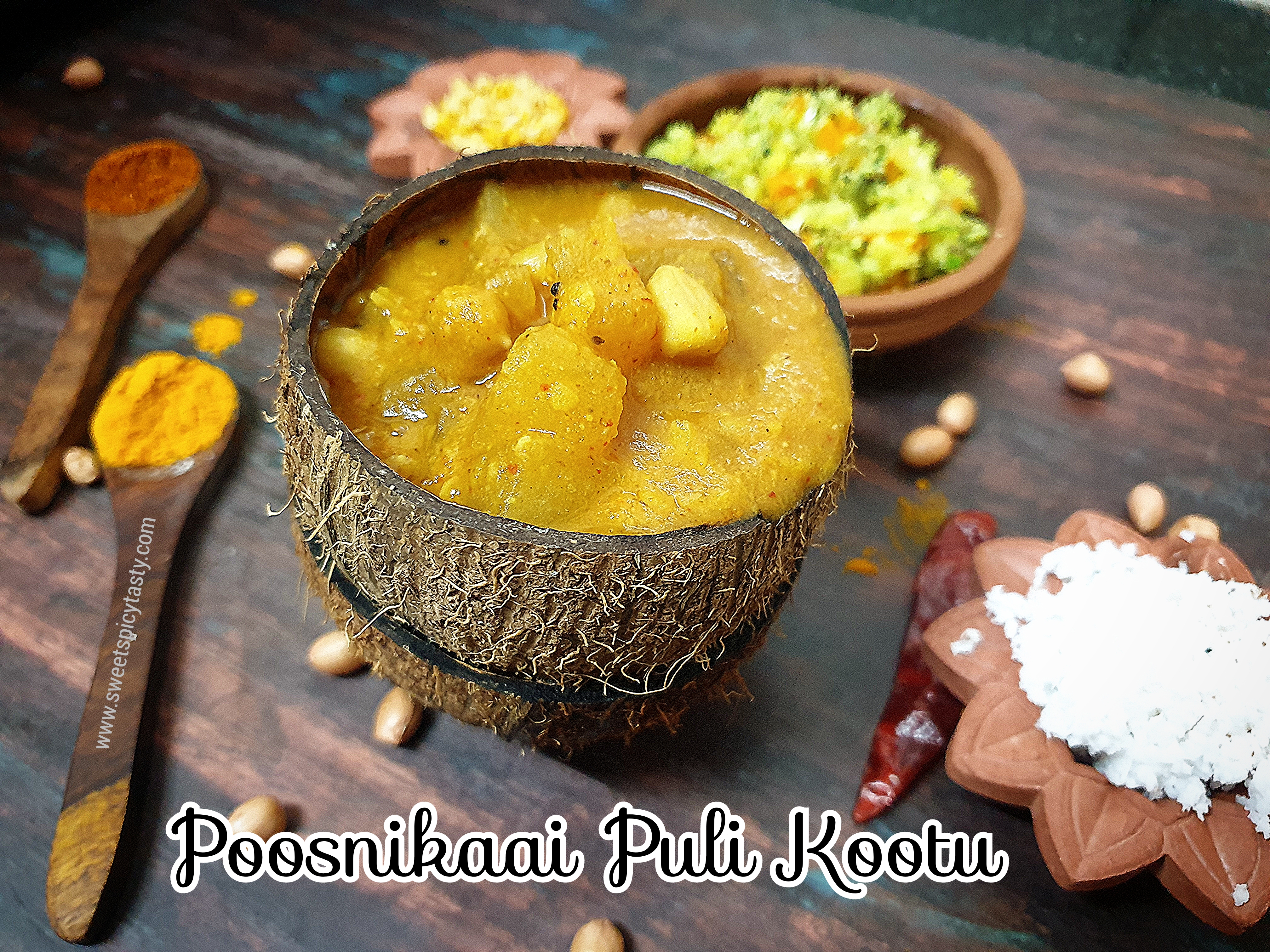
 Puli Kootu or Pulippu Kootu is an authentic Tamil brahmin recipe and is made quite frequently in most homes .It is a must have on the wedding feast menu and hence also known as Kalyana Kootu . 

Puli kootu is very tasty as it has a balance of all flavors and the tanginess from the tamarind extract gives it an altogether different flavor profile.

Pulippu kootu fits perfectly for those following a Vegan Diet and also being a No onion No garlic recipe  it is Saatvik and Jain Friendly as well.

Pulippu kootu can be made with brinjals,  ash gourd /white pumpkin or chayote/chou chou . In traditional tambrahm weddings puli kootu is made from ash gourd/poosanikaai and has either boiled chick peas or groundnuts added to the kootu .

In my recipe today ,I am going to use boiled peanuts but I also make it using boiled chickpeas many a times and both of them taste really delicious. 

Puli kootu with hot rice and some coconut based vegetable stir fry is an amazing combination for lunch.  In my home most often the left over puli kootu is paired with chapati for night and it pairs well .


Preparation Time - 15 mins
Cooking Time - 30 mins
Complexity- simple 
Serves - 2 to 3

Ingredients 

2 cups chopped ash gourd /poosanikaai 
1/4 cup thoor dal /pigeon peas/thuvaram paruppu
1/4 cup peanuts 
Small lemon sized tamarind ball
Few curry leaves 
Pinch of turmeric
Salt as needed 
2 tsp oil 
1/2 tsp mustard seeds
Pinch of asafoetida 

To roast and grind
1 tbsp channa dal 
1 tbsp dhaniya/corriander seeds
2 tbsp coconut grated 
3 to 4 dry red chillies 

Method


  • In a pan heat 1/4 tsp oil and roast the channa dhall until crisp and golden brown followed by the dhaniya and red chillies.Allow it to cool and the  grind into a fine paste with coconut and set aside. 
  • Soak the tamarind in hot water for 10  mins and then extract the pulp . Strain the impurities and keep ready .
  • Boil the chopped ash gourd in sufficient water until it is cooked well..it has to be firm but well cooked .
  • Pressure cook the thoor dhall and peanuts in 2 separate containers in the same cooker .Mash the thoor dhall well and set aside.  This saves a lot of time and effort as well.
  • In a thick bottomed vessel,add the boiled ashgoured ,peanuts and the tamarind extract with 1/4 cup water and boil it until the raw smell of the tamarind is lost. 
  • Next add the coconut paste , cooked thoor dhall and another 1/2 cup water and bring to a rolling boil.Adjust salt at this stage . Donot boil too much as the dhall will begin to start sticking to the bottom of the pan and it may get burnt..we don't want a burnt kootu .
  • Prepare a tempering of mustard seeds, curry leaves and asafoetida and pour it on the pulippu kootu.

Pin it up for future 


❌
❌