
 Login
Login
NASA Back for Seconds with New Food System Design Challenge
4 min read
Preparations for Next Moonwalk Simulations Underway (and Underwater)
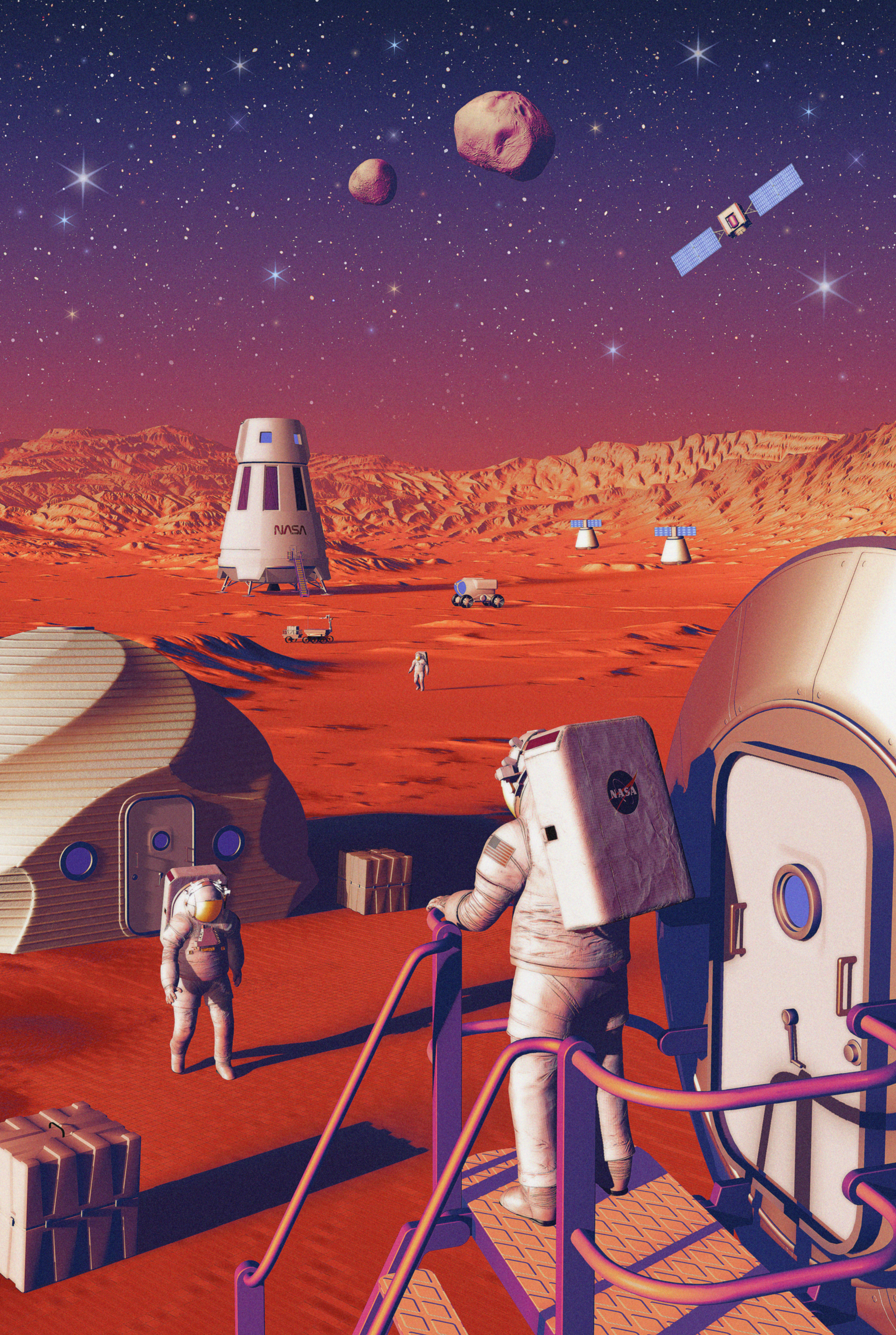
NASA is getting ready to send four astronauts around the Moon with Artemis II, laying the foundation for sustainable missions to the lunar surface and paving the way for human exploration on Mars. As the agency considers deep space endeavors that could last months or years, it must develop ways to feed astronauts beyond sending supplies from Earth.
That is why NASA is launching the Deep Space Food Challenge: Mars to Table, a new global competition inviting chefs, innovators, culinary experts, higher-education students, and citizen scientists to design a complete, Earth-independent food system for long-duration space missions.
“In the future, exploration missions will grow in both duration and distance from Earth. This will make the critical question of feeding our astronauts more complex, requiring innovative solutions to allow for long-term human exploration of space,” said Greg Stover, acting associate administrator of NASA’s Space Technology Missions Directorate at NASA Headquarters in Washington. “Opening the door to ideas from beyond the agency strengthens NASA’s ability to operate farther from Earth with greater independence.”
Mars to Table builds on NASA’s first Deep Space Food Challenge by seeking to integrate multiple food production and preparation methods into a holistic, self-sustaining system designed for use on Mars. This new challenge is open now until July 31 to the global public and carries a prize purse of up to $750,000.
“Future crews on the Moon and Mars will need food systems that are nutritious, sustainable, and fully independent from Earth,” said Jarah Meador, program executive for NASA’s Prizes, Challenges, and Crowdsourcing Program at NASA Headquarters. “Food will play a pivotal role in the overall health and happiness of future deep space explorers. The Mars to Table Challenge is about bringing all those pieces together into one comprehensive design.”
Solvers are tasked with creating a complete meal plan suitable for astronauts living on Mars, using a NASA-created mission scenario as their guide. Each team will design a full food system concept, including a detailed operations plan and system design layout that supports a surface mission. Teams must consider every detail – from nutritional balance and taste to safety, usability, and integration with NASA’s Environmental Control and Life Support Systems.
Participants in the Mars to Table Challenge are also encouraged to address food security on Earth. Innovative growth systems designed for space could make fresh food production possible in harsh, remote, or resource-limited areas, such as research stations located at Earth’s poles or in rural areas with limited access to traditional supply chains.
“This challenge isn’t just about feeding astronauts; it’s about feeding people anywhere,” said Jennifer Edmunson, acting program manager for NASA’s Centennial Challenges at NASA’s Marshall Spaceflight Center in Huntsville, Alabama. “Novel meals that are compact, shelf-stable, and nutrient-rich could expand culinary options for groups like military personnel or disaster relief responders. By solving for Mars and future planetary expeditions, we can also find solutions for Earth.”
NASA’s Centennial Challenges have a 20-year legacy of engaging the public to solve complex problems that benefit NASA’s broader initiatives. Past challenges have spurred advances in robotics, additive manufacturing, power and energy, textiles, chemistry, and biology.
Mars to Table is a collaborative, cross-program Centennial Challenge with support from NASA’s Division of Biological and Physical Sciences, Heliophysics Division, Planetary Science Program, Human Research Program, and Mars Campaign Office. Subject matter experts at the agency’s Johnson Space Center in Houston and Kennedy Space Center in Florida support the challenge. This challenge is part of the Prizes, Challenges and Crowdsourcing program within NASA’s Space Technology Mission Directorate. NASA has partnered with the Methuselah Foundation and contracted Floor23 Digital to support the administration and management of this challenge.
To learn more about the challenge, including timelines, submission requirements, and future webinar dates, visit:
https://www.deepspacefood.org/marstotable
By Savannah Bullard
Discover More Topics From NASA
Details
Related Terms
- Space Technology Mission Directorate
- Biological & Physical Sciences
- Centennial Challenges
- Centennial Challenges News
- Center of Excellence for Collaborative Innovation (CoECI)
- Earth Science Division
- Get Involved
- Heliophysics
- Human Research Program
- Mars Campaign Development Division
- Marshall Space Flight Center
- Opportunities to Contribute to NASA Missions & Get Involved
- Planetary Science
- Planetary Science Division
- Prizes, Challenges, & Crowdsourcing News
- Prizes, Challenges, and Crowdsourcing Program
- Technology


