Normal view

There are new articles available, click to refresh the page.
Before yesterdayMain stream

Jaclyn Kagey Shapes Humanity’s Return to the Moon 

20 January 2026 at 06:00
4 Min Read

Jaclyn Kagey Shapes Humanity’s Return to the Moon 

Two people practice underwater operations in a Moon like environment. The person on the left is holding an U.S. flag.
Jaclyn Kagey trains in NASA’s Neutral Buoyancy Laboratory, where astronauts and flight controllers rehearse spacewalk procedures in a simulated microgravity environment.
Credits: NASA

For Jaclyn Kagey, helping astronauts put boots on the Moon is part of her daily work. 

As the Artemis III extravehicular activity lead in NASA’s Flight Operations Directorate, Kagey plays a central role in preparing astronauts for humanity’s return to the lunar surface.  

She helps define how astronauts will work on the Moon, from planning detailed spacewalk timelines to guiding real-time operations. Crews will conduct these activities after stepping outside NASA’s human landing system, a commercial lander designed to safely transport astronauts from lunar orbit to the surface and back during Artemis missions. 

A woman poses in a black suit in front of the U.S. flag (left) and the NASA flag.
Official portrait of Jaclyn Kagey.
NASA/Robert Markowitz

As NASA prepares to return humans to the lunar surface for the first time in more than 50 years, Kagey’s work is helping shape how Artemis missions will unfold. Astronauts will explore the Moon’s south polar region, an area never visited by humans, and the Artemis III mission will serve as the proving ground for future lunar exploration.  

Kagey’s career at NASA spans more than 25 years and includes work across some of the agency’s most complex human spaceflight programs. While studying at Embry-Riddle Aeronautical University, she watched space shuttle launches that solidified her goal of working in human spaceflight. That goal became reality through United Space Alliance, where she and her husband began their careers as contractors. 
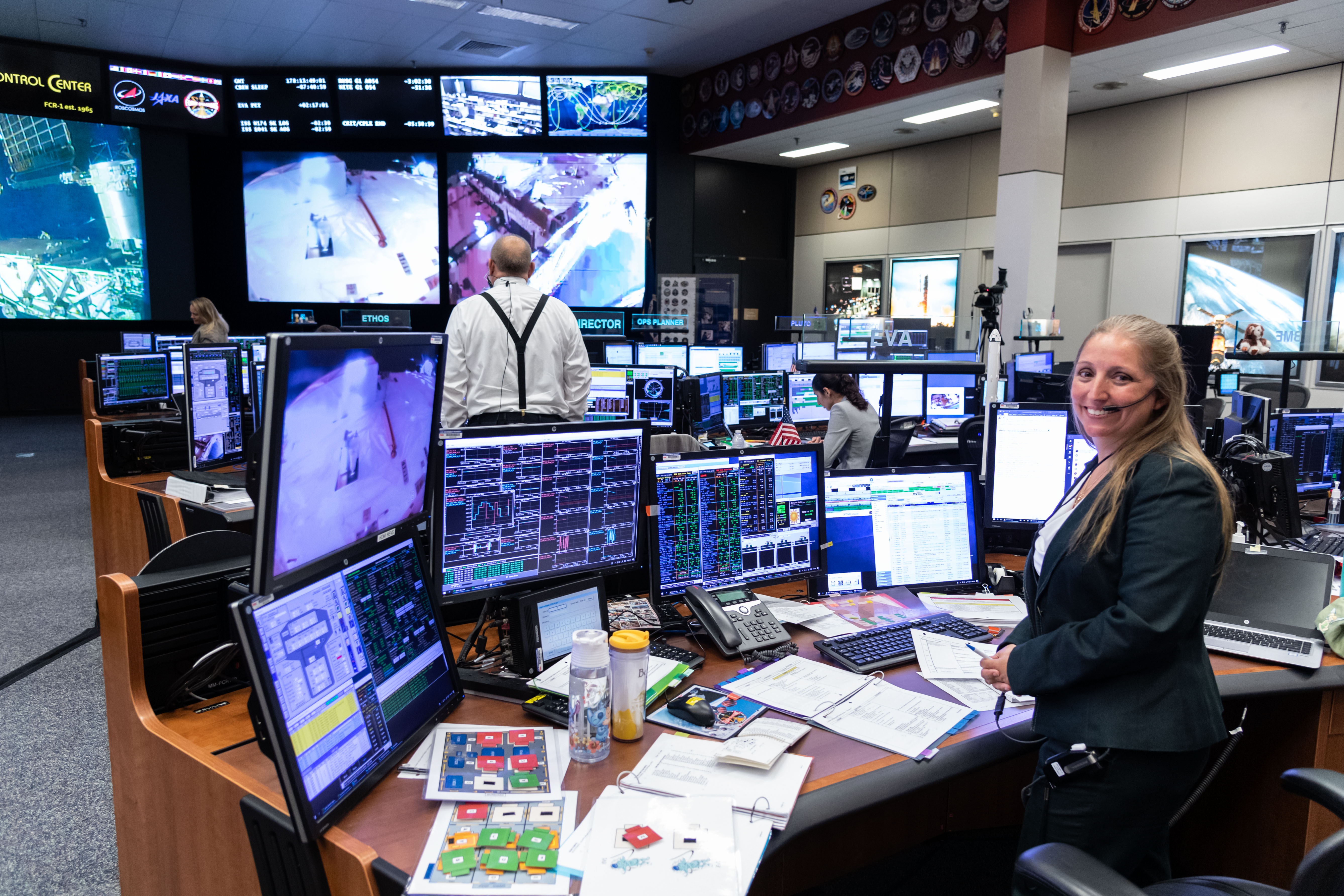
A woman smiles and poses at a desk in front of several monitors at mission control.
Jaclyn Kagey works in the Mission Control Center during a spacewalk simulation at NASA’s Johnson Space Center in Houston.
NASA/Robert Markowitz

One of Kagey’s career-defining moments came during a high-pressure operation aboard the International Space Station. 

“I’ve planned and executed seven spacewalks, but one that stands out was U.S. EVA 21,” she said. “We had a critical ammonia leak on the station, and from the time the issue was identified, we had just 36 hours to plan, prepare the spacesuits, and execute the repair.” 

The team successfully completed the spacewalk and restored the system. “The agility, dedication, and teamwork shown during that operation were remarkable,” Kagey said. “It demonstrated what this team can accomplish under pressure.” 
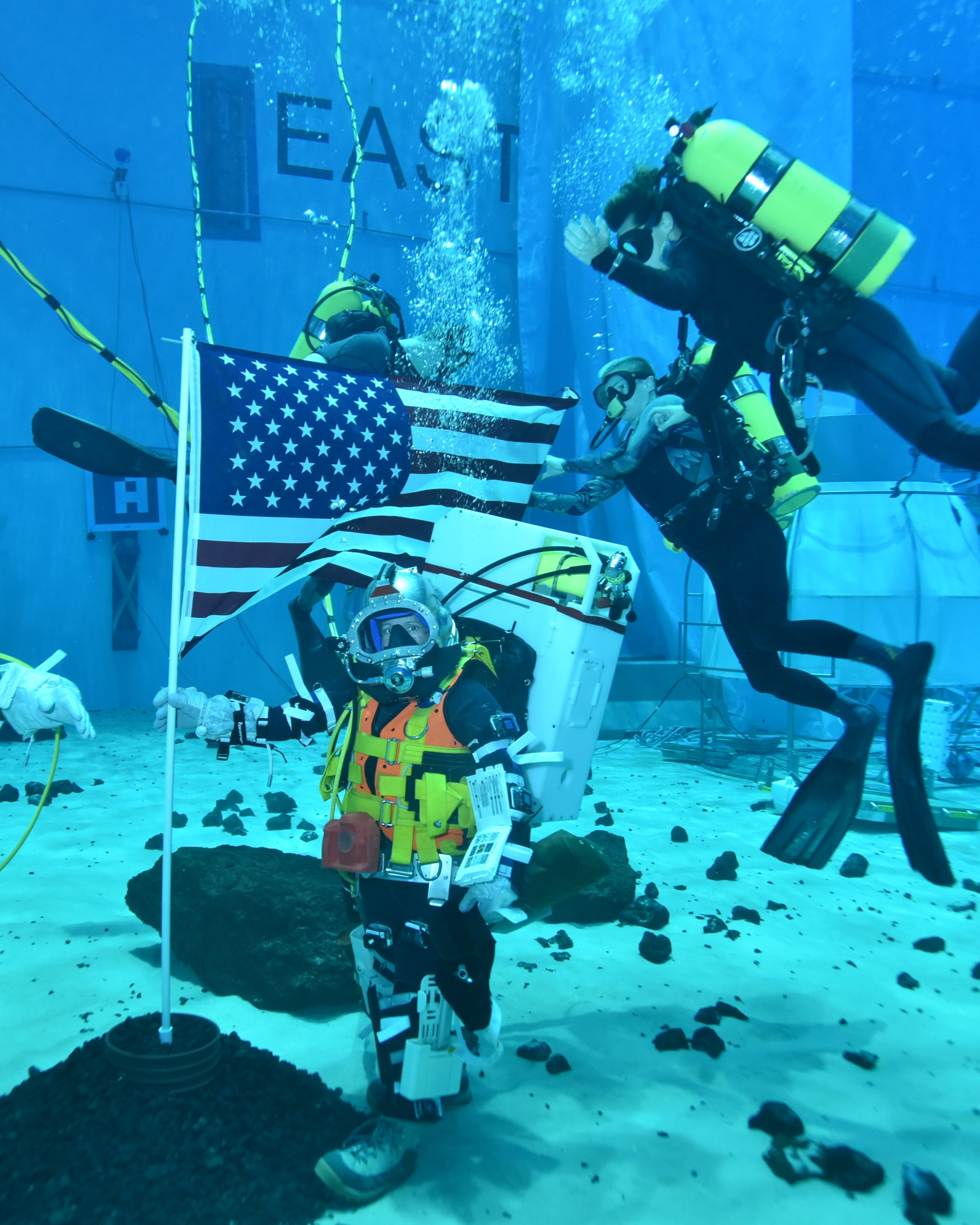
Two people practice underwater operations in a Moon like environment. The person on the left is holding an U.S. flag.
Jaclyn Kagey trains in NASA’s Neutral Buoyancy Laboratory, where astronauts and flight controllers rehearse spacewalk procedures in a simulated microgravity environment.
NASA

Throughout her career, Kagey has learned that adaptability is essential in human spaceflight. 

“You have to be flexible,” she said. “Things rarely go exactly as planned, and your job is to respond in a way that keeps the crew safe and the mission moving forward.” 

She has also learned the importance of balance. “There are times when the mission requires everything you have,” she said. “And there are times when you have to step back. Learning when to do each is critical.” 
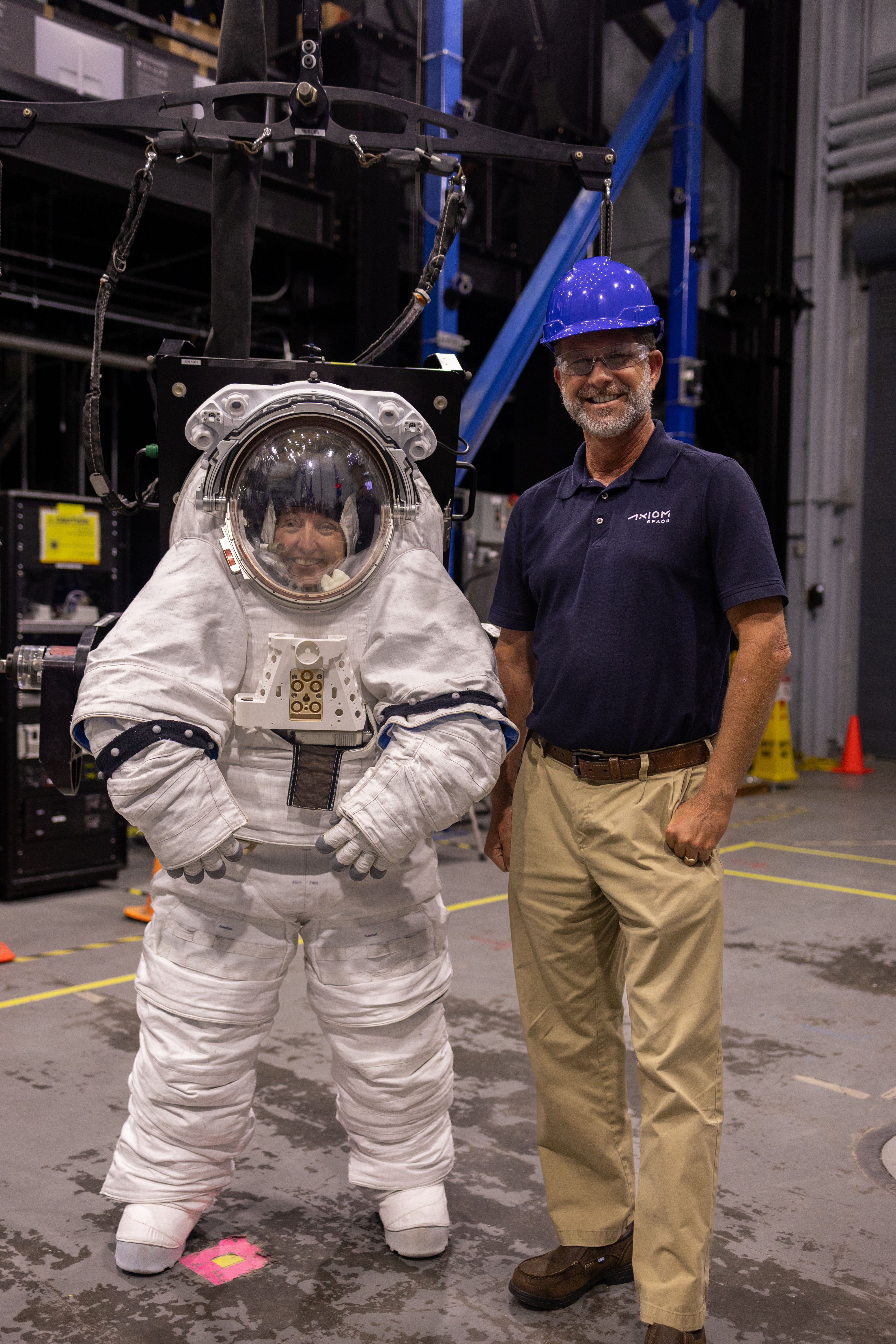
A woman, left, wearing a spacesuit poses next to a man at a facility.
Jaclyn Kagey suited up in Axiom Space’s Extravehicular Mobility Unit (AxEMU) spacesuit during a test on the Active Response Gravity Offload System (ARGOS) at Johnson’s Space Vehicle Mockup Facility.
Axiom Space

Kagey’s influence also extends to the future of spacesuit development. Standing on the shorter end of the height spectrum, she once could not complete a full test in the legacy Extravehicular Mobility Unit despite passing the fit check. Although Kagey could don the suit, its proportions were too large for her and made it difficult to move as needed for the test. That experience drove her to advocate for designs that better support a wider range of body types.  

That effort came full circle when she recently completed her first test in Axiom Space’s lunar spacesuit, called the Axiom Extravehicular Mobility Unit (AxEMU), on the Active Response Gravity Offload System at Johnson Space Center. 

“It’s exciting to literally fit into the future of spacewalks!” Kagey said. 
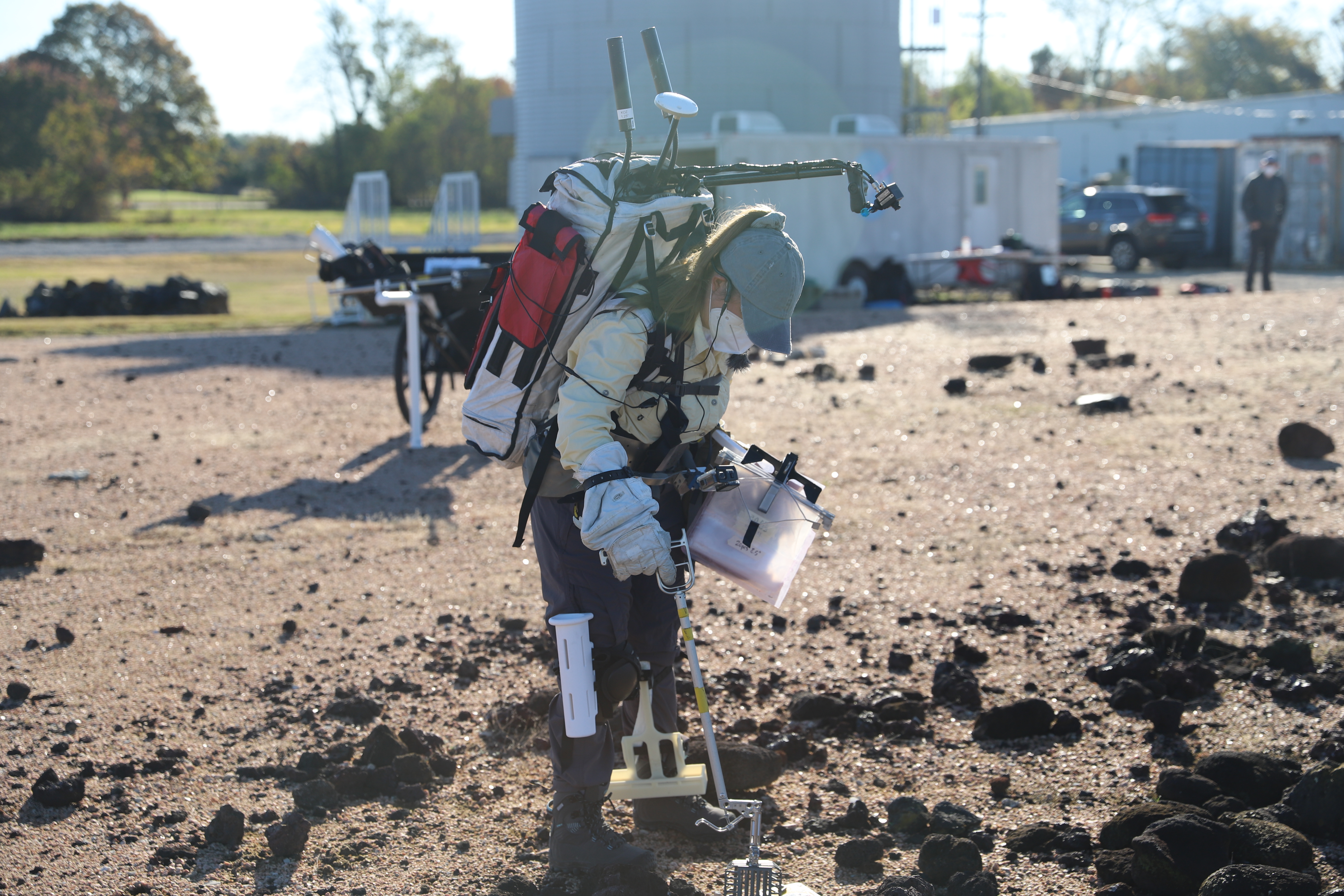
A woman wears a lunar backpack while practicing picking up rocks with a lunar tool at a rock yard.
Jaclyn Kagey conducts lunar surface operations training in the Rock Yard at Johnson Space Center, where teams test tools and procedures for future Artemis missions.
NASA

As momentum builds around Artemis, Kagey remains focused on the responsibility that comes with advancing human space exploration.  

“My mission is to shape this historic endeavor by working closely with scientists and industry partners to define lunar surface activities,” Kagey said. “We are setting the standard for humanity’s return to the Moon.” 

About the Author
Sumer Loggins

Sumer Loggins

Share

Details

Last Updated
Jan 08, 2026
Keep Exploring

Discover More Topics From NASA

I Am Artemis: Jacki Mahaffey

5 January 2026 at 15:24
4 Min Read

I Am Artemis: Jacki Mahaffey

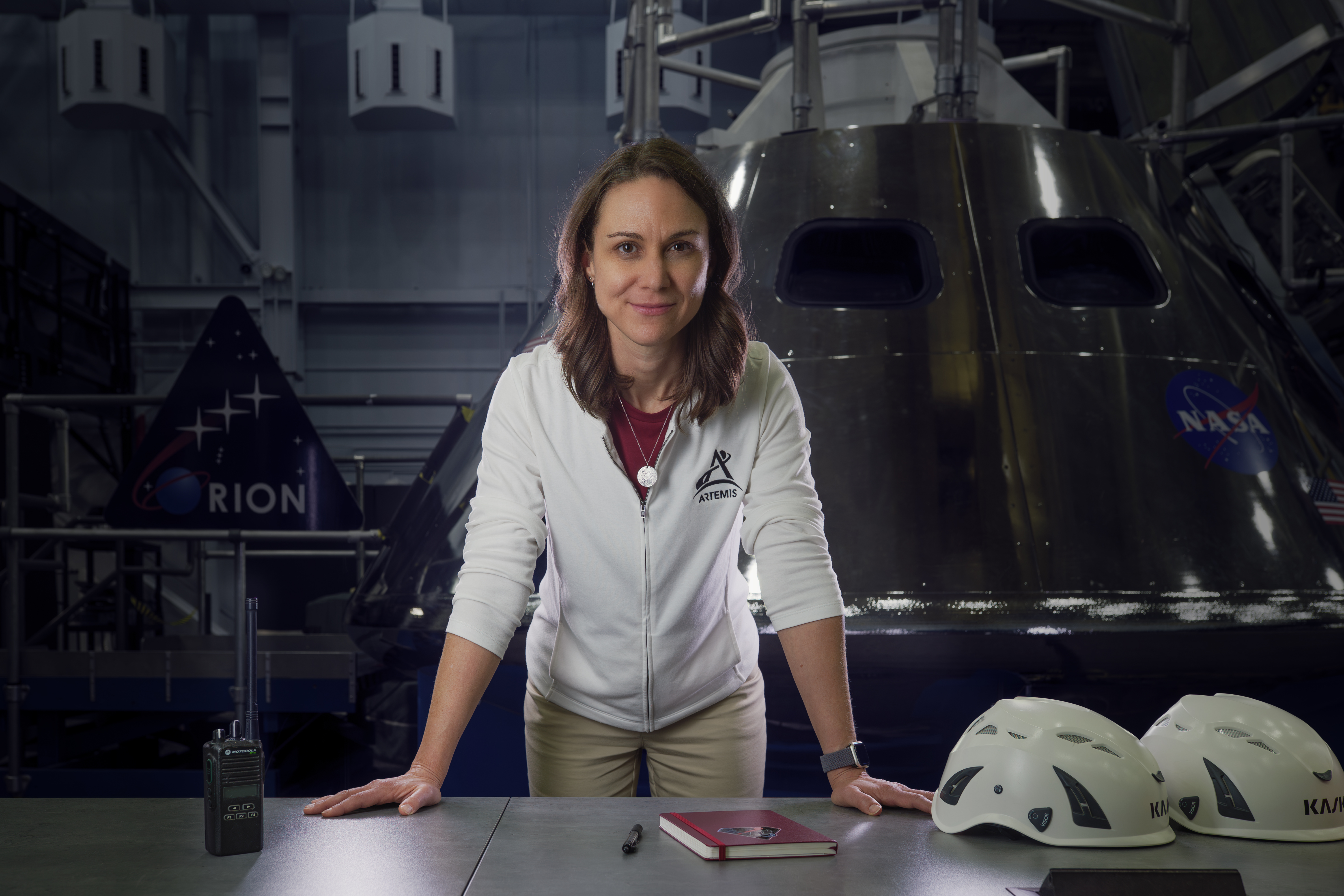
Jacki Mahaffey, Artemis II chief training officer at NASA’s Johnson Space Center in Houston, stands in front of the Orion mockup in Johnson's Space Vehicle Mockup Center.
Credits: NASA/Rad Sinyak

Listen to this audio excerpt from Jacki Mahaffey, Artemis II chief training officer:

0:00 / 0:00

When the Artemis II crew travels around the Moon aboard the Orion spacecraft, they will have spent countless hours training for their lunar mission, and Jacki Mahaffey will have played a role in preparing them for their journey.

As the Artemis II chief training officer at NASA’s Johnson Space Center in Houston, Mahaffey manages the planning, development, and implementation of the astronauts’ training and integrated simulations. Her job is to ensure that when the Artemis II crew travels around the Moon inside Orion, the astronauts and flight controllers are ready for every moment — expected and unexpected.

Training is all risk mitigation for the mission. By preparing the astronauts and flight controllers for what they might encounter, we enable mission success.

Jacki Mahaffey

Jacki Mahaffey

Artemis II Chief Training Officer

The Artemis II crew began their rigorous training in 2023, but the work of Mahaffey and her team started long before that. Years before the training began, her team gathered the experts on how to operate the different aspects of Orion, and what the crew will need to know to execute their mission.

“One of my favorite moments from that process was when we all got together in one room, and everyone brought a piece of paper for every single lesson or training event that they expected to do with the crew,” Mahaffey said. “And we laid the entire thing out to figure out what’s the most logical order to put all of this training in, to help build that big picture for the crew.”

Training for Artemis II began shortly after the crew was announced, with Mahaffey and her team introducing the astronauts to Orion’s systems and operational basics. Once the necessary simulators and mockups were ready, the crew transitioned into hands-on training to build familiarity with their spacecraft.

At Johnson, Mahaffey’s team utilizes a range of specialized facilities, including the Space Vehicle Mockup Facility, where astronauts rehearse living and working inside the Orion mockup; the Orion Mission Simulator, which replicates flight software and displays; and the Neutral Buoyancy Laboratory, where the crew practices water survival techniques for post-splashdown scenarios.

Jacki Mahaffey, Artemis II Chief Training Officer at NASA’s Johnson Space Center in Houston, stands in front of the Orion mockup in Johnson’s Space Vehicle Mockup Facility.
NASA/Rad Sinyak

“We try to simulate as much as we can here on Earth,” said Mahaffey. “But we still have gravity, so we rely on the crew’s experience to imagine how they’ll use the space in microgravity”

Three of the four Artemis II astronauts have flown in space before, and Mahaffey sees their experience as a powerful asset. They bring insights that shape procedures and training plans, and they learn from each other’s unique problem-solving styles.

“They are teaching us back about how to have that crew perspective of working in space and the things that are going to matter most,” she said.

Mahaffey’s journey began with a love for engineering and a role as a flight controller in Johnson’s Mission Control Center. She found joy in training others and eventually transitioned into a full-time training role. Now, she leads a team of about 100 contributors, all working to prepare the crew for their historic mission.

“I didn’t start out wanting to be a trainer — I studied engineering because I loved physics and math,” she said. “But as the job shifted toward applying that engineering knowledge, communicating, and planning how to operate a spacecraft, the natural next step was teaching others.”

In our organization, once you’ve learned to fish, you teach someone else to fish.

Jacki Mahaffey

Jacki Mahaffey

Artemis II Chief Training Officer

For Mahaffey, Artemis is a bridge connecting her family’s legacy with the future of space exploration. Her grandfather worked on control systems for Apollo, and she sees her work as a continuation of that story, now with more advanced technology and new frontiers. 

“We’re doing some of the same things Apollo did, but expanding on them,” she said. “We’re learning more about the Moon, our Earth’s history, and how we’ll get to Mars.” 

Her role during Artemis II also includes serving as an Artemis capcom, short for capsule communicator, the position in mission control that directly communicates with the crew members. Mahaffey plans to work the entry shift for Artemis II — helping to guide the crew to splashdown and ensuring their safe recovery. The moment will be a culmination of her entire team’s hard work. 

“I’ll feel good when the recovery forces report that the hatch is open,” Mahaffey said. “That moment will be incredible.” 

 The Artemis II crew’s Chief Training Officer Jacki Mahaffey smiles during Post Insertion and Deorbit Preparation training at the Space Vehicle Mockup Facility in Houston, Texas. The crew practiced getting the Orion spacecraft configured once in orbit, how to make it habitable, and suited up in their entry pressure suits to prepare for their return from the Moon.
 The Artemis II crew’s Chief Training Officer Jacki Mahaffey smiles during post insertion and deorbit preparation training at Johnson’s Space Vehicle Mockup Facility in Houston, Texas. The crew practiced getting the Orion spacecraft configured once in orbit, how to make it habitable, and suited up in their entry pressure suits to prepare for their return from the Moon.
Credit: NASA/Mark Sowa

About the Author

Erika Peters

Erika Peters

Keep Exploring

Discover More Topics From NASA

❌
❌