❌

Normal view

There are new articles available, click to refresh the page.
Before yesterdayMain stream

Blue Origin makes impressive strides with reuseβ€”next launch will refly booster

22 January 2026 at 12:49

Blue Origin confirmed Thursday that the next launch of its New Glenn rocket will carry a large communications satellite into low-Earth orbit for AST SpaceMobile.

The rocket will launch the next-generation Block 2 BlueBird satelliteΒ "no earlier than late February" from Launch Complex 36 at Cape Canaveral Space Force Station.

However, the update from Blue Origin appears to have buried the real news toward the end: "The mission follows the successful NG-2 mission, which included the landing of the 'Never Tell Me The Odds' booster. The same booster is being refurbished to power NG-3," the company said.

Read full article

Comments

Β© AST SpaceMobile

Another Jeff Bezos company has announced plans to develop a megaconstellation

21 January 2026 at 13:40

The announcement came out of the blue, from Blue, on Wednesday.

The space company founded by Jeff Bezos, Blue Origin, said it was developing a new megaconstellation named TeraWave to deliver data speeds of up to 6Tbps anywhere on Earth. The constellation will consist of 5,408 optically interconnected satellites, with a majority in low-Earth orbit and the remainder in medium-Earth orbit.

The satellites in low-Earth orbit will provide up to 144Gbps through radio spectrum, whereas those in medium-Earth orbit will provide higher data rates through optical links.

Read full article

Comments

Β© Blue Origin

Webb reveals a planetary nebula with phenomenal clarity, and it is spectacular

20 January 2026 at 18:33

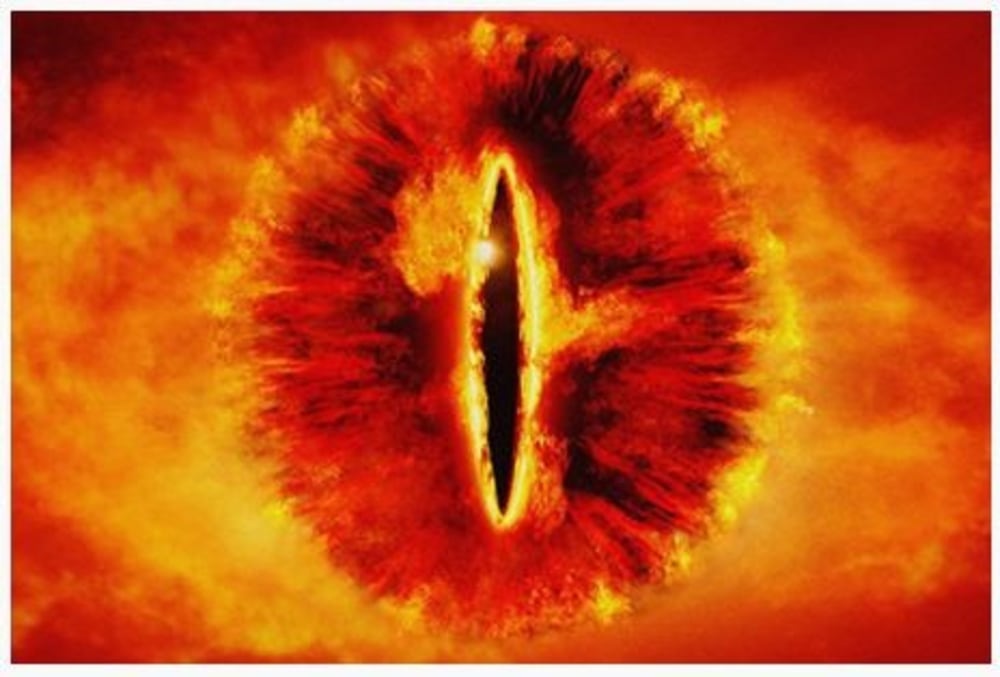
The Helix Nebula is one of the most well-known and commonly photographed planetary nebulae because it resembles the "Eye of Sauron." It is also one of the closest bright nebulae to Earth, located approximately 655 light-years from our Solar System.

You may not know what this particular nebula looks like when reading its name, but the Hubble Space Telescope has taken some iconic images of it over the years. And almost certainly, you'll recognize a photograph of the Helix Nebula, shown below.

Like many objects in astronomy, planetary nebulae have a confusing name, since they are formed not by planets but by stars like our own Sun, though a little larger. Near the end of their lives, these stars shed large amounts of gas in an expanding shell that, however briefly in cosmological time, put on a grand show.

Read full article

Comments

Β© ASA, ESA, CSA, STScI; Image Processing: Alyssa Pagan (STScI)

The first commercial space station, Haven-1, is now undergoing assembly for launch

20 January 2026 at 10:00

As Ars reported last week, NASA's plan to replace the International Space Station with commercial space stations is running into a time crunch.

The sprawling International Space Station is due to be decommissioned less than five years from now, and the US space agency has yet to formally publish rules and requirements for the follow-on stations being designed and developed by several different private companies.

Although there are expected to be multiple bidders in "phase two" of NASA's commercial space station program, there are at present four main contenders: Voyager Technologies, Axiom Space, Blue Origin, and Vast Space. At some point later this year, the space agency is expected to select one, or more likely two, of these companies for larger contracts that will support their efforts to build their stations.

Read full article

Comments

Β© Vast Space

The race to build a super-large ground telescope is likely down to two competitors

19 January 2026 at 12:06

I have been writing about the Giant Magellan Telescope for a long time. Nearly two decades ago, for example, I wrote that time was "running out" in the race to build the next great optical telescope on the ground.

At the time the proposed telescope was one of three contenders to make a giant leap in mirror size from the roughly 10-meter-diameter instruments that existed then, to approximately 30 meters. This represented a huge increase in light-gathering potential, allowing astronomers to see much further into the universeβ€”and therefore back into timeβ€”with far greater clarity.

Since then the projects have advanced at various rates. An international consortium to build the Thirty Meter Telescope in Hawaii ran into local protests that have bogged down development. Its future came further into question when the US National Science Foundation dropped support for the project in favor of the Giant Magellan Telescope. Meanwhile the European Extremely Large Telescope (ELT) has advanced on a faster schedule, and this 39.5-meter telescope could observe its first light in 2029.

Read full article

Comments

Β© GMTO Corporation

Rocket Report: Ariane 64 to debut soon; India has a Falcon 9 clone too?

16 January 2026 at 07:00

Welcome to Edition 8.25 of the Rocket Report! All eyes are on Florida this weekend as NASA rolls out the Space Launch System rocket and Orion spacecraft to its launch site in Florida for the Artemis II mission. NASA has not announced a launch date yet, and this will depend in part on how well a "wet dress rehearsal" goes with fueling the rocket. However, it is likely the rocket has a no-earlier-than launch date of February 8. Our own Stephen Clark will be in Florida for the rollout on Saturday, so be sure and check back here for coverage.

As always, we welcome reader submissions, and if you don't want to miss an issue, please subscribe using the box below (the form will not appear on AMP-enabled versions of the site). Each report will include information on small-, medium-, and heavy-lift rockets as well as a quick look ahead at the next three launches on the calendar.

MaiaSpace scores a major launch deal. The ArianeGroup subsidiary, created in 2022, has inked a major new launch contract with satellite operator Eutelsat, Le Monde reports. A significant portion of the 440 new satellites ordered by Eutelsat from Airbus to renew or expand its OneWeb constellation will be launched into orbit by the new Maia rocket. MaiaSpace previously signed two contracts: one with Exotrail for the launch of an orbital transfer, and the other for two satellites for the Toutatis mission, a defense system developed by U-Space.

Read full article

Comments

Β© SpaceX

Key Senate staffer is β€œbegging” NASA to get on with commercial space stations

15 January 2026 at 10:15

In remarks this week to a Texas space organization, a key Senate staff member said an "extension" of the International Space Station is on the table and that NASA needs to accelerate a program to replace the aging station with commercial alternatives.

Maddy Davis, a space policy staff member for US Sen. Ted Cruz, R-Texas, made the comments to the Texas Space Coalition during a virtual event.

Cruz is chairman of the Senate Committee on Commerce, Science, and Transportation and has an outsized say in space policy. As a senator from Texas, he has a parochial interest in Johnson Space Center, where the International Space Station Program is led.

Read full article

Comments

Β© NASA

You can now reserve a hotel room on the Moon for $250,000

12 January 2026 at 18:04

A company called GRU Space publicly announced its intent to construct a series of increasingly sophisticated habitats on the Moon, culminating in a hotel inspired by the Palace of the Fine Arts in San Francisco.

On Monday, the company invited those interested in a berth to plunk down a deposit between $250,000 and $1 million, qualifying them for a spot on one of its early lunar surface missions in as little as six years from now.

It sounds crazy, doesn't it? After all, GRU Space had, as of late December when I spoke to founder Skyler Chan, a single full-time employee aside from himself. And Chan, in fact, only recently graduated from the University of California, Berkeley.

Read full article

Comments

Β© GRU Space

Is Orion’s heat shield really safe? New NASA chief conducts final review on eve of flight.

9 January 2026 at 12:17

WASHINGTON, DCβ€”This week, NASA's new administrator, Jared Isaacman, said he has "full confidence" in the space agency's plans to use the existing heat shield to protect the Orion spacecraft during its upcoming lunar mission.

Isaacman made the determination after briefings with senior leaders at the agency and a half-day review of NASA's findings with outside experts.

"We have full confidence in the Orion spacecraft and its heat shield, grounded in rigorous analysis and the work of exceptional engineers who followed the data throughout the process," Isaacman said Thursday.

Read full article

Comments

Β© NASA

Former Google CEO plans to singlehandedly fund a Hubble telescope replacement

8 January 2026 at 09:05

Prior to World War II the vast majority of telescopes built around the world were funded by wealthy people with an interest in the heavens above.

However, after the war, two significant developments in the mid-20th century caused the burden of funding large astronomical instruments to largely shift to the government and academic institutions. First, as mirrors became larger and larger to see deeper into the universe, their costs grew exponentially. And then, with the advent of spaceflight, the expense of space-based telescopes expanded even further.

But now the tide may be turning again.

Read full article

Comments

Β© Schmidt Observatory System

NASA’s science budget won’t be a train wreck after all

5 January 2026 at 17:14

In June, the White House released a budget proposal for fiscal year 2026 that slashed funding for NASA's science programs by nearly 50 percent. Then, in July, the Trump administration began telling the leaders of dozens of space science missions to prepare "closeout" plans for their spacecraft.

Things looked pretty grim for a while, but then Congress stepped in. Congress, of course, sets the federal government's budget. In many ways, Congress abdicated authority to the Trump administration last year. But not so, it turns out, with federal spending.

Throughout the summer and fall, as the White House and Congress wrangled over various issues, lawmakers made it clear they intended to fund most of NASA's science portfolio. Preliminary efforts to shut down active missions were put on hold.

Read full article

Comments

Β© JAXA/ISAS/DARTS/Kevin M. Gill

Our annual power ranking of US rocket companies has changes near the top and bottom

5 January 2026 at 07:00

Which US rocket companies achieved the most during 2025?

Once again, Ars Technica is here to provide some answers in the form of our annual power ranking of US launch companies. We began doing this in 2022 and have since put out a top-10 list every year (see 2023 and 2024). Our intent, as always, is to spark debate, discussion, and appreciation for the challenge of operating a successful rocket company. It's a demanding business, both technically and financially. We respect the grit and hustle because we know just how hard this stuff is.

Please also note that this is a subjective list, although hard metrics such as total launches, tonnage to orbit, success rate, and more were all important factors in the decision. And finally, our focus remains on what each company accomplished in 2025, not on what they might do in the future.

Read full article

Comments

Β© Blue Origin

After half a decade, the Russian space station segment stopped leaking

2 January 2026 at 10:30

A small section of the International Space Station that has experienced persistent leaks for years appears to have stopped venting atmosphere into space.

The leaks were caused by microscopic structural cracks inside the small PrK module on the Russian segment of the space station, which lies between a Progress spacecraft airlock and the Zvezda module. The problem has been a long-running worry for Russian and US operators of the station, especially after the rate of leakage doubled in 2024. This prompted NASA officials to label the leak as a "high likelihood" and "high consequence" risk.

However, recently two sources indicated that the leaks have stopped. And NASA has now confirmed this.

Read full article

Comments

Β© NASA

❌
❌