Google has started rolling out a new feature for its Photos app that can turn your images into memes. The feature, called Me Meme, uses Google Gemini to take meme templates and recreate them with the photo you use from within the app. It’s still in its experimental stages and will only be available for users in the US in the English language. In addition, it seems to be rolling out for Android users only at the moment, and Google warns that the generated images may not match the original photo at times. If you do get access to the feature soon, check out the instructions below on how to use it.
Open your Photos app. Go to the Create tab at the bottom and find the Me Meme option. If it’s not showing up even though you’re an Android user in the US, you’ll have to wait for it as it continues rolling out. Google told TechCrunch that it will reach iOS users over the coming weeks.
You’ll see onscreen instructions the first time you use it. The next time you access the feature, you’ll go straight to the meme creation process.
You can browse and choose one of the preset templates Google provides, but you can also upload a meme or any other image as a template.
You then have to upload a photo that you want to insert into the meme. Google advises using a selfie or a photo where your face is clearly visible.
After you tap Generate, you can save the meme if you’re satisfied with the result or share it directly to social media platforms online. You can also tap Regenerate to see a different output.
Android Authority spotted the feature in October 2025 and was able to try it out before its limited release. You can see an example of Me Meme’s output below.
The "Me meme" feature which I spotted back in October 2025 is finally announced by Google.
This is an experimental feature which will be available first for users in US only 😐
NASA Finds Lunar Regolith Limits Meteorites as Source of Earth’s Water
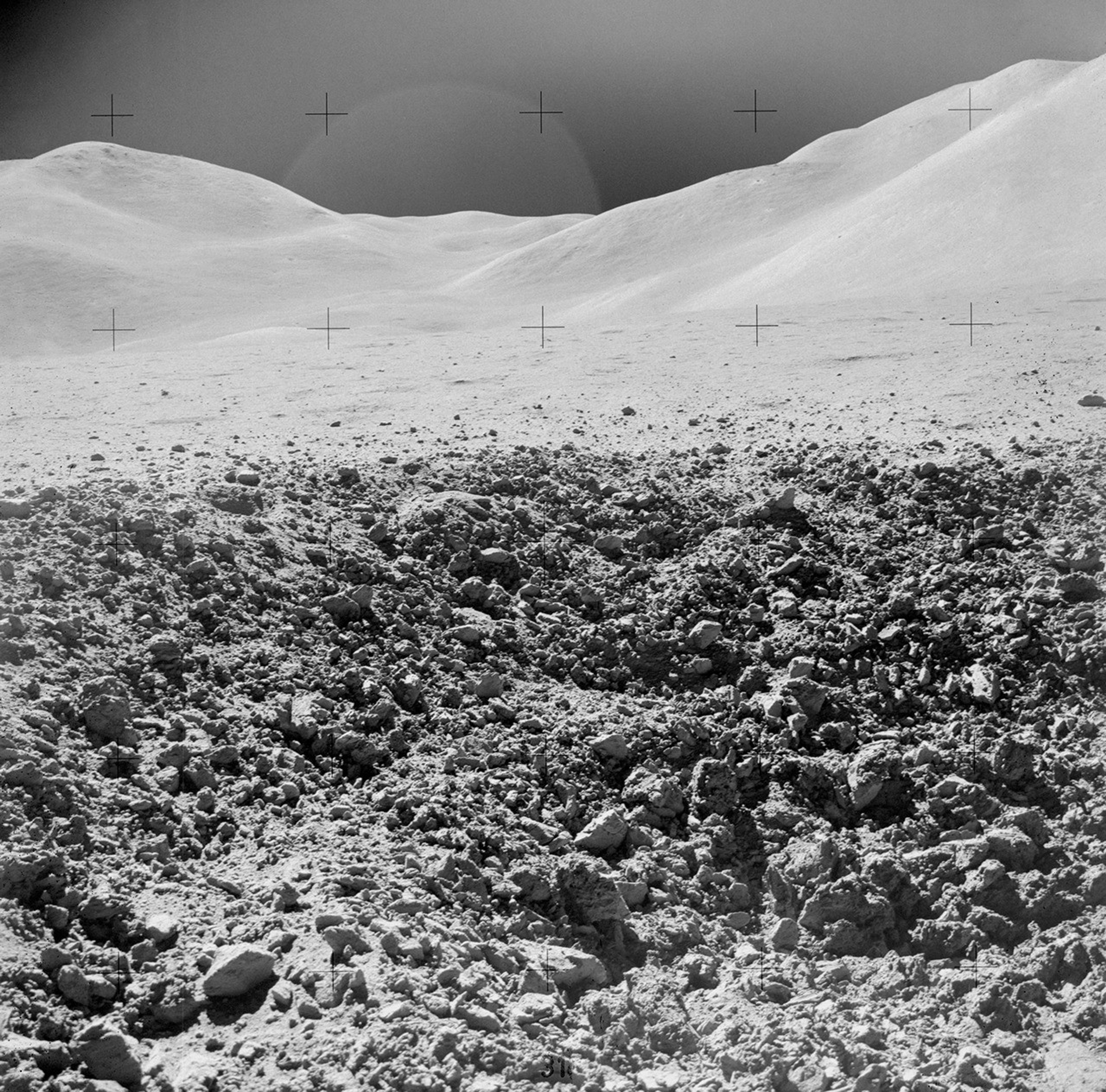
A close-up view of a portion of a “relatively fresh” crater, looking southeast, as photographed during the third Apollo 15 lunar surface moonwalk.
Credit: NASA
A new NASA study of its Apollo lunar soils clarifies the Moon’s record of meteorite impacts and timing of water delivery. These findings place upper bounds on how much water meteorites could have supplied later in Earth’s history.
Research has previously shown that meteorites may have been a significant source of Earth’s water as they bombarded our planet early in the solar system’s development. In a paper published Tuesday in the Proceedings to the National Academy of Sciences, researchers led by Tony Gargano, a postdoctoral fellow at NASA’s Johnson Space Center and the Lunar and Planetary Institute (LPI), both in Houston, used a novel method for analyzing the dusty debris that covers the Moon’s surface called regolith. They learned that even under generous assumptions, meteorite delivery since about four billion years ago could only have supplied a small fraction of Earth’s water.
The Moon serves as an ancient archive of the impact history the Earth-Moon system has experienced over billions of years. Where Earth’s dynamic crust and weather erase such records, lunar samples preserve them. The records don’t come without challenge, though. Traditional methods of studying regolith have relied on analyzing metal-loving elements. These elements can get muddied by repeated impacts on the Moon, making it harder to untangle and reconstruct what the original meteoroids contained.
Enter triple oxygen isotopes, high precision “fingerprints” that take advantage of the fact that oxygen, the dominant element by mass in rocks, is unaffected by impact or other external forces. The isotopes offer a clearer understanding of the composition of meteorites that impacted the Earth-Moon system. The oxygen-isotope measurements revealed that at least ~1% by mass of the regolith contained material from carbon-rich meteorites that were partially vaporized when they hit the Moon. Using the known properties of such meteorites allowed the team to calculate the amount of water that would have been carried within.
“The lunar regolith is one of the rare places we can still interpret a time-integrated record of what was hitting Earth’s neighborhood for billions of years,” said Gargano. “The oxygen-isotope fingerprint lets us pull an impactor signal out of a mixture that’s been melted, vaporized, and reworked countless times.”
The findings have implications for our understanding of water sources on Earth and the Moon. When scaled up by roughly 20 times to account for the substantially higher rate of impacts on Earth, the cumulative water shown in the model made up only a small percent of the water in Earth’s oceans. That makes it difficult to reconcile the hypothesis that late delivery of water-rich meteorites was the dominant source of Earth’s water.
“Our results don’t say meteorites delivered no water,” added co-author Justin Simon, a planetary scientist at NASA Johnson’s Astromaterials Research and Exploration Science Division. “They say the Moon’s long-term record makes it very hard for late meteorite delivery to be the dominant source of Earth’s oceans.”
For the Moon, the implied delivery since about 4 billion years ago is tiny on an Earth-ocean scale but is not insignificant for the Moon. The Moon’s accessible water inventory is concentrated in small, permanently shadowed regions at the North and South Poles. These are some of the coldest spots in the solar system and introduce unique opportunities for scientific discovery and potential resources for lunar exploration when NASA lands astronauts on the Moon through Artemis III and beyond.
The samples analyzed for this study came from parts of the Moon near the equator on the side of the Moon facing Earth, where all six Apollo missions landed. The rocks and dust collected more than 50 years ago continue to reveal new insights but are constrained to a small portion of the Moon. Samples delivered through Artemis will open the door for a new generation of discoveries for decades to come.
“I’m part of the next generation of Apollo scientists —people who didn’t fly the missions, but who were trained on the samples and the questions Apollo made possible,” said Gargano. “The value of the Moon is that it gives us ground truth: real, physical material we can measure in the lab and use to anchor what we infer from orbital data and telescopes. I can’t wait to see what the Artemis samples have to teach us and the next generation about our place in the solar system.”
For more information on NASA’s Astromaterials Research and Exploration Science Division, visit:
Ring has launched a new tool that can tell you if a video clip captured by its camera has been altered or not. The company says that every video downloaded from Ring starting in December 2025 going forward will come with a digital security seal. “Think of it like the tamper-evident seal on a medicine bottle,” it explained. Its new tool, called Ring Verify, can tell you if a video has been altered in any way. Even adjusting a video clip’s brightness or trimming a few seconds off will break that seal, and the tool will tell you that it cannot be verified. All you have to do is visit the tool’s web page and upload the video you want to check.
In the era of AI, you can also use the tool to make sure you’re looking at a real Ring video instead of something generated by artificial intelligence models. OpenAI’s Sora, for instance, can easily create Ring video doorbell footage with just a prompt or two, leading to a lot of fake security cam footage on social media apps. The company suggests asking the owner of the camera to share videos straight from the Ring app to make sure they’re unaltered. It also doesn’t matter what camera it is: All of the company’s models now embed digital security seals to downloaded videos and videos shared from Ring’s cloud storage. However, the tool can only tell you if a video has been tampered with or can’t be verified at all. It can’t tell you what has been edited or if it’s AI-generated.
This article originally appeared on Engadget at https://www.engadget.com/home/smart-home/ring-can-now-verify-if-a-video-has-been-altered-140000140.html?src=rss
After years of uncertainty over TikTok's future in the United States, a deal for the app's US business has been finalized. The new US entity is called TikTok USDS Joint Venture. ByteDance has retained a 19.9 percent percent stake in the new business, with the rest controlled by a group of non-Chinese investors, including Oracle, Silver Lake and MGX, an Emirati-state owned investment firm, all of which have a 15 percent stake. Dell CEO Michael Dell and other investors have smaller stakes in the new company.
The terms of the deal were first leaked last month, after TikTok CEO Shou Chew reportedly told employees in a memo that TikTok and ByteDance had agreed to a group of investors. This ends a lengthy saga and months of slow progress as the agreement was being worked out, ensuring that the app will remain available in the US after years of being on the verge of a ban in the country.
President Donald Trump, who had tried to ban the app during his first term in office, praised the deal in a post on Truth Social. "It will now be owned by a group of Great American Patriots and Investors, the Biggest in the World, and will be an important Voice," he wrote."I only hope that long into the future I will be remembered by those who use and love TikTok."
According to TikTok’s announcement, the joint venture will protect American users’ data with Oracle's secure US cloud environment. It will also retrain TikTok’s algorithm on US users’ data and will be in charge of content moderation in the US. The entity promises interoperability, as well, promising that users will still get international content and, if they’re a creator, viewers. “The safeguards provided by the Joint Venture will also cover CapCut, and Lemon8 and a portfolio of other apps and websites in the US,” TikTok said.
The new entity will be overseen by a seven-member board of directors, most of whom are Americans. It includes, Shou Chew, the Chief Executive Officer of TikTok, Silver Lake co-CEO Egon Durban, Oracle Executive Vice President Kenneth Glueck and MGX Chief Strategy and Safety Officer David Scott. Adam Presser, who had previously been head of operations and trust and safety at TikTok, is the CEO of TikTok USDS Joint Venture.
Exactly what the new joint venture means for US users of TikTok is unclear. Shortly after the deal was announced, TikTok introduced new terms of service for US users. As the BBCnotes, the new terms include provisions relating to use of the app by kids under 13 (they are limited to the "Under 13 Experience") and that the "TikTok USDS Joint Venture does not endorse any content" in the app. The company hasn’t announced specific changes to the app’s algorithm or other core features.
Update, January 23, 2026, 10:58AM PT: This post was updated to add a statement from President Trump, and with additional information about TikTok’s new terms of service.
This article originally appeared on Engadget at https://www.engadget.com/big-tech/tiktok-finalizes-deal-for-its-us-entity-010543484.html?src=rss
After adding Personal Intelligence to Gemini as an opt-in experience, Google has announced that it’s also integrating the feature into AI Mode in Search. What Personal Intelligence does is pull information from your Google apps to tailor its responses based on your history and interests. For Search, in particular, you can allow Personal Intelligence to look for information in your Gmail accounts and Google Photos libraries.
If you use AI Mode to shop for clothes with the new feature enabled, for instance, Google could recommend items or models from a brand you previously purchased from. If it sees plane tickets or other reservations in Gmail, Google could also recommend specific items based on your destination and the season if you’re clothes shopping for that trip.
Personal Intelligence is powered by Google’s Gemini 3 AI model. The company says it doesn’t train its models using information from your Gmail inbox or Google Photos library, but it does use your prompts and AI Mode’s responses. Google also warned that sometimes, the feature’s recommendations could feel inaccurate because it could not fully comprehend the context or could make incorrect connections between separate topics.
At the moment, Personal Intelligence is an experimental feature that’s rolling out in Labs starting today. Google AI Pro and Ultra subscribers in the US, who use the service in English, will automatically have access to it and be able to connect AI Mode to Gmail and Google Photos. It will only be available to personal Google accounts, however, and not for Workspace accounts just yet.
This article originally appeared on Engadget at https://www.engadget.com/ai/ai-mode-in-google-search-can-now-pull-context-from-your-other-apps-160000103.html?src=rss
X is rolling out a new feature called “Starterpacks” to all users in the coming weeks, the company’s head of product has announced. It’s made up of compilations of accounts new users can follow based on their interests. If that sounds familiar, it’s because Bluesky launched a very similar feature that’s also called “starter packs” back in 2024. Bluesky allows ordinary users to curate their own packs as long as each one doesn’t exceed 50 accounts. They can then share those lists broadly on the platform or directly with new users via QR code. X, on the other hand, compiled and curated its own lists.
In his announcement, X head of product Nikita Bier said the company “scoured the world for the top posters in every niche and country.” X then compiled them into Starterpacks “to help new users find the best accounts — big or small — for their interests.” Before X announced its own take on the feature, other social media services had already launched their clones of Bluesky’s tool. Threads’ version, which rolled out in late 2024, puts collections of recommended profiles as suggestions in the feeds of new users. Mastodon launched its own in 2025, which gives existing users the freedom to choose whether they can or can’t be included in the lists.
This article originally appeared on Engadget at https://www.engadget.com/social-media/x-is-also-launching-bluesky-like-starter-packs-050057033.html?src=rss
The excitement is building as NASA works toward launching its first crewed lunar flight in more than five decades. The Artemis II mission, which will take four astronauts on a 10-day voyage around the moon, could lift off as early as February 6. NASA has just released a cinematic trailer for the highly anticipated mission. […]
Adobe has announced updates for Premiere and After Effects, including new AI-powered tools that are meant to speed up your video editing tasks. In Premiere, the company’s video-editing software, it has unveiled a new AI-powered Object Mask feature that lets you easily pick and track persons or objects moving through your video clips. You simply have to hover over that object and click to generate a mask overlay in seconds. While the mask is supposed to be accurate from the start, you can adjust and resize it as needed. Adobe says the feature uses its own AI model for the feature and that the processing happens on-device. It also says that it doesn’t use your activities and data to train its models.
The company has also given its Shape Mask tool an upgrade. You can generate its redesigned Ellipse, Rectangle and Pen masks directly from the toolbar. Further, it updated their controls to make moving or adjusting the masks more precise. The masks can now also track objects on your video clips 20 times faster than their predecessors, which means you won’t have to keep such a close eye on the status bar. Another new Premiere update lets you easily bring media from from Firefly Boards, Adobe’s AI-powered digital canvas, into the program. In addition, Adobe Stock is now fully integrated within Premiere.
For After Effects, Adobe has rolled out an update that lets you import SVG files that are commonly used in Illustrator. You can now also build graphics and photorealistic objects inside images with 3D parametric meshes, consisting of cubes, spheres, cylinders, cones, toris and planes, within the visual effects software.
This article originally appeared on Engadget at https://www.engadget.com/ai/adobe-unveils-new-ai-powered-video-editing-tools-for-premiere-140000970.html?src=rss
The UK government has announced a consultation, asking people for their feedback on whether to introduce a social media ban for children under 16 years old. It would also explore how to enforce that limit, how to limit tech companies from being able to access children’s data and how to limit “infinite scrolling,” as well as access to addictive online tools. In addition to seeking feedback from parents and young people themselves, the country’s ministers are going to visit Australia to see the effects of the country’s social media ban for kids, according to Financial Times.
Australia's minimum age social media ban went into effect on December 10. It’s the first of its kind and covers several social media platforms, including Facebook, X, TikTok, Twitch, Snapchat, YouTube and Reddit. Just recently, Meta shut down nearly 550,00 accounts, most of which were on Instagram, to comply with the new law.
The UK passed the Online Safety Act in 2023 and has been enforcing its rules since. Last year, for instance, it started requiring websites that publish pornography to conduct age checks for users. But British politician Liz Kendall said parents still have serious concerns about the content their children can consume online. As The Guardian notes, the announcement for a consultation comes just before the House of Lords votes on an amendment to the Children’s Wellbeing and Schools Bill. The amendment is seeking a social media ban on children under 16, which will be enacted within a year if and when the bill passes.
This article originally appeared on Engadget at https://www.engadget.com/social-media/the-uk-is-mulling-an-australia-like-social-media-ban-for-users-under-16-130000446.html?src=rss
KENNEDY SPACE CENTER, Florida—Preparations for the first human spaceflight to the Moon in more than 50 years took a big step forward this weekend with the rollout of the Artemis II rocket to its launch pad.
The rocket reached a top speed of just 1 mph on the four-mile, 12-hour journey from the Vehicle Assembly Building to Launch Complex 39B at NASA's Kennedy Space Center in Florida. At the end of its nearly 10-day tour through cislunar space, the Orion capsule on top of the rocket will exceed 25,000 mph as it plunges into the atmosphere to bring its four-person crew back to Earth.
"This is the start of a very long journey," said NASA Administrator Jared Isaacman. "We ended our last human exploration of the moon on Apollo 17."
NASA’s Space Launch System (SLS) rocket and Orion spacecraft reached the Launch Pad 39B at the Kennedy Space Center in Florida on Saturday following a 4-mile, 12-hour crawl from the Vehicle Assembly Building. The rocket is being prepped for the Artemis II mission, which will carry three Americans and one Canadian on a voyage around […]
An anonymous reader shared this report from CNN:
Particles from Earth's atmosphere have been carried into space by solar wind and have been landing on the moon for billions of years, mixing into the lunar soil, according to a new study [published in the journal Nature Communications Earth & Environment last month]. The research sheds new light on a puzzle that has endured for over half a century since the Apollo missions brought back lunar samples with traces of substances such as water, carbon dioxide, helium and nitrogen embedded in the regolith — the moon's dusty surface layer.
Early studies theorized that the sun was the source of some of these substances. But in 2005 researchers at the University of Tokyo suggested that they could have also originated from the atmosphere of a young Earth before it developed a magnetic field about 3.7 billion years ago. The authors suspected that the magnetic field, once in place, would have stopped the stream by trapping the particles and making it difficult or impossible for them to escape into space. Now, the new research upends that assumption by suggesting that Earth's magnetic field might have helped, rather than blocked, the transfer of atmospheric particles to the moon — which continues to this day.
"This means that the Earth has been supplying volatile gases like oxygen and nitrogen to the lunar soil over all this time," said Eric Blackman, coauthor of the new study and a professor in the department of physics and astronomy at the University of Rochester in New York.
Earth's magnetic field "somewhat inflates the atmosphere of Earth" when it's hit by solar winds, according to study coauthor Eric Blackman, a physics/astronomy professor at New York's University of Rochester. He told CNN the moon passes through this region for a few days each month, with particles landing on the lunar surface and embedding in the soil (because the moon lacks an atmosphere that would block them).
This also means the moon's soil could actually contain a chemical record of Earth's ancient atmosphere, according to the study — "spanning billions of years..."
"A mega rocket set to take astronauts around the Moon for the first time in decades is being taken to its launch pad," the BBC reported this morning.
NASA is livestreaming their move of the 11-million-pound "stack" — which includes the Artemis II Space Launch System (SLS) rocket and the Orion spacecraft secured to it, all standing on its Mobile Launch Platform. Travelling at less than 1 mile per hour, the move is expected to take 12 hours.
The mission — which could blast off as soon as 6 February — is expected to take 10 days. It is part of a wider plan aimed at returning astronauts to the lunar surface.
As well as the rocket being ready, the Moon has to be in the right place too, so successive launch windows are selected accordingly. In practice, this means one week at the beginning of each month during which the rocket is pointed in the right direction followed by three weeks where there are no launch opportunities. The potential launch dates are:
— 6, 7, 8, 10 and 11 February
— 6, 7, 8, 9 and 11 March
— 1, 3, 4, 5 and 6 April
"The crew of four will travel beyond the far side of the moon, which could set a new record for the farthest distance humans have ever traveled from Earth, currently held by Apollo 13," reports CNN:
But why won't Artemis II land on the lunar surface? "The short answer is because it doesn't have the capability. This is not a lunar lander," said Patty Casas Horn, deputy lead for Mission Analysis and Integrated Assessments at NASA. "Throughout the history of NASA, everything that we do is a bit risky, and so we want to make sure that that risk makes sense, and only accept the risk that we have to accept, within reason. So we build out a capability, then we test it out, then we build out a capability, then we test it out. And we will get to landing on the moon, but Artemis II is really about the crew..."
The upcoming flight is the first time that people will be on board the Artemis spacecraft: The Orion capsule will carry the astronauts around the moon, and the SLS rocket will launch Orion into Earth orbit before the crew continues deeper into space... The mission will begin with two revolutions around Earth, before starting the translunar injection — the maneuver that will take the spacecraft out of Earth orbit and on toward the moon — about 26 hours into the flight, Horn said. "That's when we set up for the big burn — it's about six minutes in duration. And once we do this, you're on your way back to Earth. There's nothing else that you need to do. You're going to go by the moon, and the moon's gravity is going to pull you around and swing you back towards the Earth...." Avoiding entering lunar orbit keeps the mission profile simpler, allowing the crew to focus on other tasks as there is no need to pilot the spacecraft in any way.
"The Artemis program's first planned lunar lander is called the Starship HLS, or Human Landing System, and is currently under development by SpaceX..."
California Attorney General Rob Bonta has sent a cease and desist letter to xAI, days after his office launched an official investigation into the company over reports that Grok was generating nonconsensual
If you’ll recall, xAI and Grok have been under fire for taking images of real individuals and putting them in revealing clothing like bikinis upon random users’ requests.
Bonta’s office demands that xAI immediately cease and desist from creating “digitized sexually explicit material” when the depicted individual didn’t consent to it or if the individual is a minor. It also demanded that xAI stop “facilitating or aiding and abetting the creation… or publication of digitized sexually explicit material” of nonconsenting individuals and persons under 18 years of age.
X changed its policies after the issue broke out and prevented the Grok account from being able to edit images of real people into revealing clothing. xAI also moved Grok’s image-generating features behind a paywall and geoblocked paying users’ ability to edit images of real people into bikinis, but only in regions where it’s illegal.
In his announcement, Bonta said xAI developed a “spicy mode” for Grok to generate explicit content and used it as a marketing point. The California AG also said that Grok-generated sexual images are being used to harass both public figures and ordinary users. “Most alarmingly, news reports have described the use of Grok to alter images of children to depict them in minimal clothing and sexual situations,” Bonta’s announcement reads.
“The actions above violate California law, including California Civil Code section 1708.86, California Penal Code sections 311 et seq. and 647(j)(4), and California Business & Professions Code section 17200,” it said. The state’s Department of Justice now expects to hear from xAI on the steps it’s taking to address these issues within the next five days.
xAI has been producing deepfake nonconsensual intimate images used to harass women & girls across the internet.
This is unacceptable. We’re demanding immediate answers on their plan to stop the creation & spread of this content.
This article originally appeared on Engadget at https://www.engadget.com/ai/california-ag-sends-cease-and-desist-to-xai-over-groks-explicit-deepfakes-140000574.html?src=rss
KENNEDY SPACE CENTER, Florida—The rocket NASA is preparing for sending four astronauts on a trip around the Moon will emerge from its assembly building on Florida's Space Coast early Saturday for a slow crawl to its seaside launch pad.
Riding atop one of NASA's diesel-powered crawler transporters, the Space Launch System rocket and its mobile launch platform will exit the Vehicle Assembly Building at Kennedy Space Center around 7:00 am EST (11:00 UTC). The massive tracked transporter, certified by Guinness as the world's heaviest self-propelled vehicle, is expected to cover the four miles between the assembly building and Launch Complex 39B in about eight to 10 hours.
The rollout marks a major step for NASA's Artemis II mission, the first human voyage to the vicinity of the Moon since the last Apollo lunar landing in December 1972. Artemis II will not land. Instead, a crew of four astronauts will travel around the far side of the Moon at a distance of several thousand miles, setting the record for the farthest humans have ever ventured from Earth.
Meta is killing the standalone Workrooms app on February 16, 2026. The company presented Workrooms as a virtual reality space where teams can meet and collaborate in an immersive environment when it launched the product. Now Meta says its Horizon platform has evolved enough to support “a wide range of productivity apps and tools,” so it “made the decision to discontinue Workrooms as a standalone app.”
The company recently slashed its spending on the metaverse and started the process to lay off more than 1,000 employees from its Reality Labs division. Due to those layoffs and organizational changes, it closed three of its VR studios. Reality Labs had lost more than $70 billion since 2021, and Meta told Engadget that it had decided to shift some of its investments from the metaverse towards wearables, such as its AI-powered Ray-Ban smart glasses. The company is also discontinuing Horizon managed services, its subscription service that helps organizations manage their Quest headsets, in February.
Users will no longer be able to access the Workrooms app or any of their data in it starting on February 16. Meta is allowing people to download their data if they need it until that date.
This article originally appeared on Engadget at https://www.engadget.com/big-tech/meta-is-closing-down-its-vr-meeting-rooms-as-part-of-its-wider-cull-140000422.html?src=rss
President Trump has signed a proclamation imposing a 25 percent tariff on “certain advanced computing chips,” the White House has announced. As The New York Times notes, the administration previously threatened much bigger and broader tariffs for chips. Trump even said that he was going to impose a 100 percent tariff on companies unless they invest on semiconductor manufacturing in the United States.
The new tariff will only affect advanced chips imported into the US and are meant to be re-exported to other countries to sell. In its announcement, the White House specifically named AMD MI325X and NVIDIA H200 as two products that will be affected by the tariff. The president recently approved H200 for export to China, saying that it isn’t NVIDIA’s most advanced AI chip anyway and that the company now has newer and more powerful products, such as its Blackwell semiconductors. “[W]e're going to be making 25 percent on the sale of those chips, basically,” Trump said.
Semiconductors imported into the US for use in products to be sold in America or for use in data centers in the country, will not be affected by the new tariff. “This tariff will not apply to chips that are imported to support the buildout of the US technology supply chain and the strengthening of domestic manufacturing capacity for derivatives of semiconductors,” the White House wrote. But that could still change: The administration said that it may still impose broader tariffs on semiconductor imports and the products that use them in the near future.
This article originally appeared on Engadget at https://www.engadget.com/big-tech/trump-administration-imposes-a-25-percent-tariff-on-high-end-chips-140000138.html?src=rss
Spotify is raising the prices for its premium subscriptions by $1 to $2 across the board, starting this February. Those are similar figures to the company’s last price hike in 2024. Subscribers across the US, Estonia and Latvia will soon receive an email, notifying them that they’ll be paying a larger amount for their February bill.
The streaming service said it’s raising its prices occasionally to “reflect the value that Spotify delivers,” “to continue offering the best possible experience” and to “benefit artists.” It reported last year that it paid out $10 billion to music rights-holders in 2024. However, it’s worth noting that several Grammy-nominated songwriters boycotted an awards event it hosted to protest the supposed decreasing royalties songwriters are getting from Spotify plays.
Subscribers who choose to keep their accounts will now have to pay $13 instead of $12 a month for an individual plan or $7 instead of $6 for a student plan. The Duo plan will now cost users $19 a month instead of $17, while the Family plan will cost them $22, up $2 from its previous price of $20. Meanwhile, those who decide to cancel their plans can follow our guide right here.
Spotify came under fire late last year for running recruitment ads for ICE. It said the advertisements were part of a larger campaign by the US government that ran across platforms, including Meta and Google. The company also recently confirmed that the campaign has ended that there are no ICE ads currently running on the service.
This article originally appeared on Engadget at https://www.engadget.com/entertainment/music/spotifys-getting-a-buck-more-expensive-in-february-132300118.html?src=rss
The SpaceX Dragon spacecraft carrying the Crew-11 astronauts has splashed down into the ocean after they left the ISS a month earlier than planned due a medical issue. It’s the first time NASA cut a mission short due to a medical concern. The agency didn’t name the crew member and their condition but stated that they were stable and that it wasn’t a case of medical evacuation. NASA merely decided to end the mission early out of an abundance of caution, because the ISS didn’t have the tools for a proper diagnosis.
NASA astronauts Mike Fincke and Zena Cardman, JAXA’s Kimiya Yui and Russian cosmonaut Oleg Platonov — the members of Crew-11 — left for the space station on August 1 and were supposed to stay there until February. Despite the mission being cut early, they still stayed 167 days in space before they made their way back home. The Dragon capsule carrying the members splashed down off the coast of San Diego, California at 3:41AM on January 15. A SpaceX medical doctor was the first person who checked in on them, though that is routine procedure and not because of one member’s medical issue.
“I couldn’t be prouder of our astronauts and the teams on the ground at NASA, SpaceX, and across our international partnerships,” said NASA Administrator Jared Isaacman. “Their professionalism and focus kept the mission on track, even with an adjusted timeline. Crew-11 completed more than 140 science experiments that advance human exploration. Missions like Crew-11 demonstrate the capability inherent in America’s space program — our ability to bring astronauts home as needed, launch new crews quickly, and continue pushing forward on human spaceflight as we prepare for our historic Artemis II mission, from low Earth orbit to the Moon and ultimately Mars.”
With Crew-11 back on Earth, there are now only three people aboard the orbiting lab. Two are Russian cosmonauts, while the other one is NASA astronaut Chris Williams. NASA is now looking at options to be able to send Crew-12 to the ISS earlier than its planned February 15 launch.
LIVE: After undocking from the @Space_Station, Crew-11 is on their way back to Earth. Tune in to watch them splash down off the coast of California, scheduled for 3:41am ET (0841 UTC). https://t.co/mIUojli3XW
Update, January 15, 2026, 7:30AM ET: This post has been updated to add Jared Isaacman’s statement.
This article originally appeared on Engadget at https://www.engadget.com/science/space/iss-mission-splashes-down-after-medical-issue-103000302.html?src=rss
Matthew McConaughey filed trademark applications to prevent his likeness from being used by AI companies without permission, and the US Patent and Trademark Office has approved eight so far. According to the Wall Street Journal, the trademarks were for video and audio clips featuring the actor staring, smiling and talking. One was for a video of him standing on a porch, while another was for an audio recording of him saying “alright, alright, alright,” his signature catchphrase from the movie Dazed and Confused.
Under the law, it’s already prohibited for companies to steal someone’s likeness to sell products. However, McConaughey is taking a proactive approach due to the nebulous rules around the use of someone’s likeness for artificial intelligence and what’s considered commercial use involving the technology. His lawyer, Kevin Yorn, admits that they don’t know how the court would decide if an offender challenges the trademarks. But they’re hoping that the threat of a lawsuit would deter companies from using McConaughey’s likeness for AI in the first place. Actors have been trying to protect themselves from AI since the technology blew up, and it was one of the sticking points in the negotiations between SAG-AFTRA and Hollywood studios when the labor union went on a strike in 2023.
McConaughey isn’t anti-AI by any means: He is an investor in ElevenLabs and has partnered with the AI startup to create a Spanish version of his newsletter. He said in a statement sent to The Journal that he just wants to make sure that if his voice or likeness is ever used, it’s because he approved and signed off on it. “We want to create a clear perimeter around ownership with consent and attribution the norm in an AI world,” he added.
This article originally appeared on Engadget at https://www.engadget.com/ai/matthew-mcconaughey-fights-unauthorized-ai-likenesses-by-trademarking-himself-130000567.html?src=rss

 Login
Login