Normal view

There are new articles available, click to refresh the page.
Today — 25 January 2026Main stream

Russia confronts bomber production crisis

25 January 2026 at 05:16
Russia has replaced the leadership of its strategic aircraft manufacturer Tupolev, appointing 37-year-old Yuri Ambrosimov as chief executive to replace 76-year-old Aleksandr Bobryshev, according to a report by Defense Express citing Russian industry sources. The personnel change took place roughly one year after the previous round of management rotations at Tupolev in 2024 and comes […]

Your future BMW electric M3 will still sound like a real M car

25 January 2026 at 02:35

BMW’s electric M3 will feature authentic audio built from real M-engine recordings, offering selectable sound profiles and simulated gear shifts to preserve the signature M driving experience.

The post Your future BMW electric M3 will still sound like a real M car appeared first on Digital Trends.

Yesterday — 24 January 2026Main stream

This is the tech that makes Volvo’s latest EV a major step forward

24 January 2026 at 15:00

When it comes to EVs, Volvo hasn’t been afraid to experiment. It’s tried repurposing a platform from its internal-combustion cars (for the EX40 and EC40, nee XC40 Recharge and C40 Recharge), a flagship SUV that’s also a technology demonstrator (the EX90) and a radical reinvention of its brand (with the EX30). The Swedish automaker’s latest […]

The post This is the tech that makes Volvo’s latest EV a major step forward appeared first on Digital Trends.

Before yesterdayMain stream

Lead Acid Battery Upgraded to Lithium Iron Phosphate

23 January 2026 at 19:00

Lithium batteries have taken over as the primary battery chemistry from applications ranging from consumer electronics to electric vehicles and all kinds of other things in between. But the standard lithium ion battery has a few downsides, namely issues operating at temperature extremes. Lead acid solves some of these problems but has much lower energy density, and if you want to split the difference with your own battery you’ll need to build your own lithium iron phosphate (LiFePO4) pack.

[Well Done Tips] is building this specific type of battery because the lead acid battery in his electric ATV is on the decline. He’s using cylindrical cells that resemble an 18650 battery but are much larger. Beyond the size, though, many of the design principles from building 18650 battery packs are similar, with the exception that these have screw terminals so that bus bars can be easily attached and don’t require spot welding.

With the pack assembled using 3D printed parts, a battery management system is installed with the balance wires cleverly routed through the prints and attached to the bus bars. The only problem [Well Done Tips] had was not realizing that LiFePO4 batteries’ voltages settle a bit after being fully charged, which meant that he didn’t properly calculate the final voltage of his pack and had to add a cell, bringing his original 15S1P battery up to 16S1P and the correct 54V at full charge.

LiFePO4 has a few other upsides compared to lithium ion as well, including that it delivers almost full power until it’s at about 20% charge. It’s not quite as energy dense but compared to the lead-acid battery he was using is a huge improvement, and is one of the reasons we’ve seen them taking over various other EV conversions as well.

Ford’s new EV platform aims for the Moon, hopefully charging stations are included

18 January 2026 at 23:09

Ford’s ambitious UEV platform targets low-cost, high-tech EVs for 2027 as the automaker prepares to compete with China, overhaul manufacturing, and reset its entire electric strategy.

The post Ford’s new EV platform aims for the Moon, hopefully charging stations are included appeared first on Digital Trends.

Here’s the problem with plug-in hybrids

17 January 2026 at 18:00

EVs aren’t the only cars that plug in. Plug-in hybrids can theoretically serve as stepping stones to all-electric vehicles, providing enough electric range for short trips while still offering the flexibility of a gasoline engine. For those who can’t charge at home, or just don’t want to deal with the uncertainty of public charging infrastructure […]

The post Here’s the problem with plug-in hybrids appeared first on Digital Trends.

New ‘StackWarp’ Attack Threatens Confidential VMs on AMD Processors

15 January 2026 at 13:00

Researchers have disclosed technical details on a new AMD processor attack that allows remote code execution inside confidential VMs.

The post New ‘StackWarp’ Attack Threatens Confidential VMs on AMD Processors appeared first on SecurityWeek.

Finding A Way To Produce Powerful Motors Without Rare Earths

By: Lewin Day
13 January 2026 at 13:00

The electric vehicle revolution has created market forces to drive all sorts of innovations. Battery technology has progressed at a rapid pace, and engineers have developed ways to charge vehicles at ever more breakneck rates. Similarly, electric motors have become more powerful and more compact, delivering greater performance than ever before.

In the latter case, while modern EV motors are very capable things, they’re also reliant on materials that are increasingly hard to come by. Most specifically, it’s the rare earth materials that make their magnets so good. The vast majority of these minerals come from China, with trade woes and geopolitics making it difficult to get them at any sort of reasonable price. Thus has sprung up a new market force, pushing engineers to search for new ways to make their motors compact, efficient, and powerful.

Rare

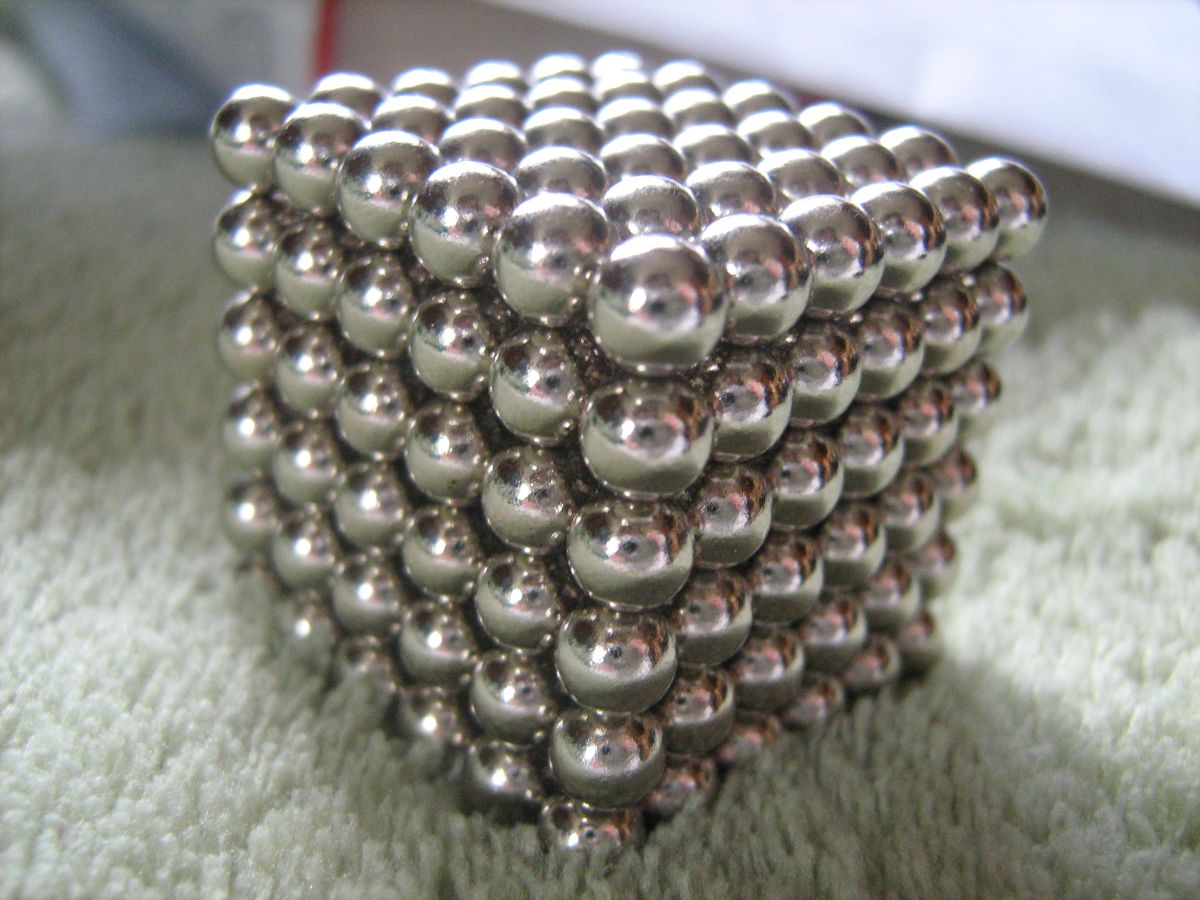
Many of us first came across neodymium magnets as a simple curiosity. Credit: XRDoDRX, CC BY-SA 3.0

Rare earth materials have become a hot button issue in recent decades, and they’ve also become a familiar part of our lives. If you remember playing with some curiously powerful magnets at some point, you’ve come across neodymium—a rare earth material of wide application. The element is alloyed with iron and boron to produce some of the strongest magnets readily available on the commercial market. You’ll find them in everything from hard drives to EV motors, and stuck to a great many fridges, where they’re quite hard to peel off. At times, neodymium is also alloyed with other rare earths, like terbium and dysprosium, which can help create powerful magnets that are able to resist higher temperatures without failure.

We come across these magnets all the time, so they might not feel particularly rare. Indeed, the rare earth elements—of which there are 17 in total—are actually fairly abundant in the Earth’s crust. The problem is that they are thinly spread, often only found as trace elements rather than in rich ore deposits that are economical to mine. Producing any useful amount of rare earth materials tends to require processing a great deal of raw material at significant cost. As it stands, China has gained somewhat of a monopoly on rare earths, controlling up to 92% of global processing capability and 60 to 70% of mining capacity. In happier times, this wouldn’t be such a problem. Sadly, with the extended battles being fought over global trade at the moment, it’s making access to rare earths both difficult and expensive.

This has become a particular problem for automotive manufacturers. It’s no good to design a wonderful motor that needs lots of fancy rare earth magnets, only to find out a year later that they’re no longer available and that production must shut down. Thus, there is a serious desire on the part of major automakers to produce high-performance motors that don’t require such fancy, hard-to-come-by materials. Even if they come with a small cost penalty in materials or manufacturing, they could save huge sums of money if they avoid a production shutdown at some point in the future. Large manufacturing operations are slow, lumbering things that need to run on long timescales to operate economically, and they can easily be derailed by supply disruptions. Securing a solid motor supply is thus key to companies looking to build EVs en masse in the immediate future.

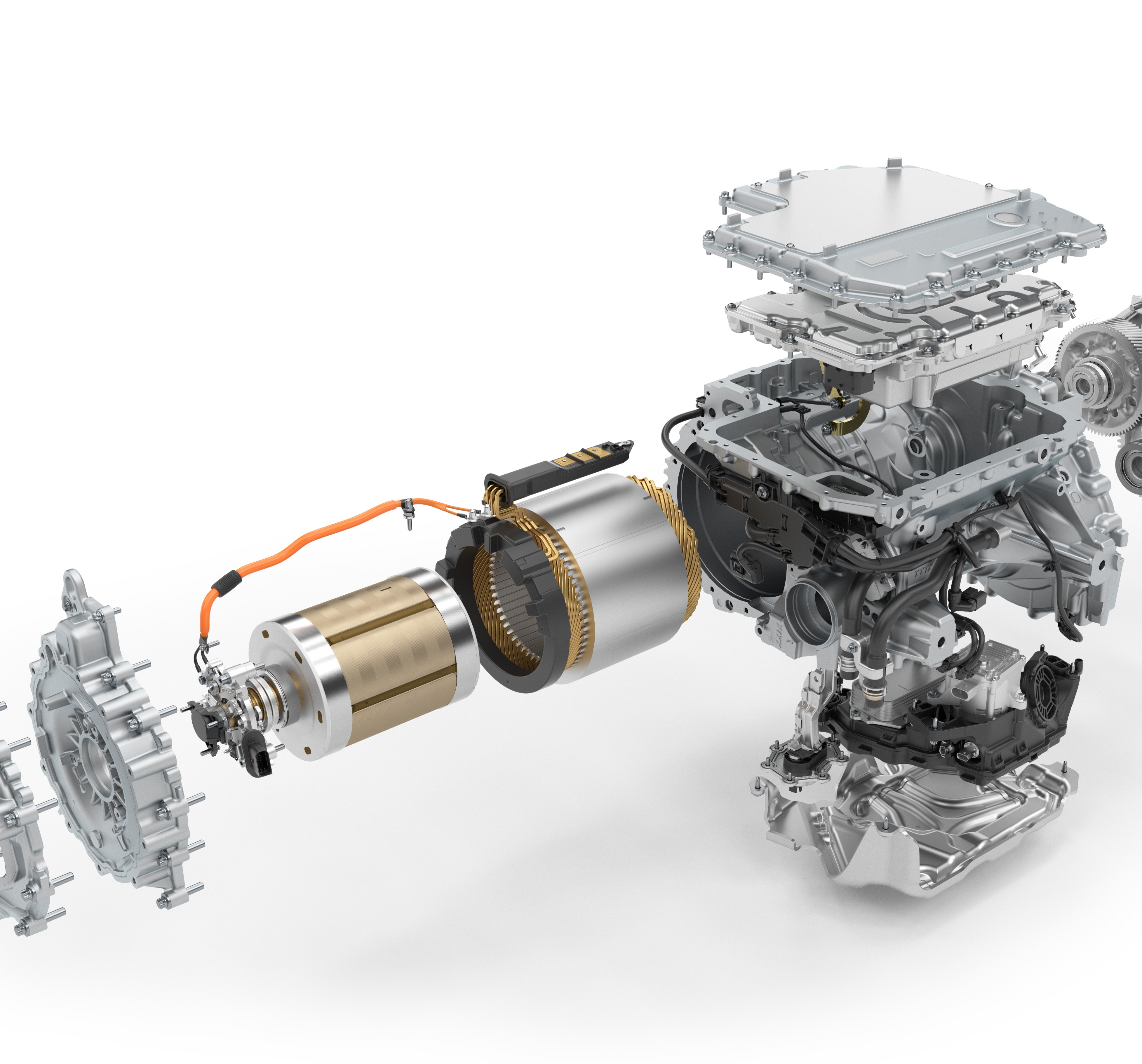
BMW’s new EV motors use electrically-excited coils in the rotor to generate the necessary magnetic field, instead of rare-earth magnets. Credit: BMW

BMW has, to a degree, solved the problem by making different kinds of motors. Rather than trying to find other ways to make powerful magnets, the German automaker put engineering efforts into developing highly-efficient motors that generate their own magnetic fields via electricity. Instead of using permanent magnets on the rotor, they use coils, which are electrically excited to generate a comparable magnetic field. Thus, rare earth magnets are replaced with coil windings, which are much easier to source. These motors are referred to as Electrically Excited Synchronous Motors (EESM), and are distinct from traditional induction motors as they are creating a magnetic field in the rotor via supplied electric current rather than via induction.

This method of construction does come with some trade offs, of course, such as heat generated by the rotor coils, and the need for slip rings or brushes to transfer power to the coils on the rotor. However, they manage to neatly sidestep the need for rare earth materials entirely. They are also more controllable. Since it’s possible to vary the magnetic field in the rotor as needed, this can be used to make efficiency gains in low-load situations. They’re also less susceptible to damage from overtemperature that could completely destroy the magnets in a permanent magnet motor.

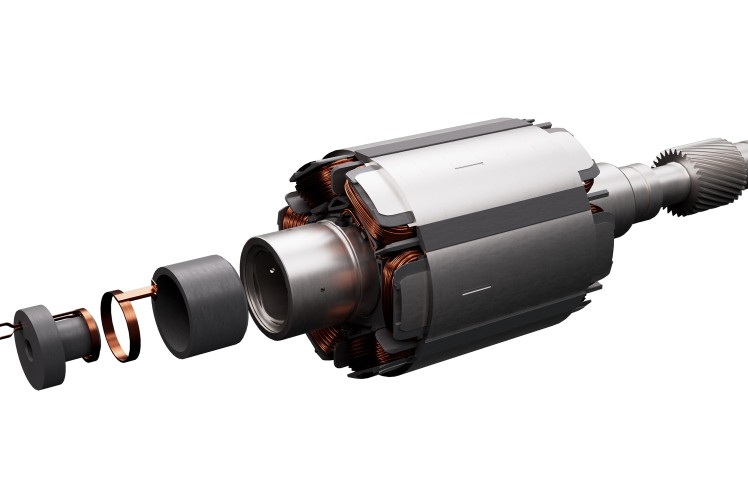
ZF is one of a number of motor manufacturers that has developed a range of EESM motors. Note the coils in the rotor where the permanent magnets would usually go. Credit: ZF

BMW was inspired to take this route because of a spike in neodymium prices well over a decade ago. Today, that decision is bearing fruit—with the company less fearful of supply chain issues and production line stoppages due to some pesky magnets. You’ll find EESM motors in a range of BMW products, from the iX1 to the i7, and even the compact CE 02 scooter. The company’s next generation of electric models will largely use EESM motors for rear-wheel-drive models, while using asynchronous motors up front to add all-wheel-drive to select models. The German automaker is not the only player in this space, either. A range of third-party motor manufacturers have gotten on board the EESM train, as well as other automakers like Nissan and Renault.

Nissan has similarly gotten onboard with EESM technology. Note the contact surfaces for the brushes used to deliver electricity to the coils in the motor.

Don’t expect every automaker to rush into this technology overnight. Retooling production lines to make different types of motors takes time, to say nothing of the supporting engineering required to control the motors and integrate them into vehicle designs. Many automakers will persevere with permanent magnet motors, doing what they can to secure rare earth supplies and shore up their supply chains. However, if the rare earth crisis drags on much longer, expect to see ever more reliance on new motor designs that don’t need rare earth magnets at all.

The World Leaders to Watch in 2026

29 December 2025 at 12:08

OPINION — The recent release of President Trump’s new National Security Strategy (NSS), with its emphasis on “the Trump corollary to the Monroe Doctrine,” and its resultant challenges, such as border security, migration, and narcotics trafficking, offer us an opportunity to closely examine leaders to watch in 2026. While previous similar columns in The Cipher Brief by this author had focused on adversaries such as Russia’s Putin, China’s Xi, North Korea’s Kim, and Iran’s Supreme Leader, today’s evolving geopolitical landscape (as described in the new NSS) suggests looking more closely at the motivations and leadership style of Venezuela’s adversary President Nicolas Maduro, Russia’s diplomatic emissary Kirill Dmitriev, and the deeply influential, newly elected Pope Leo XIV. And the gray zone is alive and well --- there are lots of ‘black swans’ flying around!

The influence of Pope Leo XIV, who has already shown himself to be a transformational Pope, is easily misunderstood. When Stalin famously quipped, “How many divisions does the Pope have,” today’s answer would be, 1.4 billion. Observers forget that the Vatican has one of the world’s oldest and formidable diplomatic and intelligence services. Several weeks ago, when Pope Leo visited the headquarters of the Italian Intelligence Service, he spoke eloquently, stating that intelligence professionals are entrusted with “the serious responsibility of constantly monitoring the dangers that may threaten the life of the Nation, in order above all to contribute to the protection of peace.”

Pope Leo – whose first words to the flock upon his appointment to the Papacy were “Peace be with you,” has shown himself to be an adept diplomat. American-born, raised, and educated, he then spent several decades in Peru, as well as 20+ years in Rome. Fluent in English, Spanish, and Italian, he is a true citizen of, and Pope for, this world.

His initial diplomatic meetings and trips, as well as his daily commentaries on Instagram and Twitter, have showcased his nuance, spirituality, faith, and promotion of diplomacy and interfaith dialogue as solutions to the world’s conflicts. In his first overseas trip to Turkey and Lebanon, he met with Turkey’s President Erdogan and emphasized Turkey’s role “as a bridge between East and West, Asia, and Europe.” The Pope’s statement highlights Turkey’s – and Erdogan’s – role (enhanced by his experienced Foreign Minister and former intelligence chief Hakan Fidan) as a potential mediator in conflicts such as Gaza and Ukraine.

Pope Leo has also weighed in on the current conflict between the United States and Venezuela, stating that President Trump should avoid a military solution, and instead utilize diplomatic and even economic pressure to resolve the conflict. Such statements are crucial, as earlier in the year, Pope Leo had met with Vice President J.D. Vance and Secretary of State Marco Rubio (both are Catholic) shortly after his election. Given the Pope’s vast influence, President Trump and his national security team should thereby borrow a page from President Ronald Reagan’s 1980s playbook and forge a new ‘Holy Alliance’ with Pope Leo and the Holy See, to seek peace in Ukraine, Venezuela, and the Middle East.

What national security news are you missing today? Get full access to your own national security daily brief by upgrading to Subscriber+Member status.

What most media and think tank commentary has missed with respect to Kirill Dmitriev’s role in diplomatic negotiations between Russia and the U.S., is why Russia’s President Putin would utilize Dmitriev in such a role, and what this portends for Russia’s negotiating posture and future in a post-war Ukraine and Europe. Dmitriev, who is young and Ukrainian-born, spent nearly 20 years in the United States as a high school student and subsequent graduate of Stanford University and Harvard Business School. Later, he worked on Wall Street for Goldman Sachs, McKinsey, and Delta Capital, a U.S. government-funded investment fund, which later became the U.S.-Russia Business Fund. American businessmen whom I know who have worked with Dmitriev, describe him as brilliant, focused, and quite knowledgeable about the United States. In 2011, the latter entity became Russia’s Direct Investment Fund, which Dmitriev heads. It’s fair to say that this fund functions de facto as Putin’s ‘family office.’ This, along with Dmitriev’s closeness to Putin and his inner circle (Dmitriev’s wife and Putin’s daughter Katerina Tikhonova are close friends), along with his prolific use of social media (X), suggests a high level of trust, as Dmitriev has led delicate Ukraine peace negotiations with President Trump’s special envoy Steve Witkoff and Jared Kushner. Putin’s use of Dmitriev in his current diplomatic role may hint at Putin’s aspirations of a renewed, strategic, post-war relationship with Russia and the United States, one focusing on a variety of business deals. I’d argue that it goes further, and that Dmitriev is being groomed for more senior leadership roles in a post-Putin Russia. So, he is most definitely a figure to watch in 2026.

Following America’s recent designation of Venezuela’s Cartel de los Soles as a foreign terrorist organization (as was done earlier with respect to the Venezuelan transnational criminal organization, Tren de Aragua), President Trump has adopted a forceful approach towards Venezuela’s leader, President Nicolas Maduro. With the largest U.S. military buildup in the Caribbean since Panama (1989), as well as a covert action authorization, President Trump has also hinted at the possibility of a diplomatic resolution to the conflict between Venezuela and America; President Maduro has suggested diplomatic talks. This begs the question whether Maduro – the leader of Venezuela since 2013 - can be negotiated with. The answer to this question – yes, in my opinion – requires a keen understanding of Maduro’s leadership style.

Maduro’s history is well-known. As a high school graduate with socialist roots, he came up through party ranks early in his career, working first as a bus driver and unionist. Numerous media reports also note his close association with Cuba and his linkages to Cuban intelligence services. After the late Hugo Chavez’s failed 1992 military coup, Maduro became linked with Chavez, Venezuela’s President from 1998-2013, and was ‘anointed’ by the charismatic, populist Chavez as his successor, winning a narrowly contested election in 2013. Maduro has often been seen as lacking in personality, charisma, or gravitas, as compared to Chavez. And many have missed his ruthlessness, cleverness, cunning, resilience, and cruelty, as he became a dictator, overturning the results of last year’s 2024 election, won by Venezuela’s opposition, led by the courageous Nobel Laureate – known as Venezuela’s ‘Iron Lady’ – Maria Corina Machado. And his incompetent socialist economic and political policies led Venezuela – once the thriving gem of Latin America, with its democratic spirit, oil riches, natural resources, and a thriving middle class - to economic ruin, penury, and a brain drain of over eight million Venezuelans. Maduro now leads a vast ‘narco state’ and criminal enterprise, funded by drugs, rare earths, minerals, gold, and oil, and beholden to criminal elements in the military, intelligence services, and transnational criminal networks, as well as his close ties to America’s adversaries such as Iran, Cuba, Russia, and China. Maduro’s criminality – America has even put a $50 million bounty on him - is what now keeps him in power.

Subscriber+Members get exclusive access to expert-driven briefings on the top national security issues we face today. Gain access to save your virtual seat now.

Maduro’s negotiation skills merit attention. Earlier this year, he showcased his negotiating prowess in releasing six American hostages after meeting with Trump’s special envoy Richard Grenell. Maduro has even written a recent letter to Pope Leo IV (who has called for dialogue and peace in Venezuela), stating, “I have great faith that Pope Leo, as I stated in the letter I sent him, will help Venezuela preserve and achieve peace and stability.”

President Trump has often shown a combination of negotiating flexibility with ‘Reaganesque’ strategic deterrence. Maduro must also be given an absolute deadline to shut down the Iranian drone base and to insist that all Iranian, Cuban, and Russian military and intelligence ‘advisors’ leave Venezuela within 24 hours --- or else! President Trump’s vast military buildup, military strikes on drug boats, seizure of Venezuela’s ‘shadow’ fleet of oil tankers, and designation of Venezuelan criminal organizations as foreign terrorist entities have boxed Maduro into a very tight corner. And America’s bold ‘exfiltration’ of Venezuela’s brave, courageous opposition leader and Nobel Laureate Maria Corina Machado sent a powerful, symbolic message to Maduro: we can get her out, and we can bring her back in, at will.

President Trump, as a former real estate CEO, can appreciate that regime change bears similarity to evicting a difficult tenant. Often, they must be bought out. Fortunately, there is ample precedent in American diplomacy in this regard. In 1991, America, working closely with the late Israeli diplomat Uri Lubrani and Ethiopia’s late Kassa Kebede (a former foreign minister and Ambassador to the UN/Geneva), paid $35 million ($83 million in 2025 dollars) – which was never fully accounted for! - to Ethiopia to allow 15,000 Beta Israel refugees to depart Ethiopia for Israel, and Ethiopia’s dictator Haile Mengistu to go into exile. Similar considerations might be considered with respect to Maduro, especially when America has spent over $1 billion USD in its current military buildup in the Caribbean.

So as 2026 approaches, all eyes are on President Trump. It’s his move. Given his and America’s prestige on the line, there is no margin for error.

The Cipher Brief is committed to publishing a range of perspectives on national security issues submitted by deeply experienced national security professionals.

Opinions expressed are those of the author and do not represent the views or opinions of The Cipher Brief.

Have a perspective to share based on your experience in the national security field? Send it to Editor@thecipherbrief.com for publication consideration.

Read more expert-driven national security insights, perspective and analysis in The Cipher Brief, because national security is everyone’s business.

Amritsar – The Land of Faith, Food and Ghee

By: pawansoni
31 January 2023 at 06:47

Punjab is a land of milk, ghee and makhhan. Some even call it a kukkad (chicken) nation whose sale hits a peak during evenings when people enjoy their whisky and that even turns the population to turn their native language to English (pun intended) 😀

On my recent trip to Amritsar I had a few hits (from unexpected outlets) and a few misses from a few well known places.

Starting with Murthal where we had the first halt.

Amrik Sukhdev: A place where I love the tandoori Paratha with soft white butter. Even though it was 1am in the morning, this huge space was so full and buzzing that we had to wait for 20 minutes. I won’t say that we had to stand in the queue as there is no queue. Guests are left on their own to search for the table making them stand next to someone else’s table who is still eating, giving them glances to get up early. What a spoiler. Wonder why they can’t have a token system?

Plus this time the paranthas were thick and tasteless as if the main cooks have already left and helpers doing the job. Lastly, the soft fresh white butter was hard.

No taste in the chowmien and serving hot milk instead of kada hua (thickened) milk only strengthened my resolve to not go back there anytime soon.

Kesar da Dhaba, Amritsar: This has been one of my favourite joint for dal makhani along with crisp tandoori parantha. But this outlet has also got more touristy over the years. I skipped my breakfast to enjoy my lunch here. And after the meal, I even had to skip my dinner apart from getting acidic burps.

Thali at Kesar Da Dhaba

Dal Makhani has loads of ghee on top but the only taste one can get in the dal is yes, of course, of ghee. I had two paranthas with my meal, not because it was delicious but because I was hungry. First parantha was overly crisp and second a tad undercooked. Not everything is bad at Kesar. Kadi was delicious with one of the softest pakodas I have had, bharta was decent without being exceptional. However paneer in palak paneer was chewy and the water bottle was served to us with a broken seal that we thankfully noticed as even the water was slightly less than what is normally there in a sealed bottle.

So would I go back to Kesar? I still might if I am on that side but making a special visit that side is totally unnecessary. Pains of taking a rickshaw or walking in those narrow lanes with a waiting of at least 30 minutes is not worth it.


Lassi: We tried lassi at Ahuja which is again average.

However we were pleasantly surprised with the lassi at Rang Panjab, a restaurant. It’s thick lassi with peda and malai on top is so good that it can beat any popular joints hand down.

Lassi at Rang Panjab

Fruit Cream: If you like fruit cream then you must try at Rana Fruit Cream. Though the temperature at which it is served is not correct and it is more like fruit ice cream, it is still so tasty that one can easily ask for a repeat.

Infact I got a kilo of this fruit cream packed for hotel and put it in the mini bar. As soon as the cream melted while it was still chilled, it tasted even better. This is a must eat.

Kulcha: There are many recommendations for Kulcha in the city. Almost 10 years ago I did a kulcha trail and even gave certificate to Ashok Kulchewala but this time I was in no mood to explore so much.

However the chef at WelcomHotel by ITC served some delicious kulchas in our breakfast that was included in the room pricing.

I wanted to try so much more. But given the overdose of ghee, makkhan etc, I ate just 5 meals including breakfast instead of 10 meals that I could have had in the duration that I was there. Just adding more and more fat doesn’t make the meal tasty. It has to be the right proportions of everything, including love.

For a detailed list of eateries, check out www.indianfoodfreak.com/amritsar

Pawan Soni

The post Amritsar – The Land of Faith, Food and Ghee appeared first on Indian Food Freak.

❌
❌