Normal view

There are new articles available, click to refresh the page.
Yesterday — 9 December 2025Main stream

New NASA Sensor Goes Hunting for Critical Minerals

9 December 2025 at 12:08
A pilot signals to a crew member before takeoff from NASA’s Armstrong Flight Research Center in Edwards, California, on Aug. 21, 2025. Accompanying him in the high-flying ER-2 aircraft is one of the most advanced imaging spectrometers in the solar system.
NASA/Christopher LC Clark

Called AVIRIS-5, it’s the latest in a long line of sensors pioneered by NASA JPL to survey Earth, the Moon, and other worlds.

Cradled in the nose of a high-altitude research airplane, a new NASA sensor has taken to the skies to help geoscientists map rocks hosting lithium and other critical minerals on Earth’s surface some 60,000 feet below. In collaboration with the U.S. Geological Survey (USGS), the flights are part of the largest airborne campaign of its kind in the country’s history.

But that’s just one of many tasks that are on the horizon for AVIRIS-5, short for Airborne Visible/Infrared Imaging Spectrometer-5, which has a lot in common with sensors used to explore other planets.

NASA’s AVIRIS flies aboard a research plane in this animation, detecting minerals on the ground such as hectorite — a lithium-bearing clay — by the unique patterns of light that they reflect. The different wavelengths, measured in nanometers, look like colorful squiggles in the box on the right. Credit: NASA’s Conceptual Image Lab

About the size of a microwave oven, AVIRIS-5 detects the spectral “fingerprints” of minerals and other compounds in reflected sunlight. Like its cousins flying in space, the sensor takes advantage of the fact that all kinds of molecules, from rare earth elements to flower pigments, have unique chemical structures that absorb and reflect different wavelengths of light.

The technology was pioneered at NASA’s Jet Propulsion Laboratory in Southern California in the late 1970s. Over the decades, imaging spectrometers have visited every major rocky body in the solar system from Mercury to Pluto. They’ve traced Martian crust in full spectral detail, revealed lakes on Titan, and tracked mineral-rich dust across the Sahara and other deserts. One is en route to Europa, an ocean moon of Jupiter, to search for the chemical ingredients needed to support life.

Image cubes illustrate the volume of data returned by JPL imaging spectrometers. The front panel shows roads and fields around Tulare, California, as seen by AVIRIS-5 during a checkout flight earlier this year. The side panels depict the spectral fingerprint captured for every point in the image.
NASA/JPL-Caltech

Another imaging spectrometer, NASA’s Moon Mineralogy Mapper, was the first to discover water on the lunar surface in 2009. “That dataset continues to drive our investigations as we look for in situ resources on the Moon” as part of NASA’s Artemis campaign, said Robert Green, a senior research scientist at NASA JPL who’s contributed to multiple spectroscopy missions across the solar system.

Prisms, black silicon

While imaging spectrometers vary depending on their mission, they have certain hardware in common — including mirrors, detector arrays, and electron-beam gratings — designed to capture light shimmering off a surface and then separate it into its constituent colors, like a prism.
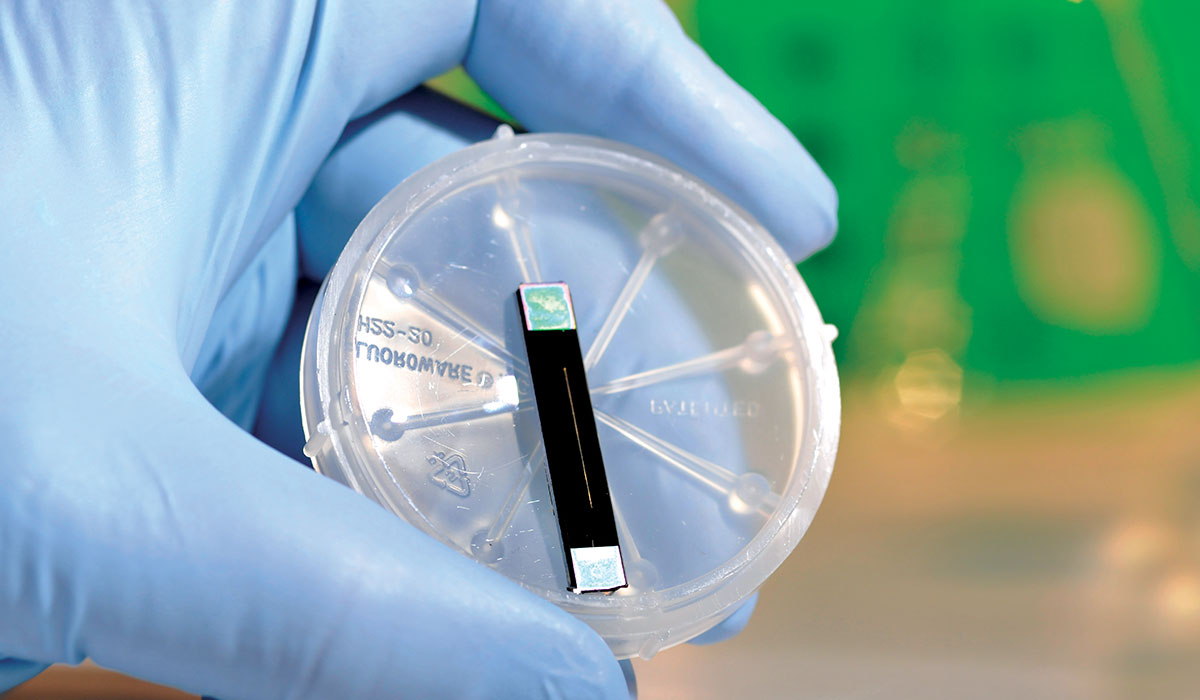
Light-trapping black silicon is one of the darkest materials ever fabricated. The technology is standard for JPL’s ultraprecise imaging spectrometers.
NASA/JPL-Caltech

Many of the best-in-class imaging spectrometers flying today were made possible by components invented at NASA JPL’s Microdevices Laboratory. Instrument-makers there combine breakthroughs in physics, chemistry, and material science with the classical properties of light discovered by physicist Isaac Newton in the 17th century. Newton’s prism experiments revealed that visible light is composed of a rainbow of colors.

Today, NASA JPL engineers work with advanced materials such as black silicon — one of the darkest substances ever manufactured — to push performance. Under a powerful microscope, black silicon looks like a forest of spiky needles. Etched by lasers or chemicals, the nanoscale structures prevent stray light from interfering with the sample by trapping it in their spikes.

Treasure hunting

The optical techniques used at the Microdevices Laboratory have advanced continuously since the first AVIRIS instrument took flight in 1986. Four generations of these sensors have now hit the skies, analyzing erupting volcanoes, diseased crops, ground zero debris in New York City, and wildfires in Alabama, among many other deployments. The latest model, AVIRIS-5, features spatial resolution that’s twice as fine as that of its predecessor and can resolve areas ranging from less than a foot (30 centimeters) to about 30 feet (10 meters).

So far this year, it has logged more than 200 hours of high-altitude flights over Nevada, California, and other Western states as part of a project called GEMx (Geological Earth Mapping Experiment). The flights are conducted using NASA’s ER-2 aircraft, operated out of the agency’s Armstrong Flight Research Center in Edwards, California. The effort is the airborne component of a larger USGS initiative, called Earth Mapping Resources Initiative (Earth MRI), to modernize mapping of the nation’s surface and subsurface.

The NASA and USGS team has, since 2023, gathered data over more than 366,000 square miles (950,000 square kilometers) of the American West, where dry, treeless expanses are well suited to mineral spectroscopy. 

An exciting early finding is a lithium-bearing clay called hectorite, identified in the tailings of an abandoned mine in California, among other locations. Lithium is one of about 50 minerals at risk of supply chain disruption that USGS has deemed critical to national security and the economy.

Helping communities capture new value from old and abandoned prospects is one of the long-term aspirations of GEMx, said Dana Chadwick, an Earth system scientist at NASA JPL. So is identifying sources of acid mine drainage, which can occur when waste rocks weather and leach into the environment.

“The breadth of different questions you can take on with this technology is really exciting, from land management to snowpack water resources to wildfire risk,” Chadwick said. “Critical minerals are just the beginning for AVIRIS-5.”

More about GEMx

The GEMx research project is expected to last four years and is funded by the USGS Earth MRI, through investments from the Bipartisan Infrastructure Law. The initiative will capitalize on both the technology developed by NASA for spectroscopic imaging, as well as the expertise in analyzing the datasets and extracting critical mineral information from them.

To learn more about GEMx visit:

https://science.nasa.gov/mission/gemx/

News Media Contacts

Andrew Wang / Andrew Good
Jet Propulsion Laboratory, Pasadena, Calif.
626-379-6874 / 818-393-2433
andrew.wang@jpl.nasa.gov / andrew.c.good@jpl.nasa.gov

Written by Sally Younger

2025-136

💾

NASA’s AVIRIS flies aboard a research plane in this animation, identifying minerals on the ground such as hectorite — a lithium-bearing clay — by the unique ...
Before yesterdayMain stream

Invention Challenge Brings Student Engineers to NASA JPL

5 December 2025 at 21:05
Student teams competed in the 2025 Invention Challenge at NASA’s Jet Propulsion Laboratory on Dec. 5. The event pits middle and high school teams against each other as they try to get handmade devices to accomplish a task.
NASA/JPL-Caltech
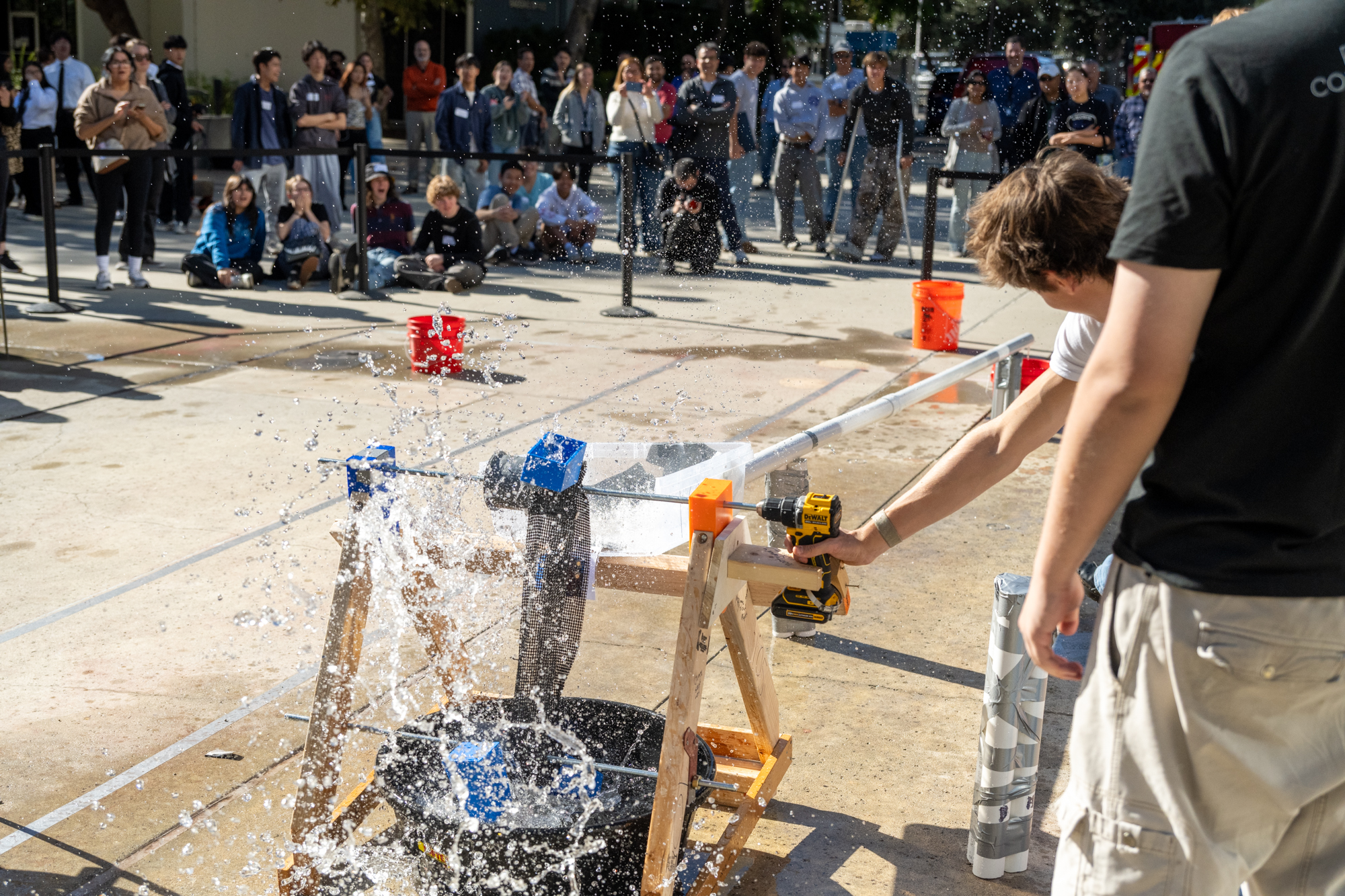
The 2025 Invention Challenge at JPL called on teams to build devices capable of moving about 2 gallons (8 liters) of water from a holding reservoir into a bucket about 16 feet (5 meters) away within 60 seconds.
Teams at JPL’s 2025 Invention Challenge built their devices with plywood, PVC pipe, duct tape, and even soda cans.
NASA/JPL-Caltech

Now in its 26th year, the event brings teams of middle and high school students to the lab to compete with home-built contraptions.

Teenagers wielding power tools and plywood demonstrated their engineering prowess at the annual Invention Challenge at NASA’s Jet Propulsion Laboratory in Southern California on Friday. Also in evidence: lots of small motors, 3D-printed gears, PVC pipe, and duct tape.

First held at JPL in 1998, the event pits middle and high school teams against each other as they try to get handmade devices to accomplish a task that changes annually. For this year’s challenge, dubbed the “Bucket Brigade Contest,” teams needed to create devices capable of moving about 2 gallons (8 liters) of water from a holding reservoir into a bucket about 16 feet (5 meters) away in 60 seconds while satisfying a long list of rules.

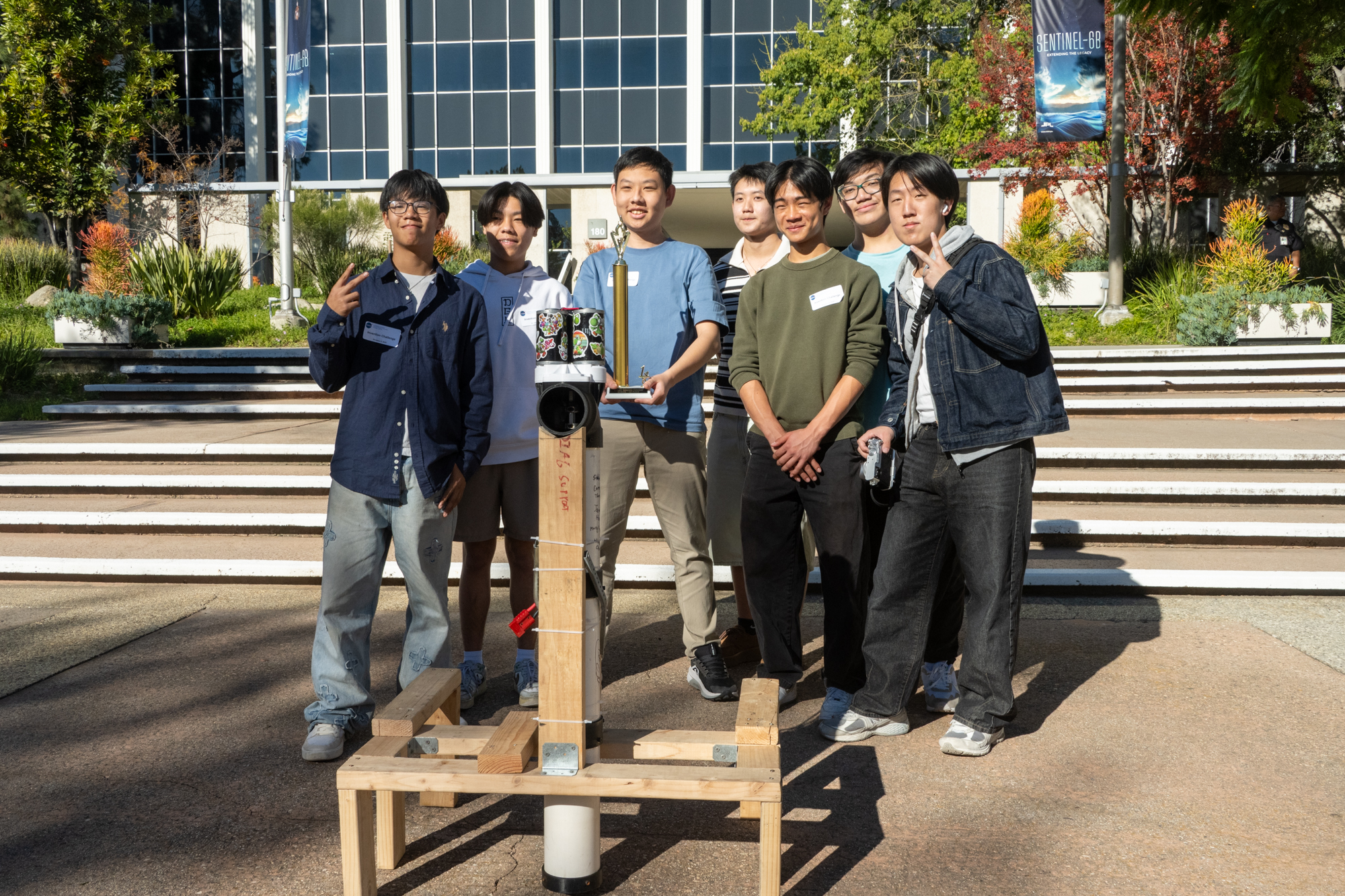
Arcadia High School’s Team Still Water won first place among student teams in the 2025 Invention Challenge at JPL.
NASA/JPL-Caltech

In all, 18 teams of students from middle and high schools across Los Angeles and Orange counties competed. First place went to Arcadia High School’s Team Still Water, which completed the task in just 6.45 seconds. Mission Viejo High’s Team Senior Citizens was close behind, finishing in 6.71 seconds. The Samo Seals of Santa Monica High came in third, at 9.18 seconds.

Five teams from outside the area — four from schools in Colorado and Massachusetts and one involving professional engineers — were invited to compete as well. Of those, the team led by retired JPL engineer Alan DeVault’s Team “Trial and Error Engineering” came in first (a repeat from last year). And “Team 6” from Pioneer Charter School of Science in the Boston area took second place (also a repeat performance from 2024). No team qualified for third place.

Some of the devices in the 2025 Invention Challenge at NASA JPL made a big splash.
NASA/JPL-Caltech

Judges named Team Clankers from Mission Viejo High most artistic, Team 6 from Pioneer Charter School of Science most unusual, and Team Winning Engineering Team (WET) from Temple City High most creative.

The event was supported by dozens of volunteers from JPL staff. JPL Fire Chief Dave Dollarhide, familiar with a bucket brigade, was a guest judge.

News Media Contact

Melissa Pamer
Jet Propulsion Laboratory, Pasadena, Calif.
626-314-4928
melissa.pamer@jpl.nasa.gov

2025-135

Share

Details

Last Updated
Dec 05, 2025
Keep Exploring

Discover More Topics From NASA

NASA Cassini Study Finds Organics ‘Fresh’ From Ocean of Enceladus

19 November 2025 at 11:29
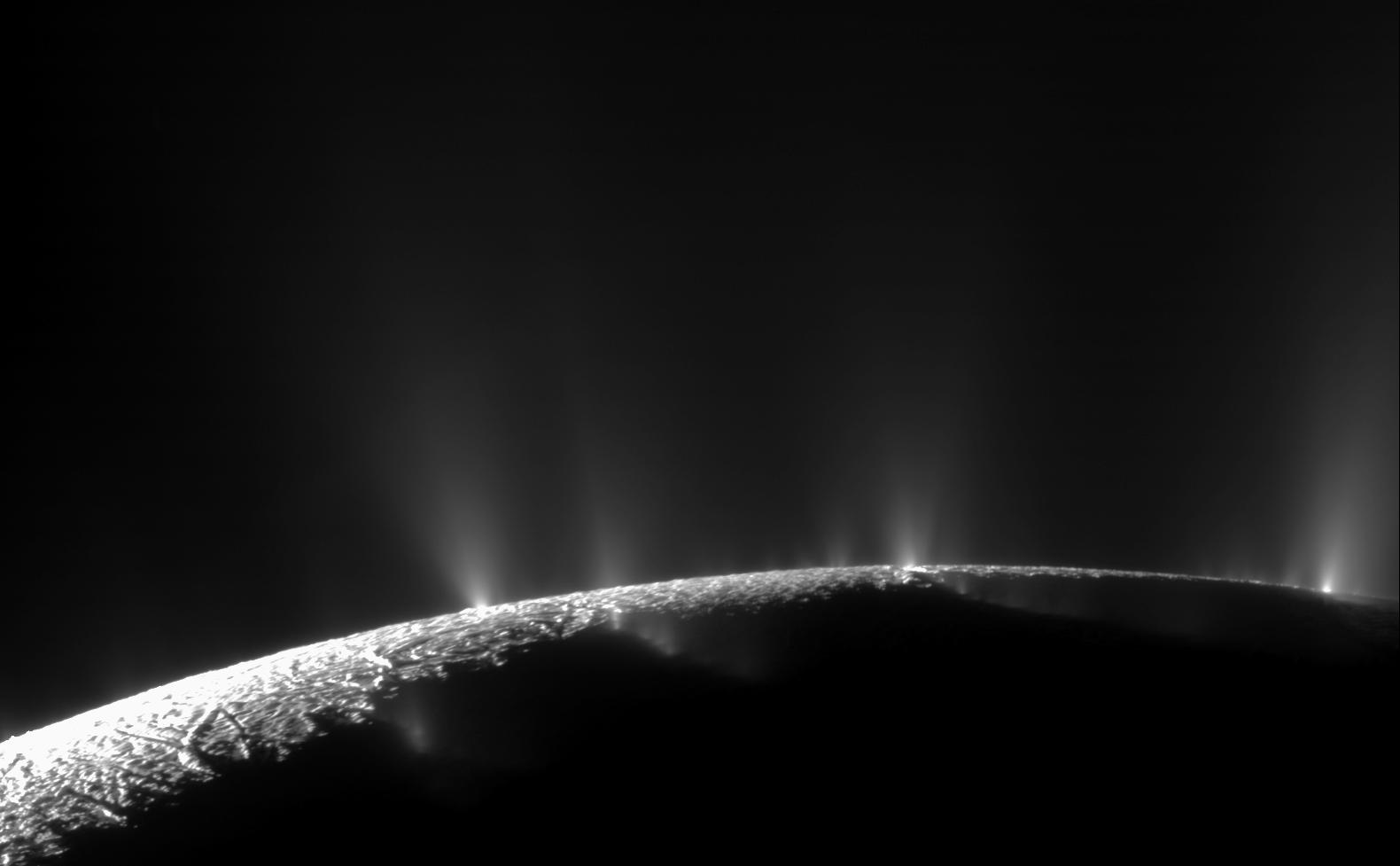
NASA Cassini spacecraft captured dramatic plumes, both large and small, spray water ice out from many locations along the famed tiger stripes near the south pole of Saturn moon Enceladus.
In this image captured by NASA’s Cassini spacecraft in 2009, dramatic plumes of water ice and vapor are seen erupting from the south pole of Saturn’s moon Enceladus.
NASA/JPL/Space Science Institute

Researchers dove deep into information gathered from the ice grains that were collected during a close and super-fast flyby through a plume of Saturn’s icy moon.

A new analysis of data from NASA’s Cassini mission found evidence of previously undetected organic compounds in a plume of ice particles ejected from the ocean that lies under the frozen shell of Saturn’s moon Enceladus. Researchers spotted not only molecules they’ve found before but also new ones that lay a potential path to chemical or biochemical activity.

The ice grains studied were collected just 13 miles (21 kilometers) from the moon’s surface and mark the first time scientists have observed this diversity of organics in fresh particles ejected from the subsurface water of Enceladus. Published Wednesday in Nature Astronomy, the findings signal an important step toward confirming active organic chemistry below the moon’s surface. This is the kind of chemical activity that could support compounds that are important to biological processes and are an essential component of life on Earth.

Besides increasing the diversity of detected organics, the recent work added a new layer to earlier findings by analyzing particles that the Cassini spacecraft collected when it flew directly through a plume — the next-best thing to diving directly into the moon’s ocean.

“Previously, we detected organics in ice grains that were years old and potentially altered by the intense radiation environment surrounding them,” said Nozair Khawaja of the Freie Universität Berlin, lead author of the study. “These new organic compounds were just minutes old, found in ice that was fresh from the ocean below Enceladus’ surface.” 

Scientists knew from previous Cassini data-mining that nitrogen- and oxygen-bearing organic compounds were present in particles from Saturn’s E ring, a faint, wide outer band around the planet fed by the icy material that fans out from Enceladus’ plumes. But the new research analyzed ice grains from a moon plume itself — in other words, grains found closest to their subsurface origin.

“These molecules we found in the freshly ejected material prove that the complex organic molecules Cassini detected in Saturn’s E ring are not just a product of long exposure to space, but are readily available in Enceladus’ ocean,” said coauthor Frank Postberg, also of Freie Universität Berlin.

Fast and fruitful

The data was collected and sent to Earth in 2008, when ice particles impacted Cassini’s Cosmic Dust Analyzer instrument. Besides being directly sourced from a plume, the ice grains had another thing going for them: They’d been smashed to smithereens as they struck the instrument during the spacecraft’s fast fly-through at 11 miles per second (about 18 kilometers per second relative to the moon).

The energy of the impact vaporized the ice grains and ionized a substantial fraction of them. Those ions were then analyzed by the instrument’s mass spectrometer, which examined their chemical makeup.

The study’s authors were able to analyze the tiniest of fragments — smaller than a thousandth of a millimeter, smaller even than a flu virus — and identify organic compounds they hadn’t seen before in plume particles.

The newly detected compounds included those from the aliphatic and cyclic ester and ether families, some with double bonds in their molecular structures. Together with the confirmed aromatic, nitrogen- and oxygen-bearing compounds, these compounds can form the building blocks to support chemical reactions and processes that could have led to more complex organic chemistry — the kind that is of interest to astrobiology and narrows the focus of where we search for life in the solar system.

After flying through the plume, the spacecraft, managed by NASA’s Jet Propulsion Laboratory in Southern California, explored the complex Saturn system for nearly another decade.

More about Cassini

The Cassini-Huygens mission was a cooperative project of NASA, ESA (European Space Agency), and the Italian Space Agency. A division of Caltech in Pasadena, JPL managed the mission for NASA’s Space Mission Directorate in Washington and designed, developed, and assembled the Cassini orbiter.

To learn more about Cassini, visit:

https://science.nasa.gov/mission/cassini/

News Media Contacts

Scott Hulme
Jet Propulsion Laboratory, Pasadena, Calif.
818-653-9131
scott.d.hulme@jpl.nasa.gov

Alise Fisher / Molly Wasser
NASA Headquarters, Washington
202-617-4977 / 240-419-1732
alise.m.fisher@nasa.gov / molly.l.wasser@nasa.gov

2025-127

Keep Exploring

Discover More Topics From NASA

❌
❌