Normal view

There are new articles available, click to refresh the page.
Before yesterdayMain stream

Omavalli thokku | Indian borage pickle

3 July 2025 at 00:42
omavalli thokku.

Thankfully that Indian borage plant, that was generously shared by my husband’s cousin is happily growing. We have made so much chutney and rasam with these leaves.I have some more leaves to make new recipes. Since it is winter, the leaf growth will be slow. So I am salvaging some of the excess leaves to make a thokku and keep for a few days so the plant can be left alone to be its best. So here is omavalli thokku.

What is a thokku?

Thokku is a borderline between pickle and chutney. It is spicy, roasted in oil and has a lot ground vegetables with spices and seasoning. It is a long standing version when compared to a chutney. The common varieties are tomato thokku, gongura leaves thokku or mango thokku. It is different from a thogayal as there are hardly any lentils used in this recipe. Thokku is used in the place of a pickle in the South Indian meal. They taste great with thair saadam or as a dip for idlies and dosas.

Ingredients to make the omavalli thokku

Omavalli leaves: fresh fleshy leaves of Indian borage plant is  a key ingredient in this recipe. They have a slight peppery flavour laced with an oregano smell. The leaves wont give much volume to the thokku but is key to the taste and flavour. We don’t have much swaps here without altering the flavour. However, you can make mint or coriander thokku the same way.

Shallots and garlic : since it is a thokku recipe is like to store and use both for rice based meals and for idly dosa breakfasts, I add shallots and garlic for flavour. These also provide a good fragrance along with the omavalli leaves.

Tomato:here is volume and sourness that is needed for the thokku. Fresh tomatoes are the best. However, they are not the best at the moment in season so plain canned one will make the cut. You can choose just plain ones or the ones that are peeled and chopped. It is important to make sure they don’t have any salt or seasoning added to them.

Tamarind: to pack in a thokku punch you need a small lime sized ball of dried tamarind. You can swap this with about a teaspoon of prepared tamarind pulp.

Spices and seasonings: salty and spicy with a hint of sour is the aim of the best thokku. So let’s start with salt. You can use seasalt, table salt or the rocksalt crystals. My parents believe in rock salt. I have used generic salt from the supermarket.

For the colour and heat dry red chillies are used. I have chosen the bydgai variety to lower the heat index and just add flavour and colour. You can choose the variety you have at home for Indian cooking. Red chilli powder is fine to be used too. Paprika will not be useful, cayanne is ok. 

Fenugreek seeds add a distinct aroma to the thokku. It is a usual ingredient in south Indian pickles.

Oil:sesame oil into a generous amount is needed to make this. The oil not only allows to cook and roast the thokku, but also acts as a preservative forming a layer on top. This cuts off aerobes and prevents the thokku from going moldy. Oil is added first at tempering and a second portion almost at finishing stages.

For tempering: mustard seeds, curry leaves and dry red chillies are needed for tempering the oil. I prefer to grind the curry leaves along with the omavalli leaves as i don’t get a lot here.

ingredients for the thokku

Lets make Indian borage pickle.

Though the ingredient list was a bit long, the making steps are simple. Slow cooking is the best hence the time taken is a bit for the best results.

Prep the ingredients: wash, drain and check the Indian borage leaves. Peel as set aside shallots and garlic to go with the blend. I have used canned tomatoes, however you can use fresh ones to make the blend.

Grind the mix:into the blender add the shallots,garlic, curry leaves, omavalli leaves, tamarind, chillies and fenugreek seeds. Add the tomatoes and blend to a smooth paste.

Tempering: add the half the quantity of sesame oil into the deep pot and set on medium heat. Add mustard seeds,dry red chillies and fenugreek seeds to it and let the mustard splutter.

Slow cooking: once the mustard seeds crackle, add the blend paste. Mix well so the the oil mixes in well. Add salt, asafoetida,  pepper powder and slow cool this on a low heat. Mix intermittently and as it thickens add the rest of the oil. Cook it the oil starts showing up on the surface. Keep mixing and cooking till it is like a paste. At this stage the thokku is ready.

Storing: Remove from heat and cool it down. Transfer to dry bottles and once completely cooled, press down a bit so the oil layer is on the top covering the paste.  Seal and store in a dark corner of the pantry.

What pairs well with omavalli thokku?

The reason I store thokku is because you can spice up a lot of lunch box ideas within minutes. So here are my best combos.

  • I like the lunchbox with thokku rice and cauliflower mezhukkuperatti. As a fusion I make thokku pasta with loads of vegetables. I use a spoon of thokku in stirfries and kadamba poriyal.
  • As a classic sit down meal, steamed rice with kootu, some vattal or vadam and this thokku is a soulful end to a massive week.
  • Dont limit the thokku to just home meals. Try a wrap with baked veggies and the thokku spread on the wrap. Ooo, yum!!

ajwain pattha achar

How to store Indian borage pickle?

The thokku stays well for upto three months. Ensure you transfer them warm into clean, dry glass bottles.
If you have made a huge batch remove a small portion into a smaller bottle to use often.this helps to reduce contamination of the bigger stock.
Use a dry spoon to remove a serving of pickle and don’t leave the pickle open for long.

Print

Omavalli thokku

Course Pickles
Cuisine Fusion, South indian
Keyword chutneys and podi, Indian vegetarian dinner, Pickle recipes
Prep Time 15 minutes
Cook Time 40 minutes
Servings 0

Equipment

  • deep pot
  • blender

Ingredients

  • 200 grams indian borage leaves
  • 400 grams tomatoes canned
  • 6-8 small shallots
  • 3-4 pods garlic ( optional)
  • 10 curry leaves
  • 1/2 tsp fenugreek seeds
  • 6-8 dry red chillies
  • 1 lime sized tamarind
  • salt to taste
  • crushed black pepper

for tempering

  • 3 tbsp sesame oil
  • 1 tsp mustard seeds
  • 2 long dry red chillies

finishing touches

  • 1/4 cup Sesame oil

Instructions

  • Peel the shallots and garlic, wash and set aside.
  • Wash and pat dry the Indian borage leaves.
  • Into the blender add the shallots, borage leaves, can of tomatoes, fenugreek, curry leaves, chillies and tamarind.
  • Blend them to form a smooth paste.
  • Into the deep pot, add the sesame oil and heat on medium warmth.
  • As the oil heats up add the mustard seeds and pieces of red chillies and let them sizzle and fry up.
  • Once the mustard splutters, add the blended mix and mix well.
  • Add salt and crushed black pepper and mix well.
  • Turn down the heat to low and let the mix cook.
  • Stir occasionally and let the mix bubble up and cook down slowly.
  • As the mix cooks down, add the rest of the oil.
  • Mix again and as the oil surfaces, the pickle is ready.

Other pickle ideas

Here are a few ideas that you can make and keep for a long while. Click on each of these highlights to take you to the respective recipe.

Stay connected

If you have not grown an Indian borage plant,I highly recommend one. They don’t rely on your green thumb,hardy and live well. In addition to making them as food the leaves can be seeped as tea.
When you have a lot of leaves, try this recipe and let us know what you think.
Pin this for later.
indian borage pickleStay subscribed and see you in the next post.

Vengaya killu vadam | sundried onion fryums

22 May 2025 at 03:24
onion killu vadam

Vengaya killu vadam or onion vadam is a flavourful crispy side to your simple Indian meal. Made in summer, this vadam stays good for the whole year and is absolutely loved during the rainy months. Try it?

Since our household is divided with respect to love for the allium family we end up with excess of onions during some grocery runs. When the sun was blazing (back to gloomy autumn now) i made a batch of vengaya killi vadam to use up the onions. With pouring rains last week, the weather was just about cozying up Netflix and chill kind of feel. So we fried a few of these as snacks. Apparently now they are no onion haters for this form of sun dried fryums. So here is the recipe for you.

What is vengaya killu vadam?

Killu vadam is a version of the old method of making sun dried grain preserves  where the cooked batter is pinched off and placed and small bits to dry rather than being extruded. Since this is fairly easy and of less washing, it seems to do a lot more of these than extruded ones. When you add shallots or onion as flavoring to the batter  and then pinch off bits to dry then you get vengaya killu vadam.

How is vengaya killu vadam different from vengaya vadagam?

Vengaya vadagam or thalippu vadagam is a very different preparation made to be used in curries rather than being fried to eat on the side of a meal or as snack. This is usually made with urad dal, chillies, curry leaves and lots of ground onions. However the vengaya killu vadam is a version of rice vadam with onions to flavour it.

Ingredients to make onion vadam

Onions: Indian onions are pale pink and not as intense as the Spanish ones. They are perfect for this recipe. However, if that is not available use the Spanish reds. If none, the yellow one is fine (it is a bit sweeter). If you get shallots that is a much better alternative. I have tried a small batch with spring onions however, the flavour did not really come through.

For the vadam maav: the vadam maav mix in this case is one that you want to puff up and fry fast as the onions can burn easily. So, I use raw white rice (ponni) and sago pearls. I prefer these in equal ratio as that gives the best results.

Spices and seasoning: I prefer to use red chilli powder and salt. You can use chilli flakes, or even crushed green chillies to make this recipe.Cumin seeds taste good to add to the mix.

onion vadam sundries

Lets make vengaya killu vadam

Soaking for the vadam maav: for this recipe we take an equal proportion of rice to sago.wash the rice till it runs clear and soak it for 4 hours. Wash and soak the sago separately.

Grinding the batter: Into the blender add the soaked rice, sago, salt red chilli powder (or green chillies) and blend into a smooth paste with enough water. Let this be in a pouring consistency.

Cooking the batter: Once the thinned out batter is ready, pour this into a deep pot set on low heat and keep mixing till the batter cooks and thickens. This is a slow process that is going to take time. Be watchful as it thicken as it will catch the bottom easily. You can add a bit of oil to help you mix well at this stage. Also, be mindful that the batter will splutter a lot and easily burn you as they bubble up.

Adding the onions: Wash peel and finely chop the onions.Once cooked the batter is fairly thick. Mix in the chopped onions and leave it covered for 10 minutes.

Drying: the batter after resting would have extracted some of the juice of the onions and flavour it. Mix well. Spread out some plates and brush them with oil ( sesame oil).  When lukewarm,wet you hands in water and pinch of bits of the thick batter on to he plates. Place the plates in hot sun. In the evening, remove from sun, pull off the pieces from the plate and flip them over. Cover with a thin cloth and leave indoor in an airy part of the house. repeat the sun process for a couple of days till the center of the killu vadam also turns glassy and crisp. Once completely dry, Store in an airtight container. 

Frying: In a frying pan add oil and let then come to a medium heat. Add a small piece of the vadam and check it it rises up easily and sizzles well. The oil is ready at this stage. Fry a few pieces at a time till the sizzling stops so as to have the center also cooked well. Remove from he oil, drain and serve with meals.

How to use this onion fryums?

When it comes to vadams unlike vattal you don’t have to restrict them to meals. They are wonderful teatime snacks and can replace popcorn too.
In classic meal sense, onion vadam tastes awesome with parippu saadam, lemon rice , shallot rice or pongal.
They can accompany any curry bowl too.

Storage and  meal prep.

Since these are sundried, storing it right is key to ensuring they don’t get spoilt and can be used throughout the year.
The dried vadam can be sealed in airtight boxes, preferably with a paper tissue lining. You can pack them in double zip lock bags for space saving storage.
When ready to use, remove the quantity you need. I don’t prefer to put back the left over to avoid any accidental moisture. You can save them separately in a bottle to use it later.
Once fried (or air fried) these vadams stay great for a week in storage container retaining their crunch.

Is this recipe vegan?

The vengaya vadam recipe is vegan. It is a great treat for anyone who is going dairy free,nut free or even gluten free.

Print

Vengaya killu vadam

Vengaya killu vadam or onion vadam is a flavourful crispy side to your simple Indian meal. Made in summer, this vadam stays good for the whole year and is absolutely loved during the rainy months. Try it?
Course Preserves
Cuisine gluten free, South indian
Keyword Indian vegetarian dinner, sun dried recipe
Prep Time 15 minutes
Cook Time 25 minutes
soaking time 4 hours
Servings 0

Equipment

  • blender
  • Steel plates
  • frying pan

Ingredients

  • 1/2 cup Raw rice
  • 1/2 cup tapioca pearls sago
  • 2 medium Onion
  • salt to taste
  • 1/2 tsp red chilli powder

Instructions

  • Wash and soak the rice and sago separately
  • After 4 hours, add salt and red chilli powder and grind to a smooth batter.
  • Ad the ground paste to a deep pot.
  • On low heat cook this mix till the mix is thick and cooked.
  • Peel and finely chop the onions.
  • Mix it into the cooked batter and cover it for 10 minutes.
  • Prepare the plates with a thin layer of oil.
  • Once the batter is lukewarm, pinch off pieces.
  • Sundry the onion vadam for 3 to 4 days till the center of the batter is glassy.
  • Once dry store in air tight bottles.

To fry the vadam

  • Set oil to heat on medium warmth.
  • Once the oil is hot, add a couple of pieces of the onion vadam and fry till the sizzling stops.
  • Drain from oil and sere with meals.

Other vadam ideas from our blog

We are slowly experimenting and building up a collection.So far we make

Sago vadam
Avalakki sandige
And leftover rice vadam

Hope these come handy for you too.

Stay connected

Making vadams and vattals seems like a long process. however,they are tacklable if you do small batches and like me resort to killu vadams than elaborate settings. When you try out this onion vadam recipe do let us know in the discussion below how it turned out for you.
Pin this for later
Stay subcribed and see you in the next post. 

onion vadam

Mor milagai vattal | Yogurt cured chillies

20 April 2025 at 18:51
Mor milagai vattal

Till the covid lock downs came i never realised my food tastes really good coz amma send the bases needed for the nice meal. So the sambhar podi, rasam podi, vattals and vadams needed to make a south Indian meal all were perfect as amma made them. This lack of skill really was a big gap that I couldn’t help learning to bridge. With ammas guidance vattals were the first try, then the sago vadams and then slowly trickier ones like mor milagai. This year as I was making some of these recipes I remembered to take images of mormiliagi to share with you.

What is mor milagai?

Sundried chilli pickle made in south Indian homes and served with lunch or dinner. These chillies literally are translated as buttermilk chillies. The chillies are marinated in traditional buttermilk. This infuses the flavours of the yogurt, tenderises it and reduces the heat of the chillies. The marinated chillies are sundried and the stored. To add to a meal, these are deep fried.

Ingredients to make mor milagai

The mor milagai vattal doesn’t require much, just three ingredients.

Chillies: green chillies are the main ingredient of this recipe. Ideally slight plump but spicy chillies are used for the recipe. However, you can use jalapeno or Serrano peppers too to make this recipe.  Slightly plump thin walled chillies are the best as they dry fast and are delicious.

Traditional yogurt :natural set yogurt is what makes this recipe best. Ideally slightly sour yogurt is preferred as it makes the chillies less intense after marinating. Churn the yogurt with a bit of water to aid in the marination.

Salt: crystal salt or table salt is best to use here. You don’t need anything fancy.

yogurt cured chilli

Let’s make yogurt cured chilli

This is probably the part that is going to test your patience and bit.

  • Wash and clean the chillies and pat them down with a kitchen towel.
  • Trim the stalks with a scissors so you a centimeter above the stalk.
  • Slit the chillies and set them aside.
  • In a jar mix together yogurt water and salt.
  • Shake it up till it becomes evenly incorporated.
  • Soak the slit chillies in this mix. Shake up the mix well and leave it overnight to soak.
  • Drain the chillies the next day morning and dry the chillies in sun. Place the remain liquid in fridge.
  • In the evening, place the partially dried chillies back in the buttermilk solution.
  • Dry them again the next day.
  • This process repeats t0 about 3 to 4 days till the buttermilk milk mix is almost over. And the chillies semi dry.
  • For the next couple of days, sun dry the chillies till they are crisp.
  • Once well dried, store in air tight bottles.
  • To deep fry, heat oil in a small wok. Once the oil is hot or sizzles when a small piece of the chilli is dropped in it, place 3 to 4 chillies at a time and roast till it us crispy.
  • Drain from the oil and the chillies are ready for your meal.

Storing the sundried chillies

Sun dried vattals and vadams are best stored in a dry box with a tight lid and away from moisture. When removing some for use, ensure your hands are dry. In about 3 to 4 months it is best to sun the vattal again so it remains crisp and moisture free.

How to use the mor milagai vattal?

Once the yogurt cured chillies are completely dry, you can prep fry them in hot oil as needed for the meals. Alternatively you can airfry them too.

Serving ideas for mor milagai

Fried mor milagai can be served with papads in any South Indian meal. Commonly paired with Thair saadam, koozhu , or ulundhu saadam, it provides a crunch and a heat kick to these nutrients dense lunches.
The mor milagai vattal is a perfect addition to the South Indian tempering when making poriyal too as it is slightly less pungent than the dried red chillies.

Print

Mor milagai vattal

Yogurt cured chiiles that are sun dried and stored to be fried as a condiment for lunch.
Course Pickles, Preserves, Traditional
Cuisine Indian, South indian
Keyword Fermented foods, summer recipes, sun dried recipe
Prep Time 10 minutes
soaking and drying time 7 days
Servings 0

Ingredients

  • 1 cup Green chillies plump ones
  • 1 cup buttermilk traditional ( cultured )
  • 1 tbsp Rock salt

Instructions

  • Wash and pat dry the chillies.
  • Slice the stalk about a centimeter above each chilli
  • Slit the chillies and set them aside till the soaking mixture is ready.
  • Into a clean bottle add the butter milk and salt and shake together till the salt dissolves well.
  • Add the prepared chillies into the mix and shake well.
  • Let this soak over night or for up to 24 hours.
  • Remove the chillies and spread on a plate.
  • Sun dry for the day.
  • In the evening, place the chillies back in the marinating butter milk mix.
  • Remove from the mix and dry again in sun.
  • Repeat this process for 3 to 4 days.
  • The sundry the chillies, till they are completely dry and crispy.
  • Store this in an airtightbox till needed.

For using the chillies

  • Deep fry a few chillies in hot oil. Drain when the colour changes and the chillies stop sizzling.
  • Drain the chillies from the oil and serve with meals.

Other sundried vattals from our blog 

Sago fryums

Lotus root vattal

Mango vattal 

Kumbalanga vattal 

Stay connected

Mor milagai vattal is a traditional South Indian recipe that few make at home. It is not hard, but a slow task so keep up the patience and try atleast once.  Let us know in the discussion below how your batch turned out with our recipe. Share the idea with friends and family.

Pin this for later

Stay subscribed and see you in the next post.

mor milagai vattal

Cheese Dip for Burgers

By: Stacy
26 January 2023 at 12:31

This recipe is for a cheese sauce for burgers that you dip your burger in instead of pouring it on the burger. This cheese dip will take your burgers to the next level.

a bowl of cheese dip on a plate with a chili cheese burger

Why Dip Your Burger in Cheese Dip?

Dipping your burger in this cheese dip takes your burger to the next level. It adds to the flavour and it’s delicious.

And who doesn’t like to dunk their food in a cheesy dip?

What Kind of Burger Goes Best With Cheese Dip?

Any burger can be served with this dip. Our favourite is a Chili Burger but you can dip plain burgers made from any meat you choose.

This dip is made from cheeses that go well with beef, pork, chicken, or turkey.

You can top your burgers with any toppings of your choice before dipping.

For tips on making burger patties, check out How To Make The Best Burgers.

Ingredients

There are five types of cheese in this recipe.

  • Velveeta
  • Gouda
  • Monterey Jack
  • Extra Old Cheddar
  • Cream Cheese

Those cheeses are melted along with salsa, jalapeno, garlic, beef broth, and beer. You can substitute the beer with additional beef broth.

If you are making a chicken or turkey burger, chicken broth can be used in place of beef broth.

A vegetable broth can also be substituted for beef broth.

Leftovers

This recipe makes a large pan of sauce. We have a big family and like to have extras for leftovers. But the recipe is easily halved for a smaller batch.

Leftovers can be stored in a container in the fridge for up to 3 days. Reheat in the microwave for 1 minute or until smooth enough to dip.


Alternative Use For This Dip

This dip can also be used on Nachos or for dipping tortilla chips.

We also use this as a sauce to top enchiladas and tacos. And it tastes really good on top of a bowl of chili.

Cheese dip is also great to dip steak sandwiches. Use it as you would a French Dip, instead of au jus, use Cheese dip. Kids especially like this.

a chili burger being dipped into a bowl of cheese dip
Print

Cheese Dip

Dipping your burger in this cheese dip takes your burger to the next level.
Course Condiment
Cuisine American, Canadian, North American
Keyword burgers, cheese, dip
Prep Time 15 minutes
Cook Time 30 minutes
Total Time 45 minutes
Servings 6
Author Stacy

Ingredients

  • 450 grams Velveeta cheese, cubed
  • 400 grams gouda, cubed
  • 400 grams Monterey Cheese, cubed
  • 400 grams extra old cheddar, cubed
  • 250 grams cream cheese, cubed
  • ½ cup beef broth
  • 1 garlic clove, minced
  • 1 small jalapeno, seeded and minced
  • ¼ cup beer
  • ½ cup salsa

Instructions

  • Add all the cubed cheese and beef broth to a large pot.
  • Heat over medium-low heat until cheeses are all melted, stirring often.
  • Stir in the garlic and jalapeno.
  • Slowly add in the beer while stirring. Dip should be thin but not runny.
  • Reduce heat to low.
  • Stir in the salsa.
  • Cook 2 minutes, stirring.
  • Serve warm.

Notes

*Additional beef broth can be used in place of the beer if you prefer. 
*If the cheese dip is too thick, add 2 Tablespoons of liquid at a time to make it thinner. 


The post Cheese Dip for Burgers appeared first on BBQ and Baking.

Dideer Nellikkai Oorugai - Instant Gooseberry Pickle

6 November 2021 at 05:58

DIDEER NELLIKKAI OORUGAI /

INSTANT GOOSEBERRY PICKLE 

Gooseberry season has arrived !Time to make lip smacking chutney , pachadi , tokku and pickles using these wonder berries containing an inexhaustible source of  nutrients necessary for good health ! Here is a quick and easy to make recipe for Nellikkai Oorugai / Gooseberry pickle. Since it is an instant pickle it can be prepared in small batches as and when required . Stays good up to a week under refrigeration.

INGREDIENTS

Gooseberries / Nellikkai - 250 gms

Sesame oil - 4 tbsps

Chilly powder - 1 tbsp

Salt - 1 tbsp

Turmeric powder - 1/4 tsp

Asafoetida - 1/4 tsp

Powdered Fenugreek seeds - 1/4 tsp 

Mustard seeds - 1 pinch 

METHOD 

1. Wash the Gooseberries/ Nellikkai thoroughly and steam them for 15 minutes and cool them.

2. The segments of the steamed berries will fall apart easily . 

3. Remove the seeds from the segments.

4. Heat oil in a kadai and splutter mustard seeds .

5. Add asafoetida , powdered fenugreek seeds and  turmeric powder  one after another.

6. Stir in the gooseberry segments .

7. Add chilly powder and salt and blend well on low flame for a minute.

8. Switch off flame and cool the pickle before storing in a clean dry jar. 

Enjoy your lip smacking Dideer Nellikkai Oorugai / Instant Gooseberry Pickle with your meal . 

Pavakka Oorugai / Bitter Gourd Pickle

PAVAKKA OORUGAI / BITTER GOURD PICKLE
 According to Ayurveda Bitter Taste or Rasa has to be included in a diet along with the other five Tastes / Rasas to maintain a healthy body. Studies have proved that the bitter vegetable Pavakka / Bitter gourd has various health benefits. It activates the digestive juices and keeps the digestive tract clean. It expels toxins and worms from the system. It is also said to be an anti diabetic food. A popular restaurant serves a Bitter gourd dish as the first course in their Ayurvedic Thali Meal. Pavakka can be used in the preparation of  various South Indian dishes like Gojju, Chips and  Pitlai. It can also be stuffed with masala. Pavakka Oorugai is an instant Bitter gourd pickle and it can be prepared in two methods. I love to start my meal with a spoon of Pavakka Oorugai with or without rice.

                                                                                   
PAVAKKA OORUGAI / 
BITTER GOURD PICKLE 
VERSION  1
INGREDIENTS 
Washed and finely chopped Bitter gourd - 1 cup
Chopped green chillies - 2 big
Chopped fresh ginger - 1 tbsp
Salt - 1/2 tsp
Juice of one big lime
Sesame oil - 2 tbsps
Mustard seeds - 1/4 tsp
Asafoetida - 1 pinch
Turmeric powder - 1 pinch
METHOD
1. Heat oil in a pan and splutter mustard seeds.
2. Stir in asafoetida and turmeric powder.
3. Add the chopped green chillies and ginger followed by chopped Bitter gourd.
4. Add salt and stir for two or three minutes.
5. Squeeze in the juice of lime and switch off flame.

                                                                                         
6. Mix well, store in a clean jar after the pickle cools down and refrigerate.
PAVAKKA OORUGI / 
BITTER GOURD PICKLE 
VERSION 2
INGREDIENTS
Washed and finely chopped Bitter gourd - 1 cup
Turmeric powder - 1/4 tsp
Chilly powder  - 1 tsp
Salt - 1 tsp
Asafoetida - 1 pinch
Fenugreek seeds - 1/2 tsp
Tamarind - a small marble size ball
Sesame oil - 2 tbsps
Mustard seeds - 1/4 tsp
METHOD
1. Take chopped Bitter gourd in a bowl.
2. Add chilly powder, turmeric powder and salt on top.
3. Dry roast fenugreek seeds till it emanates a pleasant aroma.
4. Heat 1tsp of oil and fry the tamarind till it becomes crisp and allow to cool.
5. Powder the roasted fenugreek seeds and tamarind into a fine powder.
6. Add the above powder to the ingredients in the bowl.

                                                                                  
7. Heat the remaining oil and splutter mustard seeds.
8. Add asafoetida and pour the oil on to the Pickle ingredients in the bowl.
9. Mix well till the spice coats all the chopped pieces of Bitter gourd.
10. Cover and keep it aside for a day so that the vegetable releases all its juices.

                                                                                   
If you feel that the pickle is dry you may add some more oil. Keep it refrigerated. Stir the pickle every day as long as it lasts. 

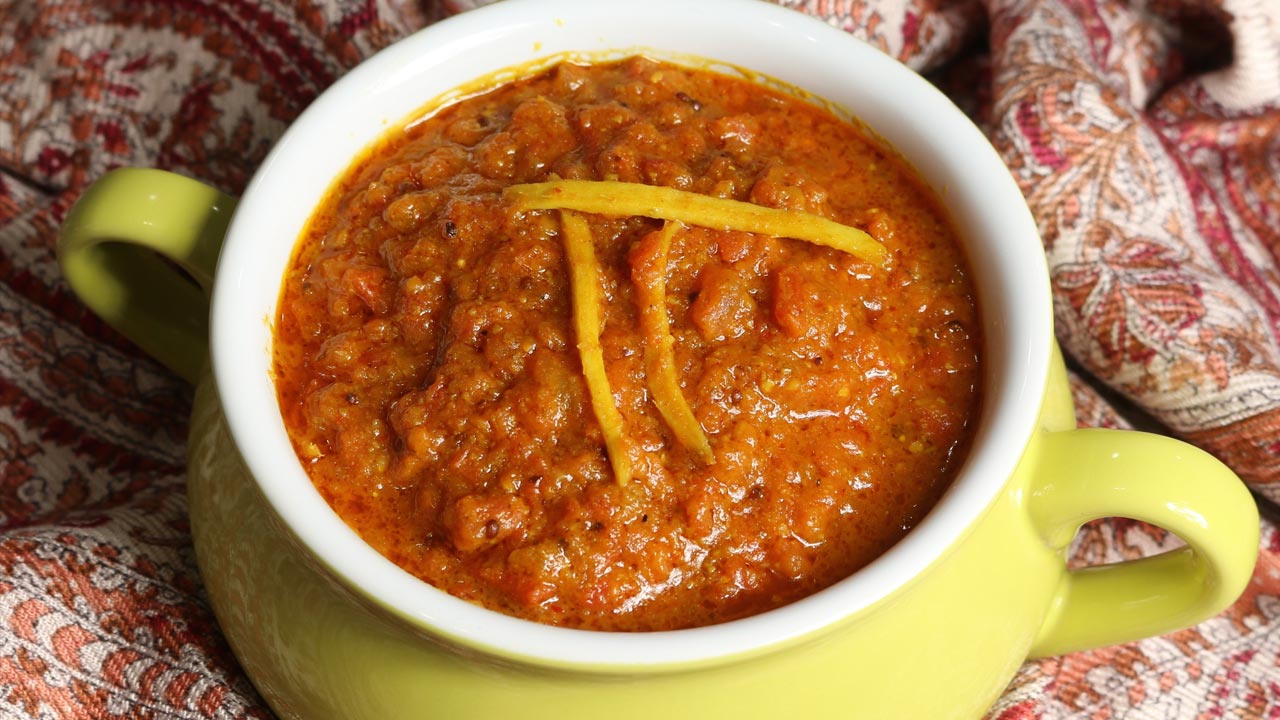
Tomato Chutney (Pickle)

23 January 2023 at 05:36
Tomato Chutney (Tomato Pickle) Recipe by Manjula
Print

Tomato Chutney (Pickle)

Tomato Chutney is tangy and spicy. I was inspired to make this particular tomato chutney from the south Indian cuisine. Chutneys and pickles are a common component of Indian meals. This unique blend of spices gives an amazing unforgettable flavor to chutney. It goes well with breads and rice or can be used as a spread for sandwiches. Tomato chutney is very easy to make and can be refrigerated for up to a month.
Course Side Dish
Cuisine Indian
Prep Time 10 minutes
Cook Time 30 minutes
Total Time 40 minutes
Servings 10 people

Ingredients

  • 4 cups tomatoes cubed in small pieces
  • 3 tbsp tamarind paste
  • 1/4 cup oil
  • 1 tsp mustard seeds rai
  • 1 tsp asafetide hing
  • 1/4 tsp turmeric haldi
  • 2 tbsp sesame seeds til
  • 2 tbsp coriander seed
  • 1 tsp fenugreek seeds
  • 10 whole dry red chilies
  • 1/4 cup sliced ginger optional
  • 1 tsp salt
  • 2 tsp sugar

Instructions

  • In a small frying pan dry roast red chilies, over low medium heat, stirring continuously to cook evenly till they are darker in color, this should take about 2 minutes. Remove from the frying pan.
  • In the same pan, dry roast sesame seeds, coriander seeds, and fenugreek seeds over low medium heat individually stirring continuously to cook evenly for about less than a minutes. Don’t over roast.
  • In a same pan add 2 teaspoons of oil when oil is moderately hot add ginger and stir-fry on low medium heat for about 3 minutes until ginger start catching the light brown color from the sides. Set aside.
  • After spices cool of grind them into the powder. Set aside.
  • In a blender crush the tomatoes do not make a paste. Set aside.
  • In a pan heat remaining oil over medium high heat, oil should be moderately hot add mustard seeds, after they crack add asafetida. Now add tomatoes, and tamarind paste. Stir and cook for about 10 minutes semi covered (after tomato comes to boil start splattering) or until oil start separating.
  • Add the roasted spice powder, ginger, turmeric, salt and sugar, reduce the heat to low medium and cook for about another 8 minutes or until chutney is thick and oil is separated.

Notes

I like to serve tomato chutney with rava dosa, vada or spread on sandwich.

Originally posted 2015-04-08 22:32:07.

The post Tomato Chutney (Pickle) appeared first on Manjula's Kitchen.

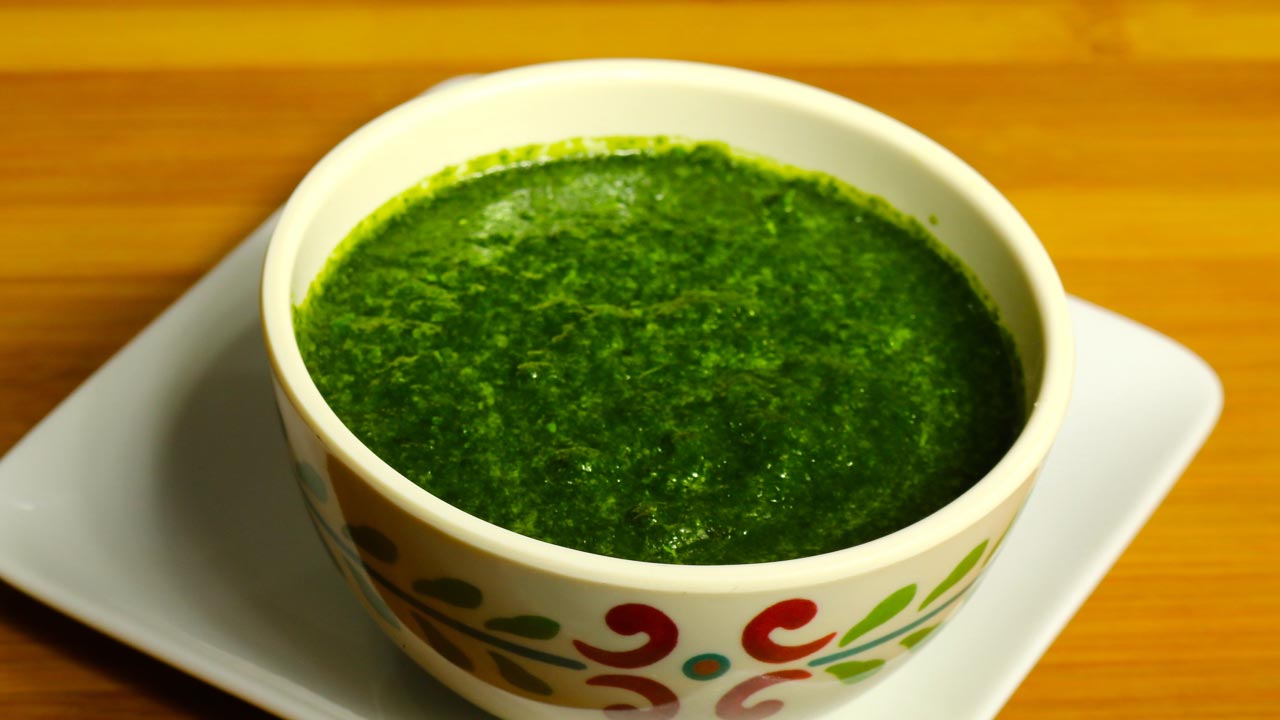
Mint Chutney – Indian Condiment

19 January 2023 at 05:18

Mint chutney is a delicious condiment, blend of mint and cilantro combined with spices. Most Indian snacks are incomplete without chutney. Chutney also tastes great with a main meal. Try using mint chutney as a spread for your sandwiches – it tastes great!

Recipe will serve 6.

Preparation time 15 minutes

Cooking time 10 minutes

Mint Chutney Recipe by ManjulaIngredients:

  • 1 cup packed mint (podina) leaves all the stems removed
  • 1 cup packed Cilantro (hara dhania)roughly chopped
  • 2 tablespoons green chilies chopped (adjust to taste)
  • 2 tablespoons lemon juice (adjust to taste)
  • 1/2 inch ginger chopped
  • 1 teaspoons salt (adjust to taste)
  • 2 tablespoons sugar
  • Pinch of asafetida (hing)
  • Approx. 3 tablespoons water use as needed

Method

  1. Blend all ingredients, except the mint and cilantro, into a paste. Add mint and cilantro, a little at a time, and blend until smooth. Add water as needed.
  2. Taste and adjust salt, green chilies, or lemon juice as desire.
  3. Taste great with samosa, vegetable pakoras….

Suggestions

You can make mint chutney in large quantity in advance and freeze it in ice cube trays. Store the frozen cubes in a zip-lock plastic bag. When ready to serve, defrost as many cubes of mint chutney as needed 

Originally posted 2014-12-03 11:14:23.

The post Mint Chutney – Indian Condiment appeared first on Manjula's Kitchen.

❌
❌