Normal view

There are new articles available, click to refresh the page.
Yesterday — 15 December 2025Main stream

Frogblight threatens you with a court case: a new Android banker targets Turkish users

15 December 2025 at 02:00

In August 2025, we discovered a campaign targeting individuals in Turkey with a new Android banking Trojan we dubbed “Frogblight”. Initially, the malware was disguised as an app for accessing court case files via an official government webpage. Later, more universal disguises appeared, such as the Chrome browser.

Frogblight can use official government websites as an intermediary step to steal banking credentials. Moreover, it has spyware functionality, such as capabilities to collect SMS messages, a list of installed apps on the device and device filesystem information. It can also send arbitrary SMS messages.

Another interesting characteristic of Frogblight is that we’ve seen it updated with new features throughout September. This may indicate that a feature-rich malware app for Android is being developed, which might be distributed under the MaaS model.

This threat is detected by Kaspersky products as HEUR:Trojan-Banker.AndroidOS.Frogblight.*, HEUR:Trojan-Banker.AndroidOS.Agent.eq, HEUR:Trojan-Banker.AndroidOS.Agent.ep, HEUR:Trojan-Spy.AndroidOS.SmsThief.de.

Technical details

Background

While performing an analysis of mobile malware we receive from various sources, we discovered several samples belonging to a new malware family. Although these samples appeared to be still under development, they already contained a lot of functionality that allowed this family to be classified as a banking Trojan. As new versions of this malware continued to appear, we began monitoring its development. Moreover, we managed to discover its control panel and based on the “fr0g” name shown there, we dubbed this family “Frogblight”.

Initial infection

We believe that smishing is one of the distribution vectors for Frogblight, and that the users had to install the malware themselves. On the internet, we found complaints from Turkish users about phishing SMS messages convincing users that they were involved in a court case and containing links to download malware. versions of Frogblight, including the very first ones, were disguised as an app for accessing court case files via an official government webpage and were named the same as the files for downloading from the links mentioned above.

While looking for online mentions of the names used by the malware, we discovered one of the phishing websites distributing Frogblight, which disguises itself as a website for viewing a court file.

The phishing website distributing Frogblight

The phishing website distributing Frogblight

We were able to open the admin panel of this website, where it was possible to view statistics on Frogblight malware downloads. However, the counter had not been fully implemented and the threat actor could only view the statistics for their own downloads.
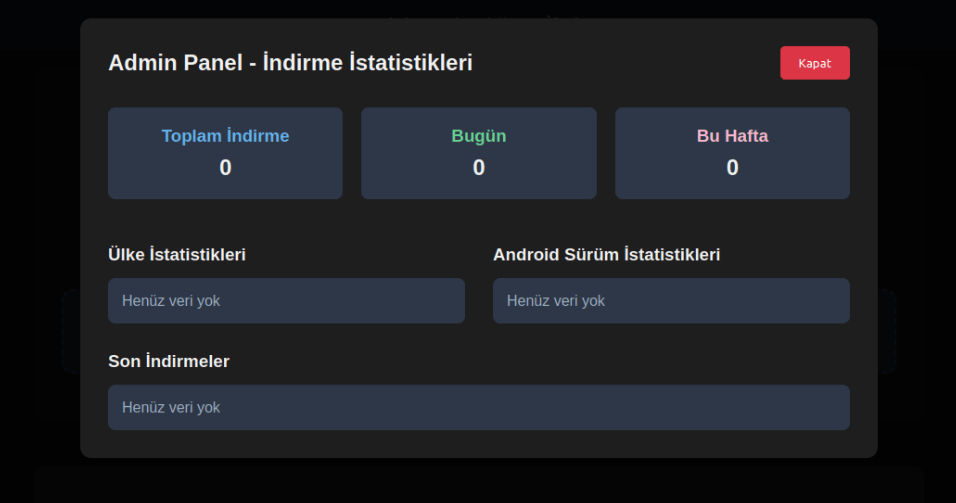
The admin panel interface of the website from which Frogblight is downloaded

The admin panel interface of the website from which Frogblight is downloaded

Additionally, we found the source code of this phishing website available in a public GitHub repository. Judging by its description, it is adapted for fast deployment to Vercel, a platform for hosting web apps.
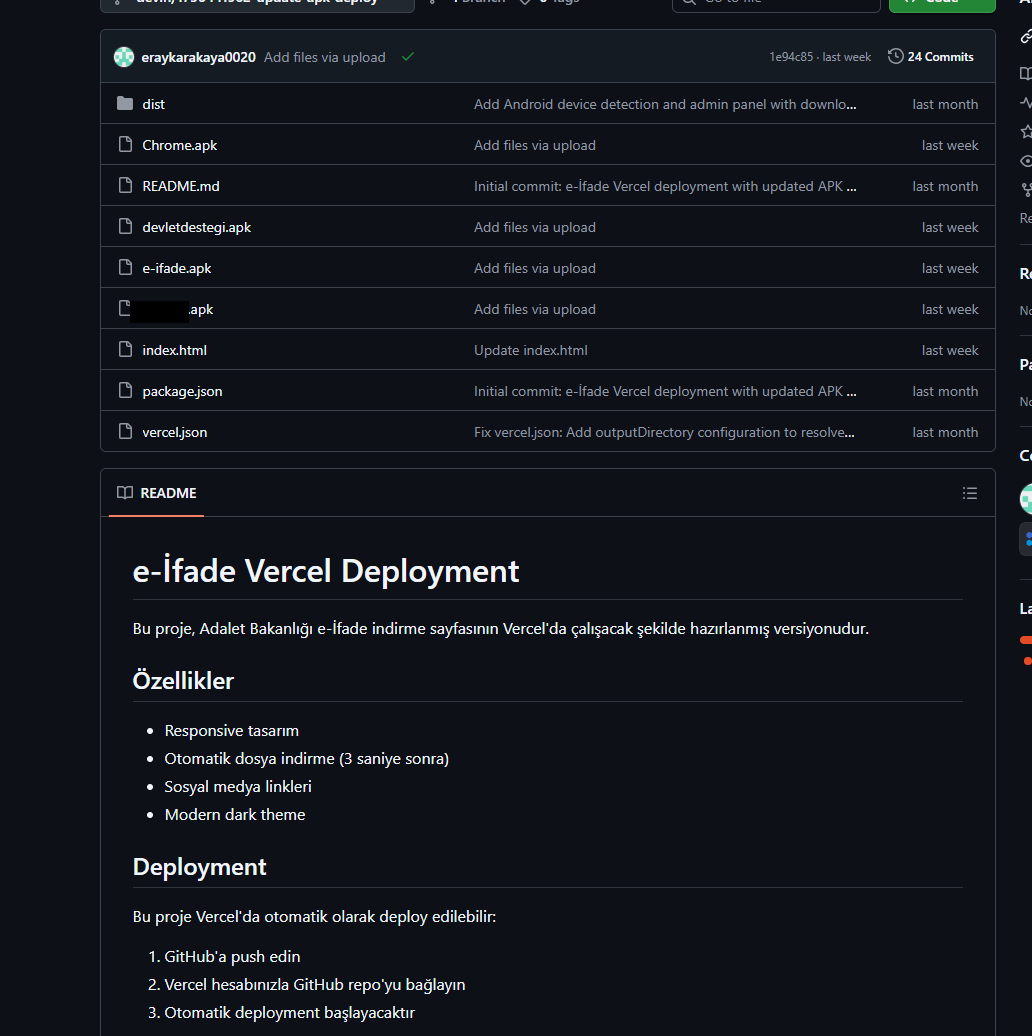
The GitHub repository with the phishing website source code

The GitHub repository with the phishing website source code

App features

As already mentioned, Frogblight was initially disguised as an app for accessing court case files via an official government webpage. Let’s look at one of the samples using this disguise (9dac23203c12abd60d03e3d26d372253). For analysis, we selected an early sample, but not the first one discovered, in order to demonstrate more complete Frogblight functionality.

After starting, the app prompts the victim to grant permissions to send and read SMS messages, and to read from and write to the device’s storage, allegedly needed to show a court file related to the user.

The full list of declared permissions in the app manifest file is shown below:

  • MANAGE_EXTERNAL_STORAGE
  • READ_EXTERNAL_STORAGE
  • WRITE_EXTERNAL_STORAGE
  • READ_SMS
  • RECEIVE_SMS
  • SEND_SMS
  • WRITE_SMS
  • RECEIVE_BOOT_COMPLETED
  • INTERNET
  • QUERY_ALL_PACKAGES
  • BIND_ACCESSIBILITY_SERVICE
  • DISABLE_KEYGUARD
  • FOREGROUND_SERVICE
  • FOREGROUND_SERVICE_DATA_SYNC
  • POST_NOTIFICATIONS
  • QUICKBOOT_POWERON
  • RECEIVE_MMS
  • RECEIVE_WAP_PUSH
  • REQUEST_IGNORE_BATTERY_OPTIMIZATIONS
  • SCHEDULE_EXACT_ALARM
  • USE_EXACT_ALARM
  • VIBRATE
  • WAKE_LOCK
  • ACCESS_NETWORK_STATE
  • READ_PHONE_STATE

After all required permissions are granted, the malware opens the official government webpage for accessing court case files in WebView, prompting the victim to sign in. There are different sign-in options, one of them via online banking. If the user chooses this method, they are prompted to click on a bank whose online banking app they use and fill out the sign-in form on the bank’s official website. This is what Frogblight is after, so it waits two seconds, then opens the online banking sign-in method regardless of the user’s choice. For each webpage that has finished loading in WebView, Frogblight injects JavaScript code allowing it to capture user input and send it to the C2 via a REST API.

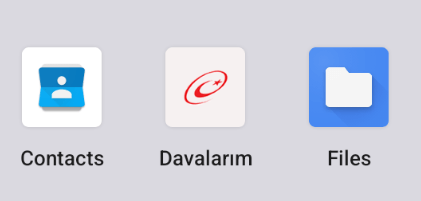
The malware also changes its label to “Davalarım” if the Android version is newer than 12; otherwise it hides the icon.
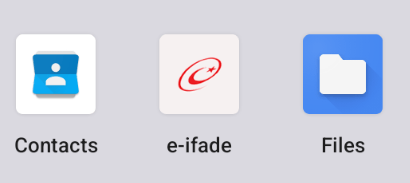
The app icon before (left) and after launching (right)

The app icon before (left) and after launching (right)

In the sample we review in this section, Frogblight uses a REST API for C2 communication, implemented using the Retrofit library. The malicious app pings the C2 server every two seconds in foreground, and if no error is returned, it calls the REST API client methods fetchOutbox and getFileCommands. Other methods are called when specific events occur, for example, after the device screen is turned on, the com.capcuttup.refresh.PersistentService foreground service is launched, or an SMS is received. The full list of all REST API client methods with parameters and descriptions is shown below.
REST API client method Description Parameters
fetchOutbox Request message content to be sent via SMS or displayed in a notification device_id: unique Android device ID
ackOutbox Send the results of processing a message received after calling the API method fetchOutbox device_id: unique Android device ID
msg_id: message ID
status: message processing status
error: message processing error
getAllPackages Request the names of app packages whose launch should open a website in WebView to capture user input data action: same as the API method name
getPackageUrl Request the website URL that will be opened in WebView when the app with the specified package name is launched action: same as the API method name
package: the package name of the target app
getFileCommands Request commands for file operations

Available commands:
●       download: upload the target file to the C2
●       generate_thumbnails: generate thumbnails from the image files in the target directory and upload them to the C2
●       list: send information about all files in the target directory to the C2
●       thumbnail: generate a thumbnail from the target image file and upload it to the C2

device_id: unique Android device ID
pingDevice Check the C2 connection device_id: unique Android device ID
reportHijackSuccess Send captured user input data from the website opened in a WebView when the app with the specified package name is launched action: same as the API method name
package: the package name of the target app
data: captured user input data
saveAppList Send information about the apps installed on the device device_id: unique Android device ID app_list: a list of apps installed on the device
app_count: a count of apps installed on the device
saveInjection Send captured user input data from the website opened in a WebView. If it was not opened following the launch of the target app, the app_name parameter is determined based on the opened URL device_id: unique Android device ID app_name: the package name of the target app
form_data: captured user input data
savePermission Unused but presumably needed for sending information about permissions device_id: unique Android device ID permission_type: permission type
status: permission status
sendSms Send information about an SMS message from the device device_id: unique Android device ID sender: the sender’s/recipient’s phone number
message: message text
timestamp: received/sent time
type: message type (inbox/sent)
sendTelegramMessage Send captured user input data from the webpages opened by Frogblight in WebView device_id: unique Android device ID
url: website URL
title: website page title
input_type: the type of user input data
input_value: user input data
final_value: user input data with additional information
timestamp: the time of data capture
ip_address: user IP address
sms_permission: whether SMS permission is granted
file_manager_permission: whether file access permission is granted
updateDevice Send information about the device device_id: unique Android device ID
model: device manufacturer and model
android_version: Android version
phone_number: user phone number
battery: current battery level
charging: device charging status
screen_status: screen on/off
ip_address: user IP address
sms_permission: whether SMS permission is granted
file_manager_permission: whether file access permission is granted
updatePermissionStatus Send information about permissions device_id: unique Android device ID
permission_type: permission type
status: permission status
timestamp: current time
uploadBatchThumbnails Upload thumbnails to the C2 device_id: unique Android device ID
thumbnails: thumbnails
uploadFile Upload a file to the C2 device_id: unique Android device ID
file_path: file path
download_id: the file ID on the C2
The file itself is sent as an unnamed parameter
uploadFileList Send information about all files in the target directory device_id: unique Android device ID
path: directory path
file_list: information about the files in the target directory
uploadFileListLog Send information about all files in the target directory to an endpoint different from uploadFileList device_id: unique Android device ID
path: directory path
file_list: information about the files in the target directory
uploadThumbnailLog Unused but presumably needed for uploading thumbnails to an endpoint different from uploadBatchThumbnails device_id: unique Android device ID
thumbnails: thumbnails

Remote device control, persistence, and protection against deletion

The app includes several classes to provide the threat actor with remote access to the infected device, gain persistence, and protect the malicious app from being deleted.

  • capcuttup.refresh.AccessibilityAutoClickService
    This is intended to prevent removal of the app and to open websites specified by the threat actor in WebView upon target apps startup. It is present in the sample we review, but is no longer in use and deleted in further versions.
  • capcuttup.refresh.PersistentService
    This is a service whose main purpose is to interact with the C2 and to make malicious tasks persistent.
  • capcuttup.refresh.BootReceiver
    This is a broadcast receiver responsible for setting up the persistence mechanisms, such as job scheduling and setting alarms, after device boot completion.

Further development

In later versions, new functionality was added, and some of the more recent Frogblight variants disguised themselves as the Chrome browser. Let’s look at one of the fake Chrome samples (d7d15e02a9cd94c8ab00c043aef55aff).

In this sample, new REST API client methods have been added for interacting with the C2.

REST API client method Description Parameters
getContactCommands Get commands to perform actions with contacts
Available commands:
●       ADD_CONTACT: add a contact to the user device
●       DELETE_CONTACT: delete a contact from the user device
●       EDIT_CONTACT: edit a contact on the user device
device_id: unique Android device ID
sendCallLogs Send call logs to the C2 device_id: unique Android device ID
call_logs: call log data
sendNotificationLogs Send notifications log to the C2. Not fully implemented in this sample, and as of the time of writing this report, we hadn’t seen any samples with a full-fledged implementation of this API method action: same as the API method name
notifications: notification log data

Also, the threat actor had implemented a custom input method for recording keystrokes to a file using the com.puzzlesnap.quickgame.CustomKeyboardService service.

Another Frogblight sample we observed trying to avoid emulators and using geofencing techniques is 115fbdc312edd4696d6330a62c181f35. In this sample, Frogblight checks the environment (for example, device model) and shuts down if it detects an emulator or if the device is located in the United States.
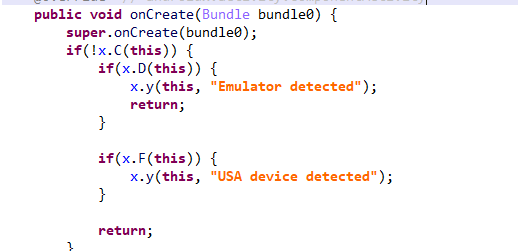
Part of the code responsible for avoiding Frogblight running in an undesirable environment

Part of the code responsible for avoiding Frogblight running in an undesirable environment

Later on, the threat actor decided to start using a web socket instead of the REST API. Let’s see an example of this in one of the recent samples (08a3b1fb2d1abbdbdd60feb8411a12c7). This sample is disguised as an app for receiving social support via an official government webpage. The feature set of this sample is very similar to the previous ones, with several new capabilities added. Commands are transmitted over a web socket using the JSON format. A command template is shown below:

{
    "id": <command ID>,
    "command_type": <command name>
    "command_data": <command data>
}

It is also worth noting that some commands in this version share the same meaning but have different structures, and the functionality of certain commands has not been fully implemented yet. This indicates that Frogblight was under active development at the time of our research, and since no its activity was noticed after September, it is possible that the malware is being finalized to a fully operational state before continuing to infect users’ devices. A full list of commands with their parameters and description is shown below:

Command Description Parameters
connect Send a registration message to the C2
connection_success Send various information, such as call logs, to the C2; start pinging the C2 and requesting commands
auth_error Log info about an invalid login key to the Android log system
pong_device Does nothing
commands_list Execute commands List of commands
sms_send_command Send an arbitrary SMS message recipient: message destination
message: message text
msg_id: message ID
bulk_sms_command Send an arbitrary SMS message to multiple recipients recipients: message destinations
message: message text
get_contacts_command Send all contacts to the C2
get_app_list_command Send information about the apps installed on the device to the C2
get_files_command Send information about all files in certain directories to the C2
get_call_logs_command Send call logs to the C2
get_notifications_command Send a notifications log to the C2. This is not fully implemented in the sample at hand, and as of the time of writing this report, we hadn’t seen any samples with a full-fledged implementation of this command
take_screenshot_command Take a screenshot. This is not fully implemented in the sample at hand, and as of the time of writing this report, we hadn’t seen any samples with a full-fledged implementation of this command
update_device Send registration message to the C2
new_webview_data Collect WebView data. This is not fully implemented in the sample at hand, and as of the time of writing this report, we hadn’t seen any samples with a full-fledged implementation of this command
new_injection Inject code. This is not fully implemented in the sample at hand, and as of the time of writing this report, we hadn’t seen any samples with a full-fledged implementation of this command code: injected code
target_app: presumably the package name of the target app
add_contact_command Add a contact to the user device name: contact name
phone: contact phone
email: contact email
contact_add Add a contact to the user device display_name: contact name
phone_number: contact phone
email: contact email
contact_delete Delete a contact from the user device phone_number: contact phone
contact_edit Edit a contact on the user device display_name: new contact name
phone_number: contact phone
email: new contact email
contact_list Send all contacts to the C2
file_list Send information about all files in the specified directory to the C2 path: directory path
file_download Upload the specified file to the C2 file_path: file path
download_id: an ID that is received with the command and sent back to the C2 along with the requested file. Most likely, this is used to organize data on the C2
file_thumbnail Generate a thumbnail from the target image file and upload it to the C2 file_path: image file path
file_thumbnails Generate thumbnails from the image files in the target directory and upload them to the C2 folder_path: directory path
health_check Send information about the current device state: battery level, screen state, and so on
message_list_request Send all SMS messages to the C2
notification_send Show an arbitrary notification title: notification title
message: notification message
app_name: notification subtext
package_list_response Save the target package names packages: a list of all target package names.
Each list element contains:
package_name: target package name
active: whether targeting is active
delete_contact_command Delete a contact from the user device. This is not fully implemented in the sample at hand, and as of the time of writing this report, we hadn’t seen any samples with a full-fledged implementation of this command contact_id: contact ID
name: contact name
file_upload_command Upload specified file to the C2. This is not fully implemented in the sample at hand, and as of the time of writing this report, we hadn’t seen any samples with a full-fledged implementation of this command file_path: file path
file_name: file name
file_download_command Download file to user device. This is not fully implemented in the sample at hand, and as of the time of writing this report, we hadn’t seen any samples with a full-fledged implementation of this command file_url: the URL of the file to download
download_path: download path
download_file_command Download file to user device. This is not fully implemented in the sample at hand, and as of the time of writing this report, we hadn’t seen any samples with a full-fledged implementation of this command file_url: the URL of the file to download
download_path: downloading path
get_permissions_command Send a registration message to the C2, including info about specific permissions
health_check_command Send information about the current device state, such as battery level, screen state, and so on
connect_error Log info about connection errors to the Android log system A list of errors
reconnect Send a registration message to the C2
disconnect Stop pinging the C2 and requesting commands from it

Authentication via WebSocket takes place using a special key.

The part of the code responsible for the WebSocket authentication logic

The part of the code responsible for the WebSocket authentication logic

At the IP address to which the WebSocket connection was made, the Frogblight web panel was accessible, which accepted the authentication key mentioned above. Since only samples using the same key as the webpanel login are controllable through it, we suggest that Frogblight might be distributed under the MaaS model.

The interface of the sign-in screen for the Frogblight web panel

The interface of the sign-in screen for the Frogblight web panel

Judging by the menu options, the threat actor can sort victims’ devices by certain parameters, such as the presence of banking apps on the device, and send bulk SMS messages and perform other mass actions.

Victims

Since some versions of Frogblight opened the Turkish government webpage to collect user-entered data on Turkish banks’ websites, we assume with high confidence that it is aimed mainly at users from Turkey. Also, based on our telemetry, the majority of users attacked by Frogblight are located in that country.

Attribution

Even though it is not possible to provide an attribution to any known threat actor based on the information available, during our analysis of the Frogblight Android malware and the search for online mentions of the names it uses, we discovered a GitHub profile containing repos with Frogblight, which had also created repos with Coper malware, distributed under the MaaS model. It is possible that this profile belongs to the attackers distributing Coper who have also started distributing Frogblight.

GitHub repositories containing Frogblight and Coper malware

GitHub repositories containing Frogblight and Coper malware

Also, since the comments in the Frogblight code are written in Turkish, we believe that its developers speak this language.

Conclusions

The new Android malware we dubbed “Frogblight” appeared recently and targets mainly users from Turkey. This is an advanced banking Trojan aimed at stealing money. It has already infected real users’ devices, and it doesn’t stop there, adding more and more new features in the new versions that appear. It can be made more dangerous by the fact that it may be used by attackers who already have experience distributing malware. We will continue to monitor its development.

Indicators of Compromise

More indicators of compromise, as well as any updates to these, are available to the customers of our crimeware reporting service. If you are interested, please contact crimewareintel@kaspersky.com.

APK file hashes
8483037dcbf14ad8197e7b23b04aea34
105fa36e6f97977587a8298abc31282a
e1cd59ae3995309627b6ab3ae8071e80
115fbdc312edd4696d6330a62c181f35
08a3b1fb2d1abbdbdd60feb8411a12c7
d7d15e02a9cd94c8ab00c043aef55aff
9dac23203c12abd60d03e3d26d372253

C2 domains
1249124fr1241og5121.sa[.]com
froglive[.]net

C2 IPs
45.138.16.208[:]8080

URL of GitHub repository with Frogblight phishing website source code
https://github[.]com/eraykarakaya0020/e-ifade-vercel

URL of GitHub account containing APK files of Frogblight and Coper
https://github[.]com/Chromeapk

Distribution URLs
https://farketmez37[.]cfd/e-ifade.apk
https://farketmez36[.]sbs/e-ifade.apk
https://e-ifade-app-5gheb8jc.devinapps[.]com/e-ifade.apk

Before yesterdayMain stream

Privacy Framework — A Modern, Data-Centric Approach for 2025

Privacy Framework — A Modern, Data-Centric Approach for 2025
PF

Privacy Framework — A Modern, Data-Centric Approach for 2025

Data-centric privacy readiness, ISMS alignment, regulatory coverage, consent, DPIA/PIA, incident response — with real-world governance lessons.

Introduction

In 2025, privacy is no longer just a compliance obligation—it has become a strategic differentiator, a board-level priority, and a resilience factor that impacts trust, brand value, and long-term sustainability. With expanding digital ecosystems, multi-jurisdictional regulations, AI-powered decision systems, and unprecedented levels of data movement across borders, enterprises today face a privacy landscape that is more complex and fast-shifting than ever before.

Action:

Start a privacy inventory project this quarter — list your top 3 data sources and assign owners for each.

A Privacy Framework offers structured guidance, governance, methodologies, and operational mechanisms to ensure that personal information is collected, used, stored, processed, and shared in ways that are lawful, ethical, secure, and aligned with customer expectations. In recent years, global events—including the major flight disruption at IndiGo in December 2025—have demonstrated how operational failures, weak governance, unclear communication, and gaps in risk planning can severely impact trust. Even though the IndiGo incident was not a data breach, it highlighted how misalignment between regulation, internal capability, and operational readiness can trigger nationwide chaos. A strong privacy and governance framework would mitigate similar chaos in environments where personal data is involved.

Action:

Map one major operational process to privacy impact — e.g., customer refunds, cancellations — and identify data points used.

Why Organizations Need a Privacy Framework in 2025

Digital transformation, cloud technologies, AI-driven analytics, mobile adoption, and outsourcing have created a massive influx of structured and unstructured personal data. Business expansion across countries brings multi-jurisdictional privacy obligations. Meanwhile, customers are increasingly conscious about how their data is used, monitored, shared, monetized, or profiled. Market perception is now directly tied to privacy posture.

Action:

Run a rapid stakeholder survey (customers, partners) to capture top 3 privacy concerns within 30 days.

A Privacy Framework helps organizations operationalize data protection principles, embed privacy in business processes, implement technical and organizational safeguards, and ensure accountability through structured roles, auditability, and governance. It ensures that privacy is not a one-time project but a living, evolving capability.

Action:

Document a privacy governance RACI: who is Responsible, Accountable, Consulted, and Informed for your top 5 data flows.

Key Service Areas

Below table converts the main service activities into a quick-reference tabular layout.

Action:

Choose one service area to pilot with a small cross-functional team for 60 days.

Service Area Key Activities Regulations Coverage Product Partners
Privacy Readiness
  • Privacy-by-Design
  • Privacy Maturity Assessment
  • Procedure Blueprinting
  • PIA / DPIA
  • Breach Response & Management
GDPR, CCPA, LGPD, PDPA, PIPEDA, APP OneTrust BigID
PI Modelling & Mapping
  • Data Inventory
  • Data Flow Mapping
  • Data Modelling & Relationship
GDPR, Sectoral Laws BigID
Data Subject Rights
  • DSAR Portal
  • Identity Validation
  • Individual Request Fulfilment
  • Records & Reporting
GDPR, CCPA, PDPA, PIPEDA OneTrust
Consent & Cookie
  • Consent Categorisation
  • Consent Tracking & Revocation
  • Cookie Assessment & Scanning
GDPR, CCPA, ePrivacy (where applicable) CookieScan
Platform Solutions
  • Platform Architecture & Blueprinting
  • Implementation & Integration
  • Monitoring Dashboards
  • AI Regulatory Analysis
Depends on deployment region OneTrust Custom

Data-Centric View & Risk Landscape

Modern privacy management begins by understanding the data journey—collection, transformation, usage, storage, and archiving. This requires knowing data sources, processing activities, recipients, retention, and deletion flows.

Action:

Create a simple data-flow diagram for a single customer-facing process and keep it under 3 layers.

Typical data sources include CRM, customer services, retail systems, partner ecosystems, employee systems, and outsourcing providers. Each source adds complexity, and each requires controls mapped to legal and business obligations.

Action:

List top 5 external data partners and capture the legal basis or contract clause for data sharing with each.

Threats

Key ThreatsImpact
External & Internal AttacksData breach, reputational loss
Identity theftLegal, financial liabilities
RansomwareOperational paralysis

Drivers

DriverKey Factor
Regulatory ComplexityMulti-jurisdictional obligations
Market DemandPrivacy as competitive advantage
TechnologyAI, Cloud, IoT

SVG Infographic — Data-Centric Privacy

Data Sources Controls & Safeguards Governance Process • Policy • People Consumers Partners
Action:

Export this infographic as a PNG for stakeholder review and include it in your privacy charter deck.

Governance, Compliance & Case Study

A Privacy Framework must ensure governance, roles, monitoring, and auditability. It should include documented policies, periodic reviews, vendor oversight, and operational playbooks. Regulatory compliance alone is insufficient without implementation and continuous improvement.

Action:

Create a policy review calendar for the next 12 months and assign owners.

Real-world disruptions, like the IndiGo outage in December 2025, teach that failure modes are broader than cyberattacks. Operational or regulatory changes, poor communication, and lack of contingency planning can rapidly erode trust. The privacy parallel: a poorly handled data incident—slow notifications, confusing remediation, or no clear ownership—can cause similar reputational damage and regulatory exposure.

Action:

Draft a short incident communication template: what to say, whom to notify, and timelines for initial acknowledgement.

Issues & Challenges

Enterprises face practical hurdles that slow down privacy adoption. The table below summarises the most common challenges and suggested mitigation approaches.

Action:

Pick one challenge from the table and identify a low-cost pilot to address it within 45 days.

IssueWhy it mattersMitigation
Low awarenessEmployees and customers unaware of rights/risksTargeted training; short micro-modules
Growth vs PrivacyRevenue goals may override privacy controlsPrivacy risk scoring in product roadmap
Forced consentLegal & reputational riskDesign clear, granular consent flows
Data complexityHigh volumes, multiple formatsAutomated discovery & classification
Budget constraintsLimits tool adoption & peoplePhased tooling; focus on high-risk areas

The Way Forward

Adopt a data-centric and risk-based privacy strategy that combines strong governance, automated privacy operations, AI-enhanced compliance management, integrated incident response, transparent customer communication, comprehensive vendor oversight, scalable platform adoption, and continuous education.

Action:

Build a 90-day roadmap with milestones for governance, inventory, DSAR readiness, and one pilot automation.

The Privacy Framework must evolve with technology, regulation, and threats. It should be continuously measured, reviewed, and improved, and must be considered a strategic asset that enables business trust and sustainable growth.

Action:

Set up a monthly privacy KPI dashboard — include metrics like DSAR turnaround, PIA completion rate, and third-party control score.

Frequently Asked Questions (20)

Quick answers and guidance for executive and operational teams. The grid uses a 10x2 layout for clarity.

Action:

Select 5 FAQs relevant to your org and prepare short internal answers for stakeholder review.

1. What is a Privacy Framework?

A structured set of policies, processes, and controls to protect personal information across its lifecycle.

2. How does Privacy differ from Security?

Privacy focuses on lawful & ethical use of personal data; security provides the technical and operational safeguards.

3. What is PIA / DPIA?

Privacy Impact Assessment (PIA) or Data Protection Impact Assessment (DPIA) identifies privacy risks for projects/processes.

4. Which laws should global companies watch?

GDPR, CCPA, LGPD, PDPA, PIPEDA, APP and sectoral laws like HIPAA or GLBA.

5. What is Privacy-by-Design?

Embedding privacy into systems and processes from inception rather than as an afterthought.

6. How to handle DSARs efficiently?

Use portals, automation, identity validation, and standardized fulfilment workflows.

7. When is consent required?

Consent is required when processing lacks another valid legal basis or where explicit opt-in is mandated by law.

8. How often to review privacy policies?

At least annually, and whenever there is a significant product, legal, or operational change.

9. What role does AI play in privacy?

AI amplifies data processing risks and requires additional governance, explainability, and model monitoring.

10. How to prioritise privacy risks?

Use impact-likelihood scoring and focus on high-impact, high-likelihood scenarios first.

11. Is compliance enough?

No — compliance is a baseline. Operational readiness and culture are required for real protection.

12. How to manage third-party risk?

Contractual clauses, regular audits, data flow mapping, and continuous monitoring are essential.

13. What metrics track privacy health?

DSAR turnaround, PIA completion rate, incidents resolved, third-party control score, and training completion.

14. How to respond to a breach?

Follow your incident response plan: contain, assess, notify regulators & data subjects as required, remediate, and learn.

15. What is Data Minimization?

Collect only what is necessary and retain it no longer than required for the purpose.

16. How to handle cross-border transfers?

Use approved transfer mechanisms, SCCs, or ensure adequacy decisions where applicable.

17. Which tools help scale privacy?

OneTrust, BigID, Consent Management Platforms, DLP, and specialized DSAR tools.

18. How to integrate privacy in product dev?

Use privacy checklists, threat modelling, and mandatory PIAs for high-risk features.

19. How to train employees on privacy?

Micro-learning, role-based training, simulated DSAR exercises, and phishing/incident drills.

20. What is the ROI of privacy?

Reduced incident cost, improved customer trust, brand differentiation, and regulatory fines avoidance.

Built for: Privacy Framework review • Last updated: Dec 2025 • Designed by Hermit Crab

Keeping Security & GRC at the Forefront: Practical Guide

Keeping Security & GRC at the Forefront: Practical Guide

Keeping Security & GRC at the Forefront: Practical Guide

In today’s dynamic threat landscape — where cloud adoption, remote work, AI-driven attacks and stringent regulations are the norm — organisations must embed Security and GRC (Governance-Risk-Compliance) into every layer of business operations. This guide offers a comprehensive yet practical roadmap to help you design, deploy and sustain a resilient security posture combining rigorous governance, risk-based controls, and audit readiness.

Governance Risk Management Compliance Security Controls Monitoring & IR Culture & Awareness Integrated GRC + Security Framework

1. Governance as the Foundation

Governance defines the strategic framework for security and compliance — ensuring that every initiative aligns with business objectives, regulatory commitments, and corporate policy. It sets the tone from leadership downward, determining how risk is accepted, mitigated, or transferred, what standards apply, and who owns what. Without robust governance, even the best security tools and audit processes remain fragmented and ineffective.

A well-structured governance model codifies responsibilities for risk owners, compliance owners, control owners, and audit managers. This clarity ensures accountability, standardizes decision-making, and enables measurable control performance across the organization.

2. Risk Management — Proactive & Dynamic

Risk management helps organisations anticipate and prioritize threats rather than react to incidents after they happen. Modern risk management frameworks consider evolving factors — cloud adoption, supply-chain dependencies, third-party vendors, and the rapid rise of AI-powered threats — to evaluate what could go wrong, how likely it is, and how severe the impact would be.

Risk Management Life Cycle

StageDescription
Risk IdentificationSpot possible threats: cyber attacks, data leaks, vendor failures, regulatory fines.
Risk AnalysisAssess likelihood + impact (qualitative or quantitative).
Risk EvaluationCompare risks against organisational tolerance or risk appetite.
Risk TreatmentMitigate, transfer, accept, or avoid the risk via controls or process changes.
Continuous MonitoringTrack Key Risk Indicators (KRIs), re-evaluate after major changes (cloud, AI, vendor changes).

Embedding risk management into everyday operations — from project planning to technology adoption — helps organisations stay resilient. As new threats emerge (like AI-driven ransomware or supply-chain risks), a living risk register becomes the strategic asset.

3. Compliance That Builds Trust & Enables Growth

Compliance used to be viewed as a checkbox for audits, but in modern businesses it’s a competitive differentiator. Achieving and maintaining standards such as ISO 27001, GDPR/DPDP, PCI-DSS or SOC 2 enhances customer trust and unlocks new markets — especially when dealing with global clients.

A compliance program acts as a documented guarantee: employees follow defined processes, controls are regularly tested, and evidence is available for internal and external audits. This ensures organisations stay audit-ready, avoid penalties, and maintain credibility with partners and regulators.

Core Benefits of a Strong Compliance Program

BenefitWhy It Matters
Customer & Partner TrustClients share sensitive data only if compliance standards are demonstrable.
Operational DisciplineStandardized controls reduce human error and enforce consistent practices.
Regulatory ReadinessHelps adapt quickly to changing laws and cross-border regulations.
Market AdvantageCertifications strengthen proposals during tenders and vendor evaluations.

4. Security Controls — The Active Defense Layer

Security controls are the real-world mechanisms that protect data, infrastructure, and users — from on-prem servers to cloud workloads and remote endpoints. They form the active defense layer that complements risk assessments and compliance policies.

Categories of Security Controls

TypeDescriptionExamples
PreventiveStop threats before they happen.Firewalls, MFA, patch management, least privilege access
DetectiveDetect suspicious or malicious events in real-time.SIEM, IDS/IPS, log monitoring, anomaly detection
Corrective / RecoverRespond and recover from incidents or control failures.Backups, disaster recovery, incident response plans

In 2025 and beyond, many organizations are integrating **AI-driven security tools**, behavioral analytics, and automated detection — combining human oversight with machine speed to defend against advanced threats. :contentReference[oaicite:0]{index=0}

5. Continuous Monitoring & Incident Response — Always On

Threats evolve rapidly. Cloud misconfigurations, AI-powered malware, supply-chain compromises – these don’t wait for quarterly audits. Continuous monitoring ensures that you have real-time visibility into system health, deviations, or suspicious activities, enabling quick response and mitigation.

A well-defined Incident Response Plan (IRP) ensures clear roles, escalation paths, communication protocols and recovery procedures. Post-incident reviews feed back into risk management, compliance updates, and controls refinement — creating a feedback loop that improves cyber resilience over time.

6. People, Culture & Awareness — The Human Firewall

Even the most advanced tools and controls fail if users are unaware, untrained, or complacent. A strong security culture transforms security from a top-down mandate into a shared team responsibility.

Awareness programs, phishing simulations, regular training, and embedding security in everyday workflows makes compliance and risk-based controls part of the organizational DNA. This reduces human error, insider risks, and strengthens overall resilience.


Conclusion

Building a comprehensive GRC and security program isn’t just about ticking boxes — it’s about embedding resilience into your organization’s DNA. By combining strong governance, dynamic risk management, compliance, security controls, continuous monitoring, and a security-first culture, you build robust cyber resilience. In a world where cloud, remote operations, AI-driven threats, and evolving regulations define the landscape, this integrated approach becomes the backbone of sustainable business growth.

Start today: map your critical assets, classify risk levels, assign control owners, and define basic security & compliance processes. Even small steps taken consistently are better than large efforts done occasionally.

Frequently Asked Questions – Security & GRC
1. What does “Keeping Security & GRC at the forefront” actually mean? It means designing every business process with security and governance controls embedded from Day 1 to reduce risks, improve compliance, and strengthen decision-making.
2. Why is GRC important for modern organizations? GRC ensures consistent governance, reduces compliance violations, aligns risk with business goals, and protects the brand reputation.
3. What is the role of continuous monitoring in GRC? It provides real-time visibility into threats, control failures, policy deviations, and compliance gaps for faster decisions.
4. How does automation help in GRC? Automation reduces manual audits, eliminates data entry errors, accelerates risk assessments, and improves control reporting accuracy.
5. What frameworks support strong GRC programs? ISO/IEC 27001, ISO/IEC 42001, NIST CSF, SOC 2, COBIT, and GDPR form the backbone of most corporate governance structures.
6. How does GRC support cyber-resilience? GRC integrates risk management, incident response, disaster recovery and ensures organizations remain operational during cyber events.
7. What is the difference between Governance and Compliance? Governance defines ‘how decisions are made’; compliance ensures those decisions follow internal policies and external laws.
8. Why is risk assessment so important? Risk assessment identifies vulnerabilities, attack surfaces, and business impacts, enabling prioritization of controls and budget.
9. How does AI enhance GRC? AI improves anomaly detection, accelerates audits, automates documentation, and predicts risks using behavioural analytics.
10. What is the significance of internal audits? Internal audits validate control effectiveness, ensure policy adherence, and prepare organizations for external certification audits.
11. Why should security posture be continuously updated? Threats evolve daily, so updating controls, patching systems, and reviewing risks ensures organizations stay protected.
12. What final steps ensure long-term GRC maturity? Regular audits, policy refresh cycles, leadership reporting, business continuity planning, and culture training maintain maturity.

Data Privacy Services Powered by Privacy Ops: Achieving Global Compliance

Data Privacy Services Powered by Privacy Ops: Achieving Global Compliance

Data Privacy Services Powered by Privacy Ops

Achieving Global Compliance Through Automation and AI

Title & Introduction

The modern digital ecosystem demands more than mere compliance; it requires operationalized data privacy. The shift from ad-hoc responses to a systematic **Privacy Operations (Privacy Ops)** framework is essential for organizations dealing with vast amounts of personal information (PI). Privacy Ops integrates people, processes, and technology to manage privacy risks continuously and automatically, transforming the burden of compliance into a strategic asset. With the proliferation of regulations like GDPR, CCPA, and LGPD, manual systems are obsolete, making AI-driven, platform-enabled services the only sustainable path forward.

This article explores a comprehensive Privacy Ops solution, detailing its features, service offerings, and its ability to seamlessly manage global regulatory coverage through automation and integrated data management.

Core Service Features: The Power of Automation

A successful Privacy Ops framework is defined by its ability to reduce human error and scale quickly. The core features leverage technology to automate complex, high-volume tasks, significantly lowering **low people dependency**.

AI-Powered Regulatory Analysis

An **AI powered bot for regulatory obligations analysis** instantly scans changes in global laws. By partnering with **UCF (Unified Compliance Framework) for authority sources**, the platform ensures that compliance requirements are current and accurate, eliminating the manual effort required to track evolving privacy standards.

Unified Data Integration

Handling diverse data environments is crucial. The platform supports **50+ data stores integrated through API**, ensuring a holistic view of all personal information assets. This unified approach facilitates accurate Data Inventory and **Data flow mapping** for comprehensive PI Modelling.

Monitoring & Reporting

The system provides **Automated track and monitor status**, displayed via **Interactive and dynamic dashboards**. These dashboards offer real-time insights into compliance metrics, risk levels, and the status of **Data Subject Rights Management (DSRM)** requests, allowing for proactive intervention.

Beyond these, the offering includes **Customised templates**, website **scan**, full **consent management & reporting**, making the entire compliance lifecycle platform enabled and highly streamlined.

Holistic Service Offerings and Global Coverage

The service architecture addresses the entire privacy spectrum, from proactive readiness to reactive breach management, covering major global laws.

1. Privacy Readiness & Impact Assessment

This is the proactive phase. Services include establishing a culture of **Privacy by Design**, performing **Privacy Maturity Assessment & Procedure blueprinting**. Crucially, it manages **Data Protection Impact Assessment (DPIA)** and **Privacy Impact Assessment (PIA)** processes, which are mandatory under regulations like GDPR. Finally, a robust **Breach Response & Management** protocol is established for rapid and compliant incident handling.

2. Data Subject Rights Management (DSRM)

Managing the rights of data subjects (like access, erasure, and portability) is a major operational challenge under regulations like CCPA and GDPR. The solution provides a dedicated **Data Subject Access rights portal for intake**, implements **Data subject identity validation**, ensures **Individual Request Fulfillment**, and maintains necessary **Records & Reporting** for audit purposes.

3. Consent & Cookie Compliance

Modern compliance requires granular control over user consent. This service handles **Consent categorization and status**, along with **Consent tracking and fulfilment**. It includes **Cookies Assessment & Implementation** and continuous **Consent & Website Scanning** to ensure ongoing legal adherence to cookie policies globally.

4. Global Regulatory Coverage

The complexity of compliance is minimized by covering a wide range of mandates, including:

  • EU-General Data Protection Regulation (**GDPR**)
  • California Consumer Privacy Act (**CCPA**), US
  • Lei Geral de Proteção de Dados (**LGPD**), Brazil
  • Australian Privacy Principles (**APP**)
  • Personal Information Protection and Electronic Documents Act (**PIPEDA**), Canada
  • Personal Data Protection Act (**PDPA**), Singapore

This wide coverage, supported by product partners like **OneTrust** and **BigID**, ensures a single, harmonized approach to multiple regulatory challenges.

Visual Diagram: Privacy Ops Flow

The successful implementation of Privacy Ops follows a continuous loop, driven by data ingestion and AI analysis, leading to automated controls and feedback.

Data Ingestion AI Regulatory Analysis & PI Mapping Automated DSRM & Consent Dashboards & Continuous Monitoring

Exam-Oriented Tips

For certification exams in privacy and data protection, focus on the operational aspects and key regulatory instruments:

Mastering Acronyms and Scope

  • **DPIA vs. PIA:** Understand the specific triggers for a Data Protection Impact Assessment (GDPR) and the broader Privacy Impact Assessment (general best practice).
  • **DSRM (Data Subject Rights Management):** Focus on the 7-step process—from intake via portal to final fulfillment and record-keeping.
  • **Key Global Laws:** Memorize the scope and core rights provided by **GDPR, CCPA, and LGPD**, as they are frequently compared in scenario-based questions.
  • **Privacy by Design:** Know the 7 foundational principles, especially the proactive and preventative nature of the approach.

Practice questions involving data flow mapping and determining compliance requirements when data crosses international boundaries (e.g., EU data processed in Singapore).

FAQ (Markdown)

**Q1: What is the primary role of the AI-powered bot?**

A1: The AI bot analyzes regulatory updates and obligations from sources like UCF to ensure real-time compliance tracking.

**Q2: How does the platform handle global regulations?**

A2: It provides harmonized controls covering major laws including GDPR, CCPA, LGPD, PIPEDA, and PDPA, allowing for central management.

**Q3: What are the key steps in Data Subject Rights Management?**

A3: Intake via a dedicated portal, identity validation, fulfillment of the request (e.g., erasure), and maintaining audit records and reporting.

**Q4: What is the purpose of Data Flow Mapping?**

A4: To identify where personal data is collected, stored, processed, and shared (data inventory and relationship) across the 50+ integrated data stores.

**Q5: What is 'Privacy by Design'?**

A5: A proactive approach ensuring privacy and security are built into the system architecture and business processes from the start, not added later.
    

FAQ: Visual Summary

Q1: Primary role of the AI-powered bot? A1: Analyzes regulatory updates from UCF for real-time tracking. Q2: How does the platform handle global regulations? A2: Harmonized controls covering GDPR, CCPA, LGPD, PIPEDA, and PDPA. Q3: Key steps in Data Subject Rights Management? A3: Intake via portal, identity validation, request fulfillment, and audit records. Q4: Purpose of Data Flow Mapping? A4: To identify where PI is collected, stored, processed, and shared (Data Inventory). Q5: What is 'Privacy by Design'? A5: Proactive approach: privacy and security are built into the architecture from the start.

© 2025 TheControlCheck. All rights reserved.

Audit Management: From Opening Meeting to Closure

Audit Management: From Opening Meeting to Closure

Audit Management: From Opening Meeting to Closure

Introduction to Auditing

Auditing is a systematic and independent examination of processes, systems, or organizations to ensure compliance with established standards. A structured audit helps organizations identify gaps, mitigate risks, and promote continual improvement.

Auditing Principles & Benefits

Ethical Conduct, Fair Presentation, Due Professional Care Verified conformity, increases awareness & understanding Independence & Evidence-Based Approach Reduces risks & identifies improvement opportunities Continuous Improvement Performed regularly ensures system effectiveness

Process Approach in Auditing

Auditors can apply the process approach by ensuring the auditee:

  • Defines objectives, inputs, outputs, activities, and resources for processes
  • Analyses, monitors, measures, and improves processes
  • Understands sequence and interaction of its processes
Individual Process Input/Output, PDCA, Resources Relationship with Other Processes Flow, Interaction, Evidence, Contracts

Managing an Audit Program

Effective audit programs include planning, scheduling, and resource allocation. A well-managed program ensures audits are systematic, consistent, and align with organizational objectives.

Audit Activities

  • Opening Meeting
  • Document Review
  • On-Site Audit / Observation
  • Interviews & Evidence Collection
  • Closing Meeting

Auditor Competence & Responsibilities

Auditors must possess:

  • Knowledge of standards & regulations
  • Analytical and communication skills
  • Objectivity and ethical conduct
  • Ability to report findings accurately

Key Take Aways

Audit management is often perceived merely as a regulatory necessity, but in reality, it is a cornerstone of organizational health and strategic growth. While compliance with standards—whether ISO 27001, ISO 9001, or internal policies—is the baseline, the true value of a robust audit management system lies in its ability to transform raw data into actionable business intelligence. A systematic approach to auditing does not just verify if rules are being followed; it evaluates whether those rules are actually helping the organization achieve its objectives.

The Strategic Value of Audit Management

Audit management is often perceived merely as a regulatory necessity, but in reality, it is a cornerstone of organizational health and strategic growth. While compliance with standards—whether ISO 27001, ISO 9001, or internal policies—is the baseline, the true value of a robust audit management system lies in its ability to transform raw data into actionable business intelligence.

The Lifecycle: From Opening to Closure

The journey from the opening meeting to the closing meeting is where the integrity of the audit is established. This structured lifecycle ensures that there are no surprises and that the audit concludes with a clear roadmap for the future.

Risk Mitigation and Proactive Defense

In today’s volatile digital landscape, waiting for a breach or a failure to occur is not an option. Audit management serves as an organization’s "early warning system." By systematically reviewing controls and processes, auditors identify vulnerabilities and latent risks that might otherwise go unnoticed until they cause significant damage.

Key Insight: Effective audit management shifts an organization’s posture from reactive to proactive. Instead of scrambling to fix issues after a regulatory fine, the audit process highlights weak control environments early.

Driving Continuous Improvement

Perhaps the most critical aspect of audit management is its contribution to Continuous Improvement (CI). An audit that ends with a report filing is a wasted opportunity. By identifying non-conformities and opportunities for improvement (OFIs), audits force organizations to analyze the root causes of their problems, moving away from temporary "band-aid" fixes toward sustainable solutions.

Audit Activities Checklist

  • Opening Meeting: Confirm scope, criteria, and plan.
  • Document Review: Verify documented information against standards.
  • On-Site Audit: Observe processes and interview staff.
  • Evidence Collection: Gather objective evidence (records, logs).
  • Closing Meeting: Present findings and agree on timeline.

FAQ: Visual Summary

Q1: What is Audit Management? A1: Systematic examination from opening meeting to closure ensuring compliance. Q2: What is Process Approach in Auditing? A2: Ensures objectives, inputs, outputs, and interactions are clearly defined. Q3: What are auditor responsibilities? A3: Knowledge, ethics, analytical skills, and accurate reporting of findings. Q4: What activities are included? A4: Opening meeting, document review, observation, interviews, closing meeting.

© 2025 TheControlCheck. All rights reserved.

Overview of ISO/IEC 27001:2013 vs 2022

Overview of ISO/IEC 27001:2013 vs 2022

Overview of ISO/IEC 27001:2013 vs 2022

Introduction

ISO/IEC 27001 is the global standard for Information Security Management Systems (ISMS). The 2022 revision introduces updates aligning with evolving cybersecurity threats, risk management practices, and digital transformation requirements. Understanding the differences between the 2013 and 2022 versions is critical for professionals preparing for audits or certification exams.

Overview of ISO/IEC 27001:2013 vs 2022

The 2013 version focused on 14 control domains and 114 controls under Annex A. The 2022 version streamlined these into 4 categories with 93 updated controls, emphasizing a risk-based approach, organizational context, and alignment with modern technology practices.

  • 2013: 14 control domains, 114 controls
  • 2022: 4 control categories, 93 controls
  • New focus on cloud security, privacy, and remote work risk management
  • Integration with other management systems (ISO 22301, ISO 9001)

Core Clauses and Annex Controls

Both versions follow a high-level structure (Annex SL), but the 2022 update introduces:

  1. Context of the organization
  2. Leadership & commitment
  3. Planning and risk assessment
  4. Support & awareness
  5. Operation and performance evaluation
  6. Improvement

Annex controls are now grouped under 4 categories:

  • Organizational
  • People
  • Physical
  • Technological

ISMS Process: Step-by-Step

Implementing an ISMS involves several systematic steps:

  1. Define the scope of ISMS
  2. Establish an information security policy
  3. Perform risk assessment & treatment planning
  4. Implement controls
  5. Monitor, measure, and evaluate effectiveness
  6. Conduct internal audits and management review
  7. Continual improvement based on findings

Awareness & Training

Awareness programs and training sessions are essential to:

  • Ensure all employees understand security policies
  • Align roles & responsibilities
  • Promote a security-first culture
  • Prepare for internal & external audits

Exam-Oriented Tips

Key points for ISO/IEC 27001 exams:

  • Focus on differences between 2013 vs 2022
  • Memorize the 4 main control categories and 93 controls (2022)
  • Understand ISMS PDCA cycle steps
  • Prepare for scenario-based questions on risk treatment and audit findings
  • Be familiar with Annex SL high-level structure

Visual Diagram: ISMS Process Overview

ISMS Scope & Policy Risk Assessment & Treatment Implement Controls Monitor & Improve

FAQ: Visual Overview

Q1: Differences between ISO/IEC 27001:2013 & 2022? A1: 2022 reduces controls to 93 & groups into 4 categories. Q2: How many clauses in both versions? A2: Both follow Annex SL with 10 clauses (context, leadership, planning, etc.) Q3: What is the PDCA cycle? A3: Plan → Do → Check → Act; ensures continuous improvement. Q4: How to prepare for ISO/IEC 27001 exam? A4: Focus on clauses, controls, ISMS process & scenario-based questions. Q5: Are 2013 controls still valid? A5: Mapped to 2022; transition based on risk assessment & updated controls.

© 2025 TheControlCheck. All rights reserved.

What Is GRC, and How AI Governance Is Transforming It in 2026


What Is GRC and How AI Governance Is Transforming It in 2026

The world of Governance, Risk, and Compliance (GRC) is evolving faster than ever. With enterprises adopting AI-powered tools across all departments, organisations are realising that effective AI governance is no longer optional. It is now a core pillar of modern GRC.

This article explains what GRC means today, how AI governance fits inside GRC, the global frameworks shaping AI adoption, the maturity models, the Responsible AI skills companies expect, and why mastering AI governance creates a competitive advantage for professionals entering or growing in GRC.


1. What Is GRC? (Simple Definition)

GRC stands for Governance, Risk, and Compliance. It is a structured approach that ensures an organization:

  • Governance: Makes decisions responsibly and ethically
  • Risk Management: Identifies, assesses, and reduces risks
  • Compliance: Meets laws, standards, and regulatory requirements

In 2026, GRC is no longer just about audits or documentation. It is a strategic capability that helps companies scale, respond to cyber threats, maintain trust, and prevent legal problems.

Traditional GRC Pillars

  • Policies & Governance Models
  • Risk Management Frameworks
  • Compliance Requirements
  • Internal Controls & Testing
  • Audit Management
  • Reporting & Continuous Monitoring

2. Why AI Governance Is Becoming the Heart of GRC

AI systems now influence major business decisions across finance, HR, cybersecurity, fraud detection, privacy, and more. Because AI models can make mistakes, show bias, or act unpredictably, companies need clear processes to govern them.

AI Governance means:

  • Ensuring AI is used ethically and responsibly
  • Managing AI-specific risks (bias, drift, transparency)
  • Protecting privacy and sensitive data
  • Building explainable and trustworthy AI models
  • Implementing continuous monitoring and audits

In simple words: AI Governance adds a new risk category → “AI Risk”.


3. Global AI Governance Standards and Frameworks

AI governance is becoming increasingly standardized. These are the most influential frameworks globally:

1. ISO/IEC 42001:2023 – AI Management System (AIMS)

The world’s first certifiable AI governance standard. It focuses on:

  • AI risk management
  • AI lifecycle controls
  • Transparency and accountability
  • Model and data governance
  • Ethical requirements

2. NIST AI Risk Management Framework

Includes four core functions:

  • Govern
  • Map
  • Measure
  • Manage

3. EU AI Act

The strongest AI regulation, classifying AI into:

  • Unacceptable risk
  • High risk
  • Limited risk
  • Minimal risk

4. OECD AI Principles

Focus on fairness, human-centered design, transparency, and accountability.

5. India’s Emerging AI Governance Approach

India is steadily moving toward Responsible AI policies aligned with global frameworks.


4. AI Governance Adoption Approach

Organizations follow a structured approach when integrating AI governance:

  1. Establish governance structure: AI committees, ethics boards
  2. Identify AI use cases: especially high-risk systems
  3. Perform AI risk assessments: data, model, fairness, privacy
  4. Implement Responsible AI controls: explainability, bias checks
  5. Continuous monitoring: real-time model behavior tracking
  6. Compliance alignment: ISO 42001, NIST, EU AI Act, DPDP

5. Responsible AI Training – A Mandatory Skill

Companies now require employees to complete:

  • Responsible AI training
  • Bias detection & prevention courses
  • AI risk assessment workshops
  • Privacy & data protection training

This makes AI safer, fair, and accountable—and increases the value of GRC professionals.


6. AI Governance Maturity Assessment

Organizations measure their AI readiness through the following levels:

  • Level 1 – Initial: No structure; ad-hoc AI use
  • Level 2 – Repeatable: Basic AI policies
  • Level 3 – Defined: Governance framework established
  • Level 4 – Managed: Formal monitoring and AI audits
  • Level 5 – Optimized: Fully integrated AI governance

Most organizations in 2026 fall between Level 2 and 3.


7. Why AI Governance Matters for Your GRC Career

AI governance is the fastest-growing discipline within GRC. Here’s why:

  • New AI regulations require expert interpreters
  • AI introduces new risk categories
  • AI audits are becoming mandatory
  • There is a huge skill gap in the industry
  • AI governance intersects with all GRC functions

Learning AI governance immediately boosts long-term career value.


8. Key Takeaways

  • AI governance is transforming modern GRC
  • ISO 42001 and NIST are leading global frameworks
  • Responsible AI is now a requirement
  • AI maturity models help organizations evolve
  • Professionals with AI governance knowledge are in high demand

FAQs

## FAQs 

### **Q1. What is the main purpose of AI governance?**
To ensure AI systems are safe, ethical, transparent, and compliant across their lifecycle.

### **Q2. Is AI governance part of GRC?**
Yes. It introduces a new category called “AI Risk” under governance, risk management, compliance, and audit.

### **Q3. Which global AI standard is considered the most important?**
ISO/IEC 42001:2023 is the most robust, globally recognized AI governance standard.

### **Q4. Does AI governance require coding skills?**
No. Not necessary. Most GRC professionals focus on documentation, risks, controls, assessments, and audits.

### **Q5. Why is AI governance important for GRC careers?**
Because regulatory pressure is increasing and organizations need professionals who understand AI risks, compliance, and ethical standards.

### **Q6. Which industries require AI governance experts?**
Banking, telecom, healthcare, e-commerce, manufacturing, consulting, and government sectors.

How to Evaluate the Risks Assessment and Treatment of IT

What is an assessment of security risks?

The process of identifying and evaluating risks for assets that could be affected by cyberattacks is known as cybersecurity risk assessment. In essence, you identify threats from both within and without; examine how they might affect things like the integrity, confidentiality, and availability of data; and figure out how much it would cost to suffer a cybersecurity incident. Using this data, you can fine-tune your cybersecurity and data protection measures to your company's actual risk tolerance.

antivirus


You must respond to three crucial questions in order to begin an IT security risk assessment:


1.       What are the data that, in the event of loss or exposure, would have a significant impact on your company's operations? These are your organization's critical information technology assets.

2.       What essential business procedures call for or make use of this data?

3.       What threats might make it harder for those business functions to function?

You are able to begin design strategies once you are aware of what you need to safeguard. But before you spend a penny or an hour of your time implementing a risk-reduction strategy, think about the type of risk you're dealing with, how important it is to you, and whether your approach is the most cost-effective.

The significance of conducting comprehensive IT security assessments on a regular basis developing a solid foundation for business success is aided by conducting comprehensive IT security assessments on a regular basis.

In particular, it gives them the ability to:

Assess potential security partners, Evaluate potential security partners, Establish, maintain, and demonstrate compliance with regulations Accurately forecast future needs.


 Explanation of cyber risk (IT risk) definition

According to the Institute of Risk Management, a cyber risk is “any risk of financial loss, disruption, or damage to the reputation of an organization from some sort of failure of its information technology systems.”

Prevent data breaches, choose appropriate protocols and controls to mitigate risks.


Cybersecurity risks include:

When taking stock of cyber risks, it is essential to detail the specific financial damage they could cause to the organization, such as legal fees, operational downtime and related profit loss, and lost business due to customer distrust. Hardware damage and subsequent data loss Malware and viruses Compromised credentials Company website failure.


The four essential components of an IT risk assessment

In a moment, we'll talk about how to evaluate each one, but first, a brief definition for each:


Threat: Anything that has the potential to harm an organization's people or assets is a threat. Natural disasters, website failures, and corporate espionage are examples.

A vulnerability is any potential flaw that would permit a threat to cause harm. A vulnerability that can make it possible for a malware attack to succeed, for instance, is out-of-date antivirus software. A vulnerability that increases the likelihood of equipment damage and downtime in the event of a hurricane or flood is a server room in the basement. Disgruntled employees and outdated hardware are two additional examples of vulnerabilities. A list of specific, code-based vulnerabilities is kept up to date in the NIST National Vulnerability Database.

The total damage an organization would suffer if a vulnerability were exploited by a threat is referred to as the impact. A successful ransomware attack, for instance, could result in not only lost productivity and costs associated with data recovery but also the disclosure of customer data or trade secrets, which could result in lost business as well as legal costs and penalties for compliance.

Probability — This is the likelihood that a danger will happen. Usually, it's a range rather than a single number.

Risk = Threat x Vulnerability x Asset. The following equation can be used to understand risk: Despite the fact that risk is represented here as a mathematical formula, it is not about numbers; It is a well-thought-out plan. Take, for instance, the scenario in which you want to determine the level of danger posed by the possibility of a system being hacked. Your risk is high if the asset is crucial and your network is extremely vulnerable (perhaps due to the absence of an antivirus solution and firewall). However, even though the asset is still critical, your risk will be medium if you have strong perimeter defences and a low vulnerability.


There is more to this than just a mathematical formula; It is a model for comprehending the connections among the factors that contribute to determining risk:


Threat is an abbreviation for "threat frequency," which is the anticipated frequency of an adverse event. One in one million people will, for instance, be struck by lightning in any given year.

The term "the likelihood that a weakness or exposure will be exploited and a threat will succeed against an organization's defences" is abbreviated as "vulnerability."

What is the organization's security environment like? If a breach does occur, how quickly can it be mitigated to avoid disaster? How likely is it that any given employee will pose an internal threat to security control, and how many of them are there?

A security incident's total financial impact is measured by its cost. Hard costs like hardware damage and soft costs like lost business and consumer confidence are included. Other expenses include:

Data loss: The theft of trade secrets could result in your competitors taking your business. Loss of trust and customer attrition could result from the theft of customer information.

System or application downtime: Customers may be unable to place orders, employees may be unable to perform their duties or communicate, and so on if a system fails to perform its primary function.

Legal repercussions: If someone steals data from one of your databases, even if the data isn't particularly valuable, you could be hit with fines and other legal fees because you didn't follow HIPAA, PCI DSS, or other data security regulations.


Security


How to conduct a security risk assessment Now, let's go over how to conduct an IT risk assessment.


1.       Identify and prioritize assets- Servers, client contact information, confidential documents from partners, trade secrets, and so on are all examples of assets. Keep in mind that what you consider valuable as a technician may not actually be the most valuable for the company. As a result, you must collaborate with management and business users to compile a list of all valuable assets. Collect, if necessary, the following data for each asset:


  • ·         Software

  • ·         Hardware

  • ·         Data

  • ·         Interfaces

  • ·         Users

  • ·         Support Personnel

  • ·         Mission or Purpose

  • ·         Criticality

  • ·         Functional requirements

  • ·         IT security policies

  • ·         IT security architecture

  • ·         Network topology

  • ·         Information storage protection

  • ·         Information flow

  • ·         Technical security controls

  • ·         Physical security environment

  • ·         Environmental security


Since most businesses only have a small budget for risk assessment, you will probably only need to cover mission-critical assets for the remaining steps. As a result, you must establish a standard for assessing each asset's significance. The asset's monetary value, legal status, and significance to the organization are common criteria. Use the standard to classify each asset as critical, major, or minor after it has been approved by management and formally incorporated into the risk assessment security policy.


2.       Identify Threats- Anything that has the potential to harm your business is a threat. While malware and hackers are probably the first to come to mind, there are many other kinds of threats as well.

Natural catastrophes. Fire, earthquakes, floods, hurricanes, and other natural disasters have the potential to destroy not only data but also servers and appliances. Consider the likelihood of various natural disasters when choosing a location for your servers. For instance, there might be a low chance of tornadoes but a high risk of flooding in your area.

Absence of hardware. The quality and age of the server or other machine determine the likelihood of hardware failure. The likelihood of failure is low for equipment of high quality that is relatively new. However, the likelihood of failure is significantly increased if the equipment is old or comes from a "no-name" vendor. No matter what industry you operate in, you should put this threat on your watch list. It is possible for people to accidentally delete important files, click on a malicious link in an email, or spill coffee on critical systems-hosting equipment.

There are three types of wrongdoing:

When someone damages your business by physically stealing a computer or server, engineering a distributed denial of service (DDOS) attack against your website, or deleting data, they are committing interference.

Your data is stolen through interception.

Impersonation is the misuse of another person's credentials, which are typically obtained through social engineering, brute force, or the dark web.

3.       Identify Vulnerabilities- A weakness that could allow a threat to harm your business is a vulnerability. Analysis, audit reports, the NIST vulnerability database, vendor data, information security test and evaluation (ST&E) procedures, penetration testing, and automated vulnerability scanning tools are all methods by which vulnerabilities can be identified.


Don't confine your thinking to software flaws; Additionally, there are human and physical vulnerabilities. Having your server room in the basement, for instance, increases your vulnerability to flooding, and not informing employees about the dangers of clicking on links in emails increases your vulnerability to malware.


4.    Controls- To reduce or eliminate the likelihood that a threat will exploit a vulnerability, analyse the controls that are either in place or in the planning stage. Encryption, methods for detecting intrusions, and solutions for identification and authentication are all examples of technical controls. Security policies, administrative actions, and physical and environmental mechanisms are examples of nontechnical controls.


Nontechnical and technical controls can be further divided into preventive and detective categories. Preventive controls, as the name suggests, attempt to anticipate and avert attacks; Devices for authentication and encryption are two examples. Detective controls are used to find threats that have already happened or are about to happen; They include intrusion detection systems and audit trails.


5.        Determine the Likelihood of an Incident- Consider the type of vulnerability, the capability and motivation of the threat source, and the effectiveness of your controls to determine the likelihood that a vulnerability will actually be exploited. When determining the likelihood of an attack or other adverse event, many organizations use the categories high, medium, and low rather than a numerical score. 

The asset's mission and any processes that are dependent on it; the asset's value to the organization; and the asset's sensitivity. A business impact analysis (BIA) or mission impact analysis report can provide this information. The impact of harm to the organization's information assets, such as loss of confidentiality, integrity, and availability, is quantified or qualitatively assessed in this document. The impact on the system can be graded as high, medium, or low qualitatively.


6.        Determine the Level of Risk to the IT System for Each Threat/Vulnerability Pair Prioritize the Information Security Risks


The risk-level matrix is a useful tool for estimating risk in this manner. The likelihood that the threat will exploit the vulnerability. The approximate cost of each of these occurrences. The suitability of the planned or existing information system security controls for eliminating or reducing the risk. A probability of 1.0 indicates that the threat will be met; A value of 0.5 is assigned to a medium likelihood; and a 0.1 rating for a low likelihood of occurrence. In a similar vein, the values for a high impact level are 100, a medium impact level is 50, and a low impact level is 10. Risks are categorized as high, medium, or low based on the result of multiplying the threat likelihood value by the impact value.


7.        Recommend Controls - Determine the necessary steps to reduce the risk using the risk level as a foundation. For each level of risk, the following are some general guidelines:


High: As soon as possible, a plan for corrective action should be created.

Medium: Within a reasonable amount of time, a plan for corrective measures should be developed.

Low: The group must decide whether to take the risk or do something about it.

Be sure to take into account the following when evaluating controls to reduce each risk:


Policies of the organization Cost-benefit analysis Operational impact Feasibility Regulatory requirements in effect.

The recommended controls' overall effectiveness, Safety and reliability of the  Document ,the Results ,The development of a risk assessment report is the final step in the risk assessment process

This report will help management make good decisions about the budget, policies, procedures, and other things. The report ought to provide a description of the vulnerabilities that correspond to each threat, the assets that are in danger, the impact on your IT infrastructure, the likelihood of occurrence, and the control recommendations.


Report on the IT risk assessment- The risk assessment report can point to important steps that can be taken to reduce multiple risks. For instance, taking regular backups and storing them off-site will reduce the likelihood of flooding and accidental file deletion. The associated costs and business justifications for making the investment should be explained in detail at each step.


Always keep in mind that the core of cybersecurity are the enterprise risk management and information security risk assessment processes. The information security management strategy as a whole is built on these processes, which answer questions about which threats and vulnerabilities can cost the company money and how to reduce them.


identity guard

                            identity guard

 👉Identity theft definition 


Identity theft is the use of someone else's personal information without permission, typically to conduct financial transactions. By personal information, we mean data that institutions use to recognize any individual associated with the institutions. Examples are social security number, bank account number, address history, and soon and so forth.

These types of valuable information are in theory private and should be treated as SPII, but in practice can often be discovered in a variety of ways by a dedicated identity thief, who can then either access individual’s own accounts or open new ones in your name. The latter practice can be particularly having a harmful effect,  with just your social security number, identity thieves can take out loans or credit cards that they never pay off — and the resulting damage to your credit rating can be very difficult to undo.

While identity theft is a very old crime, in many ways it is a defining problem of our modern digital age, in which your personal information can easily be exposed online due to your own negligence or the poor security practices of companies you do business with, and so much of your financial life rides on the accuracy of your credit rating. The damage can be mitigated, but it's better to prevent the theft in the first place.

Impact of identity theft on business


Identity theft is most often associated with the act of stealing an individual's identity.

Here we are talking about an identity thief pretending to be someone within a company who has the authority to make financial transactions, just like they might pretend to be another individual.

The consequences can be dire, particularly for small businesses where the founder's or owner's finances are deeply entangled with the company's.

How is identity theft committed?


Every act of identity theft begins with a thief gaining access to one or more pieces of personal information about the victim. Thieves can, for instance:

·     


Many of these techniques would work on both individuals and businesses. Businesses are often less strict about controlling "personally" identifying information than individuals, since certain facts about businesses must be public by law, and a business is run by multiple people and lines of responsibility may be diffuse.

Identity theft examples


                        identity theft


Once identity thieves have identifying information about you or your company, there's a lot of different techniques they can use to profit from it.

  •    Accessing existing financial accounts. This is probably the most straightforward way to profit from identity theft-- by simply stealing your money. With a credit card or bank account number, identity thieves can make purchases until the fraud is noticed and the accounts frozen. Businesses, which may have large amounts of cash or credit for day-to-day operations, are a particularly tempting target.


  •    Opening a fraudulent credit card or other line of credit. This can be achieved with as little data as a name and a social security number. Once the credit is available to the identity thief, money can be withdrawn and spent or charges made to the card — and of course they'll make no attempt to pay off the loan. Since the debt is attached to the victim's social security number, there are little or no consequences for the identity thief. Again, businesses are a particularly tempting victim of these scams, as they can often acquire bigger lines of credit than individuals can.


 Identity theft protection

There's a wealth of information out there on how to protect yourself from identity theft, from outlets ranging from credit agencies to government websites to personal finance publications. While the details differ, there are some bits of advice that almost everyone seems to agree on, and they apply to individuals and businesses alike.

identity guard


Following are the points we can practice to our confidential data safe from theft.

1.    Don't share personal information (birthdate, Social Security number, or bank account number) because someone asks for it.

2.    Pay attention to your billing cycles. If bills or financial statements are late, contact the sender.

3.    Secure your Social Security number (SSN). Don't carry your Social Security card in your wallet. Only give out your SSN when necessary.

4.    Collect mail every day. Place a hold on your mail when you are away from home for several days.

5.    Store personal information in a safe place.

6.    Install firewalls and virus-detection software on your home computer.

7. Create complex passwords that identity thieves cannot guess. Change your passwords if a company that you do business with has a breach of its databases

8.  Update sharing and firewall settings when you're on a public wi-fi network. Use a virtual private network (VPN), if you use public wi-fi.


How to report identity theft


That's a long list of precautions you need to take, and while many people make strong efforts to meet all of them, it's hard to do it all perfectly — and an identity thief only needs to get lucky once. And as we've noted, many identity thieves get personal data derived from hacks of corporate systems, so even if you've been completely vigilant about your data, you can still find yourself a victim of identity theft if some company you've done business with lets down its guard.

If you think, you have been hacked or your confidential information are compromised, here are few tips you can follow.


1.    Pull your credit report. Every year, you’re entitled to one free credit report from each of the main credit card company You can access these reports from the respective credit card issuer company’s website as well.

2.    File a police report and fraud affidavit. These can be obtained from your creditor(s) recovery department, and provide copies of these documents and any additional necessary paperwork to creditors’ fraud departments.

3.  Create an Identity Theft Report. Do inform the credit card issuer about the fraud online .The online report asks a few questions about your situation, then devises a personal recovery plan.

4.    Place an extended fraud alert on your credit file. This alert lasts seven years and is available only to identity theft victims. To get an extended fraud alert, you’ll first need to fill out an Identity Theft Report.

5.    Make a list of suspicious  activity. Applications to open new accounts, as well as the accounts that have already been fraudulently opened in your name, must be noted and forwarded to the three credit bureaus and listed on your Identity Theft Report.

6.    Provide creditors’ fraud departments with the details and contacts. It will take up to 90 days to conduct a full investigation.

7.    Obtain letters from your creditors. These letters should state that the fraudulence on your account has been confirmed, resolved and removed from your account. Then make sure that your creditors have expunged this negative reporting on your account and that a letter stating this has been sent to all three credit reporting bureaus. (As a backup, you should personally send a copy of these letters to the credit reporting agencies as well.) Be sure to call afterward to make sure that they have received this information.


Conclusion

Identity theft not only impacts you financially but emotionally as well. The emotional stress can disrupt your sleeping and eating and lead to depression. If such things happens then giving yourself room to breathe and allowing some time to pass to repair the damage, noting that recovering from identity theft can be a process that takes weeks or even months.

Identity Guard


IT security Audit Guide for SMB

15 September 2020 at 07:47


IT Audit


👉With reference to the COVID-19 pandemic, where in one hand staying healthy is a big issue and on the other hand  the abnormal becomes our new normal, Business houses and especially the SMBs need to approach remote work by using a combination of cloud-based services, e.g GCS, AWS, MS Azure and on-premises solutions to keep employees and systems safe and ensure business productivity.


SMBs are proactively putting tools in place to combat attacks and limit their vulnerabilities even though they continue grappling with limited security budgets and resource constraints. SMBs are coordinating with vendors and engaging in-house experts to incorporate multi-layered network security tools and a hybrid network infrastructure, such as SD-WAN, to avoid large-scale network vulnerabilities, regardless of budget and resource size.


SD-WAN allows opportunity to small businesses who are operating in multiple physical locations and using bandwidth intensive applications, such as Voice over IP tools, Zoom, or Salesforce, to take advantage of this technology. SMBs can increase branch office network security, increase Internet efficiency, and decrease IT spending. 


 However, dealing with these challenges during a work-from-home shift has created gaping vulnerabilities within an organization's networks and adds another challenge to an already overburdened IT department to maintain the deliverables on time.


If you go through the forum and articles related to IT security, you will notice that many companies/SMBs haven't had the time or resources to ensure an adequate security policy for their workforce. They are, continuing business operations against lower levels of protection due to lack of IT security framework, policies and guidelines.


In addition to framing a general security check policy, SMB leaders should remind employees of security best practices for end users, review and update disaster recovery plans, and establish strong lines of communication among all remote teams.


Security and IT professionals also suggests the same for the SMB leaders to strengthen their overall business continuity strategy


There’s enough room of opportunities for small- and medium-sized businesses (SMBs) to tighten their IT security infrastructure — and no lack of reasons they should.


We’ve prepared list of an IT security checklist for small businesses — the core practices moving IT teams off the hamster wheel and into proactive, not reactive, IT enterprise security.


Business IT security checklists should be potent enough to address these top malicious cybersecurity incidents and attacks before they become mission-critical, non-recoverable breaches.


Here is a simple guide on how to perform a basic IT security audit for a small to medium business.


IT Audit

👉Identify the Business Assets

The first and foremost task for an organization is to identify the various assets a business maintains and owns. During the audit this makes it easier to map out the scope of the audit and ensure that nothing is overlooked.

Asset details creation

The IT auditor or the person conducting the audit should list down all the valuable assets by taking help of asset and inventory management team of the company that requires protection. Items to be included in the master list are framed below:

·  Hardware and Equipment including but not limited to computers, laptops, servers, hard drives, modems, printers, phone systems, mobile devices, etc.

·  Software, online tools, and apps including email servers, cloud storage, data management systems, financial accounting systems, payment gateways, websites, social media accounts, etc.

· Files and data storage systems including company finance details, customer databases, product information, confidential documents, intellectual property, etc.

·  Existing IT Security Software and Procedures


Asset classification based on importance

Once the asset master list is created, the next step should be to prioritize the assets based on how essential they are to the business. One of the criteria to decide what should be on top of the list is to consider how big an impact the business could experience should a problem occur to these assets.


Schedule the audit


Based on the asset classification based on the importance list, the audit should be scheduled accordingly. Managers and employees should be informed of the scheduled dates in case access and operations would need to be interrupted.

Customers and clients who use certain assets such as websites or apps should also be informed in advance for any downtime during the audit window.


Recognize Risks and Threats

After generating the list of assets and identifying the scope of the review, the IT auditor should pre-identify the potential risk and threats the business could face. These risks and threats are the factors the audit should be testing against to ensure that security measures are well-implemented.

These risks and threats can include:

·         Hardware and equipment failure

·         PC viruses, malware, phishing, ransomware and hacking attacks

·         Natural disasters such as fire, flood, and earthquake

·         Theft of physical property or equipment

·         Theft of data whether external and internal

·         Loss of Data

·         Unofficial access

Audit Techniques

Before performing the on-site evaluation, the IT auditor should set audit techniques that will be utilised to do the review. These techniques can include:

·  Technical examinations including physical performance testing, monitoring and scanning through software

·  Visual inspection of location, placement, and physical condition of the hardware

·   Observation and analysis of assets in relation to threats and risks

·  Questionnaires and in-person interviews to determine compliance to security protocols, password practises, and access control to data and accounts

IT Audit


Perform On-site Evaluation

This is when the actual audit takes place. All the previous steps that were taken into account should prepare the IT auditor to effectively conduct the  review of the assets. It is important to also assess existing security procedures, if any, during this time.

The IT auditor should use a uniform evaluation scheme during his appraisal. This does not need to be complicated and should be easy for the business managers and stakeholders  to understand.

An example of an evaluation scheme is below:

·  Highly Secure, no further actions needed

·  IT Security Deficiency Identified, actions implemented

·  IT Security Deficiency Identified, with recommended actions for further implementation.


 More to Read- CLICK HERE


While the audit is ongoing, the IT auditor should use his preferred evaluation scheme to note down the results of the tests, all the actions taken during the audit, as well as what further actions need to be implemented after the audit.

There are times when straightforward resolutions can be executed immediately such as re-installing an outdated antivirus software or limiting access controls. However, there are also solutions that may be more time-consuming such as data backup or may involve purchase of new assets to be implemented.

Diligently noting down his findings will make it easier for him to remember these details when creating the post-audit report. This is the next step of the process.

Observations, Reports and Recommendations


The final yet most important part of the IT security audit is the preparation of the audit report. This will include the details of the testing, findings as well as the recommended action plans to be taken. This report must conclude what needs to be resolved, revised and upgraded to meet industry IT security standards.

In creating the report, the IT auditor should note down the security gaps that were identified during the system checks, with probable cause and state clear recommendations on how to resolve the issue. It should also indicate the potential impacts the problem will further create if not immediately rectified.

For example, if a business is suffering from no AV updates and windows security patch updates  his recommendation report should specify this issue as the problem.

Potential causes can be unexpected electric surges or out-of-date equipment not compatible with the existing office network. He should then list down the business consequences caused by this IT issue such as loss of productivity and project delays.

Lastly, he should research and specify an actionable recommendation such as employing remote diagnostics as an immediate troubleshooting method to prevent long downtime periods or maybe purchasing new equipment altogether.


Better Secure than Sorry

Any Business house , big or small, is vulnerable to the hazardous threats and cyber-attacks that can disrupt the  business operations. The survival of SMB’s will depend on how fast they can adapt to the digital landscape that is constantly transforming the face of business.

Having a security-first mentality through the performance of regular audits is a smart way to establish a secure IT environment and will keep SMB’s equipped and ready to meet the challenges head-on.

Please click here-   More to Read

Please feel free to connect with us to know more on IT security audit for SMBs.


Cyber Security

Dear Visitor, Greetings of the day.


Today we will learn about Cyber security, Cyber Security elements , Types of cyber-attacks  and the importance of cyber security.

cyber security


What is  cyber security

Definition – In simple words this is a type of security used for systems connected to the Internet. It also works to protect hardware, software and data from cybercrime.

Both cyber security and security forces are kept protecting the data so that the data is not stolen in any way and all the documents and files are safe. Great computer specialists and IT trained people are able to do this kind of work.

Cyber ​​security elements

Application Security

Information Security

network security

Emergency protection

Operational safety

End User Education

Data security

Mobile Security

Cloud Protection

Many times, the danger in cyber security is because the network connection and the Internet is changing the world at a very rapid rate, due to which security has become very important.

The administration is adopting several methods to deal with such activities. Strong capital is being used by many countries for cyber security so that the personal data of those countries is not leaked and all the information is protected.

In 2017, in one cyber security survey its estimated that information security expenditures across the world had risen to 83.4 billion and had increased nearly 7% since 2016. In the coming time, by the end of 2020, expenditure on its product and service will be up to 150 billion.

Types of cyber security attacks

Due to changing technology, our security and intelligence has become very challenging for us. However, to avoid cyberbullying, we need to keep our information secure.

 Ransomware - This is a type of virus used by criminals to attack people's computers and systems. This causes a lot of damage to files lying on the computer. Then the criminal takes bribe from whichever computer or system is malfunctioned in this way and then leaves his system.

Malware - It damages any file or program of computer such as computer virus, worm, trojan etc.
malware

Social engineering - This is a kind of attack that depends on human interaction. So that people can be tricked into the web with cleverness and their personal data, password etc. can be removed from them. Because of this also people are in great danger, so whoever you talk to, do it very carefully.
Phishing - This is a type of fraud in which emails containing fraud are sent to people so that they feel that this mail has come from a good organization. The purpose of such mail is to steal the necessary data such as credit card information or login information.


Advantages of cyber security

Cyber ​​security is necessary because the government, military, corporate, financial and medical institutions collect a lot of data and keep that data in their systems, computers and other devices. Some part of this data can also be very important, due to which theft can have a profound effect on one's personal life and it can cause all the soil of that institution to be silted.

With the help of cyber security, this data is kept secure so that this data cannot be captured by anyone else. As the data grows, we need good and effective cyber security products and services.

With the help of cyber security, we can avoid cyber-attack, data theft and thieves threats. Whenever an organization has the security of a good network and there are ways to avoid any kind of difficulty, all this work is possible only with the help of cyber security products and services. For example, many types of antivirus etc. protect us from virus attacks.

Cyber ​​security is a continuous process because of the risk. Security systems are constantly updated to check and control the increasing volume and complexity of cyber-attacks.

In the coming years, there will be even more advanced cyber-attacks using new technologies and intentions. Dark Web, the availability of ransomware and malware on the Dark Web will increase dramatically. It will not allow anyone, no matter how much technical knowledge they have, to launch a cyber-attack easily and quickly.

Nevertheless, due to the damage caused by cyber-attacks in the past, there is now a greater awareness of cyber-attacks and better cyber security measures are also needed among all types of organizations.

With the now applicable EU GDPR (General Data Protection Regulations), organizations may face fines of up to 20 million euros or 4% of annual global turnover for certain violations. There are also non-financial costs to consider, such as reputational damage and loss of customer confidence.

Cyber-attacks have become more sophisticated with attackers using ever-increasing tactics to exploit weaknesses in social engineering, malware and ransomware (as was the case with Petya, WannaCry and Crypto-Locker).

Three pillars of cyber security [PPT]

1  People:
     Every employee and stakeholders should be aware of their role in preventing and mitigating cyber threats, and specialized technical cyber security employees need to be fully prepared with the latest skills and qualifications to mitigate and respond to cyber-attacks is.

2 Processes:

Processes are important in defining how organization activities, roles, and documentation are used to reduce the risks of organization information. Cyber ​​threats change quickly, so processes need to be constantly reviewed to be able to adapt with them.

3 Technology:

By identifying the cyber risks that your organization faces, you can then begin to see which place to control, and what technologies you will need for this. Technology can be deployed to prevent or mitigate the effects of cyber risks, which depend on your risk assessment and your acceptable level of risk.


Cyber security needs more women role models

Information and cyber security assurance body Crest has highlighted a number of actions needed to improve gender diversity in cyber security, including more outreach into schools, dedicated career mentoring for women entering the sector and changes to recruitment practices.

Borne out of research undertaken at a recent gender diversity workshop organised by the non-profit group, alongside polling of its accredited members, Crest’s report, Exploring the gender gap in cyber security, found that while awareness of gender diversity was improving in security, there was still more work that could be reasonably undertaken to make an even greater difference.

Polls taken across two workshop events held during the summer of 2019 found that only 14% of attendees thought that not enough was being done to close the gender gap, but 86% believed that the progress that has been made was not enough.

The study also revealed that 59% of women in security said their experience in the industry was “mixed”, in that they had received some support but, equally, obstacles and challenges arose specifically because they are women.

“It is encouraging that as an industry we are making progress, but there is a lot more to do and improving the visibility of female role models will allow us to challenge the perception of the cyber security industry,” said Crest president Ian Glover.

The main priorities for change identified at the workshops were encouraging girls and young women to study computer science; improving visibility of women role models in security; challenging the perception that security is a gender-specific role; and industry-wide mentoring and coaching for women embarking on careers in the sector.

The report said that senior security leaders could and should shoulder more of the legwork in approaching schools and colleges, to help address a lack of interest in Stem subjects. This could be coupled with better promotion of established initiatives, such as the National Cyber Security Centre’s (NCSC’s) Cyber-First Girls contest.

Crest’s report also pointed to issues with current recruitment practices, and said change is needed in how security jobs are described and “sold” to women, right down to the language used in ads, and even candidate requirements.

Many of those present at its workshops said that the inclusion of training options in job adverts could encourage more women to apply, as would the introduction of flexible working hours, maternity policies that go above and beyond the bare minimum, and support for women going back to work after a career break.

Crest also found demand for an industry-wide mentoring and coaching scheme for women, creating a community, and helping people grow and develop in their careers.

 “Schools hold the key and we need to help them to encourage more girls into the industry. Furthermore, the mentoring scheme would give a platform on which role models can help to coach and guide others, which in turn will help to challenge the perception of gender as it relates to the industry,” said Glover.

security


Securing wireless Local Area Network

Securing wireless Local Area Network


Wireless technologies enable military and civilian government and corporate houses as well operations to dynamically interconnect Local Area Networks (LANs) quickly and reliably in environments where wired connections are impractical and cost-prohibitive. This connection of LANs over the air without the use of a fixed, wired medium is typically referred to as wireless interconnectivity. Under this infrastructure, a number of specific connection technologies are used including radio frequency, microwave, and free-space optics.

While popular from an operational perspective, wireless LAN interconnections suffer significant drawbacks when it comes to security. As with any open medium, ensuring the confidentiality and integrity of sensitive data traveling across these networks is of paramount importance. These security challenges incurred by transmission of sensitive information over the airwaves include both passive and active attacks. Passive attacks occur when perpetrators collect and read sensitive data, whereas active attacks occur when perpetrators inject new traffic and network integrity is breached.

To provide insight into remedying these challenges in a connected and operational arena, the following discussion examines LAN operational advantages and associated vulnerabilities – and explores Layer 2 versus Layer 3 alternatives for enhanced security.

The expansion of wireless LAN interconnections within government and enterprise has come as a result of LAN flexibility, ease of deployment, and cost savings. As alluded to previously, outdoor wireless interconnections over radio frequency, microwave, and free-space optic mediums allow system architects to connect LANs dynamically without having to physically lay cable or provision a service. In military environments in particular, wireless LAN interconnections can be established and dismantled at a moment’s notice in accordance with changing tactical and strategic battlefield conditions. Examples of this include forward-deployed tactical units and strategic intra-base virtual campus topologies such as military clinics and hospitals. A schematic representation of this environment is shown in Figure 1.


FIGURE-1

Figure 1: Wireless LAN interconnection in a forward-deployed tactical battlefield environment

While providing quick setup and complete ownership of the backbone wireless LAN links, the connections offer no inherent level of security. Wireless LAN interconnections are vulnerable to interception, and therefore, must be secured to ensure the confidentiality and integrity of the data traveling across them. As a result of this vulnerability, the U.S. government has developed regulations to mitigate the threat of interception and specifies encryption as the preferred mechanism for protecting sensitive data. Within the Department of Defense (DoD), directives DoDD 8500.2 and DoDD 8100.2 mandate that Sensitive But Unclassified (SBU) data be encrypted using FIPS 140-2 approved equipment employing the Advanced Encryption Standard (AES) algorithm when employing wireless systems.

In theory, encryption across LANs can be done at any of the seven layers defined by the Open System Interconnection (OSI) model for data networking (Figure 2). The OSI architecture model defines the functions and components that establish a data connection. Depending on where encryption is employed in the layered model, the more transparent and therefore effective it can become. Higher in the model (at Layer 7), specific applications are considered, while at the bottom (Layer 1), the general physical medium is addressed. Data encryption is generally done at the frame (Ethernet Layer 2) or packet (IP Layer 3) levels.

Securing wireless Local Area Network
FIGURE-2
Figure 2: OSI reference model for data networking

Layer 2 versus Layer 3: Advantages and vulnerabilities

While the application of encryption technologies to protect LAN interconnections can thus be made at either Layer 2 or Layer 3, with the proliferation of the Internet, most encryption devices available in the market until just recently were packet encryptors operating strictly at IP Layer 3 using the IP Security (IPsec) encryption standard. However, with increased traffic volumes and growing use of latency-sensitive applications such as voice, video, and multimedia, IPsec has shown significant limitations that impact operational performance. Given the nature of deployed battlefield communications, Layer 3 interconnections using IPsec encryption have proven impractical.

Additionally, Layer 2 establishes the physical connection between the local telecommunication devices and remote destinations, and defines the data frame as the physical transmission medium between nodes. Layer 2 connections are primarily used for high-speed/high-data throughput applications between telecommunication facilities. When this layer is used to connect telecommunications facilities on high-speed lines, encryption mechanisms encapsulate all higher-level protocols crossing the link.


Enhancing LAN security

LANs are known for their ease-of-use and quick setup. However, LAN security is only as good as the weakest links that tie the wireless network together. Numerous protection challenges including strong access control mechanisms, intrusion detection and prevention systems, firewalls, malware removal, and encryption are often tested and deployed within LANs. However, if these methodologies are not connected securely, tremendous data compromise and interception vulnerabilities will result.


Introducing Integrated EU GDPR and ISO 27001:2013

Introducing Integrated EU GDPR and ISO 27001:2013


For every IT operational organization, there is necessary to implement integrated system - General Data Protection Regulation (GDPR) and Information Security Management System (ISMS) to develop data protection and information security-related controls. So, many global organisations are now adapting  Integrated EU GDPR and ISO 27001:2013 Documentation kit to implement the GDPR based ISMS system and that can be used to accelerate implementation process for ISO 27001 certification and EU GDPR certification.

With providing facility to address all the elements of the Information security management system and the General Data Protection Regulation, The Integrated EU GDPR and ISO 27001 Documents are ideal and the guidelines to be used by any individual or by a facilitator working with large groups to implement successfully. This integrated documentation kit has been developed by globally reputed team of ISMS certification consultants and trainers.

To establish a well-integrated system as per GDPR and ISMS requirements, the contents of the documentation kit are drafted which includes more than 155 editable files are divide in following directories,

· ISMS Manual

· ISMS and GDPR Policy

· ISO 27001 and GDPR Procedures

· Standard Operating Procedures

· Process Flow Charts

· Forms for record-keeping

· Filled forms

· ISO 27001 Audit checklist

· Document Compliance Matrix


The entire integrated EU GDPR and ISO 27001:2013 documents are editable and to minimize the time and cost involved the implementation of the GDPR and ISMS systems in many companies. The user can edit total documentation templates as per organization working system and create own documents for their organization.


READ MORE- BACK TO THE OFFICE  , DATA PROTECTION

Annex A-Overview and short description

Annex A-Overview  and short description


Overview of the ISO 27001 Annex A

Annex A of ISO 27001 is an essential operating procedure for managing security. It provides guidelines of security controls to be used to improve information security. As you can see from the list below, ISO 27001 is not fully focused on IT, while IT is very important, IT on its own cannot protect information. Instead, there is requirement of Physical security, HR management, organisational issues and legal protection, along with IT are required to secure the information. A useful way to understand Annex A is to think of it as a catalogue of security controls – based on the gap analysis and  risk assessments, auditor  should then select the ones that are applicable to the  organisation and tie into your statement of applicability.


Annex A.5 – Information Security Policies

Annex A.5.1 is about management direction for information security. The objective of this Annex is to manage direction and support for information security in line with the organisation’s requirements.

Annex A.5.2 is about review of policies. The policies must be also reviewed and updated on a regular basis.  ISO considers ‘regular’ to be at least annually, which can be hard work if you are manually managing that many reviews and also dovetailing it with the independent review as part of A.18.2.1. 


READ MORE --https://covid19guide2020.blogspot.com/2020/05/cyber-threats-are-on-rise-as-more.html

Annex A.6 – Organisation of Information Security

Annex A.6.1 is about internal organisation and within the stake-holders for making and executing the IS policies. The objective in this Annex A area is to establish a management framework to initiate and control the implementation and operation of information security within the organisation. 

Annex A.6.2 is about mobile devices and teleworking. The objective in this Annex A area is to establish a management framework to ensure the security of teleworking and use of mobile devices .BYOD can also be considered.

Annex A.7 – Human Resource Security

Annex A.7.1 is about prior to employment. The objective in this Annex is to ensure that employees and contractors understand their responsibilities and are suitable for the roles for which they are considered.

Annex A.7.2 – the objective in this Annex is to ensure that employees and contractors are aware of and fulfil their information security responsibilities during employment.  During On-board, the new joiner should be provided proper IS induction.

Annex A.7.3 is about termination and change of employment. The objective in this Annex is to protect the organisation’s interests as part of the process of changing and terminating employment. 

Annex A.8 – Asset Management

Annex A.8.1 is about responsibility of assets. The objective in the Annex is to identity information assets in scope for the management system and define appropriate protection responsibilities. 

Annex A.8.2 is about information classification. The objective in this Annex is to ensure that information receives an appropriate level of protection in accordance with its importance to the organisation (and interested parties such as customers). 

Annex A.8.3 is about media handling. The objective in this Annex is to prevent unauthorised disclosure, modification, removal or destruction of information stored on media.

Annex A.9 – Access Control

Annex A.9.1 is about access control of the organisation. The objective in this Annex is to provide limited access to information and information processing facilities. 

Annex A.9.2 is about user access management. The objective in this Annex A control is to ensure users are authorised to access systems and services as well as prevent unauthorised access. 

Annex A.9.3 is about user responsibilities. The objective of this Annex A control is to make users accountable for safeguarding their authentication information. 

Annex A.9.4 is about system and application access control. The objective in this Annex is to prevent unauthorised access to systems and applications. 

Annex A.10 – Cryptography

Annex A.10.1 is about Cryptographic controls. The objective of this Annex is to ensure proper and effective use of cryptography to protect the confidentiality, authenticity and/or integrity of information. 

Annex A.11 – Physical & Environmental Security

Annex A.11.1 is about ensuring secure physical and environmental areas. The objective of this Annex is to check and prevent unauthorised physical access, damage and interference to the organisation’s information and information processing facilities. 

Annex A.11.2 is about equipment. The objective in this Annex control is to prevent loss, damage and theft or compromise of assets and interruption to the organisation’s operations. 

Annex A.12 – Operations Security

Annex A.12.1 is about operational procedures and responsibilities. The objective of this Annex A area is to ensure correct and secure operations of information processing facilities. 

Annex A.12.2 is about protection from malware. The objective here is to ensure that information and information processing facilities are protected against malware. 

Annex A.12.3 is about backup. The objective here is to protect against loss of data. 

Annex A.12.4 is about logging and monitoring. The objective in this Annex A area is to record events and generate evidence. 

Annex A.12.5 is about control of operational software. The objective in this Annex A area is to ensure the integrity of operational systems. 

Annex A.12.6 is about technical vulnerability management. The objective in this Annex A control is to prevent exploitation of technical vulnerabilities. 

Annex A.12.7 is about information systems and audit considerations. The objective in this Annex A area is to minimise the impact of audit activities on operational systems. 

Annex A.13 – Communications Security

Annex A.13.1 is about network security management. The objective in this Annex is to ensure the protection of information in networks and its supporting information processing facilities. 

Annex A.13.2 is about information transfer. The objective in this Annex is to maintain the security of information transferred within the organisation and with any external entity, e.g. a customer, supplier or other interested party. 

Annex A.14 – System Acquisition, Development & Maintenance

Annex A.14.1 is about security requirements of information systems. The objective in this Annex area is to ensure that information security is an integral part of information systems across the entire lifecycle. This also includes the requirements for information systems which provide services over public networks. 

Annex A.15 – Supplier Relationships

Annex A.15.1 is about information security in supplier relationships. The objective here is protection of the organisation’s valuable assets that are accessible to or affected by suppliers. 

Annex A.15.2 is about supplier service development management. The objective in this Annex A control is to ensure that an agreed level of information security and service delivery is maintained in line with supplier agreements. 

Annex A.16 – Information Security Incident Management

Annex A.16.1 is about management of information security incidents, events and weaknesses. The objective in this Annex area is to ensure a consistent and effective approach to the lifecycle of incidents, events and weaknesses. 

Annex A.17 – Information Security Aspects of Business Continuity Management

Annex A.17.1 is about information security continuity. The objective in this Annex A control is that information security continuity shall be embedded in the organisation’s business continuity management systems.

Annex A.17.2 is about redundancies. The objective in this Annex A control is to ensure availability of information processing facilities. 

Annex A.18 – Compliance

Annex A.18.1 is about compliance with legal and contractual requirements. The objective is to avoid breaches of legal, statutory, regulatory or contractual obligations related to information security and of any security requirements. 


ISO 27001: 14 control sets - Annex A


There are total 114 ISO 27001 Annex A controls, divided into 14 categories.
The control details and the counts in each sections are furnished below.

Controls

Counts

A.5 Information security policies

2

A.6 Organisation of information security

7

A.7 Human resource security

6

A.8 Asset management

10

A.9 Access control

14

A.10 Cryptography

2

A.11 Physical and environmental security

15

A.12 Operations security

14

A.13 Communications security

7

A.14 System acquisition, development and maintenance

13

A.15 Supplier relationships

5

A.16 Information security incident management

7

A.17 Information security aspects of business continuity management

4

A.18 Compliance

8


Reason controls of ISO 27001 standards start from A.5 


The query  looks  little  complicated and people might ask ,  are there any control starting from A.1. The  reason behind  is explained as under.
In ISO 27002:2005 the audit-able clauses use to start from clause 5 due to which the control started from A.5 and “A” is nothing but the annexure. So in annexure should know about 3 main things that is domain, domain objective and control. Eg : A.5.1.1 A is annexure, 5 is the domain, 1 is the domain objective and 1 is the control.


Introduction to ISO27001


INTRODUCTION TO ISO27001

What is ISO 27001  all about.


ISO 27001 (formally known as ISO/IEC 27001:2005) is a set of rules or can say framework of policies  for an information security management system (ISMS). The standard  procedures includes all legal, physical and technical controls involved in an organisation's information risk assessment and management processes.
Basically ,  ISO 27001 was developed and introduced  to "provide a model for establishing, implementing, operating, monitoring, reviewing, maintaining and improving an information security management system." The ISO 27001 is risk-based approach and its technology neutral.

The specification defines a six-part planning process:

Define a security policy.
Define the scope of the ISMS.
Conduct a risk assessment.
Manage identified risks.
Select control objectives and controls to be implemented.
Prepare a statement of applicability.


The specification includes details for documentation, management responsibility, internal audits, continual improvement, and corrective and preventive action. The standard requires cooperation among all sections of an organisation including the stake holders.

The ISO 27001 standard does not sets  specific information security controls, but it provides a checklist of controls that should be taken into consideration while practicing ISO27001 security controls.

ISO 27001 checklist contains 12 main categories which are mentioned below.

1. Risk assessment
2. Security policy
3. Organization of information security
4. Asset management
5. Human resources security
6. Physical and environmental security
7. Communications and operations management
8. Access control
9. Information systems acquisition, development and maintenance
10. Information security incident management
11. Business continuity management
12. Compliance


Organisations, big or small ,  are required to adapt  these controls appropriately in line with their specific risks. 
Third-party vendor  certification is recommended for ISO 27001 implementation.

Other standards being developed in the 27000 family are:

27003 – implementation guidance.
27004 - an information security management measurement standard suggesting metrics to help improve the effectiveness of an ISMS.
27005 – an information security risk management standard. 
27006 - a guide to the certification or registration process for accredited ISMS certification or registration bodies. 
27007 – ISMS auditing guideline.

READ MORE --https://covid19guide2020.blogspot.com/2020/05/cyber-threats-are-on-rise-as-more.html

ISMS-information security management system

ISMS-information security management system

An information security management system (ISMS) is a set of policies and procedures for systematically managing an organization's sensitive data. The goal of an ISMS is to minimize risk and ensure business continuity and BAU  by pro-actively limiting the impact of a security breach.


Major Components of an ISMS                      


Scope and boundaries.

Information classification.

Risk Management Methodology.

Risk Treatment.

Statement of Applicability.

Incident Handling.

Physical Security.


Risk management and mitigation
Risk management and mitigation deals with the various threats and various vulnerabilities to the assets. Subsequently identification of assets and the risk associated with those assets needs to be analysed and checked based on following points.


1. Need to check the threats which will in-turns cause the damage or misuse of information assets.
2. Explore the vulnerabilities of assets and associated controls .
3. The degree of damage to potential assets and information  caused by threats.
4. How to mitigate from those threats , the gap analysis and if needed the cost-benefit may be done based on the requirement.

TYPES OF ISO AND AREA COVERED

The International Organisation for Standardization (ISO) is the largest publisher of standards in the world. These standards set by ISO are  critical for regulating business practices, manufacturing, and quality.

So far the organisation has published  approx  21,584 standards and has members in 162 countries
 Additionally there are  788 technical bodies for standard development.


Here are 10 ISO standards and what they mean for your business.


ISO TYPE

AREA COVERED

ISO 9000

Quality Management

ISO / IEC 27001

Information Security Management Systems (ISMS)

ISO 14000

 Environmental Management

ISO 31000

Risk Management

ISO 50001

 Energy Management

ISO 26000

Social Responsibility

ISO 28000: 2007

Specifications for Security Management Systems for the Supply Chain

ISO 37001: 2016

Anti-Bribery Management Systems

ISO 45001

Occupational Health and Safety

ISO 22000

Food Management Systems


Out of the 10 ISO standards ,  primary focus will be on ISMS. The controls related to ISMS and will try to explain the importance of implementation of ISMS.

ISO compliance


ISO compliance means following the ISO principals and guidelines  without the formalized certification and re-certification process.
While ISO certification provides independent validation of a company’s conformity to a set of standards  created by the International Organization for Standardization (ISO), the certification process can be long and extended. Thus, many organizations wants to get the ISO compliant document instead of ISO certification.
ISO compliance guidelines helps  on using the standards as a way to make decisions regarding policies, procedures, and processes so that they align with the specifications.A company can obtain a certificate of compliance that provides customers and business partners with assurance but lacks the time-consuming and costliness of the certification audit. For example, organizations can meet the requirements of the ISO 9000 management standard and obtain the certificate of compliance. This certificate can be used to prove that the appropriate organizational structures exist to promote improvement.

Internal Compliance

 ISO guidelines  are adopted  in many industries. Furthermore, ISO certification creates reputation  that the business adheres to certain quality measures when developing and producing products and delivering services. Still, the decision to comply lies solely with the organization. Internal compliance indicates that the company's workforce and stakeholders are   trained and encouraged   to follow the rules and regulations set out by ISO. While non-compliance may not be legally penalized, actions may be taken internally for any breach in compliance. Internal compliance is not a proof of compliance with the ISO and is not legally recognized.

Certification
To be recognized as an ISO-compliant business, the company must undergo an audit by an accreditation firm which is ISO certified.  The audit helps the business to do gap analysis and correct them if certification is denied because of the shortcomings. Companies can use the ISO certification as a public relations tool  and branding as well . It ensures suppliers and customers that the procedures used by the business are at par  with international standards.

Ongoing Compliance

Once the certificate of compliance is achieved by a business house , the work does not stop. To maintain its status, the business will need to submit to regular audits at regular sets of intervals. The company must also continuously monitor its activities and document all operations so that it can maintain proper records. ISO auditors will review these records for accuracy and to ensure that the company is eligible to maintain its ISO-compliant status. 
❌
❌