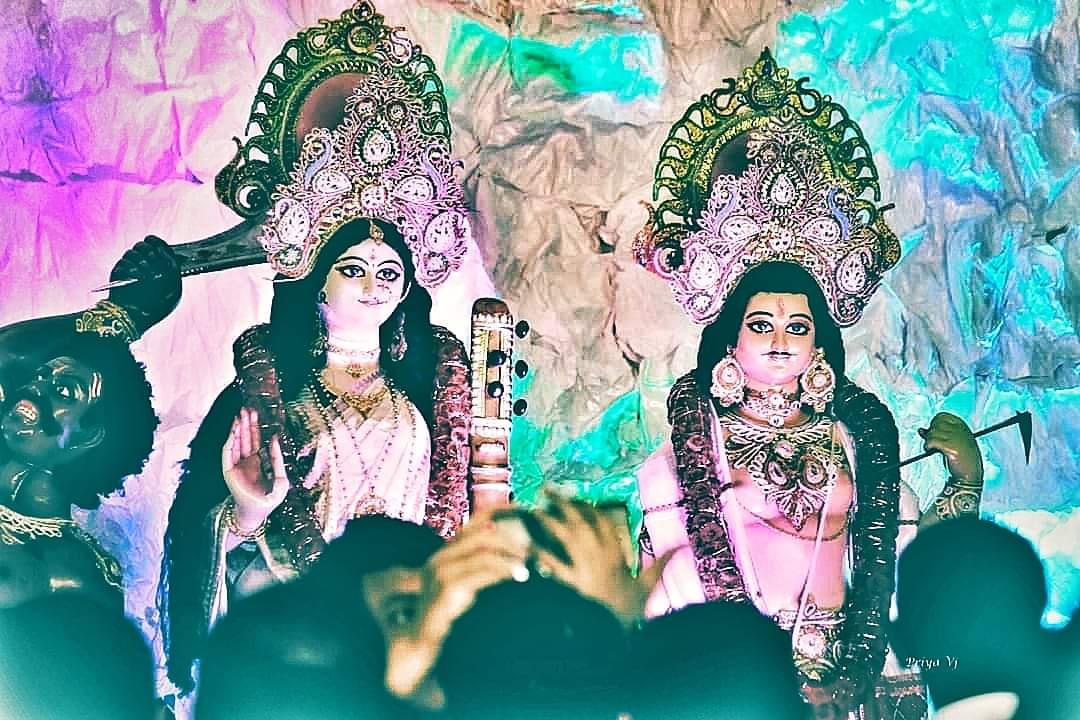
Those of you who follow my blog posts regularly, by know very well know what is Sundal and how much me and my family love eating sundals with our meals .
Also,with Navratri going on ,this time I made sundal using rajma which definitely was my first attempt as rajma usually takes the form of Rajma Masala or Rajma Pulao in my house .
I was skeptical about how South Indian flavors would blend with rajma in the form of sundal, but I was totally wrong. It was just my mindset and pre conceived notion ,I must say .The fresh coconut, tempering of fresh green chili and ginger along with the delicious Sundal Podi (special spice mix) went so well that we all enjoyed eating this delicious rajma sundal .
I have used the Chitra variety of rajma ,but you can use any variety of rajma which you use regularly. Make sure the rajma is soaked well for minimum of 10 hrs so that it gets cooked well .Rajma sundal certainly needs a good amount of pre preparation time,so ensure that you give it the required soaking time to get best results .
Difference between Chitra Rajma and Jammu Rajma (red /laal rajma)
Chitra rajma is slightly bigger in size than laal rajma and also light pinkish in color . This variety of rajma is softer and has a slightly sweetish taste . One biggest advantage of using Chitra rajma is that they get cooked faster and minimum of 8hrs soaking time is enough. Apart from this ,there is no much difference and we can use both these variety of rajma interchangeably in our recipes.
Wash and soak the rajma in fresh water for minimum 8hrs
In the morning, drain the soaked water and pressure cook with little salt for 4 to 5 whistles .Let the pressure release naturally, open carefully and press one rajma bean between your fingers . If you are able to easily press it ,then the rajma is cooked well,incase you feel it is hard, pressure cook for another 2 whistles extra .
Drain the rajma in a strainer/colander and let it rest for a few minutes.
Meanwhile, heat the oil in a thick bottomed pan and crackle the mustard seeds followed by green chillies, curry leaves and ginger . Add asafoetida in low flame to avoid burning.
Add the cooked rajma and mix well,adjust salt if needed .
Tip in the sundal podi,fresh coconut, corriander and give a quick stir .Turn off the stove .Don't cook too much after adding sundal podi as there is a chance of it getting burnt .
The day after Mahanavami/ Saraswati Pooja is Dassera/VijayaDasami - an auspicious day to commence any new venture , business , studies etc
Dassara/Dussehara is also the day when Lord Rama won the battle against Ravana in Lanka and freed Sita Mayya from his clutches .
In North India ,on Dassara ,effigies of Ravana ,Kumbakarna and Indrajith are burnt down indicating victory over evil . Also , stage shows depicting the Ramayana ,known as Ramlila are staged in many places .
Vijay In Hindi / Sanskrit means Victory and since Lord Rama emerged victorious by destroying the evil forces on the Dasami Day it is known as VijayaDasami .
The below image, depicts Lord Hanuman giving assurance to Seetha Mayya that Lord Shri Ram is on his way to free her . Seetha Maa trusts Lord Hanuman when she sees Lord Rama's Ring with Hanumanji and he then flys back with the happy news of Maa Seetha's location in Ravana's Empire after which Lord Rama comes to Sri Lanka and defeats Ravana after a long battle .
Traditionally ,during the olden days new academic year would start on the eve of Dassera.
This practice is called Vidyarambham . "Vidya" meaning Knowledge and "Aarambham" meaning Start .
Lord Hayagreeva and Devi Saraswati are the Hindu God and Goddess of education ,art forms and intellect.
On Saraswati Pooja ,we offer our salutations to Maa Saraswati by placing our books , musical instruments , tools etc. To know more about Ayudha Pooja / Saraswati Pooja click here ..
On Dassara ,we do a Punara Poojai also known as Pooja Yeduppu ,meaning we again thank the lord for having bestowed their blessings on all these tools and then as a customary practice children are asked to study a few chapters, those playing the musical instruments, play them for a while ,so on and so forth .
In South India even to this day ,fresh admissions to dance schools , music schools or any new art form commence on Dassera/Vijaya Dasami .We offer our salutations to the Guru by offering them Thamboolam (Betel leaf , betel nuts, fruits and flowers) along with Guru Dakshina (token fees) and then start learning the new art form .
Those who keep Golu/Kolu , perform an Aarthi on the night of Dassera and symbolically just make one doll on the step to lie down, which denotes bidding farewell to the Gods and Goddesses for this year.
In Calcutta and Bengal ,the Durga Maa idols are immersed into the water bodies bidding her adieu until next year . The married ladies of Bengal dance and play with Sindhoor known as Sindhoor Khela which is considered very auspicious and they pray for the long life of their husband. Sindur Khela is applying vermillion or sindoor on one other's faces and they dance to the dhol and beats along with Durga Maa's procession.
For Sindur Khela ladies wear the traditional white and red Saree known as Laal Paad or Laal Paar .The white color denotes Purity and red color denotes Fertility .
In Maharashtra, there is a unique and wonderful tradition of exchanging a leaf from a plant with one another and call it "sone ghya" meaning "take this gold" . The leaf is known as SonPatha or Sonpatta or Apta Leaf . "Sona" in Marathi is gold . There is a belief that when one offers these leaves to lord on Dassara and exchanges it with friends and family,there is bountiful blessing of Lord Kubera (the lord of wealth and prosperity) in our homes ..the leaf is given the status of gold which is regarded highly precious and valuable .
Also ,on Dussera is drawn a special rangoli called "Saraswati" in Maharashtrian homes .
This below rangoli is a symbolic representation of the apta leaves . Botanically it is called Bauhinia racemosa , a native tree supposed to have lot of medicinal values and widely used in Ayurveda too.
Saraswati Rangoli
This is a symbolic representation of Saraswati Maa and is generally drawn on a slate along with symbols like Om 🕉 and Swastik . This custom originated in Maharashtra and the design pattern also depicts a peacock . One may include the design of foot steps too which denotes the presence of Lakshmi Devi .
Both these rangolis are drawn by my talented friend Priyadarshini who happily let me share her work on my blog.
Having spoken so much about Pooja , it is obvious that we will prepare and offer Bhog / Prasad even on the last Day . Since Dassara marks the beginning of a new dawn it is mostly celebrated by making some sweet and a small festive meal .
In Gujarat and Bombay on Dassara ,the special breakfast is Jalebi and Fafda . I love to enjoy this combination. It feels so special to indulge into a rich sugar laden sweet occasionally .
In south India we normally make some paysam or sweet and celebrate this day .In my home it would normally be Sakkara pongal or Sheera along with some Bajjiya like Potato Bajjis or Vazhakkai (Raw Banana) Bajjis.
Sharing a small Bhog Thaali that I offered last year (2023) on Dassera / Vijayadasami
Items in Frame .. click the individual recipe names below for a detailed recipe ..
It is that time off the year ,when almost every household in India observes a 15 day Vegetarian meal only food practice . Yes,it is Pitru Paksha ,also known as Mahalaya Paksha .
These fifteen days starting from Poornima /Pournami (Full Moon Day) to Amavasya / Amavasai (New Moon day) people abstain from eating non veg , alcohol and also most people avoid the usage of Onion,garlic as part of their cooking.
Pithru Paksh / Shraadh Paksh is one fortnight where we pay obeisance to the departed souls ..it is believed that during this period ,our ancestors visit our homes to bless us and partake the food offered to them as part of the ritual.
If you ever thought, that cooking without Onion and Garlic will not make a tasty meal,then you are mistaken my dear friends.
Here,I have a curated a simple Thaali with lipsmacking delicacies made totally without Onion and Garlic. Click the links below to get a detailed recipe of every item on the Thaali . You can include Fulkas or Puris if you want it to be a little more elaborate.
Ganesh Chaturthi or Vinayaka Chaturthi is the most sought after Hindu Festival . Everyone loves to celebrate Ganesh Chaturthi with pomp and glory . Ganesh Chaturthi falls in the Holy month of Bhadrapada as per Indian Almanac which is around August - September as per Gregorian calender . This year we are celebrating Ganesh Chaturthi on 18th September 2023.
Mumbai is known for Ganesh Chaturthi festival which lasts for 10 days known as Ganesh Utsav or Ganeshotsav .We can hear everyone singing Ganapati Bappa Morya , Mangal moorthy Morya while they invite Ganpati Bappa Home.
Having grown up in Mumbai, I have my set of beautiful and divine memories of celebrating the Ganesh Utsav for 10 days.It is very difficult to bid adieu to Ganesha on Ananth Chaturthi. The entire city of Mumbai puts up a very vibrant look and there is just positive vibes all over. I always have my heart in Mumbai during Ganesh Utsav .Bangalore also celebrates Ganesh Utsava in its own way and there is a vibrant charm all over the city.
The atmosphere is so positive and vibrant during this festive season in every home . Everyone at home gets into planning of bringing the best Ganesha idol home by placing the order for the Murthy well in advance with the sculptor .The decor planning also starts much before with kids ,elders all getting into festive mood . The ladies of the house get into the planning of prasad and neivedya making and list out what bhog to be offered as long as we have Ganapati Bappa at our abode. I am detailing the list of prasadams we can offer to Lord Ganesha during the 10 day Festival . Click on the recipe names below for a detailed procedure to make.
After the 10 day festivity, it is very heart breaking to send off Lord Ganesha . This process is called as Visarjan wherein Lord Ganesha is immersed into the sea and we bid a farewell to him .While sending him off,we all wish and pray for his return next year and the mind begins to plan on how to welcome him home coming year .
Ganapati Bappa Morya ,Pudchya Varshi Lavkar Ya ..this is what is chanted while we bid him adieu,meaning "oh lord Ganesha,pls come back soon next year" .
Nei Payasam also known as Aravana Payasam is very popular as prasadam in Kerala Temples especially Bhagavathy (Devi) Temple and Ayyappa Temple . Sharkara Payasam ,Kadu Madhuram or just Aravanai are some other names for Nei Payasam.
Nei means ghee and payasam means kheer. This payasam gets it flavor and taste from just 3 ingredients; rice,ghee and jaggery. The payasam is either garnished with fried coconut bits or ghee fried cashews . A pinch of ginger powder at the end elevates the flavor profile manifold.
Though we call this as Nei Payasam, the consistency of nei payasam isn't like the usual paysam (kheer). Consistency of nei payasam is gooey and thick similar to sakkarai pongal .
Originally, Kerala Matta raw rice or red rice is used in the preparation of Nei Payasam,but if that us not available we can use any short grained rice, but a strict No to Basmati rice as it will alter the taste of Nei Payasam, because of the natural flavor that Basmati rice possesses
In temples, nei payasam is made in huge bronze urulis and slow cooking method is followed. Ghee is poured at intervals until the ghee is completely absorbed into the rice and jaggery mixture. Normally, dark colored jaggery is used for preparing nei payasam, hence the color will be dark and deep brown.
Aravana / Nei Paysam shouldn't be confused with sakkarai pongal though they may sound similar. The quantity of ghee used in Nei payasam in more also there is no use of milk or lentils. Because the quantity of ghee is more ,we cannot eat this nei paysam like any other paysam for dessert . Just a small quantity can be savored and that itself will be very satiating and satisfying.
Even to this day, Bhagavati Seva Pooja always has the offering of nei paysam and the same is distributed to all those partaking in the Pooja .
I have very fond memories of enjoying piping hot Nei Payasam and crispy fried Medhu Vadai served as prasadam in leaf cups after Bhagavathy Seva Pooja. The taste still lingers on my tongue and nothing can beat the taste and flavor of prasadam that is blessed with divine vibrations.
Holy month of Aashada or Aadi or Karikatam(July 15 to Aug 15 as per English calender) is known for Bhagavathy Seva ,many Brahmin families hailing from Kerala / Palakkad have the tradition of performing thus pooja at home on either Tuesdays or Fridays in this holy month .
So,whether or not you perform Bhagavthy Seva at home,you can always prepare Nei Payasam and offer as prasadam during auspicious pooja days or even on Tuesdays and Fridays during Aadi Maasam .
Preparation Time - 15 to 20 mins Cooking Time - 45 mins Complexity- medium Serves - 2 to 3
Ingredients
3/4 cup raw rice (I have used Sona Masuri ) 3/4 cup powdered organic jaggery 1/2 cup ghee Few cashews Pinch of dry ginger powder Pinch of cardamom powder
Method
Wash the rice well and pressure cook it with 3 cups of water and let the pressure release naturally.
The rice must be cooked well and soft but not mushy . With the back of ladle ,lightly mash the rice but don't make it mushy .
In a thick bottomed vessel , melt the jaggery with 1/2 cup water . We don't need any string consistency just the jaggery needs to melt . Incase ,you see any impurities in the jaggery syrup,then filter it out and bring the syrup to a quick rolling boil.
Slowly add the mashed and cooked rice and mix it well without any lumps .Gradually add the ghee in parts and keep stirring until all the ghee is well absorbed into the nei payasam and the paysam looks glossy and well done .
If you are using coconut bits ,fry them in ghee until it turns golden brown and crisp ,likewise the same with cashewnuts as well.
Add this to the nei payasam along with cardamom powder and ginger powder and mix it well .
Offer it to the lord and distribute it among family and friends.
Rose Shrikand or Gulab shrikand is made using Gulkand and mild rose essence or rose syrup .
Gulkand is a delicious jam made from rose petals and sugar . Gulkand is an important ingredient while preparing masala paan (flavored betel leaf) or beeda as it is called in the South .
Shrikand is often served alongside the main course meal as an accompaniment to puris and hot parathas. Rose Shrikand is my next favorite after the classic flavors of Badam Elaichi Shrikand and Kesar Pista Shrikand .
This gooey and sweet Gulkand along with mild rose essence is blend into the silky smooth hung curd to make the lipsmacking Gulkand Shrikand . Serve it along with some hot puris or parathas and you will relish the taste forever .
The trick to making a silky smooth yogurt is getting hold of a perfect hung curd.
If you get thick and creamy Greek yogurt,you can also use that to make Shrikand . I have editted my recipe (June 2025) below to include how to make the perfect hung curd using home set Dahi /yogurt .
If you love this flavor of rose / gulkand ,then you must definitely check these recipes out
Pre Preparation time - 2 to 5 hrs Cooking Time - Nil Actual Preparation - 5 mins Serves - 2 to 3
Ingredients
400ml thick yogurt or full fat dahi or curd
2 tsp rose syrup
2 to 3 tablespoons gulkand
2 to 3 tsp powdered sugar (optional)
Preparation of Hung curd
Take a wide mixing bowl and place a strainer over it lined with a muslin cloth/ cotton cloth and pour the curd into the cloth .
I have used home made thick curd for an even consistency. You can also use the store bought dahi if you please . The yogurt should not be sour . So it is best to use freshly set curd made in last 24hrs .
I set the yogurt /dahi in full fat milk .Once the dahi was set ,I let it sit in the fridge for 24hrs to set properly .
Bring the ends of the cloth together, squeeze it once and tie it very tightly . Place a heavy object over the tied cloth and leave the colander over the mixing bowl so that all the whey water will get collected in it . Keep squeezing the cloth occasionally to drain the excess water .
Keep this set up inside the refrigerator so that the hung curd doesn't turn sour especially in summer .
After about 2 to 3 hrs , you can see all the whey collected in the bowl below and when you open the cloth all that is left is thick creamy mass which is hung curd . Squeeze it once again before removing it from the cloth to ensure there is no water content left. When you touch the hung curd , it should appear thick and creamy without any excess water. If you find it watery, leave it for somemore time in the cloth with the weight on .
Donot waste the collected whey, you can use it while kneading the dough for rotis or even to prepare buttermilk or Chaas.
Preparation of Shrikhand
Transfer the hung curd to a wide mixing bowl .Add in the gulkand , rose syrup. Powdered sugar may be added though it isn't necessary. Gulkand as well as rose syrup will have sugar already added in them which is enough to give sweetness to the Shrikhand.
Mix well with a spoon until all the ingredients blend well . Keep it in the refrigerator for it to set well .
Take it off the refrigerator just before serving and garnish with some chopped pistachios and some tutti fruity.
Badam Kheer / Payasam is an exotic festive dish which is loaded with lots of richness and flavor .
It is very easy to make and has no fancy ingredients except almonds ,cardamom, milk and saffron strands. Sugar is used as a sweetener. Soaked almonds are ground to a fine paste with saffron and cardamom and simmered in boiling milk .
Mom used to stock up home made badam powder and I used to drink Badam milk during my school days as I was not a fan of malt based drinks . Badam payasam is an extension of Badam Doodh or Badam milk and a perfect dessert for all festive occasions or even get togethers .
Even beginners can easily make badam Kheer due to the ease involved in the making of this payasam. I prepared this yummy and aromatic badam Kheer for our Tamil New Year's festival today .
To know more about ,how we celebrate Tamil New Year (Puthaandu) and the delicious spread we prepare ,check this post here .
Preparation Time - 1 hr Cooking Time - 30 mins Complexity- easy Serves - 3 to 4
Ingredients
1/2 cup badams /almonds soaked in hot boiling water 1/2 litre milk (preferably use 2% fat or full fat milk) 1/4 cup sugar 3 to 4 cardamoms Few strands of saffron
Method
Soak the almonds in hot boiling water for mini1 hr . You can soak for 2 to 3 hours also. Deskin the badams and discard the skin.
In a blender add the badams, cardamoms, saffron ,1/2 cup milk and grind to a fine paste .
Boil the 1/2 litre milk in a thick bottomed vessel . As the milk reaches its boiling point ,slowly add this badam paste and keep stirring on low flame and continue cooking until the raw flavor of almonds is lost .
Lastly, add the sugar and continue to simmer till the kheer thickens . You can add some saffron strands while the kheer is simmering. Turn off the stove and let it come to room temperature.
Maa Vilakku or Maav Vilakku is an edible flour lamp offered to the lord .
Maav in Tamil means flour and Vilakku is lamp . Maa vilakku is made from jaggery and rice flour .A soft dough is prepared using jaggery and rice flour along with some edible camphor and cardamom powder . Ghee is poured into a small dent made in the center of the dough and a wick is lit . This lamp is decorated with Flowers and haldi kumkum .
Maav vilakku is primarily offered to Devi and Lord Balaji . Tamil Months of Thai(Jan - Feb) ,Aadi (July - Aug) and Purataasi (Sept - Oct) are very auspicious for offering Maav Vilakku .
Maav Vilakku for Devi is offered during Thai and Aadi months as per Tamil almanac and for Lord Balaji Purataasi month is very auspicious.
Significance of Purataasi Sanikizhamai
Tamil Brahmins whose family deity is Lord Srinivasa or Lord Uppiliappan,unfailingly offer Maav Vilakku in the Tamil month of Purataasi which is Mid August - Mid September as per Greogorian Calender .
Saturdays are considered very auspicious for offering Maav Vilakku ,hence it is offered either on 1st or 3rd Saturday. Maav Vilakku is not offered during Mahalaya Paksha(Pitru Paksha) even if it falls in the holy month of Purataasi.
There is a belief / aidheegam that the Lord Of 7 hills visits the Earth / Bhoolokam in this holy month and hence by offering this Maav Vilakku we invite him to our abode to bless us abundantly with his benevolent grace .
There is a another myth that during Purataasi month ,especially on Saturdays,Lord Shani loses his power and there is no way he can bring about any hurdle during the offering of Maav Vilakku,another reason why we offer Maav Vilakku on Saturday .
How to make the Maav Vilakku ?
How to do Puja and offer Maav Vilakku ?
Take a bath, clean the Pooja room, offer flowers to all deities, light the lamp as always.
On Saturdays, we offer maav vilakku after 10.30 am since it is Rahu kaal from 9am to 10.30 am.
Prepare the prasadams and also keep the maav vilakku maav ready so that soon after 10.30 you can light the lamp and offer.
As for any puja ; betel leaves , betel nuts and banana along with coconut are to be offered .
Prasadam for Maav Vilakku is normally Sakkarai Pongal ,Vadai ,Sundal , Ellu Saadham .Depending on the time and your personal constraints you can chose what you would like to offer . But ensure there is one sweet as prasadam. Onion and Garlic is avoided in the cooking on this day .A saatvik meal is cooked.
Assemble all the family members, light the maav vilakku using Ghee ,chant Vishnusahsranama or any hymns in praise of Lord Vishnu / Balaji .
Offer the prasadam you have made in a silver plate or banana leaf . Keep an eye on the lamp until it dies out ,this is called "Malai Yerardhu",meaning lord Balaji has blessed our home and is now proceeding to Vaikuntam. Once the lamp is about to die down, offer camphor or dhoop and distribute the prasadam to all the family members and partake the lunch.
Today , 8/10/22 at my home for Purataasi Sanikizhamai, I prepared the following prasadam.
Navaratri is just round the corner and it is a very special festival for Hindus. The whole of India celebrates Navratri in different ways and it is the most awaited festival for the ladies.
Navaratri is a festival that celebrates the victory of good over evil by Goddess Durga . The festival is spread across 9 nights and 10 days hence the name Nav Ratri (Nav is 9 and Ratri is night) .
The last day is celebrated as Dussehra or Dassera, a day that is considered very auspicious to start anything new .
As I already said each region in India celebrates Navaratri in different ways and the ladies thoroughly enjoy this festival .
Read the full blog to know how various regions celebrate Navratri across our country.
In Northern India , each day is dedicated to 9 forms of Maa Durga ; Shailaputri ,Brahmacharini ,Chandraghanta ,Kushmanda ,Skandamaata , Katyayani ,Kaalaratri, Mahagauri,Siddhadhatri.
Devi is worshipped by chanting Chandi Paath/ Havan ,devi Mahatmyam etc. Most ladies fast for the 9 days and break their fast on Navami .
The Ashtami Day is celebrated as Kanya Puja where young girls who haven't attained Puberty are called home and worshipped as an Incarnation of lord Durga ma and offered with Prasadam and small gifts like Bindi , chunri , mehendi etc. Prasad on Ashtami is Poori ,Halwa and Kala Channa .
In Gujarat , a decorated earthen pot called Garba is placed with a lamp lit inside which is kept as Akhand Diya for all 9 days ..this Garba is symbolic of the womb and the word is derived from the Sanskrit word "Garbh". There is a belief that just as the mother protects the baby in the womb, Ambe Maa is the protector of the world and she protects us from the wordly wrath.
Bengal and Eastern India is known for its Durga Puja Utsav during Navratri and the massive pandals that are set up all over the city which have huge and beautiful idols of Durga Maa sculpted to perfection and on the day of Dassera after the Pooja ,the idols are immersed in water bodies
In Tamil Nadu and Karnataka ladies set up Golu ,which is a display of dolls of various Gods and Goddesses and also other mythological characters. Social themes are also displayed and lot of contests are conducted to applaud and recognize the hard work . The 9 nights of Navratri are dedicated for Durga ,Lakshmi and Saraswati . The 9th Day is celebrated as Saraswati Pooja / Ayudha Pooja in Tamil Nadu ..to know more about how it is celebrated, read my post on Saraswati Pooja Special.
What is Golu / Bomma Kolu / Bombe Habba ?
GOLU is a display of Dolls arranged on steps like structure which are odd in number like 1 , 3, 5 , 7 , 9 steps etc .
Traditionally beautifully colored clay dolls of various Gods and Goddess & Mythological story related dolls would be on the display and these dolls are handed down from generations. Carefully packed and stored for use year on year.
Slowly, with social awareness and creativity, dolls with social themes also got added to the collection and people who display golu started presenting various themes to bring related to current affairs and social responsibilities.
Each day a special prasadam is offered to Devi after pooja in the morning and evening.
Normally in the morning, we offer some kind of sweet as prasadam and in the evening we offer sundal prasadam. Navaratri and Sundal go hand in hand .
Sundal is a simple stir fry using various beans and legumes . A very good source of protein and energy.
This sundal prasadam is distributed along with the Haldi Kumkum Thamboolam which is given to all the ladies who visit the house for Golu .
Refer to the collection of recipes below which I am linking for your easy reference
Onam is the harvest festival of Kerala and also the day to comomerate and celebrate Vamana and King Mahabali .Whole of Kerala and Malayalees world over celebrate the day with a lot of joy and happiness. Onam is a ten day festival and as per gregorian Calender falls anyday between August - September which coincides with the Chingam Month as per Malayalam Alamanac on the star of Thiruvonam or Sravanam which is the 22nd star or Nakshatra.
Mahabali was a very generous and powerful king who ruled Kerala and there was abundant prosperity and happiness during his reign. It is believed that on this day King Mahabali or Maaveli visits the land of Kerala and rejoices with the people of the land . To welcome the King ,an elaborate rangoli or kolam using flowers is decorated at every home , a lavish spread known as Sadhya is prepared and the annual boat race is held by the State .
ONAM is the annual state festival of Kerala.
I have already posted almost all recipes prepared for a Sadhya on my blog .I will post the link below which can be used as a ready recokner.
Today we shall see a very traditional and authentic sweet chakka Pradhaman made using Jackfruit Jam known as Chakka Varatti . I have already posted how to make chakka varatti during jackfruit season .
This paysam is really easy to make if we have the chakka varatti ready on hand . The other version to make Chakka Pradhaman from scratch can be found here.
Without further delay,let me get to the recipe quickly .
Preparation Time - 10 mins Cooking Time - 15 mins Complexity - simple Serves - 2 to 3
Ingredients
1/2 cup chakka varatti / jackfruit jam 3/4 cup grated coconut 3 tbsp jaggery 1/2 cup thick coconut milk 2 tbsp finely chopped coconut bits 2 tsp ghee
Method
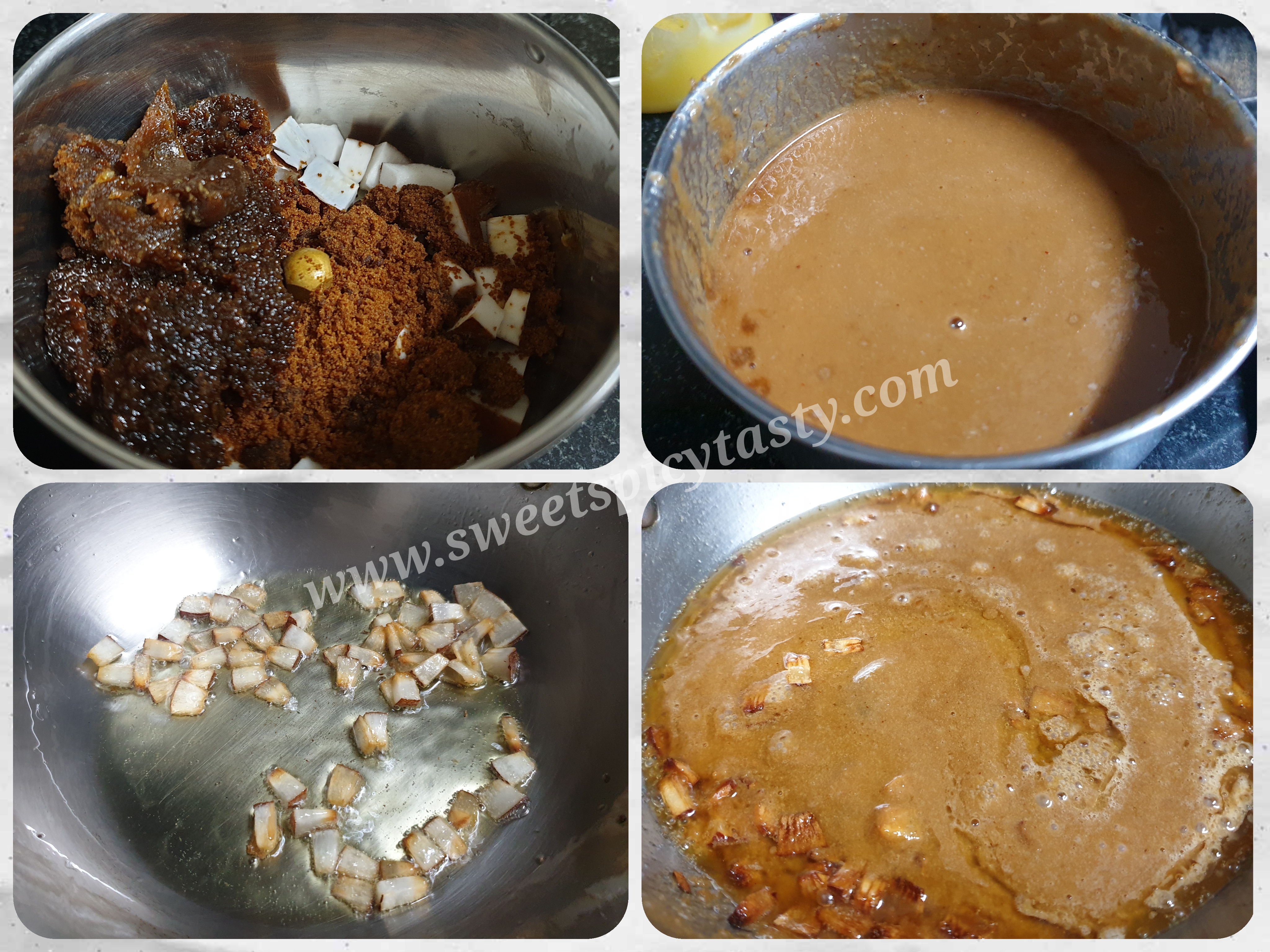
Blend the chakka varatti, grated coconut and jaggery with 1/4 cup water to a very fine paste .
In a heavy pan ,heat the ghee and fry the coconut bits until they turn crisp and brown.
Pour the blended paste to this fried coconut and bring it to a quick boil .
Add the thick coconut milk in the end ,mix well and turn off the stove .Donot try to over cook or boil the Pradhaman after adding the coconut milk ..the Pradhaman will curdle .the heat is enough to cook the coconut milk and take away the raw smell.
Delicious chakka Pradhaman is ready.
Pin it up
Sadhya recipes on the blog. Click on the individual items below to get detailed recipe
Jackfruits are still available in plenty in most places in India and will surely be available for a few weeks more . If you are done with your quota of eating fresh , ripe and juicy jackfruits then I suggest you must make this delicious jackfruit jam /preserve a delicacy from Kerala known as Chakka Varatti or Chakka Varatiyadhu.
Chakkai in Malayalam means Jackfruit and Varatiyadhu means reduction /simmering process .So basically we make a tasty relish or jam like preserve from jackfruit pulp and jaggery to relish all year long when fresh jackfruits aren't available.
I learnt this recipe from Chandra Muthukrishnan aunty, who is an expert in making traditional and complex dishes in a breeze .She guided me over whatasapp while I was making this and gave a final approval when I shared the video of the finished product .
Traditionally in olden times, making chakka varatti was a long drawn process and the ladies of the house had to toil a lot to prepare since modern day gadgets like gas stoves, food processors or pressure cookers were not available.
The jackfruit pods had to be boiled over wooden or charcoal stoves and then using grinding stone the pulp had to me made and then further cooked in huge bronze vessel called Uruli with jaggery and ghee for hours together to get the perfect taste and texture . Now making chakka varatti is a lot easier and we can prepare it effortlessly at the comfort of our homes .
Preparation Time -20 mins Cooking Time - 35 to 45 mins Complexity - complex
Ingredients
14 to 16 ripe jackfruit pods jaggery powder (same measure as jackfruit pulp) 2tsp of cardamom powder ghee as needed
Method
Deseed the jackfruit pods and pressure cook it with 1/4 cup water for 2 whistles on medium flame .
Let the pressure release naturally, strain the excess water and let the jackfruit cool down .
Blend the cooked jackfruit into a smooth pulpy puree in your blender.
Measure the pureed jackfruit and take the same quantity of jaggery powder ..eg if you get 1 cup of puree, using the same cup measure 1 cup of powdered jaggery and 1/2 cup ghee .
Melt the jaggery in 1/4 cup water and strain it for impurities.
In a heavy bottomed pan ,heat the strained jaggery syrup and let it come to a nice bubbling boil .
At this stage add the jackfruit pulp and mix it nicely till the jaggery and pulp blend in well.
Keep stirring on low flame and you can see the mixture begins to cook and starts giving out a good aroma .
The key is in stirring without a break as there is a chance of the mixture getting burnt easily .
The mixture begins to thicken and reduces in quantity after 10 mins,at this stage add some 3 to 4 tbsp of ghee and mix well . The entire ghee gets absorbed by the mixture and you can see a nice glossy look.
After some time you can see that the entire jam looks glossy and begins to leave the sides of the pan easily and resembles the texture of a jam .
Now add the balance ghee ,cardamom powder and continue to cook for sometime. When you drop a blob of the chakka varatti using the ladle, it should slide off and fall down easily . This is the correct texture .turn off the stove at this stage and let it cool . The jam will slightly thicken more after cooling. Donot worry about that. Once cooled, transfer the chakka varatti to a dry container using a dry spoon and refrigerate it. (Check the video below for the consistency)
Note
To have a prolonged shelf life ,never thaw the entire preserve for a long time. Take out the desired quantity and put it back into the refrigerator. This way the chakka varatti stays for almost 1 year .

 Login
Login