❌

Normal view

There are new articles available, click to refresh the page.
Before yesterdayMain stream

Tech Moves: Washington names broadband leader; Greater Seattle Partners gets interim president/CEO; Microsoft legal exec departs

4 December 2025 at 13:13
Jordan Arnold. (LinkedIn Photo)

β€” Jordan Arnold is the new director of the Washington State Broadband Office within the Department of Commerce, effective Jan. 2.

Under the Biden administration, Arnold served as a senior policy advisor on the Infrastructure Implementation Team within the Office of the Chief of Staff. Her work focused on helping lead the $65 billion broadband portfolio, which included implementation of the Broadband Equity, Access, and Deployment (BEAD) Program and other initiatives.

β€œJordan has a deep understanding of what it takes to help communities succeed in a digital world,” said Commerce Director Joe Nguyα»…n in statement. β€œHer background working at the highest policy levels in the Biden White House will help power Washington forward in our efforts to connect everyone to the internet.”

Rebecca Lovell. (Greater Seattle Partners Photo)

β€” Rebecca Lovell has taken the role of interim president and CEO of Greater Seattle Partners (GSP), a regional public-private economic development organization. She has served as chief operating officer of the group for nearly three years.

Lovell’s past roles include CEO of Denali Founder Consulting, executive director of Madrona Venture Group’s Create33, and Seattle’s interim director of Economic Development.

β€œRebecca has been a key leader in our organization’s success, and we are delighted to see her at the helm of GSP. She energizes the community, the GSP team and our investors,” said Shane Jones, chair of GSP’s board of directors and a senior vice president at Alaska Airlines, in a statement.

Brian Surratt. (LinkedIn Photo)

Lovell is succeeding Brian Surratt, who took the presidency in 2022 and was recently appointed deputy mayor of the City of Seattle by Mayor-Elect Katie Wilson.

β€œWe deeply appreciate Brian’s service, commitment and transformational leadership and are excited to see him in this strategic role with the City of Seattle,” Jones said.

Prior to Greater Seattle Partners, Surratt led a community development group, was VP at Alexandria Real Estate and spent 13 years with Seattle’s Economic Development agency, including as director.

Jason Barnwell. (Agiloft Photo)

β€” Jason Barnwell, a former Microsoft legal executive, is now chief legal officer for Agiloft, a California company providing software that helps businesses manage their contracts and legal agreements.

β€œJason knows how to unlock the potential of legal teams, harness AI and data, and make contracting a true driver of business value,” said Agiloft CEO Eric Laughlin in a statement.

Barnwell was with the tech giant for more 15 years in a variety of legal roles. He left the position of general manager and associate general counsel for Monetization and Business Planning. Barnwell will remain in the Seattle area. On LinkedIn, he thanked his Microsoft colleagues for their support and leadership opportunities, noting that he remains β€œa cheerleader for Microsoft and its people.”

Elena Winters. (Elea Data Centers Photo)

β€” Elena Winters has joined Brazil’s Elea Data Centers as vice president of international business. Seattle-based Winters was previously at Meta for more than eight years in infrastructure organization roles focused on data center and site selection. She will remain in Washington, leading Elea’s U.S. and international expansion strategy.

β€œNow, I’m stepping into a new challenge β€” gaining experience on the other side of the business, partnering closely with hyperscalers (not working for them!) to help accelerate the growth of AI infrastructure in LATAM,” Winters said on LinkedIn.

β€” Seattle startup Aarden AI named Michael Gleason as its staff data scientist. The company recently came out of stealth and offers an AI platform that helps landowners research and navigate deals with developers eager to build data centers, clean energy installations, housing and other uses. Gleason most recently worked as a geospatial data scientist at a national laboratory.

Editor’s note: Story updated to include interim CEO for Rebecca Lovell’s new title.

Event Recap: Business of Cannabis NY 2025

18 November 2025 at 16:59

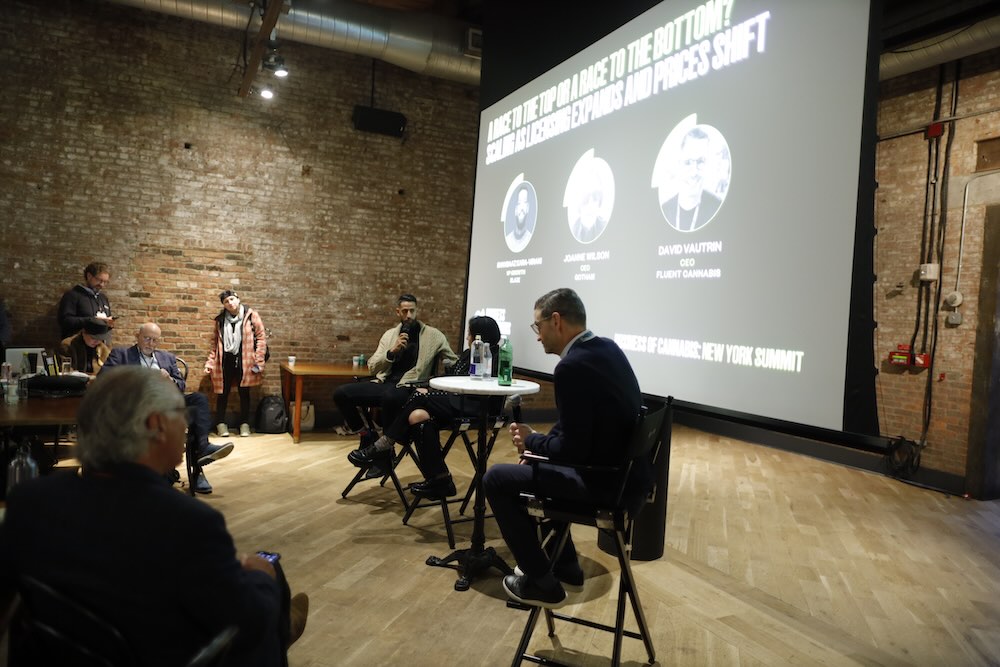
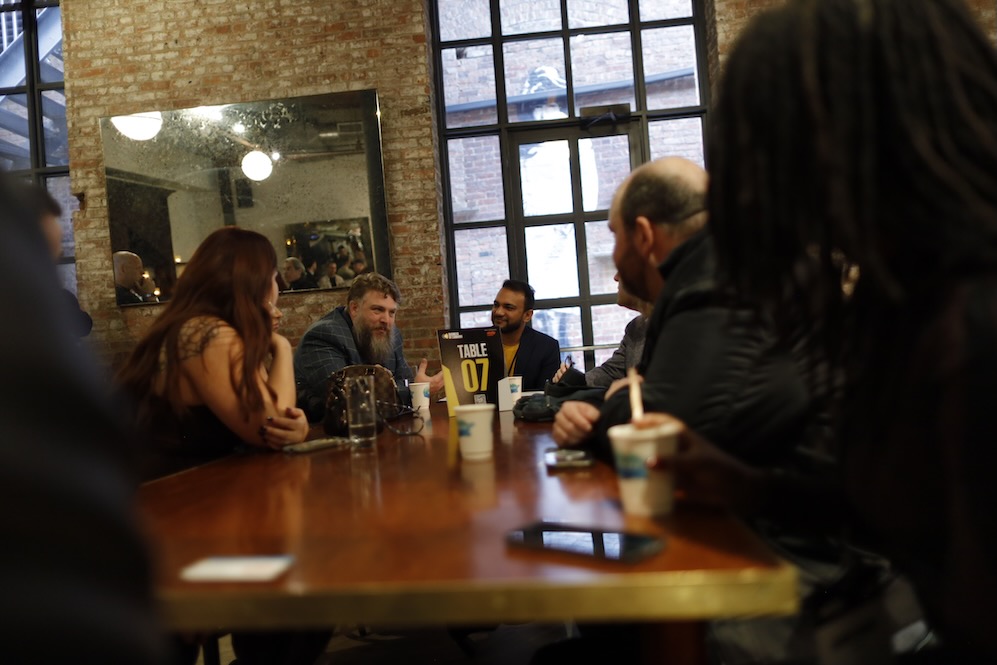
The Business of Cannabis: New York Summit took place earlier this month on November 6 at the Wythe Hotel in Williamsburg, New York. The crowd was composed of dispensary owners, growers, legal experts, marketing professionals, educators and brand leaders. The historic brick-walled space overlooking the East River was filled with conversation, cautious optimism, and shared curiosity about what the next chapter of New York’s legal cannabis market might bring.

The energy in the room was shaped by the industry’s complex moment. New York’s cannabis market has expanded rapidly since legalization, but the state’s industry has also been confronted with major challenges, including delayed licensing and confusion within the Office of Cannabis Management. For many entrepreneurs and advocates who gathered at the summit, the recent election of New York City Mayor Zohran Mamdani was viewed as the biggest variable in what might come next.

The Cannabis-Friendly Mayor

During a candidate debate, Mamdani was asked, β€œHave you ever purchased anything in a cannabis shop, and what did you buy?”

β€œI have, I have purchased marijuana at a legal cannabis shop,” Mamdani replied with a chuckle.

Laughter was heard from the audience at the debate, but the comment was received differently within the cannabis industry. Mamdani’s admission was regarded as more than a humorous moment; it was seen as a rare display of candor by an elected official when addressing cannabis. His words were quickly circulated across industry circles and social media feeds, prompting discussions about the type of administration he might lead and how open he might be to engaging with those who have built the city’s legal market from the ground up.

In the days following the election, curiosity was replaced by a mix of excitement and anxiety. Operators, brand founders and policy advocates questioned whether the new mayor might signal a more collaborative approach to regulation and enforcement.

The Mamdani Effect

When Mamdani’s potential impact on the New York market was discussed, CuraLeaf’s executive vice president and regional leader Robert Sciarrone offered his view. β€œIt’s too early to tell in New York, to see what the new mayor is going to do here,” Sciarrone said. β€œI’m just happy to hear that he visited a shop in New York during the debates.”

Sciarrone’s remarks were met with nods and agreement from attendees. For many, the comment served as a reminder that even small signs of understanding from elected officials carry importance. A mayor who has stepped inside a licensed cannabis store, observed its operations, and spoken with its staff may have developed a deeper appreciation for the work behind compliance and community impact.

Rather than focusing on uncertainty, Sciarrone encouraged the community to take initiative and advocate whenever possible. β€œLike any regime change, everybody is on a menu for a hot topic for them to bite down on. It’s our responsibility as operators in the state to get out in front of it and have conversations with Mamdani and make sure he understands that we are fighting for our business. All we can do is hope he listens. I can’t predict what’s going to happen, but all I know is we have to talk about it or else…we’re on a menu. We’ve to get out there with urgency and have a good conversation.”

Taking Action

His call to action was echoed throughout the event. In smaller breakout sessions and hallway discussions, strategies were developed. Some participants concentrated on job creation, SKU analysis and tax revenue, while others discussed strategies for engagement with the Office of Cannabis Management. Many operators spoke about the need to humanize their stories so that the mayor and his team could better understand that behind every dispensary counter and cultivation license are individuals building legitimate businesses after years of prohibition. Above all, concern was expressed about the hemp market and the impact of illegal markets on cannabis. The event took place just days ahead of President Trump’s signing of the new federal budget bill, which bans hemp-derived THC and will surely bring additional challenges for those working in the hemp consumables space.

The Wythe’s atmosphere was described as a crossroads between celebration and vigilance. Attendees congratulated one another for surviving the turbulence of recent years but repeatedly returned to a shared theme: the urgent need for city and state cannabis operators in New York to form a cohesive coalition. The absence of such a coalition within the state was described as one of the most harmful issues facing the market today, hindering collaboration and collective political negotiation. A sense prevailed that New York’s cannabis market might either fragment or flourish depending on its engagement with new political leadership.

Collaboration Between Competitors

As the day concluded, sunlight streamed through the tall industrial windows, and attention shifted toward next steps. Contact information was exchanged, working groups were organized, and commitments were made to attend future events such as the upcoming MJBizCon in Las Vegas.

For those in attendance of the Business of Cannabis event, the takeaway was clear: New York’s cannabis industry cannot wait for clarity from above. Messaging must be created that both challenges and educates. The future of the market will depend not only on new regulations, but also on relationships, persistence and the willingness to continue discussions even when outcomes remain uncertain.

The post Event Recap: Business of Cannabis NY 2025 appeared first on Cannabis Now.

Seattle startup Hyphen AI raises $5M to automate cloud deployments with generative AI

22 October 2025 at 17:27
Hyphen AI CEO Jared Wray. (Hyphen AI Photo)

Hyphen AI, a new Seattle-based startup using generative AI to help developers deploy cloud applications, raised $5 million in a seed round led by Unlock Venture Partners.

The company’s product, Hyphen Deploy, aims to make cloud infrastructure setup as simple as describing what an app should do.

The product automates complex DevOps processes β€” replacing YAML files, Dockerfiles, and Terraform modules with natural language prompts and business rules. Developers can describe service goals such as latency, scale, or compliance, and the platform automatically generates production-ready cloud infrastructure across providers such as AWS, Google Cloud, Azure, and Cloudflare.

β€œToday infrastructure automation typically takes weeks to setup and configure and then monthly maintenance on those configurations β€”Β Deploy reduces it to minutes,” Jared Wray, CEO and founder at Hyphen AI, said in a statement.

Wray previously founded Tier 3, a Seattle-area enterprise cloud startup acquired by CenturyLink (now Lumen Technologies) in 2013. He spent two years as an exec at CenturyLink and was later CTO at streaming company iStreamPlanet and clean tech startup Palmetto.

Hyphen joins a growing number of startups using generative AI to automate infrastructure work, including fellow Seattle startup Pulumi.

Unlock Ventures partner Andy Liu, who is based in Seattle, said the market β€œdesperately needs” a β€œtruly developer-first operations platform.”

β€œDeploy returns software development to the promise of developers leading the way with no infrastructure overhead, just focus on code,” Liu said in a statement.

Wray declined to disclose the company’s revenue metrics. He said customers have been using the platform for the past five months. Hyphen employs 10 people, including Jim Newkirk, who is serving as a fractional COO and was also an exec at CenturyLink and Tier3.

Seattle-based venture capital firm Ascend also participated in the seed round.

❌
❌