Normal view

There are new articles available, click to refresh the page.
Before yesterdayMain stream

Gen AI adoption is reshaping roles and raising tough questions about workforce strategy

3 December 2025 at 16:45


Interview transcript:


Terry Gerton I know you have studied how workers of different skill levels choose to use generative AI and the concept of AI exposure. Can you talk to us a little bit about what you’re finding there? Are there certain roles more likely to embrace AI, or certain roles that are more likely to be replaced?

Ramayya Krishnan AI exposure, to understand that, I think we have to think about how occupations are structured. So the Bureau of Labor Statistics has something, a taxonomy called O*NET. And O*NET describes all the occupations in the U.S. economy, there are 873 or so. And each of those occupations is viewed as consisting of tasks and tasks requiring certain sets of skills. AI exposure is a measure of how many of those tasks are potentially doable by AI. And thereby that becomes, then, a measure of ways in which AI could have an impact on people who are in that particular occupation. So, however, AI exposure should not be assumed to mean that that’s tantamount to AI substitution, because I think we should be thinking about how AI is deployed. And so there are capabilities that AI has. For instance, this conversation that we’re having could be automatically transcribed by AI. This this conversation we are having could be automatically translated from English to Spanish by AI, for instance. Those are capabilities, right? So when you take capabilities and actually deploy them in organizational contexts, the question of how it’s deployed will determine whether AI is going to augment the human worker, or is it going to automate and replace a particular task that a human worker does? Remember, this happens at the task level, not at the occupation level. So some tasks within an occupation may get modified or adapted. So if you look at how software developers today use co-pilots to build software, that’s augmentation, where it’s been demonstrated that software developers with lower skills usually get between 20% to 25% productivity improvement. Call center employees, again, a similar type of augmentation is happening. In other cases, you could imagine, for instance, if you were my physician and I was speaking to you, today we have things called ambient AIs that will automatically transcribe the conversation that I’m having with you, the physician. That’s an example of an AI that could potentially substitute for a human transcriber. So I gave you two examples: software developer and customer service where you’re seeing augmentation; the transcription task, I’m giving you an example of substitution. So depending on how AI is deployed, you might have some tasks being augmented, some being substituted. When you take a step back, you have to take AI exposure as a measure of capability and then ask the question, how does that then get deployed? Which then has impact on how workers are going to actually have to think about, what does this then mean for them? And if it’s complementing, how do they become fluent in AI and be able to use AI well? And if there’s a particular task where it’s being used in a substitutive manner, what does that then mean longer term for them, in terms of having to acquire new skills to maybe transition to other occupations where there might be even more demand? So I think it’s we have to unpack what AI exposure then means for workers by thinking about augmentation versus automation.

Terry Gerton There’s a lot of nuance in that. And your writings also make the point that Gen AI adoption narrows when the cost of failure is high. So how do organizations think both about augmentation versus replacement and the risk of failure as they deploy AI?

Ramayya Krishnan If you take the example of using AI in an automated fashion, its error rate has to be so low because you don’t have human oversight. And therefore, if the error rates are not sufficiently appropriate, then you need to pair the human with the AI. In some cases you might say the AI is just not ready. So we’re not going to use the AI at all. We’ll just keep human as is. In other cases, if AI can be used with the human, where there is benefits to productivity but the error rates are such you still need the human to ensure and sign off, either because the error rates are high or from an ethical standpoint or from a governance standpoint, you need the human in the loop to sign off, you’re going to see complementing the human with the AI. And then there are going to be tasks for which the AI quality is so high, that its error rates are so low, that you could actually deploy it. So when we talk about the cost of failure, you want to think about consequential tasks where failure is not an option. And so either the error rates have to be really low, and therefore I can deploy the AI in an automated fashion, or you have to ensure there is a human in the loop. And this is why I think AI measurement and evaluation prior to deployment is so essential because things like error rates, costs, all of these have to be measured and inform the decisions to deploy AI and deploy AI in what fashion? Is it in augmentation fashion or not, or is it going to be used independently?

Terry Gerton I’m speaking with Dr. Ramayya Krishnan. He’s the director of the Center for AI Measurement Science and Engineering at Carnegie Mellon University. So we’re talking there about how AI gets deployed in different organizations. How do you see this applying in the public sector? Are there certain kinds of government work where AI is more suitable for augmentation versus automation and that error rate then becomes a really important consideration?

Ramayya Krishnan I think there are going to be a number of opportunities for AI to be deployed. So you remember we talked about call centers and customer service types of centers. I mean, public sector, one aspect of what they do is they engage with citizens in a variety of ways, where they have to deliver and provide good information. Some of those are time sensitive and very consequential, like 911 emergency calls. Now, there you absolutely want the human in the loop because we want to make sure that those are dealt with in a way that we believe we need humans in the loop, which could be augmented by AI, but you know, you want humans in the loop. On the other hand, you could imagine questions about, you know, what kind of permit or what kind of form, you know, administrative kinds of questions, where there’s triage, if you will, of having better response time to those kinds of questions. The alternative to calling and speaking to somebody might be just like you could go to a website and look it up. Imagine a question-answering system that actually allows for you to ask and get these questions answered. I expect that, and in fact you’re already seeing this in local government and in state government, the deployment of these kinds of administrative kinds of question-answering systems. I’d say that’s one example. Within the organizations, there is the use of AI, not customer-facing or citizen-facing, but within the organizations, the use of these kinds of co-pilots that are being used within the organization to try and improve productivity. I think as AI gets more robust and more reliable, I expect that you will see greater use of AI in both trying to improve efficiency and effectiveness, but to do so in a responsible way, in such a way that you take into account the importance of providing service to citizens of all different abilities. One of the important things with the public sector is … maybe there’s multilingual support that is needed, you might need to help citizens who are disabled. How might we support different kinds of citizens with different ability levels? I think these are things where AI could potentially play an important role.

Terry Gerton AI is certainly already having a disruptive impact on the American workforce, particularly. What recommendations do you have for policymakers and employers to mitigate the disruption and think long-term about upskilling and reskilling so that folks can be successful in this new space?

Ramayya Krishnan I think this is actually one of the most important questions that we need to address. And you know, I served on the National AI Advisory Committee to the President and the White House Office of AI Initiatives, and this was very much a key question that was addressed by colleagues. And I think a recent op-ed that we have written with Patrick Harker at the University of Pennsylvania and Mark Hagerott at the University of South Dakota, really we make the case that this is an inflection point which requires a response pretty much on the scale of what President Lincoln did in 1862 with the Morrill Act in establishing land grant universities. Much like land grant universities were designed to democratize access to agricultural technology, really it enabled Americans from everywhere in the nation to harness this technology for economic prosperity both for themselves and for the nation. I think if you’re going to see AI be deployed and not have the kind of inequality that might arise from people having access to the technology and not having access to the technology, we need something like this. And we call this the Digital Land Grant Initiative that would connect our universities, the community colleges, with various ways of providing citizens, both in rural areas and urban areas, everywhere in the country, access to AI education and skilling appropriate to their context. So if I’m a farmer, how can I do precision agriculture? If I’m a mine worker, or if I’m somebody who wants to work in in banking — from the whole range of occupations and professions, you could imagine AI having a transformative effect on these different occupations. And there may be new occupations that are going to emerge that you and I are not thinking about right now. So, how do we best position our citizens so that they can equip themselves with the right sets of skills that are going to be required and demanded? I think that’s the big public policy question with regard to workforce upskilling and reskilling.

The post Gen AI adoption is reshaping roles and raising tough questions about workforce strategy first appeared on Federal News Network.

© Getty Images/iStockphoto/ipopba

Businessman hold circle of network structure HR - Human resources. Business leadership concept. Management and recruitment. Social network. Different people.

Shelf Life Extended: Hacking E-Waste Tags into Conference Badges

3 December 2025 at 07:00
PN26 badge

Ever wonder what happens to those digital price tags you see in stores once they run out of juice? In what is a prime example of e-waste, many of those digital price tags are made with non-replaceable batteries, so once their life is over they are discarded. Seeing an opportunity to breathe new life into these displays, [Tylercrumpton] went about converting them to be the official badge of the Phreaknic 26 conference.

Looking for a solution for a cheap display for the upcoming conference badge, [Tylercrumpton] recalled seeing the work [Aaron Christophel] did with reusing electronic shelf labels. Looking on eBay, he picked up a lot of 100 ZBD 55c-RB labels for just $0.70 a piece. When they arrived, he got to work liberating the displays from their plastic cases. The long-dead batteries in the devices ended up being easily removed, leaving behind just the display and the PCB that drives it.

db9 programmerAnother hacker assisting with the badge project, [Mog], noticed that the spacing of the programming pads on the PCB was very close to the spacing of a DB9/DE9 cable. This gave way to a very clever hack for programming the badges: putting pogo pins into a female connector. The other end of the cable was connected to a TI CC Debugger which was used to program the firmware on the displays. But along the way, even this part of the project got an upgrade with moving to an ESP32 for flashing firmware, allowing for firmware updates without a host computer.

The next challenge was how to handle customizing 200 unique badges for the conference. For this, each badge had a unique QR code embedded in the back of the 3D printed case that pointed to an online customization tool. The tool allowed the user to change which of the images was used for the background, as well as input the name they wanted to be displayed on the badge. Once finished, the server would provide a patched firmware image suitable for flashing the badge. The original intent was to have stations where attendees could plug in their badge and it would update itself; however, due to some 11th hour hiccups, that didn’t pan out for this conference. Instead, [Tylercrumpton] ran the update script on his machine, and it gave him a great opportunity to interact with conference attendees as they stopped by to update their badges.

For the Phreaknic 27 badge, the plan is to once again use electronic shelf labels, but this time to utilize some of the advanced features of the tags such as the EEPROM and wireless communications. We’re eager to see what the team comes up with.

Canadian Victoria-class subs to get new U.S.-built bow array

2 December 2025 at 07:46
Delphinus Engineering Inc., based in Newtown, Pennsylvania, has been awarded a $14.5 million contract to develop, fabricate, produce, integrate, and test a new sonar array and lift system for Canada’s Victoria-class submarines. According to a Department of War contract announcement, the award includes Foreign Military Sales (FMS) funds fully allocated to Canada and may grow […]

3D Printing for the Hospital Setting

By: Ian Bos
28 November 2025 at 22:00
3D printed jaw with fake muscle attached

Surgery is hard, there is a reason why school is so long for the profession. Making the job easier and smoother for both patients and surgeons is valuable for all parties, which is why [Mayo Clinic] is now working on including 3D printing into its more regular medicine pipeline.

Prepping for surgery often requires examining CT scans of patients to figure out, well, what they’re even going to be doing. Every body is different, and complex surgical procedures require checking to see where certain organs or features are located. This can be made much easier with a physical model of where the bones, organs, or nerves are specifically located in a patient. While this isn’t true in every case of treatment, there are even cancerous cases where custom equipment can be used to decrease side effects, such as mini-beam collimator adapters.

What if you could use the same pipeline to print what was lost from certain procedures? In a mastectomy, the breast tissue is removed, which can cause negative attention from curious gazes. So why not 3D print a custom breast? Cases like these are generally considered poor commercial investments from industry, but are relatively easy for an existing medical facility to add to treatment.

[Mayo Clinic] is far from the first to consider 3D printing in the medical setting, but seeing the technology see actual applied use rather than future seeking is exciting. Medical hacking is always exciting, and if you want to see more examples, keep sure to check out this commercially available simulator (with some free models).

FBI: Account Takeover Scammers Stole $262 Million this Year

26 November 2025 at 16:51
hacker, scam, Email, fraud, scam fraud

The FBI says that account takeover scams this year have resulted in 5,100-plus complaints in the U.S. and $262 million in money stolen, and Bitdefender says the combination of the growing number of ATO incidents and risky consumer behavior is creating an increasingly dangerous environment that will let such fraud expand.

The post FBI: Account Takeover Scammers Stole $262 Million this Year appeared first on Security Boulevard.

Russian-Backed Threat Group Uses SocGholish to Target U.S. Company

26 November 2025 at 11:10
russian, Russia Microsoft phishing AWS Ukraine

The Russian state-sponsored group behind the RomCom malware family used the SocGholish loader for the first time to launch an attack on a U.S.-based civil engineering firm, continuing its targeting of organizations that offer support to Ukraine in its ongoing war with its larger neighbor.

The post Russian-Backed Threat Group Uses SocGholish to Target U.S. Company appeared first on Security Boulevard.

Chinese Regulators May Kill Retractable Car Door Handles That Never Should Have Existed

By: Lewin Day
26 November 2025 at 10:00

Headlights. Indicators. Trunk releases. Seatbelts. Airbags. Just about any part of a car you can think of is governed by a long and complicated government regulation. It’s all about safety, ensuring that the car-buying public can trust that their vehicles won’t unduly injure or maim them in regular operation, or in the event of accident.

However, one part of the modern automobile has largely escaped regulation—namely, the humble door handle. Automakers have been free to innovate with new and wacky designs, with Tesla in particular making waves with its electronic door handles. However, after a series of deadly incidents where doors wouldn’t open, regulators are now examining if these door handles are suitable for road-going automobiles. As always, regulations are written in blood, but it raises the question—was not the danger of these complicated electronic door handles easy to foresee?

Trapped

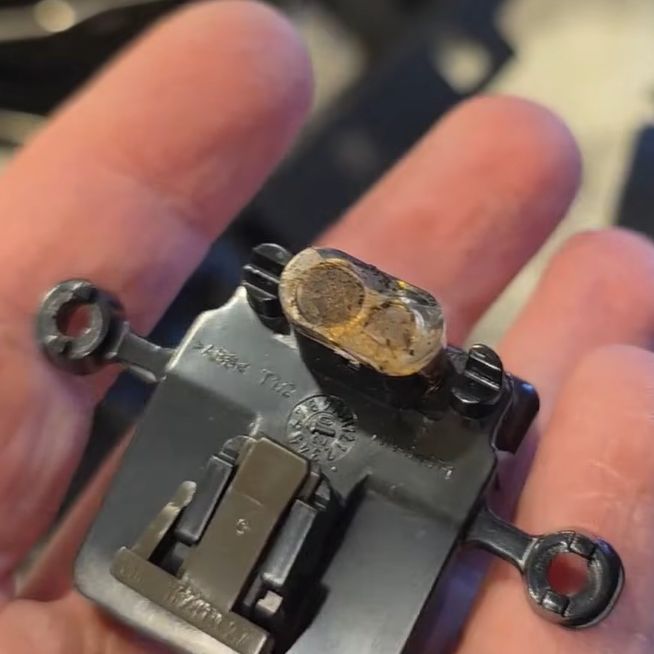
A number of automakers have developed fancy retractable door handles in recent years. They are most notably seen on electric vehicles, where they are stated to have a small but measurable aerodynamic benefit. They are often paired with buttons or other similar electronic controls to open the doors from the inside. Compared to mechanical door handles, however, these door handles come with a trade-off in complexity. They require electricity, motors, and a functioning control system to work. When all is well, this isn’t a problem. However, when things go wrong, a retractable electronic door handle often proves inaccessible and useless.


It’s not hard to find case reports of fatal incidents involving vehicles with electronic door handles—both inside and out. Multiple cases have involved occupants burning alive inside Tesla vehicles, in which electronic door handles failed after a crash. Passengers inside the vehicles have failed to escape due to not finding emergency release door pulls hidden in the door panels, while bystanders have similarly been unable to use the retracted outside door handles to free those trapped inside.

In response, some Tesla owners have gone so far as to release brightly-colored emergency escape ripcords to replace the difficult-to-spot emergency release pulls that are nearly impossible to find without prior knowledge. In the case of some older models, though, there’s less hope of escape. For example, in the Tesla Model 3 built from 2017 to 2023, only front doors have an emergency mechanical release. Rear passengers are out of luck, and must find another route of escape if their electronic door handles fail to operate. No Tesla vehicles feature an easily-accessible mechanical release that can be used from outside the vehicle.

US regulations mandate highly-visible emergency trunk release handles that are easily activated. However, obvious mechanical backups have not been required for cars fitted with electronic door handles. Credit: NHTSA

It’s worth noting that in the US market, federal regulations have mandated glow-in-the-dark trunk releases be fitted to all sedans from the 2002 model year onwards. You could theoretically escape from the trunk of certain Teslas more easily than a Cybertruck or Model 3 with a failed electrical system.

Tesla isn’t the only company out there building cars with retractable door handles. It does, however, remain the most prominent user of this technology, and its vehicles have been involved in numerous incidents that have made headlines. Other automakers, such as Audi and Fiat, have experimented with electronic door handles, both for ingress and egress, with varying degrees of mechanical backup available. In some cases, automakers have used smart two-stage latches. A small pull activates the electronic door release, while a stronger pull will engage a mechanical linkage that unlatches the door. It’s smart engineering—the door interface responds to the exact action a passenger would execute if trying to escape the vehicle in a panic. There are obviously less concerns around electronic door releases that have easily-accessed mechanical backups; it’s just that Tesla is particularly notable for not always providing them.

Over the years, national automotive bodies have thrown up their arms about all sorts of emerging automotive technologies. In the United States specifically, NHTSA has famously slow-walked the approval of things like camera-based rear-view mirror systems and replaceable-bulb headlamps, fearing the worst could occur if these technologies were freely allowed on the market.

Meanwhile, despite the obvious risks, electronic door handles have faced no major regulatory challenges. There were no obvious written rules standing in the way of Tesla making the choice to eliminate regular old door handles. Nor were there strict regulations on emergency door releases for passengers inside the vehicle. Tesla spent years building several models with no mechanical door release for the rear passengers. If your door button failed, you’d have to attempt escape by climbing out through the front doors, assuming you could figure out how to open them. Even today, the models with mechanical door releases still often hide them behind interior trim pieces or carpets, where few passengers would ever think to look in an emergency.

Try explaining this to someone in the back seat while the car is burning around you. Credit: Tesla

Obvious Mistakes

Flush door handles have become popular with Chinese automakers like BYD and Geely. However, these door handles require the vehicle’s electrical supply to be intact in order to work. Credit: BYD

Things are beginning to change, however. Chinese regulators have led the charge, with reports stating that electronic retractable door handles could be banned as soon as 2027. While some semi-retractable styles will potentially avoid an outright ban, it’s believed new regulations will require a mechanically redundant release system as standard.

As for the US, the sleeping giant of NHTSA has finally awoken in the wake of Bloomberg‘s reporting on the matter. As reported by CNBC, Tesla has been given a deadline of December 10 to deliver records to the federal regulator, regarding design, failures, and customer issues around its electronic door release systems. The Office of Defects Investigations within NHTSA has already recorded 16 reports of failed exterior door releases in the a single model year of the Tesla Model Y. It’s likely a drop in the ocean compared to the full population of Tesla vehicles currently on roads. Meanwhile, the US automaker also faces multiple lawsuits over the matter from those who have lost family members in fatal crashes and fires involving the company’s vehicles.

In due time, it’s likely that automotive regulators in most markets will come out against electronic door handles from a safety perspective alone. No matter how well designed the electrical system in a modern vehicle, it’s hard to beat a lever flipping a latch for simplicity and robustness. The benefits of these electronic door handles are spurious in the first place—a fraction of a percent reduction in drag, and perhaps a little more luxury appeal. If the trade-off is trapping passengers in the event of a fire, it’s hard to say they’re worthwhile.

The electronic door handle, then, is perhaps the ultimate triumph of form over function. They’re often slower and harder to use than a regular door handle, and particularly susceptible to becoming useless when iced over on a frosty morning. For a taste of the future, lives were put at risk. Anyone could see that, so it’s both strange and sad that automakers and regulators alike seemed not to notice until it was far too late. Any new regulations will, once again, be written in blood.

Attackers are Using Fake Windows Updates in ClickFix Scams

24 November 2025 at 21:40
Lumma, infostealer RATs Reliaquest

Huntress threat researchers are tracking a ClickFix campaign that includes a variant of the scheme in which the malicious code is hidden in the fake image of a Windows Update and, if inadvertently downloaded by victims, will deploy the info-stealing malware LummaC2 and Rhadamanthys.

The post Attackers are Using Fake Windows Updates in ClickFix Scams appeared first on Security Boulevard.

Kazakhstan integrates kamikaze drone into amphibious armored vehicle

22 November 2025 at 07:16
Kazakhstan Paramount Engineering and WSE LLP, part of the Barys Dynamics group, conducted a full-scale demonstration of the new “Terrex – Barys A” amphibious armored vehicle on November 14, 2025, showcasing its firepower, mobility, and domestic weapons integration. The live demonstration took place at the Bereg training center on the banks of the Ili River […]

New UW President Robert Jones aims to dispel ‘job apocalypse’ fears and prep every grad for an AI future

20 November 2025 at 13:45
UW President Robert Jones on campus in fall 2025. (UW Photo)

University of Washington President Robert Jones wants to expand computer science access for undergraduates and build new public-private partnerships to tackle society’s grand challenges — and he has concrete ideas on how to make that happen.

More than 100 days into his tenure as the UW’s 34th president, Jones is also working to dispel two persistent myths: that it’s nearly impossible to get into the UW’s Paul G. Allen School of Computer Science & Engineering, and that AI is taking everyone’s jobs.

This fall, the Allen School — a top tech program nationally — accepted 37% of the direct applicants from Washington state high schools, though out-of-state admissions is only 4%. “We actually accept many more students than the general public believes,” Jones said in an interview this week with GeekWire.

As to the AI job apocalypse? “That’s an overblown fear,” Jones said. AI is a “critically important tool to have in your tool chest to be more effective in the future.”

Drawing on his experience leading the University of Illinois Urbana-Champaign, Jones wants to give a bigger slice of the UW’s 45,000 undergraduates access to computer science courses — even if they’re in unrelated degree programs.

The idea is modeled on the groundbreaking “CS + X” initiative that he helped expand during his past presidency in Illinois. The program created tech-infused studies in 17 degree programs including advertising, astronomy, economics, music, philosophy and physics.

In Illinois, CS + X launched in crop sciences more than a decade ago because agricultural tech was, and continues to be, one of the fastest growing sectors in the state. Jones himself began his career as a professor in plant physiology and became an international authority in the field.

“AI is just an amazing tool, and we’re doing work here to try to make sure that our students are getting as comprehensive an education as possible,” Jones said. Bolstering a graduate’s knowledge of computer science and artificial intelligence in addition to their focus area makes them “much more employable.”

A $10 million gift announced Tuesday from Microsoft pioneer Charles Simonyi and his wife, Lisa Simonyi, will help facilitate the integration of AI into education and research across the university through the newly formed AI@UW initiative.

AI@UW, which includes a new Vice Provost for Artificial Intelligence position, will help the UW maintain its “strategic advantage” as an AI leader, Jones said. It’s also an example of the sort of public-private collaborations he’d like to foster.

“Radical partnerships”

University of Washington’s Red Square in November. (GeekWire Photo / Lisa Stiffler)

Jones envisions expanding what he calls “radical partnerships” — building diverse coalitions across geographies, institutions and sectors to tackle problems “that are too big for any one entity to solve alone.”

The collaborations can bring together both expertise and funding. The university faces a difficult financial landscape as Washington state’s revenue forecast continues to weaken, drawing down an already strained budget. Add to that ongoing worries about funding cuts to federal research programs that the UW heavily relies upon.

Jones pointed to the university’s long-running WWAMI program, which serves medical students from Washington, Wyoming, Alaska, Montana and Idaho who earn their degrees at the UW and return to their communities to practice medicine, as a prime example of the radical partnership approach.

“I’ve done about three or four of these over the last 10 years,” he said, “and they’re just amazing ways to bring people together and to think about doing research in a different, in a much more collaborative, much more impactful way than we’ve ever thought about.”

The strategy is particularly suited to AI, quantum computing or other massive technological challenges, he said. Jones was involved in partnerships with the University of Chicago to bolster quantum science research in Illinois and a human biology collaboration with the Chan Zuckerberg Biohub Chicago.

In future collaborations in his new role, Jones is eager to work “seamlessly” with the region’s tech sector, leveraging the fact that the UW helped create an ecosystem that includes giants like Amazon and Microsoft, as well as hundreds of smaller companies.

“Given Dr. Jones’s work creating the quantum park in Chicago, I have no doubt that we will continue to see the UW play an integral role in the growth of the ecosystem,” said Laura Ruderman, CEO of the TechAlliance, who also called the UW “critical” to the state’s innovation economy.

More than 110 UW spinoffs currently operate in the state, according to the university’s CoMotion program, which supports entrepreneurship.

“What we have to do more of is working together to fund and to create the next big idea that’s going to be transformative,” Jones said, “not only for the state of Washington, but for the nation and the world.”

University of Washington lands $10M from billionaire Charles Simonyi to tackle AI in the classroom

18 November 2025 at 12:00
Lisa and Charles Simonyi are giving $10 million to the University of Washington to launch AI@UW. (UW Photo)

The University of Washington today announced a $10 million gift from Microsoft pioneer Charles Simonyi and his wife, Lisa Simonyi, to launch AI@UW, a campus-wide initiative supporting the university’s leadership in the responsible, effective use of artificial intelligence in the classroom and research.

The initiative creates a new Vice Provost for Artificial Intelligence position, with Professor Noah Smith of the Paul G. Allen School of Computer Science & Engineering serving in the inaugural role.

Smith said there’s a huge amount of expertise around smart AI adoption at the UW, “and what I really want to do is connect all of that, bring it together, map out what people already know and are doing, cast the light on it so we can all learn from each other more effectively and accelerate it.”

Professors are eager — perhaps even desperate — for support navigating AI’s role in education.

Noah Smith, the UW’s inaugural Vice Provost of Artificial Intelligence. (UW Photo)

“If you ask faculty what’s the one question on their minds right now, it’s: ‘My students are using AI. What now? What am I supposed to do? How do we respond to this?'” Smith said.

The UW’s response is setting a path where AI assists students by answering questions or prepping study tools, but doesn’t do the work for them. On the faculty side, it can aid in creating fair and useful tests and evaluations. Smith is advocating for conversations and transparency in helping students find the balance where AI complements their academic journey, but doesn’t replace their education.

“You don’t go to university,” he said, “if you don’t actually want to learn.”

A key component of AI@UW is its grant program — SEED-AI, which stands for Supporting Educational Excellence and Discovery. The grants will provide funding to faculty across the university who have innovative, exploratory approaches for using AI in their courses that could be widely adopted. The call for grant proposals should go out in the next few weeks.

Smith highlighted three additional focus areas:

  • Governance and policy: Creating a governance committee that establishes infrastructure for setting AI use policies that facilitate innovation in the classroom.
  • AI literacy courses: Developing courses for all undergraduates addressing AI literacy from different disciplinary perspectives so students “have an understanding of AI that is not grounded in fear or grounded in fantasy and hype,” Smith said.
  • Expert network: Forming a network of AI experts within the UW who can assist faculty working on research and education projects and need a customized AI tool.

UW President Robert Jones said the initiative and new vice provost role will help the university maintain its “strategic advantage” as a leader in AI.

“We need somebody that wakes up each and every day that thinks about AI across the three parts of our mission: our teaching, our research and our innovation agenda,” Jones said in a GeekWire interview. “So that’s the value proposition.”

Including the donation announced today, Charles and Lisa Simonyi have given more than $27.5 million to the UW since 2009, supporting DIRAC (Data Intensive Research in Astrophysics & Cosmology), the Ana Mari Cauce Welcome Center and the Allen School building.

Charles Simonyi, who has a net worth north of $8 billion, was a groundbreaking software architect at Microsoft and remains a technical fellow with the Redmond, Wash.-based company, while Lisa Simonyi is chair of the UW Foundation Board.

The new gift also establishes the Charles and Lisa Simonyi Endowed Chair for Artificial Intelligence and Emerging Technologies, with Smith selected as the inaugural recipient.

And in addition to his role at the Allen School, Smith is also affiliated with the Department of Linguistics, the Center for Statistics and the Social Sciences, the eScience Institute, and the Stroum Center for Jewish Studies, providing useful experience in working across disciplines.

Smith is reaching out to other institutions who are likewise pioneering programs to employ AI on campus to learn about their efforts, but added that the UW has an advantage with the new funding. “The Simonyi gift,” he said, “is going to set us ahead.”

Fans’ reverse-engineered servers for Sony’s defunct Concord might be in trouble

17 November 2025 at 12:34

A group of dedicated coders has managed to partially revive online gameplay for the PC version of Concord, the team-based shooter that Sony famously shut down just two weeks after its launch last summer. Now, though, the team behind that fan server effort is closing off new access after Sony started issuing DMCA takedown requests of sample gameplay videos.

The Game Post was among the first to publicize the “Concord Delta” project, which reverse-engineered the game’s now-defunct server API to get a functional multiplayer match running over the weekend. “The project is still [a work in progress], it’s playable, but buggy,” developer Red posted in the game’s Discord channel, as reported by The Game Post. “Once our servers are fully set up, we’ll begin doing some private playtesting.”

Accessing the “Concord Delta” servers reportedly requires a legitimate PC copy of the game, which is relatively hard to come by these days. Concord only sold an estimated 25,000 copies across PC and PS5 before being shut down last year. And that number doesn’t account for the players who accepted a full refund for their $40 purchase after the official servers shut down.

Read full article

Comments

© Sony

❌
❌