❌

Normal view

There are new articles available, click to refresh the page.
Before yesterdayMain stream

Making a mountain bike data acquisition system

18 January 2026 at 13:00

Professional mountain bike racing is a rather bizarre sport. At the highest level, times between podiums will be less than a second, and countless hours of training and engineering go into those fractions of seconds. An all too important tool for the world cup race team is data acquisition systems (DAQ). In the right hands, they can offer an unparalleled suspension tune for a world cup racer. Sadly DAQs can cost thousands of dollars, so [sghctoma] built one using little more then potentiometer and LEGO.Β 

The hardware is a fairly simple task to solve. A simple Raspberry Pi Pico setup is used to capture potentiometer data. By some simple LEGO linkage and mounts, this data is correlated to the bikes’ wheel travel. Finally, everything is logged onto an SD card in a CSV format. Some buttons and a small AMOLED provide a simple user interface wrapped in a 3D printed case.

Analyzing the data is a rather daunting task. The entire analysis framework is neatly wrapped into a web server. The DAQ can automatically sync with the web interface, and provide suspension metrics in conjunction with action camera footage and a GPS track for further analysis.

However, not all is as it seems when it comes to correlating the suspension data into such a nice UI. A key issue is that with four bar, or even six bar, mountain bike linkage designs, the leverage ratio applied to the shock changes through the wheels travel. That means, when measuring shock travel, it needs to be adjusted to find wheel travel according to manufacturer specifications.

You need to be a bit of a suspension wizard to make sense of the charts. Nevertheless, for the mountain biking hackers out there, everything is available on Github, so if you wish to analyze suspension performance, make sure to check it out!

This isn’t the first time we have seen mountain bike data loggers, make sure to check out this simple Arduino build next!Β 

Looking at a Real Fake Raspberry Pi RP2040 Board

15 January 2026 at 07:00

Since the RP2040 microcontroller is available as a stand-alone component, it’s easy enough for third parties to churn out their own variations β€” or outright clones of β€” the Raspberry Pi Pico. Thus we end up with for example AliExpress sellers offering their own versions that can be significantly cheaper than the genuine article. The ones that [electronupdate] obtained for a test and decapping session cost just $2.25 a pop.

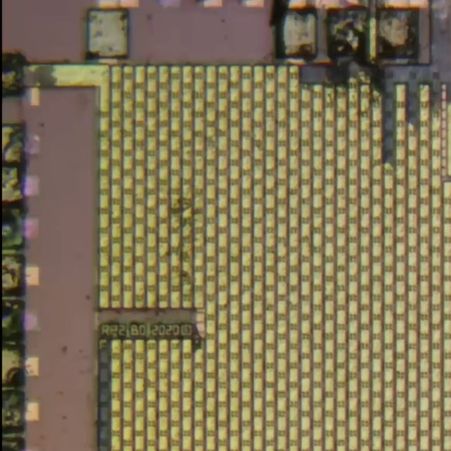
RP2 B0 stepping imprinted on the die shot.

As can be seen in the top image, the board from AliExpress misses the Raspberry Pi logo on the silkscreen for obvious reasons, but otherwise appears to feature an identical component layout. The QSPI Flash IC is marked on the die as BY250156FS, identifying it as a Boya part.

Niggles about flash ROM quality aside, what’s perhaps most interesting about this teardown is what eagle-eyed commentators spotted on the die shot of the RP2040. Although on the MCU the laser markings identify the RP2040 as a B2 stepping, the die clearly identifies it as an β€˜RP2 B0’ part, meaning B0 stepping. This can be problematic when you try to use the USB functionality due to hardware USB bugs in the B0 and B1 steppings.

As they say, caveat emptor.

A New Life For An Old Amplifier

14 January 2026 at 16:00

An audio amplifier was once a fairly simple analogue device, but in recent decades a typical home entertainment amplifier will have expanded to include many digital functions. When these break they are often proprietary and not easy to repair, as was the case with a broken Pioneer surround-sound device given to [Boz]. It sat on the shelf for a few years until he had the idea of a jukebox for his ripped CDs, and his returning it to life with a new main board is something to behold.

Internally it’s a surprisingly modular design, meaning that the front panel with its VFD display and driver were intact and working, as were the class AB amplifier and its power supply. He had the service manual so reverse engineering was straightforward, thus out came the main board in favor of a replacement. He took the original connectors and a few other components, then designed a PCB to take them and a Raspberry Pi Pico and DAC. With appropriate MMBASIC firmware it looks as though it was originally made this way, a sense heightened by a look at the motherboard inside (ignoring a couple of bodges).

We like seeing projects like this one which revive broken devices, and this one is particularly special quality wise. We’re more used to seeing it with gaming hardware though.

❌
❌