Since the RP2040 microcontroller is available as a stand-alone component, it’s easy enough for third parties to churn out their own variations — or outright clones of — the Raspberry Pi Pico. Thus we end up with for example AliExpress sellers offering their own versions that can be significantly cheaper than the genuine article. The ones that [electronupdate] obtained for a test and decapping session cost just $2.25 a pop.
As can be seen in the top image, the board from AliExpress misses the Raspberry Pi logo on the silkscreen for obvious reasons, but otherwise appears to feature an identical component layout. The QSPI Flash IC is marked on the die as BY250156FS, identifying it as a Boya part.
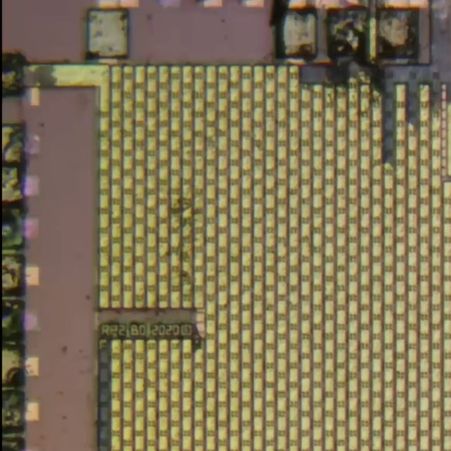
Niggles about flash ROM quality aside, what’s perhaps most interesting about this teardown is what eagle-eyed commentators spotted on the die shot of the RP2040. Although on the MCU the laser markings identify the RP2040 as a B2 stepping, the die clearly identifies it as an ‘RP2 B0’ part, meaning B0 stepping. This can be problematic when you try to use the USB functionality due to hardware USB bugs in the B0 and B1 steppings.
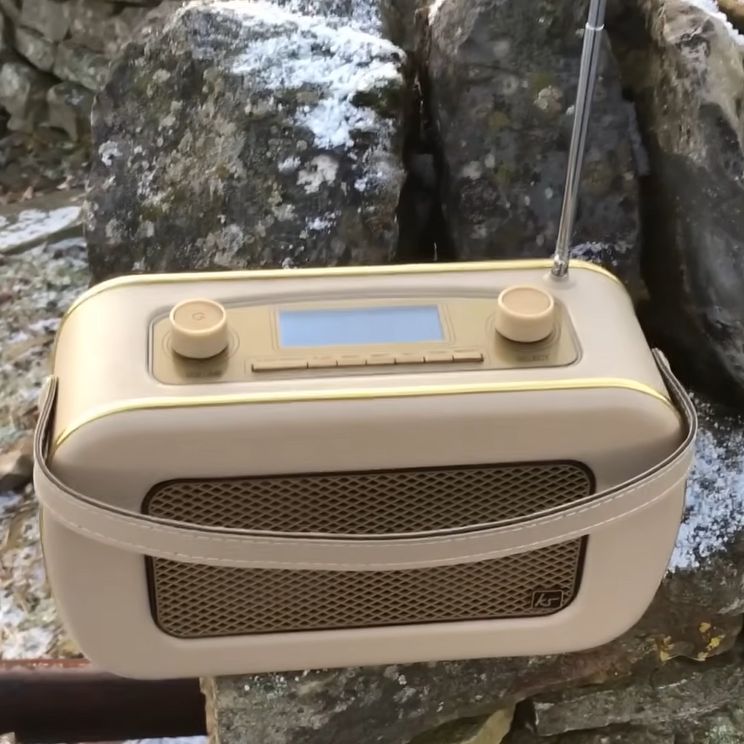
The radio unit after a successful repair. (Credit: Buy it Fix it, YouTube)
The exciting part about repairing consumer electronics is that you are never quite sure what you are going to find. In a recent video by [Mick] of Buy it Fix it on YouTube the subject is a KS Jive radio that throws a few curve balls along the way. After initially seeing the unit not power on with either batteries or external power, opening it up revealed a few loose wires that gave the false hope that it would be an easy fix.
As is typical, the cause of the unit failing appears to have been a power surge that burned out a trace and obliterated the 3.3V LDO and ST TDA7266P amplifier. While the trace was easily fixed, and AMS1117 LDOs are cheap and plentiful, the amplifier chip turned out to be the real challenge on account of being an EOL chip.
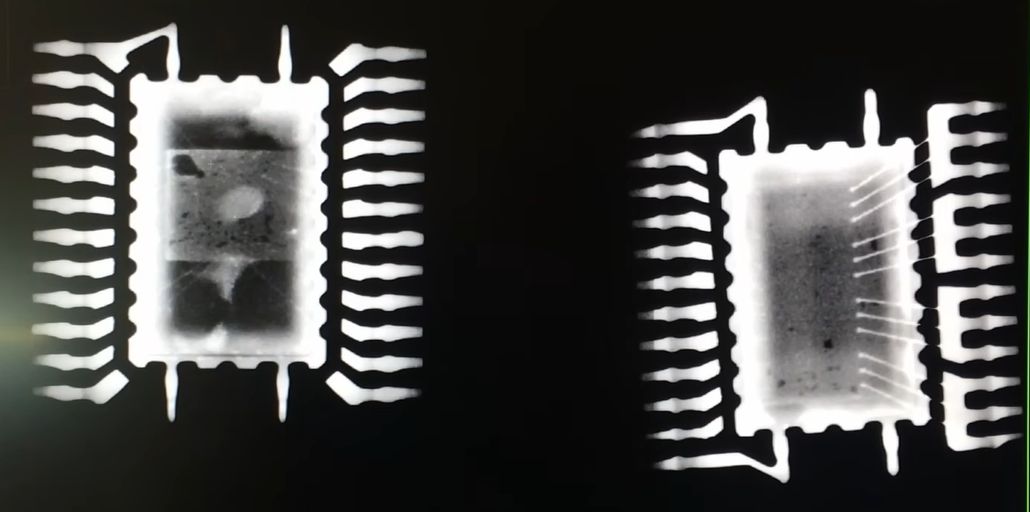
The typical response here is to waddle over to purveyors of scrap hardware, like AliExpress sellers. Here [Mick] bought a ‘new’ TDA7266P, but upon receiving his order, he got suspicious after comparing it with the busted original. As can be seen in the top image, the markings, logo and even typeface are wildly different. Thus [Mick] did what any reasonable person does and x-rayed both chips to compare their internals.
X-ray of the real vs fake ST TDA7266P ICs. (Credit: Buy it Fix it, YouTube)
On the left you can see the dead original amplifier, with what looks like a big mark on the die where the power event destroyed part of it. What’s also apparent from this and the other x-ray shots is that neither the die size, bond wires, nor the physical package’s pins match up. The unusual connections of the fake IC led [Mick] to conclude that it was likely an ST VNQ5E050AK-E quad-channel high-side driver, or at least something very similar to it.
After taking a CNC milling machine to the real and fake chips for additional comparison and a crude decapping, he was still left in a bind, as finding a replacement IC turned out to be basically impossible. Almost, that is, as Mouser turned out to still have the TDA7266P13TR, tape-reel version in stock, with a few left.
This is apparently the same IC, but the cut-reel variety. Interestingly, when tossing this replacement in the x-ray machine, it showed to have a bigger die than the dead ST amplifier IC, which could be due to having been produced with a different process node or so. Regardless, with the original part the radio sprung right back to life, but it shows once again how many chips are being remarked by AliExpress sellers to be something that they are definitely not. Caveat emptor, once more.

 Login
Login