Normal view

There are new articles available, click to refresh the page.
Before yesterdayMain stream

MLK & Marijuana: How the Civil Rights Leader’s Work Informs the Push for Legal Pot

19 January 2026 at 07:20

Martin Luther King Jr. might have turned 96 years old this month if he had not been felled by an assassin’s bullet on April 4, 1968. It is, of course, impossible to know what the United States would look like today if he had lived — or what he would think about the political dilemmas of our own time.

Yet there are certain obvious parallels between his time and ours. The country continues to be bitterly divided along political lines. And many activists and scholars argue that the racist power structure that King fought has re-congealed—this time in the guise of the “War on Drugs” and mass incarceration. His legacy, therefore, holds lessons for those now fighting for cannabis legalization.

Cycles of Repression and Revolution  

Foremost among those scholars is Michelle Alexander, author of the 2010 bestseller The New Jim Crow: Mass Incarceration in the Age of Colorblindness. Alexander takes a long view of the struggle for racial justice in the United States and paints a grim picture. She illustrates how many of the gains that King won in his life are being reversed after his death — this time in a new “race-neutral” guise that only serves to mask continued institutionalized racism.  

Alexander notes that in 1972, there were under 350,000 people in prisons and jails nationwide. Today there are 2 million. In fact, the US has the most people behind bars of any nation on Earth, in both per capita and absolute terms. This is certainly an irony for the country that touts itself as the “land of the free.” 

Among those 2 million people in prison are 40,000 who remain incarcerated in state or federal prisons on cannabis-related convictions— about half of them for marijuana offenses alone. When those waiting to see a judge in local jails are added in, the figure may approach 100,000 on any given day. And the racial disparity could not be more obvious. A 2013 American Civil Liberties Union report, Marijuana in Black and White: Billions of Dollars Wasted on Racially Biased Arrests, crunched the national data. It found that black people are more than three times as likely as whites to be arrested for cannabis — despite consuming the plant at essentially similar rates.  

And this is not the first time the country has seen significant and hard-won racial progress being in large part (at least) reversed, with the same power structure re-establishing itself in new guise. Slavery was abolished in the aftermath of the Civil War. But, as Alexander quotes historian and early civil rights activist W. E. B. Du Bois, from his 1935 book Black Reconstruction in America, “The slave went free, stood a brief moment in the sun, then moved back again toward slavery.”

In the South under occupation by Union troops after the Civil War, black people for the first time voted, served on juries and held elected office — until the backlash came. In 1877, the federal troops were withdrawn. In subsequent years, without federal interference, Ku Klux Klan terror enforced legal apartheid in the southern states — the system known as Jim Crow. Blacks were often reduced to a state of near-slavery through share-cropping and were barred from the vote by systematic disenfranchisement.  

It wasn’t until nearly a century after the Civil War that this system would be challenged. In his book Why We Can’t Wait, an account of the 1963 Birmingham Campaign to desegregate Alabama’s biggest city, King wrote of “America’s third revolution — the Negro Revolution.” 

By King’s reckoning, the country’s first revolution had been the one we actually call “the Revolution” — the War of Independence, although it left the slave-owning aristocracy of the South thoroughly in place. The second was arguably far more revolutionary — the Civil War, in which the slave system was broken. King’s Civil Rights Movement was avowedly nonviolent, but it was still a revolution — the overturning of a power structure by physical as well as moral opposition.

Despite the violent backlash, both from the police and Ku Klux Klan terrorists, the campaign ultimately swayed the nation, resulting in the passage of the Civil Rights Act of 1964 and other landmark legislation that finally ended legal apartheid in America.

But the year of King’s assassination saw the country’s national political establishment embracing the backlash — exactly as in 1877. In the 1968 presidential campaign, Republican candidate Richard Nixon first adopted the rhetoric of a “War on Drugs” (although he would actually coin that phrase three years later, when the Controlled Substances Act was passed). And, in just barely coded terms, Nixon was promoting the rhetoric of racism.

In her book, Alexander quotes Nixon’s special counsel John Ehrlichman explicitly summing up the campaign strategy in his 1982 memoir, Witness To Power: The Nixon Years: “We’ll go after the racists.” Ehrlichman unabashedly wrote how throughout the 1968 race, “subliminal appeal to the anti-black voter was always present in Nixon’s statements and speeches.” 

Alexander did not mention, however, another quote attributed to Ehrlichman in which he just as explicitly made the connection between this subliminal racism and the anti-drug drumbeat. Journalist Dan Baum in the April 2016 edition of Harper’s recalls a quote he says he got from a 1994 interview with Ehrlichman: “The Nixon campaign in 1968, and the Nixon White House after that, had two enemies: the antiwar left and black people… by getting the public to associate the hippies with marijuana and blacks with heroin, and then criminalizing both heavily, we could disrupt those communities. We could arrest their leaders, raid their homes, break up their meetings, and vilify them night after night on the evening news. Did we know we were lying about the drugs? Of course we did.”

And the backlash was just beginning.

Birth of the New Jim Crow 

The new order would be consolidated over the next decade. In 1973, the same year the federal Drug Enforcement Administration was created, New York state’s Rockefeller Laws imposed the nation’s first mandatory minimum sentences for drug offenses. In 1977, New York decriminalized cannabis, overturning the harsh Rockefeller Laws where personal quantities of marijuana were concerned — but the draconian provisions for cocaine and heroin remained intact.

With the election of Ronald Reagan in 1980, the “drug war” rhetoric was revived with a vengeance, and the Anti-Drug Abuse Act of 1986 imposed mandatory minimum sentences nationwide. Ten years later, an ACLU report would find that the law “devastated African American and low-income communities.” 

The 1986 law also instated the sentencing disparity for crack and powder cocaine — as crack was flooding black communities and landing people with the far longer sentences. This was also reflected in public perceptions and media portrayals. In the early ’80s, powder cocaine was a status symbol for white yuppies. When crack hit the streets from New York to Los Angeles, it was immediately stigmatized by association with the criminal (read: black) underclass.

This period also saw the rapid militarization of police forces, and the War on Drugs, in Alexander’s words, went “from being a political slogan to an actual war.” The 1981 Military Cooperation with Law Enforcement Act started to erode the firewall that had existed between the armed forces and police since the end of Reconstruction.

The DEA joined with local police forces to instate Operation Pipeline, a program of traffic stops and vehicle searches that was protested by the ACLU as based on systematic “racial profiling.” 

This was enabled by a series of bad Supreme Court decisions — Terry vs Ohio in 1968, Florida vs. Bostick in 1991, Ohio vs. Robinette in 1996 — that dramatically eroded the Fourth Amendment. Alexander writes that these decisions enabled “consent searches” — in which the motorist (or pedestrian, or home resident) verbally consents to the search, but actually does so under police intimidation.

All-white juries were more likely to convict black people, of course — and prosecutors were still able to strike non-whites from serving as jurors despite the 1986 Supreme Court decision Batson v. Kentuckywhich barred discrimination on the basis of race in jury selection. As Alexander writes, “the only thing that has changed is that prosecutors must come up with a race-neutral excuse for the strikes.” 

In a vicious cycle, mass incarceration itself served to entrench the system of mass incarceration. Convicted felons are excluded from juries in many states, and only Maine and Vermont allow prison inmates to vote (as most Western European countries do).

Nor did this system turn around when the Democrats returned to the White House. The Bill Clinton years saw a 60% drop in federal spending on public housing, and a 170% boost in prison spending up to $19 billion. Prison construction would finally begin leveling off in the 2000s, but the actual prison population broke new records in 2008, “with no end in sight.”

Alexander writes: “Ninety percent of those admitted to prison for drug offenses in many states were black or Latino, yet the mass incarceration of communities of color was explained in race-neutral terms, an adaptation to the needs and demands of the current political climate. The New Jim Crow was born.” 

And this was utterly out of proportion to any real threat posed by illegal drugs. In the 1980s, there were some 22,000 drunk driving deaths per year, among 100,000 alcohol-related deaths. In Alexander’s words: “The number of deaths related to all illegal drugs combined was tiny compared to the number of deaths caused by drunk driving.”

Among the numberless stories of police terror in the name of drug enforcement, one recounted by Alexander is that of Alberta Spruill—a 57-year-old Harlem woman who died of a heart attack in May 2003 after police officers broke down her door and threw a concussion grenade into her apartment. No drugs or any contraband were found in the apartment. The cops were acting on a bad tip from snitches snared on a marijuana rap. 

A Fourth Revolution? 

Thanks in large part to growing public consciousness, there certainly appears to have been some progress in the fight against the War on Drugs over the past decade. In 2009, following a hard-fought activist campaign, the Rockefeller Laws were finally overturned in New York. Eleven states have now legalized cannabis, and nearly all have at least some kind of provision for medical use of cannabis — significantly lifting the pressure on one federally controlled substance.

But even amid the progress, there are clear and frustrating signs that a mere change in the law isn’t enough. From New York City (where cannabis arrests have been de-emphasized by policy) to Colorado (where cannabis is now legal), overall arrests for pot are significantly reduced — but the stark racial disparity persists in those arrests that continue under various loopholes.

Michelle Alexander concludes with a litany of necessary legal reforms and then states that, ultimately, they are insufficient: “Mandatory drug sentencing laws must be rescinded. Marijuana ought to be legalized (and perhaps other drugs as well)… The list could go on, of course, but the point has been made. The central question for racial justice advocates is this: are we serious about ending the system of control, or not?” 

She quotes from Martin Luther King’s book of collected speeches, A Testament of Hope“White America must recognize that justice for black people cannot be achieved without radical changes in the structure of our society. The comfortable, the entrenched, the privileged cannot continue to tremble at the prospect of change in the status quo.”

There are many other quotes from the great civil rights leader that shed equal light on the current impasse, in which the limitations of mere legal progress are becoming clear. In his April 1963 Letter from Birmingham Jail, King justified his civil disobedience in these words: “An unjust law is a code that a numerical or power majority group compels a minority group to obey but does not make binding on itself.”

This recalls both the relative impunity for white coke-snorters in the ’80s as black communities were militarized in the name of drug enforcement — and the white entrepreneurs now disproportionately getting rich off legal cannabis, while black users remain disproportionately criminalized.  

In Why We Can’t Wait, King wrote of how the country needed a “Bill of Rights for the Disadvantaged” — anticipating the current demands for drug war reparations, wedding legal cannabis to addressing the harms caused by prohibition and the related matrix of social injustice.

The notion that cannabis legalization is necessary but not sufficient recalls King’s 1967 report to the staff of the Southern Christian Leadership Conference, the main coordinating body of the civil rights campaign. 

In the “Report to SCLC Staff,” he noted how the 1965 Selma to Montgomery March culminated in passage of the Voting Rights Act later that year — a critical victory. Yet, he wrote: “We have moved from the era of civil rights to the era of human rights, an era where we are called upon to raise certain basic questions about the whole society. We have been in a reform movement… But after Selma and the voting rights bill, we moved into a new era, which must be the era of revolution. We must recognize that we can’t solve our problem now until there is a radical redistribution of economic and political power.”

If cannabis legalization is to truly undo the social harms of prohibition, its advocates may be in for a similar reckoning in the coming period.

The post MLK & Marijuana: How the Civil Rights Leader’s Work Informs the Push for Legal Pot appeared first on Cannabis Now.
From Spain, The Planet Awaits

12 January 2026 at 14:30

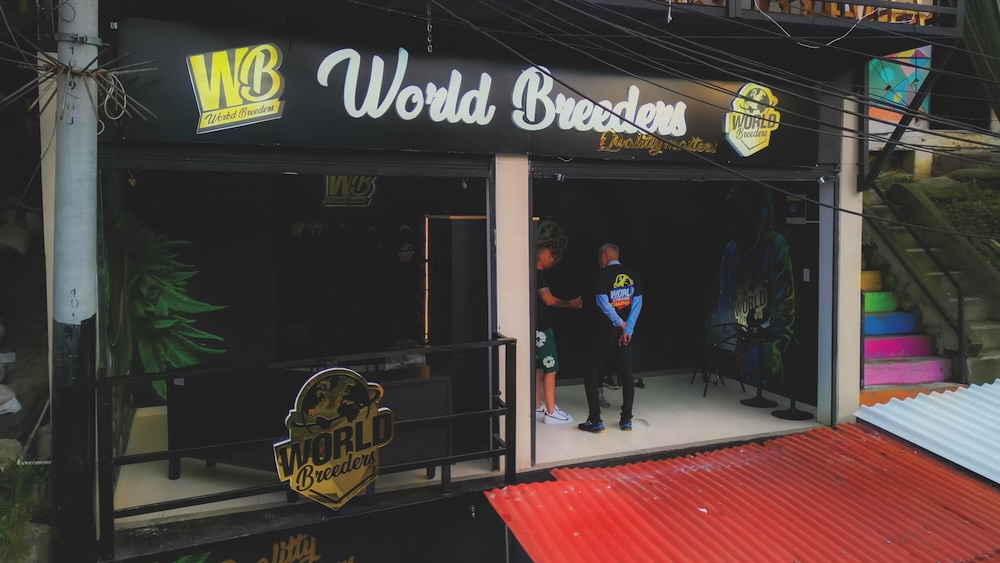
World Breeders, a cannabis seed company with who is making good on its promise to export seeds worldwide, has three founders, and it’s taken them all to shape the trajectory they have now—from working in cannabis on the “underground side,” as co-director Gorka Cid Luaces says, to an enterprise with operations on three continents and the momentum to fulfill their ambitions.

Jon Urriola Rementeria—responsible for seed development, genetics and research—was growing tomatoes for Spanish supermarkets before he switched to hierba with the emergence of the first “cannabis associations” in the País Vasco, Spain’s northeast Basque Country. Leandro García Rodriguez handles client and concept development, while Cid Luaces is responsible for overall management of the company. García Rodriguez is originally from Seville, while Rementeria and Cid Luaces are native to the Basque Country.

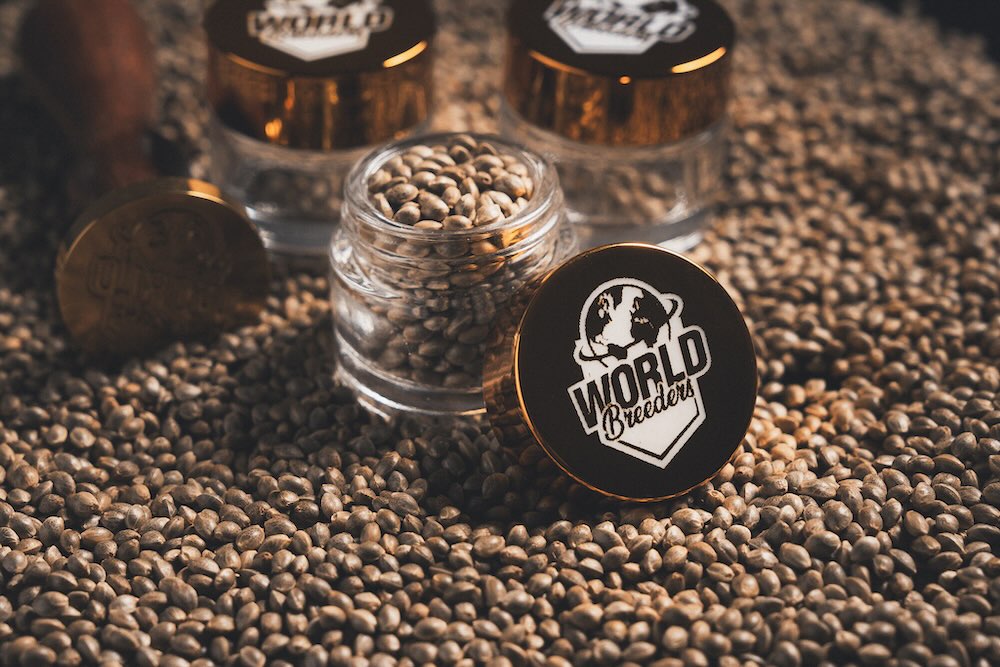
World Breeders cannabis seeds
World Breeders claims to have dedicated itself to selecting and developing its own genetics with meticulous attention to details.

Rementeria and Cid Luaces first came together in GreenFarm Éibar, which was among the first cannabis associations in Euskadi, as the País Vasco is known in the Basque language. They produced flower for the association in a mixed greenhouse and outdoor operation, with the local police informed.

“The experience with GreenFarm marked our entry into the cannabis industry,” Cid says. “It was a highly rewarding stage, yet also one filled with tension. Working constantly on the edge of legality takes a heavy psychological toll.”

GreenFarm was a member organization of the Federation of Cannabis User Associations of Euskadi (EUSFAC) which coordinates rules and standards for a sector operating in a kind of legal gray area. These regulations allowed private cultivation for the associations but limited members to two grams per day, to be consumed on club premises. Several associations closed during the pandemic in 2020, as these restrictions became untenable, and the sector never fully recovered. Associations continue to thrive in the regions of Catalonia and Andalusia, but regional authorities in País Vasco cracked down, with some clubs busted and herb confiscated.

World Breeders Cannabis Cultivation

The GreenFarm veterans moved into the commercial space, anticipating an expanding market for the recreational side as policy in several European countries liberalized. World Breeders was registered as a seed company in the Czech Republic in 2019, though they had already been working with third partner García Rodriguez from Medical Weed Sevilla, one of the first associations in Andalusia’s southern region, for some time with different companies.

Seeking a suitable country for production, the trio settled on the rising industry player of Colombia. Cannabis had been decriminalized there since 1994 and medical marijuana was legalized in December 2015 by decree of then-president Juan Manuel Santos—who would the following year win the Nobel Peace Prize for negotiating peace with the guerillas. Along with the historic peace deal in 2016, Colombia’s Congress that year approved commercial cannabis cultivation under government license.

“We knew we wanted to continue working in the cannabis industry—it’s our passion, and our professional path,” Cid says. “But we were equally clear that we wanted to do it within a fully legal framework. Colombia offered the chance to operate under official licenses, with a transparent regulatory environment and the ability to develop genetics and production at scale, without legal uncertainty. That’s why we took the leap and established our operations there.”

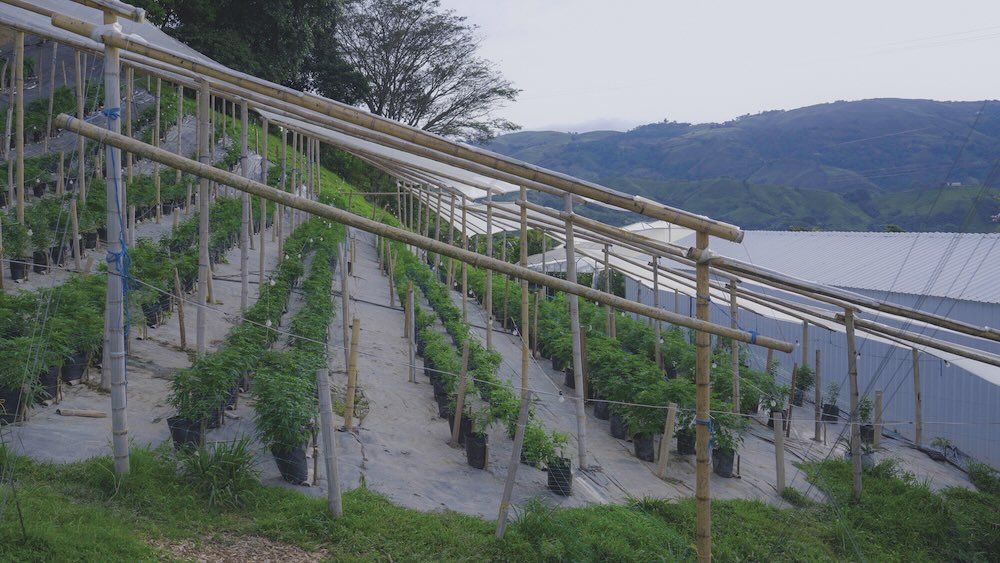
In 2020, World Breeders set up its mixed indoor/greenhouse production facility in Antioquia in the northwest region of the country. Their first greenhouses were in Guarne, a charming mountain town in the Andes. Production began in January 2021 and licensed export of seed to Spain began that year.

The seed stock they’d been working with initially had difficulties adjusting to higher altitude and new, more acidic soil and water conditions. Operations later moved to Ebéjico, on the outskirts of the Medellín metropolitan area, where the altitude is lower and the climate warmer.

World Breeders growing cannabis in Colombia
Based in Colombia since 2020, World Breeders’ new environment creates exceptional photoperiods: 12 hours of daylight and 12 hours of darkness per day. “It’s ideal for complex terpene profiles,” says co-founder Gorka Cid Luaces.

Conditions here, as it turns out, are exceptional. The light offers perfect photoperiods: about 12 hours of daylight and 12 hours of darkness per day. And the altitude of some 1,400 meters above sea level, Cid describes as “ideal for complex terpene profiles.”

“Over the years, we have dedicated ourselves to selecting and developing our own genetics with meticulous attention to details,” their website boasts.

The company, a seed bank marketing its genetic creations to specialty growers, currently offers nine strains, with names including Clementine Slush, Fizzy Gum and Pink Truffle. Cid takes pride in the descriptive accuracy of these appellations. “If we say it tastes like clementine, it really tastes like clementine,” he assures.

A recent addition is La Hokuzan, developed in cooperation with Barcelona-based Hidden Group Genetics. The Catalan group had bred its own indica-heavy hybrid Hokuzai, which World Breeders crossed with their own Fizzy Gum for a more “sparkling and fruity” feel.

Just coming online is Pilot, developed in conjunction with Spanish rapper JC Reyes, combining his favorite traits—a three-way cross of Pink Watermelon x Jokerz x WB Bubba.

World Breeders is also currently working with growers in the Rif Mountains of Morocco to develop a line of triploid seeds. Triploid strains have three sets of chromosomes, as opposed to the traditional diploid varieties with two sets—one from each parent plant. They typically don’t collect pollen and therefore don’t produce seeds. (Most of the bananas we eat are triploid, as well as seedless watermelons.) This is important for cannabis, because a female plant that doesn’t get fertilized will keep secreting resin indefinitely throughout the growing season, even if there are male plants in the vicinity. A triploid line could be a breakthrough for the centuries-old tradition of hashish production in the Rif, and a boon to growers everywhere.

“We’re confident that this new line will mark a before-and-after in the genetic development of cannabis, positioning World Breeders as a benchmark for innovation and quality in the sector,” Cid predicts.

But expanding markets in Europe represent the real opportunity on the imminent horizon, Cid says, pointing to recent moves toward permitting adult-use cultivation in Portugal and Germany. “What began as a dream of the World Breeders team is now a consolidated reality,” he says.

This story was originally published in issue 52 of the print edition of Cannabis Now.

The post From Spain, The Planet Awaits appeared first on Cannabis Now.

New Legislation Bans Hemp-Derived THC

14 November 2025 at 18:34

President Donald Trump signed a spending measure Nov. 12, funding federal operations through January and ending the longest government shutdown in US history after 43 days. The Senate had approved the measure the previous day, with seven Democrats crossing party lines to reach the needed 60-vote majority. They were won over by a Republican pledge to revisit the question of subsidies for Obamacare in December.

However, a sideshow to the fight over the Affordable Care Act is causing outrage in the hemp industry—and among farmers in hemp-producing states like Kentucky. A last-minute provision added to the spending bill will effectively ban all hemp-derived THC products.  


The Dreaded ‘Loophole’

This concerns what has been derided as a “loophole” in the 2018 Farm Bill that legalized the production of industrial hemp in the United States. The Farm Bill kept the federal ban on cannabis and cannabis products with more than 0.3% Delta-9 THC—and on Delta-9 THC itself, whether derived from hemp or “marijuana.” However, in a measure intended to legalize the CBD market, it allowed extraction and sale of cannabinoids other than Delta-9 THC, if derived from hemp. 

This had an unanticipated effect. In the wake of the 2018 law, an industry suddenly boomed around hemp-derived cannabinoid products—and not just CBD but psychoactive THC. Particularly at issue was Delta-8 THC, an isomer of Delta-9, which behaves much the same way in the human organism. Products containing Delta-8 were suddenly available in convenience stores, gas stations and truck stops coast to coast.  

A backlash also quickly emerged. Critics argued that because the industry was essentially using a subterfuge to skirt the law, these new products were basically unregulated

The new law contains a provision added to Agriculture Department funding that restricts hemp and hemp-derived products to those containing low concentrations of all THC—not just Delta-9 THC. It is to take effect on Nov. 12, 2026, one year from the date of signing. 

The new provision “prevents the unregulated sale of intoxicating hemp-based or hemp-derived products, including Delta-8, from being sold online, in gas stations, and corner stores, while preserving non-intoxicating CBD and industrial hemp products,” reads a Senate Appropriations Committee summary.  

Media reports warn of an “extinction-level event” for the hemp industry when the provision kicks in. 


Bluegrass Senators at Odds

Kentucky’s Republican Sen. Rand Paul pushed an amendment to strip the provision from the bill, but this failed in a 76-24 vote. And his principal opponent was fellow Bluegrass State GOP senator, Mitch McConnell—who had championed the 2018 Farm Bill as then-majority leader of the Senate. 

The Louisville Courier-Journal quoted Kentucky farmers fearing that the new law could be a “death sentence.” 

The move is also meeting with pushback in Texas, where the GOP-dominated political establishment is divided over an effort to ban Delta-8 at the state level. Officials with the Texas chapter of the Veterans of Foreign Wars told Waco’s KWTX that many vets use hemp-derived THC products to treat PTSD and other ailments related to their service. 

“What in the world just happened last night?” Thus responded Mitch Fuller, legislative chair for Texas VFW, after the Congressional logjam broke. Fuller had successfully lobbied Gov. Greg Abbott to veto the Delta-8 ban in the statehouse earlier this year.  

Abbott’s big rival on the question in his own administration was Lt. Gov. Dan Patrick, who had pushed for the state ban and enthused in a tweet about the federal one after it passed: “As part of the resolution, consumable, highly intoxicating hemp-derived THC is essentially banned in America. Farmers are protected to produce industrial products. CBD and CBG are still legal. However, Delta-8, Delta-10, and candies, snacks, and gummies with high dosages of intoxicating THC are all banned. Hemp-derived Delta-9 will only be allowed to be sold in very low, non-intoxicating dosages.” (This is a reference to the 0.3% cap, well below the threshold for any psychoactive effect.)

Mitch Fuller retorted: “Of course, safety is important, of course children not having access to this is important. But let’s not use a chain-saw approach to this, let’s use a scalpel approach to it, and regulate it.”

The VFW chapter said they will use the year before the ban takes effect to organize pressure to have it reversed.

Industry Voices Sound Alarm 

The hemp and cannabis industries are, predictably, distressed over the new measure. Adam Stettner, CEO of financial lender FundCanna, said in a statement: “Banning intoxicating hemp through a government funding bill isn’t policymaking; it’s panic disguised as progress. You can’t erase a $28 billion market or the millions of consumers who already exist. You can only decide whether those dollars flow through legal, regulated channels or into the shadows. You’re kidding yourself if you think consumers will stop buying hemp beverages, gummies or wellness products because Congress flipped a switch.” 


Stettner raised the specter of backsliding toward prohibition: “Dismantling compliant supply chains won’t make these products disappear; it will make them untraceable, untaxed and unsafe. What we need isn’t a ban, it’s balance and logic. If lawmakers want safer products and clearer rules, they need to regulate, not eradicate. The responsible path forward is to regulate hemp like we do alcohol or caffeine at the federal level, with age limits, testing and labeling. Inserting a blanket prohibition by sneaking it into a budget deal won’t work; prohibition never works.”

Thomas Winstanley, executive vice president of infused products purveyor Edibles.com, emphasized the ironic role of the former Senate majority leader, who has announced that he will retire next year.

“Mitch McConnell has once again proven himself the architect of the law of unintended consequences,” Winstanley said. “When he introduced the 2018 Farm Bill, it was celebrated as a lifeline for America’s farmers—a rare bipartisan achievement that gave rural communities a new cash crop and built a thriving, homegrown industry. What no one expected was that it would also ignite a $28 billion consumer market, create over 300,000 American jobs, and form a domestic supply chain rooted in U.S. agriculture and innovation. That was the first unintended consequence, a positive one. Today, history repeats itself, but this time, the fallout will be devastating. By attaching a sweeping hemp restriction to the government spending bill, McConnell has chosen to end his career by crippling the very industry he created.”

He too pledged to use the one-year grace period to organize resistance: “Farmers, brands, and consumers, once fragmented, are now mobilizing together to defend what they’ve built and to finally push for the federal framework the hemp industry has long demanded.”

The post New Legislation Bans Hemp-Derived THC appeared first on Cannabis Now.

Sister Somayah Kambui: An Early Visionary of Cannabis Equity

26 September 2025 at 15:03

Today, “equity” is a watchword in the cannabis legalization movement, as state and local governments try to craft models for an adult-use market designed to correct the social harms of prohibition and the War on Drugs. But this public consciousness is due to the work of many who pushed the issue long before doing so was entirely socially acceptable.

Sister Somayah Kambui, a veteran Black Panther turned cannabis advocate, was one of those who brought issues of racial justice to the forefront of the cannabis movement. And before her untimely death, she won a groundbreaking “jury nullification” victory, upholding her right to provide cannabis to treat sickle-cell anemia.

Sister Somayah, as she was ubiquitously known (she was born Renee Moore), used cannabis to treat sickle-cell anemia, under the terms of California’s Proposition 215 medical marijuana measure after its passage in 1996. But her vocal advocacy made her a target of the authorities — resulting in her unprecedented legal victory. 

Sickle-cell anemia is a genetic blood anomaly that occurs in one in every 70,000 Americans, particularly those of African descent. It can cause debilitating pain, fatigue and swelling of the hands and feet. It took Kambui a while to figure out that cannabis was the most effective treatment for her.

Kambui was a veteran of the U.S. Air Force, where she served several years during the Vietnam era. At VA and public hospitals, she was given morphine for her pain from the disease. 

“I couldn’t do anything on the morph,” she told High Times reporter Peter Gorman. “And neither can a million other people. That’s why you see so many middle aged and older black folk sitting on stoops looking like junkies. They are junkies. They’re U.S. government junkies.”

After finding that cannabis helped, and after the passage of Prop 215, she founded the Crescent Alliance Self Help for Sickle Cell collective, or “buyers’ club.” With a doctor’s recommendation, she began cultivating in her South Los Angeles backyard.

But the police raided her garden in October 2001 and confiscated, by their estimate, 200 pounds of cannabis plants. 

The LAPD brought in a helicopter for the raid, menacing the block of single-family homes.

“I was sitting having a cup of coffee with a little hemp oil when they broke down the door,” Kambui told the Los Angeles Times. “I said, ‘I’m legal, I have a doctor’s note and I’m compliant with the law.'”

She said the officers told her she had too much for her personal use. “I said ‘OK, why don’t you take what you think I don’t need and leave me the rest?'” she recalled to the LA Times. “They took it all.” 

She also disputed the police estimate of the haul. “That is 200 pounds wet, with dirt and stalks,” she said.

Kambui was arrested, spent 60 days in jail and was charged with multiple felonies including cultivation, sale and shipping marijuana out of state. Worse still, she was facing a life prison term under California’s “Three Strikes” law. Her two prior convictions, involving illegal firearms possession and explosives, stemmed from her work with the Black Panthers in the early 1970s. During her time as a legendary Panther, she was known as “Peaches,” and was a leader of the Southern California Chapter of the Black Panther Party, alongside Geronimo Pratt.

When she went before the judge at Los Angeles County Court in January 2002, Kambui said the cannabis was not for her use alone, but was to be shared with some dozen sickle-cell sufferers in her club. “They’re all mine,” she said, taking full responsibility for all the uprooted plants. She also admitted shipping to sufferers who were too far away to come see her. 

And she asserted that her advocacy had made her a target, noting that she’d been similarly raided in 1998 — although the charges were dropped after she spent two weeks in jail.  

Making a medical necessity defense, Kambui spoke to the court of the long centuries of medicinal cannabis use in African traditional healing. Using her own idiosyncratic lingo, she referred to the African continent as “Nigretia,” and to her cannabis as “Nigretian Kif.”  

Sister Somayah Kambui

The trial ended in an outcome that The Leaf Online website hailed as a “jury revolt or jury nullification,” in which a defendant is acquitted on moral or ethical grounds, in spite of uncontested evidence that she or he acted as charged. On March 18, 2002, Sister Somayah Kambui was found “not guilty” of all charges.

In addition to being a rare victory for the doctrine of nullification, Kambui’s legal battle also anticipated a change in California law. It was the following year that the “medical marijuana collective defense” was enshrined in the Medical Marijuana Program Act, the notorious Senate Bill 420. 

Pushing Racial Justice in the Cannabis Community 

By the time of her court case, Kambui was already a leading figure in Southern California’s cannabis activist scene. She was the key mover behind the first Los Angeles Global Marijuana March in 1999, and all the subsequent ones until her death. And she was particularly aggressive in calling out the cannabis community one what she saw as its internal racism — for instance, in failing to emphasize sickle-cell anemia in medical marijuana advocacy, and failing to make the link between prohibition and militarized policing of black and brown communities.

But she bridged a cultural divide in 1997, when she teamed up with B.E. Smith, a brazen and police-defying cannabis grower of white redneck roots in the backwoods of Northern California’s Trinity Alps. Smith became “designated caregiver” for Kambui, among a handful of other medical users around the state. Alas, she never got to use B.E.’s bud, as his cultivation site was raided by federal agents that harvest season—resulting in his own landmark legal battle. Smith died earlier this year.

Unfortunately, Kambui’s run-ins with the law were not over after her court victory. In October 2003, her garden was again raided — this time by the DEA. A dozen plants were uprooted, although no charges were filed. 

California NORML coordinator Dale Gieringer decried the raid as a “mean-spirited, gratuitous attack on a seriously ill woman who has been judged guiltless by her peers under California law. Like other victims of DEA’s medical marijuana raids, Somayah was targeted because she was a vocal, legal patient activist who was a thorn in the side of the law enforcement establishment.” 

Like many front-line activists who put a commitment to community ahead of personal gain, Kambui received little material reward for her efforts. When she died on Thanksgiving 2008, at the age of 57, the website Time4Hemp wrote that economic hard times likely contributed to her demise: “Many close to her believe she died of a broken heart based on lack of financial support. All those dispensaries in Los Angeles and not one would help her save her home from foreclosure.” 

Twelve years after her passing, Sister Somayah Kambui reminds us of the need to preserve the memory of those who sacrificed for such freedom and consciousness as we have now achieved. And more poignantly, of the need to honor and support our freedom fighters while they still walk among us. 

TELL US, what did you learn from Sister Somayah?

The post Sister Somayah Kambui: An Early Visionary of Cannabis Equity appeared first on Cannabis Now.

❌
❌