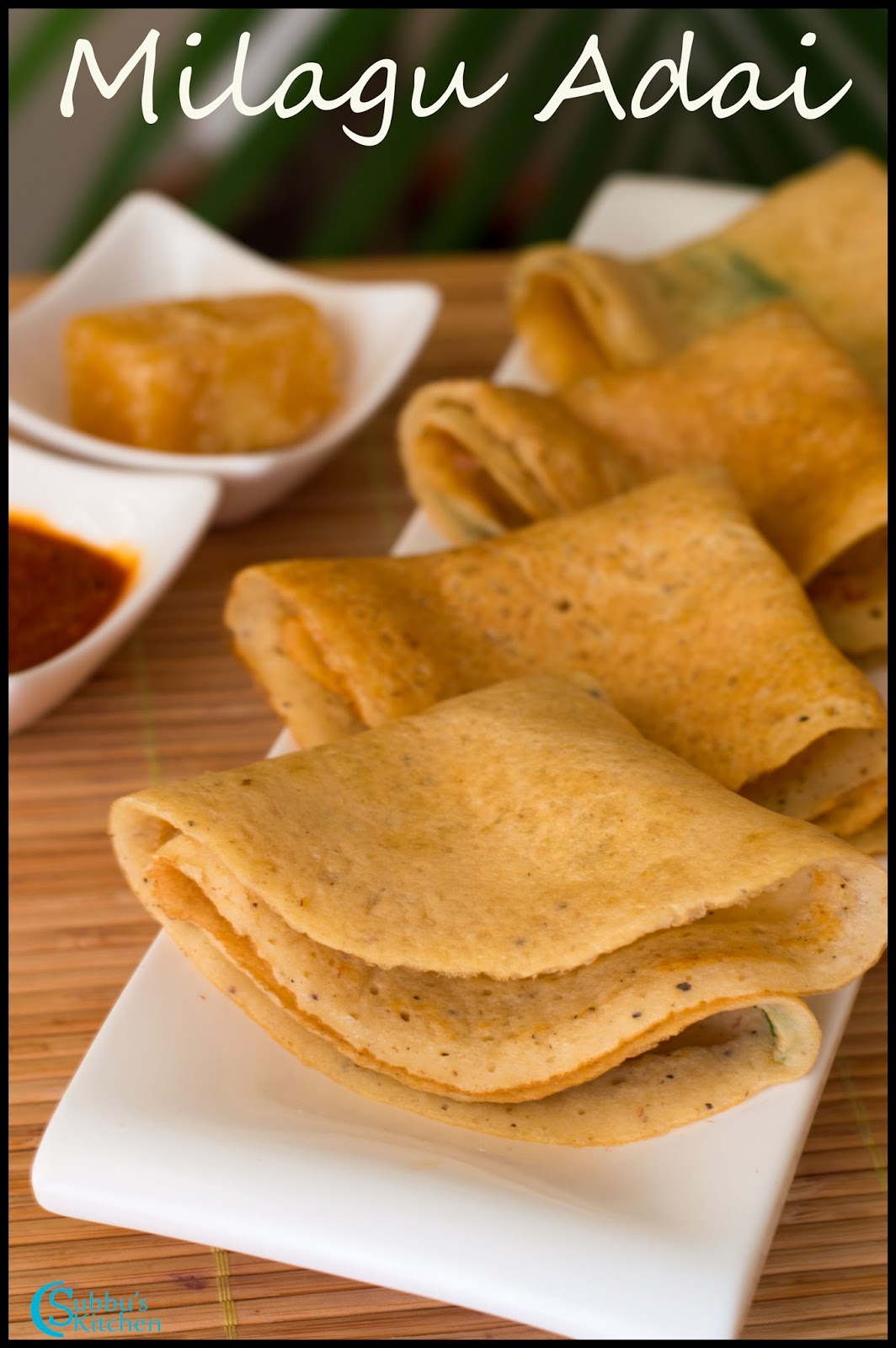
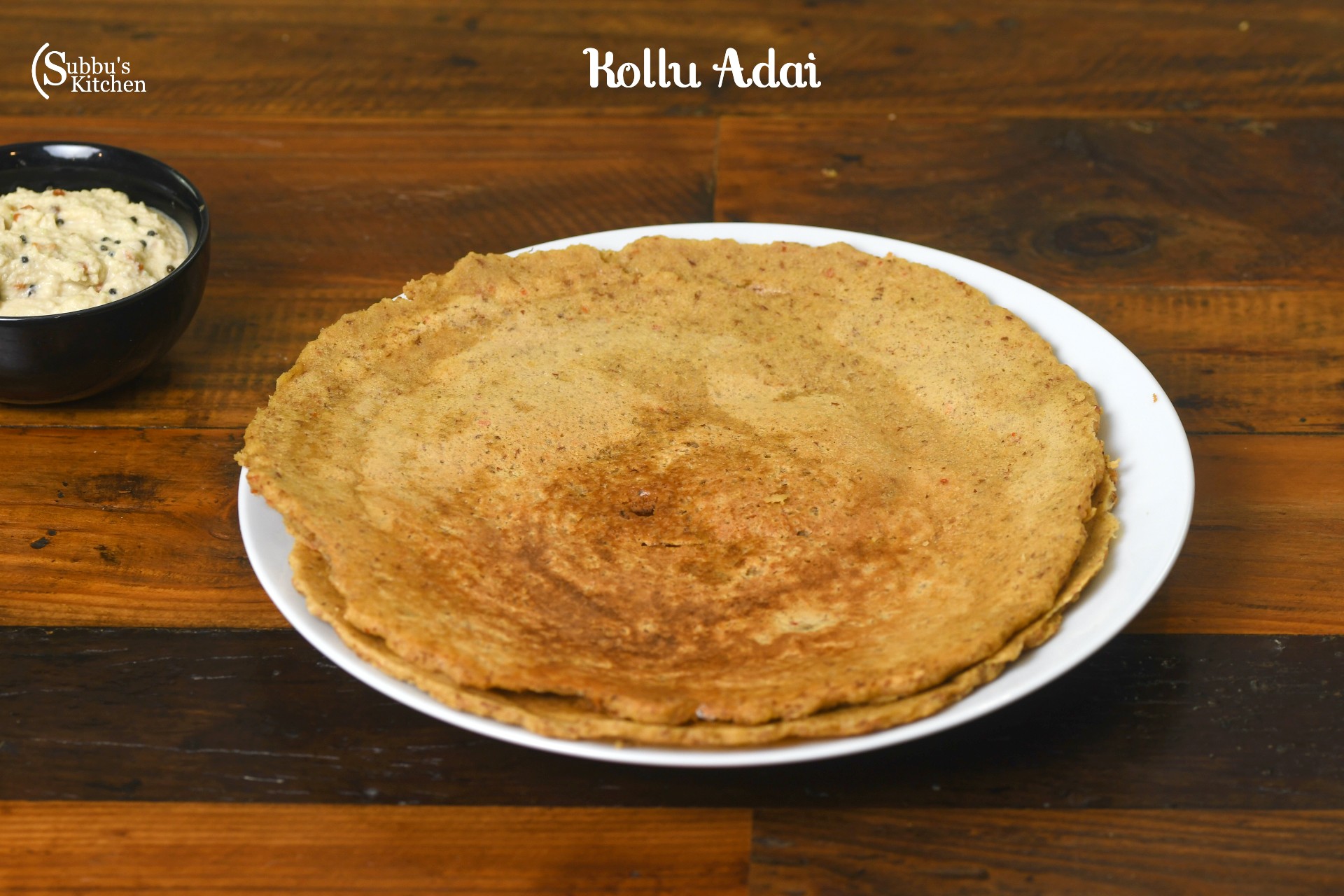
In our families Milagu Adai also one of the neyvedhyam for Thirukarthigai. As per the mythological story a princes has to leave an elephant which she considered as her brother when she gets married and move to her husbands place. So for every Thirukarthigai/Karthigai deepam occasion, elephant lamp(Gajalakshmi vilaku) and she will prepare tender coconut, elephant leg size milagu Adai, and few more dishes and keep them as neivedhyam for this festival.
We can make this Adai in normal occasions for breakfast or for dinner.Serve with Chutney or Jaggery.
Milagu Adai | Thirukarthigai Adai is an offering to God we make on the auspicious occasion of Thirukarthigai Deepam.
Course Breakfast, Evening Tiffen
Cuisine Indian, South Indian, Tamilnadu
Prep Time 10 minutesminutes
Cook Time 30 minutesminutes
Soaking Time 2 hourshours
Total Time 40 minutesminutes
Servings 4Adai
Calories 197kcal
Author Sowmya Venkatachalam
Ingredients
1CupRaw Rice
¼CupWhole Urad Dal
¼CupToor Dal (Pigeon pea)
¼CupSplit Bengal Gram (Channa Dal / Kadalaparuppu)
1teaspoonPeppercorns
1teaspoonSaltAs Needed
aPinchAsafoetida (Asafetida / Hing)
2tablespoonGrated Coconut
FewCurry Leaves
Instructions
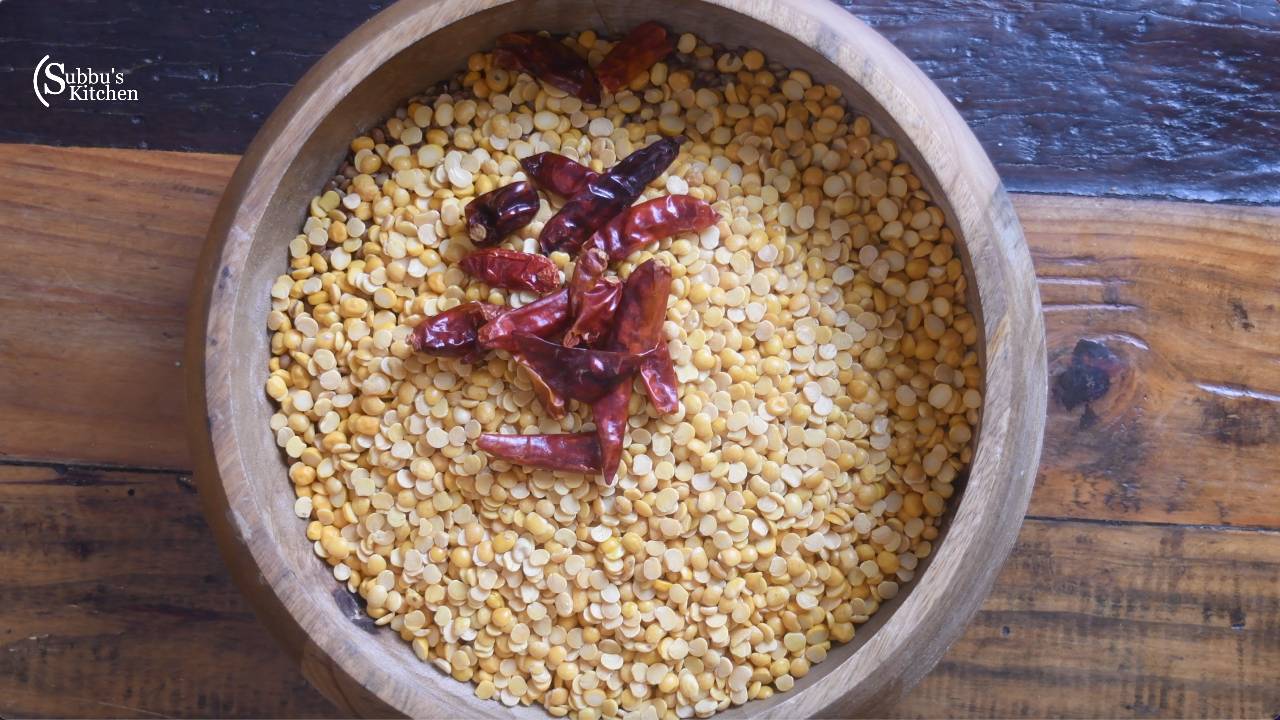
Soak the rice with all the dhals in water for 2 hours to 3 hours.
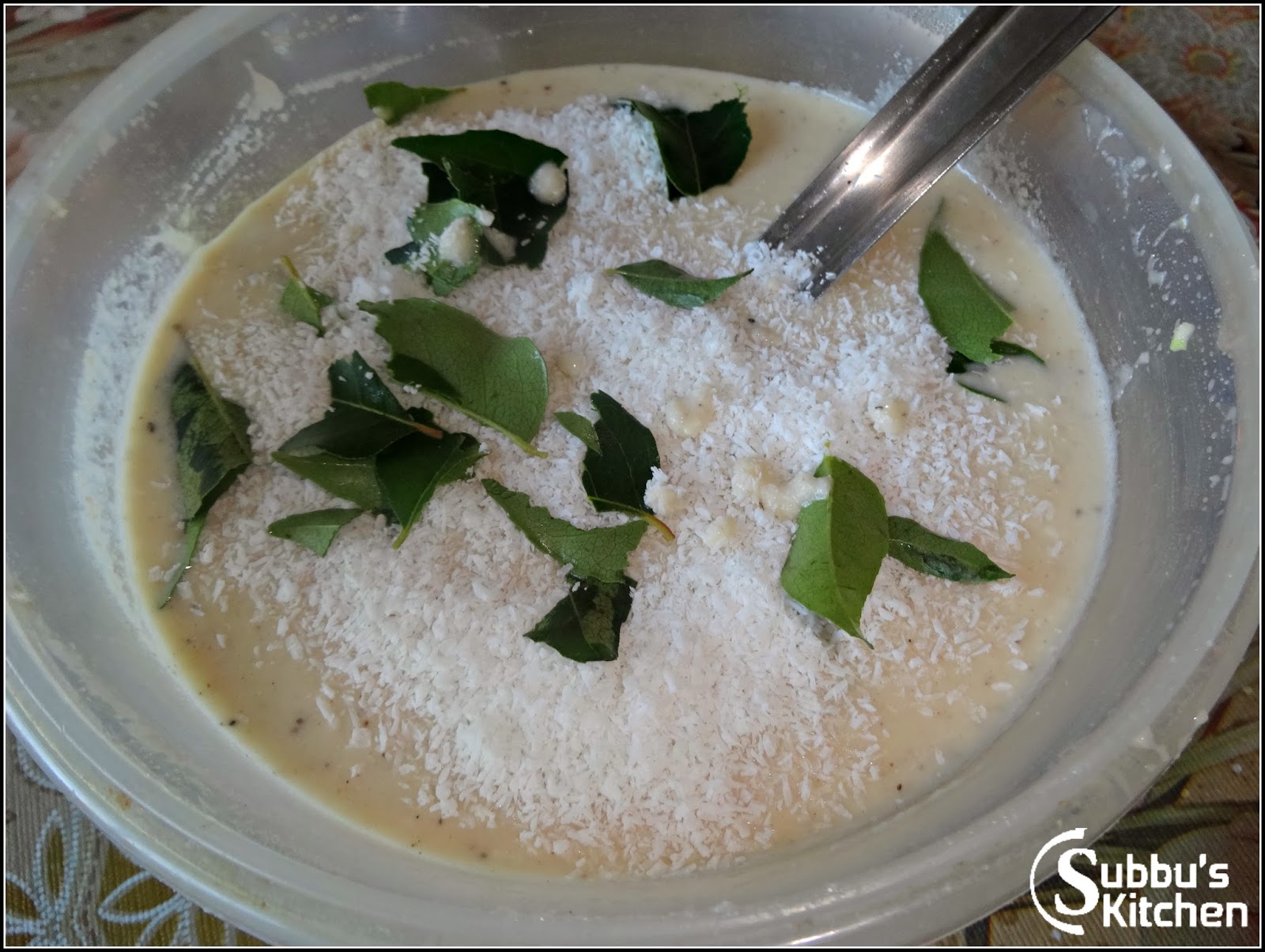
Drain the rice and dhals and grind it in mixer to a coarse paste. The adai flour should not be very smooth. ransfer this to a bowl and mix the pepper salt, hing, curry leaves and grated coconut.
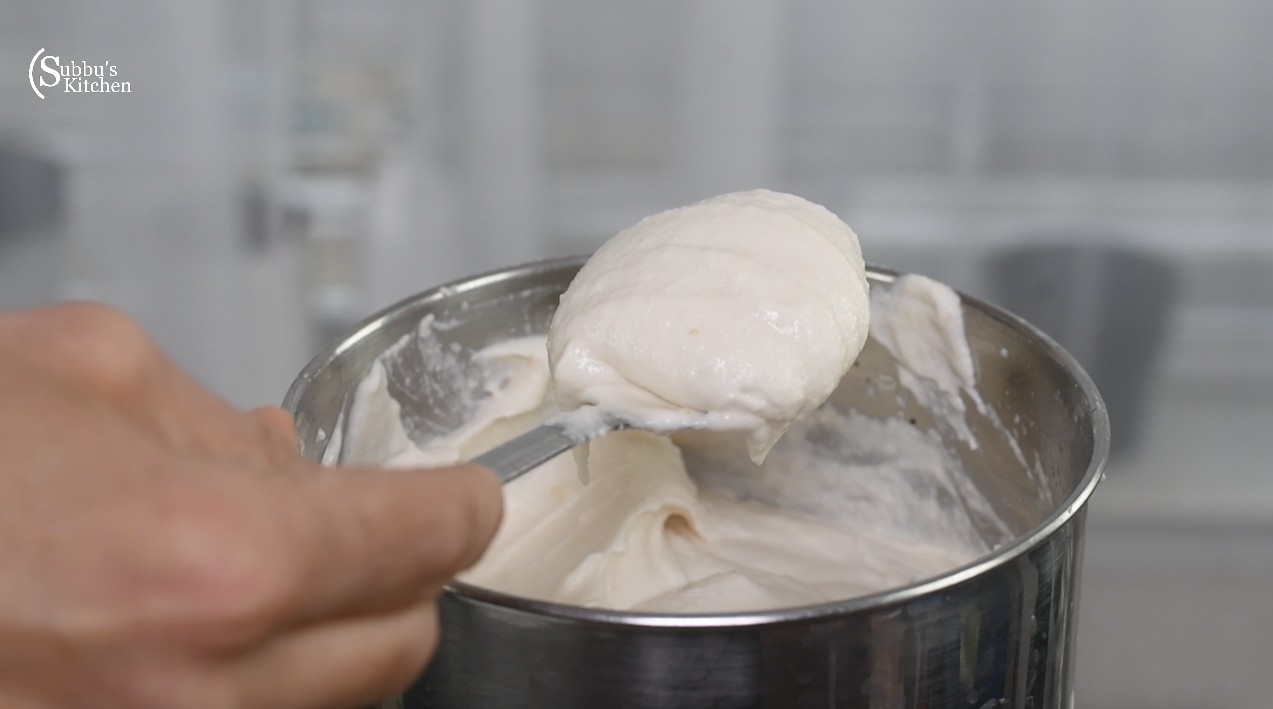
The consistency should be slightly thicker than our normal dosa batter.
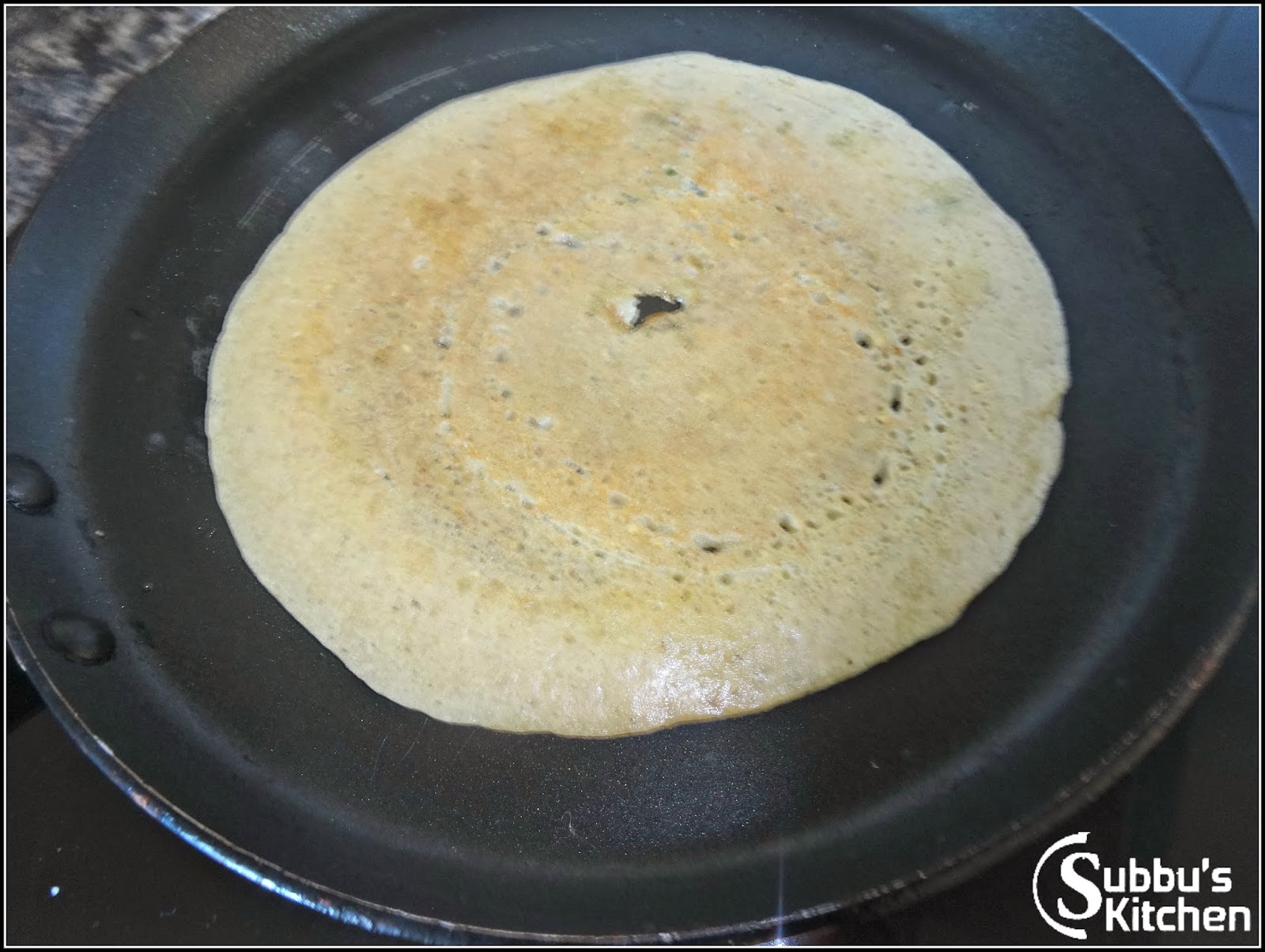
Heat the thawa and pour 1 ladle of flour and spread evenly and cook the adai on both the sides till the adai is crisp
Serve the tasty adai along with Jaggery.
Video
Notes
If you make this on normal days, we can add onion.
For Festivals, we need to use Raw Rice, for normal occasions, we can use parboiled rice
Soak the rice with all the dhals in water for 2 hours to 3 hours. Drain the rice and dhals and grind it in mixer to a coarse paste. The adai flour should not be very smooth. ransfer this to a bowl and mix the pepper salt, hing, curry leaves and grated coconut. The consistency should be slightly thicker than our normal dosa batter.
Heat the thawa and pour 1 ladle of flour and spread evenly and cook the adai on both the sides till the adai is crisp
Looking for a nourishing and delicious breakfast that will fuel your day? Look no further than Ulundhu Kanji! This rich and comforting South Indian porridge is packed with the goodness of urad dal, jaggery, and aromatic spices. Perfect for boosting your energy levels, it combines a subtle sweetness with a hearty texture that will leave you craving more. Whether you’re new to this dish or a long-time fan, this recipe is sure to become a staple in your kitchen. Keep reading to discover how to make this fantastic porridge that will warm your heart and satisfy your cravings!.
In some households, it is considered a nutritious breakfast or evening snack, especially for new mothers recovering after childbirth, as it is believed to be rich in nutrients that help restore strength and energy. Its soothing properties and health benefits make it a comforting choice for any time of year, but it holds special significance during these culturally meaningful times.
Please check out the Ulundhu Kali recipe and Black Gram Jaggery Ladoo on my blog. These recipes are also made using black urad dal and offer a wealth of nutritional benefits.
[feast_advanced_jump_to]
Nutritional Benefits of Ulundhu Kanji
Ulundhu Kanji offers a range of impressive nutritional benefits, making it a healthy and nourishing choice. Here are some key benefits:
Rich in Protein: The primary ingredient, Urad Dal (Black Gram), is an excellent source of plant-based protein, essential for muscle repair, growth, and overall body function.
High in Iron: Urad dal is also packed with iron, which is crucial for boosting hemoglobin levels and preventing anemia. Additionally, the inclusion of jaggery, a natural sweetener, further enhances the iron content.
Supports Digestion: Dry ginger powder and cardamom are known for their digestive benefits. They help in soothing the stomach, reducing bloating, and improving the absorption of nutrients.
Rich in Fiber: The dish is high in dietary fiber, which promotes good digestion, regulates blood sugar levels, and aids in weight management.
Boosts Energy: The combination of protein, iron, and natural sugars from jaggery provides a sustained energy boost, making it an ideal meal to start the day or to fuel you during physically demanding times.
Anti-inflammatory Properties: Ingredients like dry ginger and cardamom have natural anti-inflammatory properties, which help reduce inflammation in the body and contribute to overall wellness.
Bone Health: The calcium content in jaggery and the high-quality protein in urad dal contribute to maintaining strong and healthy bones.
This wholesome porridge not only offers a comforting and flavorful meal but also delivers essential nutrients that support overall health and well-being.
Ingredients
The ingredients used in this recipe were carefully chosen for their nutritional value and health benefits. Urad Dal (Black Gram) is a rich source of protein, iron, and fiber, making it ideal for boosting energy and supporting overall health. Jaggery is a natural sweetener packed with essential minerals like iron and calcium, which help improve digestion and strengthen bones. Cardamom and Dry Ginger Powder not only enhance the flavor with their aromatic spices but also aid in digestion and provide anti-inflammatory properties. Together, these ingredients create a wholesome dish that nourishes the body, improves vitality, and promotes well-being.
Key Ingredients:
Urad Dal (Black Gram)
Jaggery
Cardamom Powder
Dry Ginger Powder
See recipe card for quantities.
Instructions
Heat a heavy-bottomed pan and add urad dal and raw rice. Fry the ingredients until a fragrant aroma is released. Then, transfer them to a mixer grinder.
Once the dal has cooled, grind it into a smooth powder and set it aside for later use.
Heat a pan and add about a cup of water. Bring it to a boil. Once the water is hot, add the grated jaggery and stir well. As you do this, the jaggery will dissolve, and any impurities will float to the surface. Set this jaggery syrup aside for later use
Heat a heavy-bottomed pan and add about two cups of water. Bring it to a boil. Once the water is hot, add the smooth, ground urad dal powder. Stir well to prevent lumps from forming. Continue stirring until the dal powder is fully cooked in the water.
Strain the jaggery syrup and add it to the pan. Mix well to ensure the jaggery juice combines thoroughly with the dal mixture.
Add dry ginger powder and cardamom powder. Mix well. Keep the flame low for 5-10 minutes to allow the mixture to fully integrate and cook through. Ulundhu Kanji is ready to serve
Substitutions
Ulundhu Kanji can be easily adapted to fit various dietary needs, making it a versatile dish for all. Here’s how you can adjust it to suit different diets:
Gluten-Free: The recipe is naturally gluten-free as it uses urad dal and jaggery, both of which are free from gluten. Just ensure that the spices used, such as cardamom and dry ginger, are certified gluten-free to avoid any cross-contamination.
Vegan: This recipe is vegan as it doesn’t include any animal products. The combination of urad dal and jaggeryprovides a great plant-based source of protein and sweetness. If you'd like to add a creamy texture, you can stir in some coconut milk for an extra layer of richness.
Dairy-Free: The dish is already dairy-free. However, for extra flavor or creaminess, you can add a dash of coconut milk or use plant-based alternatives to dairy if needed.
Low-Sugar: If you are following a low-sugar diet, you can reduce or eliminate the amount of jaggery used in the recipe. The natural sweetness from the dal, along with the spices, still makes for a flavorful dish.
Paleo/Whole30: While this dish is made with natural sweeteners like jaggery, which may not be compliant with strict Paleo or Whole30 diets, you can make an alternative by replacing jaggery with stevia or coconut sugar for a more Whole30-friendly option.
Variations
Here are a few creative ways you can adapt Ulundhu Kanji to suit your dinner guests or add a personal cultural twist:
Spicy Kick for a Savory Twist: If your guests prefer savory dishes, you can adjust the recipe by omitting the jaggery and replacing it with salt and black pepper. Add a pinch of asafoetida (hing) and some finely chopped green chilies for an added spicy kick. This version is perfect for a savory breakfast or dinner option.
Add Fresh Herbs: For an herbal touch, you can garnish your Ulundhu Kanji with freshly chopped coriander or curry leaves. This will add color, aroma, and a burst of freshness that complements the warm flavors of the dish.
Incorporating Coconut: If you're preparing a meal in a coastal Indian style, try adding a dollop of fresh coconut milk to your Ulundhu Kanji before serving. This will give the porridge a creamy, indulgent texture. In some cultures, this addition is common, especially in Kerala and Tamil Nadu, where coconut-based dishes are a staple.
Nutrient Boost with Nuts and Seeds: For a crunchier texture and to enhance the nutrient profile, sprinkle some toasted cashews, almonds, or pumpkin seeds on top. These nuts will add healthy fats and a satisfying crunch to the smooth porridge.
Make it a Complete Meal: For a heartier meal, you can serve Ulundhu Kanji alongside some roasted vegetables, sautéed greens, or even a light lentil salad to create a complete, balanced dinner.
Top Tip
Here are some tips for making perfect Ulundhu Kanji:
Roast the Dal and Rice Properly: Ensure the urad dal and rice are roasted well before grinding. This enhances the flavor and helps prevent any raw taste in the porridge.
Strain the Jaggery Syrup: Always strain the jaggery syrup to remove impurities, ensuring a smooth and clean consistency in the porridge.
Stir Constantly: When cooking the dal mixture, stir continuously to prevent lumps from forming and to ensure an even texture.
Adjust Consistency: You can adjust the consistency of the porridge by adding more or less water, depending on whether you prefer a thicker or thinner texture.
Use Fresh Ingredients: For the best flavor, use freshly grated jaggery and freshly ground spices like cardamom and dry ginger powder.
Cook on Low Flame: After adding the jaggery syrup, cook the mixture on a low flame to allow the flavors to blend well and prevent the jaggery from caramelizing.
Serve Warm: Ulundhu Kanji is best served warm, especially in colder months, for a comforting and nourishing meal.
Optional Add-ins: You can add a bit of coconut milk for extra creaminess or a sprinkle of ghee for enhanced flavor.
Ulundhu Kanji (Urad Dal Porridge) is a nutritious South Indian dish made with urad dal and jaggery . Rich in protein and iron, this porridge is known for its health benefits, especially for bone strength and energy. It has a mildly sweet flavor and a creamy texture, making it a comforting and wholesome meal.
Course Breakfast Dishes, Healthy Recipes
Cuisine Indian, South Indian, Tamil Nadu
Prep Time 15 minutesminutes
Cook Time 15 minutesminutes
Total Time 30 minutesminutes
Servings 3people
Calories 170kcal
Author Sowmya Venkatachalam
Equipment
1 Heavy Bottomed Pan
1 Mixer Grinder
Ingredients
¼cupBlack Urad Dal
1teaspoonRaw Rice
¼cupGrated Jaggery
1teaspoonDry Ginger Powder (Sukku Powder)
1teaspoonCardamom Powder
Instructions
Heat a heavy-bottomed pan and add urad dal and raw rice. Fry the ingredients until a fragrant aroma is released. Then, transfer them to a mixer grinder.
¼ cup Black Urad Dal, 1 teaspoon Raw Rice
Once the dal has cooled, grind it into a smooth powder and set it aside for later use.
Heat a pan and add about a cup of water. Bring it to a boil. Once the water is hot, add the grated jaggery and stir well. As you do this, the jaggery will dissolve, and any impurities will float to the surface. Set this jaggery syrup aside for later use. You can skip this step, if the jaggery is pure.
¼ cup Grated Jaggery
Heat a heavy-bottomed pan and add about two cups of water. Bring it to a boil. Once the water is hot, add the smooth, ground urad dal powder. Stir well to prevent lumps from forming. Continue stirring until the dal powder is fully cooked in the water.
Strain the jaggery syrup and add it to the pan. Mix well to ensure the jaggery juice combines thoroughly with the dal mixture.
Add dry ginger powder and cardamom powder. Mix well. Keep the flame low for 5-10 minutes to allow the mixture to fully integrate and cook through. Switch off the flame and serve Ulundhu Kanji.
Here are some tips for making perfect Ulundhu Kanji:
Roast the Dal and Rice Properly: Ensure the urad dal and rice are roasted well before grinding. This enhances the flavor and helps prevent any raw taste in the porridge.
Strain the Jaggery Syrup: Always strain the jaggery syrup to remove impurities, ensuring a smooth and clean consistency in the porridge.
Stir Constantly: When cooking the dal mixture, stir continuously to prevent lumps from forming and to ensure an even texture.
Adjust Consistency: You can adjust the consistency of the porridge by adding more or less water, depending on whether you prefer a thicker or thinner texture.
Use Fresh Ingredients: For the best flavor, use freshly grated jaggery and freshly ground spices like cardamom and dry ginger powder.
Cook on Low Flame: After adding the jaggery syrup, cook the mixture on a low flame to allow the flavors to blend well and prevent the jaggery from caramelizing.
Serve Warm: Ulundhu Kanji is best served warm, especially in colder months, for a comforting and nourishing meal.
Optional Add-ins: You can add a bit of coconut milk for extra creaminess or a sprinkle of ghee for enhanced flavor.
Kollu Adai, a protein-rich delicious adai made with Horsegram. Horsegram is rich in protein, fiber and it is a high recommended pulse for weight loss. Because of the richness of fiber, this adai will be so filling and wholesome food. Adai is usually prepared with raw rice, idli rice and mixed dals. In this Kollu adai, we are going to use horse gram as the main ingredient. Horse gram along with little amount of rice, mixed dals, red chili are soaked and then ground to a coarse batter. The batter is then poured into an iron tawa and cooked to a thick and crispy Adai. Relish this healthy and delicious Kollu Adai with Coconut chutney or jaggery or with Aviyal.
Tips for making Kollu Adai
Soak the ingredients atleast for 4 hours. Soaking helps the dals and horse gram to grind properly.
Adjust the quantity of red chili according to your spice level.
Grind the batter to a coarse and thick batter.
Iron tawa is preferable for adai. It gives a very good texture, color and crispness to the adai.
Cook the adai in low flame till it is golden color on both sides.
You an also try:
Instant Oats Dosa– We can make instant, crispy and yummy dosa with Oats. As it’s name suggest it doesn’t require grinding, fermentation of batterI. Instant Oats Dosa is quick, easy and tasty to make. A perfect breakfast for a balanced diet.
Wheat flour Dosa – Wheat Flour dosa is a quick and easy dish which you can prepare in 20 minutes. Normally for dosa, we need to soak rice, urid dal for many hours and grind it and then ferment it. But Wheat flour dosa is very simple and can be made with ready made flours without much effort.
Rava dosa– Rava Dosa is a popular South Indian Dosa Variety made with the Sooji batter and spices. This is very aromatic and crisp, and its quite popular in the restaurants. This crispy, tasty dosa can be made easily in the home. The best part of making this dosa is that no grinding, fermentation rqeuired and it’s instant.
Recipe Card for Kollu Adai Recipe | Horsegram Adai Recipe
Kollu Adai very healthy and fiber rich adai made with horse gram and mixed dals along with spices. Relish this adai with Jaggery, Butter or Aviyal. Learn here how to make this Kollu Adai with step by step instructions and video!
Course Breakfast Dishes, Dinner
Cuisine Indian Cuisine, Indian Recipes, South Indian, South Indian Recipes, Tamil Nadu Recipes
Prep Time 4hours
Cook Time 40minutes
Servings 10people
Calories 197kcal
Author Sowmya Venkatachalam
Equipment
1 Mixing Bowl
1 Mixer Grinder
1 Tawa
Ingredients
½CupKollu (Horsegram)1 Cup - 250ml
¼CupIdli Rice / Parboiled Rice
½CupSplit Bengal Gram (Channa Dal / Kadalaparuppu)
¼CupToor Dal (Pigeon pea)
½tspCumin Seeds
1inchGinger
1PinchAsafoetida (Asafetida / Hing)
5-6nosRed Chili
1tspSalt
¼CupOilTo cook Adai
Instructions
Soaking Process
Take Horsegram, chana dal, idli rice toor dal, red chili in a mixing bowl.
½ Cup Kollu (Horsegram), ¼ Cup Idli Rice / Parboiled Rice, ½ Cup Split Bengal Gram (Channa Dal / Kadalaparuppu), ¼ Cup Toor Dal (Pigeon pea), 5-6 nos Red Chili
Add water and wash all the ingredients thoroughly. Drain the water and add fresh water to soak the ingredients. Soak for 4 hours.
After 4 hours, drain the water from soaked ingredients. Take the soaked ingredients in a wet grinder or mixer grinder. Add ginger, Cumin seeds and Asafoetida.
½ tsp Cumin Seeds, 1 inch Ginger, 1 Pinch Asafoetida (Asafetida / Hing)
Grind it to a coarse batter. Take the batter Add salt and give a good mix.
1 tsp Salt
Heat a tawa. Sprinkle water to check if it sizzles. When the tawa is ready, Pour a ladle of adai batter in the middle and gently spread out to a thick adai.
Pour oil around the adai. Make a small hole in the center of the adai and pour few drops of oil. Keep the flame low and allow the adai to cook till the bottom of the adai turns light golden brown.
¼ Cup Oil
Gently flip the adai and cook in low flame till it is golden brown. Repeat the same for rest of the adai batter.
Relish the Kollu Adai with jaggery, butter or Aviyal!
Take Horsegram, chana dal, idli rice toor dal, red chili in a mixing bowl. Add water and wash all the ingredients thoroughly. Drain the water and add fresh water to soak the ingredients. Soak for 4 hours.
After 4 hours, drain the water from soaked ingredients. Take the soaked ingredients in a wet grinder or mixer grinder. Add ginger, Cumin seeds and Asafoetida.
Grind it to a coarse batter. Take the batter Add salt and give a good mix.
Heat a tawa. Sprinkle water to check if it sizzles. When the tawa is ready, Pour a ladle of adai batter in the middle and gently spread out to a thick adai.
Pour oil around the adai. Make a small hole in the center of the adai and pour few drops of oil. Keep the flame low and allow the adai to cook till the bottom of the adai turns light golden brown. Gently flip the adai and cook in low flame till it is golden brown. Repeat the same for rest of the adai batter.
Relish the Kollu Adai with jaggery, butter or Aviyal!
Dibba Rotti is an Andhra Delicacy. Dibba means thick or fat. A thick/fat pancake cooked in heavy bottomed kadai with crispy crust looks more like a savory cake. It is traditionally served as slices along with Avakkai(Andhra Mango Pickle) and/or curd. Dibba Roti is made from urad dal, rice rava, ginger, chili and cumin. The rotti is cooked in low flame in a kadai till its crispy and cooked inside. It is usually served as breakfast or evening snacks in Andhra. This can also be served for dinner or snacks. It is very filling so even good for kids’ lunch box. Relish this delicious crispy Dibba roti with Avakkai(Andhra Mango Pickle) and/or Allam pachadi/ Coconut Chutney .
Tips to make best Dibba Rotti:
Dibba rotti is usually made with rice rava. Rice rava is nothing but rice semolina or coarsely ground rice. The ratio of rice rava to urad dal is 2.5 cups to 1 cup.
Soak both rice rava and urad dal for 3 hours. No need to grind the rice rava. Just mix it with urad dal batter.
While grinding urad dal, add water little by little and grind it to thick batter. Do not add more water in the beginning of the grinding. Just add 1/4 cup to start with. We need thick batter like we make for vada.
Dibba rotti can be made without fermenting but atleast 4-5 hours of fermentation will give a good taste.
Use Sesame oil for good flavor and taste.
Cook the rotti in low flame and be generous in adding oil. The oil and heavy kadai will get crispy crust. Cast iron pan yields good results and its healthy too.
Notes
We can also make this rotti with raw rice rava (Pacharisi)
Skinned Black Gram can be used in place of regular urad dal to make it more nutritious.
We can use ground nut oil or sesame oil or butter for cooking dibba rotti.
You may also want to try:
Andhra Pulihora :Pulihora is a popular recipe from Andhra cuisine. It’s the Andhra Style Tamarind rice a balanced taste of sourness from tamarind, spices from green and red chili and rich flavor of Sesame oil and sesame seeds. Relish with Papad or Potato chips or any Potato Roast!
Dosakaya Pappu, Andhra style dal fry made with yellow cucumber. Yellow cucumber is cooked with toor dal along with onion, tomato enriched with delicious tempering.
Gongura Pulihora, a tangy and spicy rice made with red sorrel leaves. Very delicious, yet quick and easy to make rice variety. A Perfect recipe for Kids Lunch Box! Relish with spicy potato fry!
Dibba rotti is an Andhra delicacy. This is a fat, thick, crispy crust dosa made with rice rava, urad dal and other spices. The rotti is made in a thick kadai / wok and cooked on slow to medium flame. This simple yet hearty dish is usually served with Avakkai pickle in Andhra. Learn here how to make this Dibba Rotti with step by step instructions, pictures and video!
Course Breakfast, Breakfast Dishes
Cuisine Andhra, Indian Cuisine, Indian Recipes, South Indian Recipes
Prep Time 5minutes
Cook Time 40minutes
Soaking Time 3hours
Servings 8rotti
Calories 153kcal
Author Sowmya Venkatachalam
Equipment
2 Mixing Bowl
1 Mixer Grinder
1 Heavy Bottomed Kadai / Wok
Ingredients
1CupUrad Dal1 Cup - 250ml
2½CupsIdli Rava (Rice Rava)
¼tspFenugreek seeds
2tspSalt
2nosGreen Chili
1inchGinger
1tspCumin Seeds
¼CupOilFor cooking rotti
Instructions
Take urad dal in a mixing bowl. Add fenugreek seeds. Wash the dal thoroughly. Add fresh water and soak the urad dal and fenugreek for 3 hours.
1 Cup Urad Dal, ¼ tsp Fenugreek seeds
Take rice rava in a mixing bowl. Add water and soak the rice rava for 3 hours.
2½ Cups Idli Rava (Rice Rava)
After 3 hours, drain water from soaked urad dal and take it to mixer jar.
Add ¼ cup of water and grind the urad dal to smooth thick batter. Take this batter in a bowl.
1 Cup Urad Dal
Squeeze rice rava from water and add it to the bowl having urad dal batter.
Stir both the soaked rice rava and urad dal batter.
In a mixer jar, take green chili, ginger and cumin seeds.
2 nos Green Chili, 1 inch Ginger, 1 tsp Cumin Seeds
Grind it without adding water.
Add this ground green chili+ginger+cuminseeds to the batter along with salt. Give a good stir. Dibba Rotti batter is now ready.
2 tsp Salt
Heat a heavy bottomed pan. When the pan is hot, add 2 tbsp of oil. Pour 3-4 ladle of batter on the pan.
¼ Cup Oil
Cover the pan with lid and keep the flame very low. Cook the dibba rotti in low flame till the bottom is crusty and golden.
Flip and cook the dibba rotti covered for another 2-3 mins in low flame.

 Login
Login