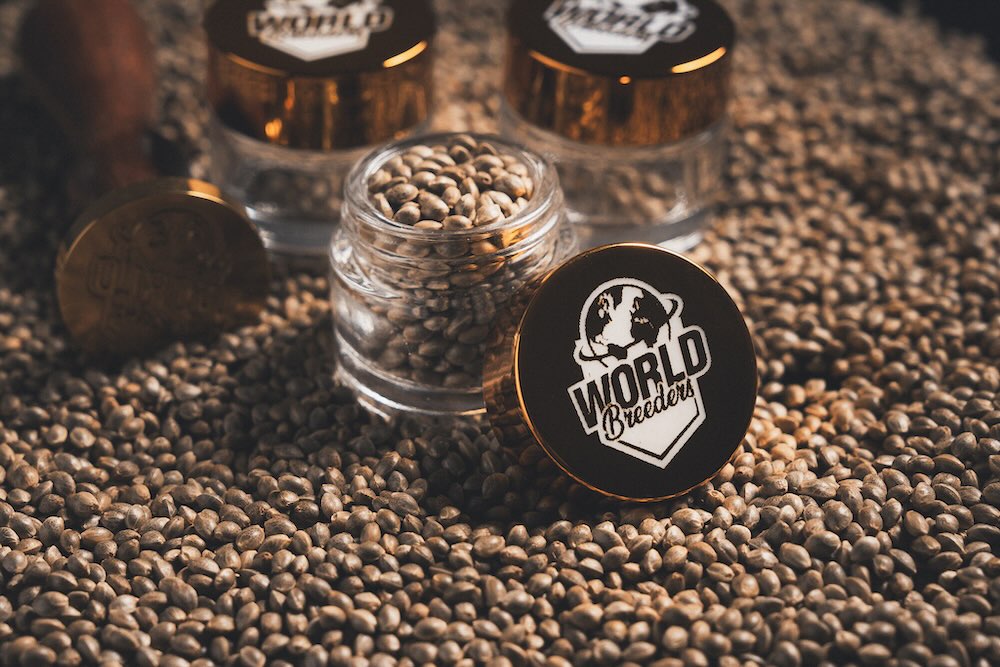
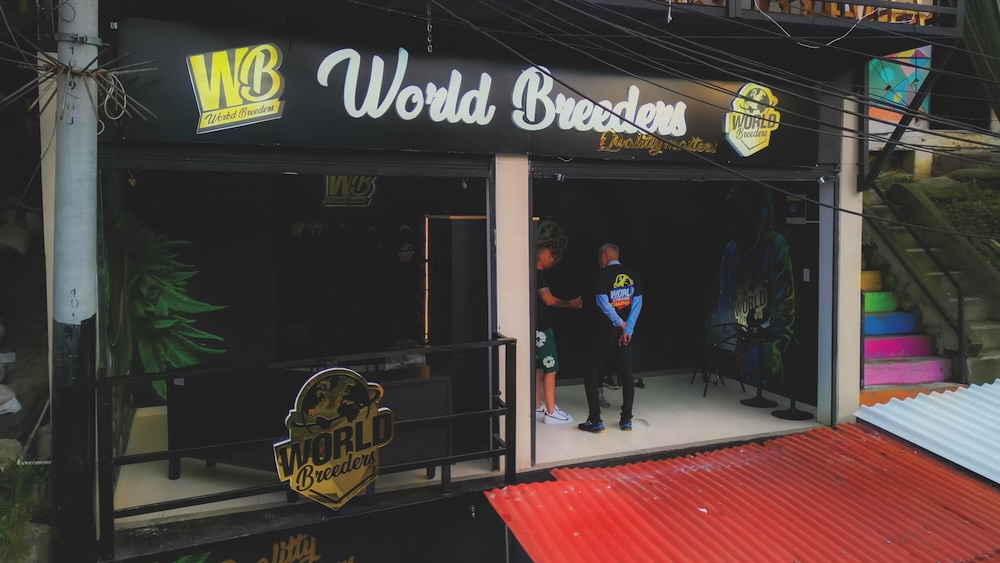
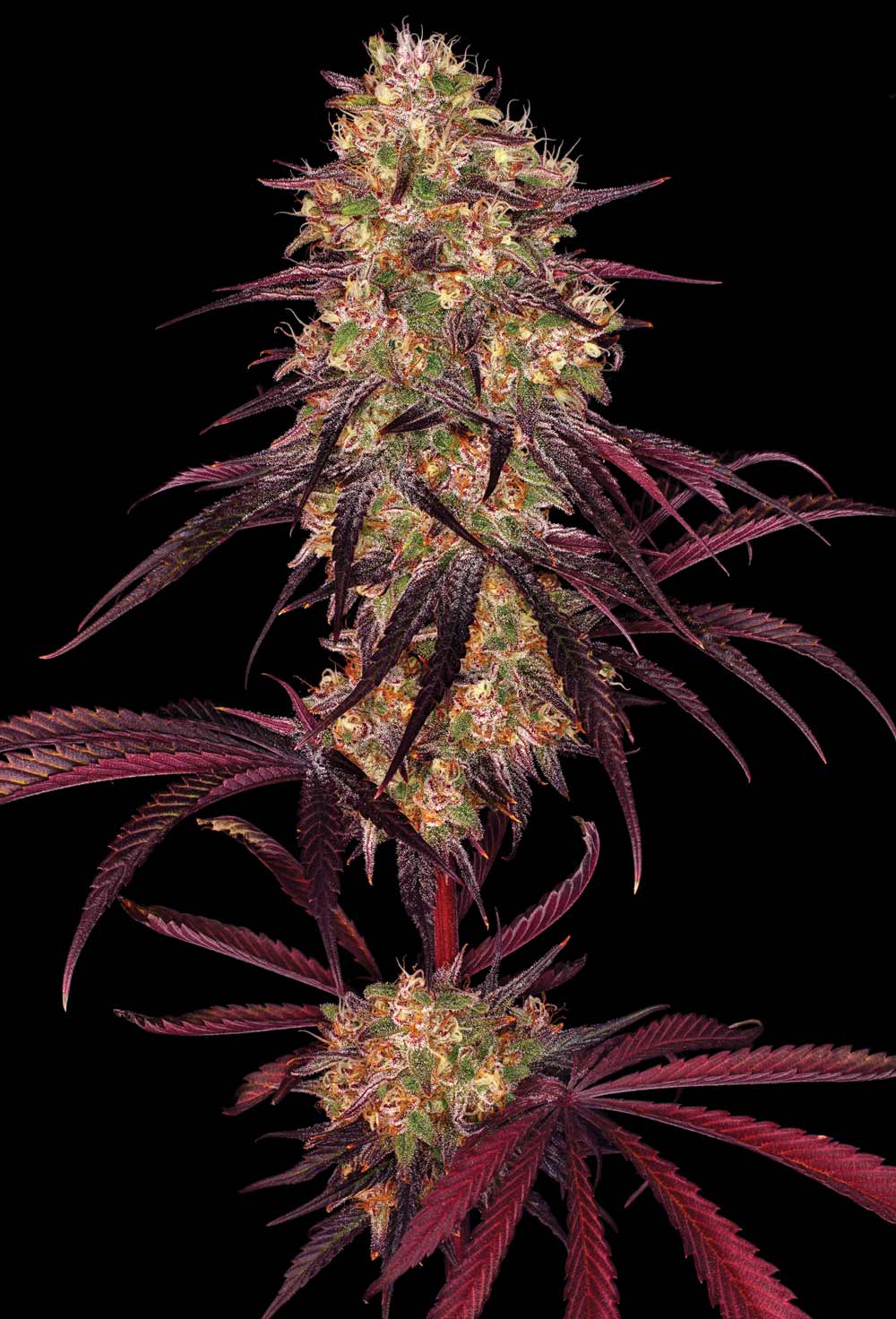
World Breeders, a cannabis seed company with who is making good on its promise to export seeds worldwide, has three founders, and it’s taken them all to shape the trajectory they have now—from working in cannabis on the “underground side,” as co-director Gorka Cid Luaces says, to an enterprise with operations on three continents and the momentum to fulfill their ambitions.
Jon Urriola Rementeria—responsible for seed development, genetics and research—was growing tomatoes for Spanish supermarkets before he switched to hierba with the emergence of the first “cannabis associations” in the País Vasco, Spain’s northeast Basque Country. Leandro García Rodriguez handles client and concept development, while Cid Luaces is responsible for overall management of the company. García Rodriguez is originally from Seville, while Rementeria and Cid Luaces are native to the Basque Country.
World Breeders claims to have dedicated itself to selecting and developing its own genetics with meticulous attention to details.
Rementeria and Cid Luaces first came together in GreenFarm Éibar, which was among the first cannabis associations in Euskadi, as the País Vasco is known in the Basque language. They produced flower for the association in a mixed greenhouse and outdoor operation, with the local police informed.
“The experience with GreenFarm marked our entry into the cannabis industry,” Cid says. “It was a highly rewarding stage, yet also one filled with tension. Working constantly on the edge of legality takes a heavy psychological toll.”
GreenFarm was a member organization of the Federation of Cannabis User Associations of Euskadi (EUSFAC) which coordinates rules and standards for a sector operating in a kind of legal gray area. These regulations allowed private cultivation for the associations but limited members to two grams per day, to be consumed on club premises. Several associations closed during the pandemic in 2020, as these restrictions became untenable, and the sector never fully recovered. Associations continue to thrive in the regions of Catalonia and Andalusia, but regional authorities in País Vasco cracked down, with some clubs busted and herb confiscated.
The GreenFarm veterans moved into the commercial space, anticipating an expanding market for the recreational side as policy in several European countries liberalized. World Breeders was registered as a seed company in the Czech Republic in 2019, though they had already been working with third partner García Rodriguez from Medical Weed Sevilla, one of the first associations in Andalusia’s southern region, for some time with different companies.
Seeking a suitable country for production, the trio settled on the rising industry player of Colombia. Cannabis had been decriminalized there since 1994 and medical marijuana was legalized in December 2015 by decree of then-president Juan Manuel Santos—who would the following year win the Nobel Peace Prize for negotiating peace with the guerillas. Along with the historic peace deal in 2016, Colombia’s Congress that year approved commercial cannabis cultivation under government license.
“We knew we wanted to continue working in the cannabis industry—it’s our passion, and our professional path,” Cid says. “But we were equally clear that we wanted to do it within a fully legal framework. Colombia offered the chance to operate under official licenses, with a transparent regulatory environment and the ability to develop genetics and production at scale, without legal uncertainty. That’s why we took the leap and established our operations there.”
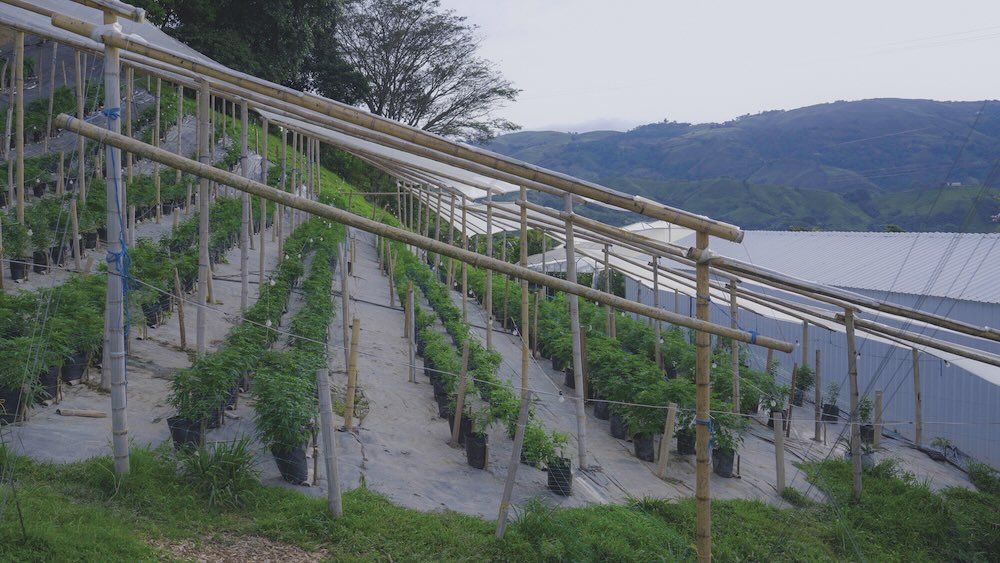
In 2020, World Breeders set up its mixed indoor/greenhouse production facility in Antioquia in the northwest region of the country. Their first greenhouses were in Guarne, a charming mountain town in the Andes. Production began in January 2021 and licensed export of seed to Spain began that year.
The seed stock they’d been working with initially had difficulties adjusting to higher altitude and new, more acidic soil and water conditions. Operations later moved to Ebéjico, on the outskirts of the Medellín metropolitan area, where the altitude is lower and the climate warmer.
Based in Colombia since 2020, World Breeders’ new environment creates exceptional photoperiods: 12 hours of daylight and 12 hours of darkness per day. “It’s ideal for complex terpene profiles,” says co-founder Gorka Cid Luaces.
Conditions here, as it turns out, are exceptional. The light offers perfect photoperiods: about 12 hours of daylight and 12 hours of darkness per day. And the altitude of some 1,400 meters above sea level, Cid describes as “ideal for complex terpene profiles.”
“Over the years, we have dedicated ourselves to selecting and developing our own genetics with meticulous attention to details,” their website boasts.
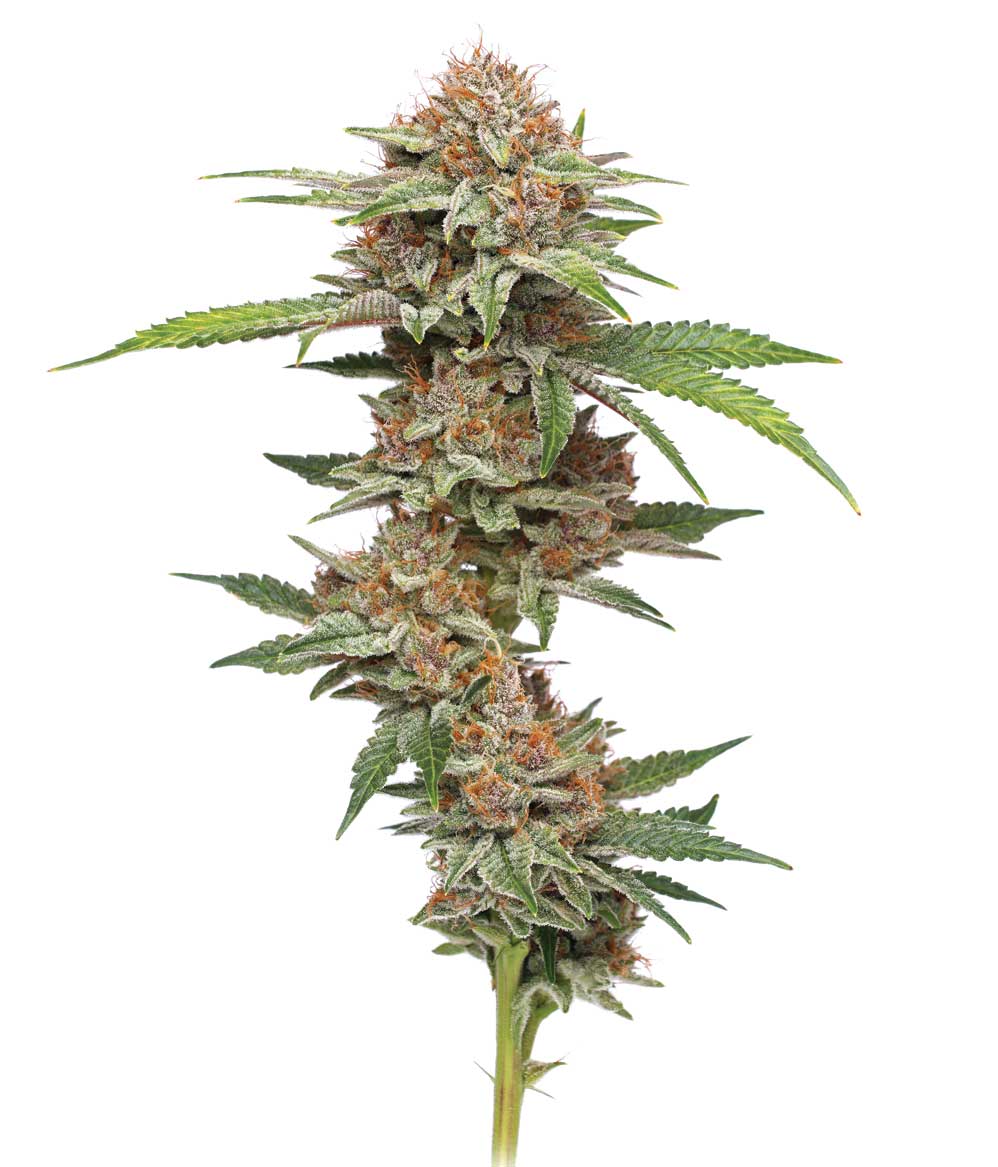
The company, a seed bank marketing its genetic creations to specialty growers, currently offers nine strains, with names including Clementine Slush, Fizzy Gum and Pink Truffle. Cid takes pride in the descriptive accuracy of these appellations. “If we say it tastes like clementine, it really tastes like clementine,” he assures.
A recent addition is La Hokuzan, developed in cooperation with Barcelona-based Hidden Group Genetics. The Catalan group had bred its own indica-heavy hybrid Hokuzai, which World Breeders crossed with their own Fizzy Gum for a more “sparkling and fruity” feel.
Just coming online is Pilot, developed in conjunction with Spanish rapper JC Reyes, combining his favorite traits—a three-way cross of Pink Watermelon x Jokerz x WB Bubba.
World Breeders is also currently working with growers in the Rif Mountains of Morocco to develop a line of triploid seeds. Triploid strains have three sets of chromosomes, as opposed to the traditional diploid varieties with two sets—one from each parent plant. They typically don’t collect pollen and therefore don’t produce seeds. (Most of the bananas we eat are triploid, as well as seedless watermelons.) This is important for cannabis, because a female plant that doesn’t get fertilized will keep secreting resin indefinitely throughout the growing season, even if there are male plants in the vicinity. A triploid line could be a breakthrough for the centuries-old tradition of hashish production in the Rif, and a boon to growers everywhere.
“We’re confident that this new line will mark a before-and-after in the genetic development of cannabis, positioning World Breeders as a benchmark for innovation and quality in the sector,” Cid predicts.
But expanding markets in Europe represent the real opportunity on the imminent horizon, Cid says, pointing to recent moves toward permitting adult-use cultivation in Portugal and Germany. “What began as a dream of the World Breeders team is now a consolidated reality,” he says.
This story was originally published in issue 52 of the print edition of Cannabis Now.
There are more cannabis cultivars available now than ever before through seed banks and nurseries in Europe and North America.
Growing from seed has its advantages, but also some issues. Seeds are easier to transport and store than cuttings (clones) from a nursery. Unlike clones, cannabis grown from seed is not genetically identical. The degree of homogeneity varies from breeder to breeder. Although plants of the same variety will be closely related, only skilled breeders can create a uniform crop. Starting plants from seed results in decreased uniformity in the canopy, which is undesirable because it can reduce yield in larger operations. Home growers and those with smaller farms may not mind the decreased uniformity in the crop.
Large-scale farmers are more likely to prefer uniformity, so choosing varieties from a nursery that takes cuttings from mother plants or from tissue culture will help provide those identical genetics that drive uniformity in the canopy.
Whether growing from seeds or from clones, choosing the right cultivar is paramount because they differ not only in their effects but also in how they grow.
Cultivar vs. Strain
The word “cultivar” is derived from “cultivated variety.” Although in popular culture cannabis cultivars are referred to as “strains,” the term “strain” is more appropriately used when referencing viruses, bacteria, or fungi. The use of “strains” in the cannabis industry is widely accepted and understood, however. This book uses “varieties” to refer to groups of related plants and the term “cultivar” to refer to specific varieties that are named landraces or the result of a dedicated breeding program.
Cultivars that do best in outdoor gardens tend to need more light than cultivars that grow better indoors. Some cultivars have very little branching, while others prefer to spread their branches and leaves horizontally. Some are heavy yielders with large colas that will need support as the flowers approach final maturity.
While some varieties may finish in 50 days, it can take as long as 12 weeks before the plant can be harvested. Choosing the variety of cannabis best suited to the grower’s goals can be a daunting task; however, it almost always is a pleasurable one. The right variety is the variety of cannabis that meets those goals, whether they are the plants’ medicinal properties, style of growing, taste, aroma, or any other trait desired by the breeder. There is no single perfect variety of cannabis other than the variety that works perfectly for the grower.
Choosing Cultivars
Choosing which cultivar to grow is one of the most important decisions to make when designing a garden. The two most important factors are the quality of the effects and suitability for the growing environment.
Strain: Blueberry Muffin bred by Humboldt Seeds
Find cultivars that produce desired flavors, aromas, highs, or medicinal qualities. Each cultivar has a genetic blueprint that determines how the plant will react to its environment, and therefore each cultivar will respond differently to different climates and garden setups.
New cultivars are the result of the intense competition among seed breeders hoping to find the next big thing.
How cannabis has been bred and for which traits has changed over the years as well. In 1964, THC was isolated and its molecular structure was described. It was understood that THC was driving all of the plant’s effects, which drove breeders to narrowly focus on THC content.
New cultivars were also bred for many other characteristics such as yield, flavor, aroma, medicinal effects, size, and maturation length, but no other aspect of the cannabis flower has been selected for more than THC potency. Popular varieties from the ’60s and ’70s usually had a THC potency that ranged between 6 and 12%, but ordinary Mexican tested in the range of 2 to 4%.
Breeders selected for a wide variety of desirable traits in new varieties. At first they concentrated on increasing potency, decreasing ripening time, and decreasing the growth-to-yield ratio. Later they developed more of an interest in terpenes, which provide the odor as well as “personality” of the high, as well as for cannabinoids other than THC, such as CBD and CBG. Outdoor environments have come into favor due to legalization, as well as a proliferation of autoflowering varieties, homogeneity, and a more scientific approach to obtaining intentional results and micro-adaptation to specific outdoor environments.
Cannabis is particularly easy to breed because it is dioecious, meaning unlike almost all other annual plants, plants are either male or female. This makes it easy to control pollination; separate all males from the females and only use pollen from selected males to pollinate females. Cannabis is wind-pollinated, so a male in proximity to a female plant will pollinate it. Flowers can also be hand pollinated. For this reason, it is relatively easy for a grower to experiment with breeding.
Compare cannabis breeding to tomatoes. Not only does each tomato plant carry both sexes, but tomatoes have “perfect” flowers, meaning each flower carries both sexes. To breed them, the stamen from the designated female must be removed before it matures, which requires tweezers and a sharp eye. Then pollen must be collected from the candidate male, which is painstaking.
As a result of the ease of breeding there are literally thousands of companies producing cannabis seed for commercial sales, so obtaining seeds has never been easier. They are available over the internet as well as in dispensaries. Many of these companies advertise in magazines that feature cultivation articles.
Clones are also available. Just as many people prefer to use tomato starts rather than germinate seed, clones provide a head start and save 10–15 days of cultivation. Another advantage of clones is that they have identical genetics and respond to the environment in a uniform way.
The “ideal” environment for one variety may not be optimal for another. Having cultivars that are genetically identical optimizes large-scale production, since all the plants will thrive under the conditions that the cultivator provides. Creating many microclimates to accommodate the different varieties is expensive and difficult to do if the commercial grower’s goal is to increase yield without compromising quality.
Home gardeners’ preferences tend to be more varied, and their cultivar selections reflect that diversity. Home gardeners have different goals in mind, which is why growing from seed or having many different varieties in the same garden is perfectly acceptable. Home gardeners may be less interested in crop yields than they are with crop quality. They tend to grow different varieties so they can harvest at different times and choose from a selection of cannabinoid potencies, qualities of the high, tastes, and aromas.
It is true that the heterogeneity of maturation times and types of cannabis grown in the same garden often result in smaller yields than from a homogeneous garden. Heterogeneous gardens require more individualized attention to the different cultivars, resulting in more individual care. Most home gardeners don’t mind, especially when they see the fruits (or flowers) of their labor.
Plant Size
The height and spread of the canopy are two varietal characteristics to consider when choosing which cultivar works best in the garden. This is particularly important whether the garden is indoors or outdoors. Sativa-dominant cultivars tend to grow taller and stretch farther than indicas. An outdoor garden with abundant sun and plenty of room for plants to spread out works well with strong sativa varieties such as Sour Diesel, Lemon Skunk, Vanilla Frosting, Lemon Tree, Runtz, Orange Creamsicle, or Lemongrass. These tall cultivars thrive in outdoor gardens with no height restrictions, and the extra intensity of direct sunlight keeps the plants from stretching too much. If they are pruned early in vegetative growth, they will bush out more rather than grow tall. The higher light intensity promotes shorter branching and thus denser buds.
Strain: Ayahuasca Purple bred by Barney’s Farm
Indoor gardens typically have size restrictions. Tall varieties can potentially grow close to or into the lights, causing damage to the plants and undesirable flowers that are light and airy. Shorter varieties such as those associated with most indica-dominant and many hybrid varieties are ideal for smaller indoor grows. Cultivars such as Do-Si-Dos, Wedding Cake, Grease Monkey, Lava Cake, Northern Lights, or Super Skunk have indica characteristics and thrive in indoor climates. However, an indoor garden does not mean it has to be relegated to only growing indicas. There are plenty of sativas and hybrids such as Sour Diesel and OG Kush that thrive in even the smallest of indoor settings if they can be grown with either the SOG or ScrOG method.
Maturation Speed
Cannabis varieties have different rates of maturation once they are set to flower. Typically, this ranges from seven to 11 weeks. The time it takes to reach maturity affects the choice of variety in a couple of significant ways. First and foremost, quicker-maturing varieties allow for more harvests per year. If a grower is looking to maximize yield, and streamline production, quicker plants are a big plus. The other significant reason is that late-season varieties are inappropriate to grow in areas with short growing seasons.
Outdoor growers consider maturation speed depending on the weather in autumn, which can be cold and moist, but varies regionally. Gardens in climates that remain warm through the fall may work best with varieties that have longer flowering times. Finishing the flowering cycle while temperatures are still hot outside can cause the flowers to be less dense and lose a lot of their terpenes (aroma and flavor). Flowering later when temperatures are cool will delay ripening. Conversely, outdoor growers in climates that experience early frosts should plant cultivars that are ready to harvest early in the fall. A lot of the autoflowering varieties flower quickly and still have a lot of the original qualities that make them so great.
Yield
Once the size and maturation speed of the varieties have been decided, maximizing yields is often the next decision that needs to be considered when choosing which cultivar works best for a garden. High-yielding crops provide more medicine after harvest. These varieties are vigorous growers and will usually have higher cannabinoid potencies as well.
Maturation speed has a negative correlation with crop yield. In other words, the faster the maturation time, the lower the yield tends to be, and vice versa. Slower maturing varieties have more time to develop flowers, and thus the yields tend to be larger. However, a quick maturation time and low yield are not mutually exclusive. If it is a necessity to have a quick maturation time, the resulting smaller plants can be more densely planted to fill out the given canopy with more buds.
Examples of heavy yielders are Blue Dream, Sour Diesel, Big Bud, Critical Kush, Super Silver Haze, and White Widow.
Flavor, Aroma & High
The quality of the flower is more important than the yield for many growers. The flavor and aroma of cannabis comes exclusively from the terpene profiles of the varieties. Some cultivars have very distinct noses. The decision to grow a specific variety based on flavor and aroma is a personal decision that is best decided by the end user.
Some people prefer fruity cultivars such as Strawberry Cough or Blackberry Kush. Others prefer a sweet flavor from varieties such as Durban Poison, GSC, or some of the “cake” varieties such as Wedding Cake or Ice Cream Cake. Sour Diesel, Chemdawg 4, and Hindu Kush all have gassy noses due to a relatively high concentration of limonene. Flavor and aroma preferences are personal, but they are also very closely related to the high that comes from smoking/vaping these varieties as well.
The high from cannabis comes from the interplay of the different cannabinoids and terpenes found in the plant. With hundreds of active ingredients, there are practically endless terpene and cannabinoid combinations. Finding the high that works best for different situations is part of the fun of exploring cannabis. Terpenes such as a-pinene and limonene are bronchodilators and tend to give an uplifting energetic high. B-caryophyllene and linalool are smooth muscle relaxers and are generally found in varieties that provide a relaxing, calming high. Cannabinol (CBN) is the only cannabinoid that is regularly mentioned in lab testing that is also a smooth muscle relaxer and can cause that calming high. Many consumers use cannabis to ease anxiety and will look to cultivars with higher than average cannabidiol (CBD) content, such as AC/DC, Cannatonic, Sour Tsunami, Harlequin, and Ringo’s Gift.
Mold Resistance
Cannabis is susceptible to gray mold (Botrytis cinerea) and powdery mildew, which is caused by a number of fungal species. Both of these fungal infections thrive in stagnant, high-humidity environments. Gardens with humidity controls or naturally low humidity and substantial air movement around the plants are less susceptible to mold and fungi. However, cannabis is grown all over the world, and there are a number of regions where high-quality cannabis is grown in high-humidity environments. Cultivars that are grown in high humidity gardens need to have some level of mold resistance.
Cultivars derived from varieties and hybrids from Thailand, Vietnam, and other countries in Southeast Asian where it is humid have a higher resistance to mold. Varieties such as Pineapple Thai, Super Lemon Haze, Voodoo, and Juicy Fruit have Thai ancestry and are less prone to fungal infection.

 Login
Login