
 Login
Login
In Praise of Plasma TVs

I’m sitting in front of an old Sayno Plasma TV as I write this on my media PC. It’s not a productivity machine, by any means, but the screen has the resolution to do it so I started this document to prove a point. That point? Plasma TVs are awesome.
Always the Bridesmaid, Never the Bride

It’s funny, because I firmly believe that without plasma displays, CRTs would have never gone away. Perhaps for that I should hate them, but it’s for the very reasons that Plasma won out over HD-CRTs in the market place that I love them.
What You Get When You Get a Plasma TV
I didn’t used to love Plasma TVs. Until a few years ago, I thought of them like you probably do: clunky, heavy, power-hungry, first-gen flatscreens that were properly consigned to the dustbin of history. Then I bought a house.
The house came with a free TV– a big plasma display in the basement. It was left there for two reasons: it was worthless on the open market and it weighed a tonne. I could take it off the wall by myself, but I could feel the ghost of OSHA past frowning at me when I did. Hauling it up the stairs? Yeah, I’d need a buddy for that… and it was 2020. By the time I was organizing the basement, we’d just gone into lockdown, and buddies were hard to come by. So I put it back on the wall, plugged in my laptop, and turned it on.
I was gobsmacked. It looked exactly like a CRT– a giant, totally flat CRT in glorious 1080p. When I stepped to the side, it struck me again: like a CRT, the viewing angle is “yes”.
How it Works
None of this should have come as a surprise, because I know how a Plasma TV works. I’d just forgotten how good they are. See, a Plasma TV really was an attempt to get all that CRT goodness in a flat screen, and the engineers at Fujitsu, and later elsewhere, really pulled it off.
Like CRTs, you’ve got phosphors excited to produce points of light to create an image– and only when excited, so the blacks are as black as they get. The phosphors are chemically different from those in CRTs but they come in similar colours, so colours on old games and cartoons look right in a way they don’t even on my MacBook’s retina display.
Unlike a CRT, there’s no electron beam scanning the screen, and no shadow mask. Instead, the screen is subdivided into individual pixels inside the flat vacuum panel. The pixels are individually addressed and zapped on and off by an electric current. Unlike a CRT or SED, the voltage here isn’t high enough to generate an electron beam to excite the phosphors; instead the gas discharge inside the display emits enough UV light to do the same job.
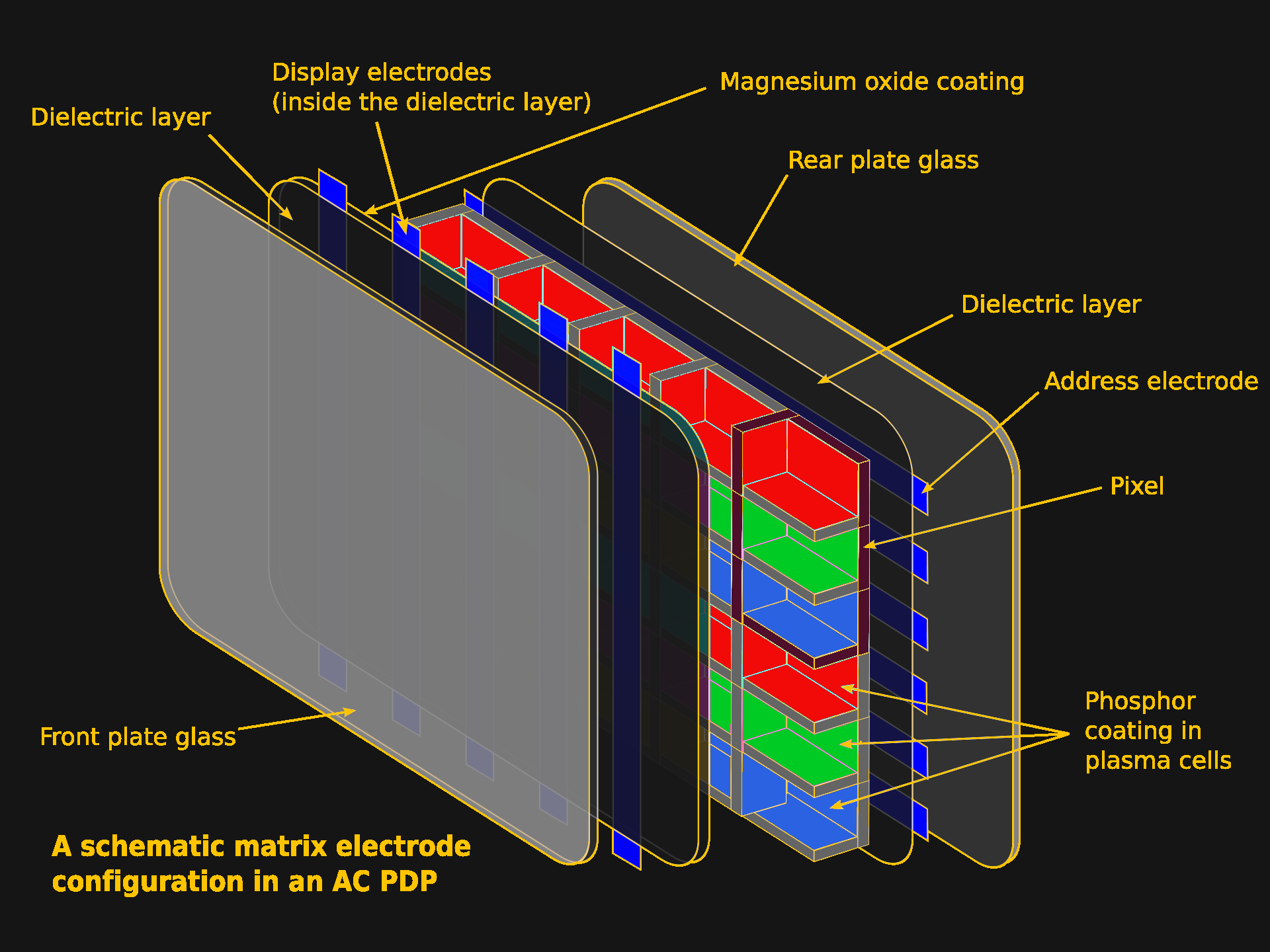
Image based on “Plasma-Display-Composition.svg” by [Jari Laamanen].
It’s Not the Same, Though
It’s not a CRT, of course. The biggest difference is that it’s a fixed-pixel display, with all that comes with that. This particular TV has all the ports on the back to make it great for retrogaming, but the NES, or what have you, signal still has to be digitally upscaled to match the resolution. Pixel art goes unblurred by scanlines unless I add it in via emulation, so despite the colour and contrast, it’s not quite the authentic experience.
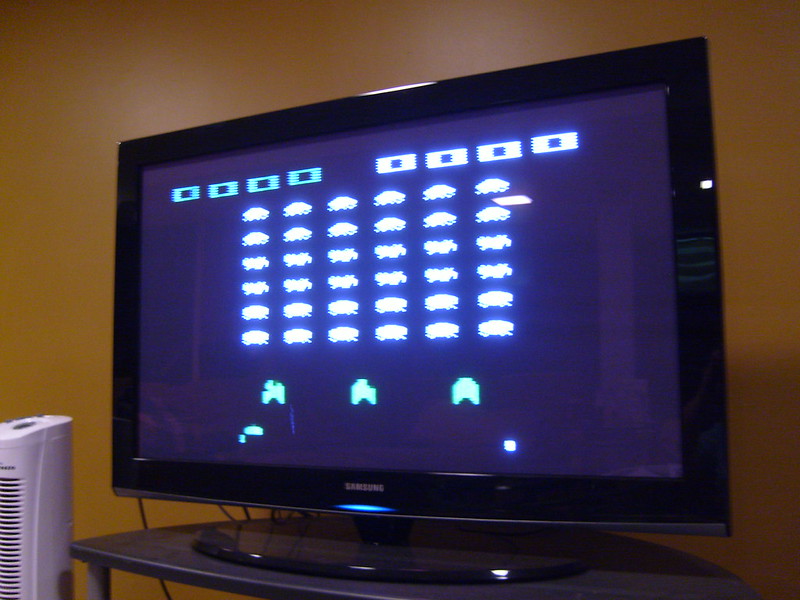
Those big CRTs don’t have to worry about burn in, either, something I have been very careful in the five years I’ve owned this second-hand plasma display to avoid. I can’t remember thinking much about burn-in with CRTs since we retired the amber-phosphor monitor plugged into the Hercules Graphics card on our family’s 286 PC.
The dreaded specter of burn-in is plasma’s Achilles heel – more than the weight and thickness, which were getting much better before LG pulled the plug as the last company to exit this space, or the Energy Star ratings, which weren’t going to catch up to LED-backlit LCDs, but had improved as well. The fear of burn-in made you skip the plasma, especially for console gaming.
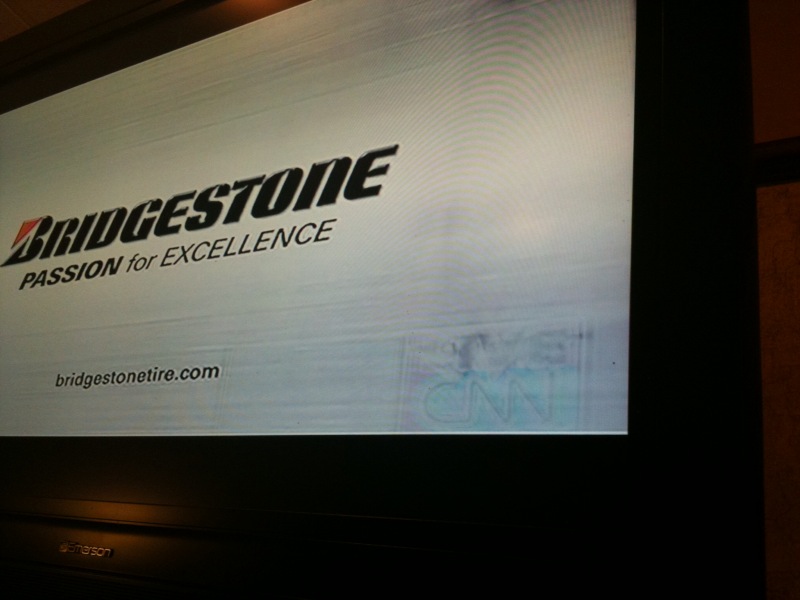
By the end, the phosphors improved and various tricks like jiggling the image pixel-by-pixel were found to avoid burn-in, and it seems to have worked: there’s absolutely no ghosting on my model, and you can sometimes find late-model Plasma TVs for the low, low cost of “get this thing off my wall and up the stairs” that are equally un-haunted. I may grab another, even if I have to pay for it. It’s a lot easier to hide a spare flatscreen than an extra CRT, another advantage to the plasma TVs, and in no case do phosphors last forever.
But Where’s the Hack?
Is “grab an old flat screen instead of hunting around for an impossible CRT” a hack? Maybe it’s not, but it’s worth considering, though, because Plasma TVs don’t get the love they deserve. (And seriously, you’re not going to find the mythical 43-inch CRT, even if it technically existed. And you’ll never find a tube that could match the 152” monster Panasonic put out to claim the record back in the day.)
In the mean time, I’m going to enjoy the contrast ratio, refresh rate, and the bonus space heater. I’m in Canada, and winter is coming, so it’s hard to get too overworked about waste heat when there’s frost on your windowpanes.
Featured image: “IFA 2010 Internationale Funkausstellung Berlin 124” by [Bin im Garten].
