Reading view

There are new articles available, click to refresh the page.

Bitcoin Whales Are Back: 104K BTC Added As $1M Transfers Surge

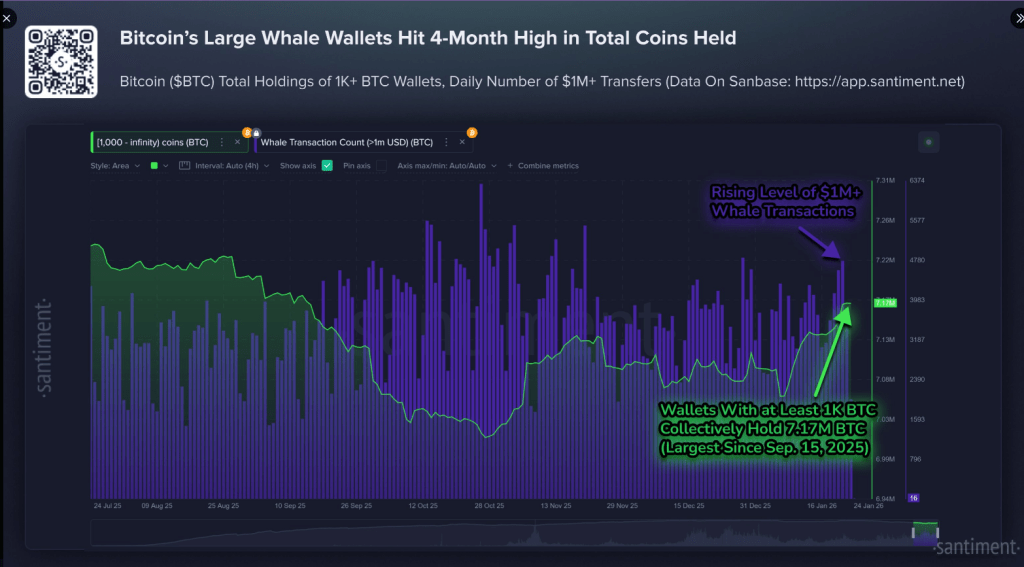
Whale-sized Bitcoin holders are piling up more coins even as prices wobble. According to blockchain tracker Santiment, wallets holding at least 1,000 BTC added 104,340 BTC in recent weeks.

Reports note that total supply held by these large wallets hit 7.17 million BTC, the highest level since September 15, 2025. Mid-sized holders joined in too, adding roughly $3.21 billion worth of Bitcoin between January 10 and January 19. Small retail wallets moved the other way, offloading about 132 BTC, worth around $11.66 million.

Whales Push Their Stakes Higher

The numbers point to patient buying by big players. Large transfers of $1 million or more have climbed to a two-month high, which suggests heavy participants are active on the network again.

According to Santiment, this kind of flow is often tied to institutions and wealthy investors moving coins between custody, exchanges, and private wallets.

Some of those moves are driven by strategic choices; some are meant to secure holdings. Either way, a growing pile in whale hands changes where supply sits.

Smaller holders are stepping back, while the so-called smart money increases exposure. Reports say mid-sized wallets — those holding between 10 and 10,000 BTC — were net buyers in the same stretch.

🐳 Large Bitcoin whales are accumulating at an encouraging pace, wallets with at least 1K $BTC have collectively accumulated 104,340 more coins (a +1.5% rise). Additionally, the amount of $1M+ daily transfers is back up to 2-month high levels.

🔗 Chart: https://t.co/CJOfiOBbWU pic.twitter.com/4loxDFtUdb

— Santiment (@santimentfeed) January 25, 2026
Price Action And Market Signals

Bitcoin’s price has not matched the upbeat on-chain action. Trading was around $87,730 at one point, with intraday swings between $86,500 and $87,500.

The alpha crypto asset was down about 0.5% over 24 hours and roughly 5.4% over the prior week. Volumes have ticked up, though, which makes the case that some investors are stepping in at these levels.

The picture is mixed: on-chain accumulation suggests a base is being formed, but macro headlines keep the market on edge.

On-Chain Strength Versus Headlines

A growing stash by big holders can support a future rally if external stress eases. Yet prices move on more than Bitcoin flows. Large transfers and rising accumulation mean demand exists under the surface, but that demand has yet to fully push the market higher.

Macro Risks And Market Jitters

Geopolitical worries are casting a long shadow. Reports say US President Donald Trump has moved warships toward areas of tension, and prediction markets show a significant chance that the US could strike Iran by June.

Trade friction with Canada over recent auto rules has raised fresh political noise, and Polymarket shows the probability of a US government shutdown above 70%. These are real risks that can lift oil, rattle markets, and sap appetite for risk assets.

Featured image from Unsplash, chart from TradingView

Trump-Backed WLFI Snaps Up 2,868 ETH, Sells $8M WBTC

World Liberty Financial (WLFI), a crypto project backed by US President Donald Trump, moved a chunk of its Bitcoin exposure into Ethereum this week. Reports say the group sold wrapped Bitcoin holdings and picked up a large amount of Ether in the same set of transactions.

WLFI Moves From WBTC To ETH

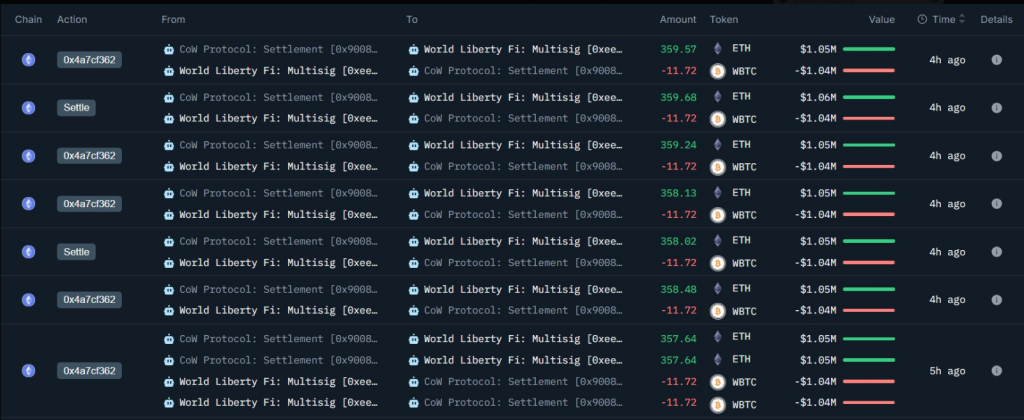
According to blockchain trackers, about 93.77 WBTC was sold, which worked out to roughly $8 million at the time of the swap. The proceeds were used to buy around 2,868 ETH, with an average price of about $2,813 per unit.

The trade was executed from a wallet that on-chain analysts link to WLFI’s treasury. That wallet activity was visible on public ledgers and has been shared across several crypto news sites and data monitors.

Onchain Data And Market Context

Prices were modestly lower for ETH when the purchase happened, which some traders see as a buying chance. Reports say this move comes as Ethereum trading ranges have made some holders rethink where to park large sums.

The World Liberty Finance (@worldlibertyfi) has sold 93.77 $WBTC ($8.07M) for 2,868.4 $ETH at a price of $2,813.

Address: 0xee7f7f53f0d0c8c56a38e97c5a58e4d321a174dc

Data @nansen_ai pic.twitter.com/yhh7IvYLLz

— Onchain Lens (@OnchainLens) January 26, 2026

WBTC is a tokenized form of Bitcoin that inhabits the Ethereum chain, so swapping it for native ETH changes how those funds can be used within decentralized finance.

The funds were moved through a public wallet tied to WLFI. This was confirmed by on-chain evidence that was circulated by data platforms.

Strategic Reasons Behind The Shift

Several reasons could explain the swap. Holding ETH gives direct access to smart contracts, staking, and DeFi tools that WBTC cannot offer on its own.

Some market watchers think WLFI may be positioning to use ETH for on-chain services, staking, or profit from future network activity.

Others suggest it could be a way to rebalance risk between stores of value and utility tokens. Reports say no single motive can be proved from the chain itself, only the movement of funds.

Reaction And Broader Signals

Traders reacted with curiosity rather than panic. Prices barely moved on the news, showing the market may have already priced in similar flows.

Smaller investors watched closely because such a swap by a high-profile, politically linked project draws attention. The wallet activity was tracked publicly, and analysts noted the timing matched a period of calmer ETH price action.

What This Could Mean For Investors

Reports note that big reallocations like this can change short-term sentiment, though they do not always lead to lasting rallies. For holders who prefer simplicity, swapping WBTC for ETH changes the way capital can be used, moving from a Bitcoin peg to native network participation.

Featured image from Unsplash, chart from TradingView
Crypto Firm Entropy Calls It Quits, Plans Full Investor Refunds

Entropy, a startup that tried to build a safer way to hold and move crypto, is shutting down and sending most money back to investors.

The company’s leader said the business could not reach the size investors wanted. Reports say the team will return roughly $25–$27 million that had been put into the project.

What Happened To Entropy

According to reports, Entropy began with tools for decentralized custody aimed at big holders who wanted more control.

Over time the group changed course and tried to build automation features that would make crypto workflows easier.

The company raised capital from well-known backers, including Andreessen Horowitz and Coinbase Ventures. It ran for about four years and weathered two rounds of layoffs as the team tested different ideas.

In a Saturday post on X, Entropy founder and CEO Tux Pacific said the crypto automation platform has reached the end of the road after years of trying to find a workable future.

I am winding-up Entropy.

After four years, several pivots, and two rounds of layoffs, I’ve decided to wind-up Entropy and return capital to our investors.

For the latter half of 2025, the Entropy team was hard at work on a crypto automations platform (basically n8n/zapier/etc…

— tux pacific (@__tux) January 24, 2026

Decision To Return Capital

Two clear facts pushed the move. First, buyers and customers did not grow fast enough for the kind of return venture backers expect.

Second, the team struggled to find a steady, repeatable business model that could support rapid growth and hire plans.

Leaders tried product tweaks and new directions, but the pace of change stayed slow and revenue did not climb as hoped. In some cases the product was kept alive by small wins; in others it felt stalled.

Investors will get back most of the money they put in. That makes this shutdown cleaner than some collapses where user funds were at risk.

Reports say refunds will be handled through formal steps and planners are working out the details.

The company’s founder has suggested they may shift their career focus away from crypto, possibly into fields like medical research, though that path is not certain.

Featured image from Pexels, chart from TradingView

CZ Draws A Line: Binance Co-Founder Declines Return After Trump Pardon

Reports say Changpeng Zhao, known as CZ, will not return to the company he helped build even after his legal name was cleared.

US President Donald Trump issued a pardon late in 2025 that removed the criminal tag from his name. That move reopened doors that had been closed, but CZ says he prefers to stay out of day-to-day management.

Pardon And The Past

CZ pleaded guilty in 2023 to charges tied to weak anti-money-laundering controls at Binance. He accepted a deal that included large fines and operational changes for the exchange.

Binance paid roughly $4.3 billion in penalties as part of settlements with US regulators. After receiving a prison sentence, he served time in 2024 and later received clemency from Trump in October 2025.

A candid conversation from Davos – on prison, pardon, and what freedom means going forward.

Full interview on @CNBC with @andrewrsorkin. Focused on building what’s next. pic.twitter.com/x94llJFac2

— CZ 🔶 BNB (@cz_binance) January 25, 2026

A Former Exec Reflects

Zhao’s prison stay left a mark. In public talks and interviews, he described the experience as “difficult and personal.”

He has spoken about basic hardships inside and about the mental toll the period took on him. At Davos and in other forums he has been open about those days while also discussing what the future might hold for crypto.

No Return To Binance

Based on market chatter, Zhao said he does not plan to step back into a leadership role at Binance. He used phrases that made it clear he believes the exchange can run without him.

New leaders at the company are in place, and he said they should be allowed to lead. That position was repeated across several news outlets after his public appearances.

Leaders And Denials

Binance management has pushed back on claims that politics or outside deals played any part in the pardon. Company reps denied there was a link between the Trump pardon and other crypto projects tied to political figures.

Those denials were offered to calm markets and to show the company remains officially detached from political moves.

Industry Reaction & Questions

Analysts and rivals reacted with a mix of relief, doubt, and curiosity. Some think the pardon could change how US regulators approach enforcement in the future.

Others worry about the message it sends, given the amount of the penalties already paid. Markets watched closely, and some investors adjusted their views on risk and leadership at major exchanges.

A Quiet Next Chapter

Zhao’s statement that he will not come back closes one chapter while opening another. He may act as an investor, advisor, or public voice for crypto ideas, but insisted he will not reclaim the top job.

Featured image from Leadership Circle, chart from TradingView

Gold Hits Record $5K While Bitcoin Struggles To Keep Pace

Gold shone brightly today, racing to a new high while crypto took the back seat, and the gap between the two assets opened wide.

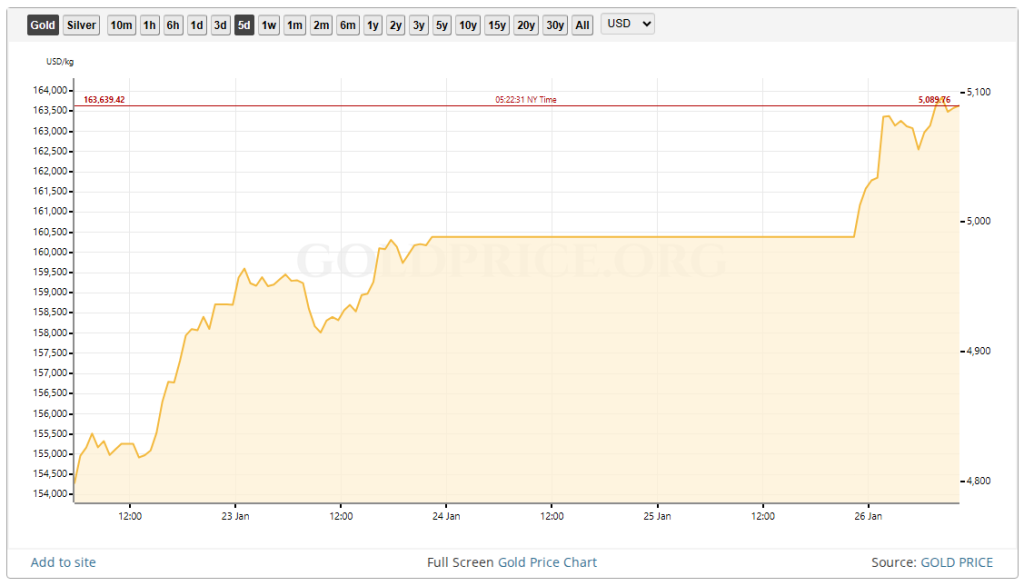
On Monday, the precious metal moved past the $5,000 mark, registering a price point market sentinels had not witnessed before. Bitcoin, by contrast, failed to keep pace and traded well below its recent highs.

Gold Hits Record Levels

Safe-haven demand pushed gold sharply higher. Prices were up above $5k an ounce and inked roughly $5,110 at the peak. Silver, for its part, did not go unnoticed, jumping to fresh peaks near $107/ounce.

Traders pointed to simmering geopolitical friction and talk of tougher trade moves led by US President Donald Trump as fuel for the rally.

A weaker greenback made metals more attractive to customers overseas, and central bank buying provided steady backing. Liquidity in some corners were thin as investors rushed to shift cash into things that feel stable when risk elevates.

Bitcoin Falls Behind

Market numbers show Bitcoin hovering in the mid-$80,000s range, retreating from peaks seen late last year. Reports note the alpha crypto is roughly 30% below the highest level it hit reached in October 2025, leaving some holders quite jittery.

Volatility was another factor. Where bullion is being sought for safety, Bitcoin is viewed more as a growth or speculative play, and that difference in investor application becomes clear when markets tighten. Some funds slashed their crypto exposure, signaling a short reroute away from high-risk gambits.

Why Investors Are Shifting

Analysts and traders described a simple choice: shelter or swing for gains. When headlines push worry, money flows into assets that are widely trusted across markets and governments.

Metals fit that ticket. Based on market chatter, fears of a US government funding clash and fresh tariff announcements stacked pressure on stocks and added a sense of urgency to safe-haven acquisition.

Options and futures trading hinted at a more cautious perpective, with volatility indexes rising and bond yields behaving in ways that made the yellow metal look more appealing by comparison.

What Traders Are Watching

Market watchers said eyes will be glued on a few key metrics: The dollar’s path, moves by major central banks, and any sign that US politics escalates could keep metals elevated.

For Bitcoin, network activity, large wallet flows, and regulatory headlines will likely set the tone. Some traders expect swings both ways. Others caution that when risk appetite is back, crypto may bounce hard, but that outcome is not a sure thing and will be dependent on a string of policy and macro moves.

Featured image from Unsplash, chart from TradingView

70% Of Institutional Investors Aren’t Buying The Bitcoin Top Narrative – Here’s Why

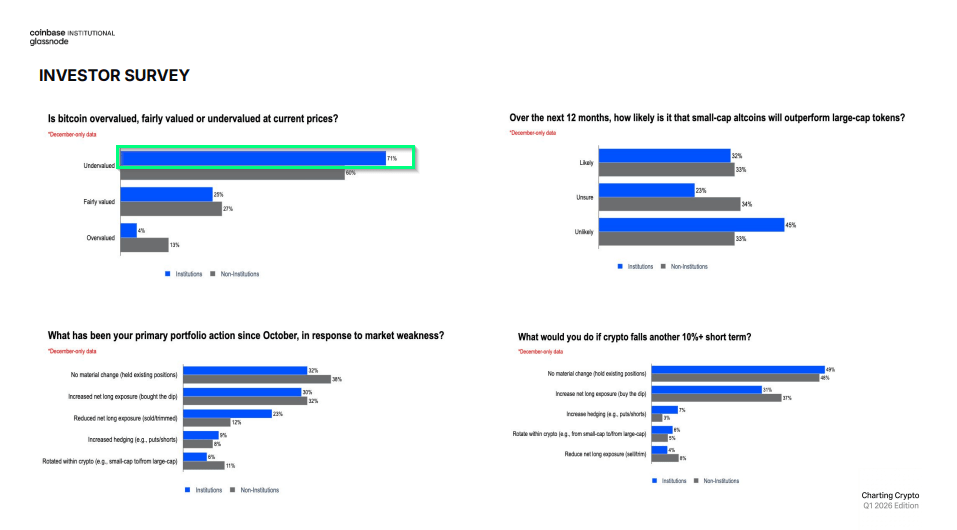
Investors are showing a steady faith in Bitcoin even as money moves elsewhere. According to Coinbase’s Charting Crypto Q1 2026 report, many big players think the current price is a bargain. The mood is cautious, but the view among large institutions leans toward holding for the long run.

Institutional Confidence And Behavior

Reports say about 71% of institutional investors view Bitcoin as undervalued when it sits between $85,000 and $95,000. Independent investors are not far behind, with 60% sharing that view.

A quarter of institutions felt the price was fair, and only a small share thought it was too high. These numbers show a strong tilt toward belief in future gains.

Gold And Silver Are Doing Very Well

Gold has climbed sharply, and silver has more than doubled since last October. That flow into metals has come as investors seek shelter while worries over global tensions rise.

Stocks have not surged as much; the S&P 500 has posted modest gains. The contrast is clear: some money went into traditional hedges instead of crypto.

Geopolitical Friction And Trade Signals

Reports note renewed tariff threats from US President Donald Trump and rising strain between the US and parts of the Middle East.

Such moves have been linked to market nervousness. If energy supply or trade routes are hit, risk assets often wobble. That makes Bitcoin more sensitive than usual to headlines.

Bitcoin Price Action In Context

Bitcoin has been trading in the high $80,000s. It briefly tried to hold above $90K but slipped back, touching nearer $86,000 at times.

Volatility has returned, and liquidations were seen after the big October move. Still, many technical analysts keep longer-term targets on their charts, arguing that the broader trend is not necessarily broken.

Institutional Game Plan

Reports say 80% of those large investors would either keep their stakes or add more if prices fell another 10%. More than 60% have already held or raised their positions since October’s peak.

Over half think the market is in an accumulation phase or still in a bear cycle, which explains why many prefer to buy on weakness rather than sell.

Macro Outlook And Possible Tailwinds

Coinbase expects the Federal Reserve to cut rates twice in 2026, an outlook that could help risk assets if it comes to pass. Consumer inflation has been steady and GDP growth looked strong in the last quarter. These conditions could nudge sentiment back toward risk-taking, though timing is far from sure.

The story is not simply bullish or bearish. On one hand, large investors show clear conviction and are willing to act on dips.

On the other, safe-haven flows and geopolitical shocks keep a lid on rapid re-rating. The near-term path is likely choppy, while the longer view depends on whether macro calm returns and whether demand for crypto picks up again.

Featured image from Unsplash, chart from TradingView
Colombia Pension Giant Takes First Step Into Bitcoin – Details

AFP Protección, Colombia’s second-largest private pension manager, is preparing a new product that will give some savers a way to gain exposure to Bitcoin. Reports say the move will be limited, targeted and tied to advisory checks rather than open to every account holder.

Bitcoin As An Option For Qualified Savers

Reports note the fund will be offered only to investors who meet a risk profile and pass a tailored advisory process. That means access won’t be automatic; it will be conditional on an assessment meant to match a person’s tolerance with a small, optional slice of crypto.

The product is designed for long-term allocation and not for quick trading or speculation, according to market coverage. AFP Protección’s executives emphasized that core pension portfolios will remain focused on traditional assets such as bonds and equities, and that any Bitcoin exposure would be a narrow, complementary allocation.

💥 En primicia, Valora Analitik conoció que Protección se prepara para lanzar desde Colombia un fondo con exposición a Bitcoin. El producto no estará enfocado en la especulación de corto plazo, sino en ampliar las opciones de diversificación con una gestión integral de riesgos y… pic.twitter.com/nAO8mbsTLi

— Valora Analitik (@ValoraAnalitik) January 22, 2026

The language used by the firm frames the initiative as diversification rather than a wholesale shift of retirement capital. Juan David Correa, who serves as president of Protección SA, confirmed the plan in an interview with local media outlet Valora Analitik.

Size And Reach Of The Manager

AFP Protección manages assets for millions of clients and has a sizable balance sheet. Reports put its assets under management at roughly 220 trillion Colombian pesos — roughly US$55 billion — and note that the firm serves a broad base of workers through mandatory pensions, voluntary saving plans and severance accounts. The sheer scale of the manager helps explain why even a small, optional product gets wide attention.

Regulation And Reporting

Reports also point to a tightening regulatory backdrop in Colombia. Tax and customs authorities have rolled out new crypto reporting rules that align with international reporting standards.

Those rules are likely to affect how crypto products are structured and how returns or transfers are reported for tax purposes. The change in rules is one reason AFP Protección has framed its product as measured and compliant.

How This Fits A Regional Trend

Across Latin America, some institutional players have been experimenting with limited crypto exposure for years. Colombia’s move follows earlier steps by one or two other local managers and fits a regional pattern where established firms test small, controlled offerings before widening access. The step will be watched closely by investors and regulators overseas.

Reports say potential participants should expect thorough suitability checks, clear disclosures and limits on how much of a retirement portfolio can sit in the new vehicle.

Featured image from Pexels, chart from TradingView

Bitcoin Finds A Real-World Use Case In Las Vegas Stores

Small shops and some bigger chains in Las Vegas are now taking Bitcoin for everyday buys. People scan a QR code, pay from a phone, and the merchant gets paid. According to local reports, owners are trying this out to cut the cost of credit card processing and to attract customers who prefer crypto.

Merchants Cut Costs With Bitcoin

Reports say the move is largely about fees. Credit card processing often takes away 2.5–3.5% of a sale. For many small operators, that is painful. Payment tools that accept Bitcoin — often routed over the Lightning Network or through services that can convert crypto to cash — have lowered that burden for merchants.

According to FOX5, more businesses across Las Vegas are now accepting Bitcoin payments, from chains like Steak ’n Shake to small shops and medical practices. Merchants said Bitcoin helps attract new customers and cut costs, while Square has enabled about 4 million U.S. merchants…

— Wu Blockchain (@WuBlockchain) January 24, 2026

Square’s program, which lets millions of US merchants enable Bitcoin checkout with no processing fee through 2026, helped speed up adoption in the area.

Stores Report Real Transactions

Business owners are reporting real use, not just experiments. Juice stands and cafes have processed payments. Some larger outlets are listed on public payment maps so customers can find them.

This has meant more foot traffic from people who travel with crypto or who prefer to keep their cards for other uses. Reports note both new customers and savings on fees as clear benefits.

Lightning Network Speeds Up Payments

The Lightning Network is being used to make payments faster and cheaper at the cash register. It moves small Bitcoin payments quickly without the long wait a base-layer transfer can cause.

Merchants scan a code or show one on a screen. The payment is then sent from the buyer’s wallet and settled almost instantly. This technical fix has made in-person Bitcoin payments workable for the first time at many spots.

How Owners See It

Owners are balancing savings against new risks. Some keep crypto for a short time, then sell it for cash. Others leave part of their receipts in Bitcoin. Chargebacks, a problem with cards, are reduced when crypto is used.

A few places say small boosts in sales followed their switch to crypto, yet long-term patterns are still being watched. Reports have disclosed these mixed outcomes as part of a slow but clear shift.

Customers Find New Ways To Pay

Shoppers are adapting. Tourists who carry crypto find these spots useful. Locals who are curious try the method at least once. Payment apps and merchant directories make the process easier for everyone.

For those who like simple steps, scanning a QR code and approving a payment on a phone works fine. For others it is a novelty that might stick.

Featured image from Unsplash, chart from TradingView

💾

Las Vegas Valley businesses are accepting Bitcoin as payment as the cryptocurrency continues to grow in popularity.For more Local News from KVVU: https://www...

XRP Charts Flash Familiar Signal As Analyst Calls For $11, Then $70

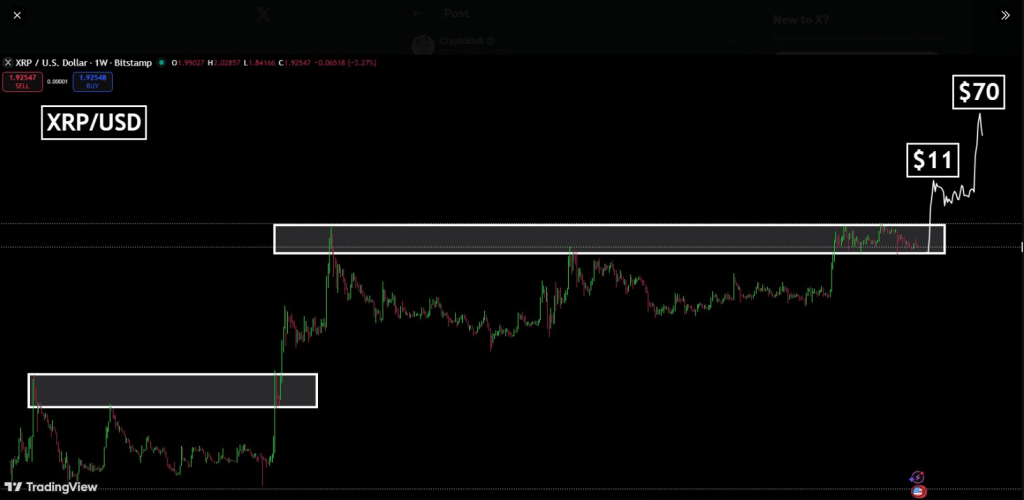
A growing number of chart watchers are pointing to a long stretch of sideways trading for XRP and saying this setup has come before big rallies. According to a widely followed analyst known as CryptoBull, the current price action echoes earlier runs in the token’s history.

The signal is simple: long quiet periods sometimes lead to sharp moves when buying pressure returns. That does not mean a jump is guaranteed. Markets can stay quiet for a long time, and timing is uncertain.

Pattern Mirrors Prior Cycles

Based on reports, XRP’s weekly structure shows a stretch of range trading after strong breakouts from earlier years. The comparison reaches back several cycles. In past examples, long ranges eventually gave way to impulsive runs that pushed the price far above prior highs.

The next impulse will take #XRP to $11 and the last wave to $70. The price pattern is copying the previous bullrun, only difference is time, which makes sense, as we need longer accumulation for higher prices. pic.twitter.com/WJxzYDVRKT

— CryptoBull (@CryptoBull2020) January 23, 2026

CryptoBull argues the present consolidation has lasted longer than previous ones, which, he says, could compress price action and build fuel for a larger expansion when momentum flips. The idea rests on history repeating itself in broad strokes, not in exact moves.

Longer Accumulation Could Support Bigger Targets

Some analysts see a sixfold move as plausible if the same pattern plays out. That kind of rise would put XRP near $11, a figure being discussed by multiple commentators. There is also talk of a further, final wave lifting the token much higher in a later stage — talk that reaches $70 in extreme scenarios.

A bottom test—where price revisits support to confirm strength before a new push—has appeared in a few past cycles and is being watched closely now.

The presence of such tests can either validate a base or warn that the range has more work to do. Timelines are vague, and a long accumulation period can stretch for years before any decisive breakout.

RLUSD Rumors Fuel Speculative Calls

Reports that BlackRock may use Ripple’s RLUSD stablecoin have added fuel to the fire. News like that has pushed sentiment upward and sparked fresh technical calls, with some forecasts ranging from $6 to $14 in near- to mid-term scenarios.

Other voices go far beyond, naming targets that would imply market caps so large they would be hard to reconcile with today’s market size.

These more extreme numbers should be treated with caution, because they assume near-perfect conditions and massive capital flows that may never arrive. Still, adoption whispers can tilt sentiment and speed up moves when buyers pile in.

Featured image from Unsplash, chart from TradingView

Ethereum Builds Team To Guard Against Quantum Threat

Reports say the Ethereum Foundation has started a new team to prepare the network for possible quantum computer attacks. These machines could one day break the math behind wallets and signatures. The team’s work is moving from research into practical tests and experiments, which has drawn attention across the crypto community.

Ethereum Launches Post-Quantum Team

Based on reports, Thomas Coratger will lead the effort. The team includes cryptographers and engineers already testing new systems on devnets. Some work ties into a project called leanVM and a researcher named Emile, who focuses on building simple quantum-safe tools. The goal is to test new algorithms in real software while keeping current transactions running smoothly.

Today marks an inflection in the Ethereum Foundation’s long-term quantum strategy.

We’ve formed a new Post Quantum (PQ) team, led by the brilliant Thomas Coratger (@tcoratger). Joining him is Emile, one of the world-class talents behind leanVM. leanVM is the cryptographic…

— Justin Drake (@drakefjustin) January 23, 2026

$2 Million In Prizes Encourage Development

A $1 million prize has been set for improvements to the Poseidon hash function. Another $1 million prize supports broader post-quantum research. In total, roughly $2 million are being offered to labs and independent developers to design and test quantum-resistant solutions. Reports say this funding is meant to speed up work and show what can realistically replace current signatures.

Early Tests And Community Involvement

Multi-client devnets are already active. Developers are experimenting with new signature types to see what works and what fails. Biweekly sessions led by researchers like Antonio Sanso let teams share results and update code. A Post-Quantum Day is scheduled for March 2026 before ETHCC, with a larger event planned in October 2026 to show progress and plan next steps.

Quantum computers could, in theory, break the ECDSA and secp256k1 schemes used today. That risk is not immediate but serious enough that Ethereum is acting now. Reports note users should watch for official guidance, follow wallet updates, and avoid reusing addresses once upgrades roll out.

Community reaction has been mixed. Some online discussions praised the careful planning, while traders noticed a small dip in ETH price. Others questioned how upgrades would reach millions of wallets and what happens to old keys. The Foundation’s approach is to test solutions early so users and services are better protected when changes happen.

This step is part of Ethereum’s long-term plan for safety. Tests will continue, standards will be debated, and progress will be shared publicly. By acting now, Ethereum aims to reduce risk and make future transitions smoother for everyday users and the network as a whole.

Featured image from Unsplash, chart from TradingView

From Boom To Goodbye: NFT Marketplace Nifty Gateway To End Operations

Nifty Gateway, the marketplace that once helped bring NFT drops to a wider audience, will stop running its marketplace on February 23, 2026. The company put the site into a withdrawal-only mode the same day it made the announcement, and users were told they must move any remaining funds and NFTs off the platform before that date.

Withdrawal Window Opens

According to the company, withdrawal tools are available now. Reports note users can pull USD or ETH balances through a linked Gemini Exchange account or send funds to their bank via Stripe.

Emails with step-by-step instructions will be sent to account holders, and a shutdown notice already appears on the Nifty Gateway homepage. The aim, as described by the owner, is to let people retrieve what they own before the platform goes dark.

Today, we are announcing that the Nifty Gateway platform will be closing on February 23, 2026. Starting today, Nifty Gateway is in withdrawal-only mode.

Nifty Gateway was launched in 2020 with the vision of revolutionizing digital art. Since launching, Nifty supported dozens of…

— Nifty Gateway Studio (@niftygateway) January 24, 2026

A Decision To Reassign Resources

Based on reports from Gemini, the closure is meant to let the parent firm concentrate on building one bigger app for customers. The move highlights how interest and trading activity in many NFT markets have cooled from the highs seen in earlier years.

Some collectors and artists are left scrambling to rehome items they once sold or stored on Nifty Gateway.

End Of An Early Player

Nifty Gateway helped make buying NFTs easier for people who preferred credit cards and familiar checkout flows. It launched as a high-profile marketplace and hosted major drops from well-known creators.

The platform supported hundreds of millions in sales at its peak and played a clear part in bringing NFT art into mainstream headlines. Its exit marks the end of an important chapter for that wave of marketplaces.

What Owners Must Do Now

Owners should check their inboxes for the official instructions, confirm where their tokens are stored, and move assets before the deadline. If NFTs are stored in custodial wallets on the site, they will need to be transferred out.

USD and ETH balances should be withdrawn or moved into a connected Gemini account if that option suits the owner. Waiting past the closure date will reduce options.

A Quiet Turning Point

For many collectors, this will feel like another sign that the early boom years have passed. For creators, the change raises questions about where drops and secondary sales will happen next.

Gemini says it will keep supporting NFTs through its other products, including the Gemini Wallet, but the specific ways that creators and buyers reconnect with those audiences will depend on new tools and services that arrive in the next months.

Featured image from Unsplash, chart from TradingView

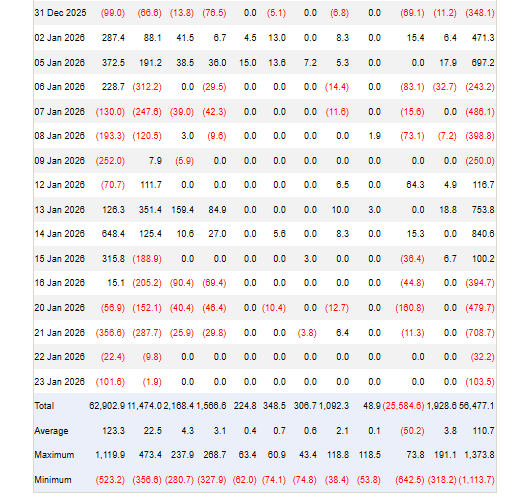
Money Keeps Leaving: Bitcoin ETFs Shed $1.72 Billion In Just 5 Sessions

US-based spot Bitcoin exchange-traded funds pulled funds for a fifth straight trading day, and the totals added up quickly. According to Farside data, about $103.5 million left on Friday, bringing the five-day sum to roughly $1.72 billion.

Bitcoin was trading near $89,160 at the time of these reports — still well below the $100,000 mark it last reached on November 13. This movement has sent a clear signal: many investors are stepping back right now.

ETF Flows And Who Is Selling

Reports note that ETF flows are often on the radar as a quick read on investor mood, but the picture is not always simple. Large outflows can reflect institutional rebalancing or tactical moves by funds, not only mass retail selling.

The US market had a four-day trading week because of Martin Luther King Jr. Day on Monday, which may have concentrated trades into fewer sessions and amplified the numbers. Still, losing more than a billion dollars in a few days will get attention.

Market Mood And Metals

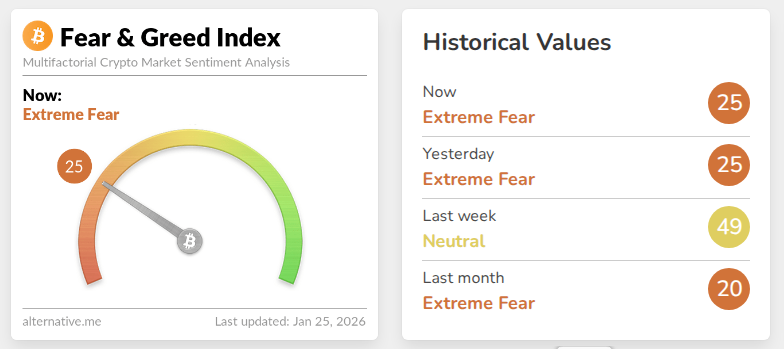
The wider mood has soured. The Crypto Fear & Greed Index registered an Extreme Fear score of 25, and sentiment trackers have been flashing caution. Reports say Santiment believes retail traders are pulling back while attention drifts toward more traditional assets.

Meanwhile, metals have been strong. Reports disclose that with gold trading near $5,000 and silver approaching $100, some market players feel Bitcoin has been left out of a rally that lifted metals, which has weighed on confidence in the crypto market.

Bitcoin Price Action

Bitcoin has struggled to find a steady rhythm over the past week. Prices slipped below the $89,000 to $90,000 range as traders reacted to fresh geopolitical tension and renewed trade worries, before stabilizing as nerves eased.

This was driven higher after some soft political indicators around tariff threats, only to substantiate the idea that markets rarely react to conflict but rather to changes in tone and expectations.

Signals That Could Matter

These movements illustrate how Bitcoin behaves more like a risk asset rather than an asset shelter, falling in tandem with equities when unexpected financial shocks hit the globe, before rebounding when the fever subsides to gather fresh buyers.

Current price patterns indicate caution, where traders are weighing short-term political risks against medium- and long-term macro patterns, as well as institutional interests.

There are some quieter indications that the rout could be losing steam. To this effect, there are assertions suggesting that supply distribution on-chain and social chatter can be circumstantial evidence showing there is less selling pressure.

Featured image from Money; Shutterstock, chart from TradingView

Stablecoins Gain Ground In Africa As Remittances Outpace Aid, Ex-UN Official Says

Africa is seeing a quiet shift in how people send and hold value. Mobile phones are central. According to Vera Songwe, a former UN under-secretary-general, millions who lack bank accounts can use stablecoins to protect savings and move money faster. That access matters in places where inflation has been high and bank fees are steep.

Use By Businesses And Everyday People

Reports have disclosed that stablecoins now make up around 43% of all crypto transaction volume in sub-Saharan Africa. Nigeria alone processed nearly $22 billion in dollar-linked stablecoin activity over a recent 12-month span.

That money is used for remittances, payroll and business settlements. Firms and market traders are among the biggest users, but many everyday people are joining in too.

In countries such as Egypt, Nigeria, Ethiopia and South Africa, demand is driven by volatile local currencies and rules that limit access to dollars. Mobile money networks help push adoption along.

Stablecoins Speed Up Cross-Border Payments

Traditional remittances can be costly. At a World Economic Forum panel in Davos, Switzerland on Thursday, Songwe noted that sending $100 through traditional money transfer services in Africa often costs around $6, making cross-border payments both slow and costly.

Stablecoins cut those costs and shorten wait times from days to minutes for many transfers. Small payments and wages can be settled quickly, and that speed changes how businesses plan cash flow.

Local Rules Are Changing Fast

Governments are reacting in different ways. Ghana passed a Virtual Asset Service Providers law to bring trading into a formal framework. On January 13, Nigeria required crypto platforms to link transactions to tax ID numbers, a move meant to bring activity into official records.

South Africa’s central bank has warned that stablecoins and other tokens could pose risks to financial stability as use grows. Policy is being written while users and tech firms keep pushing ahead.

Risks And The Road Ahead

High inflation remains a core reason people are turning to stablecoins. Reports say inflation has exceeded 20% in 12 to 15 countries since the pandemic, and that reality pushes people to look for alternatives to local notes.

Everyday Use, Measured Change

What started as a tech niche has grown into a practical tool for many across the continent. For small and medium businesses, the benefit is clear: faster settlements and lower costs.

For people without bank accounts, a smartphone can now open a route to store value in currencies less tied to local inflation. Adoption will likely keep rising, but how quickly it becomes part of mainstream finance will depend on stronger rules, better safeguards, and the continued spread of simple mobile services that people trust.

Featured image from Unsplash, chart from TradingView

💾

With more stablecoin transfers in 2024 than Visa and Mastercard combined, the asset-pegged token is shifting from niche crypto instrument to a foundational e...

GameStop Transfers Full Bitcoin Stack, Analysts Flag Possible Exit

GameStop moved its entire Bitcoin stash into Coinbase Prime this month, according to blockchain trackers that monitor large transfers.

The wallet associated with the company sent a large deposit to the institutional arm of Coinbase, a platform used by big traders and companies.

Analysts watching on-chain flows immediately flagged the move as a likely setup for a sale, though no confirmed sell orders have been announced.

Big Move To Coinbase Prime

According to on-chain reports, GameStop holds 4,710 BTC that it bought last year, and that full balance was shifted into Coinbase Prime.

The company first bought the coins in May 2025 at prices that averaged near $107,900 per BTC, a buy that cost roughly $504 million at the time.

Moving a corporate treasury from cold storage to an active institutional account is often read as a step toward execution — to sell, hedge, or rebalance — but it is not the same as a sale itself.

GameStop throws in the towel?

Their on-chain wallets just moved all BTC holdings to Coinbase Prime, likely to sell.

Between May 14–23, 2025, they bought 4,710 BTC at an avg. price of $107.9K, investing ~$504M.

Now selling for around $90.8K, potentially realising approximately… pic.twitter.com/Bp7MwRVQ43

— CryptoQuant.com (@cryptoquant_com) January 23, 2026

What Analysts Are Saying

Reports say the math is simple and stark: selling now, with Bitcoin trading closer to the $90,000 area, would lock in a sizable loss versus the initial purchase price.

Several analytics firms put that figure near $76 million if the whole lot were sold at recent market levels. Some market watchers suggest the company could be doing tax-loss harvesting or trimming volatile assets on its books.

Others view it as a pragmatic adjustment to reduce treasury exposure to crypto swings. Still, defenders of the move point out that GameStop’s Bitcoin stake was never a core retail play; it was a treasury experiment meant to diversify.

How Much Has Already Moved

Not all outlets agree on timing or size of day-by-day transfers. Reports note that some transfers earlier this month added up to about half of the original position — roughly 2,396 BTC moved in smaller tranches before the full deposit was flagged.

On-chain sleuths track each shift, and those staggered movements can mean many things: a staged sale, an internal reorganization, or simply routing through a trusted custodian before any trades.

Market And Shareholder Reaction

Share action around GameStop has not mirrored the crypto chatter. While Bitcoin watchers focused on the wallet move, investors were also reacting to company news on other fronts, including fresh share purchases by CEO Ryan Cohen.

Featured image from PeterPhoto, chart from TradingView

Gold Becomes The Whale Safe Haven As Bitcoin Takes A Back Seat

A large investor shifted funds into tokenized gold this week, and Bitcoin felt the impact. Prices dipped while a whale quietly bought millions in XAUT, a gold-backed token, signaling a short-term move toward traditional hedges.

Whales Move Into Tokenized Gold

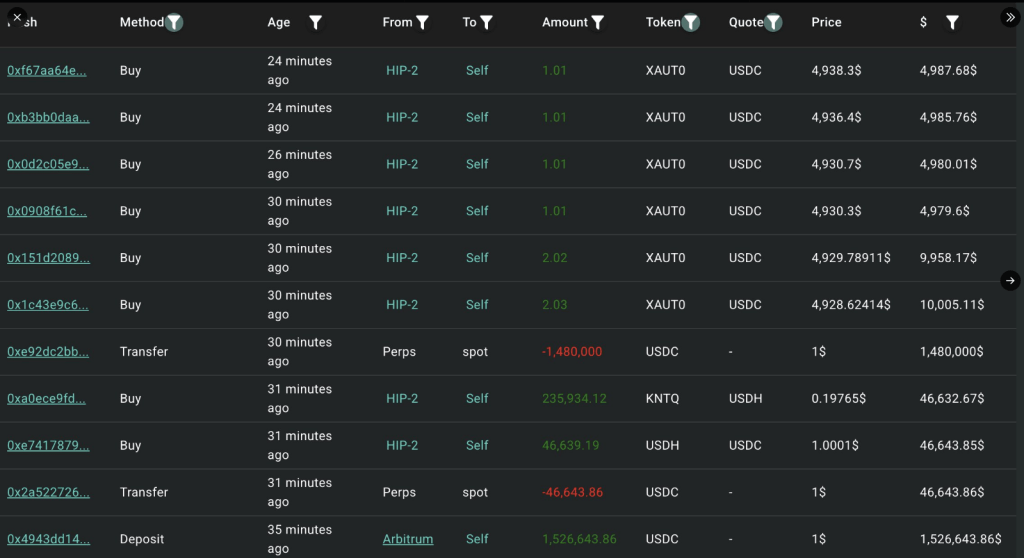
According to on-chain trackers, one address moved $1.53 million in USDC into Hyperliquid to buy XAUT. Reports note that the same wallet had earlier bought about 481 XAUT, a purchase worth roughly $2.38 million.

The address still holds close to $1.44 million in USDC, which suggests more purchases could follow. These moves were picked up on public blockchains and then flagged by analysts watching large transfers.

This kind of action can matter. When big players shuffle cash, smaller traders often take notice and hedge their bets. The shift is not proof of a long-term trend, but it shows that, at least for now, some large holders prefer gold exposure over extra crypto risk.

Whales are buying gold, not crypto.

~30 mins ago, whale 0x6B99 deposited 1.53M $USDC into Hyperliquid to buy $XAUT again.

He has already bought 481.6 $XAUT($2.38M) and still holds 1.44M $USDC, which may be used to buy more $XAUT.https://t.co/0uV2kNEiD0 pic.twitter.com/rYA09b1OEn

— Lookonchain (@lookonchain) January 23, 2026

Gold And Silver Hit Fresh Highs

Reports say gold has been moving sharply higher, with spot prices climbing close to $5,000 per ounce in global trading this week. Silver also rose above $100 per ounce, with intraday gold prints near $4,988 before settling.

Traders tie the surge to geopolitical tensions and the idea that interest rates may ease, which encourages money into metal-based stores of value.

A weaker dollar has also helped. Market chatter points to increased demand as investors seek steadier places to park capital while global politics and policy choices create more worry.

Bitcoin’s Price Action And Market Mood

Bitcoin traded around $88,653 at one stage, slipping about 1% on the day and nearly 30% below its prior cycle top. That gap is large. It has market participants questioning whether BTC will stay the go-to hedge during times of high stress. Some long-term holders remain confident. Others are watching liquidity and macro signals more closely.

Reports have disclosed renewed criticism from economist Peter Schiff, who argued that Bitcoin has underperformed versus gold since 2021.

He highlighted the opportunity cost for investors holding BTC while metals climb to record prices. Schiff wrote on social platforms that precious metals are outperforming and that this weak run for Bitcoin weakens its role as a store of value in the eyes of some.

What This Means For Crypto Investors

Short-term rotations like this often reflect risk preferences rather than permanent shifts. Some funds and wealthy individuals seek lower-volatility assets when headlines grow louder and policy paths look uncertain.

Others still view Bitcoin as a long-term play tied to scarcity and network effects. The current picture is a mix: metals are strong, tokenized gold is drawing attention, and crypto markets are reacting.

Featured image from Pexels, chart from TradingView

Crypto Meets Private Banking: UBS Weighs New Offering

Reports say Swiss banking giant UBS is planning to let a small group of its private bank clients buy and sell major cryptocurrencies. The step would open access to Bitcoin and Ethereum for people who have worked with the bank for years, not for every customer.

Private Clients First

According to a Bloomberg report, the service would start in Switzerland and be offered only to select private banking clients, with any wider rollout dependent on rules and demand. The move is careful and measured. It is being tested with a narrow set of clients before any wider push is considered.

How It Would Work

Reports note that UBS has been talking with outside firms about providing the trading, custody and compliance pieces needed to make crypto trading run smoothly.

Partners would likely handle technical tasks while UBS keeps the client relationship front and center. Those talks have been going on for months, and no final deals are said to be done yet.

Why Now

Wealthy clients have been asking for ways to own digital assets safely. UBS has run pilots on tokenized funds and has worked on blockchain payments before.

The bank’s size and reputation mean it can offer a more cautious path into crypto than many smaller players. At the same time, changes in regulation and the broader market have made the plan more realistic than it might have seemed a few years ago.

Based on reports, the initial offering would focus on Bitcoin and Ethereum. More coins could be added later, but that would depend on which assets meet the bank’s risk and compliance checks.

UBS will reportedly decide what custody model to use and whether it needs third parties for trade execution. No launch date has been set.

A Broader Trend

Banks from different countries are slowly giving rich clients more ways to touch crypto, but each does it in its own style. Some offer ETFs and funds. Some go further and let clients trade coins directly.

UBS’s cautious design fits a pattern where big banks move slowly, testing the systems before widening access. A handful of recent moves by other institutions show the same pattern.

What Comes Next

Reports note that regulators and client interest will help decide how fast this goes. If rules in the US and other places stay friendly and clients respond, the offering could broaden beyond Switzerland.

If not, the bank could keep the plan tightly limited. For now, the idea remains a plan under discussion rather than a product on the market.

UBS’s steps reflect growing demand from wealthy investors for safer ways to hold crypto through trusted firms. The bank’s careful progress shows how traditional finance is testing the waters without rushing in.

Featured image from Unsplash, chart from TradingView

XRP Showing Strength, Analyst Points To $4 Potential

XRP has begun attracting attention again after months of sideways trading. The coin has risen slightly over the past day, though it remains down for the week. Traders are pointing to familiar chart patterns, suggesting the quiet period may be nearing an end.

Traders Spot A Familiar Price Pattern

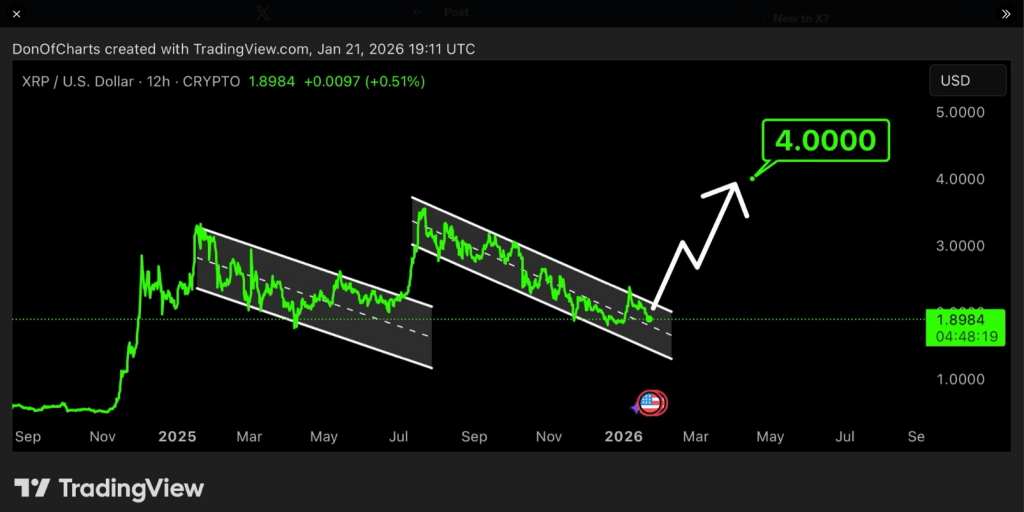
A fresh take on XRP came from DonWedge, who posted a half-day chart on TradingView. Though he kept it short – just “XRP looks good” – the message carried weight.

Instead of bold predictions, his analysis leaned on patterns. A downward-sloping channel draws the eye, much like one seen months before.

Shape echoes past rhythm. What stands out is how closely current movement tracks earlier behavior. The image tells part of the story; context fills in the rest. Time will show whether history bends toward repetition.

That old rise in XRP moved fast. Following that climb, it slipped into a steady decline lasting around half a year. Once sellers slowed their pace, the price jumped again without warning.

$XRP looks good pic.twitter.com/OnyChRVzNp

— Don 🐂 (@DonWedge) January 21, 2026

Fresh lows in XRP’s path hug the bottom stretch of a familiar range, pressure easing – some watchful eyes guess what comes next might climb.

Volume And Resistance Are Key

According to reports, the next major hurdle is a multi-month trendline resistance near $2.10. A clean daily close above this line, combined with rising volume, could signal the start of a new uptrend.

DonWedge projects that if the breakout occurs, XRP could aim for $4. From current levels, this would require a little over a 100% increase. Traders note, however, that moves without volume confirmation can fail, leading to false breakouts and extended consolidation.

Market Expert Projects A Telling Year

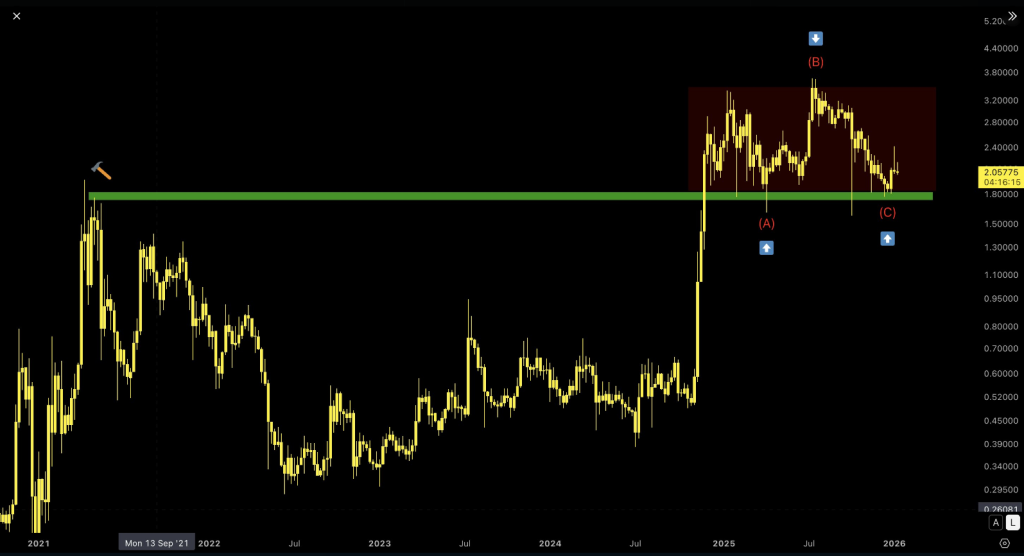
Based on reports, analyst ChartNerd says 2026 will be a “telling year” for XRP. He expects the coin either to confirm a strong breakout with fresh momentum or to fall below the structure it has defended for over a year.

After a macro breakout in Q4 2024, $XRP has been accumulating above its prior 2021 highs for over a year. The whole of 2025 was sideways, boring, and a test of even the most durable minds. 2026 is going to be the telling year. Compression typically leads to expansion. Buckle up. pic.twitter.com/QJb7JAmIkL

🇬🇧 ChartNerd 📊 (@ChartNerdTA) January 18, 2026

Lately, the sideways grind has worn thin for some investors – yet hints of resilience still flicker through the numbers. Breaking past $2.10 with force might spark what comes next, lining up with the pattern DonWedge laid out on his chart. Patience now may quietly pay off later.

A Breakout Might Shift What Happens Next

A sudden jump in price might push XRP toward $4 fast, provided it finishes above the trendline with strong movement. Higher goals are possible, yet reaching them means buyers keep stepping in without pause.

So far, things look cautious rather than certain. Traders will probably keep an eye on activity levels, holding back bigger moves until signs become clearer. What happens next might show if XRP surges again or just drifts sideways some more.

Featured image from Unsplash, chart from TradingView

$48M Bitcoin Heist: Phishing Scam Empties South Korea’s Seized Crypto

South Korean authorities have come under scrutiny after a large stash of seized Bitcoin went missing during a routine check. The loss was discovered when officials found that some of the wallets that had been held as criminal evidence were empty.

According to multiple reports, the value of the missing Bitcoin is about 70 billion won — roughly $47.7–$48 million.

How Officials Found The Theft

Reports say the gap showed up during a routine audit of confiscated digital assets at the Gwangju District Prosecutors’ Office.

An internal check flagged transfers from wallets that had been marked as evidence, and investigators traced the movement back to external addresses. The office immediately opened an inquiry to determine how access was lost and whether any recovery is possible.

Initial findings point to a phishing scam as the trigger. According to local coverage, a staff member accessed a fraudulent website that impersonated a legitimate service, and that interaction exposed passwords and private keys.

Once the credentials were captured, the Bitcoin was moved out in transactions that cannot be reversed.

Security Lapses And USB Storage

Reports note that some of the access details for the seized assets were kept on portable drives rather than in hardened custody systems.

That practice appears to have made it easier for attackers to grab the keys once the phishing trap was sprung. Simple mistakes can cost millions when the asset is bearer-like and transfers are final.

The theft has raised hard questions about how state agencies handle crypto. Some experts say that the tools used by prosecutors were more suited to personal use than to government-level custody.

There are calls for stricter rules, multi-signature setups, and cold storage protocols that do not rely on easily copied passwords.

Tracing The Bitcoin

Blockchain records show the funds moving through several wallets after the initial transfer. That public trail gives investigators leads, but tracing tokens to a final cash-out point is often slow and requires cooperation from foreign exchanges and on-chain analytics firms. Reports say authorities are working with outside specialists to map the flow.

What Prosecutors Are Doing Next

The Gwangju prosecutors’ office has vowed a full probe, and officials are trying to reconstruct events step by step.

There are also signs that the incident will trigger a review of national procedures for holding seized digital property. Some lawmakers and legal experts have already called for clearer standards and oversight.

Featured image from Pexels, chart from TradingView

OpenSea Insider Trading Case Ends Without A Retrial – Details

Nathaniel Chastain, a former product manager at OpenSea, will not face a retrial after federal prosecutors chose to drop their re-review of his insider trading case.

Reports say the US Attorney’s Office reached a deferred prosecution agreement with Chastain that will lead to dismissal of the charges once the agreement runs its course.

What Prosecutors Decided

Prosecutors told a Manhattan federal court they would not retry Chastain following an appeals court ruling that tossed his earlier conviction.

Under the deferred prosecution deal, the government will dismiss the case about a month after notifying the court, and Chastain has agreed to forfeit roughly 15.98 ETH tied to the trades. He has already served three months in prison from his original sentence.

How The Appeals Court Changed The Case

According to the US Court of Appeals for the Second Circuit, the jury in the first trial had been given the wrong instructions about what the wire fraud law covers.

The judges said confidential information only counts as property under the statute when it has commercial value to the employer, and jurors might otherwise convict someone for behavior that is unethical but not criminal. That legal point is at the heart of the reversal.

Reports note that prosecutors had called the matter the first-ever insider trading case tied to NFTs. Now, lower courts and enforcement teams will have to think carefully before using traditional fraud laws to police activity in NFT markets.

The ruling highlights a gap between old statutes and new kinds of online goods, which may push lawmakers to give clearer rules for how to treat confidential business signals related to crypto platforms.

OpenSea: The Case’s Earlier Chapters

Chastain was first charged in mid-2022 after prosecutors said he bought certain NFTs before they were featured on OpenSea’s homepage, then sold them after prices rose.

He was convicted at trial in 2023 of wire fraud and money laundering and received a sentence that included three months behind bars. The US Attorney’s Office originally described the scheme as a novel use of insider knowledge in digital markets.

With the deferred prosecution agreement in place for OpenSea, prosecutors can close this chapter without a new trial.

Chastain’s forfeiture of crypto assets and his already served time mean the government has secured some remedy, while the appellate decision leaves open big questions about when private business information can be treated as property for federal fraud charges.

Legal teams, judges, and regulators are likely to keep a close eye on how similar cases are handled in the future.

Featured image from Getty Images, chart from TradingView

Record Dormant Bitcoin Supply Enters Market — What’s Next?

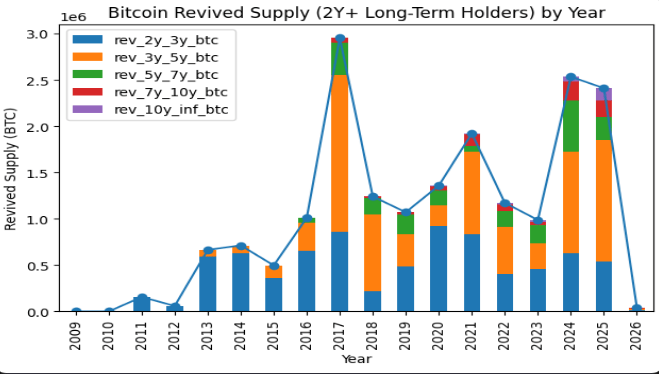
According to on-chain trackers, a big wave of old Bitcoin has started moving after long dormancy. Coins that sat untouched for more than two years have been transferred in numbers larger than what was seen during past peaks in 2017 and 2021.

CryptoQuant analyst Kripto Mevsimi said on-chain data shows that 2024 and 2025 marked the largest release of long-held Bitcoin supply ever recorded. He tracks “revived supply,” or coins that stayed dormant for more than two years before being moved.

That kind of movement usually means deep-pocketed holders are changing their plans, not small traders chasing a quick gain.

A Shift Without A Party

Reports say this release of long-held supply arrived with little fanfare. There was no mass retail mania. Prices did not spike in a frenzy. Instead, the transfers came during a stretch when the market has been under steady pressure from broader financial stress.

Some of those older coins were likely sold for profit. Some may have been moved for other reasons — custody upgrades, private trades, or to back financial products. On-chain signals show the coins moved, but they do not write the reasons on the blockchain.

Long-Term Holders Change Course

Based on reports from analysts tracking these flows, the pattern suggests a changing of the guard. Early adopters who held through multiple cycles and pointed to scarcity and self-control have been trimming positions.

New buyers are appearing who watch price swings and macro headlines. Institutions, fresh large accounts, and price-driven traders are now shaping much of the market’s short-term activity.

Global Risk Pressures Risk Assets

Reports have linked recent weakness in Bitcoin to rising global risk. Research ties part of the pullback to tariff moves by US President Donald Trump, which have pushed investors away from risky assets.

Tariffs can dent corporate profits, stir up inflation uncertainty, and change how the market views future rates — all of which hits sentiment. When big markets wobble, crypto often follows. That pressure helps explain why long-held coins moved without the usual hype.

New Buyers Step Forward

According To on-chain and price data, institutions and new “whales” are stepping into the gaps left by sellers. Bitcoin has been trading near the high $80k range, with recent figures around $89,140 as markets test demand. The old holders may have taken gains, but the market did not collapse. That shows there is still appetite, even if it is different from the past.

This cycle feels different because selling came without euphoria, and buying looks more tactical. That does not mean the story is over. The market might be shifting toward price-sensitive participants and outside financial forces.

Or the recent calm could be a pause before fresh buying. Either way, these on-chain moves matter. They change where the coins sit, and that changes how future price swings may play out.

Featured image from Unsplash, chart from TradingView

❌