❌

Reading view

There are new articles available, click to refresh the page.

The difficulty of driving an EV in the β€œmost beautiful race in the world”

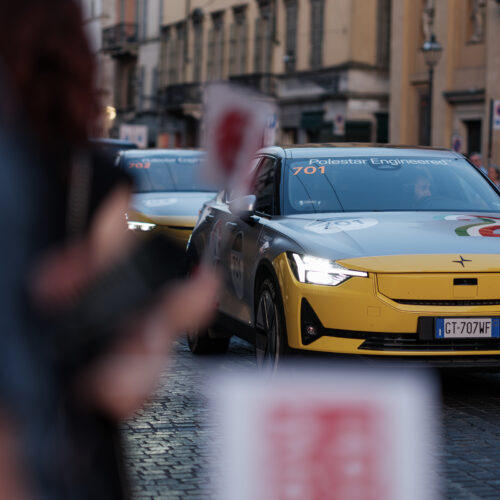
On the first day of this year’s Mille Miglia, a voice rose from the crowds gathered on the shore of Lago di Garda to shout β€œno sound, no feeling!”at my Polestar 3. Italians love their cars, and they revealed a clear preference for internal combustion engines over the next four days and over 1,200 km of driving. But plenty of other spectators smiled and waved, and some even did a double-take at seeing an electric vehicle amid the sea of modern Ferraris and world-class vintage racers taking on this modern regulation rally.

I flew to Italy to join the Mille Miglia β€œGreen,” which, for the past five years, has sought to raise awareness of sustainability and electric cars amid thisΒ famous (some might say infamous) race. And despite mixed reactions from the Italian crowds, our Polestar 3 performed quite well as it traced a historical route from Brescia to Rome and back.

The route snaked a trail through the Italian countryside based on the original speed race’s first 12 outings, but instead of going for overall pace, we spent five days competing against six other EVs for points based on time, distance, and average speed. Our team included a Polestar 2 and 4, and we faced a Mercedes-Benz G 580 with EQ Technology, an Abarth 600e, a Lotus Eletre, and a BYD Denza Z9GT saloon.
Read full article

Comments

Β© Polestar

General Motors writes down $6 billion as domestic EV sales plans change

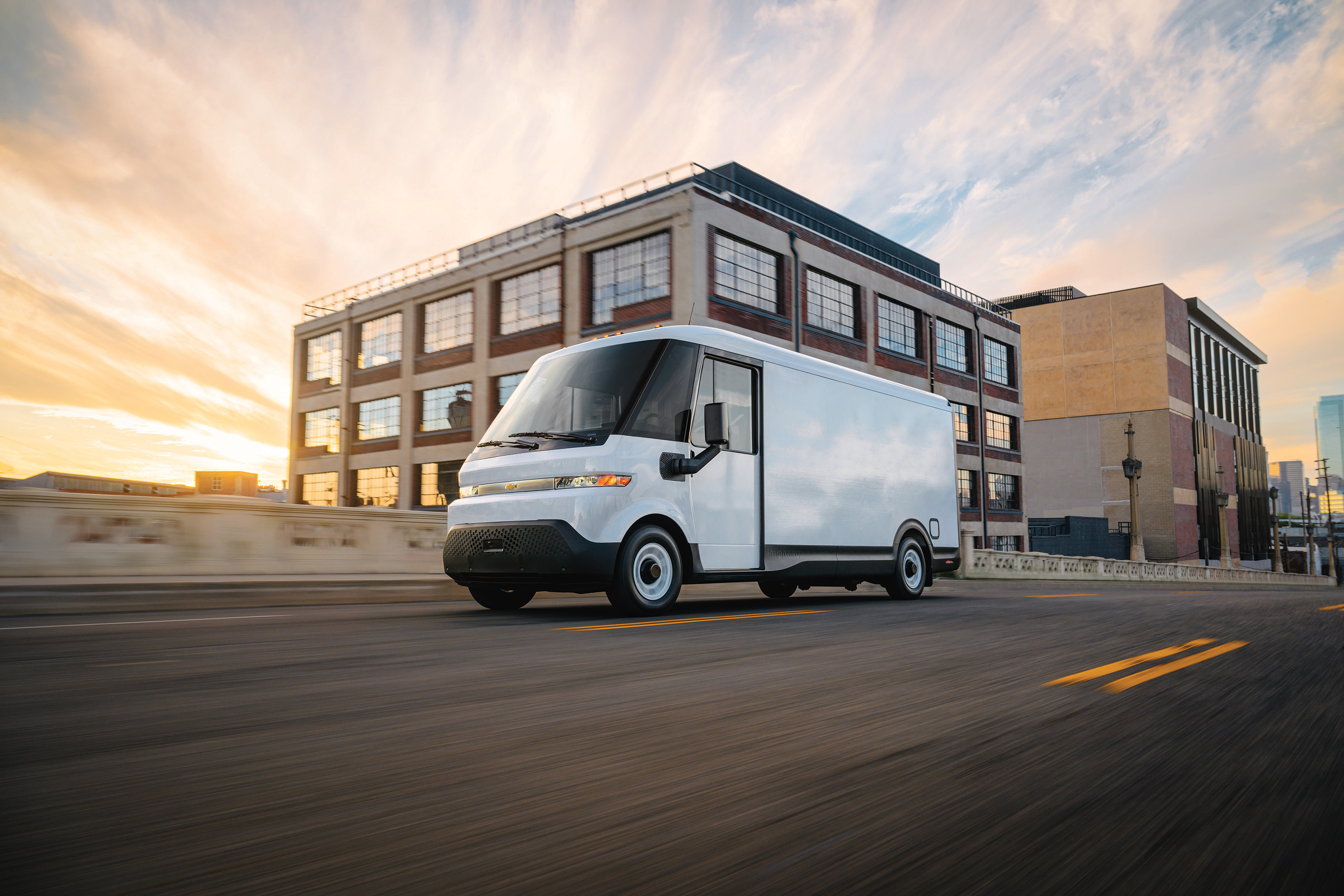
American automakers who got overenthusiastic about electric vehicles continue to pay the priceβ€”literally. Yesterday, General Motors told investors that building and selling fewer EVs will cost the company $6 billion. Still, things could be worseβ€”last month, rival Ford said it would write down $19.5 billion as a result of its failed EV bet.

GM is not actually abandoning its EV portfolio, even as it reduces shifts at some plants and repurposes othersβ€”like the one in Orion, Michiganβ€”into assembling combustion-powered pickups and SUVs instead of EVs. The electric crossovers, SUVs, and pickups from Cadillac, Chevrolet, and GMC will remain on sale, with the rebatteried Chevy Bolt joining their ranks this year.

But GM says it expects to sell many fewer EVs than once planned. For one thing, the US government abolished the clean vehicle tax credit, which cut the price of an American-made EV by up to $7,500. That government has also told automakers it no longer cares if they sell plenty of inefficient vehicles. Add to that the hostility from car dealers by having to sell EVs in the first place, and one can see why GM has decided to retreat, even if we might not sympathize.

Read full article

Comments

Β© Chevrolet

EVs remain a niche choice in the US, according to survey

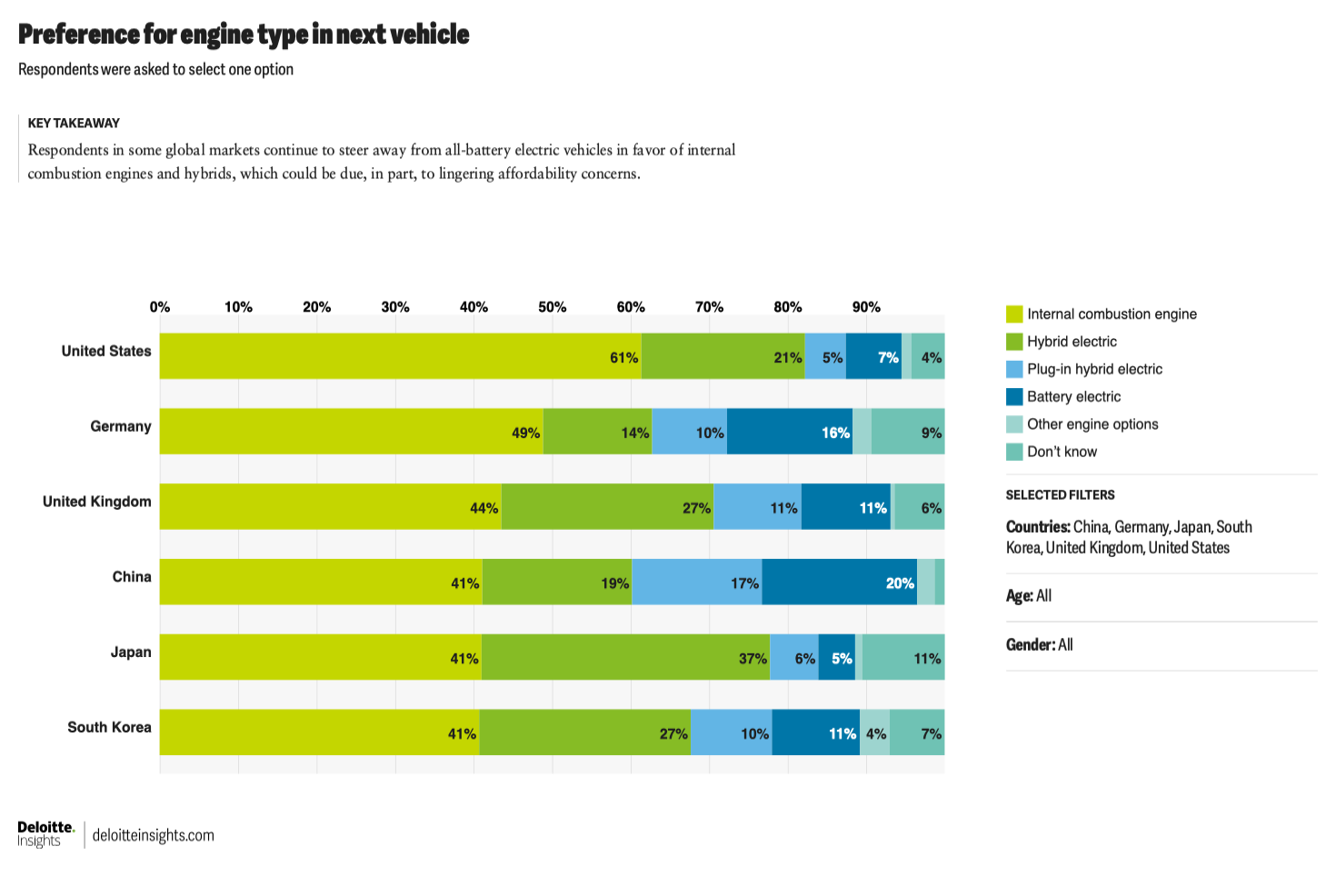
The electric vehicle transition might not be moving ahead with the same gusto it showed in the early 2020s, but it's still happening. According to Deloitte's 2026 Global Automotive Consumer Study, 7 percent of US car buyers want an electric vehicle for their next car. While that might sound rather meager, it's a 40 percent increase from 2025's survey, which found just 5 percent of car buyers wanted an EV.

Plain old internal combustion remains Americans' first choice, with 61 percent telling the survey that's how their next ride will be powered. Twenty-one percent want a hybrid, up from 20 percent last year. Just 5 percent indicated a desire for a plug-in hybrid (down from 6 percent last year), with the remaining confused souls either unsure of what to buy next (4 percent) or some other option, presumably hydrogen (1 percent).

A graph showing what engine preference car buyers have in the US, Germany, the UK, China, Japan, and South Korea A graph showing preference for engine type in car buyers' next vehicle. Credit: Deloitte

The high demand for internal combustion engines makes the US an outlier among large car-buying markets. Fewer than half of German car buyers want another gas-powered vehicle, and that number falls to just 41 percent in China, Japan, and South Korea. But those consumers aren't all fleeing internal combustion for battery EVs. Well, they mostly are in China, where EV demand is now 20 percent. But in Japan, only 5 percent of consumers want a battery EV, versus 37 percent indicating their next car would be a hybrid.

Read full article

Comments

Β© Getty Images

❌