Reading view

There are new articles available, click to refresh the page.

NASA Selects Participants to Track Artemis II Mission
4 Min Read

NASA Selects Participants to Track Artemis II Mission

When NASA's Artemis I launches next week on a journey to the moon, no animals or people will be onboard, but it will still carry biology investigations to see how living things react to the deep space environment.
A visual representation of NASA’s Artemis I mission.
Credits: NASA

NASA has selected 34 global volunteers to track the Orion spacecraft during the crewed Artemis II mission’s journey around the Moon.

The Artemis II test flight will launch NASA’s Space Launch System (SLS) rocket, carrying the Orion spacecraft and a crew of four astronauts, on a mission into deep space. The agency’s second mission in the Artemis campaign is a key step in NASA’s path toward establishing a long-term presence at the Moon and confirming the systems needed to support future lunar surface exploration and paving the way for the first crewed mission to Mars.

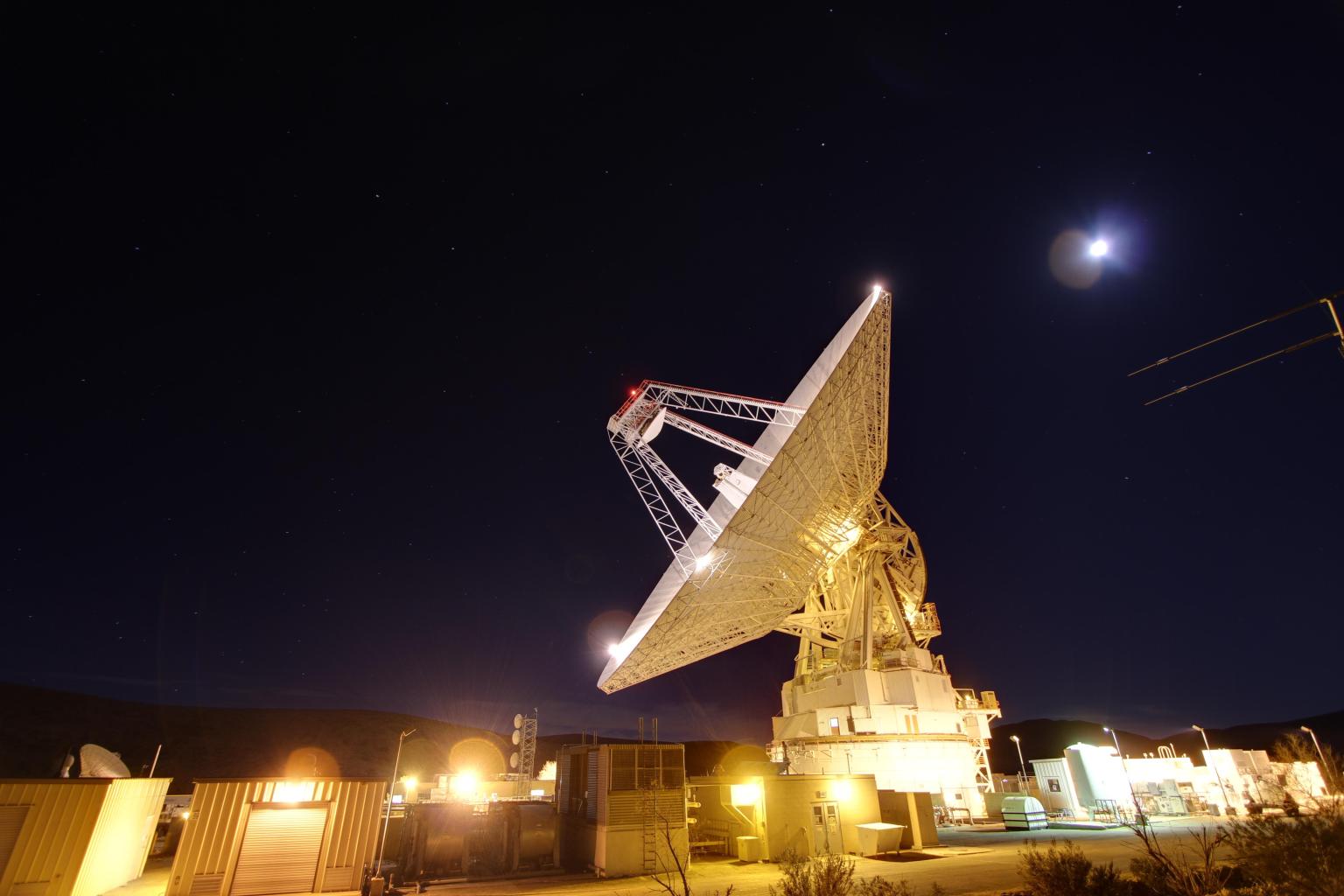
While NASA’s Near Space Network and Deep Space Network, coordinated by the agency’s SCaN (Space Communication and Navigation) program , will provide primary communications and tracking services to support Orion’s launch, journey around the Moon, and return to Earth, participants selected from a request for proposals published in August 2025, comprised of established commercial service providers, members of academia, and individual amateur radio enthusiasts will use their respective equipment to passively track radio waves transmitted by Orion during its approximately 10-day journey.
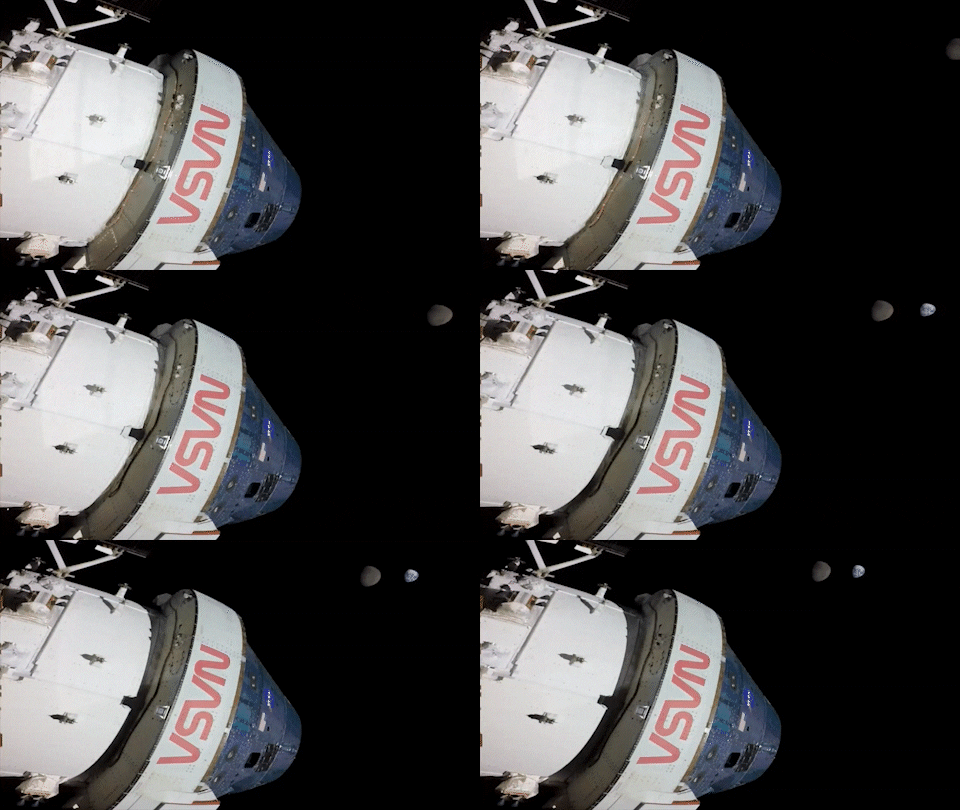
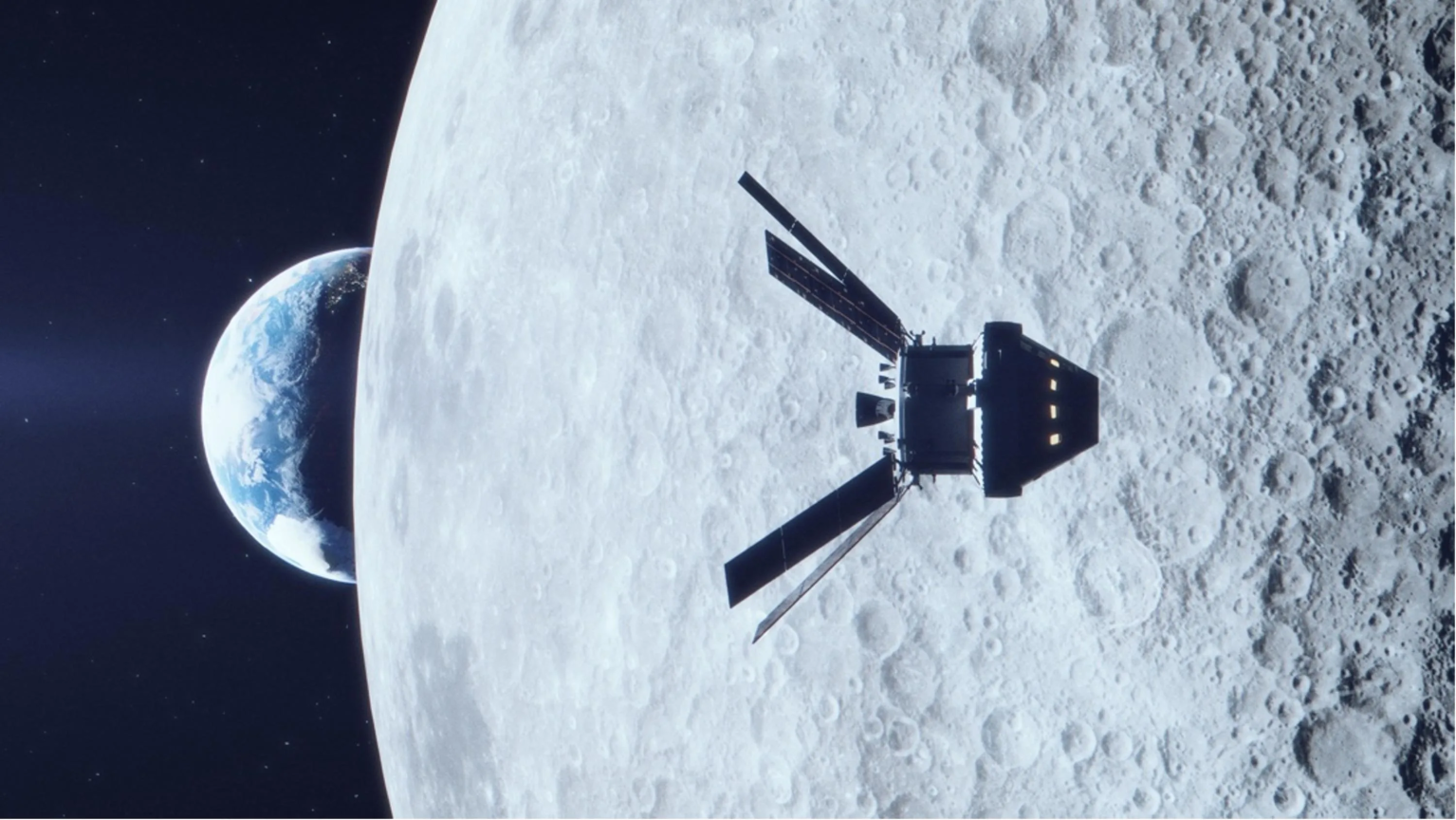
The Orion capsule viewing the Moon during Artemis I.
NASA

“The Artemis II tracking opportunity is a real step toward SCaN’s commercial-first vision. By inviting external organizations to demonstrate their capabilities during a human spaceflight mission, we’re strengthening the marketplace we’ll rely on as we explore farther into the solar system,” said Kevin Coggins, deputy associate administrator for SCaN at NASA Headquarters in Washington. “This isn’t about tracking one mission, but about building a resilient, public-private ecosystem that will support the Golden Age of innovation and exploration.”

This isn’t about tracking one mission, but about building a resilient, public-private ecosystem that will support the Golden Age of innovation and exploration.”

KEvin Coggins

KEvin Coggins

NASA Deputy Associate Administrator for SCaN

These volunteers will submit their data to NASA for analysis, helping the agency better assess the broader aerospace community’s tracking capabilities and identify ways to augment future Moon and Mars mission support. There are no funds exchanged as a part of this collaborative effort.

This initiative builds on a previous effort in which 10 volunteers successfully tracked the Orion spacecraft during Artemis I in 2022. That campaign produced valuable data and lessons learned, including implementation, formatting, and data quality variations for Consultative Committee for Space Data Systems, which develops communications and data standards for spaceflight. To address these findings, SCaN now requires that all tracking data submitted for Artemis II comply with its data system standards.

Compared to the previous opportunity, public interest in tracking the Artemis II mission has increased. About 47 ground assets spanning 14 different countries will be used for to track the spacecraft during its journey around the Moon.   

Participants List:

Government:

  • Canadian Space Agency (CSA), Canada
  • The German Aerospace Center (DLR), Germany

Commercial:

  • Goonhilly Earth Station Ltd, United Kingdom
  • GovSmart, Charlottesville, Virginia
  • Integrasys + University of Seville, Spain
  • Intuitive Machines, Houston
  • Kongsberg Satellite Services, Norway
  • Raven Defense Corporation, Albuquerque, New Mexico
  • Reca Space Agency + University of Douala, Cameroon
  • Rincon Research Corporation & the University of Arizona, Tucson
  • Sky Perfect JSAT, Japan
  • Space Operations New Zealand Limited, New Zealand
  • Telespazio, Italy
  • ViaSat, Carlsbad, California
  • Von Storch Engineering, Netherlands

Individual:

  • Chris Swier, South Dakota
  • Dan Slater, California
  • Loretta A Smalls, California
  • Scott Tilley, Canada

Academia:

  • American University, Washington
  • Awara Space Center + Fukui University of Technology, Japan
  • Morehead State University, Morehead, Kentucky
  • Pisgah Astronomical Research Institute, Rosman, North Carolina
  • University of California Berkeley, Space Sciences Laboratory, California
  • University of New Brunswick, ECE, Canada
  • University of Pittsburgh, ECE, Pittsburgh
  • University of Zurich – Physics Department, Switzerland

Non-Profit & Amateur Radio Organizations:

  • AMSAT Argentina, Argentina
  • AMSAT Deutschland, Germany
  • Amateur Radio Exploration Ground Station Consortium, Springfield, Illinois
  • CAMRAS, Netherlands
  • Deep Space Exploration Society, Kiowa County, Colorado
  • Neu Golm Ground Station, Germany
  • Observation Radio Pleumur-bodou, France

Artemis II will fly around the Moon to test the systems which will carry astronauts to the lunar surface for economic benefits and scientific discovery in the Golden Age of exploration and innovation.

The networks supporting Artemis receive programmatic oversight from NASA’s SCaN Program office. In addition to providing communications services to missions, SCaN develops the technologies and capabilities that will help propel NASA to the Moon, Mars, and beyond. The Deep Space Network is managed by NASA’s Jet Propulsion Laboratory in Southern California, and the Near Space Network is managed by NASA’s Goddard Space Flight Center in Greenbelt, Maryland. 

Learn more about NASA’s SCaN Program:  

https://www.nasa.gov/scan

About the Author

Katrina Lee

Katrina Lee

Katrina Lee is a writer for the Space Communications and Navigation (SCaN) Program office and covers emerging technologies, commercialization efforts, exploration activities, and more.
NASA Unlocks Golden Age of Innovation, Exploration in Trump’s First Year

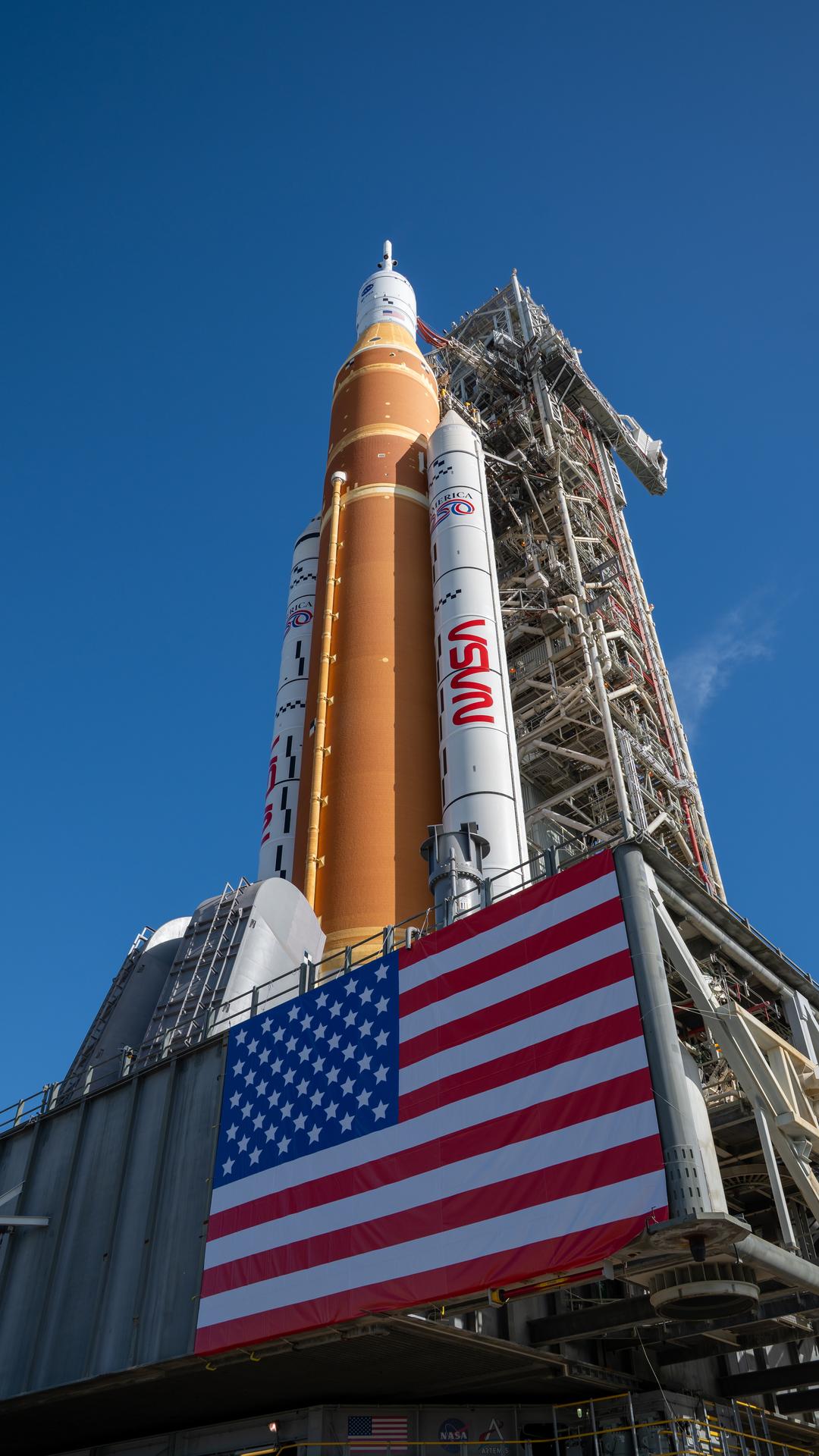
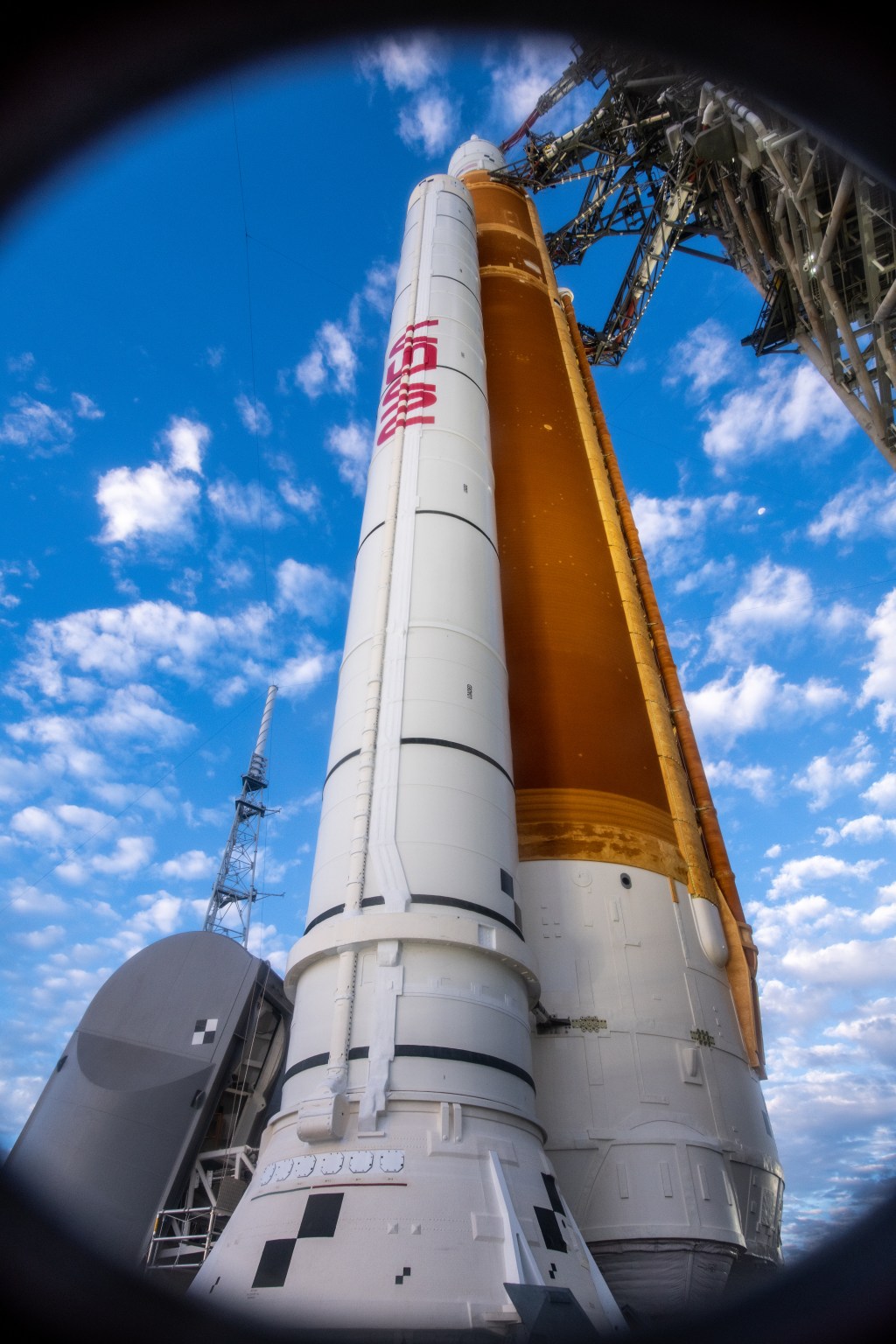
This image shows NASA’s SLS (Space Launch System) and Orion spacecraft rolling out of the Vehicle Assembly Building at NASA’s Kennedy Space Center in Florida
NASA’s SLS (Space Launch System) and Orion spacecraft rolled out of the Vehicle Assembly Building at the agency’s Kennedy Space Center in Florida on Saturday, Jan. 17, 2026 in preparation for the Artemis II mission.
Credit: NASA/Brandon Hancock

One year into President Donald J. Trump’s second term, NASA is delivering measurable progress across human spaceflight, science, aeronautics, and cutting-edge technology. These advances mark the beginning of a new Golden Age of American space leadership driven by clear national direction and historic investment through the Working Families Tax Cut Act.

Since his inauguration as the 47th President of the United States, NASA has sharpened its mission rooted in President Trump’s national space policy, reinforcing American superiority in space and accelerating progress across exploration, discovery, and innovation. With a renewed focus on human spaceflight, scientific excellence, and national capability, the agency is moving with clarity and momentum.

President Trump’s enduring commitment to space exploration has shaped every aspect of this progress. During his first term, the United States stood up the U.S. Space Force, commenced the Artemis campaign, established the Artemis Accords, which now have 60 signatories and are still growing, and returned American astronauts to human spaceflight from U.S. soil following the space shuttle era.

Now, with a clear National Space Policy and Working Family Tax Cut Act, NASA has the direction, resources, and authority to advance a bold vision for the future.

In the first year of the President’s second term, NASA has flown two human spaceflight missions, launched 15 science missions, and successfully test-flown a new X-plane, while accelerating work across lunar exploration, Earth science, planetary defense, next-generation aeronautics, and technologies to prepare for future missions to Mars.

Soon, NASA will launch the Artemis II mission, sending humans around the Moon for the first time in over 50 years, and setting the stage for America’s return to the lunar surface, but this time, to stay. These milestones reflect a workforce empowered to move faster, think bigger, and deliver results for the American people.
“In the first year of this administration, NASA has moved with clarity, purpose, and momentum, advancing President Trump’s bold vision for American leadership in space,” said NASA Administrator Jared Isaacman. “From strengthening our focus on human spaceflight and preparing for the first deep space exploration by NASA astronauts in more than half a century, to accelerating innovation across science, technology, and national capability, the President has provided the clearest executive direction for NASA since the Kennedy era. President Trump’s National Space Policy sharpened our mission, aligned our priorities, and empowered our workforce to move faster and think bigger. Because of that leadership, NASA is confidently delivering on a future of American space superiority for generations to come.”

NASA is positioned to build on this momentum. Under President Trump’s leadership, American astronauts will return to the surface of the Moon by 2028 and establish a sustained human presence with a lunar base. The agency will continue launching missions of science and discovery, including bringing the Nancy Grace Roman Space Telescope into operation before the end of the year. In line with the President’s vision, NASA is advancing nuclear power and propulsion technologies to enable deep space missions and transform what is possible for exploration.

With a focused mission, empowered workforce, and strong partnership with industry and international allies, NASA is entering the second year of President Trump’s second term positioned to change the world, extending American leadership in space and unlocking discoveries that will benefit humanity for decades to come.

For more information about NASA’s missions and programs, visit:

https://www.nasa.gov

-end-

Bethany Stevens / George Alderman
Headquarters, Washington
771-216-2606 / 202-374-6002
bethany.c.stevens@nasa.gov / george.a.alderman@nasa.gov

Share

Details

Last Updated
Jan 20, 2026
Editor
Jennifer M. Dooren

What You Need to Know About NASA’s Artemis II Moon Mission

astronauts

NASA is weeks away from sending astronauts farther than any crew has traveled before, with the agency’s second mission in its Artemis campaign. The Artemis II Press Kit now is available with information on the mission, astronauts, and other resources for media.

“Artemis II will be a momentous step forward for human spaceflight. This historic mission will send humans farther from Earth than ever before and deliver the insights needed for us to return to the Moon — all with America at the helm,” said NASA Administrator Jared Isaacman. “Artemis II represents progress toward establishing a lasting lunar presence and sending Americans to Mars. I could not be more impressed by our NASA team and the Artemis II crew, and wish them well. Boldly forward.”

Under the Artemis campaign, NASA is returning humans to the Moon for economic benefits, scientific discovery, and to prepare for crewed missions to Mars.

To learn more about Artemis, visit:

https://www.nasa.gov/artemis

-end-

Lauren Low / Rachel Kraft
Headquarters, Washington
202-358-1600
lauren.e.low@nasa.gov / rachel.h.kraft@nasa.gov  

Share

Details

Last Updated
Jan 17, 2026
Editor
Jennifer M. Dooren

Coverage, Briefing Set for NASA’s Artemis II Moon Rocket Roll to Pad

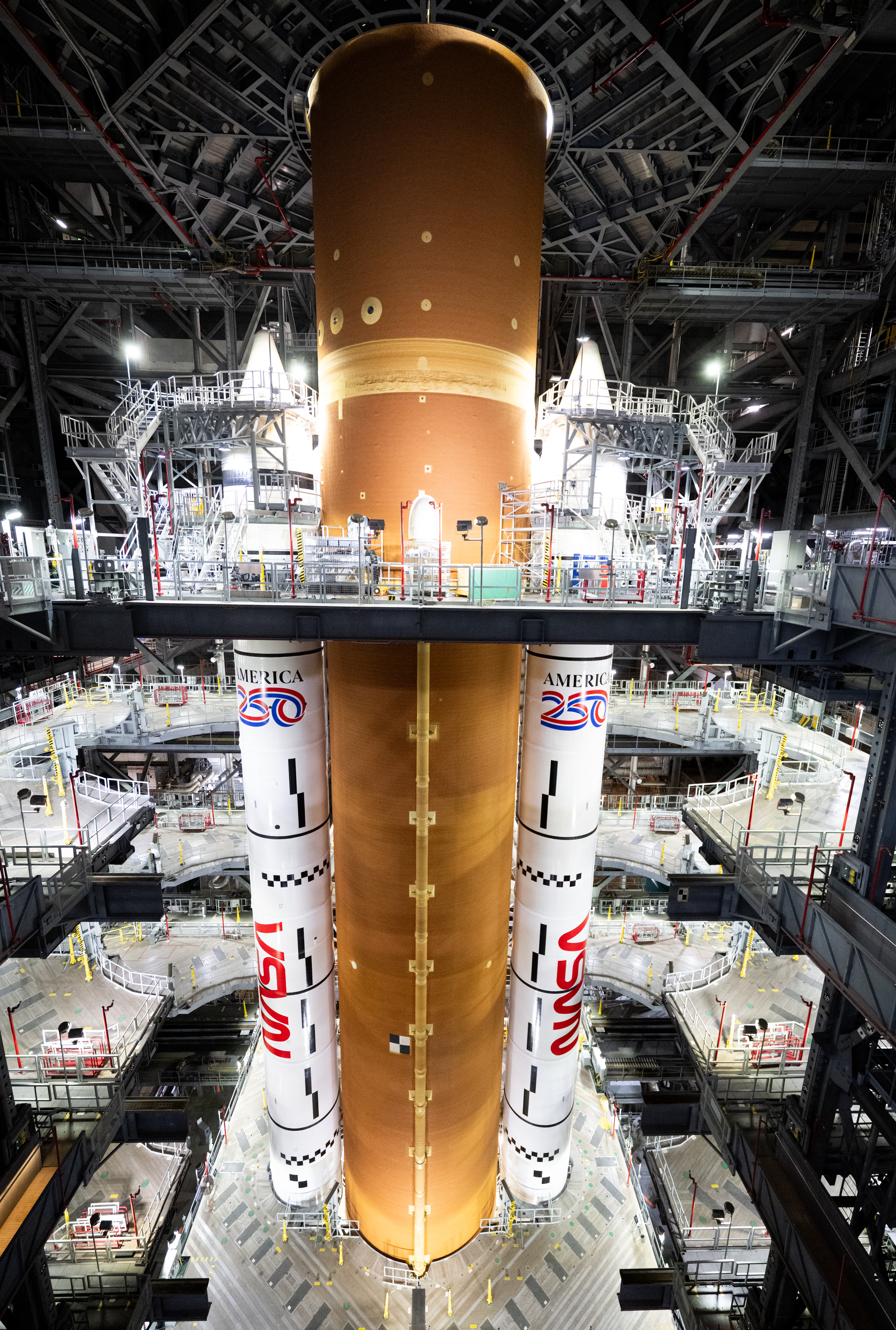

Photo of NASA's SLS (Space Launch System) rocket inside the Vehicle Assembly Building at Kennedy Space Center.
NASA’s SLS (Space Launch System) rocket is seen inside High Bay 3 of the Vehicle Assembly Building as teams await the arrival of Artemis II crewmembers to board their Orion spacecraft on top of the rocket as part of the Artemis II countdown demonstration test, Saturday, Dec. 20, 2025, at NASA’s Kennedy Space Center in Florida.
Credit: NASA/Joel Kowsky

NASA’s integrated SLS (Space Launch System) rocket and Orion spacecraft for the Artemis II mission is inching closer to launch – literally.

The agency is targeting no earlier than 7 a.m. EST, Saturday, Jan. 17, to begin the multi-hour trek from the Vehicle Assembly Building to Launch Pad 39B at NASA’s Kennedy Space Center in Florida.

A pre rollout mission news conference, live feed of rollout, and a media gaggle will stream on NASA’s YouTube channel. Individual streams for each of these events will be available from that page. Learn how to stream NASA content through a variety of online platforms, including social media.

The time of rollout is subject to change if additional time is needed for technical preparations or weather.

All times are Eastern. Events are as follows:

Friday, Jan. 16:

12 p.m.: Artemis II Rollout, Mission Overview News Conference

  • John Honeycutt, Artemis II mission management team chair
  • Charlie Blackwell-Thompson, Artemis launch director, Exploration Ground Systems
  • Jeff Radigan, Artemis II lead flight director, Flight Operations Directorate
  • Lili Villarreal, landing and recovery director, Exploration Ground Systems
  • Jacob Bleacher, chief exploration scientist, Exploration Systems Development Mission Directorate

Saturday, Jan. 17:

7 a.m.: Rollout, Artemis II Live Views from Kennedy Space Center feed begins

9 a.m.: Artemis II Crew Rollout Media Event

  • NASA Administrator Jared Isaacman and the Artemis II crew, including NASA astronauts Reid Wiseman, Victor Glover, and Christina Koch, and CSA (Canadian Space Agency) astronaut Jeremy Hansen, will answer questions about their preparations and the mission for media in-person at the countdown clock.

NASA’s crawler-transporter 2 will carry the 11-million-pound stack at about one mile per hour along the four-mile route from the Vehicle Assembly Building to Launch Pad 39B, on a journey that will take up to 12 hours.

To participate in the news conference by telephone, media must RSVP no later than two hours before the start to: ksc-newsroom@mail.nasa.gov

These events will be open in-person only to media previously credentialed for launch. The deadline has passed for in-person accreditation for Artemis II events at Kennedy.

Rollout to the pad marks another milestone leading up to the Artemis II mission. In the coming weeks, NASA will complete final preparations of the rocket and, if needed, rollback SLS and Orion to the Vehicle Assembly Building for additional work. While the Artemis II launch window opens as early as Friday, Feb. 6, the mission management team will assess flight readiness after the wet dress rehearsal across the spacecraft, launch infrastructure, and the crew and operations teams before selecting a launch date.

Follow NASA’s Artemis blog for mission updates.

Through Artemis, NASA will send astronauts to explore the Moon for scientific discovery, economic benefits, and to build the foundation for the first crewed missions to Mars.

Learn more about Artemis at:

https://www.nasa.gov/artemis

-end-

Rachel Kraft / Lauren Low
Headquarters, Washington
202-358-1600
rachel.h.kraft@nasa.gov / lauren.e.low@nasa.gov

Tiffany Fairley
Kennedy Space Center, Fla.
321-867-2468
tiffany.l.fairley@nasa.gov

NASA Invites Media to Cover Artemis Mission from Johnson Space Center

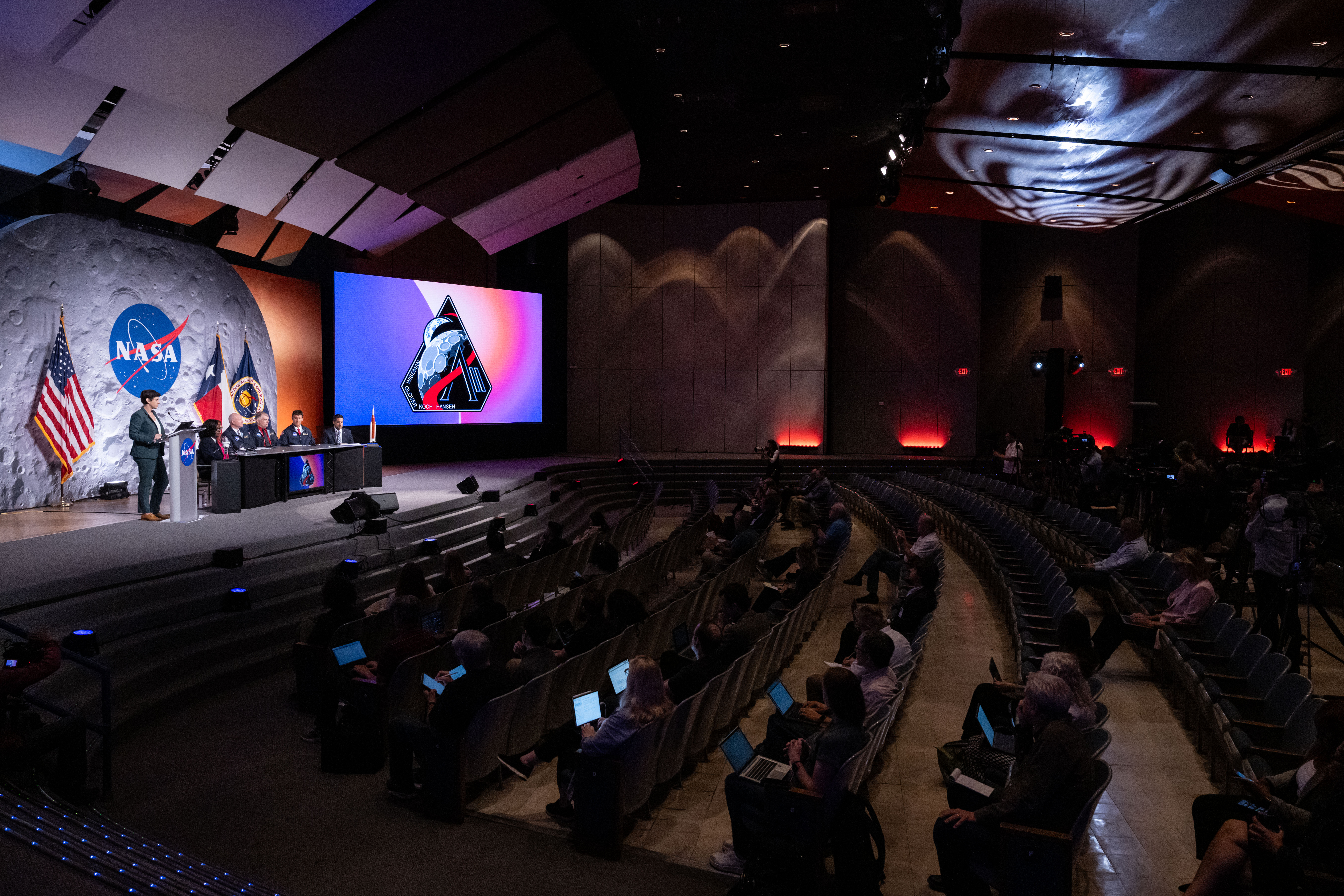
NASA hosted the Artemis II Mission Overview briefing in the Teague Auditorium at NASA’s Johnson Space Center in Houston, Sept. 23, 2025.
NASA/James Blair

Media accreditation is open to attend Artemis II mission activities at NASA’s Johnson Space Center in Houston. Johnson is where flight controllers in mission control will manage the test flight after liftoff of the first crewed Moon mission under the agency’s Artemis campaign.

Targeted to launch no earlier Friday, Feb. 6, the Artemis II mission will send NASA astronauts Reid Wiseman, Victor Glover, Christina Koch, and CSA (Canadian Space Agency) astronaut Jeremy Hansen on an approximately 10-day journey around the Moon and back to test the systems and hardware, which will return humanity to the lunar surface.

After launch day, NASA will host daily briefings at Johnson throughout the mission with agency managers and mission experts. The briefings will be streamed on NASA’s YouTube channel.

International media without U.S. citizenship must apply to cover the mission in person at Johnson by 5 p.m. CST Friday, Jan. 16. U.S. media must apply by Friday, Jan. 30. Media representatives must apply by contacting the NASA Johnson newsroom at jsccommu@mail.nasa.gov. NASA’s media accreditation policy is available online.

Due to high interest, in-person space is limited. Credentialed media will receive a confirmation email if approved. Those who are accredited to attend the Artemis II launch at NASA’s Kennedy Space Center in Florida are not automatically accredited to attend events at Johnson and must receive a separate confirmation for activities in-person at NASA Johnson.

As part of a Golden Age of innovation and exploration, Artemis will pave the way for new U.S.-crewed missions on the lunar surface in preparation to send the first astronauts to Mars.

To learn more about the Artemis II mission, visit:

https://www.nasa.gov/mission/artemis-ii

-end-

Rachel Kraft / Lauren Low
Headquarters, Washington
202-358-1600
rachel.h.kraft@nasa.gov / lauren.e.low@nasa.gov

Chelsey Ballarte
Johnson Space Center, Houston
281-483-5111
chelsey.n.ballarte@nasa.gov

Share

Details

Last Updated
Jan 12, 2026

Últimos preparativos para la primera misión tripulada a la Luna con la campaña Artemis de la NASA

El cohete Sistema de Lanzamiento Espacial (SLS, por sus siglas en inglés) de la NASA, visto en la nave High Bay 3 del Edificio de Ensamblaje de Vehículos mientras los equipos t esperan la llegada de los tripulantes de Artemis II para abordar su nave espacial Orion en la parte superior del cohete como parte de la prueba de demostración de la cuenta atrás de Artemis II, el sábado 20 de diciembre de 2025, en el Centro Espacial Kennedy de la NASA en Florida.
NASA/Joel Kowsky

Read this article in English here.

Conforme la NASA se acerca al lanzamiento del vuelo de prueba Artemis II, la agencia pronto llevará por primera vez su cohete Sistema de Lanzamiento Espacial (SLS, por sus siglas en inglés) y la nave espacial Orion a la plataforma de lanzamiento en el Centro Espacial Kennedy de la agencia en Florida para comenzar la integración final, las pruebas y los ensayos para el lanzamiento.

La NASA tiene como objetivo comenzar desde el sábado 17 de enero su traslado desde el Edificio de Ensamblaje de Vehículos hasta la Plataforma de Lanzamientos 39B, lo que tardará varias horas. El viaje de casi 6,5 kilómetros (cuatro millas) en el vehículo transportador oruga 2 podría durar hasta 12 horas. Los equipos técnicos están trabajando día y noche para dar por terminadas todas las tareas antes del transporte del cohete. Sin embargo, esta fecha objetivo está sujeta a cambios si fuera necesario tiempo adicional para los preparativos técnicos o debido a las condiciones meteorológicas.

“Nos estamos acercando a la misión Artemis II, y tenemos su lanzamiento a la vuelta de la esquina”, dijo Lori Glaze, administradora asociada interina para la Dirección de Misiones de Desarrollo de Sistemas de Exploración de la NASA. “Nos quedan pasos importantes en nuestro camino hacia el lanzamiento, y la seguridad de la tripulación seguirá siendo nuestra principal prioridad en todo momento, a medida que nos acercamos al regreso de la humanidad a la Luna”.

Al igual que con todos los nuevos desarrollos de sistemas complejos, los ingenieros han estado solucionando varios problemas en los últimos días y semanas. Durante las comprobaciones finales antes del traslado, los técnicos detectaron que un cable relacionado con el sistema de terminación de vuelo estaba doblado en contra de las especificaciones. El personal técnico lo está reemplazando y hará pruebas con el nuevo cable durante el fin de semana. Además, una válvula relacionada con la presurización de la escotilla de Orion presentó problemas que hicieron necesario llevar a cabo pruebas de demostración de la cuenta regresiva el 20 de diciembre pasado. El 5 de enero, el equipo reemplazó la válvula e hizo pruebas de su funcionamiento que resultaron exitosas. Los ingenieros también trabajaron para resolver fugas en el hardware de soporte en tierra que es necesario para cargar oxígeno gaseoso en Orion a fin de proporcionar aire respirable.

Traslado

Una vez que el cohete y la nave espacial integrados lleguen a la plataforma de lanzamiento, la NASA comenzará inmediatamente una larga lista de verificación para los preparativos en la plataforma de lanzamiento, incluyendo la conexión de equipos mecánicos de apoyo en tierra, como líneas eléctricas, conductos del sistema de control ambiental de combustible y tomas de surtido de combustible criogénico. Los equipos de personal técnico encenderán todos los sistemas integrados en la plataforma por primera vez para garantizar que los componentes del hardware de vuelo funcionen correctamente entre sí, con el lanzador móvil y con los sistemas de infraestructura terrestre.

Una vez que esté todo completado, los astronautas de Artemis II, Reid Wiseman, Victor Glover y Christina Koch de la NASA, y el astronauta de la CSA (Agencia Espacial Canadiense) Jeremy Hansen, llevarán a cabo una caminata final en la plataforma.

Ensayo general con circulación de combustible y llenado de tanques

A finales de enero, la NASA llevará a cabo un ensayo general con circulación de combustible, el cual es una prueba previa al lanzamiento para llenar los tanques de combustible en el cohete. Durante este ensayo general, el personal técnico hace una demostración de la capacidad de cargar más de 700.000 galones de combustible criogénico en el cohete, lleva a cabo una cuenta regresiva para el lanzamiento y practica la extracción segura del combustible del cohete sin tripulación presente en el sitio.

Durante el lanzamiento, el equipo de cierre, o de tareas finales, será responsable de asegurar a los astronautas en Orion y cerrar sus escotillas. El personal de cierre también utilizará este ensayo para practicar sus procedimientos de forma segura sin tener tripulación a bordo de la nave espacial.

El ensayo general con circulación de combustible incluirá varios “encendidos”, o pruebas de funcionamiento, para demostrar la capacidad del equipo de lanzamiento para detener, reanudar y reiniciar operaciones en varios momentos diferentes de los últimos 10 minutos de la cuenta regresiva, conocida como conteo terminal.

La ejecución del primer encendido comenzará aproximadamente en las 49 horas antes del lanzamiento, cuando los equipos encargados de lanzamiento son llamados a sus estaciones, hasta 1 minuto y 30 segundos antes del lanzamiento, seguido de una pausa planificada de tres minutos y luego la reanudación de la cuenta regresiva hasta 33 segundos antes del lanzamiento, el punto en el que el secuenciador de lanzamiento automático del cohete controlará los últimos segundos de la cuenta regresiva. Luego, los equipos técnicos volverán a reiniciar a T-10 minutos y detendrán el conteo, y luego reanudarán los procedimientos hasta 30 segundos antes del lanzamiento como parte de una segunda ejecución.

Si bien la NASA ha integrado las lecciones aprendidas con Artemis I en los procedimientos de la cuenta regresiva para el lanzamiento, la agencia hará una pausa para abordar cualquier problema durante la prueba o en cualquier otro momento si surgen retos técnicos. Los ingenieros vigilarán de cerca la carga de combustible de hidrógeno líquido y oxígeno líquido en el cohete, después de los desafíos que se encontraron con la carga de hidrógeno líquido durante los ensayos generales con circulación de combustible de Artemis I. Los equipos técnicos también prestarán mucha atención a la efectividad de los procedimientos recientemente actualizados para limitar la cantidad de nitrógeno gaseoso que se acumula en el espacio que está entre el módulo de tripulación de Orion y las escotillas del sistema de cancelación de lanzamiento, lo que podría representar un problema para el personal de cierre.

Es posible que se requieran ensayos generales con circulación de combustible adicionales para garantizar que el vehículo esté completamente revisado y apto para el vuelo.

De ser necesario, la NASA podría trasladar al cohete SLS y la nave Orion de vuelta al Edificio de Ensamblaje de Vehículos para realizar trabajos adicionales antes del lanzamiento después del ensayo general con circulación de combustible.

Próximos pasos para el lanzamiento

Después de un exitoso ensayo general con circulación de combustible, la NASA convocará una revisión de aptitud para el vuelo en la cual el equipo de gestión de la misión evaluará la aptitud de todos los sistemas, incluyendo el hardware de vuelo, la infraestructura y el personal de lanzamiento, vuelo y recuperación antes de comprometerse con una fecha de lanzamiento.

Aunque la ventana para el lanzamiento de Artemis II se podría iniciar tan pronto como el viernes 6 de febrero, el equipo de gestión de la misión evaluará la aptitud para el vuelo después del ensayo general con toda la nave espacial, la infraestructura de lanzamiento, y la tripulación y el personal de operaciones antes de seleccionar una fecha para el lanzamiento.

A fin de determinar las posibles fechas de lanzamiento, los ingenieros identificaron las restricciones clave necesarias para cumplir la misión y mantener a salvo a la tripulación dentro de Orion. Los períodos de lanzamiento resultantes son los días o las semanas en los que la nave espacial y el cohete pueden cumplir los objetivos de la misión. Estos períodos de lanzamiento explican la compleja mecánica orbital relacionada con el lanzamiento en una trayectoria precisa hacia la Luna mientras la Tierra rota sobre su eje y la Luna orbita la Tierra cada mes en su ciclo lunar. Esto da como resultado un patrón de alrededor de una semana de oportunidades de lanzamiento, seguido de tres semanas sin oportunidades de lanzamiento.

Existen varios parámetros principales que establecen la disponibilidad del lanzamiento dentro de estos períodos. Debido a su trayectoria única en relación con las misiones de alunizaje posteriores, estas limitaciones clave son exclusivas del vuelo de prueba de la misión Artemis II.

  • El día y la hora de lanzamiento deben permitir que SLS pueda llevar a Orion a una órbita terrestre alta, donde la tripulación y los equipos técnicos en tierra evaluarán los sistemas de soporte vital de la nave espacial antes de que la tripulación emprenda su viaje con rumbo a la Luna.
  • Orion también debe estar en la alineación adecuada con la Tierra y la Luna en el momento del encendido de motores con inyección translunar. El encendido de motores con inyección translunar de Artemis II pone a Orion en rumbo de sobrevolar la Luna, y también lo pone en una trayectoria de retorno libre, en la cual la nave espacial utiliza la gravedad de la Luna para enviar la nave espacial de regreso a la Tierra sin maniobras adicionales importantes de propulsión.
  • La trayectoria para un día determinado debe garantizar que Orion no esté en la oscuridad durante más de 90 minutos a la vez para que las alas de los paneles solares puedan recibir y convertir la luz solar en electricidad, y la nave espacial pueda mantener un rango de temperatura óptimo. Los planificadores de la misión eliminan las posibles fechas de lanzamiento que llevarían a Orion a eclipses prolongados durante el vuelo.
  • La fecha de lanzamiento debe sustentar una trayectoria que permita el perfil de entrada adecuado planificado durante el regreso de Orion a la Tierra.

Los períodos a continuación muestran la disponibilidad de llevar a cabo el lanzamiento hasta abril de 2026. Los planificadores de la misión mejoran estos períodos en función de un análisis actualizado más o menos dos meses antes de que estos comiencen, y ellos están sujetos a cambios.

Período de lanzamiento del 31 de enero al 14 de febrero

  • Oportunidades de lanzamiento los días 6, 7, 8, 10 y 11 de febrero

Período de lanzamiento del 28 de febrero al 13 de marzo

  • Oportunidades de lanzamiento los días 6, 7, 8, 9, 11 de marzo

Período de lanzamiento del 27 de marzo al 10 de abril

  • Oportunidades de lanzamiento los días 1, 3, 4, 5, 6 de abril

Además de las oportunidades de lanzamiento basadas en la mecánica orbital y los requisitos de desempeño, también existen restricciones sobre qué días dentro de un período de lanzamiento pueden ser viables en función de la reposición de productos básicos, las condiciones meteorológicas y las operaciones de otros usuarios en el cronograma del Área Este. Como regla general, se pueden hacer hasta cuatro intentos de lanzamiento dentro de la semana aproximada de oportunidades que existen dentro de un período de lanzamiento.

Mientras la agencia se prepara para su primera misión tripulada más allá de la órbita terrestre en más de 50 años, la NASA espera aprender durante los procesos, tanto en tierra como en vuelo, y dejará que la aptitud y el desempeño de sus sistemas indiquen el momento en que la agencia está lista para el lanzamiento.

Como parte de una edad de oro de innovación y exploración, el vuelo de prueba de Artemis II, el cual tendrá una duración aproximada de 10 días, es el primer vuelo tripulado para la campaña Artemis de la NASA. Este es otro paso hacia nuevas misiones tripuladas de Estados Unidos en la superficie de la Luna, lo que llevará a una presencia sostenida en la Luna que ayudará a la agencia a prepararse para enviar a los primeros astronautas estadounidenses a Marte.

Encuentra más información sobre la campaña Artemis de la NASA en el siguiente sitio web (en inglés):

https://www.nasa.gov/artemis

Share

Details

Last Updated
Jan 12, 2026

Final Steps Underway for NASA’s First Crewed Artemis Moon Mission

NASA’s SLS (Space Launch System) rocket is seen inside High Bay 3 of the Vehicle Assembly Building as teams await the arrival of Artemis II crewmembers to board their Orion spacecraft on top of the rocket as part of the Artemis II countdown demonstration test, Saturday, Dec. 20, 2025, at NASA’s Kennedy Space Center in Florida.
NASA/Joel Kowsky

Lee este artículo en español aquí.

As NASA moves closer to launch of the Artemis II test flight, the agency soon will roll its SLS (Space Launch System) rocket and Orion spacecraft to the launch pad for the first time at the agency’s Kennedy Space Center in Florida to begin final integration, testing, and launch rehearsals.

NASA is targeting no earlier than Saturday, Jan. 17, to begin the multi-hour trek from the Vehicle Assembly Building to Launch Pad 39B. The four-mile journey on the crawler-transporter-2 will take up to 12 hours. Teams are working around the clock to close out all tasks ahead of rollout. However, this target date is subject to change if additional time is needed for technical preparations or weather.

We are moving closer to Artemis II, with rollout just around the corner,” said Lori Glaze, acting associate administrator for NASA’s Exploration Systems Development Mission Directorate. “We have important steps remaining on our path to launch and crew safety will remain our top priority at every turn, as we near humanity’s return to the Moon.”

As with all new developments of complex systems, engineers have been troubleshooting several items in recent days and weeks. During final checkouts before rollout, technicians found a cable involved in the flight termination system was bent out of specifications. Teams are replacing it and will test the new cable over the weekend. Additionally, a valve associated with Orion’s hatch pressurization exhibited issues leading up to a Dec. 20 countdown demonstration test. On Jan. 5, the team successfully replaced and tested it. Engineers also worked to resolve leaky ground support hardware required to load gaseous oxygen into Orion for breathing air. 

Rollout

Once the integrated rocket and spacecraft reach the launch pad, NASA will immediately begin a long checklist of launch pad preparations, including connecting ground support equipment such as electrical lines, fuel environmental control system ducts, and cryogenic propellant feeds. Teams will power up all integrated systems at the pad for the first time to ensure flight hardware components are functioning properly with each other, the mobile launcher, and ground infrastructure systems.

Once complete, the Artemis II astronauts, NASA’s Reid Wiseman, Victor Glover, and Christina Koch, and CSA (Canadian Space Agency) astronaut Jeremy Hansen, will conduct a final walkdown at the pad.

Wet dress rehearsal, tanking

At the end of January, NASA will conduct a wet dress rehearsal, which is a prelaunch test to fuel the rocket. During wet dress, teams demonstrate the ability to load more than 700,000 gallons of cryogenic propellants into the rocket, conduct a launch countdown, and practice safely removing propellant from the rocket without astronauts onsite.

During launch, a closeout crew will be responsible for securing astronauts in Orion and closing its hatches. The closeout crew also will use this rehearsal to practice their procedures safely without astronauts aboard the spacecraft.

The wet dress rehearsal will include several “runs” to demonstrate the launch team’s ability to hold, resume, and recycle to several different times in the final 10 minutes of the countdown, known as terminal count.

The first run will begin approximately 49 hours before launch when launch teams are called to their stations, to 1 minute 30 seconds before launch, followed by a planned three-minute hold and then countdown resumption to 33 seconds before launch – the point at which the rocket’s automatic launch sequencer will control the final seconds of the countdown. Teams then will recycle back to T-10 minutes and hold, then resume down to 30 seconds before launch as part of a second run.

While NASA has integrated lessons learned from Artemis I into the launch countdown procedures, the agency will pause to address any issues during the test or at any other point should technical challenges arise. Engineers will have a close eye on propellant loading of liquid hydrogen and liquid oxygen into the rocket, after challenges encountered with liquid hydrogen loading during Artemis I wet dress rehearsals. Teams also will pay close attention to the effectiveness of recently updated procedures to limit how much gaseous nitrogen accumulates in the space between Orion’s crew module and launch abort system hatches, which could pose an issue for the closeout crew.

Additional wet dress rehearsals may be required to ensure the vehicle is completely checked out and ready for flight.

If needed, NASA may rollback SLS and Orion to the Vehicle Assembly Building for additional work ahead of launch after the wet dress rehearsal.

Next steps toward launch

Following a successful wet dress rehearsal, NASA will convene a flight readiness review where the mission management team will assess the readiness of all systems, including flight hardware, infrastructure, and launch, flight, and recovery teams before committing to a launch date.

While the Artemis II launch window opens as early as Friday, Feb. 6, the mission management team will assess flight readiness after the wet dress rehearsal across the spacecraft, launch infrastructure, and the crew and operations teams before selecting a launch date.

To determine potential launch dates, engineers identified key constraints required to accomplish the mission and keep the crew inside Orion safe. The resulting launch periods are the days or weeks where the spacecraft and rocket can meet mission objectives. These launch periods account for the complex orbital mechanics involved in launching on a precise trajectory toward the Moon while the Earth is rotating on its axis and the Moon is orbiting Earth each month in its lunar cycle. This results in a pattern of approximately one week of launch opportunities, followed by three weeks without launch opportunities.

There are several primary parameters that dictate launch availability within these periods. Because of its unique trajectory relative to subsequent lunar landing missions, these key constraints are unique to the Artemis II test flight.

  • The launch day and time must allow SLS to be able to deliver Orion into a high Earth orbit where the crew and ground teams will evaluate the spacecraft’s life support systems before the crew ventures to the Moon.
  • Orion also must be in the proper alignment with the Earth and Moon at the time of the trans-lunar injection burn. The Artemis II trans-lunar injection burn places Orion on course to flyby the Moon, and also sets it on a free return trajectory, in which the spacecraft uses the Moon’s gravity to send the spacecraft back to Earth without additional major propulsive maneuvers. 
  • The trajectory for a given day must ensure Orion is not in darkness for more than 90 minutes at a time so that the solar array wings can receive and convert sunlight to electricity, and the spacecraft can maintain an optimal temperature range. Mission planners eliminate potential launch dates that would send Orion into extended eclipses during the flight.
  • The launch date must support a trajectory that allows for the proper entry profile planned during Orion’s return to Earth.

The periods below show launch availability through April 2026. Mission planners refine the periods based on updated analysis approximately two months before they begin and are subject to change. 

Launch Period Jan. 31 – Feb. 14

  • Launch opportunities February 6, 7, 8, 10, and 11

Launch Period Feb. 28 – March 13

  • Launch opportunities March 6, 7, 8, 9, 11

Launch Period March 27 – April 10

  • Launch opportunities April 1, 3, 4, 5, 6

In addition to the launch opportunities based on orbital mechanics and performance requirements, there are also limitations on which days within a launch period can be viable based on commodity replenishment, weather, and other users on the Eastern Range schedule. As a general rule, up to four launch attempts may be attempted within the approximate week of opportunities that exist within a launch period.

As the agency prepares for its first crewed mission beyond Earth orbit in more than 50 years, NASA expects to learn along the way, both on the ground and in flight, and will let the readiness and performance of its systems dictate when the agency is ready to launch.

As part of a Golden Age of innovation and exploration, the approximately 10-day Artemis II test flight is the first crewed flight under NASA’s Artemis campaign. It is another step toward new U.S.-crewed missions to the Moon’s surface, leading to a sustained presence on the Moon that will help the agency prepare to send the first astronauts – Americans – to Mars.

Learn more about NASA’s Artemis campaign:

https://www.nasa.gov/artemis

Share

Details

Last Updated
Jan 12, 2026

Flight Engineers Give NASA’s Dragonfly Lift

In sending a car-sized rotorcraft to explore Saturn’s moon Titan, NASA’s Dragonfly mission will undertake an unprecedented voyage of scientific discovery. And the work to ensure that this first-of-its-kind project can fulfill its ambitious exploration vision is underway in some of the nation’s most advanced space simulation and testing laboratories.

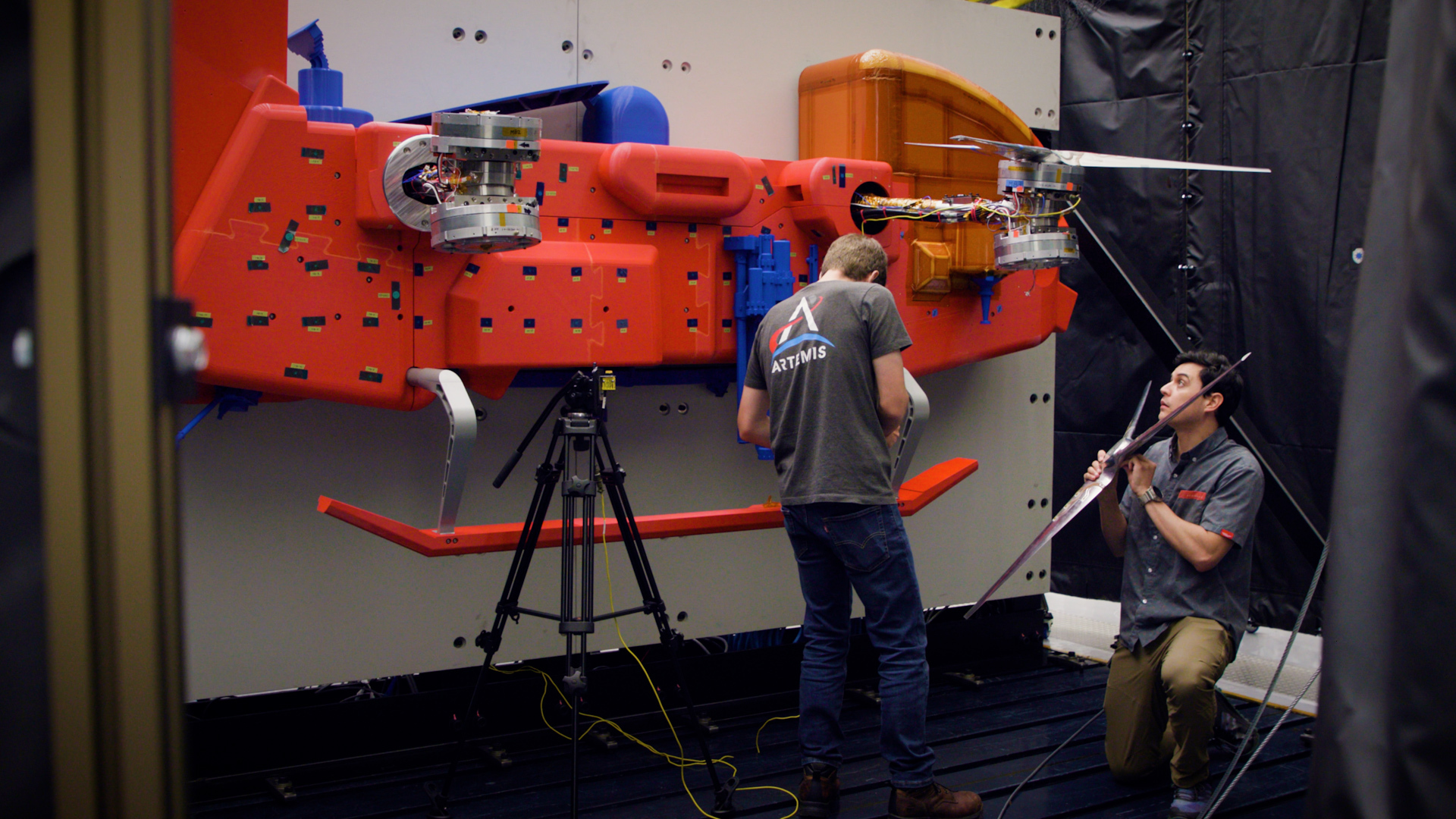
Two men in dark shirts work on a red car-sized rotorcraft protype in a testing chamber.
From left, Johns Hopkins APL engineers Tyler Radomsky and Felipe Ruiz install a rotor on the Dragonfly test model at the Transonic Dynamics Tunnel at NASA’s Langley Research Center in Virginia.
NASA

Set for launch in in 2028, the Dragonfly rotorcraft is being designed and built at the Johns Hopkins Applied Physics Laboratory (APL) in Laurel, Maryland, with contributions from organizations around the world. On arrival in 2034, Dragonfly will exploit Titan’s dense atmosphere and low gravity to fly to dozens of locations, exploring varied environments from organic equatorial dunes to an impact crater where liquid water and complex organic materials essential to life (at least as we know it) may have existed together.

Aerodynamic testing

When full rotorcraft integration and testing begins in February, the team will tap into a trove of data gathered through critical technical trials conducted over the past three years, including, most recently, two campaigns at the Transonic Dynamics Tunnel (TDT) facility at NASA’s Langley Research Center in Hampton, Virginia.

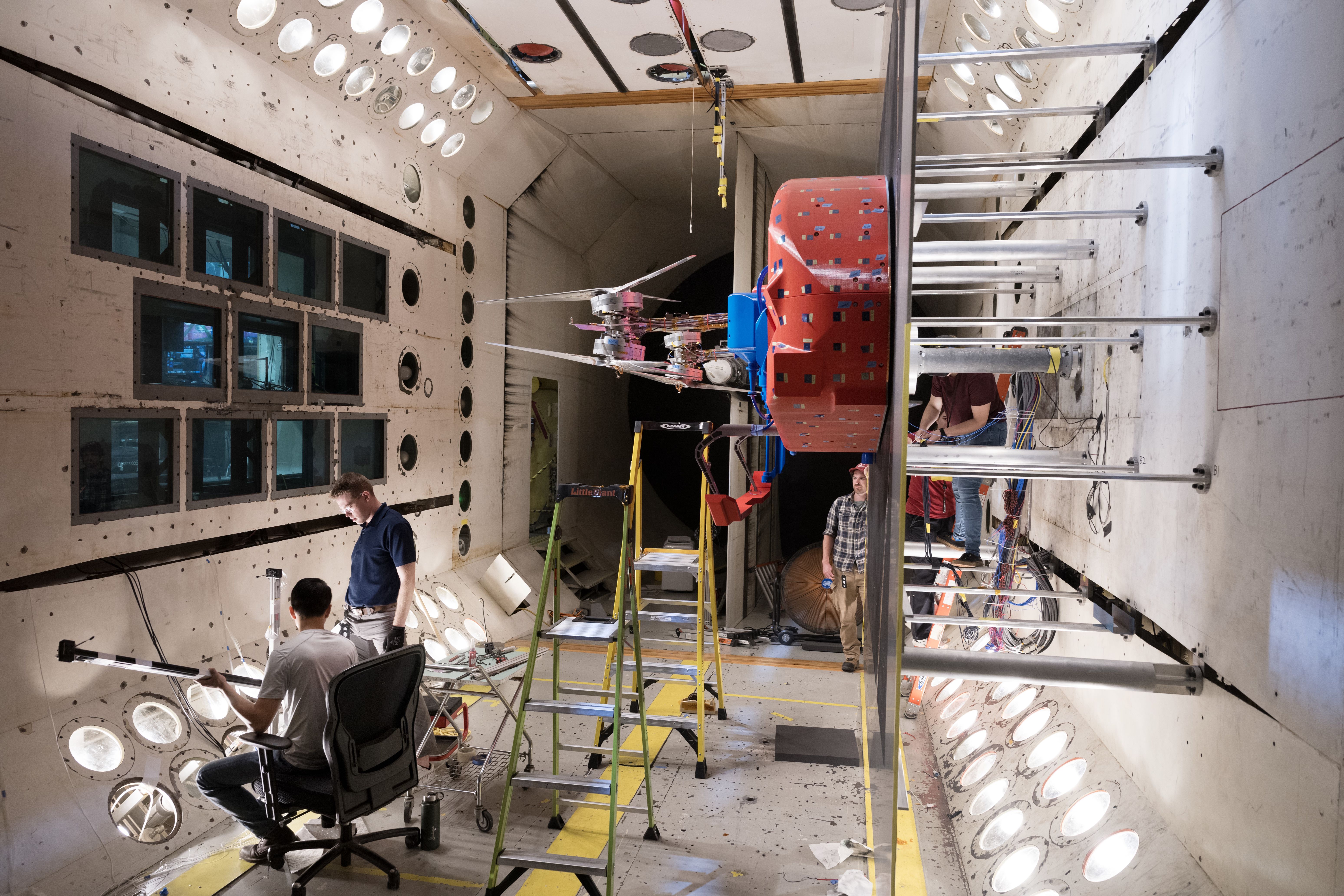
Five people in a large white room work in and around a red car-sized rotorcraft prototype mounted on a wall.
From left, Charles Pheng, Ryan Miller, John Kayrouz, Kristen Carey and Josie Ward prepare for the first aeromechanical performance tests of the full-scale Dragonfly rotors in the Transonic Dynamics Tunnel at NASA’s Langley Research Center in Virginia.
NASA

The TDT is a versatile 16-foot-high, 16-foot-wide, 20-foot-long testing hub that has hosted studies for NASA, the Department of War, the aircraft industry and an array of universities.

Over five weeks, from August into September, the team evaluated the performance of Dragonfly’s rotor system – which provides the lift for the lander to fly and enables it to maneuver – in Titan-like conditions, looking at aeromechanical performance factors such as stress on the rotor arms, and effects of vibration on the rotor blades and lander body. In late December, the team also wrapped up a set of aerodynamics tests on smaller-scale Dragonfly rotor models in the TDT.

“When Dragonfly enters the atmosphere at Titan and parachutes deploy after the heat shield does its job, the rotors are going to have to work perfectly the first time,” said Dave Piatak, branch chief for aeroelasticity at NASA Langley. “There’s no room for error, so any concerns with vehicle structural dynamics or aerodynamics need to be known now and tested on the ground. With the Transonic Dynamics Tunnel here at Langley, NASA offers just the right capability for the Dragonfly team to gather this critical data.”

Critical parts

In his three years as an experimental machinist at APL, Cory Pennington has crafted parts for projects dispatched around the globe. But fashioning rotors for a drone to explore another world in our solar system? That was new – and a little daunting.

“The rotors are some of the most important parts on Dragonfly,” Pennington said. “Without the rotors, it doesn’t fly – and it doesn’t meet its mission objectives at Titan.”

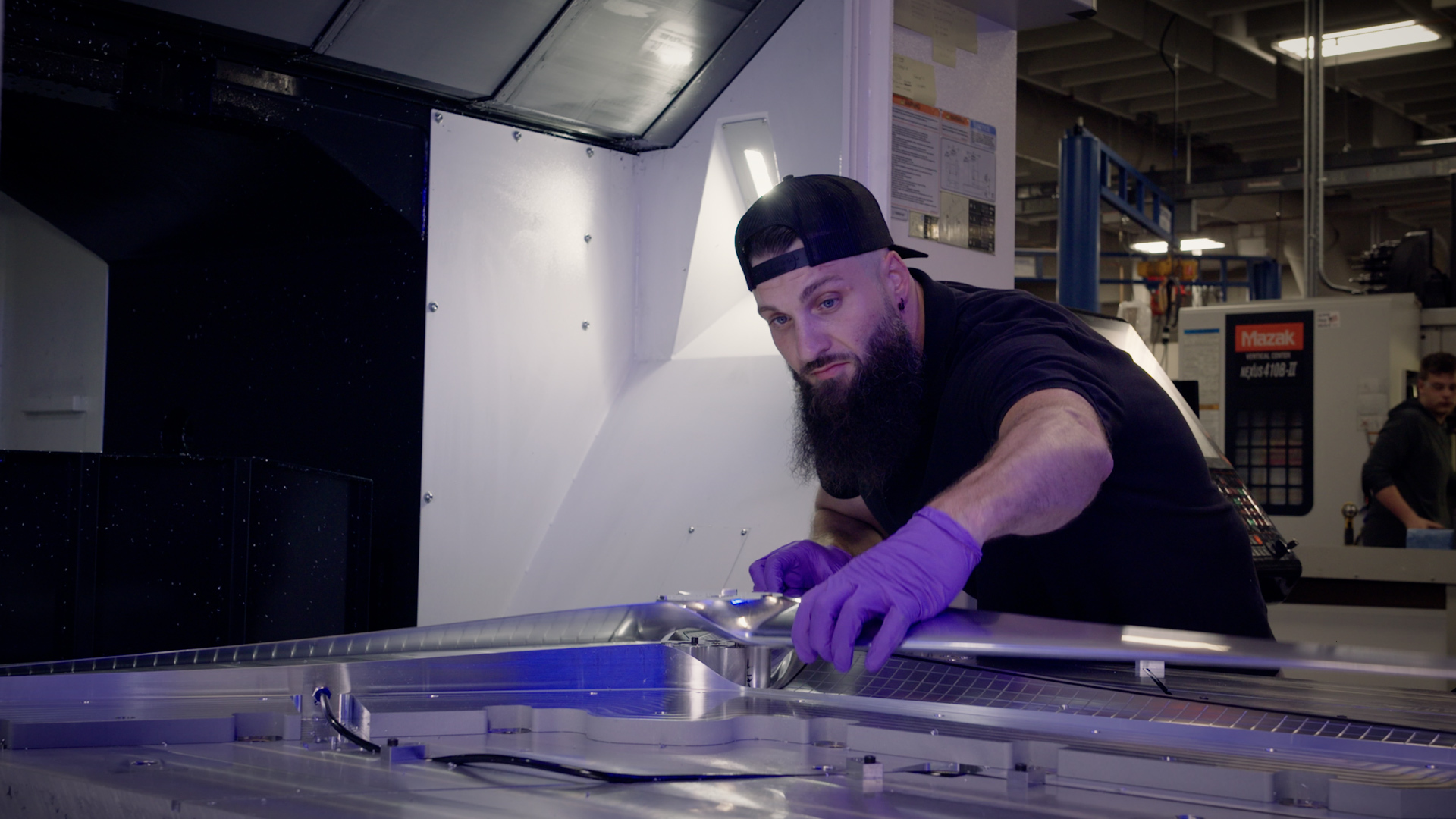
A man wearing dark clothes and purple gloves works on a silver rotor on a table.
Experimental machinist Cory Pennington examines a freshly milled, full-scale Dragonfly rotor in the machine shop at the Johns Hopkins Applied Physics Laboratory (APL) in Laurel, Maryland.
NASA/Johns Hopkins APL

Pennington and team cut Dragonfly’s first rotors on Nov. 1, 2024. They refined the process as they went: starting with waterjet paring of 1,000-pound aluminum blocks, followed by rough machining, cover fitting, vent-hole drilling and hole-threading. After an inspection, the parts were cleaned, sent out for welding and returned for final finishing.

“We didn’t have time or materials to make test parts or extras, so every cut had to be right the first time,” Pennington said, adding that the team also had to find special tools and equipment to accommodate some material changes and design tweaks.

The team was able to deliver the parts a month early. Engineers set up and spin-tested the rotors at APL – attached to a full-scale model representing half of the Dragonfly lander – before transporting the entire package to the TDT at NASA Langley in late July.

“On Titan, we’ll control the speeds of Dragonfly’s different rotors to induce forward flight, climbs, descents and turns,” said Felipe Ruiz, lead Dragonfly rotor engineer at APL.

“It’s a complicated geometry going to a flight environment that we are still learning about. So the wind tunnel tests are one of the most important venues for us to demonstrate the design.”

And the rotors passed the tests.

“Not only did the tests validate the design team’s approach, we’ll use all that data to create high-fidelity representations of loads, forces and dynamics that help us predict Dragonfly’s performance on Titan with a high degree of confidence,” said Rick Heisler, wind tunnel test lead from APL.

Next, the rotors will undergo fatigue and cryogenic trials under simulated Titan conditions, where the temperature is minus 290 degrees Fahrenheit (minus 178 degrees Celsius), before building the actual flight rotors.

“We’re not just cutting metal — we’re fabricating something that’s going to another world,” Pennington said. “It’s incredible to know that what we build will fly on Titan.”

Collaboration, innovation

Elizabeth “Zibi” Turtle, Dragonfly principal investigator at APL, says the latest work in the TDT demonstrates the mission’s innovation, ingenuity and collaboration across government and industry.

“The team worked well together, under time pressure, to develop solutions, assess design decisions, and execute fabrication and testing,” she said. “There’s still much to do between now and our launch in 2028, but everyone who worked on this should take tremendous pride in these accomplishments that make it possible for Dragonfly to fly on Titan.”

When NASA's Dragonfly begins full rotorcraft integration and testing in early 2026, the mission team will tap into a trove of data gathered through critical technical trials conducted over the past three years, including, most recently, a testing campaign in at the Transonic Dynamics Tunnel (TDT) Facility at NASA’s Langley Research Center in Hampton, Virginia.
NASA/Johns Hopkins APL

Dragonfly has been a collaborative effort from the start. Kenneth Hibbard, mission systems engineer from APL, cites the vertical-lift expertise of Penn State University on the initial rotor design, aero-related modeling and analysis, and testing support in the TDT, as well as NASA Langley’s 14-by-22-foot Subsonic Tunnel. Sikorsky Aircraft of Connecticut has also supported aeromechanics and aerodynamics testing and analysis, as well as flight hardware modeling and simulation.

The Johns Hopkins Applied Physics Laboratory (APL) in Laurel, Maryland, leads the Dragonfly mission for NASA in collaboration with several NASA centers, industry partners, academic institutions and international space agencies. Elizabeth “Zibi” Turtle of APL is the principal investigator. Dragonfly is part of NASA’s New Frontiers Program, managed by the Planetary Missions Program Office at NASA Marshall Space Flight Center in Huntsville, Alabama, for the agency’s Science Mission Directorate in Washington.

For more information on NASA’s Dragonfly mission, visit:

https://science.nasa.gov/mission/dragonfly/

by Mike Buckley
Johns Hopkins Applied Physics Laboratory


MEDIA CONTACTS:

Karen Fox / Molly Wasser
Headquarters, Washington
240-285-5155 / 240-419-1732
karen.c.fox@nasa.gov / molly.l.wasser@nasa.gov

Joe Atkinson
NASA’s Langley Research Center, Hampton, Virginia
757-755-5375
joseph.s.atkinson@nasa.gov

Mike Buckley
Johns Hopkins Applied Physics Laboratory, Laurel, Maryland
443-567-3145
michael.buckley@jhuapl.edu

NASA’s Wideband Technology Demo Proves Space Missions are Free to Roam

4 Min Read

NASA’s Wideband Technology Demo Proves Space Missions are Free to Roam

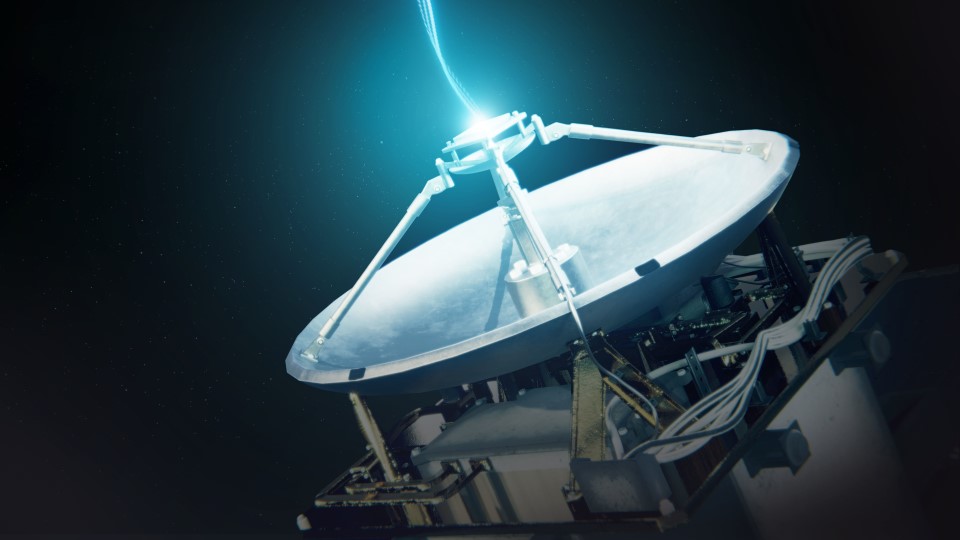
An artist's concept of the Polylingual Experimental Terminal transmitting data in space.
Credits: NASA/Morgan Johnson

Just like your cellphone stays connected by roaming between networks, NASA’s Polylingual Experimental Terminal, or PExT, technology demonstration is proving space missions can do the same by switching seamlessly between government and commercial communications networks.

NASA missions rely on critical data to navigate, monitor spacecraft health, and transmit scientific information back to Earth, and this game-changing technology could provide multiple benefits to government and commercial missions by enabling more reliable communications with fewer data interruptions.

“This mission has reshaped what’s possible for NASA and the U.S. satellite communications industry,” said Kevin Coggins, deputy associate administrator for the agency’s SCaN (Space Communications and Navigation) Program at NASA Headquarters in Washington. “PExT demonstrated that interoperability between government and commercial networks is possible near-Earth, and we’re not stopping there. The success of our commercial space partnerships is clear, and we’ll continue to carry that momentum forward as we expand these capabilities to the Moon and Mars.”

This mission has reshaped what’s possible for NASA and the U.S. satellite communications industry.

Kevin Coggins

Kevin Coggins

Deputy Associate Administrator for SCaN

Wideband technology enables data exchange across a broad range of frequencies, helping bridge government and commercial networks as NASA advances commercialization of space communications. By providing interoperability between government and commercial assets, this technology unlocks new advantages not currently available to agency missions.

As commercial providers continue to advance their technology and add new capabilities to their networks, missions equipped with wideband terminals can integrate these enhancements even after launch and during active operations. The technology also supports NASA’s network integrity by allowing missions to seamlessly switch back and forth between providers if one network faces critical disruptions that would otherwise interfere with timely communications.

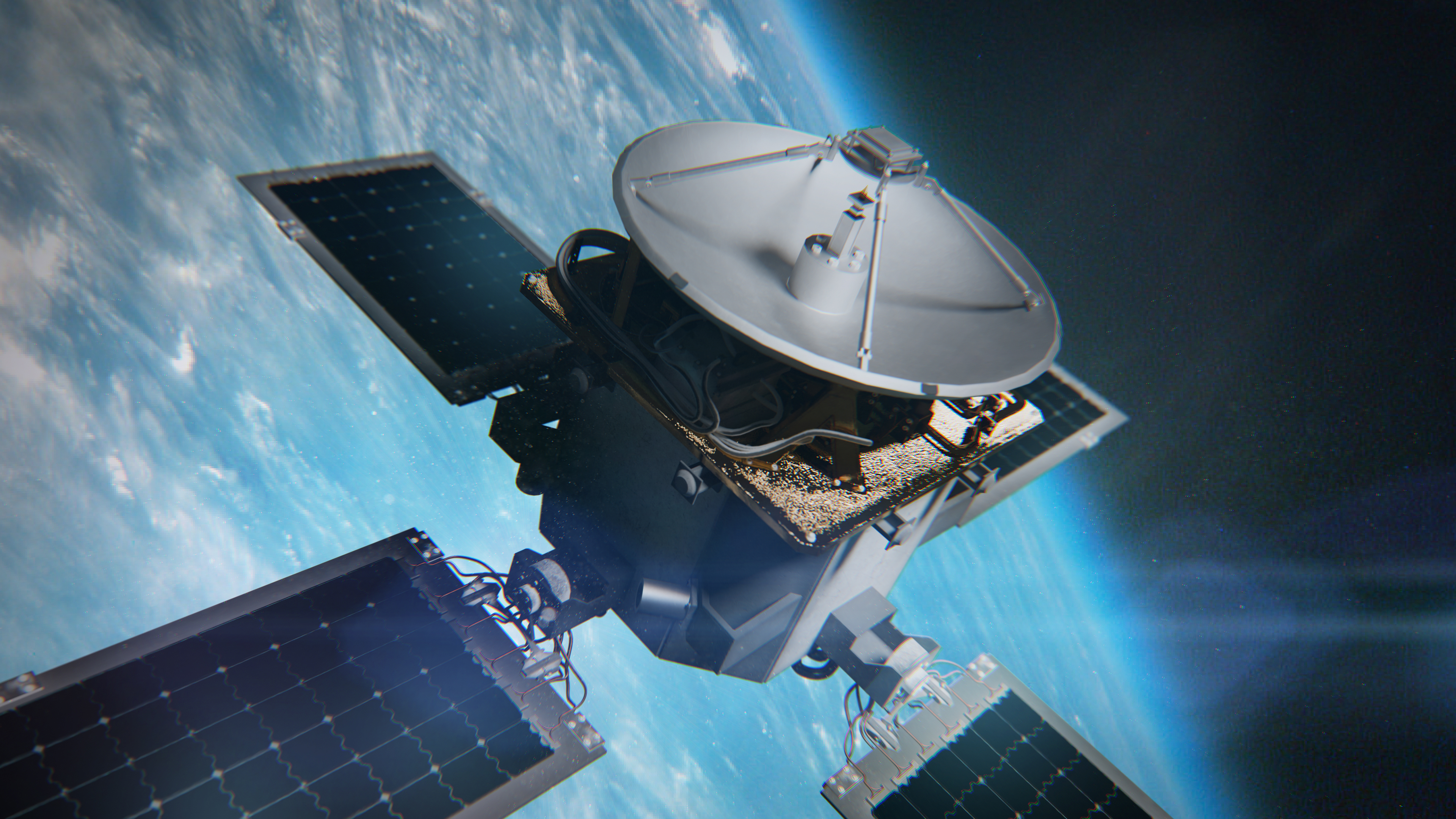
An artist’s concept of the BARD mission in space.
NASA/Dave Ryan

“Today, we take seamless cellphone roaming for granted, but in the early days of mobile phones, our devices only worked on one network,” said Greg Heckler, SCaN’s capability development lead at NASA Headquarters. “Our spaceflight missions faced similar limitations—until now. These revolutionary tests prove wideband terminals can connect spacecraft to multiple networks, a huge benefit for early adopter missions transitioning to commercial services in the 2030s.”

On July 23, the communications demo launched into low Earth orbit aboard the York Space Systems’ BARD mission. Designed by Johns Hopkins Applied Physics Laboratory, the compact wideband terminal communicates over a broad range of the Ka-band frequency, which is commonly used by NASA missions and commercial providers. After completing a series of tests that proved the BARD spacecraft and the demonstration payload were functioning as expected, testing kicked off with NASA’s TDRS (Tracking and Data Relay Satellite) fleet and commercial satellite networks operated by SES Space & Defense and Viasat.

During each demonstration, the terminal completed critical space communications and navigation operations, ranging from real-time spacecraft tracking and mission commands to high-rate data delivery. By showcasing end-to-end services between the BARD spacecraft, multiple commercial satellites, and mission control on Earth, the wideband terminal showed future NASA missions could become interoperable with government and commercial infrastructure.

An artist’s concept of the Polylingual Experimental Terminal transmitting data in space.
NASA/Morgan Johnson

Due to the flexibility of wideband technology and the innovative nature of this mission, NASA recently extended the Polylingual Experiment Terminal demonstration for an additional 12 months of testing. Extended mission operations will include new direct-to-Earth tests with the Swedish Space Corporation, scheduled to begin in early 2026.

This technology demonstration will continue testing spaceflight communications capabilities through April 2027. By 2031, NASA plans to purchase satellite relay services for science missions in low Earth orbit from one or more U.S. companies.

To learn more about this wideband technology demonstration visit:

PExT – NASA

The Polylingual Experimental Terminal technology demonstration is funded and managed by NASA’s SCaN Program within the Space Operations Mission Directorate at NASA Headquarters in Washington. York Space Systems provided the host spacecraft. Johns Hopkins Applied Physics Laboratory developed the demonstration payload. Commercial satellite relay demonstrations were conducted in partnership with SES Space & Defense and Viasat.

An artist’s concept of the BARD mission in space.
NASA/Dave Ryan

NASA’s Push Toward Commercial Space Communications Gains Momentum 

6 Min Read

NASA’s Push Toward Commercial Space Communications Gains Momentum 

An artist’s concept of a near-Earth satellite relay constellation.
Credits: NASA/Chase Leidy 

NASA’s commercial partners are actively demonstrating next-generation satellite relay capabilities for spaceflight missions, marking a significant step toward retiring the agency’s Tracking and Data Relay Satellite (TDRS) system and adopting commercial services. The demonstrations – ranging from real-time spacecraft tracking during launch to transmitting mission commands and scientific data – are part of NASA’s Communications Services Project, which is modernizing how the agency communicates with its science missions in near-Earth orbit. 

Managed by the agency’s SCaN (Space Communications and Navigation) Program, the project awarded funded Space Act Agreements in 2022 to six U.S. companies that are developing and testing commercial satellite communications services. The initiative supports NASA’s broader strategy to retire the TDRS constellation and adopt a commercial-first model for near-Earth communications. 

“In collaboration with our commercial partners, SCaN is ushering in a new era of space exploration that will deliver powerful, forward-thinking solutions that reduce cost, increase adaptability, and increase mission success,” said Kevin Coggins, deputy associate administrator for SCaN at NASA Headquarters in Washington. “This work advances our commitment to expanding the low Earth orbit economy, and our commercial space partners are leading the charge through these groundbreaking demonstrations, proving for the first time that commercial satellite relay services can work for NASA missions.” 

This work advances our commitment to expanding the low Earth orbit economy, and our commercial space partners are leading the charge through these groundbreaking demonstrations.

Kevin Coggins

Kevin Coggins

Deputy Associate Administrator for SCaN

By leveraging private-sector innovation, NASA aims to establish a more flexible, cost-effective, and scalable communications infrastructure for future science missions. 

Amazon

Amazon Leo for Government, a subsidiary of Amazon, is demonstrating high-rate data exchanges over optical links using its satellite network in low Earth orbit  

Amazon has developed the hardware and software components necessary to support optical communication links within its Amazon Leo satellite relay network. Optical communications, also known as laser communications, use infrared light to transmit data at a higher rate compared to standard radio frequency systems. The Amazon Leo demonstrations, scheduled to begin in early 2026, will test the pointing, acquisition, and tracking capabilities of their optical communications systems to ensure the technology can accurately locate, lock onto, and stay connected with a mission as it travels through space. 

An image of the view from an Amazon Leo satellite overlooking the Earth.
Credit: Amazon 

SES Space & Defense  

SES Space & Defense is demonstrating high-rate data exchanges as well as tracking, telemetry, and command services using its O3b mPOWER satellite network in medium Earth orbit and its satellites in geosynchronous Earth orbit.  

Over the last two months, in collaboration with Planet Labs, SES conducted multiple flight tests of its near-Earth space relay services. These demonstrations showcased uninterrupted, high-capacity connectivity between a Planet Labs satellite in low Earth orbit and SES communications satellites in geosynchronous Earth orbit and medium Earth orbit, demonstrating the ability to deliver real-time data relay across multiple orbits. SES has validated two relay services, one for low-rate tracking, telemetry, and command applications via its C-band satellites, and one for high-rate data applications over its Ka-band constellation. Additional flight demonstrations are planned for early 2026. 

An artist’s concept of SES Space and Defense’s satellite relay demonstration. 
Credit: SES Space and Defense  

SpaceX 

SpaceX is demonstrating high-rate data exchanges over optical links using its Starlink network in low Earth orbit.  

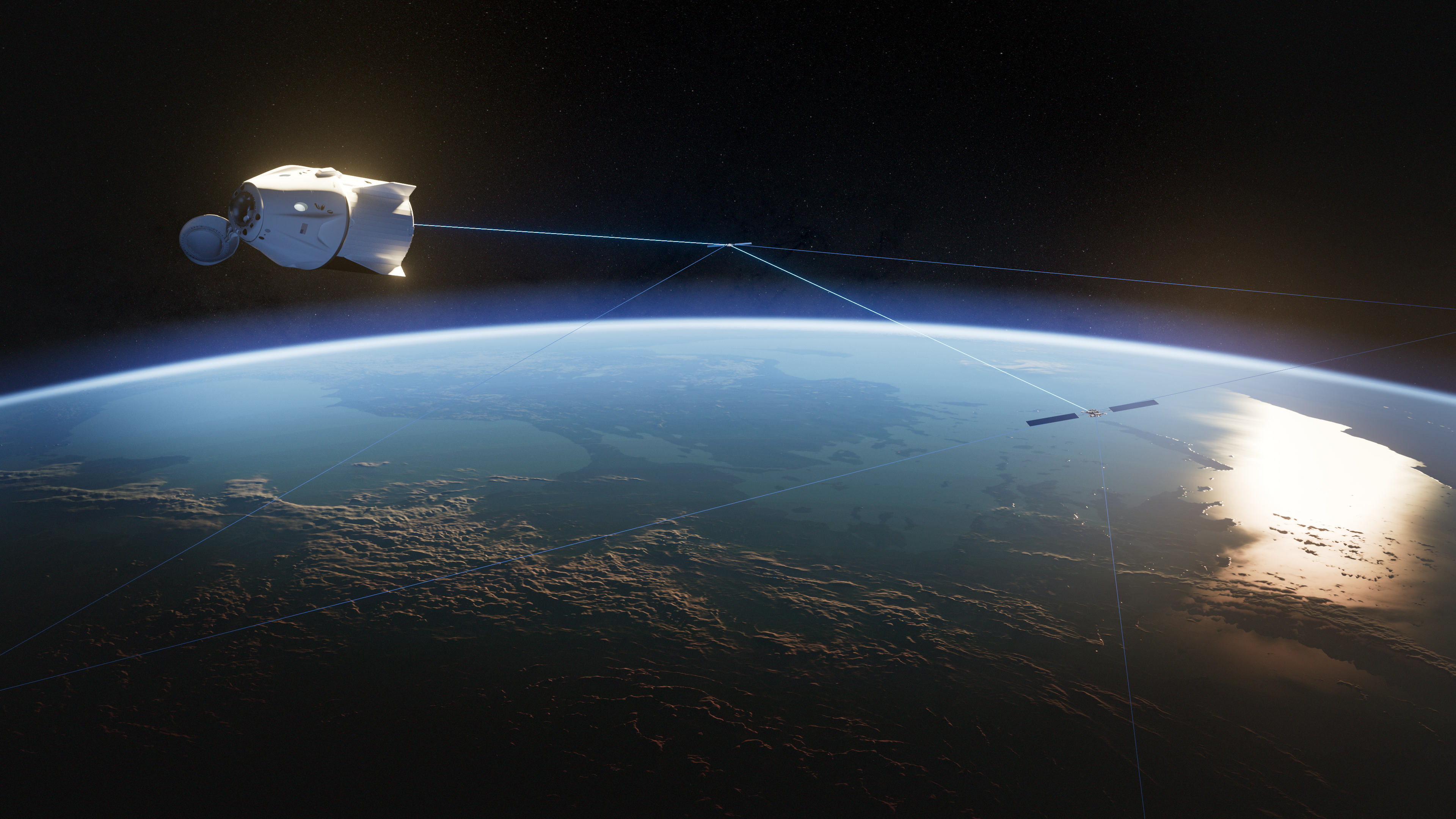
Since 2024, SpaceX has completed multiple demonstrations of on-orbit optical communications services. During two human spaceflight missions, Polaris Dawn and Fram2, SpaceX leveraged the Starlink satellite constellation and an optical communications terminal installed on the Dragon spacecraft to demonstrate high-rate data relay services. Optical communications technology is not currently available through TDRS. By demonstrating optical relay services with multiple commercial partners, the agency is unlocking new capabilities for emerging missions.  

An image of the view from an Amazon Leo satellite overlooking the Earth. Credit: Amazon
An artist’s concept of SpaceX’s commercial satellite relay demonstration using the Dragon spacecraft and Starlink network.
Credit: SpaceX 

Telesat 

Telesat U.S. Services LLC, doing business as Telesat Government Solutions, is demonstrating high-rate data exchanges over optical links using its anticipated Telesat Lightspeed network in low Earth orbit. 

Development of the Telesat Lightspeed satellite network is currently underway, with satellite launches planned for late 2026. These satellites will use innovative technologies, like optical inter-satellite links and advanced onboard processing, to establish a global, mesh network in space. Software-defined networks aim to enable robust and reliable routing of traffic from a space-based or terrestrial terminal to its final destination autonomously. In 2027, Telesat plans to complete multiple demonstrations of space-to-space connectivity, including an optical data exchange from a Planet Labs spacecraft in low Earth orbit to the Telesat Lightspeed constellation. The data will then be routed over optical links before getting downlinked to a Telesat landing station on Earth, representing a full end-to-end capability. 

An artist illustration showing Telesat's Lightspeed satellite network. The Earth taking up most of the frame and there are grey and blue satellites above the Earth connected with yellow lines showing communication links
An artist illustration of Telesat’s planned commercial relay demonstration using its Lightspeed satellite network.
Credit: Telesat 

Viasat  

Viasat Inc. is demonstrating launch, tracking, telemetry, command, and high-data rate exchanges for launch vehicles and low Earth orbit operations. In May 2023, Viasat completed the acquisition of Inmarsat, the sixth satellite communications company to win a contract award from NASA, combining the resources of both companies to form a unified global communications provider. 

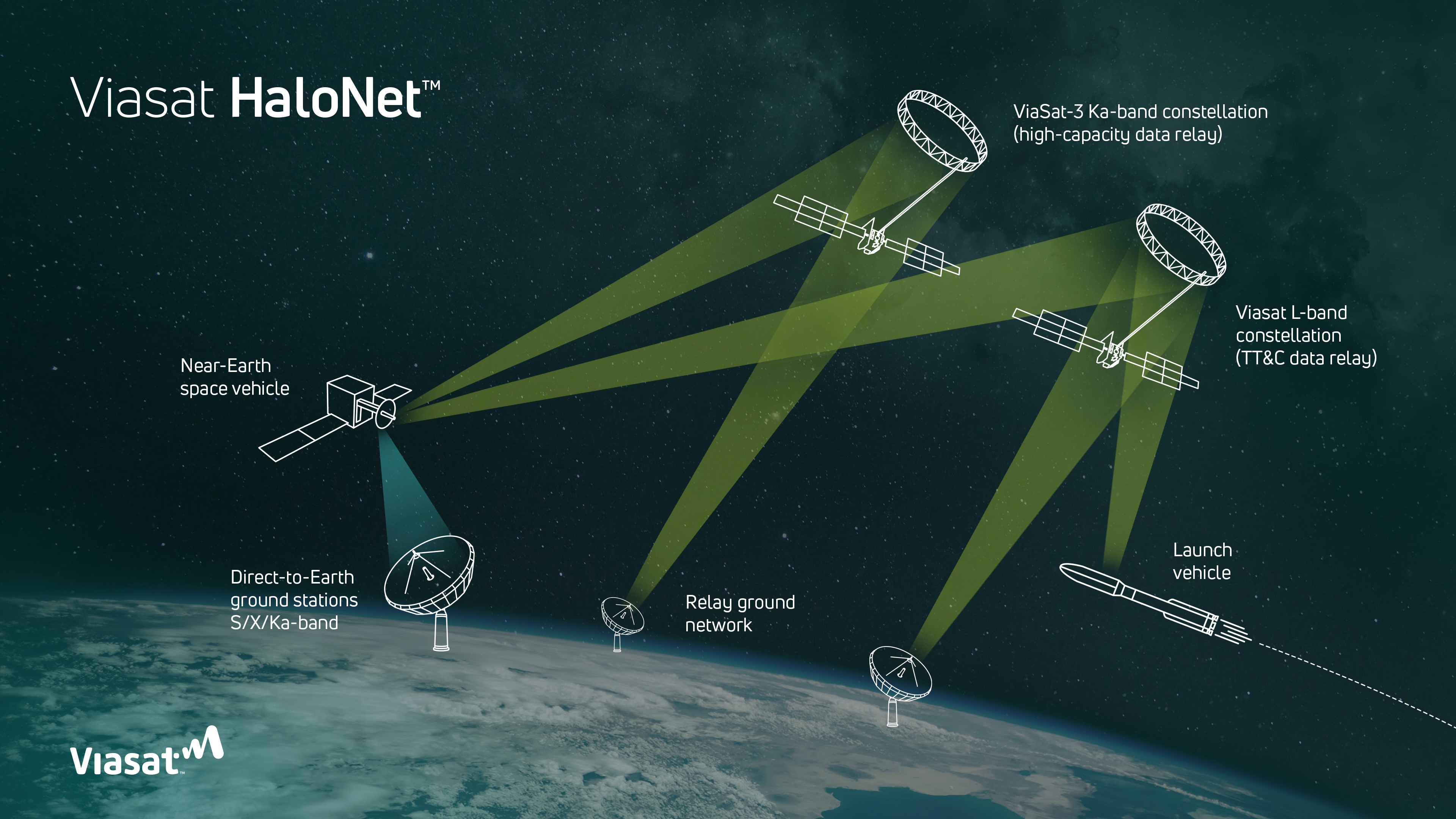
Viasat’s space demonstrations will use its established satellite networks in geostationary orbit to validate three primary capabilities: launch telemetry over the L-band radio frequency to track and monitor spacecraft during ascent; command and control over L-band to maintain continuous spacecraft custody and enable real-time operations; and high-speed Ka-band data relay to transfer large volumes of mission data through next-generation spacecraft terminals. Flights test began in November, when Viasat used its satellite network to successfully track the telemetry of Blue Origin’s New Glenn rocket as it launched into low Earth orbit. Follow-on demonstrations are planned for 2026, including additional L-band launch services as well as high-capacity services over Ka-band frequencies. 

An artist’s concept outlining Viasat’s satellite relay capabilities.
Credit: Viasat

Commercializing communications services for future near-Earth science missions enables NASA to focus resources on deep space missions to the Moon as part of the Artemis campaign, in preparation for future human missions to Mars. The agency will continue to work with these commercial partners to demonstrate next-generation services through 2027. By 2031, NASA plans to purchase satellite relay services for science missions from one or more U.S. satellite communications providers.   

To learn more about the decision to use commercial satellite relay services in low Earth orbit, visit: 

Embracing Commercial Relay Services – NASA 

The Communications Services Project is managed by NASA’s Glenn Research Center in Cleveland, under the direction of the Space Communications and Navigation Program within NASA’s Space Operations Mission Directorate.  

New Landsat Science Team Announced

By USGS Landsat Missions

The U.S. Geological Survey, in cooperation with NASA, has named the new Landsat Science Team that will support the world’s longest-running Earth observation mission for a planned 2026-2030 term. 

The team brings together experts from universities, private industry, and federal and international agencies to help the U.S. Geological Survey (USGS) and NASA ensure Landsat continues delivering trusted, publicly available data that supports disaster response, agricultural management, water resources, land stewardship, and national security. 
 

Science Focus Areas of the New Landsat Science Team (2026–2030)

The Landsat Science Team supports the USGS and NASA in maintaining scientific integrity, data quality, and mission continuity across the Landsat program. Their work informs mission planning and development and helps maximize the value of the Landsat archive through improved data products, expanded applications and strategic insight that helps the Landsat program continue to serve the public effectively.

The Landsat Science Team will provide collective analysis and advice on a range of priority issues as defined by the USGS and NASA. In addition, each team member will lead research on a variety of topical areas deemed to be of interest to the Landsat program. 

Research areas include atmospheric correction and calibration methods to ensure consistent reflectance across the Landsat archive. Team members will also look at improving data processing pipelines and interoperability with international satellite systems to support integrated Earth observations. Several studies are focused on land-surface processes, including crop condition, evapotranspiration, soil and residue detection, and non-photosynthetic vegetation, which support agricultural monitoring and conservation. 

Water cycle and aquatic focused research includes inland and coastal water-quality mapping, harmful algal bloom detection, and refined snow cover characterization. Additional studies address fire monitoring, volcanic activity, and geothermal systems. Other work is centered on developing tools that help translate Landsat data into actionable products for science, management, and policy.
 

The Landsat Science Team members and their planned research: 

Atmospheric Correction and Calibration

Pathfinding the steps to ensure global analysis ready consistent reflectance from the Landsat MSS to Landsat Next era

  • Dr. David Roy (PI), Michigan State University
  • Dr. Hankui K. Zhang, South Dakota State University
  • Dr. Lin Yan, Michigan State University

Fully probabilistic atmospheric correction for Landsat

  • Dr. Nimrod Carmon (PI), University of California, Los Angeles
  • Dr. Gregory Okin, University of California, Los Angeles

Maintenance and Refinement of the Land Surface Reflectance Code (LaSRC) for Landsat and Sentinel 2

  • Dr. Eric Vermote (PI), NASA Goddard Space Flight Center

Towards a harmonized atmospheric correction for EnMAP, CHIME, Landsat archive, and Landsat Next observables

  • Dr. Raquel De Los Reyes (PI), The German Aerospace Center (DLR)

Interoperability and Data Processing

Synergistic data processing pipelines for Landsat and European satellite missions

  • Dr. David Frantz (PI), Trier University
  • Dr. Patrick Hostert, Humboldt University of Berlin
  • Dr. Sebastian van der Linden, University of Greifswald
  • Dr. Dirk Pflugmacher, Humboldt University of Berlin
  • Dr. Cornelius Senf, Technical University of Munich

Stronger together – next generation interoperability for Landsat and Copernicus 

  • Dr. Peter Strobl (PI), European Commission

Maximizing the impact of interoperable Landsat Analysis-Ready Surface Reflectance for Operational Land, Water and Antarctic Monitoring

  • Medhavy Thankappan (PI), Geoscience Australia
  • Dr. Kimberlee Baldry, Geoscience Australia
  • Dr. Courtney Bright, Commonwealth Scientific and Industrial Research Organisation (CSIRO)

Agriculture, Vegetation, and Land Surface Processes

Developing non-photosynthetic vegetation cover capabilities for Landsat Next

  • Dr. Phillip Dennison (Co-PI), University of Utah
  • Dr Michael Campbell (Co-PI), University of Utah

Improving and synergizing Landsat evapotranspiration and albedo using multi-satellite observations

  • Dr. Yun Yang (PI), Cornell University
  • Dr. Zhuosen Wang, University of Maryland

OpenET: Supporting US sustainable water management with Landsat

  • Dr. Forrest Melton (PI), NASA Earth Science Division

From leaf to Landsat: A multi-scale approach to developing information for agricultural management from Landsat Next

  • Dr. Kyle Kipper (PI), USDA Agriculture Research Service
  • Dr. Martha Anderson, USDA Agriculture Research Service

Measuring Agricultural Conservation Land Cover with Next Generation Earth Observation: Detecting Green Vegetation, Crop Residue, and Soil in the Context of Surface Moisture Variability

  • Dr. Dean Hively (PI), USGS Lower Mississippi Water Science Center

Tracking Crop Growth and Condition in Near Real-time Using Harmonized Landsat and Sentinel-2 Data

  • Dr. Feng Gao (PI), USDA Agriculture Research Service

Water, Snow, and Aquatic Systems

Harmonizing inland and coastal water quality monitoring from the Landsat Program: Harmful algal blooms

  • Dr. Ryan O’Shea (PI), Science Systems and Applications, Inc

Next generation snow cover mapping and establishment of a long-term ground validation site

  • Dr. Edward Bair (PI), Leidos, Inc.

Fire and Disturbance

Advancing fire monitoring with Landsat Next and Canada’s WildFireSat

  • Dr. Morgan Crowley (PI), Canadian Forest Service

Volcanoes and Geothermal Systems

Characterizing/monitoring active volcanoes and geothermal systems with Landsat

  • Dr. Greg Vaughan (PI), USGS Astrogeology Science Center

Science Applications and User Engagement

From pixels to products to policy: Creating and sharing information to advance science and applications with Landsat

  • Dr. Mike Wulder (PI), Canadian Forest Service

NASA’s Carruthers Geocorona Observatory Reveals ‘First Light’ Images

3 min read

NASA’s Carruthers Geocorona Observatory Reveals ‘First Light’ Images

NASA’s Carruthers Geocorona Observatory has captured its first images from space, revealing rare views of Earth and the Moon in ultraviolet light. Taken on Nov. 17 — still months before the mission’s science phase begins — these “first light” images confirm the spacecraft is healthy while hinting at the incredible views to come.

The initial images consist of two from Carruthers’ Wide Field Imager and two from its Narrow Field Imager. Each imager captured two different views: one showing a broad spectrum of far ultraviolet light, and one revealing light from Earth’s geocorona.

Comparison of wide field and narrow field images from NASA's Carruthers Geocorona Observatory: Each column shows far ultraviolet and Lyman-alpha views of Earth, with brightness color scales, using wide and narrow field imagers.
These four images constitute the “first light” for the Carruthers Geocorona Observatory mission. The images were taken on Nov. 17, 2025, from a location near the Sun-Earth Lagrange point 1 by the spacecraft’s Wide Field Imager (left column) and Narrow Field Imager (right column) in far ultraviolet light (top row) and the specific wavelength of light emitted by atomic hydrogen known as Lyman-alpha (bottom row). Earth is the larger, bright circle near the middle of each image; the Moon is the smaller circle below and to the left of it. The fuzzy “halo” around Earth in the images in the bottom row is the geocorona: the ultraviolet light emitted by Earth’s exosphere, or outermost atmospheric layer. The lunar surface still shines in Lyman-alpha because its rocky surface reflects all wavelengths of sunlight — one reason it is important to compare Lyman-alpha images with the broad ultraviolet filter. The far ultraviolet light imagery from the Narrow Field Imagery also captured two background stars, whose surface temperatures must be approximately twice as hot as the our Sun’s to be so bright in this wavelength of light.
NASA/Carruthers Geocorona Observatory

When Carruthers captured these images, the Moon was also in its field of view and slightly closer to the spacecraft than Earth was, making the Moon appear larger and closer to Earth than usual.

The specific wavelength Carruthers observed in two of the images, called Lyman-alpha, is light emitted by atomic hydrogen. The faint glow of Lyman-alpha from hydrogen in Earth’s outer atmosphere is called the “geocorona,” Latin for “Earth crown.”

In the broad-spectrum images, the Moon and Earth look similar: both are spheres with well-defined edges. However, in the Lyman-alpha filter, the Moon still appears as a crisp, sharp sphere while Earth appears surrounded by a bright “fuzz” extending out to space. This glow is the geocorona, the primary focus of the Carruthers mission. It is the only way to “see” Earth’s outermost atmospheric layer, although the light of the geocorona has only been photographed a handful of times in history. Carruthers will be the first mission to image it repeatedly, and from far enough away to see its great extent and discover how it changes over time.

These first images also offer a rare treat: sunlight reflected off the far side of the Moon, a view impossible to capture from Earth.


Original
Annotated

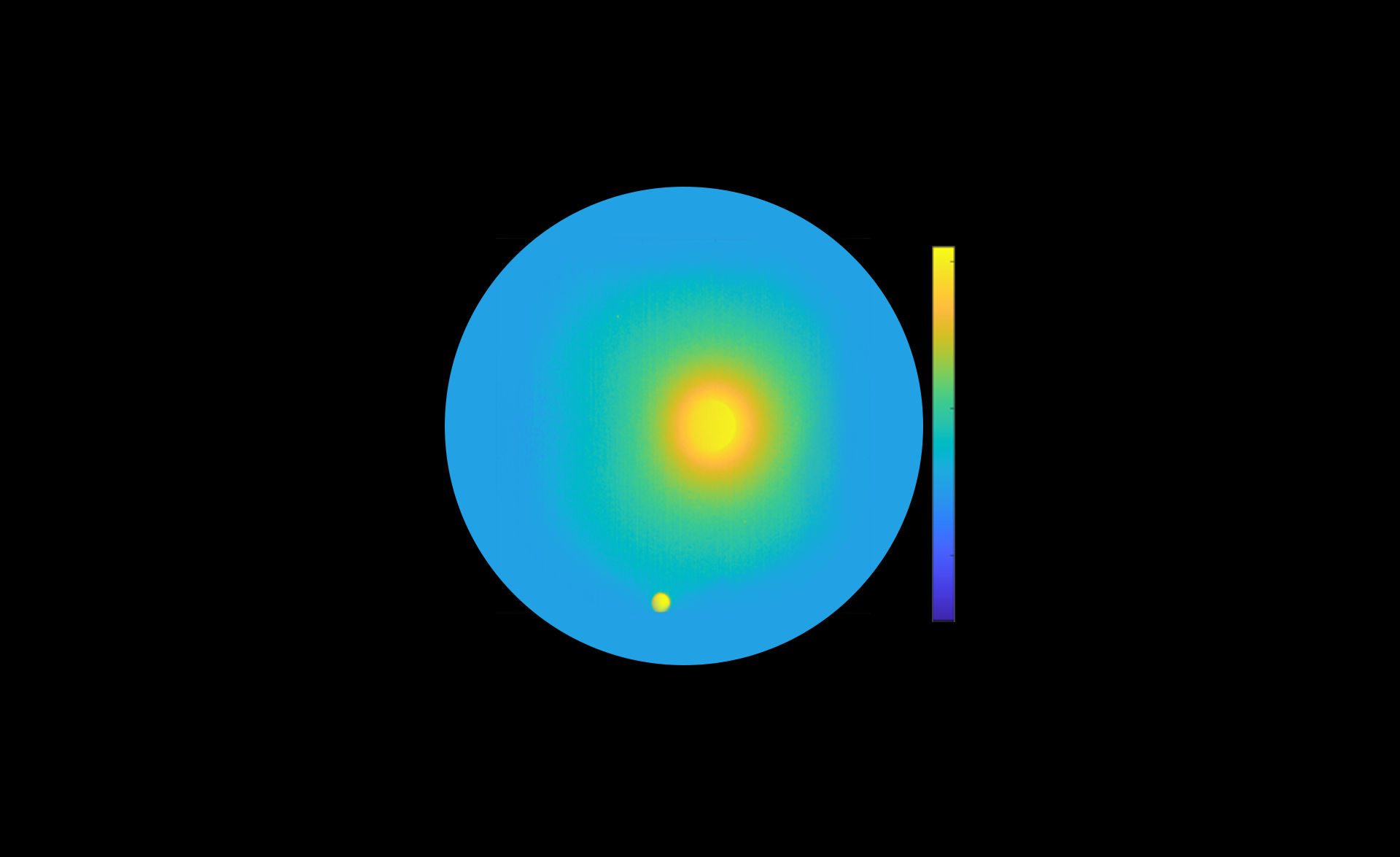
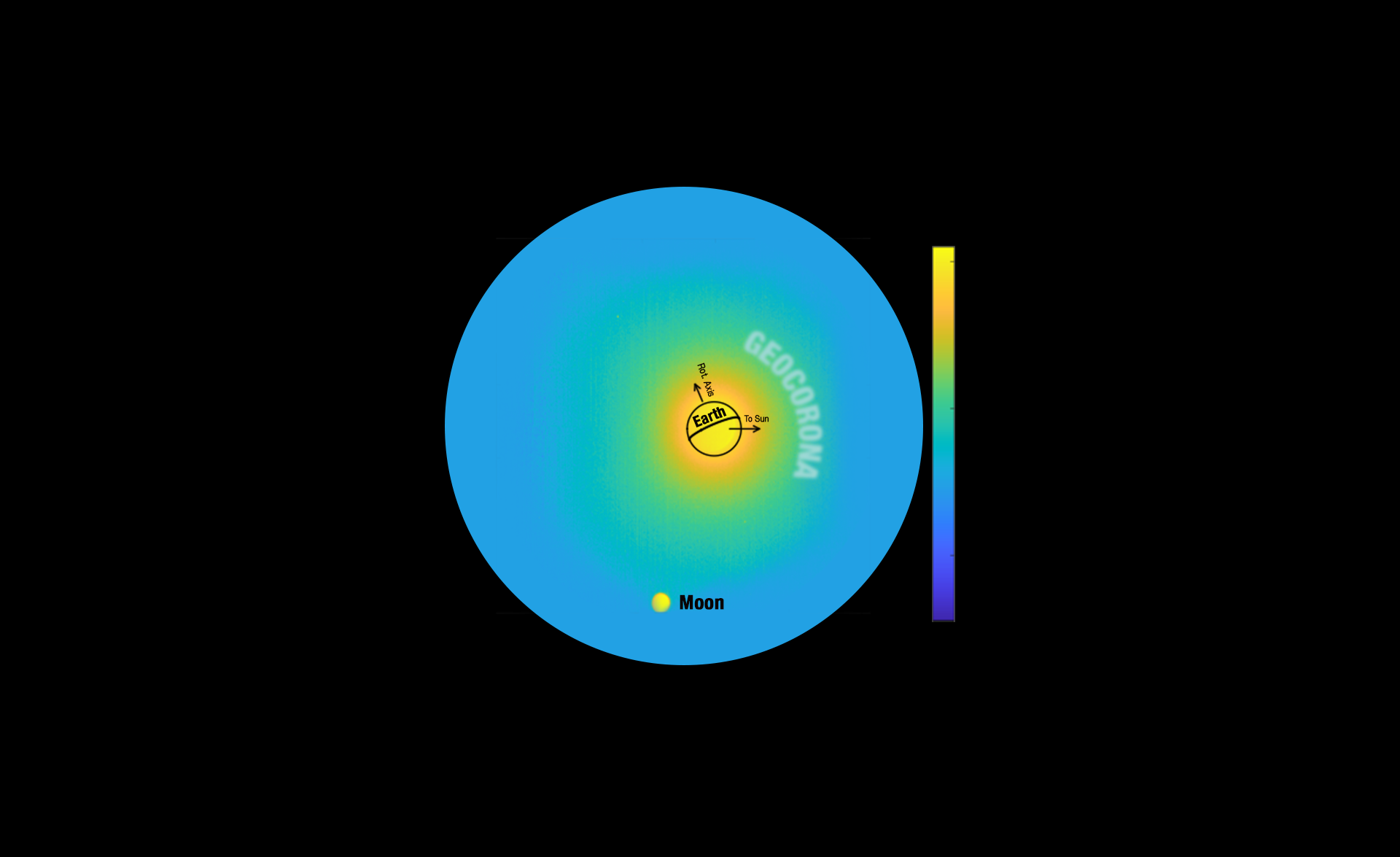
An interactive slider image allowing the user to swipe between two versions of an image, one with annotations and one without. The image shows a spacecraft’s view of Earth (at center) and the Moon (lower left) in ultraviolet light. The image includes a circular heatmap with a bright yellow center (Earth) fading to green and blue at the edges, showing Earth’s geocorona. A smaller bright spot appears near the bottom edge (the Moon). A vertical color bar labeled

An interactive slider image allowing the user to swipe between two versions of an image, one with annotations and one without. The image shows a spacecraft’s view of Earth (at center) and the Moon (lower left) in ultraviolet light. The image includes a circular heatmap with a bright yellow center (Earth) fading to green and blue at the edges, showing Earth’s geocorona. A smaller bright spot appears near the bottom edge (the Moon). A vertical color bar labeled

An interactive slider image allowing the user to swipe between two versions of an image, one with annotations and one without. The image shows a spacecraft’s view of Earth (at center) and the Moon (lower left) in ultraviolet light. The image includes a circular heatmap with a bright yellow center (Earth) fading to green and blue at the edges, showing Earth’s geocorona. A smaller bright spot appears near the bottom edge (the Moon). A vertical color bar labeled

Original

Annotated

Carruthers Geocorona ObservatorY

A View of Earth’s Geocorona

Narrow Field Imager/Lyman-alpha filter


This view of the Earth, Moon, and Earth’s geocorona was captured by the Carruthers Geocorona Observatory’s Narrow Field Imager on Nov. 17, 2025. Move the slider to switch between the original version and one with overlaid annotations. In the annotated version, labels for Earth, the Moon, and Earth’s geocorona are overlaid on the image. The circle around Earth represents Earth’s surface, and the arc around Earth’s middle represents the orientation of Earth’s equator. The arrow pointing up and slightly to the left from Earth represents Earth’s rotational axis. The arrow pointing out to the right from Earth represents the direction to the Sun. The color scale indicates brightness, with brighter light appearing more yellow and dimmer light appearing more blue. The ‘glow’ that extends beyond Earth’s surface and out into space is Earth’s geocorona, which is emitted by hydrogen atoms in Earth’s exosphere in a wavelength of ultraviolet light known as Lyman-alpha.

These initial images were taken with short, five-minute exposures — just long enough to confirm that the instrument is performing well. During the main science phase, Carruthers will take 30-minute exposures, allowing it to reveal even fainter details of the geocorona and trace how Earth’s outer atmosphere responds to the changing Sun.

Carruthers launched on Sept. 24 and is just a few weeks from completing its journey to the Sun-Earth Lagrange point 1, a point of gravitational balance roughly 1 million miles closer to the Sun than Earth is. Carruthers will begin its primary science phase in March 2026, when it will begin sending back a steady stream of ultraviolet portraits of our planet’s ever-shifting outer atmosphere.

By Miles Hatfield
NASA’s Goddard Space Flight Center, Greenbelt, Md.

About the Author

Miles Hatfield

Miles Hatfield

Keep Exploring

Discover More Topics From NASA

❌